Category: Denim Mills – Int\’l

  • Calik Denim AW 14/15 Collection

    Calik is a rapidly growing denim company from Turkey . With a capacity of 36 million meters and both rope dyeing and slasher facilities, the company is focusing on high end market.  During the recent mill week at Turkey, the company launched its Fall / Winter 14-15 Collection. This event was attended by Adriano Goldschmied – the legendary denim veteran.
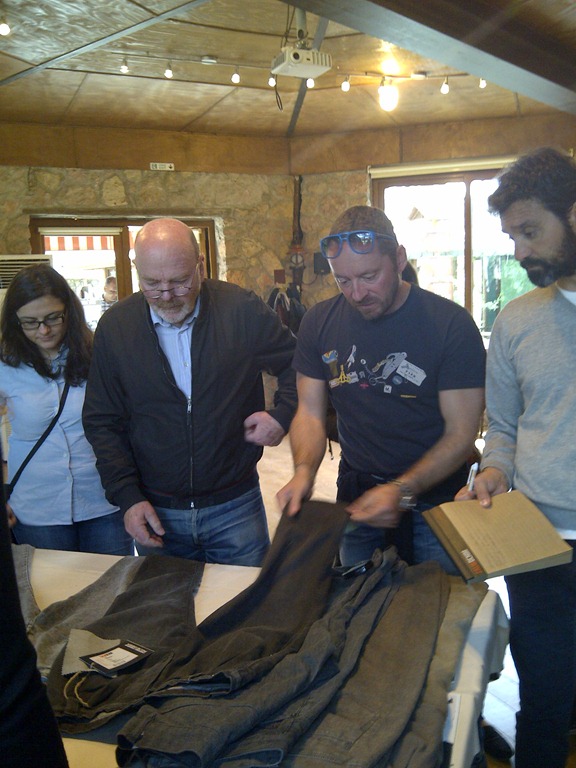
    Adriano G at Calik Denim Millweek2

    Calik’s  collection which is titled – Hide and Seek – and it focuses on new constructions, softer handles and blends of fibers that result in premium denims. The company also claims to have novel products with special finishes and sophisticated fabrics for indigo shirting.

    Some key highlights of this collection are :

    1. Spectrum: a colored denim concept with emphasis on grey, black and green indigo in 3/1 twills and Batavia

    2. Raw as itself: RTD denims to complement the colored denim story in superstretch and rigid both with slubby character and more flat looks.

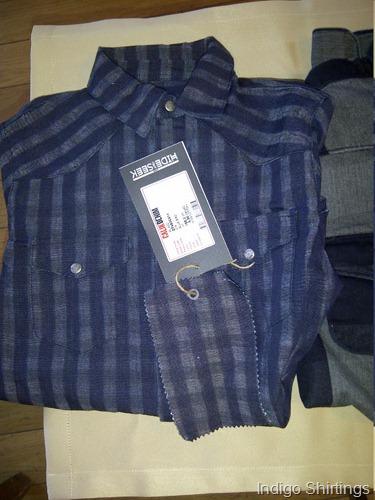
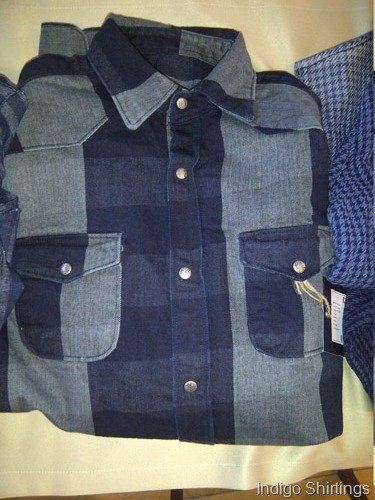
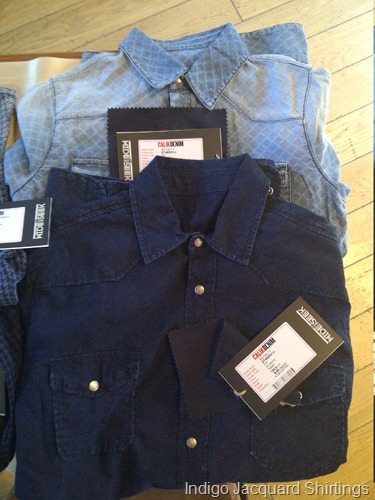
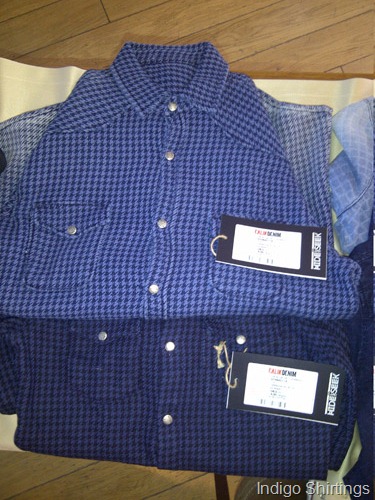
    3. Superego: an innovative indigo shirting story with a whole variety of weaves such as pied de poule, checks, dobby as well as twills.

    4. Fix-Fit: the superstretch story for womenswear, stable recovery and growth, soft handles and sateen for a smooth surface and 3/1 twills for a genuine denim look in high elasticity denims.

    5. Made: exclusive denims for tailored looks in special finishes for a smoother, shinier surface and soft handle, complemented by viscose and tencel blends with cotton for luxurious denims.

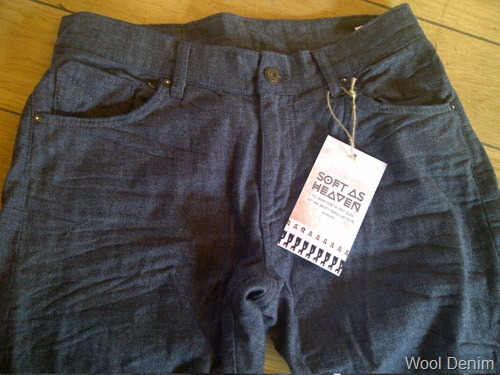
    Soft as Heaven: the warmth and softness of wool give an edge to these denims for the cold winter days in playful constructions of BT, double face, herringbone in blends of cotton and wool. Classic winter colors of grey, brown, black and indigo add a strong touch to any winter closet.

    Here are some visuals of the products launched.
    Calik aw1415 denim look pfdCalik aw1415 indigo shirting1Calik aw1415 indigo shirting2

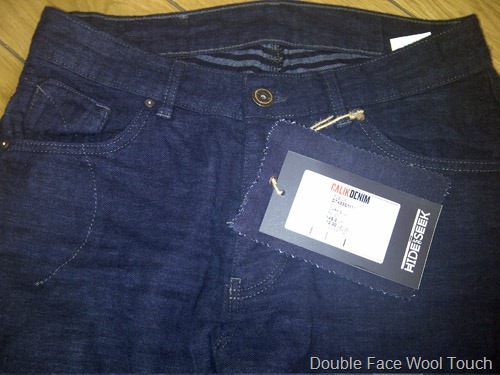
    Calik aw1415 jacquard indigo shirtingCalik aw1415 pied de poule indigo shirtingCalik aw1415 wool denimcalik aw1415-double face wool touch

  • Arvind Mills Plans A Denim Plant At Bangladesh

    arvind bangladesh

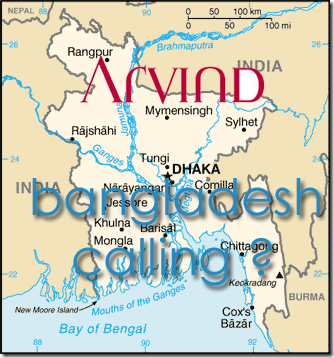
    Arvind , the largest denim company in India with a capacity of about 110 million mtrs , is planning to set up a manufacturing plant in Bangladesh in a 80:20 joint venture with Nitol Group of Bangladesh . The planned investment is about $69 million over a period of three years. In the first phase, a plant of 10 million mtrs would be set up with an investment of about $25 million and then it will be scaled up in the coming years.

    Why Arvind Wants To Put Up  A Plant In Bangladesh ?

    There are just too many reasons to justify this move by Arvind. In fact , there could not be a better place  for Arvind to go for to set up a new plant for denim.

    • It is a Huge Market and consumes almost around 300 million mtrs of denim p.a out which about 100 million mtrs is imported . We have seen a number of new denim plants been set up in Bangladesh in the last few years and this has taken the domestic production capacity up to 200 million mtrs.
    • Bangladesh enjoys the GSP benefit to the EU ie the garment exports from Bangladesh to EU are duty free . This provides a huge benefit to the local industry in Bangladesh – a benefit Arvind aims to tap.
    • Bangladesh was the top export performer in the EU market in 2009 with a 6% growth whereas most of other countries suffered a fall in exports to EU to global recession. Bangladesh exported a total of Euro 5.9 billion worth of goods (over 90% were garments) to EU.
    • Bangladesh exported a total of about 89.6 million pieces of jeans to EU in 2009 against only 8.1 million pieces from  India .

    There are significant cost advantages in Bangladesh as compared to India. These relate to labour  costs, power costs and cost savings due to efficiencies of scale. Eg, the power cost in the Comilla Export Processing zone  ,where Arvind will set up its plant , is about Taka 4.18 /kwh which translates to about Rupess 2.69 (about 6 cents) . Compare this with the cost of power that Arvind is currently incurring– Rs 3.8/kwh at Naroda plant and Rs 4.7/kwh at its Santej plant (about 8.5 to 10.5 cents/kwh). There will thus be a saving of about 30% in power costs alone. The labour, overheads and freight costs would be some of the  other categories where Arvind would save substantial costs.

    The lower costs in Bangladesh are one of the reasons why the average price of export of Denim Apparel from Bangladesh was  Euro 4.17 in 2009 as compared to Euro 9.46 from India . The difference is Huge ! .  In all likelihood, Arvind will go for a forward integration for export of garments from Bangladesh and aim to utilize all its fabric for own orders. This will mulitiply the gains accruing to it .

    All the above mentioned factors and more have contributed to Bangladesh becoming a favourite destination for denim garment exporters and encouraging the denim major Arvind to set up base there .

  • Denim Mills in USA – Struggling and Shutting Down. A review

    The fascinating world of Denim is briefly highlited on a quick Mill Tour.
    Fierce Middle East and Orient lower price on fabric and apparel manufacturing has forced some America Mills to shutdown.
    When you go into the Mills facility the characteristic good smell of cotton dominates.
    All Mills listed use Rope Dye process, will describe Open Yarn Dye process in some Puebla Mexico Mills.
    Wich one is better, well : Cone and all below will tell you Rope Dyeing is the Best, but others will say Open Yarn Dye its better, really both are good and by the fabric looks its impossible to tell wich Dye process was used.
    1.-Swiftgaley Yarn facility at Columbus Georgia represented the bloom of the Denim Mills in North America in the past Century, located in an old Downtown building, it was amazing how yarn was manufactured in different floor levels of the Old building, then truck carried to a Modern finish Plant nearby Downtown Columbus. Mill was shut a couple of years ago.
    2.-White Oak , Conedenim s flagship Mill in Greensboro N.C. it is an appropiate layout to produce Denim, it is impressive by all means: contrasting its antique selvedge looms, its museum and modern state of the art Denim manufacture and expert knowledge its people has gotten thru the years.
    3.-Mount Vernon Mills located in cute Trion Georgia, Denim Mill aside the Piece Died facility, impressive automated warehouse and truck loading, huge facility.
    With a first quality Lodge in the Mill courts to receive its distinguished visitors.
    4.-Avondale Mills, Eva Jane Plant in Sylacauga Alabama, another big Mill with a modern layout and state of the art Indigo Dye process.
    This is another Mill Company that struggled after the 2005 train derrailment and chlorine spill in Graniteville plant. Avondale finally shut was shut down.

    5.-ACG Mills -Lubbock Texas based :  located in Littlefield Texas. Mill thats setting a trend by acquiring Guatemala s giant jean operation: Koramsa now named Denimatrix
    This looks like a good move from ACG, still need to see if brotherhood brings prosperity.
    We all in the Denim world hope it does.

    jorgeThis is a guest post by Jorge Esparza of Mexico . He started on the Denim Jean manufacturing in 1995 in the Torreon Mexico area, once considered a very important Denim mfg.hub. With over 4 years on the Sew floor knowledge and 5 years dealing with Denim fabric issues Jorge has visited most major Mexico and USA mills for quality review.

    Search our site

    (eg:"Premium Denim”)

    Custom Search Control

    Web


  • 100 jobs cut at ITG Denim Plant in Greensboro , USA

    International Textile Group Inc. has cut 100 jobs at its White Oak denim-manufacturing plant in Greensboro — about 25 percent of the work force.

    It is the second time in five months that the company has eliminated jobs at the plant in an attempt to balance production capacity with demand for its denim from such customers as Levi’s. ITG cut 150 jobs in December as part of eliminating yarn production at the plant.

    • We have seen considerable negative news related to Denim plants originating in last one year specially from US and Europe –

    M0unt Vermon Mills cuts 250 jobs at Trion Plant

    UCO Denim Unit Shutting Down

    Hope we don’t see many more of these news …..

  • Denim Producer Weiqiao Textiles of China announces half yearly results

    Weiqiao Textile Company Limited of China is  a non state-owned enterprise and the largest cotton textile producer in the PRC, specializing in the production, sales and distribution of cotton yarn, grey fabric and denim.  Weiqiao Textile is located in Shandong, China’s second largest cotton producing province. The Group has four production bases in Weiqiao, Binzhou, Weihai and Zouping and employs approximately 132,000 people. For the half year ended 30 June 2008, the Group produced 422,000 tons of cotton yarn, 751,000,000 meters of grey fabric and 88,000,000 meters of denim.

    Denim Results: The company produced about 88million mtrs of denim and achieved a turnover of RMB 704 million or about USD 104 million. This translates into an average price realisation per metre of fabric of about USD 1.20 . Though the company produces more of lighter weight denims(which are cheaper), still the average prices are quite low even if compared with  denim companies in other Asian countries.

    Related links :

    Quotes and news for Weiqiao Textiles

  • Cone Denim opens manufacturing plant in Nicaragua

    Cone Denim of the ITG Group has formally opened its Nicaragua plant for the manufacturing of 28 million metres of denim. Employing about 850 people, it is their first venture in the Central Americas.
    Cone denim already has manufacturing facilities in the US,Mexico and China and partnerships in India(recently with LNJ Denim) and Turkey.
    At a time when Denim is going through a downturn, it is surprising to see the confidence with which Cone Denim is not only expanding operations but entering into various partnerships around the world. The previous record of Cone, however, related to partnerships has not been very good .Its previous partnership with the Indian company Ashima Denims (which was entered into late 1990s) did not proceed very well and broke early.

  • Denim Mills-Worldwide (India,China,Turkey,Pakistan & more)

    I often need to check out various Denim Mills around the world – just to see what they are doing. It was a painful task to keep track of their web addresses and then individually search their sites and the web. Now I have found a very easy and clean way to checkout all these mills around the world in a few minutes.
    Visit this List of Denim Mills Worldwide and you will see the site of Cone Denim of US opened. You can easily browse through the site. Now, you will see NEXT button on the top left . Click on the same and you will see site of another Denim Mill from USA. Also below the TITLE (on the blue frame) there is written the country name – USA. When we click on this, the names of other countries slide down. One can easily select any country name and the DENIM MILL sites of that country will start opening.
    What if I want to see which companies are covered from one country ?
    Easy… Just click on the TITLE and you will see slide down of names of companies in that country and one can click on any name and open their site..
    I could cover Denim Mills from many countries like Turkey, Italy, USA,Spain, India, Pakistan, China,Taiwan,Hongkong, Japan, Bangladesh etc etc.. I think its really cool.. Would be good to have comments of the readers.
    Also don’t forget to open the category of DENIM TRENDS (which will come alongwith the country list) to see the latest trends in Denim.
    And for those looking for some Buyers of Denim and Buyers of Jeans , click accordingly..

    Note: Click on the category name to open other categories. Also,click on TITLE to see other links in that category. Eg if you see ‘USA denim mills ‘ category, click on the same to reach the companies in other countries. OR JUST KEEP ON CLICKING NEXT..

    Alternatively you can just check the Denim Mills Directory

  • 21oz denim from Samurai- is it the heaviest denim?

    Samurai is a famous Japanese brand and known for its innovative jeans.
    One of their great jeans which came out last year was the 21oz denim…
    21 oz???????
    Yes, whole of 21 oz !
    bubble.jpg
    The S510XX21 model of Samurai ,with 21oz denim fabric made on Japanese wooden looms, has bettered their own previous record of 19oz denim.
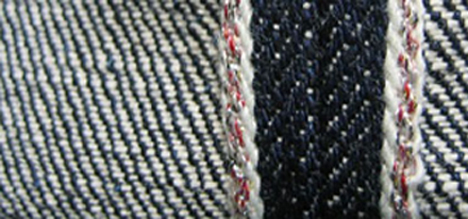
    This is a truly amazing denim and inspite of being so heavy, it is soft in feel because of very coarse yarns used and unique weaving methods applied. Samurai, rightly calls it the ‘Cloth of Super Excellence’. As most of their collection, this is also Selvedge denim with Red and Gold strands .
    21oz_vedged.jpg
    It took a lot of patience on the part of the highly skilled craftsmen to produce this fabric on the powerlooms.
    The Japanese denim brands continue to amaze with their products . And I think the most important ingredient in their denim is the PASSION with which they work on their denims.Its NOT A COMMODITY for them..
    And the PRICE – A COOL USD 330/–. Click here to buy.
    torn_vedge.jpg

    Update- as dj correctly mentions, Iron Heart Jeans uses 22oz denim in some of its styles

  • US Imports of Mens/Boys Jeans & Breeches 2000-2006

    US is the most important market for the Jeans. US imports huge quantities of denimwear from around the world.
    The following figures will reveal how big this market is really. I am giving herebelow the figures of only the Mens/Boys Jeans and Breeches into the US from the year 2000 to 2006.

    New Page 1

    Year Qty (Million pieces) Value (USD Billion) Average Price(USD/pc)
    2000 194.19 1.41 7.28
    2001 196.86 1.46 7.42
    2002 235.69 1.73 7.36
    2003 249.31 1.87 7.50
    2004 259.74 1.93 7.45
    2005 295.02 2.16 7.33
    2006 293.62 2.10 7.15

    Source : US Customs

    We can see that the market is really huge with almost 300 million jeans imported only for Mens/Boys in 2006 .
    The average price figures are though a little odd. It was expected that the average prices of jeans imported into US would have fallen significantly after quota removal. However, the figures do not reveal such a story. The prices are more or less stagnant around USD 7 – though a fall of about 5% is visible from 2004 to 2006.

    But we must not forget that the character of jeans imported into US has changed a little over a period of time. Previously the majority of jeans imported were made of Basic denims and in basic styles. However, slowly the composition of fabrics have changed and more value added – like rings, slubs ,multicounts etc – are being used. These have contributed in increasing the average prices of jeans sold to US. However, it still needs to be remembered that a huge quantity of jeans are still exported to US at prices of USD 4-6 on one hand and on the other ,jeans of USD 10-15and above are also imported in sizeable numbers. Thus bringing average prices to these levels

  • CDI Italy gets into Joint Venture with GFM Textiles of Mexico

    Calitri Denim Industries of Italy, the manufacturer of premium Ring Spun denims , has entered into Joint Venture with GFM Textiles of Mexico . The Denim division of GFM is also commonly known as Parras.

    GFM is a diversified group with interests in Minerals, Energy,Electronics and Textiles. Its denim division Parras has four plants and an annual production capacity of about 100 million metres.
    On the other hand , CDI is a much smaller plant with a capacity of about 15 million metres p.a.

    Probably due to their relative sizes, the Joint Venture GFMT Italy, will be 80% owned by GFM and 20% by CDI. GFM also has an additional option to acquire all of CDI’s assets within next 12 months.
    The Joint Venture gives advantages to both the sides since GFM gains from the CDI’s design , development and quality and its premium image of an Italian manufacturer in the market and CDI gains from the size of GFM.

    It needs to be noted here that the exports of denim and jeans from Mexico has been continously falling over a period of time . However, the exports of Denim from Italy to USA had been growing due to the increased imports by premium and high-end Denim brands like 7 for all Mankind, Chip and Pepper and numerous others. The Mexican manufacturer not only benefits from the image of an Italian supplier (that is why the name has been changed to GFMT Italy), but also gains access to some high-end customers of CDI.

  • The Japanese Denim Industry

    The Japanese denim industry is revered the world over for its innovativeness and its capability to set trends in the Denim Industry.
    It would be nice to have a look at some facts and figures relating to the Japanese Denim Industry.
    Denim Exports : 2006 about 56 million sq mtrs.
    2007(till march) about 15 million sq mtrs.
    Jeans :80 million pairs (approx) produced in Japan p.a
    :20 million pairs(approx) imported p.a
    Export markets : China,Hongkong, US, Vietnam and Italy.

    Main Denim producing areas in Japan : The Hiroshima perfecture, The Okayama perfecture and the Mihara Area.

    DENIM MILLS

    KAIHARA DENIM
    Produces about 36 million sq mtrs of denim p.a
    Exports about 60% of production.
    Offer about 600-900 items to buyers every year.(good)
    Investment since 1970 – about USD 500 million.
    More than 300 looms at six mills.
    Strengths : Great cotton mix and Dyeing process..
    Kaihara has no plans to go overseas for production as they are quite comfortable in Japan…This shows their belief in their own capability to be highly innovative ..

    KURABO INDUSTRIES
    Currently focusing very much on Stretch fibres and are looking at
    advanced versions of stretch denim by using XLA stretch yarn,Xfit
    lycra and T400. This is to take advantage of the Skinny Jeans
    fashion that is currently still strong.
    Developments 2006-08 : Emphasizing on the Ocean BLue colors under the Ultra Marine
    Blue Brand name.
    :’Wave’ – A line developed from a specially designed slub yarn .
    :’Air Spinner’ – third line that features very soft denim.

    NISSHINBO INDUSTRIES
    Capacity : About 12 million sq mtrs p.a

    Developments : As per the marketing manager of Nisshinbo – ‘Masanharu Tanaka’
    the NEW TREND would be a return towards NATURAL LOOKS. This
    would mean that innovative looks using Indigo and other yarn
    dyeing material.
    :Liquid Ammonia Treatment: Nisshinbo is also know for the
    development of the liquid ammonia treatment of Denim Fabric. The
    denim fabric is dipped in liquid ammonia (about -40 degrees C)
    which enables it to regain its original shape , thus giving back
    natural softness to the fibre. One of its five ammonia treatment
    plant is used for treating Denims.

    Other developments in the Japanese denim Industry :
    The DUCK TEXTILE CO. has introduced a JERSEY DENIM – a denim made of knit fabric. This fabric looks like woven fabric but has the qualities of the knit fabric.
    Another development doing the rounds in the Japanese Denim Industry is the effort to keep the core of the cotton yarn undyed .. Though this normally happens in the Rope Dyeing method, but the effort is to have much more undyed portion through HAND DYEING which will give very good after washing effects…

  • Tavex acquires denim manufacturin facilities in Mexico

    The Tavex Group of Spain(Madrid) – the famous denim company of Europe – which already owns manufacturing facilities in the city of Puebla in México, is working to expand its capacity through the acquisition of the denim manufacturing facilities of the company ACOTEX in Puebla and Tlaxcala . This will take the capacity of Tavex in Mexico to about 30 million metres pa.
    "Our objective with this investment is to increase Denim production in the differentiated products segment (Authentic and Premium lines) in North America," comments Herbert Schmid – the CEO of Tavex.
    Well, its a good move by Tavex since they must have bought these facilities at relatively easier prices due to the not so good condition of Denim.

    It also shows that the Europeans are proving to be better at managing the Denim – especially since Denim has turned into a fashion product with lot of differentiation required. American companies had a better hold on denim when it was a basic product and few qualities could be produced in huge quantities.

    However, we will see in the long run that this product will get shifted to Asia almost completely as the costs of productions go up in all European and American nations.