The Greensboro, N.C.-based firm established a new denim supply chain alliance with Arvind Limited and Cone Denim on Wednesday, with the goal of improving vital data used in the Higg Material Sustainability Index (Higg MSI).
Kontoor Brands, a leading global lifestyle apparel company with two of the world’s most iconic consumer brands, Wrangler® and Lee®, has introduced a major supply chain collaboration of denim industry leaders to enhance critical information incorporated into the Higg Material Sustainability Index (MSI), as mentioned above, the apparel sector’s most broadly utilized way to evaluate and examine product environmental impact.
Arvind Limited, India’s premier lifestyle and fashion giant, and Cone Denim, a worldwide leader in denim authenticity and sustainable innovation, will exchange vital data from the denim dyeing process that is presently not considered into the Higg MSI as part of these efforts, according to the business. The purpose is to consolidate value chain sustainability measurements and provide garment firms more visibility throughout product creation and development. By summer 2022, the firms hope to make the improved Higg MSI tool available to all garment brands.
Dhruv Agarwal, Kontoor Brands’ Senior Director of Global Innovation, Sustainability, and Product Development, stated- “Data-driven decisions produce the best outcomes. We believe the Higg MSI is an invaluable tool for assessing the environmental impact of processes and materials utilized in our products. Through this work, our industry will be able to have a more complete picture of denim’s impact, and our product development teams will have better insight into the environmental footprint of our products, empowering us to make more sustainable design choices.â€
The Higg MSI was established a decade ago to assist designers and product makers in making more sustainable material choices and comparing the environmental consequences of various materials, trimmings, and packaging. The technology, which is based on scientific data and metrics, is designed to assess environmental effect throughout the manufacturing process. The Higg MSI assesses five aspects of environmental impact: global warming potential, water pollution, chemistry, water shortage, and fossil fuel depletion.
Despite the fact that the denim industry leads in sustainable innovation, executives have spoken out about the information gaps that exist, cautioning businesses against comparing their outcomes to old data or data from unknown sources. However, establishing a baseline against which to assess the impact of output is the first step toward improving procedures.
The collaboration builds on the firms’ different environmental initiatives.
To improve water conservation, Kontor launched the Indigood Facility Certification in 2021. Textile manufacturing facilities that use 90 percent less freshwater than traditional fabric production, based on 2018 statistics, may be eligible. Arvind’s Naroda factory was the first to receive the certification.
Arvind has also partnered with TextileGenesis, a blockchain-based digital transparency platform that allows for the digitalization and traceability of any textile asset, including fiber, yarn, fabric, and garments.
President Steve Maggard of Cone Denim stated the mill has made “significant capital expenditures†in production to create ethical and sustainable goods. It was the first denim mill to use the MSI tool to create unique materials for their whole Spring/Summer 2022 fabric range in 2021. Customers may utilize this step to acquire fabric Life Cycle Assessments and comparative data for further information on particular materials used in Cone’s textiles. It moreover accomplished its first authentication of origin audit with Oritain, a company that specializes in product and supply-chain traceability.
“We are excited to explore and advance tools and resources, like the Higg MSI, that align with our customers’ goals to design and produce sustainable apparelâ€, said the president of Cone Denim Steve Maggard, and also added, “We welcome the opportunity to collaborate with like-minded companies, such as Kontoor, to bring transparency to the supply chain. Cone Denim has made considerable capital investments in our manufacturing focused on creating responsible and sustainable products and look forward to verification of our initiatives’ results.â€
Arvind Limited is a USD-1.7 billion conglomerate with an interest in textiles, brands, retail, engineering, water treatment, and advanced material sectors, amongst others. They are also the largest fire protection fabric producer in the country. Garments are also an integral part of their verticalization strategy and they produced over 54 million garments in FY 2018-19. From being just a textile company, Arvind has come a long way and striving every day to create opportunities. They are focused to drive social impacts by taking up CSR and sustainability initiatives that are surely changing lives and making a difference to thousands. Arvind owns 22 global patents for environmental solutions.
For Arvind, sustainability goes beyond the usage of environment-friendly products and processes. From farming of crops to finished garments, they are innovating in all aspects to create more synergies in sustainability actions . Arvind considers environmental, social, and economical sustainability as major pillars of its business model . Their practices and processes are geared not only to optimize utilization of the resources but also to nurture their roots and bring out the best of their innovation and design.
“ We understand that we cannot fight this alone, and collaboration is the best way forward. At Arvind, we have a two-pronged approach to deal with it. Being fundamentally right ourselves, as an organization, in the issues which are material to our stakeholders and collaborating with our allies to amplify our sustainability efforts. We continue to push our boundaries with our allies across all our six key inputs – Cotton, People, Money, Energy, Water and Chemicals.†–avers Chairman Sanjay Lalbhai
Arvind has just published its sustainability report 2019-2020.  The report articulates core ideas of ‘Fundamentally Right’ philosophy by making every stakeholder and input an ally towards achieving larger and long-term sustainability goals. It delves deeper into their sustainability performance and discloses in detail the contributions of their allies and the supply chain for raising the sustainability standards. Arvind has adapted the reporting parameters suggested by the Global Reporting Initiative (GRI) and thus, this report is in accordance with GRI standard guidelines.
At Arvind’s Denim Business, in addition to driving all the initiatives mentioned in this report, they are focusing on three high-impact initiatives which are: Conservation of water, Recycling of materials, Farming Projects (Organic Cotton, BCI Cotton, and Natural Indigo). We bring some excerpts from their report with special focus on key areas of Cotton, Chemicals, Water and Energy.
COTTON
Cotton is the most widely used raw material in the global textile industry. Indian textile industry continues to be dominated by cotton, accounting for nearly 3/4th of the total fiber consumption in the country. So, the consumption of cotton is predicted to increase commensurably.
Challenges
In India, most farms are rainfed and monsoons are unpredictable. Crop failures and under-realization of investment lead to financial impoverishment, and sometimes, farmer suicides.
Adopting new agriculture techniques and improving yield are some of the challenges that cotton farmers with small landholdings face.
Traditional cotton farming, with its chemical fertilizers and pesticides, also takes a toll on the environment.
” Arvind Ltd. along with Better Cotton Initiative (BCI) led the implementation of the Better Cotton Standard, laying the foundation for more sustainable cotton production in the country in 2010-11. We are also ensuring zero child labor in cotton fields and the promotion of sustainable cotton farming“– says Chairman Sanjay Lalbhai
Arvind’s Initiatives
Sourcing sustainable cotton and reducing the negative impact of cotton farming is one of their top agenda. During the period, Arvind has started a new sustainable farming method, Regenerative Organic Farming, which is a more holistic way of encompassing organic practices, animal welfare, and social fairness. Their sustainable farm operations now extend to more than 100,000 acres and they are planning to expand their farm operations to cover 400,000 acres of farmland and over 100,000 farmers by the year 2022-23. Around 26% of their cotton is sustainable and is being further being scaled up.
 Â
Arvind’s supply chain consists of 3 types of cotton: BCI, Organic and Conventional
Better Cotton Initiative (BCI): Arvind is one of the largest implementation partners of BCI as well as the first textile major to partner with BCI in India. It seeks to grow responsible cotton through carefully controlled application of water and use of approved fertilizers and pesticides.
Organic cotton: Organic cotton farming is the process of growing cotton naturally. The seeds used are non-GMO, and the synthetic pesticides and chemical fertilizers are replaced by farm-made organic inputs like enriched compost and biopesticides made from on-farm available resources and cow urine. This protects the soil and groundwater and reduces the overall cost.
Arvind gives an interesting comparison of three types of cotton and their environmental impact. This clearly shows the advantage that Organic Cotton has over Conventional and even BCI cotton.
WATER
Right from the cultivation of cotton, to transforming it into a garment – water plays a key role at every stage in the industry. Arvind is focusing on recycling of water as far as possible. A recycling facility with a capacity of 8 million liters per day, is being constructed at their Denim mill in Ahmedabad. They use currently 65% recycled water and only 35% of water comes from freshwater sources. Several of their production units are operating on 100% recycled water.
“We are setting up an innovation center and a water treatment facility to eliminate the use of freshwater in making denim with our ally Gap Inc. For the textile industry, wastewater is a major challenge. With Levi’s and the Zero Discharge of Hazardous Chemicals (ZDHC) program, we are eliminating hazardous chemicals from the value chain. This has helped us in eliminating harmful chemicals from our processes, reduce chemical consumption, substitute hazardous with greener chemicals, and recover salts from wastewater to keep the environment clean“– says Chairman Sanjay Lalbhai
Arvind’s conservation journey started with setting up the first Zero Liquid Discharge (ZLD) plant and an Effluent Treatment Plant, way back in 1998. Â They advanced their efforts by setting up a wastewater treatment plant that recycles up to 98% of their effluent, limiting the net withdrawal of water from bore wells.
“As water becomes increasingly scarce due to climate change and growing human needs, the apparel industry is facing pressure to reduce its freshwater demand. In India, 54% of the population faces high to extremely high water risk” according to Gap
Initiatives taken up to optimize water use include:
Arvind has joined hands with Gap Inc. to set up an innovation center and a water treatment facility to eliminate the use of freshwater in making denim.
Freshwater consumption has gone down in the Denim business by 37% over 5 years due to various water conservation initiatives and efficient machinery.
The facility will use membrane bioreactor (MBR) technology to treat domestic wastewater drawn from the surrounding community, without the use of chemicals in the treatment process. The facility will replace 100% of the mill’s freshwater use with reclaimed water.
By the end of FY 2020-21,3 billion liters of fresh water will be saved and will preserve the local community’s vital freshwater resources.
Corrected the countercurrent system with optimum water flow rate in the AE Desizing machine. The initiative led to resource-saving of 5.5 liters/meter to 5.0 liters/meter of water.
Set up new connecting valves within the wash tanks for establishing a countercurrent system. The flow of water reduced from 8 liters/meter to 6 liters/meter
Santej unit is equipped with a Wastewater Treatment Plant which recycles up to 98% of effluent.
USING GREENHOUSE FOR SLUDGE DRYING The greenhouse uses sun radiance to heat the surface of the sludge bed and aeration to evaporate the water contained in the sludge. The evaporated water is then evacuated through natural convection, assisted by the ventilation system. Santej unit set up the greenhouse with the capacity to treat up to 10 tons of ETP wet sludge.
FOAM DYEING Arvind has invested in advanced technologies such as foam dyeing for denim which uses 90% less water compared to conventional dyeing technologies. The main dyeing element in this process is foam, using air instead of water.
REUSING THE PRE-WETTING BATH WATER Water is picked up from the pre-wetting bath when the machine has a non-Sulphur dyeing load. The water is recovered and carried through pumps and a piping system to where the dyed yarn is washed. This water is utilized for washing purposes.
RECOVERING AND REUSING WATER ON MONFORTE MACHINES In the zero-zero finish, a huge amount of water is sprayed onto the rubbers of the machine to simply cool them down. This water is clear and it’s quality equal to the raw water. The project aimed at reusing this water for the finishing of fabric at Arvind Mills.
HARVESTING WATER FOR WASHING A total of three rooftop harvesting systems with a rooftop area of 65,800 sq. feet and tanks with cumulative water storage capacities of 615 KL of water have been installed at various places for washing purposes. The harvested water is then used in the washing process.
JOINING FORCES TO REDUCE FRESHWATER USE Arvind Envisol has designed the state-of-the-art Sewage Treatment Plant (STP) plant based on analysis of composite samplings at pumping stations. The water is treated and further polished at their STP through various technologies such as bar screening, pH correction, flash mixer, primary clarifier, and sand filter. Later, this treated water is disinfected with Hypochlorite to remove the bacterial colony. Once water quality is checked thoroughly for use in domestic usage, the stream is released in H-plant, boilers, and domestic usage.
WATER CONSERVATION AT BOMMASANDRA UNIT
Rainforest Machine- The machine is designed with 3mm+ 3mm double layered drum structure which runs with pump-free water circulation technology. When the distance between the inner and outer drum of the machine reduces, 50% of water consumption is reduced for stone and enzyme wash, which results in chemical savings as well.
Reverse Osmosis System It is installed to treat wastewater and reuse the same. This initiative led to using 60% of the treated water for the process.
Nano Spray Technology The machines use MSIT as a medium to hold the chemicals instead of water which reduces the amount of wastewater substantially as only the amount needed for garment absorption is sprayed and there is no discharge in this step.
ENERGY
Arvind is taking up multiple initiatives across their units and offices for reducing their energy consumption.
“ In the last five years, we have been able to cut down our total direct and indirect emission by around 15%. Our Ethiopia operations are fully powered by renewable energy. Our ally Cleantech Solar has helped us install 16.2-MW rooftop solar at our Santej facility in Gujarat, which is India’s largest rooftop solar installation at a single location. We are also working with farmers to use residues of cotton crop in boilers instead of coal to generate steam from Biomass“– mentions Chairman Sanjay S. Lalbhai
INITIATIVES
They have implemented ISO 50001 energy management system at all their large energy-consuming sites and are also increasing their alternative energy in the total energy mix.
Biomass Energy Farmers usually dump or burn the bulk of the cotton stalk in the fields after harvesting the cotton crop, leading to pollution and an increase in emissions. . Arvind undertook a pilot program to check if the cotton crop residues can also be harvested and used in the boilers instead of coal to generate steam from biomass. Based on the results of this pilot, they plan to increase the coverage and quantity of biomass coming from this source further.Â
Renewable Energy Cleantech Solar is their ally in reducing greenhouse gas emissions. Their Santej Plant takes their total solar capacity across various sites to 22MW. Arvind wants to further take their captive solar generation capacity to 40 MW. Once that capacity is reached, overall generation will exceed 55 million units per year and will reduce carbon emissions by 50,000 tons per annum.
Developed an energy strategy ‘Less Watt Per Meter’ to flatten their energy demand curve and reduce their environmental footprint.
Introduced daylight harvesting systems and also reused heat and water in processing machines from condensate recovery
Ethiopia’s operations are completely powered by solar energy.
All their units undergo periodic energy audits to find out newer opportunities to reduce energy consumption
POLLUTION
Arvind is reducing GHG and air pollution through various initiatives. They have switched from coal to renewable biomass to the extent of 40%. They have achieved a 13.88% reduction in direct GHG & a 15% drop in indirect GHG emissions in the last five years, considerably reducing their overall carbon footprint.
WASTE MANAGEMENT
To utilize biodegradable waste and obtain smoke-free fuel which can be utilized for cooking, Arvind installed a biogas plant that transforms the biodegradable waste from kitchen to biogas and in the process creates manure as a by-product.
SHIFTING FROM HIGH EXHAUSTIVE (HE) TO MILD EXHAUSTIVE (ME) IN YARN-DYEING MCT (Monochlorotriazine) dyes most commonly called HE dyes are PMF fast which are generally used for dyeing of yarn. The major drawback of this system is less fixation, high temperature of exhaustion and fixation, more salt requirement in dark shades, and limitations in depth. After studying, they shifted towards a bifunctional system, which is more robust, sustainable, generates lesser effluent load due to high fixation, and reduces dyeing temperature by 20°C thereby reducing steam consumption. It maintains the same fabric quality and increases throughput because of high RFT levels
CHEMICALS
Arvind is intent at replacing conventional chemistry with green chemistry . Their key allies when it comes to chemicals are Levi Strauss & Co. and the Zero Discharge of Hazardous Chemicals (ZDHC) program. Arvind became the first textile manufacturer as well as the first company headquartered in India to join the Zero Discharge of Hazardous Chemicals(ZDHC) program in FY 2016-17.
INITIATIVES TAKEN
REDUCING WATER FOOTPRINT IN PRINTING They use plastic containers for their printing process as chemical stores for paste preparation and prolonged storage. The container is reused for the same operation after a thorough washing. On the other hand, printed fabrics are washed in a long soaper where the last two chambers contain minimum impurities. The water in these chambers was usually drained. However, the Printing Team devised a novel method to collect water from the last two chambers of the soaper and connect the same to drum washing. After collecting the washed water and filtering it, they utilized it for washing the plastic containers.
ONLINE REPOSITORY OF CHEMICAL MANAGEMENT – Through a special drive, they store all related documents in a soft copy format and run the entire system on a paperless process.
CONDUCTING LIFE CYCLE ANALYSIS Arvind has procured a specialized software, GABI, which will be used to conduct Cradle to Grave, Cradle to Gate, or Gate to Gate Life Cycle Analysis of their products.
CHEMICAL-FREE STRIPPING OF SCREENS The photosensitized cured film is removed normally with means of chemicals. Their printing division is equipped with an advanced high-pressure waterjet system that uses only water jets to remove the cured film without damaging the pores of the mesh.
These were just some excerpts from their long sustainability report which also speaks about various other initiatives that Arvind is working on. Download the full report here .
Recently Denimsandjeans held a webinar ‘What Next For Denim’ with some of very well known and globally reputed denim professionals . The panelists included :
1. Albert Candiani (Owner – Candiani Mills) 2. Aamir Akhtar (CEO- Arvind Mills) 3. Alberto De Conti( Head Of Fashion Division- Rudolf) 4. Maurizio Donadi (Co-Founder – Atelier & Repairs) 5. Carlos Arias (CEO- Jeanologia) 6. Stefano Aldighieri( President – Another Design Studio)
The talk was moderated by Sandeep Agarwal and Stefano Aldighieri. We now bring the comments of the panelists of our key questions related to denim industry in a series of six articles with each article giving clear views of each panelist.
In the current article, we bring the thoughts of Aamir Akhtar – CEO Arvind Limited, India . We share his original comments on some of the questions that were put to him during the discussion . (video of his talk )
WHAT IS THE WAY FORWARD FOR DENIM?
We are talking about denim industries and denim industry is so all encompassing from fibers to yarns to the manufacturer to the distribution to the brands and retail, there will be huge amount of churning in the whole industry and every part of the industry -starting of the retailer .And we have been seeing what is really happening. The weaker ones really are going through a lot of aggravation of Chapter11.
And the fact is that with so many distractions we had till now . Not distractions but alternate options for consumers – which is right from holiday to eating out , to vacations , to cell phone etc. Continuously apparel including jeans has been losing shares to these other industries. So, to be honest , I think the apparel industry in general and denim industry in particular has got a breather.
For some time people will not be able to travel, people will not be able to go to restaurants or go less to the restaurants. So that money is available to the consumers. Let’s say jeans or a unit cost of jeans being low- it’s instant gratification at a low cost.
So I think Stefano’s point was very interesting and the biggest falloutwe have seen in the supply chain of the current pandemic is the problem of cash flows all across, and I think the biggest source of cash flow problem has been the inventories. So it’s the brands, retailers and the supply chain which is holding onto large inventories, and which is driving this whole cash flow problem which is driving chapter11 and all those issues.
The current model in our industry is sort of the way it is, about almost a year or 12 or 14 or 16 months in advance we’re expecting some people to take a decision on behalf of a consumer as to what they are going to buy and that is unfair, it’s impossible, it’s practically just not possible.
So that means taking those calls and producing goods in advance way-way years in advance. And expecting those goods to sell, I think that’s where the fundamental problem is.
Possibly, I don’t know it’s not going to happen overnight, it will not be an event but as a continuum . I believe this experience, this very sort of unfortunate experience, possibly one can see a shift in the business model of industries.
If you see the automobile industry with whatever has happened due to Uber/App based taxi service,the industry itself has got disrupted where people move away from owning assets into the service.
People are realizing that there are assets that can run and deliver more value. So, rather than you own assets and it is more convenient to avail the service, it is less costly. So, in our industry also possibly there could be this shift towards pull based supply chains. Right now, it’s all being pushed, so you’re manufacturing, you’re deciding and you’re pushing things to stores and to consumers and finally then it doesn’t sell which ends up in landfills.
Possibly, there’s a case for you know pull based industry and its power to the consumers so it masks all the things (all the cool things we’ve been hearing about till now )and we have thought they are which were very hypothetical. But possibly when seeing this that there is value in this where its mass customizations, its manufacturing to the requirement of the consumers rather than taking calls on behalf of the consumers.
And today there are technologies available where you can produce 1 unit, you don’t have to spend billions of yards of fabric and stuff like that.
So, possibly one could see a shift towards that direction.
WHAT ARE THE 3 THINGS DENIM INDUSTRY NEED TO DO?
I personally feel as an industry, to give direction to the industry like if you draw parallel from the other industries. For ex. Automobile industry has seen a destruction over the coming of electric vehicles (e- V’s) and we saw that phone industry going through a huge change when you got smartphones. LED TV has been able to disrupt the television industries.
So even now industry technology if you see what has happened for ex. Carlos from Jeanologia – what laser has done to the industry, it is really destructive, the whole garment finishing part of the industry. So, it’s way more sustainable, efficient, less losses and lower cost.
So I think there are multiple technologies which one can see in the industries from dyeing in a very efficient manner with low cost and in a sustainable manner to multiple phases we are seeing in an industry eg recycling. And I personally feel that this technology has the power of being able to make the industry more efficient, more sustainable, bring down costs as well reduce wastages.
So, this whole thing about using technology – that’s to me is one of the important parts because it can take the industry to the next level and give a new direction to the industry. And all these things will become a subset of that- sustainability, circularity that’s a one point.
The other point is that I believe that our industry we watch and pay design people. We have got some very good design talent, operation talent, merchandising talent and management. The managerial part of the industry is very important, because for the industry to create value, attracting good talent to be industry. So like you have the challenge going to other industries and creating disproportionate value to the other industry. Unfortunately as an industry we’ve not been able to attract great talent where we have been able to create value for the stakeholders. So if you end up doing that then more capital will flow to the industry. People will start seeing this industry as creating a lot of value.
So these are the few things that came into my mind.
Watch our all episodes of #CovidTimes talks and Webinar at our official YouTube channel
 Indigo is among the oldest dyes to be used for textile dyeing and printing. Many Asian countries, such as India, China, and Japan, have used indigo as a dye for centuries. The application of Indigo has been mainly targeted towards textiles and apparel and related products in all these centuries. It has never been tried to give a very broad , cross industry perspective to this wonderful , most unique dye in this world. However, the Indigo Museum conceptualized by CMD of Arvind Group Mr Sanjay Lalbhai changes all that. His vision of extending the vocabulary of indigo to diverse materials including but not limited to cement, brick, steel to wood, sandstone, black ash, VHS tapes and much more has been successfully executed by creative head Vipul Mahadevia in a very short period of about an year . Eminent artists and artisans from across the world have collaborated with Mr. Lalbhai and his team to co-create stunning installations and contemporary art works . Also check out his interview with us here.
Indigo Museum – Artistic Alchemy
This exhibition, currently installed at the spacious and old world Kasturbhai Lalbhai museum, encompasses stellar examples of the magic that can emerge out of a creative confluence of minds. On view are weaves, furniture, paintings, sculptures and installations, all of which use Indigo to fascinating effect. The sheer range of mediums – wood, steel, aluminum, marble, stone, ceramics, rubber, canvas, and paper – that further the transformative qualities of Indigo is fascinating.
Internationally recognized contemporary Indian artists such as Nalini Malani, Alwar Balasubramaniam, Manish Nai, Umang Hutheesing, Meesha Holey, Vyom Mehta, Gregor Hilderbrandt , multidisciplinary artist and designer Aboubakar Fofana from Mali, are among several artists who have been commissioned to explore Indigo as a medium. Beautiful craft by artisans from Gujarat, the minimalist explorations of young artists who work with paper, and stunning fabrics by skilled dyers, are all displayed side by side in the many rooms of the family’s erstwhile home, which is now a museum.
Commenting on the selection of artists and artisans, Mr. Lalbhai says,
“Our intention is to highlight the immense potential of Indigo and display a range of possibilities for an Indigo lifestyle. This precursor exhibition offers an immersive experience. I feel privileged to have co-created these works along with the creators themselves. Some of the artists have never worked with Indigo before, and, I believe, this will create an ecosystem that promotes creativity, art and put India on the global map.â€
Creative head Vipul Mahadevia says,
We brought together a vast array of artists from diverse fields to enable them experiment and give their own interpretation to natural indigo. It has been a wonderful experience to how see how each artist translated their understanding of the dye into a unique art piece in a very short period of time.
We list here some of the artists who created art pieces for the Indigo Museum. Some of the artists are covered in this article and others will be in the following articles.Â
ABOUBAKAR FOFANA
BIOGRAPHY
Born in 1967, Aboubakar Fofana was born in West Africa but spent many years living and working in France. His atelier is in Bamako, Mali, where he and his small team of trained artisans produce unique modern textiles using 100% natural processes and ancient indigenous techniques. As a child in West Africa, Aboubakar Fofana was told about green leaves that made blue colours. Years later, already a successful calligrapher, artist and graphic designer living in France, he remembered this story, and started on a long journey to understand indigo and his African heritage. The technique of fermented indigo dyeing using whole indigo leaves had already disappeared from West Africa and was replaced by synthetic dyes by the time Fofana first heard about it. He pieced together the technique by reading and asking, and by trial and error. It took many years to understand the process and even more time to master this difficult but unmatchable method of dyeing, and he is still learning. His work reflects the living materials he uses, harnessing their cycles of birth, life and decay, and the seasonal rhythms of nature. He uses fine natural fabrics to take up these colours, with a preference for the luxurious organic Malian cotton, hand spun and hand-woven, that many of his pieces are made from. Fofana is dedicated to preserving this tradition of fermented indigo dyeing, along with other West African textile techniques and indigenous materials.
Born in 1991, Bhagyashree Suthar was brought up in Jodhpur, Rajasthan in a family of furniture makers. She moved to Vadodara, Gujarat to attain her bachelor’s and master’s degree in Fine Art from the reputed Maharaja Sayajirao University. She won a gold for master’s in visual arts in 2016. Her first solo exhibition was ‘Fractal Future’ at Akara Art Gallery. She has showcased her work at India Art Fair 2017 & 2018 and will showcasing in 2019 as well with a solo focus booth. She currently lives and works in Vadodara and is represented by Akara Art, Mumbai.
ABOUT THE WORK
Informed by the Roman and Gothic construction, my practice is heavily influenced by architecture and geometric patterns in nature which pose as a reflection of myself. Through my works, I lay out a Utopian fantastical world. I take reference from British Iraqi architect, Zaha Hadid’s fluid designs as well as fractal geometry based on symmetrical patterns found in nature and Fibonacci geometry (a ratio that is aesthetically pleasing, found in the spiral patterns of plants). My practice so far, has revolved around using beeswax as a medium to create sculptures and wax painting. Along with this, I create pen & ink drawings on Rajasthani Paper. I attempt to portray futuristic architecture by incising the surface with a variety of tools and making designs by adding or removing certain forms of wax.
Born in 1964, in Gujarat, India, she holds a M.A. in painting from both the Royal College of Art in London (1991-93) and the M.S. University in Baroda (1983-1990). She was one of the founding members of Khoj International Artists Workshop. Parekh is one of the few artists working in India today who continues to explore an exclusively abstract language. It could be said that her works are indebted to the ethereal abstractions of Gaitonde and the geometric craftsman ship of Nasreen Mohammedi (who was one of her teachers in Baroda), as well as the more gestural ink drawings of Jeram Patel. She has developed an artistic practice which also pays reference to the craft and textiles traditions of her native land. The artist straddles painting, collage and drawing to create works that incorporate both the geometric and the organic. Her most recognized works are created by layering shapes cut from handmade papers into dense ï¬elds of pattern and energy, sometimes perforating the surface and adding other materials.
ABOUT THE WORK
Portrait of ‘the blue’ – My first experience of working with Indigo dye was in Japan in 2013. I was in a residency at ACAC in Aomori. The area around grew Indigo and the ancient town of Hirosaki had an old indigo dying unit from Edo period. I did visit this old workshop to see the process of preparing natural Indigo and the different techniques of tie & dye. In the pursuit of using local material in my practice, I made a work with Kanji script and Indigo dye on 5 large sheets of paper. It was fascinating to get to know the manner in which the dye would respond to paper. It took some amount of playing around to familiarize with the way the dye would get fixed and add density to the hue as I soak the paper more and more. It was also magical to see the hue of this blue once it dried. The title of that work was ‘Gratitute’.It felt really rewarding to make this work with this amazing pigment. Ever since I have been looking for another opportunity to work with Indigo. I dipped a fat round brush in the jar of SIL. Out came the brush loaded with thick dark pigment coated with dense blue-black velvety deposit. When I brought that brush in contact with a thick cotton rag paper, it allowed me to move and slide the brush making amazing bold marks. Another jar of BIP contained a sticky and slimy dark blue. It responded well when I sprayed water after painting with it. The jar with LIP gave me a tone of lighter blue and was easy to let it flow with water. NIP gave a textured surface and CIP was grainy and dark.The work started with big heavy notes and soon started getting small movements and variations. The surface was built with shades of the pigment with surprises as it bleeds with the water. It is active with the web of patterns in places and also silent in parts. Each of the 5 pieces speaks about ‘this amazing blue’.
Nalini Malani was born in 1946 in Karachi, Pakistan (Undivided India), as the only child of lawyer Jairam Malani and gymnastics teacher Satni Advani. A few months later the Partition of India occurred, which saw her family find refuge in Calcutta before moving to Bombay. A forced exile that would mark her family and later her practice as an artist. Over her lifetime Malani has received various awards, including an Honorary Doctorate in Fine Arts from the San Francisco Art Institute (2010), the Fukuoka Arts and Culture Prize (2013), the St Moritz Art Masters Lifetime Achievement Award (2014), and the Asian Art Game Changers Award (2016). Malani still speaks about Bombay and not Mumbai, for various cultural reasons. This is why the old name is still being used in her publications.
ABOUT THE WORK
“The triptych, The Teller of Tales ……the fragility of life. For this I placed the female protagonist, the storyteller, in the lower part of the right panel, from where words spark from her hands all over the painting in different shapes and forms. This is a narrative that works on three levels – from the 19th century Bengal peasant liberation movement, to the quote from the German female philosopher and political theorist Hanna Arendt who speaks of the continuation of life. And finally, to the philosophical note of the Polish female poet Wislawa Szymborska, where in our improvised faulty ways we are still able to live on.
On a historical level ,The Indigo Rebellion (Neel Bidroho) starting out in the Nadia districts in Bengal in 1859; the workers attacked the Indigo factories with whatever weapons they had, joined by their women who fought with pots and pans. From there it spread in 1860 to other districts where the farmers revolted successfully, overthrowing the brutal suppression of the European Indigo planters, supported by the British Government for almost a century.
On a sociological level , Hannah Arendt’s quote:
“To be alive means to live in a world that preceded one’s own arrival and will survive one’s own departure.â€
On a philosophical / existential level , Wislawa Szymborska quotes from her poem Nothing Twice:
“…we arrive here improvised and leave without the chance to practice.â€â€œWhy do we treat the fleeting day?with so much needless fear and sorrow? It’s in its nature not to stay:Today is always gone tomorrow.â€and leave without the chance to practice.â€
NIBHA SIKANDER
BIOGRAPHY
Born 1983 in Mumbai, India, Nibha Sikander studied painting at the Maharaja Sayajirao University in Baroda and has been exhibiting actively since her graduation in 2008. While at university she received the Nasreen Mohamedi Scholarship in 2004-2005. She now lives between Bombay and Murud (Janjira), Maharashtra.
ABOUT THE WORK
My work titled “Nature construct -deconstructâ€, is set of 36 works. It is part of my ongoing series of work, which reflects the current environment that I am surrounded by. It talks about my relationship with nature in respect to birds, moths and insects, which I have been studying in detail for the last few years.Paper as a medium has many qualities -but what I love the most about it is that it can be stiff when required and flexible when needed. This particular project fascinated me because I got to use indigo dyed paper which challenged me to find depth within this singular palette. One colour which gives you so many shades as opposed to using different colours.
KAVIN MEHTA
BIOGRAPHY
Born in 1994, in Ahmedabad, India, Kavin studied Industrial Design at University of Hertfordshire, Class of 2015. He is an Industrial Designer who practices in various fields of Design, Art and Material exploration. He works with a variety of Natural materials, interdisciplinary techniques and unique methodology at his studio and workshop based in Ahmedabad, Gujarat.
ABOUT THE WORK
The concept behind his works revolves around the nature of indigo and the possibilities it possesses in amalgamation with other natural materials like stones.
Arvind had recently come up with a most unique INDIGO MUSEUM that aims to extend the vocabulary of Indigo into spaces and possibilities never explored earlier.This museum seeks to revive and nurture traditional art forms and bring a contemporary interpretation of these with indigo, thereby benefiting the artisans and an entire ecosystem. With know-how to impart indigo on a variety of surfaces like metal, stone, wood and many more, Arvind Indigo Museum seeks to push the boundaries of innovation with Indigo into newer areas and disciplines but also deliver social impact, in line with the core philosophy Arvind stands for. The coverage of materials with Indigo is so profound that we will need to publish a few articles to do justice to the work done in this museum by craftsmen all over the world and we will be doing this over next few days.
Indigo museum has been the pet project of Sh Sanjay Lalbhai – CMD Arvind . He has been personally driving this project with a passion that is rare to seek. We spoke to him to find out more about his vision and achievements in this direction and would like to bring the same to our readers.
How did the concept of applying Indigo in so many diverse applications come to your mind?
It is just because of our history as we were responsible for bringing denim to this country. I have been associated since a long-time way back in 1988. It almost reinvented ARVIND and my carrier also took an upturn because of denims; I have been associated with this product and denim is what it is because of this wonderful dyed indigo. We had opened the Kasturibhai Lalbhai Museum and my grand father had also opened the Lalbhai Dalpatbhai museum,so we have a tradition of sharing whatever is valuable as collection to public.
The idea came to me that, if I can create a platform using indigo and that too national indigo, then it would be a unique thing that allows artisans and artists to express their creativity through various mediums . And now that when thought came , one of the limiting factors was that the indigo has being imparted mainly on fabrics. So I further thought that if we can extend it to many other substrates then the ability of artists to express themselves through more mediums would become possible and that would be unique in a way and will attract more people to come and visit this museum because it is something unique.
It’s an innovation which has not been done before and it is also exciting for artists and artisans because it is co-creation, when you start you don’t know what you will get and what will be the outcome because no one has done it before So there is that excitement of trying to do something which is never been done before and express your creativity through a new medium. So, in that way it has been a very interesting experiment and we have showcased that in a years’ time we have been able to use so many different materials.
So, we’ll keep on extending this,from lifestyle to various mediums and we would really like to engage with artisans as there are so many brilliant crafts which exist in this country and there are so many brilliant artisans also.The objective is also to give them livelihood so that their next generation will also come into this and extend this tradition.
However, I feel that, we have to make the Indian crafts more contemporary which can cater to the global audience and Indigo enables that. We see this as on going exercise to create the whole ecosystem where underlying theme is INDIGO. So that’s the vision and whoever has worked on it has loved the medium.
We have also been surprised at how such beautiful things can come out of it. Its a very rewarding exercise and just a beginning-lots of things have to be done in the future.
Considering all the technical difficulties, especially applying indigo to metal, glass, acrylic, stone and so many other mediums, it’s a huge achievement in a short period of one year. How do you see it?
Yes, it is!
Now the glass ceramic, I will show you, these are all absolutely new technologies we are using. We have failed many times. However, we keep on trying new recipes and new ways of imparting it,new way to impregnate various surfaces with indigo .
But when you attempt it you also don’t know how we are going to succeed. But you have to keep on trying hard to understand why it’s not working and then you have to try hard to see that how do we make it possible. So, yeah it’s a journey.
In this whole journey of applying indigo on diverse applications, how did you see the nature of natural indigo evolve and change?
Yes, it does change,because with oxygen it will fade and oxidize. So,it is a natural living dye that it is constantly changing unlike any other dye. One thing is that it is natural,when it comes from an agriculture crop, so you ferment the leaves, you take out the natural indigo.
Green becomes blue and we are now trying that how do we extend the vocabulary even of the blue by mixing other natural dyes and creating a whole new palette but the underlying base would be only indigo. So, the possibilities are endless, it reacts differently with different mediums when it gets exposed to sun, when it gets exposed to air, it reacts differently. So yes ,it is all the time changing evolving ,living dye which is very exciting and it gives different hues which no other blue can give neither can any other color give.
Would be you be adding any more mediums?
Yes,and this will be an endless exercise and we are not restricting it, because you must have seen that we have 5 foreign artists who have worked on different mediums and created masterpieces. So,we will get artists and artisans from all over the world, and this museum will become a unique thing that these people will be contributing to with an underlying theme of indigo.
All these experiments which have been happening here, do you think this will also create a lot of opportunities in industrial applications?
Yes, because we will be able to extend this to every lifestyle.What we have done with clothes can be done with accessories,home textile, sanitary wear or the buildings etc, and to make it look good it has to be affordable and if it is too pricey and elite,then it will remain restricted.
Further, it can be also used for luxury brands which will really get used to it. But we also want that it remains affordable and can be used by everybody. For example- a pair of jeans-it’s very affordable,very user-friendly product,it is very light and very low on weight.
Similarly,we would like to bring that practical aspect where,whenever we impart indigo and when we extend the product’s life cycle or use indigo in different lifestyles,it has to be usable, affordable, unique and pleasing.
What is the sustainable angle in this project?
It’s very sustainable because there is no other dye which is so therapeutic. This is anti-bacteria ; you can consume it.It is US FDA approved. Mr. Abu Bakar who has done those installation-he’s been practicing all his life ; he’s worked on within indigo. So, he told me that in Mali (he’s from Mali-in Africa) that when a newborn baby arrives in this world,he/she is wrapped in such indigo cloths because it is anti-bacteria and when a person dies then also he/she is also wrapped in an indigo cloth because it is considered a spiritual thing.So, it is such a brilliant thing : here is a dye which is good, otherwise all chemicals are harmful.It is a natural dye and it is completely sustainable which is good to consume in any way. It’s really unique.
It is absolutely sustainable like khadi we have made (which is hand spun and hand dyed and is natural indigo,no fossil fuel is used,hand-woven. It is the oldest denim designed in memory of Gandhiji).So, we have produced this khadi denim which is now globally available- Levi’s has sold it globally and it is absolutely sustainable. It does not use any kind of fossil fuel in manufacturing, everything is natural.
One of the things about natural indigo which restricts its increased usage is the cost .Do you think that over a period of time we can have improvements in this area to make it more cost effective?
We are working on it. We are going to the farmers – understand where the costs are and how can we improve the crop yield. How can we improve the concentration of indigo. Because when we use natural indigo,it has 40% concentration.So, the cost almost doubles. But we have not really worked on it. Now that we have started working , we will go to the farmers and really get some different varieties grown.
We are trying and ensure that we get highest yield. And then we can figure out whether we can bridge this cost between synthetic and natural. Even if we are not able to bridge it- we really want to make it more rewarding for the farmers. And we really want to produce authentic natural indigo which ARVIND can sign so there is no mixing of any kind of synthetic Indigo in that. So at least we can ,with assurance, sell indigo which is hundred percent natural because we will want to be personally selling it after procuring from the farm where the entire supply chain is controlled by us to ensure purity .Otherwise something cheap can easily get mixed up with something which is expensive.
And then the synthetic Indigo is not good for the body and it is not like natural indigo. It is harmful. So of course, when Indigo is used in many other different mediums. I’m sure that such projects will create a bigger demand for indigo.As a result of which, it will be a reward for farmers. It is a socially responsible project.
The application of natural indigo has been in certain way as used in denim .Will that be enhanced due to your experiments?
We were the first company to use natural indigo and market khadi denim. We will be the first people to use it on room furnishings ,drapes and carpets etc . We have already extended it into these broader categories.
In terms of application – lets say can technical application be improved so that it can be applied faster.
We have mainly used various techniques for our project. Our emphasis has been non-profit and creating the unique museum. But now we find that it is a very appealing product and it can be commercialized. So we will explore that possibility .Unless something can be commercially produced- nothing will become affordable. It will remain boutique. If it is really boutique it will remain a craft. So in some ways we will succeed and in some ways we may not but home furnishing definitely will see success. And we have tried it now on everything steel, wool, synthetic, linen, all blends. So everything is possible.
I think you’re coming up with the bigger museum out here as per the model out there.So that is going to be big one with over 25,000 sq feet of space ?
Yes. We will set up a large museum as we are saying that this should be an on going project which would not have an end because this is constantly working with some of the best creative minds all over the world and has infinite possibilities.
Would you like to take this museum globally?
Yes,We would like to show it in various countries so that more people will come to know more about it. We also like to raise resources for this museum. So we require patronage, we also require people who really believe in it and want to contribute to it because its a public museum.
So anyone who’s committed to this ecosystem we can give them certain naming rights and other things. They can also contribute.
Any message for indigo lovers all around the world?
I think it is one passion which one should pursue because it’s one fabric which is globally accepted.It cuts across all castes, creeds, and genders. And it is a very universally accepted product. So liking something like this is very natural and which is good for every one and it is affordable. It gives us so much joy. Everything is good about this.
Arvind (India ) has come out with some interesting concepts in their AW15/16 collections including multi fiber fabrics for strength and comfort , Neo denims with sustainable dyeing processes , Cord denims and more. We give here a brief synopsis of their Fall Winter 15/16 line in the words of their PD team.
Cord denims
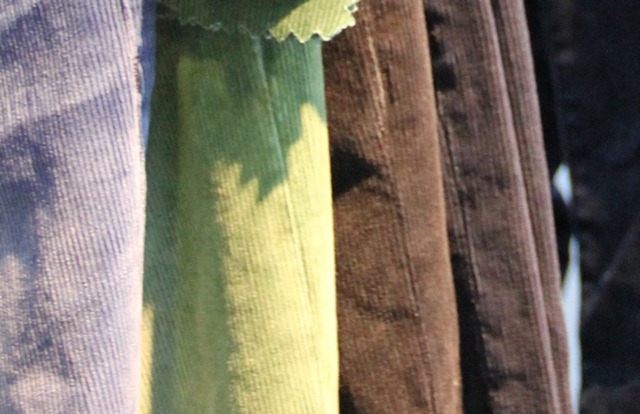
Corduroy has always been popular as a format winter wear but never explored in other dimensions. Arvind presents corduroy denims that fade as you wear and wash down with every wash. Cord denims include a vast pallete of forest shades and blues with neo dyeing.
Neo Denims
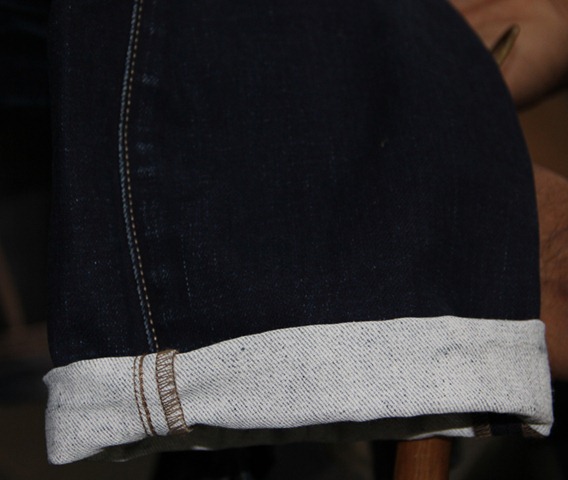
Our latest innovation- Neo Denim- offers a saturated dark blue shade that washes down and gradually and offers great contrast at every level making the jean look super rich. It is a new way of dyeing which is much more sustainable and does not waste any water in the process of dyeing and maintains a deep dyed look at the same time.
Knit Denims
Since knits mould to fit body shapes and give comfort, a new amalgamation has been created by us – combining two methods of fabric construction to give a “ denim effect†using knit structures.
Boomerang Denim
A breed of highly stretchable fabric with extra softness and volume and high shape retention property making it bounce back into shape every time its being worn . The incorporation of special fiber and treatments impart extra suppleness and stretch for skinny jeans making it a highly fashionable product.
Soft and Easy Stretch
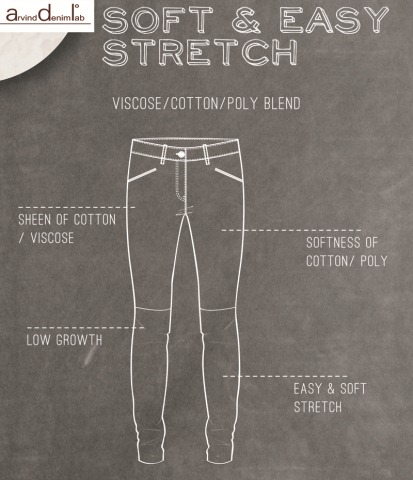
A new breed of stretch denim with soft feel , high and easy stretch and a better recovery. The incorporation of special fiber and treatments impart extra suppleness and and easy stretch for skinny jeans. Cotton- viscose blends provide extra luster and softness.
Performance Denim
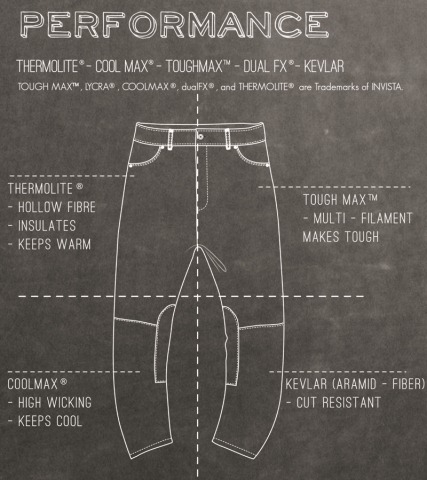
Multi filament tough fabrics ..
Sustainable Denims
As a part of Sustainable Apparel Coalition , Arvind implements a number of sustainable technologies in various processes of production to bring out its sustainable collection. From Organic and BCI cottons to using natural indigos to advanced denim system for water conservation or using linens , Arvind follows a multi-pronged strategy to contribute towards eco sustainability.
Â
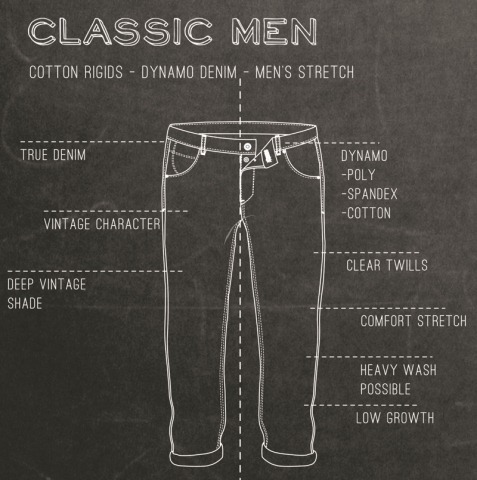
Classic Men
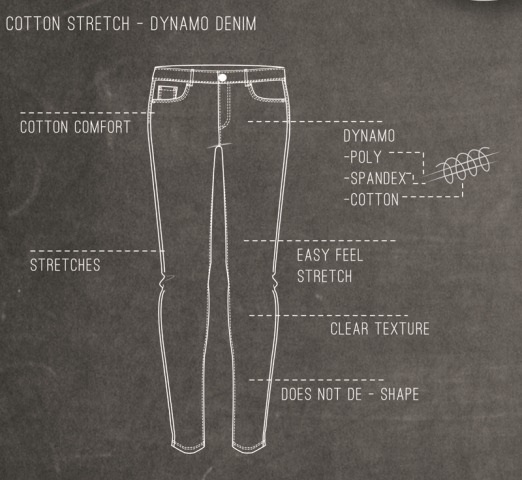
Stretch denim with improved high recovery and retains the looks of non-stretch rigid denim without de-shaping. This is a high performance product with poly spandex and cotton combination with clear twills , giving a clear texture.
Classic Women
All season products where they form the core offering of all brands.
Arvind launches its Spring and Summer – 2013 for European Brands at Denim by Premiere Vision, Paris. The collection brings the best in Denim for Spring and Summer – 2013. Some key products to be showcased by Arvind are :
Light weight Shirtings in Linen Blends and Light weight cross denims for loose bottoms. Click to enlarge picture
A set of Soft stretch and power stretch in cold grey and black. Cement color, grey coat and hints of black are the key ashen look of the season.
The 80-ies inspired indigo is still the season’s favorite in rigid and stretch.
For the contortionist they have power stretch in soft hand, rich full blue and red cast sateen.
The Summer Luxe has very refined light weight rigid and stretch along with new slubby light weight.
Sensual Denims are bright indigo, open weave in Excel stretch. Other sensual denims are soft power stretches and new wax touch.
The Time -Tested Products are in 80’s inspired color in modern construction, super dark indigo cross denim, refined one way slubby look and real vintage, grey cast, natural streaky denim. Soft Streaky Denim features in 11 Ozs and 9Ozs.
Arvind shall also be presenting the Excel Denim in Trend Area at Denim by PV on 30th Nov. Arvind Denim has a very strong positioning on ‘ Sustainability’. Various products like Organic Denims, BCI cotton based denims, Recycled cotton and Recycled Polyester based denims are an important part of Arvind Denim portfolio. This commitment to sustainability also had led Arvind to develop its Excel Denim in collaboration with Birla Excel. The third generation Cellulose fiber – Excel is made from Wood Pulp, a natural and renewable resource. Arvind and Birla claim the following eco benefits of Excel Fiber :
“Excel Plantations have higher air purification per hectare of land in comparison to cotton. Solar heat absorption prevents generation of black holes. The water used for producing per unit kg of Excel fiber is significantly lesser than compared to the water used for producing any other cellulosic fiberâ€.
Excel denim offers a unique combination of sustainability and fashion and is being added to collections of major brands worldwide.
Arvind shall also be presenting their Future Denims at the show which includes the
Authentic Denims
Modern Denims
Authentic Denim includes denim from Organic Cotton, dyed in Natural Plant Indigo and woven on the vintage shuttle loom with selvedge. Denims range from a true authentic heavy weight 14.8 Ozs, Selvedge toa Natural Indigo with Natural Indigo fill to one with a Natural Linen. All of them are very comfortable to wear and age naturally.
Modern Denim includes denim made with all modern technologies available. New age yarn design, new combinations of dyeing, compact weave constructions, hybrid stretch combinations and super-tech coatings.
Arvind Mills –India – is scaling up its Organic Denim Production to meet increased demand . Organic denim is witnessing a surge in demand worldwide with big retailers like Walmart focusing on the same. Wal Mart is rumored to be aiming to convert almost all of its denims to ‘Organic’ . The organic denim usage was popularized by some Japanese brands and then Italian and LA brands picked it up – as we mentioned in a previous report. .
Now with large retailers jumping the ‘Organic’ bandwagon , we can see some real action coming up in this niche.
Arvind is currently manufacturing about 6 million mtrs of Organic denim per month and aims to double the same in the coming 2 years. It has tied up with over 1000 farmers in India and buys organic denim directly from them under contract farming. This is definitely beneficial for the farmers as well as for Arvind itself.
But the other aspect of the entry of Wal-Mart and other similar retailers in this segment is that the price structure gets severely affected – what with Wal-Mart offering Organic Denims at USD 12 !
It makes it much more difficult for other brands to offer Organic Denim as a premium product and offer a REAL ORGANIC DENIM ie denim which does not use any harmful chemicals at all in all stages of production . Denim manufacturing process spoils the environment at various stages :
Many indigo dyes themselves have toxic substances. The release of indigo into the environment pollutes the same.
Denim washing uses a large number of chemicals harmful for the environment.
The whole process of denim washing is very wasteful in terms of high level of water usage.
Arvind Mills from India has recently declared its financial results and has shown a profit of Rs 12.25 crores(USD 2.6 million approx.) for the third quarter as against a loss of Rs 33.17 crores(USD 7.5 million) in the corresponding period last year. Though the results are strictly not comparable because of demerger of its brands and retail business, they do reflect the positive sentiment on denim.
Here are some figures on denim fabrics :
Growth of 36% in volumes over last year.
16% growth in export volume .
Increase in domestic sale to 60% as against 54% last year – This also reflects the strong domestic market for denim in India.
The figures do bode well for the denim industry in India and we should see other companies also bringing out great results.
However, there are two factors which have been dampening the otherwise rosy scenario of denim industry :
Cotton Prices: Cotton prices have been firming up since the beginning of the season – almost 25% + and are not expected to mellow down in the coming months. Being a major component of the denim cost, the prices of cotton immediately affect the bottomline.
Weakening Dollar : The exchange rate of dollar against the Indian Rupee had reached levels of about INR 49- 49.50 per dollar. However, with strengthening rupee , the exchange rate has slid to about Rs 46 – a reduction of almost 6% +. This is perhaps one of the reasons why Arvind is focusing more on domestic market – of course not forgetting a 20% + growth rate in domestic demand of denim in India .
Its good to know that more and more industries/companies are realising the power of the ‘New Media’ for marketing their products.
Whereas, in countries like US , e-commerce is almost considered a must by most of the retailers, in India, where the power of the net has yet to be tapped, its potential is being realised slowly and slowly by the marketers..
It gives a good feeling to know that VF Arvind is planning to go for an e-commerce site for its ,currently 7, VF brands (besides others like North Face etc which are to be added soon).
Selling established brands through the net is probably the least problematic as the consumers are aware of the prices , fits ,styles etc .All they need to know is the style and size they like and its easy to order through the net . It is particularly true for the Indian consumer, who is notorious for ‘hand feeling’ the products a number of times before purchasing.
However, backup operations and the service support are critical for the success of the e-commerce project.
The experience of VF Corp would come in handy for Arvind in this regard as they have been retailing online since a long time..
However, it would be most interesting to see the day when Arvind does retail its own brands through the net and makes them a success…
VF Arvind brand – the JV between Arvind and VF (the USD 7 billion apparel giant) seems to be strenthening with new brands from the VF stable being added .
In India, VF Arvind brands has Lee and Wrangler under premium; Kipling, Nautica as high lux; the just launched Hero denim as jeans for mass; and between economy to premium is JanSport backpackers.
Among the new additions, Riders, the economy jeans brand, will be there(another economy jeans brand?)
The North Face TNF is dubbed one of “the coolest brands in the worldâ€will retail via separate TNF outlets. Vans, a casual luxury shoe brand, will also step in. Eastpack, the backpack brand, will come in to the joy of many 16-18 year olds.
Arvind also opened the sixth store of Nautica – the brand supposed to be associated with high spirited people – in Mumbai. There are plans afoot to add another 12-13 stores in this year taking the total to 20.
The number of brands that Arvind (as a group) is handling is increasing by the day and it reflects on their expertise in this field. However, probably there needs to be some level at which Arvind will need to stop since the brands may be competing/conflicting with each other in the market esp when they are adding different brands in the same segment.
And now with Arvind planning to revive their FLYING MACHINE jeans brand , it will be very important for them to make a success of the same – hence energies and focus would be requried towards this end also.