Tag: china denim

  • Levi’s And Others Leave BCI , China Backlashes Against Brands

    Levi’s And Others Leave BCI , China Backlashes Against Brands

    Xinjiang  is the leading producer of cotton in China, accounting for about one-fifth of the world’s cotton production and four-fifths of China’s domestic cotton production. We all know about the controversy surrounding this region and the resultant ban on usage of cotton from this area by US and others .  In March last year, the Better Cotton Initiative suspended licensing and assurance activities in Xinjiang due to “persistent allegations” of forced labour. Then in October, BCI announced that it was withdrawing from the region, citing “sustained allegations of forced labour and other human rights abuses” leading to an increasingly untenable operating environment. China rejects accusations that any human rights abuses occur either within the Xinjiang cotton industry or within China overall.

    In September 2020, Swedish retailer H&M, the world’s third-largest fashion retailer by revenue last year said it had stopped using Xinjiang cotton, following advice from the Better Cotton Initiative. US sportswear retailer Nike also said it would no longer source products from the region and would also ensure that its suppliers were not using textiles or spun yarn from the region. This unprecedented situation led many brands into a tricky situation where they also have China as one of their largest markets and avoiding Xinjiang cotton leads to a bad press in China and clash with the Chinese govt.

    China Backlashes Global Brands

    For the apparel brands, their dilemma is heightened by the fact that the Chinese government has weaponized China’s consumer market. In fomenting nationalist outrage, Beijing is seeking to pressure the international brands to pick a side — to ignore reports of forced labour or risk their sales in the world’s largest potential consumer market. Even as statements about Xinjiang cotton from apparel companies have failed to ease human rights concerns, they have provoked outrage among Chinese consumers. It was also worth noting that the flurry of boycotts came just a week after the US, EU, UK and Canada imposed sanctions against several Chinese officials over suspected human rights abuses in the Xinjiang region.

    Erasing H&M From Internet

    State media accused H&M and other brands of improperly profiting from China while criticizing it. That prompted Chinese retailers and internet companies to distance themselves from the Swedish retailer, though other brands still were available on e-commerce platforms. H&M products were missing from major e-commerce platforms including Alibaba and JD.com following calls by state media for a boycott over the Swedish retailer’s decision to stop buying cotton from Xinjiang. That hurts H&M’s ability to reach customers in a country where more than a fifth of shopping is online.
    To cope with the massive loss, H&M issued a new communication, beseeching Chinese consumers to return. “We are working together with our colleagues in China to do everything we can to manage the current challenges,” said the statement, which did not mention Xinjiang. “China is a very important market to us.”

    Nike and Adidas under social media heat

    Major sportswear brands Nike and Adidas also came under attack on Chinese social media over past comments that the fashion brands have made about labour conditions in Xinjiang. The sportswear companies were the latest caught up in a backlash prompted by a Chinese government call to stop foreign brands from tainting China’s name as internet users found statements they had made. Both Nike and Adidas, which have been growing rapidly in China, have said previously that they do not source products or yarn from the Xinjiang region. Adidas declined to comment and Nike did not respond to requests for further comment. Some internet users said they would stop buying Nike and will support local brands such as Li Ning and Anta, while others told Adidas to leave China.

    Luxury brand Burberry faced China’s wrath

    Burberry lost a Chinese brand ambassador and its hallmark tartan design got scrubbed from a popular video game, becoming the first luxury brand assailed by the Chinese backlash. The company’s iconic plaid design was also removed from the clothing worn by characters in Tencent Holdings Ltd’s wildly popular video game “Honor of Kings”, according to a post on the game’s official Weibo account which won praise from China’s netizens. Last year, Burberry said it did not have any operations in Xinjiang or work with any suppliers based there, adding that it did not approve any form of modern slavery among its suppliers.

    Fila, Anta and Levi Strauss Quit BCI

    US denim retailer Levi Strauss has stood down from the Better Cotton Initiative (BCI) leadership according to reports .  Levi’s s chief sustainability officer, Jeff Hogue, is longer listed on the BCI Council which guides strategy at the cotton NGO . No statement has been issued on this matter – perhaps due to its sensitivity . China-based subsidiary of Italian sportswear brand FILA said that the company had always used cotton produced in Xinjiang. FILA was acquired in 2009 by Chinese company ANTA Sports, which said that it had started the process of quitting BCI. The company’s announcement came after the BCI decided to suspend licensing of BCI cotton from Xinjiang on the ground that it has become increasingly difficult to conduct credible due diligence in the region, echoing Western accusations of labour abuse in the region.

    How BCI falls to the ground with its allegations

    The Better Cotton Initiative is a not-for-profit organization that was founded in Switzerland in 2005. One of their prime missions is to certify cotton farms globally. BCI has about 2,100 members including cotton farmers, textile companies, and retail brands. In October 2020, BCI said that they planned to stop servicing the area because of persistent reports of forced labour. China, of course, was not pleased with BCI’s statement and in a curious twist of fate, their local BCI Shanghai branch remarked (in total contradiction to BCI Headquarters) that: “they never found a single case related to incidents of forced labour” in the area.

    Located in London & Geneva, BCI has gone “radio silent” on the Xinjiang subject and remains unresponsive to inquiries about the situation. BCI even removed their October 2020 Headquarters posting from their website. Faced with a barrage of anger over its position on Xinjiang, an organisation that prides itself on “creating transparency” – has gone to the ground.

    With the BCI allegation floating in thin air, and BCI members (like H&M, Nike, Adidas, & Burberry) are still under full attack from Chinese social media accounts. The South China Morning Post reported that China has developed a replacement strategy for the Better Cotton Initiative program. China will use Beijing based Zhongnong Guoji to analyze conditions on the farms and to handle certifications in the region. The new group is called Weilai Cotton. Weilai Cotton spokesperson Zhao Yan said: “We have been living with Switzerland’s (BCI) standards for years, but the country doesn’t even produce cotton. Now It’s time to form our national standards.”

    Battle lines have been drawn for long now . We all need to see how the situation pans out in coming months . The whole issue has wide ramifications on the supply chain – increasing its complexities – and we have seen how it has been affecting the whole industry besides a larger impact on cotton grown areas like India .

  • China Vs Pakistan | Denim Exports To USA From 2013 To 2017

    China Vs Pakistan | Denim Exports To USA From 2013 To 2017

    China and Pakistan are two importer exporters of jeans to US . While China has had a long headstart, Pakistan is catching up . When we look at different segment exports and prices , interesting aspects emerge. The report below provides data to analyse the competition between the two countries.

    Table Of Contents

    S N.

    Particulars

    1.

    Table showing the imports of all denim apparels along with the average price into USA from  China and Pakistan for the period from 2013 to 2017

    2.

    Graph showing the comparison of  imports of all denim apparels into USA from China and Pakistan for the period from  2013 to 2017

    3.

    Graph showing the comparison of average price of all denim apparels into USA from China and Pakistan for the period from 2013 to 2017

    4.

    Table showing the imports of men’s jeans along with the average price into USA from China and Pakistan for the period from 2013 to 2017

    5.

    Graph showing the comparison of imports of  men’s jeans into USA from China and Pakistan for the period from 2013 to 2017

    6.

    Graph showing the comparison of average price of men’s jeans into USA from China and Pakistan for the period from 2013 to 2017

    7.

    Table showing the imports of women’s jeans along with the average price into USA from China and Pakistan for the period from 2013 to 2017

    8.

    Graph showing the comparison of imports of women’s jeans into USA from China and Pakistan for the period from 2013 to 2017

    9.

    Graph showing the comparsion of average price of women’s jeans into USA from China and Pakistan for the period from 2013 to 2017

    1. All Denim Apparels

    a. China

    [private_special]

    China has been the largest exporter of jeans to US for many years. However, of late, it has been losing steam as it gets more expensive and less competitive. If we see the figures from 2013 to 2017, we find that Chinese exports have gone down more than 20% in this period . This shows slackening hold of Chinese exports to US. However, if we still consider, China is the largest supplier of jeans and denim apparel to US. Looking at Pakistan, we find that though their base is small , they have increased their sales to US by over 20% in this period. So whereas China has reduced their exports by 20% , Pakistan has gained by 20% . But still, China exports over 5 times the quantity what Pakistan exports and is a force to reckon with.

    Exporting Country

    Year of Import

    All Denim Apparel

    (Million Pcs)

    Total Value

    (Million USD)

    Average Price

    (USD/PC)

    China

    2013

    155.23

    1,230.48

    7.93

    China

    2014

    135.37

    996.67

    7.36

    China

    2015

    133.13

    1,001.15

    7.52

    China

    2016

    123.58

    958.01

    7.75

    China

    2017

    119.72

    928.02

    7.75

    b. Pakistan

    Exporting Country Year of Import All Denim Apparel

    (Million Pcs)

    Total Value

    (Million USD)

    Average Price

    (USD/PC)

    Pakistan 2013 20.58 163.37 7.94
    Pakistan 2014 21.06 166.37 7.90
    Pakistan 2015 21.86 177.16 8.10
    Pakistan 2016 23.51 196.13 8.34
    Pakistan 2017 25.73 223.50 8.69


    Comparison of Imports of All Denim Apparels Into USA From China And Pakistan For The Period 2013To 2017

    When we look at price comparison, we find that prices of Pakistan jeans and other denim apparel has been higher than that of China when we consider as a whole. However, the situation might change if we look at men and women segment separately.

    Comparison of Imports of All Denim Apparels Into USA From China And Pakistan For The Period 2013To 2017

    2. Men’s Jeans

    a. China

    China is not very strong in Men’s jeans. Its men’s segment forms just about 25% of total exports to US whereas that of women is about 75 % . This shows that speed and quick fashion is what the Chinese exporters are specializing in . However, exports of men’s jeans did not fall too much over 4 years from about 37 million pieces to 32 million pcs.

    Exporting Country Year of Import Men’s/Boys Jeans

    (Million Pcs)

    Total Value

    (Million USD)

    Average Price

    (USD/PC)

    China 2013 36.88 286.63 7.77
    China 2014 30.84 236.53 7.67
    China 2015 31.13 247.96 7.97
    China 2016 32.87 261.50 7.96
    China 2017 32.27 247.66 7.68

    b. Pakistan

    Pakistan , on the other hand , has a balanced portfolio with men’s segment forming about 45-50% of total exports to US. The growth in this segment has been good and at about 40% from 2013 to 2017.

    Exporting Country Year of Import Men’s/Boys Jeans

    (Million Pcs)

    Total Value

    (Million USD)

    Average Price

    (USD/PC)

    Pakistan 2013 9.13 63.10 6.91
    Pakistan 2014 9.19 63.36 6.89
    Pakistan 2015 10.24 77.18 7.54
    Pakistan 2016 10.40 83.72 8.05
    Pakistan 2017 11.93 100.90 8.46


    Comparison of Imports of All Denim Apparels Into USA From China And Pakistan For The Period 2013To 2017

    Its interesting to see that men’s jeans average price from Pakistan has been lower than that of China.  This shows the strength of Pakistan lies in Men’s segment and that is why this segment is growing well for it .

    Comparison of Imports of All Denim Apparels Into USA From China And Pakistan For The Period 2013To 2017

    3. Women’s Jeans

    a. China

    The Women’s jeans has been the mainstay for China in denim exports and constitutes 75% of its exports to US. However, the volumes have been going down and we can see a fall of about 30% in this segment in the period of 2013-2017. This is not a good sign even though the overall volumes are still good.

    Exporting Country Year of Import Women’s/Girls Jeans

    (Million Pcs)

    Total Value

    (Million USD)

    Average Price

    (USD/PC)

    China 2013 118.36 943.84 7.97
    China 2014 104.53 760.14 7.27
    China 2015 102.00 753.19 7.38
    China 2016 89.10 683.73 7.67
    China 2017 85.46 664.96 7.78

    b. Pakistan

    Pakistan’s exports of jeans include about 50-55% women jeans. This quantity has been increasing over the years and we can see a growth of about 20% in this segment as well. But when we look at the price graph below, we find that the prices of jeans exported from China are cheaper than that of Pakistan over many years. China’s strength does lie in women segment.

    Exporting Country Year of Import Women’s/Girls Jeans

    (Million Pcs)

    Total Value

    (Million USD)

    Average Price

    (USD/PC)

    Pakistan 2013 11.45 100.28 8.76
    Pakistan 2014 11.87 103.01 8.68
    Pakistan 2015 11.63 99.97 8.60
    Pakistan 2016 12.85 111.36 8.66
    Pakistan 2017 13.72 122.1 8.90

    On the whole, we can say that China is going down the hill and Pakistan is going up . The two shall meet somewhere in between in the coming years . Its ADVANTAGE PAKISTAN…

    Comparison of Imports of All Denim Apparels Into USA From China And Pakistan For The Period 2013To 2017

    Comparison of Imports of All Denim Apparels Into USA From China And Pakistan For The Period 2013To 2017

    [/private_special]

  • Foison Textile Poised For Big Growth – Sam Li

    Foison Textile Poised For Big Growth – Sam Li

    Foison textile is one of the fastest growing denim/non-denim company in China . With a weaving capacity to touch over 85 million yards and growing to over 120 million yards p.a next year, the company is one of the selected few in China who have strong sustainable credentials. This long term vision has helped the company to deal with some of the major customers globally . We speak to the Director of Foison textile – Mr Sam Li – and try to find out how they are planning to grow and how they see the future.

    clip_image001

    Q. Please let us know more about your company and its history.

    Foison is a company focused on denim and we are one of the important denim mills representing China globally. But we are now also going to be focused on non –denim. We will be setting up 4 CDRs this year and making another 5 million yards of piece dyed fabrics. We will have a lot o f new system including water recycling and also we are going to reduce sulphur ,carbon and sodium release by about 80%. We are going to have the entire new machine at this mill and we will focus to make sustainable product in order to protect the environment besides using liquid sulphur.

    Q. How much is the capacity of Foison Textile?

    Currently, we have the production capacity of 4 million yards of denim fabric and 3 million yards of PFD. We have one rope dyeing and 3 slash dyeing machines.

    Q. Amongst the Chinese Denim Manufacturers, where do you see the positioning of Foison Textile?

    We are definitely in Top 5 in terms of global recognition and appreciation. Production wise we might soon by 2nd or 3rd in China.

    Q. Which market is important for Foison? US or Europe?

    European Market is used to be a good market but now we have also a good market in America and have associated with lot of good American brands but still Europe is a big market for us. We are exporting 70% to Europe, 20% to America and the rest 10 %; we are making for the domestic consumption.

    clip_image002

    Q. How’s the domestic market in China?

    Not so good, may be few big players can be long lasting and stable. A lot of small brands have come up and their business is based largely on internet (e-commerce) but it’s not easy for them to survive as there is a lot of competition.

    Q. There is lot of premium denim brands in China which is selling at very higher prices . Your take on that?

    Yes, there are some good brands. But in terms of being able to trust, only a few can be relied upon . Payments are a problem with many of the local brands. Therefore we find that export is better.

    Q. Are you not planning to go into Garments Manufacturing?

    No! We would like to concentrate on producing best Fabric only. Garment manufacturing side of China is no more competitive as labor cost has been rising for last few years and also we are facing pressure in RMB (Chinese Currency). In 2000, one USD equaled 10 RMB which have reduced to 6.4 RMB now, a reduction of 36.4%. So it’s not easy to survive and also the labor cost was earlier USD 110/month but today we have to pay more than USD 600/month on an  average . For very high skilled labor the cost can even go upto USD 2000/Month . So if you compare from Bangladesh, Cambodia and Vietnam, we are far getting much more expensive for Garment production. China has over-developed in last 20 years and it is no more kingdom of Manufacturing. But fabric production is different. It is very capital intensive and investment is huge . China continues to be a very important player for fabrics.

    Q. Do you have any specific plans for Sustainability as it is the most important direction the industry is taking

    Material wise we have done lot of polyester recycling , cotton recycling programmes and we also use liquid indigo . So according to our record we are number one in water and indigo recycling and we got the last license in China for a dyeing mill. This is a great achievement for us !

  • Labor Crisis In China Hits At Chinese Denim Market ,Makes It Less Attractive Globally

    Labor Crisis In China Hits At Chinese Denim Market ,Makes It Less Attractive Globally

    China has been ruling the manufacturing industry for the last more than 2 decades on the basis of its economies of efficiency, lower labor costs and huge supply of manpower and of course right policies of the govt. However, much of this is likely to change in the coming future as demographic change take place in China . A recent WSJ report shows how the demographic dividend might turn into a drag on the economy and actually make it difficult for many international companies to remain cost effective in their productions.

    Looking at the history of Chinese Denim Market ,Thirty years ago , denim giant Levi Strauss & Co. began producing its iconic jeans in China , eager to tap a evidently endless lot of workers willing to work for few cents an hour which now apparently is starting to vanish. Believing on the economic statistics and market research , over the coming decades , a labor crisis like situation may evolve which will force Levi and other global brands to reconsider their operation in China or even lead to a situation of pack and leave.

    China Cheap Labor |Denimsandjeans.com

    Recent developments in the Chinese labor market apparently pointing towards a much bigger crisis for which proactive measures needed to be taken and that too within reasonable time frame. The report mentions about  manufacturing units have already started using alternatives and the recent example is an apparel factory in Zhongshan , where lasers are replacing dozens of workers who scrub Levi’s blue jeans with sandpaper to give them the worn look that American consumers find stylish. New Digital printers are being introduced to make intricate patterns on jeans , earlier the workers used to do the same with a mesh screen.

    China is also trying its bit to ensure the adequate supply of workforce for the future and therefore announced the abolishment of its one of the old policy which restrict most couples to one child. However , it won’t be able to change much as very few Chinese prefer to have more than one child.

    China Cheap Labor |Denimsandjeans.com

    The end of very cheap labor in China is giving a push to many advances in technology resulting of which it will put more emphasis on capital intensive rather than labor intensive techniques of manufacturing but this will make China apparently less central to global manufacturing. But changing consumer tastes—enabled by the same technological change—are diminishing China’s role too.Logistics, taxes and marketing may become more expensive compared to labor costs which could make China less attractive.

    Levis began production overseas in Hong Kong in 1966 and later on expanded its production also in Mexico ,Europe and Asia. During the early 1980s, demand for jeans declined, and the San Francisco company laid off a third of its global workforce, according to a Harvard Business School study, and moved more aggressively overseas to cut costs.

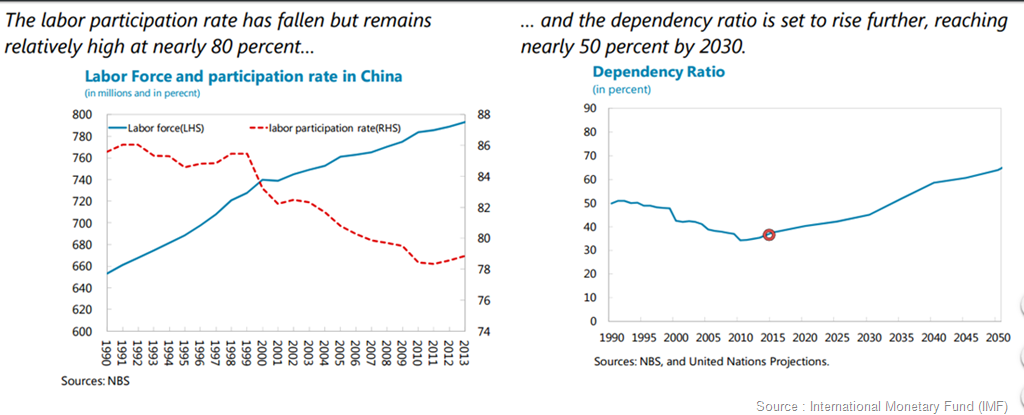
    In 1986, Levi started to shift its production to China. China’s rise to the world’s No. 2 economy relied on a huge increase in the country’s working-age population, which expanded by 380 million people between 1980 and 2015. In one of history’s greatest migrations, hundreds of millions of rural Chinese headed for cities for manufacturing jobs that were a step up from peasant labor, even though the work paid poorly by global standards.

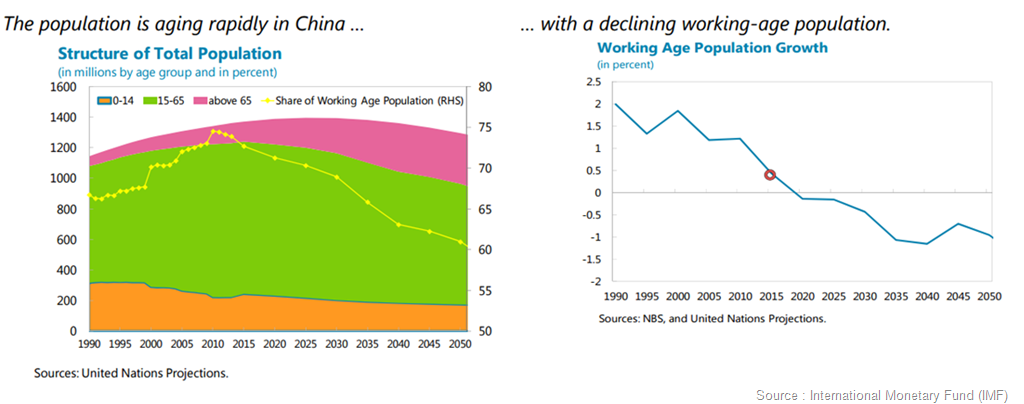
    But China’s working-age population recently peaked, and its so-called demographic dividend has started to turn into a demographic drag. By 2050, the working-age population will decline by 212 million, estimates the United Nations—roughly as many people as live in Brazil, the world’s fifth most-populous nation.

    China Cheap Labor |Denimsandjeans.com

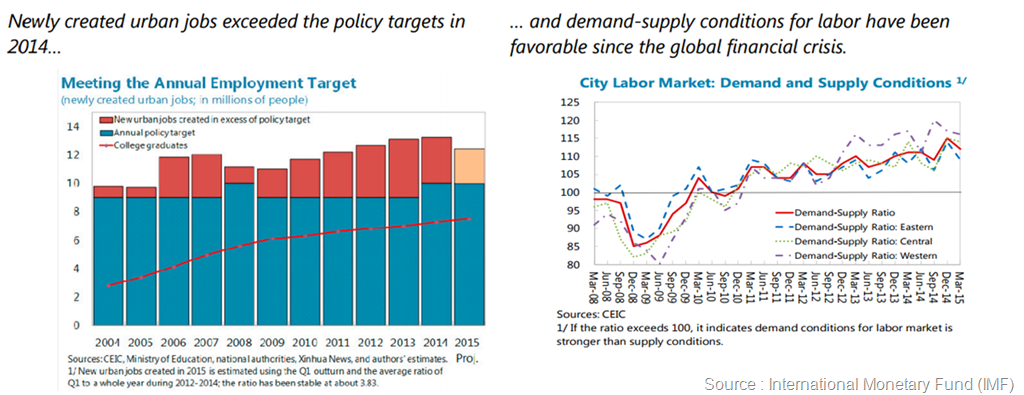
    Wages and benefits have already been rising in double-digit percentages for the past decade as workers can command higher rates. Although wage growth may ease this year because of the economic slowdown, the pressure is bound to increase in coming decades as the number of workers plunges.Adding to the shortage, many factory workers will be drawn back to their hometowns to take care of the growing ranks of Chinese older than 60, whose share of the population is forecast to double by 2050 from 2015, to 36.5%. Already, China’s rising labor costs—now $14.60 an hour on China’s coast, adjusted for productivity, compared with $22.68 an hour in the U.S., according to the Boston Consulting Group—have diminished China’s competitiveness. Adding energy costs, China is now a more expensive place to manufacture than Indonesia, Thailand, Mexico and India .
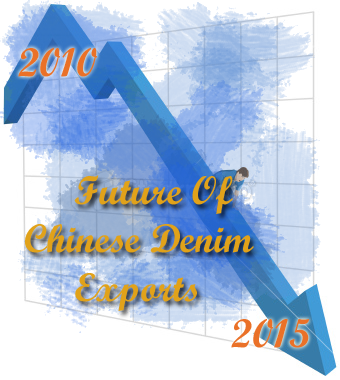
    None of this means brands like Levi is going to abruptly pull up stakes. Levi still lists about 200 Chinese factories where it does business, five times as many as any other country. Levi is adapting its laser technology so it can etch different patterns to create the right wash look , avoiding usage of too many workers.  Levis is however, using this and many other techniques to bring down its costs . These also include reducing the number of fabrics used in a line and cutting the number of suppliers. It is said to have reduced number of fabrics by 40% in last 3 years and number of suppliers by 50%. But automation is the key which China is going to target. It is already expected to be the largest automation market in the coming years.
    China’s loss is becoming gain for many countries including Mexico, Bangladesh, Vietnam and others where the Chinese cake is now spreading out. Factories in Mexico seem to be upgrading productions to take the advantage of new situation and are modernizing and investing.


    Still , we need to wait and see how the Chinese govt. aims to handle the demographic changes. However, its unlikely that sectors like apparel will remain lucrative for long as the govt. focuses on hi-tech sectors to get better growth with existing population.

  • Denim Jackets’ Trend in China | SS ‘14

    China is the leader not only in denim production – whether fabric or garments- as well as denim consumption now. Most of the  global well known apparel brands and retailers have opened shop in China , looking at the potential of this fast growing market. Denim is a staple for many Chinese , specially the young. While jeans are popular , denim jackets are also also quite  popular in China. In this report, we will have a look at the upcoming trends for SS’14 for denim jackets in China. Most of these trends have been picked up from international denim scene by the Chinese, which is actually quite common.

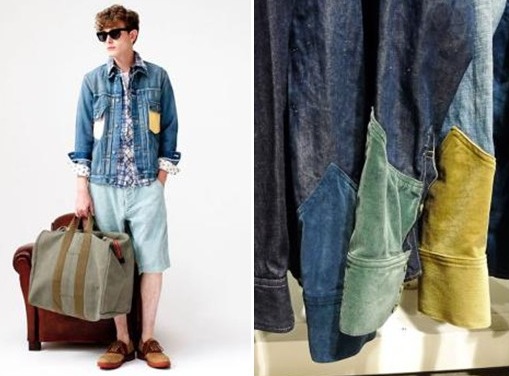
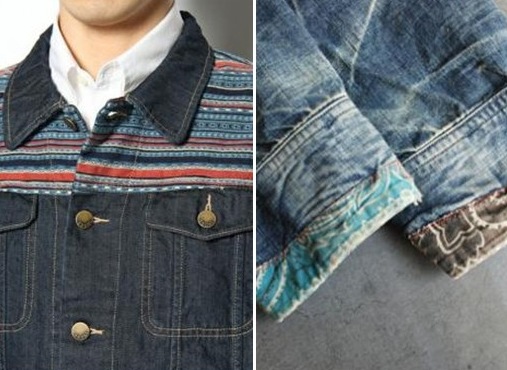
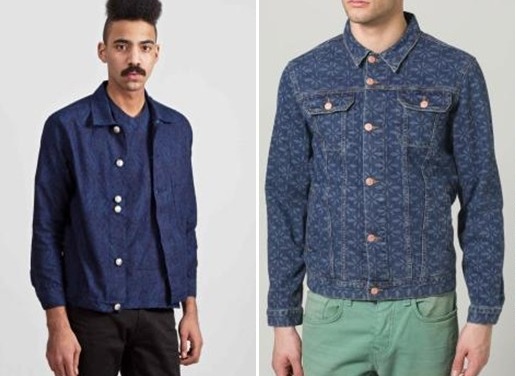
    Contrast color trim

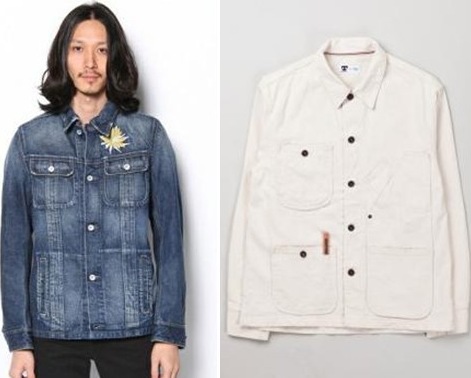
    Add color to the denim jacket with usage of different fabrics in an interesting way. Designers use a suede or twill come focused pocket, covered shoulders, cuffs and collar, and to create a refreshing summer silhouette, or use a patterned fabric stitching to interpret the folk style theme.

    Denim Jackets Trend in china SS ‘14

    Denim Jackets Trend in china SS ‘14

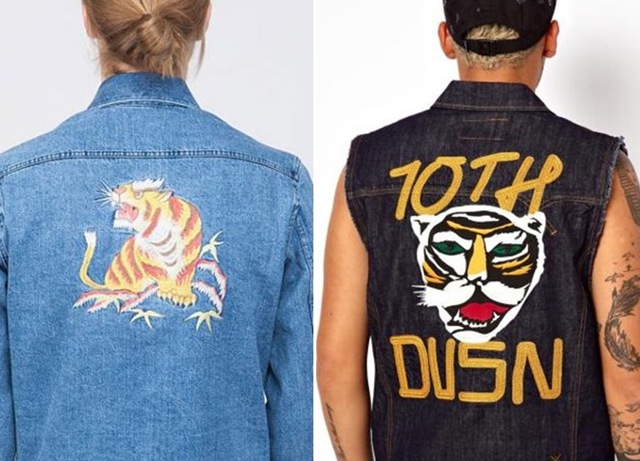
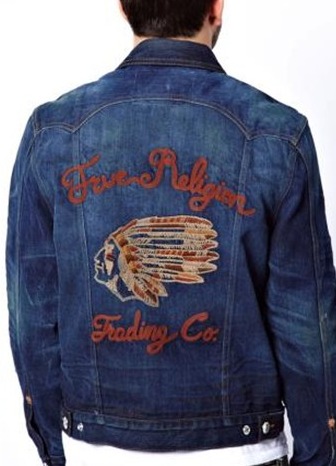
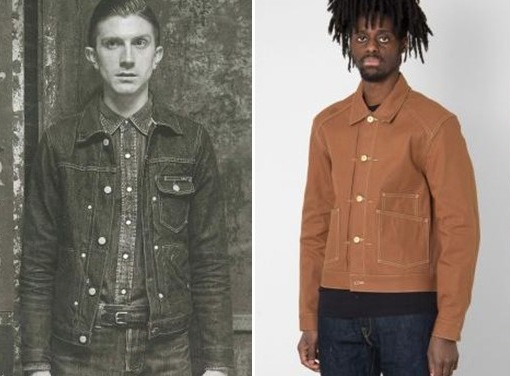
    Embroidery at back

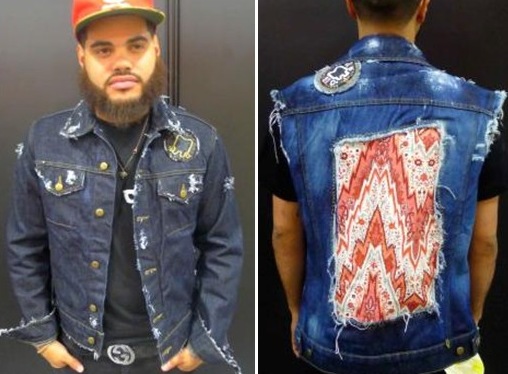
    Customized denim jacket is one must-have item this season in China. Festival Youth jeans , classic denim jackets with a simple chain stitch embroidery and back positioning design create a refreshing feeling. Designers collections from Japan motorcycle jackets are an inspiration for these jackets.

    Denim Jackets Trend in china SS ‘14

    Denim Jackets Trend in china SS ‘14

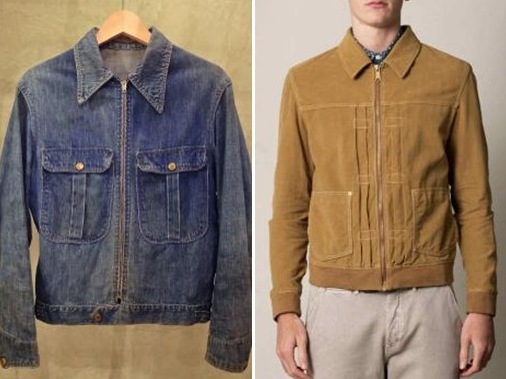
    Zipper Jacket

    Wind jacket with zipper replaced the classic buttons. It is with a square cut, durable fabrics and dual chest pockets together to create a pure retro silhouette, or add rib detail design, creating a retro aviator jacket.

    Denim Jackets Trend in china SS ‘14

    Denim Jackets Trend in china SS ‘14

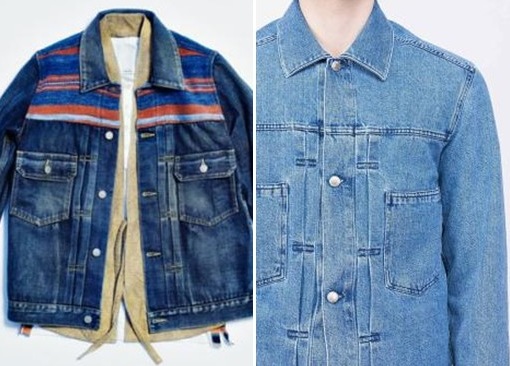
    Pleated front Jackets

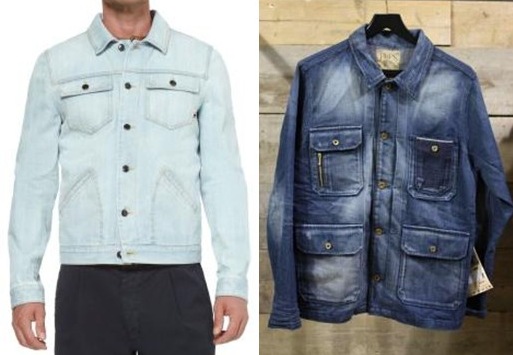
    Front jacket with pleated design at the 2013 spring and summer were very popular, light wash, colored denim and canvas, stitching trim to create this style of jacket was new this summer and gets carried on to SS’14. . These stylish fabrics and surface finishing combines the traditional round  and dual chest pockets and waist pockets.

    Denim Jackets Trend in china SS ‘14

    Denim Jackets Trend in china SS ‘14

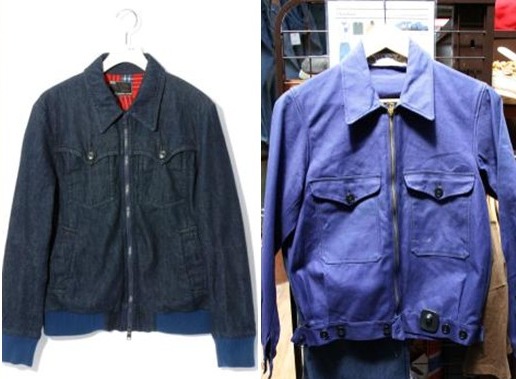
    Four bags of jackets

    Classic profile of a long section of square locomotive air jacket into a new, western style to create a slim silhouette and practical.This style of jacket from the functional wind jacket pocket tooling draws design inspiration, or by adding a low-waist jacket patch or patch pocket design.

    Denim Jackets Trend in china SS ‘14

    Denim Jackets Trend in china SS ‘14

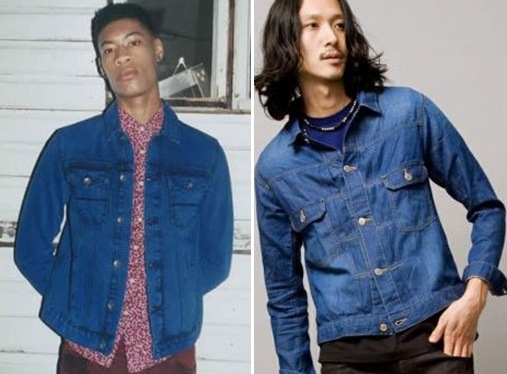
    Distressed and vintage look

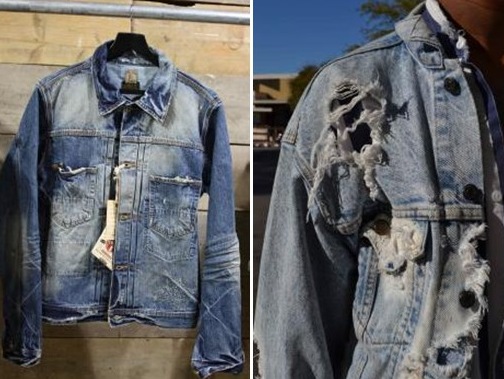
    Designers use to create subtle way to do the old jacket – wear effect of the rough edges and creases, this design is widely popular in the season. Decorative patch holes and and unique design is the key to get the worn out look.

    Denim Jackets Trend in china SS ‘14

    Denim Jackets Trend in china SS ‘14

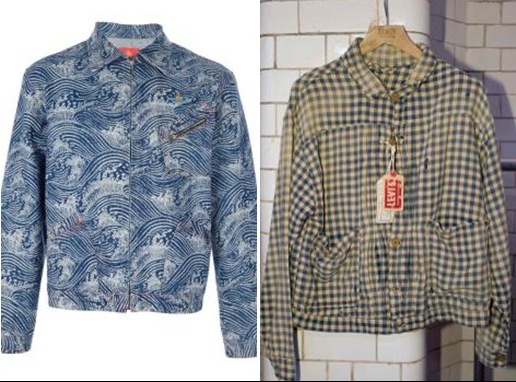
    Montreal pattern

    The printing on the shirts has  rapidly extended to the denim jacket. All over patterns, washed or damaged blue plaids , stripes are the key for men’s printed jackets. Sometimes  small loop jacquard genre paintings prints and pretty blue discharge printing are also used.

    Denim Jackets Trend in china SS ‘14

    Denim Jackets Trend in china SS ‘14

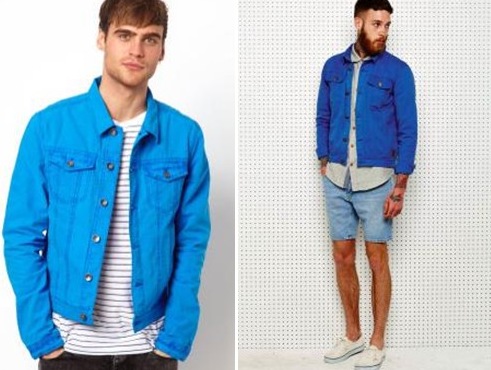
    Striking blue

    Eyecatching bright blue is one of the prominent color to watch out for. It already was quite trendy this summer and is expected to kick up further next season. Glowing bright red, blue and blue-phase coatingand rich saturated color dyeing are used.

    Denim Jackets Trend in china SS ‘14

    Denim Jackets Trend in china SS ‘14

  • Chinese Denim And Textile Industry Suffers As Costs Rise

    image China has been dominating the textile industry scene for over 2 decades. The low cost , high volume model of Chinese manufacturing did wonders for the Chinese economy as well as enabled the retailers worldwide to provide cheap clothing to their consumers year after year. It also enabled China to create huge clusters of textile and garment manufacturing – eg Xintang – which is supposed to be producing and processing over 1 billion mtrs of denim !

    However, all is not so well in China nowadays . The days of cheap labour seem to be thing of the past . A recent report by WWD is insightful and brings out the changes in the Chinese economy as it tries to move to its next stage of development. Some excerpts :

    • The cost of labour is continuously rising . Three years ago a skilled worker would make less than $400 a month , but now the wages are in the range of $550 to $600+ . Guangzhou province has raised the minimum wages which is again affecting the costs of production.
    • The labour is getting assertive and restive and there are reports of strikes and riots by workers in different manufacturing areas . Recently , over 4000 workers staged a three day strike at a Korean owned factory. Such incidents were unheard of before in China.
    • As the prices are going up , the orders are going down. Many units in the Xintang area have shut down for not availability of orders .
      Though there are no numbers available,  a large number of factories have closed down as per people having a pulse on the place.  Many orders are being lost to Vietnam and other neighbouring countries.
    • The soft demand from EU and US is not helping the units in any way and is only adding to the woes.

    The Chinese govt. seems to have already decided that low cost model of Chinese production will no longer work in the future and its emphasis is to create an economy based on innovation rather than manufacturing by 2020 . This vision will have profound effect on the world manufacturing industry as we will see a large number of textile and other products shifting bases of production to other countries. Countries like Vietnam, Bangladesh, Cambodia are sure to gain from this change. But will larger countries like India  also benefit ???   Possibly yes, because the large retailers and brands would not like to be over dependent on smaller countries for their entire productions. We have recently noticed interest by a few international retailers, who did not have presence here ,  to set up the shop in India.

    Sponsored link
    Morrison Chain Mercerizing Range

  • Cheap Chinese Denim – Getting Killed By Rising Labor And Cotton Prices

    chinese exports of denim The era of Cheap Chinese denim is over – says a report by Telegraph , UK.
    The rising labour costs in China coupled with the effect of Cotton price is killing the Chinese denim exports. The retailers who had a great time buying very cheap denim and retailing them as low as $5 – $10 will now have to shelve out much more amounts to get similar quantity .

    Xintang , the Denim capital of the world – with over 260 million pieces of denim production and a very large quantity of jeans production is the worst hit . This city is DEDICATED TO DENIM with over 5000 factories from the very small ones to those who make over 60,000 pairs of denim  a day can be found here. The quantity of jeans produced here is so high that the Pearl River which flows nearby has actually turned Indigo Blue !!!

    So what’s ailing Denim Production in Xintang and China in General ?

    • Rising Labour Costs: The labour cost used to be as low as GBP 30 /month  – about 350 Yuan and now is as high as GBP 470 ($760 or 5ooo Yuan)  in some places .Though the actual labor rates will fall somewhere between, it is still a huge increase.  This phenomenal increase in labour cost is crippling the industry and many factories say that they have not made profits for 2 years.  Since the labor class cannot get the price they want to survive in expensive South China, they are moving towards inland China where large construction projects etc are coming up and the cost of living is cheap. This has led to a reduction in availability of labor for production. So its double whammy – high labor costs and reduced supply !
    • Cotton Costs : Cotton prices have hit all the countries around the world and China is no exception. It has been hit more by the reduced production in Pakistan, Australia and reduced exports by India have complicated the position in China which is highly import dependent when it comes to Cotton.  This has led to a very high increase in denim prices in China. Though the buyers are trying to reduce the impact of cotton prices by using polyesters  and marketing as shiny denim,  it is not really compensating too much. However, cotton impact may fade out in a year or so..
    • Factories Loosing : The jeans manufacturers are hardly making profits where they previously could make up 20 percent easily. Now if they make 5% , they consider themselves lucky. The Chinese Govt. is not able to give the kind of support that it used to give before and the units are finding it difficult to survive on their own.
    • Currency Impact : The stronger currency is not helping the matters at all.  Just to give an example, the Chinese Yuan was 7.29 to USD on 1st Jan  2008 and is now 6.57 . That is a 10% increase in about 2 years.
    • Chinese Govt. Apathy : Chinese government seems to have become apathetic to the denim industry . It is tightening the screws on the polluting denim industry and is enforcing the environmental regulations more strictly – closing many of the factories in the process. The govt. has probably reduced priority for this industry and is focusing on generating employment from alternative projects especially in Inland China.  This is not going to help the industry.

    So What Does Future Hold For Jeans Manufacturers In China ?

    With the current trends, it seems that the jeans manufacturers in China – especially South China –are going to have a tough time making money. They can only survive if they get high priced orders – which are few to come. This will lead to the survival of the fittest with many factories having to either close down or to shift to alternative products.  China may still manage to have the productions shifted to inland China where costs are low, but they cannot do it overnight. It will take a long time .

    What are the alternatives to China for sourcing denim garments ?

    A number of other countries in the vicinity have developed their industry and are coming up well – whether its Cambodia, Vietnam, Bangladesh etc. However, none of them has the capacity to produce the volumes or has the infrastructure to match that of China.  Even countries like India and Pakistan would benefit  directly by way of increased garment exports or indirectly by way of increased fabric exports.  It will take time for them to come up and match the potential of China.  The US and EU are encouraging these alternative destinations as production centres , one of the reasons why EU passed the New GSP Regulation.

    Will all the impact on prices of denim products , can there be a scenario where the demand for denim products actually fall as the retailers try to promote alternative products ?  We have already seen a massive fall in imports of denim products in US in the last quarter of 2010. Is it an indication of things to come ?

  • Chinese Denim Market – Consumer Preferences

    The Chinese denim market is  growing   at a fast pace with almost all major world denim brands having established a presence there to tap the increasing disposable incomes of the growing middle and upper middle class. Being the largest producer of denim fabric and apparel has helped in the penetration of the denim apparel in China.  A  report by USFDA brings out various aspects of the patterns of consumption of denim apparel in China.

    Because of smaller housing in China, most Chinese consumers have smaller closets than Americans. Thus, Chinese tend to purchase and own fewer apparel. The report cites a survey by Cotton Incorporated – according to which -  Chinese consumers on average spent 7 percent of their apparel purchases on denim products, while the figure in the US was slightly higher at 10 percent.

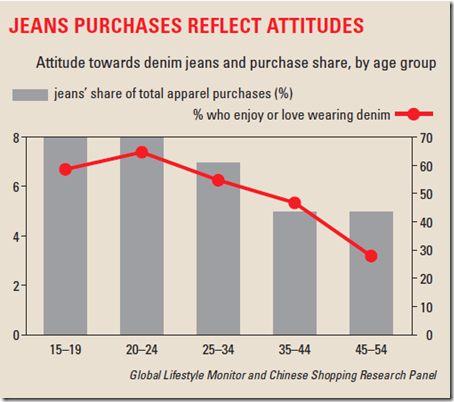
    The survey revealed that denim jeans are getting more popular in China, especially among the younger set. Denim products’ share of apparel purchases is 8 percent among the consumer group aged 15 to 29, compared with 6 percent of those from 30 to 54.

    Denim jeans are the most purchased denim apparel. On an average, each Chinese consumer owns 4.2 denim jeans. The average unit purchase price of denim apparels is US$12 (RMB89). However, 26 percent of consumers said they don’t have any denim garments.

    Denim Products Owned By Urban Chinese Consumers

    Product Average Quantity
    Denim Jeans 4.2
    Denim Skirt 0.5
    Denim Short Pants 0.6
    Denim Jacket 1.0
    Denim Shirt 0.4
    Total 6.7

    The retail sector in China is getting sophisticated, from modern shopping malls to open market stalls. However, Chinese consumers’ buying habits differ sharply from that of the US. Nearly half of denim products are purchased at department stores, compared with only ten percent in the US. Thirty-one percent is purchased through supermarkets in the US, and only two percent for Chinese consumers. The clothing market – a traditional sale point – provides 16% of the denim sales .  

    Retailer Chinese Consumer(%) US Consumer(%)
    Department Store 44 10
    Speciality or Chain Store 25 58
    Clothing Market 16 N.A
    Small Clothing Shop 13 N.A
    Supermarket / Hypermarket 2 31
    Internet 0 1

    Sales and demand potential demonstrated by the China market has successfully attracted more international brands as well as luxury products. All top ten denim brands are available in the China market and Chinese consumers are becoming more brand conscious. When shopping for apparel, 38 percent of Chinese consumers prefer domestic brands and 22 percent prefer western brands. A quarter of Chinese consumers said they usually shop for a particular brand, which is very similar in the States at 24 percent.
    The following graph by Cotton Inc shows the Chinese love for denim across various age groups  . It shows that though the denim is , understandably, more popular with the younger age groups , the love is there even in higher age groups – portending well for the growth of the denim market in China.

    image

  • China To EU – Denim Jeans Export Quantities , Prices etc : 2007-2009

    china exports denim jeans

    China is a major exporter of denim jeans – men’s and women’s to the EU.
    China is very competitive price wise and seems to have been continuously investing in improving quality also. The exports from China to EU have been continuously rising and China is currently the largest exporter of denim jeans/breeches to EU27.

    Let’s have a look at the figures of exports of denim jeans/breeches from China  to EU27 

    Year Jeans Exported  (million  pcs ) Total Value
    (Euro)
    % inc.  in qty. over last year Av. Price
    per pc CIF
    (Euro)
    2007 101.24 559.42 +51.82% 5.53
    2008 180.85 827.13 +78.63% 4.57
    2009 195.80 926.71 +8.26% 4.73

    For the years 2007 and 2008, China has experienced a phenomenal growth in exports of denim jeans with more than 50% and 78% growth in the two years respectively. This kind of growth in exports over an existing large base is really good and shows the power of Chinese denim manufacturers to compete with the rest of the world , specially their competitiors like Bangladesh , Vietnam etc who are cheaper to them.  During 2009, the growth in exports slowed down during to general slowdown in Europe , but still maintained  decent 8% plus levels. We may see decent increase in exports in the year 2010 also.

    However, this growth that we are witnessing in the last 3 years would fade in comparison to the growth of 960% !that China got in the year 2005 over 2004 when quotas were lifted. China was only restricted by the quota regime and currently nothing seems to hold it back.

    Price wise , Chinese exports have registered slight downfalls but their prices still cannot be called as the cheapest as there are other countries exporting at lower prices. But China will not always remain very price competitive. It has issues on its currency – which it may have to devaluate slowly – and it may not always be able to provide the kind of export subsidies it is currently providing with export tax rebate at 16%.

    Note:      The EU27 region comprises of the following countries -:

    Austria , Belgium , Bulgaria , Cyprus , Czech Republic , Denmark , Estonia , Finland , France , Germany , Greece , Hungary , Ireland , Italy ,Latvia , Lithuania , Luxembourg , Malta , Netherlands , Poland , Portugal , Romania , Slovak Republic , Slovenia ,Spain , Sweden and United Kingdom.

  • Denim Industry In South China – History, Production Costs & More..

    denim industry china Hong Kong and Taiwan started to produce denim fabric and apparel in the mid-70’s. To take advantage of cheaper labor cost and abundant resources, Hong Kong manufacturers later relocated their factories to the mainland, mainly in Guangdong, Shanghai and Jiangsu province, about three decades ago. The Guangzhou No. 1 Cotton Textile Factory and the Shanghai Shenshi Textile Company were the first two Chinese companies that manufactured denim fabrics and apparel from cotton.

    With about three decades of experience , Guangdong province has a developed  denim industry supply chain,  support systems and hence a fully integrated industry. In addition to OEM exports, Guangdong manufacturers have developed their own brands for the domestic market. Guangdong produced about 1.26 billion mtrs of denim fabrics in 2007-2008 ie nearly half of the entire production of China. To put that into perspective, the total production of denim in India is about 600 million mtrs and in US the production is only about 90 million mtrs !! . The total production of denim fabric is estimated to be anything between 2.3 and 2.6 billion mtrs.

    Main Denim Production Centres

    Xintang, Kaiping, Jun’an and Dachong of Guangdong province are the major denim manufacturing bases in South China. Xintang wholesale market is the world’s largest for denim apparel. Xintang houses over 2600 denim related factories and produces about 31% of total Chinese denim production. The top three export markets for Xintang are US, Panama and Hong Kong.

    Kaiping : Three hours drive southwest of Guangzhou , Kaiping has developed a comprehensive denim production chain from raw materials to garment sewing. The area has over 450 companies involved with the denim industry with a denim related turnover of over US$ 600 million .

    Ju’nan : An another area of  important denim manufacturing base in China is Ju’nan  where over 1000 denim related companies produce over 100 million mtrs of denim apparel each year ! .

    Costs of denim production. Are they increasing ?

    Labor Cost :Denim production requires skilled labor and the cost of skilled labor seems to be increasing in China with some factories claiming the monthly cost of skilled labor to be in range of US$ 190-220 and this cost is on the increase. The Chinese Labor Contract Law implemented on 1st Jan 2008 require the employers to the employee’s social security fund – which has further increased operational costs (around $30 per person per month).The increased costs have pushed many factories to relocate to less developed regions in central China, such as Hunan province and Jiangxi province
    Environmental issues : According to the Chinese Ministry of Environmental Protection , the textile dyeing industry discharges over 7.5% of national wastewater. Only about 7 % of the waste water produced by the textile industry is recycled . The Pearl river delta is one of the most polluted areas in China and the main reason for this pollution is denim production.The denim manufacturers are  being forced by the government to recycle and reuse effluent waste chemicals such as dyes.  The pressure from the US and the European governments , the Chinese textile manufacturers are forced to upgrade their technology and manufacturing facilities – forcing add on costs .

    Appreciation of Yuan : Yuan has appreciated over 8% during the period from 2007 to 2009 and that has again eroded the margins . The currency is further expected to strengthen in the coming times and will further affect the margins of the manufacturers.

    Export rebates : But where on the one hand, the costs are increasing, the government has increased export tax rebates for textile and apparels to balance the same. The same was increased on 1st Jan 2009 to 16% from 11% . This has helped the industry suffer the impacts of increased costs , exchange rate losses etc.

    The denim industry is China is still growing and with increasing costs, it is trying to upgrade itself with new technology, product innovations , design skills, local brand development . To take  an example , a  Zhongshan denim factory has adopted the latest nano technology to produce lighter and more durable denim fabric.

  • Denim Pollution In Xintang- The Blue Jean Capital Of The World

    image

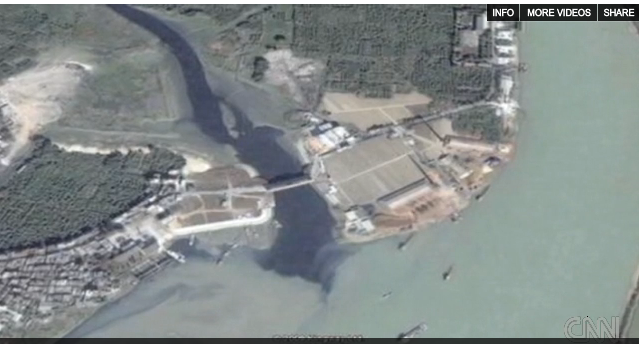
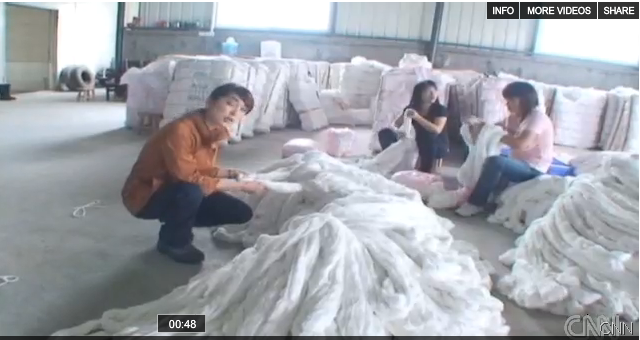
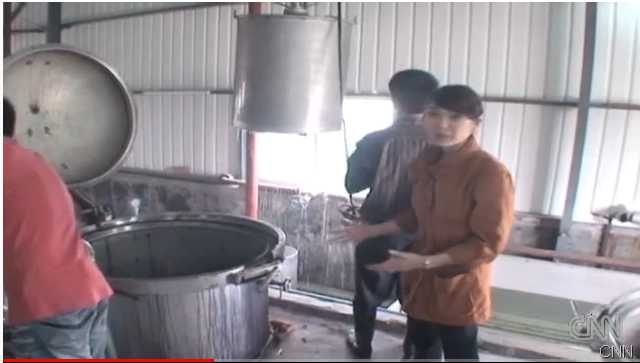
    CNN reports that the  Pearl river on the banks of Chinese town of Xintang  in Guangzhou– also known as the Blue Jean capital of the world – looks like this when seen from a satellite.. The river  has actually turned blue black with a large portion of denim production wastes being discarded into the river. The town is an amalgamation of thousands of textile, denim and dyeing facilities. The denim is also being made here by traditional dyeing methods where cotton yarns are being dyed by dipping them into small(hot) indigo baths as against the factory dyeing of denim by Rope Dyed or Slasher dyed methods. This kind of cottage dyeing produces more indigo waste and the small dyeing units are not equipped with the requisite water treatment facilities.

    denim yarn denim dyeing

    According to Chinese government estimates, the town produces a whopping 200 million +  pieces of denim garments a year. Though these estimates could be off the mark, but still the town has a huge denim garment production base. The size of this figure  could be properly comprehended properly when one knows that the total imports of denim garments into US stands at around 585 million pieces.

    The factories seem to be discharging their wastewater into the river through pipes extending into the river. These wastes contain all kind of harmful metals and substances.

    According to Dr. Tony Lu, Chief Medical Officer at Guangzhou’s International SOS Clinic, these kind of toxins can be seriously hazardous to human health.

    "If there are a lot of heavy metals, they are neurotoxic, carcinogenic, they disrupt the endocrine system," Lu said. "They cause cancer of different organs."

    "The number one problem (China) faces is water pollution," said Deborah Seligsohn of the World Resources Institute. "The textile industry is one of China’s larger industries and one that uses a lot of water so it’s traditionally had a lot of wastewater problems."

    Such a huge denim production base is a great asset for the Chinese denim and the whole textile industry. But China will have to monitor its water pollution to ensure its continued growth and dominance over the textile industry of the world.

    See more details on the story from CNN here