Tag: covid19

  • Current Situation Of Retail In Apparel–Stefano Aldighieri & Maurizio Donadi Talk

    Current Situation Of Retail In Apparel–Stefano Aldighieri & Maurizio Donadi Talk

    During the Denimsandjeans Virtual show held on July 22-23 , there was an interesting talk scheduled with Stefano Aldhighieri and Maurizio Donadi – both well known veterans in the denim industry . And the title was very topical and interesting – STATE OF RETAIL IN OUR INDUSTRY.  Retail is the most affected segment of our industry and having a snowballing effect on the entire supply chain and millions of people employed globally. However, for some reasons, the talk could not be held as scheduled . Both of them kindly agreed to record their talk post show and share with all of us  ! We bring the video (check here)  of their talk below alongwith some key points raised .

    The beginning of the video is quite interesting with a virtual assistant bringing some interesting data to the talk :

    • In US retail space is over saturated
    • US has over 23.5 sq feet of retail space per person
    • This is twice that of Australia , 5 times that of Japan and over 10 times that in Germany or South Korea
    • Store closing started few years back
    • In 2017- 8139 US stores closed, 6000 in 2018 and over 9100 in 2019.

    Both of them agreed that the problem with the retail did not start with Covid19 and it was already under progression for last few years. The malls in US grew more than twice the rate of population growth between 1970 and 2015 and the growth was bound to hit a speed breaker at some point of time and the numbers above give some idea of the state of affairs in the retail. Stefano mentioned that the stores that closed before were somehow re-opened over time- however, with Covid closures, the re-openings would be much lesser.

    Maurizio agreed with him and said that the times before were challenging for retail but not disruptive – which they are now. But there will be companies who will take advantage of this situation and re-purpose the retail space. Both agreed that there are a lot of retailers who should not be there and who do not offer anything different from the store next door except being a dollar cheaper ! If a brand does not have a soul – it should not exist.

    Stefano made a very interesting statement  on state of consumer purchases in last few years specially with social media getting stronger :

    “Consumers are buying crap with money they don’t have to impress people they don’t like “

    Maurizio mentioned about identity crisis being faced by brands now  – not only a revenue crisis , the crisis of values and principles of a brand. The brands need to consider that without a soul, they have no reason to exist . He mentioned about two scenarios – between now and till the time a vaccine is made. Till that time, its a fight for survival and one needs to come out of the situation. And after that some people would want to go to pre-covid situation in terms of their brand’s principles . But there will be companies who will be coming completely different and with a much clearer identity and an interesting proposition which they may not have now. Both of them also hoped that the luxury brands would really make luxury products !

    Stefano gave a good example of Ron Johson who tried to transform JC Penny few years ago but was chased out of the company for trying to reduce volumes. However, he was perhaps right and JC Penny would have been in a better position today if he had succeeded.

    He also gave a good example of Paul Smith store in London where he usually visited with not a purpose to buy anything but ended up doing so as the offering was so compelling and customer service so great . So the brands need to position themselves well and bring out compelling products for the consumers. Even premium denim would sell if it was really premium !

    Maurizio also mentioned that hopefully there will be less discounts in the future – something that has destroyed the market and the price points and products are more honest.

    The entire talk was really interesting with some great insights and it would be best to check out the entire talk on video from this link

  • COVID Infects Denim Sales and The Industry As Well

    COVID Infects Denim Sales and The Industry As Well

    It has been now over 150 days since WHO announced COVID 19 as a global pandemic, the world is still struggling to contain the virus and we hope in coming weeks, we find the much-awaited COVID vaccine.

    In the month of April, when COVID 19 started to show its lethal and contagious face to the world, there were a lot of speculations made, from the paradigm shift in the consumer behavior to shrinking in the overall denim business for the next two to three seasons, there was a plethora of anticipation and hypothesis.

    The godfather of denim – Adriano Goldschmied, in a live talk with the founder of Denimsandjeans Sandeep Agarwal, predicted that the global denim business will be shrunk by 50%. The prediction was brutal but his prediction seems to be very certain and close to reality.

    BRANDS AND RETAILERS

    The Jeans business has been already struggling for the last few years, the influence of athleisure on millennials adversely impacted the sales of Jeans globally and then this pandemic has taken a real toll. Retailers and Brands like G-Star Raw, JC Penny, True Religion, and Lucky Brand have filed chapter 11 bankruptcy during this pandemic period.

    True Religion which 1st filed bankruptcy in the year 2017, has now seemed to be into a vicious debt trap. The brand reported

    1. $110.5 million in first-lien term loan debt
    2. Owed $28.8 million on an asset-based loan facility.
    3. Posted a net loss of $50 million

    The brand blamed the pandemic for making things very challenging to them, they have sent the workers on furlough to bolster their liquidity.

    Lucky Brand filed for Chapter 11 bankruptcy the last month.
    The brand has announced to sell all its substantial operating assets to SPARC GROUP and the intellectual property to ABG Group.

    In its bankruptcy filing, Lucky Brand said it owes nearly $5 million to mall operator Simon Property Group, and millions more to suppliers in Anguilla, Sri Lanka, Guatemala, and India. The brand owed

    1. $182 million to lenders
    2.$79 million to merchandise vendors

    The brand will remain operational however out of a total of 200 stores, 13 stores will be closed.

    G Star Raw also filed for Chapter 11 bankruptcy and as per the reports, the landlord of its 475 Fifth Avenue NYC store found to be the biggest creditor with USD 426,000, this is the same store which was allegedly looted by the protesters during #blacklivesmatter protest.

    Levis recently reported a decline of 62% in its 2nd quarter revenue which forced them to cut the workforce up to 15%. According to market research firm – NPD Group, there has been a double-digit fall reported in the sales of denim in the past three months compared to the last year.

    The sales of premium/luxury jeans costing over $200 witnessed a slump of 40% during the same period, there have been apprehensions that Americans are now preferring lower-priced denim over premium one due to disposal income constraints.

    So far as the UK is concerned, according to an estimation, COVID may reduce the spending by more than 20% than the usual spending made by the UK consumers which may bring a fall of GBP 11.1 bn / $13.06 bn in the sales of clothing and footwear in the UK.

    SUPPLIERS

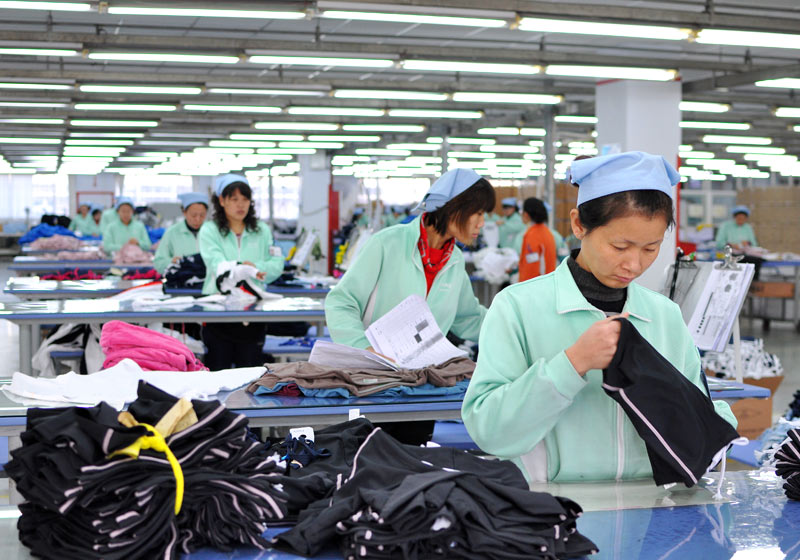
    The pandemic did not affect only brands/retailers but also forced a lot of factories based in China, Bangladesh, Myanmar, India, Vietnam, and Cambodia to close its entire operation due to a substantial fall in orders as well as due to the failure in the payments commitments by brands.

    Morgan Forde / Supply Chain Dive, data from USFIA.
     

    According to local Bangladeshi media reports, over 7,854 orders were either canceled or postponed by the fashion industry during this pandemic. C&A alone canceled orders worth $166m, H&M canceled orders worth $178m, and Tally Weijl initially suspended orders worth $7m and canceled orders worth around $3m.

    A total order of $3.2 bn was said to be canceled or postponed in Bangladesh only. Bangladesh annually exports clothing worth $35 bn, the cancelation within few weeks worth 10% of its total exports, though a lot of brands later assured for the payment of already made articles, however, the postponement dismantle the entire supply chain, especially the daily wage garment workers and left them in a lurch.

    The industry is now recovering from the early devastation, though the recovery is pretty slow but gradually it will come back to normal. Textile and Apparel industry is one of the largest job creators in the world. This industry had a retail market value of $1.9 trillion in 2019 and according to the projection of BCG, with a CAGR of 3.5%, the valuation will reach at $3.3 trillion in 2030.

  • Albert Candiani : In A #CovidTimes Talk

    Albert Candiani : In A #CovidTimes Talk

    Continuing our series of #Covidtimes talk and its huge impact on our lives and business , we speak to Alberto Candiani from the globally well known Candiani Mills Italy . Sandeep Agarwal speaks to him on various impacts of this crisis and Alberto shares his candid and insightful views about the situation and how he sees it will affect our industry. Here we bring a transcript of the talk.

    Sandeep

    Hi Alberto, Very Good Morning , It’s too early there. How are you and how’re you doing ?

    Alberto

    Hi Sandeep,Good Morning, it is still dark here. All good here, I hope the same for you guys.

    Sandeep

    Thank You, everything is fine here. How are you coping with the current situation at personal and professional level?

    Alberto

    Well, the situation here went out of control when our region became one of the most affected regions in the entire europe. We are still under lockdown, everything is closed here and we do not have any other solution to limit the outbreak. But now the government is thinking as to how to resume things gradually. We may see a phased resumption from May 4th, but as of now we are under lockdown.

    Sandeep

    There are a lot of things expected to change post pandemic. How long it would take to come back to normality ,and what would be the new normal ?

    Alberto

    It’s a good question. More than normality, I think we should talk about ADAPTATION. I’m afraid of that if we will ever go back to normality but I’m sure there will be a new normality which we all have to adapt to and that will be depending on social distancing and other types of practices which will certainly change our society probably longer than the adaptation of time itself.

    Sandeep

    Do you see in these times digital communication and digital tools are coming very important and how even after this crisis they are going to be a part of our new normality?

    Alberto

    Communication is becoming key, connection is the only way or tool now to keep going. In my case we run pretty large textile operations and if you don’t produce, there will be no much communication. We made a miracle by finalising the last collection. We’ve got to ship it out right before the shutdown and the past two weeks have been very interesting as the market is “working” remotely from home. We did put together a very amazing presentation about a very good collection considering we rushed it in the month of March.

    I hope our industry is willing to learn more about it, so you want to feed people with more information and deeper information and yes communication is key. It also needs to be successful when you want to show the difference between your product and the others, but it has to be very honest too. We have to be a little more conscious during this time as this is the great time for fake news, but it should be no more time for fake marketing.

     We make denim and again we only have to create more interest in people, these is something that denim is lacking quite a lot being it’s the most democratic fabric in the world. It’s such a big industry and it should be as popular as music.. again we need to bring it out there.Sustainability is giving a greater push to make Denim more interesting to the people and I believe that we’re on the right path, as Candiani we do everything we can to make Denim look cool.

    Sandeep

    One thing I’m curious to know is that your company was founded before the II World War – so your family has faced the IInd World War and now you’ve been facing this war like situation with an invisible enemy. Do you compare what was the situation during the II World War and what is the situation now? What is really the difference between two times ?

    Alberto

    There are so many many common things – this is a very interesting question. Yes our company went through that moment when it was a much smaller company in a domestic market. Today we are a larger company in a global market. I think things did not stop at that time while things did stop this time because of mandatory lockdown. And that gives you a little bit idea of the damage or or the disaster which we actually have been facing.

    That time we’ve fought against visible enemies, this time the enemy is invisible which is more dangerous. I realised after the II world war, my father- my great-grandfather’s company decided to transform the company from a little weaving into a vertically integrated company. So if you look at the 50s and the 60s especially with my grandfather taking the lead when he was only 18 years old, it was reconstruction creating opportunities.

    He faced the right economical conditions which were very supportive that time, now I don’t really know if this disaster is going to create interesting economical conditions anytime soon. The market we envision is something which we will only be able to read after compression and oppression times. Having said that, I believe there will be an opportunity for growth and again.

    Sandeep

    Do you see the big part of supply chain disappearing post this crisis in terms of retailers or in terms of manufacturers and that’s what we are hearing from lot of players would be disappearing and then the ones who are remaining are will be the strong ones would be the one who will really carry over the whole industry in a strong way?

    Albert

    Look, I’m afraid the industry is gonna take a serious hit ,a serious one actually. I don’t know how much of the supply chain will disappear, some people will leave and some people will join in the future but the supply chain will suffer a lot because of the outward business model.

     As Candiani, a Denim mill, we’re sitting at the very beginning of the process, so we have to source the raw materials in order to make our products and that exposes us significantly. If you’re not a solid company, if you’re not a very healthy company, then you can find yourself lost especially if you didn’t manage to scale up your economy.

    I was thinking this morning about small Italian textile companies, they will certainly suffer because now they don’t get nothing and due to uncertainty unfortunately these guys don’t really know what’s gonna happen tomorrow. So there will be loads of problems in the supply chain. especially small vendors. I’m not really talking about my competitors or garment makers. I relate with them, but for sure many smaller companies are not going to survive this. I just wish everybody’s prosperity in this moment, but we have to face reality, if you can’t take this, you would probably fail.

    Sandeep

    In terms of sustainability, your company has such a huge name globally in terms of contributing to sustainability in various ways, also recently you came out with the natural stretch and so many of the technologies you’ve been working on, so what do you see and how do you see sustainability changing after this crisis?

    Albert

    It will change, because I believe we’re all relating ourselves to a very interesting thing which is “health”.. so now we’re looking at the health of human species, we’re looking at health of the planet which is a reflection of sustainability as we were just talking about a potential disaster. I think people are now ready for a fresh start and people have been sitting long enough in their living room to gather more informations about what’s good what’s not. Also this pandemic is touching pretty much everyone.

    I think this is gonna wake up people and will make them more careful, conscious and wishful for better stuff and better in this case necessarily means cleaner and nicer. Most of the time you know it’s just better ingredients that makes a better pair of jeans. Just like food, better ingredients equals better quality and that normally leads to healthier food. I think it is going to be an interesting change and sustainability will certainly play a bigger role.

    Sandeep

    Do you think denim can also contribute in some way in protecting the health of consumers some way with applications with future technological developments?

    Albert

    You know, we can help people to preserve their health by using smarter ingredients and new technologies. I think our KITOTEX applications today can be rediscovered under a different prospective and not only water savings, due to their bacterio-static and anti-microbial properties. This new type of R&D can literally change the game.

    It’s also time to differentiate what is technical from the styptic stereotype. Nowadays much cleaner chemistry is finally available as much as smarter applications of natural products with incredible features. Chitosan , a natural and bio-degradable polymer, probably represents the most amazing solution to several issues.

    We’re doing deeper studies now on our KITOTEX beneficial effects and properties. We will certainly extend this technologies to more dyes and finishings. I am expecting to include several new developments in the second release of our REBOOT collection, since the first release is already in our agents hands and available to our customers.

    Sandeep

    Coming to consumers what are the major changes you see in the consumer perceptions post crisis and will this really differ from region to region?

    Alberto

    The main problem now is related to uncertainty. Uncertainty creates depression and it is not just about the crisis, I’m afraid that consuming behaviour of people will certainly be changed because of three reasons.

    Reason #1 – There will be less money and this will further reduce the purchasing capacity of people and I am talking about from a global perspective , not only in Italy. People will not buy more just because it’s cheap, hopefully they are going to buy less and might be of better quality.

    Reason #2 – Second reason would be Uncertainty itself. People don’t know about the scalability of this damage.

    Reason #3 Sci-Fi… I am afraid that a lot of people’s behavior will be changed drastically due to the mutation of humans during this time of isolation and social distancing. I can’t say what is gonna happen, but yes, I am positive some of the people’s behavior will change forever after this crisis due to a real mutation. I believe that this is going to be a small part of the population though.

    This pandemic is something which was totally unexpected six months ago and again I was just saying that we cannot really predict which things are going to change post this pandemic.

    Sandeep

    In terms of retailers, those retailers which were direct to consumers are probably better off than those which are pure brick-and-mortar stores ?

    Alberto

    If you look at retail, retail has been suffering a lot already for the past 10 years, I am not talking about the fast fashion retailers, I am talking about all the others. What’s been growing lately is the online market, so retail can now adapt to this new online type of distribution, because we’re talking distribution in the end. Those retailers who are manufacturing quality products should literally find a way to communicate with the consumer. Direct-to-consumer again is an interesting way but it’s also not easy: you have to create confidence, you have to create pretty much the same experience you want to create in the physical store.

    Sandeep

    In terms of product development , how does this pandemic affect the whole cycle? Everybody would like to have a shorter cycle and not want to invest their resources for a long time so this product development cycle, how much do you think it can be reduced?

    Alberto

    I find this entire season thing “bullshit”. I mean look at the seasons, they don’t really make sense. Sometimes we look at crazy product cycles while the product stays pretty much the same or too similar to other products. If it is about a pair of jeans just make sure its own creative cycle makes it relevant enough to look in a way it is supposed to be. I think while we go forward we have to look at more relevant changes. A whole new cycle again for something which is not relevant is representative of a broken system.

    We are mostly talking about basic and core products which are mostly seasonal and don’t require permanent new cycles, but adjustments, corrections, updates.

    Sandeep

    In terms of globalization what changes do you think we’re going to see and what changes do you think will be coming times we’ll see in terms of near-sourcing ?

    Alberto

    Everything will be affected, in fact sourcing has been affected already.The world has been under a global lockdown and its consequences are not known yet. So far as the consequences on the sourcing is concerned, I’d like to tell you that, important customers, especially the big guys are cancelling on full winter and pre-spring 2020 collection.

    I see costs going crazy, cotton going down but I also see crazy speculation probably coming on soft commodities going forward. We believe no one is in control and again this thing will create opportunities at some level. When you face this type of uncertainty you have to you have to wake up early, adapt to the new environment and you have to realise what’s going on before others do so you can create or catch those new opportunities. You just can’t wait, you have to move.

    Sandeep

    If you want to rank and let’s say for the denim fabrics if you were to rank one two three the biggest changes in denim fabrics, what we will see in the coming times biggest biggest three changes which will come in the name as character of denim in the next few months or year let’s say in the near future what would that be number one two and three.

    Albert

    So as you mentioned before technical innovation, so certainly more special finishings which will not necessarily alter characteristics of the jeans. We’re looking at finishings, clear coatings, they’re transparent so on paper they’re are not really interfering with the aesthetics of denim unless you want them to.. unless you want to create something special, something which looks different from usual denim going in a more technical direction.

    I believe what’s gonna change is not really the aesthetics but the contents though. We will find more and more interesting compositions. We will certainly find more and more sustainable stories and sustainable ingredients as well again .

     Every day the industry can be fair and talk about sustainable products more than sustainable stories. At least we have to come up with a sustainable story when we have a sustainable product and make sure your brand talks about it, not just green-marketing style, but also contents. So when I say composition and contents I don’t only refer to the fabrics but also the message and the transparency that this whole process requires in order to be honest while communicating it.

    I believe the future of denim of course is about sustainability, we talked about it a lot before . But in reality we are seeking new paths which finally people can take to increase their knowledge and awareness about the product. We want to go straight to the seed of our cottons, to the nature of our dyes, we want to explore agriculture and link it to the industrial process,. That goes straight back to the nature.

    This is something that people couldn’t see for the past hundred years. They couldn’t see that the items sitting on the shelves of the stores would come from certain fields, certain mills and people did’t really know what’s going on in those fields or those mills. Today the consumer ,which I rather call the citizen , is willing to know more and traceability is the way to create more interest.

    Again storytelling is going to be such a big deal but again you have to tell the story of something good and you have to make something good in order to tell that story. And again that’s gonna change for sure. “Something good” is not only related to the aesthetics but it’s also related to the perception of quality and then the importance that you finally give to your next pair of jeans.

    Sandeep

    What are the main big positives you see from the current situation ?

    Albert

    Well as I said earlier I’m a little scared to talk about opportunities in this moment, I’m not scared to talk about positivity because this can be over, the sooner the better. I can tell you that I am a positive person and people in our industry will be a little more conscious about how vulnerable we are, us, humans, and our industry, our models. I mean we’re working in an industry that constantly overproduces, we’re probably making the world’s biggest landfill.

    The planet is good for everybody and I don’t like to call this particular situation or virus an equalizer, but in a way it has been an equalizer and I really hope we’re not going to go back to the old normality in which the consumer is just a consumer and not a citizen.

    I think we can have some interesting surprises going forward, but for now we know how vulnerable we can be.

    Sandeep

    It was a pleasure talking to you, thank you so much for your time.

    Alberto
    Thank you

    Video

  • Denim Post Covid – Views Of Top Denim Personalities

    Denim Post Covid – Views Of Top Denim Personalities

    In these times of crisis , we are all badly effected and most business is in a turmoil. This includes our fashion and apparel industry which is in throes of a huge disaster as global markets are shut down, retailers are closing their stores affecting the entire supply chain . The future is very uncertain and we really need to make sense of the current situation and understand in some way how it may unfold in the future . Keeping this need in mind, we started our series of talks with some global denim personalities around the world to understand their analysis of today and tomorrow . The views shared have been very insightful and give us an understanding how we may need to plan and repurpose ourselves and our business. Sharing herewith comments and quotes from the experts .

    Adriano Goldschmied

    Next year for sure we’re gonna be down in our business at least by 50%.  It will have a terrible impact on the organizations of all supply chains globally.  It will hit dramatically in countries where textile is a big part of their economic sector. 

     All the digital shopping is going to be booming but they are going to reconsider shopping in a more responsible way. They will buy less and buy better.  Transparency will be more evident and help the consumer make better choices with the information provided. 

    The rule was that we come to the market with new products every six months. We need to change our method of work and to be more open-minded. There is no obligation to make 40+ piece collections.  We should bring new products to the market when it is interesting for the market. This way will be much more simple. 

    The reaction to the new normality will be different in Asia (especially China) & in emerging countries.  People are at home for a long period of time and they are anxious and probably the reaction for them is to go shopping again.  It will probably be a shopping party. On the other side, in America & Europe, consumers will reconsider their way of shopping. 

    When we come out of this pandemic, we will have a new face of our business.

    Complete TalkVideo

    Enrique Silla

    I anticipate that 50 % of the brands and retailers will disappear. This is our calculations. I anticipate that 50 % of the manufacturers will disappear and we will face a very strong very strong consolidation

    Consumers will not buy again a product that has been manufactured by taking care of our rivers , our see and our planet.

    Europe is 10 % online, China is 20 % , but after this China will be 40-50 % online.We need to sell online and we need to completely change our operational models. 

    We anticipate that some countries will be winners like Turkey , Mexico , Portugal.

    We already launched a program on demand manufacturing . We really believed that COVER-19 had accelerated that.

    Video

    Alberto Candiani

    I find this entire season thing a bullshit thing. I mean look at the seasons they don’t really make sense. Sometimes we look at the crazy product cycles for the same product or similar products.

    If It’s a pair of jeans just make sure it’s relevant enough to look in a way it was supposed to be. I think while we go forward we have to look at more relevant changes, the whole new cycle again for something which is not relevant so maybe this break again.

    More special finishings which will not necessarily alter characteristics of the jeans. We’re looking at finishings, they’re transparent so on paper they’re are not really interfering with the aesthetics  of denim unless you want them to , unless you want to create something special something which looks different from usual denim 

    We are now talking about basic core products which are of high quality, which keep on going for a couple of seasons and so I mean this is a complete change in that way.In fact you know it has been started probably something back but still it will continue further and it will be accelerated for.

     The reaction to the new normality will be different in Asia (especially China) & in emerging countries.  People are at home for a long period of time and they are anxious and probably the reaction for them is to go shopping again.  It will probably be a shopping party. On the other side, in America & Europe, consumers will reconsider their way of shopping. 

    When we come out from this pandemic, we will have a new face of our business.

    Video

    Stefano Aldighieri

    There’s no easy solution, but what is going to be interesting to see is how committed they will still be to the whole sustainability and ethical principles,  all these companies. Because one thing is to say that you are committed to doing everything socially right, and ethically right, and environmentally right when things go relatively well, but when you’re into an emergency like this you tend to forget those things.

    You know some time back all brands were racing to see who was the most sustainable company out there up to a few weeks ago?  I want to see how many of those are really, really serious about it, and how many will not stick to those principles because being sustainable means also taking care of your partners in the supply chain, and I know it’s a really really difficult thing to do because at some point you have to decide what you’re going to cut, what are you going to sacrifice, and unfortunately it is human nature to take care of the ones that are closer to you than the ones who are far away.

    Complete Talk

    Video

    Sedef Uncu Aki

    There is a term called REVENGE SHOPPING – which all the countries might see especially countries like China. But in Europe, they are focusing on understanding the situation. 90 % of the stores are open in China but total spending has been decreased by 50 %. Therefore people are not starting to shop right away. What we have seen so far from the previous world crisis is that consumers take 1-2 years before they actually regain their interest in shopping.

    There is a term called REVENGE SHOPPING – which all the countries might see especially countries like China. But in Europe, they are focusing on understanding the situation. 90 % of the stores are open in China but total spending has been decreased by 50 %. Therefore people are not starting to shop right away. What we have seen so far from the previous world crisis is that consumers take 1-2 years before they actually regain their interest in shopping.

    Durability, Built for life, and sustainable, circular design. We are focused on developing eco net-positive, high-quality fabrics. We are engineering for durability and long-lasting comfort and performance, optimizing our usage of recycled cotton, both pre and post-consumer, and creating revolutionary new levels of water- repellency, self-cleaning, anti-bacterial, thermoregulating products.

    Complete Talk | Video

    Albert Tjandra

    By all means, logistics and distribution will definitely change. The supplier needs to be closer to the consumer in this way. All kinds leading to near sourcing will imply sooner or later.

    People who have been in digitalization will keep doing so, and others will start to follow, I had even seen these in our local market which Indonesia just had few digital market-place to go ​e-​comm for textile and apparels, but their rating and sale numbers are spiking up during this situation. 

    The Millenials and Z Gen are the most active visitors for these. And yes, we all know they are roller spenders but somehow they are less dropping attention to identify what the brands are. These are the generation that doesn’t care about names and brand tags. 

    In terms of quantity may also be simply changed, they will not aim for more, instead, they will be very particular on what they want to buy, They will buy in better quality and make better choices.

    Complete Talk | Video Link

    Lucia Rosin

    This huge cancellation really creates a big problem for the workers. Some brands, retailers, need to cancel because they have no orders/garments in the shop. So, for the future, some brands have already started focusing on basic products, well-done products. 

    Focus more on long-lasting products, non-seasonal products because we have SS currently, we need to be ready for winters but some companies are closed. So, we need to create a collection with no season according to my view.

    Complete Talk | Video

    Michelle Bracha

    So maybe instead of a 20 piece collection, a denim collection, we focus on those five things we don’t need to do the other 15 because the five things and things that are going to sell. So much of these products get made and they get marked down, sold off and end up in landfills. Therefore, we have to create less.

    Seasons – I think for the most part yes there will still be some seasonal things like sleeveless tops and five-ounce jeans. Those kinds of things. They will still remain but they’ll be one or two. They won’t be an entire collection and I think that’s the main point.

    I think out of necessity PPE denim may become a category for the short term. I don’t know that it will stick around forever as much as we wear it every day but we will be able to flip back into it. 

    Category of indigo knits that were starting to explode. Everybody’s just waiting until they can figure out how to do it more efficiently so that’ll probably grow. 

    But others may change their way of shopping.  By all means, logistics and distribution will definitely change. The supplier needs to be closer to the consumer in this way. All kinds leading to near sourcing will imply sooner or later.

    On some possibility stage, along with consumer demand changes, denim will be provided as a safety protection product somehow. 

    We had been enjoying the privilege of having premium denim for better margin, for just appearance and feel.  Now they will ask what premium can give them a better and healthier life enhancement?

    There might be a temporary advantage for the factories that are close to the markets, so for the US, I think there will be Mexican factories. For Europe, you’re going to probably see Turkey.

    Complete Talk | Video

    Alice Tonello

    It is the right time to think about the volume that we are producing, to think about the quality, to think about how sustainability has been used inappropriately. I think some deeper thought process is required when we go back to normality.

    I don’t know if it will be a priority for the consumer when we will return back to normality to buy a pair of jeans but I believe that they will take care much more about a lot of things including water, chemicals, and other resources exploited to make a pair of jeans. 

    I feel retailers will be more comfortable having very short runs and they don’t want to wait for long lead time, items in production which are to be delivered in five to four months and to be in stores in six months. So probably they would like to have shorter bets – for two months or three months. 

    Consumers now have a break in their spending and they will get more time to think about what they are doing. This may lead them to re-evaluate what is the value of spending money on goods. So my view is that we must value high quality, more durable, sustainable products. I think this pandemic will go down in history as a great global reset in the system and the consumers really start thinking about these values.

    Complete Talk | Video

    Neeraj Sachdeva 

     I think one thing that is gonna make a huge comeback is the brick-and-mortar store. I think all of us will rush back to engage with humanity as you said to actually touch t feel because of the product and I think currently three weeks in I’m a bit dizzy and I’m a bit digital afflicted and I will be okay not to see my computer screen for hours and hours and hours then because that’s all I do ten hours a day now. 

    So I think this season analogy has been abandoned as the collections are coming after every alternate month, I guess. So I do not think that there is anything new about it. I guess we should ask retailers not to produce in such heavy quantities. 

    Complete Talk

    Video

    Vasco Pizzaro

    I think the measurement mechanics of sustainability needs to be expanded a little bit. Especially in how you measure it because I think it’s that the standards can be deceitful now today because I know that there are a lot of people that have their companies based on ZHDC or other parameters.

    The producer and manufacturer need to be more united, irrespective of the competition. I often wonder about how it could be, if we the producers and the manufacturers and the laundry houses and all the little guys unite themselves.

    Instead of seasons, you see more through with presentation and instead of being colder, this winter season or fall or spring or summer, you kinda see a flow and you see variances that you couldn’t see in another place. I think the frequency with which we have been launching our collections have already made it seasonless.

    I believe that if you stay and if you have the ability to endure this time it can be very beneficial for you in the future.

    Complete Talk |Video

    Dilek Erik

    These days, we’ve been living three major social changes. One of them is Women Empowerments or Gender Equality, Unisex fashion let say and it changed fashion. The second thing is Sustainability which is being talked about quite a few times and the third thing is Technology. Whenever we talk about technology, we think about computers or laptops or the internet. We’re not using technology in fashion yet, only a few companies and that too in very limited ways.  This is going to change.

    We need to develop smart habits and smart fashion. Whoever develops smart fashion and connects it with the right technology and finishing will last for a long time. Smart fabrics, which were developed by Levis in a partnership with Google, and these kinds of innovations will be required in the coming years. So this is the future and creates more and more demand. 

    I think so, also there will be a paradigm change in the presentation of the products and also in the ways exhibitions have been happening right now. The concept of online sourcing has already been introduced and much more will come into the picture very soon. We are now doing video shoots of our products and involving more and more digital solutions.

    We always say less is more and good, but we do not practice as all the brands push people to buy more and more by offering discounts, so we need to be a little more honest. We talk about sustainability but if we sell like this, I do not think this is a sustainable practice. We should focus more on quality and long-lasting products but I don’t think this is happening very soon, it will take time. 

    Complete Talk |Video

    Tricia Carey 

    We have this terrible way of promotion all the time​, you need to have 60% off in order to sell apparel because customers are just trained that way​.​ I wish that the US retailers operated more like some of the European retailers and with sales twice a year and that’s it. Start fresh in some ways​.​

    W​e will have this time to re-evaluate and look for clothing which will become more of protection.  Now we look at how we can protect ourselves against getting this virus. Whether that’s masks or other apparel. Also now we look at how our apparel protects us and keeps us safe. This is also a mindset change.

    S​o I think we will be back to basics. That’s​ happening. People will be​ ​again looking for comfort. They will be looking for fabrics that can protect​ ​them, whether it’s antimicrobial or antibacterial finishes. So I think​ ​there will be some changes. I also think knits will increase. 

    There’s a comment here about a season less also being long-lasting and this goes back to consumption changes.

    I would add to that performance. Regional or near sourcing definitely.  Sustainability Environmental and social concerns

     A lot of things are going to be virtual and digitalization of most of the process is going to happen now. 

    Complete Talk |Video

    Katsu Manabe

    We need to decide to change how to communicate. We have to use digital ways to communicate with people. The export can be made smoother because we can contact online and can support afterward also. Secondly, we need to focus on production, because after this many people would have lost their job and it is very difficult. 

    Complete Talk | Video

    From the above talk some key words emerge :

    SeasonlessNear ShoringSustainabiity with humanityQuality Over Quantity New Categories (Health & Welness, Loungewear , Homewear etc)- On Demand Production Digitalized Presentations and Developments etc

    All these point to a changed face of business which is likely to be much smaller and more agile and highly consolidated once it comes back on its feet .

    We will come out with the second part of our talks in another article with many other experts sharing their views . Do keep tuned.

  • COVID 19 and Its Impact On Textile and Apparel

    COVID 19 and Its Impact On Textile and Apparel

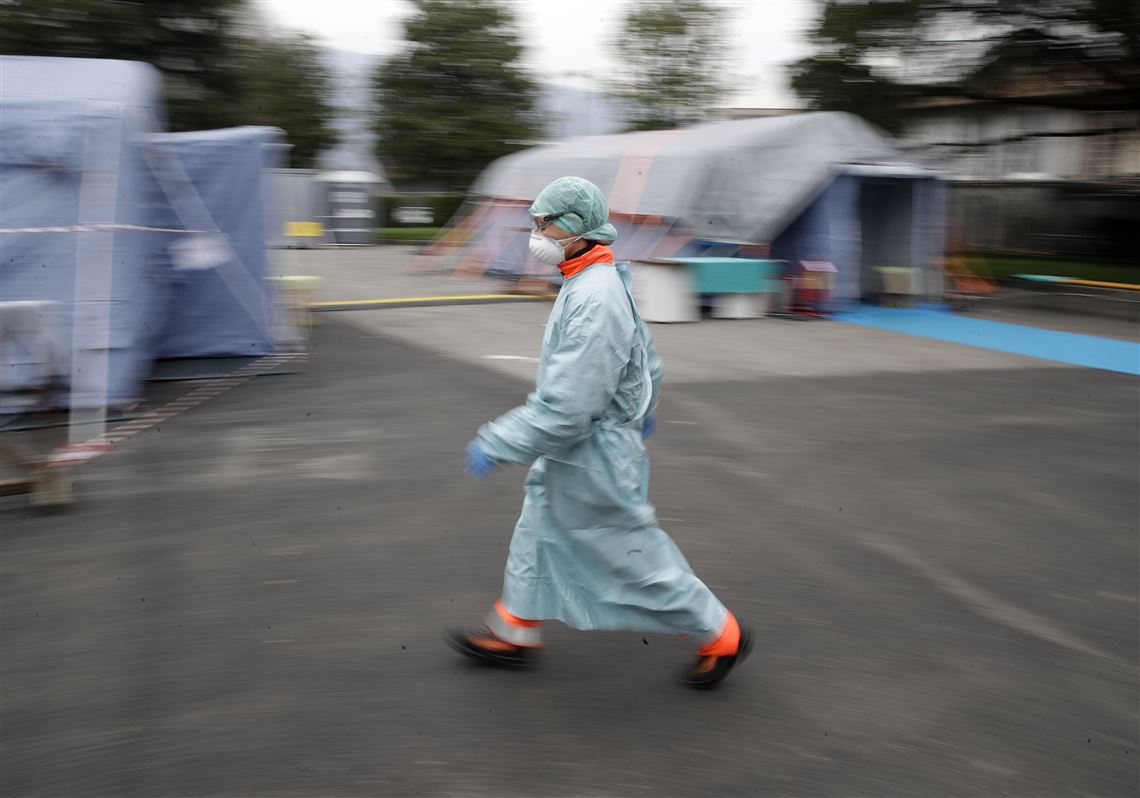
    The unprecedented outbreak of deadly COVID19 has shaken the entire globe in the last few weeks and has almost paused most business activities including manufacturing, services and retail.  Textile and Apparel industry has been also hard hit due to Covid 19 badly.

    In the month of December, when many reports suggested the detection of COVID19 in China, the world didn’t seem that serious, but as the time passed and everyone learnt about this contagious virus, global leaders started taking action – a little too late. It is sad to see that most of the nations could not understand the enormity and gravity of the situation and kept on delaying important decisions on social distancing to save the economy.  But with these delayed actions , thousands of lives are being lost and the economy is bleeding profusely. Most governments are so enamored of keeping economy before people that they have hurt both .

    Looking at our industry , it is facing probably the toughest time ever in last 100 years. Even the wars did not make such an impact what we can see now  with major global retailers closing down their stores and cancelling orders.

    The movement has been restricted, social distancing has been imposed and enforced, stock exchanges are plunging, factories are getting closed, orders are either being canceled or being postponed, are we heading towards the biggest global recession?

    COVID 19 and Its Impact On Textile and Apparel | Denimsandjeans

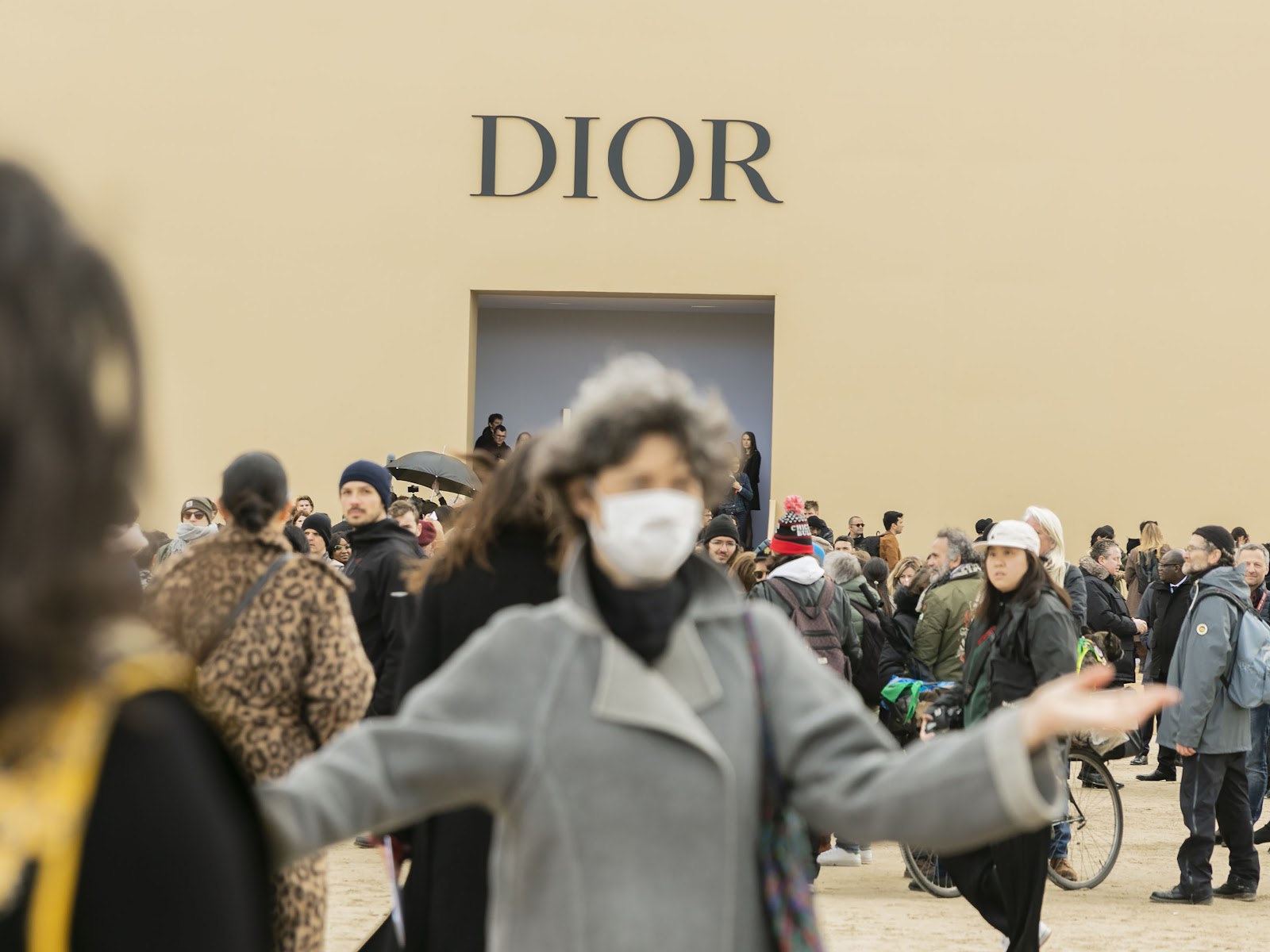
    A lot of fashion shows and exhibitions have been either canceled or postponed in the past few days, which may lead to delays in making sourcing decisions. The delivery of upcoming Spring Season and Autumn-Winter has been already delayed due to the disruptions  and post the travel restriction, the delay may add some more months or weeks.

    In these challenging times, we thought to bring some recent developments in the textile and apparel industry which took place due to the outbreak of COVID 19.

    China, which happened to be the epicenter of the outbreak, is also one of the biggest consumers and also the suppliers of clothing and textile. From January 2020, many global brands started to restrict its operation which later converted into complete shutdowns. Here is how the outbreak of COVID 19 impacted the sales of apparel around the world.

    1. Gap Inc provisioned $100 million sales hit for Quarter 1
    2. Adidas is expecting sales to drop by up to $1.13bn in Greater China in the first quarter.
    3. Ralph Lauren has provisioned the sales drop of up to US$70m for Q4 2019-20
    4. PVH Corp has temporarily closed the majority of its Calvin Klein and Tommy Hilfiger stores in China.
    5. Under Armour is expecting a sales hit of up to $60m on first-quarter sales in the APAC region. 6. VF Corp says about 60% of its owned and partner stores in China have been temporarily closed.
    6. Uniqlo closed 225 stores in mainland China to limit the outbreak intially ,however they have opened all their stores located outside the Whuan last week.
    7. The company, which owns Michael Kors, Versace and Jimmy Choo, has closed 150 stores in China and projects its revenues in the next quarter will drop by $100 million.

    COVID 19 and Its Impact On Textile and Apparel | Denimsandjeans

    The situation is now improving in China and the government has announced to lift all kinds of ban from Whuan w.e.f April 8th. Theaters and other public transports are gradually resuming and as the time passes, things will be recovered rapidly.

    Hermès International CEO Axel Dumas said he foresees “potential normalization” of operations with seven of its 11 stores in China beginning to resume operations.

    After China, the invasive and insidious COVID 19 imploded in the month of March in Europe and Iran followed by the USA. The scale of the outbreak has been colossal and forced the countries to enforce complete lockdown and social distancing which forced many buyers to either cancel orders or postpone them till further notice. Bangladesh and Pakistan – two of the large apparel exporters are facing the toughest times with most of their European orders getting cancelled . Bangladesh is particularly facing this huge problem.

    Rubana Huq, president of the Bangladesh Garment Manufacturers and Exporters Association appealed to buyers not to cancel their orders in Bangladesh.

    “Most brands are putting the orders indefinitely on hold and canceling. They are also canceling orders that are scheduled to be shipped now. For them it’s a question of the survival of the businesses, for us it’s the survival of our 4.1 million workers,” she says.

    • The shutdown of major buying regions including the USA, Europe and some countries in SEA is actually putting at risk the livelihoods of garment workers, who are already some of the most vulnerable workers in the global economy.
    • Most of the fashion stores in the USA and Europe are either closed or operating for limited hours which led to a drastic fall in the clothing demands as the households have paused their spending on non-essential things.

    COVID 19 and Its Impact On Textile and Apparel | Denimsandjeans

    Janne Einola,  H&M India , in his linked post wrote about closing all stores in India .

    “Right now we’re facing a situation that no one could really prepare for. In these times of uncertainty, we’re following the advice from the government and local authorities. We’re adapting to ever-changing situations, and are truly grateful to have fantastic teams collaborating to support our customers, colleagues, and partners across India.
    In response to the prevention and control of the disease outbreak, we are closing all the H&M stores across India, in shopping malls and street locations till 31st March 2020. Please stay safe and take care of one another, wherever you are”.

    “The info from the brands is more like tip of the iceberg. The deluge is on the way and we all need to be prepared for it. We need to be stronger and we need to find ways to support each other as much as possible. This bad phase will pass but we will all need each other after this. Hoping and praying that we all come out of this situation with minimum damage ” – Sandeep AgarwalÂ