Tag: denim developments

  • Kurabo’s New Kantanmen Super Soft Wrinkle And Shrink Resistant Denim

    kurabo denim The famous denim mill from Japan – Kurabo – has come out with a great product  once again . Known for bringing out  innovating denim products from time to time – some of which have defined the denim developments the world over- Kurabo has brought out a Wrinkle Free and Shrink Resistant Denim which is Super Soft and remains so after a large number of washes. I met Mr Kenshi Kawano from Kurabo at Kingins Honkong( I am writing this post from the Kingpins show in Hongkong!)  explained the product to me :

    Kurabo Kantenmen Denim  – A Description

    Kanatanmen is a new functional 100% cotton material made by Kurabo’s innovative production method and it actually makes it difficult to shrink the or wrinkle even after washing. The wrinkle resistant effect of this product is much cleaner than the conventional cotton fabrics and enables the clothe to remain neat after washing.

    • Kantanmen does not become hard and keeps the softness after repeated washing.
    • Less scuffing; and maintains a neat  quality and appearance.
    • Products made of 100% conventional cotton become hard in texture after repeated washing but Kantanmen remains soft.
    • Ensures a long lasting beautiful shape and neat fit.

    What is meant by Kantanmen ?

    “Kantan” in Japanese means “ Easy Care” and “Men” in Japanese means “Cotton ”. So Kurabo has appropriately named their new product Kantanmen.

    The Technicalities In Kantanmen Finished Denim

    Kurabo’s Kantanmen is a shrink and wrinkle resistant material developed using a unique method of  manufacturing from an alternative perspective, after an analysis of of the factors that cause shrinkage and wrinkles . In conventional cotton textiles, variations in the degree of agglomeration of cotton molecules cannot be avoided. For this reason, large amounts of resin were needed to produce shrink and wrinkle resistant effects. This left practical issues such as decrease in strength and significant changes in the textile.

    In Kantanmen, the quality of cotton was improved in order to produce cotton with a  uniform monomolecular structure . Kurabo has succeeded in significantly improving the above effects in comparison with conventional cotton. Additional processes at the spinning and finishing stages lend the feature of remarkably low shrinkage  and super soft handle (that lasts) to the fabric. In normal  cotton fabric, the shrinkage after 50 washes can go upto 8% whereas in Kantanmen finish fabric , the shrinkage will be under 5% – see graphical image below:

    denim shrinkage

    Lets have a look at two fabrics – one with Kantanmen finish and one without (other parameters remaining the same) and see the difference.

    kantanmen denim kurabo

    And Mr. Cotton from Kurabo will be glad if you like the product !

    kenshi kawano About Mr Kenshi Kawano : Mr Kenshi Kawano is the President Kurabo Denim(HK) Ltd. and Kurabo Denim (China division) and has been with Kurabo for over 25 years. He has been a key person in the growth of Kurabo denim and of Kurabo name around the world.
  • Denim Constructions

    Here are some typical denim grey fabric constructions

    Weave: twill 3/1 Z

    3/1 Denim Fabric Constructions

    Warp(ends/cm) Weft(ends/cm) Warp Tex Weft Tex Weave
    24 16 7 84 6 98 3/1
    25 16 7 84 6 98  
    24 16 7 84 5.5 107  
    20.8 15.5 7.4 80 6 98  
    27 19 7.5 78 6.7 88  
    24 17 7 84 6 98  
    23 15 11 8.5 11.8 50  
    23 16.5 7 84 7 84  
    24.6 16.5 6 98 7 84  
    30 18 8.6 71 7 84  
    25 26 7 84 5.5 107  
    26 21 11.8 50 11.8 50  
    22.8 16.5 6.7 88 6.7 88  
    25 18 7 84 7 84  
    27 18 7 84 5.5 107  


    Chambray Fabrics – Weave :Plain or 2/1

    Warp Weft Warp Tex Weft Tex Weave
    24 20 24 25 24 25 1/1
    27 16 24 25 24 25 1/1
    21 12 12 49 12 49 1/1
    23 16 12 49 14 42 1/1
    25 15 9 66 7 84 1/2
    23.3 16 16 37 12 50 1/2
    25 16 16 37 16 37 1/2
    25 15 9 66 12 50 1/1
    23 19 20 30 20 30 1/1


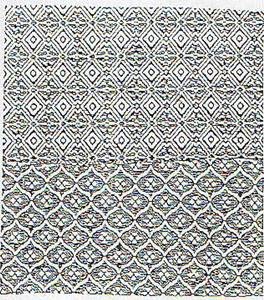
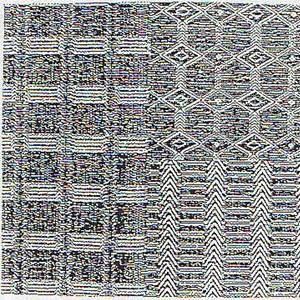
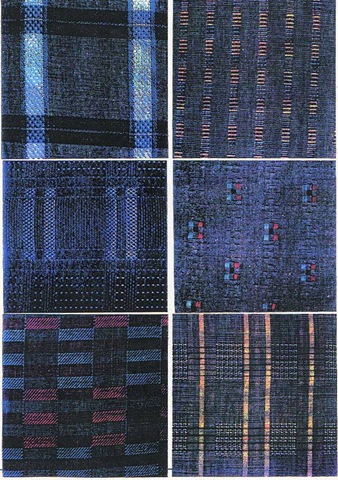
    Denim with stripes

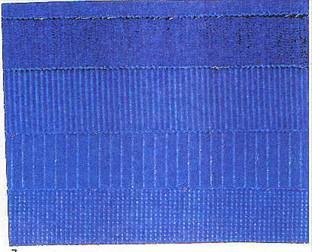
    Combination twill 3/1, plain 1/1 whipcord. Possibilities to achieve different fabric appearance.

    clip_image002clip_image003

    clip_image004clip_image005

       Stripes twill 2/1 + ½             Stripes twill 2/1 + plain

    clip_image006clip_image007

       Whipcord narrow strips       Whipcord weave strips

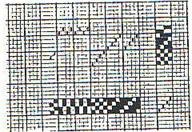
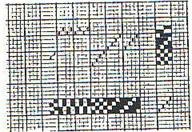
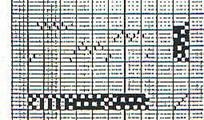
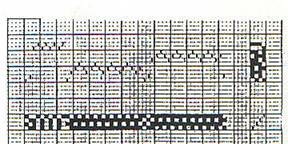
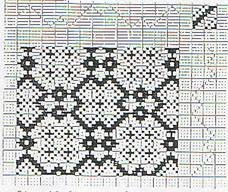
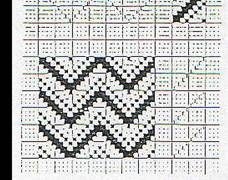
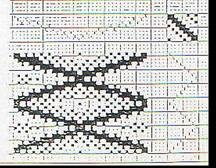
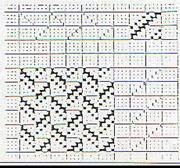
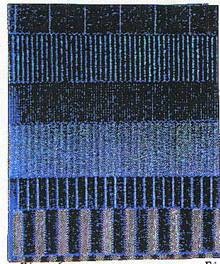
    Fancy fabric woven on dobby

    (fig. 3 + 5 woven on tappets) by inserting Lurex or count. Viscose filament in weft

    clip_image009clip_image010

    Fig. 1                                                 Fig. 2

    clip_image011clip_image012

    Fig. 3 Reversal drafting           Fig. 4 Fancy drafting

    clip_image013clip_image014

    Fig. 5 Broken drafting                Fig. 6

    Effects are achieved with multicolor WM and warp beam in high pos.

    clip_image016

    About the author: Adnan is a textile engineer and working with a reputed denim garment company in Pakistan.He is looking after new denim developments.

  • ‘Paca Blue Jeans’ a new kind of denim from Alpaca fiber

    Denim has always been greedily targeted by manufacturers/producers of fibres other than cotton simply for the reason that it is the highest selling clothing item in the world. There have been experiments to make denim from wool,silk,tencel and other fibres and each of them has had limited amount of success. We now have a new fibre seeking to enter the world of denim – The Alpaca Fiber .

    Paca blue denim
    Paca blue denim

    The fiber comes from a camelid (whatever it means!) reared at and  is used for making knitted and woven items, much as sheep’s wool is. These items include blankets, sweaters, hats, gloves, scarves, a wide variety of textiles and ponchos in South America, and sweaters, socks, coats and bedding in other parts of the world. The fiber comes in more than 52 natural colors.

    The American Alpaca Federation has taken up the task of promoting this fibre and launched the denims made from Alpaca fibre at ‘Denim by Premier Vision‘. The denim was made in cooperation with the the denim group GFM Telas Parras The reviews have been encouraging and the federation seems to have evinced interest from a number of buyers including retailers like Gap.

    The denim fabric made from Alpaca Fiber has some unique qualities and is very soft and has warmth,strenght  and is wrinkle free. While similar to sheep’s wool in that it is a natural fiber, it is warmer, not prickly, and has no  lanolin which makes it hypoallergenic and wrinkle free. However, it is somewhat weaker and coarser than most wool fibers making it stand out while dying. Dyeing may thus be an issue with this fibre. But there is no doubt that the hand feel of denim made from this fibre would be superior to that made from wool or tencel.

    But like all other natural (animal based ) fibres, the major limitaion comes with the cost .Alpaca fibers fall in the same league as the the fibre tops cost in the range of USD 10-USD 24 per kg and even with a usage of 20% mix, it would add substantial cost to the fabric and garment . It remains to be seen whether the eco friendliness, handfeel and performance of the fabric made from this fiber can outweigh the costs or not.

    Some reference links – Alpaca Federation, Alpaca farmers,About the animal

  • Japanese denim – Environment friendly jeans manufacturing attempts

    Japan Fashion Week recently concluded in Tokyo.
    Besides the usual show, there was an exhibition on the denim industry in Japan – Japan Blue.
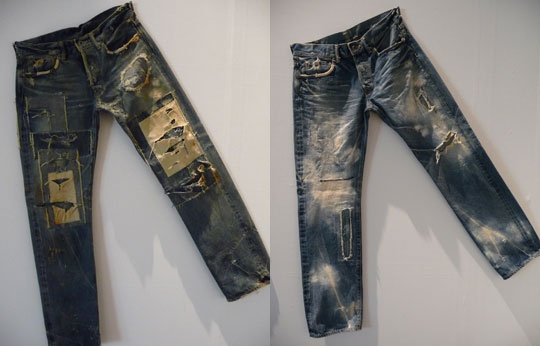
    The highlight of this exhibiton was that the Japanese denim industry is working on various ways to make the entire Denim/Jeans manufacturing process as environment friendly as possible.Denim fabric manufacturer Nisshinbo is using discarded banana stocks in its fabrics .Manufacturer Nihonmenpu is producing items dyed with natural mulberry lavender.See the photo below (left one is Nisshinbo fabrics and right ones are Nihonmenpu fabrics).

    There is also a very interesting attempt to reduce the water required to produce Jeans. One pair of Jeans supposedly takes around 200 litres of water to be produced . With billions of jeans produced around the world, a huge amount of water is used to manufacture jeans and the wastage is then released into the rivers and hence oceans. A Japanese company Howa is working on a technology to wash down the Jeans using OZONE and not water. It displayed the results from its experiments and here are some photographs.If this company succeeds in making this process commercially viable, it has huge implications for the denim industry. Not only will it has the possibility to reduce the water consumption for Jeans production drastically, but it can also help in denim/jeans manufacturing units to be put up in place where water is scarce.See here jeans washed by this method.

    Check more details on this exhibition here
    [ad#video-400]

  • New sulphur dyes from Clariant to improve color fastness on denim


    Advanced Denim is a new concept based on two new sulphur dyes – introduced by Clariant last week in the Blue Zone fair. They mention that from a technology point of view, Advanced Denim offers fast-to-repetitive washing, good rubbing fastness and an easy application process. Environmentally, it features an ecological dyeing process (no hydros, less water consumption), denim that fulfills GOTS requirements, and wash-down bleaching without the need for hypochlorite (Aox free). Fashion effects include dark denim, ring denim and solid denim, along with a wide variety of shades.

    However, Rubbing fastness on denim can be achieved in a number of ways and having a very fast color negates the nature of denim. Denim has retained its youth appeal mainly because of its wash down effects which give  the garment different personas over different periods of time. However, it is the environmental effect that is  interesting and welcome. Traditionally denim manufacturing consumes a lot of water – specially during the dyeing process and water saving in any form is good. Also wash down bleaching without hypoclorite is also environment and human friendly .

  • Denim company in India best in product development?

    There are  a large number of denim mills in India – more than 22. Some of them are quite old – like Arvind – while many of them have started operations in the couple of years.

    The success of a denim company greatly depends on the kind of product development that it does. Each mill has its own special products and cater to different segments of the market.

    There are varying views regarding the quality of developments of different companies.
    I think, it would be good if we can place this question to the Denim Industry and see the results.


    Click on ‘Results to see the results of this poll..

  • Denim mill considered best and most reputed in the world?

    There are hundreds of Denim Mills around the world. However, some of them are known by their names to all those who know denim while others are not so well known. It would be great to know which denim company would the readers consider as the BEST DENIM COMPANY IN THE WORLD..

    Which is the BEST DENIM COMPANY IN THE WORLD?

    You can vote here and see the results also.

  • Patents for Denim fabric and Jeans

    For those interested in knowing what can be the next big thing in Denim/Jeans, keep a watch on the patents being awarded in this space..
    Follow this link frequently(which I do sometimes – but I am still lazy to go through frequently) on
    Patent Monkey

  • EFS System installed by three denim mills

    Cone Denim (in Jiaxing,China),Central Textiles(Hong kong) and Lanyan Group(China) have installed the Electronic Fibre Selection System from Cotton Incorporated. This computer software technology driven system aims to optimize the quality and consistency of the cotton fibre – meant to help in producing high quality yarns .
    Also, this helps the American Cotton Exporters as more American Cotton is expected to be used by mills using the EFS system.
    Well its a good move by the Cotton Inc. to increase its Cotton exports.
    Let’s wait and see how profitable wwill it be for the companies who have installed it ..