Tag: denim sewing

  • How To Stitch Quality Denim Garments?

    Want to learn more about how to resolve everyday stitch and seam  quality problems with denim? 
    If you do , a free workshop by American and Efird  will give you useful knowledge on how to overcome the most typical seaming problems. A&E develops the content and creates these programs as a special means to help companies  increase productivity.  Topics covered include:

    • Review of common stitches used in denim and why each is used. 
    • Detailed overview of 5 pocket Jean construction techniques .
    • How to overcome common seam quality problems?
    • Minimizing broken stitches after stone-washing, hand sanding, etc.
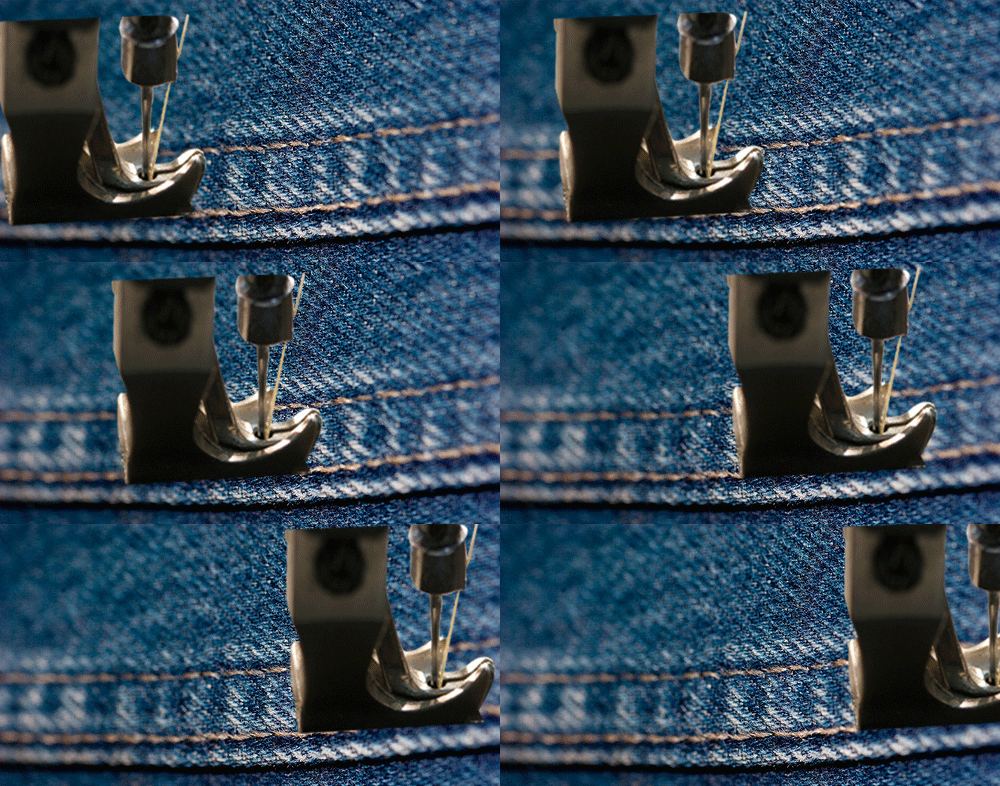
    • Minimizing thread breakage & skipped stitches .
    • Minimizing Ropey Hems, Twisted Legs, Sagging Pockets.
    • Minimizing problems commonly found on Stretch Denim garments .
    • Dealing with thread color-fastness issues .
    • How quality sewing threads can help make better quality garments?
    • Introduction to common sewing threads for denim and how they impact the performance and appearance of your products .
    • Review of A&E’s denim thread selection matrix .
    • Introduction of special threads for a distinctive look.
    • Maximize sewing and seam performance but keep thread cost to a minimum.
    • How to improve the quality and appearance of your denim sewn products ?
    • Better understanding of denim seam construction methods .
    • How to Trouble-shoot Common Stitching Problems and offer Suggestions to your Sourcing Companies ,Vendors and Contractors on ways to improve the  quality of Your Products.

    This 2 hour Seamology – Making Quality Denim Garments  workshop is loaded with practical, helpful ideas that can assist companies in resolving everyday sewing issues. The companies just need to provide a space for the presentation and A and E provides the handouts and the workshop Free!
    For more info on the workshop , contact  Mark Hatton or Al Irvine

  • Why Use Core Spun Threads For Denim Sewing In Place Of Spun Poly Threads?

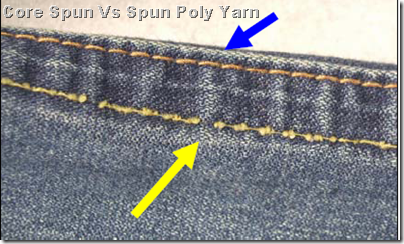
    core spun vs poly spun yarn

    American and Efird  brings out an interesting comparison between Corespun and Spun Threads to help understand the difference between the two better and the reason why corespun gives better results in denim sewing .

    What are Corespun Threads ?

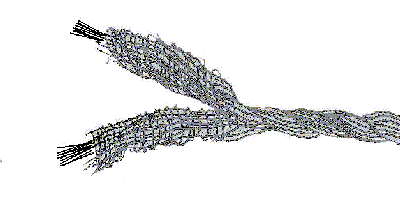
    image Corespun threads, sometimes referred “pcore” or “polycore” or “cottoncore”, are made by wrapping a staple polyester or cotton wrapper around a continuous filament bundle of polyester fibers during spinning, and then plying these yarns into a sewing thread. The continuous filament polyester core makes up approximately 60% of the thread construction. This core contributes to:

    • Higher strength per size (higher tenacity)
    • Greater uniformity in size, strength and other physical characteristics•
    • A higher initial modulus or resistance to stretching contributing to better loop formation and reduced seam puckering.
    • Better ply security – fewer unravel type thread breaks
    • Superior abrasion resistance & durability

    The wrapper of a corespun thread can be either staple polyester or staple cotton. The wrapper gives the thread a fibrous surface that contributes to:

    • A softer “hand” or feel than a 100% continuous filament threads
    • A matte finish stitch appearance similar to a spun thread construction
    • Superior frictional characteristics compared to a continuous filament threads
      The Poly wrapper contributes to :
      o Superior color fastness, chemical and abrasion resistance
      o Higher strength than cotton wrapped corespun threads
      o Superior “union dyeing” because of one-step dyeing process
      The Cotton wrapper contributes to :
      o Superior needle heat resistance
      o A “wash-down” stitch appearance


    What are the benefits of using core spun yarns on denim ?

    Corespun threads (eg Perma Core®NWT) are :

    • 40 to 50% stronger than spun polyester threads the same size
    • Superior sewability on both manual and automatic machines with minimum interruptions – fewer restitched seams.
    • Helps to Minimize Open-Seams and Seam Failure
    • Allows the use of smaller diameter thread to minimize Seam Puckering or Needle cutting
    • Helps to minimize broken and cut stitches after finishing.

    Spun Polyester Threads (PP Threads) – An Analysis

    image

    Spun Polyester threads, sometimes referred to as “PP” or “PP Spun”, are made by spinning 100% polyester staple fibers into yarns and then plying these yarns into a sewing thread. Spun Polyester threads are normally made in a two or three ply constructions depending on the yarn size. Spun polyester threads generally have much lower single end breaking strength than corespun threads. A comparison below of two products – a corespun and a spun polyester thread from A & E brings out some facts :

    Core Spun Vs Spun Polyester Yarn – Technical Specifications

    Here are some technical specifications of two yarns  from the same company – one Core Spun and the other Spun Poly – to find out some differences between the two.

    Perma Core® Core Spun Yarn

    Tex Size T-18 T-24 T-30 T-40 T-60 T-80 T-105 T-120
    Yarn Size 59/2 45/2 35/2 29/2 18/2 15/2 12/2 15/3
    Av. Strength(lbs) 2.1 2.7 3.5 4.5 7.8 9 10.6 13.51
    Elongation (% at break ) 21.5 20.5 21.5 21.5 24.2 24.8 26.3 25.7
    Shrinkage
    (BW)
    <1% <1% <1% <1% <1% <1% <1% <1%
    Shrinkage
    (HA)
    <3% <3% <3% <3% <3% <3% <3% <3%
    Loop Strength (lbs) 2.7 4.0 5.2 6.3 11.6 13.3 15.8 20.5

    Perma Spun®  – Poly Spun Yarn

    Tex Size T-21 T27 T-40 T-60 T-80 T-105 T-120
    Yarn Size 53/2 43/2 29/2 19/2 14/2 16/3 16/4
    Av. Strength(lbs) 1.6 2.1 3.2 4.7 7.1 9.7 10.6
    Elongation (% at break ) 16.1 16.3 17.0 18.0 18.6 19.9 18.5
    Shrinkage
    (BW)
    <1% <1% <1% <1% <1% <1% <1%
    Shrinkage
    (HA)
    <3% <3% <3% <3% <3% <3% <3%
    Loop Strength (lbs) 2.7 3.1 4.8 7.9 11.3 15.1 16.9

    As can be seen from the specifications, there is a significant difference in strength of the core spun and spun polyester yarns, even though they have been manufactured by the same company. Local spun polyester yarns could have still lower strengths raising the possibilities of increased sewing ruptures after washing.


    spun polyester yarns denim Core Spun Yarn Denim

    Cost Vs Performance

    Core spun yarns are definitely more expensive than the spun polyester yarns.  The usage of these yarns can increase the cost of production . However, using spun polyester yarns can increase the possibility of broken stitches and rejected garments or needing repairs.

    A & E mentions that certain manufacturers have tried to use both Core Spun and Spun Poly to achieve a balance between costs and performance.

    Since overedge seams consume the most thread, they will used spun polyester on these operations while continuing to using corespun threads on all topstitching and stress seam operations.

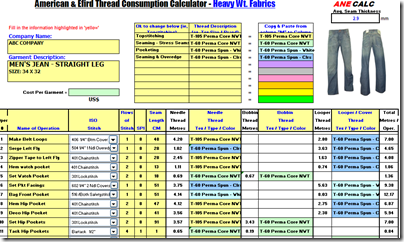
    If you are using a combination of different threads, you can find the total thread cost per garment by  using the ANECALC from the company. This calculator will help to find the total thread cost per garment – though it will not give the thread cost saved or made due to performance of sewing thread. Click on the image below  to download the calculator for Men’s Jeans – heavy weight fabrics.

    image

    For other calculators related to Men’s Carpenter Jeans , Ladies Jeans, Missy’s Jeans, Kids Jeans and Kids Carpenter jeans (both in yards and mtrs) go to this page and download (under the heading ANECALC APPAREL GUIDELINES).

    Also check  ‘How to sew extra heavy threads in sizes in denim jeans ?”

  • How To Sew Extra Heavy Thread Sizes In Denim Jeans ?

    sewing-thread This is the second in the series of  technical bulletin and guide from American & Efird ( a global leader in denim sewing threads) for the benefit of denim garment manufacturers.

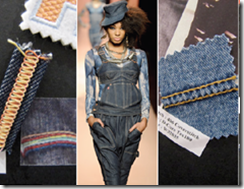
    In this technical guide it can be  understood how to sew extra heavy threads on denim to make the the products unique .Retail designers are always looking for a way to make their products unique and this definitely applies to sewing denim garments. From a thread perspective, this can include various options as listed below :

    1) Using contrast color threads

    • For all topstitching operations
    • For different operations
    • For different needles of the same operation

    2) Using threads that will maintain their color regardless of the wash process.

    • Using a 100% polyester thread dyed with disperse dyes.

    3) Using threads that will wash-down depending on the severity of the finishing process.

    • Using a cotton wrapped core thread.
    • Using an true indigo dyed cotton wrapped core thread

    4) Using a thread that looks different than regular stitching thread.

    5) Using different thread sizes that give a bolder stitch appearance.

    In this guide, we will concentrate this option ie use bolder stitches on denim jeans .

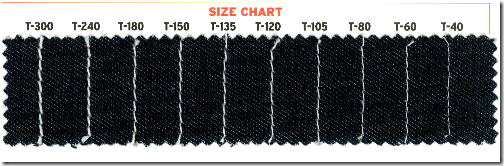
    Larger Thread  Sizes  That  Give A Bolder  Topstitch  Appearance
    image

    Tex Size = Gram Weight Per 1000 meters of undyed yarn 

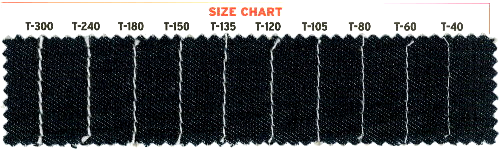
    Years ago the most common size of thread used for topstitching denim was a Tex 60 or 80 or possibly Tex 105 size threads. Recently many manufacturers have graduated to a Tex 120 size thread to give a slightly bolder stitch appearance. Today, many denim designers are looking at much heavier thread sizes including Tex 150, Tex 180, Tex 240 and even Tex 300.image
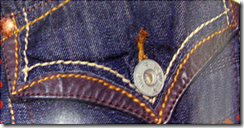
    This has created problems for many denim garment manufacturers because their normal denim sewing machines were not designed for these heavier threads.

    WHAT DETERMINES THE THREAD SIZE THAT CAN BE SEWN ON A SEWING MACHINE?

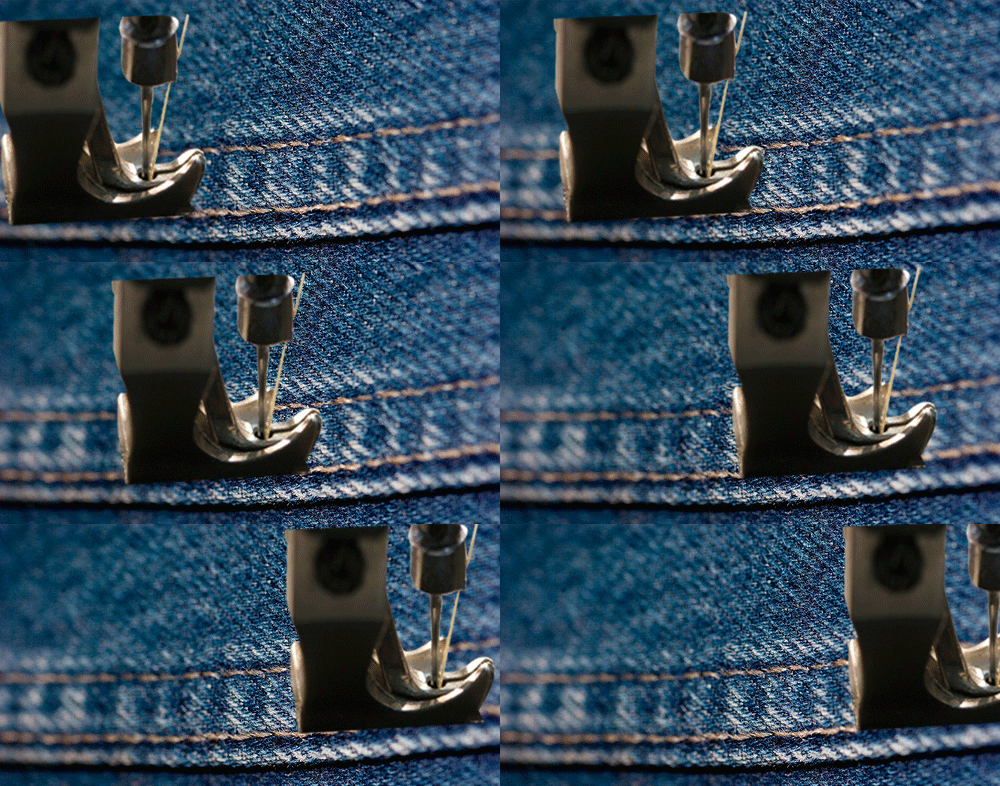
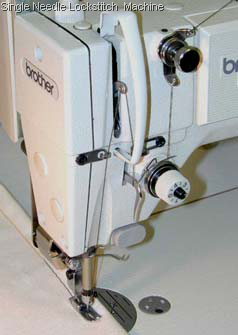
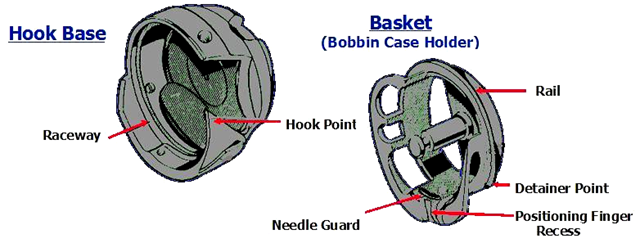
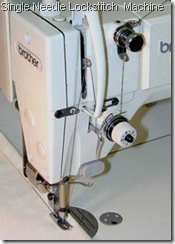
    On 301 lockstitch machines, the maximum needle thread size that can be Single Needle Lockstitch  Machine sewn is usually determined by the capacity of the hook or shuttle in the machine, and the size of the needle being used. There must be enough clearance between the bobbin case holder and the hook base to allow the thread to move freely around the hook during the stitch formation.
    Sometimes an older hook will work better on larger threads because it has more play in the raceway allowing for more clearance for the thread.
     

    The hook must also accommodate the use of larger than normal needles. In some cases, the retainer or gib of the hook is shaped differently to allow the  denim sewing
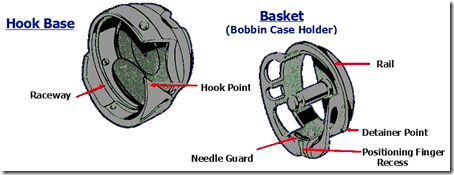
    thread to of the hook with less resistance. Note that the hook must be properly lubricated.

    Many sewing machine companies do make higher capacity Hooks that will allow larger threads to be sewn, but these are generally very expensive.
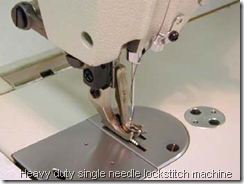
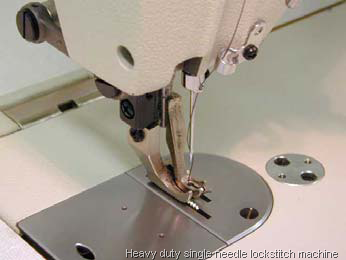
    Heavy duty single needle lockstitch machine There are also machines designed for sewing very heavy threads used for sewing upholstered
    furniture and leather goods. Some manufacturers are purchasing these types of machines so they can sew extra large thread sizes up to Tex 500 or Tex 600 thread sizes!.

    Heavy duty single needle lockstitch machine

    Another option for sewing heavy threads on 301 lockstitch machines is to sew the heavy thread in the bobbin and using a regular size thread in the needle. This means that the seam is inverted when it is sewn. This is a common practice when setting front pockets or outlining the fly on a 5-pocket jean.
    It is easier to use heavier thread sizes in the needle position ofimage
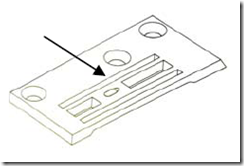
    chainstitch machines
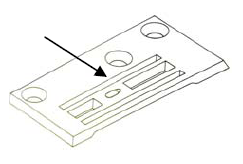
    , however, even these machine sometimes must be modified to allow the thread to be pulled up from under the needle plate with the least amount of resistance. This may include increasing the size of the needle hole in the needle plate.

    RECOMMENDED NEEDLE SIZES FOR HEAVY THREADS

    Most manufacturers who are sewing heavy denim are using a size 140 needle. When sewing heavier thread sizes, larger needle sizes must be used. Note: many times using a larger needle size will increase the occurrence of fabric damage and broken stitches due to needle-cutting.

    Thread Tex Size

    Minimum
    Needle Size (metric)

    T-105 – T-135 140
    T-150 150
    T-180 160
    T-240 200

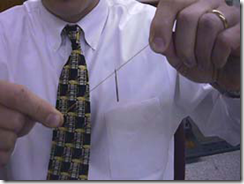
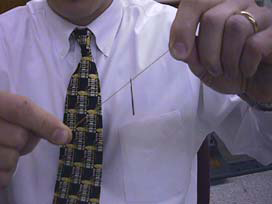
    image A simple test to determine if the needle and thread are compatible is to thread the needle with about 12 inches of thread. Hold the thread fairly taught, at a 45-degree angle, and with a circular motion make the needle twirl around the thread. As the twirling motion of the needle slows down, the needle should slide freely from the top to the bottom of the suspended thread. If the needle does not slide easily, then sewing problems Heavy Duty Single Needle Lockstitch Machine will probably result.

    THREAD TENSIONS REQUIRED FOR HEAVY THREAD SIZES

    Generally a heavier thread size will require more thread tension to properly set the stitch on denim fabric. The heavier the sewing thread being used, the more needle thread machine tension that will be required. Lockstitch machines will also require heavier takeup spring pressure. Also, all of the thread guides and eyelets may need to be used to help control the thread
    during the sewing cycle. This will also help to keep “French” knots from forming in the thread path that can restrict the proper flow of thread to the needle.

    Related Post : The A&E guide on ‘Denim Garment Stitching Recommendations’

    Need any advice on denim sewing ? Contact Al Irvine from A & E at this email address.

  • Denim Sewing Threads – Garment Stitching Recommendations And Guide

    image American & Efird (A&E) is a global leader in denim threads manufacturing. With over a century of experience in industrial threads , they come out with number of technical bulletins to help and guide denim garment manufacturers to optimize seam performance in denim stitching so that not only rejections due to stitching are minimized but also the life of the garment is extended with better stitching.

    Here are some recommendations from A & E to optimize seam performance.

    Denim Jeans – Optimizing Seam Performance

    Selecting the proper thread for denim garments is very important to minimize sewing and seam performance issues. There is an old saying that:

    Thread only makes up a small percent of the cost of the finished product … but shares 50% of the seam responsibility.

    A typical pair of adult size jeans will have from 200 to 250 yards of thread in them depending on the seam construction. Most major jean manufacturers have experimented with different thread types to reduce cost but most have found that corespun threads give the best overall
    performance. Most jean manufacturers put their products through various wash processes after manufacturing and some of these processes can be very harsh. The cost of these wash processes can be from $.75 to $3.00 per jean or more depending on the chemicals, stones, enzymes and process time required. The amount of thread used in a jean typically costs between $.25 and $.30 while the wash-process can cost up to $3.00 per jean.
    The thread must be able to withstand all of these processes … and hold the seams together for the life of the garment.
    When you talk about sewing denim, there are four key issues that need to be considered:
    1) What is the weight of  denim fabric?
    2) How large  topstitching thread is required?
    3) What finishing procedures will the jeans be subjected to?
    4) What quality issues need to be addressed?
    With these questions answered, you will be able to produce jeans that meet the requirements for today’s  huge variety in Jeanswear. From a basic 5-Pocket Jean to the most creative pair of High-Fashion Jeans, your sewing plant can produce the quality for each.
    The thread of choice used by most quality denim garment manufacturers for topstitching and stress seams include corespun threads ie

    What Are Corespun Sewing Threads?

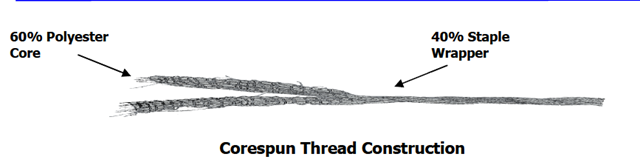
    Core threads are made by spinning a wrapped of cotton or polyester staple around a bundle of continuous filament polyester fibers to form a yarn and then two or more of these yarns are twisted together to form a corespun thread. Generally the core makes up approximately 60% of the thread construction contributing to a more uniform and higher tenacity sewing thread as compared to a 100% spun polyester sewing thread. For example, a T-60 PW Core thread will have a breaking strength of approximately 8.7 lbs. while a T-60 Spun Polyester thread will have a breaking strength a little over 5 lbs.

    core spun denim thread

    Corespun Thread Construction

    Cotton wrapped  core spun threads have very good needle heat resistance. When wrapped with a polyester wrapper, core spun threads have excellent chemical resistance and color fastness. The fibrous surface on either thread reduces the shiny look and also contributes to superior frictional characteristics as the thread passes through the sewing machine.

    • Some designers prefer the thread to wash-down during the wash processes and if this is the case, you would select a Cotton-Wrapped Core thread . Degrees of color fastness will vary with particular shades. With this known factor, a user of Cotton-Wrapped Core should look at all wash codes to ensure that the thread color will be appropriately maintained. Also  recommended is  doing pre-production wash testing to assure that the wash-down look will
      be acceptable.
    • On the other hand, many jean designers want the thread to maintain its color for the life of the garment and offer a signature look.  If color fastness is key, then select a Polyester-Wrapped Core thread . Also with Polyester Wrapped products you have the option of picking the desired color from a color palette to obtain the look you want after the wash procedures. This will allow greater shade control, which will be maintained after continual washes by the consumer. Doing pre-production wash testing prior to going into production is still recommended.
      Cotton-Wrapped and Polyester Wrapped Core threads offer excellent abrasion resistance to the varied wash codes the denim garments may be exposed to.

    Thread Size

    Both of these thread types are available in sizes to meet the variety of denim fabric weights. From a Tex 40 to a Tex 120, you can achieve the desired performance throughout the sewing floor and after the varied finishing processes. Utilize the correct size to obtain the desired look while maintaining seam integrity. Some basic sizes utilized in today’s denim manufacturing are:

    Needle Thread Looper Thread Serging Application
    Tex 150 – T-300 Tex 80 or Tex 60 T-40 or T-60 Extra Bold appearance
    Tex 120 to T135 Tex 80 or Tex 60 T-40 or T-60 Bold appearance
    Tex 80 or Tex 105 Tex 60 or Tex 40 T-40 or T-60 Normal
    Tex 60 Tex 60 or Tex 40 T-40  
    Tex 40 Tex 40 * T-40  

    *8 oz denim usage or Chino twills

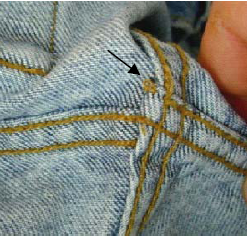
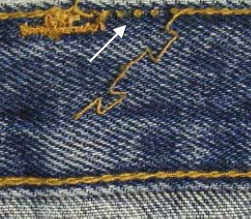
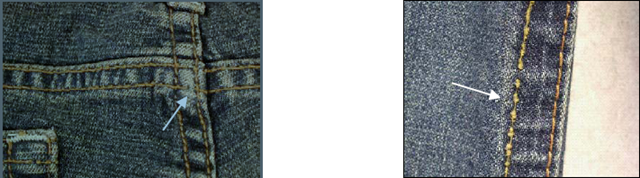
    Cut or Broken Stitches

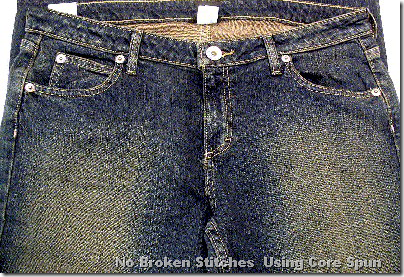
    denim stitchingMost manufacturers of denim and twill  garments that pre-wash garments after they are assembled have experienced problems with excessive “cut” or “broken” stitches. In fact many manufacturers have found this problem to be significant reaching in excess of 30 to 40% of the
    products being sewn
    .
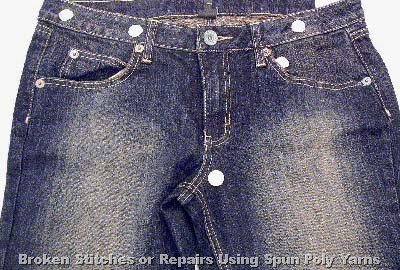
    Many times this problem occurs when adenim stitching thread  previously sewn stitch-line is crossed during a subsequent sewing operation and the needle damages the thread in the seam. Broken stitches can also occur when there is excessive abrasion or chemical degradation of the thread during the wash process. Let’s now discuss what are some  of the solutions to these problems.

    Solutions To Cut Or Broken Stitches

    • Many manufacturers have significantly reduced the number of “cut” and “broken” stitches by using high-performance sewing threads on stress seams. Make sure the correct thread type and size are being used in both the needle and bottom (looper) positions. Core threads that have a continuous filament polyester core are much more resistant to cutting and degradation than 100% spun polyester thread constructions.
    • Usually the larger the thread size, the more resistant the thread is to being cut by the needle or failure due to chemical degradation or heat. Because of this many manufacturers have increased the thread size on critical operations including waistbanding, seat seaming, etc. Typical thread sizes used on heavy denim run from T-105 down to T-60 depending on the desired look. Typical thread sizes used on twills used in the manufacturing of chino pants run from T-40 to T-60.
    •  Inspect the needle point at regular intervals and check for sharp or burred points. If the needle point is damaged, replace the needle. Many companies have found that it is best  just to replace the needle on critical operations once or twice a day.
    • Check for signs of needle heat or excessive heat exposure during laundering that may be melting the thread. Usually if the thread has been damaged by heat, the thread will have a hard melted surface that can be felt or seen using a magnifying glass. If you suspect
      that needle heat is a problem, try using a special coated needle or needle coolers to  reduce needle heat. Make sure the thread has the proper type and amount of lube. Most major thread suppliers have developed high-performance lubricants to minimize heat
      damage on polyester threads. A cotton wrapped core thread may be more resistant than a 100% polyester thread.
    •  Use proper thread tensions. Make sure the stitch on the seam line is loose and able to move if it is hit by the needle. Tight machine thread tensions will NOT allow proper flexibility in the stitch and will increase “cut-stitch” damage. Generally on chainstitch seams, the ideal stitch balance is when the needle loop on the underside of the seam lays over half way to the next needle penetration. This can be checked by unraveling the looper thread and observing the needle thread on the underside of the seam or checking the ratio of needle to looper thread. It is normally recommended that this ratio be
      approximately 60% needle thread to 40% looper thread consumed.
    • Check the edges of the needle plate and presser foot needle holes to make sure they do not have any sharp edges or burrs that can damage the thread during sewing. Properly remove all burred or sharp surfaces making sure not to oversize the needle holes which
      can lead to excessive “flagging”.
    • Inspect the feed dog teeth directly behind the needle holes and make sure they are not sharp. If required, buff the feed dog teeth with a wire wheel or with a stone if they appear to be sharp. Be careful not to remove too much of the feed dog teeth that could hinder the feeding or interfere with chaining.
    • Use the minimum amount of presser foot pressure to get a uniform stitch length. Excessive presser foot pressure can cause the thread to be damaged when it is compressed against a relatively sharp surface. On some machines it is sometimes necessary to use a presser spring with fewer coils per inch to give more consistent pressure even when crossing heavy seams.
    • The proper type and capacity folder should be used to prevent stalling when crossing heavy seams. Feed stalling will increase the chances of “cut” stitches.

    DAMAGE DURING PRE-WASHING

    Sometimes partially damaged thread from the sewing operation will fail during stone washing or other processes. Most of the time this damage is difficult to detect but should be investigated using the suggestions mentioned on the previous pages. On the other hand, many seams are damaged during the wash processes due to excessive abrasion, chemical degradation, and heat degradation.

    denim stitching problem

    To reduce damage to the thread in the seams,  the following is suggested:

    • Make sure the correct thread type, construction and size is being used. For example, the product  Perma Core® NWT.
    • Work with your laundry to develop standards with regard to the type and amount of chemicals, rocks, cycle times and temperatures that are being used in both the washing and drying processes. You should monitor and properly test the following:
      a) Any changes of rocks and chemicals from one vendor to another
      b) Changes of cycle times
      c) Changes in temperature during the washing or drying cycles
    • Evaluate the best way the garment should be processed, whether it should be inside-out or right-side-out, the fly buttoned or not buttoned, etc. Care should be taken if the garments are turned right-side-out when they are still wet. Extra moisture in the garments can cause excessive whipping of the bottom hem seam causing excessive
      damage.

    To know more about denim stitching , different types of threads and guides on stitching ,  visit here.