Tag: Denim Washing

  • Takeaways From ‘Denim Washing Changes In Near Future’ Webinar

    Takeaways From ‘Denim Washing Changes In Near Future’ Webinar

    Recently Denimsandjeans held a webinar ‘Denim Washing Changes In Near Future’ with some of very well known and globally reputed denim professionals . The panelists included :

    1.Vasco Pizarro – Sales & Marketing Director – Pizarro S.A
    2.Daniele Lovato – Head – Elleti Group, Tunisia
    3.Andrea Perego – Washing & Treating Specialist – 7 For All Mankind
    4.Luca Braschi – Creative Developer – Blue Alchemy (Consultant – Uniqlo & J Brand )

    The talk was moderated by Sandeep Agarwal . We now bring the comments of the panelists which came out during the talk.

    Some of the common points that came out during the discussion were as below but of course there was consensus of various other points of discussion.

    • Global standards need to be created by the industry only and implemented by the govt.
    • Cannot wait for consumers to demand sustainable products. brands and supply chain have to do it.
    • Technology is very important and we need to find ways to optimize usage of existing technologies and resources.

    Andrea Perego

    Andrea was of the opinion that the final consumer is more focused on the price and quality and he may sometime look at sustainabiity also . However, it is the job of brands and retailers to push it even if the consumer does not realize it is sustainable.

    Andrea Perego at the Webinar

    Technology – Andrea said “We are having a lot of new technology and we can do a lot of things with the technology and machines that are available in the market. Sustainable technology and washings are more expensive than normal one. Sustainabliity for me is also optimization of processes. A platform like HIGGS index can be useful to create global standards for sustainability.”

    Daniele Lovato

    He spoke of how too many people trying to get on the sustainability bandwagon and creating green washing . There are too many certifications and standards which dilute the efforts of sustainability and there is a need to narrow down these so that the efforts are more focused and customers can understand easily. He also said that solution for global standards must come from the industry.

    Daniele Lovato at the webinar

    DIFFERENT WASHES ASKED BY CONSUMERS – “Its like chicken and egg. Consumers will also be asking for new things but will also trust brands to do so . There will be shift to more visual, more authentic and not boring ! Online sales ensures sales of more photogenic and aggressive looks.”

    Tech : Circularity programme is very important to save resources. A circular product does not need only a ciruclar industrial process but needs to be engineered from the beginning as a circular garment. So its not only washing but the entire system that needs to adapt to circularity. He spoke about using data to use in our garment industry. There is very little raw data being used and the next big thing is the use of software, technologies, AI and other tools to all stakeholders in the supply chain and we are ignoring this at the moment. Data is king !

    Sustainability – When it becomes a standard across the industry – will be cheaper than producing traditionally. But until that moment it is going to be more expensive than standard one. In 2010-11 they offered their first eco collection called Earth keepers and prices were almost double compared to traditional but now the gap is closing . Currently a medium wash sustainable and same wash unsustainable – the difference would be 15-20%. Only on a higher scale of production the sustainable wash would be cheaper.

    Luca Braschi

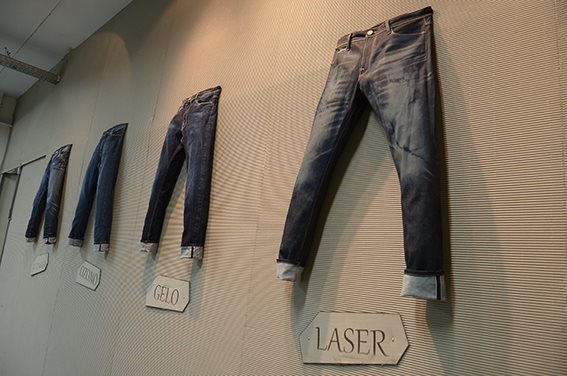
    Luca mentioned that technologies like LASER AND OZONE lasers are very old but they were not used much . But now there is a push from the brands to use it more and more. He also spoke about new generation of chemicals which are synchronizing with these technologies to achieve the right result . It is currently a priority not only about matching samples of the customers but also to do in the right and sustainable ways.

    He did not expect much change in consumer awareness of sustainable products post covid . Consumers are looking for references and what brands can do is offer transparency . He also felt that demand for health and safety finishings was getting higher now.
    Performance properties are getting more and more important.

    Luca Braschi at the webinar

    “Technologies to sanitize existing garments so that huge inventories can be used appropriately has to be created. Have to use existing technologies in a better way by combining them. Working with very low liquid ratio – some machine makers are working on and can help.”

    Uniqlo set up their own R&D centre with very clear targets like saving water 95-99% converted with traditional methods and in 3-4 years combining available technologies like laser and ozone and new generation chemicals . Uniqlo is also transfering this technology to their contractors. Being a big organization like them also helps to push change .

    Being sustainable with a low price is a big challenge and that is being addressed. He felt that he did not like when the market is becoming technology addicted – the washers have also to use their brains to find solutions in existing resources. At the end numbers would justify that you did something sustainable. It is sometimes possible using simple technologies also .

    Most sustainable wash- At Uniqlo they did was a wash in which they dried the garment only once , combining all processes in same bath, created a laser application with real effects and not requiring another application and save over 95% water compared to traditional wash and used only three chemicals.

    Vasco Pizarro

    Vasco spoke about optimization and a resource conservation . Substituting PP spray and stones. Since Pizarro is located in Portugal where the costs are high, they to optimize resources. Eg they have aaved over what 50% in steam used.

    Vasco also mentioned that there is too much focus on washing whereas the impact on evironment during cotton production, yarn and fabric production and ultimately how garment is used is ignored. Too many certifications are focused on washing and miss the above points including the human impact. He did not see much special demand seen for health and safety finishings.

    Vasco Pizarro at the webinar

    Speaking on technolgoies, he also felt that a lot of road needs to be covered with existing technolgoies. He mentioned that they had developed a zero closed water system with Jeanologia which can have a great impact and enables them to use same water in our washing for 22 days with marginal loss . This saves hundreds of thousands of litres per month.

    He also mentioned that re-purposing existing technologies like ozone would be important. Wiser wash technology has been very well accepted on the market. Pizarro also has programmes with retailers on the garments that are already at the stores and are not selling for re-treating and re-purposing them. They work out special processes to help them re-purpose . He also was of strong view that competitors must talk to each other and try to create industry standards.


    Advt:
    Over 40 companies have joined the DE-Brands platform for sharing their digital collections which are being viewed by hundreds of verified professionals from the denim buying community. Register to check out more details https://www.de-brands.com/buyer-registration/
    Web platform | iOS App | Android App

  • Elleti Group Acquires Martelli Lavorazioni Tessili

    Elleti Group Acquires Martelli Lavorazioni Tessili

    The most well known denim laundry in the world has finally been sold  ! Martelli , Italy has been acquired by Elleti Group ending the 50 year long journey of the iconic company which had made undeniable contribution to the growth of the denim industry worldwide.

    Elleti Group Acquires Martelli Lavorazioni Tessili | Denimsandjeans.comElleti Group Acquires Martelli Lavorazioni Tessili | Denimsandjeans.com

    The company was financially disturbed for the last  few years due to the widespread delocalization process that had hit many Italian and European production facilities and had recently announced the financial restructure scheme in February 2016. The company tried very hard to stay afloat bringing together its   available resources and even asked for an agreement with creditors in October 2015 and submitted a debt restructuring plan in February 2016. However, company failed to satisfy the tribunal and therefore, on April 6, the Bologna tribunal rejected the proposed plan and declared the filing for bankruptcy.The company   finally filed for bankruptcy under Chapter 11 and on   July 28,the tribunal had authorized to continue the production of existing orders till 31st December,2016.

    After the announcement , the Italian company, Elleti Group, which is a  specialized finisher and manufacturer of Pole acquired Martelli Lavorazioni Tessili . The consideration paid for this acquisition has not been made public however the speculations are in the Industry that it is profitable deal for the Elleti Group. After acquiring the long time appreciated and trendsetting Martelli Group, Elleti Group will further increase its ability and know-how and will potentiate its presence in Italy and foreign markets. Recently this group did its merger with a denim garment manufacturer form Urbania, Blue Line and after that this giant acquisition will definitely pave a way for its better presence in Global Market .

    Luigi Martelli ,  the legend who started Martelli  in 1960 worked with the fashion world’s most creative talents, applying special finishes to embellish fabrics and garments and had one of the best teams worldwide to bring great wash effects to denim. Stone wash invention is credited to Martelli team specially Giovanni Petrin. The company achieved top quality and highly innovative results. In the past, the company owned four divisions in Italy, four other enterprises abroad and employed up to 3,000 people.

    Three Italian Subsidiaries of Martelli Lavorazioni Tessili located in Vedelago (near Treviso), Toscanella and Medolla (near Bologna ) will come under this acquisition , it is expected that they might produce up to 10-12 million garments per year.

    Elleti Group Acquires Martelli Lavorazioni Tessili | Denimsandjeans.com

    About Elleti

    Born in the early ‘80s as a small local laundry, Elleti immediately became the center for denim treatments reinvention, remaining till these days the milestone for the major Italian and international brands. With 8 production facilities based on 3 countries,  Elleti is able to supply a complete denim service, from the concept development to industrial production of verticalized product. With their roots well into the Jeanswear history and their innovative spirit always focused on the search and creation of new trends.


       The First Global Denim Online Show


    denexpo

  • Ecoblast – World’s First Substitute Of Sandblasting

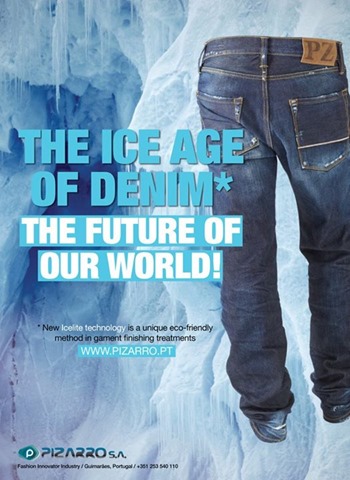
    Pizarro laundries  in Portugal , and one of the largest in Europe, is known for its innovations in the field of  washing.  Besides being the first one to launch ice wash, the company brought out the Eco Blast – a process which is claimed as the ‘ World’s First Substitute of Sandblasting’. Sandblasting , as we all know , has been banned by many brands in the last few years due to its very harmful effects on the workers . Inspite of its ban by leading brands, the sandblasting process continues to be used clandestinely by many companies around the world.  One of the reasons for the same is the non-availability of an economic and easy replacement for the process.  However, the Ecoblast process by Pizarro is claimed to be the first completely safe and certified replacement to the sandblasting process.  We spoke to Vasco Pizarro – Marketing Director at Pizarro Laundries- to know more about this new process and he gave some insights on what the process is about and how they intend to use it.

    image

    1. Hi Vasco ! Eco blast from Pizarro is supposed to be the first alternative to sandblasting in the world. Is it true? Pl explain the process for our readers

    Yes Sandeep, it is true, this process is the first in the world to be completely certified as a sandblast substitute.

    The principle is the same where we use a high pressure hose to deliver an abrasion blast to the garments, except that we change all the things that could cause any harm to workers. We started by the building where we installed a revolutionary exhaust system that cleans the workspace for the workers, at the same time, all the booths are connected to this exhaust system that separates all the bigger particles and reuses it, the smaller ones go to special filters that are cleaned every day. We have developed a special abrasion material that we called EcoPowder and is present at the European Union Chart of Non Hazardous products, so with this, the values that were analyzed by an independent lab regarding exposure to dust were very very low. Even with this all the workers have to use special masks so they are protected at all times, as well as hear protection and every six months all the workers are subject of hear, eyes and lung tests. To help the workers we also created a special belt for back support so the workers don’t have lumbar problems.

    image

    2. What are the major disadvantages of sandblasting that you have overcome

    That is a very good question Sandeep, but as you know this traditional process is one of the worst problems of the textile industry and people around the world are subject of very bad conditions that lead to disease or even death. We created this answer with the well being of workers in mind so there was no major or minor disadvantage to overcome but a problem as a whole to deal, so we are confident that this represents a new era in our industry where the environment protection and the workers well being have to play a key role in our strategies.

    image

    3. Is your process patented?

    Yes, this process is world patented by our company.

    4. What is the main purpose behind this new technology. Do you wish to serve your customers with it or will you also share/sell the same to other laundries around the world?

    As I said earlier this response is part of a sustainability policy that our company has been developing for several years, so for now our main purpose is to serve our clients and the more than 18 million garments that annually pass through our company. Innovation is part of Pizarro’s DNA, we are company that modifies all of its machines, that find new uses, new techniques and new process for all the technology that our team creates. This industry its evolving to a state where everyone wants information but do not want the hassle of creating something new. Sharing is out of the question and selling technology is not our business but we are not closed to any kind of challenge.

    image

    5. Is there a particular certification which helps to calculate the overall impact of your process?

    When we say that our process is certified by an independent lab of course we have the overall study of our process. In this case the lab had in mind the standard values of European Union laws, that are already some of the most tightest in the world, and evaluated our process in exposure to dust, exposure to noise and environment illumination. It is certified for the well being of the most important player in this process, the worker….


    We don’t know how such processes can be spread out around the world to make the textile industry more responsive to worker needs and less polluting. But we can say that the such innovations provide great directions for the industry to take up and reform.
    The process of Ecoblast can be more easily understood in the following video by the company . Check it out !

  • A Conversation With Vasco Pizarro | Ice Washing & More..

    • Capacity of washing 25,000 garments per day
    • Dyeing capacity – 10,000 kg per day
    • Finishing and logistics -15 000 Denim + 15 000 Knits/wool/mohair    per day
    • Printing  – about 10,000  per day

    These figures look relevant for washing and finishing houses in countries like China, Bangladesh and other Asian countries with high production capacities . Europe was long left behind in this race as the costs soared and it was unviable to wash  and finish at mass scales  in Europe..Also , washing and finishing on denim is an art that Italians have perfected in Europe and whenever a discussion on this topic comes up, one tends to immediately think of them . Hence , when we come to know that the above figures pertain to a washing / finishing  house  of Europe and that too non-Italian , we need to sit straight and take notice !
    Pizarro, based in Portugal,  is a large company doing full package servicespizarro denim washing for large brands/ retailers and dealing with EU and US markets mainly.  I spoke to the Marketing Director  of the company – Vasco Pizarro – to find out what makes this company tick and enables it to swim against the tide. After the conversation, I could sum up their secret of growth  in a few words – ‘Innovation in technology and systems’.. Our conversation goes thus :

    1.Hi Vasco! Yours  is a large washing / finishing & logistics/ printing/dyeing  house  in Europe. Can you explain in more details about your company.

    This year marks the 30th anniversary of Pizarro S.A. My father, along side my mother, started this company in a small garage with just one machine. We still manage the company in family with my family fully involved in the business. Today we have 650 workers divided in laundry house, dye house, print house and finishing house, although in the most part of our business we work only in garment, for some top level brands we supply full package.

    2.Washing laundries/ dye houses in Europe are disappearing . How is your company growing from strength to strength?

    Yes you are correct Sandeep, in fact these types of companies are disappearing from Europe. Our company grows through a mix of factors like these: We have a very good balance between scale economy and high level brands. We have a relationship with the Inditex group for almost 25 years and we have adapt our structure to respond very very fast to all our clients. Beside that the finishing & logistcs is of a great value to all our clients because we can receive raw garments and put them ready to go to the stores in 2/3 days. The cost of labor in Portugal is not as high as the rest of Europe and we have a very good financial business that reduces heavily the costs with the whole structure and not only labor but chemicals, machines, etc. We only invest in things that can allow us to evolve constantly, for example for you to have an idea we were the first European company to automatize   the dye house in 1993, then the laundry house We were the first company to have the three levels of certification, Quality, HSW and Environmental.. We are always in the cutting edge technology, but also our team of professionals is one that we are very proud of.

    3.Icelite  – achieving the sandblasted look with dry ice is one of the latest technologies. Your company is understood to have  invented this process .Pl tell us something about it . Is it a commercially feasible and future ready technology?


    The idea started in 2011 and when some brands responded to the incident in Turkey and the health problems that emerged due to the use of silica in the sand.With that in mind my father start doing several tests with different materials and equipment. He first tested it with a water blast .But the results were insufficient and he turn to a great friend of his that is a manufacturer in Italy. They both start exploring ice. The journey was not easy, but in 2012, in September we receive the first Icelite machine in the world.

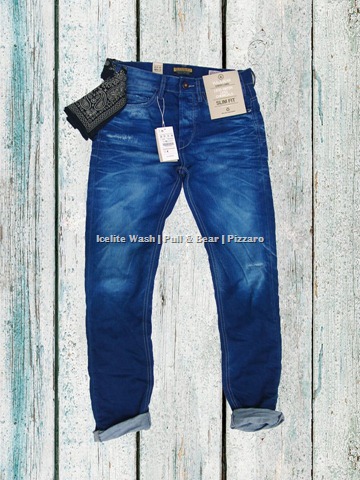
    pull and bear pizarro icelite wash denim

    pizarro icelite washing

    pizarro icelite washing machine

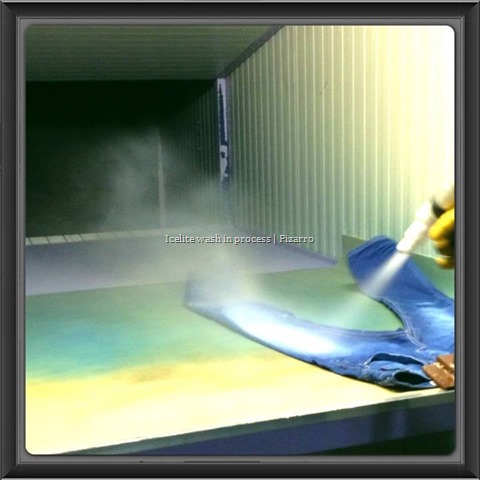
    The machine uses CO2 to create ice that is store at -70 degrees.Those small particles are used to create an abrasion blast that gives that vintage look to the garments.It can be used in every type of garment and the savings are significant:
    – 70 litres of water per garment
    -and 150 grams of chemicals per garment

    These effects and final looks that you see in our garments are due, not only with the icelite, but also mixing ozone washes and laser washes. We called it EcoWash.

    4. These are big saving.. but do you plan to shift major part of your washing to Icelite technology? It must be expensive..

    We have a big project in mind that will revolutionize even more these savings and will allow us to turn the Icelite even more competitive that the sandblast. These will allow almost any company that want to work with us to do garments with Icelite. For now its a little bit more expensive to do so and therefore only the high level and Pull&Bear are doing it..So as you can see its already in a commercial success and we believe it will be the future of Denim.

    5.You also print a huge number of garments in your company. Do these include denim garments also ?

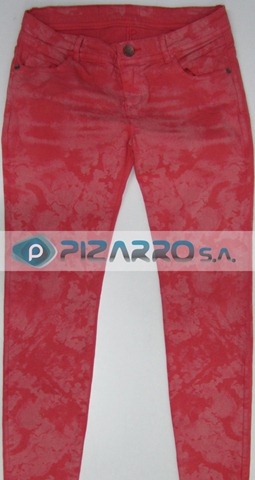
    We are printing a great deal of Denim garments…the demands of our clients are with vintage prints without touch.Even on jackets, if its Denim these are the prints that are trendy. Specially on vintage looks, total garment laser or just partial is something that our clients are asking a lot. All our prints are done garment by garment..

    7.. Do you see any specific trends in denim washes for SS14 ?

    For trends we  see that the vintage look (in terms of trying to imitate the  natural aging of garments) its something that is not going to stop. Furthermore the 3D whiskers are also something that is not going to stop. Another trend that we see is the  imitation of leather or glow on jeans – leather coating and  metallic coating.

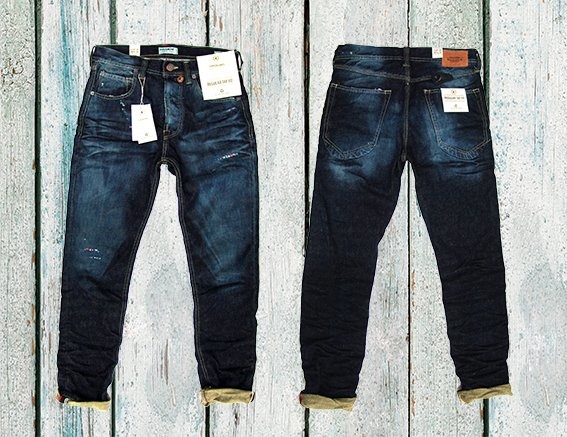
    Here is a video on Icelite  process and some cool pics from Pizarro..

    pizarro denim washes 1

    pizarro denim washes

    pizarro icelite wash

  • Environmental Sustainability In Jeans Washing – EIM Software

     image  Environmental sustainability in apparel production is an important aspect and is expected to get more and more important in the coming times. There are various aspects to environmental impact in apparel production particularly in the production of denim jeans . Though all the stages of denim production from cotton growing to finishing jeans affect environment , the washing of jeans is an area which does directly affect the environment due to its impact on water resources , discharge of chemicals and many other pollutants in the process. Washing managers in many companies are keen to reduce this pollution and they are keen to make their processes sustainable . Many actions are being taken by the managers to do the same whether it be getting better chemicals, using less water in washing and umpteen others.

    • But how to measure the environmental impact of the washing ?
    • Can it be quantified ?
    • Is there any way that  processes be compared on a yardstick and compared to see their comparative environmental impact to enable the washing manager to make a decision on a process ?

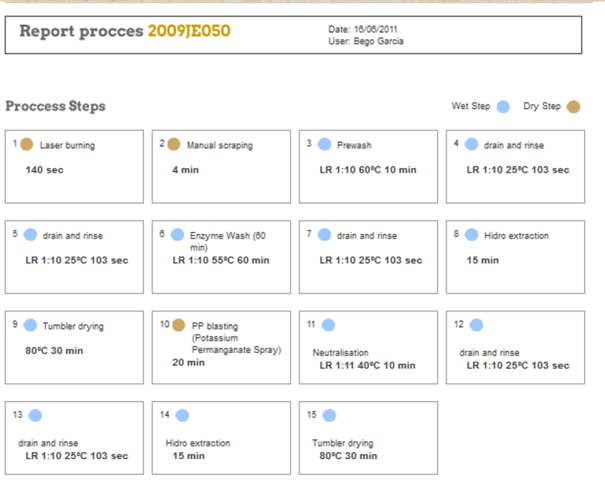
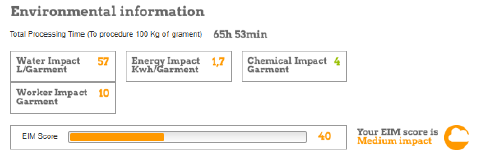
    The EIM Software (Environmental Impact Measurement ) software from Jeanologia aims to provide this decision making tool to the washing managers. It provides an understanding the Environmental impact in the following individual categories:

    • Water consumption
    • Energy consumption
    • Chemical product used
    • Worker health

    jeans washing software  The software aims to provide the user to identify the major causes of environmental hazards as he puts in the details of his washing process and help the managers to arrive at a decision on which processes to select

    environmental impact jeans

    Garment finishing processes are complex and the number of combinations in the laundry processes to have a determine look are infinite. The number of variables involved in a laundry process are very high and the environment where the processes are made influence directly in the final scores. With such an adverse scenario Jeanologia tried to create not the perfect tool but a simple and efficient one that can give a close approximation to reality.

    Here is a small video from the company to show certain aspects of the software

  • Martelli Europe Presents Latest Vintage Denim Washes

    image Martelli Europe is one of the most reputed washing laundries around the world and brings out specialized washes at various times. The company is highly focused on contributing to new developments which result in environment friendly techniques . I spoke to the Managing Director of Martelli Europe – Mr. Mauro Angelini – regarding the same and he was quite emphatic on the contribution  of new  vintage wash developments which may help to reduce CO2 emissions and contribute in other ways to make them more environmentally sustainable compared to traditional washes..

    What are the new developments that Martelli is presenting currently ?

    We are currently working on several research levels. There is what we do for our customers and there is what we do for us not to "flatten". In this case we are studying the washing more environmentally sustainable in the sense that it involves a lower CO2 emissions, because they use less energy. It is not a simple process, we are working primarily with suppliers of chemicals like Garmon, in order to reduce CO2 emissions with washes and finishes using cold temperatures. Then, as always, we work hard to offer our "vintage effect" which is always greatly appreciated by all customers. Regarding dyeing even here we are from several years an avant-garde cold-dye.

    Many brands and retailers have banned sandblasting. What are the new technologies that are being used for achieving similar results ? Are these technologies viable ?

    Regarding sandblasting there is to say that in Martelli Europe we have always managed to propose the same or almost the same effect, without recourse to sandblasting. We are aware of the dangers which involves blasting , also we have to say, it is greatly reduced in new sealed implants the risks for operators. However, our thinking is that every process under high pressure produces dust, this sooner or later go airborne and is filled by someone. I do not think there is a powder that protects worker health, on the contrary, there are dusts that cause silicosis and others that cause asthma and other problems. I wonder if you simply replace the sand with vegetable or metallic abrasives, powder in the air remains. Similarly, using type solutions of carbon dioxide ice, certainly don’t help the environment and costs that do not believe customers want to endure. We go forward on our way, trying to use the technologies we have available. Customers appreciate our approach.

    I hear that you are implementing the SA 8000. Can you tell us more about the same ?

    It is true Sandeep and thanks for the question, we’re starting with the SA8000 which is the last after the ISO14001 ISO 9001 the OHSAS18001 we already have with the UKAS. Even here we are following with consistency in the way of quality, total quality. North European customers especially appreciate the fact that we have certifications, with SA8000, some multinational companies can forgo to make the social audit direct, as there has been announced by one of these. We are a company who has care of environmental issues but also of its employees.

    How is the denim market in terms of washing requirements? Do you see any difference in the current market  requirements compared to last year ?

    There is a growing trend to ask three-dimensional finishings (3D) with resins, then there is always required the vintage effect is probably our strength. As regards fabrics, in the summer collections all customers have a model with cotton stripes fabric.

    Are the brands trying to save on washing to reduce the cost of their garments keeping in view the increased cotton prices ?

    It was as a rule attempt to reduce costs with suppliers. Some young or inexperienced buyers sometimes tends to overdo it and it is how to cut the branch where you’re sitting. Now this trend it is slowly disappearing, the world is changed a little. The relationship with suppliers today it is not only “cost-money” it should be strategic in terms of partnership. The most experienced buyers and sourcing managers, remember that we (all supply chain)are clothing fashion industry. We cannot copy the speculative and short-sighted attitude of certain finance, particularly now after we’ve seen disasters that brought us the crisis of 2008. Today in clothing from fabric to the laundry, we see many closures and few openings, I don’t  think it is still the case to cut costs.

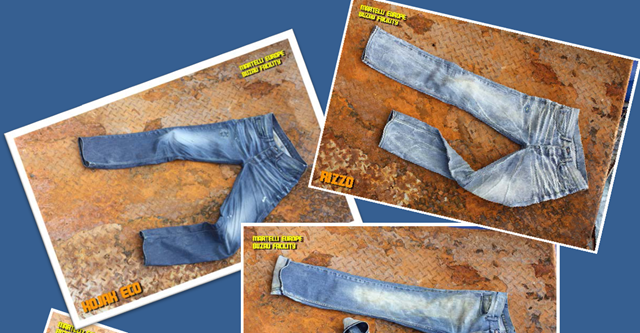
    Here are some details on the vintage washes that Martelli is presenting :

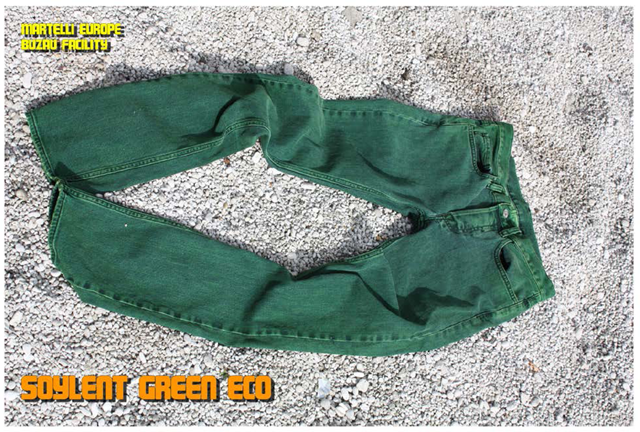
    SOYLENT GREEN – ECO

     soylent green eco denim wash

    Wash Details :
    KURABO FABRIC: SW STONE WASH + COLD DYEING = ECOLOGICAL TREATEMENT DUE TO THE TEMPERATURE SAVING:
    * BY USING COLD STONE WASH IT RESULTS A SAVING OF 30 ° C, WHICH ALSO REPRESENTS A SAVING OF 3 m³ CH4 (METHAN ) OUT OF BURNING = APPROXIMATELY 5.7 Kg OF CO2 EMISSION IN THE AIR
    * BY USING COLD DYEING IT RESULTS A SAVING OF 30 ° C, WHICH ALSO REPRESENTS A SAVING OF 3 m³ CH4 (METHAN ) OUT OF BURNING = APPROXIMATELY 5.7 Kg OF CO2 EMISSION IN THE AIR

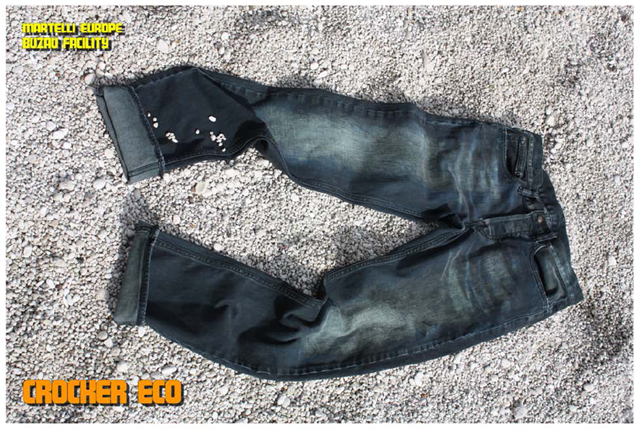
    CROCKER – ECO

    soylent green eco denim jeans wash

    Wash Details :

    KURABO FABRIC: SW STONE WASH + COLD DYEING + WORN EFFECTS MADE 100% MANUAL = ECOLOGICAL TREATEMENT DUE TO THE TEMPERATURE SAVING:
    * BY USING COLD STONE WASH IT RESULTS A SAVING OF 30 ° C, WHICH REPRESENTS ALSO A SAVING OF 3 m³ CH4 (METHAN ) OUT OF BURNING = APPROXIMATELY 5.7 Kg OF CO2 EMISSION IN THE AIR
    * BY USING COLD DYEING IT RESULTS A SAVING OF 30 ° C, WHICH REPRESENTS ALSO A SAVING OF 3 m³ CH4 (METHAN ) OUT OF BURNING = APPROXIMATELY 5.7 Kg OF CO2 EMISSION IN THE AIR

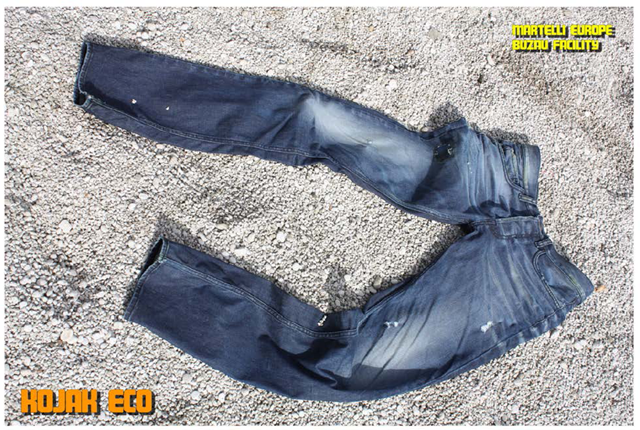
    KOJAK –ECO

    kojak eco denim wash

    Wash Details :
    KURABO FABRIC: ECOLOGICAL VINTAGE GAINED THROUGHT AMPLE WATER AND TEMPERATURE SAVINGS = 3D EFFECT (3D EVOLUTION) + MULTIPLE MANUAL WORN EFFECTS + COLD STONE WASH :
    * BY USING COLD STONE WASH IT RESULTS A SAVING OF 30 ° C, WHICH REPRESENTS ALSO A SAVING OF 3 m³ CH4 (METHAN ) OUT OF BURNING = APPROXIMATELY 5.7 Kg OF CO2 EMISSION IN THE AIR
    * BY COMBINING COLD STONE WASH WITH NEUTRALIZING IT RESULTS A SAVING OF APPROXIMATELY 16L OF WATER / UNIT
    * BY USING RESINS WHICH POLYMERIZE AT 90° C INSTEAD OF 140 ° C, IT RESULTS A SAVING OF 3 m³ CH4 (METHAN ) OUT OF BURNING = APPROXIMATELY 5.7 Kg OF CO2 EMISSION IN THE AIR
    * THIS TYPE OF RESINS DOES NOT CONTAIN FORMALDEHYDE

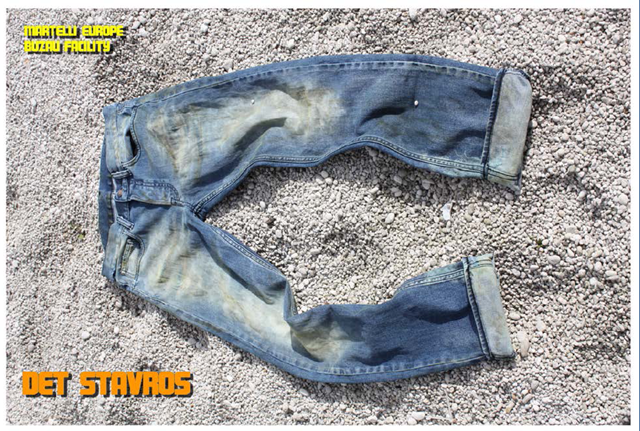
    DET STAVROS

    image

    Wash Details :
    KURABO FABRIC: SW STONE WASH + MULTIPLE WORN EFFECTS / COLOUR MADE 100% MANUAL:
    * BY USING COLD STONE WASH IT RESULTS A SAVING OF 30 ° C, WHICH REPRESENTS ALSO A SAVING OF 3 m³ CH4 (METHAN ) OUT OF BURNING = APROXIMATELLY 5.7 Kg OF CO2 EMISSION IN THE AIR

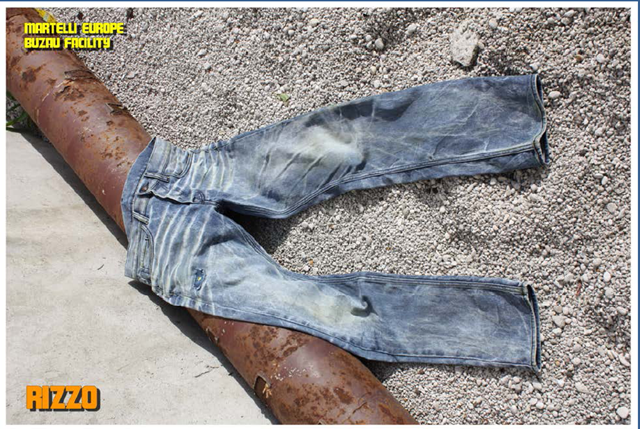
    RIZZO

    rizzo denim washing martelli

    Wash Details :
    KURABO FABRIC – AN OLDER TYPE OF TREATEMENT MEANING DRY DECOLORATION, BUT COMBINED WITH NEW PROCEDURES SUCH AS 3D EFFECTS CAN GENERATE INTERESTING RESULTS, MAINLY WASHINGS WITH A MORE AGGRESSIVE VISUAL IMPACT
    ** THIS TYPE OF PROCESS ALSO HAS AN ECOLOGICAL ASPECT DUE TO THE FACT THAT IT REDUCES THE WATER CONSUMPTION WITH APPROXIMATELY 16 L / UNIT, UNLIKE A DECOLORATION MADE WITH A NORMAL WASHING MACHINE.

    You can just watch all these presentations in a slideshow below :

    Also, here is a cool video from Martelli showing some of their vintage wash processes .

    Want to contact Mr Mauro Angelini ? Email here

  • Sandblasting Abandoned By Levi’s and H & M

    Levi’s and H & M have announced that they will no longer place orders for sandblasted garments (included jeans) due to the health hazard they pose.

    image Sandblasting has been used by the clothing industry to give some products (specially denim jeans ) a worn look but the process, if done incorrectly, it can expose workers to crystalline silica, a compound found in sand. Crystalline silica has been classified as a human lung carcinogen, according to the Occupational Safety and Health Administration. Dust can enter the lungs and form scar tissue, reducing the ability of the lungs to take in oxygen.

    “We’ve implemented rigorous standards for sandblasting in our own supply chain but we decided that the best way to help ensure no worker — in any garment factory — faces the risks associated with exposure to crystalline silica is to move to end sandblasting industrywide,” said David Love, senior vice president and chief supply chain officer at Levi Strauss & Co.

    Scientists, unionists and some nongovernmental associations, particularly in major manufacturer countries such as Turkey, India and China, say the widespread technique causes the lung disease silicosis.

    Though both companies had procedures in place to control the sandblasting procedure, they decided not to depend on their suppliers to follow them and rather decided to abandom the technique altogether .

    “H&M has had health and safety requirements for sandblasting for several years. Like all other Code of Conduct requirements, the monitoring of sandblasting practices has been part of our extensive Full Audit Program,” said Karl Gunnar Fagerlin, production manager at H&M, according to a report on the firm’s official website. “At the same time, [ensuring] that these standards are being observed by all of our suppliers and their subcontractors has proven too difficult. In order to make certain that no worker producing denim garments for H&M risks his or her health, we have decided to quit purchasing and retailing sandblasted products,” he said.

    “There are other ways to achieve a worn finish,” the release by Levi’s said. “We’re confident our customers – no matter how they like the finish of their jeans – feel the same way.”

    I think it is a very welcome move by Levi’s and H & M. We have seen incidences of problems caused to health of workers in countries like Turkey , India and China . It is only hoped that the denim industry as a whole would abandon Sandblasting as there are way many other options available today to get similar effects.

  • Interview With Mauro Maria Angelini- MD Martelli Europe

    mauro maria angelini Martelli is one of the most reputed name in washing laundries around the world . For over 50 years Martelli Lavorazioni Tessili, provides new ways to add personality to the fabric and garments, bringing to the world of fashion its vibrant colours and effects, mixing creativity with the style sense of great fashion leaders.
    I spoke to Mauro Maria Angelini – MD Martelli Europe – to learn more about the company and the latest trends in denim washing.

    Please tell me something about Martelli and its operations  in various countries.

    The Martelli Group is present in Italy, Romania, Turkey, Morocco and Tunisia. Romania was the first international Facility.In general we try to follow our manufacturing customers  and most of these have moved to these countries for labor costs reasons. It is much harder for Martelli to move because of the complexity of our plants and start-up costs, however we are going in this direction.

    How do you think is Martelli different from other washing laundries in Europe?

    I think the main difference is the fact that we are fortunate that the owner and founder of Martelli has always invested heavily in systems and technologies. The other difference is that we satisfy all our customers both big and small , for us the customer is sacred.

    How important is denim washing in your total washing operations?

    Denim washing is a major part of our business. Our strength is in garment finishing as dyers which is more technical and chemical orientated, however we are also experts in laundry and denim treatment. Now probably denim is the core business. It is true that today it is no longer enough to be an expert in washing and dyeing, but we must be able to offer our customers solutions ranging from ‘import-export  to supply chain organization, when required.

    We hear you do washing for all major denim brands in Europe. Could you name a few?

    At group level I think almost all popular brands were and still are our customers. This happens because Martelli has over 50 years experience and was one of the pioneering companies in garment finishing. Our customer base includes Diesel, Armani, Levi’s, VF, Replay, D & G and many others, the list is long.

    What are the washes your customers demand the most .

    Complicated washing, resin treatment and complex manual work.

    Vintage denim washing.Has it peaked or do you think it will still grow in popularity?

    Fortunately, a simple rinse is not required anymore, we just specialize in vintage finishing and our customers continuously ask for more

    What are the basic requirements of a denim fabric to be given severe vintage washing effects?

    Resistant fabric, low fault, the yarn should only be indigo dyed and indigo ought to be dyed without the addition of sulfur dyestuff or hydronic.

    I believe you developed some great washes on hemp denim. Can you tell us something about them?

    Thank you, these are washes that I love very much. In fact the Martelli Hemp Project was born on a known debate among experts on your Denim People’s Group on Linkedin. For me hemp is a very interesting material, for example in Italy there was a tradition for this material in the past. Now I see it is less than probable it will completely replace normal cotton which has a market niche , this seems to be correct since it has good features and is probably a step towards environmental sustainability. We wait the response of customers.

    What do you think about the rebound of the acid wash trend? How is it different from that of 80s trend?

    In the 80s Acid Wash was intended primarily for a discoloration with permanganate, after it passed the dichloro (but gave problems on metal accessories, such as rivets) today there is a clear return of washes where the request is for the total discoloration indigo thread. They are very beautiful and evocative, we are working on this with the help of new raw materials (chemicals).

    What do you think about the increase in the  popularity of Organic Denim? Is it really useful for environment in the current form?

    I think we do our best to take into account environmental and the eco-sustainability of products. Organic denim is a trend that I see well because it opens up the debate on product although many industry insiders have doubts, I think the organic denim will drive a series of products with reduced environmental impact. In my humble opinion, we need more consistency by all, such as our plant is certified ISO 14001 (as well as ISO 9001 and OHSAS 18001) we very open to requests from customers on environmental issues, we only ask to be compared not only for the final price, which of course will be a little higher than competitors who do not respect the law or the environment.

    What, according to you, are the most popular washes this summer of 2010?

    Acid Wash, Overdye, Vintage Look.

    Where do you think a washing laundry adds more value to a denim garment – in dry processing or wet processing?

    On reviewing the rigid garment from manufacturing  you see the added value from laundries. Both processes, wet and dry are crucial. It is not easy to discuss seperately because they are complementary, however if I have to give my opinion  then laundry is always necessary and indispensable.

    Conciousness about the environmental impact of denim washing is increasing. Has it started impacting the denim washing processes?

    For the moment there is no change and I think to be more environmentally friendly washing does not automatically mean ugly or unattractive. Furthermore, we as a company are ready to invest again and to meet requests coming in this direction. To me it seems that in general customers are not willing today to pay a little more in return for products with low environmental impact. All this will happen when the mass market will require more of these type products, I think there will be a push on this from top-down and there will almost certainly have an impact in the coming years, in the meantime, we should develop and offer these products to the brands.

    We hear about a lot of new machines,chemical products which help in saving water, energy etc. Do you think these  kind of products make a difference ?

    Of course new technology helps us, also I think we have to consider the suppliers as sources partners and not only press them for cost reduction. In this direction and cooperation I am sure we could find the solution. For me business environment and natural environment move together.

    Any washing advice you would like to give to our readers – many of whom are denim manufacturers ?

    My suggestion is visit us at one of our locations! Thank you very much Sandeep.

    Mauro Maria Angelini has a law and an MBA degree and is the Managing Director of Martelli Europe since 2001.

    Martelli Europe Washing Plant

    denim washing italydenim washing italy

    denim washing italy

  • G2 Waterless Denim Washing Machine From Jeanologia

    image Jeanologia is  a company from Spain dedicated to providing eco friendly finishing solutions for  garments – specially denim.  With a corporate tagline of  “The Science of Finishing” it has been their mission for last 15 years to enhance industrial garment finishing through technology & know how.

    The concept of ‘Sustainable Denim’ – an eco friendly approach to denim is being enhanced by their various machines , the foremost of which is the G2 Waterless Washing Machine. This is a unique washing machine which washes denim jeans with about 60% less water  and almost no chemicals…….!!  In  Hongkong, Jeanologia had a large hall dedicated to their “Truth & Light show” where they displayed their uniquely washed garments.  The visiting denim experts were asked to select , from pairs of jeans, the jeans which had naturally aged and the one which had been made by Jeanologia with the help of their laser technology and unique G2 washing machine.Most of them could not differentiate between the two . It was an interesting way to understand that real aging effects could be achieved with eco friendly washing methods.

    How does G2 work ?

    Air from atmosphere is transformed into a blend of active oxygen and ozone called ‘Plasma’.This plasma is used to age garments. The plasma is transformed into purified air before it is returned to the atmosphere.

    What kind of  washing effects can it provide on the jeans ?

    G2 can provide various effects on the jeans like

    •Casting:

    • Aged Cotton – unique yellow cast for true vintage looks in Pure Indigosimage
    • Gray casts for a retro look

    •Cleaning:

    • Removes backstaining & loose indigo without detergents

    •Bleaching without the bleach!

    •Eliminates the need for Potassium Permaganate spraying.

    •Blacks and grey denim fade without turning brown.image

    •Eliminates yellow from bleach look.

    •Improves crocking in dark finishes.

    •Provides various other fashion finishes.

    If so less chemicals are used, how are these washing effects attained?

    Jeanologia use laser technology instead of chemicals to mark the washing details.If desired, further effects can be given manually by grinding and scraping. The laser maps out the washing details required and then the garment is given a short wash. The garments are then placed in G2 where the laser effects are brought out with the plasma. The garments are then rinsed and dried. This is how the washing details are attained.

    Is it possible to duplicate washing effects of an existing jeans ?

    Yes, with their laser technology, the washing effects of an existing jeans can be mapped out and then replicated on new garments . This does away with the trial and error approach to replicating vintage washing effects.

    What is capacity of the G2 machine in terms of load factor ?

    The machine has a capacity of 50 kgs ie it can wash about 3000 jeans in a day. G2’s programmable software system automatically adjusts gas concentrations to reflect load conditions (i.e., jeans, tees, wet, dry, etc).

    From a case study of actual production in the US,the company claims that using G2 can result in 67% savings in energy and water, 55% savings in time and 85% saving in chemicals and can thus provide a saving of $0.44 per garment washed besides contributing to environmental protection and reducing health hazards for the workers.

    Denim jeans  washing is one of the most environment polluting activity in  the apparel industry . According to Professor John Anthony Allan from Kings College London, a Kg of jeans comes to us after about 10,850 litres of water has been used ie 1 Kg of jeans has this much of embedded water . Of course this includes even the water used in growing cotton. But the carbon  footprint of jeans is very high.  In the recent years , the increased requirement for specialized washes has further increased the environmental impact of denim production. In such a scenario, any technology that makes it possible to cater to fashion requirements and at the same time contributes to environmental protection, should be welcomed .

    Here is a slideshow presentation on G2 Machine

    Jeanologia can be contacted here : Michelle Branch

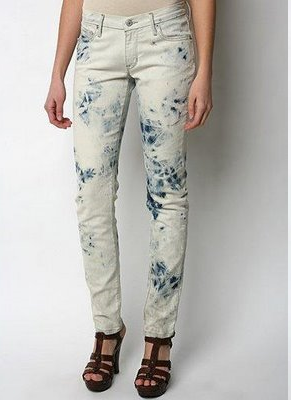
  • Acid Washes On Denim Jeans


    acid wash denim jeans acid wash denim jeans

    Acid wash is again becoming popular on denim jeans and we are going to see more of acid washes in the coming seasons. Here , lets have a quick look at the acid washing process .

    An acid wash finish treatment creates significant contrasts in the color of the denim material. It can be done on Indigo & Sulphur base fabric garments. As the randomly faded, acid washed style came into vogue in 1980s, the process of treating denim in such a way began to become increasingly refined. Some tried to use a method similar to the stonewashing, yet the fading did not occur as dramatically or throughout the material.

    In 1980’s this washed being launched as first innovative finish on denim ever. This was being done by soaking stones in Bleach and making acid wash effect followed by neutralization. But this process was not so re find to get some how consistent & smooth effect on denim. In early 2000 some laundry tried doing the same wash soaking thermocol bolls in bleach or pp solution to get this desired effect.

    While this process can be done using either light bleach, chlorine , potassium permanganate etc. The most popular is PP Bleach and will produce the best acid washed results. Doing the process is very simple , but following all parameters in correct way to have right & repeatable results. The load size of garments, machine drum diameter, quantity of soaked stone / towels & skilled operator.

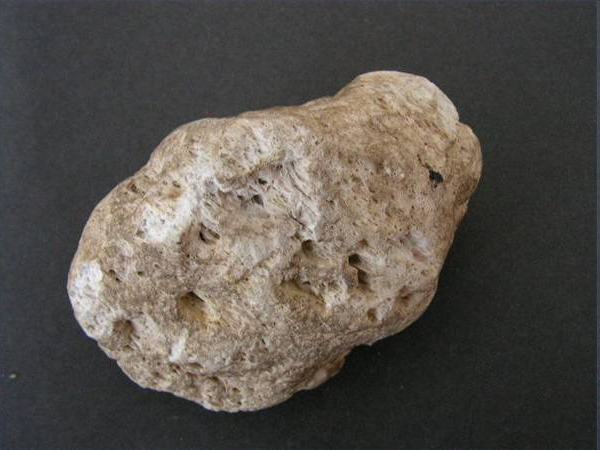
    Initially, the Acid Wash process involved soaking pumice in Industrial Strength Chlorine .However, it was discovered that potassium permanganate was more controllable and just as strong an oxidizer. They simply marinated pumice stone in it and then vacuum packed the stone to the required moisture level. Acid wash was a chemical process on  denim that stripped the top layer of color off to a white surface with the undertones of navy blue remaining in the jeans.

    The Materials

    The process of acid washing jeans involves porous pumice stones or small towel pieces and chlorine or Pp Bleach, such as you would put into a bucket or in drum for soaking process. Sodium-bisulfate is used in the second washing for Neutralization. Also recommended is access to two separate washing machines. One for Acid Washing & another one for further process i.e. Neutralization etc.

    The Acid Washing Process On Denim Jeans

    The process of acid washing jeans used chemicals, stripping off the color of the top layer, leaving the white fabric exposed. The color remained in the lower layers of the material, giving it a faded look. Acid washing could be done overall or made to look splotchy.

    pumice stones for acid wash jeans acid wash denim jeans process

    1.Soak porous pumice rocks or pieces of towels in chlorine or PP bleach solution for about 20 minutes to an hour. The longer you soak the pumice or towel, the more prominent the effects will be.

    2.Once the stones are saturated with chlorine/pp, remove excess water from stones/towel then put the stones in machine followed by the jeans in a washing machine for about 20 minutes. Make sure machine do not have single drop of water, open the drain during complete process

    3.At this time, check on the jeans to ensure they look acceptable, and then move them to another washing machine for a regular washing process. Too long in the first machine can totally bleach or ruin the jeans, and too little time may not produce the desired results or can make patchy appearance. Check on the jeans once every 10 minutes or so during the second wash process of neutralisation to ensure the desired look is achieved.

    4.Next, fully dry the jeans in a dryer that gets nice and hot.

    Precautions

    Any time we mess with chemicals such as bleach or chlorine or PP, be sure to protect workers by wearing mask & aprons , so it is best to be fully prepared. Also, protective rubber gloves and safety glasses are highly recommended. These products can burn skin and eyes pretty badly.

    About Author : 3E’s Consultants, Group of experts, focused on Denim Fashion, Providing consultancy to all Denim Garments Finishers..Contact for further info email here

  • Denim Dry Processing For Creating Vintage Jeans

    The distressed jeans that we see around everywhere undergo a wide variety of wet as well as dry treatments to get the desired effects.  Here I shall try to explain some basic Denim Dry Processing techniques. In the creation of vintage denim jeans, dry processes play a very important role and hence important to understand.

    Denim Dry Processing – Basic know how

    Destroying denims is as much an art as it is a technique. Details are added using a fine abrasive paper on a scraping tool. And extra whiskering can be added with sand paper. Sometimes a bit of local tint staining is being done into the local areas to emphasize the lighter parts. The jeans then go for a washing with pumice stone to blend in the whiskering and tinting / over dyeing. Where the folds and wrinkles go is where the art part comes in, it’s often through observation of where wear patterns are typically found. For some of mine I have several pairs of old well worn thrift store jeans that I use as a template to guide where I want the wear patterns. I chalk in where I want the details and then they are finished off site by me in my finish workshop. Some of what is done to customize jeans are patented secrets, no one other than those who work for these companies knows the exact techniques or the abrasives and chemicals used to achieve certain special effects. Here I am revealing some basic facts to the denimsandjeans.com readers……………..

    Below is list of operations being carried out on denim garment to achieve VINTAGE (used/worn out) look……

    • Hand Sand / Hand Scraping
    • Sand blasting
    • Whiskers
    • Chevrons
    • Knee Star / knee whiskers
    • Hot Spot
    • Tacking
    • Grinding
    • Damages / Destruction
    • PP Spray
    • PP Brush / towel
    • Patch / repair
    • Bleach spots
    • Resin application
    • Pigments & Local tint application etc…..

    1.Denim Hand Sand / Scraping

    clip_image001clip_image002

    Hand sand is step which is generally being done in rigid form of garments to get distress look. Locations can be front thigh & back seat or its can be overall / global application as per Standard. Emery paper is being used to scrape the garments in particular placement & design. Emery paper comes in different number generally start from 40 till 600 and above , higher the number finer the emery paper, lower the coarseness of the paper. In garment industry from 220 , 320 & 400 number papers are most popular & widely used.

    Purpose of doing this process is make used worn out look to the garments.

    The most important factor is to select right number of paper according to the fabric strength & intensity need. Feathering / merging white sanded part to dark blue area in such way that it should look natural & not artificial.

    Scraping can be done on inflated rubber balloons for better effect ( horizontal or vertical its up to operators convenience ) , even it can done plain wooden board of garment size & hand pressure should be uniform in order to get better results.

    Hand sanding must be started from intense part & feathering out on less intense part gradually. One garment must by done by one operator only to have balance intensity on both the legs.

    2.Sand Blasting

    This process is isolated now a days due to health hazards & buyers do not like the results of sandblast because its covers the characteristics of fabric. This process being done by using different kin d of sand blown to garments with air pressure to rub out the color.

    3.Whiskers/ Moustaches , Chevron , Knee Star, Hot Spot

    clip_image003clip_image004clip_image005

    On Denim, whiskers / Mustaches , Chevrons are nothing but the worn out lines / impression generated by natural wearing on hip & thigh area. There are many designs & pattern available.

    This is being done manually with help of sharp edge Emery paper rolled on fine wood stick or pasted on plastic material. Before starting execution placements & pattern must be marked on garments, this will help operator to execute the pattern right to match the aesthetics of garment.

    Hot spots are heavy/intense area on thigh or knee which is made purposely to create used look & on knee area if any whiskers line are there, called knee star.

    All above operations are carried out in width direction hence its appears intense than hand sand with less strokes, because hand sand is carried out in length direction.

    clip_image007

    4.Tacking & Grinding

    Tacking: is a process which is being done by swift tag machine with the help of plastic or nylon tag pins in rigid form of garment to get very heavy contrast ( rigid & washed ) on waistband, bottom hems, back pocket & front pocket corners etc.. after completing wash cycle, it must be removed from garment before making softening.

    Grinding: is being done on pocket edges & bottom hems edges by running against abrasion surface or stone to achieve worn out effect. Many different make of machines & pen grinding tools are available in the market which runs with pneumatic system.

    5.Damages/Destruction

    clip_image008

    One of the most popular distressing effects currently , ‘Destruction’ is an art which make denim look unique & used. To make destruction pen type of stone tools being used in mid of wash process to apply on desired area. It can also be achieved by cutting it thru knife the warp yarns & keep the weft yarn as is to show white thread. Holes also can be made by cutting weft & warp yarns. These are all manual processes & every garment will look unique & different than others.

    6.POTASSIUM PERMANGNATE SPRAY/RUB & BLEACH SPRAY

    clip_image009

    PP Spray is being done  on denim garments to achieve local abraded area to appear whiter than back ground indigo color shade. This can be applied by spray gun or by towel dipped in to PP Solution & rubbed on desired area followed by neutralization in wet process. This process can be done in rigid after doing hand scrape or in the middle of the wash. Doing after enzyme or bleach cycle will give more natural & white effect that doing in rigid. There are many additives can be added in order to achieve desired intensity and look.

    The same way bleach solution also can be spray or rubbed on the garments on desired area. But this process is very complicated & needs highly skilled operators to execute it followed by immediate neutralization.

    There are many parameters needs to be taken into control for doing PP or Bleach spray…. Spray gun pressure, width of spray, flow & way of spraying.

    Note:Safety of operators must be taken in to consideration and it must be ensured that he should wear mask, gloves & eye glasses etc…

    7.Patch & Repairs along with Bleach Spots

    clip_image010

    These are totally manual processes to give uniqueness to Denim and to make it  look VINTAGE.

    First cut or damage the units intestinally to desired area & then make hand repairs or machine repair to look natural. Diluted bleach can be used to spot the desired area followed by neutralization in wet process.

    These process are time consuming hence productivity is low & reproducibility is very difficult but similar aesthetics can be achieved.

    When we talk about Vintage denim, every garment should look unique & not a photocopy !. These garments are sold at very high prices so customer should have a feeling of uniqueness & feeling different from others. Vintage denim are signature/ autograph of a brand & its image.

    8.Resin Application( 3D Effect )

    clip_image011clip_image012

    Resin ( Formaldehyde free ) being used for achieving 3D effect ( 3 Dimensional ), Rigid Look etc. This process can be done by spraying or dipping the garments in to Resin, Catalyst, Silicone & PU solution in right combination according to the fabric strength & desired effect needed.
    After application of resin solution in right proportion, make manual designing as needed on the thigh, hip & back knee area to get 3Dimentional effect. After making it , it should be manually dried with hot press or hair dryer & then must be cured in oven at right temperature, time as mentioned in resin product manual.

    If resin not cured properly , 3 D effect will not be permanent & can cause skin irritation/rashes to the wearer. Highly skilled operators needs to execute this process in order to get consistency & uniformity.

    Whole garment can have crushed look by resin dip & crushed manually followed by oven curing. Silicone plays an important role in getting softer hand after oven.

    Special streaky effect & Crackles also being done by applying resin on desired area followed by scraping & pp spray then neutralization.

    9.Pigments & Local  Tint ( Staining)  Application

    Need to choose right color of pigment or tint with binder or fixer to apply locally on denim to get vintage look. This process also needs an artist to execute it nicely to merge the tint with ground indigo color & should not look too artificial. Pigments & Local tint also can be applied through spray gun or rubbing on desired area of denim garment. After application its must be cured in order to have permanent effect on jean.

    As we can see from all the dry denim processes mentioned above, they are mainly manual processes. The quality of the worker can make or break the garment. Hence , great care has to be given to select the right personnel for these jobs.

    Saurabh Pic (1) About the Author : This is Guest article by Saurabh Rai .He is a  Textile Chemist by Profession & a Denim Finishing Expert .He is working in one of the most well known denim brand in Middle East as their denim washing head. Contact him on email here  . Want to write guest articles ? Check here

  • Denim Washing – Basic Steps and Guide..

    image

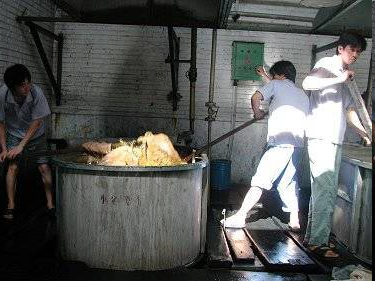
    Fashion is today incomplete without denim. Denim comes in all forms, looks and washes to match with every dress . It would be difficult to believe that the same denim was originally employed in clothing for the pants and overalls worn by miners on the west coast(US). A number of technological factors have contributed to making denim the fashion icon that it is today – including vast improvements in spinning, weaving, finishing etc. One of the most important part of creation of the beautiful denim jeans is the washing . Washing plays such an important part in the denim chain because of the umpteen effects that the consumers are looking for on their jeans . Lets talk a bit about denim washing …


    BASIC DENIM WASHING PRINCIPLES

    Below is the brief introduction to common steps done & followed in denim garments washing in Laundries across the world. Different kind & make of machines being used across the globe to hit similar results.

    Every small step in denim washing makes a big difference because indigo dye has very poor wet & dry rubbing fastness. All parameters are critical to maintain for repetitive results. Eg Many laundries across the Globe ignore the importance of pH M:L:R & R P M of machine.

    Some  important steps in the process of Denim Washing


    1. Pre treatment ( Desizing, Rinsing, Scouring etc)
    2. Enzyme or Stone wash
    3. Clean up to adjust the desire effect
    4. Bleaching
    5. Tinting / Dyeing
    6. Softening & Much more…..

    1.PRE TREATEMENT

    image

    This is very first & basic step but most important step of washing. Here the fate of denim garment is decided that its going to appear good or bad. Good Pre treatments avoid streaking, stiffness & color loss. This process removes impurities, starch & stains during handling of fabric.

    This step is also called desizing ( Removal of Size applied during denim fabric making in weft yarn ). All the woven fabric contains size on them due to reasons to strengthen the yarn for weaving.There are many types of sizes available in the market but they can be divided in two major groups.

    1. Water Soluble (CMC or PVA based sizes ) and
    2. Dissolvable sizes in water ( Starch based ). Starch based sizes are most commonly used due to cheap prices & readily availability.

    Methods of Removing Sizes from Denim Jeans……

    · Washing with High Alkaline agents ( i.e. Soda ash )

    · Washing with High Acidic agents (i.e. Acetic acid )

    · Washing with Oxidative chemicals ( i.e. Hydrogen Peroxide )

    · Enzymatic desizing with Alfa amylase .. This is eco friendly & convenient .

    2.Enzyme  & Stone Washing  Process  Of Denim  Garments

    image

    There are four kind of Enzymes available in market for Denim Laundry business..

    • Amylase …. Desizing
    • Cellulase …. For Salt & pepper effect , contrast
    • Laccase…. … bio bleaching
    • Catalase …… Peroxide killer

    Enzyme is kind of protein that is obtained from fermentations method from naturally existing bacteria & fungi. The structure of Enzyme is a biological polymer and it can be found in every cell. Generally called as Cellulase & it works on cotton( Cellulosic fiber ) only. Enzyme are living organisms which will attack a specific molecular group.

    There are mainly three kind of Cellulase being used for Denim washing , Neutral, Acid and Bio polishing Enzyme. Enzyme are very sensitive with parameters in washing cycle i.e, pH , Temperature & time. If any of these parameters are not up to the mark, result will not be accurate.

    The reaction of enzyme can be easily controlled, its biodegradable products, so they eco friendly.

    Bio Polishing Cellulase are being used to have protruded fiber removal from denim & oven fabric. This is also widely known as Anti pilling enzyme.

    Any Cellulase used in process must be cleaned/killed after the process completion by simply disturbing the parameters ie. By raising high temp. or raising pH to alkaline where no Cellulase withstand.

    Cellulase are available in 3 categories

     Neutral

    Acidic &

    Hybrid enzymes.

    Neutral enzyme gives better salt & pepper effect with very less back staining & its generally come sin powder form & also retains better strength of fabric than acidic Cellulase. Where as acidic cellulase give faster results but with too heavy back staining & cuts down the indigo color, also affects the strength of fabrics.

    Now a days laundry people needs faster results in less time & money hence chemical suppliers combined Neutral & acid cellulase in such way that it works faster & with better results than acid cellulase with cost effectiveness & known as Hybrid enzyme.

    Laccase is bio bleaching agent & alternative for conventional bleaching agents. This impart greyer cast to blue denim & enhances salt & pepper effect. But due to high cost & low self life, laundries do not prefer it.

    3.CLEAN UP

    After finishing Enzyme wash it is must to add clean up process for better results & garments appearance & that can be done in various ways & methods. As clean up is a must process to be carried out after every chemicals steps done for any garments which allows next process to happen smoothly. All processes mentioned below kill/ deactivate the active enzymes process which is necessary in order to protect/retain garment strength……

    • a.Hydrogen peroxide in alkaline pH clean up enhances the brightness & rich blue tone of indigo.
    • b.By using non ionic detergents in medium to high temperature
    • c.By doing two good hot water rinse etc….


    4.BLEACHING

    image  

    This in one an important step in washing denim & can be done by various bleaching agents …..

    • a.Calcium hypo chlorite
    • b.Sodium hypo chlorite
    • c.Hydrogen peroxide
    • d.Potassium permanganate

    First two chemicals are commonly being used for every medium to vintage denim but when it comes to super vintage & light shade its advisable to use potassium permanganate bleach to cut the color faster till half way & then neutralize it & go with Liquid ( Hypo ) bleach to adjust the desired shade. This process helps to get Greyer cast & also protects the lycra/spandex , retain elasticity.

    Hydrogen Peroxide is rarely used as bleaching agent when very less color loss required or if fabric is sulphur top. As it takes longer time to give desired effect.

    Potassium Permanganate is also being used on 100%  sulphur black denim fabric for bleaching/reducing agent to get unique effects. As its not production friendly till laundry have very expertise team to handle this program, otherwise it will result in many shades & cast.

    Proper Neutralizations of bleaching process is very essential in order to get rid of fabric strength , bad smell from garment, yellowing & skin irritation etc…

    4.Tinting & Dyeing


    Tinting is a process where very less amount of tint is involved & mainly direct dye is being used to do this process. This is being done to change hue/cast/tone of indigo. As soon as quantity of tint color increases & it cover up indigo, reaches the level of dyeing.

    Tinting being used to give garments a used / vintage & muddy look. This process takes from 5 minutes to 15 minutes time for better results followed by dye fixing & clean up of superficial dye.

    Dyeing is being done on very light shade of Indigo, Ecru/ grey denim & Ready for dyeing denim.

    •  There are various Types Of Dye . THe comparison of these dyes is given in the chart herebelow:

    1-Direct Dyes

    2-Reactive Dyes

    3-Pigment Dyes

    4-Sulphur Dyes

    Direct Dyes Reactive Dyes Pigment Dyes Sulphur Dyes

    Economical

    Costly

    Cost Efficient

    Economical

    Wide range of shades

    Wide range of shades

    Styling ( limited to dull shades)

    Shades are dull

    Short Cycles

    Long Cycle

    Short to long Cycle

    Short to long Cycle, depends upon shade

    Ease of application

    Water Consumption High

    Machine contamination, but hard to obtain consistency, harsh hand feel

    Sulphur Odour & harsh hand feel

    Smooth Appearance

    Smooth Appearance

    Smooth Appearance

    Smooth Appearance


    5.SOFTENING PROCESS

    Softening process of Denim is very critical. As denim is very heavy in compare with other fabrics hence its needs softening. During this process there is a big problem -the discoloration of denim i.e change in shade or loss of whiteness, giving a yellow tint is commonly known as yellowing. By using normal softener will lead to ozone problem. Indigo dyed fabric are even more prone to yellowing.

    As it’s a widespread problem & there in no single reason for its cause. Instead a number of condition can singly or in combination lead to the problem. Yellowing in not specific to certain fibers, finishes or washing processes. It is not specific to chemicals or chemical treatment but certainly some of the factors among these can lead to the yellowing. As cotton & all organic polymers develop yellowing in time.

    Light , acids, impurities, detergents & chemical contribute to yellowing problems.

    Temperature of drying & curing can impart yellowing due to scorching of the cotton. Therefore good control must be used to minimize this type of damage.

    Hence its advisable to use Antiozonate softener which prolong ozone reaction of Indigo & keep garment in good condition.

    MINIMISATION OF YELLOWING RISK:

    Its Impossible to eliminate yellowing but it is possible to prolong & reduce the conditions which causes classical yellowing:

    · Ensure bleaching neutralization & rinsing is proper

    · Minimize back staining

    · Avoid use of chemicals which cause yellowing

    · Avoid leaving garment in open air for longer time

    · Control drying & curing temperatures

    · Using right Antiozonate softener with right pH


    Saurabh Pic (1) About the Author : Saurabh Rai  is a  Textile Chemist by Profession & Denim Finishing Expert .He is working in one of the most well known denim brand in Middle East as their denim washing head. Contact him on email here. Want to write guest articles ? Check here