Tag: Environment

  • Sustainability. The Next Big Thing In Denim.

    Sustainability. The Next Big Thing In Denim.

    Sponsored article – This article has been written by Coats team and is reproduced here at D&J on their behalf.

    With over 4.5 billion pairs of jeans produced worldwide every year, denim is one of the planet’s most popular clothing choices. But it has a serious image problem when it comes to the environment. Here at Coats, we’re working with innovators, manufacturers and brands to change all that.

    Denim may look good, but it’s not great for the planet. Take water consumption. On average, 10,000 litres of this precious resource goes into making one pair of jeans – firstly, in growing the cotton, and secondly in the seriously labour-intensive processes required for dyeing, stonewashing, and distressing.

    They say meat’s bad for you. Well, it takes up to 10,000 litres of water to make a single pair of jeans, compared with 2,400 litres for a burger.

    (Talking of ‘distressing’, did you know that 16% of insecticides & 6.8% of herbicides used worldwide are for cotton? That harmful chemicals are used for dyeing? Or that processes like sandblasting can cause breathing problems if you don’t take protective measures?)

    Real action, not greenwash

    So that’s the problem – and it’s not just an environmental one. If consumers don’t see that brands are making efforts to embrace sustainability, they’ll choose ones that do. The buck really does stop here.

    That’s why Coats is working with our customers to champion sustainability and the circular economy. We help find ways to waste less, while reusing and recycling more. We also look for alternatives to chemical and synthetic dyeing and bleaching – like foam dyeing, natural bio indigo dye, and water-efficient fabric dyeing machinery.

    Coats has invested in a revolutionary waterless digital dyeing start-up called Twine. While It’s not yet suitable for bulk production, we need to give initiatives like this all the support we can.

    Naturally, a way to save even more water is in washing. Lasering, ozone, eflow and using bio-based enzymes are all excellent alternatives – and, as thread makers, we need to make sure our products can withstand these new processes.

    Sustainable solutions for the circular economy

    As the industry starts looking for alternatives to cotton, we at Coats have begun experimenting with yarns that use more sustainable hemp and soybean.

    Going one step further, our 100% recycled EcoVerde range of threads is made up of old PET plastic bottles – which rescues them from the rubbish tip and cuts CO2 emissions too. So that really is a win-win.

    By 2024, we aim to offer EcoVerde versions of all our premium threads. But we’re far from finished. May 2021 saw the launch of biodegradable and compostable EcoRegen. This brand-new thread is made from 100% lyocell, a renewable fibre derived from wood pulp sourced from sustainably managed forests. Also in the pipeline is EcoCycle, a water-dissolvable thread that makes reusing and recycling end-of-life garments even easier.

    There’s been a lot of progress, but we still have a long way to go. Coats is supporting the drive to sustainability and circularity through investment in research and development. Our Innovation Hubs are home to some truly astonishing developments. So, we won’t just look good. We’ll be doing good – and feeling good about it too.

    Join us on the 4th August, for a dedicated CoatsCast session on the future of denim- features guest speaker Danielle Elsener (Founder of Decode) Click now to register: https://bit.ly/3yTgxe7

  • Recycled Carbon Smart Fabrics –Lululemon X Lanzatech: Promise For Denim Industry Also

    Recycled Carbon Smart Fabrics –Lululemon X Lanzatech: Promise For Denim Industry Also

    Lululemon Athletica Inc., the luxury athletic apparel brand, recently announced its collaboration with Biotechnology company LanzaTech, to produce the world’s first fabric with the use of recycled carbon emissions that would otherwise get released into the atmosphere as pollution. The carbon-capture experts and the high-end athleisure curator have fabricated a waste-gas-based polyester with the same appearance, advent, and properties of virgin polyester.

    LanzaTech – a New Zealand startup – uses nature-based solutions to make ethanol out of waste carbon sources and is partnering with different companies around the world including India Glycols Limited (IGL) and Taiwanese Far Eastern New Century(FENC) to transform ethanol into the polyester. Recycling carbon is a foundational element of the circular economy, which keeps fossil carbon in the ground, abating pollution and fossil fuel utilization when used to produce polyester. With a decreased carbon footprint, this innovation could remold Lululemon’s products and the apparel industry.
    The technology innovated by the company is compared to that of a brewery; instead of using yeast for traditional fermentation, industrial carbon waste is converted into fuels and chemicals by bacteria. The technology also holds great promise for the denim industry as polyester is one of the important fibers used in the denim products.

    “We must radically change how we source, utilize and dispose of carbon. Carbon recycling enables companies like Lululemon to continue to move away from virgin fossil resources, bring circularity to their products, and achieve their climate change goals around carbon reduction. We call this being ‘CarbonSmart.’” Says Jennifer Holmgren, CEO, LanzaTech.


    The biotech company claims that the ethanol so produced comes from a steel mill in China, where carbon monoxide is fermented and converted into ethanol. The company has worked with a chemical partner called India Glycols Limited to turn ethanol into mono ethylene glycol (MEG), a chemical normally made from fossil fuels. Another partner, the textile manufacturer Far Eastern New Century, used the MEG to make polyester. When made into Lululemon’s fabric, it’s the same as the one made from fossil fuels.

    HOW IS THE FABRIC MADE?

    According to LanzaTech, carbon is captured from various feedstocks, including synthetic gas, industrial emissions, agricultural waste, household waste, and other sources of carbon that have already been emitted into the atmosphere. These carbon molecules are then transformed into ethanol with the help of micro-organisms developed by them. The ethanol and other base ingredients thus produced are eventually converted into the resultant fabric, that is, polyester.
    This synthetic material provides the comfort, breathable wear, flattering shape, and fit that is necessary for athleisure clothes. This sustainable substitution of using carbon emissions instead of virgin petroleum or fossil fuel to produce polyester helps maintain ecological balance.


    “Since initially connecting LanzaTech’s Taiwanese joint-venture set up with a pilot plant in Taiwan, I believed this waste-gas-based polyester formation would be a sustainable solution for the polyester industry. We are happy to team up with IGL and Lululemon to complete the supply chain for this historical project and continue working with LanzaTech towards our common goal for a better Earth,” says Dr. Fanny Liao, Executive Vice President of RD at FENC.
    Lululemon hasn’t yet announced which products the fabric so produced may be used in. But by partnering with LanzaTech at a prompt stage, Lululemon is helping move the technology forward.
    Polyester fiber is one of the most prevalent synthetic fibers that usually uses petroleum-based feedstock. LanzaTech worked with Taiwanese textile manufacturer FENC to manufacture the ‘TOPGREEN Bio3-PET’ fiber which was made from LanzaTech’s ethanol. This initiative shows FENC’s and Lululemon’s dedication to sustainable innovation. Likewise, LanzaTech has also partnered with Unilever Pvt Limited to manufacture laundry detergent using recycled carbon emissions named OMO that has been rolled out in India.

    WHAT LED TO THIS BIG STEP TOWARDS SUSTAINABILITY?


    In October 2020, Lululemon published its first Impact Agenda, silhouetting its strategies to tackle social and environmental issues with 12 goals to drive progress. The partnership with LanzaTech is one of the many ways Lululemon is directed on bringing new technologies into operation.

    Lululemon Impact Agenda

    The Impact Agenda is the company’s stake in the ground towards an equitable and sustainable future. Developed through internal and external engagement, it is rooted in the social and environmental contexts in which it operates and the societal issues that matter most for the business and industry. This agenda outlines the company‘s commitments to improve environmental impact, contribute to a healthier future, and create long-term value.
    “We know sustainable innovation will play a key role in the future of retail and apparel, and we are excited to be at the forefront of innovative technology. Our partnership with LanzaTech will help Lululemon deliver on our Impact Agenda goals to make 100 per cent of our products with sustainable materials and end-of-use solutions, moving us toward a circular ecosystem by 2030,” says Ted Dagnese, Chief Supply Chain Officer at Lululemon.

    This environmentally benign innovation will set new parameters for other brands to optimize resources with more replaceable and recyclable methods, thus contributing to a better future of the apparel industry.These are in themselves great steps and could become incomparable if the recyclability of the post consumer products created with such polyester could be somehow ensured – specially for the denim industry which is really focusing hard of post consumer wastes. We are perhaps waiting for that great technology news about easy extraction and recyclability of polyester .

  • Recycling Blended Textiles – A Technological Breakthrough By H&M And HKRITA

    Recycling Blended Textiles – A Technological Breakthrough By H&M And HKRITA

    The innovative partnership between the non-profit H&M Foundation and The Hong Kong Research Institute of Textiles and Apparel (HKRITA) finds groundbreaking solutions to recycle blend textiles into new fabrics and yarns – without any quality loss – through a hydrothermal (chemical) process. The technology will be scaled up and made available to the global fashion industry. The finding is a major breakthrough in the journey towards a closed loop for textiles.

    “For too long the fashion industry has not been able to properly recycle its products, since there’s no commercially viable separation, sorting, and recycling technology available for the most popular materials such as cotton and polyester blends. This very encouraging finding has the potential to change that. We are very excited to develop this technology and scale it beyond the laboratory, which will benefit the global environment, people and communities,” says Erik Bang, Innovation Lead at H&M Foundation.

    Edwin Keh (HKRITA) Erik Bang (HM Founation) in HKRITA lab

    How Does This Technology Work ?

    While talking with Denimsandjeans.com ,  Erik Bang, Innovation Lead at H&M Foundation said

    We’re working on two different separation and recycling technologies, both targeting blended textiles. In this process of Hydrothermal ,  the cotton comes out at a cellulose powder which is possible to upcycle back into yarn and fabric through existing and emerging technologies. Through our second method, the biological one, the cotton is processed to glucose. Glucose is a widely used chemical building block in several industries including textiles. The polyester is in fiber form and without quality loss from both methods, which of course is fantastic. The water used in the process is recovered and can be reused over and over again in a closed system. So there is very little water consumption. We are very mindful not to create another problem through these new technologies so it is top of mind in designing both methods. The partnership works towards the goal of providing at least one separation and recycling technology to the industry by 2020. We’re currently scaling up the lab breakthrough in a pilot plant in Hong Kong, operational within 12 months. We are very excited to see what the future holds.

    Biological Treatment at HKRITABiological Treatment in HKRITA lab

    The hydrothermal process uses only heat, water and less than 5% biodegradable green chemical, to self-separate cotton and polyester blends. This fibre-to-fibre recycling method is cost effective, and there’s no secondary pollution to the environment, ensuring the life of the recycled material is prolonged in a sustainable way. The technology will be licensed widely to ensure broad market access and maximum impact.

    “By being able to upcycle used textiles into new high value textiles, we no longer need to solely rely on virgin materials to dress a growing world population. This is a major breakthrough in the pursuit of a fashion industry operating within the planetary boundaries,” says Edwin Keh, Chief Executive Officer of The Hong Kong Research Institute of Textiles and Apparel (HKRITA).

    The H&M Foundation initiated the partnership with HKRITA in September 2016. It is backed by an estimated 5.8 million euros of funding, with HKRITA conducting the research and work to commercialise the outcomes. The Innovation and Technology Fund of the Hong Kong SAR Government also provides additional substantial funding and support. The total project investment is estimated to around 30 million euros during the four-year collaboration (2016-2020), which makes it one of the biggest and most comprehensive efforts ever for textile recycling.

    It is H&M’s customers’ engagement that have enabled this important research, as the exact financial contribution is determined by the annual surplus from H&M’s global in-store garment collecting program, which is donated to H&M Foundation. To date the H&M Foundation has donated 2.4 million euros to HKRITA.
    H&M has been very consciously moving in the direction of sustainability as an important corporate objective. We can see its developments in terms of usage of organic materials, efforts to implement sustainable practices with its partners , collection of used garments and many other sincere efforts in environmental protection. This again is a huge step and if the efforts pay off, it will make huge impact on the global fashion industry with vast amounts of recyclable materials available taking off big part of  ‘FASHION BURDEN’ from mother earth. It also looks that this technology, once developed , will be freely available for common good. If the project is successful, we may find PCW getting a new meaning and fashion industry may loose some of its guilt ! We all look forward to and hope for success of this project.

    ABOUT

    H&M Foundation is a non-profit global foundation, privately funded by the Stefan Persson family, founders and main owners of H&M group. Its mission is to drive long lasting positive change and improve living conditions by investing in people, communities and innovative ideas. Through partnerships with organizations around the globe, the H&M Foundation drives change within four focus areas; Education, Water, Equality and Planet. In addition to this, the Foundation can also provide emergency relief. Since 2013, the Stefan Persson family has donated 1.3 billion Swedish krona ($177 million/€144 million) to the Foundation. Learn more at hmfoundation.com.
    The Hong Kong Research Institute of Textiles and Apparel was established in 2006 and is a publicly funded applied research center. It is one of five applied research centers sponsored by the Innovation and Technology Fund (ITF) of the Hong Kong Special Administrative Region Government. HKRITA engages in applied mid- and down-stream research to support the textile and apparel industries, to drive sustainable improvements, and to drive improvements for society.

    The Innovation and Technology Fund (ITF), administered by the Innovation and Technology Commission, aims to increase the added value, productivity and competitiveness of our economic activities. The Government hopes that, through the ITF, Hong Kong companies could be encouraged and assisted to upgrade their technological level and introduce innovative ideas to their businesses.


  • H&M Sustainability Report 2014

    H&M Sustainability Report 2014

    Recently H&M released its annual sustainability report for 2014. The document mentions in detail how the company is implementing more eco-friendly practices in its supply chain and stores to reduce the harm it causes the environment, as well as its efforts on a variety of social welfare issues such as gender equality and poverty alleviation.

    H&M manufactures at least 600 million items each year and operates more than 3,200 stores in 55 countries. If you include its subsidiary brands, such as COS, that number jumps above 3,500 stores, and the company is expanding its locations by 10% to 15% each year. To operate those stores—besides manufacturing and shiping the clothes —requires a staggering amount of resources, from energy-hungry cotton to electricity, oil, and water . Even if H&M manages to mitigate its environmental footprint slightly from one year to the next, its business continues to grow, and that footprint remains enormous—and far from sustainable.

    CEO Karl Johan Persson emphatically reiterates the integration of sustainability mantra in the DNA of H&M  as

    “Our business idea is to offer fashion and quality at the best price. It’s about the best value, not the cheapest price. Sustainability is an important part of this. We know that our customers, just as our colleagues, care more and more about it. And while we must be realistic about the fact that most customers are not prepared to pay more for added sustainability value, I am convinced that it will become an important differentiator in the future.”

    H&M Conscious

    H&M Conscious is the name of their work for a more sustainable fashion future. It’s consisting of seven commitments and is built on passion, long-term thinking and teamwork.

    “We want to make fashion sustainable and sustainability fashionable.”

    Seven Commitments

    H&M seeks to make seven commitments towards sustainability and measures its performance towards those commitments.

    1.Provide fashion for conscious customers:

    “Our goal is to increase the share of more sustainable fabrics and materials every year. We are constantly on the lookout for innovative materials and processes that can make our products more sustainable. “

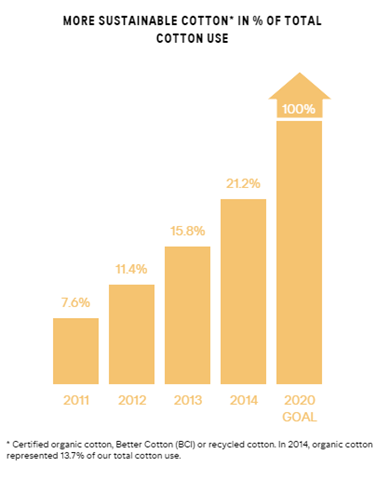
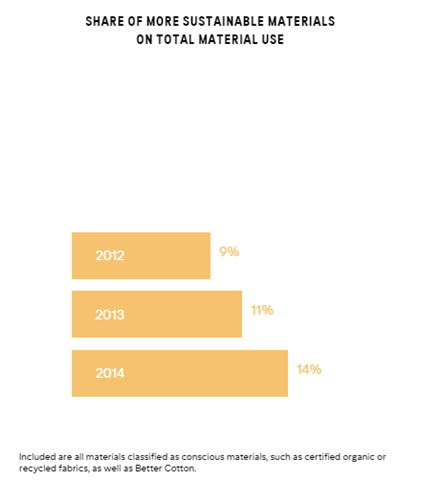
    H&M uses about 21% of total cotton consumed in the form of Organic Cotton, BCI or recycled cotton and is supposed to be No. 1 user of organic cotton according to textile exchange report of 2013. About 13.7% of all its materials consumed are in the form classified as conscious materials.

    sustainable cotton usage h&m

    sustainable material usage h&m

    2.Choose and reward responsible partners

    “We need to be a good partner ourselves. Our standards are high and we reward sustainability performance with better business. We work hard to ensure better livelihood and positive development in the communities where we operate.”

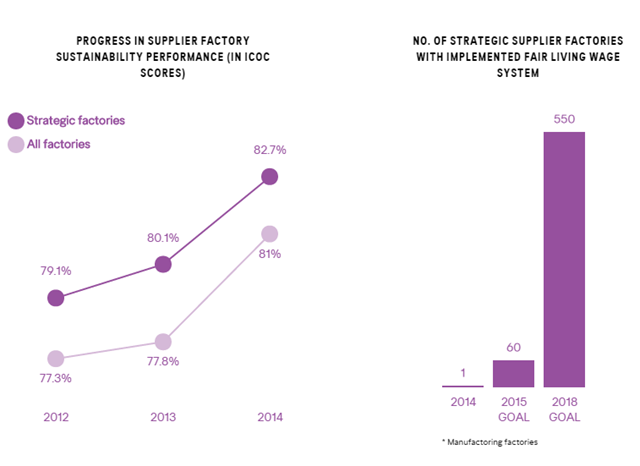
    H&M seeks to reward its responsible partners and seeks to make them more committed towards their workers and encourage role model factories. It seeks to have about 550 suppliers with fair living wage system by 2018.

    Supplier factories living wage

    3.Be ethical

    “We see diversity as an asset that makes us better and we want to set a good example wherever we operate. To us this means respecting human rights, taking a clear stand against corruption and embracing diversity and inclusion.”

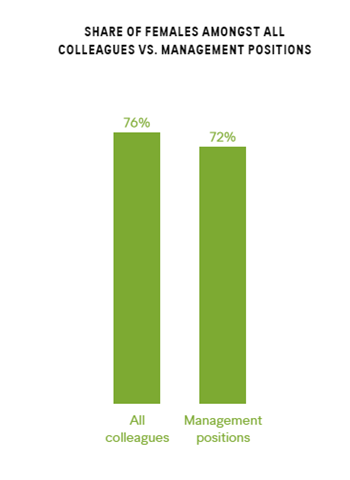
    One of the criteria that H&M takes for measuring being ethical is to employ more of female employees – though not a very right measure for the same. About 76% of their workforce is female and 72% of management positions are being held by them.

    Female employees in H&M


    4.Be climate smart

    “Tackling climate change is one of the major challenges of our time. Its consequences are as likely to affect us as everyone else on our planet, including our suppliers, colleagues and customers. So it is essential that we do everything we can to reduce climate impact – for example by only using renewable energy wherever possible.”

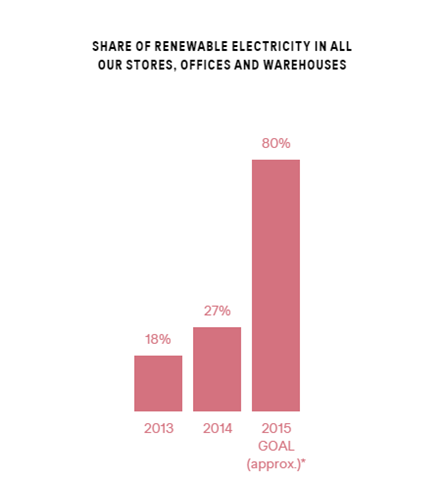
    Renewable energy is sought to be used in all stores, offices, warehouses of H&M (*100% in all markets, where this is feasible and renewable electricity is credibly available. This is currently not the case ,for example, in China or Peru).

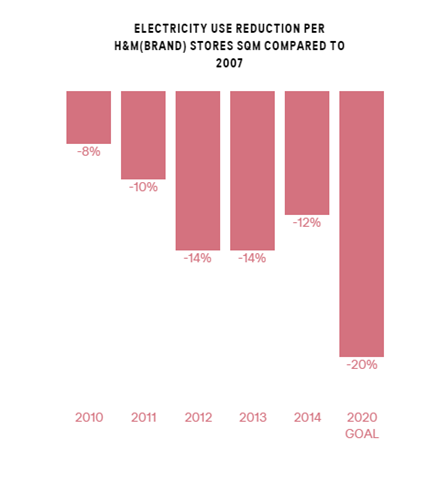
    Electricity use per sq. mtr of H&M brand store is sought to be reduced by 20% in 2015 compared to 2007 levels.


    Renewable Energy usage

    image


    5.Reduce, reuse, recycle :

    “We strive to reduce, reuse and recycle wherever we can. Our biggest concerns is that too much fashion ends up in landfill. That’s why we teamed up with I:Collect and created a the first global garment take back system.”


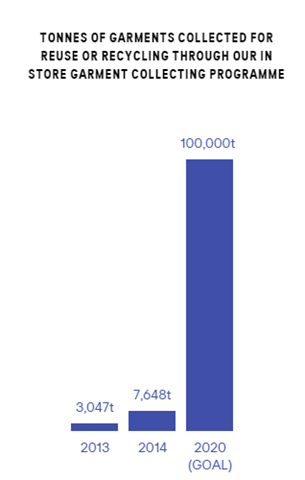
    Anyone can drop unwanted clothes at H&M and they will try to give it a new life. The goal is to create a closed loop where unwanted garments are recycled into new creations. Currently they claim to  blend in about 20% recycled fibres without any loss of quality or longevity. About 7600 tons of garments were collected for reuse or recycling through their in store garment collection programme. The target for 2020 is 100,000 tons – a very ambitious one indeed.

    Recycled garments collected by H&M


    6.Use natural resources responsibly

    “Making great fashion can require a lot of resources. Growing cotton, dyeing fabrics and washing our clothes all require significant water use. But natural resources aren’t endless.”

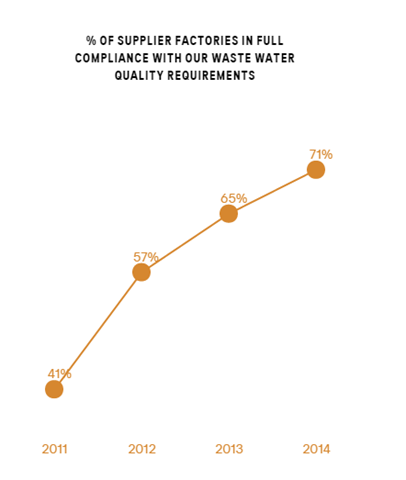
    H&M seeks to educate its suppliers on water conservation and compliance with waste water quality requirements.  Their internal guidelines on waster water quality are met by about 71% of total suppliers in 2014.

    Waste water quality requirments compliance


    7.Strengthen communities

    “Strengthening the communities around us is part of our responsibility. Prosperous and stable markets where human rights are respected, skills training are readily available and the eco-systems are healthy benefit our business.”

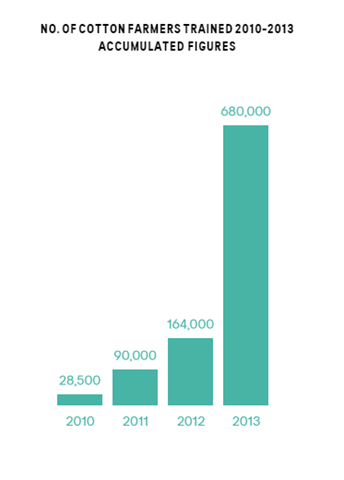
    Besides other activities of community involvement, H&M trains cotton farmers to do better crops. The numbers claimed are quite high !

    Cotton farmers trained by H&M

    While the report makes it clear that H&M is doing a good deal to lessen its impact, it is also a fact that the goal and fast fashion are inherently at odds. By its nature, fast fashion is a volume business, which is exactly what makes it a big strain on the planet. The proponents of fast fashion will try to always sell more and there is inherently the conflict with sustainability. H&M acknowledges that the sheer quantity of resources it consumes is a serious problem. In US alone about 10.5 million tons of clothes end up in landfills each year. Even if H&M ensures a large part of its clothing is organic or BCI cotton , still the landfills will be filled unless the garment recycling process becomes much more widespread and is taken up by a larger number of brands and retailers. H&M’s target of getting 100,000 tons of garments for reuse in 2020 will be still less than 1% of garments going to landfills in US alone. Currently it is about 0.2% of its own garments that are being recycled. The problem is endemic and needs industry wide awareness. However, still it is commendable that H&M has taken a lead which can offer example to other larger entities in this business.

    Sponsored link:


  • Leeds Gold Certificate For Artistic Milliners’ Latest Garment Factory

    Leeds Gold Certificate For Artistic Milliners’ Latest Garment Factory

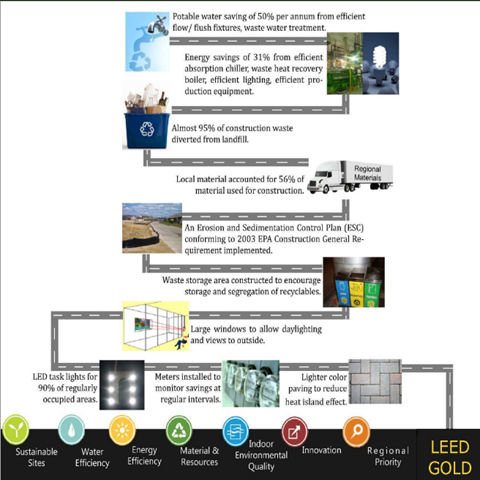
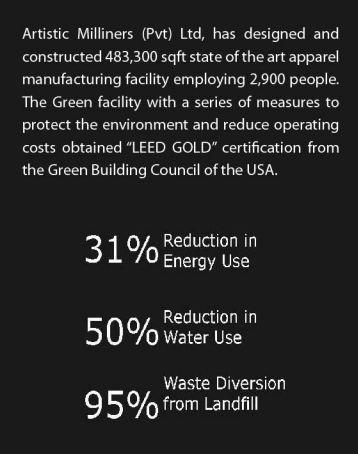
    Artistic Milliners , the denim producer from Pakistan, gets Leeds Gold Certificate for its latest garment factory in Pakistan.

    Developed by the US Green Building Council , the LEED is intended to help building owners and operators be environmentally responsible and use resources efficiently.It  is a green building certification program that recognizes best-in-class building strategies and practices. To receive LEED certification, building projects satisfy prerequisites and earn points to achieve different levels of certification.

    The company mentions that they are highly focused on sustainability and  in 2013 they produced over 2 million mtrs of denim with recycled polyester and over 2 million waterless jeans..

    We spoke to Murtaza Ahmed, Director Artistic Milliners , about this latest project and he mentioned that this is Pakistan’s first Leeds Certified Factory. He further says

    “We are very excited as a group and a company. We have done many initiatives in this unit. All our dry processes are solar powered. We shall be recycling 100% of our water. Our daily consumption is 500,000 gallons. 70% of this will go back to laundry and 30% will go for sanitation and irrigation even though LEEDS does not require us to recycle 100% water. Even the sludge is being used  for making bricks.  We are using technology and automation to make the processes more sustainable including using automated spray booths, laser machines, ozone machines etc….”

    Here is the video on our talk with him where he explains about the latest project and the thought behind it..


    Artistic Milliners


    Leeds Certified Factory by Artistic Milliners

    image

  • Facing West – The Indigo Lovers

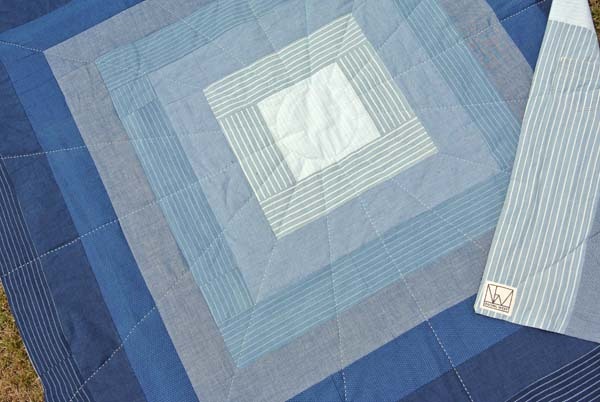
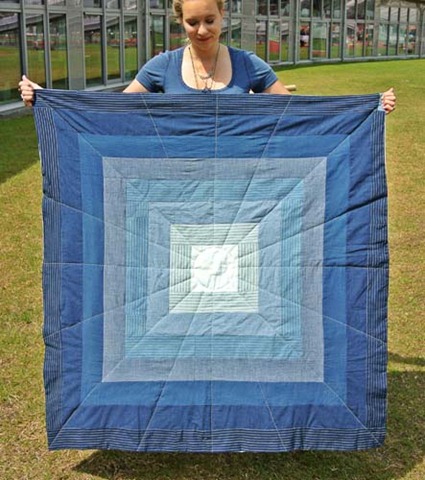
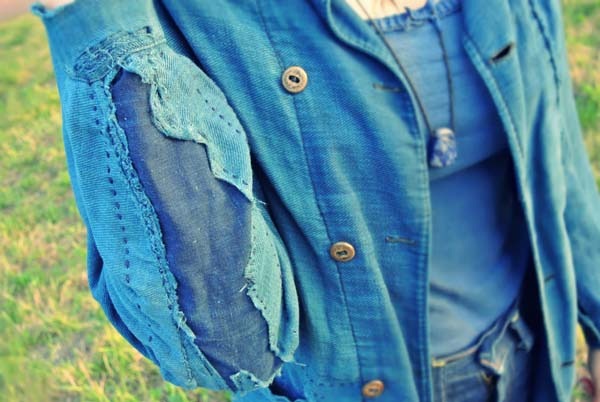
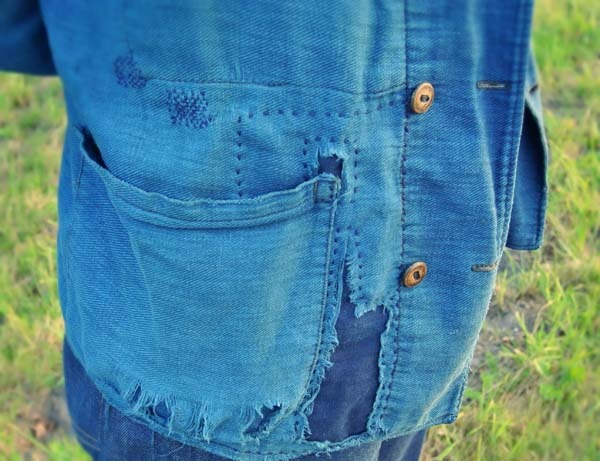
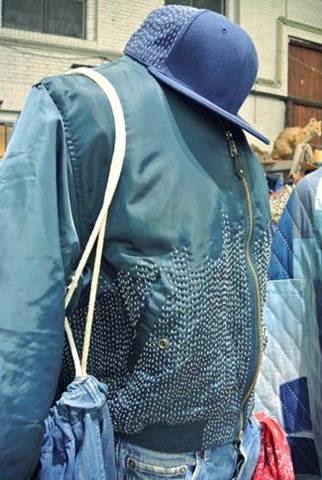
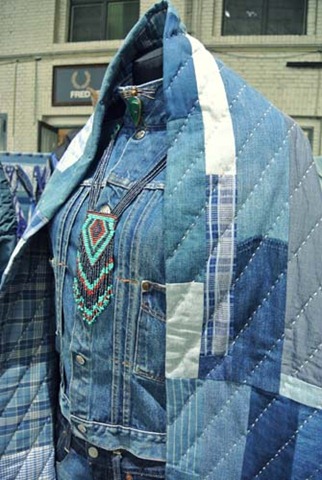
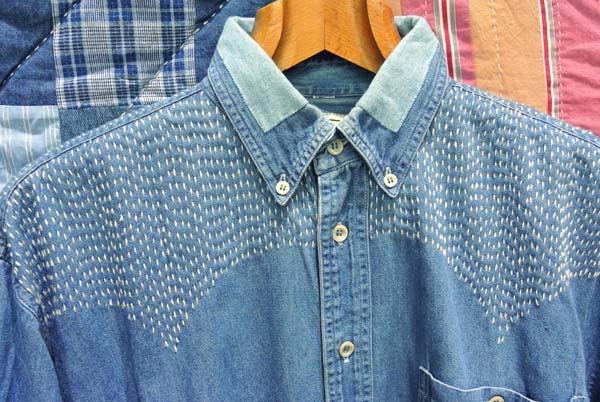
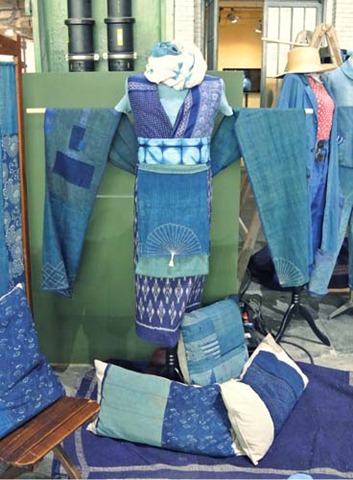
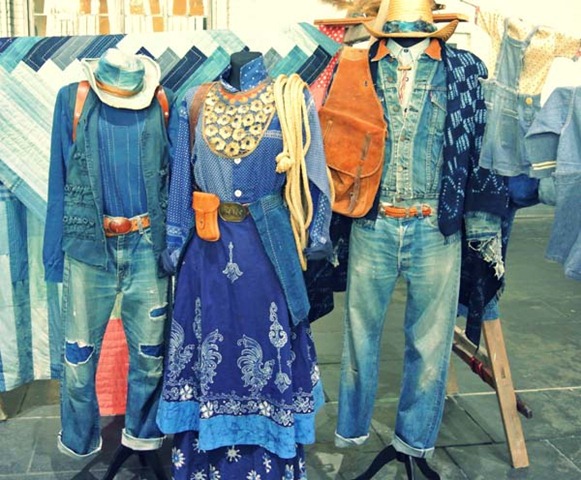
    Lizzie Kroeze  from Facing West was inspired  by workwear and the techniques traditionally used to make, maintain, and re-use clothes that were made to optimally serve their wearer . She draws her inspiration from draw my inspiration from garments worn in various cultures, from American miners gear to Japanese farmers’ and fishermen’s wear, as well as the various techniques used to create, mend, strengthen and embellish them largely borne out of necessity. All this inspiration helped her in the creation of Facing West – a  textile heritage craft company  in 2013.

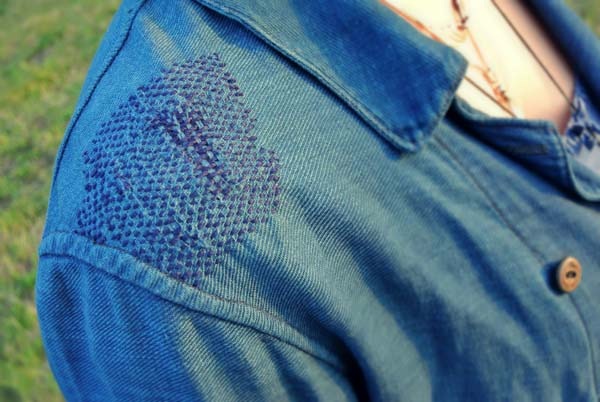
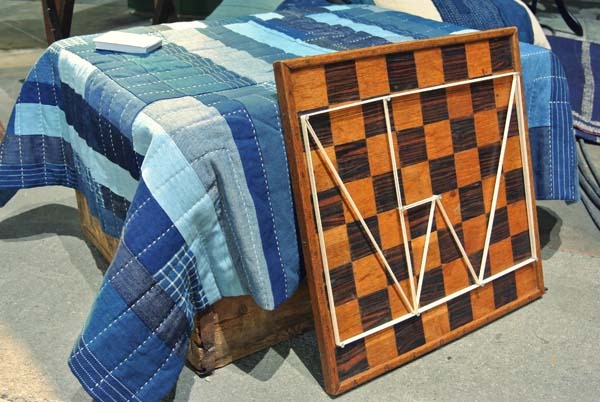
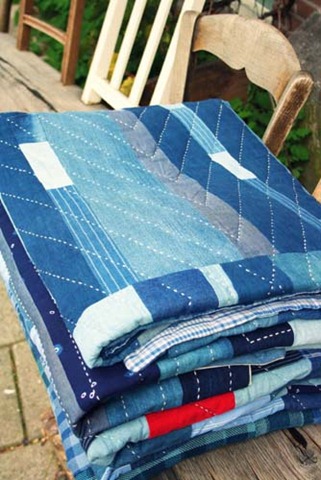
    “I started out making American-inspired quilts using second-hand garments. I soon started applying my hand-quilting technique, similar to traditional japanese Sashiko stitching, in other ways; i.e. to repair and decorate pieces of clothing. I also started working more with antique Japanese boro fabrics which I repurpose to make scarves and bags but also interior design pieces. I also started experimenting more with natural dying techniques. “

    Sashiko method of stitching is always done by hand and is very time consuming, but gives great effects , especially when Indigo dyed products are used. From Indigo dyed quilts, to distressed jeans and shirts , indigo dyed scarves etc , she repurposes a whole lot of used items.

    DSC_0177

     DSC_0182 

     DSC_0231 f

     DSC_0233 f

     DSC_0234 f 

    She has also been building up her vintage collection with her fiance Elvert Arnold and this vintage collection forms the inspiration for the pieces she  makes herself.

    DSC_0357

     DSC_0366 

     DSC_0373

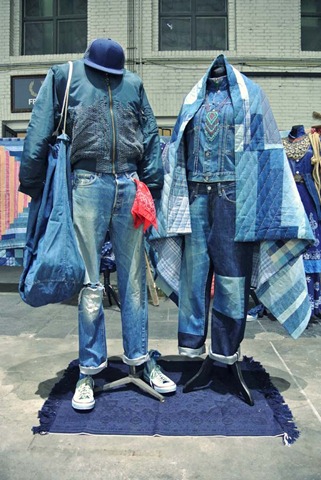
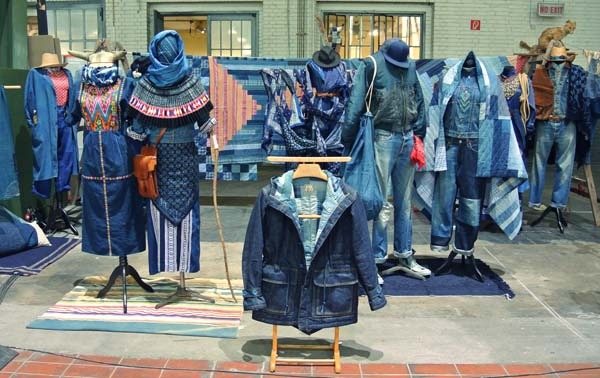
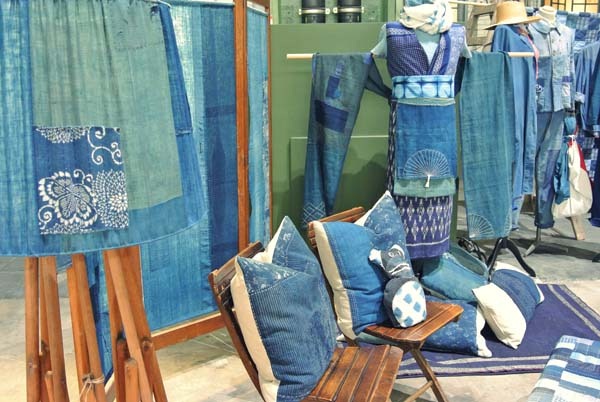
    “In recent months I have had the opportunity to show both my vintage collection and my work for facing West together in two indigo exhibitions, one in Amsterdam together with Miles Johnson, and another last week at Bread and Butter Berlin. These exhibitions provided an insight into various indigo cultures with pieces from Japan, France, the US, Mexico, Thailand, India, Morocco and the Netherlands and allowed my to share my love for the color blue and hand-crafted garments and textile pieces”

    she says… And we agree. The pieces look great !

    DSC_0374

     DSC_0392

     DSC_0393

    DSC_0395

     DSC_0433   

    DSC_0462

     IMG_4505 retouched

     IMG_4523 retouched

     retouched 1

  • Denim Pollution – Solutions To Sulphur Dyeing Wastes

    denim dyeing wastes

                            This is a guest post by Harry Mercer
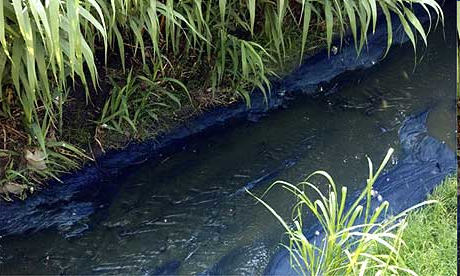
    The problem of treating wastewater from denim dye waste is significant in many developing countries. Either the costs of treating these wastes affects profit margins or the waste goes untreated and is discharged directly into rivers.

    The most serious pollution problem results from the use of sulfur dyes in denim. Once the sulfur dye is applied the cotton is squeezed and washed. Typically, 50% or more of the sulfur dyes are washed off, producing water contamination that is difficult to remove from water.

    Techniques have been developed to greatly reduce and even eliminate sulfur dyes as a source of textile pollution:

    • Unlike most types of cotton dyes, sulfur dyes can be recovered and re-used. The contaminated water from sulfur dyeing usually contains enough dye and chemicals to produce lighter shades without additions of dye or chemicals. For example, the wash-water from sulfur-black dyeing can be concentrated through evaporation, filtration or it can be re-used by adding enough dye and chemicals to produce the standard shade. There are methods for titrating sulfur dye with copper sulfate, reducing agents can be added to bring the ORP to the correct level and the alkali can be titrated with a 2-endpoint titration with HCl and formaldehyde. Using these techniques, the sulfur dye can be recycled which saves money and ends the pollution. It should be noted that sulfur dyes precipitated with an acrylic type flocculant cannot be re-used.
    • I have developed methods for sulfur dyeing that fix the dye completely, so that none is lost in washing, leaving the wash water completely clear. Depending on the quality of the dye,  which reducing agents are employed and the pH of dyeing, various inexpensive buffers can be employed that will fix 100% of the dye which eliminates the colored waste and also reduces the amount of dye needed by a sulfur black shade by 50% or more.These  methods were developed over a 20 year period and have employed them  in Brazil, Ecuador, Indonesia,  Phillipines and Thailand.
    • There are also cold-dyeing methods that also eliminate the dye waste 100%, saves energy and has colorfastness approaching that of a vat black.
    • Reducing agents are a major source of Chemical Oxygen Demand. Sodium dithionite sold commercially as sodium hydrosulfite has a COD of 0.22 kilograms per kilogram of 100% hydrosulfite. Since it is normally produced using zinc metal as a catalyst, there is also  some presence of heavy metal contamination. There are non-polluting substitutes that can be used with many Indigo-dyeing methods. Sodium sulfide-type reducers are commonly used, however they can be easily replaced for hot-dyeing methods with reducing sugars which includes sugar, dextrins (corn-sugar) and molasses. These have been offered by chemical companies for decades and basically break down under conditions of high temperature and high pH (11) into hydrogen and alcohol, which both escape into the air.
    • Sulfur blacks do not require chemical oxidation, in fact peroxide will reduce the colorfastness of sulfur blacks and acid-oxidation will weaken the yarn. – After applying sulfur black, it should be allowed to cool in air which takes the dye out of reduction and allows oxidation with atmospheric oxygen. The initial washing should be  cold in order to avoid washing off any color and also to allow further oxidize with  oxygen-rich cold water. The final wash should be warm, about 60 degrees, which will  remove alkalies and residual reducing agents. If noticeable color is removed, the dyeing procedure requires adjustment.


    imageThis is a guest post by Harry Mercer. Mr. Mercer has 30 years experience in the denim business including 3 prominent U.S. denim companies.He is an expert colorist for measurement and color matching as well as textile testing.

  • Vintage Denim – At What Cost To Environment ?

    image

    Readymade garment sector is booming world wide & specially in 3rd world countries, and garment processing has emerged as one of the important production routes towards meeting quick changing demands of the fashion market. In this article we look at processing of denim garments & its impact on environment.

    Brands seeking to improve their environmental credentials can look beyond the use of organic cotton to a range of new products and technologies that lower the levels of chemicals, stones residue, rivets, buttons, hand tags, water and energy needed to manufacture denim fabric & garments.

    The spread of denim culture, all over the world brought with it a trend of fast changing fashions. One after another, several washes were introduced such as stone wash, acid wash, moonwash, monkey wash, show wash, frosted wash, white wash, mud wash, distressed wash etc. Over the last 6-8 years, India has probably seen the most dramatic and exciting changes in the washing of denim garments.
    Although the denim industry has long been known to be resource intensive, a full picture wasn’t known publicly until Levi Strauss & Co. shared results of its life cycle assessment on what went into making one pair of its iconic Levi’s 501 style. 
    Examining the 2006 production year for jeans headed to the U.S. market, Levi’s found that making one pair of 501s required almost 920 gallons of water, 400 mega joules of energy and expelled 32 kilograms of carbon dioxide. Levi’s said this was equivalent to running a garden hose for 106 minutes, driving 78 miles and powering a computer for 556 hours. 

    Faded, ripped scrunched and ‘distressed’ to the ultimate degree are very costly denim garments for well-known brands cost USD 100 plus for a pair! However, hot this distressed denim might appear on the runway there is an more depressing tale to tell apart from the overpricing, regarding the production of denim in general and the techniques and practices employed in the stonewashing and distressing process with various chemicals.

    There are huge ecological and ethical concerns as this business is an enormous affair. To give an example , more than 520 million pairs of jeans are sold in USA alone each year. The majority of which will have been coloured with dyes, acid bathed, sandblasted and chemically doused to give the aged , worn in look we all so desire.

    • The life cycle of denim starts with the cotton boll, amid the vast cotton crops recorded as covering 2.4% of the world’s farm land. If not organically grown the valuable crops will be drenched in toxic pesticides to protect them from insects and weeds. Organophosphates are used which are poisonous and ultimately pass into the soil and reek havoc with wildlife.
    • Cotton fibres are spun into yarn and the denim yarn is "sized" using starch to give it strength and "mercerized" in caustic soda. Starch is biodegradable but if released into the rivers the microbes that devour it also consume the oxygen. This in turn kills off the aquatic life in the water as does the toxic caustic soda.
    • Other shocking facts are that it takes 1,500 gallons of water to produce 1.5 lbs of cotton needed to make one pair of jeans.
    • To achieve the correct blue shade, the denim in doused in vats of synthetic indigo. Environmental regulations are not upheld in many developing countries. Apart from the initial dyeing the stone washing or distressing of the denim is achieved by repeated washing and rinsing and bleaching, chemical blasting with such toxic substances such silica, dye stripped or bleached with potassium permanganate. All toxic to wildlife if let into the waterways and to the workers who breathe it in.
    • Very recently we came to know similar situation of untreated water was going in to rivers & waste was spread every where on streets in Lesotho. Worldwide many water sources and land are affected by untreated water from Laundries & Denim plants.

    Is Anything Can Be Or Being Done To Control The Damage

    1. There are  many up and coming companies producing friendly denim using organic cotton and more eco friendly ways of distressing the fabric, such as using ozone to fade the denim It is the responsibility of the consumer to search these enlightened businesses out by checking for labels such as Fair Trade and Global Organic Standard certification and the Recycling logo.
    2. Some designers have solved the problem in another way by recycling old denim, naturally aged and worn by time, and re-styled and modelled it into new and inventive fashion designs. Denim seems to be an ongoing favorites on the fashion scene and as such needs to clean up its act totally to keep in step with the environmental and ethical requirements that are so rightly being put into place as a global fashion and textile effort.
    3. There are many eco friendly ways being introduced & keep coming. Reducing chemicals consumption and Stone usages , Enzymes being introduced in each process step.. desizing , Abrasion & now its being used bleaching enzymes also…. these are bio degradable products hence eco friendly. At fabric front Denim Mills started producing quicker wash down denim to have faster distress look with minimum efforts & usage of chemicals.
    4. Many chemical companies making their products keeping in mind the Global Restricted substances of toxic chemicals to produce environment friendly products. All most all leading brands started critical testing’s of their merchandise through third party testing for these banned chemicals.A large chemical company – Clariant – recently introduced a product – Advanced Denim – which it claims water usage by 60% during wash process.
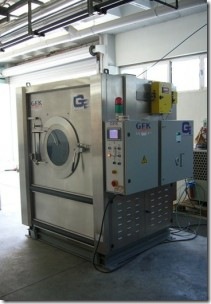
    5. Recently one of the leading innovation company Jeanologia has Launched water free bleaching process machine, which works on OZONE called G2 technology , that produces various shades of denim using air technology as opposed to water and chemicals. According to the article, Jeanologia, the owner of the G2, estimates that if every company were to adopt their machine, the amount of water saved could supply the entire country of Spain with clean drinking water for 8 months. This machines saves water & energy both and has no impact on environment. clip_image001
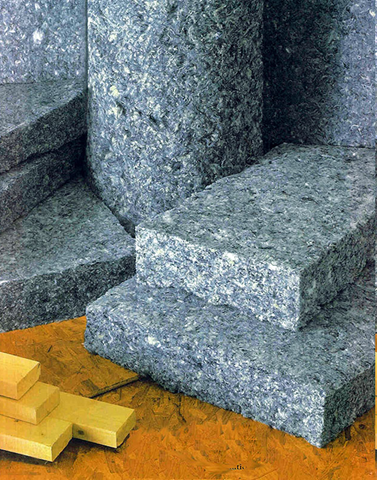
    6. Buildinggreen.com is using denim waste to create cotton insulation products
      image 

    However, these steps are far few and make hardly any impact. It is only when the governments the world over realize the impact of denim that we will see real innovations towards creating products which will help in reduction of the same.

    About the Author : 3E’s Consultants, Group of experts, focused on Denim Fashion, Providing consultancy to all Denim Garments Finishers..Contact for further info : email here