Tag: Guest Post

  • Indigo Dyeing – Problems And Potential -Part 1

    This is a highly technical article on Indigo dyeing by Harry Mercer. Read on if you are technically oriented..

    This is the first of a series of 4 articles addressing the problems and potential of Indigo dyeing. The Indigo color is the principal source of the almost magical appeal of denim. The dyeing process is unique among all methods of commercial dyeing, with the unusual design that is necessary for cotton dyeing with Indigo. Indigo has been used for thousands of years, principally on wool and silk fibers for which Indigo is more suitable The difficulties in dyeing cotton with Indigo are apparent with the numerous different shades that result, up to 15 per dye lot and also with side-center side variation. Elimination of this variation has been accomplished, but it requires a deep understanding of the unusual variables of Indigo dyeing. The 2 keys to success in manufacturing denim is firstly the dyeing, then the finishing, both of which are more complex to conduct at a high level of quality. The failure of most denim companies to overcome the challenges in denim wet-processing is the reason why they are held hostage to low profit margins.

    Part 1 of 4 MACHINERY

    Indigo dyeing is a unique process that makes denim special and distinguishes denim operations from all other types of cotton fabrics. No other method of cotton textile dyeing requires the multiple application of dye to achieve a dark color, thousands of liters of dye bath, slow production speeds and extremes of color variation and color-fastness. Indigo dyeing has been conducted without these problems. The 2 most significant sources of Indigo dyeing are the

    • control of chemical concentrations, which will be addressed in future articles, and
    • the machine itself.

    Machine factors that affect Indigo dyeing results

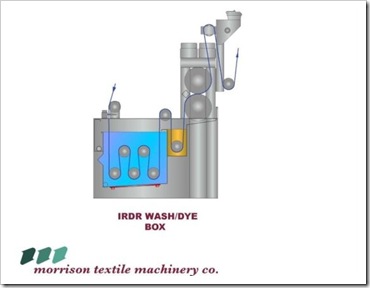
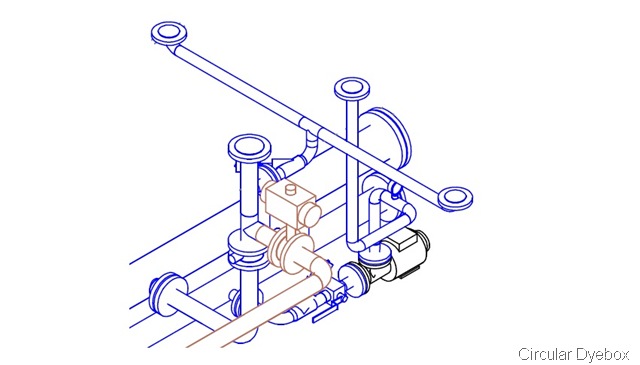
    1) Circulation system design: Indigo dye in its reduced form consists of dye particles that have been partially solubilized and exists in the form of charged colloidial particles. Colloidial dispersions will sink due to the influence of gravity and require some agitation to keep them uniformly dispersed in the dye box. If sample are collected from different parts of an Indigo dye box(top, bottom, front and back), the concentrations are usually different. The uneven distribution of dye in the box as the machine operates contributes to color variation. For many years, BASF, a leader in indigo dye for most of the 20th century, recommended that the volume of the dye box be “turned over” 2 or 3 times an hour. This means that if the box volume is 2000 liters that 4-6000 liters of flow into and out of the  dye box is needed to prevent low concentrations in part of the box and high in others. Indigo machines produced in recent decades have been furnished with pipes that are too small to deliver the right kind of flow. In terms of Reynold’s number , the flow should be slightly beyond laminar, in the low transitional range to ensure uniform disper-sion while avoiding turbulence that would destabilize the dye. Also, for uniform dispersion of Indigo, the entry line should be positioned in the yarn exit side of the box near the top, while the exit line should be at the yarn entry side near the bottom. Many Indigo machines have the dye entry line on one side and the exit line at the yarn entry, which is a cause of cross-shade variation.Circ_Dyebox

    2) Dye box design: In a previous article I discussed the effect of dye box design on the color consistency of Indigo. In most indigo machines the box design is responsible for massive losses of hydrosulfite at the surface of the dye boxes during operation which results in economic losses as well as variations in hydrosulfite concentrations in the machine which leads to color variation. The principle is known as Specific Surface Area which means that the larger the surface area of the Indigo box to the volume, the faster the hydrosulfite is lost. So, in a 2000 liter box with 2 square meters of surface area , the hydrosulfite will decompose at twice the rate of a 2000 liter box with 1 square meter of surface area. The total hydrosulfite losses in a typically larger box of a rope range will average around 15%, while in the smaller boxes of a typical sheet range the losses will be from 45-70%.

    3) Tension Control: High yarn tensions on continuous Indigo dyeing machines has 2 significant effects- the yarn loses strength and the ability of the dye to penetrate the cotton fibers is reduced. The loss in yarn strength results in higher warp breaks in weaving, meaning lower efficiency and higher weaving off-quality. The reduced penetration of Indigo into the fibers results in rubbing fastness problems and a higher per cent Indigo on weight of yarn for a specific depth of shade.

    4) Immersion time: Indigo dyeing is a form of wet-on wet processing. The yarn is normally scoured and washed before entering the dyeing section, which means that it is already wet. In order for the Indigo dye to enter the wet yarn efficiently’ a process known as “liquor exchange” is necessary in which the Indigo dye/water displaces the water already in the yarn. This is a slow process and the longer the immersion time , the more easily the dye penetrates into fibers and yarn, resulting in better colorfastness and darker color. Until the 1970’s, Indigo machines operated at speeds of 12 meters per minute through the much larger boxes of rope ranges, so the immersion time was 2-3 times longer than on modern sheet ranges. The dye penetration was complete which resulted in the darkest possible color with 3% Indigo and that would never fade.

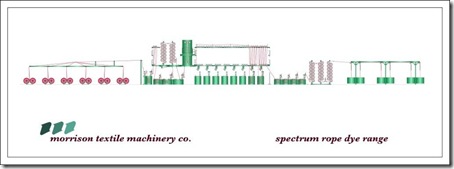
    spectrum_rope_dye_thumb

    This is a guest post by Harry Mercer. Mr. Mercer has 30 years experience in the denim business including 3 prominent U.S. denim companies. He is an expert colorist for measurement and color matching as well as textile testing and is considered to be a leading authority  for denim dyeing, finishing and fashion denim development.

  • Denim Trends From Magic Fair

    This is a guest post by Caroline . She covered the denim trends at the recently held Magic fair in USA.  She runs the blog – Nudawngtown

    The Denim Shirt !

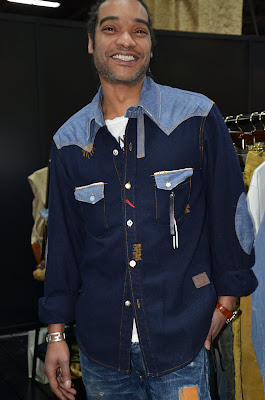
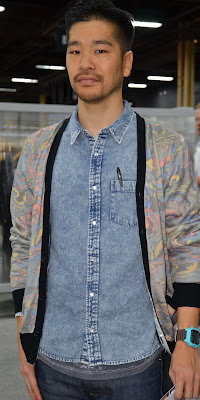
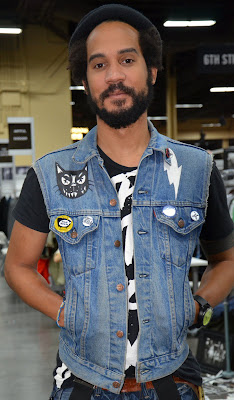
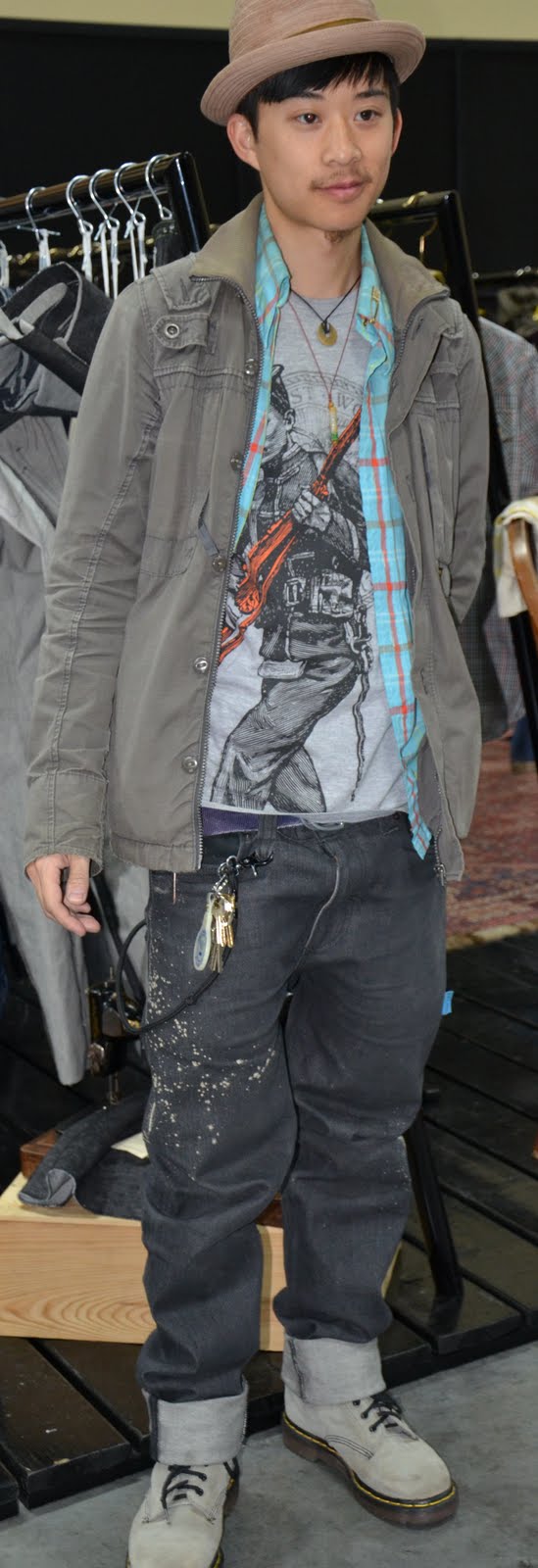
    The sturdy denim shirt showed how it’s evolving for the young men’s market. Basic denim styles to more updated versions with mixed fabrics, stitch detailing and elbow patches looked new. Worn denim on denim and layered, of course!

    The Denim Jacket

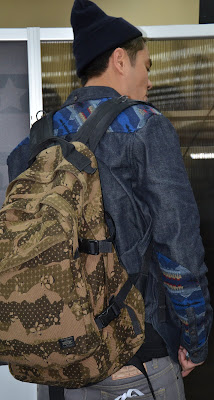
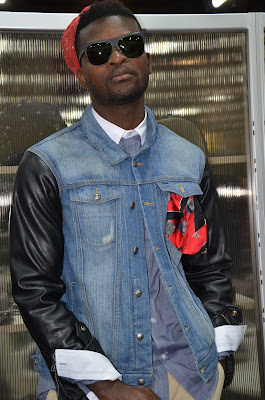
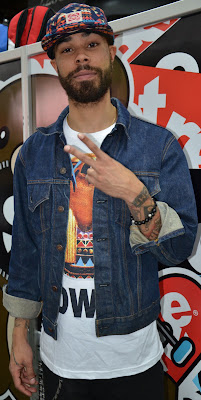
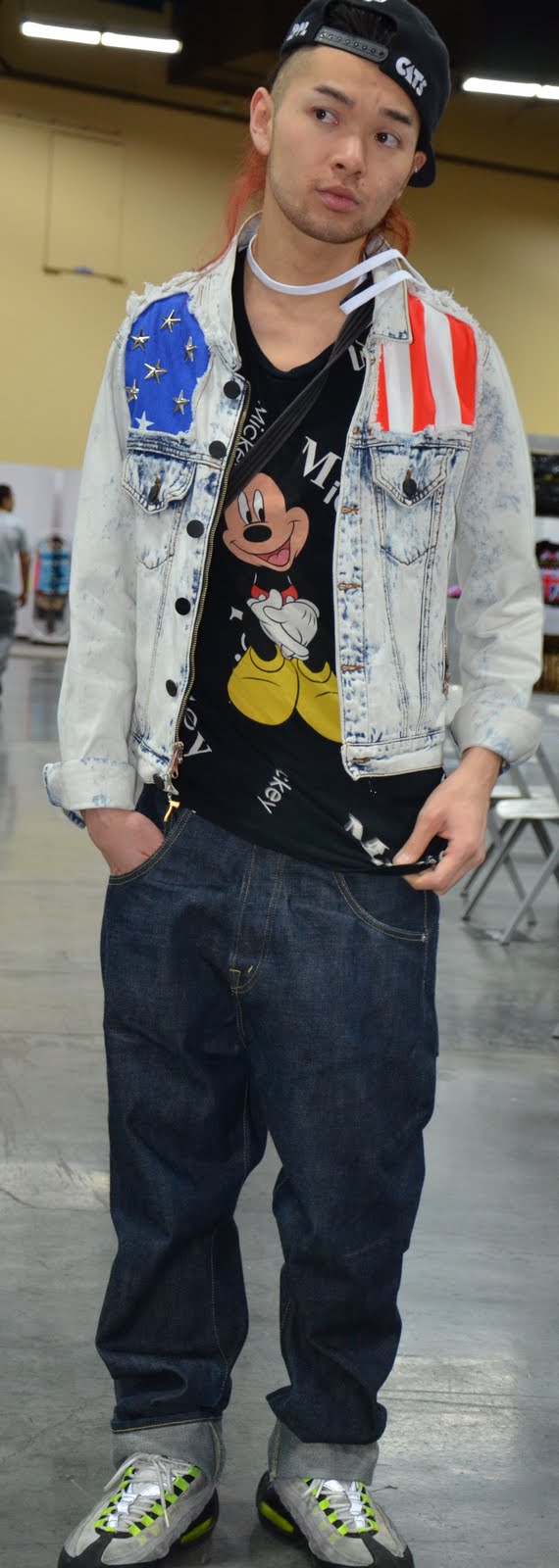
    There was a mixed message with denim jackets and vests at Magic.Popular throughout the show was the washed-down, broken-in styles that carried out an Eighties revival and grunge styling. New looks with upscale interpretations of the jacket featured leather sleeves and more refined touches like the printed silk pocket scarf. Denim jackets are personalized for authenticity, just the way this market likes it!

    denim jackets magic fairdenim jackets from magic


    denim trend jacketdenim jackets trends

    On the Loose !

    Loose tapered fits from Magic show .

    Skinny slacker and dropped crotch fits

    The skinny slacker and dropped crotch fits made the strongest fit statement across all markets. Urban, street, contemporary all had their own interpretation on how low it can go. It was the one fit that successfully crossed over into all markets making it the fit of the moment!

  • Indigo Dyeing Methods – Engineering Color, Wash Fastness And Fashion Effects

    This is a guest post by Harry Mercer. This is a very technical description – read on if you are technically oriented..

    Here are given some important dyeing processes related to indigo dyeing – specially on Rope Dyeing .

    Pre Treatment

    Pre-treatment is conducted in the 1st tank. The most common pre-treatments are :

    1.  Sulfur bottoming

    2.  Scouring with sodium hydroxide

    3.  Causticizing or Mercerizing

    Pre- Treatment : Sulphur Bottoming

    •The purpose of sulfur bottoming was to:

    • Originally to produce a dark shade on denim using less Indigo for lower costs
    • In the U.S. sulfur bottoms were dyed using a combination of blue and black dyes
    • In denim operations outside the U.S. the bottom is normally dyed with sulfur black

    Pre – Treatment : Cotton Scouring

    Cotton fibers contain impurities like waxes, pectins and minerals that will interfere with Indigo dyeing and result in streaks.-Sodium hydroxide at low concentrations (<5%) are applied at high temperatures (>85 C) in order to remove impurities and melt natural cotton waxes.

    Pre – Treatment : Causticizing

    • Causticizing generally refers to using sodium hydroxide at below Mercerizing concentrations (<18%).
    • Cold causticizing of cotton yarn results infaster Indigo dye fading from laundryabrasion, darker Indigo color with the same % of Indigo and unique washdowns.
    • Hot causticizing improves colorfastness

    Pre – Treatment : Mercerizing

    Mercerizing is the use of strong sodium hydroxide (18-30%) to swell surface fibers.

    Caution:

    • When using strong sodium hydroxide it is important to remove all of it.
    • If sodium hydroxide is on the yarn as it enters the Indigo tanks, the yarn color will change.
    • Concentrations of sodium hydroxide more than 18% are not a solution, but a gel and are difficult to remove.
    • Mercerized yarns are more ring-dyed and dye more darkly than non-Mercerized.
    • Mercerizing is normally conducted at low temperatures, but hot Mercerizing can be employed for a more abraded appearance after garment laundering.

    Indigo Dyeing

    • Indigo dyeing is unique and because of the complex chemical reactions should be correctly viewed a a form of chemical engineering.
    • Only Indigo dyeing requires multiple dye applications for a dark shade.
    • Color consistency of Indigo in recent decades has been unsatisfactory as a result of machine designs that do not apply basic principles of fluid mechanics properly and unstable dye mixes.
    • Commonly, a single dye lot will have between 8 and 15 visually different shades from beginning to end and also have shade differences from one side to the other.

    Indigo Dyeing Methods

    Spectrum_single_thread

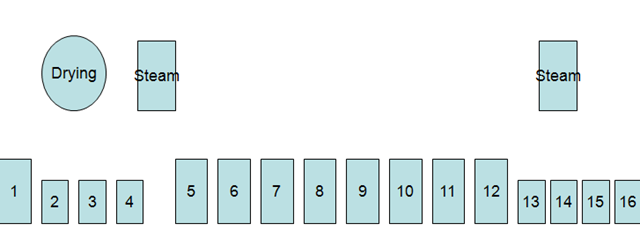
    • Indigo dyeing follows the same basic steps regardless of machine design.
    • Scour or dye bottoming in a heated tank,
    • washing tanks, dyeing(1-20),a heated tank for topping (optional) and wash tanks.
    • In different areas of the world,the same color is produced using 1.8, 2.0 or 4% Indigo depending on dyeing method.


    indigo dyeing methods


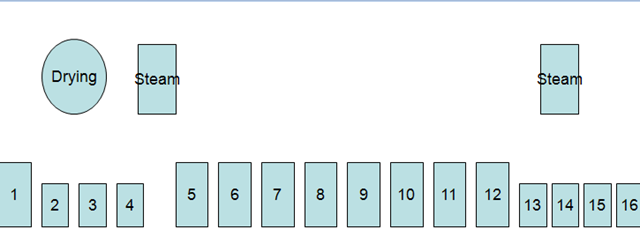
    Dark Indigo(1.8%)

    1. 15% caustic cold
    2.Wash 60°C
    3.Wash 60°C
    4. Wash cold
    Drying cylinders hot
    Steamer cold
    Boxes 5-12 Indigo
    Steamer cold
    13.Wash 50°C
    14. Wash 50°C
    15. Wash 50°C
    16.Wash 50°C /Softener

    Stock Mix 80 g/l Indigo Pure 100 g/l 50% Caustic 70 g/l Hydro powder.

    Chemical Feed 120 g/l 50% caustic 60g/l Hydro powder Feed 1.4 liters per minute

    Dark Indigo Color

    • This was an example of a typical method used in the U.S. for a very dark shade.
    • In order to produce the same depth of color as 1.2% in the U.S., in Latin America 2.0% is used and in Asia from 2.4 to 2.8%.
    • The U.S. method results in more surface (ring dyeing), which loses color faster.

    Darkest Indigo Shades

    • Very dark shades of Indigo are in demand currently around the world.
    • Many companies use 4% or more Indigo on weight of yarn, which is expensive.
    • 2% Indigo will produce the same depth if low levels of caustic are used(0-0.4%)
    • For dark Indigo that does not lose color 2% applied normally, with an Indigo bottom.

    Light Indigo Shades

    • Dyeing Indigo in light shades results in a sky-blue impossible with any other dye.
    • This is useful for shirting fabrics that are  not strong enough for stonewashing,  bleaching or cellulase treaments.
    • Special procedures are necessary in order to avoid colorfastness problems.

    indigo dye baths


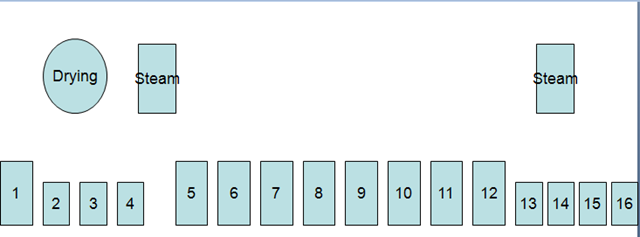
    Light Indigo 0.4%

    1. 4% caustic 90°C
    2.Wash 60°C
    3.Wash 60°C
    4. Wash 60°C
    Bypass drying cylinders
    Bypass steamer
    Close off boxes 5-8
    Boxes 9-12 Indigo
    13. Wash 50°C
    14. Wash 50°C
    15. Wash 50°C
    16.Wash 50°C/softener

    Control Of Sulphur Bottoming

    • The typical methods used for dyeing sulfur bottoms result in denim shade differences.
    • When applied as light colors, sulfur dyes should be dyed at temperatures <60 C,
    • If dextrin reducing agents are used, which require 85 C, there will be variation.
    • Sulfur bottoms are an exception to the normal pH for sulfurs(11), requiring 12.

    indigo machine

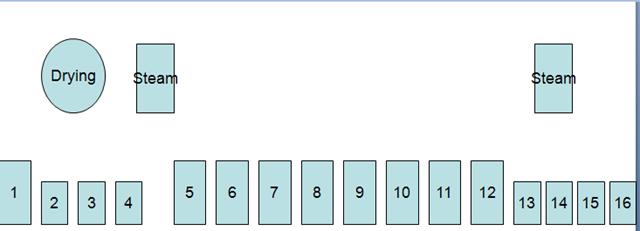
    Sulfur Bottom

    1. Pad sulfur(cold)
    Steamer hot
    2.Wash cold
    3.Wash 50°C
    4.Wash 50°C
    Boxes 5-10 Indigo
    11. Indigo or wash 50°C
    12. Indigo or wash 50°C
    Bypass steamer
    13. Wash 50°C
    14. Wash 50°C
    15. Wash 50°C
    16.Wash 50°C or softener

    Sulphur Topping

    • In topping the sulfur dye is applied after the Indigo dyeing.
    • Sulfur topping permits much darker color than a sulfur bottom, but is duller.
    • Sulfur topping colors include black, blue-black, yellow brown and green.
    • Sulfur toppings are used to produce slub appearances in normal yarn.

    indigo dyeing machine

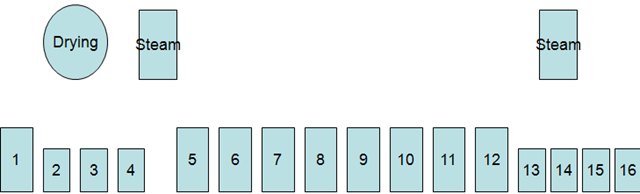
    Sulfur Top

    1. Pre-wet 2% caustic 90°C
    2.Wash 60°C
    3.Wash 60°C
    4. Wash cold
    By pass drying cylinders
    Bypass steamer
    Boxes 5-10 Indigo
    11. Wash 60°C
    12. Pad sulfur topping
    Steamer hot
    13. Wash cold
    14. Wash 50°C
    15. Wash 50°C
    16.Wash 50°C/Softener

    Reactive Dyes in Indigo Dyeing

    • Reactive dyes can be applied on specially-Designed Indigo machines.
    • Small 150 liter boxes are inserted inside the larger dye tanks for Indigo and sulfur.
    • Steamers, drying units near the front of the machine and high-quality dye padders are required for quality dyeing.

    image 


    Pad-Dry Chempad- Steam Reactives

    1. Pre-scour wetter plus chelate 90°C
    2.Wash 50°C
    3. Pad monochlortriazine dye cold, neutral pH
    Drying cylinders hot
    Pad caustic in salt brine
    Steamer hot
    Bypass boxes 5-10
    11. Soap 90°C
    12. Soap 90°C
    Steamer hot
    13. Wash 60°C
    14. Wash 60°C
    15. Wash cold
    16.Wash cold/softener


    Pad Steam Reactive Topping

    1. Pre-wet 10% caustic 90°C
    2.Wash 60°C
    3.Wash 60°C
    4. Wash cold
    By pass drying cylinders
    Bypass steamer
    Boxes 5-10 Indigo
    11. Wash 60°C
    12. Pad Dichorotriazinyl cold with bicarbonate
    Steamer hot
    13. Wash cold
    14. Wash 50°C
    15. Wash 50°C
    16. Wash 50°C / softener

    Vat Dyeing

    • Indigo and sulfurs are types of vat dyes.
    • In non-denim cotton dyeing, another class of vats, anthaquinoids are used to produce a full range of colors that are colorfast.
    • Some of these vat dyes can be blended with Indigo or applied using standard procedures on specially designed machines.

     indigo dyeing machine

    Pad-Dry Chempad Vats

    1. Pre-wet 4% caustic 90°C
    2.Wash 60°C
    3. Pad vat dye cold
    Drying cylinders hot
    4. Chempad caustic/hydro cold
    Steamer hot
    Bypass boxes 5-10
    11. Wash 60°C
    12. Oxidize
    13. Soap with anti-oxidant
    Steamer hot
    14. Wash 50°C
    15. Wash 50°C
    16. Wash 50°C / softener


    <><><><></> </></></>

    Pad-Dry Chempad Steam Vat Bottom

    1. Pre-wet 4% caustic 90°C
    2. Wash 60°
    3. Pad vat dye cold
    Drying cylinders hot
    4. Chem-pad caustic/hydro cold
    Steamer hot
    Boxes 5-10 Indigo
    11. Wash 60°C
    12. Soap 90°C
    Steamer hot
    13. Wash cold
    14. Wash 50°C
    15. Wash 50°C
    16. Wash 50°C

     2-1_indigo_washer

    Control Of Indigo Dyeing

    The Indigo dyeing process begins with a concentrated mixture of Indigo, sodium hydroxide and reducing agent.  This concentrated mixture (70-90 g/L Indigo) is delivered by pipes to the Indigo dye tanks where the dye concentration is reduced to 1-4 g/L for dyeing the cotton.

    Dye Mixing Procedures

    • Many denim companies find it difficult to control original and washed Indigo shades.
    • The primary source of color differences is the instability and inconsistency of Indigo mixtures.
    • As the concentration of reducing agent going to the dye machine changes, the color changes.

    Uniform Indigo Mixtures

    • For consistent Indigo dyeing, the mixture must have consistent concentrations of Indigo, sodium hydroxide and reducer from the top of the mixture to the bottom.
    • The main cause of inconsistent Indigo mixtures relates to concentration levels.
    • Instability of Indigo mixtures results from the decomposition of sodium hydrosulfite.

    Consistency of Concentration

    • There is a limit to the amount of any chemical that can be dissolved in water.
    • When the limit of solubility of any chemical •In water is exceeded, precipitation occurs.
    • Indigo mixes should not have more than 20% solids. At higher levels, chemicals and dye sink to the bottom of the tank.

    Improving Dyeing Consistency

    • When reducing agent sinks to the bottom of the tank, there is a higher concentration  than in the top of the tank. As the dye enters the machine, the higher concentration results in a lighter, greenercolor and as the dye from the top of the tank enters the machine, the color is darker and redder.

    Dye Control In Feeding  Tank

    • Stirring the tank for 2 minutes will improve dye uniformity between top and bottom.
    • To avoid settling of dye and chemicals the total solids should not exceed 20%.
    • The “glass plate” test can be used to test concentrations of hydrosulfite in the top and bottom. If dye requires 50 seconds to oxidize, there is about 50 g/L of reducer.

    Buffers In Indigo Dyeing

    • Alkaline buffers have been used to make very dark shades of Indigo with as little as 1% dye, more ring-dyed, faster fading.
    • Reductive buffers can eliminate color differences in Indigo-dyed denims and can reduce hydrosulfite use by 30-50%.

    Cold Dyeing Methods

    • Sulfur colors can be dyed at low temperatures with specific buffers which produce more colorfast dyeings with no color variation.
    • Cold dyeing methods have been used to blend Indigo and sulfurs, eliminating the need for separate bottoming and topping, while eliminating shade changes in both.

    Special Dyeing Techniques

    • On rope ranges, space dyeing techniques can be simple and produce a wide range of special effects in denim.
    • By dyeing part of the yarns with a sulfur top and leaving the rest un-dyed, many companies produce a slub appearance with regular yarns.
    • Blending ring yarns of different sizes also produces a slub appearance.

    imageThis is a guest post by Harry Mercer. Mr. Mercer has 30 years experience in the denim business including 3 prominent U.S. denim companies. He is an expert colorist for measurement and color matching as well as textile testing.

  • Cyclic Trends In Denim Jeans

    This is a guest post by Sourabh Sharma. He writes about the cyclicality of trends in denim fits in this article.
    Jeans are a second skin to many, including myself. For boys and girls, men and women, and dudes and babes, jeans are the epitome of style, comfort, and are often referred to as timeless. However, the varying ‘fit’ combinations of waist rises, leg openings and ankle openings across the several decades since jeans were first made popular have always evoked mixed feelings. On the one hand I am always fascinated, and on the other I frequently cringe looking at the styles of yore (especially on me, in unforgotten photo albums, in the days of glossy photographs kept safely in withering albums). It is a natural phenomenon to want to conceal adolescent fads that seem almost inexplicable today. I am a Generation Y (aka millennial) guy, so I have lived through the straight-leg, boot-cut, and have arrived at the skinny, with waist rises dropping throughout the time period. Along with my passion for collecting and observing jeans and denim styles worldwide, I am curious to see how these styles have evolved over time, in terms of ‘fit’.

    Not PhD equivalent research by any means, but enough to get a hold of the way jeans trends have become almost cyclical. Thankfully, the ‘research’ is made possible by the lucrative trend-spotting already conducted by curious Georges like myself, by speaking with numerous first hand designer sources and acquaintances, and by simply having a fashionable set of parents who have lived through many more denim variations than I have my slightly-over-two-decades span of life. I was curious to learn primarily about the evolution of the ‘fit’ element of jeans, not so much the embellishments, garnishings you might say, and distress factor, which can all combine nicely into an investigation of its own.

    The history of denim is fascinating, right from its unfashionable roots of the 1500s, to the patenting of its rivets in 1873 (to think these actually have  a purpose!), to the various taboos and associations of jeans with cultural elements. I have looked primarily at the last six decades, as these have been the years that have escalated the demand and popularity of jeans, and have had the most impact on today’s jeans culture. Moreover, for practical purposes, these are the decades in which I still have mortal sources to recount their experiences, who are always the best and wisest resource (with the most terrific of personalities and storytelling abilities, too).

    ‘Knowns’ regarding Trends in Denim Fashion

    As is the case with any experiment, I have laid out a few ‘knowns’ in my background clause. The first of these ‘knowns’ is that this is a unisexual study, looking at denim influences amongst the trendy, psychographically youthful, metropolitan and internationally well traveled crowd (this is my target market, or my sample space, in marketing and statistical terms, respectively).  Despite having not lived around for many years, I have definitely kept my eyes on trends, and have noticed that although men’s fashion may be slightly behind women’s fashion, it does follow the same path, especially when it comes to jeans. So, I feel that I can rightfully assume no gender barriers to denim fashion over time. Secondly, having lived and traveled in the Americas, Europe, Asias and Africas of the world, the second ‘known’ is that fashion moves westwards, an ironic twist to the fact that Easterners often want to behave in an unorthodox of Western way. I find Asia to be on top of the trend tier, with the most creative ideas for any outfits, especially jeans. Europe tends to also lead with its prowess in fashion shows and the elite aura that it exudes Northern America, for its business savvy mindset and lack of work life balance, seems to lag behind in accepting trends as they surface. Many women in my life have complained about this fact; for if they are American, they find themselves looking a little plain in Europe and especially in Asia, whereas if they are European or Asian, they see themselves looking a little too glam, or at least overdressed, in the Americas. Add this time delay to the natural slowness of men in accepting cultural trends (my first ‘known’), and you find men like myself buying outfits in Asia in 2005 and wearing them in the US in 2010 when they are just becoming a rage. I guess David Zinzenko’s detailed fitness and nutrition tips for maintaining body sizes really do come in handy to still enable one to fit into the styles over the years! (yes, guys do care and do need to work out too).

    Variables of Jeans ‘Fit’

    Returning to my ‘research’, if one may call it that, I have broken jeans into three identifiable parts that characterize the evolution of the ‘fit’ over time:

    Waist rise: Defined as the length measurement between the crotch and waist, it is interesting to see the variations in rise from sitting at the hips and barely there to tummy tucking and belly covering.

    Leg openings: This includes everything from below the butt-area to halfway down the calf, so basically what covers the knee area and its surroundings. The variations range from balloon-wide opening to the unbreathably clingy.

    Ankle openings: This mainly focuses on at the lower leg, and more specifically around the ankle area, ranging from shoe-tripping flared to choking skinny.

    Although I have sources and data on exact centimeters and inches that the rise is, or the diameter of the ankle, etcetera, I will leave the statistical analysis for a private study. For the purposes of trend spotting in a more perceptual and diagrammatic way, I have instead come up with hypothetical but relatively comprehensive extreme ranges for each of the three jeans arenas, and have classified trends in the last six decades accordingly, with the middle/median line symbolizing the ‘standard’ acceptable norm.  These can be noticed as follows.

    Evidently, what my findings show are the definite cyclicality in denim jeans trends over the years, along with a divergence of simultaneously existing trends in the past few years. This is probably in virtue of rising populations, the wholehearted acceptance of denim jeans as a convenient must-have, the inevitably diversifying tastes, and the increasing resources for multiple designs.

    Combining the trends yields an interesting pattern that correlates with historical and cultural influences, indicating how denim jeans are indeed a second skin to the populations of the world. The evolving trend is not merely created, but seems to be more a reflection of the perception of the society and its culture at various points in time. So, an interesting insight will arise from a more historical and perceptual element of analyzing denim trends.

    On trying to better grasp the evolution and cyclical trends of the ‘fit’ of jeans, clearly identified above ,I have chosen to proceed as follows. I have split the decades into culturally influential time periods, aptly defined as eras, which do not necessarily correlate with the decade spillovers. This is exhibited as follows. Bear in mind that the collective trend diagram is for visual purposes; the vertical axis is slightly skewed as it is conceptual, not numerical, which is done for simplicity (i.e. smaller in terms of rise indicates extremes lower than the average 30 cm/12 inch rise in denim jeans, as low as sometimes 2.5 cm / 1 inch; while large in terms of leg openings could be as high as 20 or 26 inches for wide leg jeans; etc. Nevertheless, the trends are readily apparent) .

    The last few years have been the most interesting, exhibiting not only the prominent trend is made popular by the millenials and fashionistas, but how an almost opposite trend lurks forward and prevails. Perhaps this is due to the fact that in these years, jeans have gotten smaller, lower, skinnier and overall require a more fit lifestyle and body, contrary to increasing obesity rates in many nations. The alternative trend (in a lighter shade in the figures) is perhaps in the mindsets of those seeking solace, comfort, alternative fashion, or are perhaps just a large chunk of late adapters.

    Era A: Star Stuck Jeans

    The likes of Marilyn Monroe left guys lusting with modestly slim jeans, whilst Elvis rocked the world with the dude’s version, as did James Dean, making it unisex at a time when gender fashion separation was quite prominent. The waist rise wasn’t given as much dominance, and the classic fit was at the waist, as it supposedly should be. At this point in time, jeans were not a fashionable item, but just a casual addition to a wardrobe, akin to its roots of being used for comfort during laborious work.

    Era B: Party Time Jeans

    The Beatles proceeded with the slim jeans trend, but the introduction of what our parents and grandparents call ‘hip hugger‘ jeans were a rage, popularized by rock icons, and were almost a precursor to the present day low rise trend. In retrospect, clearly this was the start of a rebellious and party centric trend that would eventually push the envelope in years to come, and bring jeans out of the casual closet and into the fashionable one. Interestingly, the newly positioned denim jeans were actually harder to get!

    Era C: Hippie Disco Jeans

    In this era, the disco scene became popular as the hippie culture took over the entire world, which, contrary to the tail of fashion following, wanted to be more ‘Western’.  ‘Hip huggers’ turned into low waist jeans, with wider and wider flares being christened as visually accurate ‘bell bottoms’. As is the case with any fashion fad, diversification is inevitable to occur, and the likes of elephant bell jeans also popped up, with flares so large they covered the shoes in entirety! Talk about tripping hazards.

    Era D: Breathable and Workable Jeans

    With the disco backlash, a derogatory term to something so culturally influential, flared bottoms reached an end as straighter jeans were demanded, in a modestly slim fit, thus marking a comeback of narrower ankles. However, baggy jeans came back in style with the hip hop and rap culture. These were also times of heightened global warming awareness, so perhaps people felt the need to breathe in their jeans. Waistlines also crept back up due to the more ‘straight leg’ feel (which I personally think is the least flattering of all fits). For practical purposes, including a rise in women joining the workforce, high waists and straight legs were in style, with baggy ruling the youthful boy’s nest. Designers jumped on the band wagon to capitalize on the increasingly popular goldmine of fashion.

    Era E: Provocative Jeans

    I call this era provocative since this marks a prominent rise in underwear exposition. If jeans were a fad on the framework of products, then this was the time when the low respect came into play, as jeans lost their fashionable and must-have position to other fabrics. Yet, a king never lies low for long, and the low rise ‘bumster’ jeans made a comeback, thus marking a repetition point in this cycle, as a successor to the earlier ‘hip hugger’. The credit belongs to designer Alexander McQueen who changed the face, or the derriere, of denim jeans. Initially these were paired with baggy jeans and made popular by the oddly popular concept of ‘sagging’, thus revealing men’s boxers and underwear (giving these a reason to become a raging trend of their own, for both men and women). Gradually, the jeans themselves began to slim down, too, particularly for women. The low rise was still a taboo, and restricted amongst the boldest of populations: the uber fashionable and extremely elite, or simply followers of Kate Moss’s strategic first move at Alexander McQueen’s show.

    Era F: The Joyous Enjoyous Jeans

    This is when laws got liberal, and the world became more united as if saluting entering a new century together. This was indeed the case, as celebrations became viral with joy, worldwide were shared via emerging social media forms and are still recalled today. The feelings seemed to have reciprocated on the world’s most loved attire. The low rise jeans became more acceptable and less of a taboo, thanks to the acceptance of starry characters like Britney Spears.  The next comeback, and thus a mark of cyclicality once again, was the widening ankles. Fashion enthusiasts thankfully glossed over the term ‘bell bottom’ replaced it with flared bottoms and the popularly called ‘boot cut jeans‘, thus lending to a visual image of being less dramatic than their bell bottom parent. The difference was the slimness of the fit at the leg and knee. Freedom and breathability was thus the main association with denim of this era.

    Era G: The Split-Personality Jeans

    With the low rise style at its peak, the skinny, drainpipe style of jeans returned, marking a repeat in this element of the cycle too. This was to the critiqued dismay of populations worldwide, as it went beyond the slimness of the 80s and into a skin clinging skinny style, with the notion that its wearer had to fall into its size reference.

    The strange thing about the mid 2000s onwards has been the dual nature of fashion. Whilst it is apparent that trends are leaning towards lower, skinnier, slimmer, it is almost as if the bulk of the population is starting to feel discomforted by the aspirational aspect, and is clinging onto what we may call fashion of the yore. This explains why boot cut and moderately flared jeans have not disappearing entirely. High rise jeans, such as the Not Your Daughter’s Jeans brand, are also in style for their tummy tucking marketing to trendy baby boomer women. Men of hip cities, and particularly those of non-metropolitan areas, are completely averse to low rise and skinny fit, explaining their lack of adaption to the new styles of denim. The point was emphasized by Dockers’ sexist advertisement which blatantly mocked the skinny jeans trend for men, albeit its archaic undertones probably encouraged a higher trial rate!

    Remarks about Cyclicality

    The most apparent finding here is the cyclicality of the trends, and how the three main fit elements, namely waist, leg and ankle, always recombine to form the next trend. The cycles of all three do not necessarily correlate, else things would be too predictable.

    The low rise trend of Period B made a comeback in Periods F and G.

    The slim leg trend of Period C made a comeback in Period G.

    The skinny ankle of Period B made a quick comeback in Period D, and a more prominent one in Period G.

    Jeans trends seem to return every 3 to 4 of my defined eras. So, the upcoming fashions may not be too difficult to foresee (albeit trends like diversification, along with the importance of fabric type, embellishments, etc., can cause significant differentiation; these require yet another insightful exploration!).

    What’s Next?
    Naturally one may wish to anticipate what is next in terms of ‘fit’, obviously without ignoring the possibility of diversifying the current ‘fit’ elements via garnishing jeans with embellishments, destroying them via various strategic techniques, etc.  The unveiled trends give prominent hints that the duality will continue, at least for some time, despite Kate Moss’s influential prowess in sporting the high rise jean, marking an end to the popular and beloved (personal votes here, too) low rise. Ironically, she modeled Alexander McQueen’s ‘bumster’ jeans too, so things indeed do come into a complete cycle. So, here is some basic yet strategic advice for both consumers and designers.

    As a consumer, one must invest in both flared, lose and high waist denim, alongside low slung skinny jeans. Both are likely to remain for a while, but the more extreme a trend gets, the less it is lauded in the long run, and the more repulsive it looks in retrospect. The indication hear is of the way we laugh at bell bottoms, or laugh at whale tails. This does not mean that people should look identical, like packs of cards; individuality should and always will be praised, and one should not shy away from displaying a quirky or crazed streak. But with few likes, limited closet space and few resources and options at hand, invest smartly, as you would in stocks.

    As a designer, the waters turn murkier. A designer must first look to see what their designs are relaying: comfort or fashion, or the tiptoe friendly bridge joining both. Also, one must check to see who the target market is: those following trends to the tee, or the late adapters of the cycle. Bearing these elements in mind, designers should go for either the risky niche jeans strategy for the fashionable and conscious, or the universally embracive denim for the evergreen comfort huggers. Again, this depends on their positioning, appetite for risk and differentiation, and forward thinking strategy.

    At the end of the day, nothing is predictable, but seeking trends in the most random aspects of the past is a rewarding exercise, particularly if it indicates that some things will remain around forever… like jeans!

    About Sourabh:

    sourabhSourabh Sharma is  professionally a marketer, a strategist and an engineer, has worked in corporate arenas for cosmetics and consumer products, but has flexibly crossed paths with the fashion arena, both via work and through perpetual passion. He has worked with brands that sponsor fashion weeks worldwide, yet the inclination towards fashion has been more inevitable. With denim being his favorite conversation piece, it is only natural that he chooses to investigate denim throughout the tides of time, cutting through barriers of trends, culture and creativity. He runs the blog – Food, Fashion and Frameworks

  • Denim Finishing – Fabric Processing Principles For Higher Quality And Profits

    finishing tips

    This is a guest post by Harry Mercer. This is a part of the  presentation that he made in the denim seminar held recently at Mexico  . It gives various tips about getting better quality denim fabrics by taking care of parameters at finishing stage.

    Why Is Finishing Quality Critical?

    Denim finishing is critical to profits in that customers who pay the highest prices are very demanding with regard to shrinkage differences between and within fabric rolls. These customers will accept fabric that is with 0-4% shrinkage, but with no more than 0.5% difference in one shipment.

    Challenges In Denim Fabric Finishing

    • Control of shrinkage between fabric rolls and within rolls is more difficult than with other fabrics.
    • The heavy weight, twill denim construction is dimensionally unstable after weaving.
    • Denim has high shrinkage after weaving, which requires very high compression(12-15%) at Sanforizing which can be difficult .

    Why Fabric Shrinks ?

    • Tension that is applied to cotton yarns in weaving results in yarns being stretched beyond their “natural length”.
    • When the denim garment is washed, water and agitation relax the yarns and they are returned to their minimal length.
    • Variations in tension at weaving produce variations in fabric shrinkage.

    Denim Finishing Process

    • In basic denim finishing, fabric arrives from weaving directly, without de-sizing, and is brushed to remove contamination, singed with flame to make the fabric smoother by reducing hairiness, padded with a simple recipe, passed over a pair of skew rolls to reduce fabric torque which causes skew movement and then dried.

    Finishing Recipes

    The basic objectives for a denim recipe are:

    • Provide lubrication for quality Sanforizing – Improve stability in garment cutting by the application of a stiffening agent.
    • Including a sewing lubricant to save the customer money with sewing needles and to reduce damage from needle burn.
    1. Sanforizing Lubricant

    • The Sanforizer mechanically pushes weft yarns together, which reduces shrinkage.
    • This mechanical shrinkage requires a high degree of friction between the rubber belt  and the denim.
    • A Sanforizing lubricant is necessary for the shrinkage to be consistent.

    2.   Sewing Lubricants

    • During the garment forming, the needles used for sewing become hot because of friction.
    • This heat damages the needle and can also produce holes in the garments.
    • A sewing lubricant reduces needle costs and results in better garment quality.
    • The garment cutting is also improved.

    Stiffening Agents

    • Also known as “hand-builders”, these are necessary to stabilize the fabric during fabric cutting to avoid “snapback”.
    • Snapback occurs when the weft yarns are stretched during cutting, then as the cutting blade moves up, the garment panel shrinks to a width smaller than planned, which produces a distorted garment.

    Finishing Chemicals

    • A non-ionic, fatty-acid softener based on stearic acid produces the best Sanforizing (8 grams of 100% softener per kilogram of fabric)
    • Polyethylene-based sewing lubricants are best. ( 2 grams of 100% per kilogram)
    • 40 or 90 fluidity tapioca starch is the best hand-builder used for denim.

    Finishing Procedure

    • Basic denim finishing chemicals should provide improved fabric surface effects for Sanforizing, cutting and sewing.
    • The finishing chemicals should not penetrate into the fabric, so no heat is required and no wetting agent is necessary.
    • For uniformity of chemical application, a wet pick-up of at least 70% should be used.

    Sanforizing Denim Fabrics

    There are 4 variables that are critical for shrinkage, fabric defects and elongation:

    1. Temperature

    2. Moisture

    3. Quantity of Pressure

    4. Time of Pressure

    1.Critical Temperature

    There are 3 critical temperatures:

    1. The temperature of the steam-heated cylinder which heats the rubber-belt.

    • If this temperature is too high or too low, the surface of the rubber-belt is not able to provide consistent compression.
    • Generally, cotton fabrics are processed easily between 105 and 125 degrees C.
    • Heavyweight denims which arrive from weaving with 12-15% potential shrinkage require about 140 degrees.

    2. Temperature of the Palmer Unit for drying the denim.

    3. Temperature of the fabric as it enters the rubber-belt.

    Fabric that is both hot and moist is easier to compress.

    • For heavyweight denim, 14% moisture and 80 degrees centrigrade provides adequate fabric elasticity.
    • For the best control, fabric moisture should be controlled by spray and cooling water at the Sanforizer, followed by heating before the rubber belt.

    2.Sanforizing Moisture Control

    • A general rule is that for each oz/square yard, 1% moisture should be applied. For example, for a 10 ounce fabric, 10% moisture.
    • Most denim finishing is now on the “integrated range. Moisture is controlled by the drying cylinders on the finishing machine, then fabric passes directly to the Sanforizer.
    • A final moisture of 4-5% is necessary in order to stabilize the fabric compression.
    • If the moisture is higher, the fabric will elongate which increases final shrinkage.
    • If the moisture is lower, the denim will elongate after absorbing moisture from the air.
    • Sanforizers require consistent steam pressure and should be located close to the steam source.

    Separate Sanforizing

    • In separate Sanforizing, the denim is dried to about 6% moisture by the dyeing cylinders on the finishing range.
    • Then the fabric is transported to the Sanforizer where the correct amount of moisture is applied by water sprays and by the cooling water for the rubber belt.
    • This system usually provides better control.

    3.Pressure (% of Compression )

    • Sanforizing is a form of “mechanical shrinkage”.
    • If a fabric has 12% shrinkage with 20 weft yarns/cm and 3% at 22/cm, then 10% compression by the rubber belt will result in the weft being pushed together which increases the weft yarns from 20-22/cm and reduces the shrinkage by 10 points.

    4.Time Of Compression

    • Denim has a very high % of shrinkage as it arrives from weaving up to 15%.
    • The heat, moisture and time of pressure determine the control of shrinkage. – The time of pressure is determined by the speed of Sanforizing.
    • Heavy denims should not be Sanforized at more than 35 meters/min. Slower speeds result in better control.

    Conclusion

    • Denim finishing is the most difficult of all apparel fabrics.
    • Control of fabric quality requires a higher level of control which begins at weaving
    • The moisture and temperature must be monitored and controlled at each step.
    • Sanforizing is more complicated than it appears and requires the most attention.

    For those who are interested in having deeper knowledge on denim finishing could perhaps check a new Denim Finishing Manual from Bozetto  called “Bozzetto Denim Finishing Handbook" – which provides indepth information and tips on denim finishing. Harry Mercer has been an important contributory to this manual .  This manual can be requested from Mr. Giacomo Mussetti  at giacomo.mussetti@bozzetto.it

    This is a guest post by Harry Mercer. Mr. Mercer has 30 years experience in the denim business including 3 prominent U.S. denim companies. He is an expert colorist for measurement and color matching as well as textile testing.

  • Denim Pollution – Solutions To Sulphur Dyeing Wastes

    denim dyeing wastes

                            This is a guest post by Harry Mercer
    The problem of treating wastewater from denim dye waste is significant in many developing countries. Either the costs of treating these wastes affects profit margins or the waste goes untreated and is discharged directly into rivers.

    The most serious pollution problem results from the use of sulfur dyes in denim. Once the sulfur dye is applied the cotton is squeezed and washed. Typically, 50% or more of the sulfur dyes are washed off, producing water contamination that is difficult to remove from water.

    Techniques have been developed to greatly reduce and even eliminate sulfur dyes as a source of textile pollution:

    • Unlike most types of cotton dyes, sulfur dyes can be recovered and re-used. The contaminated water from sulfur dyeing usually contains enough dye and chemicals to produce lighter shades without additions of dye or chemicals. For example, the wash-water from sulfur-black dyeing can be concentrated through evaporation, filtration or it can be re-used by adding enough dye and chemicals to produce the standard shade. There are methods for titrating sulfur dye with copper sulfate, reducing agents can be added to bring the ORP to the correct level and the alkali can be titrated with a 2-endpoint titration with HCl and formaldehyde. Using these techniques, the sulfur dye can be recycled which saves money and ends the pollution. It should be noted that sulfur dyes precipitated with an acrylic type flocculant cannot be re-used.
    • I have developed methods for sulfur dyeing that fix the dye completely, so that none is lost in washing, leaving the wash water completely clear. Depending on the quality of the dye,  which reducing agents are employed and the pH of dyeing, various inexpensive buffers can be employed that will fix 100% of the dye which eliminates the colored waste and also reduces the amount of dye needed by a sulfur black shade by 50% or more.These  methods were developed over a 20 year period and have employed them  in Brazil, Ecuador, Indonesia,  Phillipines and Thailand.
    • There are also cold-dyeing methods that also eliminate the dye waste 100%, saves energy and has colorfastness approaching that of a vat black.
    • Reducing agents are a major source of Chemical Oxygen Demand. Sodium dithionite sold commercially as sodium hydrosulfite has a COD of 0.22 kilograms per kilogram of 100% hydrosulfite. Since it is normally produced using zinc metal as a catalyst, there is also  some presence of heavy metal contamination. There are non-polluting substitutes that can be used with many Indigo-dyeing methods. Sodium sulfide-type reducers are commonly used, however they can be easily replaced for hot-dyeing methods with reducing sugars which includes sugar, dextrins (corn-sugar) and molasses. These have been offered by chemical companies for decades and basically break down under conditions of high temperature and high pH (11) into hydrogen and alcohol, which both escape into the air.
    • Sulfur blacks do not require chemical oxidation, in fact peroxide will reduce the colorfastness of sulfur blacks and acid-oxidation will weaken the yarn. – After applying sulfur black, it should be allowed to cool in air which takes the dye out of reduction and allows oxidation with atmospheric oxygen. The initial washing should be  cold in order to avoid washing off any color and also to allow further oxidize with  oxygen-rich cold water. The final wash should be warm, about 60 degrees, which will  remove alkalies and residual reducing agents. If noticeable color is removed, the dyeing procedure requires adjustment.


    imageThis is a guest post by Harry Mercer. Mr. Mercer has 30 years experience in the denim business including 3 prominent U.S. denim companies.He is an expert colorist for measurement and color matching as well as textile testing.

  • Denim Product Development – An Analysis

    This is a guest post by Harry Mercer

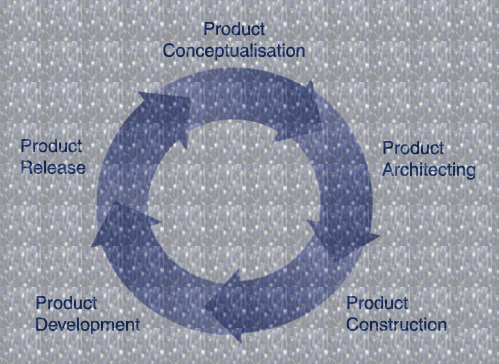
    denim product development Product development is especially important in the denim market because of demands for novelty and performance, both on the fabric production side and from the garment processing side.

    There are 2 aspects to product development of fabrics. Product development is usually thought of as creating a product for the market with significantly different colors, appearances (flat, slubs), hands (soft, raspy) or performance (stretch, permanent press).

    The other aspect of product development, equally important, is product improvement, which includes reducing defects, improving performance (shrinkage, stretch, reducing costs).

    The leading denim companies in the U.S. conducted extensive research into solving the mysteries of denim production, especially in dyeing and finishing, Outside the U.S., there are some denim companies in countries like Italy, Turkey and Japan that are well-known for their quality.

    The leader in denim quality, Burlington, developed a reputation for quality such that active marketing was not necessary in some years. In fact, their denim was in such high demand because of its quality, that Burlington could not produce enough and resorted to rationing their fabric to their best customers. Of course, the prices that they received were much better simply because they could deliver the highest quality consistently.

    While most of the denim factories in the U.S. were closed by the late 1990’s, there are still 4 operations remaining, no large establishments are left, only 2 small and 2 medium operations.

    The 2 small operations (Cone and Denim North America) are dedicated to high-fashion denim, while the 2 medium-sized companies rely primarily on producing large quantities of a few basic styles, but with high levels of quality.

    One of the medium-sized operations, Mount Vernon, also produces significant quantities of non-denim fabrics which provides financial stability and flexibility in textile markets. The other, American Cotton Growers, also produces a line of fashion denims that are in strong demand.

    Producing the highest-level quality denims may be the surest route to long-term success. The higher-fashion market is unpredictable and makes sudden changes that has had the effect of a financial earthquake on denim producers that struggle with specialty denim. Mixing basic and specialty denim in the same production operation can complicate manufacturing to the point where effective control is lost.

    WHEN PRODUCT DEVELOPMENT CAUSES PROFIT  OR LOSSES

    The product development function can also be a financial liability, if it lacks FOCUS and DISCIPLINE. The FOCUS of product development must be company profits; to maintain that focus, marketing managers must exercise DISCIPLINE by not trying to provide every fabric requested by customers.

    • Producing a new product involves additional costs which must be absorbed by manufacturing.
    • These costs include set-up costs in affected production departments; disruption of planned production; material costs for special fibers, yarns, dyes and chemicals; and the cost of carrying inventory when no buyers can be found for the new fabrics.
    • While the previously-mentioned expenses can be quantified, there can also be a significant loss as a result of deterioration in process control and quality assurance.
    • Producing denim fabrics is complex with many variables. When additional variables are introduced, complexity increases and additional variability results. Too often, denim marketing managers force manufacturing to make sudden changes in order to book an order that creates a net financial loss.

    NOT MUCH REALLY NEW

    • There have been thousands of different denim fabrics produced and only a few hundred have experienced significant commercial success.
    • With the exception of minor variations, such as the use of unusual fibers like bamboo or application of special chemicals like polyurethanes, very little truly original denim has appeared in many years.
    • For the most part, the same denim fabrics are re-cycled in cycles of perhaps 5 or 10 years.They merely seem to be new because of their long absence from the market.An excellent example of this is “antique” or “authentic” denim as it is called. Around1980, the U.S. denim industry had nearly eliminated all shuttle-weaving in favor of rapier or projectile weaving. The denim that we were weaving on the shuttle looms was less than a meter wide, which  was no longer acceptable to the market. The fabric weight was 12.5 oz/square yard,- the yarn was ring spun, 7.5/1 Ne in the warp and 6.75/1 Ne in the weft. The reed had 6.5  dents per centimeter and the speed was very slow, around 100 rpm.
    • All of the shuttle looms were sent to the warehouse and no one expected to see them again.
    • By 1990, however, the fabric was back in demand for high denim fashion and has remained strong in the market for 20 years.


    POTENTIAL FOR NEW FABRICS

    The remarkable appeal of this “antique” denim is probably because it has a home-made or hand-woven character. The shuttle loom is the closest automatic weaving machine to handloom weaving with its large shed opening and low tensions.

    For denim executives that are struggling in the current market with its increasing demands for lower prices, organizing an effort utilizing hand-loom weaving could offer a new source of revenue. There are millions of hand-loom weavers all over the world and denim operations, especially those with sheet Indigo machines, produce large quantities of waste yarn, as a result of dye machine stops or slow speeds and is not suitable for automatic weaving and( that is already dyed and sized, ready for weaving.

    In this way, yarn waste could be used for a very high value-added product, which would also employ many people in developing countries and also contribute to “sustainability”.

    Further, by applying special hand-finishing techniques, a new fashion trend could result.

    imageThis is a guest post by Harry Mercer. Mr. Mercer has 30 years experience in the denim business including 3 prominent U.S. denim companies.He is an expert colorist for measurement and color matching as well as textile testing.

  • LATENT DEFECTS in DENIM FABRICS

    This is  guest post by Harry Mercer

    Latent defects are ones that are not apparent in finished denim fabrics, but will appear after garment laundering. They are usually a result of procedures in denim sizing, dyeing and finishing that interfere with garment processing or cause spots, holes or streaks in garments. The most well-known is garment seam twist which results from incorrect skew adjustment.

    Holes :

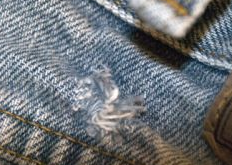
    image These result from weak places in the fabric, often where knots are in the fabric from repairing broken yarns in spinning or weaving. The problem occurs often in fabric that was re-finished, especially fabric re-Sanforized in order to correct shrinkage or skew. Fabric that has been re-finished has lower strength, inferior hand and a different washed appearance. For that reason, re-finished denim should not be mixed with denim finished only once and re-finished denim should not be sent to demanding customers.

    Spots : 

    These are usually caused by chemicals used in finishing or sizing that are not easily removed by laundry de-sizing or are not soluble and precipitate in garment de-sizing and re-deposit on the garments. Mineral oils, some cationic compounds, polyvinyl alcohol and other compounds often cause these problems. Chemicals that cause spots can be analyzed for their chemical composition and chemical treatments can be devised to correct these problems in the laundry. Also, the fabric supplier can be requested to cease using offensive products.

    Alternating Light and Dark Streaks :

    When an Indigo dyeing machine stops for more than a few minutes, the yarn that is immersed in the dye boxes will over-reduce and appear as light streaks after garment laundering. The yarns that are in the airing sections after the dye boxes will appear as dark streaks after laundering. The fabric producer can segregate this problem by identifying the yarn that was in the machine during the stop from just after the pre-wet section though the end of the drying section. The standard procedure of submitting a small washed sample of a fabric roll will not allow prediction of the presence of this type of streaking because the sample is taken from one end of a fabric roll and does not represent the appearance of the entire roll. These streaks appear and disappear in the fabric. For that reason, yarn that is involved in an Indigo machine stop should be segregated. The yarn from a machine stop produces such low quality fabric that it is almost not worth weaving. The causes of machine stops need to be rigorously investigated and action taken to eliminate them.

    Crack Marks:

    These are light streaks that usually appear in garments that do not follow warp yarns. These have often been caused by the use of acrylic hand-builders that result in very inflexible fabric. When the garment is entered into the washing machine, the acrylic film breaks forming a crack and the garment fades more along the area of the crack.

    Sudden Shade Difference After Laundering :

    After garment laundering a single leg panel, for example, will have 2 completely different shades, 1 light and the other dark, with a distinct, sharp break in color. This results when Indigo-dyed fabric is located on drying cylinders when the finishing machine stops for more than about 5 minutes. Applying high temperature to Indigo for long periods causes the Indigo in the deepest part of the yarn to sublime or evaporate and after surface Indigo is removed in laundering, the fabric part that was on the drying cylinders will be lighter. Therefore, this can not be seen in the original fabric.

    Sizing Spots or Streaks:

    Basic laundry de-sizing procedures are used to de-size carbohydrate-based sizes like starch or guar gums. Polyvinyl alcohol sizes can be more difficult to remove, especially from yarn that was over-dried in sizing. If not completely removed, polyvinyl alcohol can react with hypochlorite bleaches and result in permanent spots or streaks.

    image This is a guest post by Harry Mercer.Mr. Mercer has 30 years experience in the denim business including 3 prominent U.S. denim companies. He is an expert colorist for measurement and color matching as well as textile testing.