


Access the full report here –
https://denimsandjeans.in/pdf/freereports/D&J%20Denim%20Shorts%20Analysis-July%202024.pdf

Hennes & Mauritz AB, popularly known as H&M, is a leading global fashion retailer headquartered in Stockholm, Sweden. Founded in 1947 by Erling Persson, the company has grown from a single women’s clothing store in Västerås to an international retail giant with thousands of stores across dozens of countries. H&M offers a wide range of clothing, accessories, and home products designed to cater to diverse styles and needs.
The primary objective of this report is to study H&M Sweden’s online offerings in the men’s and women’s jeans. The period of study is from Dec‘23 to May’24. In delving into H&M Sweden’s recent strategies trends, a comprehensive examination reveals intriguing insights across various facets of their product offerings. Let’s explore the key findings:

[private_special]
Since the report is in pdf format, we are attaching the link from where our subscribers can download the same and read at leisure !
PW for accessing the report :Â H&M_Sweden_Products_Analysis_Dec2023_May2024
[/private_special]

Continuing our weekly news snippets, here are some interesting ones for Week 49

World’s largest cotton certifier, Better Cotton has established a target of cutting its cotton’s overall greenhouse gas emissions per ton by half. Better Cotton has sought to make cotton production more sustainable across the world since its foundation in 2009. It has taught over 2.5 million farmers worldwide and raised 99 million euros since 2010, with that figure expected to rise to 125 million euros by the 2021-22 season.
According to recent research, Better Cotton manufacturing has a 19% lower GHG emissions intensity per ton of lint than production in China, India, Pakistan, Tajikistan, and Turkey. Better Cotton expects to release four further objectives in 2022, with the target’s deadline set for 2030, based on a 2017 baseline. Soil health, pesticide usage, smallholder livelihoods, and women’s empowerment are all addressed. “This is a pledge for Better Cotton farmers and a stake in the ground for the global cotton sector. Nearly a quarter of the world’s cotton is currently produced under the Better Cotton Standard. We aim to at least double that by 2030.†said CEO of Better Cotton, Alan McClay.

Kontoor Brands has presented its sustainability report for 2020. The business, which owns the brands’ Wrangler and Lee, has been devoted to improving its sustainability goal, with this being its second report in the two years since it went public. According to the report, Kontoor has cut its water use by more than 8 billion liters since 2008, and it is on track to save 10 billion liters by 2025.
Kontoor has also obtained 50% of its cotton responsibly, with the goal of utilizing 100% sustainably sourced cotton by 2025. The report also stated that Kontoor is on pace to employ 100 percent preferred chemistry by 2025 and plans to establish a climate target for carbon emissions in 2022. The business emphasized the social aspect of sustainability by establishing community development projects in Bangladeshi factories. The brand has also worked with the Herproject of Business for Social Responsibility, which aims to enhance access to healthcare for Bangladeshi textile workers.

Sustainable textile manufacturer Tencel has teamed up with over 40 brands, celebrities, and NGOs to launch the #MakeItFeelRight effort to decrease carbon emissions. The movement’s goal is to contribute to the worldwide reforestation effort in order to help rescue the earth, and it has already received over 7,500 pledges. Each commitment results in the planting of a tree.
Sustainable campaigners including Xenia Adonts, Lily Cole, and Chen Ai Ling, as well as businesses like Boyish, Reformation, and Lavender Hill, have endorsed Tencel. The brand also collaborated with artist Bodil Jane to produce promotional artwork, which was subsequently featured on the campaign’s website. “Carbon emissions are a global problem and as such must have global solutions. As a partner of the #MakeItFeelRight campaign we strongly believe that Tencel’s sustainability initiatives, which are enabled by brands and driven by consumers, are a great way to make a positive impact through reforestation,†said Diana Chaplin of One Tree Planted.

Zara’s parent company stated record sales and earnings in the 3rd quarter of the year as it recovers from the pandemic. Inditex’s sales in the three months to October 31 were 21% higher than a year ago at constant currency and 10% higher than in 2019. According to the Spanish company, retail and online sales climbed by 33% between November 1 and December 10, 2020, and 10% between November 1 and December 10, 2019. The growth in sales aided the group’s 273 percent gain in net profit to 1.23 billion euros in the third quarter. Meanwhile, online sales increased by 124% in constant currency compared to 2019. According to the group, internet sales would make for more than 25% of total sales in FY2021. “Sales are returning to normal levels, and online sales continue to expand,” the business said of its present finances.

The addition of Forever 21 to JCPenney’s brand portfolio has been announced. The brand will be sold at 100 JCPenney shops around the United States, as well as on the retailer’s website. JCPenney’s reputation as a retailer for teenagers and adults will be strengthened by this action. The introduction of Forever 21 at JCPenney is being supported with a 360-degree marketing effort that includes in-store, e-commerce, social media, and direct mail advertising. The style of Forever 21 is inspired by the West Coast, with neutral and trendy aesthetics interwoven into its design. “Forever 21 and JCPenney share a mission to make the latest trends accessible to all while inspiring unique style and confidence. The addition of this brand to our portfolio rounds out our Young Minded assortment and brings an exciting new element of in-the-moment fashion,†said Michelle Wlazlo, executive vice president and chief merchandising officer at JCPenney.

In local currencies, net sales at H&M Group climbed by 11% in the fourth quarter of 2021 compared to the same period the previous year. In local currency, the company’s net revenues climbed by 12% for the fiscal year 2021, according to a statement. Net sales climbed by 8% to 56,813 million Swedish krona in the fourth quarter, and by 6% to 198,967 million Swedish krona for the entire year when converted to SEK. Despite persistent limitations and the pandemic’s negative impacts, the H&M group’s earnings in local currencies were up to the same level as in the fourth quarter of 2019. Around 100 stores were temporarily shut at the start of the quarter, mostly in Southeast Asia. Around 115 stores were mostly closed at the end of the quarter, predominantly in Austria and Slovakia.

The Circular design story collection that features a blend of sustainability and style, is the latest addition to H&M’s Innovation stories. The collection addresses circular production as an approach to achieving sustainability. It is the fourth and most recent addition to H&M’s Innovation Stories—”Circular Design Story,” which will be launched on December 9 and will dwell on more circular design techniques and fabrics. It is themed on the ideas of sustainability and joy.

The collection showcases H&M’s commitment to a more circular production process by utilizing a multitude of cutting-edge recycled and recyclable materials, along with paying close attention to adaptation and usability. The Swedish fashion giant has also partnered up with Normani, Gigi Hadid, and Kaia Gerber to celebrate the thrill and anticipation of party-prep and dressing up.
The range, which employs circular design concepts and sustainable materials, was produced by the H&M design team in collaboration with stylist Ib Kamara, who served as a creative advisor. The H&M team evaluates the steps of the garment development process, looking at estimated lifespan, materials, and design approach, using a design tool called the Circulator. The tool enables the team in developing more sustainable and circular elements and to reach their goal of becoming climate positive by 2040. H&M plans to use the technology to develop all of its pieces by 2025.
Repreve Our Oceans, a fiber generated from bottles gathered on shorelines and coasts, is one of the sustainable materials employed in the collection. The assortment will also include Resorts, a dissolvable sewing thread, and Vega, a vegan substance formed from grape skins, stems, and seeds wasted during the winemaking process. Ambercycle’s Cycora, which is created from old clothing and end-of-life textile waste, will also be used.

The collection is for folks who want to explore and express themselves, and the campaign, which was publicly released earlier this month, reflects this exuberant spirit. It was shot by Rafael Pavarotti, a pioneering photographer, and is titled “Just before the party starts.” The theme reflects the joy of getting ready, as well as the optimism and individualism of people who love fashion, glamming up, choosing new outfits, posing in front of the mirror, dancing, and being free. Kamara and Pavarotti were both actively urged to bring their vibrant, colorful visions to existence.
“I was proud to work with H&M on a collection that is so committed to circularity and positive change, while also embracing style, bold color, great fit. It’s a really multifaceted, rich collection, and it captures a special feeling for me; the excitement and anticipation of getting ready, of choosing a look and making oneself into a star.†Said Ib Kamara, Stylist, and Creative Advisor H&M.

Most of the pieces are versatile, enabling them to create a variety of looks. Blazers may be worn as dresses, straps can be used to vary the fit of shirts or jackets, adjustable zips can make trousers wider, and a ball gown can be detached into a top and skirt. The collection’s longevity is maintained by a unique twist on these classic design elements. Polka dots, bows, frills, tailoring, and jacquard are all featured. Normani, Gigi Hadid, and Kaia Gerber, among others, have collaborated with the brand on the campaign, with sneak peeks of the collection being posted on Instagram. From a pink strappy sequin dress made of recycled polyester to a fitted ensemble composed of discarded materials, each piece in the collection has gained its own distinct aesthetic.

According to Ella Soccorsi, concept designer at H&M, fashion can alter, excite, and empower people. She asserts that the collection is a tribute to that idea, as well as to the specific exhilaration that comes with getting ready to go out, just before the party, styling oneself, preparing to head into the night with friends, full of joy and energy.
The collection is deliberately designed to be cherished, shared, repaired, and recycled. It acknowledges a bold revolutionary outlook and self-expression. The brand marks fashion’s fun and eccentric essence while driving the industry forward to a more circular future.
“People get a picture in their head when you talk about circularity. With a Circular design story, we wanted, to show it is possible to do a bright, fashion-focused collection that is designed with circularity in mind. We wanted to show new possibilities, and offer something hopeful.†said Ann-Sofie Johansson, Creative Advisor at H&M.

H&M Innovation Stories, which launched in early 2021, is driven to foster ecologically viable resources, technology, and production techniques. Previous stories have covered the Science Story, which focused on sustainable products, the Color Story, which campaigned for environmentally conscious color techniques, and the Co-exist Story, which approached animal-friendly fashion.

H&M, Ikea, B&Q, and Walmart have launched a new climate change initiative to drive action on encouraging other retailers to achieve carbon reduction targets. They have partnered with the COP26 High-Level Climate Action Champions to initiate “Race to Zero Breakthroughs: Retail Campaign”. This initiative is supported by the World Business Council for Sustainable Development (WBCSD)..

Up till now, only 5% of retail businesses have so far committed to taking action to limit global warming. Making the retail business agree to this sort of initiative is hard as the price of sustainability is huge. With their multi continent sourcing models, the impact on environment emanates not only from the material ingredients but also processing , packaging and shipping. It has been estimated that sometimes something as simple as a T-Shirt may involve total shipping distance of over 10,000 km for assembling the materials at one place and then dispatching the same to stores. The impact is enormous and it also makes it very difficult for the retailers to reduce their carbon footprint as they may have to recalibrate their sourcing models .
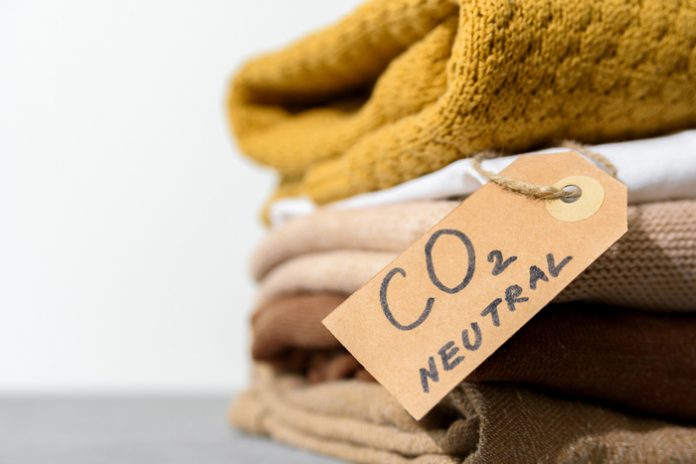
These 4 retailers have pledged to support industry-wide campaigns to promote climate action and encourage other retailers to outline their intentions to reduce carbon emissions and keep global warming below 1.5 degrees Celsius – ensuring that 50% emissions are reduced by 2030 by setting science-based goals and commit to achieving net-zero emissions from vehicles by 2050 at the latest, and join the “zero-emission race” initiative.
“I encourage the retail industry to join us and take immediate climate action to halve global emissions by 2030. Together, we can win the Race to Zero,†said Nigel Topping, UN High-Level Climate Champion for COP26.
WBCSD chief executive Peter Bakker said: “This campaign is a call to retailers everywhere to take ambitious climate action as they increasingly recognize the risks posed by climate change across their supply chains and operations.
Bakker also stressed that “the climate emergency, together with the loss of nature and rising inequalities, is the greatest and most complex challenge of our timeâ€.
“We need more retailers to join the UNFCCC’s Race to Zero and showcase leadership and commitment, like H&M Group, Ingka Group (Ikea), Kingfisher, and Walmart.â€
“Only by joining forces and collectively rethinking the industries, like retail, will it be possible to tackle them,†he said.

In 2019, Amazon and the climate non-profit organization Global Optimism jointly launched the Climate Pledge, which is a similar movement. The members of the climate pledge promise to achieve the Paris Agreement ten years ahead of schedule and achieve carbon neutrality by 2040. Verizon, Siemens, Microsoft, and Best Buy are among 108 signatories to the pledge.
With a broad support for the carbon reduction targets across industries, we may see a much more coordinated efforts and solutions which may bring results quicker than we anticipate. “If intentions are sincere, results will found “.

H&M Foundation, a Global Change award winner, has supported early-stage innovation since 2015 while giving opportunities to people whose ideas can bring a change in the fashion industry. Startups struggle immensely to gather the funding and support to be able to change the world as we know it. H&M Foundation makes sure the voices of these startups are heard.
H&M Foundation came up with The Billion Dollar Collection, essentially a fashion collection you can’t buy (unless you’re Jeff Bezos of course) because the price tag of each product (startup) reflects the funding they require. They present 10 innovative sustainable fashion startups that could revolutionize the fashion world.Â
The Foundation’s main motive is to create a shift in the fashion industry where sustainability and innovation are implemented as default practices by 2030. Accenture brought its 360-degree value approach to the collection with the 2030 UN Sustainable Development Goals in mind to illuminate the potential of these startups. The model shows each innovation could have a big positive impact on the planet if allowed to scale. The impact potential is indicative of high-level estimations of the innovations’ multi-dimensional value potential in 2030.
“The Billion Dollar Collection presents a unique opportunity to help the fashion industry reinvent itself through sustainable innovations that can fuel future growth and bring positive change. By adopting our 360-degree value approach for this collection, we are demonstrating how these innovations can deliver value across multiple dimensions including sustainability – and move past narrowly defined views of value,†says Jill Standish Senior Managing Director and Global Retail Industry Group Lead at Accenture.

She believes Sustainability is fueling the future of fashion. Along with moving to digital platforms, sustainable fashion is the other approach that is accelerating at a very fast pace. According to a recent consumer study by Accenture, 81% of shoppers globally now feel strongly that companies should do more to preserve the environment. Further, 62% of people shop following their values, and businesses are listening.

“Through a powerful jet engine that plugs directly into existing production systems, SeaChange wants to eliminate wastewater at its source to improve the environmental footprint of the fashion industry.”
A lot of dyes and chemicals are used to get the right colors, finishes, and look of the garments. These processes are very harmful because these dyes and chemicals end up in the water and conventional wastewater treatment isn’t able to take care of it, the polluted water turns into a thick, toxic sludge and is often pulled up on land, resulting in chemical discharge through the soil and carbon emissions. Basically, the problem is moved around, not solved.
Now, this is where SeaChange steps in, their mission is to eliminate pollution at its source by providing innovative and economical wastewater treatment systems. With their novel patented approach to water purification, SeaChange offers a way to make the clothes we want while protecting the environment.
The SeaChange technology plugs directly into existing factory systems and separates the water from toxins in one single step with the help of a powerful jet turbine. The water is released as clean water vapor into the atmosphere, and the sludge is converted into a concentrated dry powder that can be reused.
SeaChange requires $5,000,000 to convert its ideas into reality.
Primary competitors are traditional large water treatment contractors that employ decades-old technologies that were originally developed for sewage/ municipal water treatment.


“With a vision of transforming the leather goods industry, Vegea contributes to a sustainable fashion future by making beautiful vegan leather out of leftovers from winemaking”
Every fashion enthusiast has a leather jacket, a pair of leather pants, and a pair of leather boots. A leather jacket is essentially a staple for fashion lovers. The impact of real leather on the environment is destructive due to its toxic substances and carbon dioxide emissions. Vegea hopes to bring in demand for vegan alternatives.
Italian team VEGEA has a sustainable solution to all of the above by using leftovers from wine production to create a fine leather-like material. Traditionally, the skins, stalks, and seeds are considered waste and therefore burnt, leading to carbon dioxide emissions. Instead, VEGEA uses this material and loops it into a circular model where waste is turned into a valuable resource.
Focusing on B2B, VEGEA produces and sells its product to customers in multiple industries, such as fashion, furniture, automotive, and packaging. The material is adapted depending on the technical requirements of each field of application.
Vegea requires $6,000,000 to convert its ideas into reality.
VEGEA’s main and direct competition is oil-based synthetic leather. But the material also challenges animal-based leather and provides a solution to growing market demand for sustainably produced leather alternatives.


“By developing a manufacturing method based on biomaterials, MycoTEX creates products that require less water than natural fibers do, and use no farmland or chemicals. its first product is made of mushroom roots and can – once it’s worn out – be buried in the ground and decomposed.”
Customers have their demands set right; they want clothes to fit them perfectly, are made of natural materials, and are manufactured using methods that are clean, transparent, and produce zero waste. This is a difficult task for brands, especially considering they often need to deal with a complex, old supply chain.
MycoTEX provides a sustainable solution to all of this. It has developed a seamless manufacturing method allowing for custom-made clothes made from compostable mushroom roots. Its ground-breaking method solves several major issues in the industry as it reduces the cost, waste, and labor intensity of cut and sew operations, replaces plastics and leathers with compostable materials while also improving the comfort and fit of fashion products.
B2B with 3 revenue streams:
MycoTEX requires $3,000,000 to convert its ideas into reality.
The competition, like MycoWorks, Ecovative, Bolt Threads, Mogu, and MycoTech, all use a solid-state fermentation process based on the agricultural waste that needs to be developed from scratch. MycoTEX has a biotech approach and uses a liquid fermentation process that has already been proven, using significantly less space and time than the agricultural approach, and making it easier to scale.


“A biodegradable and mineral-based membrane for outdoor wear, which is both waterproof and breathable, enabling outdoor enthusiasts to enjoy nature without harming it”
To make outdoor wear waterproof, breathable, and dirt repellent, it is treated with fluorinated chemicals. We may not even know but our simple hike on a mountain most likely leaves a toxic trace. Once these chemicals are released into the environment, it can take several hundred years until they break down. These pollutants have been found anywhere from mountain lakes and polar bears to human bloodstreams.
Dimpora has come up with EcoPur and Sane Membrane products which provide not just one of the two- waterproofness and breathability but both. This has never been done before but Dimpora excelled in bringing such a solution. The solution can be added to any type of garment in a micro-thin membrane that shields against the elements in a sustainable way.
Dimpora replaces existing materials with sustainable options. With three product families in its portfolio, it can gain from multiple revenue streams-+ Products (membranes or laminates) produced by collaboration partners and sell directly to brands as well as converters specializing in modifying or combining materials to create new products
Dimpora requires $8,000,000 to convert its ideas into reality.
Dimpora competes with conventional performance outdoor membranes containing fluorine and the fluorine-free membranes that have entered the market. Currently, the fluorine-free alternatives aren’t as comfortable, stretchy, or water-resistant as the chemically treated garments.

This article will be continued in Part 2 . Keep watching !

H&M has long been dedicated to making positive changes and driving progress with sustainable fashion. The latest initiative, Innovation Stories, sees H&M push further for positive transformation with a directional concept that showcases innovation, sustainable fabrications, and design.
The first collection to launch under the collective is Science Story, which pays tribute to the brilliant minds behind fabrications of the future. With it, they introduce new materials such as EVO by Fulgar®, a bio-based yarn derived from castor oil, and Desserto, which is a plant-based alternative to leather, produced from cactus plants.


Key womenswear pieces include the wide-leg bright white jeans with removable double waistband, the lightly-cropped chalk-white shirt with oversized breast-pocket, and the cuffed tracksuit. Energetic and bold accessories are the edgy antidote to the collection’s clean and classic clothing; the chunky necklace with orange swirls and rhinestone detailing, coordinating statement loop rhinestone earrings, high-heeled green strap sandals, and recycled plastic blue sunglasses with a double-lens frame.
“Innovation Stories is a platform that pushes our experimentation to the next level. The initiative encourages our work with scientists and developers and puts a spotlight on our progressive ideas. Science Story is a homage to the years of research and experiments behind these incredible materialsâ€,
Ella Soccorsi, Concept Designer at H&M.
“Our new concept continues H&M’s journey towards a sustainable and circular fashion system. Innovation Stories allows us to develop and grow, all while creating desirable and long-lasting pieces that we hope our customers will love and be proud ofâ€,
Ann-Sofie Johansson, Creative Advisor at H&M.
Join the Denim Reunion & AW 22 Talks on March 30-31, 2021 . For invitation, register at http://bit.ly/2zzHD0L


H&M- one of the leading voices when it comes to sustainability in the fast-fashion world and also one of the few apparel labels which have made a lot of commitments to ensure sustainable practices at each level of production in the coming 10 years. Some of the biggest sustainable targets set by HM include reducing its greenhouse gas emissions by 2030 and the use of 100% recycled or sustainable materials by 2030.
The recent collaboration of H&M with American denim label Lee to push for the next generation of “more sustainable denim” seems to be a step ahead towards fulfilling its sustainability commitments. This collaboration is unique and special on many counts, and it is great to see two rivals joining hands at every stage of design and production for one common bigger goal, that is –SUSTAINABILITY.
In this special collab, for the 1st time, H&M is coming with its first-ever 100% recycled cotton jeans, to non-leather backpatches made from cork and jacron paper. For the first time, H&M will also share Life Cycle Assessment (LCA) data on hm.com indicating the water, C02 & energy impact of each denim garment from raw materials to end of use.
This transparency is matched by the positivity of the fashion, with oversized and cocooning silhouettes as well as workwear shapes that draw on Lee’s esteemed heritage. Lee x H&M features collections for women, men and kids, and will be available on hm.com, as well as selected H&M stores, from 28th January.
“We just loved working with Lee to push for change. A change for more sustainable and circular denim garments. We looked at every detail and challenged each other in a positive way. It’s also amazing to work with Lee’s iconic designs and give them a bit of our flavor, for H&M denim lovers around the world,†says Jon Loman, designer at H&M.
“Lee is proud to be collaborating with H&M to continue our efforts to make better denim. Our brand was founded more than 130 years ago with innovation in mind, and today we are happy to be joining with H&M to advance denim into a more sustainable future,†says Chris Waldeck, EVP Global Brand President, Lee®
Lee x H&M is an ambitious collaboration that has sustainability central to its design. The brands took a holistic approach, looking at every stage of denim production. Fabric is crucial, such as H&M’s first 100% recycled cotton jeans, made from 80% post-industrial waste and 20% post-consumer waste. There’s also denim that’s cotton-free, made instead from renewable man-made fibres, as well water-saving dyes and lower impact denim washes that are 3rd party verified for their lower water usage, chemical, and energy consumption.


For the women’s collection, wide and loose jeans have a 90s throwback feel, while Lee’s classic Rider jacket is recut with an oversized cocoon shape. Denim corsets add a feminine edge, while dungarees and overshirts bring the functional workwear vibe, alongside Texloop™ RCOT™ Recycled Cotton jersey pieces for the full Lee x H&M look.


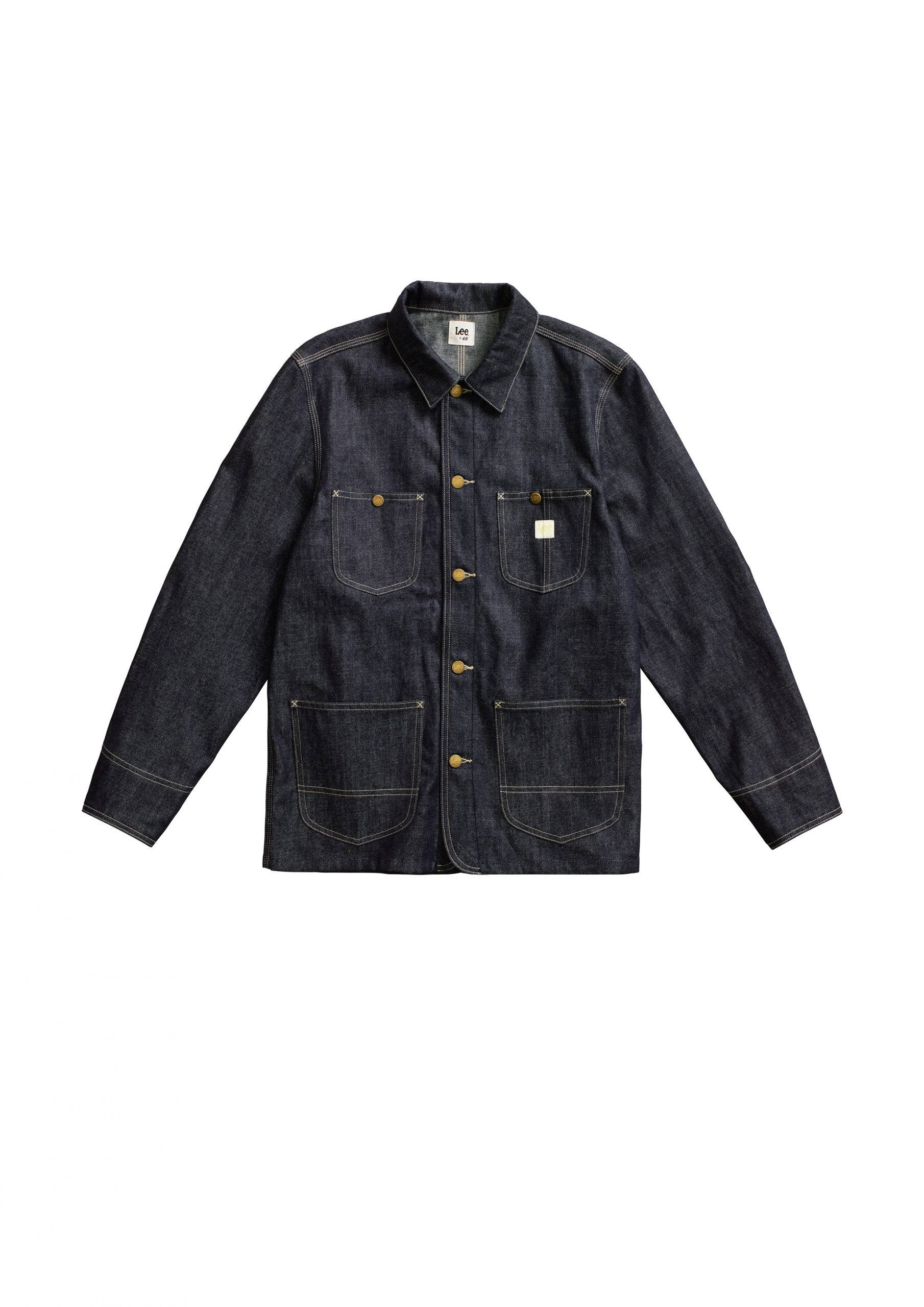

For the men’s collection, workwear jackets are a wardrobe essential with Lee’s true authenticity of the design. Relaxed fit five-pocket jeans are cut from 100% recycled cotton, while relaxed carpenter jeans are made with water-saving dyes and 100% Tencel™ Lyocell cellulosic sewing threads.
There are workwear dungarees, denim bucket hats, and tote bags, as well as heavyweight jersey pieces to complete the more sustainable collection.


Monki , a value clothing brand of H&M , is known for its apparel and accessories collection. They have a special focus on sustainability and align themselves to ‘be kind to the world’ and ‘be empowering’ with two of the United Nation’s Sustainability Development Goals (SDGs):
SDG 5 — Gender equality
SDG 12 — Sustainable consumption and production
Most of their products seem to have a sustainable connection – in this particular set – Organic denim. The brand created some cool organic Denim jumpsuits and dungarees. These include casual wear long and short suits wit Boiler suit, jumpsuit , Dungarees etc. Very contemporary and fitting into the current times well with loose fits and comfort stylings. We check out some of them !


A classic and cute jumpsuit in 100% organic cotton. Featuring two front pockets, one breast pocket and a drawstring waist.


A soft denim playsuit or dungaree if u like. Featuring tie-up adjustable spaghetti straps, two side pockets and a relaxed silhouette.


A pinafore style pair of denim dungarees with a cropped wide leg, two front pockets and two back pockets. Featuring metal button hardware on the straps and sides.


This trusty denim dress has pockets and sturdy fastenings . It’s made from 100% organic cotton and this classic blue wash is a wardrobe must have.
• Regular fit
• Mini length
• Adjustable shoulder straps
• Functional pockets


A denim dungaree dress with two front pockets, a midi length and metal buttons. Made with organic cotton!


A cotton jumpsuit that features two breast pockets, two front pockets and two back pockets. Cute and comfy!
• Regular fit
• Slightly tapered leg
• Front-zip closure
• Stretch waistband
• Front and back pockets
• Elasticated cuffs
• Monki cares: Made from organic cotton
Pic Credits : https://www.monki.com/

Leading Swedish retailer – H&M has recently released its Q4 financial result, according to which, the company has registered a net sales growth of 9% by the end of Q4 2019. In Q3 2018, the net sale was $5,614 million which rose to $6,194 million in Q4 2019. The total net sales by the end of Nov’19 stood at $24,131 million. The gross profit increased by 9% to $3,446 million, this corresponds to a gross margin of 54%.
On the Jan 30 earnings call, CEO Karl-Johan Persson said that
“The supply chain is a key area as well for our transformation, where the focus is on speed, flexibility, and efficiency to create an even better customer experience. And the work spans the entire product flow and — where logistics centers and logistic systems are important parts. We have, for example, opened a new high-tech logistic center in Milton Keynes in the U.K. that will replace several existing centers and serve both stores and online.â€
Below are some of the insights and expansion plans according to the latest Press release of H&M:
Below are sales analysis covering the different periods. Please note that the official data were in SEK which we convert in USD. The base date for the conversion is – Feb 7, 2019
Germany, The USA, and the UK are three top-selling countries and collectively they contributed approx. 34% in the total sales in Q4 2019, Germany with $913.8 million is at Top. H&M has the highest number of stores i.e, 593 in the USA including 13 new stores which were in Q4 2019. The average sales/store in Q4 stood at $1.26 million/store however China fell short to this and registered a sale of $0.62 million/store only. China also saw the highest closure of stores i.e, 4 in Q4 2019. Russia witnessed an encouraging spike of 24% (highest amongst all)Â in the sales followed by the USA and Italy.
|
Country |
Q4- 2019 ( USD- M) |
Q4-2018(USD -M) |
Changes in % |
11/30/2019 ( Number Of Stores) |
Q4-2019 (New Stores) |
|
Germany |
913.8 |
871.3 |
5% |
466 |
4 |
|
USA |
787.6 |
692.3 |
14% |
593 |
13 |
|
UK |
396.3 |
371.4 |
7% |
305 |
5 |
|
France |
317.2 |
298.0 |
6% |
235 |
3 |
|
China |
315.3 |
298.2 |
6% |
520 |
-4 |
|
Italy |
235.3 |
211.9 |
11% |
181 |
3 |
|
Sweden |
228.8 |
213.1 |
7% |
177 |
-1 |
|
Spain |
200.6 |
193.3 |
4% |
167 |
-1 |
|
Netherlands |
185.1 |
171.2 |
8% |
138 |
2 |
|
Russia |
181.7 |
146.8 |
24% |
147 |
5 |
|
Others |
2,407.7 |
2,173.9 |
11% |
2147 |
75 |
|
Total |
6,169.4 |
5,641.4 |
9% |
5076 |
104 |


While looking at the comparative sales figure to Nov.19, we’ve learnt that Germany lost its sales contribution by approx 1% from the last year. By the end of Nov.2018, Germany’s share of the total net sales was 15.38% which slipped to 14.41% by the end of Nov 2019. A total of 281 new stores were opened and 173 stores were closed, out of which 31 stores closed in China alone. With 21% of Y-O-Y sales growth, the USA is at the top with $3,108 million of sales by the end of Nov 19, the previous year it was $2,571 million only. Total net sales during this period were $24,131 million which was 11% more than last year.
|
Region |
2019(Nov) |
2018(Nov) |
% Change |
Total Stores |
New |
Closed |
Share in 2019 |
Share in 2018 |
|
Germany |
3,477 |
3,356 |
4 |
466 |
11 |
13 |
14.41% |
15.38% |
|
USA |
3,108 |
2,571 |
21 |
593 |
28 |
13 |
12.88% |
11.79% |
|
UK |
1,544 |
1,427 |
8 |
305 |
13 |
12 |
6.40% |
6.54% |
|
France |
1,264 |
1,173 |
8 |
235 |
10 |
12 |
5.24% |
5.38% |
|
China |
1,250 |
1,114 |
12 |
520 |
21 |
31 |
5.18% |
5.11% |
|
Sweden |
932 |
871 |
7 |
177 |
12 |
10 |
3.86% |
3.99% |
|
Italy |
871 |
791 |
10 |
181 |
10 |
8 |
3.61% |
3.63% |
|
Spain |
822 |
764 |
8 |
167 |
4 |
9 |
3.41% |
3.50% |
|
Russia |
710 |
595 |
19 |
147 |
10 |
2 |
2.94% |
2.73% |
|
Netherlands |
706 |
670 |
5 |
138 |
6 |
12 |
2.93% |
3.07% |
|
Others |
9,445 |
8,482 |
11 |
2147 |
156 |
51 |
39.14% |
38.88% |
|
Total |
24,131 |
21,814 |
11 |
5076 |
281 |
173 |
100.00% |
100.00% |


H&M has been aggressively expanding to different regions in the last couple of years. In Countries like India, the Philippines, and Mexico, H&M has invested a lot of resources and the results are unprecedented. Alone in India, within a couple of years, H&M opened 47 stores which generated $208 million sales, YOY sales growth by the end of Nov 2019 stood at 43%. Mexico with 52 stores is close to crossing the sales figure of $400 million, the growth was 29% by the end of Nov 19. New destinations including Ukraine and Vietnam have been outperforming and according to the various reports, H&M is going to expand its footprints more aggressively in the coming years.
|
Region |
2019(Nov) |
2018(Nov) |
% Change |
Total Stores |
New |
Closed |
|
Uruguay |
34.44 |
6.64 |
419% |
3 |
2 |
0 |
|
Ukraine |
23.23 |
5.91 |
293% |
3 |
1 |
0 |
|
Vietnam |
45.02 |
28.11 |
60% |
2 |
2 |
0 |
|
Puerto Rico |
12.65 |
8.3 |
53% |
8 |
0 |
0 |
|
India |
208.18 |
146.05 |
43% |
47 |
8 |
0 |
|
New Zealand |
41.59 |
29.46 |
41% |
8 |
4 |
0 |
|
Iceland |
26.04 |
19.92 |
31% |
6 |
3 |
0 |
|
Colombia |
54.77 |
42.01 |
30% |
7 |
3 |
0 |
|
Mexico |
382.24 |
294.04 |
29% |
52 |
7 |
0 |
|
Peru |
100.62 |
79.14 |
27% |
13 |
2 |
0 |
|
Philippines |
132.04 |
104.45 |
26% |
40 |
6 |
0 |
|
Chile |
190.24 |
154.35 |
23% |
15 |
2 |
0 |
|
Others |
20873.01 |
18887.86 |
11% |
4872 |
241 |
173 |
|
Total |
24143.07 |
21824.24 |
11% |
5076 |
281 |
173 |


With reasonable pricing and great supply chain distribution, H&M has been giving tough competition to its rival fast fashion brand Inditex. Zara, one of the leading labels from Inditex has not been able to grow this way as H&M has been growing in emerging developing countries. But it is not to say that H&M is not facing its own share of problems including excess stocks which it needs to dispose off. Time will tell !


“ The 3 R’s – Reduce , Reuse and Recylce “ – the concept has been taken out of theories and has been implied in practical life not only in our daily lifestyle but in the fashion world since long. Sustainability has taken center stage with big brands and retailers having employed a number of environment friendly processes in their productions downline. However, organizations like H&M are trying to go a step further . They are trying to create clothes from plant material that is not usable otherwise. Its hard to imagine the dresses made from fruits and their peels !! Or fabric made with algae !. Not only organic cotton and natural dyes are a part of the sustainable solution, but the future lies in alternative methods and techniques which can save the mother earth along while creating beautiful fashion .
H&M’s latest Conscious Exclusive collection which introduces three materials the brand is using for the first time: Piñatex, a leather alternative made from the cellulose fiber of pineapple leaves (which become waste after the fruit is harvested); Orange Fiber, a silk like fabric made from the peels of oranges at the end of the juice production cycle; and BLOOM Foam, a high-performance foam made from algae biomass, which “cleans the environment and reduces the risk of algal blooms while reducing our dependence on fossil fuels,†according to the company’s website.
The unexpected mix of feminine flounces and sporty silhouettes, florals and shimmering surfaces make this collection fun, liberating and unique.The knotted slide sandals have BLOOM foam soles, the abstract floral dresses and suits utilize Orange Fiber, the patchwork cowboy boots are made with beige and metallic Piñatex. The collection is extremely SMART and shows new ways to create fashion.H&M is trying to be a global leader in its sustainability efforts and its recent Sustainability Report does speak volumes about the seriousness of the efforts of the retailer.
Expect many more surprises to come from H&M in the sustainable world as their goals have been set for customers’ benefits as claimed by Ann-Sofie Johansson, H&M’s creative advisor.
Check out more about this fascinating collection here!


 Picture Courtesy : H&M

H&M is the retailer most often in news for its sustainable activities. As a group policy, the retailer is moving towards higher levels of sustainability for its apparel products setting up tight goals and targets. For a company as big as H&M, it’s not really an easy task to make their huge supply chain to move in the same direction as their goals. We wanted to understand how the company is planning to do this and how they see sustainability becoming an integral part of their objectives in the coming times. We spoke to Ms. Cecilia Brännstens, Environmental Sustainability Manager, H&M Group to find more about their efforts in this direction and she apprised us about the same.

This has been a journey that has evolved during the years and we have become more ambitious along the way. We believe that a company of our size and scale has a responsibility as well as an opportunity to lead the change towards a more sustainable fashion and design industry. We started in the 90s to use organic cotton and back in 2010 we went one step further setting our goal to only use sustainably sourced cotton by 2020. A few years back we set the high ambition to become fully circular and renewable which includes, among many other things, our aim to only use recycled or other sustainably sourced materials by 2030. Since our circular approach takes the whole value chain into consideration, from design, materials, production, process, use, reuse and recycle, we have also worked with setting concrete actions in each area. From how to design for circularity to how to improve our water and chemical management.
In 2017 already 35% of our total material was sustainable sourced materials, so we are fully committed that we will achieve it. The reality we face today is that shifting from a linear to a circular business model is challenging, mainly due to lack of technology to make recycling fully scalable. That´s way we are actively investing in innovation to overcome this challenge, as it will play a key role to reach our 2030 goal. Of course, we need to have our committed suppliers onboard on this journey to succeed. All our commercial business partners have signed our sustainability commitment and share our vision. Since we are present in our sourcing markets, that gives us a unique position to have daily contact with our suppliers, which helps us to build long-term relationships with them.
Yes, we see a growth within these materials (organic cotton, recycle cotton and BCI cotton) since it is the material we use the most. Our goal is as mentioned for all our cotton to come from sustainable sources by 2020. H&M group is , according to Textile exchange , the biggest user of sustainable cotton which includes, organic, recycled, and cotton from BCI.

We have set an ambitious goal to become climate positive by 2040, and we have identified 3 main areas to achieve it, where renewable energy and energy efficiency are two of them (third being climate resilience). To become climate positive means that we will remove more emissions from the atmosphere than we are responsible for creating. Ways of reaching our goal is for example:


By definition, sustainability means to lead your business in a way so you meet the needs of present and future generations, using the resources responsibly. It is all about using materials that decrease the dependence on virgin resources, require less chemicals, energy and water and minimize the amount of materials that ends up as waste. It is also about being a fair and equal company.
Yes we do, and one thing we can do as a company is to ensure that we create products that can be used for as long as possible and that our customers can care for them in a sustainable way. As an example, in spring 2018 H&M launched the “Take Care†project in Germany ( this will be rolled out in several markets ) It is an initiative that aims at helping customers prolong the life of their products, providing guidance, inspiration as well as services and products to refresh, repair and remake their clothes. H&M also has a global garment collecting initiative which means that our customers can bring unwanted textiles to our store, so we can give them new life by reusing or recycling them.

We support full customer transparency, we were among the first global fashion companies making its supplier list public and we are taking steps to provide more information on product level. On that note H&M fully supports the initiative to develop a consumer labelling system allowing the customers to compare products from a sustainability perspective, even from different brands, the Higg Index. With the Higg Index we hope that in the future there is a label available for customers that provide all sorts of information about a certain garment covering environmental as well as social aspects.
Denim production comes with some challenges, mainly due to the amount of water, energy and chemicals used. Since 2015, we have scored all our denim products using Jeanologia’s Environmental Impact Measurement tool. This third-party tool helps us and our suppliers measure, set targets and reduce water, energy and chemical use in our denim production. In 2017, 55 % of our denim products achieved “green “ level, which means they used a maximum of 35 liters of water per garment during the treatment processes.


We see that sustainability is a question for the whole fashion industry. H&M group are working on bringing partners together to identify challenges and share innovative ideas and solutions. We want to lead the change across our own operations and those of the industry and break new ground to improve the way our products are designed and made. We believe the best way to change the perception on the fashion industry is to lead by example and build awareness. Having a clear sustainability strategy, with concrete goals, road maps and actions, while being open and transparent on progress and challenges on the way.

