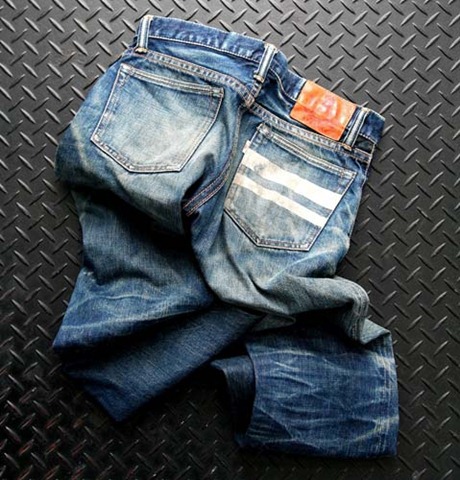
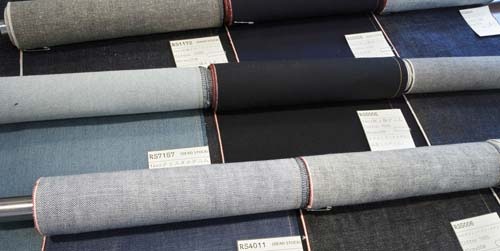
Momotaro Jeans, one of the most famous Japanese Denim label, has recently launched its 15th Anniversary Collection , pre-order of which started from Jan 8 and will be on til Feb 14, 2021. The collection features jeans in three different fits and one Momotaro signature selvedge jacket. Unbreakable denim = BROKEN DENIM is the name given to the fabric used in the collection. The jeans is expected to take on a bright blue hue on fade and is a 15.75oz broken twill selvedge (as expected !) denim. Relish the looks !
Tag: momotaro jeans
-

COVID TIMES–A Talk With Katsu Manabe

Continuing our series of talks during our current COVID 19 times, Sandeep Agarwal speaks to Katsu Manabe from Momotaro Group,Japan and he shares his thought on how the current situation is evolving and how it is affecting and will affect our industry in the future. With a special emphasis on situation in Japan, Katsu Manabe shares his views.
Sandee​p:
Hi Katsu, Welcome to our Instagram Live, How are you and how is the situation in Japan?
Katsu:We are still working and taking care. But situation is still getting worse and government is taking more measures now.
Sandeep:
So currently you are not in lockdown and you are still going to your offices and still working?Katsu:
Yes, most of them go and working.Sandeep:
What about the stalls and shops everything is open still ?Katsu:
Yeah, many stay openSandeep:
Okay, so how do you think this situation of Coronavirus is affecting your business specially in denim sector in Japan?Katsu:
The situation is quite hard on workers. For us , we need to decide ourselves. The govt is not supporting the business , they can’t guarantee the benefits , therefore most of the people need to decide themselves. People are visiting head offices stores in Okayama , which is on outskirts of Tokyo . Many people are not going to the other stores so right now we closed the store for cleanups.Sandeep:
So , the jeans street is still working and on with many stores open.?Katsu:
Yes, it is open. In March and April, most of the people want to change the clothing and enjoy the spring summer season. Many people are still preferring to stay home , but due to long holidays of students and younger generation , they tend to go out for clothing and shopping. So we still have some sale.Sandeep:
It is a cherry blossom time in Japan this time. It is very pity that in such a beautiful environment in Japan , people have to stay inside.Katsu:
Yes it is blossom season in Japan but very few people are going out.Sandeep:
I think you also have good business in China, Europe and US -probably the most Japanese companies have . Is it closed in terms of business and
China was also closed and it is opening a little now so international
business for you is also like almost closed or working at some places?Katsu:
It depends on how the international quarter works for us. Considering some countries, we already have got some heard from them. Some of the stores and countries have asked us to stop .We don’t know what will happen but we can say Europe is worst . We can see most of the countries and cities are lockdown but in Asia and China, some parts like Shanghai still working .It is very difficult time for US as well.Sandeep:
I’ve been talking to so many different people around the world and they’ve been talking about a lot of changes in fashion even after we come back from this crisis. So do you think from your point of view
there’s going to be a change in terms of fashion from the consumer
point of view.
How people will look forward for new products and like Japanese products
are already season less , they don’t really create work for seasons much but like international brands and also many retailers they work for
seasons so I mean many of them say that the seasons will go out . How do you think your way of working and your consumers will be affected because of this?Katsu:
Our products which we sell to oversees are mainly the basic and regular items. SO, we are not doing much for the seasons . Of course, the international market is looking for the season fashion.As most of the exhibitions have been cancelled, we need to try hard to get the buyers otherwise it will be very difficult for us.This is the good time for everybody to make the communication online.Sandeep:
What are the positive things you feel from the situation ? Any positive things which are coming out because every difficult situation also creates some positive things.Katsu:
As I already told you , we need to decide to change how to communicate.We have to use digital way to communicate with people.The export can be made smoother because we can contact online and can support afterwards also. Secondly, we need to focus on production , because after this many people would have lose their job and it is very difficult. We need to see how this situation can be overcome by making ourselves.
Sandeep:So any message you want to give to so many people watching this and
anything for the fashion industry specially for our industry.
We already said that we need to go sustainable and any other thing you
would like to say We discussed digital and second thing sustainability and high quality. So any other thing you would like to say?Katsu:
The industry has to keep going and we have to survive ourselves.The denim business is all around the world ,so people need to enjoy themselves.Stay safe and healthy and enjoy your denim at home.In your lifestyles , if you see denim you will feel good.What we can do is support the people with better life and make them happy .Sandeep:
You also stay safe and healthy and all the best to your family and the Momotaro group.Katsu:
We are trying to go home and develop something beneficial digitally for our industry.
-
Interview With Katsu Manabe | Momotaro Japan
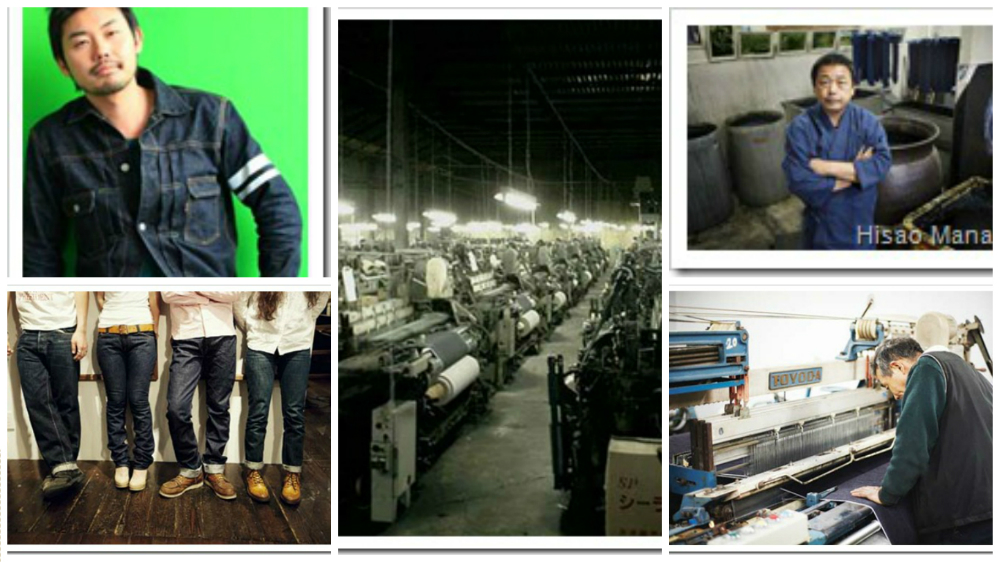
We had the pleasure to talk to Mr Katsu Manabe of the Momotaro / Japan  Blue family who make waves in the denim industry worldwide with their original and authentic denims. He speaks to Denimsandjeans.com in length about how he got involved in his father’s denim business, and about the the philosophy and concepts in the collections from Momotaro / Japan Blue and what is real good denim for him.
1. Pl do tell us about your denim background. How you came to be associated with this industry?
I’m Katsu Manabe,son of the owner of Japan Blue Group. But I was not interested in denim until I found what our company had done. It was
1995-1997, I was just a usual high-school student who was interested in fashion, games sports etc.. At that time, vintage denim replica trend started, then many stores made their own denim. I had Levi’s 501XX replica, then I bought some piece of store original replica denim( Japan made). A year after, I found exact same denim in father’s office and he told me that its made by him.. I was surprised..I found several fabrics and samples which I wanted to buy and it was huge trend in the market at that time.. After all , I started work his company. I had experience
for overseas production manager and taking care of the store, opened the
website, after all ,started to sell material and garment in overseas
market. It was around 15years back .2.How do you think an American product came to be perfected in Japan and actually becoming a symbol of best quality denim worldwide with raw denim being at the centre of this attention.
After 2nd war, U.S military brought us a lot of clothing, and its so
interest and cool for Japanese at that time. I think we love not only
the denim, also American culture behind. Its so diffrent culture than
Japan.
Past 100years Levi’s build denim as a daily wear and work wear in the
market. Most of people still think denim=Levi’s=U.S. And this is
history and its never change.
But professional people, designers, manufactures,craftsmans, they
undersatnd what the quality is. We love American culture and denim.
But we’ve been trying to make the best quality denim in this 50years.
I bring high quality japanese raw denim to Europe and US market since 2007 and try to build up raw denim market in 6years. Past 3 years there are
many raw denim brands that appeared in the market.
I’m so happy that people have interest again in raw material which was the trend 1995 in Japan. I know its good way to enjoy the denim and people
will think about quality of denim material after you wear a pair of
jeans. The best quality denim, that customer will decide.
We are just trying to produce the best material.3.Pl tell us how Momotaro grew from its origins and how it came to become an iconic symbol for denim lovers worldwide.
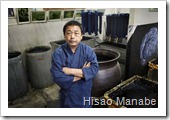 Momotaro started is 2005 as store original denim (Rampuya Original denim). We just tried to make a pair of the best Japan made denim for Japanese
 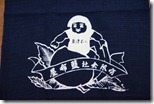 people. Our president wanted to put some name on this label which can easy to understand its from Okayma, Japan. And we put the Momotaro name as a label. For Japanese people, Momotaro is one of famous fairy tales (like a “Peter Pan”). And this source of story came from Okayama. So
people know Momotaro=Okayama. And we try to connect
Momotaro=Okayama=denim=No.1
In this 6years,I started selling overseas market and trying to visit the
store as much as possible. Bring all the samples, telling history and
culture,spirit,japanese denim..etc. We don’t think we are the best,we just try to be the best. Our friends and denim lovers who share our spirit,they bring us into the market.4.What is the basic concept behind Momotaro collections? Do you go for seasonal collections or timeless ones which are not affected by seasons.
Concept:
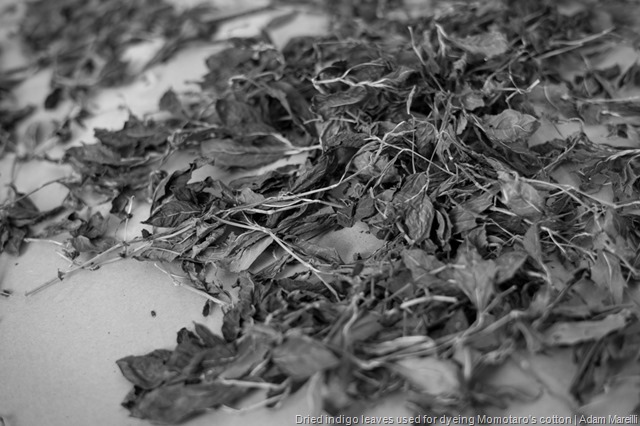
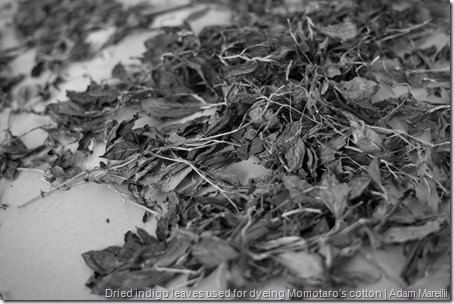
Momotaro Jeans uses only the best natural raw materials and dyes the cotton yarn with pure indigo to weave the Original denim using its vintage looms by hand.
At Momotaro Jeans, the artisans have a saying:Â Made by hand without
compromise g. All you have to do is try on a pair of Momotaro Jeans and
you will see for yourself from the exquisite details and rich indigo
blue that Momotaro jeans are of superior quality.
Mainly we sell timless collection. But we also sell seasonal collection
mostly in Japanese market. I try to build Euro collection which not
selling to Japan. Normally we don’t make big discount sale.5.You also have the Japan Blue brand. How is it different from Momotaro?
Japan Blue started from Euro,U.S and Asia then Japan. = its focus
overseas market and focus on material. Not only denim but high quality
material.
Momotaro started for Japanese market then Asia-US-Euro. = focus the best quality vintage denim.
6.There is a lot of misunderstanding on the kind of looms used by denim pioneers in Japan for making denim. Do you think these looms were all imported from US mills ? What role did these looms play in bringing up the Japanese denim industry?
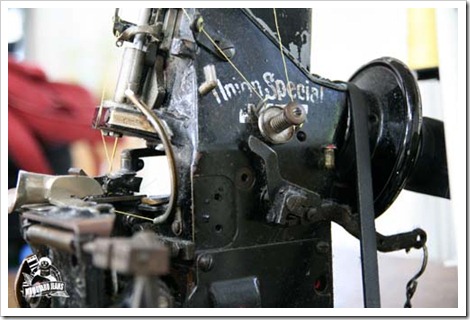
50years ago Belgium looms maker export them machine to the world, and
some of our craftman remeber the machine came from Belgium also
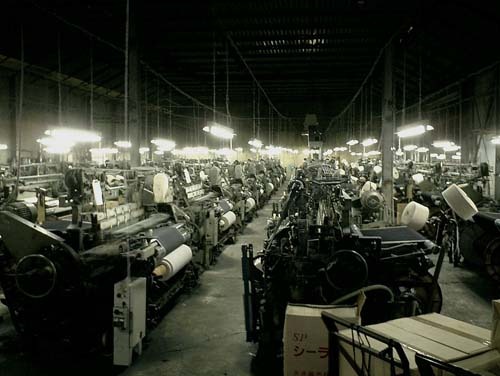
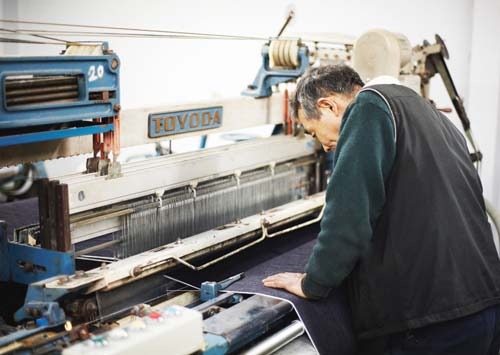
technician came to teach how to work.And we also use vintage deadstock”TOYODA” looms which TOYOTA car company started them business in 1890.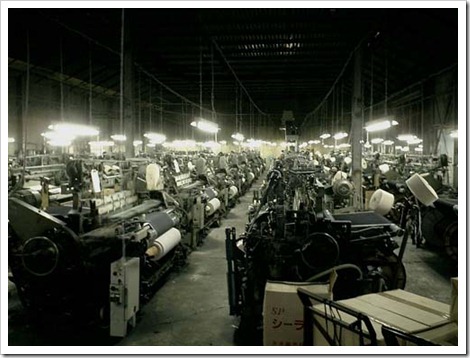
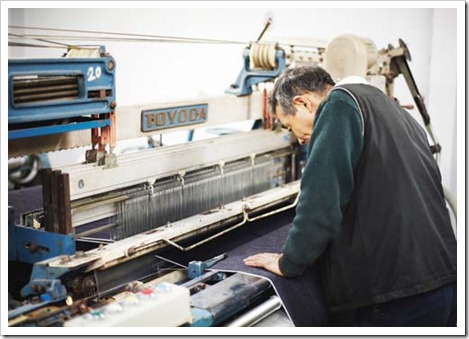
7.You are also a unique brand because you weave your own denim. Do you think it makes a huge difference to have your denim woven by yourselves?
Our sister company Collect Textile has been trying to produce high quality material and denim for 22years.
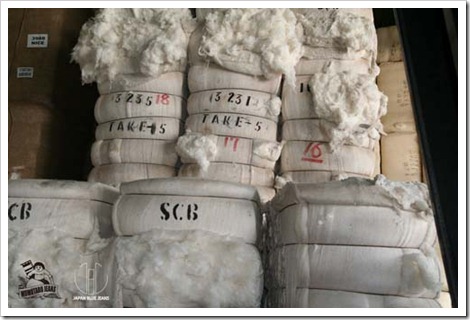
I think raw denim needs good quality material. If we want to try to build the best quality denim in the world, that’s the best way to weave your own material. Ofcourse you need a lot of knowledge ,experience and practice for the same..8.What role do you think does cotton play in denim quality . I believe you use mainly Zimbabwe cotton. There must be a strong reason behind the same.
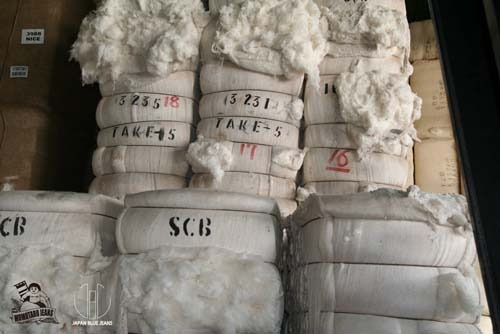
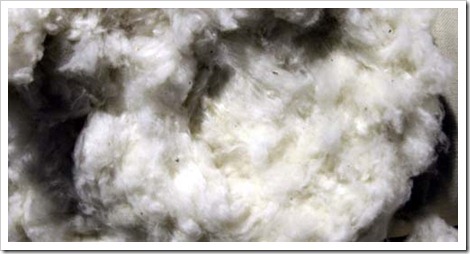
Yes, we mainly used Zimbabwe cotton. Its one of the finest cottons and
long staple, its can create great color with Indigo. Also it gets softer
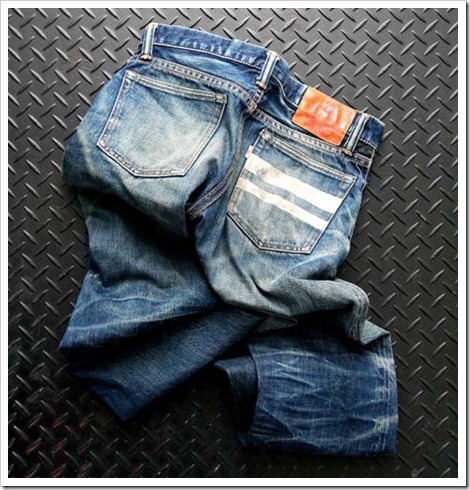
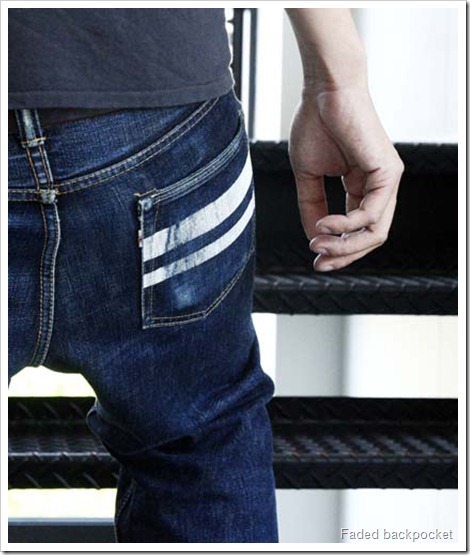
after uses, makes good fade and fit your body.
9.How do you think Japanese denim fashion has changed in last decade . I am sure it must be reflecting in your collections too!
Its changed like this –
Hard washing denim->Natural fade denim.
Hard raw denim -> Rinsed raw denim.
Vintage replica -> original denim
Of course we follow this change but not always. We want to create new
vintage generation with new denim history for next 100years by Japanese
denim.

10.Many thanks for taking out time to speak to us. Any advice for denim lovers ?
Enjoy with your raw denim, your life will appear on your denim. Its your
history of denim.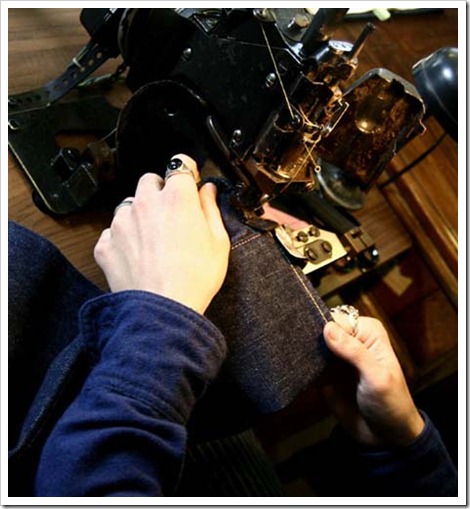
-
A Visit to Momotaro – Kojima , Japan
This article is a reproduction of an articleby Adam Marelli on his recent visit to Kojima (Japan) where he saw the traditional denim production by the jeans brand Momotaro..It is a beautiful outsider’s view of the rare art of Japanese denim production.
Blue jeans emerged from humble beginnings as the workwear of Americans, but in the wake of World War II it was the Japanese who would usher in a new era for blue jeans. During the reconstruction of post war Japan, American looms were imported and set up in small factories. Soon enough, companies like Toyoda (who would later become Toyota) produced shuttle looms of their own. Many of these machines are still in use today, because as much as companies, like Apple, can’t seem to understand…you can actually build a product that lasts more than four years.
Last year Adam embarked on a project called “Lost Ceremony.â€Â The first stop was a town that most people would never visit. There are no famous temples or red gates sprinkled along the river. Kojima, located in Western Japan is home to fabric producers, most specifically makers of some of the world’s finest denim.
Marco Polo, Ali Baba, and Columbus
Exotic fabrics from India to Peru have commanded treasure chests of gold, started wars and paid some of the most famous dowries in history. While advancements in technology have allowed industry to produce the vomit-inspired upholsteries that scratches us on bus trips and the miserable patterned rugs than can depress an entire Texas cheerleading squad, there will always be specialty producers who take the time to make a top quality product that feels, wears, and looks better than any imitation.
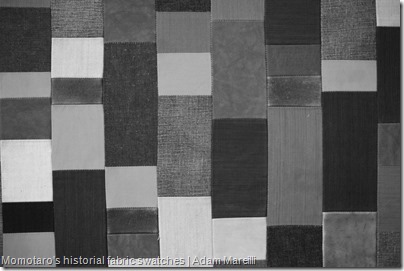
How to Spot Quality
Most of our clothes are bought off the shelf. In a person’s lifetime they might get a handful of garments made for them. Something I learned during my years in construction was that most of the things we buy from Hondas to Bentleys are pretty much a-la-carte options at best. Very few items are actually custom made from start to finish. And that’s not necessarily a bad thing. Because with the endless options that customization offers come the anxiety of not knowing what you want, how to ask for it, and if you really need it at all.
So how could someone spend $1,500 on a pair of customized jeans? Well a trip through the Momotaro workshops opened my eyes to the areas where most companies fall flat on quality production and where they chose to rip open the DNA of a jean and redesign them from the ground up.

Uchida coaching the shuttle loom into the smooth rhythm of production. With all its belts and pulleys, they look like something out of a Dr. Suess book. But in the end the machines put out some incredible denim.
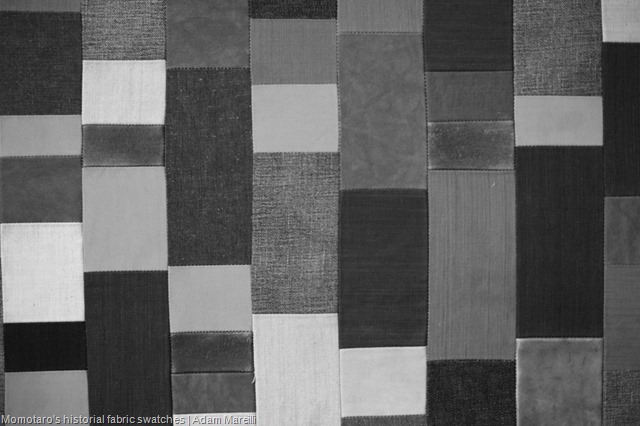
Momotaro has a history of fabric production that is over one hundred and fifty years old. This is not your “Hipster-pop-up-hand made-authentic-heritage-over-hyphenated-excuse†for small scale production. Denim only represents 20% of their total fabric production annually. In true Japanese style, if they can’t do it perfectly they would rather not do it at all. The range of denim they produce ranges from hand dyed and hand woven to synthetic dye and motorized loom weaving. They cover all of price ranges as an artists would learn how to mix all of their colors. As new lines of jeans are introduced, they rest of a firm foundation which allows Momotaro to make decisions based on preference not strictly economy. In the last few years Momotaro has branched out to European and American markets which has presented them with a new set of obstacles. The international markets, not only, have different visual tastes…they are also shaped differently. What does that translate to in jeans? Well there are not too many 6’-4†guys named Lars cruising around the streets of Kojima. People come in a multitude of sizes. Momotaro had to make some scale adjustments for their clothing to be internationally compatible. But the little tweaks in length and breadth did not impact the quality at all.
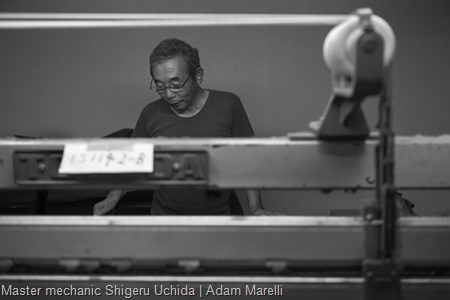
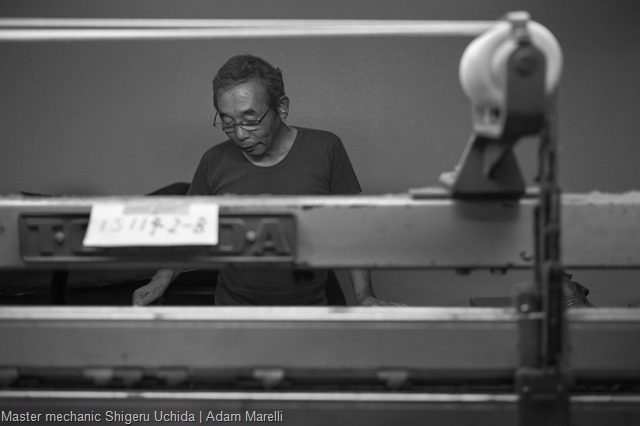
Master mechanic Shigeru Uchida is one of the dividing factors between Momotaro and the rest of the denim world. Adam Marelli
Why your old Levi’s aren’t Momotaros
At the moment American denim companies like Levi’s and Lee are ironically trying to reinvent themselves as quality brands. The irony is that the denim business they shipped to Japan fifty years ago is now producing their highest quality jeans ever. So where are the details in a pair of jeans? Just flip a pair of Momotaro’s inside out to see some of the attention they give to their jeans.
Zimbabwe Cotton. If you really want to compete in the denim world the cotton has to come from Zimbabwe. Why? Well…contrary to Eli Whitney, they claim that the finest cotton still needs to be hand picked. The cotton gin crushes the husk of the cotton into the fibers and damages them. The feel is outstanding, but I have a feeling if anyone tried to resurrect hand picked cotton in the United States it would cause riots.
Copper or Sterling Silver Buttons & Rivets with the family crest. Inside the jeans you will not find anonymous copper rivets. Momotaro embosses their family crest of the rivets. Its a subtle way to say that the company is held together by family.
Heavy Duty Pocket Liners. I wear jeans for any type of work day. Whether I am at a work bench, on a shoot, or trying to keep my eyes open through a meeting, I often wear jeans. One thing that kills me about cheap pants is that without fail the pockets rip. How do I know? Well usually its because I lost something (like my keys) and then realize there was a hole in the pocket. Replacing those magnetic front door keys can be expensive. So I love that the pocket fabric is not made of the standard tissue paper you find in chain store denim.
The Fade. I am not talking about your barber’s ability to go from skin 1 to a number 4, when I say fade I mean how well Momotaro’s break in. An axiom of aesthetics is that anything that looks best new is of poor design. In contrast to a fashion culture that is constantly trying to pass off 16 year old girls as women (Calvin Klein, I’m looking at you…) age is not something to be feared. And while we are all doing our best to “Earn our grays†or jeans should be along for the ride. A well made pair of jeans will reflect their owner, which is why my jeans and yours will never look the same. Its the closest thing to a fashion fingerprint out there. Much better than buying some pre-faded, belt sander interpretations of denim. You will have to wear these in yourself. And that is half of the fun.
The Peach. The Momotaro myth of a young warrior who protected the region is symbolized by the peach. The surrounding area is famous for its produce, which is tangled in local folklore. Momotaro decided to pay homage to their local production through the embossed design on the rivets and also the pink inseam stitching of the jeans. Its a small and subtle detail. But nothing makes the Japanese happier than playing the game of subtlety.
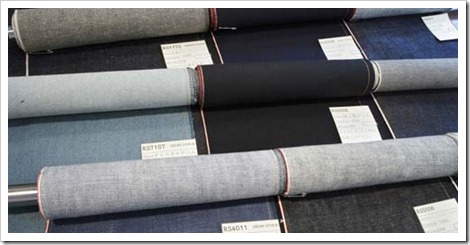
Selvedge/Self Edge Fabric. If you have ever walked into a boutique and a sales person has tried to sell you on “Selvedge denim†and you thought they just had a lisp, you are not alone. Turns out, they are not mispronouncing “self edge.â€Â Selvedge refers to the narrower width of fabrics produced on shuttle looms. Its a tailoring detail that may not interest anyone but denim die hards, but from a production stand point its worth noting. Textile companies are always looking for ways to stream line, aka lessen production costs, even at the expense of quality. Selvedge denim is not an open weave at the end of the loom. The fabric is woven closed on the ends. This limits the overall width of the bolts. So its not less expensive, in fact its a good deal more. The end result is a different feeling and looking outside seam on the leg of the pant. When we consider that it is the longest seam in the entire garment, it makes sense not to cut corners.
Master Shigeru Uchida
The pulsing clicks of the shuttle looms dominate the workshop. Master mechanic Shigeru Uchida excuses himself for not having ear protection for us. Click and bang of springs, gears, and rollers sounds like someone dropping a box of wrenches down a flight of stairs. But underneath this cacophony is a rhythm that Uchida conducts with a small box of hand tools. He is the only one who knows how to work all of the looms, something that is not lost on Katsu Manabe, next in line at Momotaro. He explained that Uchida has been servicing these machines for over forty years. His education in their inner workings was a classical apprenticeship, light on questions and heavy on beatings. Uchida’s tough upbringing in this maze of fabric and gears is not something he wants to pass on. He speaks softly to his apprentice who is fetching tools for the constant adjustments. It almost appears that making fabric is not much different than farming produce. Both require an inordinate amount of attention and maintenance.
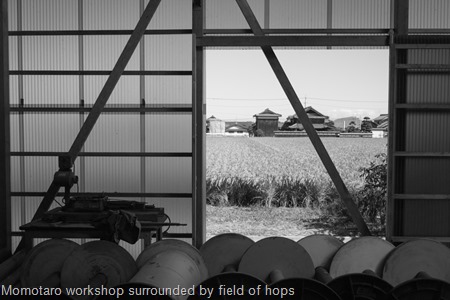
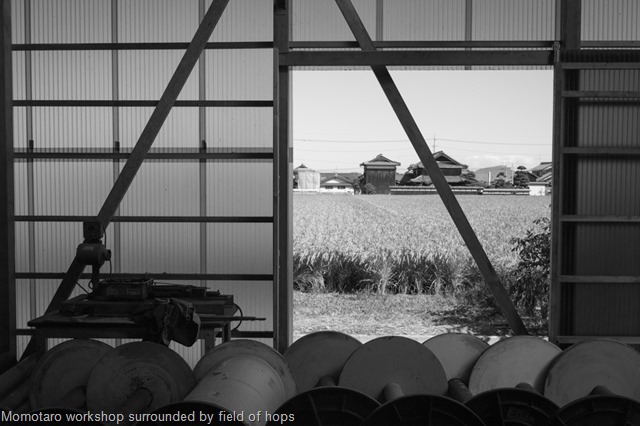
The Momotaro workshop is surrounded be fields of hops grown by the local breweries. Adam Marelli
Working around Uchida was a delightful experience. Whenever I have the opportunity to watch people who are extremely good at their profession, I get all excited. The dexterity at which he reaches through these machines is astounding. There are no electronic read outs or manuals. He touches the machine to feel and listen to its sounds. As he checks the output of the fabric from the loom he makes small adjustments to keep the machine on track. Its rocking motion appears to eventually shake itself loose. Each machine teeters on the verge or production and destruction at the same time. Without the right touch, I got the impression the looms would shake themselves to death. But with Uchida’s tuning hand they pump out thousands of yards of beautifully rich denim.
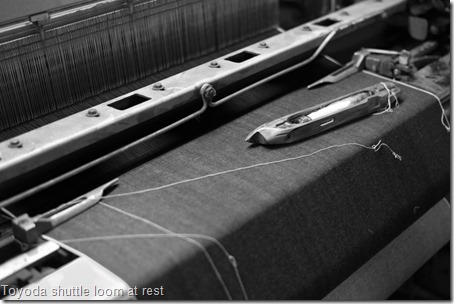
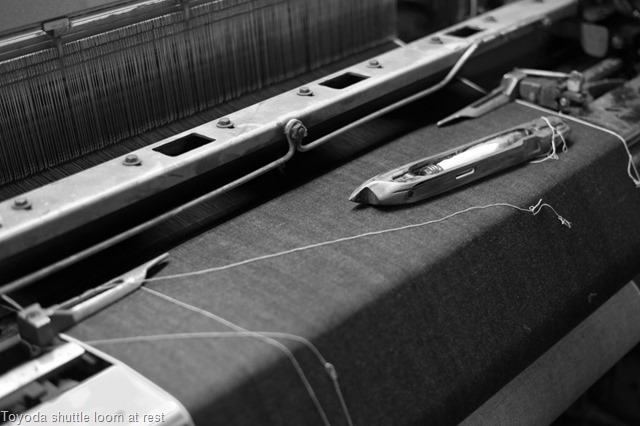
A detail shot of the Toyoda shuttle loom at rest. Keeping these machines running has been Uchida’s study for over forty years. Adam Marelli
Sun Down
At the end of the day we all retire to the back of the workshop, for the post work smoke break. Never having been a smoker myself, its strange that I actually enjoy these breaks. Its nice to see Katsu and Uchida step away from their work. They have a calm satisfaction that belies the complexity of their daily tasks. But as the sun is setting on the fields of hops and a bit of sun light catches a lone persimmon hanging from the tree, it is easy to see how work and poetry made their way together in Japan.
On a journey, ailing–
My dreams roam about
Over a withered moor.
–Matsuo Basho
About : Artist & photographer, Adam Marelli is based in New York
 City. His projects explore the ancient crafts of building, maestros in their  workshops, and designs handed down through generations. Whether he is photographing a master carpenter, dodging fish at a local market, or at the drafting table, he is in constant search of the threads which bind our cultures together.