Author: Sandeep Agarwal

  • Sustainability Report–Crystal Apparels

    Sustainability is the capacity to maintain a certain process or state indefinitely. Sustainability has been expressed as meeting the needs of the present without compromising the ability of future generations to meet their own needs. With over 1800 gallons of water estimated to go into production of one jeans (from cotton growing stage) ,  sustainability is being taken seriously by some jeans manufacturers worldwide. One of such manufacturer is Crystal Apparel Group (HK) with operations in China and Vietnam.

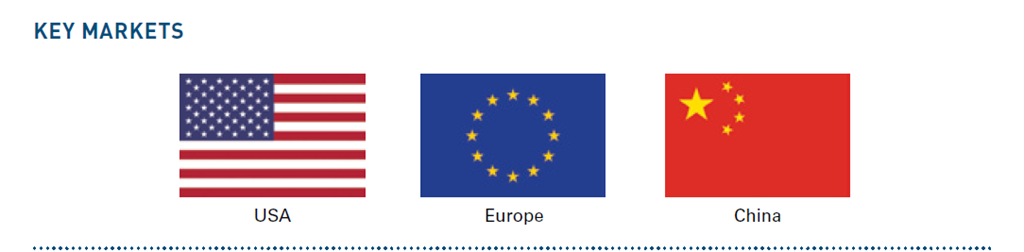
    Crystal Apparel Ltd (CAL) is one of the subsidiaries of Crystal Group focusing on denim garments, with its own facilities in Zhongshan and Jintan, PRC, serving markets of the United States, European and Asian countries.

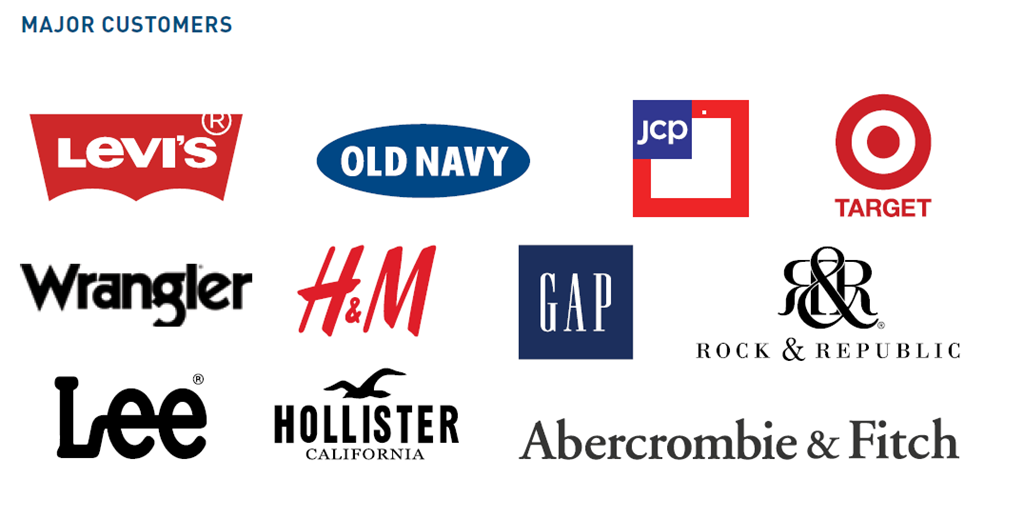
    With an outstanding global customer base, CAL caters to multiple brands that market their products across the world with an annual production of over 25 million pieces of garments and annual sales turnover more than HK$1.8 billion in 2011.
    image

    Crystal Group commits to be socially accountable to the world by improving its environmental performance. This is their second sustainability report which complies with the Global Reporting Initiative (GRI) G3.1 Guidelines and corresponding to level C (last report was published in 2010). This report relates to the denim jeans factory, Zhongshan Yida Apparel Ltd. (thereafter named Yida), located at Zhongshan, Guangdong Province, PRC, which is wholly owned by Crystal Apparel Ltd.
    denim customers

    Crystal Apparel Ltd. is engaging in woven garment production, its subsidiary, Zhongshan Yida Apparel Ltd. is a denim garment specialist. Most people think the jeans production is a traditional industry, with high energy consumption and labour intensive. However, when  Yida was setup in 2005, the group worked with innovative ideas in the operation, which includes their sustainability framework.

    The ECO APPROACH

    Eco Approach

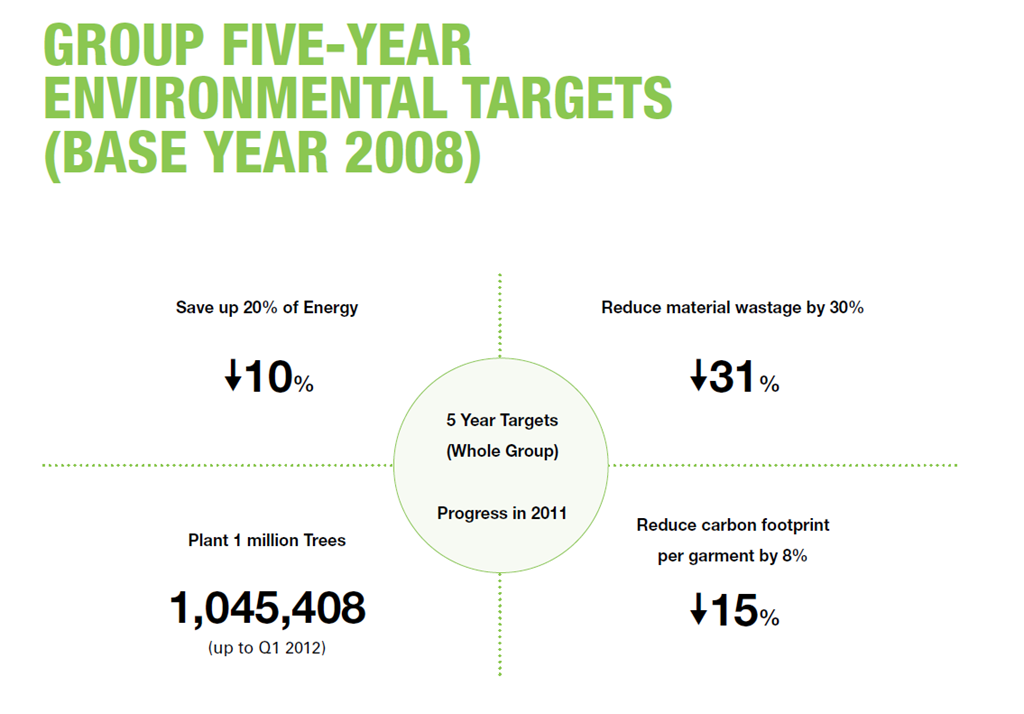
    enviromental targets

    Energy Consumption

    The nature of jeans production can be energy intensive, we value energy efficiency as an opportunity to reduce costs and emissions.
    imageimage

    Carbon Intensity —Emission per Garment

    In 2011, the performance of Yida was 2.657kg CO2e per garment, 22% less than in 2008.

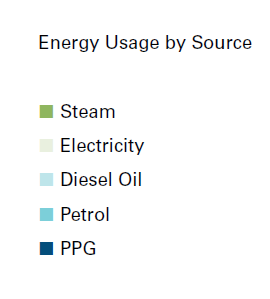
    Energy usage by source

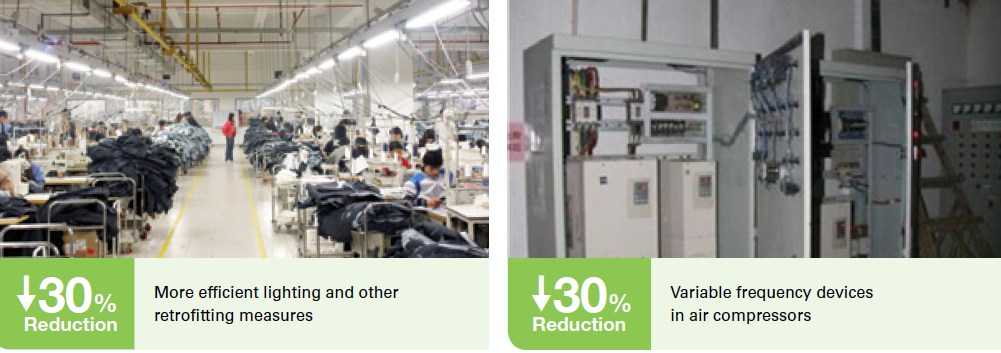
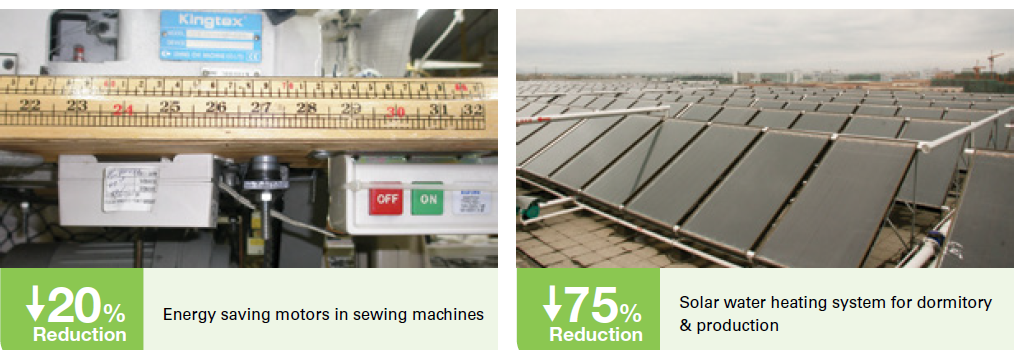
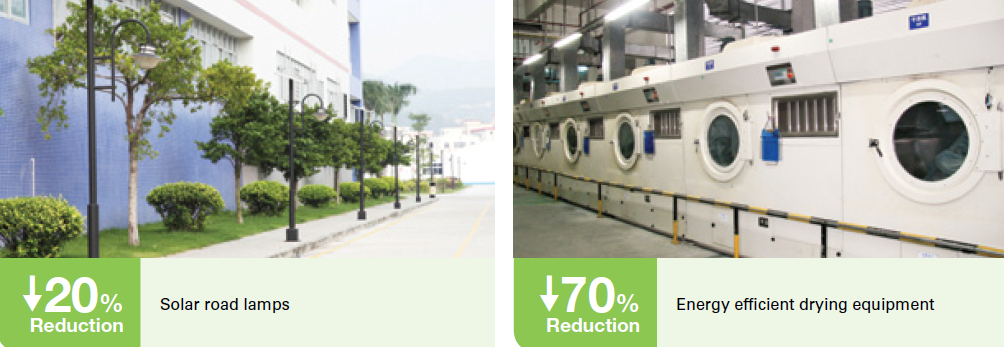
    Different energy saving measures adopted to save electricity. Some of these were:
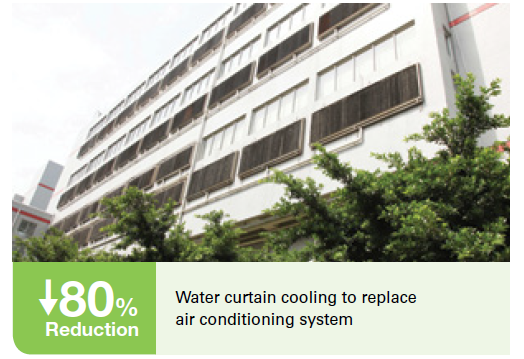
    Water curtainEnergy efficient

    Energy saving motors

    Energy efficient equipments

    Water Consumption

    “Water has become scarcer in the world. As part of our
    effort to conserve water, we find ways to reduce the
    fresh water consumed in production while enhancing
    the reuse rate of treated wastewater. In 2011, the total
    water consumption was 1,483,772 tons, in which 60%
    is recycled water.”

    • Fresh water 40%
    • Recycled water 60%
    100% waste water was treated
    • Recycled in production 70%
    • Re-used for flushing and plantation 20%

    Noise Management

    In hydro-extraction, they replaced the traditional machine with high pressured squeezer, which produces no noise, and provides :
    • Better working environment for workers
    • 20 times greater efficiency than traditional extractors

    As for power generators, sound isolation rooms and equipments were installed in order to eliminate the intensive noise levels from the machineries. Such isolation provides a better working environment for employees, as well as the neighbouring community

    Up-Cycling – Recycled Cotton
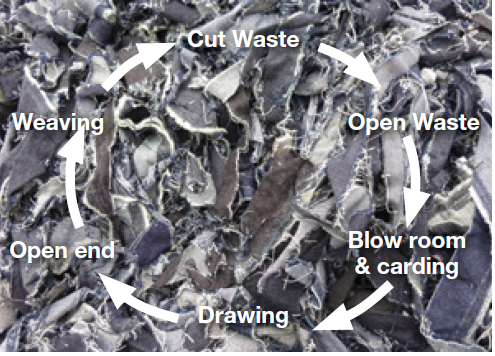
    denim recylcing

    Instead of depositing cotton fabric remnants into the landfills, CAL manufactures certain lines of denim with recycled material – cotton.
    The initiation to recycle fabric remnants helps in upcycling the waste to a better extent while conserving natural resources including land, water and energy for the whole product life cycle. In 2011, they turned 774 tons of fabric remnants into recycle fabric (which was equivalent to reducing 774 tons of waste), and saved 968 tons of cotton a year.

    Waste Recycling

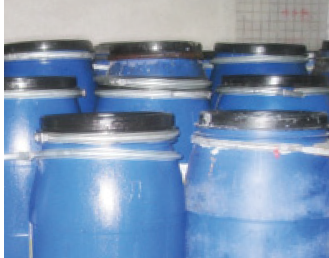
    CAL  joins suppliers to recycle used products, such as chemical barrels,
    thread cones, marker paper cones and printer cartridges.
    image

    Industry-Academia Research Partnership

    The introduction of advanced technology, training and development,
    optimize productivity and enhance product competiveness are Yida’s
    strategic initiatives in industrial transformation and upgrading.
    They  now partnering with 4 institutions (WuYi University, GuangDong
    Pharmaceutical University, DongHua University, University of Electronic
    Science & Technology of China) to work on diverse projects, which include
    production and environmental improvement, information technology,
    human resources and product design.

    Innvoative Technologies
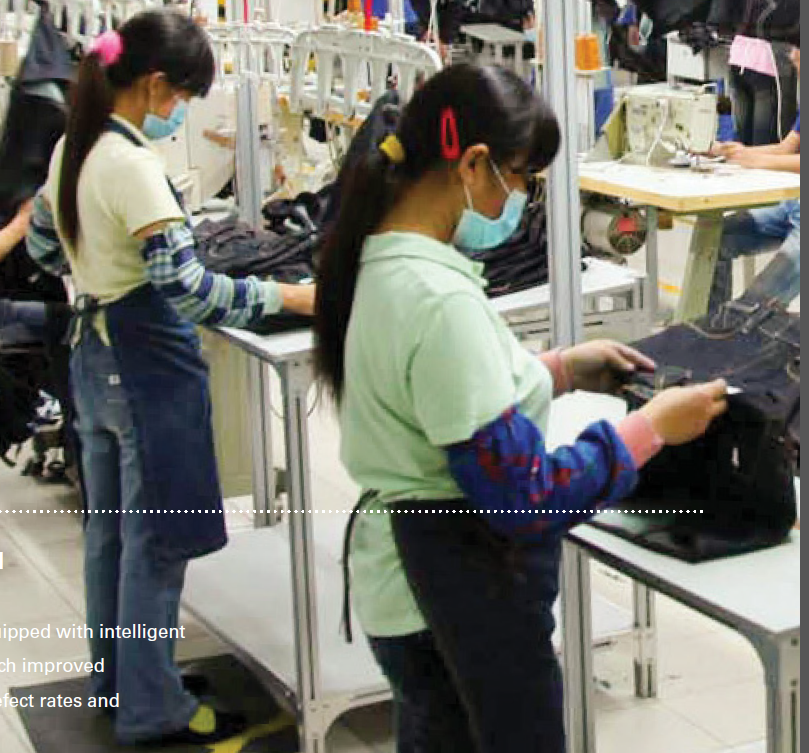
    Automated Rover System - Jeans

    Automated Rover System – The production units have been equipped with intelligent hanger system (Rover System), which improved productivity, reduced rework and defect rates and increased operators income.

    Washing Processes

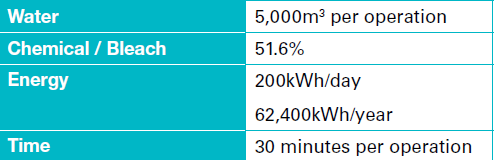
    The use of “Ozone Treatment” technology for waterless bleaching achieves no-water-no chemical washing process. It provides an eco-friendly finishing
    to garments and denims to cut chemicals, and is said to be a finishing that is “washed by the atmosphere”.  In Jun 2012, CAL successfully produced
    zero-water eco-jeans for one of the most famous U.S. brand. The saving from replacing traditional bleaching with the above Waterless Bleaching is reflected here:
    image

    Environmental Awareness

    CAL says

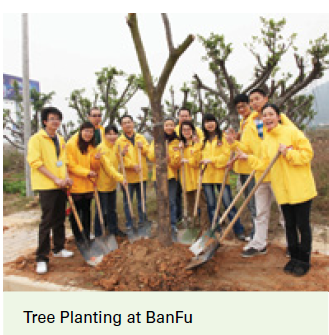
    “We believe our employee engagement can make a difference
    in our business and for the planet in which we live.We encourage employees to initiate activities that raised eco-awareness
    within their working environment and their surrounding communities.”

    Tree planting

    Sustainability would become an imperative in the coming years and would no longer be a fashion tag as  manufacturing apparel like denim cause more environmental damage. Focus on sustainability would become necessary for larger companies initially with customers demanding sustainable process besides , of course , good price. But here is the contradiction – sustainable processes are never cheap and require investments which would need to be reflected in prices of the products.
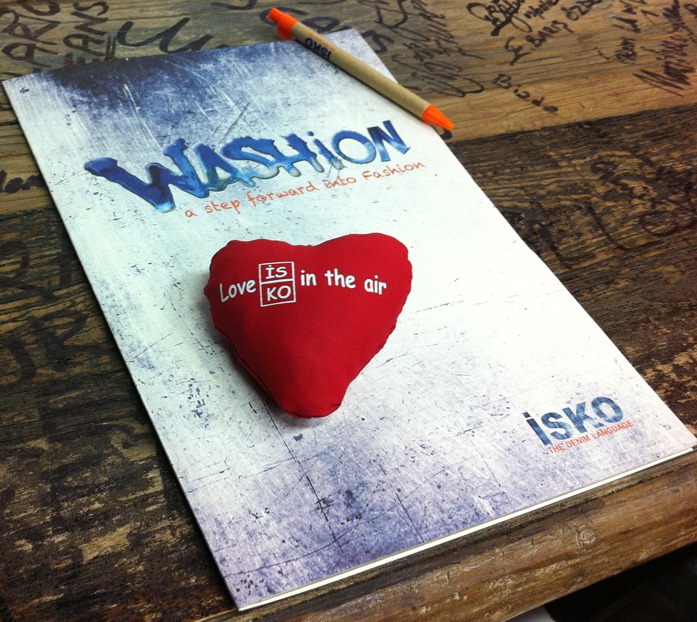
  • Isko Washion Seminar–Feb ‘13 Istanbul

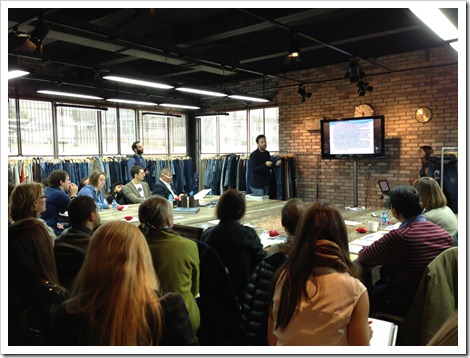
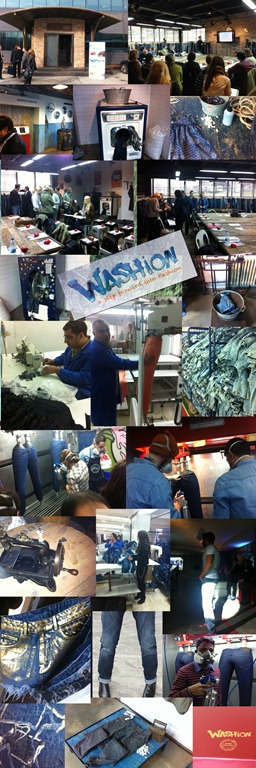
    Isko Washion SeminarIsko , the company with the largest denim capacity worldwide  , recently held a washing seminar at Istanbul . As a part of its knowledge sharing drive , Isko launches a number of washing seminars around the globe inviting different players in the denim supply chain from chemical suppliers, brands, retailers and many others.  I  too attended the seminar at Istanbul having been kindly invited by the Isko team .  It was actually a very enjoyable experience to interact with the charged Isko team who were on a high on a great performance in heart2012 despite global slowdown and also with  a number of denim people  from different parts of the world including brands like Topshop, Pull and Bear, Inditex, Mih Jeans, Les Temps des Crises , Chasin Score Mac Jeans and many others. It was a pleasure to see competing brands coming together to participate in an educative seminar .

    Washion seminar Isko Denim22

    10

    The first part of the seminar was held at DenimPA  – in a vintage aesthetics showroom for denim . Marco Lucietti – the marketing and brand director of Isko laid out the tone for the day describing Isko’s  the need for organizing such interactive seminars where knowledge on denim is shared across value chain. Marco also laid out the objective of Isko ISKO to be recognized as the BEST INGREDIENT BRAND for denim fabrics globally, like ingredient brand Lycra in fibres and Intel for computers.

    Sessions were taken by top  Isko R&D executives like Hamit Yenici and Moreno De Angelis to educate the participants about the various intricacies of stretch fabrics , on Fit and Design by Umberto Brochetto (Creative Room ) etc. Besides Nuria Estape from Clariant made some interesting presentations on Eco Processes of denim dyeing. The team showed some interesting new developments in fabrics and finishing. Particularly interesting to note was the new technology of  a new replacement of sandblasting method – the Ice Blasting – which involves blasting the garment with Dry Ice (CO2)  instead of sand. Its a very new concept  and only a few laundries in the world can handle it.  The participants were also keen to know about Iskoteca – the library with over 20,000 garments that Isko has in Italy and which enables customers to go through a vast depository of denim garments in different washes from around the world .

    Isko Fashion Pictures copy

    The afternoon session was the most interesting where the participants were taken to  a unit of  Baykanlar  – a large garment unit from Turkey manufacturing about 6 million garments/year and supplying to major denim brands and retailers in EU . Besides an introduction of the unit, it was cool to see a catwalk with  Baykanlar Collection made from Isko fabrics. Some of the interesting fabrics – like Reform (from Isko) – could be seen on young women and it was particularly noticeable  that the women did look slimmer in this particular fabric  – ratifying a claim often made by Isko. Of course, this fabric has been used by a number of top brands for this particular functionality. Loomfx was an interesting fabric for men which retained the aesthetics of a raw denim look inspite of being a comfort stretch fabric.

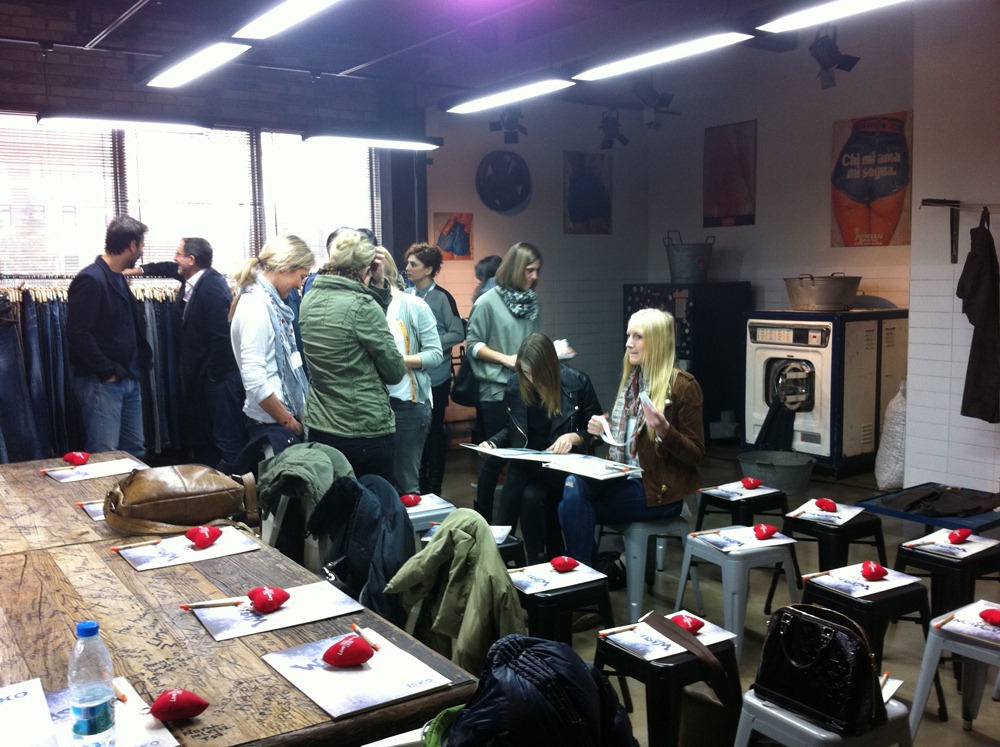
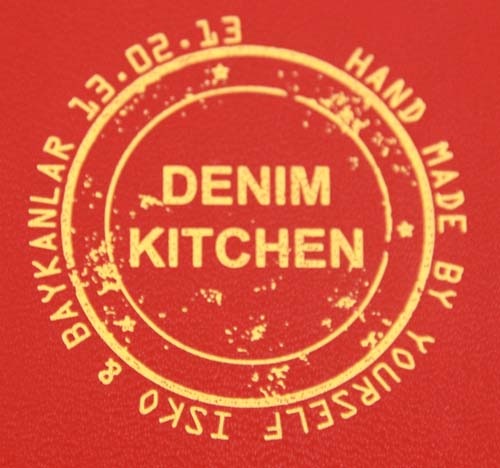
    imageThe visit to all the operations of Baykanlar unit was educative and interesting – specially the dry processing part.  However, we were in for a surprise when suddenly we were brought  into a room with dry processing machines and were divided into two groups – the DENIM denim kitchenKITCHEN . Each of the groups was shown a WASHED Jeans and we had to replicate the looks on a raw jeans . Each one of us was given a  raw jean on which we applied resin , created whiskers, applied PP spray  and then hand sanded the jeans .. It was fun and created competitive spirit among the participants to bring out the best jeans !!

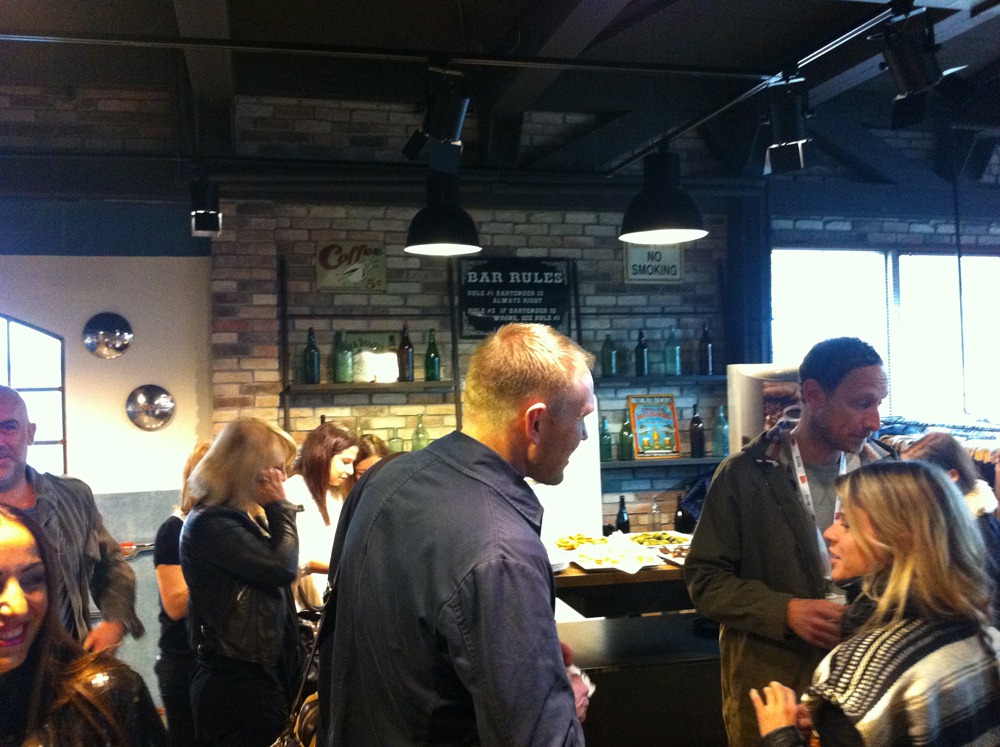
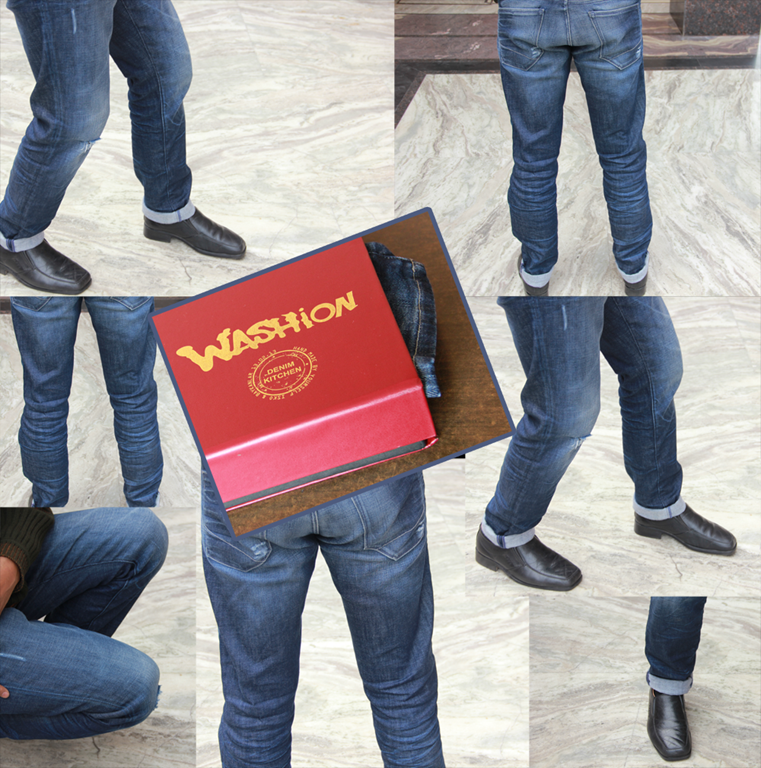
    I should not forget to mention the great party at the end of the day – where we had fun with Isko, Baykanlar teams . However,  the biggest surprise of the day was when we were presented with SAME JEANS that we had created with our own hands. It was just  a plain good feeling to look at your own creation . And of course, my jeans were probably washed the best (or at least I think so ) .I am sure the quality of washing of my  jeans entitles me to a  few  job offers from Denim Washing Plants !! .

    Washion Denim Jeans

    One question, though ,  still  remains to be answered. No one asked the participants their waist size and length and still got perfect size jeans(at least myself )  on which they had worked..Don’t know how Isko/Baykanlar team managed this . Need to ask them the secret sometime ..

    Thanks to Isko team for organizing a great Seminar ….

    We have created some videos from the show which can be seen below (only those who view this article online can see it ).


  • China Denim Brands Market–A note

    Here  is a report on Chinese denim brands market . It explains the main tiers of denim brands market in China. Also is given a list of  TOP 10 Denim brands in China. There is an analysis of  the structure of brand consumer groups for different tiers. Also some details on volume of production of denim in some imp regions of China. 

    Denim brands market in  China’s domestic market, is mainly divided into [private_special] three tiers : first-tier international brands, second-tier domestic brands (domestic and international)  and third tier hybrid brands:

      1: First-line brands (international brands): International brands firmly occupy the main shopping and commercial area of ​​the large and medium-sized cities. These are world wide known brands with high reputation and visibility  including brands like  LEE, LEVI’S, CK, Wrangler etc.

    These brands usually market themselves through own stores, chains and through MBOs. First-line brand consumer groups for their top of the pyramid, the pricing is instructive, because they are  selling culture, when the price is not the product itself, but beyond the value of the product itself . It is followed by the product to the customer confidence, quality, service, meet, identity, design, fashion, and other value, such as brand operators to receive the value of the product, but also receive added value! So when the first-line brand of products on store counter sales when the price is high ( $ 100-400) even going up further.    2: Second-tier brands (domestic brands (domestic and international) brand extension): Domestic brands are mainly produced by  the domestic professional jeans manufacturer who have years of OEM experience and have used this experience in manufacturing jeans to bring out their own brands. Some of these brands include Lanyan, Black Peony,  BBC, JASONWOOD, By letter, Blue Geese, Flying fish,  Blue Dragon, Small Devil Fish, BT, and so on. List of some of these brands can be found in these reports here and here.
    These second-tier domestic brands have their own processing plants, and have  OEM experience . Their distribution model is mainly through chain stores , shopping malls, shop in shops, MBOs and have the advantage of technology and development . These brands (especially a specialized domestic brands) generally can only be regarded as a regional brand jeans, not national.

    Domestic second-tier denim brands, in the current market environment, have much room for development. They usually have the industry background , there are a certain scale of production and design capabilities, but most of them do have not a loyal consumer groups. For Domestic second-tier brands, the main basic price is between 150 to 300 yuan, the volume  of the market  is great, but the drawback is also a lot of competing brands.Second-tier brands more or less imitate each other and even first tier brands.

    The international brand and retailers in second tier include  like  ZARA, H & M, TONY JEANS, JACK & JONES, ONLY, VERO MODA and domestic brand extensions like Fairwhale  Jeanswest, Giordano, Smith Barney, and so on.

      3: Third tier brands : Some small manufacturers brands which cannot be simply called brands  are local manufacturers who sell mainly in the wholesale agent-based and sell to  personality shop, shop-in-shop, clothing retail market, some low-end retail market. The brands are sometimes fake copies of international brands and other times just local names .The market is low end and huge – mainly selling on price points and styling.

    Analysis of the structure of the denim brand consumer groups

     Foreign brands: foreign brands of consumer groups are mainly concentrated in the white-collar workers, business people have a certain quality of life, their income is in good condition, age between 20 to 38, with higher education! This part of the brand culture has a preference, the pursuit to bring the brand to meet in the pursuit of quality, attention to social status , attention to leisure and has brand and fashion awareness.

    Domestic brands: the domestic brands of consumer groups, mainly students, ordinary office workers, freelancers, with average monthly income, age is generally 15 to 40 years of age and has average  academic level. This part of the population have some knowledge of the brand and fashion.

     The miscellaneous brands: the main consumer groups in rural and low-income focus on price while ignoring the quality but also the pursuit of style, target groups do not care about the brand, age is generally 15 to 40 years old out of which the age of 18 to 25-year-old are the main consumers!

    Top  10 jeans brands in China

    It is estimated that the following are the top denim brands in China by recognition and image value. Also these are some of the highest selling brands by volume.

    1.  Levis jeans (brand began in 1853)

    2.  Lee jeans (started in 1889)

    3.  CK jeans (Calvin Klein) (Calvin Klein jeans began in 1968)

    4. Texwood jeans (Hong Kong Group texwood’s flagship brand)

    5. Jeans Lanyan (from the manufactuers of Lanyan denim fabrics)

    6. KIPONE jeans (the Hong Kong Kipone Group brand, national exemption product)

    7 Black  peony jeans (Black Peony is also one of the important denim fabric manufacturer from China)

    8.Only jeans (Danish bestseller famous brand)

    9 Fifth Street Jeans ( began in 1965)

    10.Wrangler jeans .

    Major domestic denim production base introduced

    Jeans production base in China is largely Guangzhou-based, in areas such as Guangdong Shunde Junan, town of Zengcheng new Don, Zhongshan Tai Chung Town, and so on.

    Guangzhou Xintang town bases, accounts for a large part of the total production of denim with more  than 3,000 cowboy clothing and related ancillary production enterprises, more than 1000 registered denim apparel brands, more than 100,000 employees, reaching more than 200 million pieces of jeans.

    In recent years, the Jun’an has also become a denim manufacturing base There are about 1000 Textile, garment manufacturing and its supporting processing enterprises and  denim garment annual output value of nearly 30 billion yuan. The region has also accumulated a lot of experience in design capacity in  20 years of production.

    Tai Chung Town has formed a spinning, dyeing, weaving, finishing, and garment sewing operation  creating an an annual output of 90 million meters of denim and about 75 million pieces of denim apparel.The town has a large supply of domestic and international class enterprises. The textile and garment industry is the pillar industry of the economy of Tai Chung with   output value accounting  for 60% of local economy. The town of existing enterprises of all types is 700, of which more than 300 related enterprises for the production of denim clothing. [/private_special]

  • 3.5% Fall in Denim Apparel Imports Into USA : 2012

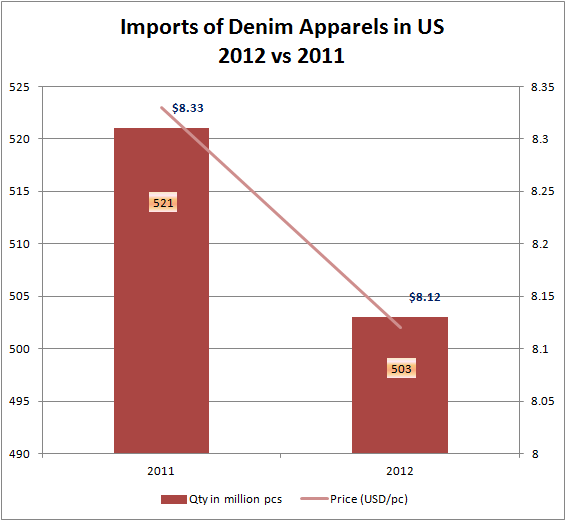
    Having received the figures for the complete year 2012, it is rather heartening to note that hte fall in imports of denim apparel in 2012 was only 3.5% less than that in 2011. The early 2012 had shown large reductions in imports and due to improved market conditions in US, these were set off in the latter part with the shortfall remaining at only about 3.5% . Going by the way the market has picked up , it would not be an improbability that 2013 may show higher imports than 2012 and 2011. Time will tell..

    Here are the figures for imports in 2011 and 2012. While the total denim apparel imports in 2011 were about 520 million pieces, the imports in 2012 came to  about 503 million pieces. The value of the imports also fell from $4.24 billion to $ 3.97 billion – showing  a fall in average value per piece of about 3% .

    Check out the graph below :

    Denim Apparel Imports USA 2012

    So, though we see fall in both prices and quantities, it still is not very negative considering that the fall in imports in 2011 compared to 2010 was about 15%. It can be safely said that the US market is recovering and we hope to see better performance this year.

  • Hudson Jeans Spring Summer 2013 Collection

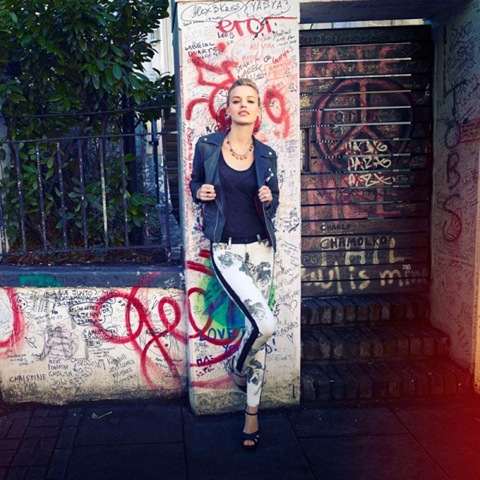
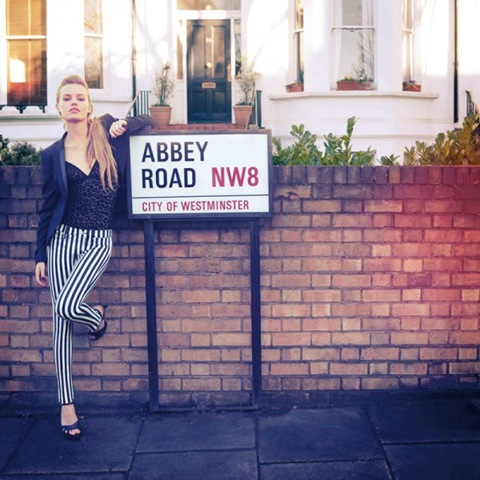
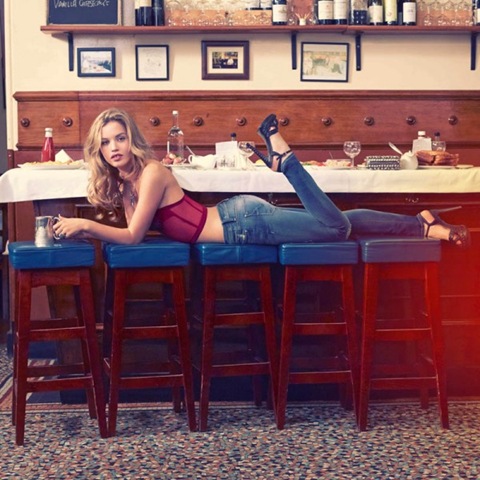
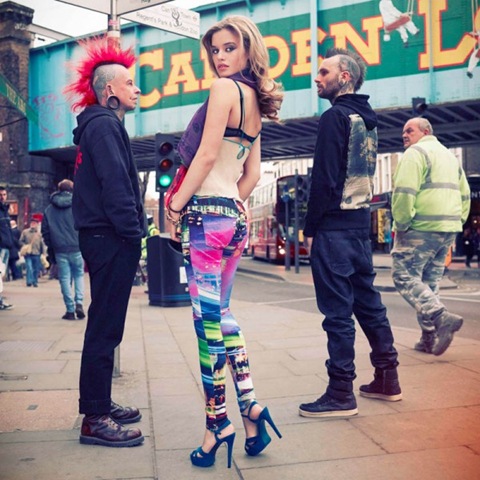
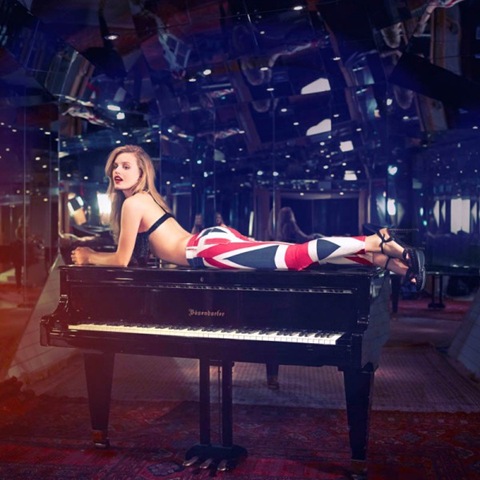
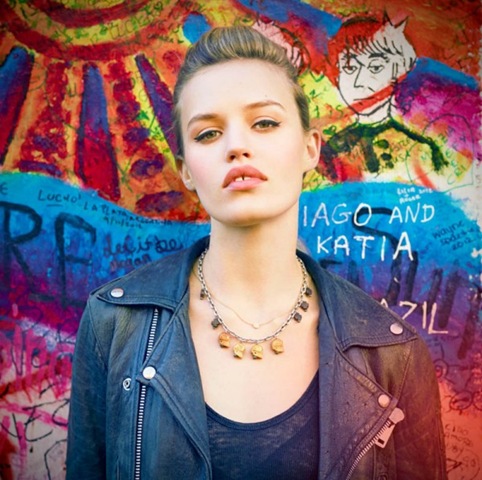
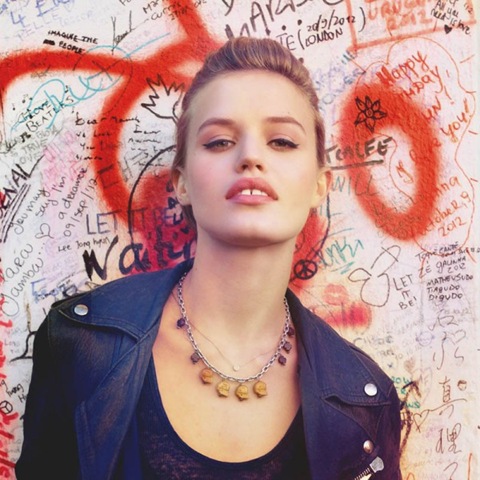
    Hudson Jeans brings out its  spring-summer 2013 campaign where stars British fashion model Georgia May Jagger. Blonde appears in London streets and spots wearing cool denim pieces . HUDSON brand has always derived its inspiration from the combination of British cool and L.A. freedom.
    Digital prints on bleached backgrounds, Fresh colors  , Abstract and architerctural lines and stripes are used to tell the story of this collection.

    Hudson Jeans Spring Summer 2013 Collection

    Hudson Jeans Spring Summer 2013 Collection

    Hudson Jeans Spring Summer 2013 Collection

    Hudson Jeans Spring Summer 2013 Collection

    Hudson Jeans Spring Summer 2013 Collection

    Hudson Jeans Spring Summer 2013 Collection

    Hudson Jeans Spring Summer 2013 Collection

    Hudson Jeans Spring Summer 2013 Collection

    Hudson Jeans Spring Summer 2013 Collection

    Hudson Jeans Spring Summer 2013 Collection .

    Hudson Jeans Spring Summer 2013 Collection

  • Evisu Spring Summer 2013 Denim Lookbook

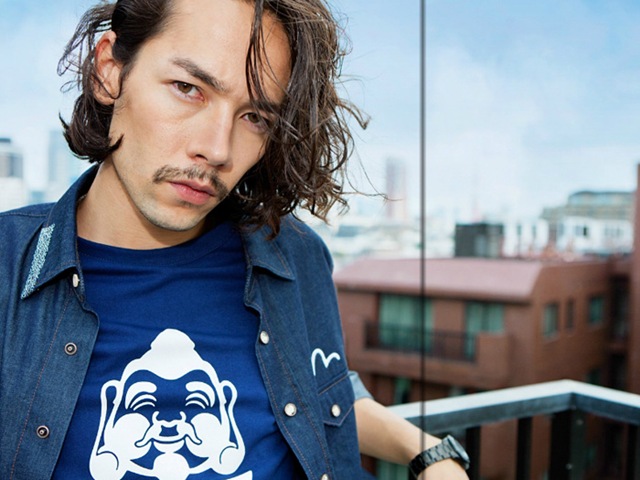
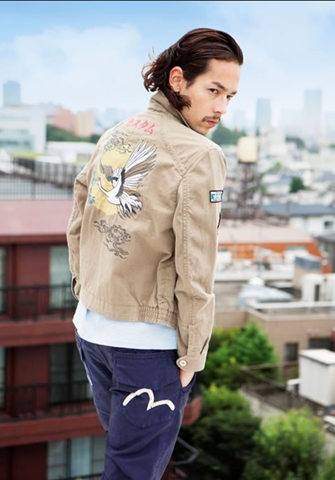
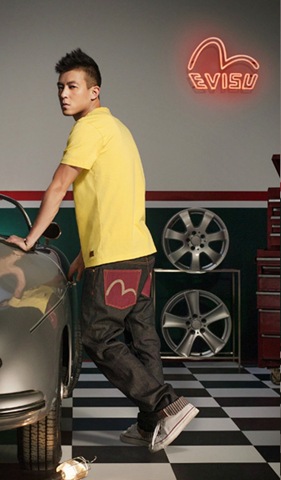
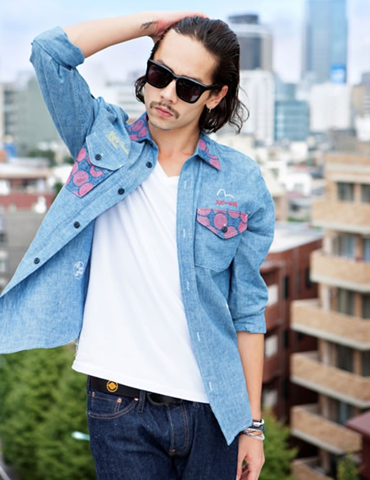
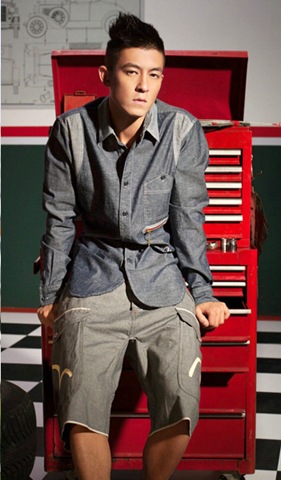
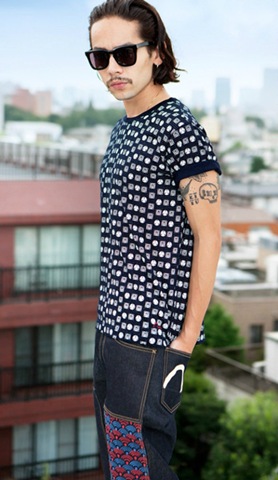
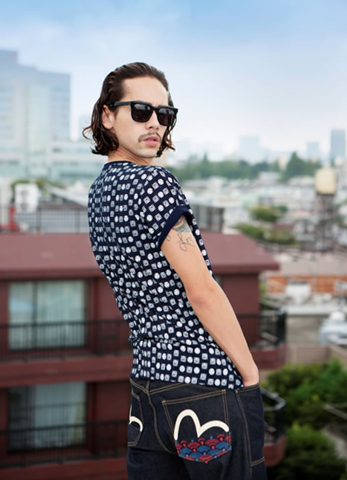
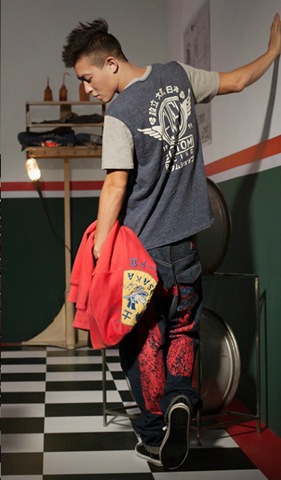
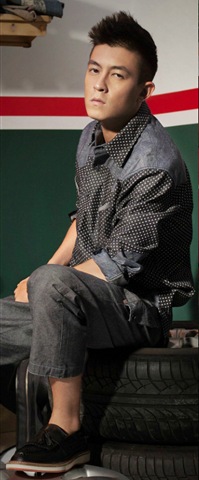
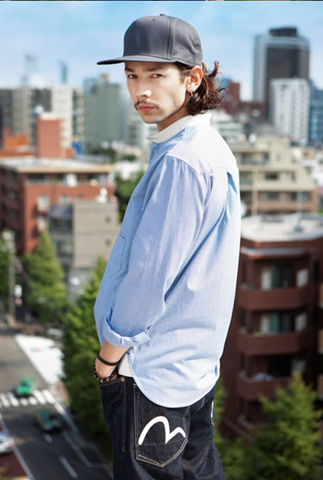
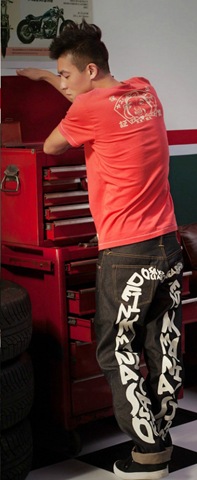
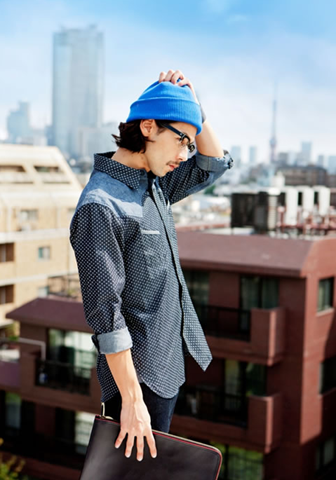
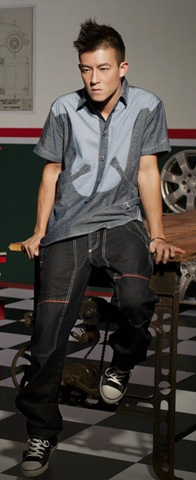
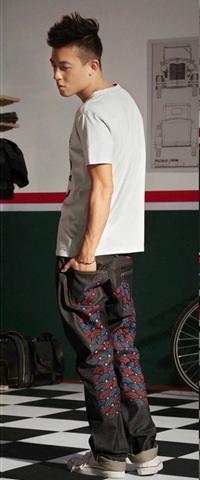
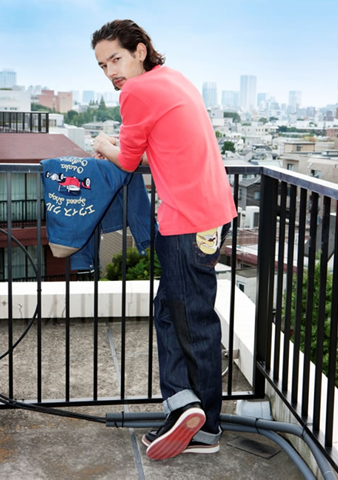
    Evisu showcases their 2013 Spring Summer Mens Lookbook. The brand which had been really popular in Japan few years back ,  works out fresh Daicock prints or embroidery on the back pockets. Also, new designs  in hte classic shirt with multi panel fabric combinations  could be visible.Evisu Spring Summer 2013 Denim Lookbook
    Evisu Spring Summer 2013 Denim Lookbook

    Evisu Spring Summer 2013 Denim Lookbook

    Evisu Spring Summer 2013 Denim Lookbook

    Evisu Spring Summer 2013 Denim Lookbook

    Evisu Spring Summer 2013 Denim Lookbook

    Evisu Spring Summer 2013 Denim Lookbook

    Evisu Spring Summer 2013 Denim Lookbook

    Evisu Spring Summer 2013 Denim Lookbook

    Evisu Spring Summer 2013 Denim Lookbook

    Evisu Spring Summer 2013 Denim Lookbook

    Evisu Spring Summer 2013 Denim Lookbook

    Evisu Spring Summer 2013 Denim Lookbook

    Evisu Spring Summer 2013 Denim Lookbook

    Evisu Spring Summer 2013 Denim Lookbook

    Check out latest denim videos on our Denim Videos section !

  • Italian Denim Lifestyle–A note

    Italian Denim Lifestyle–A note

    Cotton Inc. conducts surveys on usage of various apparel items in different countries and regions around the world. These surveys include details on consumption trends, patterns, likings , demand etc for different apparel products including denim.

    In a recent survey on Italian apparel consumption (including denim)  , Cotton Inc came out with some interesting findings:

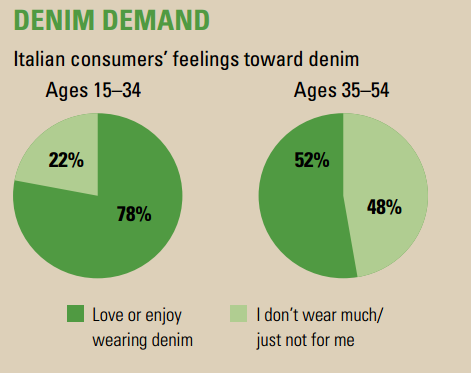
    • A majority of Italian consumers say that they love or enjoy wearing denim. As can be seen in the image below, denim is much more popular in the age group 15-34
      italian consumers denim
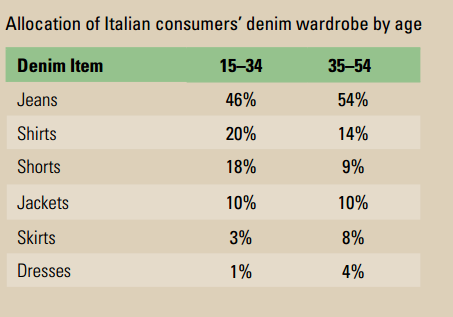
    • Italian consumers report owning about 13 denim garments , younger ones have 15 while older ones have 11 .
    • The wardrobe of Italian consumers is very diverse  as they dedicate less part of their wardrobe to jeans and more to other garments . Shirts /shorts and jackets are some of the other popular apparel items in Denim.Italian Denim Wardrobe
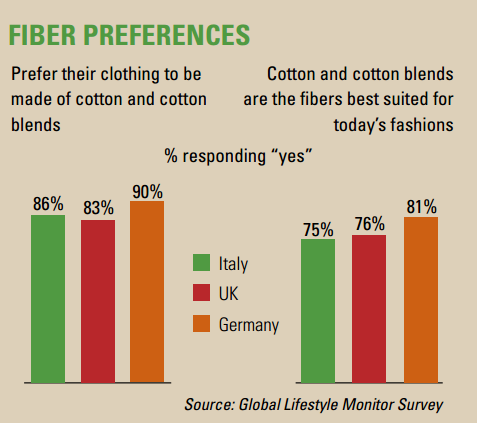
    • Purchase Drivers –The most imp purchase driver for Italian consumers has been “Quality”. Other factors like fiber content (96%) , price (95%) , performance features etc come next. Even in tough economic times, 73% of Italian consumers say they would be willing to pay more for a better-quality garment, and eight out of 10 Italian consumers are willing to pay a premium for natural fibers, like cotton.cotton fiber prefernce in EU
    • It is interesting to see that “Environmental Friendliness” coming at 5th level and “Brand Name” – much lower in the list of purchase drivers.
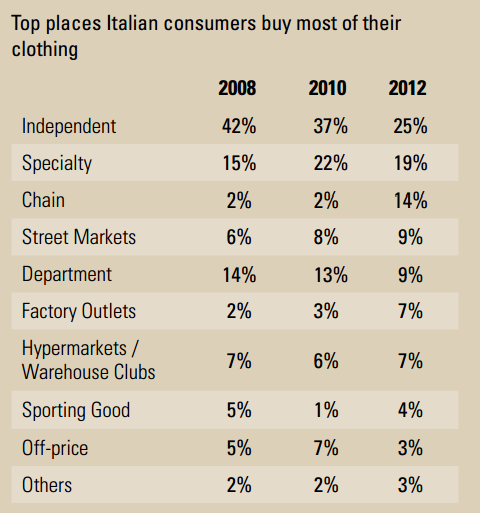
    • It is also interesting to see where the Italians buy their apparels from .
      Unlike other developed markets, department stores and hyper markets are not as popular as Boutique Independent and Speciality shops. Though the share of independent shops has been going down in the last 4 years, but still they hold the major share of the Italian apparel market. Speciality stores are on the rise as can be seen in the chart below.

    image

    About the Survey
    This issue is part of a special series of Supply Chain Insights reporting results from the Global lifestyle Monitor survey, a biennial consumer research study sponsored by Cotton Council International and Cotton Incorporated. In the 2012 survey, 5,000 consumers (approximately 500 in each of the 10 countries surveyed) were surveyed via telephone, face to-face interviews, and online. Respondents were male and female, aged 15 to 54.

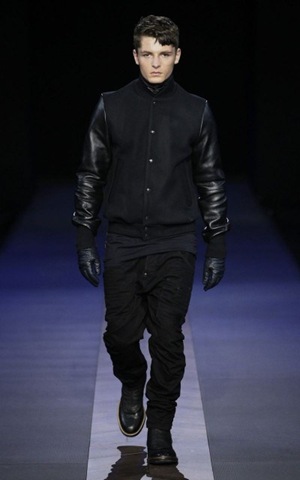
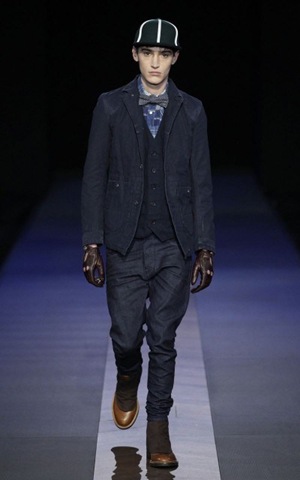
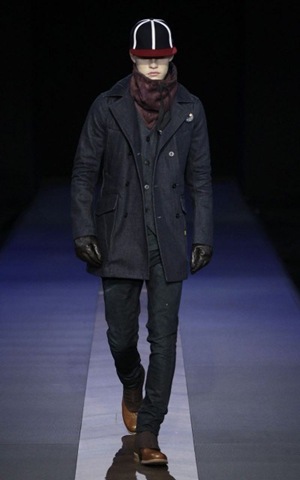
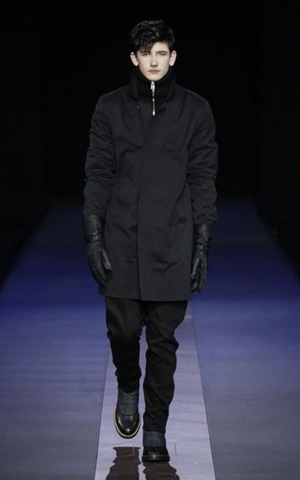
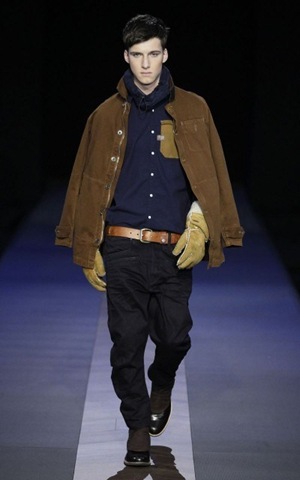
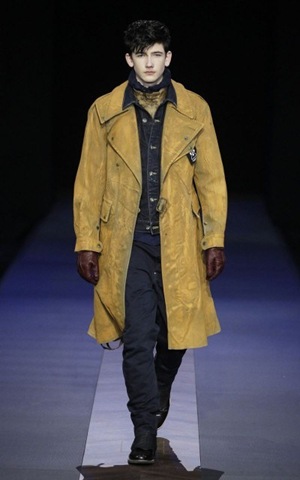
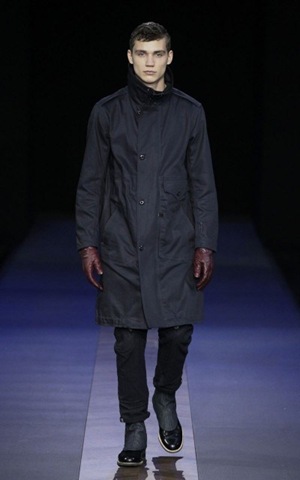
  • G-Star Fall Winter 2013 Men’s Denim Collection

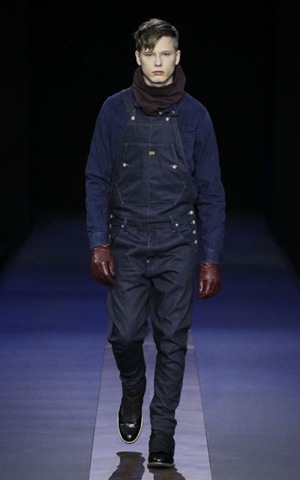
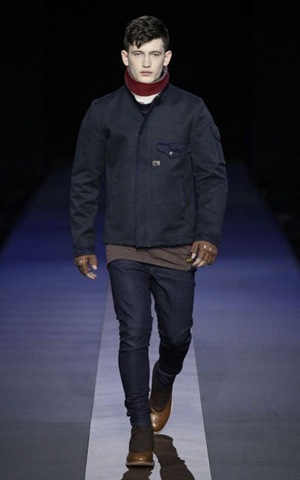
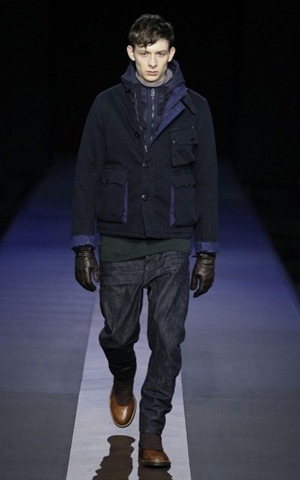
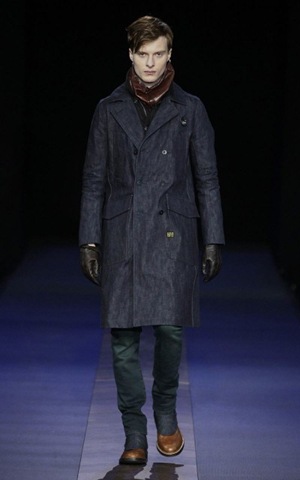
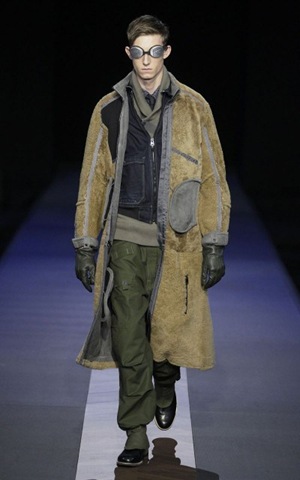
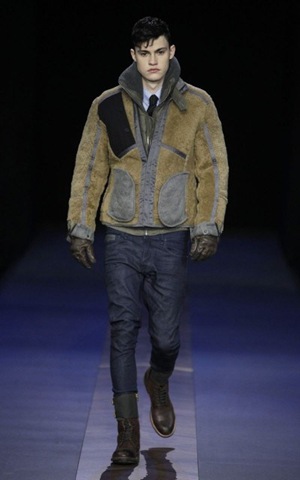
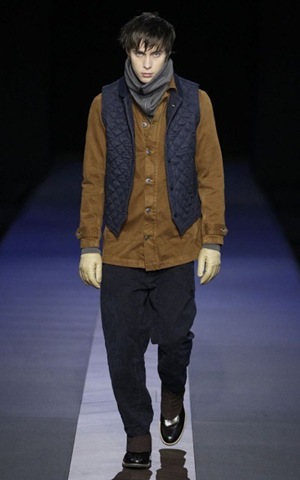
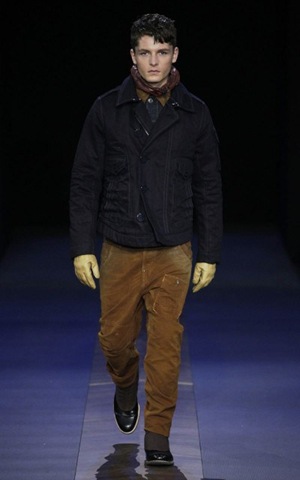
    Military ,working and hunting influences are at the core of G-Star Fall/ Winter 2013 Denim collection. New colors and 3D constructions were combinged with classic styles to create a range of bold and comtemporary designs.

    Mazarine Blue denim color inspired by French Fabric ‘ Toile de Chine ‘ is one of the highlights of the collection .This fabric features a blue warp and weft resulting in an intense, almost purple kind of blue..

    Checkout the musical presentation here or see the collection images below :

    G-Star Fall Winter 2013 Denim Collection

    G-Star Fall Winter 2013 Denim Collection

    G-Star Fall Winter 2013 Denim Collection

    G-Star Fall Winter 2013 Denim Collection

    G-Star Fall Winter 2013 Denim Collection

    g-star-raw-fall-winter-2013-collection-6

    G-Star Fall Winter 2013 Denim Collection

    G-Star Fall Winter 2013 Denim Collection

    G-Star Fall Winter 2013 Denim Collection

    G-Star Fall Winter 2013 Denim Collection

    G-Star Fall Winter 2013 Denim Collection

    G-Star Fall Winter 2013 Denim Collection

    G-Star Fall Winter 2013 Denim Collection

    G-Star Fall Winter 2013 Denim Collection

    G-Star Fall Winter 2013 Denim Collection

    G-Star Fall Winter 2013 Denim Collection

    G-Star Fall Winter 2013 Denim Collection

    G-Star Fall Winter 2013 Denim Collection

    G-Star Fall Winter 2013 Denim Collection

    G-Star Fall Winter 2013 Denim Collection

  • Levi’s Approved Factories from 8 Countries

    In this special report we are providing the list of Levi’s approved factories for various apparel including denim , knits and other products from countries like Argentina, Bahrain, Bangladesh, Bulgaria , Cambodia, Colombia , Dominican Republic and Egypt.

    The details of these factories are in the form of an excel sheet which can be downloaded by our subscribing members.

    [private_special]

    Levis shippers 8 countries

    [/private_special]

  • Fresh Blue Collection From Soorty

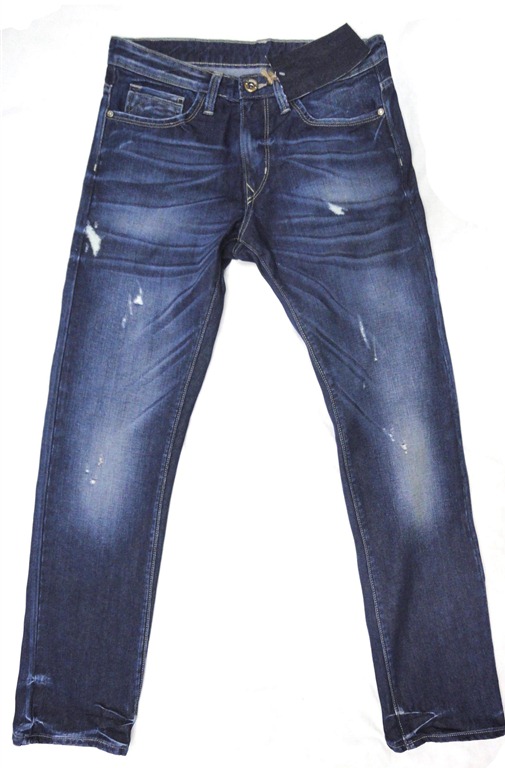
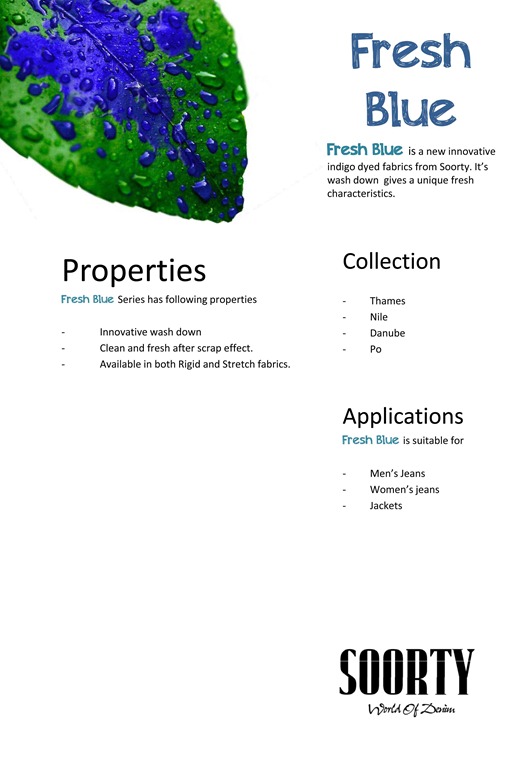
    Soorty denim from Pakistan has come out with a new concept of denim – the Fresh Blue . According the their product development team, the range has the following distinguishing features. :

    • Brighter was effects than normal indigo
    • More clean blue than normal indigo
    • Bleach wash does not give a reddish cast
    • Always giving a fresh look to the denim garment

    This is what they say about this new range

    “The significant difference between “Fresh Blue” color and conventional indigo is that the wash down is brighter, blue cast, with no sign of reddish hue on bleach. We’ve kept the brilliance of blue color and complimented it by indigo. At first look, it will look like a typical traditional “Denim fabric”, but on close observation, customer will discover a major difference and will realize that fresh blue is refreshing and more attractive. Fresh Blue is a result of constant passion for research from Soorty, as thorough study of process condition and proper
    understanding of techniques can result in amazing innovations and can make an amazing difference in final product…..”

    Here are some images from the FRESH BLUE collection

    Microsoft PowerPoint - recycle concept final

    For more details on this collection , contact SOORTY.COM

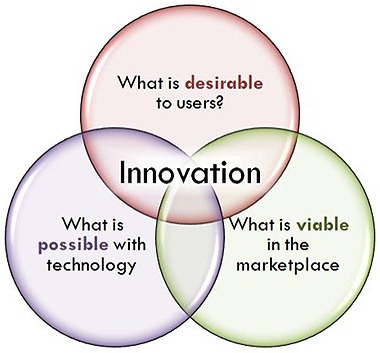
  • Denim Product Ideas For 2013

    This is a guest post by Harry Mercer where he shares some ideas on denim product developments.

    innvoation in denim

    1) More Softness In Fabrics Made With Open-End Yarn: Ring spun yarns are preferred in denim because of a feel that is more soft than open-end. The softness of open-end denim can be raised to the level of ring yarns in the warp by reducing the twist. For example, in a 14 ounce denim, the warp yarns are often a 7 Ne with about 470 turns per meter in the open end yarn. This can be reduced to about 415 to 420, with almost no loss of weaving efficiency and little decrease in fabric strength. The face of the fabric with the warp yarns is the important side for an appealing touch. However, if the weft yarns are made with a similar low twist, the fabric strength will suffer. This method has been used in 3 denim operations that I have advised with excellent market acceptance. In one company it was found that after mercerizing, the washed garments were softer than ring spun. Also, by reducing the twist in the warp, yarn production is faster and less expensive.

    2) Making Denim With A Flatter Appearance: Almost all denim operations have tried flat finishing which is usually a form of wet-treatment with sodium hydroxide on the fabric. The results are variable messy with a great deal of water and energy consumption for the flat finishing. A super flat denim can be produced only with fabric construction, avoiding the additional processing steps which in some companies includes a de-sizing process as well as the sodium hydroxide application, both requiring heavy consumption of water and steam energy in drying. This can be avoided by constructing the fabric with yarns having opposite twist directions Yarn can have either a Z-twist (to the right) or an S-twist. For example, by using the standard Z-twist yarn in the warp and S-twist in the weft, the twill will be diminished, producing a fabric with a flatter appearance than any type of flat finish. S-twist yarns are not often available, but are easy to produce on ring spinning equipment by a simple change of gear direction. The problem in producing them is that when the ring bobbins are wound onto yarn packages for use in warping and weaving, a special attachment in winding is needed for the different twist direction.

    Have any more ideas on denim products ?? Leave your comments below !


    image
    This is a guest post by Harry Mercer. Mr. Mercer has 30 years experience in the denim business. He is an expert colorist for measurement and color matching as well as textile testing.

    world denim production

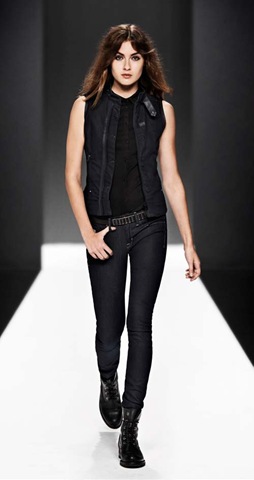
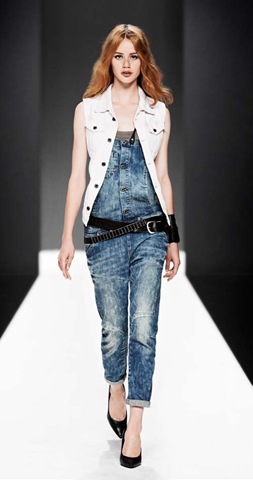
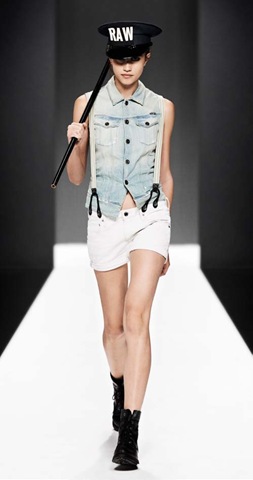
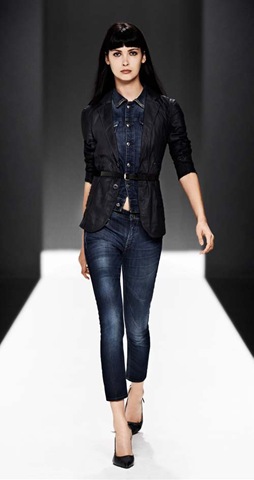
  • G-Star Raw Spring Summer 2013 Women’s Collection

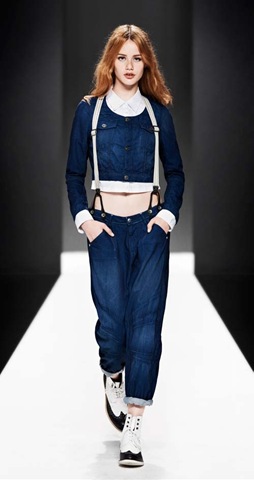
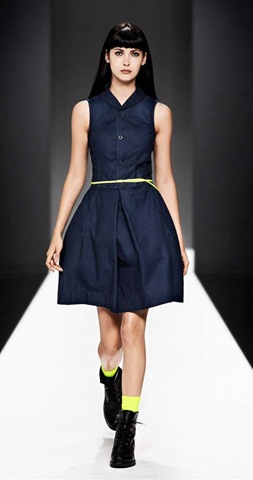
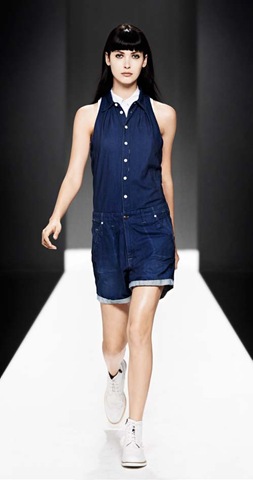
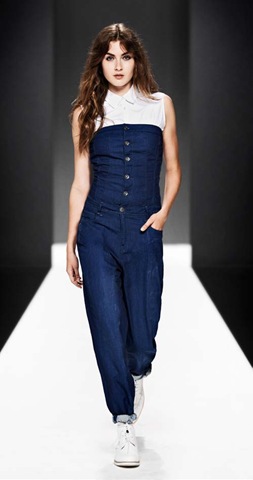
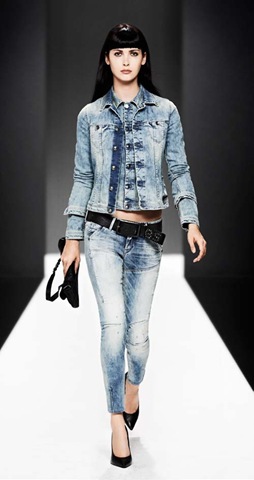
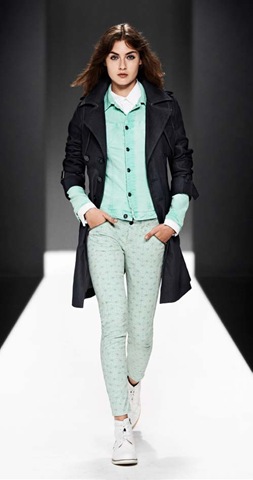
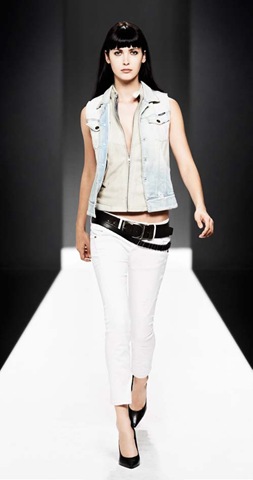
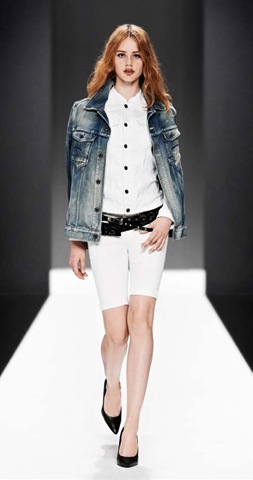
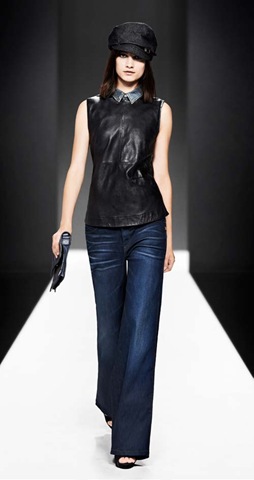
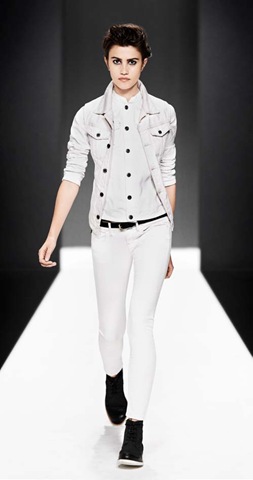
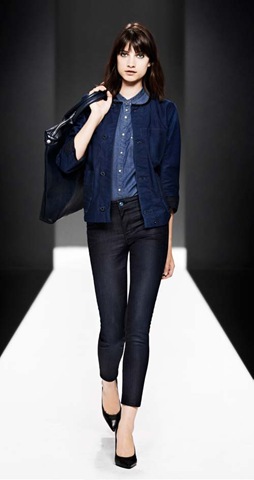
    G-Star Raw  has come out with  a  fresh and rocking  women’s denimwear Spring-Summer 2013 collection . For the next spring season label offers triple denim coats and jumpsuits. Besides there are lots of amazing jeans designs, starting from printed, coated to flare jeans. G-Star is one of my favourite brand and probably one of the most innovative worldwide.

    G-Star Raw Spring Summer 2013 Women’s Collection

    G-Star Raw Spring Summer 2013 Women’s Collection

    G-Star Raw Spring Summer 2013 Women’s Collection


    G-Star Raw Spring Summer 2013 Women’s Collection

    G-Star Raw Spring Summer 2013 Women’s Collection

    G-Star Raw Spring Summer 2013 Women’s Collection

    G-Star Raw Spring Summer 2013 Women’s Collection

    G-Star Raw Spring Summer 2013 Women’s Collection

    G-Star Raw Spring Summer 2013 Women’s Collection

    G-Star Raw Spring Summer 2013 Women’s Collection

    G-Star Raw Spring Summer 2013 Women’s Collection

    G-Star Raw Spring Summer 2013 Women’s Collection

    G-Star Raw Spring Summer 2013 Women’s Collection

    G-Star Raw Spring Summer 2013 Women’s Collection

    G-Star Raw Spring Summer 2013 Women’s Collection

    G-Star Raw Spring Summer 2013 Women’s Collection


    G-Star Raw Spring Summer 2013 Women’s Collection


    G-Star Raw Spring Summer 2013 Women’s Collection


    G-Star Raw Spring Summer 2013 Women’s Collection