Category: Environment

  • Copenhagen Fashion Summit | Isko Denim Challenge

    On April 24th took place in Copenhagen one of the most important events for the fashion industry and sustainability: the Copenhagen Fashion Summit, a biennial event organized by the Danish Fashion Institute on behalf of the Nordic Fashion Association, where more than 1,100 companies from 34 countries confronted themselves with sustainability among the fashion industry.

    The event was inaugurated by the presence of the Princess Mary of Denmark and 23 speakers participated in the summit, for example Livia Firth of Eco-Age Ldt., Alan Roberts of Bangladesh Accord on Fire and Building Safety, Vanessa Friedman – fashion editor of the Financial Times – and Helena Helmersson of H&M.

    Industry leaders were gathered with the mission of discussing solutions that can come to terms with the fact that the fashion industry is one of the world’s most polluting industries.

    Among the outcomes was the launch of Clevercare.info, a care label aiming to educate consumers to care for their clothes in a more sustainable way. Another solution presented was the project Restart Fashion: Five Easy Steps to Sustainability; an online platform helping designers make more sustainable choices in the design and production process.

    Some of the quotes from the summit were quite incisive and thought provoking .

    “Sixty million people work in the fashion industry globally and it is an industry worth 2.5 trillion dollars, yet somehow we have divorced the clothes we buy from the fact that living, breathing people make them”. “It’s a case of out of sight, out of mind. We cannot keep eating from this big, cheap fashion pile without thinking about who made our clothes.” –Livia Firth, Eco-Age Ltd.

    H&M feels that there is an increased push from the consumers to bring out ethical clothing.

    H&M has carried out a research that suggests their shoppers are 21% more interested in ethical clothing than they were a year ago. “Ethical clothes only work when they look good and are affordable.” –Helena Helmersson, head of sustainability at H&M

    “Designers are expected to do six to eight collections a year; high-street retailers bring new collections in every week. The system is based on planned obsolescence, and guess what? It is unsustainable. – Vanessa Friedman, journalist, Financial times

    quote source:huginbiz.com

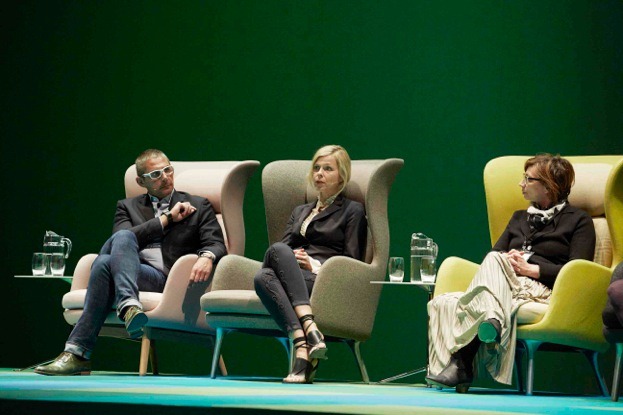
    ISKOâ„¢, that always focuses its activity on innovation, was one of the sponsors of this event and participating in the panel discussion about innovative materials, together with Chantal Malingrey-Perrin – Marketing Director Première Vision, Giusy Bettoni – CEO and Founder C.L.A.S.S., Catarina Midby – Head of Sustainable Fashion H&M.

    Panel debate 01 - Copenhagen Fashion Summit 

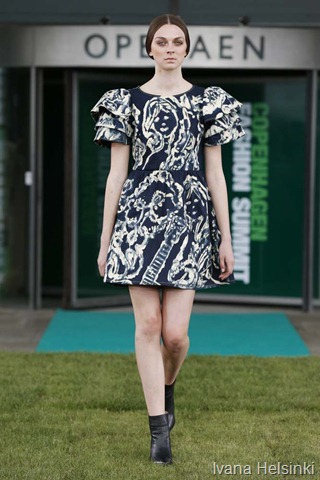
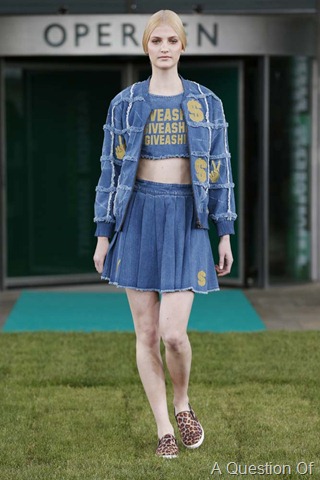
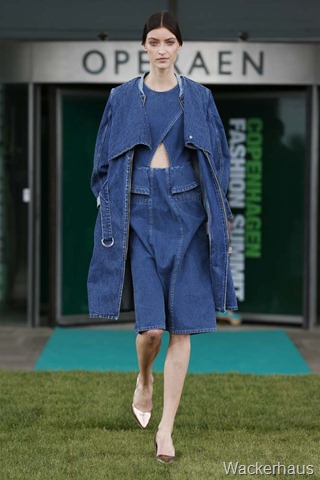
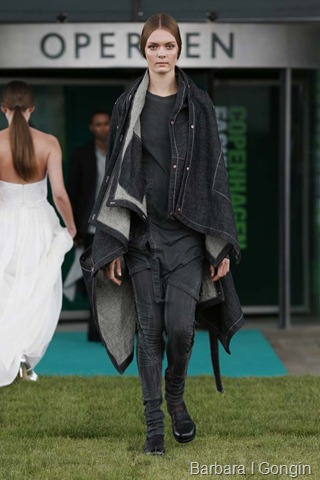
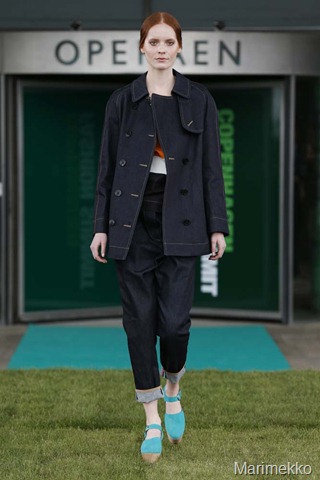
    In addition, ISKOâ„¢ (Turkey) also promoted the Denim Challenge dedicated to 5 emerging designers that had the opportunity to realize their designs in collaboration with Creative Room â„¢ , ISKOâ„¢ division  for style and research. Each of them presented their designs and the designers  Barbara i Gongini and Paola SuhÖnen from  Ivana Helsinki got the accolades and were declared winners. We are giving below a design from each of the five designers with their brand names on the images.

    Ivana Helsinki 03 - Copenhagen Fashion Summit A Question Of 01 - Copenhagen Fashion Summit Wackerhaus 01 - Copenhagen Fashion Summit

    Barbara I Gongini 03 - Copenhagen Fashion Summit Marimekko 03 - Copenhagen Fashion Summit

    The panelists felicitated the two designers saying

    ”Barbara i Gongini put an edge to sustainability with fantastic and sexy styles. She re-thought denim and understood how to transform it into her DNA. Very inspirational"

    "Ivana Helsinki’s collection is like an artist’s canvas. It’s a new way to look at denim, especially as she works with volume in a very unique way. And in addition, the styles are easy to transform from day use to night use only by accessorising differently.

  • Denim Studio In A Desert !

    clip_image002_thumb2

    On a recent visit to Dubai, it was interesting to see that a jeans manufacturing unit has been recently set up. It felt quite strange to see a new garment unit coming up in the heart of Desert. This was the Desert Studio set up by the Denim Clothing Company of Pakistan. We decided to check out the company and know more about the company and to explore the rationale behind setting up such a unit and had a chat with the Director of Machiyara Group of Companies, Mr Munaf.

    Hi Mr Munaf! Welcome to Denimsandjeans. Pls tell us something about Hantex & Denim Clothing Company (DCC)..

    It is a fine example of limitless energy and efforts which put together to establish highly competent fully vertical denim manufacturing setup in a short span of time (Just 6-7 years). One of the great challenges was to penetrate a matured industry and we did it by communicating market norm and needs efficiently from the scratch. Intelligent Business Approach, top class R&D facility, latest technology, fashion philosophy, finest quality and highly competent people.
    In half decade, we successfully achieved 1.5 million garments / month with well-known market clients.

    Do you think DCC is different from other companies in this region?
    Yes, definitely .We are the only denim company in this region to have own cotton fields n fully vertical with fair trade & organic cotton including a modern and sustainable fabric mill & garment sets up with state of the art fully equipped laundries.
    We also have in house carton, poly bag and thread factories to support our garment division. We believe that no other company can offer this combination of services.

    Creating a denim factory at Dubai is quite a unique thing when you consider that most of the factories that existed here have shifted due to high costs and environmental issues. What was the thought process behind this creation?

    Well, I was expecting this question from you. Operating denim manufacturing facility in Dubai is completely different dynamics. Globalization, brought business norms entirely on a different page. Clients have been treated more as business partners. This state of the art facility is a smart model of customer centric approach.
    Considering rapid innovations in fashion world, we feel that it’s a genuine need of our partners to get them involved more with us in developing their products then and there.
    Dubai is the most preferred place as it has become an important centre of business world. At Desert Studio, we are conducting highly interactive sessions with our clients where they develop their product line, experience each stage of product with highly transparent system and shorten their lengthy processes of making collections. Desert Studio is an exclusive facility for very high end products and it enables its partners to free from other limitations such as (MOQ, material management from different sources, high fashion finishes, efficient team to understand fashion philosophy).


    Do you think it would be easy to go green on the products you make here?

      (we show some images of the ozone and laser treatments)

    We found Dubai and green product is a perfect combination. We are very conscious in terms of water usage and less harmful chemicals. We are offering water less washes, conscious washes, sustainable products etc. Further, you will hear a lot more in this direction from us soon.

    What are the facilities available in this factory? Is it a fully equipped one?

    Desert Studio is fully equipped with all latest technologies and facilities to make top of the line products.

    (Automated cutting, stitching, laundry and finishing).
    Fully equipped design room / show room for creative heads to design their collections.
    Laser Technologies
    Ozone
    Automated Spray / Ovens
    Margareta
    And fully skilled sample team in production line to secure quality and efficiency.

    clip_image006_thumb2

    What kind of washes on jeans can you do here ?

    Desert Studio is specially designed for doing high fashion washes which you can easily differ from mass market. Besides adapting latest technologies we always remain focus on precision and details which is one of our biggest strength. We are capable of serving variety of washes to denim world , like low impact denims, conscious washes, green washes, garment coatings, vintage washes with lasers, ozone washes etc.

    clip_image004_thumb2

    clip_image008_thumb2clip_image010_thumb2clip_image012_thumb2clip_image014_thumb2

    6. Pakistan has been awarded the GSP for EU.. It must be great news for all exporters in Pakistan. How does it affect your business?

    In Pakistan we are taking max advantage but in Dubai, the customer gets the premium product, so they are not really into duty advantage when it comes to Dubai.

    Contact Denim Clothing for more info on Desert Studio here

  • Sustainability Steps from Soorty Denim

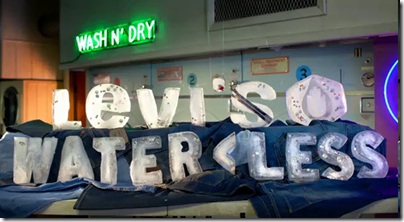
    imageSustainability in denim manufacturing started off as a fashionable statement with many brands looking to capture a niche market of eco-conscious customers. But with the continuous increase in denim production and consumption, the natural resources consumed by this industry are becoming a cause of concern for the world . And companies who realize   eco sustainabililty  in the supply chain of denim manufacturing is not just a fad but an imperative, are taking steps to address this problem. Levi’s had launched the Water less Jeans in the recent times and later the Levi’s: Wasteless – the jeans made from waste bottles. Similarly other denim brands and companies are taking steps to increasingly take viable steps to reduce the carbon footprint of denim manufacturing. Denim mills too have jumped the fray and taking up increasing efforts to make their own contribution to eco-sustainability.

    Soorty Denim from Pakistan has been working to reduce the environmental impact of denim manufacturing in different ways. When I interacted with their development team, they informed me about the efforts taken at various levels to contribute to sustainbility. Some of these are ennumerated below :

    Eco Fab - Sustainability in denim from Soortyc

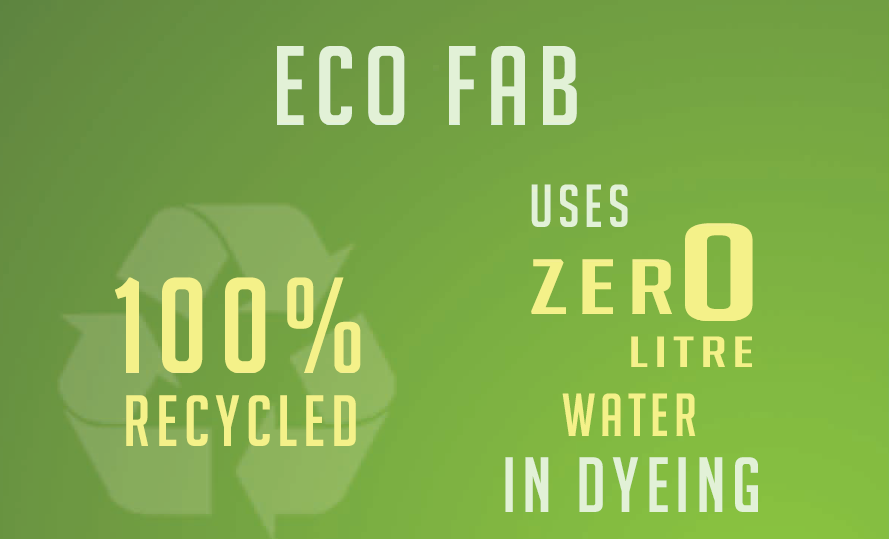
    Eco Fab : Eco fab are the fabrics made from recycled ore and post consumer waste. The waste fabrics and garments are shredded and converted into fibers for being spun as yarns again . Such yarn does not require any dyeing and hence 0% usage of water in dyeing process. The fabric is woven from such yarn and converted into eco-friendly recycled fabrics. This collection would be launched in the Denim by PV at Paris.

    Sus  Fab - Sustainability in denim from Soorty

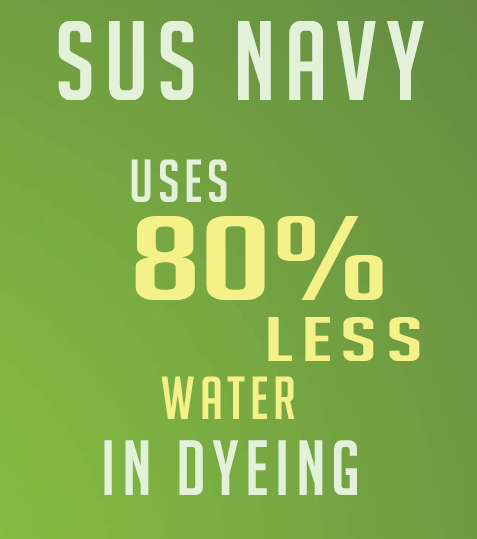
    Sus Navy : Sus navy is a denim dyeing process for normal yarns which Soorty is using and which their development team claims to save 80% water in the dyeing process. The team is a bit cagey about the same for the moment as it wants to show the results during the denim by PV at Paris.

    image

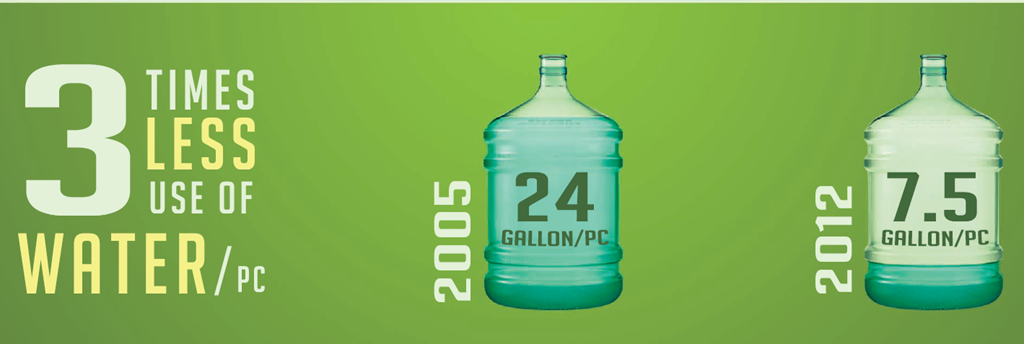
    Garment production: Soorty is also a large manufacturer of denim apparel. The washing processes involve a large consumption of water . Soorty calculates that from 2005 to 2012 , their consumption of water per piece in garment manufacturing has fallen from 24 Gallons to 7.5 Gallons – a fall of about 66%.

    image

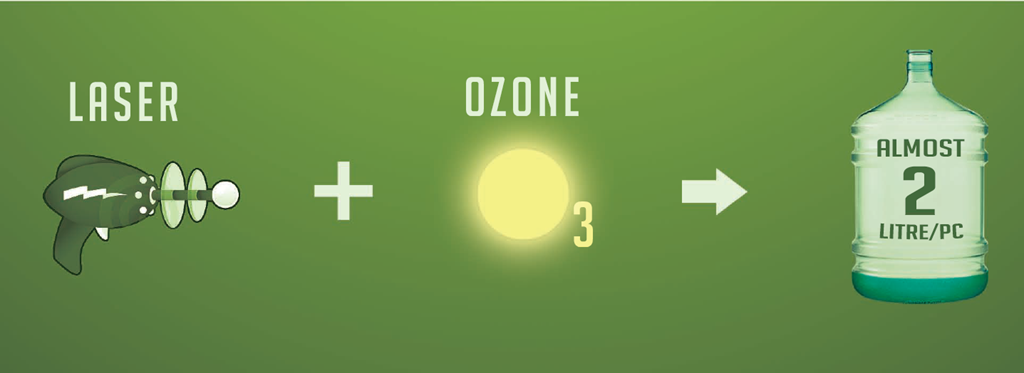
    Lasers and Ozone : Besides other chemical processes, the company also uses lasers and ozone washing to achieve lower consumptions of water . In apparel where lasers and ozone washing is used, the company claims to have achieved a standard of about 2 litres of water per piece – which is not an easy task.

    Contact Soorty  for more info on their Eco Sustainability programme

  • Cone Denim And Crailar Technologies Collaborate

    CRAiLAR Technologies Inc. which produces and markets a natural fiber made from flax and other bast fibers, has entered into a marketing and development agreement with CONE DENIM, America’s largest and most innovative working denim mill, to begin this month. The agreement calls for CONE DENIM to market and develop the use of CRAiLAR Flax in its denim fabric line, which is sold to a broad range of the best global brands in fashion, work wear and casual lifestyle categories. The agreement is through December 2015.


    • Cone denim will immediately launch Crailar  Flax denim developments in its CONE® 3D offering to its existing clients.
    • Crailar  and Cone Denim will jointly introduce Crailar  Flax denim developments to Crailar’s current partner brands.
    • Crailar  and Cone Denim will jointly create and manage marketing materials, sales meetings, trade shows, press launches, trade and consumer marketing activities. 

      Crailar Technologies Inc., offers cost-effective and environmentally sustainable natural fiber in the form of flax, hemp and other bast fibers for use in textile, industrial, energy, medical and composite material applications. Produced using a fraction of water and chemical inputs compared with other natural fibers, CRAiLAR Flax is the newest natural fiber introduction to the market in decades. The Company supplies its CRAiLAR Flax to HanesBrands, Georgia-Pacific, Brilliant Global Knitwear, Tuscarora Yarns, Target Corp., and Kowa Company for commercial use, and to Levi Strauss & Co., Cotswold Industries, Cintas, Carhartt, Ashland, PVH Corp., and Lenzing for evaluation and development. The Company was founded in 1998 as a provider of environmentally friendly, socially responsible clothing.

      crailarCrailar flax is supposed to be a highly eco friendly fiber where a kilo of CRAiLAR Flax only requires 17 liters to produce the same quantity of finished fiber — 99 percent less water than cotton, using Field to Market’s research. Factor in far fewer pesticides and herbicides and it increases its eco friendliness . For such reasons, the USDA has designated CRAiLAR Flax Fiber 100% BioPreferred®

      CONE DENIM, probably the most well known name in world denim industry ,  is headquartered in Greensboro, N.C., where its flagship White Oak is located. Its operations there consist of the most modern equipment and technology alongside vintage looms from mid-century denim making. Its has manufacturing facilities in US, Asia and Mexico . It is also  one of the top 10 World denim corporations.

  • Sustainability Report–Crystal Apparels

    Sustainability is the capacity to maintain a certain process or state indefinitely. Sustainability has been expressed as meeting the needs of the present without compromising the ability of future generations to meet their own needs. With over 1800 gallons of water estimated to go into production of one jeans (from cotton growing stage) ,  sustainability is being taken seriously by some jeans manufacturers worldwide. One of such manufacturer is Crystal Apparel Group (HK) with operations in China and Vietnam.

    Crystal Apparel Ltd (CAL) is one of the subsidiaries of Crystal Group focusing on denim garments, with its own facilities in Zhongshan and Jintan, PRC, serving markets of the United States, European and Asian countries.

    With an outstanding global customer base, CAL caters to multiple brands that market their products across the world with an annual production of over 25 million pieces of garments and annual sales turnover more than HK$1.8 billion in 2011.

    image

    Crystal Group commits to be socially accountable to the world by improving its environmental performance. This is their second sustainability report which complies with the Global Reporting Initiative (GRI) G3.1 Guidelines and corresponding to level C (last report was published in 2010). This report relates to the denim jeans factory, Zhongshan Yida Apparel Ltd. (thereafter named Yida), located at Zhongshan, Guangdong Province, PRC, which is wholly owned by Crystal Apparel Ltd.

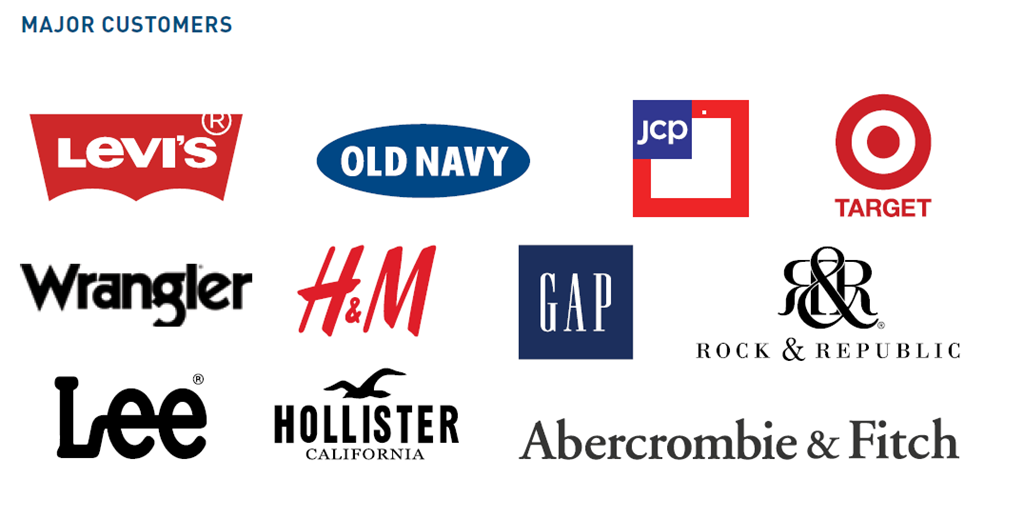
    denim customers

    Crystal Apparel Ltd. is engaging in woven garment production, its subsidiary, Zhongshan Yida Apparel Ltd. is a denim garment specialist. Most people think the jeans production is a traditional industry, with high energy consumption and labour intensive. However, when  Yida was setup in 2005, the group worked with innovative ideas in the operation, which includes their sustainability framework.

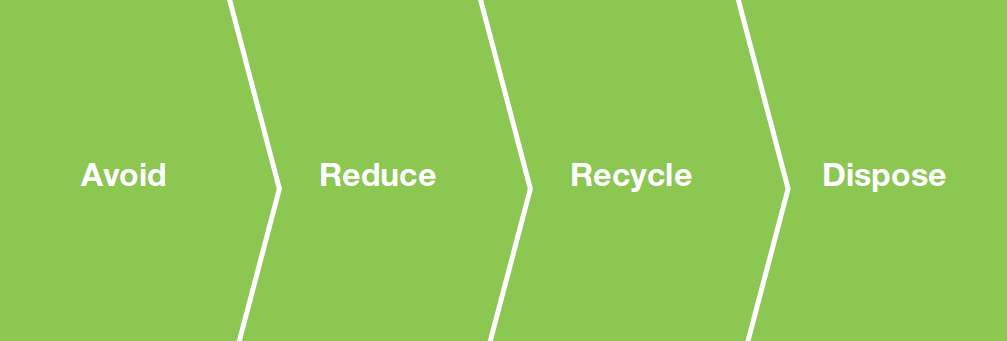
    The ECO APPROACH

    Eco Approach

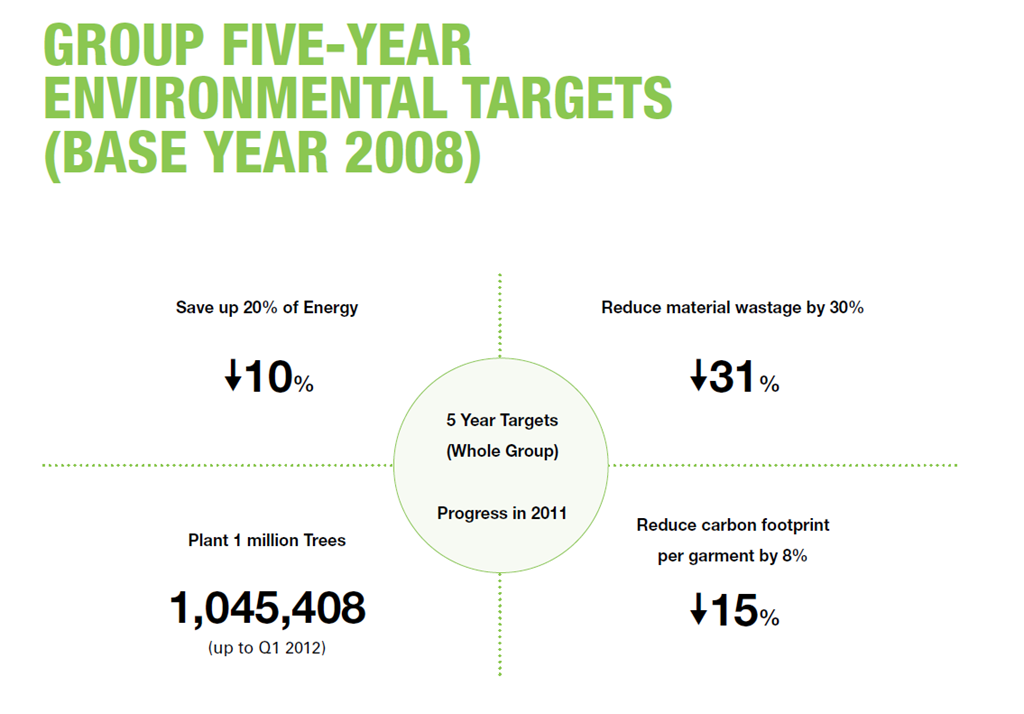
    enviromental targets

    Energy Consumption

    The nature of jeans production can be energy intensive, we value energy efficiency as an opportunity to reduce costs and emissions.

    imageimage

    Carbon Intensity —Emission per Garment

    In 2011, the performance of Yida was 2.657kg CO2e per garment, 22% less than in 2008.

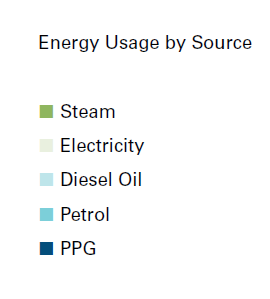
    Energy usage by source

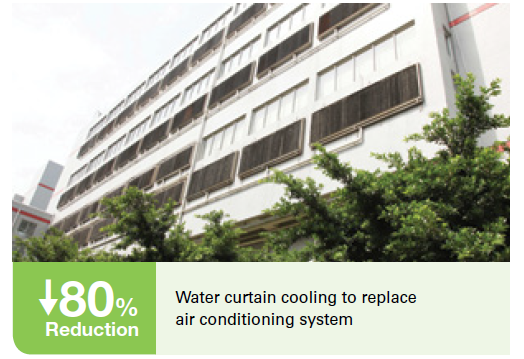
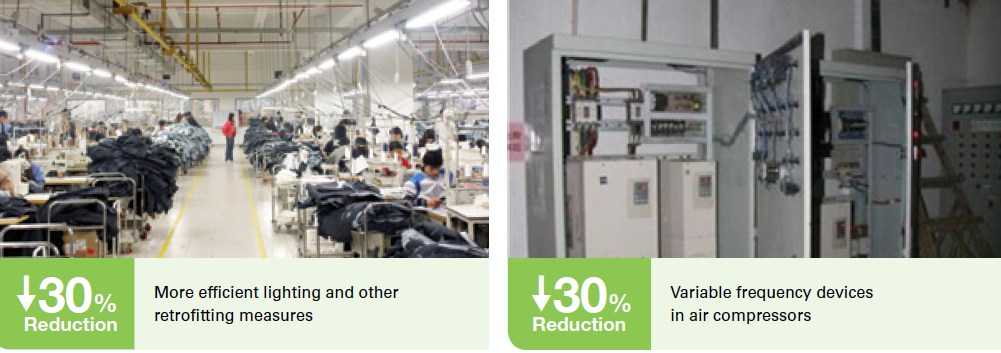
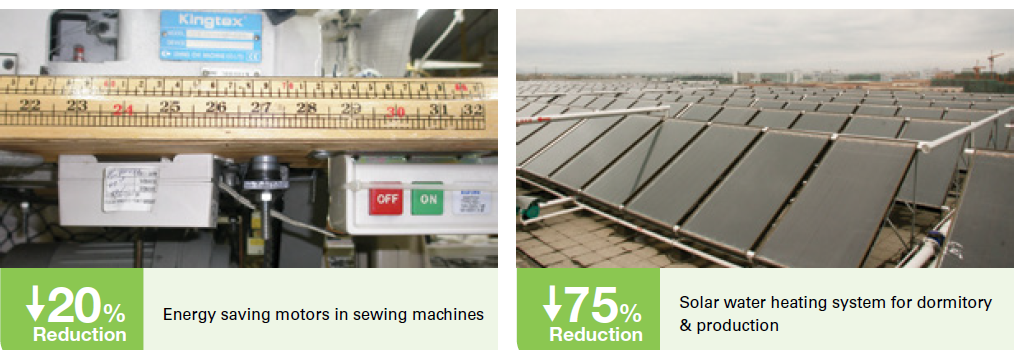
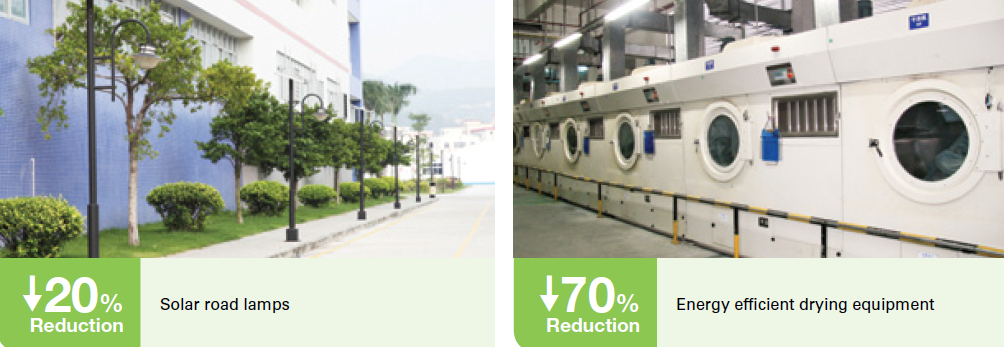
    Different energy saving measures adopted to save electricity. Some of these were:

    Water curtainEnergy efficient

    Energy saving motors

    Energy efficient equipments

    Water Consumption

    “Water has become scarcer in the world. As part of our
    effort to conserve water, we find ways to reduce the
    fresh water consumed in production while enhancing
    the reuse rate of treated wastewater. In 2011, the total
    water consumption was 1,483,772 tons, in which 60%
    is recycled water.”

    • Fresh water 40%
    • Recycled water 60%
    100% waste water was treated
    • Recycled in production 70%
    • Re-used for flushing and plantation 20%

    Noise Management

    In hydro-extraction, they replaced the traditional machine with high pressured squeezer, which produces no noise, and provides :
    • Better working environment for workers
    • 20 times greater efficiency than traditional extractors

    As for power generators, sound isolation rooms and equipments were installed in order to eliminate the intensive noise levels from the machineries. Such isolation provides a better working environment for employees, as well as the neighbouring community

    Up-Cycling – Recycled Cotton

    denim recylcing

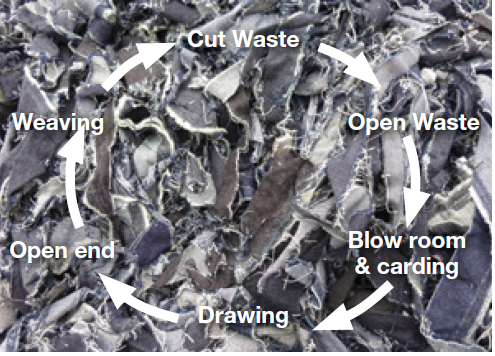
    Instead of depositing cotton fabric remnants into the landfills, CAL manufactures certain lines of denim with recycled material – cotton.
    The initiation to recycle fabric remnants helps in upcycling the waste to a better extent while conserving natural resources including land, water and energy for the whole product life cycle. In 2011, they turned 774 tons of fabric remnants into recycle fabric (which was equivalent to reducing 774 tons of waste), and saved 968 tons of cotton a year.

    Waste Recycling

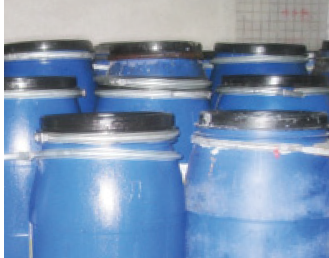
    CAL  joins suppliers to recycle used products, such as chemical barrels,
    thread cones, marker paper cones and printer cartridges.

    image

    Industry-Academia Research Partnership

    The introduction of advanced technology, training and development,
    optimize productivity and enhance product competiveness are Yida’s
    strategic initiatives in industrial transformation and upgrading.
    They  now partnering with 4 institutions (WuYi University, GuangDong
    Pharmaceutical University, DongHua University, University of Electronic
    Science & Technology of China) to work on diverse projects, which include
    production and environmental improvement, information technology,
    human resources and product design.

    Innvoative Technologies

    Automated Rover System - Jeans

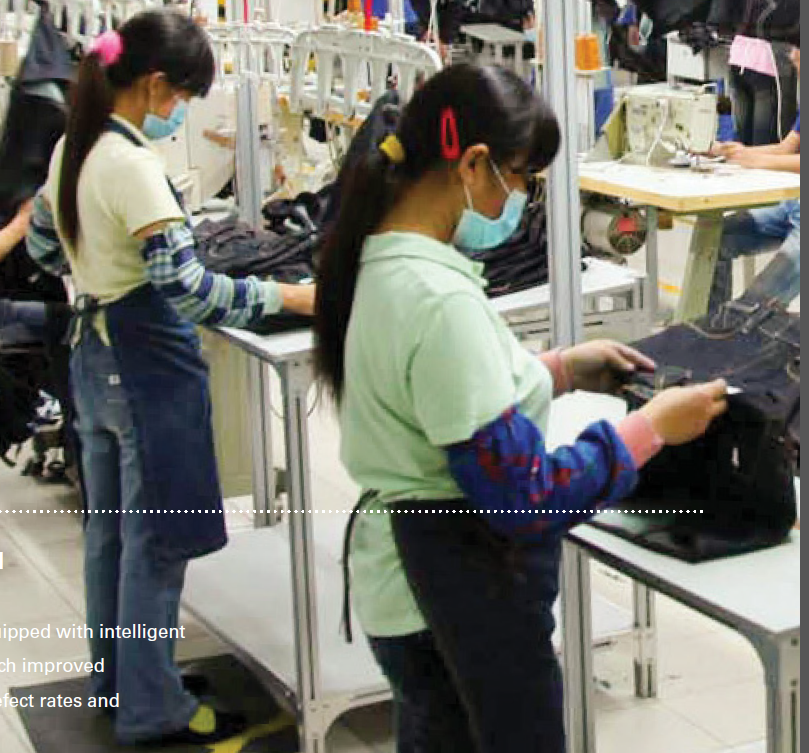
    Automated Rover System – The production units have been equipped with intelligent hanger system (Rover System), which improved productivity, reduced rework and defect rates and increased operators income.

    Washing Processes

    The use of “Ozone Treatment” technology for waterless bleaching achieves no-water-no chemical washing process. It provides an eco-friendly finishing
    to garments and denims to cut chemicals, and is said to be a finishing that is “washed by the atmosphere”.  In Jun 2012, CAL successfully produced
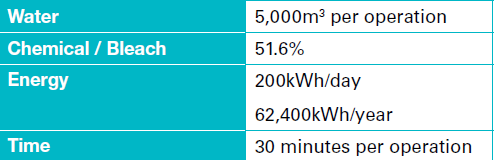
    zero-water eco-jeans for one of the most famous U.S. brand. The saving from replacing traditional bleaching with the above Waterless Bleaching is reflected here:

    image

    Environmental Awareness

    CAL says

    “We believe our employee engagement can make a difference
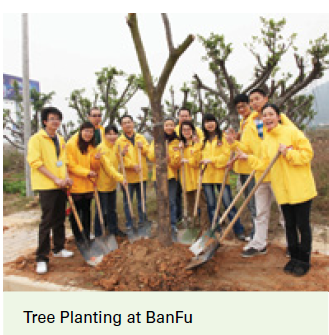
    in our business and for the planet in which we live.We encourage employees to initiate activities that raised eco-awareness
    within their working environment and their surrounding communities.”

    Tree planting

    Sustainability would become an imperative in the coming years and would no longer be a fashion tag as  manufacturing apparel like denim cause more environmental damage. Focus on sustainability would become necessary for larger companies initially with customers demanding sustainable process besides , of course , good price. But here is the contradiction – sustainable processes are never cheap and require investments which would need to be reflected in prices of the products.

  • Sustainable Denim – Eco-Labeling and Environmentally Friendly Denim Production

    This is a guest article by  Dr. Wolfgang Schrott, University of Applied Sciences Hof  on sustainable denim .

    Denim, especially Blue Jeans, is meanwhile the biggest article segment in the textile industry. Besides many colors and shade variations, effects and cuts, which ongoing changes with the fashion, many brands have combined from the beginning of the denim fashion in the 60s a promotional message with their advertisement campaigns. From the “Young Rebels” (60s), “Western Style” (70s), “US lifestyle” (80s), “Italian Fashion” (90s) the today’s pre-dominate message is “leisurewear for young and old”. In combination with general lifestyle slogans many brands added also an ecological message as the environmental awareness is picking up in well-situated customer segments.

    This eco-positioning of the brand was communicated with the customers via adverts and hang tags on the jeans and pointed out a singular aspect out of the total denim production chain. Therefore the today’s eco labelling does not cover the entire jeans production, although the message is closely related to the offered blue jeans in the point of sales.

    Since the beginning of the millennium different detached eco messages could be seen on fairs and in the shops, covering environmental as well as social aspects of the denim production, but all failed in achieving a sustainable sales support.

    This might be a proof that the – especially eco-sensitive – consumer is not as uninformed as many marketing and advertising experts do believe. On the other hand many eco-relevant production aspects are no longer actively promoted but are declared as standard in case of requesting for them. This is the case for child labor as well as or the avoidance of sandblasting as well as for the avoiding of banned products and processes (poisonous or hazardous products and processes, e.g. heavy metals, carcinogenic, mutagenic or toxic to fish and aqueous organisms products).

    Organic Denim

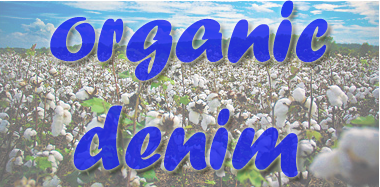
    organic denim Looking back onto the last 10 years of eco-relevant marketing of denim articles, this started with a big campaign for “Organic”. It was a marketing campaign for organic cotton, which is a strict regulated cotton growing under natural condition, avoiding all kind of synthetic product support. From the very beginning of this campaign we pointed out, that the limitations of the organic cotton growing causes inefficient yield of the limited soil, need far more irrigation and less optimal cotton quality. Although higher effort in the total production chain of organic products is necessary (e.g. separation from the regular cotton production lines), many well known denim producer invested in the organic production to be prepared for the consumer’s demand caused by the organic promotion. Due to the limited organic cotton production, at the beginning of the organic campaign many cotton articles had been labeled with Organic hang tags, although they contained less than 5% organic cotton and more than 95% regular cotton. This mislabeling was stopped by the GOTS organization and today only articles with majority of organic cotton as substrate are allowed to be labeled with “Organic”.

    Natural Jeans

    In parallel to the organic-campaign several brands used the consumers demand for natural products to offer a natural jeans, being a Blue Jeans not only produced out of organic cotton but also dyed with natural indigo. Earlier evaluations by DyStar Textilfarben GmbH showed clearly, that natural indigo is – as well as organic cotton – not only not available to the market’s demand (therefore many natural indigo samples were identified as mixtures from natural and synthetic indigo) but also the eco balance of the natural indigo dyestuff production process in total is in disfavor compared with an environmental optimized indigo synthesis. Still today the indigo production process developed by BASF Aktiengesellschaft and the pre-reduced indigo (as 40% solution) established in the global denim market by DyStar Textilfarben GmbH are perceived as Best Available Technology (BAT). Besides the low yield of the natural indigo production in plants, a problem is caused by the insolubility of indigo in water. Therefore for the extraction of indigo from the natural plant big amounts of alkali is necessary, which regularly contains small amounts of heavy metals. After the dyeing process most of the heavy metal can be found on the Blue Jeans.

    Dyeing Process

    Also, for the synthetic indigo the production process and the purification process of the primary indigo as well as the finished product is a most important quality issue for the indigo dyeing result as well as the amount of the necessary reducing agent. Aniline is luckily no longer an issue since this starting material for the indigo synthesis during purification and finish of the commercial product is diminished below critical limits. Based on the eco-efficiency analysis, developed by BASF, it was shown already in 2000 that the total eco balance of the production of Blue Jeans based on pre-reduced indigo and using the electrochemical dyeing process is the optimum.

    The electrochemical dyeing (ECD) process, which was proven in lab and pilot plant scale but is not yet established in the market place, replaces the chemical reducing agent hydrosulfite completely by electrons from the main. This technology reduces waste water pollution significantly and betters the ecological and economical situation in the dye house. Unfortunately this new technology was not supported by a labeling concept from retailers. Therefore the big denim producers were afraid to invest into the new machinery, needed for the ECD process.

    This is also the situation in sulphur dyeing, especially with C.I. Sulphur Black 1, the most important dyestuff for black denim, which is also used for topping and bottoming of dark indigo blue dyeing and needs a lot of environmentally critical sulphur based reducing agents. Instead of using the electrochemical dyeing process and avoiding all type of chemical reducing agents, today in sulphur dyeing the environmentally non hesitating glucose is used as best option, which causes in the necessary quantities huge COD- and CSB values in the effluent.

    After dyeing the cotton yarn and weaving the denim fabric is partly treated for special effects before cutting and sewing to garments. The blue denim fabric can be dyed in regular dyeing machines or printed or coated. The minimal application technologies are in this part of the production chain environmentally most friendly. A first production scale installation based on the patented foam application was realized by Gaston Systems at Orta Anadolu in Kayseri/Turkey.

    Garment Treatments And Washing

    Garments are mostly treated with physical and/or chemical methods to achieve special effects; especially for denim, the typically worn (vintage) look. Among the chemical methods the chlorine bleach (based on sodium hypochlorite) was widely used but disappeared – at least in Europe – due to the AOX problematic. Also special processes, e.g. the patented “moon wash”, based on a potassium permanganate bleach is no longer common. Achieving different, more cleaner, looks the peroxide, oxygen and ozone bleach is picking up in garment finish due to less environmental impact.

    Instead of chemical methods and besides the established stone wash other mechanical processes (labor intensive) and laser application (investment) are increasing. The economically preferred sandblasting is banned by many brands since health problems at workers were detected.

    The last production step in the denim chain is the final washing of the garments in industrial laundry machines. In this machines the garments can also be over-dyed with other dyestuffs (direct dyes, reactive dyes, pigments) or treated (finished) with other effect chemicals*) for special effects (e.g. soft hand, shine). As long as the used dyestuffs and effect chemicals are environmentally friendly, the most important impact in the laundries is the big quantity of water used and the high load of effluent produced there, because all process chemicals**) from the entire denim production chain are replaced from the raw jeans into the waste water. Therefore the knowledge about the previous production processes and an optimal wash-off process is essential for the environment, as well as an efficient waste water treatment plant.

    On the latest BREAD & BUTTER fair (July 2011 in Berlin), one of the most important fairs for the denim brands, only few environmental aspects were promoted actively this time. Among them the saving of water in the laundries was predominant.

    The US based denim giant Levis, which was ongoing promoting eco effects during the last years, presented now a “waterless” concept, achieving alevis water less denim jeans significant saving of water in the denim finish. One element of the concept is the use of ozone as bleaching agent. At least the efficiency of the process compared with other treatments (denim finish processes including washing) can only be quantified, if – neglecting the many fashion and effect orientated processes – exactly specified standard washing processes are defined. This proposal was already established by DyStar Textilfarben GmbH with its pre-reduced indigo customers in the quality control of indigo dyeing (the wash down behavior is an important quality criterion for the indigo dyeing [ring dyeing]). The actual discussion and marketing concepts of global denim brands is forcing to establish a wash-off standard to avoid mislabeling again.

    As well shown on BREAD & BUTTER by Japan Rags was a patented water-free denim finish “ Japan-RAGS ZERO ”, which – for the time being limited to six shades – is an ozone based finish process without of any water. This is hardly understandable due to the normally necessary wet of the substrate. On the other hand a totally water free garment finish means that all process chemicals**) from the denim production chain remains in the final blue jeans and can be removed firstly in the household wash by the consumer. Based on a total environmental evaluation of the Blue Jeans , this cannot be the optimum .

    The eco-awareness meanwhile has arrived at the big denim finisher (laundries), as many of their activities show. The German Jeans maker Joker Jeans had already years ago heavily invested in an ozonisation of its waste water treatment system in Southern Germany.

    Freshtex, Heilbronn/Germany , meanwhile producing in 10 countries as global player in the denim industry, has announced this year a company-wide recycling concept, which will be marketed and communicated by an own sustainability label. Also the Italian Martelli Group, one of the globally most innovative denim finisher, has presented in 2011 a new ecologically preferable finishing concept which supports a particular production step . The used products  are removed after “having done the job” mostly by washing off into the waste water.

    Recycling Denim

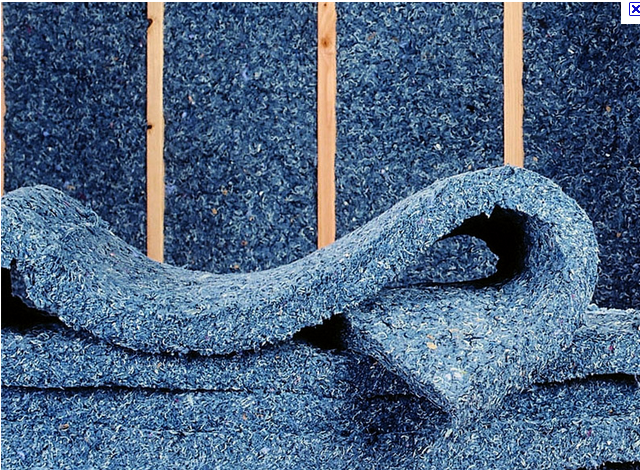
    Another eco-relevant theme in the textile and especially in the denim industry is “Recycling”. In the past there could be found different approaches and realization by different producers and brands. The mostdenim insultation important directions are re-use of waste and raw materials in the production chain (e.g. cotton, process water) and the recycling of fabric , used garments and all kinds of textile waste for other application segments (e.g. fleece or non-textile application like isolation material). At least for accessories, e.g. Denim Bags, denim waste from the production was used.
    A ‘real’ denim recycling starting from worn out Blue Jeans as raw material in the denim production chain, as established in the paper industry for packing and newspaper, was evaluated only from few producers, e.g. Orta Anadolu in Kayseri/Turkey. The article segment is big enough to achieve a technical and economical interesting process, if several big denim brands would agree in a mutual concept. For this concept only the absence of non-recyclable raw materials is necessary. Then, a pure cotton Blue Jeans could be liberated from all metal parts and labels and shreddered. The shreddered denim, mainly cellulosic material, could be similarly deinked as realized in the paper industry for another origin of cellulosic material. The so achieved recycling cotton could as is or as mix with fresh cotton used again as raw material in the denim production chain. This “real denim recycling” could become more attractive for the consumer by launching a pledge (for a recyclable jeans). Additionally such an “R-Jeans” would generate an attractive marketing concept, especially for the growing, environmental-conscious customers.

    Which ideas remain to a technical orientated visitor of the last denim fashion fairs?

    Nothing really new – more labels, more action, hopefully in the right direction!

    What is the right direction regarding an environmental friendly denim production ?

    Surely a sustainable denim production has in terms of the eco-efficiency analysis to show an optimum for the environment as well as to be commercial feasible. The development and comparison of sustainable denim production processes therefore should be measured by the eco-efficiency analysis procedure.

    In principle, innovative and eco-friendly products and processes should be economically attractive if the cost for waste water cleaning and other environmental protection initiatives are calculated  realistically. Most important for all ecological evaluations and comparisons of Blue Denim production concepts is the aspect, that the entire denim production chain is compared, because many process steps and products used in it have implementations on the following production step(s). Therefore only a total process comparison can offer a real comparison.

    This total process approach was firstly presented 2006 by DyStar Textilfarben GmbH in its econfidence® denim concept. Unfortunately, this concept could not fully realized in the denim industry due to the insolvency of DyStar Textilfarben GmbH. Examples out of the concept for a sustainable denim production are: Electrochemical dyeing (ECD)  on rope and slasher dyeing ranges, Minimal Application Processes in the denim production, electrochemical dyeing (ECD) and especially  electrochemical bleaching (ECB) in garment dyeing/finishing machines (laundry machines), combination processes and recycling concepts in denim laundries and garment finishing mills, eco-efficiency evaluation of denim processes (analogously to econfidence® Denim).

    The today’s Best Available Technology (BAT) in denim production as well as the future denim production trends are summarized in a separate publication of the author (in preparation). The result out of this publication can be summarized as follows:

    Summary

    The sustainable denim production in future will be always a process, involving all single steps of the entire denim production chain. Hereby, the optimum comes from harmonizing the used products, machinery equipment and process parameters to an optimum. In this process of development it would be very helpful, if the retailers (global jeans brands) could not only implement a global jeans recycling concept but also orientate the future eco-labeling on BAT parameters. Minimizing environmental impact and cost in the denim production will mean the use of minimal resources, chemicals, energy and water as well as minimal CO2 emission.

    Notes:

    *) effect chemicals: products, e.g. dyestuffs, optical brighteners, softeners, which causes a special effect on the textile material and keeps on the garment  during wearing.
    **) process chemicals: products, e.g. reducing agents dispersing agents, detergents which supports a particular production step and which are removed after “having done the job” mostly by washing off into the waste water.

    clip_image002Dr. Wolfgang Schrott has more than 25 years experience in the chemistry and textile industry with BASF SE and DyStar Textilfarben GmbH. He has always been focusing on sustainable concepts based in environmental friendly products and processes and developed many new products and machinery equipment. The last 15 years he was focusing on the denim production process and is a specialist in textile dyestuffs. Besides business consultancy he is now teaching as professor for textile chemistry and ecology at the University of Applied Sciences in Hof, Germany.  Contact him by email here
  • Fair Trade Cotton – Denim Collection From Topshop And More….

    Topshop recently announced a collection of Denim and other apparel products made from Fair Trade Cotton.  In these times of explosive cotton price increases, companies and buyers may have forgotten about the ‘Fair Trade Cotton’ , but there are retailers who are taking it up on a long term basis as a means to give benefit to producers.  Before we go into details, it would be interesting to understand what is Fair trade cotton and actually- What is Fair Trade .. Let’s take some questions and get a better insight .

    What is Fair Trade ?

    To define simply, Fair Trade looks for poverty alleviation and works through three main actors:

    • producers located in poor countries.
    • organizations that trade, support and usually certify the products and..
    • the customers who recognize those products and buy them.

    Fair Trade organizations seek to establish a long term relationship with producers. This helps eliminate the uncertainty they usually suffer, either due to lack of access to market information, to erratic prices or to plain abuses from prey middlemen. In this collaborative frame, trading NGOs also provide upfront payment or financing for harvest costs and technical advice for organic farming, for example. Apart from that, Fair traders help their providers when disaster strikes.

    How Can  A Product Be Certified As Fair Trade ?

    It takes several criteria to certify a product as a Fairtrade one; they include specific quality standards and general requirements like child labor control, gender equity, democratic organization and respect for Nature. This, in turn, renders nice environmental benefits for mother Earth. Once a supporting NGO has checked that criteria are in place, they back the product; some of those products may be marked with a label . Producers start receiving a higher price for their goods… and also a Premium: an extra amount of money intended for community development purposes. 

    This way, producers get a wage which is enough for a decent living, community development becomes possible and  consumers can rest assured (by the certifiers) that they are buying a product with no exploitation trail behind.

    Cotton is only one of the products to be certified as Fair Trade product. There are a number of "Fair Trade certified label" logos out there, granted by a similar number of organizations. Certifying organizations are the trust builders of this whole system, as in many cases it is those labels which differentiate an ordinary product from a Fair Trade one. Fair trade logo’s are issued by a number of organizations for a number of products. Some of these are :

    Fair Trade FLO logoThis is the most common logo in Europe, adopted in 2003 by most countries (spanish version shown); it is granted by the Fair Trade labelling organizations international (aka FLO), based in Germany and who also runs the Fair Trade register. FLO is the umbrella for all the world labeling initiatives

    TransFair USA logoFair Trade Certified â„¢ logo granted by TransFair, an USA based organization which certifies lots of products, mainly food. They have a specialized certification procedure for each of them.


    Fair Trade OriginalFair Trade Original, from the Netherlands, issues this label for their own range of products


    For more details on other fair trade organizations visit Fair Trade Hub

    Now Coming To Fair Trade Cotton ;  What , How And Where ?

    FLO releases a standard for seed cotton  which gives the minimum requirements for that cotton seed . This has benefited farmers to grow better crops under security and now farmers in various countries  are receiving  higher than in the conventional market. Like other Fair Trade certification criteria, that for cotton encourages certified producers to diversify their crops, both for their food security

    So basically, Fair trade cotton is a cotton which is upto at least certain standard, which is not made by exploitative means and provides value to the producers by way of security and higher prices and to consumers by way of assurance that the product does not have exploitative trail.

    Now coming back to our main story – Topshop has recently announced that it is using Fair Trade Cotton for its mainline Moto Denim Collection .The capsule collection introduces new shapes including the ultimate mini hot pant in bleached out and dark denims. This will encourage other denim retailers to get into Fair Trade cotton for denim products and enable better realizations for the producers and themselves.

    Topshop is not alone in the Fair Trade game. Sainsbury’s has announced that it will source all of its Fairtrade cotton from a cooperative supplier in Gujarat, India. With over 890 stores, Sainsbury is the world’s largest retailer of Fair Trade products – though most are food products.

    Ninad Gupte, from the Project Executive Body Agrocel in India  said: "Sainsbury’s is the largest consumer of Fairtrade cotton from our projects in Gujarat. Cotton prices are very unstable so guaranteeing our farmers a minimum price and pre-financing the Fairtrade social premium, offers security that has not been possible in the past. Through this initiative, our farmers cooperative body has been able to improve conditions by investing in projects like providing clean drinking water and health check ups."

    Liz Jarman, Sainsbury’s Head of Fairtrade said:

    "Clothing is a major feature of Sainsbury’s Fairtrade offer and we are proud to be supporting cotton farmers in a way which has not been seen before. Sainsbury’s sell an average of 250 Fairtrade t-shirts per hour, which means a total Fairtrade premium of $250,000 per year to benefit cotton farmers in Gujarat."

    This initiative will benefit over 1200 farmers in Gujarat , India.

    It also needs to be mentioned that the Fair Trade fortnight will take place from Feb 28 to 13th March and  Asos, Topshop and Marks & Spencer besides  others will take part in the same. The initiative, which will be running from 28th February to 13th March, is called ‘Show off your label’ and will include a customer participation page on Facebook.

  • Denim Pollution In Xintang- The Blue Jean Capital Of The World

    image

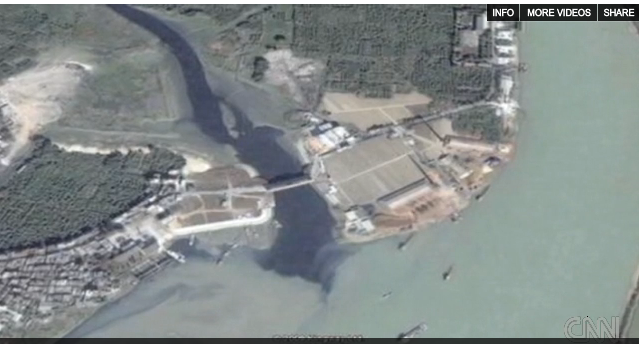
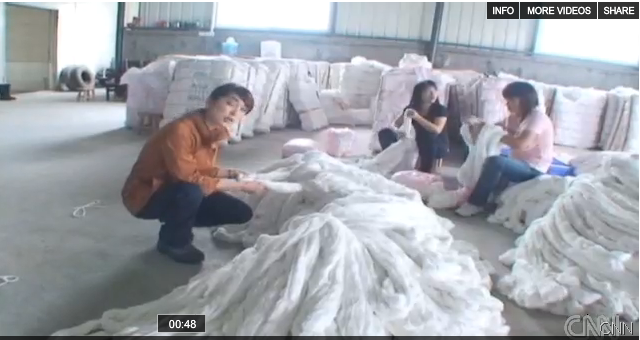
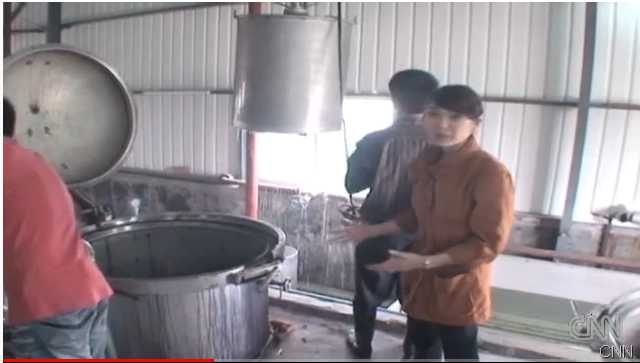
    CNN reports that the  Pearl river on the banks of Chinese town of Xintang  in Guangzhou– also known as the Blue Jean capital of the world – looks like this when seen from a satellite.. The river  has actually turned blue black with a large portion of denim production wastes being discarded into the river. The town is an amalgamation of thousands of textile, denim and dyeing facilities. The denim is also being made here by traditional dyeing methods where cotton yarns are being dyed by dipping them into small(hot) indigo baths as against the factory dyeing of denim by Rope Dyed or Slasher dyed methods. This kind of cottage dyeing produces more indigo waste and the small dyeing units are not equipped with the requisite water treatment facilities.
    denim yarn denim dyeing

    According to Chinese government estimates, the town produces a whopping 200 million +  pieces of denim garments a year. Though these estimates could be off the mark, but still the town has a huge denim garment production base. The size of this figure  could be properly comprehended properly when one knows that the total imports of denim garments into US stands at around 585 million pieces.

    The factories seem to be discharging their wastewater into the river through pipes extending into the river. These wastes contain all kind of harmful metals and substances.

    According to Dr. Tony Lu, Chief Medical Officer at Guangzhou’s International SOS Clinic, these kind of toxins can be seriously hazardous to human health.

    "If there are a lot of heavy metals, they are neurotoxic, carcinogenic, they disrupt the endocrine system," Lu said. "They cause cancer of different organs."
    "The number one problem (China) faces is water pollution," said Deborah Seligsohn of the World Resources Institute. "The textile industry is one of China’s larger industries and one that uses a lot of water so it’s traditionally had a lot of wastewater problems."

    Such a huge denim production base is a great asset for the Chinese denim and the whole textile industry. But China will have to monitor its water pollution to ensure its continued growth and dominance over the textile industry of the world.

    See more details on the story from CNN here