Category: Environment

  • Sustainability Efforts By The Exhibitors Of Denimsandjeans – Part I

    Sustainability Efforts By The Exhibitors Of Denimsandjeans – Part I

    It won’t be an exaggeration to say that sustainability is the future of not only our industry but also that of others and world in general. We , as a generation, cannot afford to be lackadaisical about our responsibility towards our planet as  “we have borrowed it from our future generations” . Each of us today has a responsibility to do the whatever little bit we can do to ensure that we contribute our 10 cents in reducing the impact on our environment. This is not only restricted to our business activities but also to our personal lives. We really need to bring focus on what we need to do , what good things are being done in this direction and whatever we can hope to do. As Denimsandjeans,com, we will try to bring increased awareness to this aspect which is becoming most important in our lives.
    As a starter, we are bringing together information about various sustainability efforts of our exhibitors who have been working hard to bring make their products and activities more sustainable and helping their partners as well in doing so.

    For the starters, we focus on our industry and identify areas where the efforts are most crucial. Some of them are :  Water Saving, ZDHC , Renewable Energy, Sustainable Raw Materials, Waste Recycling , CO2 Emission Control, Circular Fashion. In this article , we gonna feature ORTA ANADOLU  from Turkey, and KEMIN- GARMON from US/Italy  and will highlight their efforts in this direction.

    ORTA ANADOLU

    Since its inception, ORTA has been weaving a denim heritage passed from generation to generation. Founded in 1953, ORTA transformed from a spinning and weaving company to a denim manufacturer in 1985. Today, ORTA produces over 60 million meters of denim in its Turkey and Bahrain factories and is creating a platform for leading manufacturers to step up and reclaim a denim industry where more aesthetics leads to more ethics.

    ORTA started its sustainability journey at the beginning of 2000 by using organic cotton. The sustainability platform Orta is known as Orta Blu which was founded in 2010. As an early supporter and adopter of BCI, ORTA has always been on the forefront of sustainable change.

    Today, Orta claims that

    “While our footprint is what we take from the planet when we consume, our handprint is what we give the planet when we create change for the better”. At Orta, We are on a mission to drive the denim industry into a more sustainable future. That’s why Orta Blu is in everything we do, at the intersection of where people, planet and purpose matter.
    Beauty is in the process. ORTA is on a mission to create the most mindful, purposeful, sustainable and beautiful fabrics. ORTA’s technologists and developers have perfected the most advanced processes on the planet that yield superior quality fibers, recollect and re-life significantly reduce water usage and conserve energy. Our goal is to create next generation denim processes for a more beautiful and sustainable world.

    Sustainability Efforts By The Exhibitors Of Denimsandjeans | Orta

    On energy side, in 2015 Orta partnered with GDRE (General Directorate of Renewable Energy in Turkey), UNIDO (UN Indistrial Development Organization) and UNDP (UN Development Programme) to increase energy efficiency in the industry. With this collaboration Orta established an Energy Management Team that has been dedicatedly working on performance tracking, targets and projects since 2015, integrating energy management in all efforts since then. Another outcome of this collaboration is the establishment of ISO 50001 Energy Management System in their  production plant, through which the company claims to save  11,7 GWh energy and to prevent the emission of 3,4 gigatonnes of greenhouse gas  from 2015 to 2016.

    With SS19, ORTA is making a bold commitment to be a leader in transforming the denim industry with the most advanced natural technologies. As of this SS19 collection and moving forward, every fabric will be made using the INDIGO FLOW process that is proprietary to ORTA. INDIGO FLOW is a CLEAN LABEL PROCESS where it is possible to achieve up to 70% reduced water use, better dye penetration, energy saving and get a fabric with richer and cleaner look.

    “Embedding INDIGO FLOW into our manufacturing standards is our first step towards disrupting the denim industry and leapfrogging us to a Denim 4.0!”

    Sustainability Efforts By The Exhibitors Of Denimsandjeans | Orta

    One of the latest developments on material side is Zeromax Denim Family. It’s soft denim with shaping stretch that drapes next-to-skin. It has zero cotton and maximum soft shape. Zero max is woven with minimum impact to shape the future of denim and crafted with unique twill and elasticity fusion. Zero impact due to no use of cotton which contributes to environmental pollution through use of water, pesticides and chemicals in its production process.

    With all the sophisticated new digital technology out there, there is a call to be more transparent in the manufacturing process. Orta took a step ahead to become more transparent through the Life Cycle Assessment (LCA) . LCA is an analysis method where the potential environmental impact of products can be assessed in each and every step along the life cycle from cradle to grave. With LCA, the company simulates production into a software by using its own facilities’ consumption, production and emissions as primary data combined with the secondary data acquired from the worldly known databases.

    As of AW19/20 collection, Orta has labeled each and every ORTA garment with a unique QR Code that provides full transparency in the making of the fabric so that one can monitor and measure the environmental impact of their fabrics. In order to take their LCA studies one step further, they have also acquired the environmental product declaration (EPD) for 4  products. EPD is a 3rd party verification of  LCA studies which provides transparency, credibility, and comparable information. The EPDs can be seen accessed from the International EPD System website.

    Orta has also partnered with Alliance for Responsible Denim (ARD) from the very beginning. The ARD is an Amsterdam based initiative led by Amsterdam University of Applied Sciences, Circle Economy, Made by and House of Denim and brings together a collective denim brands to work together to make denim more sustainable.

    ORTA and Circle Economy have been partners since 2016. ORTA assumed the primary sponsorship of a special event BEYOND GREEN that is brought out by Circle Economy and The Amsterdam Fashion Institute to create a circular fashion world. By using the collective power of students and industry to tackle critical issues throughout the fashion system, Beyond Green brings together new and established minds to push the boundaries of what we know, and realize what we dare to imagine. The company has also expanded their partnership with a project called Circle Fashion Tool, a decision making tool built to help brands evaluate the end of life options and circular opportunities for their own textile excess and weigh the practical implications and environmental and economic impacts between scenarios. The tool aims to empower brands to move from the ‘why’ to the ‘how’ of circular fashion.

     Sustainability Efforts By The Exhibitors Of Denimsandjeans | Orta

    Sustainability Efforts By The Exhibitors Of Denimsandjeans | Orta

    KEMIN-GARMON

    Since its birth in 1982, Garmon Chemicals established itself at the very center of a narrative that talks about innovative chemical auxiliaries and solutions. For over 30 years, Garmon Chemicals has been an R&D and marketing platform for fashion innovation and a reference for product quality and responsible practices. Last year , the company has been taken over by KEMIN group. Garmon has been known for its consistent approach towards developing new products to ensure the absolute sustainability .

    Nimbus

    As per Garmon

    nimbus is the first ever range of chemical auxiliaries and dyes specifically selected to be nebulized in closed systems. nimbus chemistry allows for tremendous energy and water savings (up to 80%). Furthermore, nimbus chemistry delivers enhanced viscosity and fluid dynamics of the formulations selected for nebulization. This translates into more efficient contact and reaction between active principles and fibers, as well as an optimization of the chemical consumption. nimbus-z is the 3rd revolutionary wave in garments stone washing, which takes us from solid and liquid age to nebulization age.


    GreenScreen

    GreenScreen Certified™ builds on GreenScreen® for Safer Chemicals, the globally recognized tool for chemical hazard assessment that encourages the design and use of inherently safer chemical ingredients. GreenScreen Certified™ is owned by the NGO Clean Production Action (CPA) and Garmon Chemicals is the first one to introduce this certification to the apparel industry. GreenScreen Certified™ is what ZDHC (Zero Discharge of Hazardous Chemicals) recommends as one of the best tools to assess the safety of chemicals and one of the tools of their Chemical Gateway.

    A EIM comparison score of results using Garmon’s green productsSustainability Efforts By The Exhibitors Of Denimsandjeans | Garmon

    Sustainability Efforts By The Exhibitors Of Denimsandjeans | Garmon

    In the part II , we’’ll bring some more companies and tell you what are their efforts towards sustainability . For the latest updates , you can follow us on Facebook , Linkedin and Instagram

  • Ian Berry Speaks To Denimsandjeans

    Ian Berry Speaks To Denimsandjeans

    Ian Berry, a British born denim artist who creates artwork solely from denim; re-using jeans, jackets, and other denim clothing to create portraits, urbanscapes and other unique works spoke to Denimsandjeans.com exclusively about his new book and his journey so far. In 2013, Ian Berry was named as one of Art Business News “30 under 30” influential artists in the world.

    We have featured you a few times on Denimsandjeans.com but still our readers want to know more about your wonderful art. Please give us some background of how you got into this unique art.

    It all began at the end of university I had done a collage out of newspaper and I went home to my childhood home where my mum knew I would never come back permanently. She had already started to clear some things out of my bedroom. There were many piles of things, but one was all my old jeans. I was looking and pondering – do I want to send them out and then it came to me, I didn’t want to get rid of them, I thought of all the memories wearing them (and being slimmer) and saw the link in shades of indigo to the shades in what I did out of newspaper so started cutting.

    Ian Berry Speaks To Denimsandjeans.com| Denimsandjeans.com

    It was then I thought about my own connection to denim. I wasn’t as a denim expert, just someone who felt comfortable wearing denim – and when a few people saw the first pieces and I realised other people’s connection with denim. Not as experts but people who felt comfortable about this everyday material that you didn’t need to be a connoisseur to enjoy, wear and understand. I had no ‘how to’ book, I had no one to look up to, I had no one ask me to work in denim to fill a gap in a trade fair. I had to work out techniques and trial and error at the beginning and I had to make my own technique which I have worked on throughout the 13 years since I started. To the outside it may look very successful and to live and work as an artist for many years, yes, that’s success but it is hard work and commitment.

    Thankfully this led me to very good things with the art and it’s been an honor that through that hard work I get to meet and be even friends with the people that I was so wowed about as a child and student. The greatest honor has been seeing people’s reactions in art galleries around the world and having a connection with people.

    Ian Berry Speaks To Denimsandjeans.com| Denimsandjeans.com

    We have got a copy of your book, Ian Berry, Denim on Denim. We really enjoyed it and it shows your long history with the material and the depth of work you have. What you do with denim is very special. How was the feedback and where can our readers get the same ?

    It went really well thank you and has been a great way to get the work out there. My work doesn’t come across that well on small images like on the iphone and has to be seen in real life really. But the book bridges that gap a bit and has been a good way for people to see a bigger collection of my work. The BBC helped me launch it – which – I guess never harms. Actually, a nice side effect of that was I got a lot more people ask to come and work with me and I got a couple of new assistants out of it!

    Click here to buy the book

    The book actually sold out and got a great response – we have just had some more printed. The hardbacks went faster than the paperbacks even I’m told. A good thing and a bad thing is that I cross over into many worlds, some just on the fringes, like denim, but it leads to a wider audience and interest. For me it was a great thing to do after all this time, and to decide what should be in, and out but to stand back and make sense of it all, and I guess be happy with where it came from and what it all became. What’s now more important – is to drive forward into the next body of work and focus on the future.

    By putting the book together, it was easier to help to curate the flow of the book and show the overlying theme to me work – Community. Or the lack of it and the changing world we live. The fading fabric of our urban environment. The work is a lot more than it being about denim, it is simply my medium.The book can be found at www.ianberry.art under ‘book’ and if your readers put in the promo code D&J at the check out they can get free postage.

    What was your first piece and how much time you spent to create it 

    I started with denim first by doing portraits. I have since noticed that many artists who started using new and unusual materials often begin with portraits, and of famous people. I did the same, but had my reasons other than it being just iconic faces. I never expected it to end the way it has to be honest, I was to be an art director at that stage!

    That said, as I was going in to advertising I was fascinating in things that changed people’s minds. And I knew how Marilyn Monroe, Brando, Dean had worn denim on screen and then everyone wanted to wear it. Those, along with Debbie Harry were my first ones I made. Debbie Harry was one of the first to really make double denim cool and it was nice several years later to actually get to do her portrait and to meet her. With that I became friends with some of the guys from Blondie, and I did Tommy Kessler’s denim jacket for him – he’s still wearing it on stage – five years on. . . he’s been unable to wash it!

    Ian Berry Speaks To Denimsandjeans.com| Denimsandjeans.com

    I also did a piece for the James Dean Museum in Fairmount, Indiana, in 2010. It was his hometown. Both were such an honor and took me back to that time when I was making pieces on my bedroom floor. What’s interesting is you would think I would get faster making them, but because I have got a lot more detailed they do take a long time – and as the portraits now are official, there is a lot of work around it too. That first weekend I made 6 – in a much simpler style than today. It would take me that long to do only an eye now.

    Ian has gone on to do portraits for Giorgio Armani, Lapo Elkann, Jenifer Saunders, Eunice Olumbide OBE and the family of Ayrton Senna to name a few.

    How difficult is it to find pieces of differently shaded denim washes to help you create the correct shadings in your paintings.

    It is a very labour intensive process. You know you can bang things in Photoshop and let a computer dictate where you place things. This isn’t really art and loses an edge to the work. I have to find each piece to really match where it should be and I can spend hours just looking for that one. Having 2000 pairs of jeans also leads to issues as well as solutions – as you think you will have always have something better and keep looking. On the other side, I may find something perfect, but it is so good that you want to use it on another piece – in a bolder way. So, you carry on looking for something else.

    I’m lucky that I have had many supporters over the world send me the jeans, from friends and neighbours as well as denim brands and denim mills to packages sent from people who want to see their jeans turned into art.

    Secret Garden at NY is one of your masterpieces. It must have been a tremendous effort  How did you feel to be there and showcasing a complete garden of denim ? Must be really tough maintaining this garden !

    It was probably one of the most challenging things I have done with denim to be honest as it was working rather differently to how I had before – especially with lots of help for one and sometimes it was like project managing. The feeling there was pretty special, I got a moment just before the people arrived at the opening (I was actually using every moment before to get it ready) and just to look up at it all was just an incredible feeling and then seeing other people’s reactions. I was so lucky to have Lucinda Grange come and take photos of it as she really captured it, but nothing really is like being there in real life.

    I actually left the day after the opening back to London so I had little time in there and it was up for several months. Christine Rucci had helped me install it in New York and she went in often and would just make sure everything was ok as well as staff at the museum. The impact it had was great and was worth all the hard work – and since it has shown in different forms in Kentucky, then France, and now – at a soon to be announced location in San Francisco – All 20 meters of it.

    Ian Berry Speaks To Denimsandjeans.com| Denimsandjeans.comIan Berry Speaks To Denimsandjeans.com| Denimsandjeans.comIan Berry Speaks To Denimsandjeans.com| Denimsandjeans.com

    Was there a sustainable message in the garden?

    I talked in the museum a lot about sustainability and with it using sustainable technology, like with Tonello with washing and lasering. What better way to portray sustainability than show it as living breathing plants and freshness, although that wasn’t made for this message, denim is just my medium as the material of our time. It was more of a message on community, and community gardens in New York – and how many children are not in the garden, but on their ipads.

    That said, in the items for children we educated them on how it was from plants, to pants to plants again (sorry) and also showed a cotton plant. It was amazing how few knew this was the way denim was made – including some of the parents. It was a big success in New York and in the end, another installation for me. I like to do them as they are a new challenge and it also means that they can travel more. When I do my other works, if I show them, they sell, meaning not so many people get to see them. A strange problem for an artist.

    Ian Berry Speaks To Denimsandjeans.com| Denimsandjeans.comIan Berry Speaks To Denimsandjeans.com| Denimsandjeans.com

    It’s been great to show it again since in the states, In Kentucky and then in France, in a former denim heartland. All had variations on it. What’s been amazing is I did it in New York, and there I was in the garment district a lot making things. I’d also been going to Italy to work with Tonello who have been so good with me. This last month I was in Genoa (jeans) and in the denim valleys so the historic denim and then the heartlands of the 90’s denim. I was then in Nimes, (denim) as well as Mazamet in France so it was fitting that I went to these areas then on to San Francisco – to make the installation there – I will be excited to show you that soon!

    It was like a big part of the denim history timeline, what is told. Although the fast part. I do think the denim story often misses of my home area in the north of England as without the industrial revolution we would never have had Levi’s and the ability to make more mass-produced jeans – besides, it was us who didn’t want ‘a French sounding cloth’ so changed serge de Nimes to Denim!

    What was it like to be in Nimes ?

    It’s a beautiful city, but it celebrates its Roman history, not really its denim. There is a small part of a museum that does show a bit though. The cloth that was made then was a bit different to what we know to be denim today however. I think they will soon start to celebrate the denim history though, and perhaps thanks to ones guys efforts.

    It was so special to spend a day with Guillaume Sagot who has brought denim back to Nimes and set up Ateliers de Nimes. I got a pair and love to wear them and tell the story. It’s not only a good brand and great story to bring denim production pack to this historic denim hub for the first time in hundreds of years, but Guillaume, is a great guy. It was great to see his studio, his work, his plans and the city. He is certainly a great denim friend of mine.

    Ian Berry Speaks To Denimsandjeans.com| Denimsandjeans.comIan Berry Speaks To Denimsandjeans.com| Denimsandjeans.com

    Do you think your art can show some way where the industry can be stronger on the path of sustainability.

    I don’t know really, I pick up a lot about the industry but really I am on the outside and don’t pretend to know everything. I have listened to those who say it’s often just ‘marketing’ but I also notice that everyone is now in on the game and perhaps that competition will push through some good results and answers – and I keep seeing a few interesting developments.

    My art isn’t about sustainability however, well, not at its core. But I guess that is also true also about many in the industry. I don’t use denim for a sustainable message but more so that I am portraying contemporary life and see denim as the material of our time, both the good and the bad. I don’t market it as sustainable, however others write about me that way and about recycled and upcycled and so on. Of course, it is nice that some can take that message away and think of the impact on the world denim has, or, their own impact. It’s also good if they think what materials they can use and reuse and not just throw away.

    If you think of reusing worn denim or sampled denim, like I do, you do look toward people like Maurizio Donadi, at Atiliers and Repairs, E.L.V here in East London and Denimcratic to name just a few are making great things reusing denim. I was at the Levis Archives a few weeks ago in San Fran and seeing the jeans that showed evidence of four different owners was quite a statement on sustainability. The industry can strive for the most sustainable denim, but if the consumer doesn’t demand it, then it is going to be hard to do as there will always be others who will make it as cheap as possible and there will always be the people that will often just go for the cheapest. I guess there is also something in how many pairs of jeans, as one of the issues will always be the mass of it. I love something that Blackhorse Lane do where they discourage people from buying more than two pairs of denim from them and they also offer the repair service, they look after their staff well too.

    Ian Berry Speaks To Denimsandjeans.com| Denimsandjeans.com

    As someone who just wore jeans and knew little about them when starting my journey with the art, I have grown to appreciate and embrace the craft of denim. I’ll now buy or dare I say, get given a lot of jeans and I’m always proud to wear them and see the evolution of them and see that denim should be seen more this way – and have them for a long time.

    Let’s face it, denim is global, worldwide, mass. I love the whole denim head community but if that is 1 per cent of the global denim I think that number is overestimated. If more and more people can appreciate a good pair of jeans, and appreciate the costs a bit more (sustainable for more than just the environment) then I think the consumer could start to appreciate a sustainable message – and I think people are now wanting things more individual and with a story – not the mass high street. In a time when sometimes you fear for the young, many are more aware and demand things, so the future could be a brighter blue. When I worked in advertising a criticism used to be that many in adland would think of other people in advertising when making the ads, they had a certain language. Of course there is many different sectors in denim, the brands behind the brands, the mills and then the more sexy consumer facings brands and I guess many have to decide who their target audience is to be able to speak to and communicate.

    As for my own art I know it speaks to many and communicates a lot to many – it is also much, much more than it being ‘look it’s made in denim’. I get great reactions in gallery shows and art fairs around the world, I dare say not normal reactions even, to see people cry when looking at your work is quite surreal. But in denim, in the very few times I have shown within denim I don’t know, it’s never as strong. Perhaps they see the fabric more or something or perhaps the places it’s been shown is not the right context for art. It’s just an observation.

    Would you like to share with us any upcoming projects which you feel excited about?

    There’s lots coming up actually over the next month’s even, but I rarely tell anyone what is going on til it’s happening, or even happened. I’m lucky to have a very heavy workload with lots of commissions, art fairs and a big solo exhibition to work toward for London next year. Trying to juggle it all is not easy as the work is very labor intensive.

    I may or may not be in your side of the world soon too!

    Ian Berry Speaks To Denimsandjeans.com| Denimsandjeans.comIan Berry Speaks To Denimsandjeans.com| Denimsandjeans.com

    My next showing will be here in London however at the Smallest Gallery in Soho, a great little space curated by my friend Phil Levine and will give an opportunity for a new audience to see my work. It’s an interesting thing the trade fairs, I have my own industry trade fair – the Art Fair, like in Miami and many other cities. I have recently seen it as that and not really dissimilar, but it’s there that my work is seen by the collectors. I have said no to a lot of mills and brands to do things at fairs, not through lack of gratitude, just that my work takes a long time and I am turning down gallery shows and art fairs and there is only so much I can do in a year. I have also thought if I work with them, X Y Z wouldn’t work with me in future if I’m so linked with someone. I have a long term plan.

    In one line, what do you think is the future of denim ?

    The future I’d like to see with denim will be in the sustainability of people as well as the environment, clean ethics and morals as well as methods of production.

    Ian Berry Speaks To Denimsandjeans.com| Denimsandjeans.com

    Thank you Ian !

  • C&A: Jeffrey Hogue Speaks With Denimsandjeans On The Launch Of Their C2C Gold Certified Sustainable Jeans

    C&A: Jeffrey Hogue Speaks With Denimsandjeans On The Launch Of Their C2C Gold Certified Sustainable Jeans

    Dutch Fashion Retailer – C&A , has become the world’s first retailer to offer jeans that are completely Cradle to Cradle CertifiedTM at the Gold level. The entire concept has been designed in partnership with Fashion for Good, a global platform that aims to make all fashion good, the jeans are supposed to have been made with completely sustainable materials and were produced in compliance with the high Cradle to Cradle CertifiedTM Gold level. The primary objective of C&A is to make sustainably produced fashion the new normal and not something which seem to be an out of the box . Keeping all such things in the mind , the dutch retailer has kept the price very competitive and hence the the retail price for the men and women’s jeans is only 29 euros.

    C&A’s Cradle to Cradle CertifiedTM collection is marketed under the #WearTheChange campaign, launched in the spring of 2018. The goal of the campaign is to bundle products with various attributes that make them more sustainable compared to conventionally produced garments, such as Bio-Cotton and Cradle to Cradle CertifiedTM, making it more visible for the customer.C&A deliberately chose jeans – a very complex garment and iconic product. Since jeans are made of different components – and numerous production processes are required – suppliers and factories were selected thoroughly and materials were tested and certified. Some elements, such as the lining material or sewing thread, had to be completely redeveloped.

    Q&A With Mr. Jeffrey Hogue ( Chief Sustainability Officer) On The Launch Of The Most Sustainable Jeans By C&A

    Denimsandjeans.com had a Q&A session with Mr Jeffrey Hogue – Chief Sustainability Officer Of C&A , to know more about the jeans and the sustainable efforts which have been made by C&A.

    Q&A With Mr. Jeffrey Hogue ( Chief Sustainability Officer) On The Launch Of The Most Sustainable Jeans By C&A

    1. Congratulations for coming out with the first C2C Gold certified jeans. It must not have been an easy task creating these jeans. Why do you feel these are the most sustainable jeans globally.

    Thank you. It was indeed a remarkable year of dedication, innovation and collaboration that has led to this achievement. The Cradle-to-Cradle Certified(TM) product standard is globally recognized as the only holistic, third-party standard able to certify circular products. It certifies all aspects of product manufacturing, such as the sourcing of the raw materials, the use of chemicals, water or energy in manufacturing, the design for material reutilization and the social conditions in the value chain. In other words, the C2C Certified(TM) Products Program is the only product-based certification that is based on rigorous, science-based criteria for all aspects of sustainability. No one in the world has ever before achieved the Gold level certification with a complex product such a jeans.

    2. The project took you over a year . It must have been a long journey . Pl tell us how did you go about this project and difficulties you faced.

    In the case of the denim jeans project, around one year was needed to bring the product to shelves. We were indeed facing a couple of challenges. More complex products consist of more components from several suppliers. The first challenge was the complexity of the network of partners involved. Companies supplying e.g. the fabric, the sewing thread, the fabric dyes, the Interlining, metal trims and buttons printing and laundry services and chemicals and many others needed to be integrated. To mention another challenge: Washing, dyeing, printing and finishing processes also often include a large number of chemicals. Generally, the more complex the product is, the more chemical processes are involved. Every single component needed to be assessed for Material Health for the final product to be certified but the list of previously C2C assessed materials was rather limited. We therefore had to build up everything and look for innovative solutions.

    3. We understand you are launching the jeans at Euro 29/- which seems a reasonable price given the effort that goes into the same. Are you sending a message that sustainable fashion is also cost effective.

    Absolutely. We want to mainstream sustainable fashion, taking it from niche to normal. We believe everyone should be able to look and feel good every day, without compromising the lives of those who make their clothes, or the planet we source from. Ultimately, we want to be at a point where consumers do not need to make a choice between looking good, feeling good and doing good.

    4. What are the sustainability goals of C&A for the near future . Any goals specified for different apparel , specifically for jeans ?

    We are making great progress against our 2020 Global Sustainability Framework which is published in our annual Sustainability Report. We have to take a leap of faith, setting bold goals that may seem impossible to achieve in order to push ourselves and the industry further.
    We have a strong commitment for certified organic cotton. We started this commitment in 2005 with only 1 million garments made of organic cotton. Today, we are the largest volume buyer of certified organic cotton worldwide, with over 170 million pieces sold in 2017. We’ve reached a leadership position that we had not envisioned was reachable – or even possible – when we started out. We see the same possibilities with the work we are doing right now with our our C2C Certified collection. So far we have brought to market over 2 million pieces of Cradle-to-Cradle Certified(TM) apparel, maintaining the most sustainable fashion collection currently on the market at this scale. It is only by taking this leap of faith that we will prove that it can be done, engage our customers and inspire the industry to take action. Eventually, we want to create a new norm in how clothing is designed for its next use: only good materials and chemicals, made with 100% renewable energy and 100% recycled water – and produced in a way that offers dignity and fairness to workers.

    5. There are still varied ways of measuring sustainability which consumers cannot easily understand. Do you think in near future we can have a measurement tool or a score which can enable the consumer to gauge the sustainability of an apparel product easily.

    The question if a one fashion product has been produced more sustainability than another product is very hard for a consumer to judge. Sustainability remains a very complex topic. To help our customers to make better informed purchase decisions, we work with third-party standards such as the Cradle to Cradle standard. In 2018, we reached a key milestone in our sustainability journey with the launch of #WearTheChange, our first global, multi-channel sustainability communications campaign. It was launched in Europe in February 2018, across in-store, online and print touch points. All products advertised under #WearTheChange are produced and sourced in a way that is more sustainable than conventional methods. Every one is backed by a verifiable sustainability claim: for example, certified organic cotton or Cradle-to-Cradle CertifiedTM. The #WearTheChange message is clear: every little step counts. We are inviting customers to join our sustainability journey with an inspiring and optimistic message that it’s possible to look good and feel good, with no compromises.
    In addition, we are working closely with the Sustainable Apparel Coalition, a leading apparel, footwear, and textile industry alliance for sustainable production, to further develop the Higg Index with regards to consumer and product communication. We believe, the Higg Index has the potential to enable retailers to communicate clear, comparable, and meaningful sustainability scores publicly. Using one common language to share sustainability efforts should support consumers to make better informed purchasing decisions.

    Below are some denim pieces which have been launched under the same concept of Sustainability and the same can be seen here .

    Q&A With Mr. Jeffrey Hogue ( Chief Sustainability Officer) On The Launch Of The Most Sustainable Jeans By C&A Q&A With Mr. Jeffrey Hogue ( Chief Sustainability Officer) On The Launch Of The Most Sustainable Jeans By C&A

    Q&A With Mr. Jeffrey Hogue ( Chief Sustainability Officer) On The Launch Of The Most Sustainable Jeans By C&A Q&A With Mr. Jeffrey Hogue ( Chief Sustainability Officer) On The Launch Of The Most Sustainable Jeans By C&A

    Q&A With Mr. Jeffrey Hogue ( Chief Sustainability Officer) On The Launch Of The Most Sustainable Jeans By C&A Q&A With Mr. Jeffrey Hogue ( Chief Sustainability Officer) On The Launch Of The Most Sustainable Jeans By C&A

    About C&A

    With approximately 1,500 branches in 18 European countries and more than 31,000 employees, C&A Europe is one of Europe’s leading fashion retailers. Every day, C&A Europe welcomes more than two million visitors and offers high-quality fashion for the whole family at affordable prices. In addition to our European branches, C&A is also present in Brazil, Mexico and China.

    For more information about C&A, please visit www.c-a.com.

    About the Cradle to Cradle Products Innovation Institute

    The Cradle to Cradle Products Innovation Institute is a non-profit organization whose mission is to turn the making of things into a positive force for people, the economy and the planet. Founded by William McDonough and Dr. Michael Braungart, the Institute administers the Cradle to Cradle Certifiedâ„¢ Product Program, a guidance system for assessing and continually improving products based upon five sustainability characteristics: material health, material reuse, renewable energy, water stewardship, and social fairness.

    *Cradle to Cradle® is a registered trademark of MBDC. Cradle to Cradle Certified™ is a certification mark licensed by the Cradle to Cradle Products Innovation Institute.

  • AW 19 Collection From LNJ Denim India

    AW 19 Collection From LNJ Denim India

    LNJ Denim – a part of the reputed RSWM group of India brings out the latest version of their AW19 collection.  With super stretches, vintage denims, super softs, clean surfaces and many other from their stable, the company brings out an interesting collection for AW19 . We bring some products from this collection below – described in their own words.

    CLOSE FIT

    High stretch is still very much a desired product. We do however see a shift back to a more comfort silhouette.
    Fashion fit = high stretch, comfort fit = low to medium stretch. All the stretches have a soft touch either through mixed fibre blends or construction and finish and they all have great recovery achieved through the use of dual FX or spun polyester. Such stretch denims are gender neutral be they high stretch or comfort, playing to the variety of jean silhouettes. 360 ° stretch and vertical stretch whilst still offering close fit they offer different performance and enhancement of body shape.

    LNJ-Autumn Winter 2019 | Denimsandjeans

    LNJ-Autumn Winter 2019 | Denimsandjeans

    PRE-LOVED

    Pre-loved denims demonstrate all the characteristics of old Western or Japanese vintage heros. Fabric finishes are Pre-shrunk to enhance the aged and mottled texture in super dark rich indigos.

    LNJ-Autumn Winter 2019 | Denimsandjeans

    LNJ-Autumn Winter 2019 | Denimsandjeans

    CLEAN CUT

    Sharp flat clean faced denims with minimal surface character and minimal laundry techniques. Denims where the twill is the focus of attention bridging the gap between non-denim and real denim looking to the fashion for denim tailoring.

    LNJ-Autumn Winter 2019 | Denimsandjeans

    LNJ-Autumn Winter 2019 | Denimsandjeans

    COSY DENIM

    Denims that have a good level of comfort in both fit and touch with a full soft hand both feeling warm and fitting perfectly. Cocooning denims with the extra touch appeal of brushed backs and faces softened by multi fibre blends such as Modal; Miyabi; viscose and spun polyester.

    LNJ-Autumn Winter 2019 | Denimsandjeans

    BODY TECH

    Body tech denims have levels of performance as well as being super fit fashion items. Such performances enhance the wearer experience often enabling them to be used for active life denims. The high stretches are designed as gender neutral containing performance fibres such as Thermolite to keep you warm; Coolmax as for body temperature regulation and moisture management.

    LNJ-Autumn Winter 2019 | Denimsandjeans

    CONSTRUCTION BLUES

    Here are denims that are different, that offer an alternative to the regular indigo twill. Chunky constructions designed for jackets, tops and oversized shapes. In spite of their chunkiness, they are soft to touch and super comfortable.

    LNJ-Autumn Winter 2019 | Denimsandjeans

    SUSTAINABILITY

    LNJ as a company has a strong focus on sustainability . The company has ventured into hydro , wind and solar power to reduce CO2 emissions besides using recycling PCW and working on waste management to minimize the impact on the environment.

    LNJ-Autumn Winter 2019 | Denimsandjeans

    HYDRO – India’s first merchant hydro power plant, reducing 800,000 tonnes of CO2 emissions annually

    LNJ-Autumn Winter 2019 | Denimsandjeans

    WIND – Harnessing wind power from an 80+ MW capacity. Reducing 130, 000 tonnes of CO2 emissions annually

    LNJ-Autumn Winter 2019 | Denimsandjeans

    SOLAR – 5MW Capacity of solar power installed

    3 | RECYCLING

    LNJ-Autumn Winter 2019 | Denimsandjeans

    GARNETTING of post consumer waste garments.

    LNJ-Autumn Winter 2019 | Denimsandjeans

    Recycled Polyester Fibre

    4 | WASTE WATER MANAGEMENT

    LNJ-Autumn Winter 2019 | Denimsandjeans

    Effluent treatment plant saving 1350 kiloliters of water per day.

    For more information on the company, contact

    Mr Prabir Bandhopadhyaya at :  prabir.bandyopadhyay@lnjbhilwara.com

  • Laser Wash Time To Reduce Over 35 Percent With New RevoLaze Software

    Laser Wash Time To Reduce Over 35 Percent With New RevoLaze Software

    RevoLaze, LLC, a laser technology firm headquartered in Westlake, OH, announced the official launch of the revolutionary LightLaze, an automated online software tool aimed at decreasing laser cycle time and removing harmful chemicals in the denim finishing process. The company has worked deeply into the technical aspects of the laser working to enable improve the performance of the lasers. Here is what they have done .

    For the majority of laser files that have multi-layers, LightLaze software converts these files into one single file without compromising design or quality, and has shown up to a 40% improvement in laser cycle time. Trials of LightLaze have been very positive as per the company, with laser designers from over 10 countries using the software and reporting significant laser cycle time savings. For single layer files, LightLaze will enhance the design to bring out more contrast, such as highs and lows. Along with graphic optimization, LightLaze, when combined with modifying the washing process, reduces or eliminates the harmful potassium permanganate spray along with the neutralization process. By adopting this method, the laser alone can achieve the necessary brightness. Revolaze claims it is an eco-friendly and low cost alternative to PP spray and will result in major chemical, time and cost savings .

    Since LightLaze is an online tool accessible to any laser designer throughout the world, no additional hardware or laser upgrades are needed to start converting files. The software works on all laser systems currently in the market. It is as simple as importing your standard laser files to www.lightlaze.com, pressing the export button and the new files are downloaded. Sign up will enable one to start converting files immediately upon activation.

    According to Darryl Costin Jr., President of RevoLaze, the growth of using laser technology to abrade denim has created a need to maximize throughput, “The industry has learned that in order to create the natural and authentic look of worn jeans, laser designers typically use multi-layer files to replicate the standards. While the right look is achieved with this technique, it negatively impacts the overall production time. RevoLaze understands the importance for denim manufacturers to optimize each denim finishing process. We are confident that LightLaze will help the denim industry increase production and more importantly, lower costs without compromising the desired look.”

    To RevoLaze’s Vice President of Operations, Ryan Ripley, LightLaze is just one of the many ways they can help facilitate growth in laser usage for abrasion, “As the only independent laser research & development facility in the United States devoted to the textile market, our goal for the past two decades is to create and provide solutions for the industry. As consultants, researchers, inventors and trainers, our company wants the laser industry to continue to grow and replace harmful and hazardous denim finishing methods. The benefits of laser technology are plentiful and we want to make sure the industry has the right tools in place to succeed.”

    A RevoLaze customer tested the LightLaze software for both laser cycle time savings and PP replacement. The pictures below were provided by Silvermoon Jeans wash development centre under the direction given by Silver Jeans Company. Mr. Ali Fada, Director of Wet Processing, had this to say,

    “From the development trials we run on the LightLaze software (using pixel time 70 vs original 50+50). We are encouraged by the outcome on initial trials and will continue to internally calibrate the execution further to achieve even better results. The time saving between LightLaze 70 vs original 50 + 50 is between 20 & 25%.”

    Laser Wash Time To Reduce Over 35 Percent With New RevoLaze Software | Denimsandjeans.comLaser Wash Time To Reduce Over 35 Percent With New RevoLaze Software | Denimsandjeans.com

    Laser Wash Time To Reduce Over 35 Percent With New RevoLaze Software | Denimsandjeans.comLaser Wash Time To Reduce Over 35 Percent With New RevoLaze Software | Denimsandjeans.comLaser Wash Time To Reduce Over 35 Percent With New RevoLaze Software | Denimsandjeans.com

    Check the video below 

    While any denim brand or manufacturer can access LightLaze, RevoLaze has partnered with industry representatives to help facilitate the global launch in key markets throughout the world. For the rapidly expanding Asian market, GDS Chemical, an environmentally focused leader in the laundry and textile market, will provide support throughout Bangladesh. Shaheen Ul Alam, Director, is excited for the partnership, “GDS is renowned for its quality and service in Bangladesh textile sector for more than two decades. We are really glad to be able to join hands with RevoLaze to introduce this latest LightLaze technology to our customers in Bangladesh as they will be highly benefited with this sustainable technology.”

    For Pakistan, India and surrounding countries, the RevoLaze representative will be Affan Ur Rahim, who has over 8 years of denim finishing experience in laser development, laser design, denim washing and laser maintenance / repair. He has worked at some of the largest Pakistan denim companies, including Ali Murtuza Associates, Rajby International, Artistic Denim Mills and Akhtar Textile. For the time being, RevoLaze’s technical support team will assist customers in all other markets. Please stay turned for future announcements regarding RevoLaze partners in other parts of the world. For more information on testing LightLaze, please contact Ryan Ripley at ryan@revolaze.com or visit http://www.lightlaze.com.

    About RevoLaze LLC

    RevoLaze is a US based technology firm dedicated to create and implement patented laser processes. For over 20 years, they have provided economic and environmental solutions to the textile industry through innovation. RevoLaze technologies help mills, manufacturers and denim brands lower overall cost, while increasing volume and design capabilities. These processes also reduce or eliminate various health hazards, such as hand sanding and PP spray. With over 30 international patents granted, some of the biggest denim brands and manufacturers in the world license RevoLaze technology. Several of the leading denim brands and manufacturers work with RevoLaze to maximize their use of lasers from development through production. Visit their US based design center where companies can see the future of laser technology – the only 2,500 watt laser that etches designs in seconds with ultra fine detail.


  • Gap Inc. Eyes To Conserve 10 Billion Liters of Water by 2020

    Gap Inc. Eyes To Conserve 10 Billion Liters of Water by 2020

    Gap Inc.  unveiled an ambitious new sustainable manufacturing goal to conserve a total of 10 billion liters of water by the end of 2020; those water savings would be the equivalent volume of the daily drinking water need for 5 billion people. Product innovation and efficiency improvements at fabric mills and laundries will be key to achieving these water savings. and Gap is working in this direction . Progress towards the goal is already underway: since 2014, Gap Inc.-led projects have saved more than 2.4 billion liters of water.

    “Water is critical to nearly all aspects of our business, and we recognize the responsibility and the opportunity we have to reduce the amount of water used to create our products. Leveraging the power of product innovation and improved manufacturing practices, we can help ensure that our customers not only look great in their favorite jeans and t-shirts, but also feel good about how their purchases are helping to make a positive impact for communities and helping to tackle global water scarcity,” said Christophe Roussel, Executive Vice President of Global Sourcing at Gap Inc.

    In recent years, Gap Inc. has steadily ramped up its efforts to help drive water efficiency improvements at the mill and laundry level. In 2013, the company launched a Mill Sustainability Program to improve social and environmental practices of fabric mills. Additionally, the company encourages its suppliers to conduct environmental footprint assessments, including water use, using the Sustainable Apparel Coalition’s (SAC) Higg Index. It also actively monitors and helps improve wastewater quality at denim laundries through its strengthened Water Quality Program, which was first launched in 2004 to help ensure that wastewater from denim laundries is properly treated.

    Gap Inc. Eyes To Conserve 10 Billion Liters of Water by the End of 2020 Under New Sustainable Manufacturing Goal | Denimsandjeans.com

    At the product level, Gap brand has pioneered a smart denim wash program called WASHWELL that reduces water use by 20 percent or more. Since the program began in 2016, Washwell has saved more than 100 million liters of water as per Gap.

    “We believe that access to clean and safe drinking water is a fundamental human right, so we strive to ensure that the process of making our clothes is safe for people and communities. It’s not only the right thing for people and the planet, it’s also crucial for our business growth,” said David Hayer, Senior Vice President of Global Sustainability and President of Gap Foundation at Gap Inc.

    To ensure a broader impact, Gap Inc. is also working with other leading brands to advocate for the implementation of more environmentally responsible manufacturing practices. This includes working to help scale the Natural Resources Defense Council (NRDC)’s Clean by Design program, which is focused on helping mills improve their operational efficiencies to reduce water, energy and chemical use, and serving as a founding member of the SAC’s Apparel Impact Institute. Gap Inc. is also a member of the Zero Discharge of Hazardous Chemicals (ZDHC) Programme. ZDHC members have made a shared commitment to help lead the industry towards elimination of hazardous chemicals in apparel and footwear product lifecycles by 2020. Additionally, Gap Inc. is a signatory to the United Nations Global Compact CEO Water Mandate.

    Gap Inc. Eyes To Conserve 10 Billion Liters of Water by the End of 2020 Under New Sustainable Manufacturing Goal | Denimsandjeans.com

    Better Cotton

    A very important component of sustainability is Cotton – a very water intensive crop. Reducing water imprint of denim and other apparel on earth requires that cotton be grown in the most sustainable way. Gap has kept a target of using 100% sustainable cotton by 2021 – which includes BCI , Organic cotton etc – in their products . Gap already seems to have made good headway in this direction and is expected to be on way to achieve its target. In 2016, GAP sourced 11.5 million pounds of Better Cotton Initiative (BCI) cotton—enough to make 7.4 million pairs of jeans.

    Gap Inc.’s Water Stewardship Strategy

    The new manufacturing goal is part of the Gap Inc.’s water stewardship strategy, which includes a focus on lessening the impact at the raw materials and product design level as well as helping communities touched by its business improve access to clean water and sanitation.

    Through the Gap Inc. Women and Water program, the company is working to help communities touched by its business improve access to clean water and sanitation. The company has integrated water, sanitation & hygiene (WASH) curriculum into the Gap Inc. P.A.C.E. program, and has partnered with organ   izations such as WaterAid on a variety of initiatives to support community WASH awareness, education and water access in India. Last year, Gap Inc. and the U.S. Agency for International Development (USAID) launched the Women + Water Alliance in India, a collaboration to improve and sustain the health and well-being of women and communities touched by the apparel industry.

    Gap Inc. Eyes To Conserve 10 Billion Liters of Water by the End of 2020 Under New Sustainable Manufacturing Goal | Denimsandjeans.com

    At the community level, Gap Inc. has helped to reach more than 34,000 people with access to hygiene education, sanitation and clean water through a partnership with WaterAid. With a new grant, the two organizations will aim to reach an additional 20,000 people and approximately 4,000 households with access to clean water, sanitation, and hygiene education.As part of its raw materials strategy, the company is particularly focused on cotton, an especially water-intensive crop. In 2016, Gap Inc. joined the Better Cotton Initiative (BCI), and to date, the company has sourced more than 100 million pounds of BCI cotton. As part of this commitment, Gap brand set an ambitious goal to get 100 percent of its cotton from more sustainable sources by 2021, including BCI, organic, recycled, and American-grown cotton. Gap brand has sourced 52 million pounds of Better Cotton since joining the program in 2016.

    More on Gap Inc.’s Sustainability Goals

    Gap Inc. is taking action globally to reduce its environmental footprint in its retail operations and across its supply chain. By the end of 2020, Gap Inc. has committed to a 50 percent absolute reduction of greenhouse gas (GHG) emissions in its owned and operated facilities globally from a 2015 baseline, and to divert 80 percent of its waste in the U.S. from landfill.For more information on Gap Inc.’s sustainability initiatives, please visit: http://www.gapincsustainability.com/

    Gap Inc. Eyes To Conserve 10 Billion Liters of Water by the End of 2020 Under New Sustainable Manufacturing Goal | Denimsandjeans.com

    About Gap Inc.

    Gap Inc. is a leading global retailer offering clothing, accessories, and personal care products for men, women, and children under the Old Navy, Gap, Banana Republic and Athleta brands. Fiscal year 2017 net sales were $15.9 billion. Gap Inc. products are available for purchase in more than 90 countries worldwide through company-operated stores, franchise stores, and e-commerce sites.

  • What Makes G-Star RFTPi Jeans Most Sustainable

    What Makes G-Star RFTPi Jeans Most Sustainable

    In a partnership with Saixtex, Artistic Milliners, Dystar, and Bluesign Technologies , G-Star RAW has launched it’s most sustainable jeans ever as a part of the SS’18 capsule collection. The RFTPi jeans by the G-Star Elwood  were developed in the most sustainable way by minimizing the effects of all the factors of un-sustainable production including dyeing and washing process.The brand has released the entire process of how they managed to achieve this level of sustainability and gave a strong message to its competitors by explaining the importance of sustainability. It is perhaps the first jeans of its kind which can claim to have reduced the environmental impact of jeans right from Cotton  to post consumer recycling. Frouke Bruinsma, Corporate Responsibility Director of G-Star RAW, says:

     “Our new denim fabric and its revolutionary indigo process will become an open source for the rest of the industry to use. We would like to invite others to join us towards cleaner and more ethical denim production globally.”

    COTTON

    MADE WITH 100% ORGANIC COTTON

    Conventional cotton fibre is very soft, absorbent and breathable. Since it does not crease and pill as much as other natural fibres, it’s very consumer friendly, relatively easy to wash, making this the most used fibre in the clothing industry. Organic cotton is very similar to conventional cotton in terms of look and feel, however it is completely free of destructive toxic pesticides and chemical fertilizers. Growing organic cotton helps to improve soil quality, prevents water contamination and conserves biodiversity. That’s why G-Star decided to make their most sustainable denim with 100% organic cotton. That way, we no longer use hazardous chemicals. It also requires 91% less water, 62% less energy, contains no GMO and produces 46% less CO2 than regular cotton.

    FABRIC

    THE CLEANEST INDIGO DYEING PROCESS IN THE WORLD

    G-Star RAW collaborated with DyStar and Artistic Milliners to create the cleanest indigo dyeing technology in the world, in which pre-reduced indigo is combined with a liquid based organic agent that replaces the conventional use of Sodium Hydrosulphite – a major problem in indigo dyeing . Here’s what makes it so revolutionary: 70% less chemicals, 15% less indigo, 0 salts, 0 sulphate bi-products and 0 risks for the people and the planet. As a result, all that is produced from this indigo dyeing process is clean and water is reusable. 

    OPEN SOURCE DENIM FABRIC

    For sustainability to succeed G-Star has made every part of their most sustainable denim fabric open source. If you go to the Fashion Positive Materials Library, you can see exactly what they did to create the world’s first Cradle to Cradle certified™ Gold G-Star denim fabric. By sharing this information, they’ve made it possible for every denim manufacturer in the world to follow G-Star in making denim fabric with zero risk for people and the planet.

    ACCESORIES/PACKAGING

    RESPONSIBLY SOURCED LABELS

    Instead of leather G Star used yakron patches made from responsibly sourced paper (FSC certified). The care label is made from recycled polyester. But what about the tags? G-Star  hasn’t overlooked anything and have also made the tags FSC certified. On top of all of this, they’ve also eliminated the individual poly bags from their shipments and all their shipping boxes are made out of responsibly sourced paper (FSC).

    BUTTONS WITHOUT TOXIC CHEMICALS

    G-Star collaborated with YKK to create eco-finished metal buttons that require no electroplating baths during production, eliminating acid and toxic chemicals. This results in less water consumption and less sludge in waste water compared to normal metal button production.
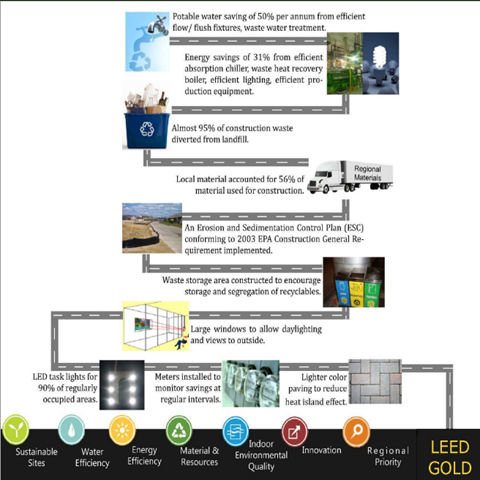
    GARMENT WASHING

    ZERO WATER WASTE: 98% RECYCLED 2% EVAPORATES

    G-Star worked with long-standing partner Saitex Vietnam – one of the most reputed sustainable manufacturer globally – to manufacture and wash the garments with utmost care for the people and the environment. By employing sustainable technologies and renewable energies, 98% of the water is recycled and re-used and the other 2% is evaporated naturally. Not even one drop of water is dumped in the local environment.

    SUSTAINABLE WASHING TECHNIQUES

    The Laser and Ozone technologies have been used in the factories where the washing of denim is done.  This process eliminates manual labour and the use of harmful substances. Moreover, no stone or potassium permanganate is used during the ageing process of this particular pair of denim. This clean chemistry results in 75% less water per garment. Unlike a regular denim wash that takes 40-70 liters, this pair of jeans only uses 10 liters of water.

    AIR DRYING SAVES 85% ENERGY

    To reduce energy consumption, each pair of jeans  is dried naturally in the Saitex factory. How, you might ask? By simply hanging them from the ceiling, before being finished in an electric drying machine. This saves 85% energy compared to a conventional drying cycle.

    POST CONSUMER


    98% RECYCLABLE DENIM

    When recycling denim, the top block is often discarded as it is too complicated to remove the zippers and rivets from the denim. Therefore they replaced zippers with eco finished buttons and removed rivets from the design to make 98 of every garment recyclable.

    clip_image002

    SAFE & FAIR WORKING CONDITIONS

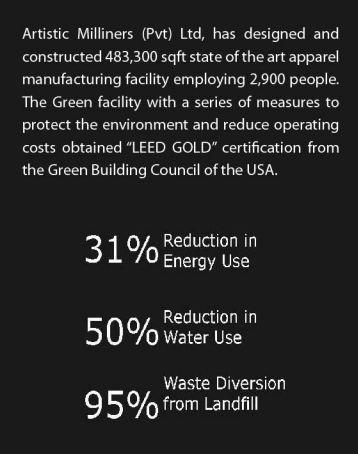
    The partners of G Star-  Saitex and Artistic Milliners, share the same values and regard good & fair working conditions of paramount importance for doing business. Saitex is a bluesign® system partner and a member of the Better Work Program in Vietnam, a collaboration between ILO and IFC, which aims to improve labor standards in the industry. Artistic Milliners received a gold level scoring for their social fairness work in their facility and for good environmental management practice.


    clip_image004

    THE RESULT

    100% organic cotton denim , 3×1 RHT with rich surface character in medium weight 10.5oz with the jeans having the typical G-Star hallmark 3D finishing .clip_image005

    clip_image006

    clip_image007

    clip_image008

    Besides making all the important sustainable inputs into the jeans which contribute in making the jeans so like never before,  the most important contribution of G-Star has been to make the process of making the denim fabric OPEN SOURCE. This will  encourage further developments of sustainable fabrics by other mills and may contribute significantly in making the denim mills more proactive in the subject of creating sustainable fabrics. Though the impact may not be seen immediately, but if the open source process is used by mills properly, we might see a much greater impact in near future.

    G Star has also mentioned that Sustainability starts at the drawing table – with the materials  they choose to reduce impact on environment.  It continues through manufacturing and transportation to the store, but it does not stop there. The environmental impact of a product continues throughout its entire lifecycle. Therefore, the contribution of end user is also important. They advised to wash the jeans carefully, repair them when possible and recycle them when we’re finished wearing them. Washing clothes at a low temperature. The G-Star RAW Elwood RFTPi jean, along with its counterpart, the D-Staq RFTPi denim jacket, is available in stores and online from February 15, in both men and women’s sizes.

  • G Star Sustainable Jeans In Collaboration With Archroma

    G Star Sustainable Jeans In Collaboration With Archroma

    G Star Raw has recently collaborated with Archroma and introduced a new capsule collection of denim colored using  Archroma’s earthcolors, a range of dyes made from recycled plant waste. Archroma’s EarthColors range recently came to public attention for being the Gold Winner of the OutDoor Industry Award 2017, Sustainable Innovations category.

    The company developed EarthColors using non-edible waste products, from agriculture and herbal industries, to replace petroleum derived raw materials; which are the conventional raw materials used to synthesize dyes currently. This gives brands an alternative when looking for more natural ways of dyeing garments. The three  colors available in the capsule collection: ‘Dark Plum’, ‘Asfalt’ and ‘Mazarine Blue’, are made from the non-edible parts of beetroot and saw palmetto, left over from agriculture industry or herbal extraction.
    5620 G-Star Elwood Staq 3D Mid Waist Skinny Color Jeans | USD 180.00

    Features

    The G-Star Elwood jeans mapped out a new way of thinking about denim when first released. This seasonal version features the same anatomical 3D construction as the original, updated with sustainable denim and a contemporary fit.

    Fabric

    Earthtrace Dark Plum Super Stretch Denim -  The 5620 G-Star Elwood Staq 3D Mid Waist Skinny Color Jeans is made from sustainable denim with great stretch and recovery. Denim dyed with traceable dyestuff derived from recycled plants and nutshells. (EarthColors by Archroma®) 89.9% less water, 68.5% less energy and 47.5% less CO2 (as claimed by G-Star) , 35% organic cotton, 35% Tencel®, 28% recycled polyester, 2% elastane (Lycra®) Tencel® is made from FSC™-certified eucalyptus that has low impact on the environment. RAW Sustainable. RAW Sustainable garments are made of materials that are sustainable and contribute towards minimizing the environmental impact of the G-Star collection. Color Dark Plum

    Sustainable Dyed Jeans By G Star Raw In A Collaboration With Archroma | Denimsandjeans.com

    Sustainable Dyed Jeans By G Star Raw In A Collaboration With Archroma | Denimsandjeans.comSustainable Dyed Jeans By G Star Raw In A Collaboration With Archroma | Denimsandjeans.comSustainable Dyed Jeans By G Star Raw In A Collaboration With Archroma | Denimsandjeans.com

    5620 G-Star Elwood 3D Super Slim Asfalt Color Jeans | USD 180.00

    Features

    The G-Star Elwood jeans mapped out a new way of thinking about denim when first released. This piece contains Bionic Yarn, a very special thread of cotton and recycled ocean plastic.

    RECYCLED PALMETTO LEAVES

    Sustainable colors, renewable fabrics, iconic fits. Taking its earthy green hue from recycled palmetto leaves is the Asfalt colorway of EarthColors denim. Recycled agricultural waste is turned into 100% traceable dyes, resulting in a collection of jeans that represent premium quality, without compromising the earth.

    Sustainable Dyed Jeans By G Star Raw In A Collaboration With Archroma | Denimsandjeans.comSustainable Dyed Jeans By G Star Raw In A Collaboration With Archroma | Denimsandjeans.comSustainable Dyed Jeans By G Star Raw In A Collaboration With Archroma | Denimsandjeans.comSustainable Dyed Jeans By G Star Raw In A Collaboration With Archroma | Denimsandjeans.com

    5620 G-Star Elwood 3D Super Slim Mazarine Blue Color Jeans | USD 180.00

    RECYCLED SAW PALMETTO

    The Mazarine Blue iteration of EarthColors denim gets its natural blue shade from recycled saw palmetto. It’s denim, that respects the earth. Recycled agricultural waste is turned into 100% traceable dyes, resulting in a collection of jeans that represent premium quality, without compromising the earth.

    Sustainable Dyed Jeans By G Star Raw In A Collaboration With Archroma | Denimsandjeans.comSustainable Dyed Jeans By G Star Raw In A Collaboration With Archroma | Denimsandjeans.comSustainable Dyed Jeans By G Star Raw In A Collaboration With Archroma | Denimsandjeans.comSustainable Dyed Jeans By G Star Raw In A Collaboration With Archroma | Denimsandjeans.com

    “As denim innovators we’re always striving to challenge conventions – both in terms of style and future-proof processes. The introduction of EarthColors into G-Star’s jeans’ collection represents a successful collaboration with Archroma and the embodiment of our sustainable mindset which guides our product design from start to finish.” – Frouke Bruinsma, Corporate Responsibility Director, G-Star RAW.

    “G-Star is the very first denim brand to collaborate with Archroma to create a collection of colored jeans,” comments Paul Cowell, Global Head of Brand Marketing, Brand & Performance Textile Specialties, Archroma. “By doing so, we hope they will inspire more denim brands and retailers to switch to sustainable dyeing ingredients that, like EarthColors, allow creating gorgeous colors – and at the same time are so much gentler on our planet. Because it’s our nature!”

    Sustainable Dyed Jeans By G Star Raw In A Collaboration With Archroma | Denimsandjeans.comSustainable Dyed Jeans By G Star Raw In A Collaboration With Archroma | Denimsandjeans.com
  • Anubha First Indian Denim Mill To Partners With Bluesign®

    Anubha First Indian Denim Mill To Partners With Bluesign®

    Anubha, a young denim mill located at Surat in India, becomes the first one in the Indian denim industry to partner with Bluesign Technologies , Switzerland . Bluesign is known for their bluesign® system – which is a solution for sustainable textile production.

    Anubha aims at using only clean chemistry in the entire process of denim manufacturing by responsible sourcing using bluesign® approved products. The development of an input stream management in the production process will help to achieve standards for an environmentally friendly and safe production. It will enable them to provide their customers with sustainable products. The bluesign® system provides Anubha the bluefinder, through which it can access a database of chemicals that are approved by bluesign® to ensure sustainable, high quality and safe materials. Joining the bluesign® system also allows Anubha to focus on all issues related to Environment, Health and Safety and to work towards the sustainability targets in a very efficient way.

    “We are proud to become a bluesign® system partner. With laser focused approach on increasing transparency and environmental management performance we are determined to further improve the sustainability of our entire supply chain.We consistently committed to the goal of becoming the most sustainable denim company in India”, said Aditya Goyal, Managing Director of Anubha Industries.

    “We are glad to be partnering with Anubha as our first Denim Textile Manufacturer System Partner in India. Anubha has shown its commitment towards sustainable Denim production and we are proud they have chosen bluesign technologies as their partner for chemical management to drive sustainability performance. Together with Anubha, we strengthen our aim to create a responsible Denim supply chain for a more sustainable fashion industry”, said Jill Dumain, Chief Executive Officer at bluesign technologies.

    As sustainability becomes a keyword, companies around the world seek to look to innovative solutions which help them to reduce the impact of their operations on the environment. We are likely to see a steady growth in the number of companies opting for such solutions .

    Anubha Announces Partnership With Bluesign® | Denimsandjeans.com

    About Anubha Industries Private ( Pvt) Ltd

    Anubha Industries Ltd is a specialist for denim and advanced fabric solutions. Headquartered in Surat, India with over 500 employees, the company manages the complete industrial chain, from fabric to finished product. Anubha Industries has invested in the state-of-the-art facilities equipped with rope dyeing, weaving, finishing, coating, printing and material testing facilities.

    About bluesign technologies ag

    The bluesign® system is the solution for a sustainable textile production. It eliminates harmful substances right from the beginning of the manufacturing process and sets and controls standards for an environmentally friendly and safe production. This not only ensures that the final textile product meets very stringent consumer safety requirements worldwide but also provides confidence to the consumer to acquire a sustainable product. Bluesign Technologies AG was founded in 2000. Since then, the bluesign® system has been adopted by worldwide leading textile and accessory manufacturers. Various significant key players of the chemical and machine industry rely on the bluesign® system. And well-known brands of the outdoor, sportswear and fashion industry rely on the extensive knowledge of bluesign technologies.

  • New Even Better Denim By Lindex In Collaboration With Jeanologia

    New Even Better Denim By Lindex In Collaboration With Jeanologia

    In 2014, The Swedish clothing label –Lindex  began their denim journey towards producing denim in a more sustainable way. Significant progress was made and today entire lot of Lindex denim miscellany is Better Denim, made from more sustainable materials and with more sustainable washing processes that only uses 8-12 liters of water.  Lindex continuously and consistently brought innovations and developments in order to reduce the water consumptions . The company has been working with small collection of “Even Better Denim” to develop their more sustainable denim assortment with an ambition to apply it to their entire collection later. Currently their 100% denim collection is classified as “Better denim” which uses 8-12 litres of water.

    New Even Better Denim By Lindex In A Collaboration With Jeanologia

    As per Lindex, round 50-70 liters of water consumes during conventional washing process of one pair of denim jeans but the company has developed such technology with the help of which it the similar process can be completed with a consumption of only 1 bottle of water , this is what the entire campaign of Even Better Denim is all about .   The concept has been developed in collaboration with JEANOLOGIA ( Spain Based Technological Company ). With new innovative technology, Lindex has used air and laser to achieve the results. Only 2 liters of water, one bottle, has been used in the washing process. The process is better for the environment as well as for the people who work in production.

    New Even Better Denim By Lindex In A Collaboration With Jeanologia

    “We are on a denim journey where we explore how we can offer our customers amazing denim with the least environmental impact possible. We are very excited to launch these new Even Better Denim styles, where we through collaboration and new technology have reached a new milestone”, says Anna-Karin Dahlberg, Sustainability Manager at Lindex.

    Since from beginning of production to finish , the company has maintained the degree of sustainability . The Even Better Denim styles are also made from more sustainable materials such as post-consumer recycled cotton and recycled polyester. The styles are dyed in the cleanest indigo dye on the market which is better for both the environment and the people who work in the production. The styles also has more sustainable trims such as buttons, zippers and pocket bags.

    The Even Better Denim styles are available in Lindex women’s and kids’ assortment and will be sold in all Lindex stores and at lindex.com .

    New Even Better Denim By Lindex In A Collaboration With Jeanologia

    The trend to go sustainable seems strong and is catching up with different brands and retailers. Big names like Levi’s, H&M , Inditex , G-Star and many others are already treading this path. Its now time for the trend to percolate further into the ranks of fashion industry. Every label worth its name, wants to have sustainable tag.
    However, in the long run, only those brands/retailers will be really successful who really believe in sustainability as a mission rather than as a fashion. Once it is a mission, the whole organization will be focused on the same and their supply chain will probably support more strongly and change its practices as well.
    Another point worth noting would be for these players to understand that true sustainability is when the entire process is sustainable. If denim fabric is used, cotton should have been produced in sustainable way, it should have been converted at various stages including yarn, woven, dyed and finished in a sustainable way too. But the definition of sustainability is still too vague. We need to have better definitions. For argument sake , what % is a garment sustainable when it is washed with less water and chemicals. How much % to add if the cotton is organic, and then if yarn spinning and dyeing is done with less water and chemicals, and if finishing is also so done. How about if the mill is using solar power instead of regular power, what about packaging – if its also sustainable. Really there are over a 100 points of touch where a single denim garment can be effectively made more sustainable. Can we really know if anyone is sustainable on 50% of such parameters ? Hope someday we will have proper standards for each step of production, distribution, selling etc so that the consumer can just see a final % showing how sustainable the garment is . Only when this happens will we see some real fruits coming on the Tree Of Sustainability.

  • Recycling Story At H&M

    Recycling Story At H&M

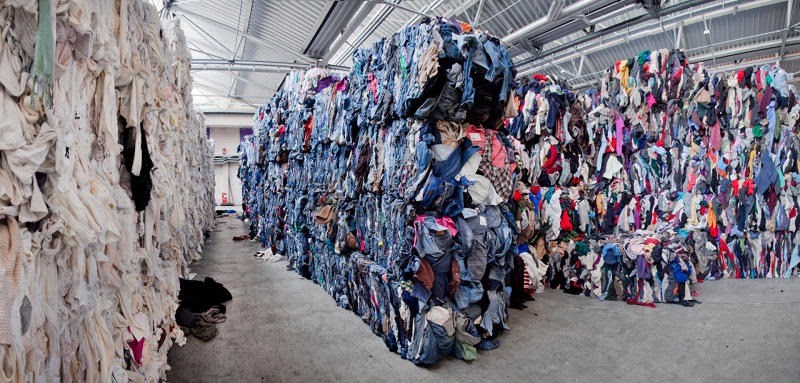
    H&M, the second biggest apparel retailer in the world with 4200 stores around the globe with its revolutionary idea has been bringing a change through its dedicated efforts in the area of sustainability and recycling .

    Its all started in the year 2005 when the company had first introduced some organic cotton as its first effort towards sustainability and in 2013 , the company launched their ‘In-Store Garment Collection Initiative’  in which one can leave his/her old clothing at any H&M store in the world. Under this scheme, Customers who drop off clothes receive incentives, in the form of discounts or vouchers per bag of clothing. This was done to promote the consumer to donate the  clothing that would otherwise be trashed. Currently H&M is offering about 15% discount on next purchase to customers who are putting up any used clothes in their collection bins in the stores.

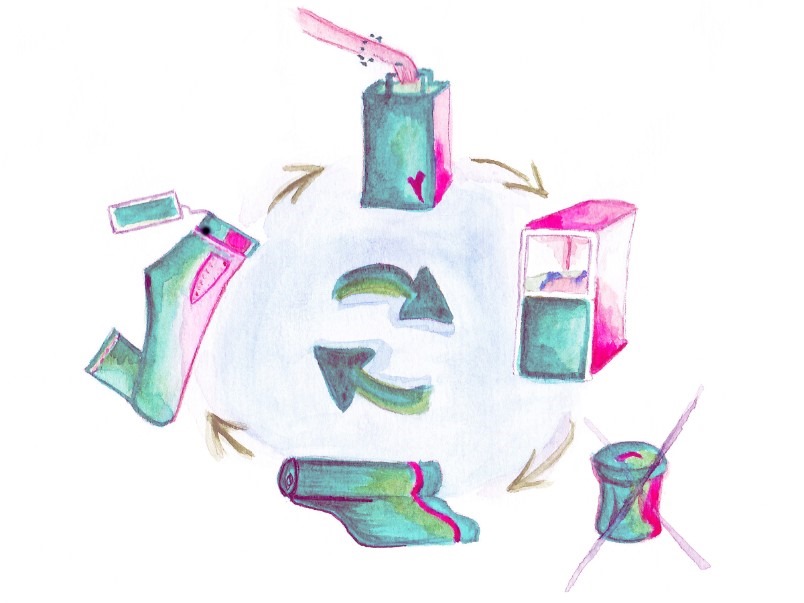
    H&M Reclycing Model

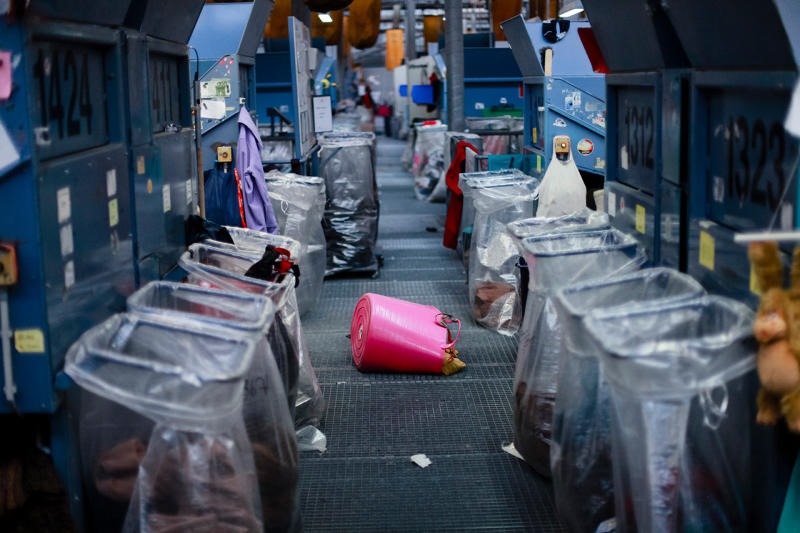
    H&M Sustainibilty | DenimsandjeansH&M Sustainibilty | Denimsandjeans

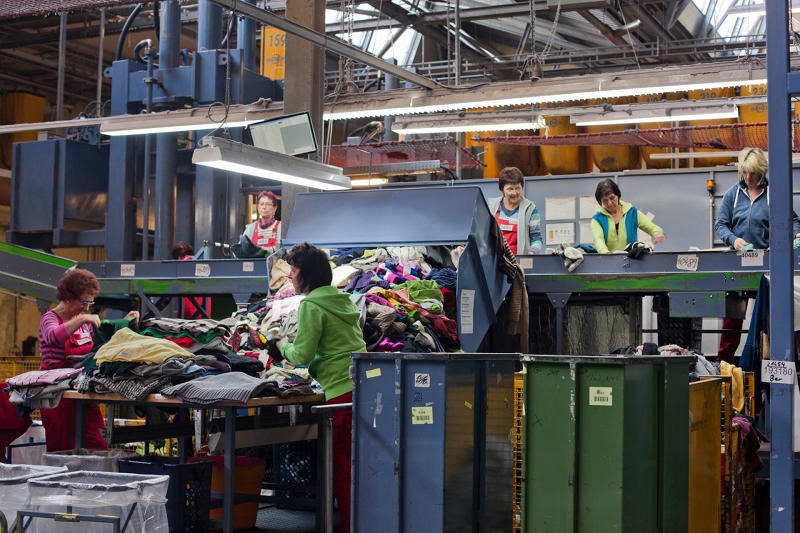
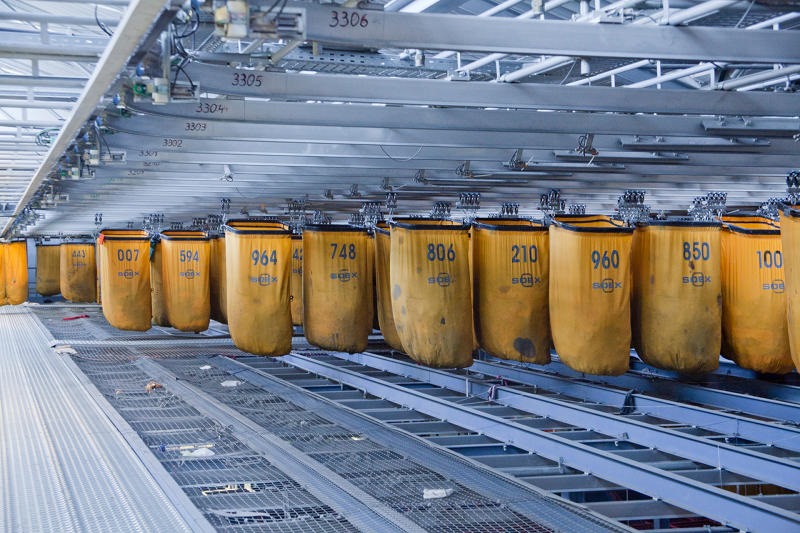
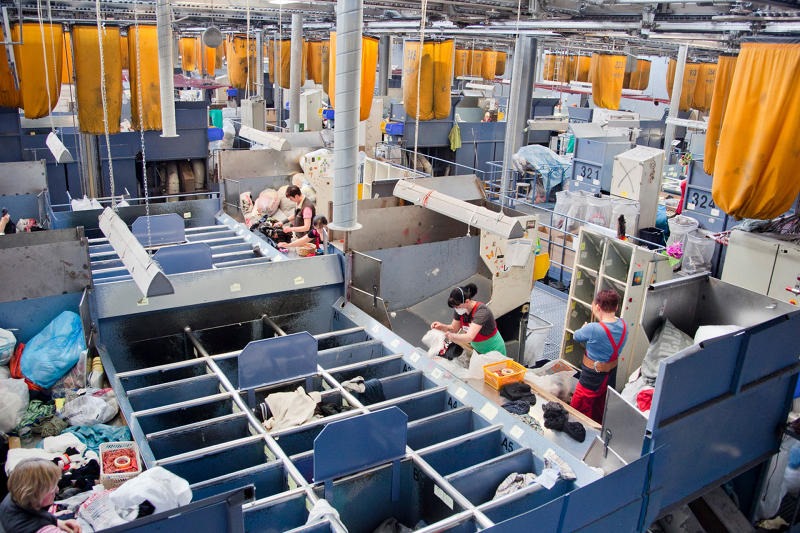
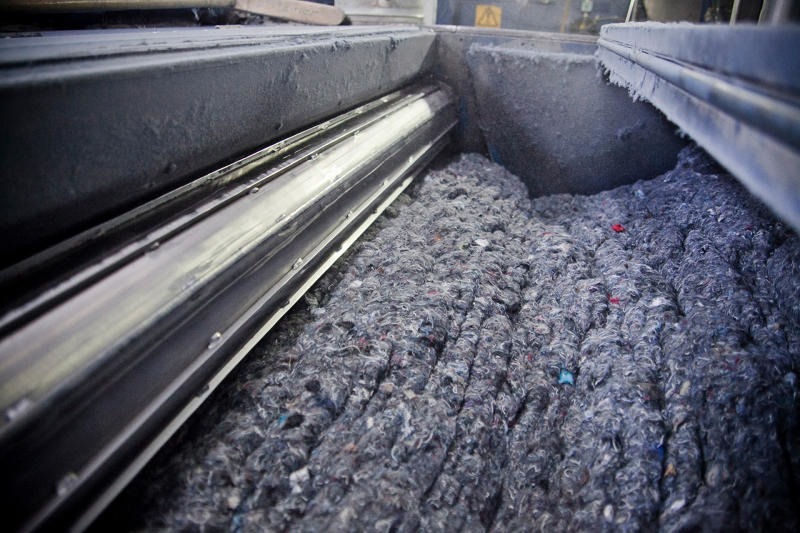
    With an investment worth USD 5.8 million,  the H&M foundation further partnered with  The Hong Kong Research Institute of Textiles and Apparel (HKRITA) with an idea to develop the technology to recycle blended textiles into fabrics fit for new clothing . This paves a way for another partnership with a solution provider – I:Collect (I:CO) ,subsidiary company of SOEX . I:Collect has a plant which equals to the size of 13 football field and called Wolfen plant where H&M operates sorting and recycling on a major scale.

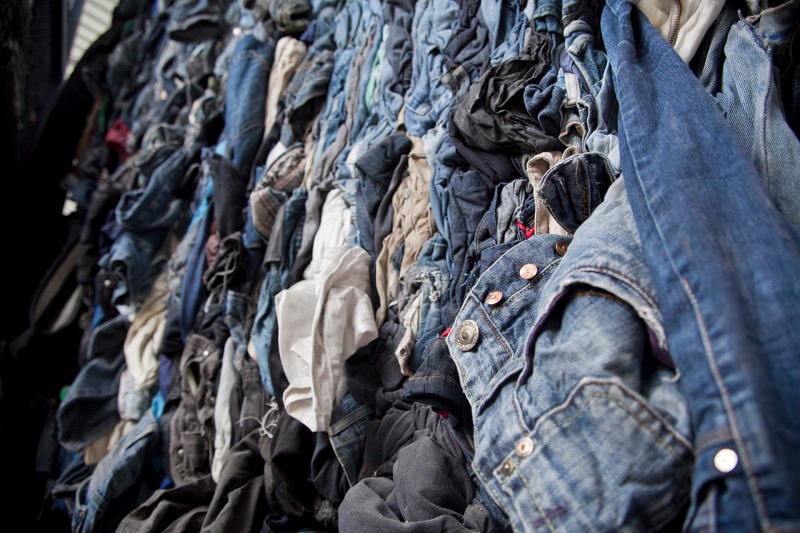
    H&M Sustainibilty | DenimsandjeansH&M Sustainibilty | Denimsandjeans

    PROCESS

    Since 2013, when H&M started the ‘In-Store Garment Collection Initiative’, the garments collected there have been brought here through logistics by I:Collect from all over the world, and has been operating  two similar facilities—in the U.S. and India to ensure zero-waste use of clothes, shoes, and textiles that would otherwise likely end up in landfills. The garment sorted here are still contribute very minor share in the total of 85% of discarded clothes that sent to landfills (the rest are donated), yet the operation requires an operation 13 times the size of a football field,  seven hundred employees most of whom work in the 24-hours-a-day business of sorting. On an average 14 metric tons of unwanted remainders collected from recycling bins at H&M’s thousands of locations from Europe’s closets trucked by around 25 to 30 vehicles in a day.

    There are 350 different measures over which this sorting process is based on which later identifies whether the old clothes will be re-sold, partly re-used ,or fully recycled.If the process finds it unable for reuse, it goes into recycling . Clothes which are usable are sent to 90 countries in Africa and Latin America to be sold through Used Clothes Stores. The three main segregations are :

    • Rewear – clothing that can be worn again will be sold as second hand clothes.
    • Reuse – old clothes and textiles will be turned into other products, such as cleaning cloths.
    • Recycle – everything else is turned into textile fibres, and used for things like insulation.

    H&M Sustainibilty | DenimsandjeansH&M Sustainibilty | Denimsandjeans

    But everything that comes to I Collect  is used, in one way or another. The most worn-out cotton items head to a shredder, where they are gradually broken down and repackaged into inviting bales of fluff, and become wipes and cleaning cloths. The huge amount of dust produced during the process is sold to paper industry as brickettes .

    The new garments being made are not 100% recycled . H&M says :

    “ Currently, one single garment can contain up to 20% recycled fibres (recycled cotton or recycled wool from collected garments) without any loss of quality or durability. We are working to get that number to increase by creating demand and investing directly in technological innovation. The first step is to minimise the risks of fashion going to landfills – we believe our clothes deserve better! In the long term, we want to find the technological solutions needed to be able to fully reuse and recycle all textile fibre. When using other recycled material (blended or pure) such as recycled polyester, a garment can already now be made of 100% recycled material.”

    H&M Sustainibilty | DenimsandjeansH&M Sustainibilty | DenimsandjeansH&M Sustainibilty | Denimsandjeans

    RESULT

    According to Anna Gedda, H&M’s head of sustainability, The company has collected about 34,000 tons of waste, or the weight of 100 million t-shirts so far . However, H&M produces about 550-600 million garments p.a and this quantity might seem very less against the same . However,still the initiative is big and a game changer. If some of the large retailers adopt this model, we may see Fast Fashion doing much less damage to the environment than it is currently inflicting !


  • Leeds Gold Certificate For Artistic Milliners’ Latest Garment Factory

    Leeds Gold Certificate For Artistic Milliners’ Latest Garment Factory

    Artistic Milliners , the denim producer from Pakistan, gets Leeds Gold Certificate for its latest garment factory in Pakistan.

    Developed by the US Green Building Council , the LEED is intended to help building owners and operators be environmentally responsible and use resources efficiently.It  is a green building certification program that recognizes best-in-class building strategies and practices. To receive LEED certification, building projects satisfy prerequisites and earn points to achieve different levels of certification.

    The company mentions that they are highly focused on sustainability and  in 2013 they produced over 2 million mtrs of denim with recycled polyester and over 2 million waterless jeans..

    We spoke to Murtaza Ahmed, Director Artistic Milliners , about this latest project and he mentioned that this is Pakistan’s first Leeds Certified Factory. He further says

    “We are very excited as a group and a company. We have done many initiatives in this unit. All our dry processes are solar powered. We shall be recycling 100% of our water. Our daily consumption is 500,000 gallons. 70% of this will go back to laundry and 30% will go for sanitation and irrigation even though LEEDS does not require us to recycle 100% water. Even the sludge is being used  for making bricks.  We are using technology and automation to make the processes more sustainable including using automated spray booths, laser machines, ozone machines etc….”

    Here is the video on our talk with him where he explains about the latest project and the thought behind it..


    Artistic Milliners


    Leeds Certified Factory by Artistic Milliners

    image