Category: Denim Reports

Find out the latest reports on Denim Fabrics and Jeans

  • Denim The stuff That Our Dreams Are Made Of | Fabio Adami Dalla Val and Christian Reca

    Denim The stuff That Our Dreams Are Made Of | Fabio Adami Dalla Val and Christian Reca

    The stuff That Our Dreams Are Made Of | Fabio Adami Dalla Val and Christian Reca

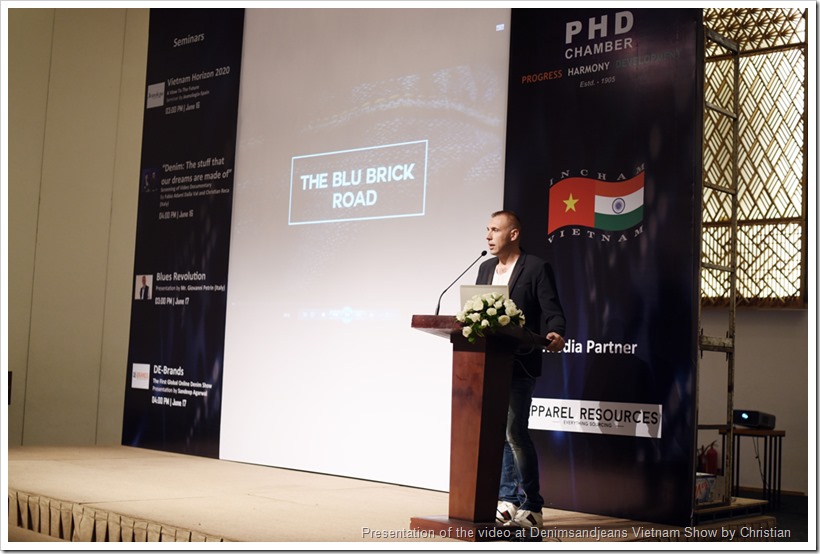
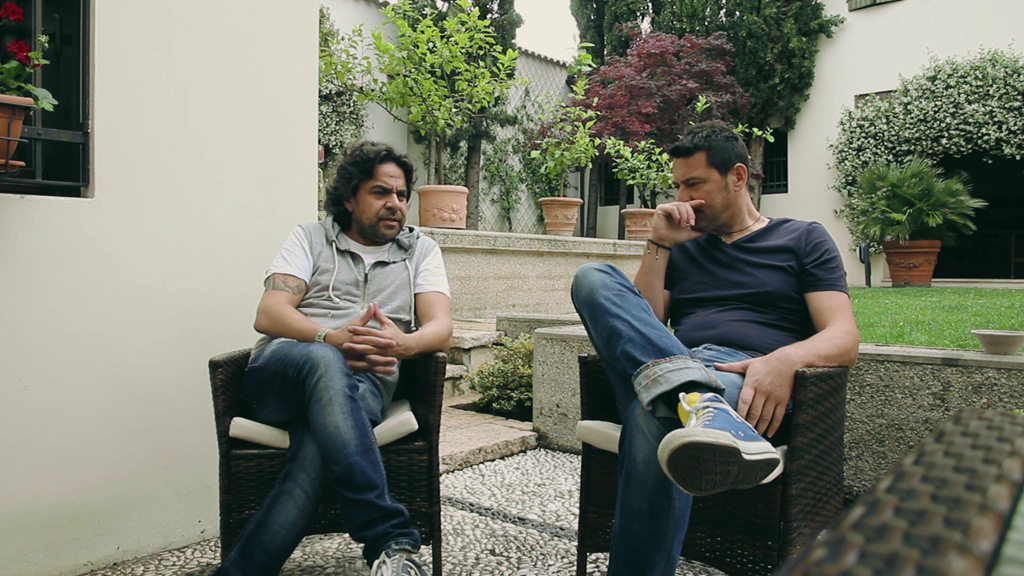
    Two sustainable  denim experts from Italy – Fabio Adami Dalla Val and Christian Reca released their much awaited documentary titled – ‘Denim : The stuffs that our dreams are made of ‘ at the first ever denim show in Vietnam held in June 2016. The documentary focuses on   the new trends, sustainability,technology and new innovations surfacing in the industry . From denim suppliers to the street shops , both experts travelled all over Italy to get different perspectives from the  Italian denim industry on the emerging trends .  The documentary covers interviews with important people in the Italian denim industry and brings out their take on the direction that denim is taking.

    Fabio Adami Dalla Val starts by summing up the journey for this video

    “ We are finally at the end of this amazing tour around Italy , around Denim. We met denim suppliers – the oldest of Italy, we met shop owners, the street people and today we have a new view of our dream , our denim “.

    Christian adds up

    “ We put denim in the middle but we have the point of view of different kind of people concentrating on denim. Its amazing how the viewpoints differ but at the same time the final dream is same – The Product . So we can understand now even better how many people worked behind the scenes ,  behind the denim , and its always important to understand the history of people behind denim . We cannot create something from zero , something from scratch if we do not have background since long time ! “
    Denim The Stuff Dreams Are Made Of | Fabio Adami Dalla Val and Christian Reca

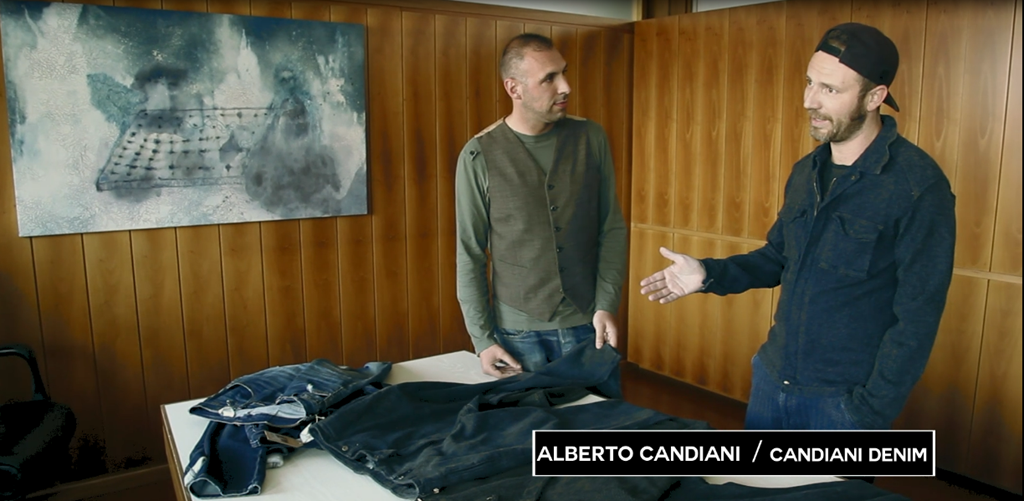
    Alberto Candiani from Candiani denim speaks about the changes in the last few years

    “The last few years  have been full of new technology specially concerning stretch and at Candiani we are good at combining these new technological elements with the heritage of denim.  Which is why I brought some examples here . “
    Denim The Stuff Dreams Are Made Of | Fabio Adami Dalla Val and Christian Reca

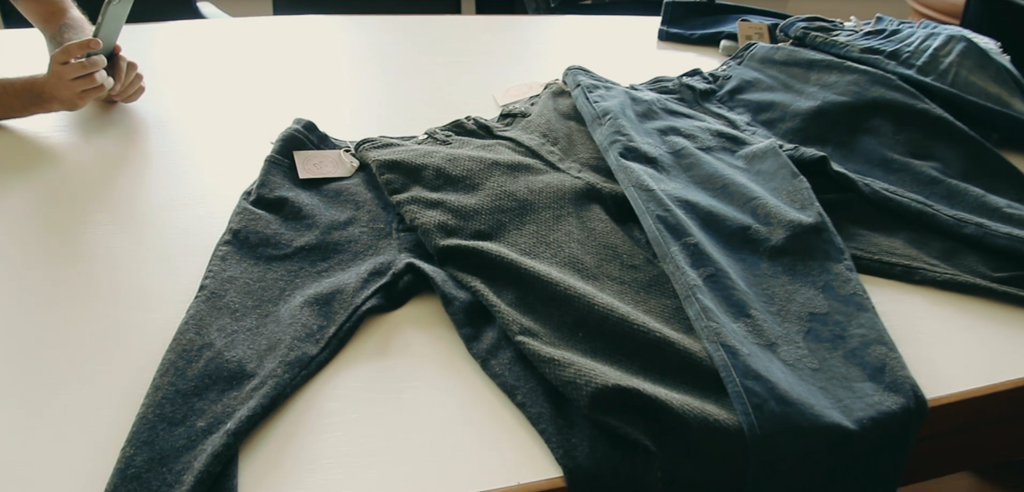
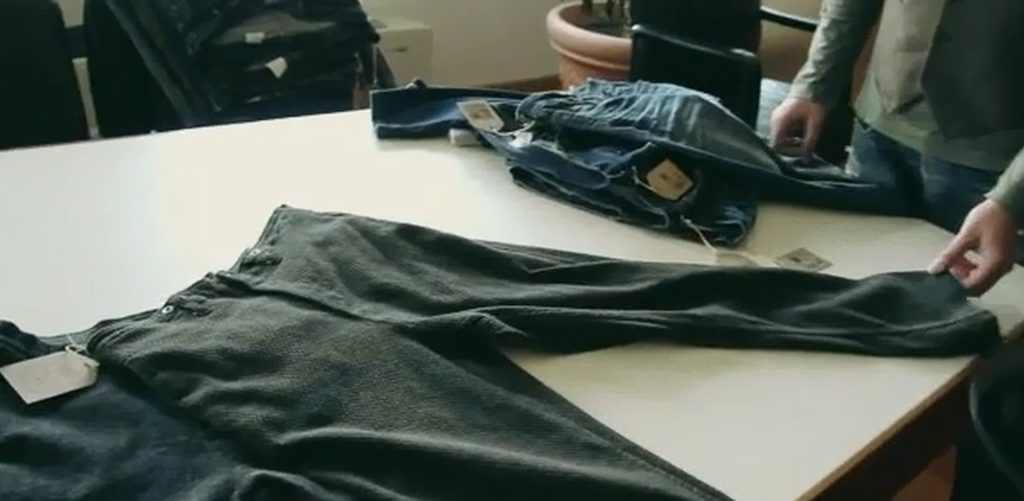
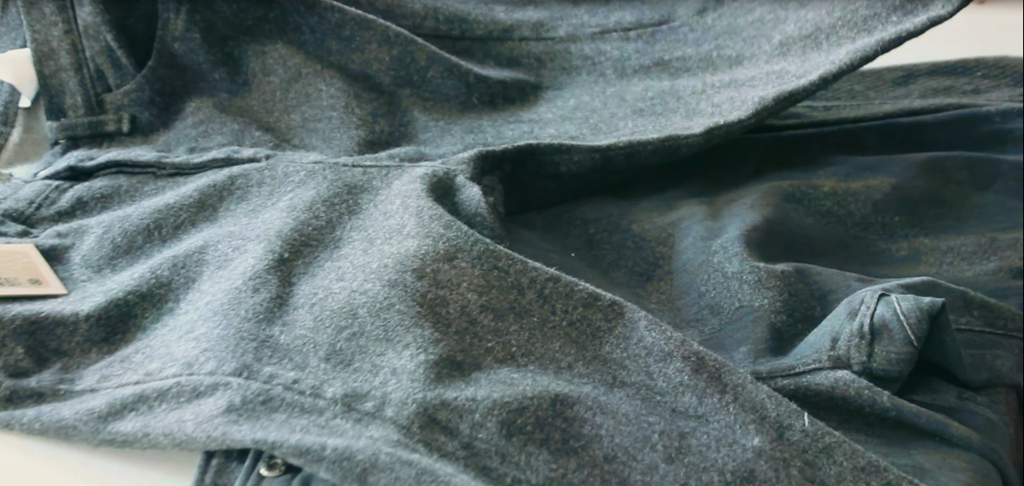
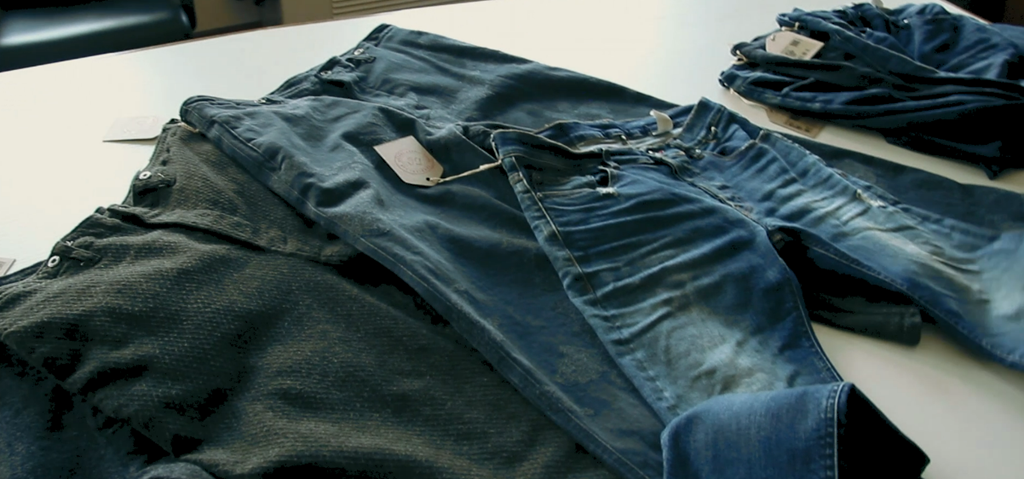
    Alberto Candiani displays the first product – fabric made of  cotton but looks of wool, a very thick sateen with Dual Fx in the weft  to give 40% elasticity and the fabric is brushed to give the fuzzy woolen looks.
    Denim The Stuff Dreams Are Made Of | Fabio Adami Dalla Val and Christian Reca

    “The very interesting part comes up when you engineer these fabrics with the latest technology like laser. You can just go deep into the fuzz and create different patterns, different layers and making it a much more innovative fabric “ Alberto says. “ To make a special construction to enable the fabric to be bruhsed  and applied the laser  . It tells you the   combination of elements and the experience  you need to have to build such a product . It is the natural combination of heritage and technology . You need to know how to put these two together . In Italy, we believe we know this better than anybody else  “
    Denim The Stuff Dreams Are Made Of | Fabio Adami Dalla Val and Christian Reca

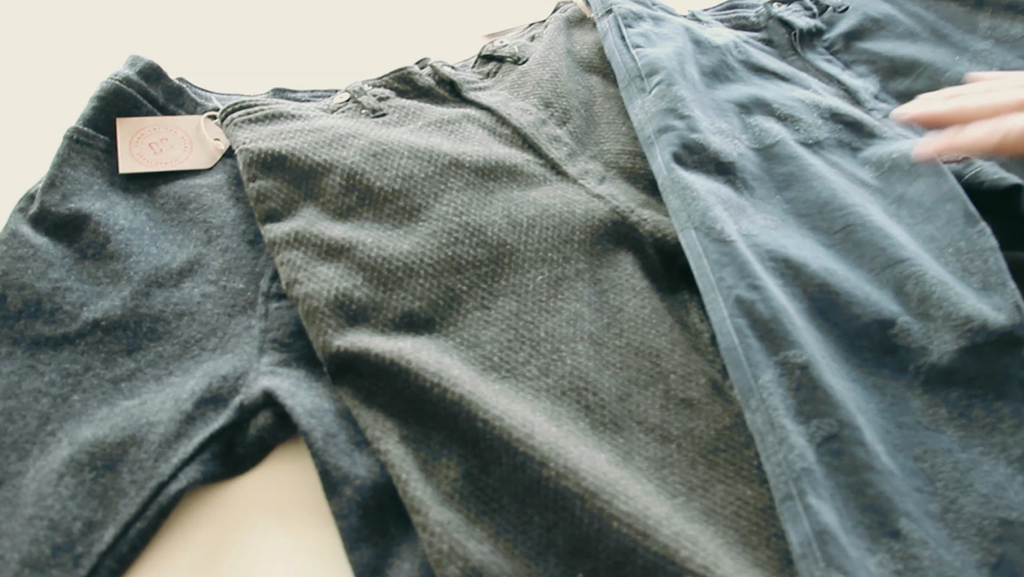
    He also displayed the Stretch Selvedges that the company is making.

    “Selvedge was meant to be be 15oz , heavy but as Candiani we thought why don’t we make the first cool performance Stretch Selvedge.” he added showing the techy stretch selvedges.

    Coming down to the sustainable part , he mentioned that

    “ We are a 78 years old company and we are located in a national reserve. So this area is national park  Rules are extremely strict here and we have to strive to be as green as possible. We stick to the rules which we like . Its an investment and it helps us to do the things in a better way, in a conscious way and a more responsible way . … We focused our attention on  water saving and dyes. You know it takes lot of water to process indigo and it takes even more water when we have to treat garments. So we decided to engineer a new color . We engineered the dyes according to suitability with laser and ozone . We engineered what we call  INDIGO JUICE – which is basically a selection of colors which react great with laser and ozone . Takes nothing to achieve the contrast , takes nothing to create vintage looks without using lot of water. On the other hand to create colors which looked more interesting when not washed, we created a different category of products we call N as NITROGEN . So we dye under nitrogen and we save internally about  30% water. We do not use any hydrosulphide or fixation agent. “
    Denim The Stuff Dreams Are Made Of | Fabio Adami Dalla Val and Christian Reca


    Denim The Stuff Dreams Are Made Of | Fabio Adami Dalla Val and Christian Reca

    Fabio and Christian | Denimsandjeans.com

    Paolo Gnutti from ITV denim has also been featured in this documentary . Paolo is also a veteran in the denim industry and has been a pioneer in brining out denim with the mix of fibers including the merino wool , cashmere and more.

    “Denim is a fabric which is in constant evolution. Its a fabric which has life inside and moves every time in different way. Its very important to understand what the market needs and how we can be different from normal denim. We try to do do something new by taking different warp  and try to mix two different technical concepts . Denim is everyday and everywhere and is a part of you. Its not really a part of fashion world . We try to enter this kind of world which is not from now but from many years. “ He further says “ Market in the last few years is focused really on fabric but  on marketing to give some news to the clients . If we talk about denim , we always talk about super stretch and comfort stretch ,The denim spoke every time the same language therefore it is the time when we need to be more focused on the need of the market and technological fabrics…Quality for me is the first point. The client saves a lot  of waste during laundry or garmenting . Also eco sustainability is a very important point for us.
    Fabio and Christian | Denimsandjeans.com

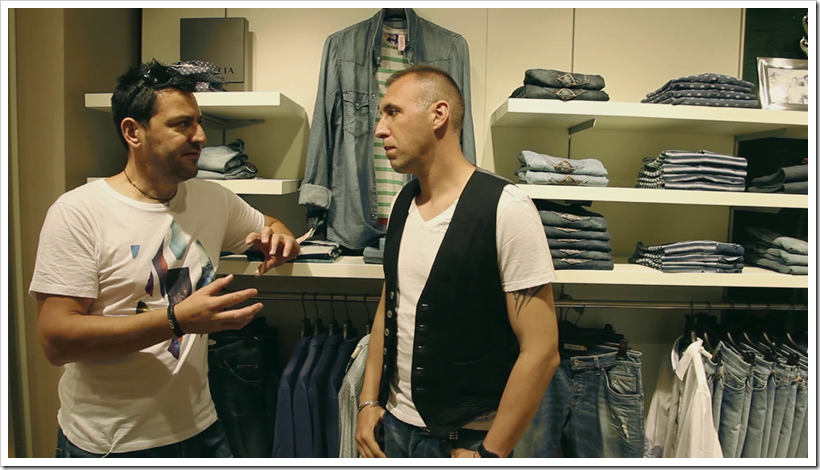
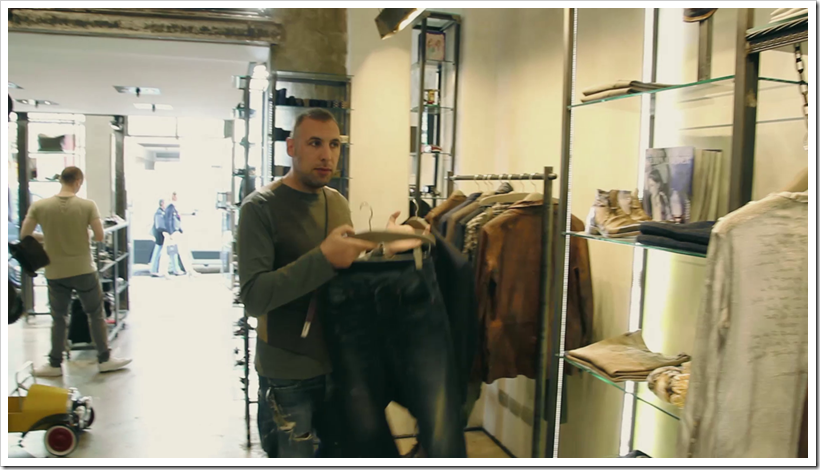
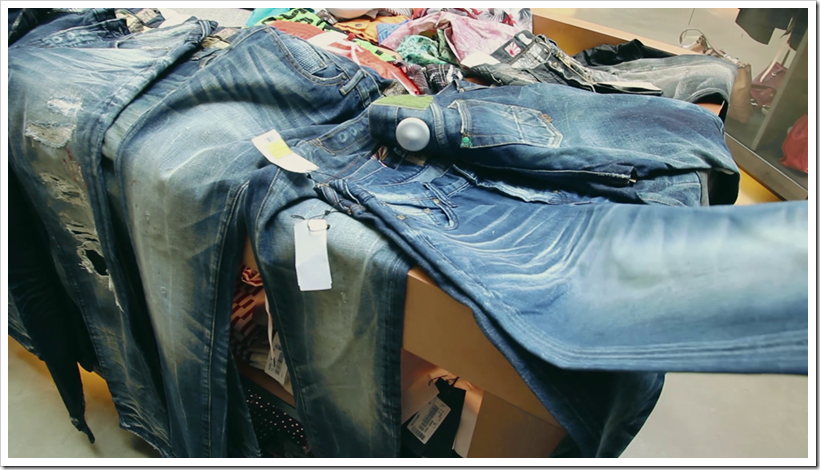
    At the end of the video , both the expert were seen roaming around different retailers in Verona, Milan etc to see the new classic and casual looks with denim. Christians shows the classic looks with formal jacket and the casuals with leather jacket , shoes etc mostly in hard colors like brown, dark blue, rusty brown, etc. The combination is between classic in a sportswear way and casuals. .
    Fabio and Christian | Denimsandjeans.com

    Fabio and Christian | Denimsandjeans.com

    Fabio and Christian | Denimsandjeans.com

    Fabio and Christian | Denimsandjeans.com

    In their closing remark , Fabio says ,

    “The technical part of the denim, I mean denim is changing , keeping the vintage look but using high level of technology inside.  …
    Fortunately we are in Verona in stores in June  and we can see the Spring Summer collection.We can see some trends – denim is not only heritage , its going in premium level and some of the highlights we saw for AW17/18 are already here. Also what is most imp is the hand feel. Hand feel is very gentle but with the life of denim and we can see that touch in most jeans here….

    Christian says ,

    “We need not any more denim as it is ,but we need denim that we can wear in every part of the day. Combination between technical denim cotton is the key point. Also style is important as it helps to develop innovation.  How to wash denim is very important and we need to think how to work on these technological things.  Open your mind . Don’t think about only heritage classic because different styles mean different kind of washes. ..
    All the three categories Premium, Fashion and Heritage – all of them has one common thing that is handfeel – super soft but not fluffy. Specific customers like each of these categories  . Fabrics that we can consider for all of them need not be super stretch but green cast , open end, 3x 1 , heavy fabrics . So three different categories but one hand feel –super soft. !

    You can watch the full documentary here 

  • Gap Results Are Negative , Again ! | First Quarter 1 2016 Comparable Sales Results

    Gap Results Are Negative , Again ! | First Quarter 1 2016 Comparable Sales Results

    Gap Inc.’s comparable sales for the first quarter of fiscal year 2016 were down 5 percent versus a 4 percent decrease last year. Comparable sales by global brand for the first quarter were as follows:

    •   Gap Global: negative 3 percent versus negative 10 percent last year
    • Banana Republic Global: negative 11 percent versus negative 8 percent last year
    • Old Navy Global: negative 6 percent versus positive 3 percent last year

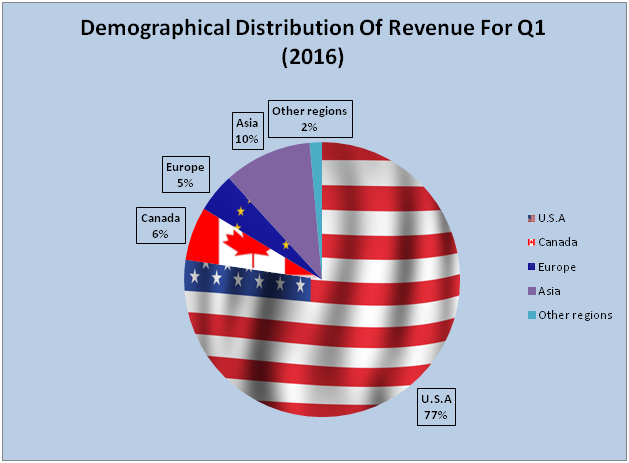
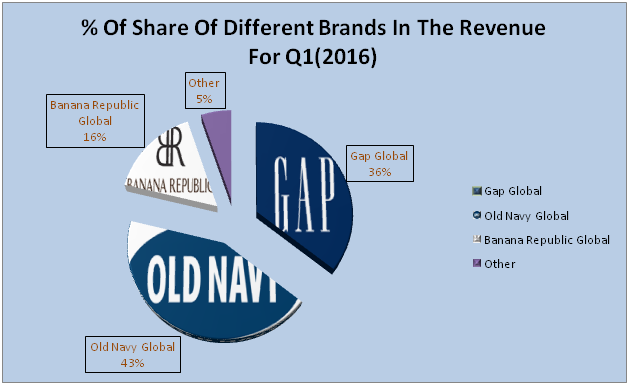
    Net sales for the first quarter of fiscal year 2016 were $3.44 billion compared with $3.66 billion for the first quarter of fiscal year 2015. The translation of foreign currencies into U.S. dollars negatively impacted the company’s reported net sales for the first quarter of fiscal year 2016 by about $20 million. In calculating the net sales change on a constant currency basis, current year foreign exchange rates are applied to both current year and prior year net sales. This is done to enhance the visibility of underlying sales trends, excluding the impact of foreign currency exchange rate fluctuations. So far as the demographic distribution of revenue is concerned , USA still leading the charts with 77.31% share in the total revenue however in the quarter 1 of 2015 , the USA accounted 82% share . Old Navy contributed the highest share in the revenue with  43% while the Gap Global and Banana Republic Global contributed 36% and 16% respectively in the Quarter 1 ,2016

    The following table details the company’s first quarter fiscal year 2016 net sales:

    US$(In Millions)

    Regions

    Gap Global

    Old Navy Global

    Banana Republic Global

    Other

    Total

    % of Net Sales

    U.S.A

    698

    1,328

    454

    178

    2658

    77.31%

    Canada

    70

    98

    47

    1

    216

    6.28%

    Europe

    144

    0

    14

    0

    158

    4.60%

    Asia

    280

    50

    26

    0

    356

    10.35%

    Other regions

    31

    10

    9

    0

    50

    1.45%

    Total

    1223

    1486

    550

    179

    3438

    100.00%

     
    GAP Q1 2016 | Denimsandjeans.com
     
    GAP Q1 2016 | Denimsandjeans.com
     
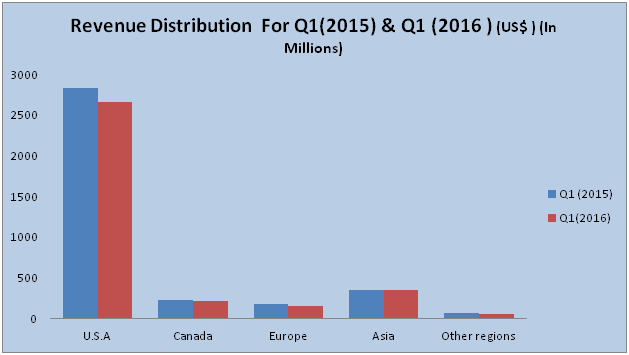
    The demographical distribution of revenue doesn’t seem to be very encouraging for the Q1 2016 as most of the region contributed less revenue as compared to the Q1 2015. The leader in the chart , USA contributed US$ 2658 million in this quarter while in the same quarter in the previous year , the contribution was US$ 2828 million. Not only USA , the other regions like Canada and Europe have been following the same trend.  However the fall in the revenue of Asian region is the lowest.
     

    US$ (In Millions)

    Regions

    Q1 (2015)

    Q1(2016)

    U.S.A

    2828

    2658

    Canada

    224

    216

    Europe

    181

    158

    Asia

    355

    356

    Other regions

    69

    50

    Total

    3657

    3438

    GAP Q1 2016 | Denimsandjeans.com

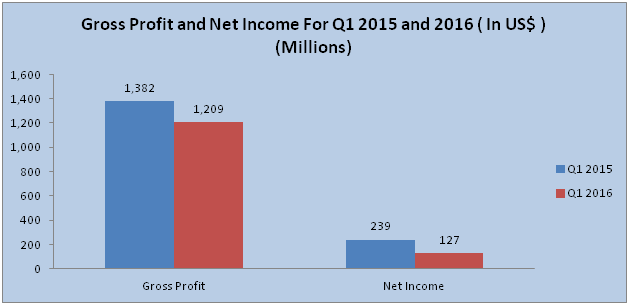
    The most distressing figure is its net income ,which fell down to US$ 127 Million from US$ 239 and it is due to rise in the operating as well as as the non operating expenses. The company needs to seriously look in to its cost management as well as in its distribution in order to present a healthy financials. Gap Inc.’s first quarter fiscal year 2016 diluted earnings per share were US$0.32 against US$0.56 in 2015.

    US$ (In Millions)

    Particulars

    Gross Profit

    Net Income

    Q1 2015

    1,382

    239

    Q1 2016

    1,209

    127

    Restructuring

    In an effort to control its costs and improve profitability,the  clothing retailer  will close its fleet of 53 Old Navy stores in Japan. All in all it will be closing 75 stores in an effort to save $275 million annually. As part of this restructuring, Old Navy will close stores in Japan and focus on growth in North America and China. The brand saw a 6 percent global same-store sales decline in the quarter. Gap emphasized that Japan remains an important market for the company’s portfolio and that 200 Gap and Banana Republic stores will remain in the country.

    Many of Gap’s problems are those facing other retailers as well, analysts said. Shoppers are reluctant to spend on clothing, and many aren’t rushing to the mall — this time of year is particularly slow for retailers.  Macy’s, Kohl’s and Nordstrom all reported disappointing first-quarter results. Also Gap never evolved beyond its reputation as a place for clean-cut basics. While other retailers such as J. Crew   and Urban Outfitters updated their aesthetic to keep up with changing times, Gap never successfully managed to modernize.  And this is justified by the fact that Gap shares are down more than 50 per cent since the beginning of 2015.

    GAP Q1 2016 | Denimsandjeans.com

  • US Imports 2016 | Men’s Jeans Fall While Women Jeans Rise!

    US Imports 2016 | Men’s Jeans Fall While Women Jeans Rise!

    The denim market scenario is US does not look too rosy with the latest statistics coming out. The market saw a down trend with the Men’s jeans imports taking a knock in the first quarter of 2016 . Going down 4.4% in absolute quantities, the men’s denim apparel carried forward the trend of the last few years of slump in demand. Lets see below the data of Men’s Denim and Women’s denim apparel imports into the US in the first quarter of 2016.

    Men’s Denim Imports (2015-2016, 1st quarter)
    Year Men’s Denim Apparel % change
    2015 (Jan-March) 46.92 million pcs
    2016 (Jan-March) 44.88 million pcs -4.4%

    The first quarter of the year is normally the slowest of the four quarters.  Though not too much can be predicted for the whole year but the starting of the year does not inspire.

    Women’s denim however, does inspire a bit as it  does not go negative and keeps its head over water with a marginal 0.4% growth.

    Women’s Denim Imports (2015-2016 , 1st quarter)
    Year Women’s Denim Apparel % change
    2015 (Jan-March) 41.19 million pcs
    2016 (Jan-March) 41.55 million pcs +0.4%

    The second quarter would be critical as it would define the movement of the denim demand and the resultant imports from around the world – which constitutes more than 95% of total denim consumed in US.

    The denim apparel imports into US peaked in 2013 at about 522 million pcs but slowly declined and fell to 475 million pcs in 2015. It remains to be seen how this year will perform. The initial data is not encouraging !

  • US Denim Imports | Bangladesh And China | 2009-2015

    US Denim Imports | Bangladesh And China | 2009-2015

    U.S. imports from Asia, the largest regional supplier — accounting for three-quarters of all sector imports. Amongh the countries China and Bangladesh are two important countries which are major exporters of denim apparel to US.  In this report, we have explained the trends in imports into USA during 2009 to 2015 these two countries .  The report consists of following tables and graphs to bring out the details of the business from these countries.

    Serial No Particulars
    1 Table  Showing Imports of all Denim Apparels(Million Pcs) and Average Price  into USA from China for the years 2009-2015
    2 Graph showing Imports of all Denim Apparels into USA from China for  the years  2009-2015
    3 Graph showing Average Price  of Imports of all Denim Apparels into USA from China for the years 2009-2015
    4 Table  Showing Imports of Men’s Jeans  and Average Price  into USA from China for the years 2009-2015
    5 Graph showing Imports of Men’s Jeans into USA from China for the years 2009-2015
    6 Graph showing Average Price  of Imports of Men’s Jeans  into USA from China for the years 2009-2015
    7 Table  Showing Imports of Women’s Jeans  and Average Price  into USA from China for the years 2009-2015
    8 Graph showing Imports of Women’s Jeans into USA from China for the years 2009-2015
    9 Graph showing Average Price of Imports of Women’s Jeans into USA from China for the years 2009-2015
    10 Table  Showing Imports of all Denim Apparels  and Average Price into USA from Bangladesh for the years 2009-2015
    11 Graph showing Imports of all Denim Apparels into USA from Bangladesh for the years 2009-2015
    12 Graph showing Average Price of Imports of all Denim Apparels into USA from Bangladesh for the years 2009-2015
    13 Table  Showing Imports of Men’s Jeans  and Average Price  into USA from Bangladesh for the years 2009-2015
    14 Graph showing Imports of Men’s Jeans into USA from Bangladesh for the years 2009-2015
    15 Graph showing Average Price of Imports of Men’s Jeans into USA from Bangladesh for the years 2009-2015
    16 Table  Showing Imports of Women’s Jeans  and Average Price  into USA from Bangladesh for the years 2009-2015
    17 Graph showing Imports of Women’s Jeans into USA from Bangladesh for the years 2009-2015
    18 Graph showing Average Price of Imports of Women’s Jeans into USA from Bangladesh for the years 2009-2015
    19 Table showing share of China and Bangladesh into the total import of all denim apparels of USA for the years 2009-2015
    20 Graph showing share of China and Bangladesh into the total import of all denim apparels of USA for the years 2009-2015

    [wlm_private_special]

    Imports From China

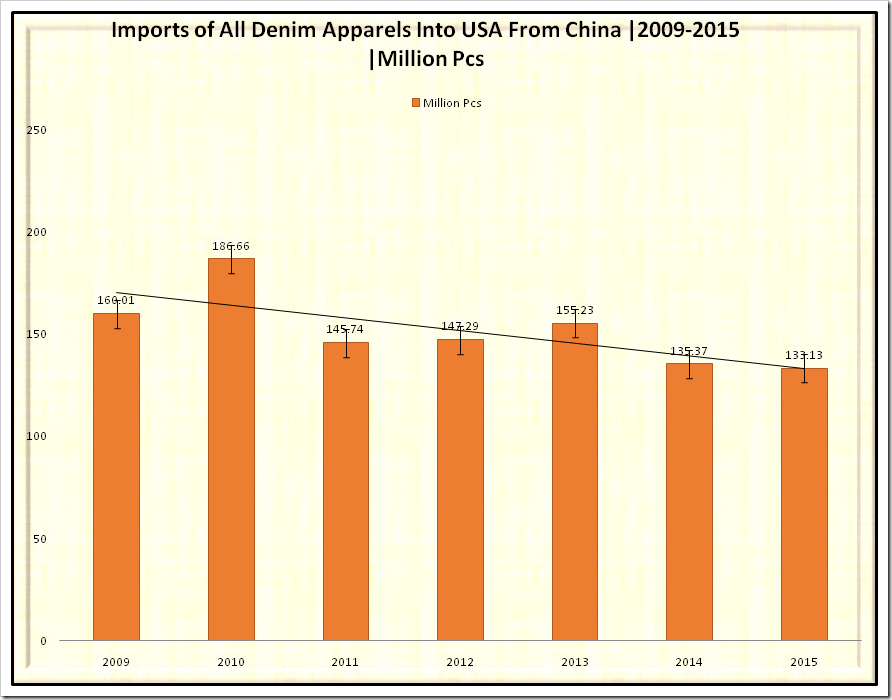
    Till the year 2010 , everything was perfect – imports of denim apparel from China were increasing at a good pace and was almost at their  highest  . However, from 2010 the scenario started worsening  with every passing year. With a growth in the import by 14.28% in 2010 , no one had predicted that the imports from China to USA will be fallen by 28.08% by the end of the year 2011. In 2012 the conditions seemed to be bit improved but again in 2014 as well as in 2015 the imports fell down . In 2013 the total imports were 155.23 million pcs which reduced to 133.13 millions pcs by the end of 2015 . The average price of imports (US$/Pcs) also changed , however the degree of change was bit lesser against the substantial decline of imports over the years. In 2009 the Average Price was US$7.49/Pc which reached to its all time high in 2013 at US$8.43/Pc.  From 2012 , it started reducing but in 2015 it again rose by 2.13% and reached to US$7.52/Pc

    Year

    2009

    2010

    2011

    2012

    2013

    2014

    2015

    Million Pcs

    160.01

    186.66

    145.74

    147.29

    155.23

    135.37

    133.13

    Imports of all Denim Apparels(Million Pcs) and Average Price (US$/Pcs) into USA from China from the year 2009-2015

    Year

    2009

    2010

    2011

    2012

    2013

    2014

    2015

    US$/pc

    7.49

    7.29

    8.43

    7.99

    7.93

    7.36

    7.52

     Average Price(US$/Pcs) of Imports of all Denim Apparels(Million Pcs)into USA from China from the year 2009-2015

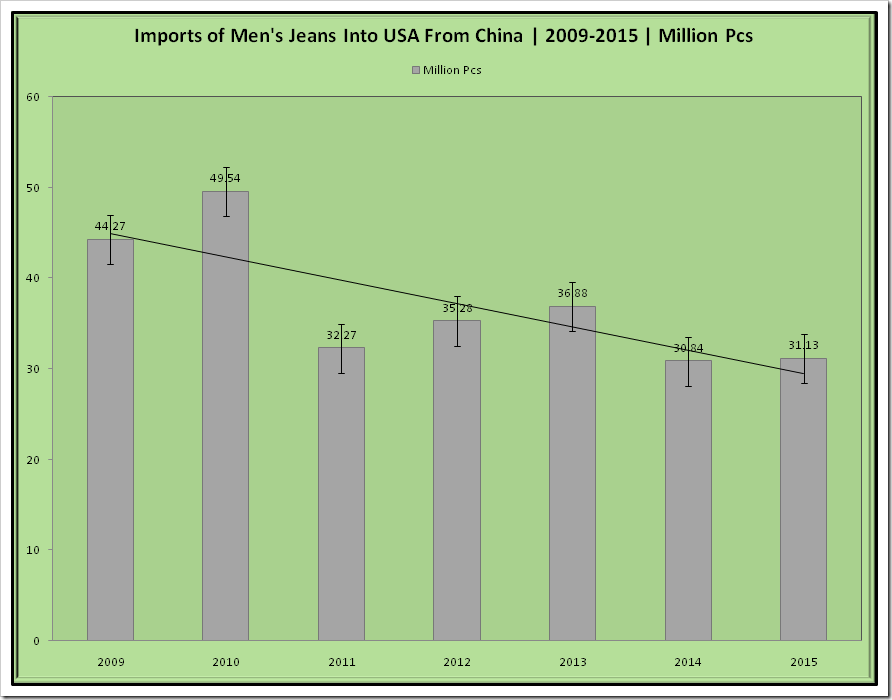
    Segregating the total imports into two parts ; Men’s Jeans and Women’s Jeans , the share of Men’s Jeans seems to be lesser as compared to Women’s Jeans. The Import of Men’s Jeans was only 44.27 Million Pcs while the import of Women’s jeans was whopping 115.74 million pcs for the same year. Imports of both Men and Women Jeans declined but the import of Men jeans fell  by whopping by 53.52% in 2011 while the import of women jeans fell by 20.84% in 2011. Year 2014 and 2015 were also not so encouraging for China and from 49.54 million pcs in 2010 , the import reduced to 31.13 million pcs of Men’s Jeans in 2015. The trend to fall also observed in the women’s jeans and the major fall was in 2014 when the imports fell by  13.26 % after registering a growth of 5.36% in 2013.

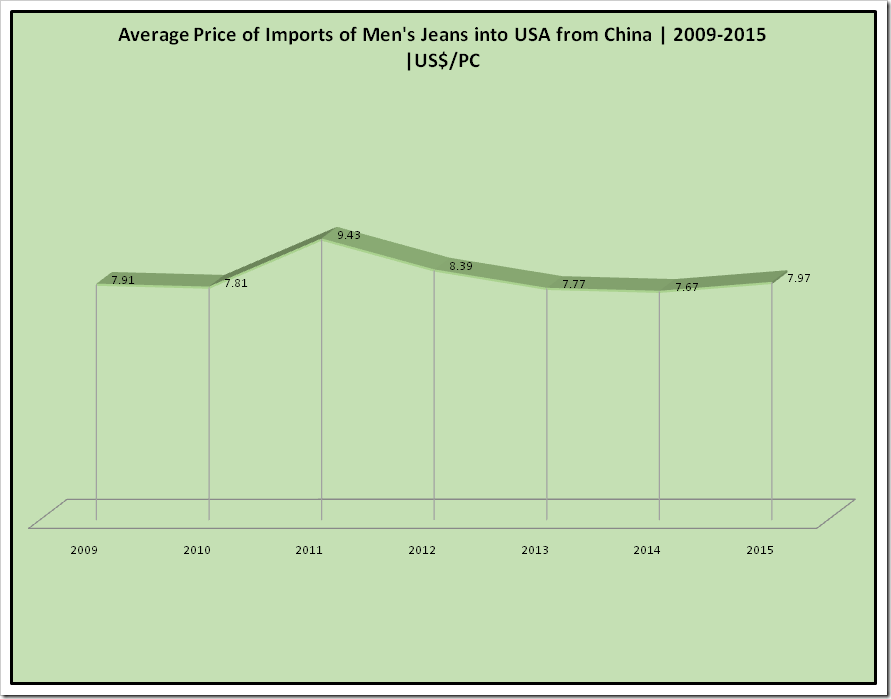
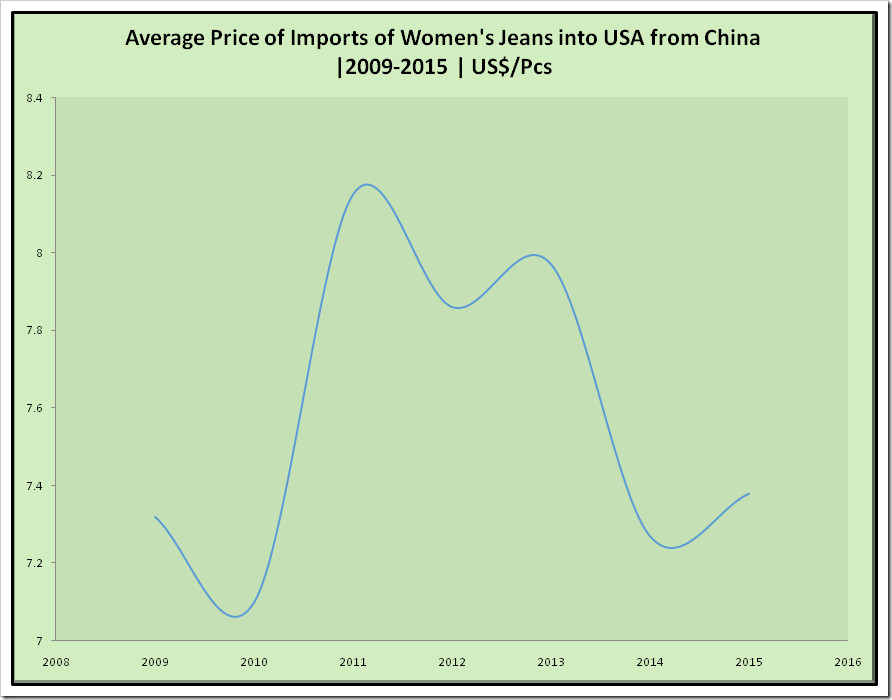
    The average price of Men’s jeans increased from US$7.91/pcs in 2009 to US$9.43/pcs in 2012 while the average price of Women’s jeans were increased from US$7.32/pcs in 2009  to US$8.15/pcs in 2015

    Men’s Jeans Imports (million pcs)

    Year

    2009

    2010

    2011

    2012

    2013

    2014

    2015

    Million Pcs

    44.27

    49.54

    32.27

    35.28

    36.88

    30.84

    31.13

     Import of Men's Jeans into USA from China| 2009 -2015

    Year

    2009

    2010

    2011

    2012

    2013

    2014

    2015

    US$/PC

    7.91

    7.81

    9.43

    8.39

    7.77

    7.67

    7.97

    Average Price of Import of Men's Jeans into USA from China| 2009 -2015

    Year

    2009

    2010

    2011

    2012

    2013

    2014

    2015

    Million Pcs

    115.74

    137.12

    113.47

    112.01

    118.36

    104.53

    102

    Average Price of Import of Women's Jeans into USA from China| 2009 -2015

    Year

    2009

    2010

    2011

    2012

    2013

    2014

    2015

    Average Price

    7.32

    7.1

    8.15

    7.86

    7.97

    7.27

    7.38

    Average Price of Import of Women's Jeans into USA from Bangladesh | 2009 -2015

    Bangladesh

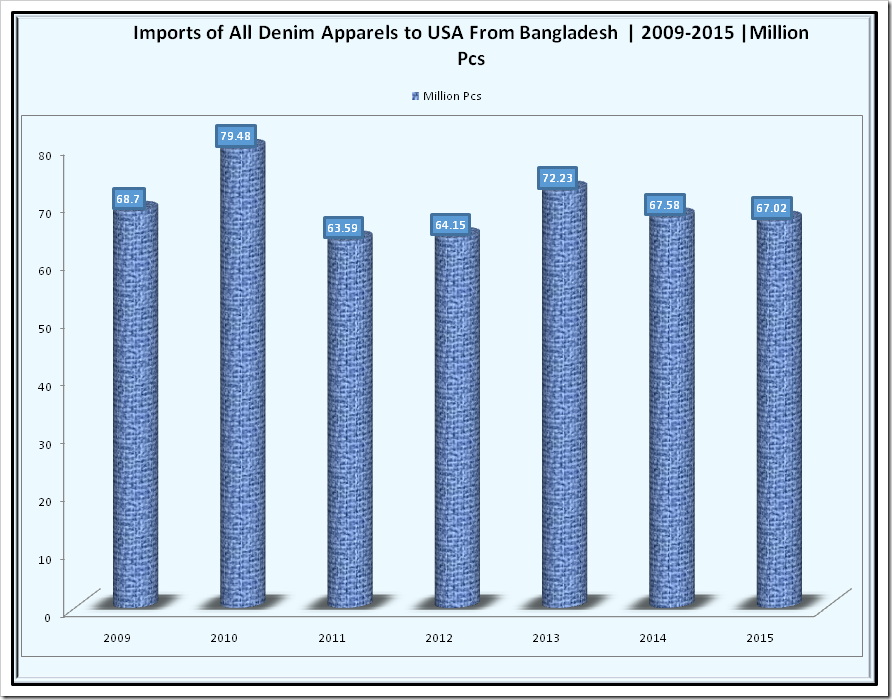
    The second major exporting country is Bangladesh which is now one of the major denim manufacturing country and the closest competitor of China. From the declining trends after the year 2010 , Bangladesh recovered in 2012 by showing a marginal growth in the export from 64.15 million pcs in 2012 to 72.23 million pcs in 2014 , however due to slowdown in the US economy , from 2014 again the imports started reducing and reached to the lowest level of 67.02 million pcs in 2015.

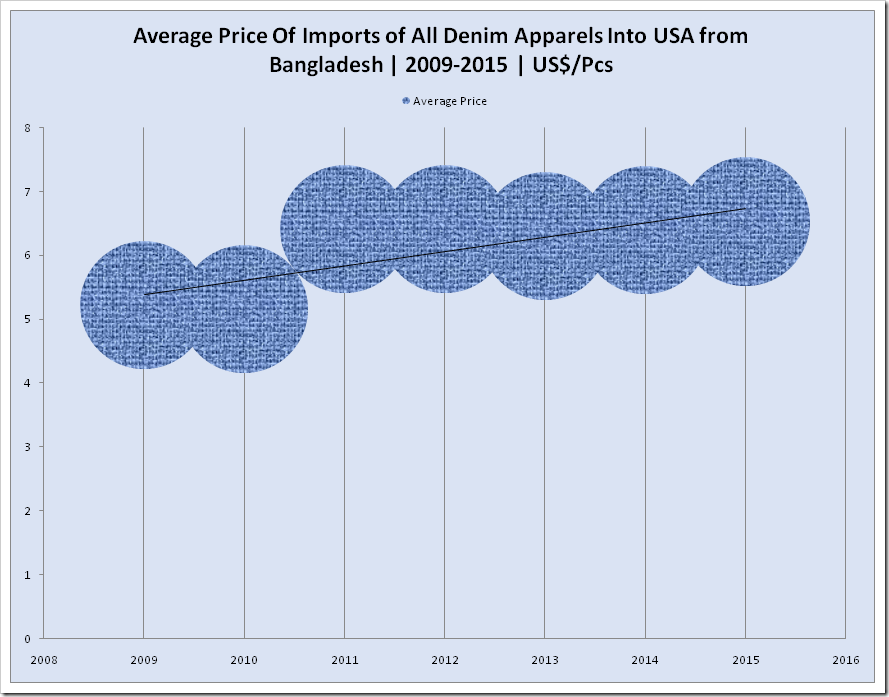
    The average price in the span of 5 years starting from 2010 has changed by more than one dollar . In 2010 the average price was US$5.22/pc which rose to the level of US$6.53/pc in 2015 .

    Year

    2009

    2010

    2011

    2012

    2013

    2014

    2015

    Million Pcs

    68.7

    79.48

    63.59

    64.15

    72.23

    67.58

    67.02

    Imports of All Denim Apparels to USA from Bangladesh | 2009 -2015

    Year

    2009

    2010

    2011

    2012

    2013

    2014

    2015

    Average Price

    5.22

    5.16

    6.41

    6.41

    6.3

    6.4

    6.53

    Average Price of Import of All Denim Apparels Into USA from Bangladesh | 2009 -2015

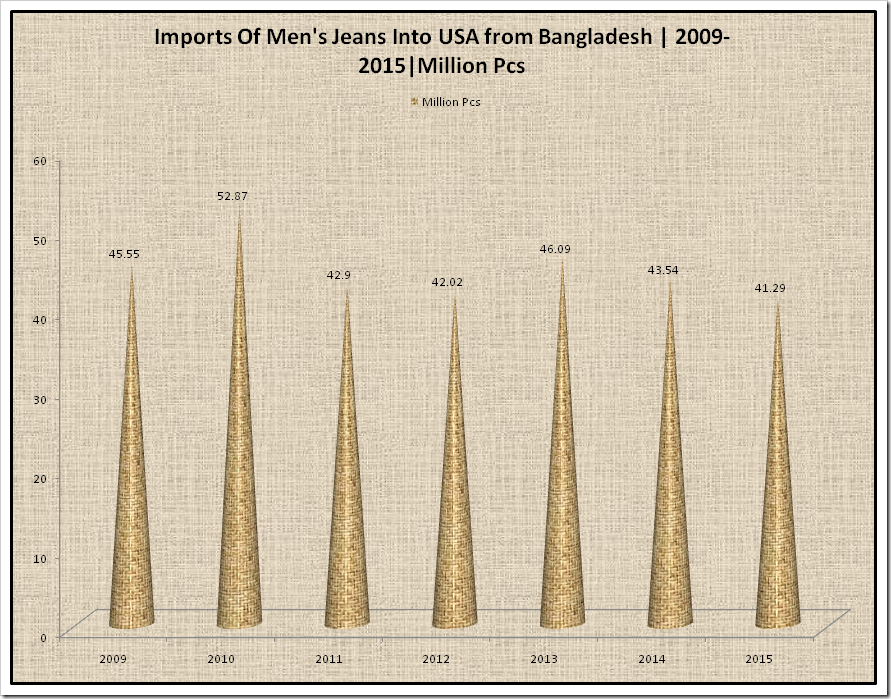
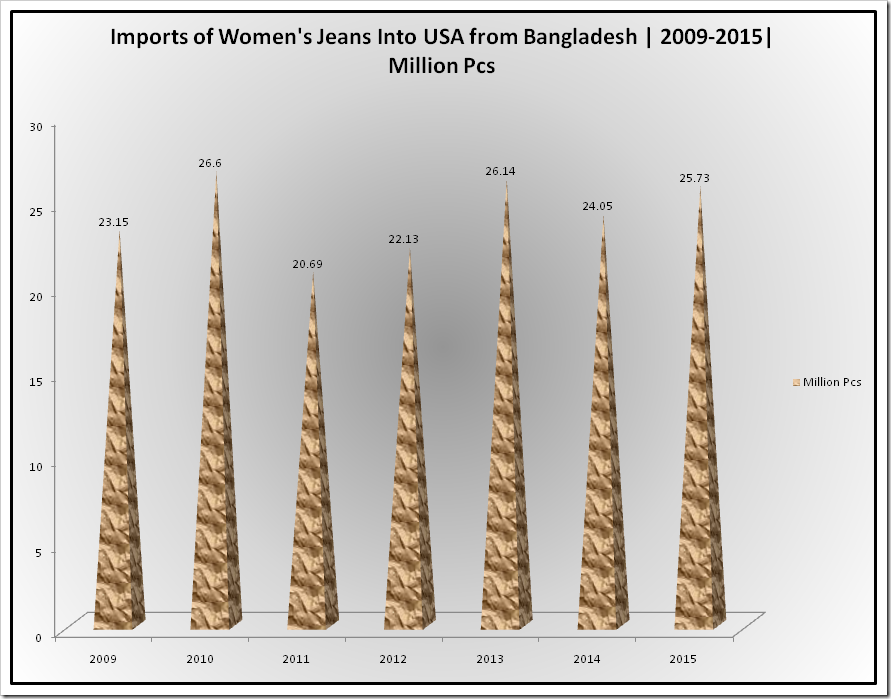
    Dividing Bangladesh’s exports of denim apparel to USA into two ; Men’s Jeans and Women’s Jeans, it was found that unlike  China , Bangladesh exports Men’s Jeans in larger quantities as against  Women Jeans. In 2009 , Bangladesh exported 45.55 million pcs of men’s jeans and 23.15 million pcs of women’s jeans to USA.  Surprisingly in 2015 there was a  fall in the imports of Men’s Jeans while there was a growth in the exports of  Women’s Jeans. In 2015 , the import of men’s jeans fell by 5.45% however the import of women’s jeans increased by 6.53%.
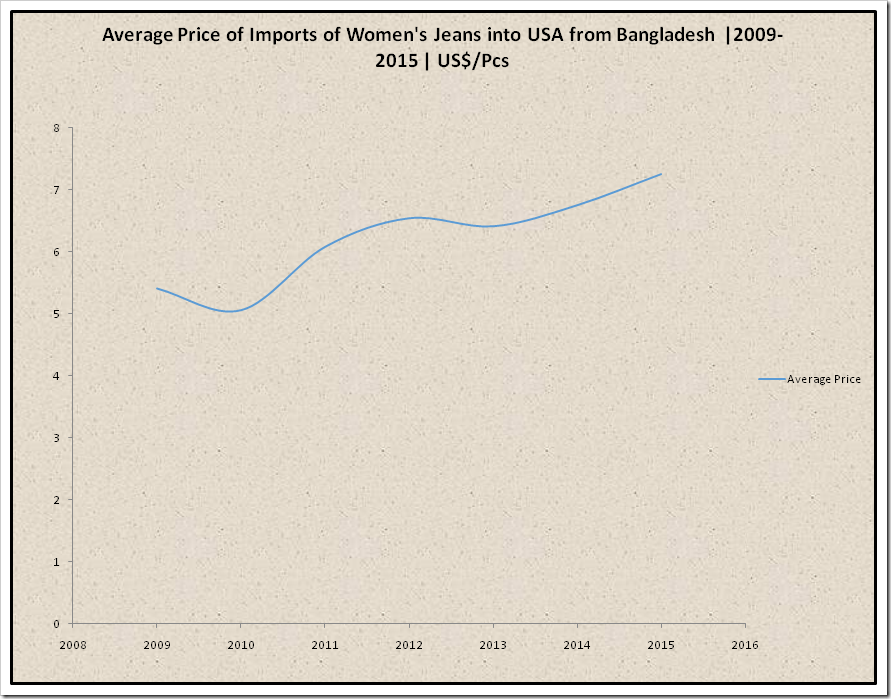
    The Average price of Men’s jeans in 2009 was US$5.13/pc while the women’s jeans was US$5.41/pc. From 2010 ,the growth in average price for the men’s jeans was merely 14.45% ,however the growth in the average price of women’s jeans was more than twice from 2010 i.e 30.21%
    Men’s Jeans

    Year

    2009

    2010

    2011

    2012

    2013

    2014

    2015

    Million Pcs

    45.55

    52.87

    42.9

    42.02

    46.09

    43.54

    41.29

    Import of Men's Jeans Into USA from Bangladesh | 2009 -2015

    Year

    2009

    2010

    2011

    2012

    2013

    2014

    2015

    Average Price

    5.13

    5.21

    6.57

    6.34

    6.24

    6.2

    6.09

    Average Price of Import of Men's Denim Into USA from Bangladesh

    Year

    2009

    2010

    2011

    2012

    2013

    2014

    2015

    Million Pcs

    23.15

    26.6

    20.69

    22.13

    26.14

    24.05

    25.73

    Import of Women's Jeans Into USA from Bangladesh |


    Year

    2009

    2010

    2011

    2012

    2013

    2014

    2015

    Average Price

    5.41

    5.06

    6.08

    6.54

    6.41

    6.75

    7.25


    Average Price of Imports of Women’s Jeans into USA from Bangladesh from the year 2009-2015

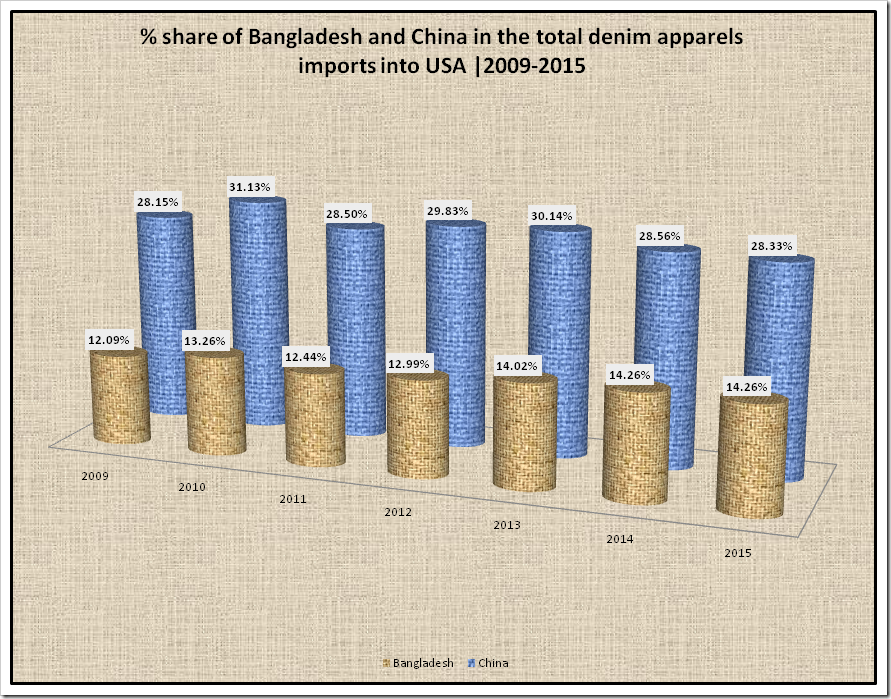
    Analyzing the share of China and Bangladesh in the total imports by USA, it is found that where  Bangladesh managed to increase its share by the end of every year , the share of China seems to be inconsistent and on average it reduced from 31.13% in 2010 to 28.33% in 2015. However the share of Bangladesh increased marginally from 13.26% in 2010 to 14.26% in 2015. Interestingly, the total exports  by Bangladesh reduced from 79.48 million pcs in 2010 to million pcs to 67.02 million pcs in 2015. This was in line with the general reduction in the overall volume of imports of denim apparel into US. However, this is not the case for all countries. Some countries like Vietnam have shown remarkable improvements in exports of apparel to US during the same period.

    Year of

    World

    Bangladesh


    China


    Import

    (million pcs)

    (million pcs)

    % Share

    (million pcs)

    % Share

    2009

    568.46

    68.7

    12.09%

    160.01

    28.15%

    2010

    599.57

    79.48

    13.26%

    186.66

    31.13%

    2011

    511.31

    63.59

    12.44%

    145.74

    28.50%

    2012

    493.77

    64.15

    12.99%

    147.29

    29.83%

    2013

    515.03

    72.23

    14.02%

    155.23

    30.14%

    2014

    474.06

    67.58

    14.26%

    135.37

    28.56%

    2015

    469.98

    67.02

    14.26%

    133.13

    28.33%


    From the graph below, we can see that the share of China receding and that of Bangladesh comparatively better but not increasing as such.  The market share of US is continuously falling and unless the market improves the exports from any of the countries will not increase either.

    share of China and Bangladesh into the total import of all denim apparels of USA from the year 2009-2015

    [/wlm_private_special]


  • US Denim Import 2012-2015

    US Denim Import 2012-2015

    The US market has not been very strong for the last few years. The last it saw a good ‘Denim ‘year was in 2013 when it imported over 500 million pcs of denim apparel. It continued to remain soft in 2015 without showing too much growth. We take a detailed look at this market and cover the following in this report:

    S.No

    Particulars

    1

    Table showing Imports of all denim apparels into USA from world ( 2012-15)

    2

    Graph showing Imports of all denim apparels into USA from world ( 2012-15)

    3

    Table showing Average price of imports of all denim apparels into USA from world (2012-15)

    4

    Graph showing Average price of imports of all denim apparels into USA from world (2012-15)

    5

    Table Showing Imports of Men’s Jeans into USA from world (2012-15) with average price of imports of Men’s Jeans into USA from world (2012-15)

    6

    Graph Showing Imports of Men’s Jeans into USA from world (2012-15)

    7

    Graph Showing  average price of imports of Men’s Jeans into USA from world (2012-15)

    8

    Table showing Imports of Women’s Jeans into USA from world (2012-15) with average price of Imports of Women’s Jeans in to USA from world (2012-15)

    9

    Graph showing Imports of Women’s Jeans into USA from world (2012-15)

    10

    Graph showing  average price of Imports of Women’s Jeans in to USA from world (2012-15)

    11

    Table showing top exporting countries to USA  in the year 2015 with average price (US$/Pcs)

    12

    Pie Chart  showing top exporting countries to USA  in the year 2015

    13

    Graph showing  average price (US$/Pcs) of top exporting countries to USA  in the year 2015

    14

    Table showing % change in the imports from the year 2014 to 2015

    15

    Table showing Top Exporting Continents of all denim apparels  to USA in the year 2015

    16

    Pie Chart showing Top Exporting Continents of all denim apparels  to USA in the year 2015

    [wlm_private_special]

    If we look at the figures below, we will find that US market has actually declined marginally in terms of denim apparel imports. From 474 million pcs in 2014 it went down to 469 million pcs. These are figures that the denim market will not be too enthused about!

    Year

    2012

    2013

    2014

    2015

    Pcs (million)

    493.77

    515.03

    474.06

    469.98


    Average Price of Imports of All Denims Apparels Into USA from world (Pcs in Million)


    The average price also seems be on declining trend which is probably a good sign for the market. In the year 2012 the average price was US$ 8.14 per pc while in 2015 it reduced to US$ 7.99 per pc. However, this can be termed as a marginal change over 2014.

    Year

    2012

    2013

    2014

    2015

    Average Price (US$/pc)

    8.14

    8.1

    8.03

    7.99


    Average Price of Imports of All Denims Apparels Into USA from world (Pcs in Million)


    Men’s Jeans

    In the year 2012 the imports of Men Jeans from the world to USA was 263.76 million Pcs with an average price of US$8.33 which reduced to US$8.16 with an import of 269.38 million pcs in 2013. In the year 2014 and 2015 the import figure saw a decline both in quantity as well as in average prices. In 2014 where import quantity was 256.24 million pcs, while in 2015 it reduced to 250.02 million pcs. So the actual imports of men’s jeans declined by over 3% since 2014 and over 7% since 2013.

    Year

    2012

    2013

    2014

    2015

    Average Price (US$/pc)

    8.14

    8.1

    8.03

    7.99

    Year

    2012

    2013

    2014

    2015

    Average Price (US$/pc)

    8.33

    8.16

    8.15

    8.1


    Imports of Mens Jeans Into USA from world( pcs in Million)


    Women’s Jeans

    The import of women’s jeans also peaked out in 2013 when the country imported bout 245 million pcs. In 2014 the imports were 217 million pcs which was a whopping reduction of over 11%! 2015 however saw a marginal increase of about 1% – which cannot be said to be a very encouraging figure. The average price is almost stable from US$ 7.89 in 2014 to US$ 7.87 in 2015. The prices, we can say, are more or less stable sine 2012 – a sign that the country is able to manage to balance its import prices from around the world.

    Year

    2012

    2013

    2014

    2015

    Pcs (million)

    230.01

    245.65

    217.82

    219.96

    Year

    2012

    2013

    2014

    2015

    Average Price (US$/pc)

    7.93

    8.04

    7.89

    7.87

    Average Price(US$/pc) from the year 2012 to 2015


    Imports of womens Jeans Into USA from world (Pcs in million)


    Average Price (US$/pc) from 2012 to 2015

    So far as the top exporting countries are concerned, China is still leading the charts with whopping 133.13 million pcs in 2015 while Mexico ranks second with 110.02 million pcs. China is able to give an average price of about US$ 7.52 while Mexico’s average price is US$8.74. However, considering that there is no import duty on imports of garments from Mexico (made with US fabrics); the price will come out more or less same. But China gives much more fashionable products to US than Mexico – which is focused on basics. Bangladesh ranks 3rd with the lowest average price per jeans which is merely US$6.53. Pakistan comes 4the with a total of about 21 million pcs and Vietnam is at 5th with total export quantity of 19.13 million pcs at an average price of US$8.48.  It needs to be seen where the share of China will spill off once the country is not able to export as much it used to.

    EXPORTING

    ALL DENIM APPAREL

    AVERAGE PRICE

    COUNTRY

    (MILLION PCS)

    (US$/PC)

    CHINA

    133.13

    7.52

    MEXICO

    110.02

    8.74

    BANGLADESH

    67.02

    6.53

    PAKISTAN

    21.86

    8.1

    VIETNAM

    19.13

    8.48

    EGYPT

    17.59

    8.99

    CAMBODIA

    15

    7.82

    INDONESIA

    13.62

    7.94


    Top Exporter Continents to USA in 2015 : Denimsandjeans.com


    % Change in the imports from the year 2014 to 2015

    Exporting

    All Denim Apparels (2015)

    All Denim Apparels (2014)

    % Change

    Countries

    Million Pcs

    Million Pcs


    CHINA

    133.13

    135.37

    -1.68%

    MEXICO

    110.02

    116.12

    -5.54%

    BANGLADESH

    67.02

    67.58

    -0.84%

    PAKISTAN

    21.86

    21.06

    3.66%

    VIETNAM

    19.13

    18.95

    0.94%

    EGYPT

    17.59

    18.66

    -6.08%

    CAMBODIA

    15

    15.29

    -1.93%

    INDONESIA

    13.62

    9.01

    33.85%


    Exporting Regions :

    There are many regions and blocs which can be studied as a group to analyse which region is more important for exporting denim to US. Some of the main regions are Latin America, Asean, Agoa , Cafta etc. We analyse the figures from these countries as below.

    Latin America is the highest contributor in the total import to the USA with total import quantity of 135.91 million pcs followed by ASEAN, AGOA and CAFTA with 48.74, 22.27 and 20.7 million pcs. Latin America – the main component is Mexico which takes the lion’s share of its exports. Among ASEAN countries, Vietnam is very important. AGOA still remains a small quantity and has not evolved over time despite duty benefits.

    EXPORTING  REGION

    ALL DENIM APPAREL(million pcs)

    LATIN AMERICA

    135.91

    ASEAN

    48.74

    AGOA

    22.27

    CAFTA

    20.7


    Top Exporter Continents to USA in 2015 : Denimsandjeans.com

    On the whole, not a very good year for denim apparel imports for the US market. It is still sluggish but there are hopes that 2016 will be better.

    [/wlm_private_special]

  • GAP Inc Stock Drops After Company Reports Big Fall In Sales

    GAP Inc Stock Drops After Company Reports Big Fall In Sales

    The San Francisco-based company has been struggling to keep pace with the ,so-called ,fast apparel retailers such as UNIQLO and H&M in recent years. The loss of Old Navy boss Stefan Larsson to head luxury fashion brand Ralph Lauren in September hasn’t helped. Larsson was widely credited with turning around Gap’s budget retail brand.

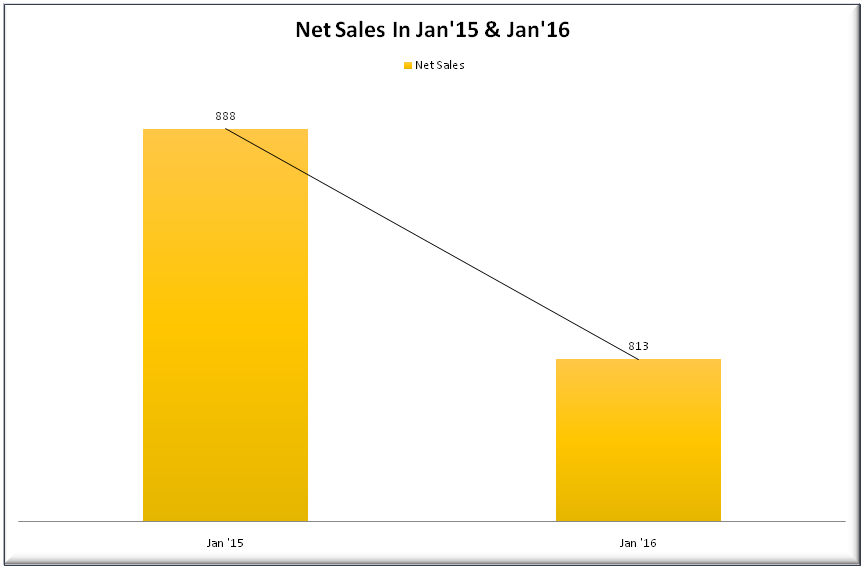
    Old Navy sales dropped 8 percent in the three months ending in January, down from 11 percent growth in the same quarter of the previous year, the company said . Banana Republic revenue dropped 14 percent compared with 1 percent year-over-year growth. Gap brand sales narrowed losses, to negative 3 percent from negative 6 percent, indicating some stabilization in the company’s namesake brand. Net sales in January were $813 million, down from $888 million in the same month last year.

    GAP Inc | Denimsandjeans.com

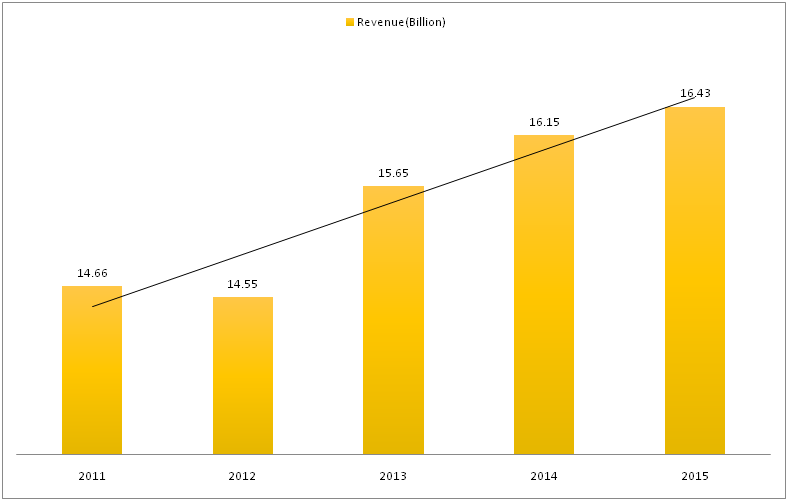
    The overall revenue of the company is almost stable with a slight increase though in 2015 increasing to $16.43 billion. However, this reflects poorly when compared with growth in companies like Uniqlo and H&M.

    GAP Inc | Denimsandjeans.com

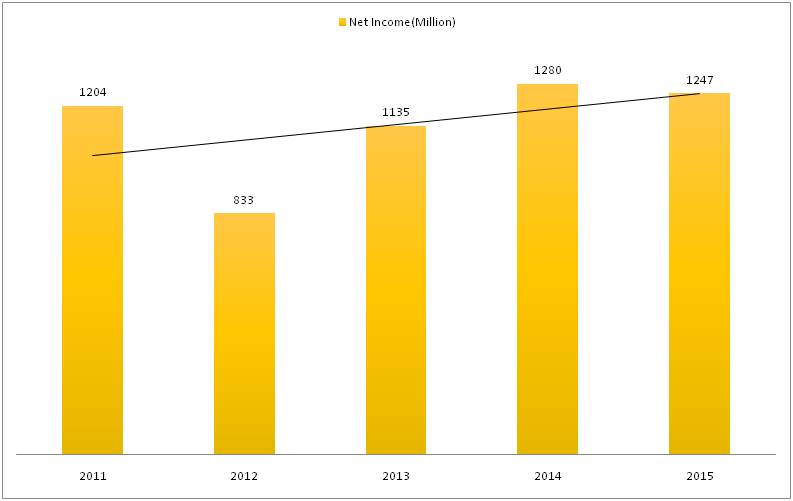
    Net income fell from $1.28 billion to $1.24 billion showing the pressure the company is facing in its margins.

    GAP Inc | Denimsandjeans.com

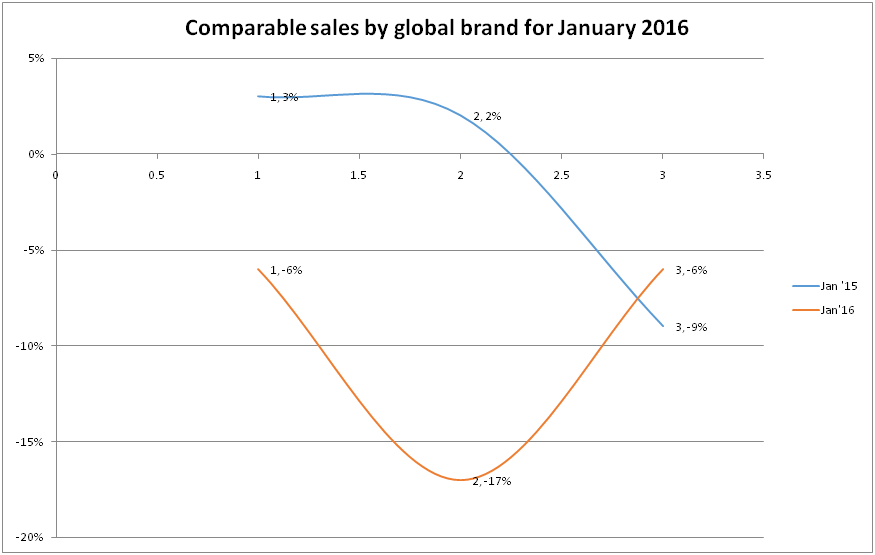
    However, 2016 is more disturbing for the company and sales expected to go down further this year. As far as the January Comparable Sales Results is concerned ,Gap Inc.’s comparable sales for January 2016 were down 8 percent versus negative 3 percent last year. Comparable sales by global brand for January 2016 were as follows:

    • Gap Global: negative 6 percent versus negative 9 percent last year
    • Banana Republic Global: negative 17 percent versus positive 2 percent last year
    • Old Navy Global: negative 6 percent versus positive 3 percent last year

    GAP Inc | Denimsandjeans.com

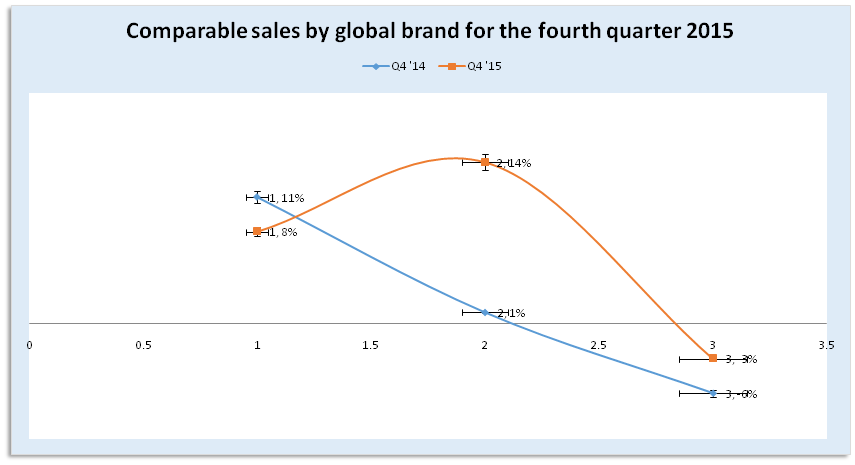
    Looking at the Gap Inc.’s comparable sales for the fourth quarter of fiscal year 2015 , we find that these show the same trend as we see in Jan’2016. Sales were down 7 percent versus positive 2 percent last year. Comparable sales by global brand for the fourth quarter were as follows:
    • Gap Global: negative 3 percent versus negative 6 percent last year
    • Banana Republic Global: negative 14 percent versus positive 1 percent last year
    • Old Navy Global: negative 8 percent versus positive 11 percent last year

    GAP Inc | Denimsandjeans.com

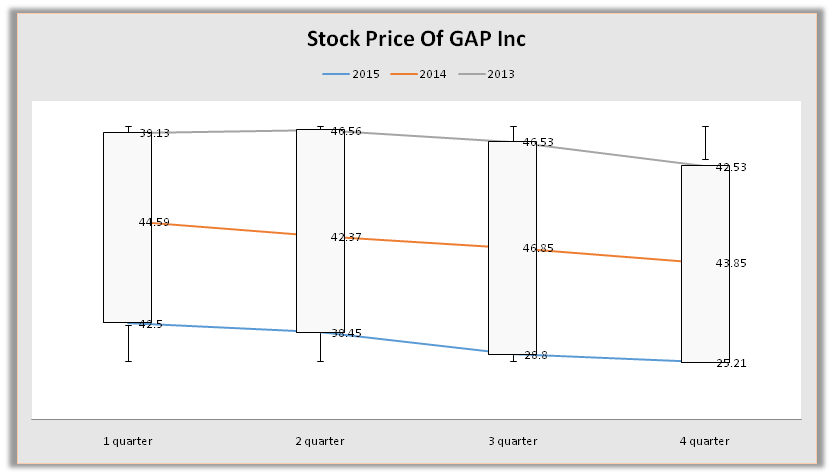
    Gap Inc. shares reported lower year-over-year sales and its share price reached to the lowest level at $25.45 . Grim quarterly sales numbers suggest the problems facing the company’s Gap and Banana Republic outlets might be spreading to Old Navy, which had performed well through most of last year.

    GAP Inc | Denimsandjeans.com

    It seems that GAP needs to urgently revamp its sales strategies in view of competition from Fast-Retailers and changing consumer tastes. The consumers are losing their appetite for long established brands in favor of quick fashion and high quality clothing and all the established retailers need to take that into consideration.

    About GAP Inc.

    The Gap, Inc., commonly known as Gap Inc. or Gap, is an American multinational clothing and accessories retailer.It was founded in 1969 by Donald Fisher and Doris F. Fisher and is headquartered in San Francisco, California. The company operates five primary divisions: the namesake banner, Banana Republic, Old Navy, Intermix, and Athleta. Gap Inc. is behind Inditex Group and H&M in the total numbers of international locations. However, it remains the largest specialty retailer in the United States. As of September 2008, the company has approximately 135,000 employees and operates 3,076 stores worldwide, of which 2,551 are located in the U.S

  • Weather Plays Spoilsport For Fast Retailing !

    Weather Plays Spoilsport For Fast Retailing !

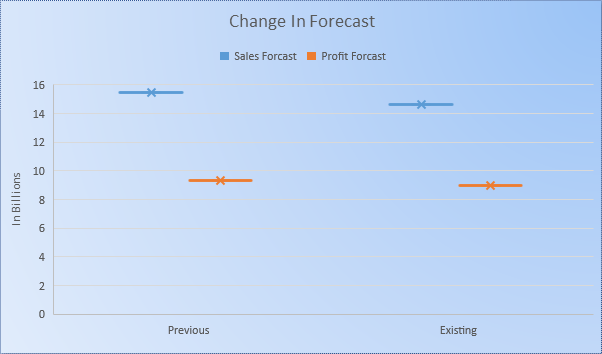
    Fast Retailing | Denimsandjeans.comOne of the Asia’s largest apparel retailer and the corporate parent of Uniqlo  experienced weak demand for winter apparel during an unseasonably warm season around the world .Not only there was slow demand but also the company faced a decrease in foreign exchange gains from the previous year.Taking into the account the lower than expected performance in the first quarter,it compelled the company to lower its estimated full year net profit from $936.08 million to $895.38 million only , a reduction of about 4.34%. The sales forecast have been brought down to $14.65 billion as compared to the previous estimation of $15.47 billion. The foreign exchange fluctuations have not been incorporated into those forecasts.

    Change in Forecast of Fast Retailing | Denimsandjeans.com

    Global Brands reported rises in revenue and profit, UNIQLO Japan reported declines in both revenue and profit, while UNIQLO International reported a rise in revenue but a fall in profit. Foreign exchange gains under other income/expenses and net finance income fell ¥18.9 billion compared to the first quarter of fiscal 2015, when the yen weakened significantly. As a result, consolidated profit before income taxes contracted by ¥29.0 billion to ¥77.6 billion.

    Consolidated revenue: ¥1.800 trillion (+7.0% year on year), operating profit: ¥180.0 billion (+9.4%), profit attributable to owners of the parent: ¥110.0 billion (-0.0%). Basic earnings per share: ¥1,079.01. These include downward revisions as follows: ¥100.0 billion for revenue, ¥20.0 billion for operating profit, and ¥5.0 billion for profit attributable to owners of the parent. Scheduled FY2016 annual dividend: ¥370 per share, unchanged.

    These financial disappointments led the company to reconsider its product mix and hence, Fast Retailing plans to launch its spring collection earlier than expected and introduce less weather – sensitive products.

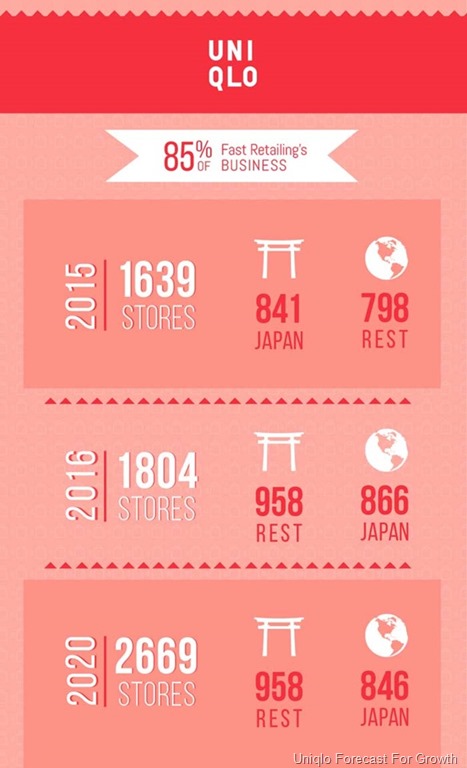
    Uniqlo Japan also witnessed lower profits and sales in the quarter which has been hurt  by “heavy discounting.  Uniqlo’s international operations fell short of its targets with weak performances in Greater China and South Korea and the United States. Surprisingly,  Uniqlo’s operations in Europe and Southeast Asia fared better.

     Forecast of UNILQO | Denimsandjeans.com

    Unseasonal warm winter weather around the globe adversely impacted same-store sales at UNIQLO Greater China (Mainland China, Hong Kong and Taiwan), UNIQLO South Korea and UNIQLO USA in particular, resulting in a lower than expected performance and declining in profits in all three areas. Store network (End November 2015): 864 stores (+169 y/y). Fifteen years after the first UNIQLO store outside of Japan opened in London in fall 2001, UNIQLO International finally overtook UNIQLO Japan in terms of store numbers.

    In fiscal 2016, Fast Retailing now expects to achieve consolidated revenue of ¥1.800 trillion (+7.0% year on year), operating profit of ¥180.0 billion (+9.4%) and profit attributable to owners of the parent of ¥110.0 billion (-0.0%). These data translate into basic earnings per share of ¥1,079.01. These figures have been revised down from our initial estimates announced in October 2015 as follows: ¥100.0 billion for revenue, ¥20.0 billion for operating profit and ¥5.0 billion for profit attributable to owners of the parent.

    Fast Retailing Co., Ltd.  is a public Japanese retail holding company. In addition to its primary subsidiary Uniqlo, it owns several other brands, including J Brand, Comptoir des Cotonniers, g.u., Princess Tam-Tam, and Theory. Denim is an integral part of Uniqlo’s apparel offer and of course J Brand is primarily a premium denim label.

  • The Rise Of Haitian Apparel Industry

    The Rise Of Haitian Apparel Industry

    This is an article contributed by Mr. Mark D’Sa – a reputed Consultant and Advisor

    Image result for haitiNearly four years after the earthquake with aid agencies having poured billions of dollars into relief projects, the stability of Haiti’s garment industry seems to be hanging by a thread.Haiti’s garment industry is focused on low-end apparel clothing and cranking out plain T-shirts for North American companies such as Gildan, Hanes and Walmart. According to the Inter-American Development Bank (IDB), the industry makes up 80-90% of the country’s exports. And thanks to free-trade deals agreed by the US Congress, most Haitian garments are able to enter the US duty-free.

    International Finance Corporation, (IFC), a member of the World Bank Group, is investing $4 million to help The Willbes Haitian S.A., a subsidiary of South Korea-based The Willbes & Co., Ltd, expand its apparel manufacturing capacity and create 1,000 new jobs in Port au Prince by the end of 2016. In addition, IFC is mobilizing a $4 million parallel loan from the Inter-American Development Bank.IFC’s portfolio in Haiti amounts to US$122 million, including US$24 million mobilized from other partners.

     Earlier this year, quality-apparel brand BOXERCRAFT announced that IRII (Industrial Revolution-II) would join its list of suppliers. It’s an indication that companies are willing to move away from the mass production of turning out T-shirts on the cheap and are starting to consider responsible sourcing practices. The hope is that other brands will also see the potential in the venture and that they’ll place orders with IRII for high-end clothes that might usually get produced in places like LA. According to a report published by Better Work in April this year, 100% of Haitian manufacturers audited were still paying workers around 200 gourdes (about USD3.5) a day, some several months after the 300 gourdes minimum wage had been introduced.

    In June 2015, The Trade Preferences Extension Act, which extended the duty free provisions of the HELP Act, signed by the President Obama . This opened a ten year line of sight which allows investors to establish operations in Haiti with greater confidence. Earlier, in March, a trade delegation organized by IDB visited several companies in South Korea with positive results. Following up on the visit, Hansae Corporation of Seoul visited multiple locations in Port Au Prince and eventually signed an MOU with SONAPI (The Government administrator of Industrial Parks), to invest in Parc Industriel Metropolitain. This investment of U$30 million is expected to yield anywhere between 5,000 to 7,000 jobs. Haitian apparel exports to the US for the year ending November, reached U$ 896 million and 334 million SMEs (Square Meter Equivalent). Out of the total apparel exports, bottom exports are approx. 25% under Cat 347/348. Levi’s is the main denim buyer followed by Old Navy, Carter’s etc.

    During the year the number of apparel jobs reached a high of 41,200 – the highest since the HOPE and HELP Acts were signed in 2006. 60% of the growth in jobs in 2015 was in the northern region led by the Caracol Industrial Park and CODEVI.  With the establishment of the Caracol Industrial Park the industry has decentralized and by end November, 36% of the apparel jobs (15,212 of 41,536) are now in the northern corridor. It is also important to note that between the two Industrial parks under it’s management, SONAPI is now home to 49% of the total jobs in the apparel industry and scheduled to go over 50% in 2016. During the year a total of 7,226 jobs were created and 3,542 workers were laid off due to shutdowns and temporary closures. The net job increase at the end of November was 3,684. The Caracol Industrial Park contributed 2,998 apparel jobs in 2015.

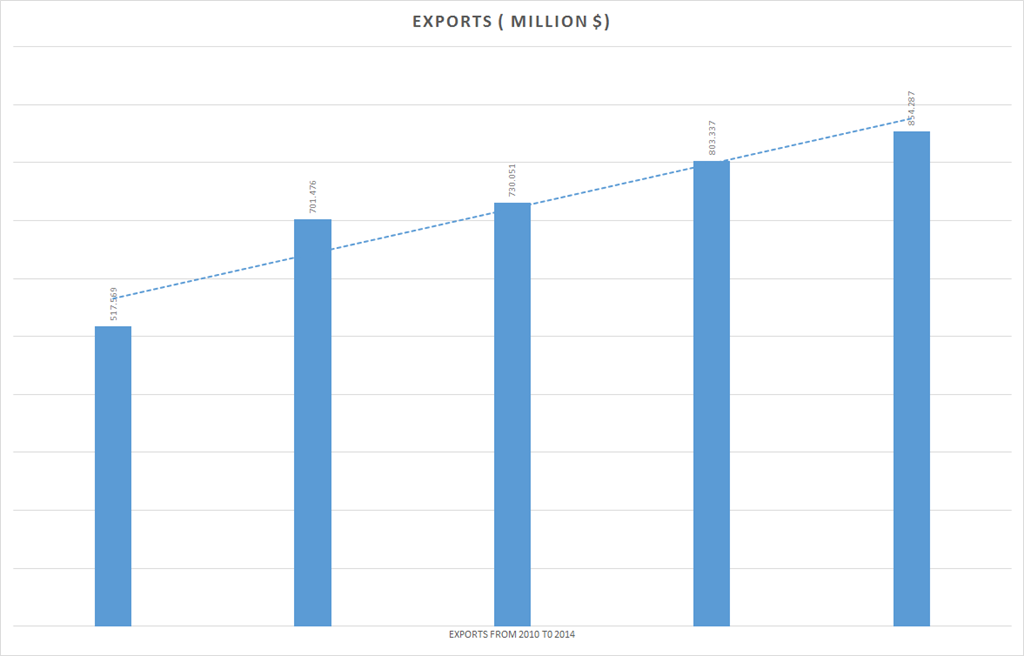
    The country’s growth in apparel exports has been steady over the period 2010 to 2014. The job growth is mainly driven by investments from DR, Korea and USA.

    Category

    2010

    2011

    2012

    2013

    2014

    Total Export ($) 517.569 701.476 730.051 803.337 854.287
    Total SMEs Exported/Utilized) 253.06 257.628 270.374 306.44 313.931
    Average USD/SME $2.05 $2.55 $2.70 $2.62 $2.72


    Haiti Export Trend | Denimsandjeans.com

     The first quarter of 2015 saw the industry get off to a good start with jobs and exports growing steadily. The renewal of the AGOA agreement and the TPP generated a lot of discussion, but did not impact the volume of exports from Haiti. Towards the end of the year there was some disruption leading to the loss of 3,500 jobs in the Port Au Prince area, however the year finished on a positive note with an increase of 3,684 jobs.  According to the numbers published by ADIH, the companies that contributed to the maximum number of job increases in 2015 were S&H Global (2,800),  Val d’OR (1,259), Premium Apparel (756), Island Apparel (521) and H&H Textiles (513).

    Prospects for apparel exports from Haiti continue to look bright with the extension of the HELP Act and the availability of motivated labor at competitive costs. Despite minimum wage increases, the country continues to be competitive as the local currency depreciated 22.38% and according to all indications, is likely to weaken further against the US Dollar. The current minimum wage is 240 HTG (US$ 4.15) per eight hour day plus another 22% for health insurance, pension plan, two weeks vacation and one month nonus. At the time of publishing this post, the exchange rate is 58.09 Haitian Gourdes = US$1.00  As yet Haiti has not been affected by the AGOA and TPP agreements because of it’s proximity to the US and the generous TPLs available under the HELP and CBTPA agreements. Leading retailers and brands continue to be bullish about the potential Haiti has to offer.

    Several Haitian producers like S&H Global, Willbes Manufacturing, H&H Textiles and Val d’Or are in an expansion mode. A major Korean manufacturer Hansae, signed a lease agreement which could generate 5,000 jobs over the next three to four years. Logistics continue to improve with private sector port investments in the Lafito and Terminal Varreux projects on the outskirts of Port Au Prince. In the North, the World Bank’s IFC and USAID are upgrading the Port of Cap Haitian. At the current time there are two weekly sailings from Cap Haitian and four from Port Au Prince with 3.5 days transit to Florida. The prospects look bright for Haiti’s apparel industry in 2016. The workwear producers are increasing output, knitwear exporters are in strong expansion mode and based on the reactions of several investors, Haiti should continue see an influx of foreign companies that will add at least 6,000 jobs and a very good chance to cross the billion dollar export mark in 2016.

    A T-shirt from Walmart is likely to cost at least $7. The minimum wage in Haiti is 300 Haitian gourdes a day (roughly $6-$7) and even though this is peanuts, there is the argument that paying workers even $5 a day could put factories out of business. Some workers are said to be paid as little as $3.50 a day.T-shirt production is cheap, easy and requires little skill. Because of this and the high demand, if wages get too expensive, production can just relocate to another poor country, where costs can be kept low.To put it simply, low-end apparel T-shirt production is one of the least attractive parts of the industry.

  • Labor Crisis In China Hits At Chinese Denim Market ,Makes It Less Attractive Globally

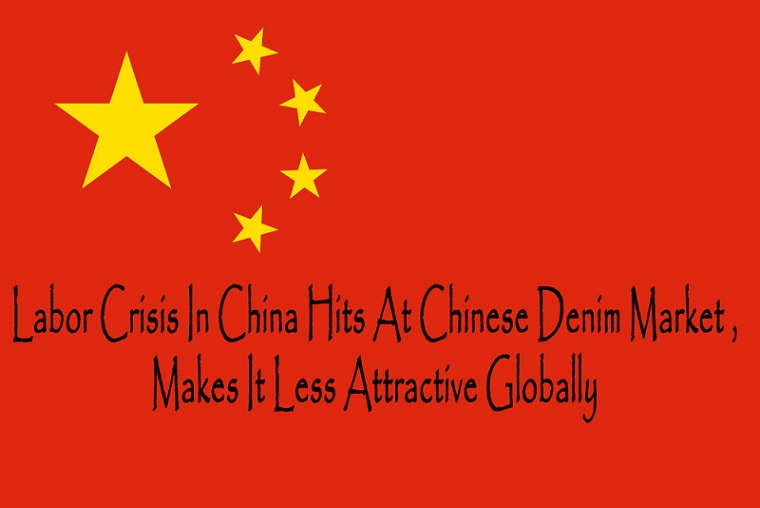
    Labor Crisis In China Hits At Chinese Denim Market ,Makes It Less Attractive Globally

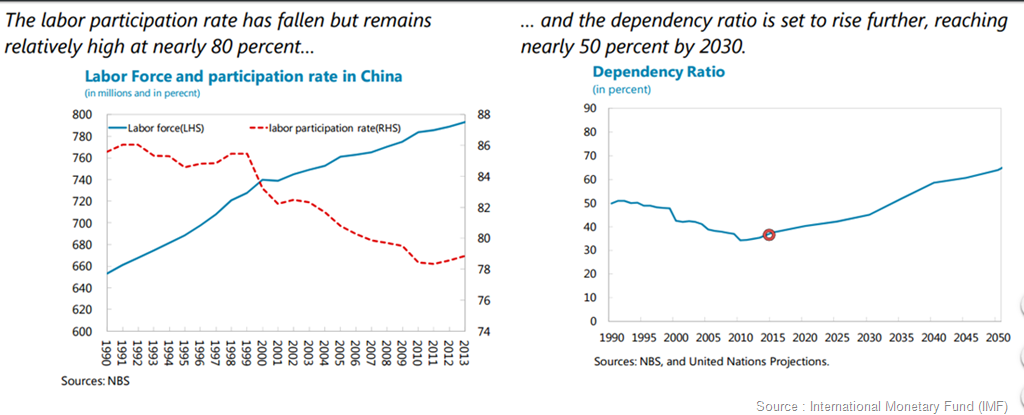
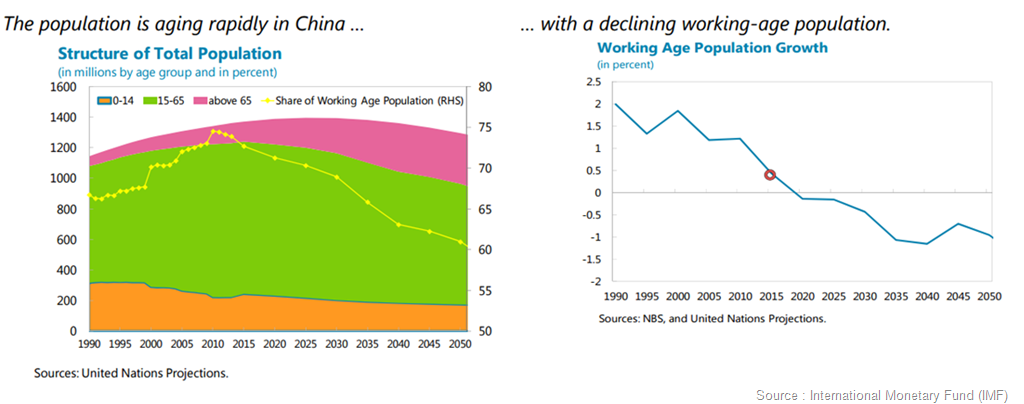
    China has been ruling the manufacturing industry for the last more than 2 decades on the basis of its economies of efficiency, lower labor costs and huge supply of manpower and of course right policies of the govt. However, much of this is likely to change in the coming future as demographic change take place in China . A recent WSJ report shows how the demographic dividend might turn into a drag on the economy and actually make it difficult for many international companies to remain cost effective in their productions.

    Looking at the history of Chinese Denim Market ,Thirty years ago , denim giant Levi Strauss & Co. began producing its iconic jeans in China , eager to tap a evidently endless lot of workers willing to work for few cents an hour which now apparently is starting to vanish. Believing on the economic statistics and market research , over the coming decades , a labor crisis like situation may evolve which will force Levi and other global brands to reconsider their operation in China or even lead to a situation of pack and leave.

    China Cheap Labor |Denimsandjeans.com

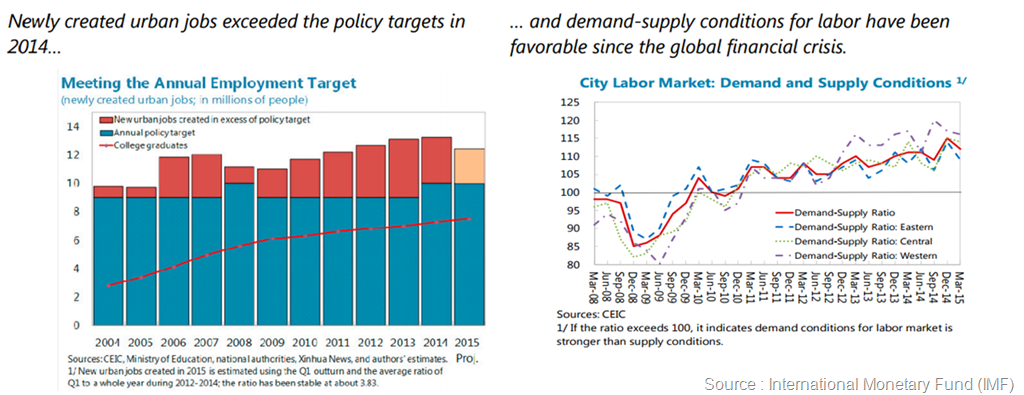
    Recent developments in the Chinese labor market apparently pointing towards a much bigger crisis for which proactive measures needed to be taken and that too within reasonable time frame. The report mentions about  manufacturing units have already started using alternatives and the recent example is an apparel factory in Zhongshan , where lasers are replacing dozens of workers who scrub Levi’s blue jeans with sandpaper to give them the worn look that American consumers find stylish. New Digital printers are being introduced to make intricate patterns on jeans , earlier the workers used to do the same with a mesh screen.

    China is also trying its bit to ensure the adequate supply of workforce for the future and therefore announced the abolishment of its one of the old policy which restrict most couples to one child. However , it won’t be able to change much as very few Chinese prefer to have more than one child.

    China Cheap Labor |Denimsandjeans.com

    The end of very cheap labor in China is giving a push to many advances in technology resulting of which it will put more emphasis on capital intensive rather than labor intensive techniques of manufacturing but this will make China apparently less central to global manufacturing. But changing consumer tastes—enabled by the same technological change—are diminishing China’s role too.Logistics, taxes and marketing may become more expensive compared to labor costs which could make China less attractive.

    Levis began production overseas in Hong Kong in 1966 and later on expanded its production also in Mexico ,Europe and Asia. During the early 1980s, demand for jeans declined, and the San Francisco company laid off a third of its global workforce, according to a Harvard Business School study, and moved more aggressively overseas to cut costs.

    In 1986, Levi started to shift its production to China. China’s rise to the world’s No. 2 economy relied on a huge increase in the country’s working-age population, which expanded by 380 million people between 1980 and 2015. In one of history’s greatest migrations, hundreds of millions of rural Chinese headed for cities for manufacturing jobs that were a step up from peasant labor, even though the work paid poorly by global standards.

    But China’s working-age population recently peaked, and its so-called demographic dividend has started to turn into a demographic drag. By 2050, the working-age population will decline by 212 million, estimates the United Nations—roughly as many people as live in Brazil, the world’s fifth most-populous nation.

    China Cheap Labor |Denimsandjeans.com

    Wages and benefits have already been rising in double-digit percentages for the past decade as workers can command higher rates. Although wage growth may ease this year because of the economic slowdown, the pressure is bound to increase in coming decades as the number of workers plunges.Adding to the shortage, many factory workers will be drawn back to their hometowns to take care of the growing ranks of Chinese older than 60, whose share of the population is forecast to double by 2050 from 2015, to 36.5%. Already, China’s rising labor costs—now $14.60 an hour on China’s coast, adjusted for productivity, compared with $22.68 an hour in the U.S., according to the Boston Consulting Group—have diminished China’s competitiveness. Adding energy costs, China is now a more expensive place to manufacture than Indonesia, Thailand, Mexico and India .

    None of this means brands like Levi is going to abruptly pull up stakes. Levi still lists about 200 Chinese factories where it does business, five times as many as any other country. Levi is adapting its laser technology so it can etch different patterns to create the right wash look , avoiding usage of too many workers.  Levis is however, using this and many other techniques to bring down its costs . These also include reducing the number of fabrics used in a line and cutting the number of suppliers. It is said to have reduced number of fabrics by 40% in last 3 years and number of suppliers by 50%. But automation is the key which China is going to target. It is already expected to be the largest automation market in the coming years.

    China’s loss is becoming gain for many countries including Mexico, Bangladesh, Vietnam and others where the Chinese cake is now spreading out. Factories in Mexico seem to be upgrading productions to take the advantage of new situation and are modernizing and investing.


    Still , we need to wait and see how the Chinese govt. aims to handle the demographic changes. However, its unlikely that sectors like apparel will remain lucrative for long as the govt. focuses on hi-tech sectors to get better growth with existing population.

  • VF Grows In Activewear | Financials 2015

    VF Grows In Activewear | Financials 2015

    Image result for vfVF Corporation, with well known brands in its stable like The North Face®, Vans®, Timberland®, Wrangler®, Lee® and Nautica® , is a global leader in the design, manufacture, marketing and distribution of branded lifestyle apparel, footwear and accessories. The company’s highly diversified portfolio of 30 powerful brands spans numerous geographies, product categories, consumer demographics and sales channels. Denim and jeanswear is one of the key segment where VF brands have a powerful presence . A study of VF’s financials gives an idea of the direction company is taking and some idea on how consumers are reacting to various segment offerings.


    In this report we have done the detailed analysis as well as comparative analysis for the 3rd Quarter 2015 and a comparative analysis for the same period last year  besides a summary on the 9 months results of this year.

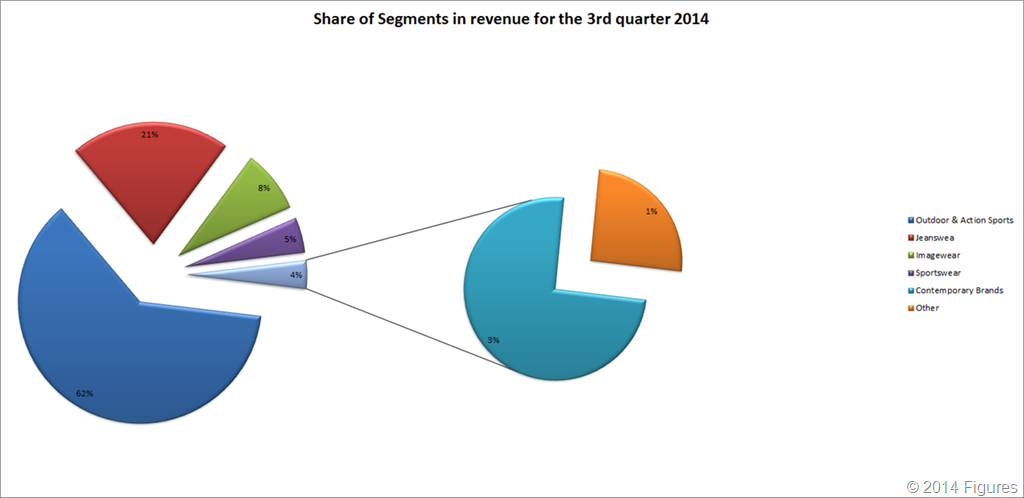
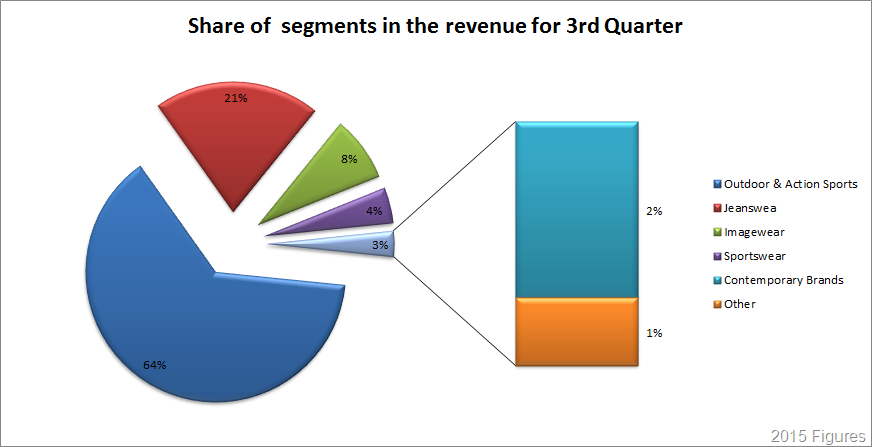
    1. Revenue Segmentation for 3rd quarter of 2014 & 2015  (in millions)

    Particulars

    Amount ($)

    (2014)

    %

    (2014)

    Amount ($)

    (2015)

    %
    (2015)

    Outdoor & Action Sports

    2180.88

    61.95 %

    2296.55

    63.57%

    Jeanswear

    750.45

    21.32%

    747.87

    20.57%

    Image wear

    292.53

    8.31%

    291.54

    8.07%

    Sportswear

    163.44

    4.64%

    161.70

    4.48%

    Contemporary Brands

    99.38

    2.82%

    83.19

    2.3%

    Other

    33.77

    0.96%

    31.97

    0.88%

    Total

    3520.45

    100%

    3612.82

    100%

    In 3rd Quarter 2015, VF Corporation’s total revenue was $3612.83 million, out of which Jeanswear was $747.87 million which  is a 20.57%  share of total revenue. The share of jeanswear has fallen marginally while Outdoor & Action Sports has taken a big jump of about 2%  in sales. This is not surprising as Activewear is the current flavor of the consumers and VF, like many other brands, are trying to are struggling to keep their denim sales to the  same levels. The increase of about $100 million in VF sales can be mainly attributed to the Outdoor and Action Sports segment  .

    image


    Revenue Share 3rd quarter 2015 VF Corporation|Denimsandjeans 

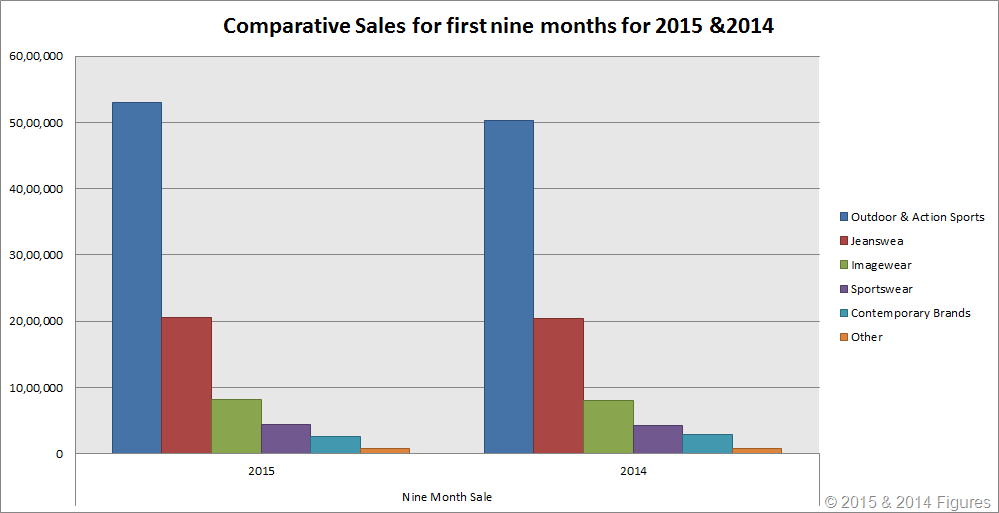
    If we look at the total sales in 9 months for VF , we will find that only Outdoor & Action Sports is the segment which has a positive growth while all other segments are experiencing a sustained fall in turnover. The increase of sales this year of about $260 million can be wholly attributed to OUTDOOR segment. This clearly shows how important this segment is getting to be for VF. And not only VF, it is true for many other brands who have a diversified portfolio.

      3. Comparative Sales Analysis for first nine months for 2015 and 2014 (In millions)

    Particulars

    Sales Amount 2014 ($)

    %

    ( 2014)

    Sales Amount 2015 ($)

    %

    ( 2015 )

    Outdoor & Action Sports

    5034.67

    57.85%

    5299.78

    59.12%

    Jeanswear

    2046.61

    23.52%

    2055.73

    22.93%

    Image wear

    805.73

    9.26%

    823.22

    9.18%

    Sportswear

    435.05

    5.00%

    439.55

    4.90%

    Contemporary Brands

    293.74

    3.38%

    257.61

    2.87%

    Other

    87.50

    1.01%

    88.10

    0.98%

    Total

    8703.30

    100%

    8963.99

    100%

    For the first nine month of 2014, the sales figure was $8703.30 million while for the same period in 2015, the sales increased by about 3% amounting $8963.99 million. The major part of this increase is contributed by Outdoor and Action Sports and a small contribution by Contemporary Brands. Jeanswear is on a shrinking mode as it reduces marginally trying to keep the share of 2014.

    Comparative Sales Analyis for 2014 &2015 VF Corporation|Denimsandjeans


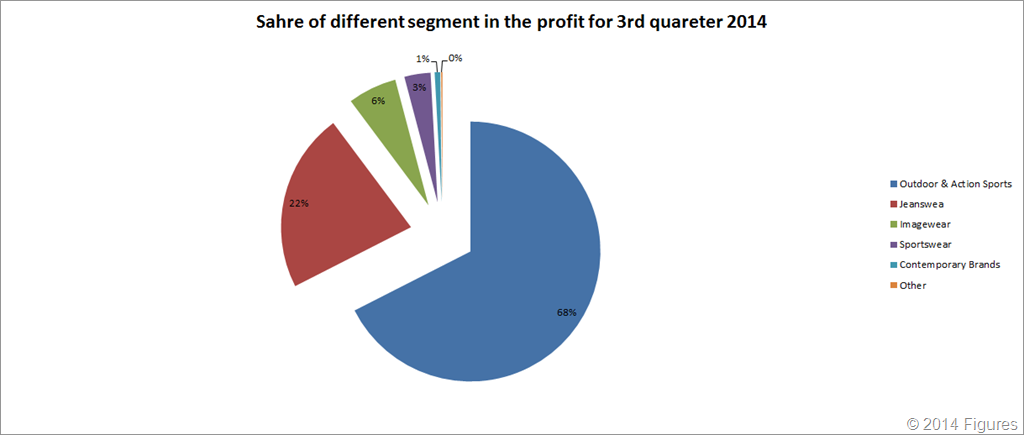
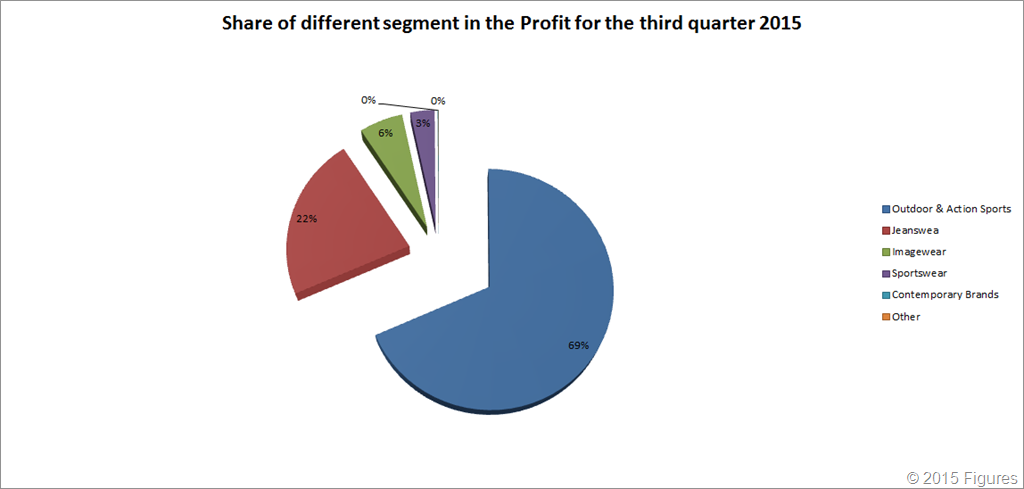
    4. Share of different segment in the total profit in 3rd Quarter in 2015 & 2014

    Particulars

    Amount ($)

    (2014)

    %

    (2014)

    Amount ($)
    (2015)

    %

    (2015)

    Outdoor & Action Sports

    475.44

    67.50%

    487.93

    68.48%

    Jeanswear

    157.00

    22.29%

    157.00

    22.26%

    Image wear

    42.86

    6.08%

    41.83

    5.87%

    Sportswear

    22.98

    3.26%

    23.19

    3.26%

    Contemporary Brands

    4.87

    0.69%

    0.59

    0.08%

    Other

    1.19

    0.17%

    0.35

    0.05%

    Total

    704.34

    100%

    712.50

    100%

    The story is not much different when we consider the contribution of different segments to the profit margin. Though the absolute contribution of the Outdoor segment was expected to be the highest, the % share also increased in this case while all other segments reported reduced profits . Jeanswear’s contribution to the profitability was almost same though a bit reduced.

    On the whole, VF is increasingly becoming a corporation getting its maximum turnover and profits from Activewear segment and looks increasingly focused in this area as more and more energies of the organization get diverted to this high return segment.


    image


    Share in Profit for 3rd Qaurter 2015 VF Corporation|Denimsandjeans

  • The 10 Biggest Clothing Companies In The US

    The 10 Biggest Clothing Companies In The US

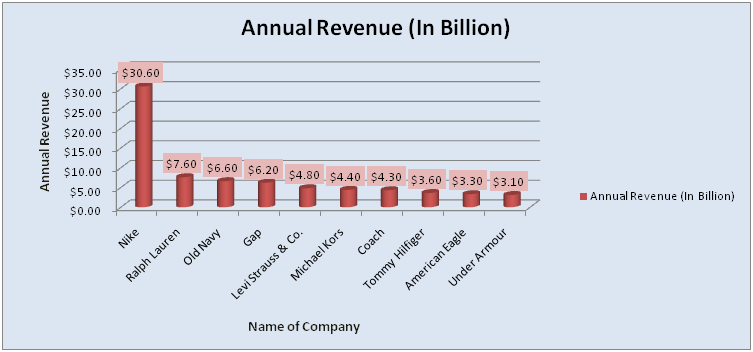
    Apparel brands have cut across the global borders and have reached to billion of people across the world. From fashion to sports to casual wear, these apparel brands have a huge brand equity. Here is a list of the top 10 apparel companies in the USA in 2014. The list has been determined using net revenue as a parameter.

    THE 10 BIGGEST U.S. APPAREL COMPANIES 2014

    Rank

    Name of Company

    Annual Revenue (In Billion)

    1

    Nike

    $30.60

    2

    Ralph Lauren

    $7.60

    3

    Old Navy

    $6.60

    4

    Gap

    $6.20

    5

    Levi Strauss & Co.

    $4.80

    6

    Michael Kors

    $4.40

    7

    Coach

    $4.30

    8

    Tommy Hilfiger

    $3.60

    9

    American Eagle

    $3.30

    10

    Under Armour

    $3.10


    Annual Revenue


    1. Nike:

    Nike

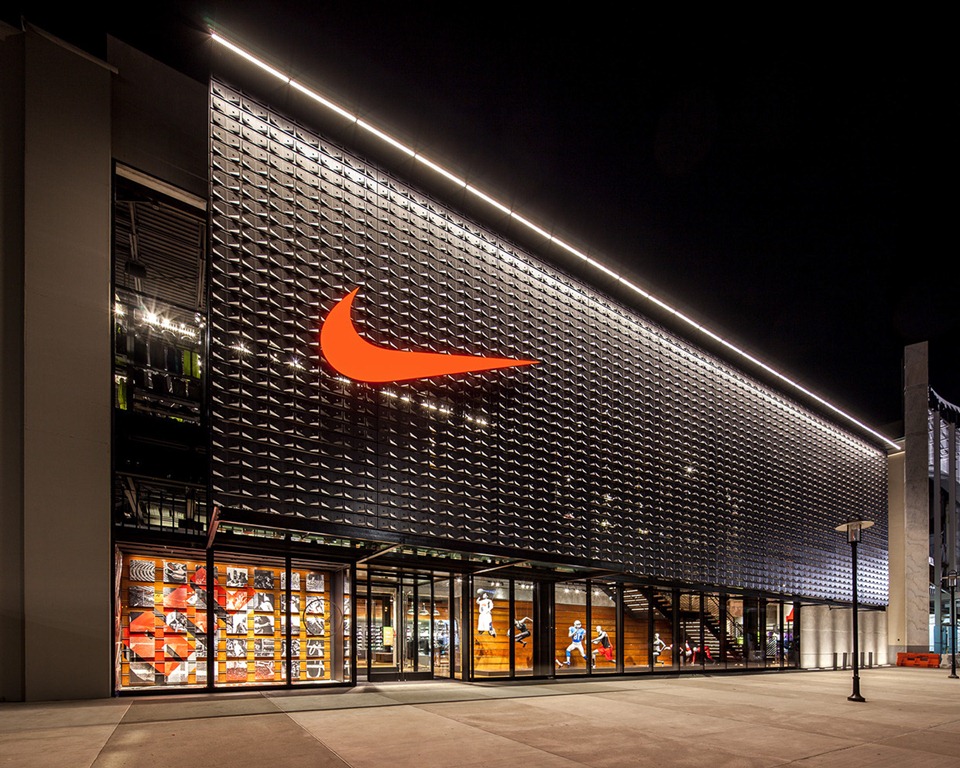
    NIKE, Inc. (NIKE), incorporated on September 8, 1969, is engaged in design, development, marketing and selling of athletic footwear, apparel, equipment, accessories and services. NIKE is a seller of athletic footwear and athletic apparel across the world. The Company sells its products to retail accounts, through NIKE owned retail stores and internet websites and through distributors and licensees across the world. Nike Is the Largest Apparel Company in the U.S. by a Huge Margin. Nike, Inc. is the world’s largest supplier and manufacturer of athletic shoes, apparel and other sports equipment. The company employed about 56,500 people worldwide and in 2014, Nike’srevenue amounted to about  US$30.60 billion .

    Annual revenue: $30.60 billion

    NIKE, Inc. (NIKE) : Denimsandjeans.com


    2. Ralph Lauren:

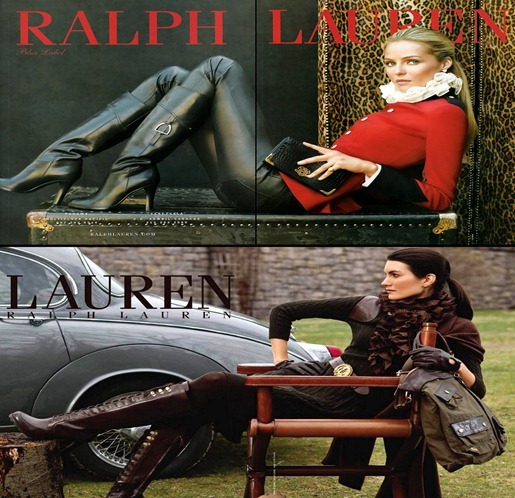
    Ralph Lauren Ralph Lauren Corp. engages in the design, marketing and  distribution of premium lifestyle products in four categories: apparel, home, accessories and fragrances. The company’s brand names, which include Polo by Ralph Lauren, Ralph Lauren Purple Label, Ralph Lauren Collection, Black Label, Blue Label, Lauren by Ralph Lauren, RRL, RLX, Ralph Lauren Children wear, Denim & Supply Ralph Lauren, Chaps and Club Monaco. It operates in three business segments: Wholesale, Retail and Licensing. The company was founded by Ralph Lauren in 1967 and is headquartered in New York, NY.

    Annual revenue: $7.6 billion

    Ralph Lauren Corp. : Denimsandjeans.com


    3. Old Navy:

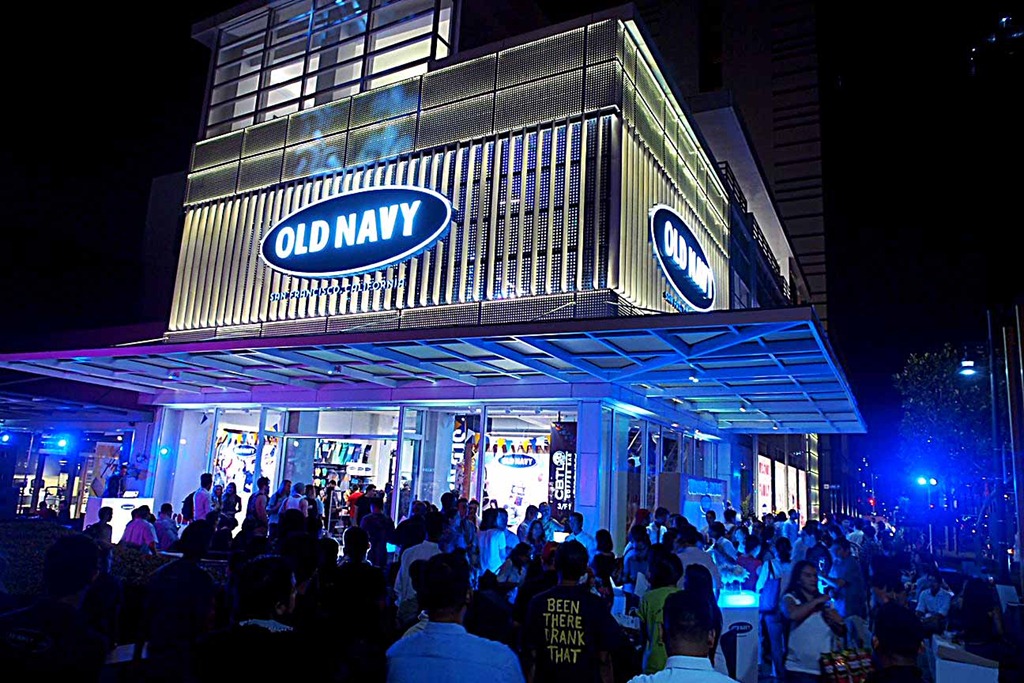
    Old_NavyOld Navy is a popular clothing and accessories retailer owned by American multinational corporation Gap Inc. Old Navy is currently doing better than its parent brand, the Gap. It has lower prices and tends to stay on brand, targeting the right consumers with affordable styles.  As one of the largest apparel brands in the USA, they offer customers fabulous fashion online as well in  1,000+ stores around the world.

    Annual revenue: $6.60 billion

    Old Navy : Denimsandjeans.com

    4. Gap:

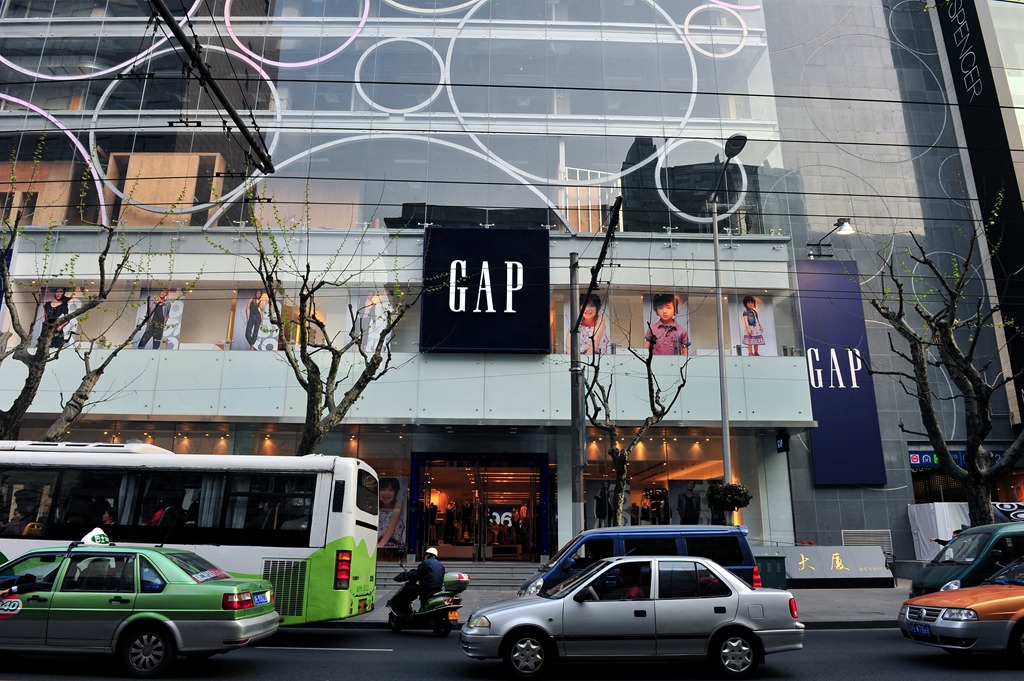
    GapThe Gap, Inc., commonly known as Gap Inc. or Gap, is an American multinational clothing and accessories retailer.Gap Inc. is a leading global retailer offering clothing, accessories and personal care products for men, women and children under the Gap, Banana Republic, Old Navy, Athleta and Intermix brands. Gap Inc. products are available for purchase in more than 90 countries worldwide through about 3,300 company-operated stores, almost 400 franchise stores, and e-commerce sites.

    Annual revenue: $6.20 billion

    Gap Inc. : Denimsandjeans.com


    5. Levi Strauss & Co.:

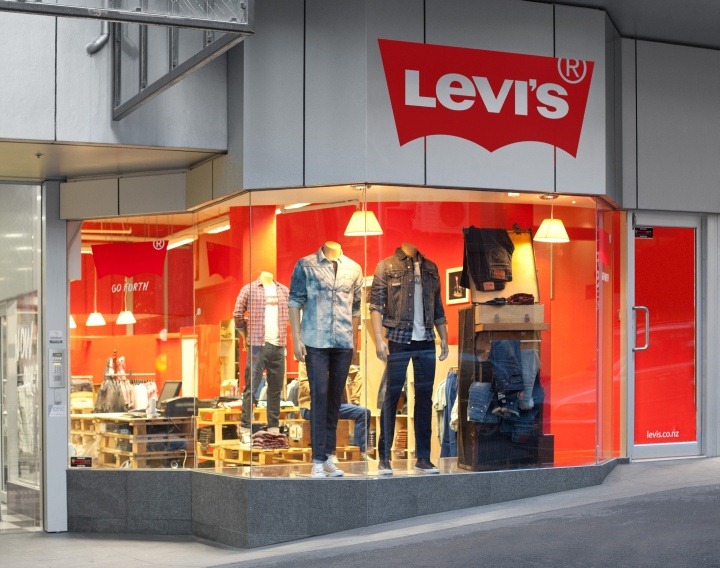
    Levi'sAnyone can make a pair of blue jeans, but Levi Strauss & Co. made the first blue jean –– in 1873. And they draw upon our heritage to continually reinvent the blue jean for generation after generation.Levi’s jeans have become one of the most recognizable and widely imitated clothing in the world, capturing the imagination and loyalty of generations of diverse individuals in over 110 countries.

    Annual revenue: $4.8 billion

    GLevi Strauss & Co.: Denimsandjeans.com


    6. Michael Kors :

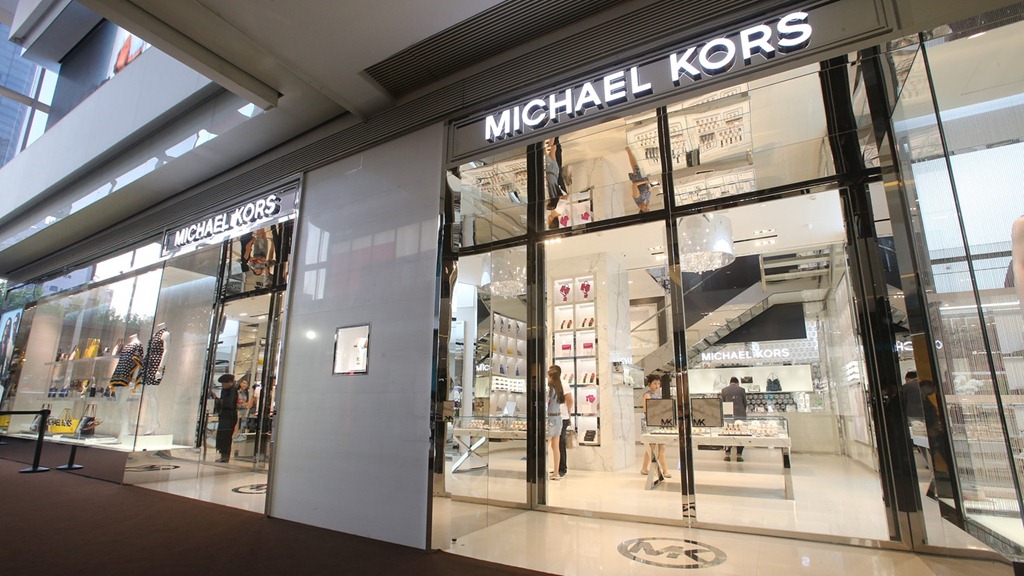
    michael Michael Kors is a world-renowned, award-winning designer of luxury accessories and ready-to-wear brand. Behind this  burgeoning  empire stands a singular designer which is most popular in USA and all around the world. Michael Kors Holdings Limited (KORS), which deals in fashion accessories. 

    Annual revenue: $4.4 billion

    Michael Kors : Denimsandjeans.com

    7. Coach:

    CoachCoach, Inc. is a luxury fashion company based in New York City. The company is known for accessories and gifts for women and men, including handbags, men’s bags, women’s and men’s small leather goods, footwear, outerwear, ready-to-wear, watches, travel accessories, scarves, sun wear, fragrance, jewelry, and other accessories.

    Annual revenue: $4.3 billion

    Coach, Inc. : Denimsandjeans.com

    8. Tommy Hilfiger :

    Tommy HilfigerTommy Hilfiger is one of the world’s leading designer lifestyle brands and is internationally recognized for celebrating the essence of classic American cool style, featuring preppy with a twist designs.Tommy Hilfiger is an American fashion, apparel, design, fragrance retail company, offering consumers low end products including men’s, women’s and children’s apparel, sportswear, denim, and a range of licensed products such as accessories, jewelry, watches, fragrances and home furnishings.

    Annual revenue: $3.6 billion

    Tommy Hilfiger : Denimsandjeans.com

    9. American Eagle:

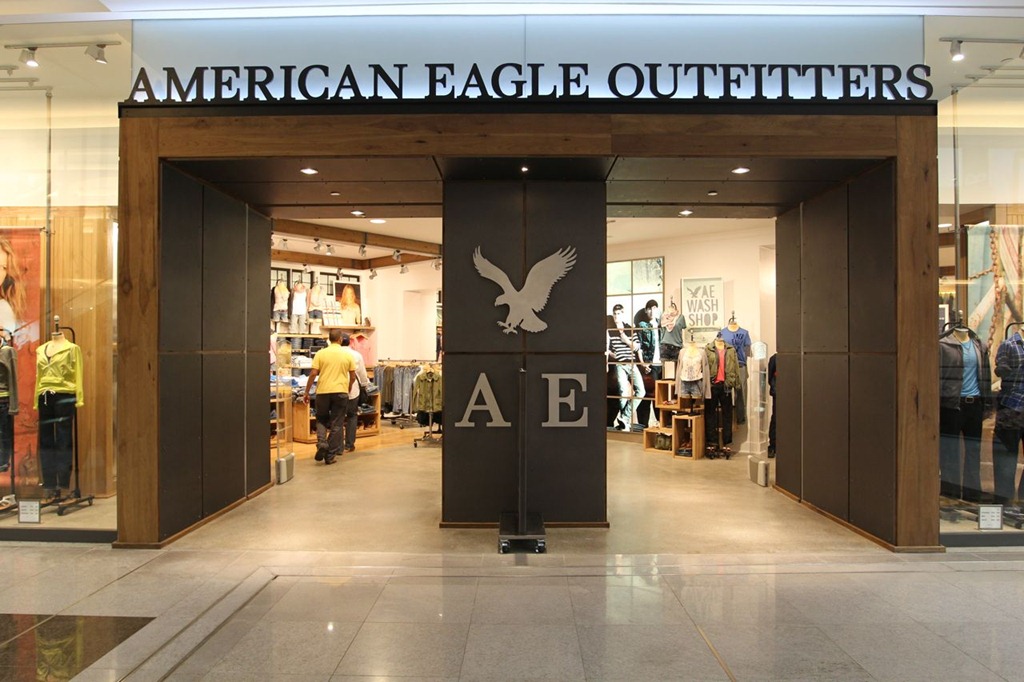
    americanAmerican Eagle Outfitters is an American clothing and accessories retailer. The Company offers clothing, accessories and personal care products. The Company operates under the American Eagle Outfitters and aerie by American Eagle Outfitters brands. The American Eagle Outfitters brand offers denims, pants, shorts, sweaters, fleece, outerwear, graphic t-shirts, footwear and accessories. The aerie brand is a collection of intimates and personal care products for women, such as bras and undies at the core, and offerings in sleep, swim and apparel. The Company offers its products online at ae.com and aerie.com and at various international store locations managed by third-party operators. The Company operates around 1,000 retail stores in the United States and internationally. The Company has stores in the United States, Canada, Mexico, Hong Kong, China and the United Kingdom.

    Annual revenue: $3.3 billion

    American Eagle Outfitters : Denimsandjeans.com


    10. Under Armour :

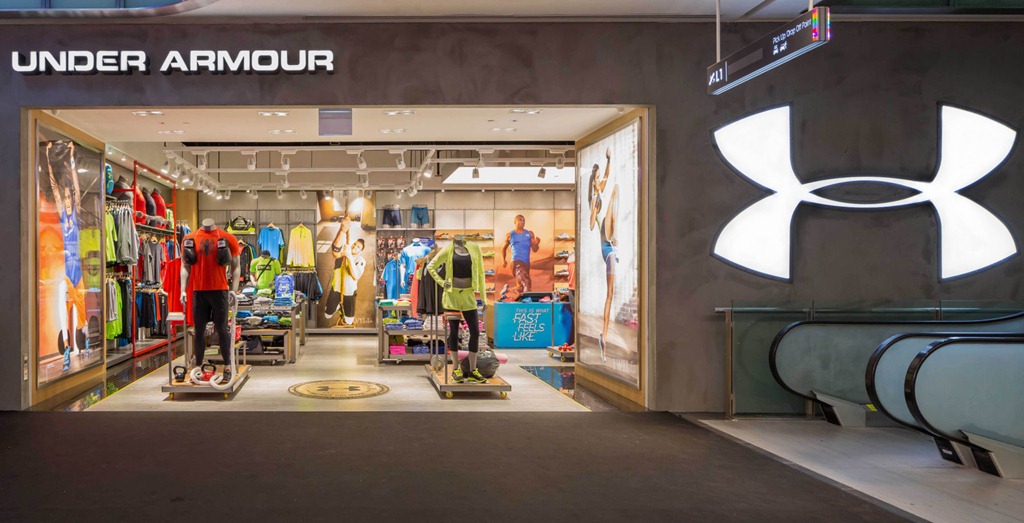
    Under ArmourUnder Armour, Inc. is an American sports clothing and accessories company. The company is a supplier of sportswear and casual apparel. Under Armour began offering footwear in 2006.The sports retailer made more than $3 billion in revenue last year. It may be far from eclipsing Nike’s global empire, but it continues to grow and sign major deals with impressive athletes, like Stephen Curry and Jordan Spieth.

    Annual revenue: $3.1 billion

    Under Armour, Inc. : Denimsandjeans.com

  • Levi’s Tries To Survive In Yoga Era

    Levi’s Tries To Survive In Yoga Era

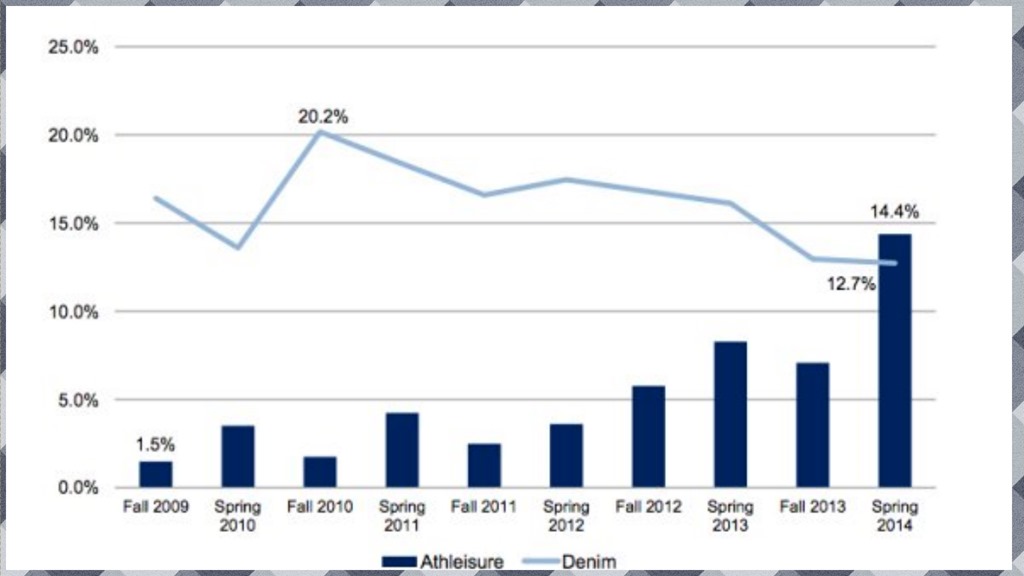
    The athleisure trend has been very strong for last few years and is confounding  pundits who were considering it to be just a fad . Yoga has been one of the main components of the increasing affinity to activewear and is affecting clothing lines tremendously. The denim industry is definitely influenced by this trend as sales of jeans –particularly women- were strongly affected specially in US where they fell about 8% last year as per NPD group figures. Companies like Levi’s have been particularly affected as their sales of women’s jeans went down by 10%. By mid 2014, with sales of athletic pants had risen 62 per cent from 2010—and athleisure apparel started  looking less like a fad and more like a permanent addition to women’s closets. Eva Mendes, the actress and style icon, spoke for many women when she told a fashion blog that if she was seen wearing jeans, it could only mean that her softer pants were dirty.

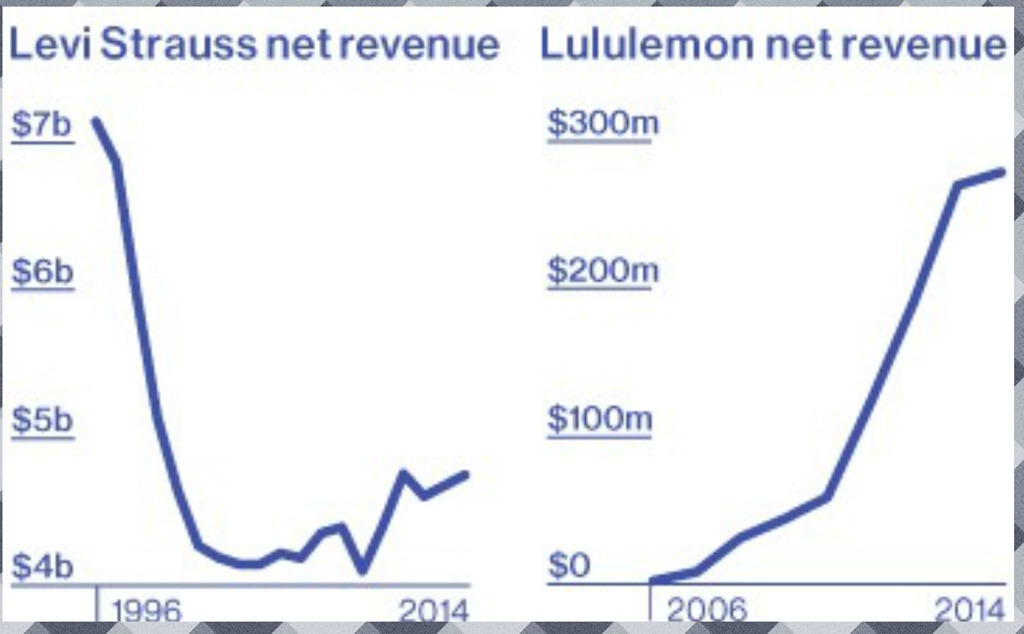
    Activewear has grown faster than the overall apparel market during the past two years as more people wear exercise clothing casually. Analysts at Barclays estimate it may grow by almost 50% in U.S. to more than $100 billion at retail by 2020. A small comparison below in a report on  Bloomberg shows how a small company Lulemon has grown over last few years selling yoga clothes and has actually a market capitalization of over $9 billion.

    Levi’s Tries To Survive In Yoga Era denimsandjeans.com

    Levi’s Tries To Survive In Yoga Era denimsandjeans.com

    2 decades ago, Levi’s was bigger than Nike at over $ 7 billion , but now Nike crosses $30 billion in revenues and Levi’s fell to $4 billion.

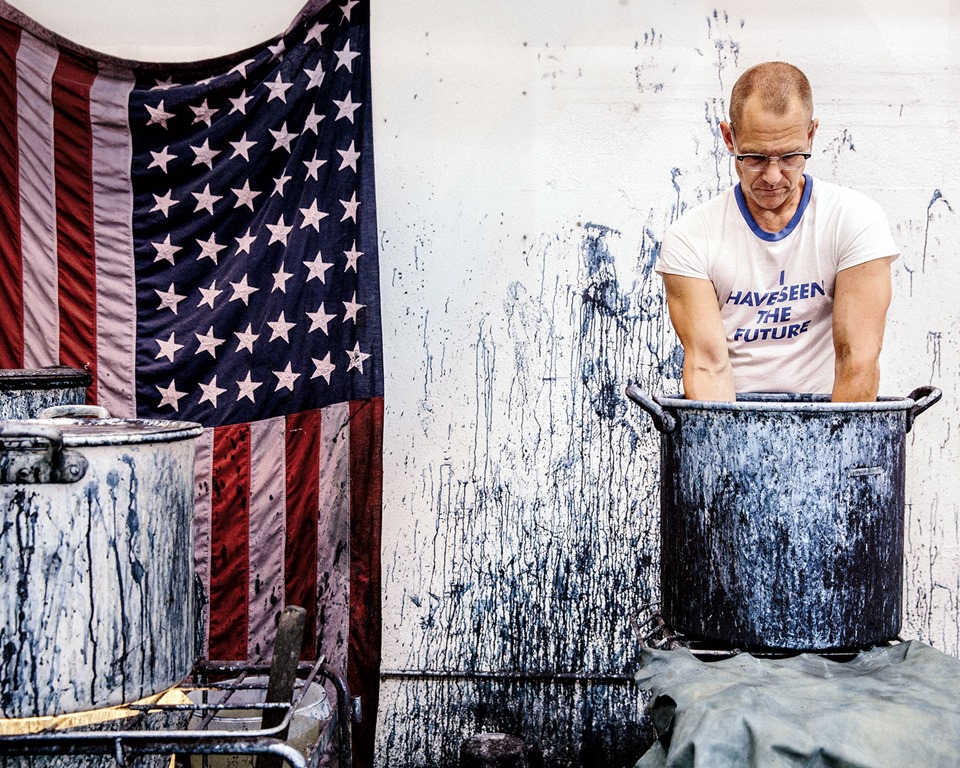
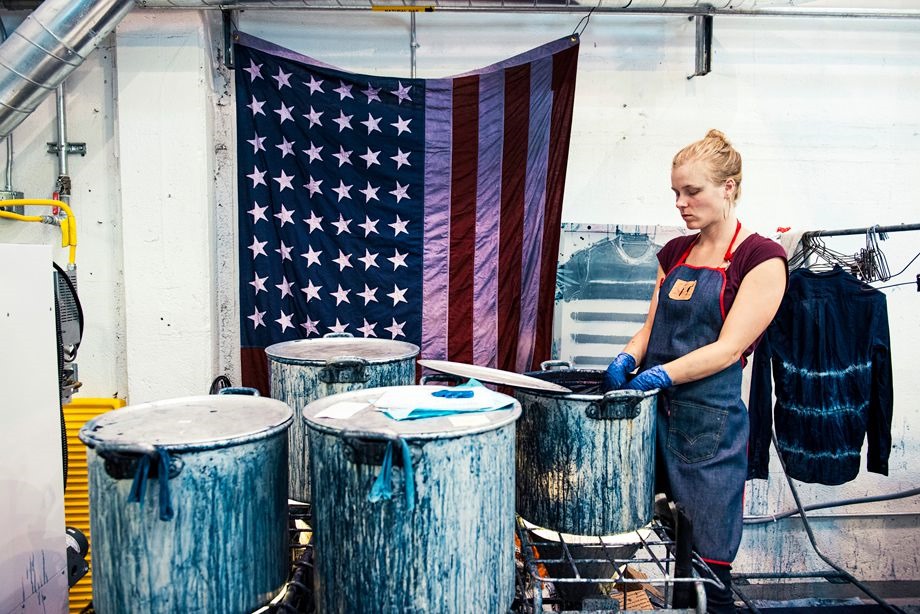
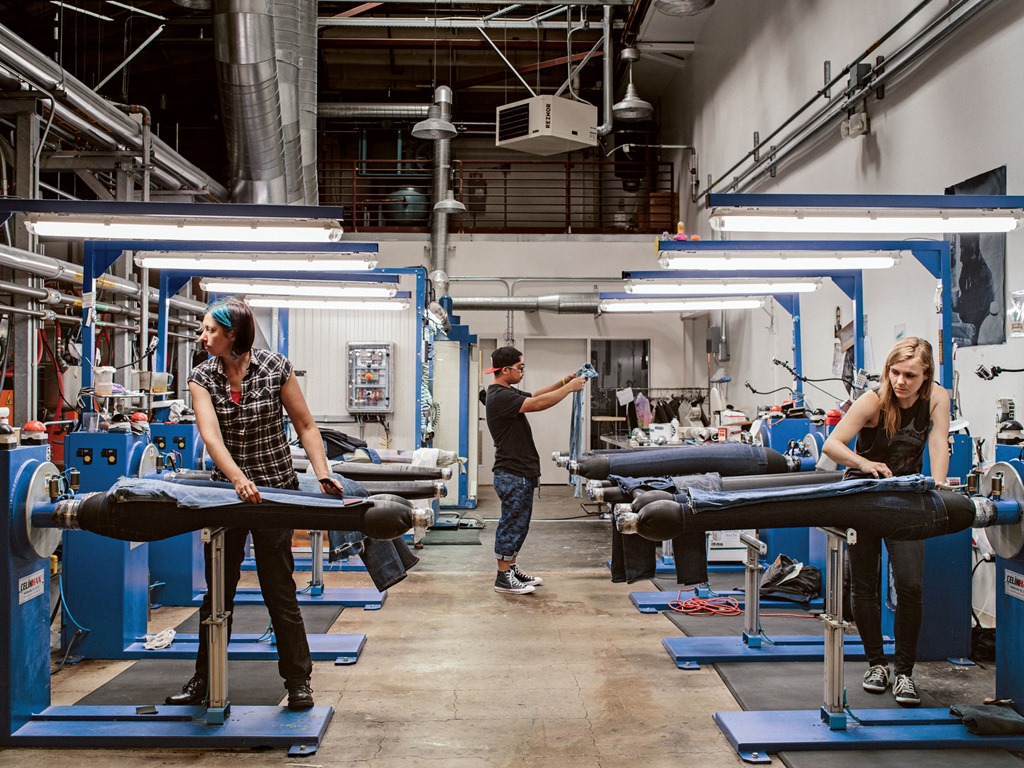
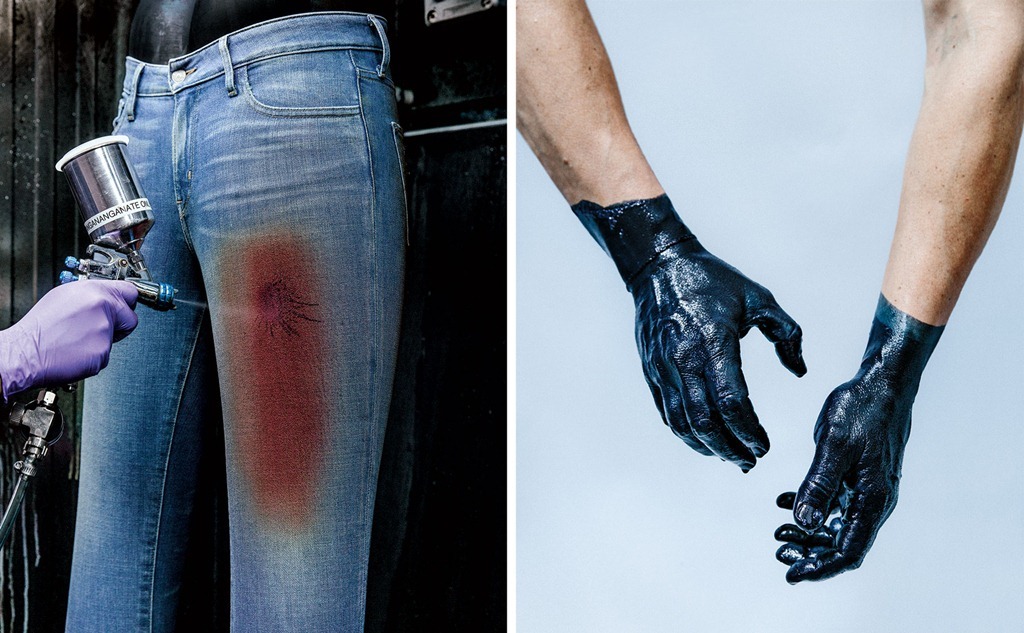
    At Levi’s, the yoga pants scourge is especially vexing, disrupting a turnaround plan by a new chief executive officer that had been showing signs of success. Levi’s is , however, not sleeping . It has focused its efforts on R&D to tackle the athleisure onslaught. At the foot of Telegraph Hill in San Francisco, in a renovated grain mill with soaring ceilings and wooden beams, Bart Sights , senior Director for technical innovation is refining his recipes for denim. In his hands, stained dark blue from day after day of plunging fabric into buckets of indigo dye, he tries to work out the correct look and feel for a new skinny jeans for women using different combinations of fibers, weaves and finishes. He tries to replicate a second hand women’s jeans bought in Thailand which after years of wear has developed unique patterns all over. Artificially reproducing the wear is easy, done with sandpaper, oxygen baths, and rocks. “The trick,” Sights says, “is to get a look like this on a very modern fabric—a fabric with a lot of stretch in it.”

    Levi’s Tries To Survive In Yoga Era denimsandjeans.com

    Levi’s Tries To Survive In Yoga Era denimsandjeans.com

    Levi’s Tries To Survive In Yoga Era denimsandjeans.com

    Source : Bloomberg.com

    Sights’s team began tearing apart wet suits and other unconventional garments. “Neoprene is supercomfortable in the water because it allows movement, but it’s also superforgiving, it recovers well,” he says. “And there are some fibers in lingerie that bring these really valuable comfort attributes.”. Levi’s is trying to use such fibers in their jeans.

    Bloomberg in their report makes a mention of shoppers such as Kate Slattery, 25, a data scientist in San Francisco, one of dozens of women interviewed for this story, says she hasn’t bought a new pair of jeans in more than a year but did splurge  on Lululemons. She loves their clever pockets. Asked for her take on Levi’s, Slattery draws a blank. “My view of Levi’s is probably 15 years old,” she says, “because I just haven’t even considered shopping there since my mom shopped with me.”

    Levi’s Tries To Survive In Yoga Era denimsandjeans.com

    Source:Bloomberg.com

    Levi’s developed a new line called Lot 700.-a nod to the original women’s jean, Lady Levi’s Lot 701, introduced in 1934. The new one features the retro “Two Horse” leather logo patch on the rear waistband and adds larger back pockets to accentuate the seat. Another style, Lot 300, uses a more girdle-like design for a different shaping effect. The 501ct can be worn in a looser fit.To blunt its sales decline, Levi’s rushed some of the new materials that Sights was working on to market in the summer of last year, infusing skinny and midrise jeans with additional soft and stretchy material.

    Levi’s finally introduced the new women’s line earlier this month, at an event in Manhattan’s clubby Meatpacking District. Large photographs displayed up-and-coming female artists wearing Levi’s, and six models stood like mannequins wearing the Lot 700 line. Holding court near the door, James Curleigh, Levi’s president, said he expected the women’s reboot to help the company increase wholesale prices over the next three years. Macy’s is doubling the amount of space for the brand in its flagship store in Manhattan and adding floor space at stores across the U.S., according to Louis Mastrogiacomo, who manages the women’s ready-to-wear category for Macy’s. Feedbacks from customers seem to be good , though whether these jeans will make them abandon yoga pants is doubtful and remains to be seen.