Category: Denim Reports

Find out the latest reports on Denim Fabrics and Jeans

  • Gap Looses US Market Share

    Gap Looses US Market Share

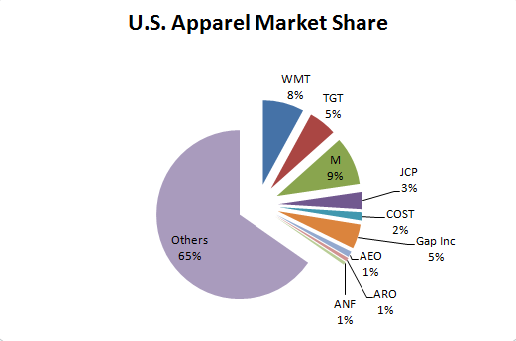
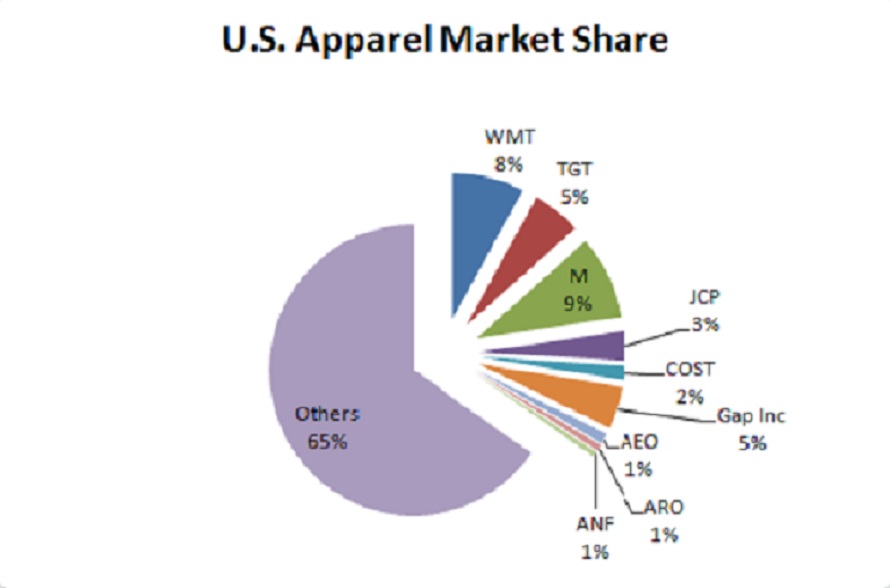
    US retail market is highly competitive and a large number of Speciality stores, Brand Stores, Discount stores, Departmental Stores compete with each other – continuously striving to get the attention of the American customer who is not increasing his spending but is reallocating his funds between different brands and retailers. This reallocation of money by buyers is benefitting some retailers while others are losing . Gap , unfortunately, is finding its place among the latter. The most sought after casual brand in US may not remain so in the coming years as  Gap’s share of US apparel market fell from 5.1% to 4.7% over the past five years with a recovery not in sight. Let’s see how Gap stacks in comparison to other apparel retailers in US.

    1. Multi brand retail chain Macy’s : 9% approx.
    2. General Merchandise retailers

    • Wal Mart – 7% approx.
    • Target – 5.4%
    • Gap – 4.7%
    • JC Penny – 3.3%
    • American Eagle, Aeropostale and A&F – 2% each approx.

    The remaining 65% share is held by a number of private label brands , pure online players, fast fashion players , department stores etc. Here is a break up of the market share as per Forbes.

    U.S.-Apparel-Market-Share

    Source : Forbes.com
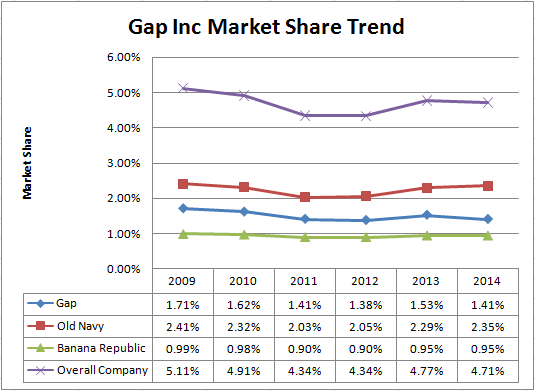
    gap-inc-market-share-trend

    Source: Forbes.com

    Whereas Gap’s market share has reduced from 1.71% is 2009 to 1.41% is 2014, that of Old Navy and Banana Republic has also fallen. The reason for growth of share from 4.34% in 2012 to 4.71% in 2014 has been the growth driver brands Athleta and the acquisition of Intermix.

    One of the major reasons for Gap losing its market share has been the growth of fast fashion retailers  like the Inditex , H&M and to some extent Forever 21. There has been a constant movement of buyers from casual clothing to affordable fast fashion. Today’s teenagers are getting less attached to brands and are more concerned over having a fresh look every few days. Technology is pushing this trend. With the proliferation of  ‘Whatsapp’, ‘Viber’,’Facebook’ and the likes , the SELFIE culture is becoming a dominant youth phenomenon constantly pushing these young ones to look better and share . This trend is helping fast fashion retailers like Inditex and hurting the long established ones like GAP. This has become one major factor affecting GAP’s performance .And related to this has been the other reason of underperformance – poor performance of GAP’s women’s business – while its other business including men, kids and baby are doing reasonably well.

    The result has been clear for GAP. It has planned to close 175 of its speciality GAP Inc stores –with 140 going down this year and balance in the year next. After these closures it will have about 800 stores in US. It is expected to lose about $300 million from these closures- an amount which is expected to be covered from better performance from other channels including Online.

  • Colombia Denim Report | 2014-15

    Colombia Denim Report | 2014-15


    Colombia, as we have mentioned in our previous reports, Colombia market is a unique market in Latin America and the third largest economy . With a population of about 48 million and a per capita income of about $13000, it has a decent fashion and export market . It results in fabric imports into the country from around the world.
    In this report, we will give the following details about Colombia denim market:

    1. Top 10 importers of denim fabrics in Colombia in the period Feb’2014 to Jan’2015

    2. The total quantities purchased by them during this period and the average prices at which they bought.

    3. Some contact details on these buyers.

    4. Top 10 suppliers of denim fabrics to Colombia from around the world during this period.

    5. Quantities and prices at which they supplied the denim.

    6. Top 10 countries from where denim is coming to Colombia.

    7. Quantities and average prices of such exports from these countries to Colombia.


    [private_special]

    To begin with, we will start looking at the Table 1 which gives the names of top importers of denim fabrics in Colombia.

    Importers of denim fabrics | Feb’14- Jan’15 – Table 1

    Buyer Name Quantity Purchased
    (Sq.mtrs)
    Cif in Usd Avg. Price/Sq. Mtr Avg. Price in linear mtr.(150cm width)
    FLORAL S. A 2,884,008.87 61,39,645.94 2.13 3.19
    COMERTEX S.A 2,169,702.29 34,38,958.53 1.58 2.38
    COLOMBIANA DE COMERCIO S.A 1,566,206.27 29,68,248.98 1.90 2.84
    CONTACTO TEXTIL S.A 1,543,971.47 35,36,565.71 2.29 3.44
    PRIMATELA S.A 1,476,096.28 37,56,439.64 2.54 3.82
    SURTIJEANS S A 1,256,110.8 16,23,100.27 1.29 1.94
    STILOTEX S.A.S 1,237,485.04 26,34,950.63 2.13 3.19
    PRODUCTORA DE TEXTILES DE TOCANCIPA S A TOPTEX S A 1,048,375.33 13,19,203.3 1.26 1.89
    COLECCIONES EXCLUSIVAS DE TEXTILES S. A 1,009,016.7 23,96,823.74 2.38 3.56
    PERMODA LTDA 9,11,066.81 40,65,857.7 4.46 6.69

    From the above table we can see that almost all the top 10 importers imported over a million sq mtrs of denim fabrics during 12 months. Floral S.A was the largest importer of denim fabrics with over 2.8 million sq mtrs imported from around the world. Its average price of $2.13/sq. mtr was also a decent price compared to many other importers. We have also given the prices of imports in linear mtr with an average width of 150 cm as an assumption to give a rough idea of how the linear mtr price would look like .
    Other important importers by quantity were Comertex S.A , Colombiana De Comercio S.A etc. However, the importer who really seems to be importing high quality fabrics is Permoda LTDA. With an average price of $4.46/sq mtr ($6.69/ mtr), the price is the highest among all importers and stands out as a premium buyer. Some of the importers like Productora De Textiles are low value importers importing fabrics at $1.26/sq mtr from countries like Panama.


    Some Contact Details on Buyers


    FLORAL  S. A

    Cod Uap 600 Nit 800 147 745 2 Carrera 52 No 19 80 Medellin Colombia
    Ph: +574-444 8886


    COMERTEX S.A

    Cra 17 Autopista Palenque Chimita No 60-170; Giron; Santander
    Ph: +57-7-6760000
    Website: http://www.comertex.com.co/index.php?idi=2


    COLOMBIANA DE COMERCIO S.A

    CL 11 31 A 42,BOGOTA
    Ph : +57-1-3649777


    CONTACTO TEXTIL S.A

    Cr50 G 10 B S-97 Medellin, Colombia
    Ph: +57-4-2856200


    PRIMATELA S.A

    Kra 63 17b 50; Bogota D.C; Bogota D.C

    Ph: +57-1-4137166


    SURTIJEANS S A

    Carrera 62 # 12-30, Bogotá, Colombia


    STILOTEX S.A.S

    Cra 106 # 15-25, Manzan 5 Ints. 13-14

    Website: http://www.stilotex.com/


    PRODUCTORA DE TEXTILES DE TOCANCIPA S A TOPTEX S A

    Cra 43 N’ 9-46, Bogota
    Ph: +57-7-5663000


    COLECCIONES EXCLUSIVAS DE TEXTILES S. A

    Carrera 52 # 7 South – 100 Medellin – Colombia

    Ph : 57-4-3206320
    Fax : 57-4-3206322
    Email : info@coletex.com
    Website: http://www.coletex.co/


    PERMODA LTDA

    Calle 17 A # 68D-88. Zona industrial de Montevideo. Bogotá, Colombia
    Website: http://www.permoda.com.co/


    Top Exporting Countries


    Country Of Origin
    Sq mtrs
    CIF usd
    Price
    Avg Price in mtr
    PANAMA 4,584,748.30 1,13,88,456.24 2.48 3.73
    INDIA 4,014,346.99 59,90,298.14 1.49 2.24
    CHINA 3,776,192.07 75,03,846.16 1.99 2.98
    MEXICO 3,118,984.80 73,50,393.43 2.36 3.53
    PAKISTAN 3,043,835.64 70,14,578.83 2.30 3.46
    BRAZIL 1,918,847.90 37,29,212.07 1.94 2.92
    TURKEY 1,456,509.78 60,49,693.09 4.15 6.23
    UNITED STATES 1,344,551.10 28,00,529.43 2.08 3.12
    CANADA 5,40,021.06 7,19,198.14 1.33 2.0
    GERMANY 5,22,148.00 21,20,181.51 4.06 6.09

    From the above table we can see that India , at $1.49/sq mtr, has among the lowest prices when it comes to shipping to Colombia. Canada is still lower, but Canada does not produce any denim- they are only trading. Turkey is highest priced exporter at $4.15/sq mtr. Panama – again a trading company- stands the top exporting country at over 4.5 million sq mtr. India , China and Mexico come next. Germany, again a non-manufacturer- manages to trade half a million .


    Top Exporting Companies


    Company
    Sq mtrs
    CIF usd
    Price
    Avg Price in mtr
    ZHEJIANG TENGMA TEXTILE CO LTD (China) 2,026,636.32 39,93,180.61 1.97 2.96
    MANUFACTURAS KALTEX SA DE CV  (Mexico) 1,609,853.14 32,44,167.85 2.02 3.02
    VICUNHA TEXTIL SA (Brazil) 1,590,129.61 28,84,756.87 1.81 2.72
    KASSIM TEXTILES(PVT)LTD (Pakistan) 1,260,705.44 29,27,863.19 2.32 3.48
    NANDAN DENIM LTD (India) 1,214,768.81 15,59,907.67 1.28 1.93
    POONAM ENTERPRISES (HK) LTD (China) 1,164,449.26 24,82,331.32 2.13 3.20
    TIRAYAN CORPORATION (Panama) 1,009,010.30 23,96,753.33 2.38 3.56
    GRIGLE TEXTILES SA (Panama) 9,04,411.67 25,17,332.14 2.78 4.18
    RELIANCE INTERNATIONAL Z L SA (Panama) 8,60,160.00 11,28,570.00 1.31 1.97
    RSWM LTD (India) 8,38,134.77 11,87,190.58 1.42 2.12

    Now we come to the Top 10 Exporting countries to Colombia. Its interesting to see that the top exporting company is from China – Zhejiang Tengma and shipped over 2 million sq mtr. Kaltex, from Mexico, stands second at over 1.6 million while Vicunha from Brazil is almost similar at about 1.6 million sq mtrs. Other high quantity importers which exported well were :

    Kassim – Pakistan, Nandan Denim and Poonam Enterprises – China.

    Its interesting to note that 3 companies from Panama are in top 10 and all these 3 companies are traders and not manufacturers. Two companies are from India whereas two companies are from China . Only Vicunha from Brazil and Kaltex from Mexico are the companies from the Americas which could export in decent quantities to Colombia. Interesting to note that the highest prices are coming from Panama company Grigle Textiles.

    Some details on Exporting Companies

    ZHEJIANG TENGMA TEXTILE CO LTD

    Chunlan Road,Industry Area, Lanxi,Zhejiang,China

    Ph : 86 – 579 – 85137738


    MANUFACTURAS KALTEX SA DE CV

    Ings. Militares No. 2 Col. Empleado Municipal C.P. 53380 Naucalpan,Tepeji 76000 MEXICO

    Ph : 52-57265600

    VICUNHA TEXTIL SA

    Rod Dr Mendel Steinbruch Km 09 – Pa Maracanau Ce 61910000 Brazil

    Website: http://www.vicunha.com.br


    KASSIM TEXTILES(PVT)LTD

    Plot No. 62, 25 Km Main National Highway Landhi-Karachi Pakistan
    Tel: +92-21-111- 527746
    Fax: +92-21-3500-1610
    Email: corporate@kassimdenim.com
    Website: http://www.kassimdenim.com/


    NANDAN DENIM LTD

    Chiripal House, Shivaranjani Cross Road, Satellite, Ahmedabad – 380 015. Gujarat, India

    Ph : 91 -79 -26734660
    Fax : 91 -79 -2676 8656
    Email : info@nandandenim.com
    Website: http://www.nandandenim.com/


    POONAM ENTERPRISES (HK) LTD

    Jin Keqiao Road, Wonder Plaza Bldg a – Rm7158, Shaoxing, Zhejiang, China


    TIRAYAN CORPORATION

    Avenida Samuel Lewis Y Calle Gerard, Panama

    Ph : 507-3924928

    GRIGLE TEXTILES SA

    Calle 60, Obarrio, Edificio Obarrio, Panama


    RELIANCE INTERNATIONAL Z L SA

    Local 4,4a, Cofrisa 9,Apdo: 30200174, Colon Free Zone, Colon, Republic of Panama

    Ph : 507-431-1400
    Fax : 507-431 -419
    Email : info@reliancezlsa.com
    Website: http://reliancezlsa.com/


    RSWM LTD

    Bhilwara Towers, A-12 Sector I, Noida – 201301, (NCR Delhi), India.

    Ph : 91-120-4390300
    Fax : 91-120-4277841
    Website: http://www.rswm.in/

    [/private_special]
  • Germany | Imports of Jeans :2010-2015

    Germany | Imports of Jeans :2010-2015


    Germany is the biggest market for jeans in Europe . With its population of 81 million it is the most populated country in EU. Given its large population and its per capita income of $44000+ p.a makes  it  a huge market for most apparel.  Germany not only imports jeans directly from around the world but also from within the EU in a big way. In the current report we will try to analyse how and from where jeans are coming into Germany since 2010. Also we will look at how the Jeans are being exported from Germany and to which countries.

    1. Table of imports of jeans into Germany from 2010 to 2014
    2. Table of % share of exporting countries in the market of Germany 2010-2014
    3. Table of % share of exports from and outside the EU 2010-2014
    4. Table for imports of jeans from important EU countries 2010-2014
    5. Table for exports of jeans out of Germany into EU countries 2010-2014
    6. Table for exports of jeans to rest of the world 2010-2014
    7. Net consumption of jeans in Germany 2010-2014
    8. Per capita consumption of jeans in Germany 2014


    [private_special]

    Imports of Jeans into Germany 2010 -2014

    2010 2011 2012 2013 2014 2014 %
    Bangladesh 28.92 32.85 35.65 34.5 36.85 32.37%
    China 68.24 56.5 37.36 33.27 26.32 23.12%
    Pakistan 11.01 16.48 13.8 14.94 19.66 17.27%
    Turkey 10.88 10.8 11.69 11.97 11.82 10.38%
    Tunisia 4.02 4.52 3.51 4.29 4.29 3.76%
    Cambodia 0.19 1.32 2.98 4.29 4.55 3.99%
    Vietnam 1.08 1.25 1.87 2.43 2.63 2.31%
    Indonesia 2.02 1.86 1.28 1.81 1.81 1.59%
    Laos 0.5 1.11 0.99 1.38 1.12 0.98%
    Sri Lanka 1.66 1.53 0.122 1.11 1.09 0.95%
    Egypt 1.01 0.74 0.85 1.11 0.92 0.80%
    India 0..56 1.06 1.27 0.84 0.47 0.41%
    Sub-total 129.53 130.02 111.372 111.94 111.53 97.97%
    Others 5.36 3.8 3.778 2.21 2.31 2.03%
    World Total 134.89 133.82 115.15 114.15 113.84 100%

    From the above table we can see that Bangladesh currently holds the highest share of about 32% of the import market in Germany . China and Pakistan are second and third respectively with about 23% and 17% share. Other countries like Turkey and Tunisia follow.
    When we look at the figures from 2010 to 2014, interesting trends follow. China, which had a 68% share of the German market in 2010 reduced down to 23% within 4 years – a drastic fall. On the other hand Bangladesh increased its share from 28% to 32% and Pakistan from 10% to 17%. Cambodia increased from about 0.2% to about 4%. Exports from most other countries remained at more or less same levels . The major loss of the Chinese exports share actually evaporated as the imports into Germany from out of EU fell by about 20% from 135 million pcs to about 114 million pieces.

    However, there is another side of the story. The imports from outside EU might have fell , but the imports from within EU have increased substantially. The imports in 2010 at 34 million pcs increased to 48 million pcs – an increase of about 41% .  This is indeed a big increase, see the table below.

    Imports Into Germany From World and EU | 2010-2014

    2010 2011 2012 2013 2014 2014%
    World 134.89 133.82 115.15 114.15 113.84 70%
    EU 34.22 38.11 39.33 44.48 47.90 30%
    Total Imports 169.11 171.93 154.48 158.63 161.74 100%

    About 70% of jeans coming to Germany is coming from outside EU whereas about 30% is coming from within EU in 2014. This ratio was 80:20 in 2010. This shows that more of jeans are coming from within EU in 2014 than what came in 2010. But this does not necessarily mean that the jeans coming from within EU are manufactured there. A large part of it would also be imported into other countries of Europe and then they would be brought to Germany. But the direct imports into Germany have definitely fallen. Let’s look at the table below which will shows the major  countries within EU from where the jeans are being shipped into Germany in 2014.

    Imports of Jeans Into Germany from Within EU -2014

    Country Qty (million pcs) Price (Euro/pc)
    Netherlands 16.00 12.98
    Poland 7.71 18.09
    Denmark 4.79 15.27
    Italy 4.27 26.00
    Spain 3.35 11.28
    Belgium 3.25 17.80
    France 1.97 11.20
    Romania 1.73 18.31
    UK 1.68 19.22
    Others 3.15
    Total 47.90 16.33


    The above table shows some interesting data. The imports into Germany from within EU are about 48 million pcs in 2014 averaging at Euro 16.33 per piece. On the other hand , the imports from around the world except EU into Germany for 2014 averaged a price of Euro 8.60 in 2014. So the difference of price is almost 100%. But when we look at the prices of jeans coming into Germany from  individual  countries in EU, we find a big range. At the lowest level are imports from Netherlands at Euro 12.98/pc – which understandably is more of jeans imported from outside EU because of their important ports and also show the highest quantities of 16 million pcs . second and third in rank are Poland and Denmark at 7.7 million and 4.79 million pcs. The highest prices , understandably , are from Italy at Euro 26 and it seems that most of these jeans would be manufactured in Italy itself. In another report we will try to solve this jigsaw puzzle about how imports are coming into different countries, manufacturing happening there and getting exported within EU.

    So Germany imported about 161 million pcs of jeans from all sources. Does it consumer all of them ? No. Germany also exports to other countries and we will see in table below how much exports are happening from Germany and how much of the jeans brought into Germany get consumed there .


    Exports and Imports from and Into Germany | 2010-2014

    Exports outside EU27 Exports to EU27 countries Total Exports Total Imports Balance consumed
    2010 6.58 69.59 76.17 169.11 92.94
    2011 6.76 54.3 61.06 171.93 110.87
    2012 6.83 53.28 60.11 154.48 94.37
    2013 7.19 53.65 60.84 158.63 97.79
    2014 7.58 52.79 60.37 161.74 101.37

    The above table shows the jeans exported from Germany to EU27 countries and also to the countries within EU. We find that there is a huge number of jeans going out of Germany into other countries in EU. Eg in 2014, only about 7.5 million pcs were exported outside EU27 countries whereas about 52 million pcs were sent to countries within EU. In fact this number is more than the 47.90 million pcs that were imported into Germany from EU27 countries. This shows that Germany acts as a net exporter of jeans when we consider EU27 countries. The country manufactures very small quantities of jeans itself and hence we ignore those figures and come to the conclusion that the country is a net exporter when it comes to EU27 countries.


    Can we find out how much of jeans were consumed in Germany ? From the above table it is quite clear that about 101 million pieces of jeans were consumed in Germany in 2014 whereas the highest number was in 2011 when about 110 million pieces were consumed. Using this figure we can easily find the per capita consumption of jeans in Germany.

    Per capita consumption of jeans = Net jeans consumed / Population

    ie 101million pcs/81 million = 1.25 jeans per person per annum for 2014.

    So Germany consumes about 1.25 jeans per person in 2014. In other years the figures has been more or less same and we do not see much changes happening in the near future also. What we foresee is that the origin of jeans might undergo a change from time to time but the market is more or less saturated and will not see significant growth.

    [/private_special]
  • Vietnam Importers Of Denim Fabrics

    Vietnam Importers Of Denim Fabrics

    Vietnam Importers Of Denim Fabrics : Denimsandjans.com

    Vietnam is an important apparel producing country and exporting in big volumes to US , EU and other places around the world. As it gets more important sourcing destination, it gets more important for supply chain players around the world to know who are the main companies operating in this segment.  In this report we will bring out the details on the imports of denim fabrics into Vietnam from around the world.  It will specify (for a particular period)  the following:

    • The names of companies importing denim fabrics and the prices at which they are importing.
    • The quantities of imports by such companies and their value and hence the listing of top companies.
    • The main suppliers of denim fabrics to the region during that period.
    • The quantities exported by such suppliers and their average prices.
    • Some details on the suppliers and the buyers.

    [private_special]

    This report we have made for the period of Dec’14 signifying the imports made of denim fabrics by various importers in the country. There are two different tables showing the main buyers and suppliers of the fabric during this time. Also given are details of some buyers and suppliers.

    Denim Importers In Vietnam

    Company

    Qty in m2

    Value in Usd

    Price

    Price in Usd /mtr width 150 cm

    HSING Co. sewing-aged Vietnam 8,08,210.0 13,03,389.1 1.6 2.42
    Limited Liability Company Seyoung INC 3,41,556.6 10,41,262.4 3.0 4.57
    Co. May F & S Vina 3,07,832.2 8,17,953.3 2.7 3.99
    Saitex International Co 1,92,838.1 6,59,598.6 3.4 5.13
    VSM Japan Manufacturing 1,49,504.8 4,71,474.3 3.2 4.73
    Atlantic Co. 1,30,305.3 3,54,212.4 2.7 4.08
    International Corporation Rich 1,23,626.15 5,64,877.48 4.57 6.85
    Southeast Vietnam Co. Ltd 88,038.44 3,81,569.9 4.33 6.50
    Viet hsing International  Garments 47,642.3 1,12,638.2 2.4 3.55
    VIT Garment 32,036.58 54,810.93 1.71 2.57

    The above table shows the names of the companies which are importing denim fabrics from around the world. Their approximate quantities in sq. mtrs have been given along with the prices.  We are also giving an indicative price for the same fabrics in 150 cm width to get a better idea on the cost of linear length of such fabrics. Some details on the buying companies are given below . We will update these details as we get more information on these companies.

    HSING Co. sewing-aged Vietnam

    Address : Phuc Khanh Industrial Park, City Pacific, Vietnam

    Phone     : 036618937


    Limited Liability Company Seyoung INC

    Address : Luong Son Industrial Park, Km36, QL6, Hoa Son commune, Vietnam


    Co. May F & S Vina

    Address : Lot No. 6 – TT4 – My Dinh Urban Area in Me Tri, My Dinh Ward 1, District Nam Tu Liem, Hanoi, Vietnam


    Saitex International Co

    Address : Khu Cong Nghiep Bien Hoa 1, Duong 8, Thanh Pho Bien Hoa, Tinh Dong Nai, Vietnam

    Phone     : 84-613933619

    Email       : info@sai-tex.com

    Website  : http://www.sai-tex.com/


    VSM Japan Manufacturing

    Address : Tan Truong – Cam Giang – Hai Duong

    Phone     : 84-32037868


    Kang Rich International Corporation

    Address : 715 McMurray Road, Unit 4-6 Waterloo, Ontario N2V 1Y2, Canada

    Phone     : 519-885-8386

    Fax          : 519-885-7686

    Email       : kric@kangrich.com

    Website  : http://www.kangrich.com/


    Viet hsing International  Garments

    Address   : Binh Chuan Hamlet, Thuan An Dist.,Binh Duong

    Phone     : 84-6503827890

    Email       : viethsing@hcm.vnn.vn


    Company

    Qty in m2

    Value in Usd

    Price

    Price in Usd /mtr 150 cm

    Nien Hsing Textile CO 6,00,480.28 8,69,703.15 1.45 2.17
    Yong Yeon TEXTILE COMPANY 3,07,832.2 8,17,953.26 2.7 3.99
    Cone Denim Jiaxing Ltd 2,09,232.68 6,54,273.27 3.13 4.69
    TCE-Vina Denim 93,482.95 2,81,755.07 3.01 4.52
    Jiangyin Tianlan Textiles Co. Ltd 88,190.2 1,13,221.41 1.28 1.93
    Evolution3 Ltd. 79,255.8 1,98,013.37 2.5 3.75
    DNC CO., LTD 65,703.30 2,99,117.3 4.55 6.83
    Zibo PengFeng Textile Co,Ltd 58,922.5 1,15,572.03 1.96 2.94
    Mitsubishi Corp. Japan/Thailand 50,172.67 3,38,108.07 6.74 10.11
    Artistic Milliners (pvt) Ltd 48,362.81 1,20,711.9 2.5 3.74

    The above table shows the important suppliers who have been  supplying denim fabrics to this important market. We are also showing the approx. quantities they supplied to Vietnamese buyers with the approx. prices at which they supplied. The value, price per sq.mtr and and indicative price in USD/ mtr with 150 cm width is also shown for reference. We give some more details on the suppliers of the fabrics below.

    Nien Hsing Textile CO

    Address : 13F, No.306, Neihu Road, Section 1, Neihu, Taipei, Taiwan

    Phone     : 886-2-2656888

    Website  : http://www.nhjeans.com/en/


    Yong Yeon TEXTILE COMPANY

    Address   : 1140-013, Hangangno 3(sam)-ga, Yongsan-gu, Seoul, Korea

    Phone     : 886-2-2656888

    Website  : http://www.nhjeans.com/en/


    Cone Denim Jiaxing Ltd

    Address : No. 60, Gangshan Road, Jiaxing Economic Development Zone, Zhejiang Province, China

    Phone     : 86-573-83935888

    Fax          : 86-873-83935190

    Website  : http://www.conedenimjx.com/


    TCE-Vina Denim

    Address : Lot S6 + S7, Hoa Xa Industrial Park, Nam, Dinh City, Nam Dinh Province, Nam Dinh, Vietnam

    Phone   : 84-350-3677025


    Evolution3 Ltd.

    Address : Ha Tien Phong Building 4th floor, No 76, Tang Nhon Phu street, Tang Nhon Phu B ward, District 9, Ho Chi Minh city, Vietnam

    Phone     : 84-837309567

    Email       : touchbase@evolution3.com

    Website  : http://evolution3.com/


    DNC CO., LTD

    Address : 105-0004,Sinbashi Ekimae Bldg.No.1,20-15,Shinbashi 2- chome,Minato-Ku,Tokyo

    Phone     : 81-33-572-3471

    Fax          : 81-33-574-1198

    Website  : http://www.dnccoltd.com/


    Zibo PengFeng Textile Co,Ltd

    Address : No.385, JiChang Road, ZhouCun, Zibo City, ShanDong Province

    Phone     : 86-533-6167976

    Fax          : 86-533-6180343

    Email       : jameslee@lanyansh.com

    Website  : http://pengfenglanyan.com/


    Mitsubishi Corp. Japan/Thailand

    Address : 105-3-1, Marunouchi 2-Chome, Chiyoda-ku, Tokyo, 100-8086

    Phone   : 81-3-3210-2121

    Website  : http://www.mitsubishicorp.com/


    Artistic Milliners (pvt) Ltd

    Address : Plot 4 & 8 Sector 25,Korangi, Industrial area, Karachi, Pakistan

    Phone     : 92-21-5072586-8

    Fax          :  92-21-507544

    Email       : corporate@artisticmilliners.com

    Website  : http://www.artisticmilliners.com


    More information on Vietnam market would be soon available in other reports.

    [/private_special]
  • Selvedge Denim – Affordable Now ?

    Selvedge Denim – Affordable Now ?

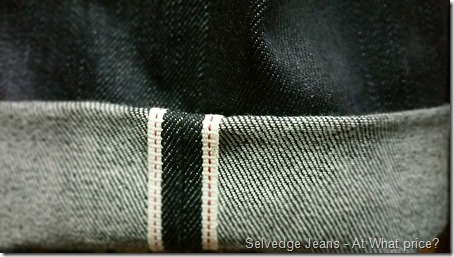
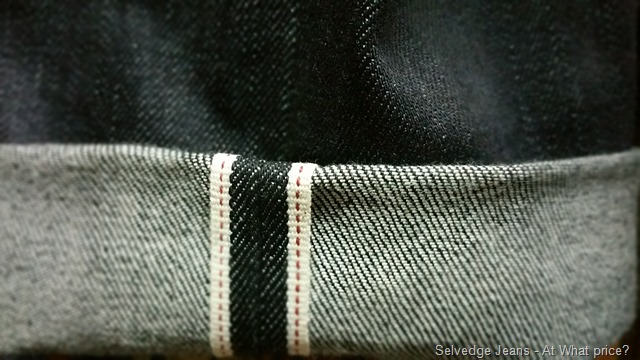
    Selvedge Jeans

    Selvedge denim is considered the epitome of denim craft and loved by connoisseurs and longed to be understood by the novices. The vintage manufacturing process of making this fabric on old shuttle looms – which are not maufactured any more – by master craftsmen adds to the mystery and enigma of the fabric. Connoisseurs wear it raw for as long as possible without washing and let the jeans create the story of their life on it with individualized patina . In short its just pure love for the denim heads . Japanese selvedge denim is famous for its quality and used by niche and boutique brands who create their masterpieces and retail at high prices – often going upto $300 or more. The price levels ensured that the normal consumers – who did not understand selvedge properly- kept away as they found it difficult to understand why these jeans should be sold at such prices when intricate dry and wet washing processes were also not applied on the jeans. Also there is limited supply of such fabric ensuring that the highest price consumers could get the fabric and maintain the price levels and the ‘selvedge brand value‘. Thus the enigma of selvedge denim sustained and ensured that only real denim heads would go deep down into their pockets to shell out the price for such jeans. But apparel industry has often been turned upside down by aggressive retailers who want to serve the masses with high fashion at most affordable prices. Selvedge denim being a small niche remained away from the radar of such mammoths and ensured it remained accessible to few. However, there is a paradigm shift when you find that mass retailers can lay their hands on such premium products and sell them at their normal retail prices. We give below prices from few different retail brands who are selling selvedge denim in Europe (Spain and France) at prices which were unimaginable before. Most of them have tried to introduce different versions of selvedge including blacks, stretches and other variants. We just mention one or two variants from each.

    Pull and Bear

    Pull and Bear , a part of Inditex  Group, is getting aggresive in this category and retailing at Euro 29.90 in Spain . With prominent slub character in the warp the and low crotch , the jeans is again a cool addition to their portfolio and retails at the lowest price among the retailers checked out.. It was quite an unexpected price specially considering that there were no special sale schemes going on.

    Uniqlo

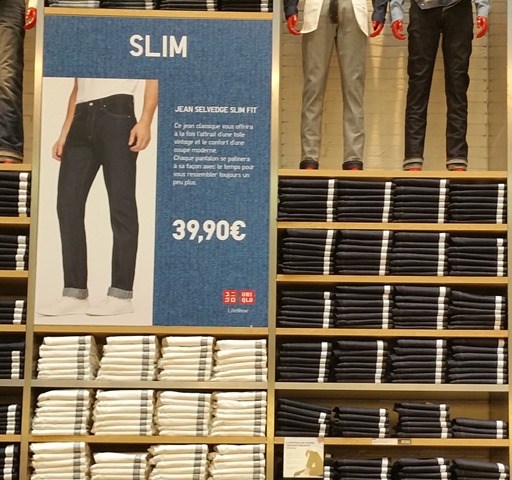
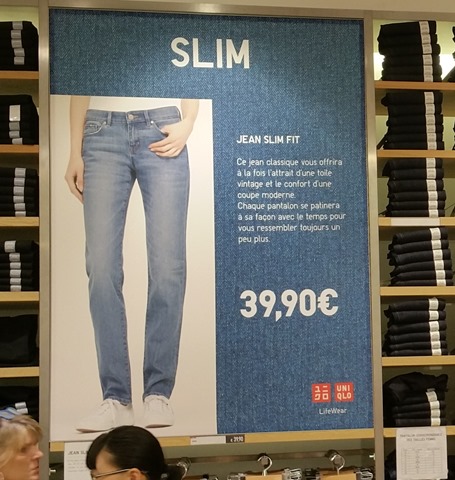
    Uniqlo has grown on the strength of its excellent sourcing capabilities and is able to sell high quality products at reasonable prices. They are supposed to be using mainly Japanese fabrics in their selvedge lines and  were currently retailing  at Euro 39.90/- . A deep dark color slim fit jeans with high sheen and in raw finish is available at this price. The jeans are available in washed versions also to satisfy the uninitiated customers but it really makes no sense to prewash the selvedge jeans.

    Uniqlo Selvedge Jeans

    Strange thing was that the retail price for these jeans was same as that of their normal jeans with non-selvedge fabrics. So basically, there was no premium charged for the selvedge and they were not retailing the jeans as special quality deserving special price point.

    Uniqlo Jeans


    H&M

    H&M selvedge jeans were found to be priced at Euro 49.90 , the jeans are again ones with a clean look with deep mid shades and a nice indigo sheen . They were  more expensive than the Uniqlo and Pull and Bear – though really it cannot be claimed that the quality difference can be justified. Again not a special price for Selvedges.

    C&A


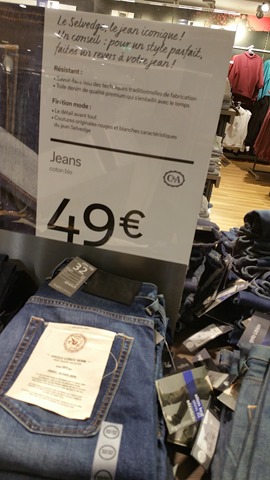
    C&A retails their selvedge line of jeans at Euro 49 – same as H&M in deep indigo as well as very light indigo shades. The quality of make up did leave something to be desired as that typical selvedge look was missing. But it is also to be understood that these retailers are trying to sell these jeans to normal consumers who want normal jeans look in their jeans.

    C&A Selvedge Denim

    As a matter of curiosity , we also explored Levi’s store to see at what levels are they placing their selvedge jeans. Priced at Euro 109.90 the jeans were much more expensive than the above three. But then , Levi’s is a denim pioneer with a high brand value among its fans and does get the benefit of the strength of its brand recognition. This was definitely a special price as a selvedge jeans. So basically , only Levi’s (among the above) placed selvedge jeans as a special category deserving a higher price.

    How are mass retailers able to sell their selvedge jeans at such prices?

    Normally selvedge denim fabrics are supposed to be quite expensive . Japanese selvedge denims normally start from $8 per mtr and go much above , Turkish fabrics are slight lower, while many Asian mills are selling at still lower prices. The difference at two ends could be over 100%. But still it does not justify the price differences at retail level (from Euro 30 to over Euro 400 ) if we do not consider the brand marketing and markup strategies.

    But then the question does arise – what would be the future of selvedge jeans if the mass retailers are able to make impact on the selvedge jeans . Would it be easy for the niche and premium brands to sell their selvedge jeans easily at prices they are currently selling at ? Will they be able to convince their customers that their fabrics and quality are so much superior that they can command the price difference ?

    The retail price difference of a jeans can possibly be – in a very crude way -  attributed to 3 different parameters – fabric quality, make up quality/fit and brand value. If the consumers perceive that the fabric quality and make up quality differences are not much , would they be paying huge difference for the brand value – specially considering that washes do not play much of a role in selvedges. Of course , it is not easy for most to define the quality difference easily  and its difficult to calculate the value of a brand for a consumer as it is a very deep and personal preference , it is quite likely that some consumers could cross the fence. Also there would be new consumers who had never before tasted the selvedge denim and would be entering the hallowed precincts by checking out what this hullaballoo is all about.

    Anyway, we see the positive side and hope there is more of selvedge jeans available and this category expands with the efforts of these retailers and that the customers worldwide would appreciate a real selvedge is and what it really stands for.

    As a closing note, our personal preference from the above 5 selvedges was Uniqlo – for its clean , crisp quality, deep color and that real selvedge look.

  • Skinny Jeans Going Out Of Style | Google Fashion Report

    Skinny Jeans Going Out Of Style | Google Fashion Report

    Google is not only an ocean of knowledge but it is also the largest reservoir of information (database) on human wants and desires as it systematically maps the searches by keywords, location, time etc. So , if you were to know what the people of ,say, New York primarily look for or what kind of food they most desire, or the sport they are most interested in , Google can tell exactly . And this information would be time sensitive ie it would be easy to find how the preferences have been changing over a time period.

    Can this strength of Google be applied to Fashion industry as well ?? Of course- they can also mine important information on any industry and find about consumer likes , changing needs etc ! .

    Google has recently released a Fashion trends report for US based on the searches that take place on the behemoth. Their team, Yarden Horwitz (fashion brand strategist) and Olivier Zimmer (Fashion data scientist)  analyzed 6 billion queries related to apparel category from 2012 to 2015 and applied Time Series Clustering to group together the queries based on time series of similar trends or seasonality. The directions are quite interesting and worth noting for the fashion industry  –specially those who are interested in the US market.

    The trends from the report have been categorized into following main groups.


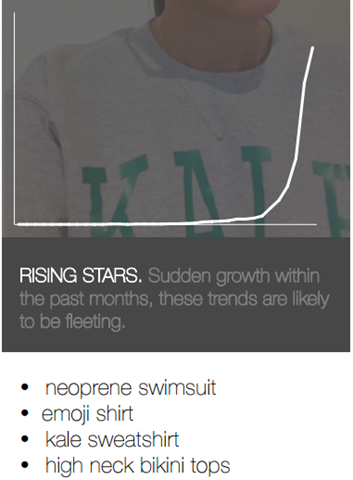
    RISING

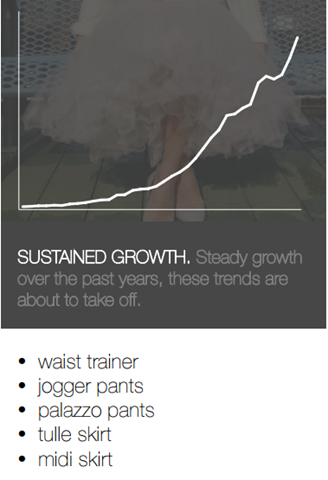
    Google Fashion Trends 2015- Sustained growth

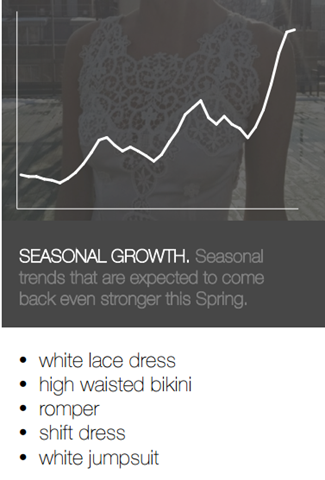
    Google Fashion Trends 2015- Seasonal Growth

    Google Fashion Trends 2015- Rising Stars

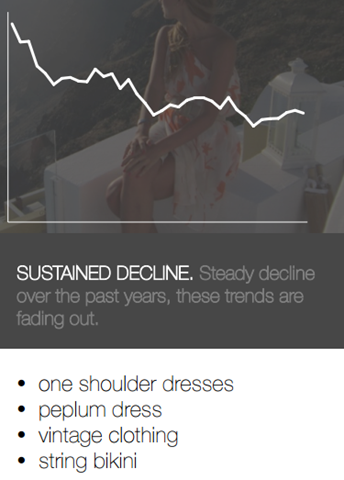
    DECLINING

    Google Fashion Trends 2015- Declining

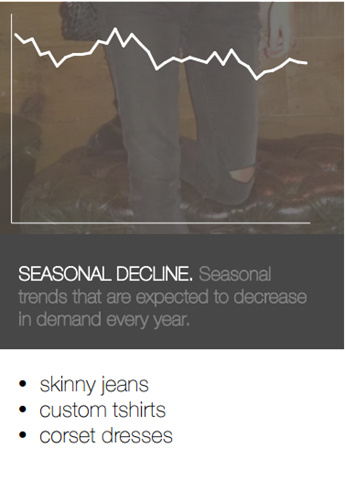
    Google Fashion Trends 2015- Seasonal Decline

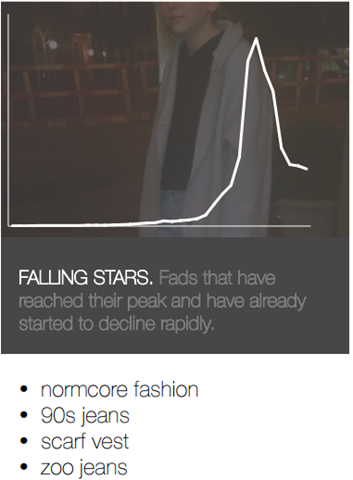
    Google Fashion Trends 2015- Falling Stars


    Now we look deep into important product categories that have seen the major changes in getting focus of consumers from the US.

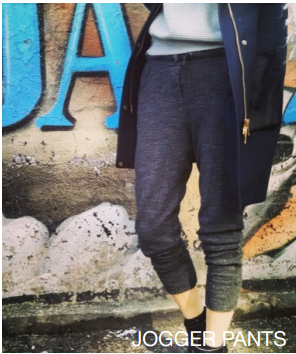
    Jogger Pants

    image

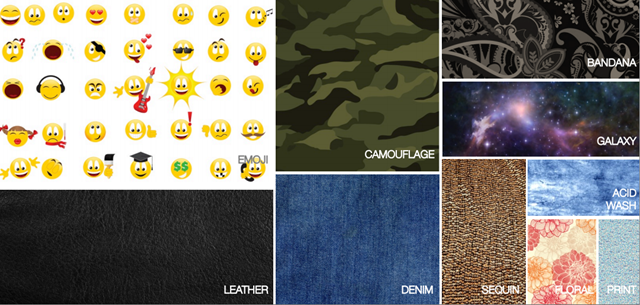
    Jogger pants have been growing in popularity for sometime as comfort factor gets more important for the consumers . The searches for Jogger Pants have grown 165% during the last year. The top styles of Jogger pants can be understood from the following image. Each rectangle size indicates the size of the search.

    image

    Google says

    “Top searches for jogger pants span men, women, boys, girls, and even toddlers, indicating mass appeal for this apparel item. Looking at the terms often searched in conjunction with jogger pants, it seems that consumers are already well-versed in jogger pants and are turning to Google Search to learn more about which brands offer the best selection and deals. Consumers are stepping out of their comfort zone on this trend. The top most-searched style? Emoji jogger pants.”

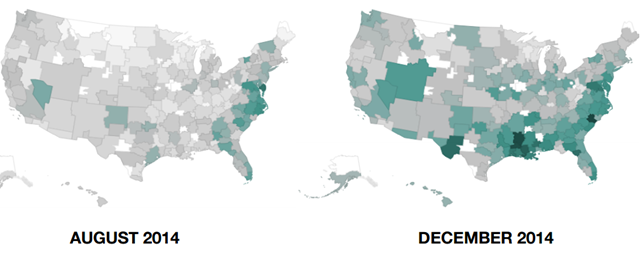
    Denim also generates a reasonable size of interest though Emoji, Camouflage and leather look more appealing to consumers. Google analysis says that while Jogger Pants started on the East Coast, the trend is quickly becoming a big hit in the Southern areas of the US as can be seen from the images below.

    Jogger Pants Denimand - Google Trends

    Tulle Skirts

    Tulle Skirt - Google Fashion Trends

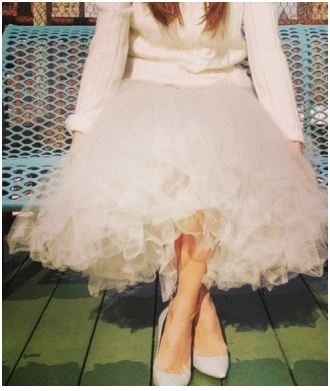
    According to trending Google apparel searches, tulle skirts are growing in popularity just in time for spring fashion, up 34% from January 2014 to January 2015.

    “Originating on the West Coast, the tulle skirt trend is making its way across the U.S. Consumers are seeking this skirt in all colors of the rainbow (and even in rainbow), but the most popular colors are the classics: black and white. Consumers aren’t interested only in buying tulle skirts. Top searches indicate that a majority are feeling inspired to get crafty and make their own. Who says you need to be a ballerina to wear a tulle skirt? said a blog post on the report by Google brand strategist Yarden Horwitz and fashion data scientist Olivier Zimmer.Originating on the West Coast, the tulle skirt trend is making its way across the US, according to Google searches. Consumers are seeking this skirt in all colours of the rainbow (and even in rainbow stripes), but the most popular colours are the classics: black and white.”

    Midi Skirts

    Midi Skirts - Google Fashion Trends

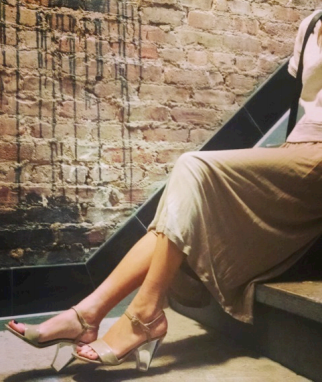
    Recently brought back in the U.K. in 2013, the midi skirt is making its way back to the U.S. While lower in search volume than tulle skirts or jogger pants, the midi skirt has seen 9X growth in searches over the past three years—and is still in its early stages of growth within the U.S. market. Top searches for midi skirts, such as “how to wear” and “outfits,” demonstrate a lack of education on how to incorporate the trend. Consumers are turning to Google Search for advice and inspiration on styling a midi skirt as part of their daily outfit. Because the trend has been growing in the U.K. over the past couple of years, there are already so many variations of silhouettes and styles displayed on the internet. Top silhouettes include pleated, pencil, A-line, high waisted, skater, circle, and flared, to name a few. With such an overwhelming list of styles, it’s no wonder consumers are seeking tips on how best to pull them off.

    Below are the top styles searched for Midi  Skirts. Size of the rectangle represents the volume of search.

    Midi Skirt Demand Trend - Google Fashion Report

    Specific Denim Trends

    skinnyjeans

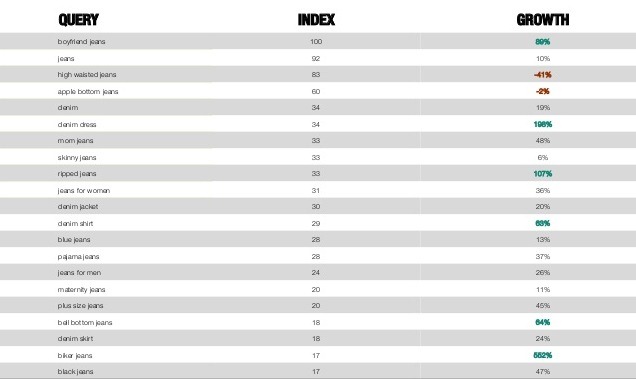
    When we look at the specific denim trends, we find that biggest gainers are :

    Boyfriend Jeans : +80%

    Denim Dress : +198%

    Ripped Jeans: +107%

    Biker Jeans :+ 552%

    Bell Bottom Jeans : +64%

    Biggest losers

    High Waisted Jeans : –41%

    Skinny Jeans :+6% – though in positive , skinny jeans has seen a very dormant kind of response on the Google and fades in comparison to other competing searches like Boyfriend Jeans, Ripped jeans or Bell bottom jeans !


    It is not only Google report which is pointing in the direction of reduction of skinny style but a host of other indicators which show that skinny is not the current favourite of the consumers in US. A number of celebrities have been seen in either flares or increasingly in boyfriend jeans indicating that they seem to be switching the sides !. This trend also makes sense from the point of view of brands / retailers and others in supply chain. Skinny jeans have been long in trend and most consumers – mainly females – have a horde of them in their closet. It makes sense to encourage the shifting of the trend to non-skinny styles so that they would open up their purses and again revive the sagging market.

    Sponsored link:

    Rajby Denim - Your apparel connection in Pakistan

  • H&M Sustainability Report 2014

    H&M Sustainability Report 2014

    Recently H&M released its annual sustainability report for 2014. The document mentions in detail how the company is implementing more eco-friendly practices in its supply chain and stores to reduce the harm it causes the environment, as well as its efforts on a variety of social welfare issues such as gender equality and poverty alleviation.

    H&M manufactures at least 600 million items each year and operates more than 3,200 stores in 55 countries. If you include its subsidiary brands, such as COS, that number jumps above 3,500 stores, and the company is expanding its locations by 10% to 15% each year. To operate those stores—besides manufacturing and shiping the clothes —requires a staggering amount of resources, from energy-hungry cotton to electricity, oil, and water . Even if H&M manages to mitigate its environmental footprint slightly from one year to the next, its business continues to grow, and that footprint remains enormous—and far from sustainable.

    CEO Karl Johan Persson emphatically reiterates the integration of sustainability mantra in the DNA of H&M  as

    “Our business idea is to offer fashion and quality at the best price. It’s about the best value, not the cheapest price. Sustainability is an important part of this. We know that our customers, just as our colleagues, care more and more about it. And while we must be realistic about the fact that most customers are not prepared to pay more for added sustainability value, I am convinced that it will become an important differentiator in the future.”

    H&M Conscious

    H&M Conscious is the name of their work for a more sustainable fashion future. It’s consisting of seven commitments and is built on passion, long-term thinking and teamwork.

    “We want to make fashion sustainable and sustainability fashionable.”

    Seven Commitments

    H&M seeks to make seven commitments towards sustainability and measures its performance towards those commitments.

    1.Provide fashion for conscious customers:

    “Our goal is to increase the share of more sustainable fabrics and materials every year. We are constantly on the lookout for innovative materials and processes that can make our products more sustainable. “

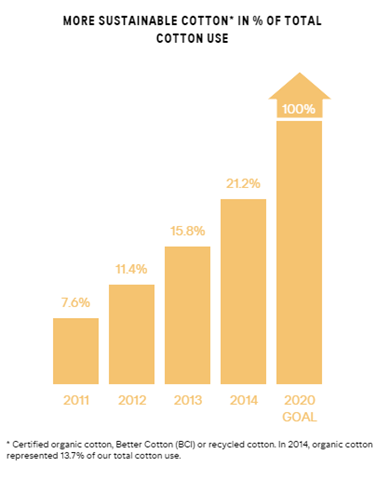
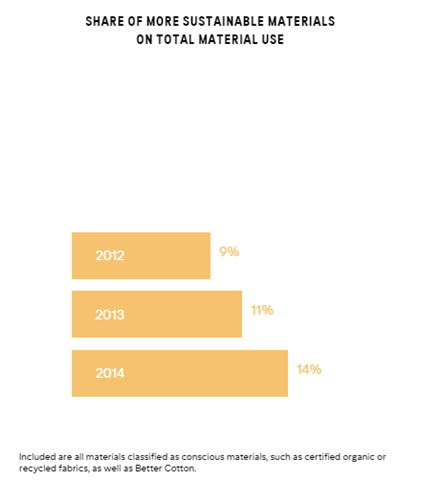
    H&M uses about 21% of total cotton consumed in the form of Organic Cotton, BCI or recycled cotton and is supposed to be No. 1 user of organic cotton according to textile exchange report of 2013. About 13.7% of all its materials consumed are in the form classified as conscious materials.

    sustainable cotton usage h&m

    sustainable material usage h&m

    2.Choose and reward responsible partners

    “We need to be a good partner ourselves. Our standards are high and we reward sustainability performance with better business. We work hard to ensure better livelihood and positive development in the communities where we operate.”

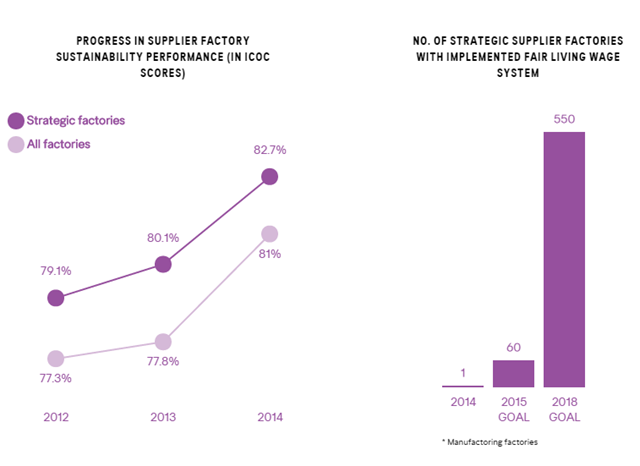
    H&M seeks to reward its responsible partners and seeks to make them more committed towards their workers and encourage role model factories. It seeks to have about 550 suppliers with fair living wage system by 2018.

    Supplier factories living wage

    3.Be ethical

    “We see diversity as an asset that makes us better and we want to set a good example wherever we operate. To us this means respecting human rights, taking a clear stand against corruption and embracing diversity and inclusion.”

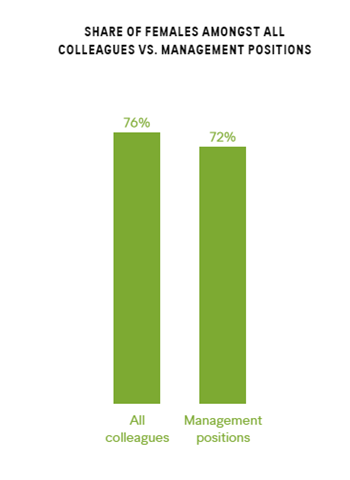
    One of the criteria that H&M takes for measuring being ethical is to employ more of female employees – though not a very right measure for the same. About 76% of their workforce is female and 72% of management positions are being held by them.

    Female employees in H&M


    4.Be climate smart

    “Tackling climate change is one of the major challenges of our time. Its consequences are as likely to affect us as everyone else on our planet, including our suppliers, colleagues and customers. So it is essential that we do everything we can to reduce climate impact – for example by only using renewable energy wherever possible.”

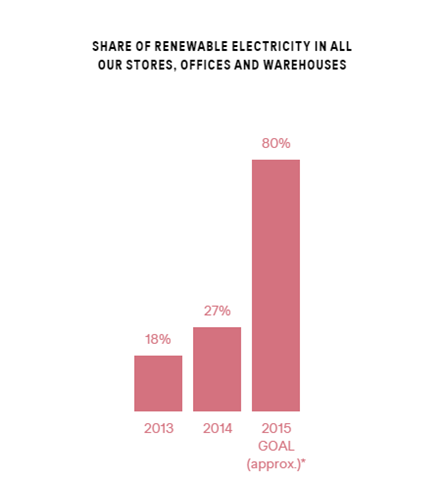
    Renewable energy is sought to be used in all stores, offices, warehouses of H&M (*100% in all markets, where this is feasible and renewable electricity is credibly available. This is currently not the case ,for example, in China or Peru).

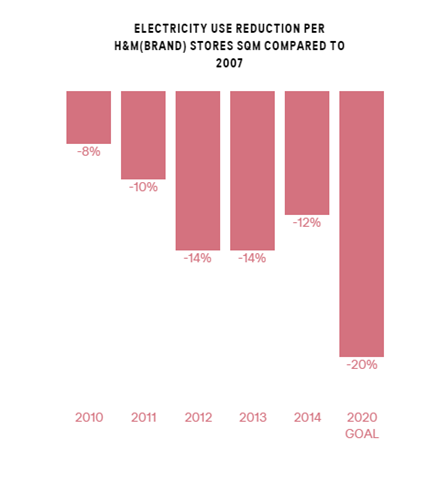
    Electricity use per sq. mtr of H&M brand store is sought to be reduced by 20% in 2015 compared to 2007 levels.


    Renewable Energy usage

    image


    5.Reduce, reuse, recycle :

    “We strive to reduce, reuse and recycle wherever we can. Our biggest concerns is that too much fashion ends up in landfill. That’s why we teamed up with I:Collect and created a the first global garment take back system.”


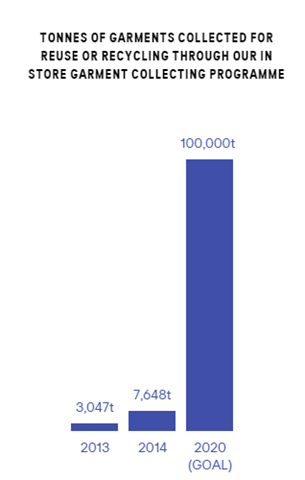
    Anyone can drop unwanted clothes at H&M and they will try to give it a new life. The goal is to create a closed loop where unwanted garments are recycled into new creations. Currently they claim to  blend in about 20% recycled fibres without any loss of quality or longevity. About 7600 tons of garments were collected for reuse or recycling through their in store garment collection programme. The target for 2020 is 100,000 tons – a very ambitious one indeed.

    Recycled garments collected by H&M


    6.Use natural resources responsibly

    “Making great fashion can require a lot of resources. Growing cotton, dyeing fabrics and washing our clothes all require significant water use. But natural resources aren’t endless.”

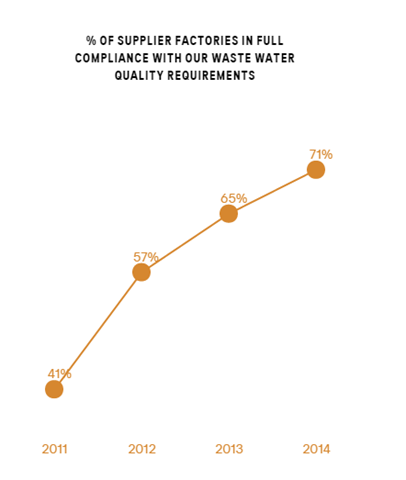
    H&M seeks to educate its suppliers on water conservation and compliance with waste water quality requirements.  Their internal guidelines on waster water quality are met by about 71% of total suppliers in 2014.

    Waste water quality requirments compliance


    7.Strengthen communities

    “Strengthening the communities around us is part of our responsibility. Prosperous and stable markets where human rights are respected, skills training are readily available and the eco-systems are healthy benefit our business.”

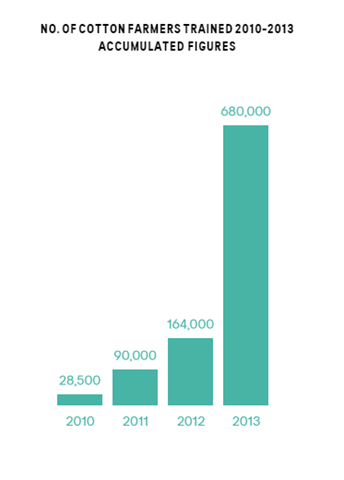
    Besides other activities of community involvement, H&M trains cotton farmers to do better crops. The numbers claimed are quite high !

    Cotton farmers trained by H&M

    While the report makes it clear that H&M is doing a good deal to lessen its impact, it is also a fact that the goal and fast fashion are inherently at odds. By its nature, fast fashion is a volume business, which is exactly what makes it a big strain on the planet. The proponents of fast fashion will try to always sell more and there is inherently the conflict with sustainability. H&M acknowledges that the sheer quantity of resources it consumes is a serious problem. In US alone about 10.5 million tons of clothes end up in landfills each year. Even if H&M ensures a large part of its clothing is organic or BCI cotton , still the landfills will be filled unless the garment recycling process becomes much more widespread and is taken up by a larger number of brands and retailers. H&M’s target of getting 100,000 tons of garments for reuse in 2020 will be still less than 1% of garments going to landfills in US alone. Currently it is about 0.2% of its own garments that are being recycled. The problem is endemic and needs industry wide awareness. However, still it is commendable that H&M has taken a lead which can offer example to other larger entities in this business.

    Sponsored link:


  • Denim Imports In Germany : 2010-2014

    Denim Imports In Germany : 2010-2014

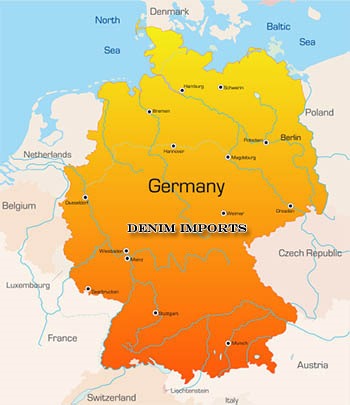
    germany denim imports Germany is the biggest market of jeans in Europe constituting about 30% of the total imports of jeans. It consumes a large quantity of value jeans and a decent quantity of premium jeans as well.

    The German economy is powered by exports. Its current-account balance (the difference between the money it receives from the outside world and what it spends abroad) is one of the world’s largest, at 7% of GDP. It is an open economy: its ratio of exports to GDP is double China’s. About 6% of German exports go to China, especially what are  "capital" goods such as heavy machinery. Germany has also been hit by slow growth in the 17 other euro-zone countries, where it sends 40% of its exports. Also issues with Russia are affecting its capital goods export to that country . Though the unemployment level is still low at about 5% , the country needs to worry about its other aspects as its costs of manufacturing are increasing. The Fukushima nuclear disaster in 2011 resulted in focus being shifted away from the nuclear energy – due to which its energy prices are increasing – and causing shifting of some manufacturing away from Germany.

    But still Germany is the country that powers the Eurozone. Its performance is an indicator of how the zone performs. We will , in this report, see how the country is performing in terms of imports of jeans over the last 5 years from 2010 to 2014. We will see:


    1. The quantity of jeans imported from the world during this period .

    2. The value and prices of such jeans imported.

    3. Breakup of these imports in terms of men’s and women’s jeans. Import market size in terms of men’s and women’s jeans component.

    3. The imports compared from within and outside EU in terms of quantities , prices , shares etc.

    4. The main gainers and losers from 2010 to  2014 for exports of jeans to Germany. Top exporting countries and their share

    5. Eight tables showing the supporting  figures and their analysis.

    [private_special]

    1.Import of Jeans into Germany from outside EU since 2010

      2010 2011 2012 2013 2014
    Men’s Jeans 92 94 84 82 82
    Women’s Jeans 43 40 31 32 32
    Total 135 134 115 114 114

    (all figures in million pcs)

    2.Share of Men’s and Women’s Jeans in total imports into Germany from outside EU

      2010 2011 2012 2013 2014
    Men’s Jeans 68% 70% 73% 72% 72%
    Women’s Jeans 32% 30% 27% 28% 28%

    3.Imports from within EU28 into Germany : 2010-2014

      2010 2011 2012 2013 2014
    Men’s Jeans 18 20 18 21 23
    Women’s Jeans 16 18 21 24 24
    Total 34 38 39 45 47

    (all figures in million pcs)

    4.Share of Men’s and Women’s Jeans in total imports into Germany from within EU28

      2010 2011 2012 2013 2014
    Men’s Jeans 53% 53% 46% 47% 49%
    Women’s Jeans 47% 47% 54% 53% 51%


    5. Share of imports of jeans from outside and within EU : 2010 and 2014

      2010 % share 2014 % share
    Total Jeans from outside EU 135 80% 114 70%
    Total Jeans from within EU 34 20% 47 30%
    Total imports 169   161  

    The above 4 tables are quite interesting. Table 1 shows the imports of jeans into Germany from outside EU since 2010. We will notice that the year 2010 was the year with highest imports into Germany from outside EU. With about 135 million pcs imported into Germany in 2010 , the imports in 2014 were 15% lesser at about 114 million pcs. The major fall in imports happened in 2012 when the European economies suffered a setback and since then the recovery has been poor or hardly any. We also note that the ratio of imports of jeans is highly in favor of Men’s jeans with about 70% of jeans being men’s . It clearly shows that Germany is male dominated market when it comes to jeans imports.

    But Germany does not only import jeans coming from outside EU. A good quantity is also imported into Germany from within the EU countries. Some of these countries like Italy, Portugal , Spain, Bulgaria and others are also manufacturers of jeans while other countries are importers themselves. We see from tables 3 and 4 that the imports from within EU countries has been increasing for Germany. From about 34 million pcs imported in 2010 , the imports are about 47 million pcs in 2014. This is quite a jump of about 33% . This is also indicative of influence of fast fashion and near sourcing getting more important. Also this is corroborated by the fact that about 50% of such jeans imported are women’s as against 30% in case of those imported from outside EU.

    The total imports of jeans , when we consider both outside and within EU imports, we find that the figures of 2010 and 2014 and not quite apart besides a small decrease. In 2010 about 169 million pcs were imported and in 2014 about 161 million pcs were imported. But the major change has been in the % of share of within EU imports which have gone up from 20% of total imports to 30% of total imports. This is a significant direction from the country with the largest consumption in Europe. And it looks that this direction may continue for some time .

    Now lets look at the prices of imports below:

    6.Prices of imports from outside EU (euro/pc)

      2010 2011 2012 2013 2014
    Men’s Jeans 7.56 8.12 8.73 8.93 8.84
    Women’s Jeans 6.61 6.56 7.79 8.03 7.97

    7.Prices of imports from within EU (euro/pc)

      2010 2011 2012 2013 2014
    Men’s Jeans 18.2 17.7 18.2 18.3 17.7
    Women’s Jeans 16.7 15.7 14.6 14.9 14.8

    The prices of imports of jeans from outside EU is hovering around Euro 8.5-9.0 per pc for men’s jeans and about 8 Euro for women’s jeans. While the prices from within EU are significantly higher at about 18 Euro and 15 Euro respectively. The prices from within EU are almost double that of the imports from outside. And the fact that still the imports are increasing from EU is again and indication of changing consumer preferences .


    8.Countrywise share in Outside EU Imports


      2010
    (mill. pcs)
    2014
    (mill.pcs)
    % share in 2010 % share in 2014
    Bangladesh 29 36 21% 32%
    China 68 26 50% 23%
    Pakistan 11 20 8% 18%
    Turkey 11 12 8% 11%
    Tunisia 4 4 3% 4%
    Indonesia 2 2 1% 2%
    Others 9 14 7% 12%
    Total ( in million pcs) 135 114    

    Now we come to the major exporters of denim jeans to Germany since 2010 . When we look at 2010 we find that China had almost 50% share of the entire market and it was a huge number with about 68 million pcs. However, year 2014 saw its share drop to 23% and that too at reduced import quantities. Thus its quantities of exports fell to about 26 million pcs which is a significant drop of over 60% !!. The loss in China’s share was the gain for other major exporting countries like Bangladesh and Pakistan. Bangladesh increased its volume by about 25% to 36 million pcs and Pakistan almost doubled its volume to 20 million pcs. Other countries like Turkey , Tunisia, Indonesia etc were almost at similar levels of absolute exports but increased their relative shares of a reduced market. Thus it is clear that China’s loss has been the benefit for most other exporting countries.

    [/private_special]
  • Vicunha SS16 Collection At Fashionim | 3rd Denimsandjeans Bangladesh Show

    Vicunha SS16 Collection At Fashionim | 3rd Denimsandjeans Bangladesh Show

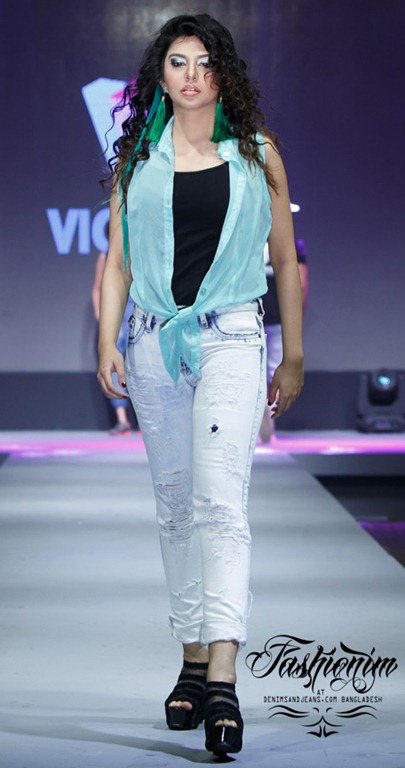
    Vicunha - at Fashionim Denimsandjeans Bangladesh


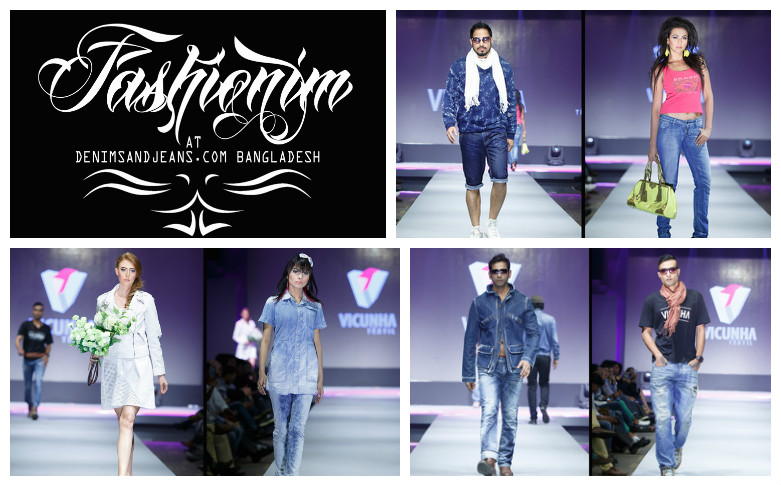
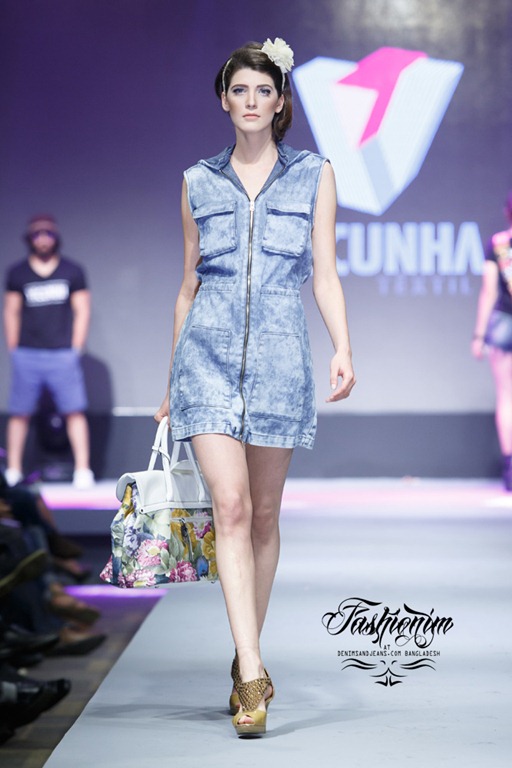
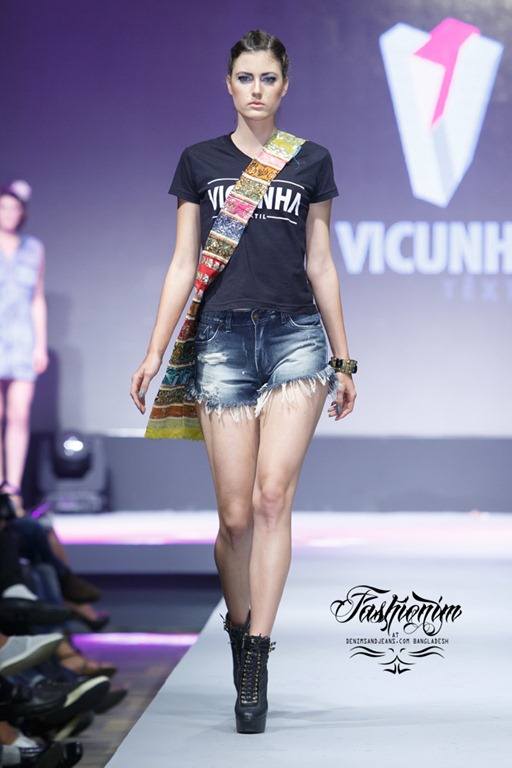
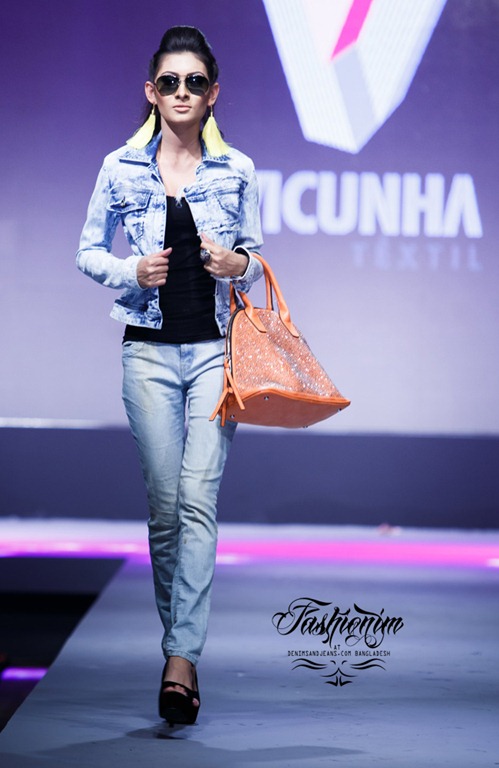
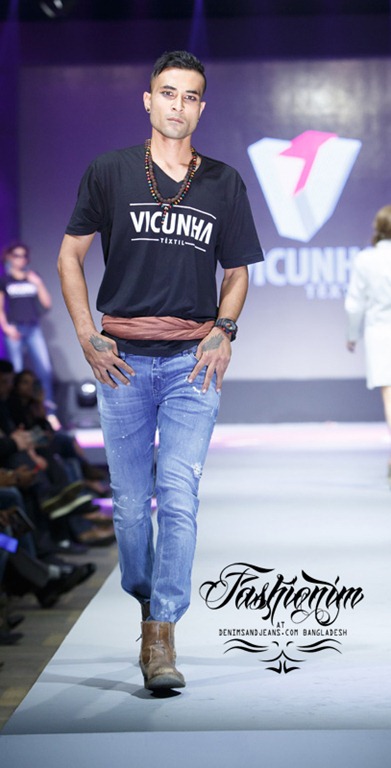
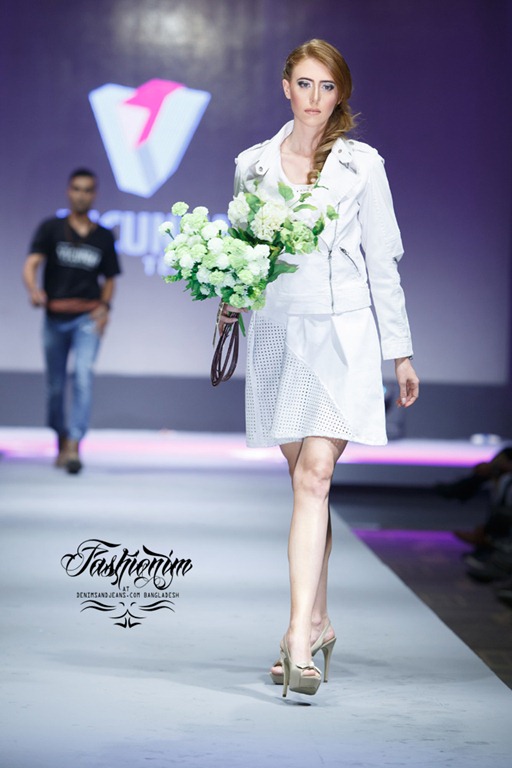
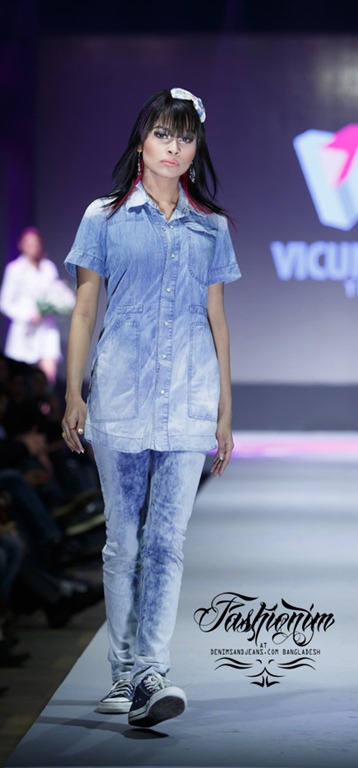
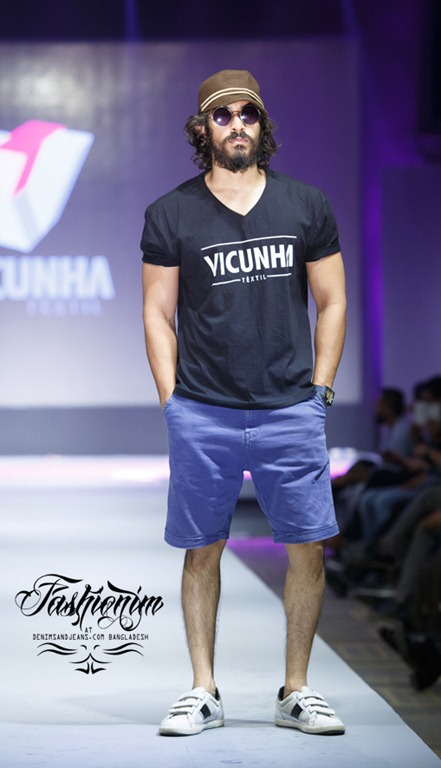
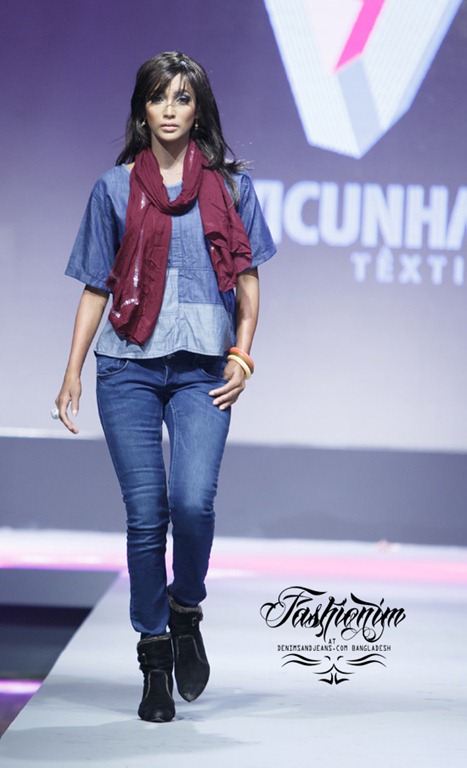
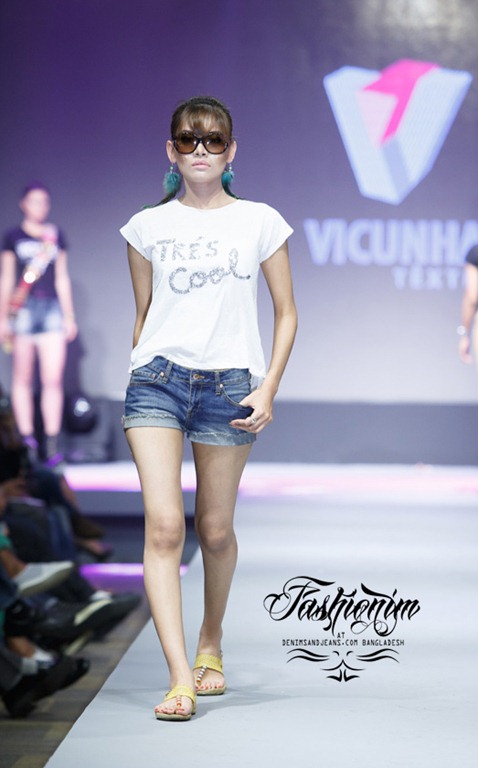
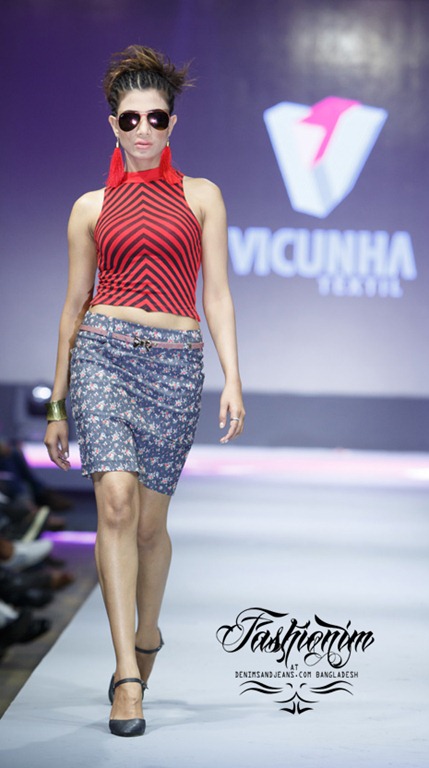
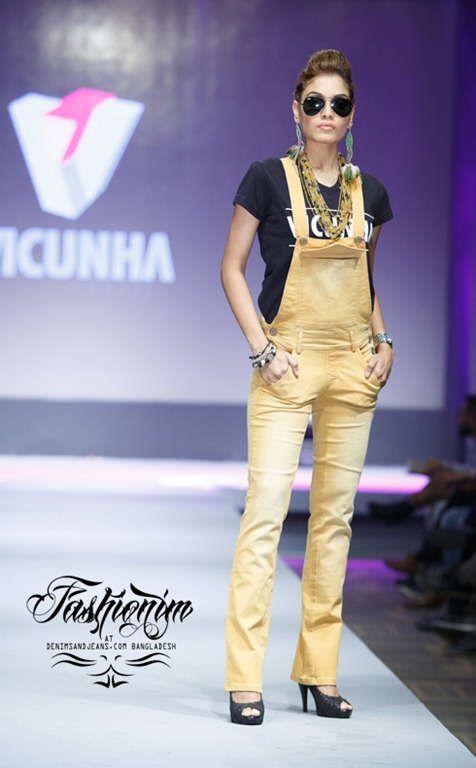
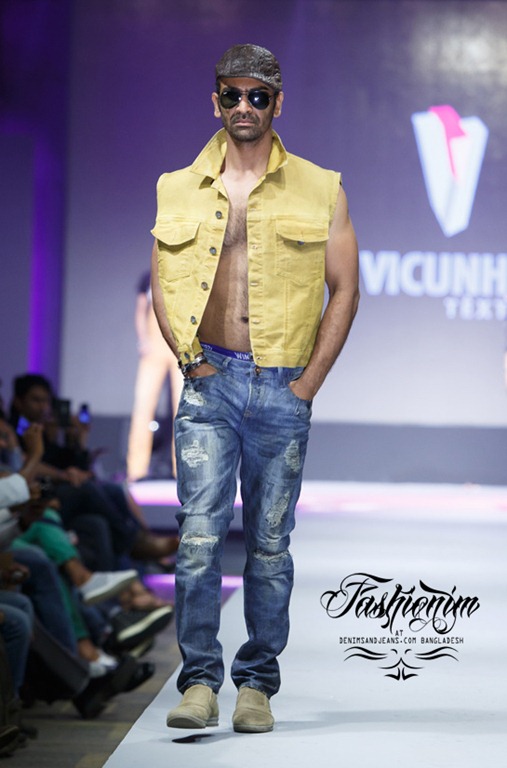
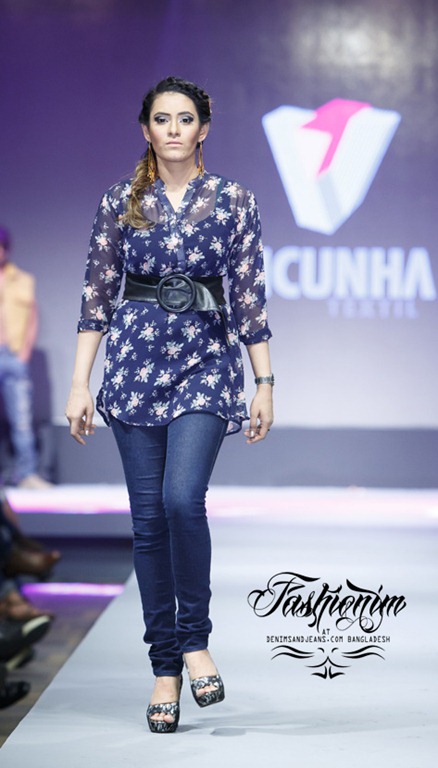
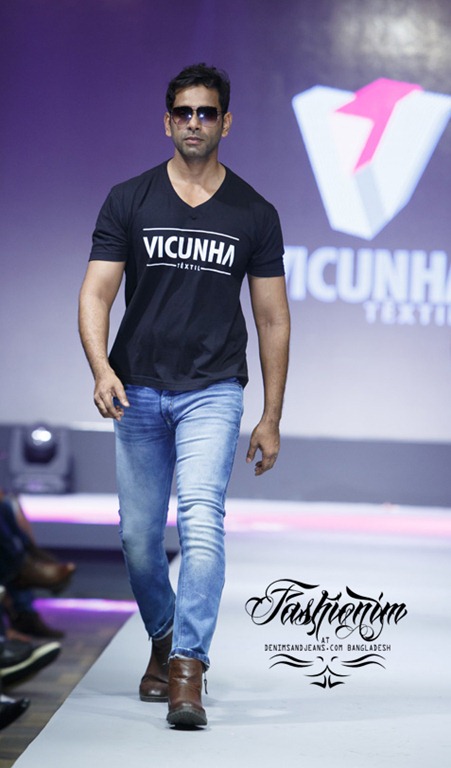
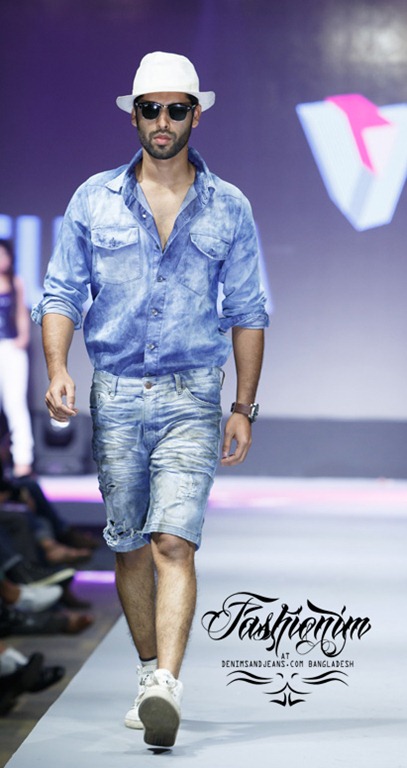
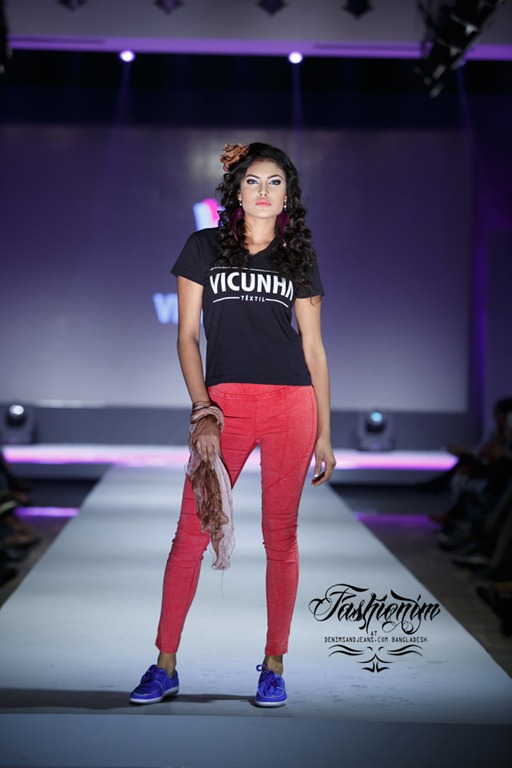
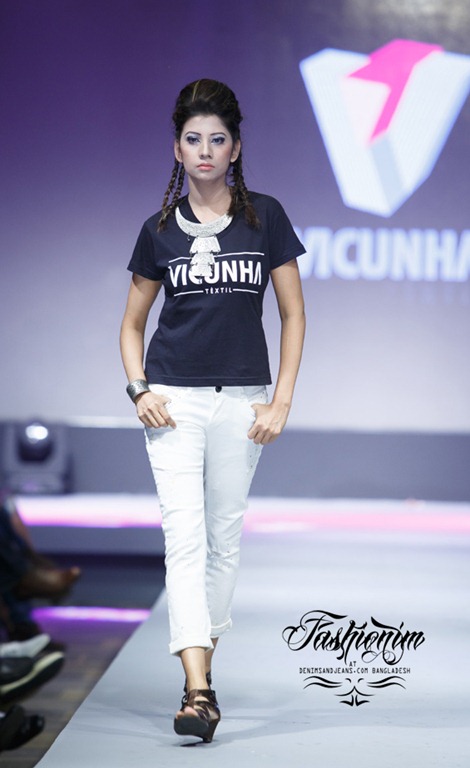
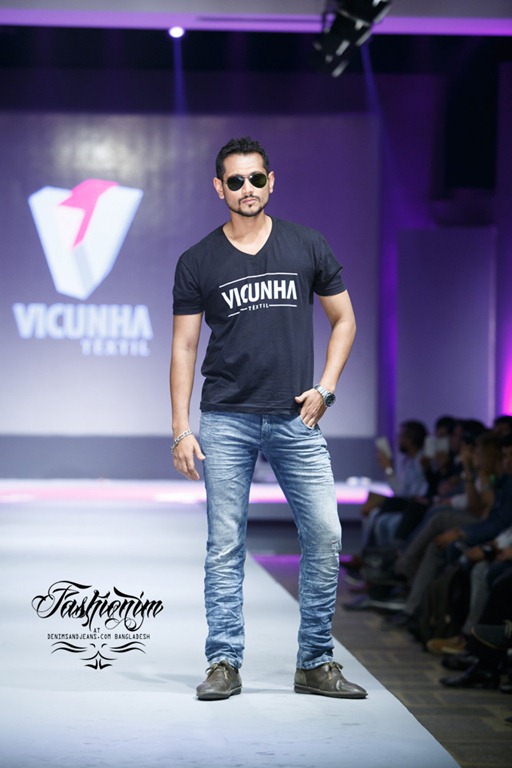
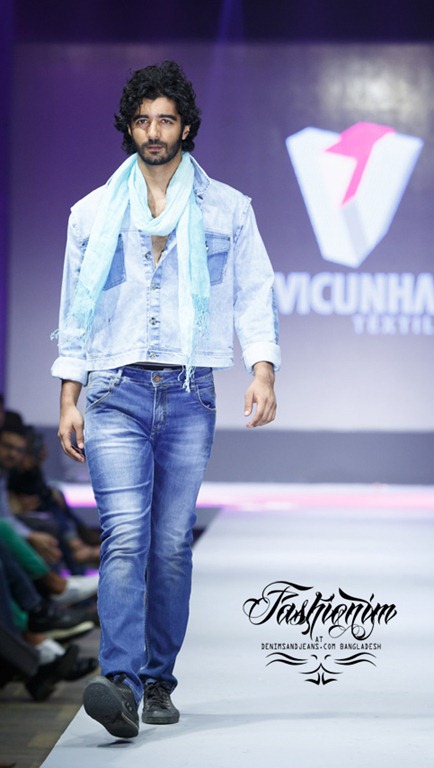
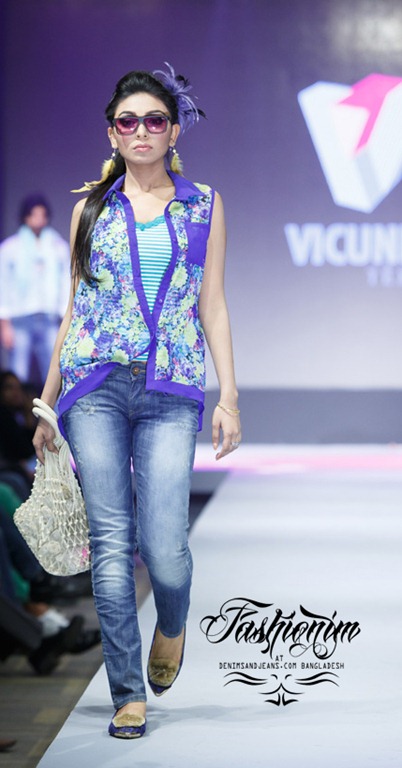
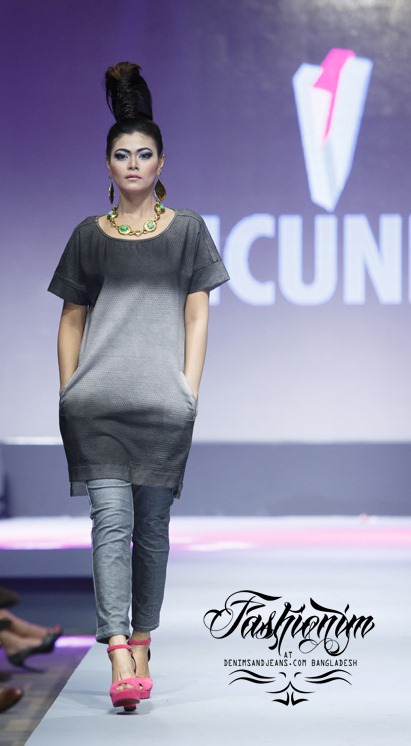
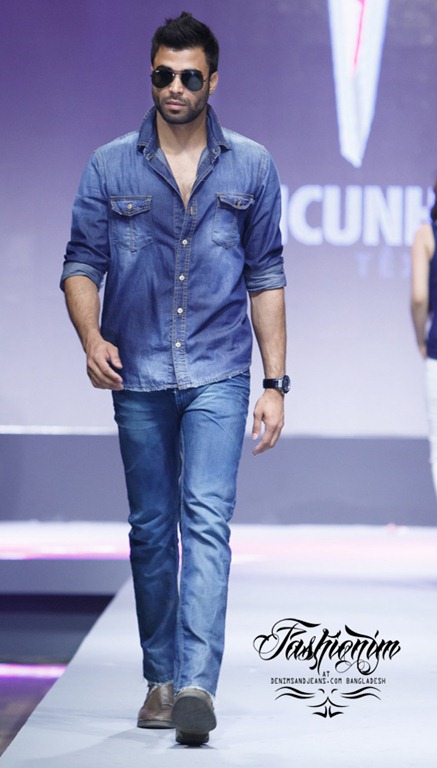
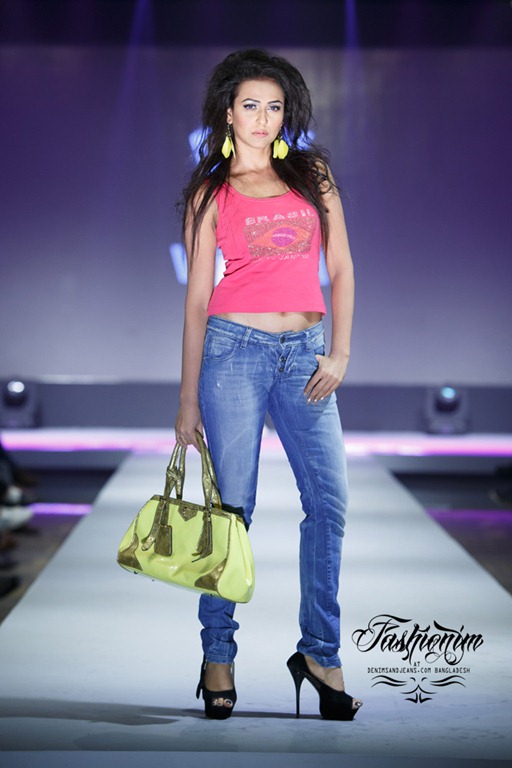
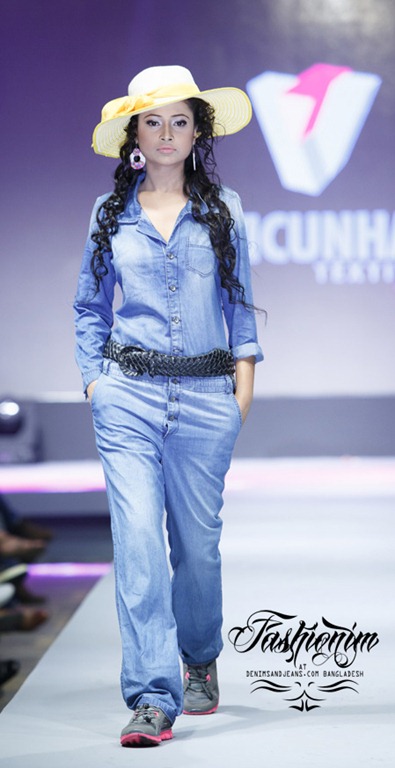
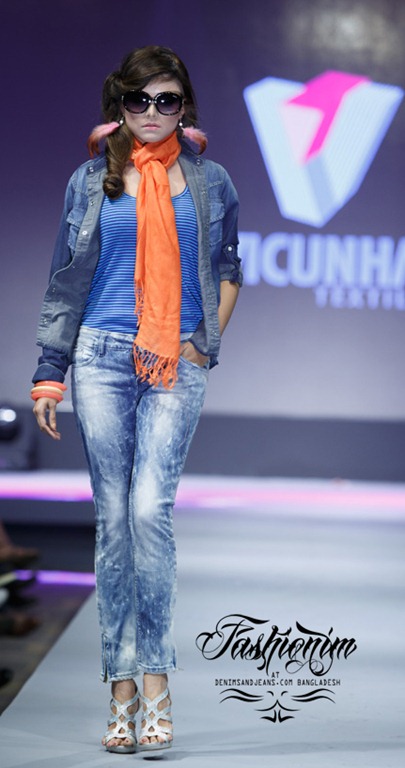
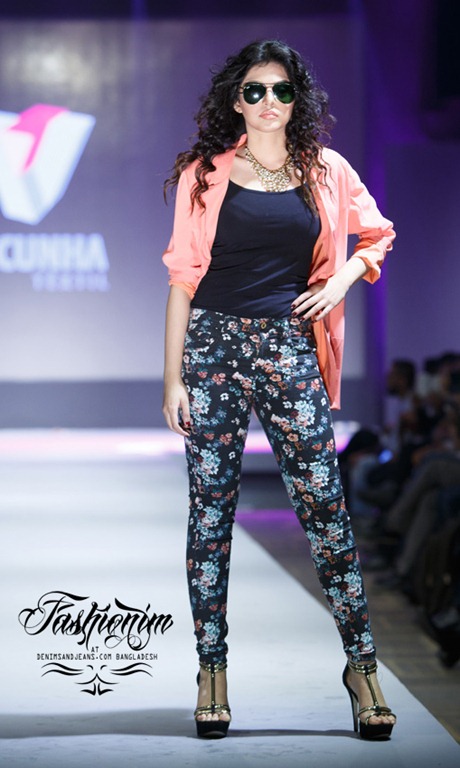
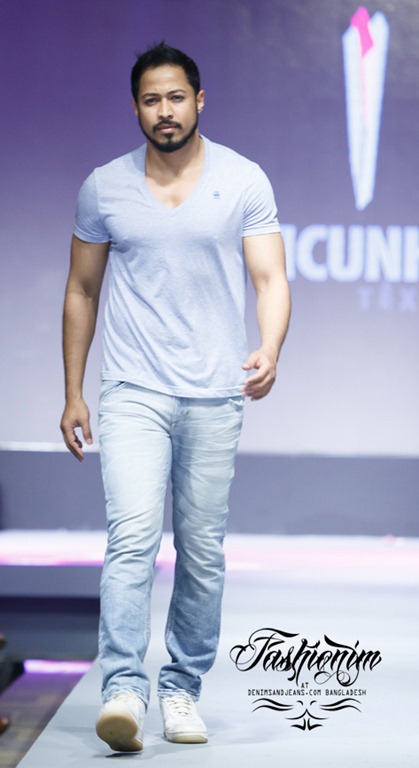
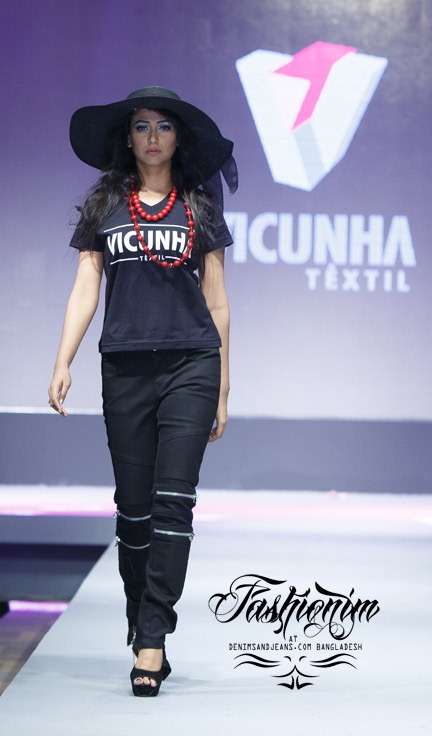
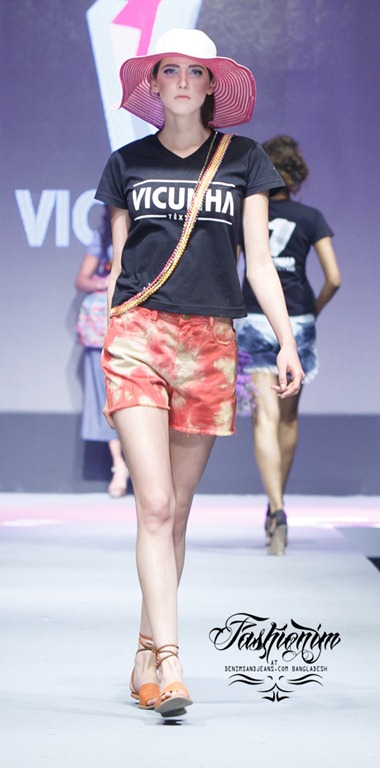
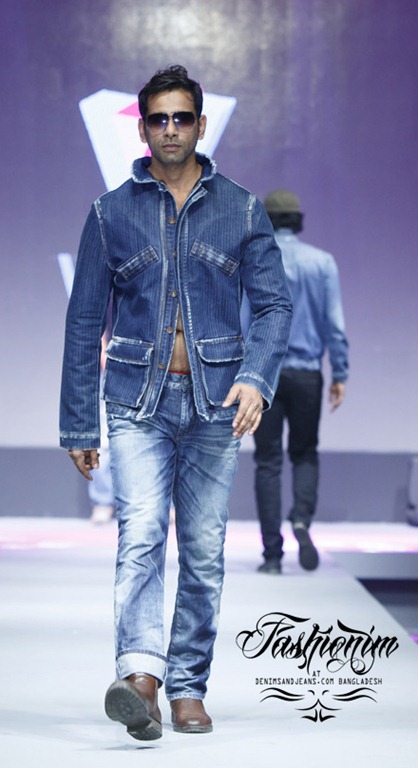
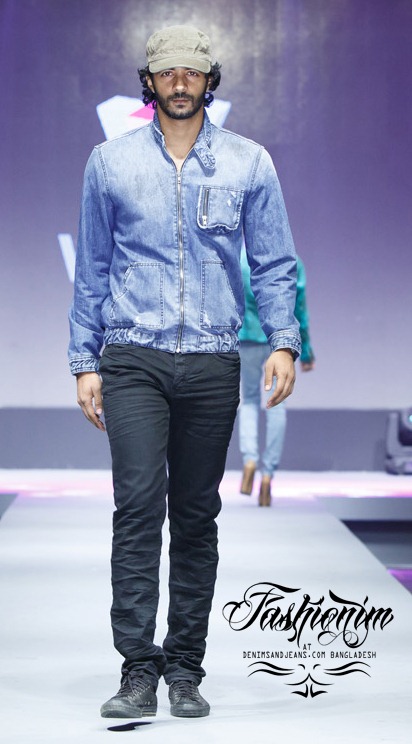
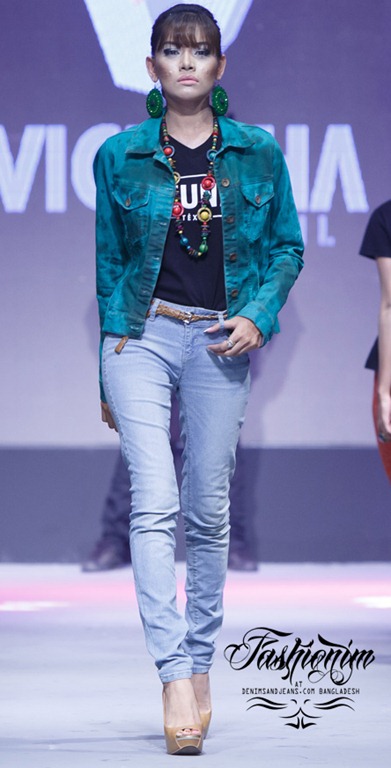
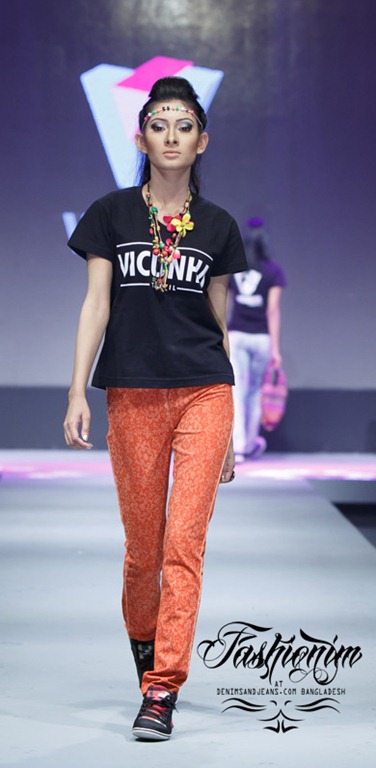
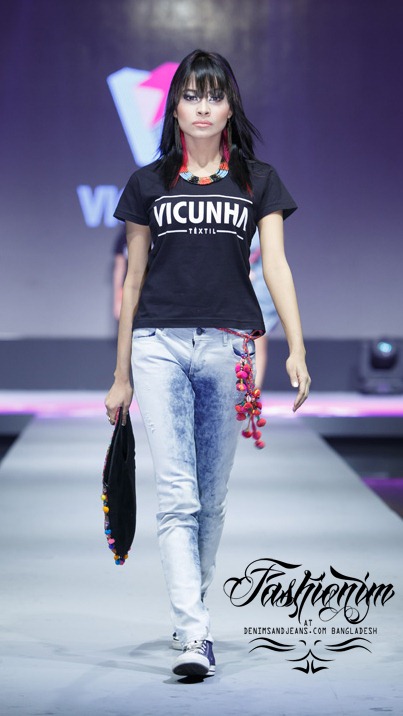
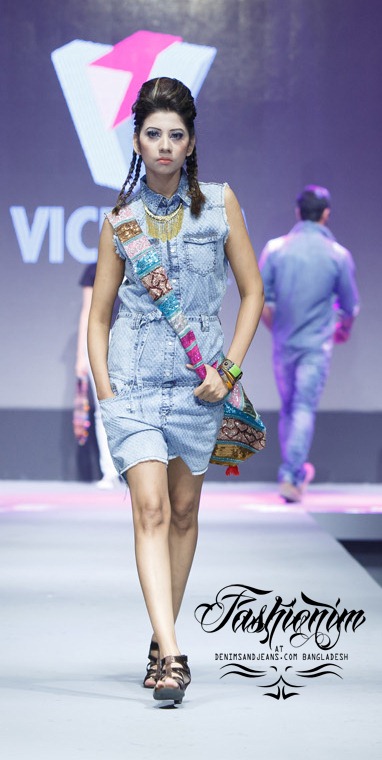
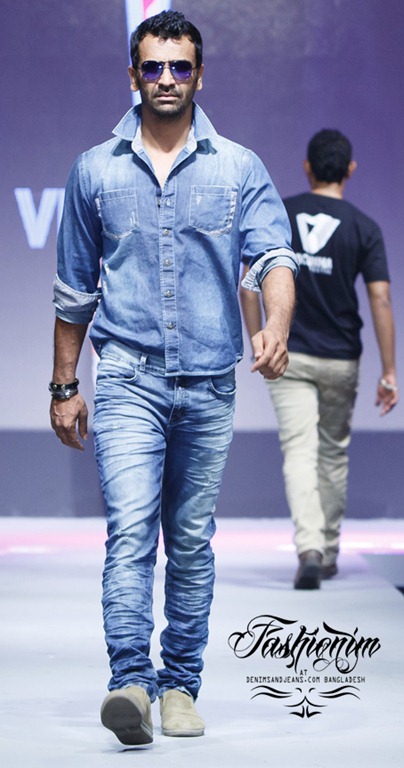
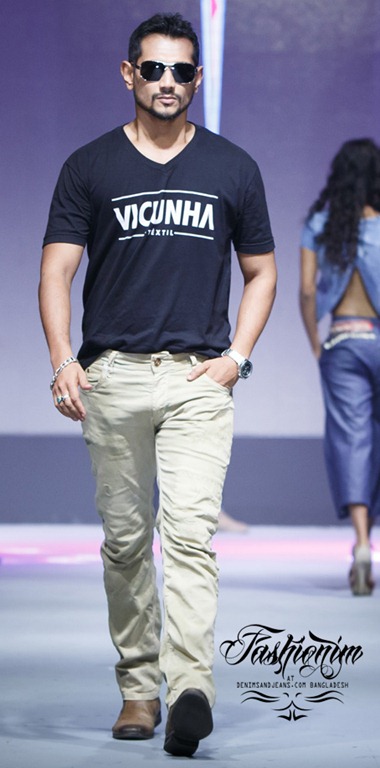
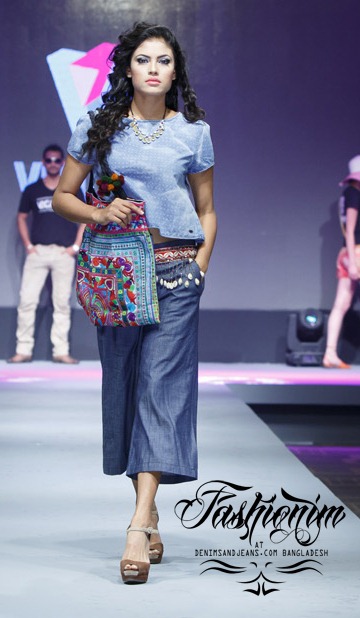
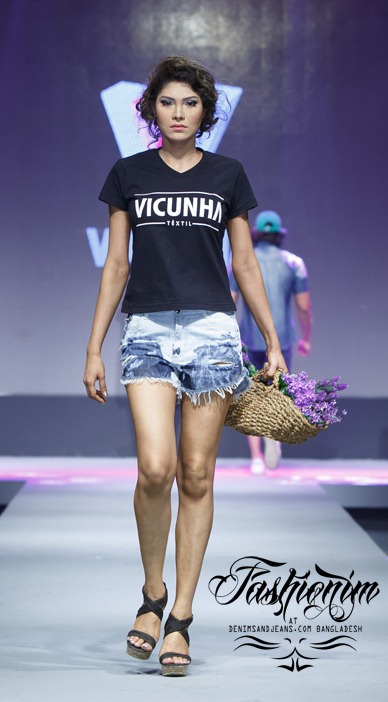
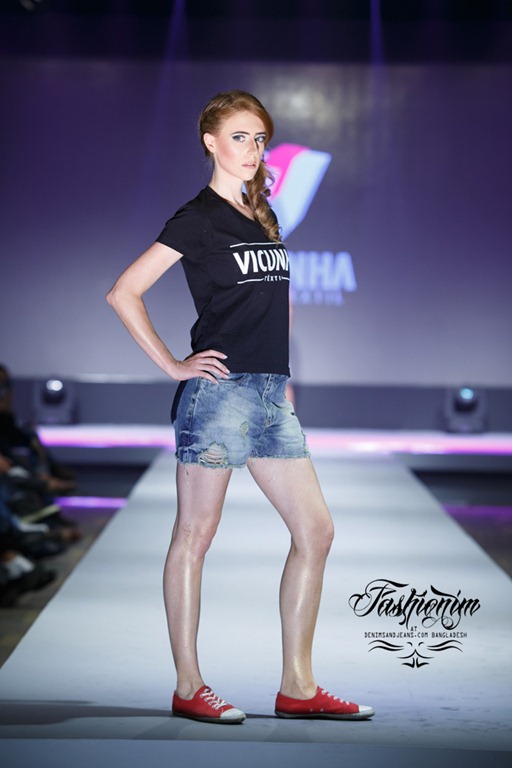
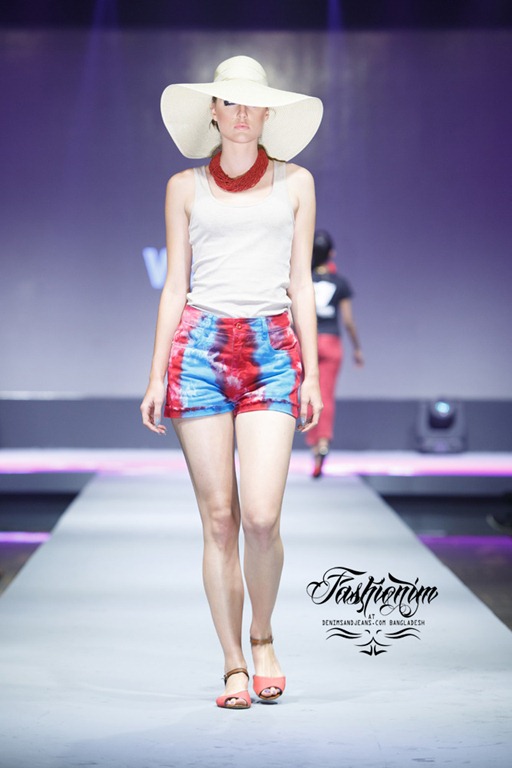
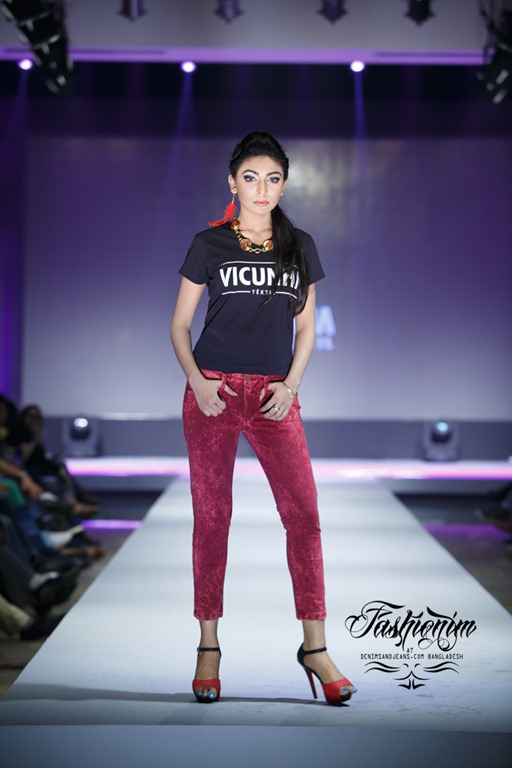
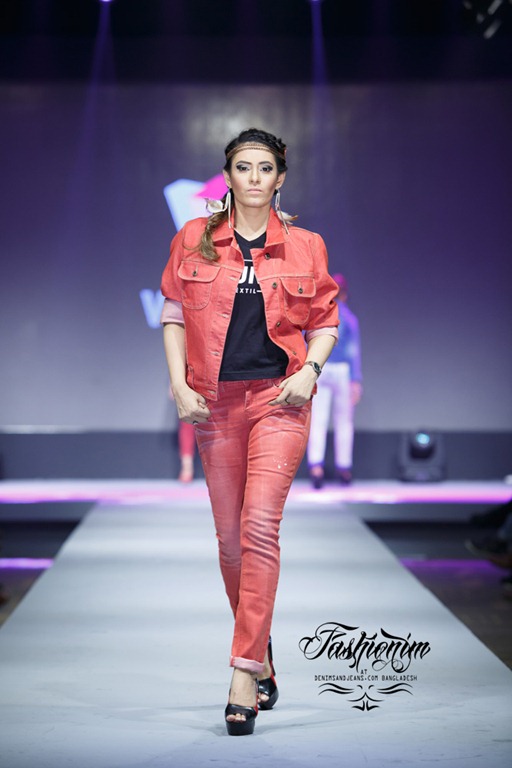
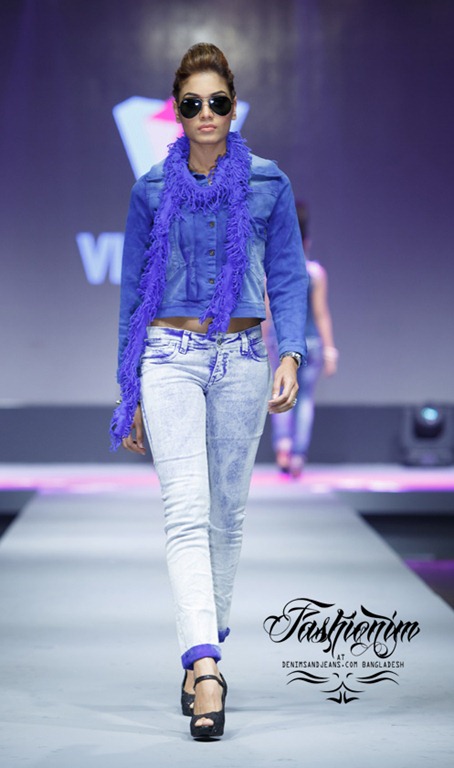
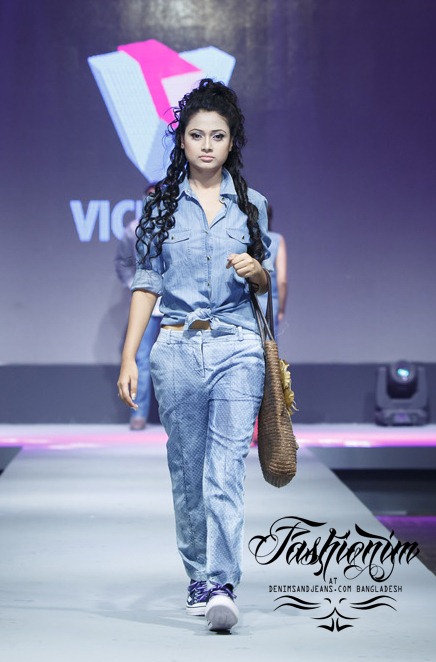
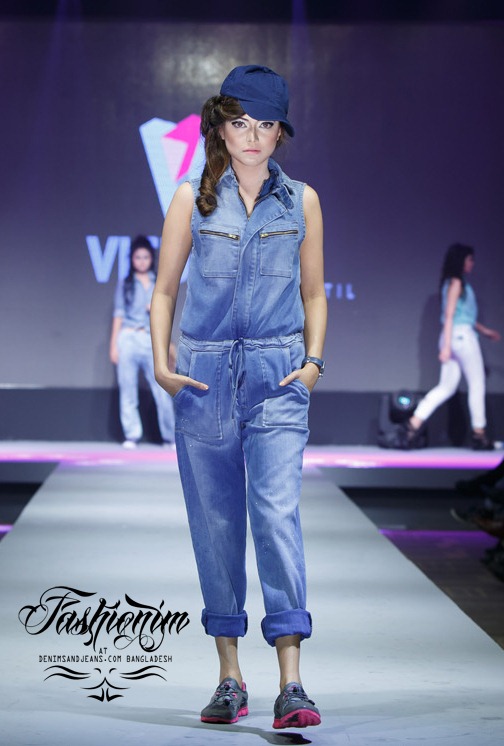
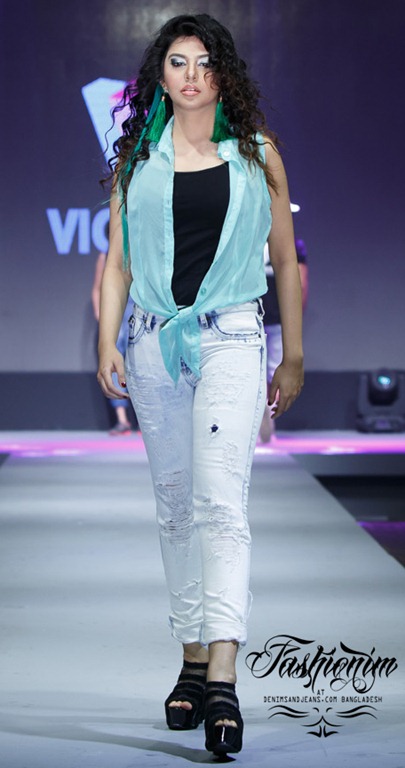
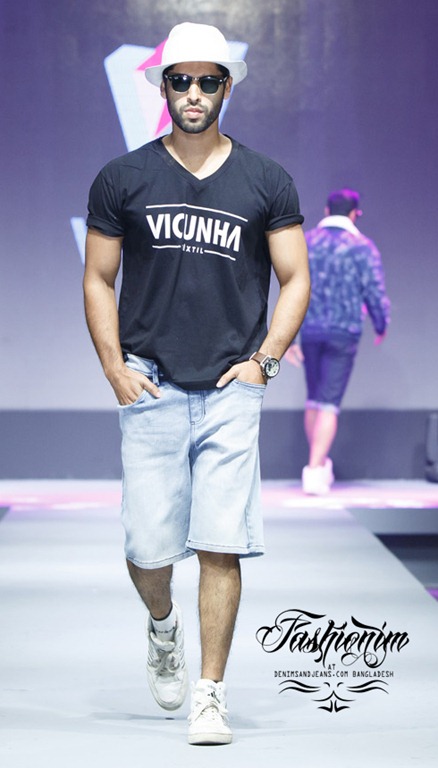
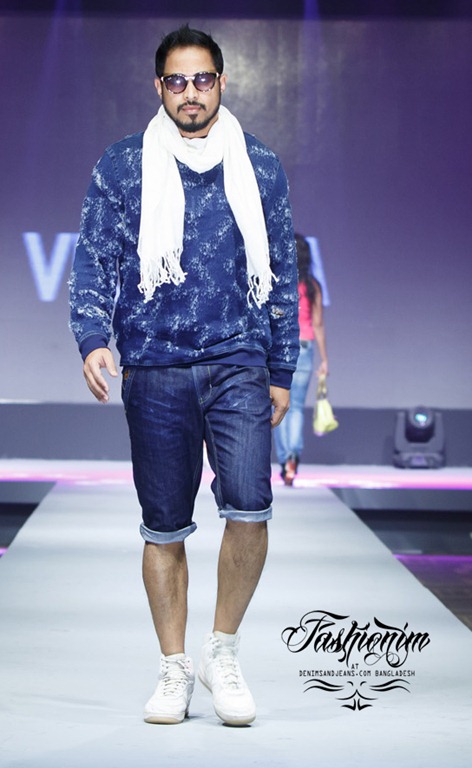
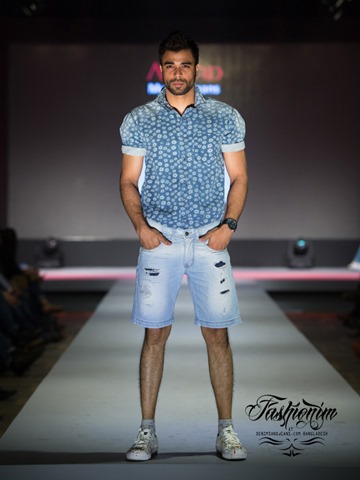
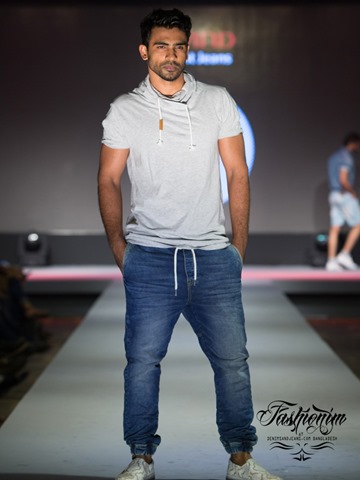
    FASHIONIM – Fashion in Denim  – event was held at our 3rd Denimsandjeans Bangladesh show on 1st March at Dhaka. Three of our exhibitors displayed their SS’16 collections at the show. Vicunha Textil from Brazil  was one of the sponsors of the show and displayed their products during the catwalk which included their following product categories. The company gives the description of these products in their own words as below:

    Stretch & Comfort

    Moove line: a variety of denim and twill fabrics with a medium/comfort stretch to be used in more adjusted fits as skinnies, aimed at providing a great freedom of movement.
    Athletic Denim & Color fabrics have an innovative construction that provides a Jeanswear look with a sweat pants touch on the inside.
    Perfect Fit offers “smart” denim that combines science, advanced technology and fashion. High performance fabrics with  flexibility and good recovery, and an ultra-soft touch.

    Classics

    True Denim: Classic rigid – 100% cotton – denim with excellent laundry performance these fabrics reaffirm the return of authentic denim look in a modern rehashes of the original denim look, developed for more pure looks and valuing raw, but also great for vintage looks.
    Shirting Collection: Articles premium light weight denim line, this collection offers sophisticated fabrics with ultra-soft touch and amazing texture effects ideal for fluid shapes such as shirts, dresses, overalls and chemises.

    Special lines

    ECO-D: Produced with 100% recycled polyester from plastic bottles, ECO- D fabrics also optimize the absorption and fixation of the dyes and reduce by 80% the water consumption.
    Carbolumen : stylish and modern fabrics with perfect fit, cold touch, brightness and as sophisticated as leather. The perfect combination of intense and bright colors with Leather look, provided by the special finishing CARBOLumen.

    Vicunha - at Fashionim Denimsandjeans Bangladesh

    Vicunha - at Fashionim Denimsandjeans Bangladesh

    Vicunha - at Fashionim Denimsandjeans Bangladesh

    Vicunha - at Fashionim Denimsandjeans Bangladesh

    Vicunha - at Fashionim Denimsandjeans Bangladesh

    Vicunha - at Fashionim Denimsandjeans Bangladesh

    Vicunha - at Fashionim Denimsandjeans Bangladesh

    6

    Vicunha - at Fashionim Denimsandjeans Bangladesh

    Vicunha - at Fashionim Denimsandjeans Bangladesh

    Vicunha - at Fashionim Denimsandjeans Bangladesh

    Vicunha - at Fashionim Denimsandjeans Bangladesh

    Vicunha - at Fashionim Denimsandjeans Bangladesh

    Vicunha - at Fashionim Denimsandjeans Bangladesh

    Vicunha - at Fashionim Denimsandjeans Bangladesh

    Vicunha - at Fashionim Denimsandjeans Bangladesh

    Vicunha - at Fashionim Denimsandjeans Bangladesh

    Vicunha - at Fashionim Denimsandjeans Bangladesh

    Vicunha - at Fashionim Denimsandjeans Bangladesh

    Vicunha - at Fashionim Denimsandjeans Bangladesh

    Vicunha - at Fashionim Denimsandjeans Bangladesh

    Vicunha - at Fashionim Denimsandjeans Bangladesh

    Vicunha - at Fashionim Denimsandjeans Bangladesh

    Vicunha - at Fashionim Denimsandjeans Bangladesh

    Vicunha - at Fashionim Denimsandjeans Bangladesh

    Vicunha - at Fashionim Denimsandjeans Bangladesh

    Vicunha - at Fashionim Denimsandjeans Bangladesh

    Vicunha - at Fashionim Denimsandjeans Bangladesh

    Vicunha - at Fashionim Denimsandjeans Bangladesh

    Vicunha - at Fashionim Denimsandjeans Bangladesh

    Vicunha - at Fashionim Denimsandjeans Bangladesh

    Vicunha - at Fashionim Denimsandjeans Bangladesh

    Vicunha - at Fashionim Denimsandjeans Bangladesh

    Vicunha - at Fashionim Denimsandjeans Bangladesh

    Vicunha - at Fashionim Denimsandjeans Bangladesh

    Vicunha - at Fashionim Denimsandjeans Bangladesh

    Vicunha - at Fashionim Denimsandjeans Bangladesh

    Vicunha - at Fashionim Denimsandjeans Bangladesh

    Vicunha - at Fashionim Denimsandjeans Bangladesh

    Vicunha - at Fashionim Denimsandjeans Bangladesh

    Vicunha - at Fashionim Denimsandjeans Bangladesh

    Vicunha - at Fashionim Denimsandjeans Bangladesh

    Vicunha - at Fashionim Denimsandjeans Bangladesh

    Vicunha - at Fashionim Denimsandjeans Bangladesh

    Vicunha - at Fashionim Denimsandjeans Bangladesh

    Vicunha - at Fashionim Denimsandjeans Bangladesh

    Vicunha - at Fashionim Denimsandjeans Bangladesh

    Vicunha - at Fashionim Denimsandjeans Bangladesh

    Vicunha - at Fashionim Denimsandjeans Bangladesh

    Vicunha - at Fashionim Denimsandjeans Bangladesh

    Vicunha - at Fashionim Denimsandjeans Bangladesh

    Vicunha - at Fashionim Denimsandjeans Bangladesh

    Vicunha - at Fashionim Denimsandjeans Bangladesh

    Vicunha - at Fashionim Denimsandjeans Bangladesh

    Vicunha - at Fashionim Denimsandjeans Bangladesh

    Vicunha - at Fashionim Denimsandjeans Bangladesh

    Vicunha - at Fashionim Denimsandjeans Bangladesh

  • Arvind SS16 Collection At Fashionim | 3rd Denimsandjeans Bangladesh Show

    Arvind SS16 Collection At Fashionim | 3rd Denimsandjeans Bangladesh Show

    Fashionim-logo

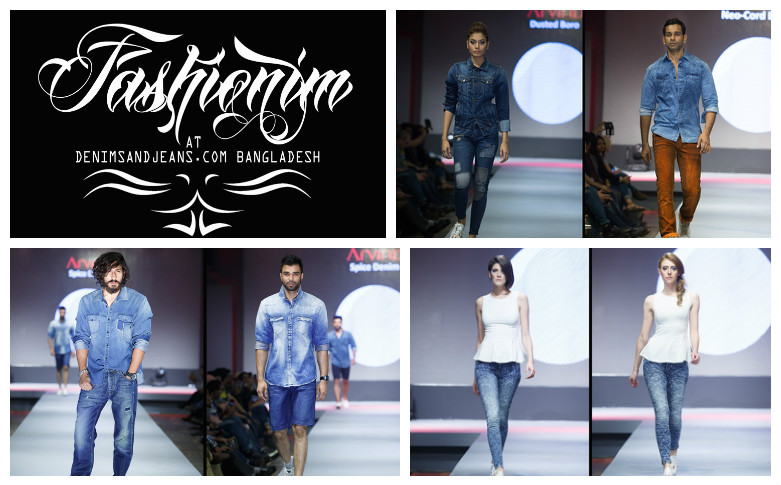
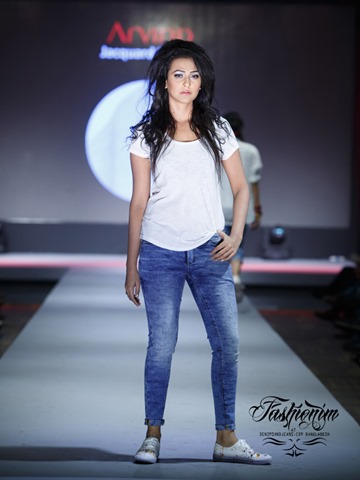
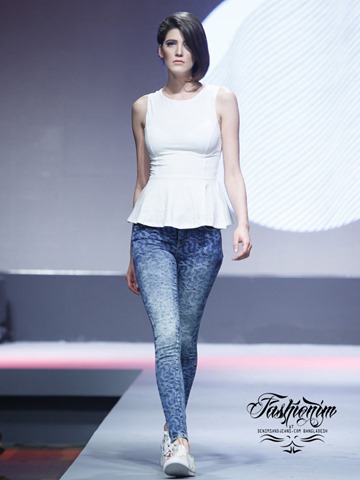
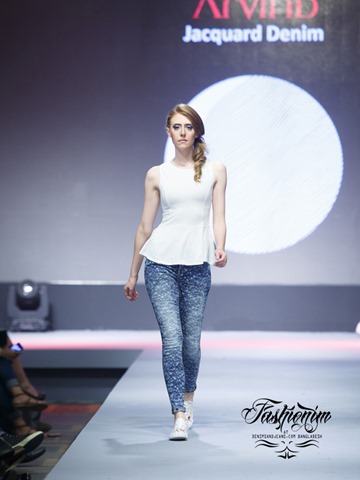
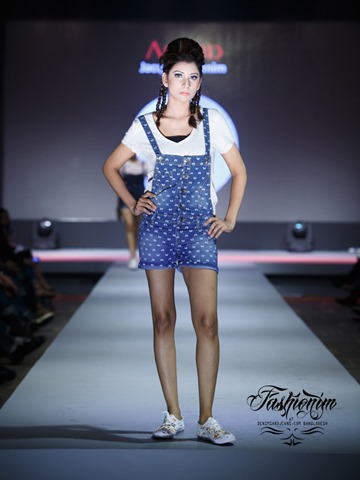
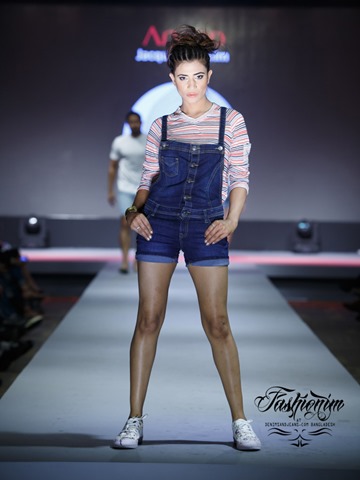
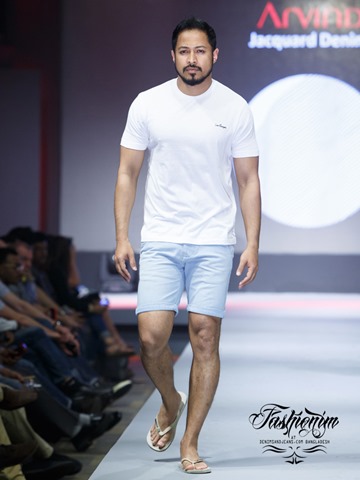
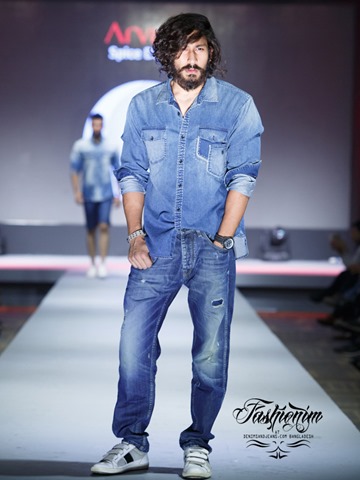
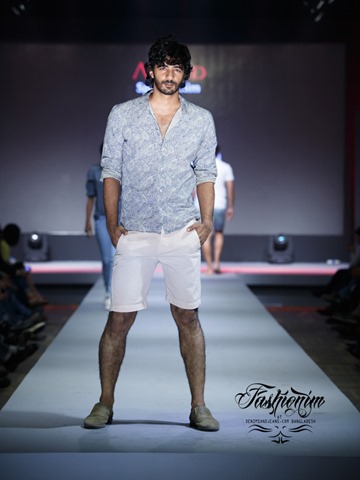
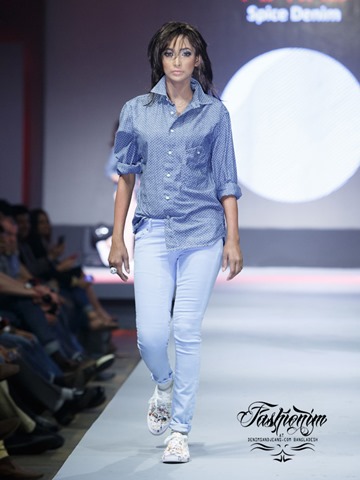
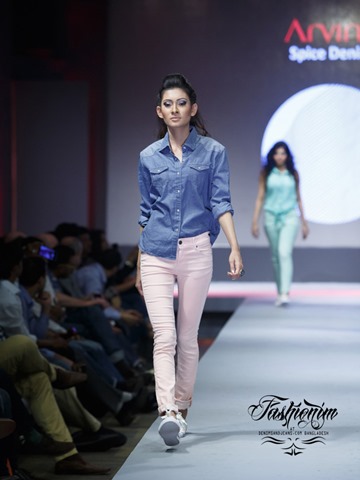
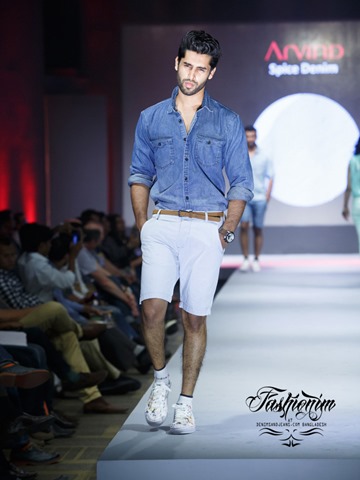
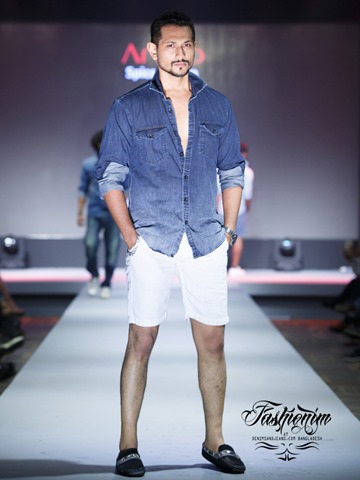
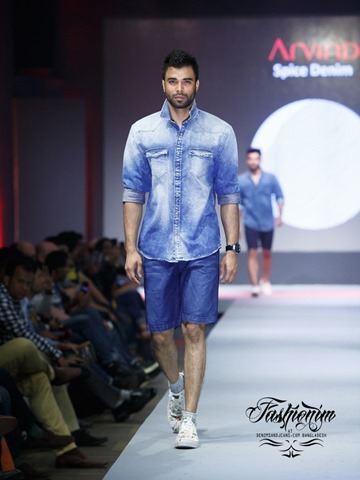
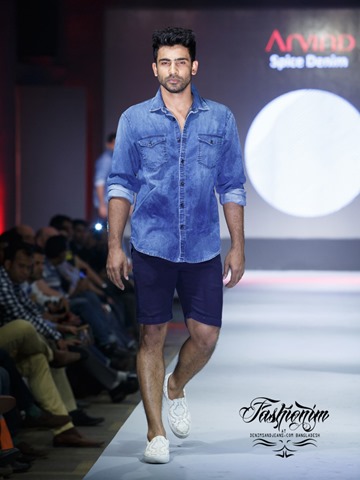
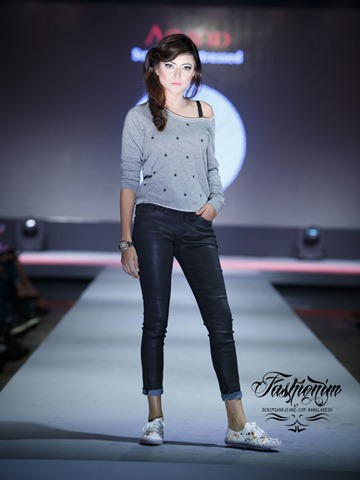
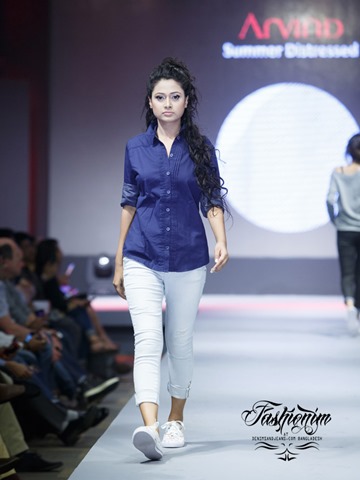
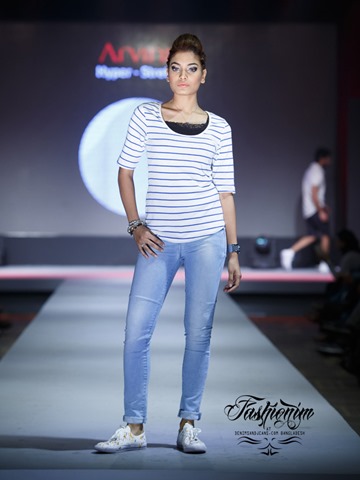
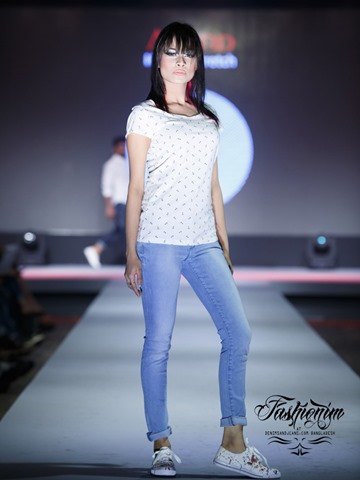
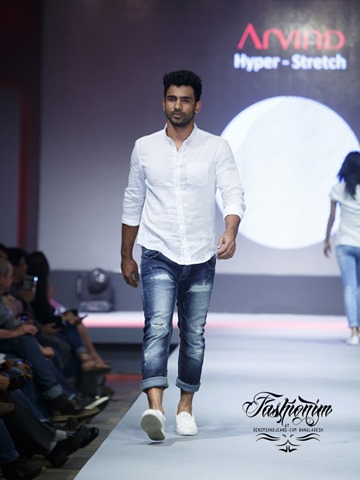
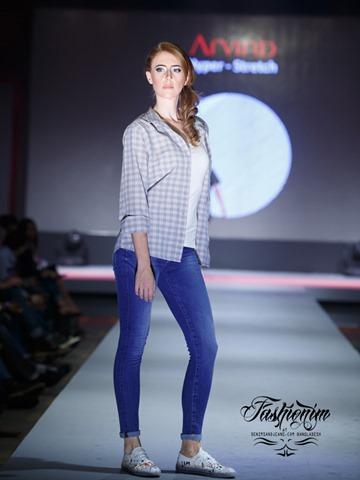
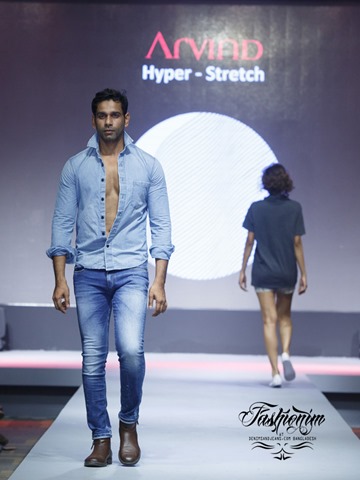
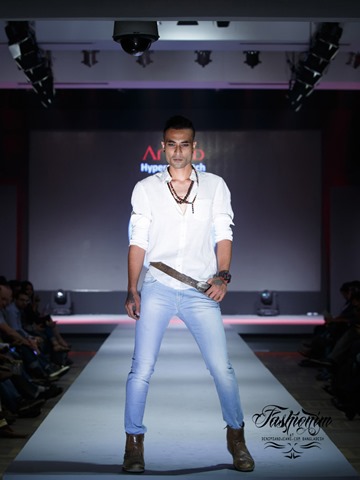
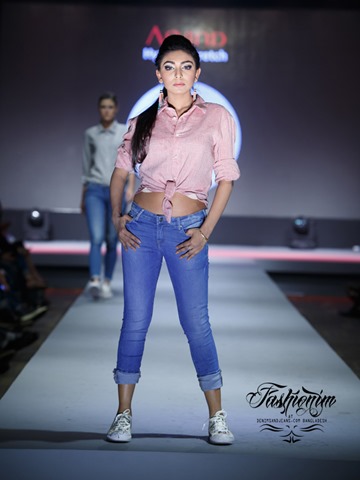
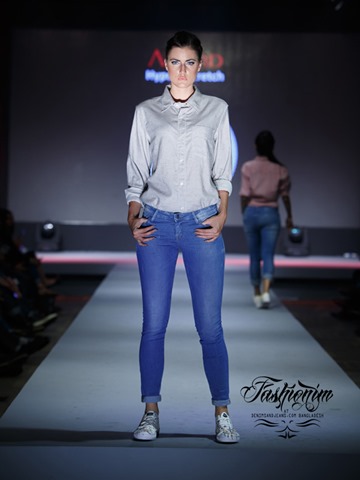
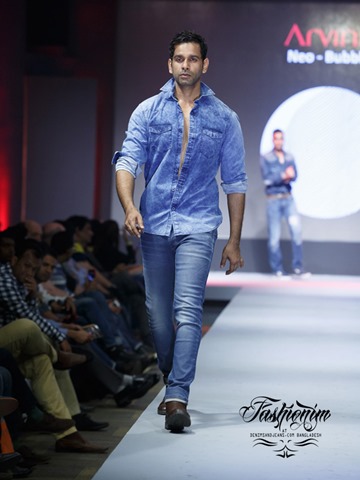
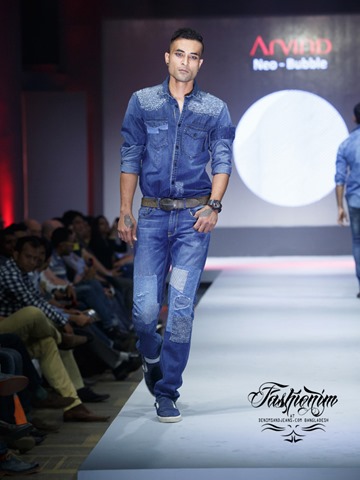
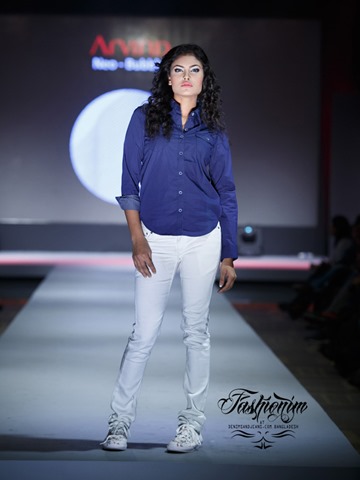
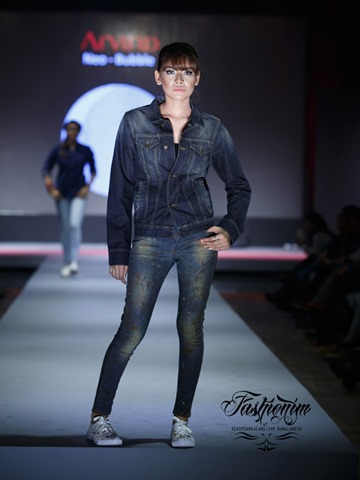
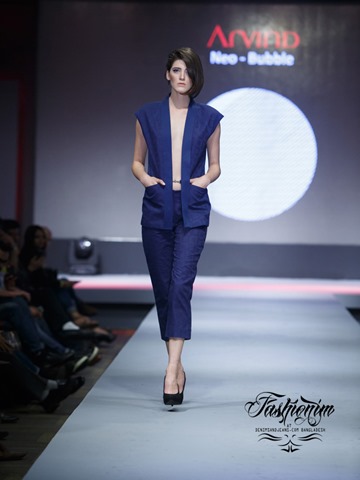
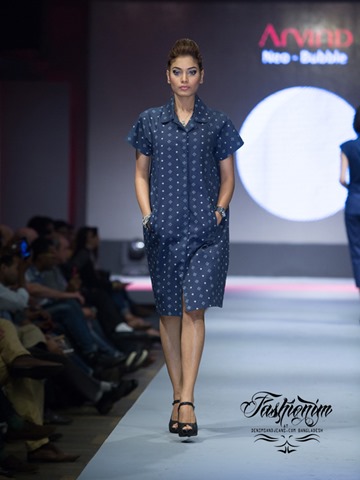
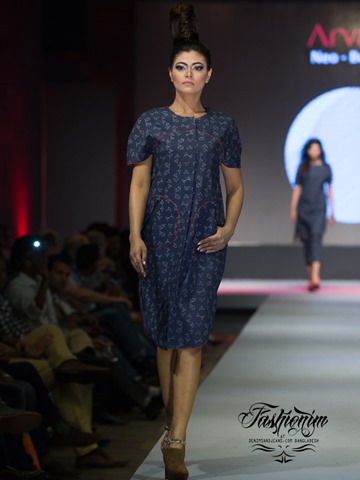
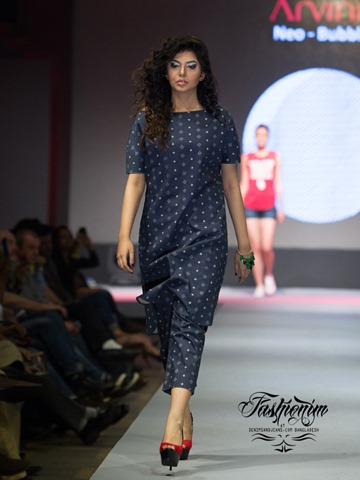
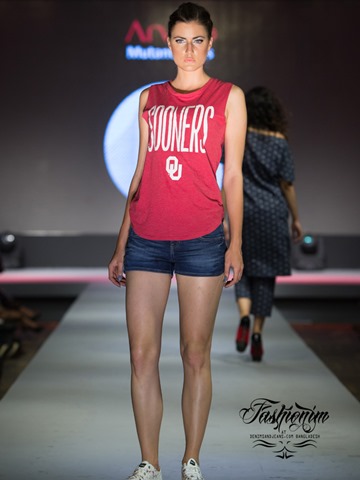
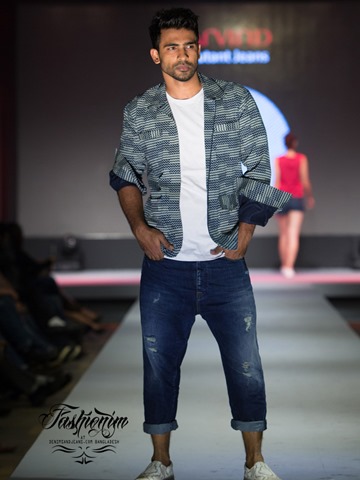
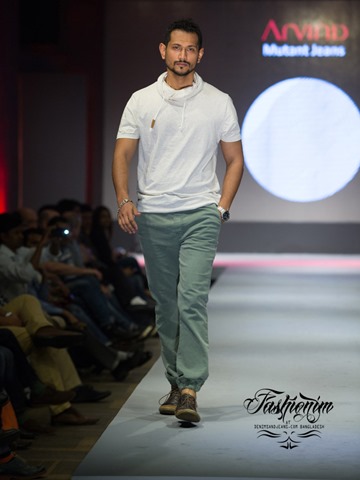
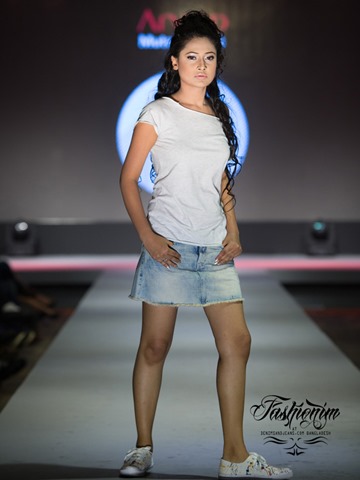
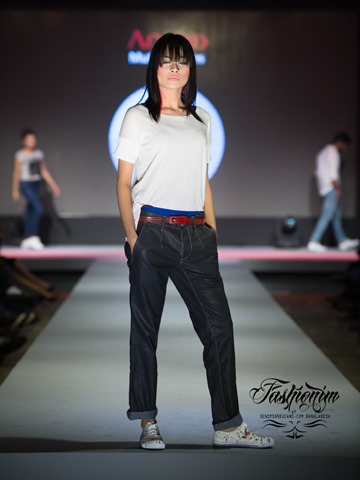
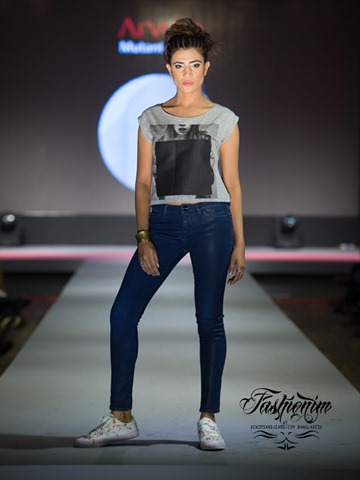
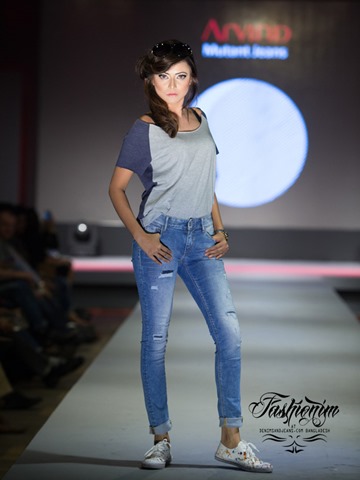
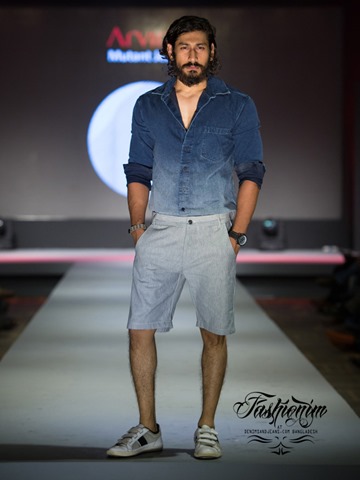
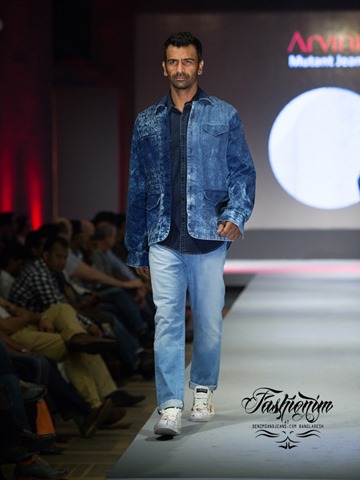
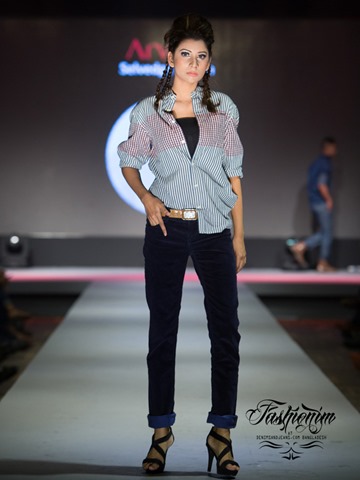
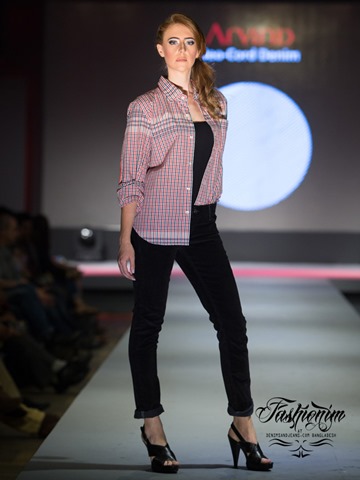
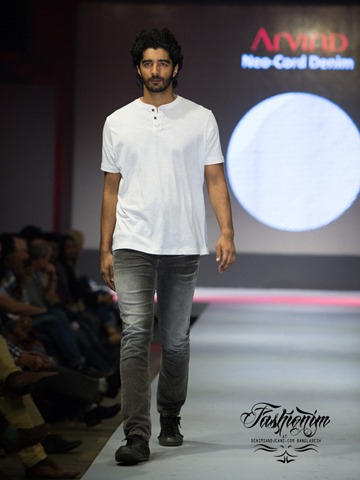
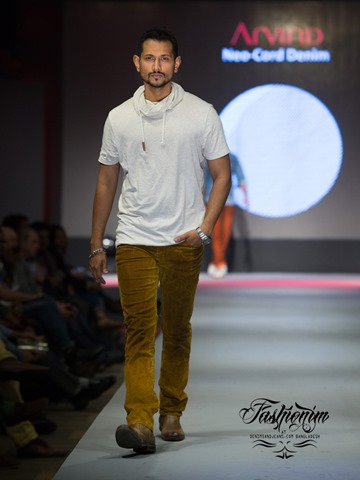
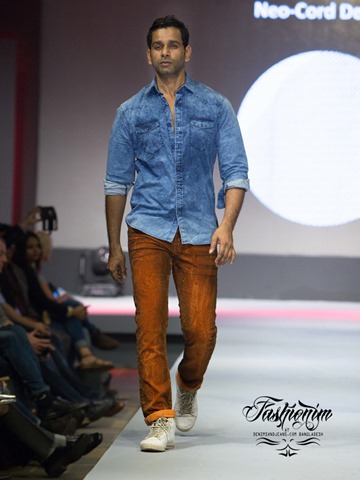
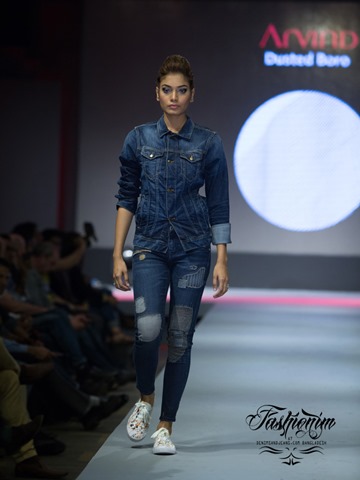
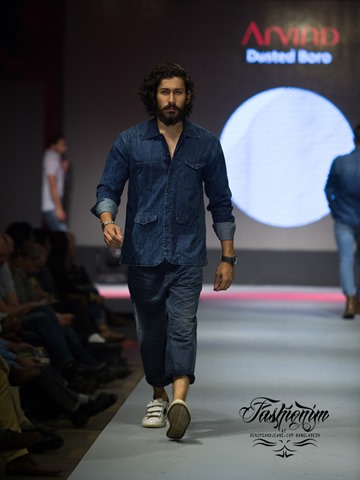
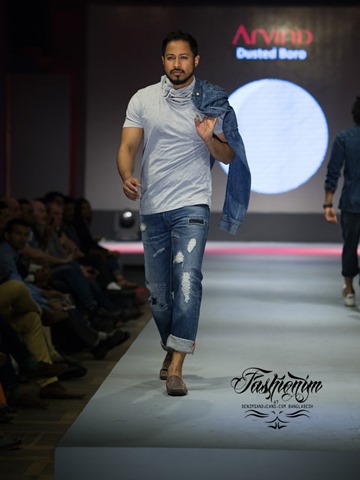
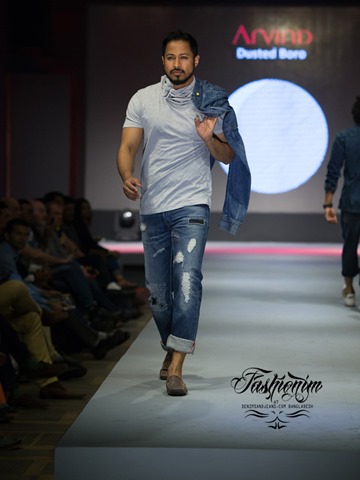
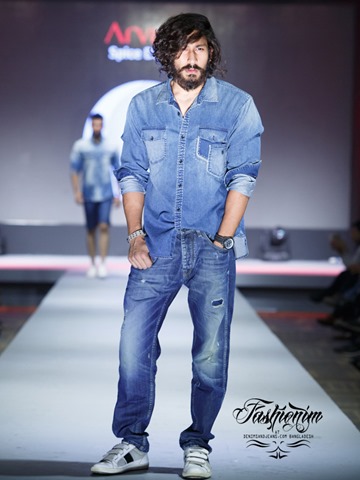
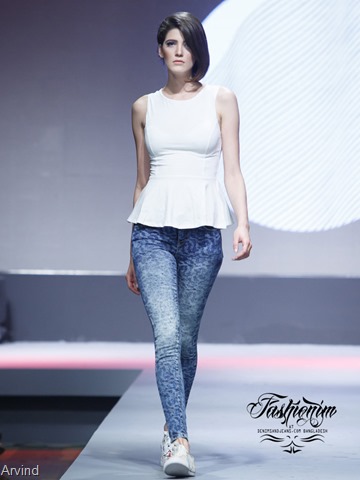
    FASHIONIM – Fashion in Denim  – event was held at our 3rd Denimsandjeans Bangladesh show on 1st March at Dhaka. Three of our exhibitors displayed their SS’16 collections at the show. Arvind , India, was one of the sponsors of the show and displayed their products during the catwalk which included their product categories like  Summer Distressed , Hyper Stretch, Spice Denim, Jacquard Denims , Neo Bubble and Neo Cord denims.  . We give here images from their catwalk and let their pictures do the talking.

    Jacquard Denim

    Arvind - Jacquard Denims at Fashionim Denimsandjeans Bangladesh   Arvind - Jacquard Denims at Fashionim Denimsandjeans Bangladesh


    Arvind - Jacquard Denims at Fashionim Denimsandjeans Bangladesh Arvind - Jacquard Denims at Fashionim Denimsandjeans Bangladesh Arvind - Jacquard Denims at Fashionim Denimsandjeans Bangladesh Arvind - Jacquard Denims at Fashionim Denimsandjeans Bangladesh

    Spice Denim

    Arvind - Spice Denim at Fashionim Denimsandjeans Bangladesh

    Arvind - Spice Denim at Fashionim Denimsandjeans Bangladesh Arvind - Spice Denim at Fashionim Denimsandjeans Bangladesh Arvind - Spice Denim at Fashionim Denimsandjeans Bangladesh   Arvind - Spice Denim at Fashionim Denimsandjeans Bangladesh   Arvind - Spice Denim at Fashionim Denimsandjeans Bangladesh   Arvind - Spice Denim at Fashionim Denimsandjeans Bangladesh

    Arvind - Spice Denim at Fashionim Denimsandjeans Bangladesh

    Summer Distressed

    Arvind - Summer Distressed at Fashionim Denimsandjeans Bangladesh

    Arvind - Summer Distressed at Fashionim Denimsandjeans Bangladesh

    Arvind - Summer Distressed at Fashionim Denimsandjeans Bangladesh

    Arvind - Summer Distressed at Fashionim Denimsandjeans Bangladesh   Arvind - Summer Distressed at Fashionim Denimsandjeans Bangladesh Arvind - Summer Distressed at Fashionim Denimsandjeans Bangladesh   Arvind - Summer Distressed at Fashionim Denimsandjeans Bangladesh Arvind - Summer Distressed at Fashionim Denimsandjeans Bangladesh   Arvind - Summer Distressed at Fashionim Denimsandjeans Bangladesh Arvind - Summer Distressed at Fashionim Denimsandjeans Bangladesh

    Hyper Stretch

    Arvind - Summer Distressed at Fashionim Denimsandjeans Bangladesh Arvind - Summer Distressed at Fashionim Denimsandjeans Bangladesh Arvind - Summer Distressed at Fashionim Denimsandjeans Bangladesh Arvind - Summer Distressed at Fashionim Denimsandjeans Bangladesh

    Arvind - Summer Distressed at Fashionim Denimsandjeans Bangladesh Arvind - Summer Distressed at Fashionim Denimsandjeans Bangladesh Arvind - Summer Distressed at Fashionim Denimsandjeans Bangladesh Arvind - Summer Distressed at Fashionim Denimsandjeans Bangladesh

    Neo Bubble

    Arvind - Neo Bubble at Fashionim Denimsandjeans Bangladesh Arvind - Neo Bubble at Fashionim Denimsandjeans Bangladesh Arvind - Neo Bubble at Fashionim Denimsandjeans Bangladesh Arvind - Neo Bubble at Fashionim Denimsandjeans Bangladesh Arvind - Neo Bubble at Fashionim Denimsandjeans Bangladesh   Arvind - Neo Bubble at Fashionim Denimsandjeans Bangladesh Arvind - Neo Bubble at Fashionim Denimsandjeans Bangladesh Arvind - Neo Bubble at Fashionim Denimsandjeans Bangladesh Arvind - Neo Bubble at Fashionim Denimsandjeans Bangladesh Arvind - Neo Bubble at Fashionim Denimsandjeans Bangladesh Arvind - Mutant Jeans at Fashionim Denimsandjeans Bangladesh   Arvind - Mutant Jeans at Fashionim Denimsandjeans Bangladesh Arvind - Mutant Jeans at Fashionim Denimsandjeans Bangladesh Arvind - Mutant Jeans at Fashionim Denimsandjeans Bangladesh Arvind - Mutant Jeans at Fashionim Denimsandjeans Bangladesh Arvind - Mutant Jeans at Fashionim Denimsandjeans Bangladesh Arvind - Mutant Jeans at Fashionim Denimsandjeans Bangladesh Arvind - Mutant Jeans at Fashionim Denimsandjeans Bangladesh Arvind - Mutant Jeans at Fashionim Denimsandjeans Bangladesh

    Arvind- Selvedge Jeans - Fashionim at Denimsandjeans Bangladesh Arvind- Selvedge Jeans - Fashionim at Denimsandjeans Bangladesh Arvind- Neo Cord - Fashionim at Denimsandjeans Bangladesh Arvind- Neo Cord - Fashionim at Denimsandjeans Bangladesh Arvind- Neo Cord - Fashionim at Denimsandjeans Bangladesh Arvind- Neo Cord - Fashionim at Denimsandjeans Bangladesh _M8A5002 _M8A5010 _M8A5016

  • Marks And Spencer Introducing Major Changes In Supply Chain

    Marks And Spencer Introducing Major Changes In Supply Chain

    Marks & Spencer has been going through a wide range of changes to adjust to changing demands of its, mainly middle aged, customers. After hiring new designers, overhauling its online offering and giving a facelift to stores, M&S is working hard  to push home its most ambitious project: overturning more than a century of retail history by taking full control of its supply chain.

    The company , founded in 1884, has always relied on third party suppliers to drive to create, manufacture and ship most of its garments. Taking control of the supply chain means a radical departure to create more flexibility in its quest to source faster . Long-term relationships with those mostly British-based firms, based on big orders and long lead times, helped M&S keep prices down and build a reputation for quality.

    But as its most loyal customers – women aged 50-plus – have become more fashion-conscious, the middlemen have hampered M&S’s ability to quickly refresh supplies of fast-selling items before shopper interest tails off.

    “There’s a killing to be made if they can serve older women better,” said Patsy Perry, a lecturer in fashion marketing at the University of Manchester. “Unless you have money to buy designer clothes, it’s hard to find what you want on the high street unless you want to look like your daughter.”

    Even as new M&S womenswear collections won praise from the fashion press, shoppers often found the clothes were sold out in their size or were not appropriate for the weather.In contrast, nimble retailers like Zara-owner Inditex , H&M and Next, which have more direct control over factories, replenish their stores faster and offer a more frequent turnover of styles.

    Pressure mounted on M&S Chief Executive Marc Bolland after a mild winter and delivery problems at the new online distribution centre hit Christmas trading, leading to a 14th consecutive quarterly sales decline in the clothing side of the business.

    But investors seem prepared to give Bolland more time after his revamp of the supply chain started to bear fruit.

    M&S’s gross margin – gross profit as a percentage of sales – rose 150 basis points to 53.7 percent in the first half of 2014, helped by sourcing gains, but still lags an estimated 64 percent at Next and 59 percent at Inditex.

    While taking tighter control of the company’s supply chain started several years ago, the final push is being given by Hong Kong-based brothers Neal and Mark Lindsey, whom Bolland appointed as joint sourcing directors last year.The pair previously worked at Next, where they pioneered “virtual manufacturing”, a process that enables designers to produce patterns and layout plans for cutting fabric so they can give precise instructions to distant factories.

    Adopting the Next model is a big shift for M&S, which until recently ordered most of its stock through so-called full service vendors — companies that designed, made, shipped and warehoused products before sending them to M&S for sale.

    Relationships with those suppliers often went back decades, and with one, Dewhirst, to the founding of the company: Michael Marks borrowed five pounds from wholesaler Isaac Dewhirst to launch a chain of penny bazaars in the northern city of Leeds. Dewhirst also introduced Mr Marks to Tom Spencer.

    As competition mounted in recent decades, M&S pushed partners like Dewhirst to move production overseas: 78 percent of its general merchandise now comes from Asia compared to just 22 percent from Europe, including Turkey, Italy and Britain.

    M&S has already taken control in the last few years of most logistics for the 40,000-odd shipping containers it fills a year, leaving detailed product design and factory liaison as the last jobs to come in-house.

    “All of us had to learn how to manage the supply chain, how to manage third-party logistics providers, how to manage freight, how to manage working capital on a much earlier purchase than previously,” said Zen Yaworsky, head of supply chain operations at M&S until 2010.

    “M&S now have to develop negotiation capability to go into a factory and negotiate from a position of intelligence,” said Yaworsky, who runs his own consultancy.

    That is easier said than done, according to experts who used to help M&S do just that.

    “At a board level, it makes a lot of sense. At the operational level, it is a lot more difficult,” said Bill Mills, a textile industry consultant who used to manage factories for M&S suppliers Courtaulds and Coats Viyella.

    “On the one level there are some cost savings, but on the other hand M&S will have to place resource in their buying offices, whether that be UK or local, to manage the factories. It is not a panacea.”

    M&S says it is already making big progress. It has halved the number of fabric suppliers in the last couple of years, so it can secure better prices at higher volumes from preferred mills.

    Bolland, in the job since 2010, wants to increase the proportion of products designed in-house to 60 percent by 2017 from 25 percent last year.

    The first garments sourced by the Lindsey brothers are coming into stores for the spring/summer season: “Spring/summer is bought at the moment with at least a lot more flexibility than it was done last year,” Bolland told analysts in January.

    A bigger proportion of orders will be left “open to buy” depending on demand and M&S is moving to deliver new products in 12 phases a year, up from six to eight, with some coming on a three-weekly basis – closer to Zara-style “fast fashion”. This is going to be a major change for M&S and its garment and fabric suppliers. It also means that they have to be more dynamically connected to the retailer to understand its changing requirements and need for quick fashion. On the whole, a major change is in offing . Whether it helps M&S to regain its role as Britain’s omnipotent retailer, needs to be seen.

    Source:Reuters.com

  • 3rd Denimsandjeans Bangladesh Show Concludes Successfully

    3rd Denimsandjeans Bangladesh Show Concludes Successfully

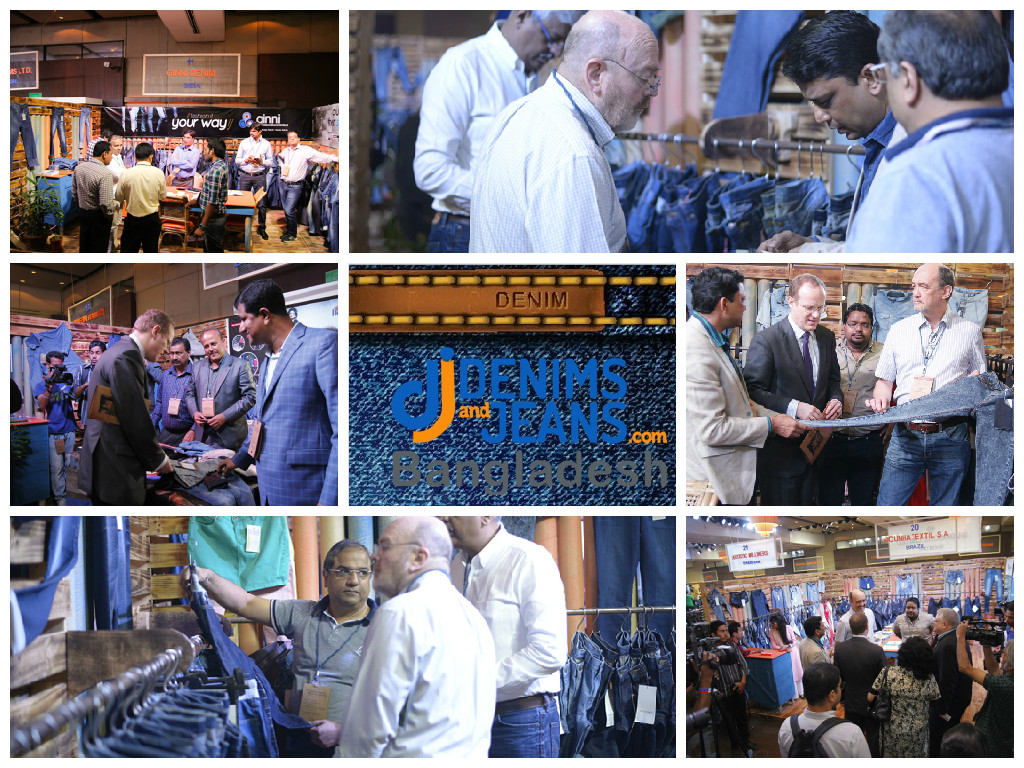
    The third edition of the Denimsandjeans Bangladesh show successfully concluded on 2nd March and brought out the various stakeholders of the denim supply chain together at this platform. 27 companies from countries around the world participated in the show and brought their latest SS’16 collections for the benefit of the visiting retailers, buying houses, factories, sourcing companies , brands and many more. Some of the visiting retailers and brands among over 400 companies that visited our show were:

    Tesco, Tom Tailor , C&A , Carrefour , Coolcat , Celio , Charles Voegele , Cortefiel , Uniqlo, S.Oliver, Wal Mart,Debenhams , Dewhirst ,El Corte Ingles , Esprit  , Grouppo Coin , H&M , HEMA , Hermes , OTTO , O’stin, Inditex , Kappahl , Kmart , LCWaikiki(Tema) , Levi Strauss & Co , Li & Fung , Lindex, Marks & Spencer , Mondial , New Times , Next , Perry Ellis , PVH , Redpoint , S. Oliver , Sainsbury`s , Target , VF etc.

    Our special thanks to all the esteemed visitors.

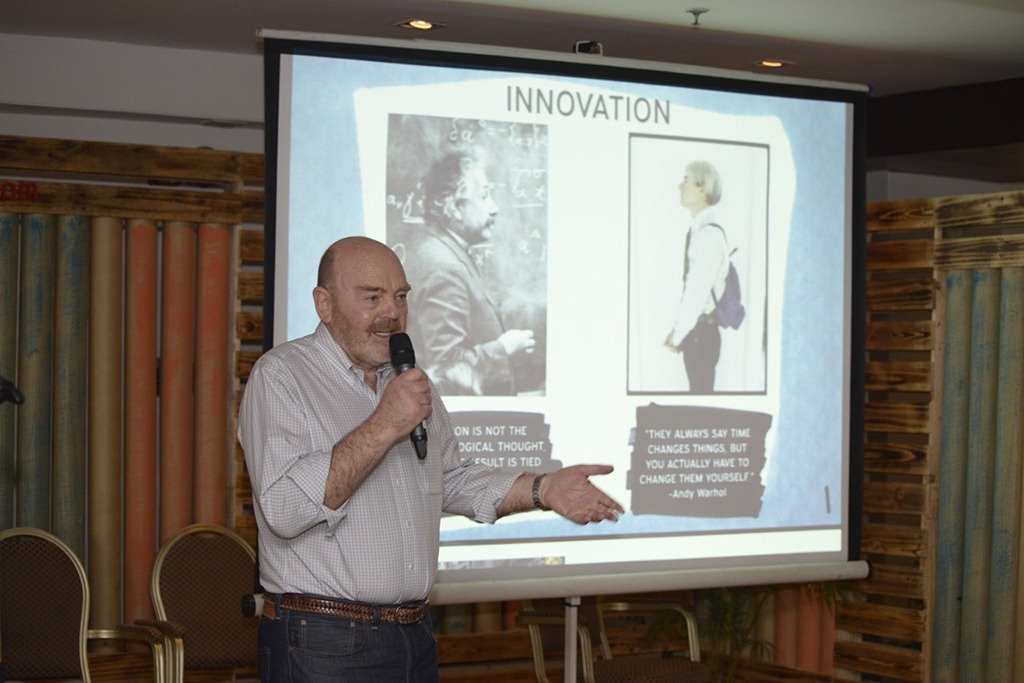
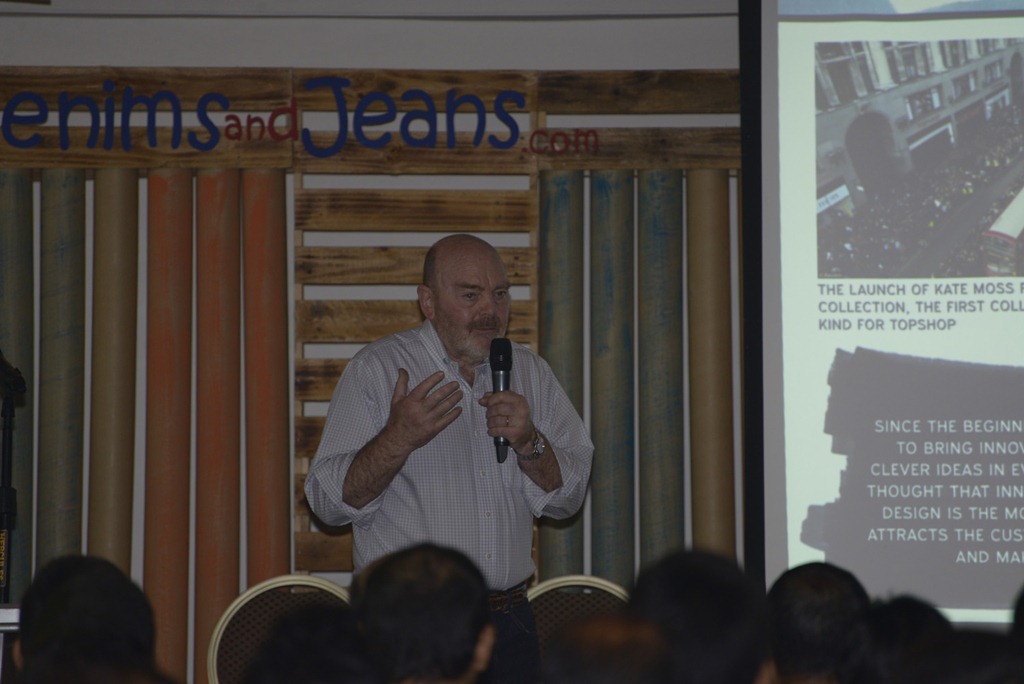
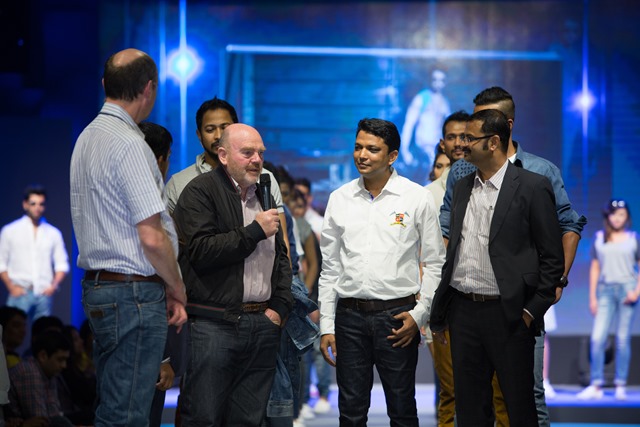
    One of the most important highlight of the show was the visit of Adriano Goldschmied – the Godfather of Denim – to the show . Adriano is one of the most respected persons in the world denim industry having founded some of the most well known denim brands worldwide including Diesel, Reply, AG Jeans and many others. He was kind enough to present a seminar on the topic ‘Denim and Innovation’ – to a packed audience of his enthusiastic fans at the show. This presentation can be downloaded from this link.

    Adriano Goldschmied at Denimsandjeans.com Bangladesh

    Adriano Goldschmied at Denimsandjeans.com Bangladesh

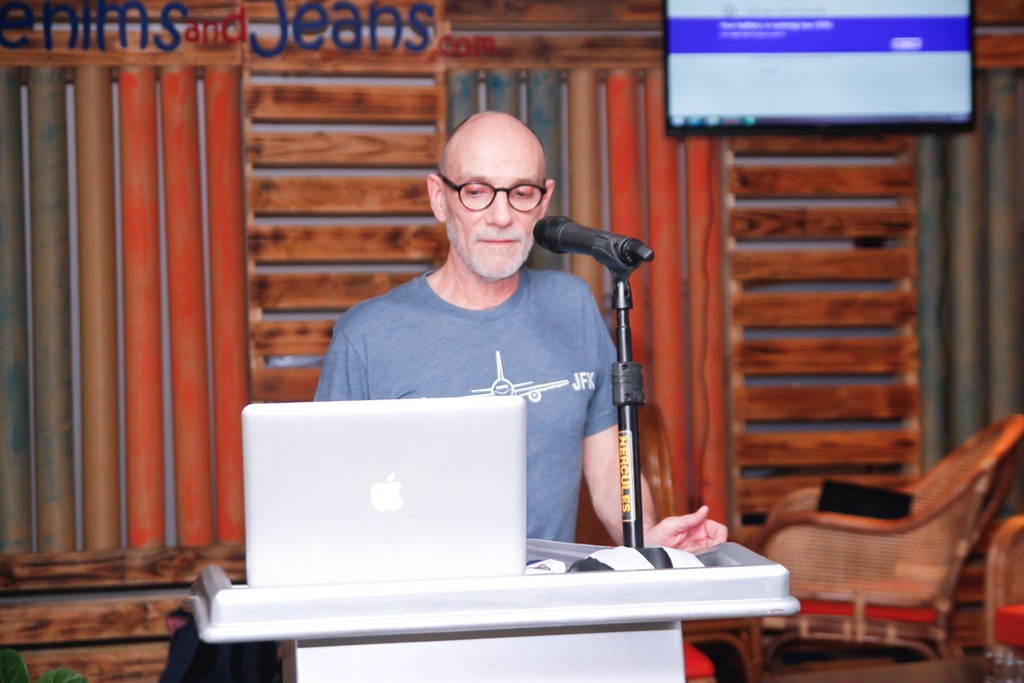
    We also had the company of a famous Denim consultant from Italy – Piero Turk– who travelled all the way to make a presentation on the topic – ‘European denim trends in fabric and washes’. Piero has been consulting and working with brands like Edwin, Big Star, Mustang, AG, 7 for all Mankind, Guess and many more – essentially devoting his life to denim development. His presentation – in the form of images of various eras can be downloaded from this link.

    Piero Turk at Denimsandjeans.com Bangladesh

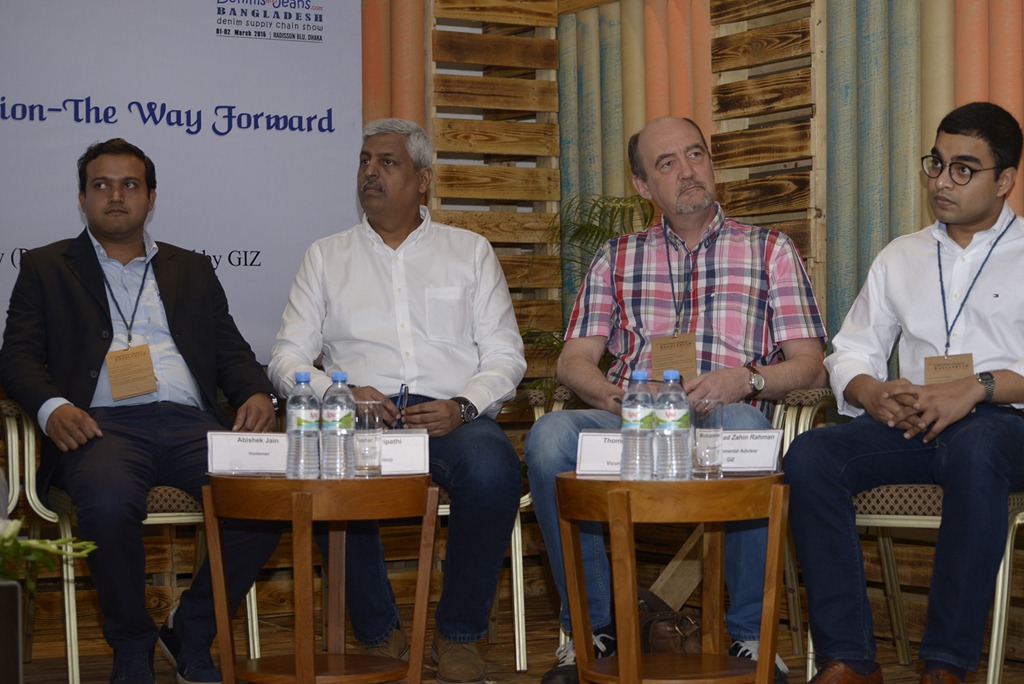
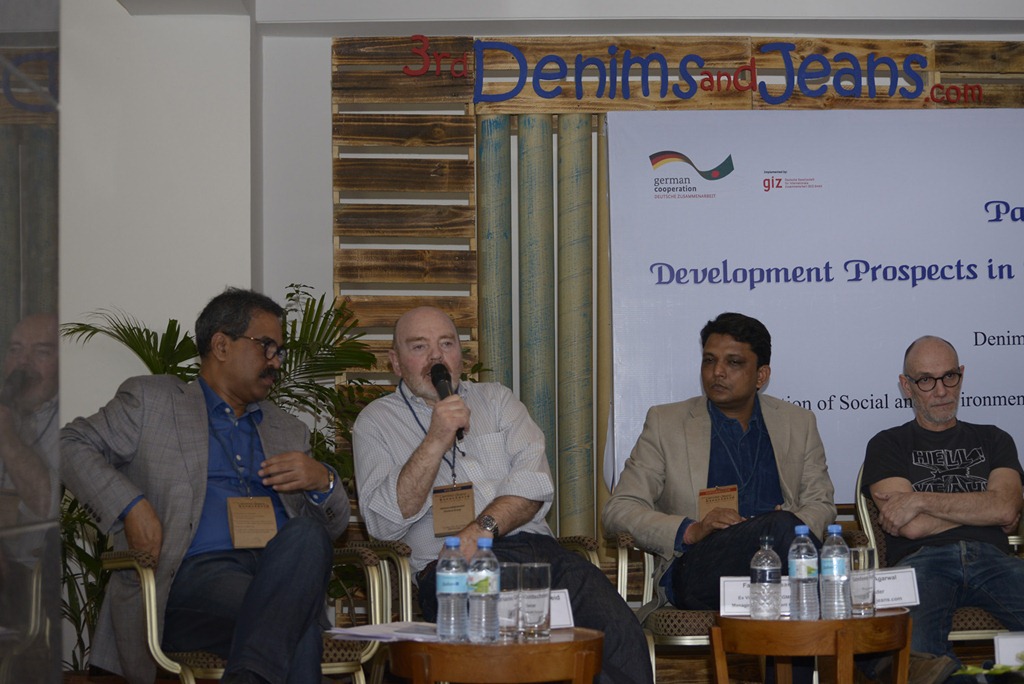
    The panel discussion “Development Prospects in Denim Production – the Way Forward” was organized in a city hotel as part of the 3rd Denimsandjeans.com Bangladesh Show-2015. The Panel Discussion was organized our technical partners Deutsche Gesellschaft für Internationale Zusammenarbeit (GIZ) GmbH, which works on behalf of the German Federal Ministry for Economic Cooperation and Development (BMZ), in partnership with the Government of Bangladesh. The panel discussion was attended by important people in the industry including Adriano Goldschmied, Piero Turk, Thomas Dislich(CEO Vicunha Europe) , Tushar Tripathi (CEO Envoy Group) , Kazy Iqbal (Senior Environmental Chemist at C&A) , Abhishek Jain from Huntsman and others. The panel discussion was kindly moderated by Mr Faruque Hasan  (MD Giant Group and immediate past VP BGMEA) . The panel discussed about the various environmental problems in denim manufacturing and how to move forward with minimum impact on the environment.

    Development Prospects in Denim Production - the Way Forward

    Development Prospects in Denim Production - the Way Forward

    Of course the stars of our show were our exhibitors who came from Bangladesh and around the world to showcase their latest collections which were appreciated by the esteemed buyers and visitors to the show. Our sincere gratitude to all of them once again.

    Exhibitors

    Company

    Country

    Products

    Artistic Fabric Mills

    Pakistan

    Denim Fabrics + Jeans

    Artistic Milliners

    Pakistan

    Denim Fabrics + Jeans

    Arvind Limited

    India

    Denim Fabrics + Jeans

    Bhaskar Industries (P) Limited

    India

    Denim Fabrics

    Denim International

    Pakistan

    Garments

    Deridesen

    Turkey

    Leather Labels And Hangtags

    Envoy Textiles Limited

    Bangladesh

    Denim Fabrics + Jeans

    Foison

    China

    Denim Fabrics

    Freedom Denim

    China

    Denim Fabrics

    Ginni International

    India

    Denim Fabrics

    Hameem

    Bangladesh

    Denim Fabrics + Jeans

    Indigo Textile Pvt Ltd

    Pakistan

    Denim Fabrics

    Litun Fabrics Limited

    Bangladesh

    Denim & Non Denim Fabrics

    Mafatlal Industries Ltd.

    India

    Denim Fabrics

    Naveena Denim Ltd. (NDL)

    Pakistan

    Denim Fabrics

    Naveena Export

    Pakistan

    Denim Fabrics

    Orta Anadolu

    Turkey

    Denim Fabrics

    Oswal/Nahar

    India

    Denim + Non-Denim

    Pacific Denims Ltd.

    Bangladesh

    Denim Fabrics

    Prosperity Textile (H.K.)Ltd.

    China

    Denim Fabrics

    Quality Links

    Pakistan

    Prints

    S. M. Denim Mills

    Pakistan

    Denim Fabrics

    Siddiqsons Limited

    Pakistan

    Denim Fabrics + Jeans

    Soorty

    Pakistan

    Denim Fabrics + Jeans

    Synergies Worldwide

    Bangladesh

    Garments

    Vicunha Textil S.A.

    Brazil

    Denim Fabrics

    Wintex Trims

    China

    Metal Accessories & Leather Labels


    Fashionim At 3rd Denimsandjeans.com Bangladesh Show

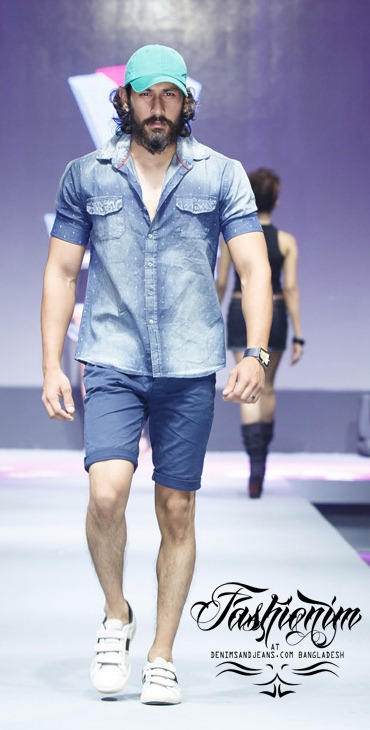
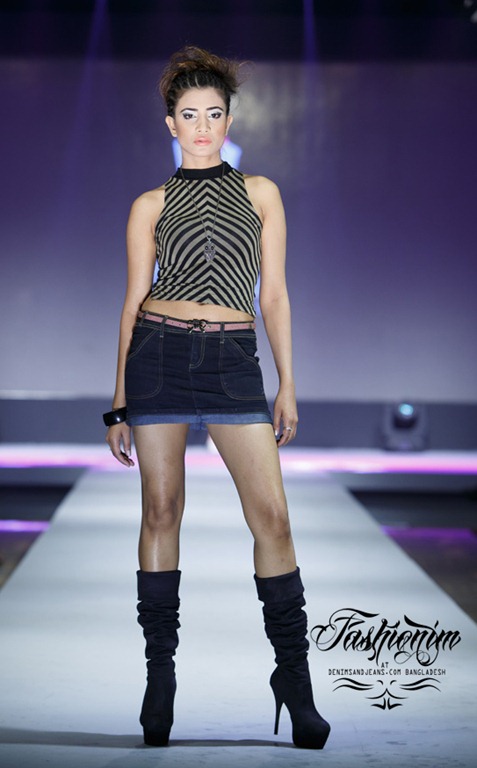
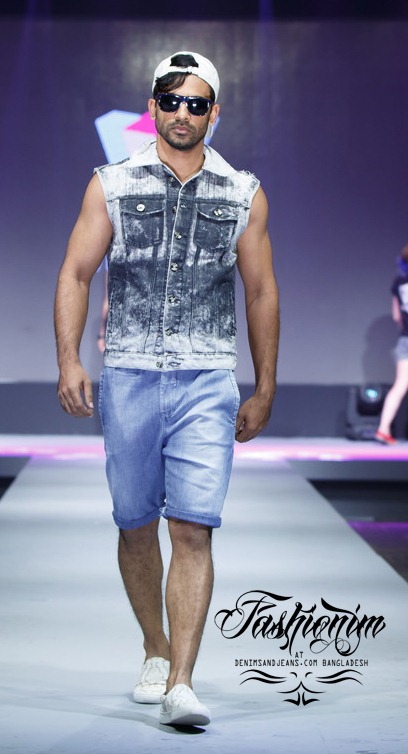
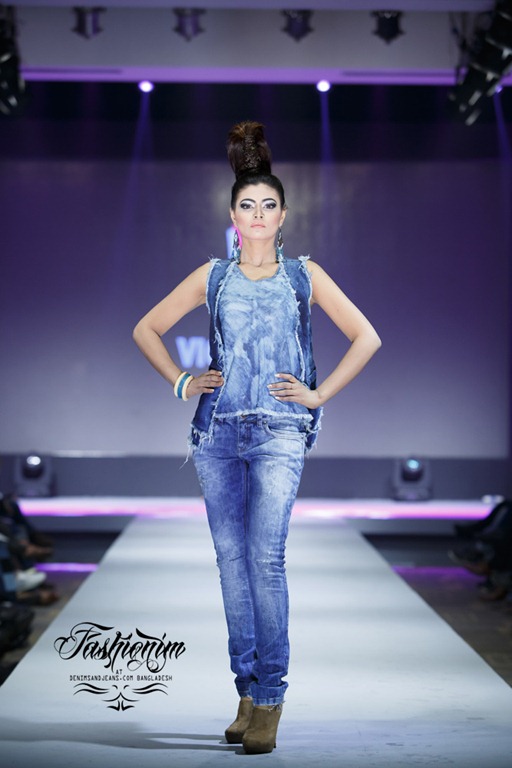
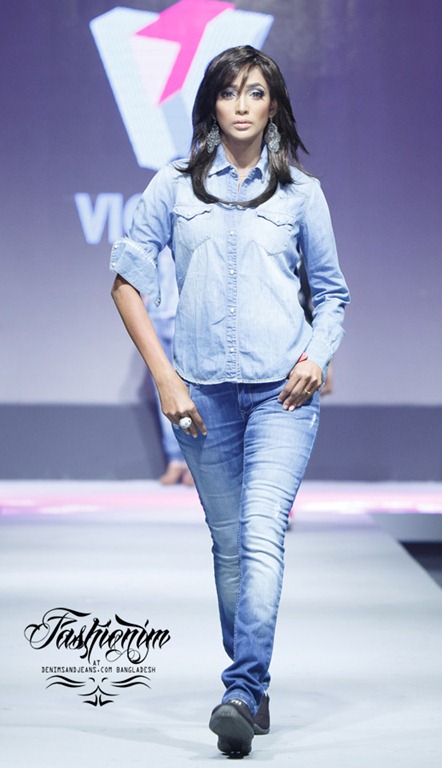
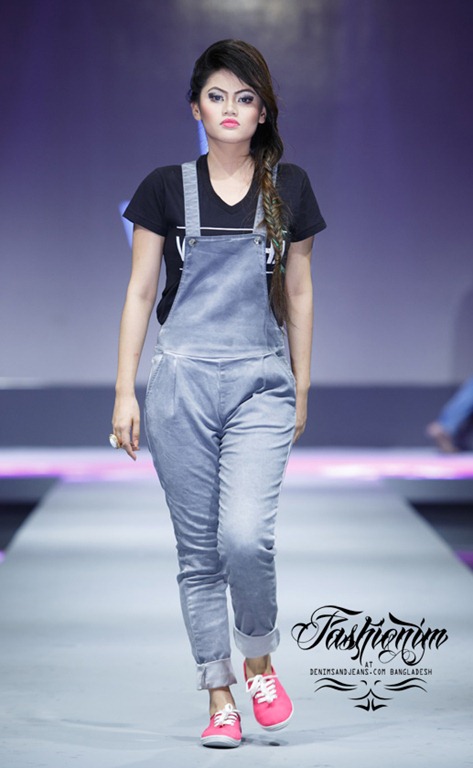
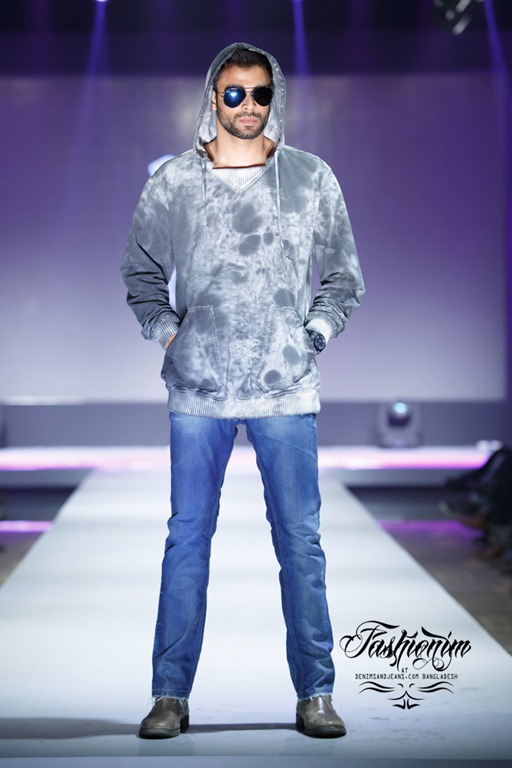
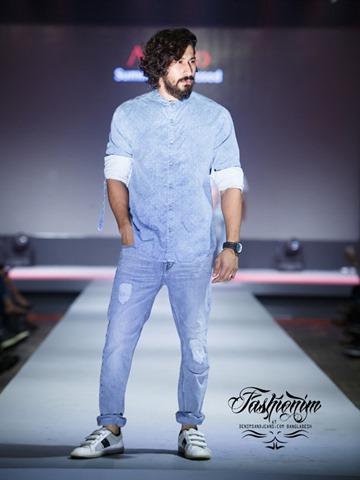
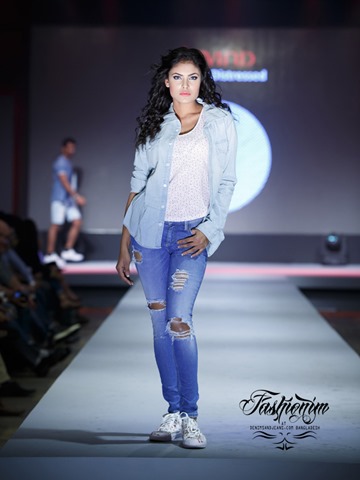
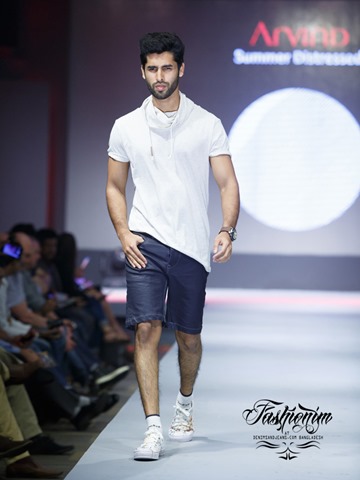
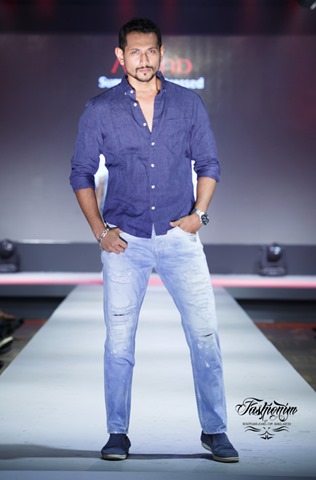
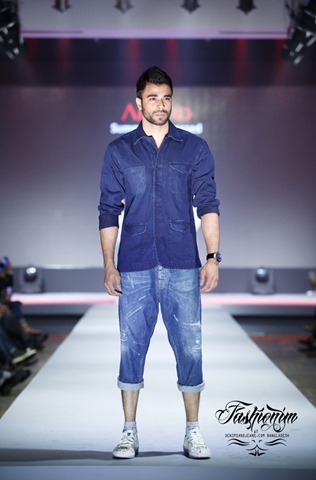
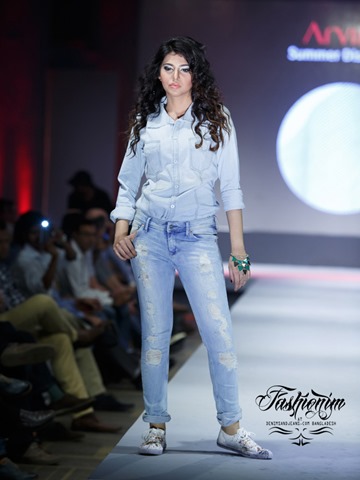
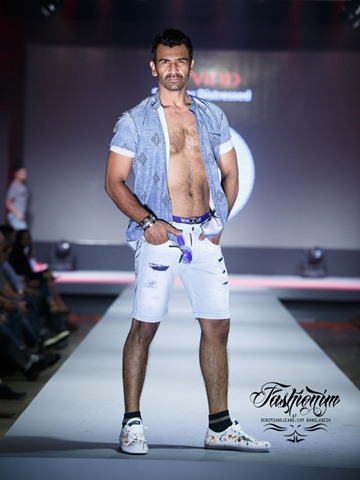
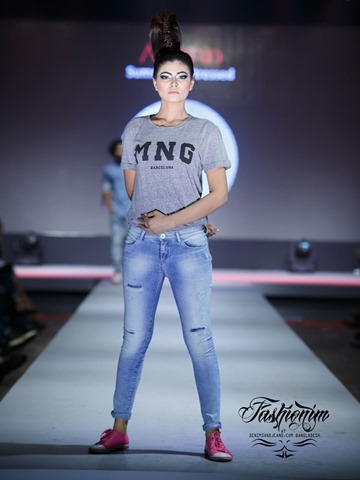
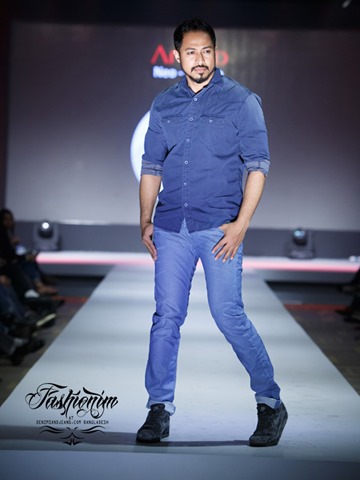
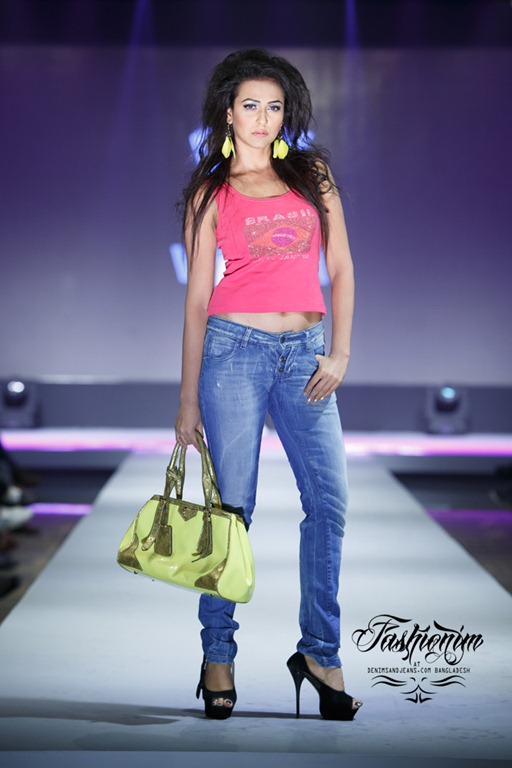
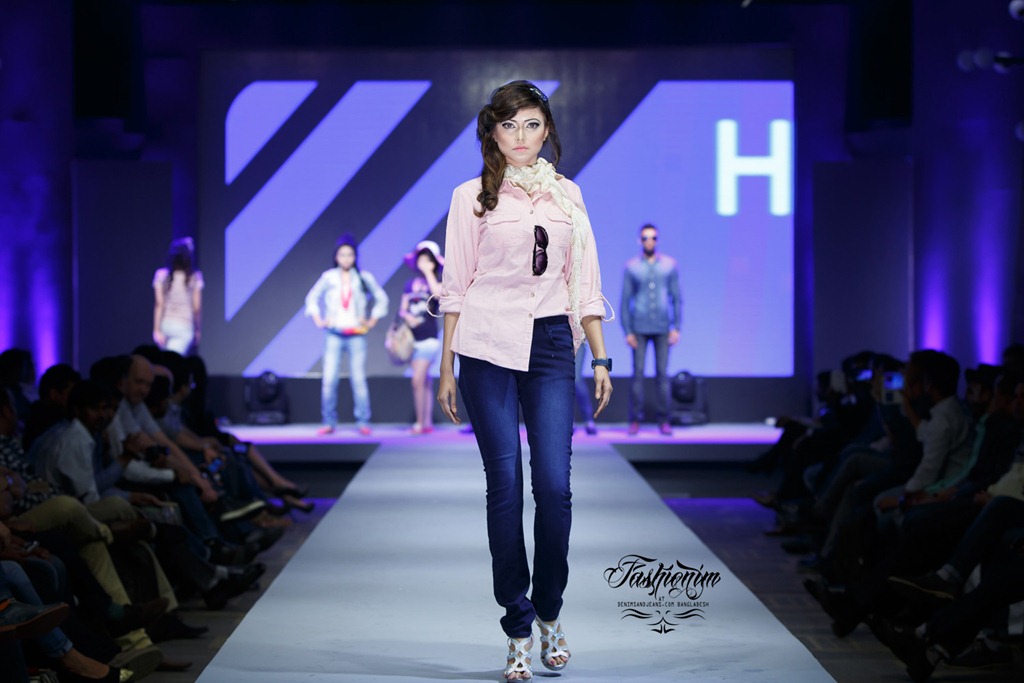
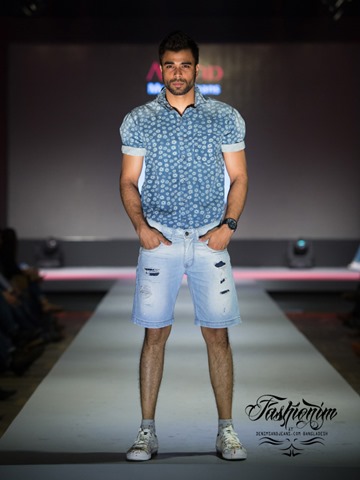
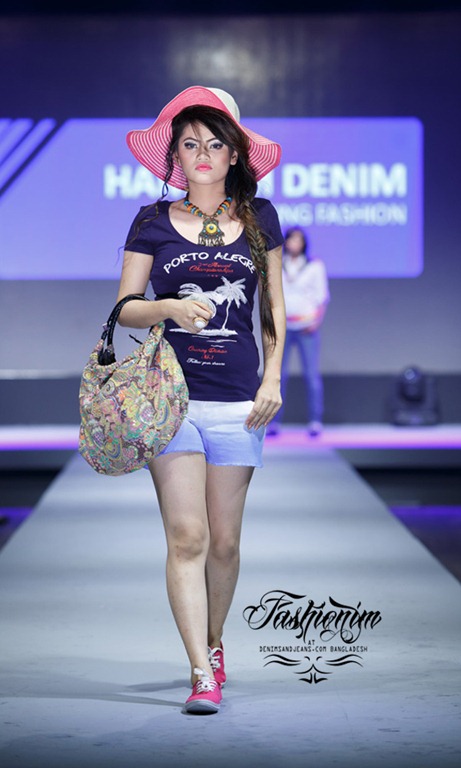
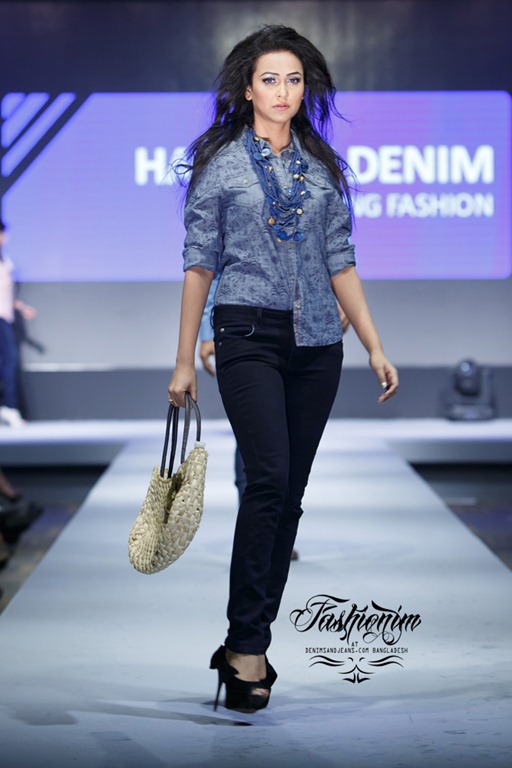
    Last but not the least was our maiden fashion event at the 3rd Denimsandjeans event- FASHIONIM.  This was the first time a fashion show was organized at one of our shows . Special thanks go to our sponsoring partners – Vicunha Textil (Brazil),  Arvind (India) and Hameem Denim (Bangladesh) for providing us the support to enable us bring out this much appreciated event at our show. The companies presented their SS’16 collections at the show to an elite audience . The one hour show brought out latest western and eastern fashion elements in denim to the denim lovers who were present at the show . The presence of denim stalwarts like Adriano Goldschmied, Piero Turk and others helped the event become more special .

    _M8A5112

    Some cool images from the FASHIONIM show below. Collections of Vicunha, Arvind and Hameem are on display. Detailed info and pics on the show would be available very shortly in another post.

     Fashionim at Denimsandjeans.com Bangladesh Fashionim at Denimsandjeans.com Bangladesh

    Fashionim at Denimsandjeans.com Bangladesh

    Fashionim at Denimsandjeans.com Bangladesh Fashionim at Denimsandjeans.com Bangladesh 

    Fashionim at Denimsandjeans.com Bangladesh

    Fashionim at Denimsandjeans.com Bangladesh  

    Fashionim at Denimsandjeans.com Bangladesh

    Fashionim at Denimsandjeans.com Bangladesh