During the Denimsandjeans Virtual show held on July 22-23 , there was an interesting talk scheduled with Stefano Aldhighieri and Maurizio Donadi – both well known veterans in the denim industry . And the title was very topical and interesting – STATE OF RETAIL IN OUR INDUSTRY. Retail is the most affected segment of our industry and having a snowballing effect on the entire supply chain and millions of people employed globally. However, for some reasons, the talk could not be held as scheduled . Both of them kindly agreed to record their talk post show and share with all of us ! We bring the video (check here) of their talk below alongwith some key points raised .
The beginning of the video is quite interesting with a virtual assistant bringing some interesting data to the talk :
In US retail space is over saturated
US has over 23.5 sq feet of retail space per person
This is twice that of Australia , 5 times that of Japan and over 10 times that in Germany or South Korea
Store closing started few years back
In 2017- 8139 US stores closed, 6000 in 2018 and over 9100 in 2019.
Both of them agreed that the problem with the retail did not start with Covid19 and it was already under progression for last few years. The malls in US grew more than twice the rate of population growth between 1970 and 2015 and the growth was bound to hit a speed breaker at some point of time and the numbers above give some idea of the state of affairs in the retail. Stefano mentioned that the stores that closed before were somehow re-opened over time- however, with Covid closures, the re-openings would be much lesser.
Maurizio agreed with him and said that the times before were challenging for retail but not disruptive – which they are now. But there will be companies who will take advantage of this situation and re-purpose the retail space. Both agreed that there are a lot of retailers who should not be there and who do not offer anything different from the store next door except being a dollar cheaper ! If a brand does not have a soul – it should not exist.
Stefano made a very interesting statement on state of consumer purchases in last few years specially with social media getting stronger :
“Consumers are buying crap with money they don’t have to impress people they don’t like “
Maurizio mentioned about identity crisis being faced by brands now – not only a revenue crisis , the crisis of values and principles of a brand. The brands need to consider that without a soul, they have no reason to exist . He mentioned about two scenarios – between now and till the time a vaccine is made. Till that time, its a fight for survival and one needs to come out of the situation. And after that some people would want to go to pre-covid situation in terms of their brand’s principles . But there will be companies who will be coming completely different and with a much clearer identity and an interesting proposition which they may not have now. Both of them also hoped that the luxury brands would really make luxury products !
Stefano gave a good example of Ron Johson who tried to transform JC Penny few years ago but was chased out of the company for trying to reduce volumes. However, he was perhaps right and JC Penny would have been in a better position today if he had succeeded.
He also gave a good example of Paul Smith store in London where he usually visited with not a purpose to buy anything but ended up doing so as the offering was so compelling and customer service so great . So the brands need to position themselves well and bring out compelling products for the consumers. Even premium denim would sell if it was really premium !
Maurizio also mentioned that hopefully there will be less discounts in the future – something that has destroyed the market and the price points and products are more honest.
The entire talk was really interesting with some great insights and it would be best to check out the entire talk on video from this link
It has been now over 150 days since WHO announced COVID 19 as a global pandemic, the world is still struggling to contain the virus and we hope in coming weeks, we find the much-awaited COVID vaccine.
In the month of April, when COVID 19 started to show its lethal and contagious face to the world, there were a lot of speculations made, from the paradigm shift in the consumer behavior to shrinking in the overall denim business for the next two to three seasons, there was a plethora of anticipation and hypothesis.
The godfather of denim – Adriano Goldschmied, in a live talk with the founder of Denimsandjeans Sandeep Agarwal, predicted that the global denim business will be shrunk by 50%. The prediction was brutal but his prediction seems to be very certain and close to reality.
BRANDS AND RETAILERS
The Jeans business has been already struggling for the last few years, the influence of athleisure on millennials adversely impacted the sales of Jeans globally and then this pandemic has taken a real toll. Retailers and Brands like G-Star Raw, JC Penny, True Religion, and Lucky Brand have filed chapter 11 bankruptcy during this pandemic period.
True Religion which 1st filed bankruptcy in the year 2017, has now seemed to be into a vicious debt trap. The brand reported
1. $110.5 million in first-lien term loan debt 2. Owed $28.8 million on an asset-based loan facility. 3. Posted a net loss of $50 million
The brand blamed the pandemic for making things very challenging to them, they have sent the workers on furlough to bolster their liquidity.
Lucky Brand filed for Chapter 11 bankruptcy the last month. The brand has announced to sell all its substantial operating assets to SPARC GROUP and the intellectual property to ABG Group.
In its bankruptcy filing, Lucky Brand said it owes nearly $5 million to mall operator Simon Property Group, and millions more to suppliers in Anguilla, Sri Lanka, Guatemala, and India. The brand owed
1. $182 million to lenders 2.$79 million to merchandise vendors
The brand will remain operational however out of a total of 200 stores, 13 stores will be closed.
G Star Raw also filed for Chapter 11 bankruptcy and as per the reports, the landlord of its 475 Fifth Avenue NYC store found to be the biggest creditor with USD 426,000, this is the same store which was allegedly looted by the protesters during #blacklivesmatter protest.
Levis recently reported a decline of 62% in its 2nd quarter revenue which forced them to cut the workforce up to 15%. According to market research firm – NPD Group, there has been a double-digit fall reported in the sales of denim in the past three months compared to the last year.
The sales of premium/luxury jeans costing over $200 witnessed a slump of 40% during the same period, there have been apprehensions that Americans are now preferring lower-priced denim over premium one due to disposal income constraints.
So far as the UK is concerned, according to an estimation, COVID may reduce the spending by more than 20% than the usual spending made by the UK consumers which may bring a fall of GBP 11.1 bn / $13.06 bn in the sales of clothing and footwear in the UK.
SUPPLIERS
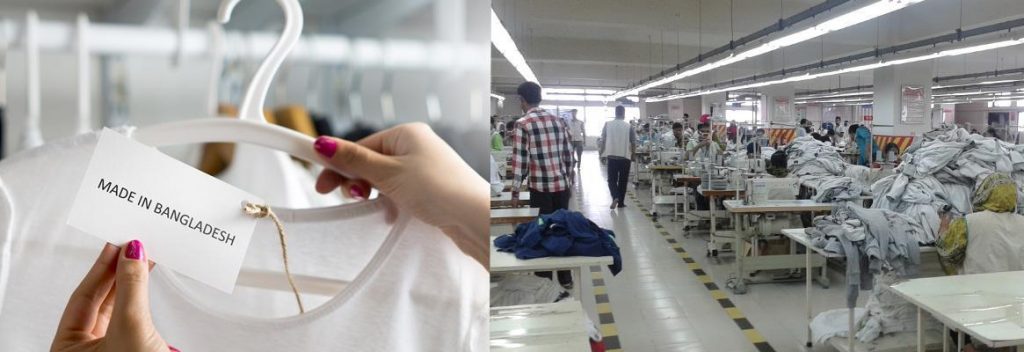
The pandemic did not affect only brands/retailers but also forced a lot of factories based in China, Bangladesh, Myanmar, India, Vietnam, and Cambodia to close its entire operation due to a substantial fall in orders as well as due to the failure in the payments commitments by brands.
Morgan Forde / Supply Chain Dive, data from USFIA.
According to local Bangladeshi media reports, over 7,854 orders were either canceled or postponed by the fashion industry during this pandemic. C&A alone canceled orders worth $166m, H&M canceled orders worth $178m, and Tally Weijl initially suspended orders worth $7m and canceled orders worth around $3m.
A total order of $3.2 bn was said to be canceled or postponed in Bangladesh only. Bangladesh annually exports clothing worth $35 bn, the cancelation within few weeks worth 10% of its total exports, though a lot of brands later assured for the payment of already made articles, however, the postponement dismantle the entire supply chain, especially the daily wage garment workers and left them in a lurch.
The industry is now recovering from the early devastation, though the recovery is pretty slow but gradually it will come back to normal. Textile and Apparel industry is one of the largest job creators in the world. This industry had a retail market value of $1.9 trillion in 2019 and according to the projection of BCG, with a CAGR of 3.5%, the valuation will reach at $3.3 trillion in 2030.
The panelists include : 1) Vildan Altun Seylan – Senior Designer at LC Waikiki 2) Townonda Vaughns – Ex Design Head, Espirit 3) Ikeme Audrey Eshemokhai – Denim Specialist 4) Daria Martelli – Head of Men’s Design at Pepe 5) Joann Lee – Working as Designer at a Global Premium Denim Brand. 6) Valter Filipponi – Senior Denim & Men’s Wear Designer at GUESS EMEA
All the panelists were of the view that there has to be a kind of reset of the ways that the industry has been working on specially with huge wastage and long planning for products which remain unsold. Panelists also felt that sustainability is useless unless the human element is considered . Besides all accepted the strong challenges to designing that are coming up due to Covid and all mentioned how they are individually adjusting to the situation .
Daria Martelli
Daria Martelli
Daria was emphatic that we need to change and adopt new ways . However, she did not feel life going out of designing. She felt there will be more changes on features and functions and less on aesthetics. She mentioned :
“Fashion is always how people express their feelings.. People are spending more time at home – so comfort is more important. More functional changes are expected to come in denim with health aspects becoming important.
Anti microbial and other health properties will become important. There are also talks of producing locally – but I think we should not rush from one extreme to another extreme because we have invested so much in our supply chains in Asia and we cannot take all of it out all of a sudden. “
On challenges for designing she said :
“We have to find a way to find a way to express ourselves . When we start designing , we have also to think what is going to be the end the garment. Will it be recycled ?â€
On Seasonless designing she said :
“Seasonless does mean that the calendar set by fashion industry can be avoided . However , it does not mean that everything will be plain, does not mean there will be no romance or companies will lose their DNA . We just do it in a different way with more value. “
Valter Filipponi
Valter Filipponi
Valter felt that he was missing a lot due to this crisis . He also felt a complete rethink was necessary :
“Technology , digital approach to design , anti microbial designs are all very good. For me , there is a big opportunity for the fashion system to just stop and think about what we have been doing till now and not to make the same mistakes again and again.
Its time to stop and rethink the system from the beginning. Its not just a matter of design . We have to start thinking of how to RE Think this industry. And that’s the biggest challenge. We should DO LESS AND DO BETTER. And this has to come from the top Mgt. Another important thing is to Manufacture Locally to rebuild local economy . “
He really felt that it was difficult for designer to be creative in front of a computer : “I miss completely the touch , feel and smell of the product . Also a question arises whether a designer can be creative by staying at home . I want to be back to normality and real life as soon as possible. “
On season less he felt that “In denim seasonless could be easier because you can use 12oz denim for 4 season with different washes but it would be difficult to explain to investors.”
Ikeme Audrey Eshemokhai
Ikeme Audrey Eshemokhai
Ikeme spoke about effect on product development
“Covid has accelerated lot of fabric development which were already there specially on various kinds of health and wellness finishes. In terms of manufacturing, there will be a lot of near-shoring . Another important point would be to decide what to do with all these inventories that are there. “
About seasonality , fashion speed etc she said
“Season-less clothing would definitely be more important . People were already spending less money on clothing before Covid happened. Some categories like outerwear already had problems as summers extended into winters and winters extended into summers. “
“People have been talking for years that our business model is outdated. Eg some brands are already putting Coats into the stores as early as May / June – which does not make any sense . People are talking about SLOW FASHION but I think everything will speed up . “
“Brands are going to focus on their core products which have to be in the stores all the time and there are going to be more capsule collections with kind of On demand production . Massive focus on 3D softwares which is very cost effective. Brands are looking at ways to re appropriate existing inventories . “
She also mentioned that “Value of garment should also be reflected on price. There is a huge margin pressure on the brands . Eg they are looking for much better finishes in terms of anti microbials, graphene etc but not really ready to pay extra for that. “ “It is Difficult to design remotely . Season-less collections should have been happening before Covid. Probably it has to be more layered clothing. More capsules will come which you can layer out with core products. Everything was speeded up by fast fashion retailers because they were copying so fast that the high value brands had to follow and bring more designs quicker. “
Joanne Lee
Joanne Lee
She stressed about 3D and digital technologies becoming very important
“Radical changes expected are expected in the ways we work . Digital 3D softwares will become important. Fashion schedules are going to change , priorities are going to change, company initiatives are going to change. Sampling will be done with 3D prototypes.. “
She also mentioned about how her efficiency is improving at home
“Working from home has helped me improve my work, helped me design in a different way. “
“Brands need to be more decisive about their final products and not add / remove at last moment. Designers need to adapt to digital designing. “
She also stressed that Clothing should not be defined by a season and should have much longer shelf life.
Townonda Vaughns
Townonda Vaughns
Towonda asked the industry to realize the problems that were already there
“We have to recognize problems before Covid. Covid brought everything to the surface. Massive amount of inventories and money lost due to that makes us realize that we have overdoing it . We have to go digital, 3D technologies will become important , AR etc will become very important. Collections will have too much smaller with durable fabrics and make products that last longer. Offer products which are more democratic.”
“We have to minimize fabric assortments – pick good qualities with great constructions on which we can do sustainable washes. Payment terms also becomes a very important aspect to ensure that the producer gets paid. There may also be a situation where factories may like to chose the brands they would like work with . “
She felt designers will need to adapt:
“I feel now I am learning a whole new language – specially the 3D aspects. My travel will now much more restricted . However, I will not stop going to laundries or factories . Will try to get much more done in one trip at factory level to avoid sending garments back and forth. Would look for 360 degree relations with factories. Long relation with factories will help me to trust their decisions as they know my taste .
“We should be careful about throwing the word Season-less around. I want to know more what exactly this word means. Same goes with the word ‘Sustainability’ – which was misused. “
Vildan Altun Seylan
Vildan Altun Seylan
She felt that Lounge wear and home wear products with relaxed wearing and soft touches with relaxed fits will be important with preference for sizeless garments.
“ Wellness technologies , water resistant, stain resistant , skin friendly garments will be very useful . Sustainability becomes much more important than before. Another thing which is new is natural dyed fabric on denim fabric combination . Usage of silver and gold and carbon for various kinds of finishes in denim would become important because of anti microbial and anti viral properties . “
She also spoke of SLOW FASHION and that will also address issues of sustainability .
“Seasonless main concept has to be ‘Buy less and Use more ‘ . Slow fashion is also becoming very important. “
Bangladesh, one of the fastest growing economies of South East Asia, is now under serious threat due to ongoing COVID19 which has hit its economy very hard and jeopardised the country’s growth saga.
The country has over 95,000 cases of COVID 19 and on average country has been witnessing over 3500 cases daily. On April 5, Bangladesh was at 117th position in the list of countries with the highest cases in the world. Today, within two and a half months, the country is in the 18th position.
The cases are expected to rise at faster rates in coming weeks and considering the health infrastructure and dense population, experts are anticipating Bangladesh as the new hotspot.
One of the crucial contributors to the The Bangladeshi economy is its Garment and Textile Industry which accounts for 12% of the country’s gross domestic product and 84% of its merchandise exports is suddenly in the crisis due to this pandemic. More than 1,000 factories have been closed or are under process of closing (as per reports) and 2.19 million workers have their jobs at stake.
Bangladesh’s ready-made garments sector accounts for around 80% of the country’s total export earnings. At least 4 million workers depend on the textile industry for their livelihood.
HOW BADLY IS BANGLADESH AFFECTED
In the month of May, Bloomberg reported that garment orders worth $1.5 billion were cancelled and export dipped by 84% in the first half of April. In April, the garment exports amounted to just $380 million, against $2.26 billion a year earlier. In March, the export earning were mere $520 million, down from $3.03 billion in the same month of last year. (Source- EPB)
The country imposed lockdown for few weeks but considering the economic compulsion, lockdown was eased and factories were re-opened. According to BGMEA, currently the garment factories are running at only 55% capacity.
Many reports suggest that over 1,000 brands/retailers have either canceled or put on hold on the orders which may cause the complete shutdown to 1,150 factories leaving 2.28 million workers unemployed.
BGMEA is expecting the situation to be worsened if the western retailers do not come to rescue. The association has even anticipated that up to half of million workers could lose their jobs in June if commitments to pay for ordered stock that was in production when the epidemic struck are not honoured.
Bangladesh was one of those countries which was and was expected to be benefited from the ongoing US-China Trade war along with Vietnam and India however COVID-19 changed the fates.
The country was expected to grow at 8% in 2020 which has been now revised down to less than 2% which may also be revised later. Such abrupt fall has hit the development aspiration and have created serious problems for the country.
The government has recently come with a rescue plan of amounting nearly $12 billion(3.5% of GDP), however another worrying thing before the government is that they need an additional $ 928.48 billion to achieve the Sustainable Development Goals (SDG) by 2030. IMF has recently approved $732 Million Disbursement to Bangladesh to Address the COVID-19 Pandemic.
RECENT CANCELLATIONS FROM BRANDS
Post the US-EU lockdown, Bangladesh has started to receive the cancelation threats from all the major retailers and brands, however in later months, when the manufacturers and the associations started to build pressure , a lot of brands assured that they are going to pay for the shipped items.
But recently, The U.K.’s Edinburgh Woolen Mills Group, the brand owners of Peacocks, Jaeger, Bonmarche, and Austin Reed, has canceled orders valued $30 million.
Apart from that, the parent company of Sears Holding has also refused to pay over $40 million of outstanding debt with its garment suppliers in Bangladesh. Over $21 million worth of products have been already shipped and the same has been store in the USA ports.
One of the USA’s largest retailers – Kohl’s, one of the US’s largest clothing retailers, cancelled orders worth $50m and refused to even renegotiate payments. The company paid $109 million as dividends to the shareholder just weeks before the cancelation.
VOCAL FOR LOCAL
At this point of time, when everyone is looking to support the local manufacturers, in Bangladesh also, supporting local yarn manufacturers is being discussed, nothing is yet confirmed, however the local newspaper reported that Bangladesh Textile Mills Association (BTMA) sent a letter to Finance, Commerce and Jute Minister for taking necessary measures to curb the entry of Indian yarn to the country.
In the letter, the president of BTMA said
Bangladesh exported $566 million worth of garment items to India in the fiscal years 2017-18 and 2018-19, but imported $7.74 billion worth of textile related items including raw cotton, cotton yarn, cotton fabrics and textiles during the same period this year.
Bangladesh produces yarn worth $12 billion on an annual basis and due to the COVID19 yarn worth $1.4 billion has remained unsold at the factory level over the last two months.
BTMA believes that the Indian Yarn is highly subsidised and is being sold from $2.60 to $2.70 per kg in Bangladesh however the same quality of yarn is locally available at the price range of $2.80-$2.90 per kg.
There has been vocal need for localization not only in Bangladesh but in most countries which feel that the local industry and communities need to be supported . This call will strengthen over time if we see this pandemic still causing distress over long period of time. Globalization is sure to take a retreat in a big way even if recovery from Covid situation is achieved to a large extent because the consumption levels are not expected to reach the pre-covid ones anytime soon and the biggest impact will come on supply chain which is the farthest.
We recently spoke to Andrea Monti from SEI laser recently regarding an important topic related to our industry- On Demand Production. With growing uncertainties in the industry in recent years, it is increasingly being felt by retailers and brands that they would like to limit their long exposure through shorter lead times between conception and delivery – essentially producing goods on demand. But this is an utterly difficult proposition given the complexities involved in creating processes to highly speed up production processes.
SANDEEP:
My guest today is Andrea Monty who is manager and consultant at Sei laser Italy. Sei laser Italy is a company born in the 80’s with laser applications in a great number of fields. May I welcome Andrea for the talks.
ANDREA:
Thank you very much Sandeep, I’m very glad to be here and join you with this beautiful audience and this very welcome friendly chat with professionals.
SANDEEP:
Thank you Andrea, most welcome and as we all know we’re going through a big crisis and we have to change our way of working and we have to adjust, we have to adapt, we have to come out with new solutions. My first question to you would be about the current situation in Italy, Please tell us about that .
ANDREA:
We all know that our country after China has been the first to be hit and it has been badly hit actually. Our company is really in the area which has been most hit by the Covid 19 and we are now facing an evolution in the situation which was very bad at the beginning but now we have a sensible reduction of new cases.
There’s much fewer deaths every day compared to previous periods and that led our government to ease the very tight lockdown which was established at the very beginning in order to face this exceptional and terrible situation.
On our side as a company as SEI laser, somehow we have been lucky because we are laser experts and we work in several different fields. It means that it’s not just textile or denim for us but we work a lot in other applications. Some of these applications deal with the world of medicines so blisters for instance , for the industry medicines or laser cutting machines for plastic gear that it is used for protection nowadays against Covid.
So we really never ended our production and now we are back to 100% of production. We follow all the protections and the SOPs from our government. The situation is really getting better and the industries have already started to recover.
SANDEEP:
So, coming to our topic of today’s discussion- On demand manufacturing, . So there have been a lot of interpretations about this- a lot of also talk about it. What is your definition because people define it differently.
ANDREA:
Oh yeah true absolutely there has been a lot of talking regarding that.
A couple of years ago, we were approached by e-commerce companies. They knew we were laser experts and they came with a very interesting question. Basically they said well :
‘Andrea, we have a problem or at least we feel we have a problem. Our usual supply chain has timings and volumes that for us are difficult to cope with ,our customers who are the consumers basically want to see something on the web, they like it, they click on it, they pay it and then within three days maximum they want to receive that home. ‘
Now with the usual supply chain we have to work a lot in advance with that and we have to walk your quantities, make it trials. We are never 100% sure what is going to be received etc. And we have to make a lot of samples and it takes a lot of time for transportation by ship from manufacturers to other locations, massive quantities and so on.
We asked them what would you like then?
Well we want our customers to receive a ready-made garment made to their taste, personalized possibly and maybe with his specific size of the garment in three days from the order.
You can imagine our first answer was okay, forget it, it’s impossible thank you bye bye. Then they came back and they said that again and for the second time we said okay it’s impossible, forget it.
Then they came a third time and the third time our team sat down and we said –
Hey! look we have to change the angle of view of this thing we have to think that this is possible simply we have to face, we have to understand what do we need to make it actually possible, every single step. And in a way we were lucky because of our history. This company is a company of engineers of laser experts who has been working with lasers for over 30 years, I mean in every possible application or field: name a material and we produce the machines to cut it or to engrave it, etc (stone, paper, glass, metal, textile) and we realized that from a hardware point of view, we already had the solution in our hands coming from a completely different field which had nothing to do with textiles but it was a very massive solid reliable hardware.’
So our technicians, our engineers they said -hey look we need to adapt, we need to improve, we need to enhance the capacities of these machines and adapt them according to the customer needs and then we’d started hearing– talking to customers, to brands to garment makers and asking them what do you exactly need and a lot of questions came out.
A lot of interesting things and finally we made this innovative product that would be on the market now. Actually it’s a system that starts working from the fabric and basically you get at the end all the pieces of blue jeans. In this case, made through laser engraving, cutting at the same time and with a robot solution that will pile all the pieces up so that they can reach the stitching lines.
The interesting thing is that we can basically skipped most, if not 100% of the usual laundry operations so there is very little water consumption: is only at the end for a normal wash and basically no chemicals so a dramatic way, a dramatic improvement towards eco-sustainability and to shorten up the supply chain.
Now, the interesting thing is the concept of these systems, we heard what customers were asking, is that it can be placed anywhere, it doesn’t need you know air conditioning or special rooms or whatever.
You can put it in the desert, you could put it in in the middle of a city and in fact our first installations are going into Los Angeles, there will be fully operational I believe by the end of the year and thanks to an agreement with one of our customers which actually is a south Asian company which has opened these branches in the United States. For these on-demand, fast quick manufacturing of blue jeans. So what was impossible at the beginning has become possible ultimately.
SANDEEP:
So what is the total lead time, let’s say from the time the order is placed by a customer and the fabric, the time and everything put together, how much time it should take to complete the garment?
ANDREA:
We are entering a phase where we have to ease the relationship between the designers, the brands and their specific needs and the garment makers. So we have embedded a 3D software that we have developed ourselves because originally this company was a company of software at the very beginning and the interesting thing is that this software is capable of working in 2D and 3D, so it means that a designer can descend to the company that has the machine its own layout 2D or 3D the machine will absorb it, will transfer all the design on a 3D model. You can work actually on that 3D model on the machine, no need to go to Photoshop or other software or whatsoever, you do it there in real time at the moment and once you’re satisfied with the garment you ask your customer “do you like itâ€, if they say yes, you push the button and then the machine will automatically transform that again into a 3D layer but optimizing immediately every possible size that you have put inside and it will do automatically the sizes for the cutting because this particular laser solution does the marking, the design and the cutting at the same time.
So let’s say that a complicated garment will take a minute and a half two minutes- approx. to be done by the machine. Then picked up and sent to stitching lines: that allows, depending on the design of course, to have from some hundred to a thousand garments per day and so basically you can achieve the result of sending them to the final consumer within the famous two or three days or whatsoever, by using a local DHL or UPS or whatever delivery is available because it’s just the time of stitching, a home wash and then you send it.
So it’s a little miracle that comes through and the fun part of this is very nice.
SANDEEP:
But the fabric has to be there because if the fabric has to be available that is a pre requisite.
ANDREA:
Of course you can work on with standard fabrics, you can also work with special fabrics. Now the interesting thing is that we we thought of textile with all the respect for denim, that we love.
We’re denim lovers and denim is a part of textiles so with this system you can work also other fabrics- you can work 100 percent cotton fabrics, you can work artificial fabrics, you can work even on TPU and you can even make shoes if you want or accessories depending on your final market. From that point of view, there is no limit outside. I mean it’s interesting, it’s a disrupting technology and we think that you know I would really speak of close to the customer manufacturing.
SANDEEP:
So do you see this, let’s say if this model is successful and there’s a lot of productions. Let’s say in the U.S people want to do it close to their cities, they want to make the production in their country itself in different places. So how does you balance the production which is going on
in other countries in Asia, Turkey & other places?
ANDREA:
This is an important question, Sandeep. I think there’s a misuse of the word called the re-shoring. I would say instead of re-shoring, proximity manufacturing, because there is something lying below it that makes you assume that this technology is against the traditional technology or not at all. I mean this technology is for services, for giving solutions to customers. In fact, here in SEI Laser we say we don’t sell machines, we sell laser solutions because we need to understand what customers really want.
In this case, this technology goes hand in hand together with the traditional production, because mass production will always be there. Mass production will increase even in the future, obviously it will have to be more eco-sustainable, it will have to be rethink sometimes with more attention to certain areas but this new high tech is not a revolution: is an evolution.
It’s something that is positive, it will lead most probably exactly the same players who are doing the blue jeans nowadays to make them not only in the country where they have their mother company, but in other countries as well, in order to give the local quick support to that fast fashion or fast production that is needed.
Now I’m not saying that there will be no new incomer but this is also good news. Obviously, there will be some new brands, some small companies that cannot afford big productions. They will seek solutions like that in order to be close to their customers and give them the service that they want.
We’re all in the industry and industry needs to make profit at the end. So this is something that will lead to profit for special things and it will be calling the traditional production because any company everywhere around the world that is capable of giving the good answers to their customers specific needs is a winner.
SANDEEP:
Absolutely, it’s all about solutions and innovative solutions that we can give to the customers. So do you feel that these are two complementary things they don’t need to compete with each other basically they are supplementing each other ?
ANDREA:
Yes, absolutely, you know this near-shoring or proximity manufacturing has also some other positive very positive points, because this will also create new jobs. This will finally give back profit to many companies. If we have to say what are the main problems that many traditional companies are facing nowadays is that most probably the actual supply chain is too slow.
It takes too much time and time is essential nowadays and there is also a lot of waste. I mean just think of the amount of garments which are wasted every year. You know either brands that dig a hole in the ground and then they burn them which is absolutely absurd. The main point is changing the business model or adapting to changes, which in any case are forced or will be partially forced by this situation and that will lead to evolution. The first word that all of us should bear in mind is ‘No more waste’ means saving money, saving time, giving new opportunities, new jobs.
Just think for instance the impact of technology and the impact of digital technology: we are fully into that. Some say this is the future… no it’s not, it’s already happening! With the advent of these 3D software for instance and as I said we have put our own 3D software on a machine that works 2D and 3D etc.
In the real time with a real laser just think of the fact that usually when the designers make new collections only 15% of that is accepted by the final customer, by the brand. All the rest is the 85%, is rejected. Now when you adopt 3D modeling, you are able to communicate immediately with the counterpart on the other side of the world and you can send it to them immediately, directly online. You can show them how the garment will be and you can send to them in two days the physical final garment exactly as they have seen it on the screen.
The rejections will drop because you are already doing something which is exactly close to what the customer was looking for. We all know that a new sample cost is between $1,500-2,000.
So just imagine how much money already you save at that very first step and then you know, the usual procedure to make new samples usually takes ages – 20, 25, 30 days. Now this is a matter of hours, you can have it in real time. It’s just the time zone difference, you play with that and it happens something which makes an incredible difference. Obviously this opens the path to new jobs, for sure there will be a lack of specific technically prepared designers but we are not talking about rocket science. This is something that even normal people can learn because it has to be simple and if it is simple it works.
SANDEEP:
Absolutely I think this is very important coming from the consumer perspective, you mentioned of course time is very important. They are looking for faster speeds, the retailers are all looking for speed, personalization, timely deliveries and apart from this what other changes in consumer preferences do you see coming up?
ANDREA:
Well yeah that’s a question that is spanning all around you know, because everybody is trying to have a sort of principle to answer to that. Having said that, apart from probably the first step of revenge buying, at the very beginning where people will be so happy that finally they can get out into shops and buy something and show it etc.
But I think that there will be other motivations in the next future that came with this period and most probably they’re here to stay. We have all been talking regarding sustainability during these years. Nowadays, it becomes even more important than before.
So consumers they will be back to shops but at the same time e-commerce and home delivery have become normality standard you know, and even the necessity of smart working and e-learning has suddenly improved. You know, the workers, the people’s perception towards the integration of digital and the real world so we really now understand it’s visible, it works and it gives advantages, I think there will be an evolution that will add to the usual models of creation, manufacturing and delivery. You know, one of the things that I think consumers will like in the next future, and companies like us, but even brands, everybody: is that we should seek for interaction with the final customer.
What is the real meaning of customization? It means to play together with customers, engage them. Just think that there are areas which were not even explored till yesterday in marketing and in garment making. I’ll just make an example of something that I’ve seen during these days which is pretty interesting- virtual garments, what is that?
I don’t know how you or our audience is familiar with the video games but there’s already some in the most common popular video games. There is already interaction between brands, between marketing, garment making and the games themselves.
Making examples, in the video game The Sims, for the season there is a famous brand collection that you can buy and actually it’s a copy of the real garments that you can buy in shops. I don’t know if you’re familiar with the video game called Fortnite, my kids play with Fortnite now on.
In Fortnite recently there has been a concert, a virtual concert, because obviously normal concerts are not allowed nowadays, but there has been this virtual concert by a famous rapper, can’t remember the name because this is for kids, but it’s a famous rapper and obviously it was his Avatar running the show, with his voice running the show inside the game. And inside the game, the avatar of this famous guy was wearing shoes which were sponsored by a famous brand and these shoes are available for real.
Now, do you know what was the audience of that? 12 million people. 12 million people watching and loving online advertising and what you see there it’s something that you can manufacture for real and that you can do for real and that you can personalize for real, by putting your name, by changing the colors and whatever.
So it really opens a new world also for consumers, it means that consumers will always buy depending on their spending capability.
Of course, depending on their age, depending on their geography, on their taste everything that we know but they will be keeping both levels- this new level and the traditional level.
On top of that, I would like to remember all of us in an optimistic way of thinking that the world population is still growing and it will grow, I mean in the last 100 years it has been growing much more than for millenniums.
I mean, at the beginning of the last century there were one billion people in the world and nowadays we are almost 8 billion so it will grow up and all these people will need clothes and they will need blue jeans. Now I’m not saying that it will be all luxury, there will be every possible level of buying, but it will increase in any case in terms of numbers and by using new modern means all these population of consumers will want things fast, beautiful, at reasonable price and so on.
One last point, that is a thing you know is a personal reflection, I would like to spend few words regarding compassion, understanding, solidarity; why there has been a lot of talking during these days, because when the Covid spread around the world some brands panicked and they cancelled orders suddenly, creating problems to the whole supply chain. Somehow this was expected, but problems are there.
On the other side, there are others who didn’t cancel the orders but they tried to reduce the costs or prices of the garments and then there are others who kept their commitments and uh I think that somehow in the next future, the consumers hopefully they will reward them, you know all those brands and manufacturers who have been showing, as I have said, fairness, commitment, understanding, solidarity, compassion. I think this is another important thing that we will all have to aim to.
SANDEEP:
Yeah, that’s a wonderful point and also your example of virtual presentation of garments in a show that is a very real life example of how we can reach out to a very large base of customers and get their reactions on those products and quickly respond to that.
I would say and of course compassion is so important today as livelihoods of millions of people are at stake .
I’m really very not very sure how much consumers will remember after one year what the brands have done. But if they do remember it’s very good because we need to reward people who are fair, who are with their customers, who support their supply chain, who support their employees so I mean there has to be reward for fairness.
ANDREA:
Yes I think so and I would like you to also send it to you and to your audience a positive message because okay, we are all facing a very difficult tough situation as we in Italy we have been experiencing and we’re still experiencing it, you know in a very hard way somehow. But you know, when things get difficult, usually they put challenges and the human brain, mankind, finds solutions for that – is pushed to find solutions.
So I would like to mention some words about this current situation of positive resilience. Thank god we are all into a very resilient industry which is the denim industry, that exists since 150 years and it has been proven to be resilient and it will be resilient, it will resist and it will live expansion because you know the market is still expanding because of that growth of population that I mentioned before.
I would say: inception of new technology and the solutions opening of new markets, new opportunities, new jobs, increasing the number of pieces manufactured in garments it will not happen immediately but it will happen through this value chain that will give better and better opportunities, because this is becoming a moment of opportunities: is the dawn of a high tech digital evolution in the garment industry that will create new opportunities for new jobs.
And finally I would say sharing and sharing honestly. I have to public thank you for the excellent work that you’re doing Sandeep, because with sharing all these communications, all these know-how, this point of view in our industry, you are doing an extremely precious work for the community, for all of us. We are doing a tremendous great job I would really like to thank you from the deep of my heart and saying that, I would just add you know all these words I told you: resiliency, expansion, inception, opening and so on they are positive words.
Let’s look with confidence to the future even if it’s tough. We are in the tunnel but there is a light at the end of the tunnel and I’m pretty sure that soon, hopefully soon, bright new days will be back again.
ANDREA:
Thank you Andrea this is a wonderfully positive closing note here given. We don’t need to be demotivated by this situation currently, what we have and the key words that you’re given are very crucial. We need to be positive about the future. We will recover our business our lives in a couple of months or maybe let’s say in a year or something it should be back to normal and we’ll probably come out much better as a human race probably we might come out much better do much better. Take care of our mother earth and our people in a much better way.
ANDREA:
Yes, we all hope that and we are all aiming for that. Thank you very much.
SANDEEP: Thank you Andrea it was a pleasure talking to you, thank you for sharing your talks and coming here.
SEI Laser is now at the digital sourcing platform – De Brands. Buyers can register at https://lnkd.in/gNdAj3v
Webinar – How the Brazilian denim industry has adjusted to the covid situation and is coming back on its feet
Recently Denimsandjeans held a webinar with representatives of some reputed important denim industry professionals from Brazil and discussed “How the Brazilian denim industry has adjusted to the covid situation and is coming back on its feet.”
The talk was co-moderated by Sandeep Agarwal from Denimsandjeans.com and supported in organization and moderation by Vivian David .
Here are the key takeaways from the WEBINAR. Watch the full video here .
ANDRE DURATE
Working in Riacheulo – a large retailer in Brazil, Andre mentioned about how digital buying was getting more and more important where people were not used to it before.
“Facing new challenges especially in our company. New kind of behaviour as the customer changed his way to buy – they are now using cell phones and computers to buy. Everything is a new challenge but we are facing these with a good opportunity to preserve our customers and what actually changed is the way we are dealing with the same problems.”
He also mentioned about how fast they improved their E-Commerce
” We felt that this virus will grow before it really did and in two weeks we had to improve our e-commerce and we did”
On products ordered by customers he mentioned
“Some different products coming to all our orders as everybody is buying more pajamas for example. We are trying to promote more products looking for comfort things as everybody’s in home. So this is the thing that how our company is working on. We are doing what is necessary to make our customers isolation experience more comfortable”.
Andre also stressed that they are working on a very important solution to sanitize the garments after production and also at their shops. He said they are very close to finding the solution. “More clever consumer is coming up . This is not the era of changing – its a change of Era. Its not a new chapter, its a new book ! We are going to be more human . Sustainability issue is changing – its going to either you are sustainable or you are out of biz. “
He also stressed on how technology
“We could say this few years ago but nowadays we can make a pair of jeans using only a litre of water it is totally possible and we have technology but it’s not fashioned and it needs to be fashioned, it needs to be cool. This is one of our main goal- how to make it greener ,how to make it better, how to make a very sustainable product with fashion. Because first of all I have to change your sight, you have to look it and fall in love.”
Andre was positive that the impact on younger generation will be big and in a positive way. He was also positive about how sustainability will become more important.
MARIA JOSE ORIONE
Maria stressed on the continental dimensions of the Brazilian market and does not have the best income distribution.
“We have several types of consumer profiles so those with lower incomes raised purchase products for basic necessities such as food .This type of consumer was the one which had the biggest loss of income in this moment. So I think this kind of consumers is out of the buying nowadays but the medium and high levels of consumers of income, they are still adapting to this new type of digital consumption.”
She also felt that the consumption will reduce and there will be more adaption in the coming times. She also mentioned about supply chain consolidation possibilities in Brazil.
“Supply Chain Consolidation: Brazil had a very big consolidation about 10 years ago. But it didnt work well. Organized market in Brazil is not huge and there is a split market . The way retailers run in the country will not change.”
She also felt that Brazil was the only country in southern hemisphere with supply chain from Cotton to Retail and felt it would not be much time before it bounces back.
SUELI PERIARA
She spoke about the status of fashion in Brazil,
“I think a fashion is being strongly impacted because fashion is not essential items for consumer . There has been a 96 percent drop in classical consumption decision. So also I think you had the problem that the digital change channel area is too very little exploited here, making things worse so you have to learn fast and adapt to this situation but I think it will change a lot for us. “
“Big challenge for us to review business model to seek new solutions . Everybody is working hard to find the solution but on the other hand I assure you we will come out of this stronger with many solutions in many sectors .”
She also spoke about increased demand for health products
“Customers are looking for health products. Challenge is how to make it possible in an industry where the garments have to be washed. Need to give more value to the products. “
Also she hoped that a new wall is not created between economies. She also mentioned that since Santista has two segments – Denim and Workwear , the latter received an increase in demand. Though denim has been slow, it is returning back a little.
She also spoke about sustainable initiatives in Santista
” We have the upcycle in process, a project aquasafe that reduce more than 78% water in the process of industry. We also have replant system in our mills and we use this kind of plantations in our factory to not use any kind of chemicals to do these. “
VIVIAN DAVID
Working in Guija Jeanswear magazine and closely connected to all segments of industry , she mentioned about how companies are trying to survive with most employees working from home.
She was positive about Brazil and the industry bouncing back :”
“Customers will celebrate and look for stylish clothings and not just essentials once this crisis is over as Brazilians know how to put aside the problems and move ahead. More affordable clothing will be important. “
She also spoke about how many companies are shifting to mask production to cater to its demand and keep on going their productions.
Advertisement
Over 40 companies have joined the DE-Brands platform for sharing their digital collections which are being viewed by hundreds of verified professionals from the denim buying community. Register to check out more details https://www.de-brands.com/buyer-registration/
Check out the latest AW21 collection on De Brands Now.
Recently Denimsandjeans held a webinar ‘What Next For Denim’ with some of very well known and globally reputed denim professionals . The panelists included :
1. Albert Candiani (Owner – Candiani Mills) 2. Aamir Akhtar (CEO- Arvind Mills) 3. Alberto De Conti( Head Of Fashion Division- Rudolf) 4. Maurizio Donadi (Co-Founder – Atelier & Repairs) 5. Carlos Arias (CEO- Jeanologia) 6. Stefano Aldighieri( President – Another Design Studio)
The talk was moderated by Sandeep Agarwal and Stefano Aldighieri . We now bring the comments of the panelists of our key questions related to denim industry in a series of six articles with each article giving clear views of each panelist.
In the current article, we bring the thoughts of Carlos Arias – CEO Jeanologia. We share his original comments on some of the questions that were put to him during the discussion . (video of his talk here)
WHAT IS THE WAY FORWARD FOR DENIM?
The way forward for Denims is really about transforming resetting deeply understanding that consumers and also we all fall in love with denim as consumers.
I think there is really a visceral in a way in which we connect to denim as a market and that’s why we are so privileged to work in this market in which Denim is such an important part of what we do.
We were discussing earlier how we connect there and how do we keep that and for many years now I think our we have been as an industry not performing that well. We have distanced ourselves, Increased the length of supply chains, disconnected from the consumers in many ways – it’s almost crazy trying to saying that we can figure out what consumers want twelve months in advance . There needs to be clarity about how we create postponement strategies , how do we integrate better , how do we make it more fair collaboration between supply chain partners.
We are seeing fairness as this crisis is unfolding. It’s a terrible crisis but there’s some fairness that needs to get back into the game and one of the things I believe is that we today have extraordinary tools that we don’t use enough.
The digital integration is gonna make more sense than ever and the consumer today understands the world differently and sees the world differently.
We still spend tremendous amounts of money developing with physical samples making DHL and UPS and all of those guys millions upon millions of dollars when we could be collaborating significantly more on a digital platform and then bringing things to market faster.
I see a world where denim mills like Arvind and Candiani push for factories to understand their product better and really do beautiful products that connect with consumers almost instantly work with brands.
We have now digital platforms that would allow this collaboration should be happening more and we are in a good moment where we need to think about that then I completely agree with Stefano’s point on this about less than about reducing the use of chemicals, reducing the use of water, reducing our footprint in this world and we’ve talked about sustainability for a while, more people are understanding why it’s important but it we have to be really clear about what makes a supply chain sustainable.
WHAT ARE THE 3 KEY THINGS DENIM INDUSTRY NEEDS TO DO?
I’ve mentioned the digital world because consumers embrace and understand that we can start now customizing everything from our pizza to our tennis shoes and we still have little a few things that were to do with denim and there’s been some really clever experiments that have been done at customization and certainly collaboration.
Digital collaboration to meet sounds fantastic. We now have the technology to get people who really love denim to participate to bring in ideas and I think we need to focus on that ecosystem does become really digital.
That allows us to work with raw material producers fantastic fabric and how do you match fabric with the specific finishing that you want etc. So, I think the digital world is number one also I love the concept of an open honest sustainability and traceability .
I think greenwashing guys need to stop. We need to reassure consumers that when we say something sustainable, we have to be careful about hurting the industry with false claims or inaccurate claims.
We need to be very responsible in the way we pursue sustainability as an industry and I really believe that we can do it .We are wholeheartedly believers that this industry being a smart as it is as clever, it is as creative as it is, we can find a way and a path forward.
The last thing I would like to say is that we need to figure out a more financially viable model than having a huge inventory based there are like betting a million dollars on a roll of dice, it’s too much, it’s hurting everybody’s – it’s hurting stores, it’s hurting brands, it’s hurting factories, it’s hurting mills, it’s hurting everybody when we don’t have logical decision making and how we finance and how we interpret inventory.
It’s crazy to think that we can survive having like with millions of garments never sold , are never used and that are just dumped. We have to be more clever and I think we are clever as an industry and we have to figure out a fair way to share risk throughout the supply chain so that we hurt each other less . So I’m feeling that we can do about it a few of these things right that my friends have said we’re gonna be in very good footing.
Watch our all episodes of #CovidTimes talks and Webinar at our official YouTube channel and our Instagram
Jeanologia, the Spanish company specializing in sustainable and efficient technology development, presents “Saniboxâ€, with the claim that this is the only sanitization technology on the market certified to eliminate the coronavirus from textiles, apparel, workwear, and footwear.
“Sanibox†has a 98% sanitization level, is certified by CSIC, (Spanish National Research Council the largest public research institution in Spain and the third largest in Europe) complies with AFNOR NFT 72-281.
The Jeanalogia team says:
“Using this sanitization box, Jeanologia disinfects in a fast and safe way, guaranteeing a level of safety that allows the use of the product without risk to health since it eliminates the bacteria and deactivates the virus. Otherwise this could only be achieved if the garments were put in quarantine for a minimum of 72 hours, or if they were washed at 60ºC (140ºF) each time. “
This innovative technological solution for sanitization also is supposed to protects the colors, materials and feel of the garment and does so sustainably, without using water or chemicals.
Enrique Silla, Jeanologia’s founder, highlighted that
“we have launched a product that will contribute to accelerating the recovery and generating consumer confidence, sanitization and sustainability will be the keys to the recovery of our industry. From the first moment we have studied the needs of the consumer after the coronavirus and of the textile industry in the short term and we set out to create a new technology for their future needs, putting people and the planet first”
The company has managed to launch Sanibox in record time as it already had the technology and know-how, combining over 15 years producing ozone with the experience gained in recent months working on disinfecting face protection masks in Spain.
“Consumers will not buy again if they do not feel safe,” said Silla. Therefore, “we must unite all the parties involved in the industry to protect workers and consumers throughout the different stages of the production process by using sanitization”, he concluded.
Sanibox: The Science of SanitizationÂ
The company has developed this technological solution through a serious, rigorous and accredited study following the established regulations. The technological combination of dehumidification plus advanced oxidation makes it possible to sanitize garments at the required safety level.
Jeanologia is launching a range of Sanibox products for textiles, apparel, footwear and workwear, offering different products depending on needs: from shops for sanitizing garments after leaving the fitting room or returned garments; to distribution centers to ensure that garments are sanitized before they reach the shop or are sent online to individuals; to staff uniforms before use.
Since 1994 Jeanologia’s has been working to create an ethical, sustainable and eco-efficient industry through their disruptive technology and know-how. Their laser, G2 ozone, e-flow, Smart Boxes and H2Zero, have revolutionized the textile industry. They offer infinite design and garment finishing possibilities, while saving water, energy and chemicals, eliminating discharge and toxic emissions.
Join in with the special denim apps and gifs to show our support for those we clap for
I clap for…
From UK to India to Italy, communities applauded in a somewhat simple gesture, but powerful and often emotional combined – to support those helping us through Covid 19. They are now being beamed on buildings around the world thanks to our friend and artist Ian Berry.
It’s now been seen in dozens of Towns and Cities in the UK – and as far away as Colombia , Braziland Mexico City. This week they have double downed with many cities lighting up per night.There’s no photoshop here but truly on iconic buildings like Edinburgh Castle, Durham Cathedral and the Angel of the North.
Ian Berry, had made two pieces of art combined to make an animation showing the clapping motion. Ian is of course known worldwide for his art in denim and it is with this material in which he made them, fitting a health care blue. In New York they clap every night. Can we get more clapping around and in the denim community?
The pieces of art animated are now showing up on cities all over the world, from Newcastle to New Orleans. They are also lighting up the length and breadth of the UK, from John o’ Groats on the northern tip of Britain to Portsmouth in the South, with a series of networks of projectionists. This week it will be in some very impressive locations.
The batman like beam has also been spotted in East London where Ian now lives and works from his studio. He was moved by the clapping, at 8pm on Thursdays in the UK weekly event. His son couldn’t wait for Thursdays to come ‘is it Thursday yet?’and preparing for it.
It was his son Elliott, 6, who took the photo of his hands as he was being home schooled. Ian sent it on as like a greeting card to say thank to some of his friends in the health service, many who had been sick. While watching a film on a projector it was Elliott that said, can we put the clapping on there? Soon they were beaming it off the balcony and an idea was born.
It’s now on electric billboards and being captured by drones in Sweden, opening the Autocinema Coyote in Mexico City and playing in Greensboro, North Carolina, aka ‘Jeansboro’, and Medellin in Colombia famed for Narcos and Sao Paolo Brazil.
Ian asks the question, who do you clap for? Using the hashtag#iclapfor . Ian wants people to highlight their friends, family or organisations they clap for. There’s already been hundreds of reactions to the question, and some will get beamed on future projections to give thanks to those we clap for. Within the next week there will be some surprises so be sure to follow @ianberry.art if you don’t already
Online there are special gifs and AV filters of the Clapping Hands for you to be able to use (type in iclapfor) and share as we say who we clap for. Ian is now asking if other artists and creators would like to have their work projected as well as if anyone would like to join in with their own projectors, you can find out more at www.iclapfor.com
Extra and quotes.
‘Of course the streets are pretty empty so it’s good to get some somewhere where people can see from home or frontline workers can see as they go past. Telling my son what the clapping was for and explaining individuals like his auntie who is on the corona team in Lund Hospital in Sweden and him having his new heroes. I hope they grow up to remember that.’
Ian adds ‘While clapping is a nice gesture, and has brought many communities together, it is noted they need money and support. Well, let’s use this platform to try and raise some money for the charity and a platform for good, like making the projections into projected art galleries.’
He along with some friends launched the website www.iclapfor.com where people will be able to leave messages for who they clap for as well as fund raising initiatives.
Later in the year Ian will show at the Levis Museum in Germany, Museum Rijswijk, Holland before next Spring showing at the Huddersfield Art Gallery. Part of the show will look at this period – fitting as many of Ian’s work have depicted isolation. People have been invited to submit their isolation pictures and many will be curated to show as photographs in the Museums – along with some in denim.
Ian Berry
Ian Berry is known around the world for his work making layered and textured pieces out of only denim jeans. He was named a top 30 artist under 30 in the world and also named a top 50 most influential person in denim last year, with Hailey Bieber and the Hadid sisters! He has shown his work around the world in Galleries, museums and Art fairs. He will soon unveil an installation in San Francisco which was postponed for the corona virus.
His work is much more than being made in denim, often depicted scenes of isolation, becoming even more topical in these times. He also looks at the changing fabric of our urban environment, making scenes of vanishing places like launderettes, pubs, and newsstands.
He is also known for doing official portraits of Armani, Debbie Harry and Ayrton Senna out of his family members jeans.
Ian has a busy schedule coming up with museum coming up at the Levi’s Museum, Germany, Museum Rijswijk in Holland, in Basel along with Huddersfield Art Gallery and the National Textile Museum of Sweden.
For more information on his art and activities, you can contact him at
Recently Denimsandjeans held a webinar ‘What Next For Denim’ with some of very well known and globally reputed denim professionals . The panelists included :
1. Albert Candiani (Owner – Candiani Mills) 2. Aamir Akhtar (CEO- Arvind Mills) 3. Alberto De Conti( Head Of Fashion Division- Rudolf) 4. Maurizio Donadi (Co-Founder – Atelier & Repairs) 5. Carlos Arias (CEO- Jeanologia) 6. Stefano Aldighieri( President – Another Design Studio)
The talk was moderated by Sandeep Agarwal and Stefano Aldighieri. We now bring the comments of the panelists of our key questions related to denim industry in a series of six articles with each article giving clear views of each panelist.
In the current article, we bring the thoughts of Aamir Akhtar – CEO Arvind Limited, India . We share his original comments on some of the questions that were put to him during the discussion . (video of his talk )
WHAT IS THE WAY FORWARD FOR DENIM?
We are talking about denim industries and denim industry is so all encompassing from fibers to yarns to the manufacturer to the distribution to the brands and retail, there will be huge amount of churning in the whole industry and every part of the industry -starting of the retailer .And we have been seeing what is really happening. The weaker ones really are going through a lot of aggravation of Chapter11.
And the fact is that with so many distractions we had till now . Not distractions but alternate options for consumers – which is right from holiday to eating out , to vacations , to cell phone etc. Continuously apparel including jeans has been losing shares to these other industries. So, to be honest , I think the apparel industry in general and denim industry in particular has got a breather.
For some time people will not be able to travel, people will not be able to go to restaurants or go less to the restaurants. So that money is available to the consumers. Let’s say jeans or a unit cost of jeans being low- it’s instant gratification at a low cost.
So I think Stefano’s point was very interesting and the biggest falloutwe have seen in the supply chain of the current pandemic is the problem of cash flows all across, and I think the biggest source of cash flow problem has been the inventories. So it’s the brands, retailers and the supply chain which is holding onto large inventories, and which is driving this whole cash flow problem which is driving chapter11 and all those issues.
The current model in our industry is sort of the way it is, about almost a year or 12 or 14 or 16 months in advance we’re expecting some people to take a decision on behalf of a consumer as to what they are going to buy and that is unfair, it’s impossible, it’s practically just not possible.
So that means taking those calls and producing goods in advance way-way years in advance. And expecting those goods to sell, I think that’s where the fundamental problem is.
Possibly, I don’t know it’s not going to happen overnight, it will not be an event but as a continuum . I believe this experience, this very sort of unfortunate experience, possibly one can see a shift in the business model of industries.
If you see the automobile industry with whatever has happened due to Uber/App based taxi service,the industry itself has got disrupted where people move away from owning assets into the service.
People are realizing that there are assets that can run and deliver more value. So, rather than you own assets and it is more convenient to avail the service, it is less costly. So, in our industry also possibly there could be this shift towards pull based supply chains. Right now, it’s all being pushed, so you’re manufacturing, you’re deciding and you’re pushing things to stores and to consumers and finally then it doesn’t sell which ends up in landfills.
Possibly, there’s a case for you know pull based industry and its power to the consumers so it masks all the things (all the cool things we’ve been hearing about till now )and we have thought they are which were very hypothetical. But possibly when seeing this that there is value in this where its mass customizations, its manufacturing to the requirement of the consumers rather than taking calls on behalf of the consumers.
And today there are technologies available where you can produce 1 unit, you don’t have to spend billions of yards of fabric and stuff like that.
So, possibly one could see a shift towards that direction.
WHAT ARE THE 3 THINGS DENIM INDUSTRY NEED TO DO?
I personally feel as an industry, to give direction to the industry like if you draw parallel from the other industries. For ex. Automobile industry has seen a destruction over the coming of electric vehicles (e- V’s) and we saw that phone industry going through a huge change when you got smartphones. LED TV has been able to disrupt the television industries.
So even now industry technology if you see what has happened for ex. Carlos from Jeanologia – what laser has done to the industry, it is really destructive, the whole garment finishing part of the industry. So, it’s way more sustainable, efficient, less losses and lower cost.
So I think there are multiple technologies which one can see in the industries from dyeing in a very efficient manner with low cost and in a sustainable manner to multiple phases we are seeing in an industry eg recycling. And I personally feel that this technology has the power of being able to make the industry more efficient, more sustainable, bring down costs as well reduce wastages.
So, this whole thing about using technology – that’s to me is one of the important parts because it can take the industry to the next level and give a new direction to the industry. And all these things will become a subset of that- sustainability, circularity that’s a one point.
The other point is that I believe that our industry we watch and pay design people. We have got some very good design talent, operation talent, merchandising talent and management. The managerial part of the industry is very important, because for the industry to create value, attracting good talent to be industry. So like you have the challenge going to other industries and creating disproportionate value to the other industry. Unfortunately as an industry we’ve not been able to attract great talent where we have been able to create value for the stakeholders. So if you end up doing that then more capital will flow to the industry. People will start seeing this industry as creating a lot of value.
So these are the few things that came into my mind.
Watch our all episodes of #CovidTimes talks and Webinar at our official YouTube channel
Cambodia is one important garment manufacturing location and it was important to understand how the current #covidtimes situation has affected this country and its working. Sandeep Agarwal spoke live to Karthikeyan V – ex country manager of C&A – (on our Instagram ) to understand how the change in global sourcing dynamics after covid is affecting Cambodia. Here are some excerpts from the talk .
Sandeep Hi Karthikeyan. Hope you are fine ! I heard that Cambodia has been doing quite well in terms of managing this crisis much better than many other countries .
Karthikeyan I am fine Sandeep and hope the same for you . In Cambodia I would say from the day one till now there have been 122 cases and out of which 119 cases have been treated and only three cases are still being treated. The government had implemented certain restrictions during the celebration of Cambodian New Year which was in the middle of April.
Today being the Labor Day May 1st, the government has asked no more public gathering and requested public celebrate it at home, so the government has been very cautious and moreover that the surrounding countries have also implemented the travel bans and not many travellers are coming in, so it’s a combination of both together and we have to be careful and the government is also warning is about the second wave. So we look forward and we hope everything goes in the right direction and the world recovers very fast.
Sandeep Absolutely ! Cambodia has been in kind of a turmoil since last year when European Countries started to put pressure on the government and for various issues and I think they have also partially revoked EBA to Cambodia, so can you tell a little more about that all things.
Karthikeyan Cambodia had its own challenges in a global sourcing market , it had the EBA- Everything But Arms, where European Union was offering duty-free benefits to all the products except for arms. However based on various studies / Investigation and so on by the middle of February 2020, European Union made a Conclusion / Judgment that part of the products like menswear will lose its benefit in terms of duty and the rest of the products ladies and children will still have the duty-free benefits. This will be effective from September 01, 2020.
Sandeep So all men’s wear will no longer have duty benefits however the rest of the products including Kids and Women wear will still be able to avail the duty benefits.
Karthikeyan Yes.
Sandeep Can you tell us more about Apparel Export Business Loss due to this from Cambodia?
Karthikeyan When we look at the business in Cambodia, 18bn dollar is the total export revenue which was earned in 2018-19 out of which 64% is mainly out of the apparel sector (ie about $12 billion) and out of this 46% came from Europe and from the USA ,24% of export revenue generated and the rest is scattered across Japan, Canada and other countries. So out of this 46%,15% comes from Menswear straight away, that’s the expected numbers.
Sandeep All right, so I mean that business of around 7% of total apparel revenue is already gone now.
Karthikeyan Yes, there were requests made to the European Union / Commission by the Garment exporters to reconsider; however the decision arrived on February 12th that they are partially revoking EBA benefits.
Sandeep Coming to Corona Crisis, after this issue of EBA which already created a crisis like situation and now this Corona is also here ,now what is the situation after this crisis how it is affected industry, how is this going to affect the workers out there and what other steps are being taken to manage the crisis?
Karthikeyan So as I said Cambodia had its own challenges in the past and one of them was EBA and the second part was increasing wages. When you position Cambodia against the neighbouring countries or manufacturing countries like Bangladesh, Myanmar, when the wages are compared still Cambodia is on the higher side, so the manufacturing cost per se has been the highest between these three countries.
Why I pick these three countries is due to GSP benefits . Europe is dependent on GSP plus benefits so when you see that Bangladesh is one number, two is Myanmar and third is Cambodia in terms of pricing . So then with the EBA, the situation was not very certain whether only a partial will be there or the complete withdrawal. So because of these problems part of the high summer 2020 and winter 2020 orders which were to be produced between March September.
Further the orders for this year are getting affected due to covid situation.The raw materials are coming from outside Cambodia and because of the Covid, the raw material movement was affected and finally now we are talking about the store closures in Europe and US so on. So that by its permutation and combinations due to all Cambodia lost its share considerably for the time being.
Sandeep So far as the raw materials are concerned, does it mainly come from China?
Karthikeyan Yes, Major part from China but there are other countries as well including Pakistan, Korea and Vietnam.Organic Materials from India too.
Sandeep I heard that a lot of workers have lost their jobs due to the Covid and now the government is paying some compensation, can you tell a little more about that?
Karthikeyan Yes, in this crisis situation the government is stepping forward to support the garment workers and the manufacturers, the manufacturers will pay about $30 and the government will pay about $40 per worker, so that means per worker will get $70 and this will be paid until the work is suspended. If the factory is normally functioning then there is no aid from the government however if the factory cannot run or if it has to be suspended then the government steps in and supports it.
They are getting $70 now, however currently the wage is about $190 dollars and the average take-home of a worker can be anything between $250 plus, so now because of the suspension, the worker will get about $70.
Sandeep So let’s say if we compared the regions which include Cambodia, Myanmar, Laos and Vietnam, so what are the changing dynamics now after this crisis?
Karthikeyan It is too early to arrive at any conclusion at this point of time, the reason being that the Asian countries are predominantly dependent on European market and the US market. So where the stores have not opened completely but there are a few stores opened starting this week or end of last week in Germany and France is expecting to open from May 11th . So there are many changes happening now and hence at this point of time it is very difficult to arrive at a clear picture as to which country is going to be benefited.
Sandeep But some countries have better Vertical Integration creation like Vietnam has a better vertical integration
Karthikeyan Yes, going forward if you look at how the industry is going to change in terms of supply chain then there comes the speed, vertical integrationand price so these three will be the main criteria because globally if you see the prediction is such that around 50% of the labor force including staff or the workforce will be jobless, that’s a very hard number to believe. However, that is a prediction according to which unemployment is going on now from various countries. So in that sense the spending power of the people will go down drastically and when the spending power goes down drastically, then if you are pricing your product at the same price level nobody’s going to walk in and buy it.
The Customers want a better product and quality. Those use and throw culture is gone so they’ll be buying for the basic very important ones ,all the kids grow every now and then so they have to buy the new clothes for the kids so these are the two main areas where the products are needed in stores really often.
So when people buy they will not be looking at high brands or luxurious brands to buy ; even the people who are buying from the luxurious brands they’ll be thinking twice at this time- should I spend so much to buy? why should I not think of something which gives a better quality and better price at a better price? Why don’t I look at options? they will be going to cheaper brands, they’ll be looking at discounts and so on so. If that is the mentality of the customers, what about buyers? and they will not be able to survive at the lower prices and discounts and so on. They also need to look at better products at a cheaper price thereby there will be a demand for a cheaper price which again if you are talking about Europe they will be looking at GSP markets where there will be a direct benefit with the duty benefits.
So Bangladesh, Myanmar and Cambodia these three countries have the GSP plus benefits. Price will be the one of the main points to consider going forward besides sustainability. Sustainability a few years back was a point to discussion but now this becomes the base, sustainable social compliance all these becomes a base how do we put the price in a sustainable way so that’s going to be the way forward.
Sandeep But when we are talking about better quality and price – that is what that has been there even before also, people have been always wanting a cheaper product and at a better quality so the fight has been there always . So now with this COVID, the supply chain actually is in a much weaker position .Would they be able to really offer cheaper prices and better quality? Do you think that will work out?
Karthikeyan That’s the challenge way forward. What are the options ? so we need to look at all the possibilities to make it happen if there is no spending power nobody is going to spend because the customer will not spend more or the same amount for the same quality of product. If a person is going to buy a product he will be looking at a longer lifespan for the same amount of money this is the challenge lying in front of us .How do we solve this . You need to put hands together – from the brands to the manufacturers to the raw material side to everybody make it happen.
Sandeep Who are the main retailers who are working in Cambodia and are they still there or they have exited the country in crisis?
Karthikeyan Okay for the time being, I would say as the stores are not completely operational. If the stores are completely operational then deriving a strategy for a slightly long term is possible and that’s where the sourcing footprints come in ,which country has to be positioned where and all that . But now we are having a COVID crisis where the stores are not opening ; in that sense the plans based on the situation will be short term not long term, so based on the short term the geographical shifts might happen from one product to another product in different countries. For example Cambodia has got its own strengths of circular knits and flat knits . It might retain these two products over . Bangladesh and Myanmar. there are strong supply partners under development in other countries as well so in the sense at this point of time today or In the next few weeks there will be no strategy from any brands, that’s what I believe .All the brands would ask for suspension or postponement or partly cancellation . So this will continue until the situation revives a little bit , when the situation in Europe or the US rest of the countries is little positive . Then there comes a slightly longer short term plan – it is not still a long term plan.
Sandeep And what are the main brands working there?
Karthikeyan Adidas, H&M, Carrefour, M&S, Lidl, PVH ,Ralph Lauren and Uniqlo and so on. There are many other big global retailers ,players here at this point of time and there is no clear sign of exit strategy from any of the buyers that I have come across.
As the stores open, they will have to see how the consumers are going to behave in terms of buying power and basket size and what kind of mentality they are having or are they going for quality ? So there are so many permutations combinations and this is too early to decide because the stores have not been completely opened in all the locations.
Sandeep Do you see any changes in the demand for these kinds of products post COVID? You’ve already mentioned the surge in Kids clothing, I would like to ask if there are other changes you’re anticipating
Karthikeyan First we spoke about quality and at the same time what I also see we are going to be looking at is the workwear and children wear. Even in workwear there is a possibility that there is a need for antibacterial and bacteria resistant finished garments going forward and more sustainable fibres.
These are the fiber related and finish related and already brands in India and some of the brands across globe also have started importing masks- tailor-made masks to fit in the shirts or the work wear .So it goes as a combination now and in industry many people are working around to put some embroidery or Prints on the mask which was also displayed on your page Denimandjeans So I see so that’s the direction . I feel for now it is a short-term direction until the vaccination is found and all the people have taken the vaccination across globe so until then this mentality towards the products will be more towards health .And how do we be safe and healthy as well, so we spend very wisely this is where I see the future is going to be.
Sandeep So Cambodian Garment Industries are also getting orders for manufacturing these health gears and protective garments?
Karthikeyan Not many of them, very little because not many countries are open for import and export so thereby the requirements as of now there globally. I have been hearing a lot of requirements but at the end export is a question how do we make it happen? Raw materials and so on so there are questions and there are difficulties and it is going to take some more time to streamline all this to get into those interesting lines .
Sandeep And there’s a lot of investment coming into Cambodia from different countries including China now so after this crisis those investments will be affected?
Karthikeyan Well, as I said the way forward will be something like vertical integration I believe. The reason being the stores are not open for quite some time and when the customers come in to be proactive so they can get time to supply.
The countries which have vertical integration like China or India or Bangladesh or Vietnam would be able to supply faster . Cambodia is very close to Vietnam and if the fabric raw materials are sourced from Vietnam there is a high possibility Cambodia garment industry gains but a lot more to do in terms of vertical integration within the country, that’s the way forward, that’s the future I believe in .
Sandeep What about Chinese Investment in Cambodian Industry?
Karthikeyan Vertical integration is one way to think of at the moment. The investments were coming in ; there were at least seventy eight projects signed off between Jan 2019 till Jan 2020. So post this crisis we need to really see because the whole world was suffering from COVID19 and we will see it in a couple of months if there will be more investments and in which direction it is going.
Sandeep As you already mentioned, the countries which are vertically integrated will be a better place?
Karthikeyan Absolutely, so it is not necessarily for woven’s alone, we are strong in knits, summer inner garments we are pretty strong in summer garments and one advantage for Cambodia is also licensed articles.
Sandeep Okay and coming towards the end what positives do you see coming out of this crisis?
Karthikeyan The positives as of now what I see what I hear from different brands and their seminars all over I see the people have been utilizing this situation to a greater extent and conducting their business online . We’re already focusing on online the sense and we’re going forward also would be online and speed the positive will be speed so if you want to be in the race then it is going to be survival of the quickest. If you think out-of-the-box innovative and simplify the overall operations and see how we can reduce the lead time so we need to keep on thinking innovatively to come out of this situation as fast as possible.
Sandeep Let’s hope for the best, and I really thank you for joining us and sharing so much information and wish you all the best.
Karthikeyan Thank you. It’s my pleasure to be a part of this talk ,thank you again.
During the #Covidtimes Live talks at our Instagram , the guests shared some valuable insights into the current situation and its effects . We share herewith , the second part of our summarized comments , from some of the guests . The first part was already published some time back and you can read it here
Murtaza Ahmed
There has been a lot of press about retail partners not standing up to their obligations but I think most retail partners have been very supportive, very understanding also of the situation and most of them have been very ethical. We should give some credit over there as well because there has been a lot of negative press about brands even though most of them have tried their best in this very difficult situation….
…I think initially a lot of brands and a lot of business leaders panicked and of course that’s fine. That’s the whole idea of crisis management that you manage the crisis every day as it comes. Initial reactions were tough but then sanity prevailed and we all worked it out.
Aamir Akhtar
Sustainability is something that has gained attraction over so many years because it is something which has been sort of driven by the consumers. consumers are sort of wanting sustainability, they want to move towards a good green planet and that’s why it is a need which is being translated to the brands who in turn are pushing the supply chain.
….And if you really see this whole push on sustainability has done good work. For example, this whole thing about zero liquid discharge of hazardous chemicals and the denim industry used to have this whole thing about sandblasting which was really bad for health and then it was this whole movement of public opinion against and finally sandblasting was banned. Similarly this whole conversation against  using PP spray is getting strong . So sustainability is something which is a big need for consumers and that’s why it will continue to be important . We have seen there are some people who really push the pedal on that. There are some people who have been absolutely not compromising on that and so I think it’s a part of the DNA of organizations .Â
Consumers will be more conscious about the product and how it’s made . I don’t think they will be differentiating between one polyester fiber or the other, again I’m just using that as an example, no offense to the polyester suppliers . But they do not differentiate because this again there’s so much complexity in the business of sustainability that some of them don’t understand. So I don’t think the consumer will understand the difference. What they will understand are absolutes when it comes to sustainability.
….Other than that, region to region, I’m not sure how consumer behavior will change, depends on how much disposable income different consumers have in different areas in the world….
….So we don’t know much about that but what we do know is that if you at least look at the younger generations . Gen Z and Gen Alpha even pre-pandemic were more inclined towards experiences than products – it’s a very good time for brands and retailers to start re-thinking the consumer experience. For example, Amazon did their Go stores, you will see more eCommerce companies add brick-and-mortar and you will see them do it right …
We’ll probably have 40-50% reduction in consumption or production of denim in future. I can not predict the exact reduction but I have discussed it with my father also, so I guess there will be a 40-50% drop in consumption/production in near future, not in the long term but in the coming months.
Many companies may not be able to continue its business and personally I believe that until winter 2021, the situation will be complex in Italy and in the entire Europe. Imagine that the stories which are closed now and maybe they will open in middle of may or june but practically for them summer season would be gone at that time.
The summer collection of 2020 is in the stores now which they will repurpose in next summer, so there will be a contraction in the production next year also for sure. As a consequence of course, the chemical and dyes production also suffer as far as the production and consumption are concerned.
So I think we have to rethink our business model in the coming months. It would be a big challenge for all of us and to remain in the market , a lot of money needs to be invested in new technology and innovation. I think these are the only ways to address the challenge and I think by 2022 we would have new opportunities, and these 18 months would be really challenging.
A lot of development has already been happening in the denim industry through technology, technological advancements and we have seen, I was one of the first ones to introduce the idea of functional technological denim fabrics into the industry. I had that great hook for that and this we’re talking like 10-15 years ago and in the meantime not so much really happened in that category because there’s a certain limitation as to how the fabrics are manufactured, designed for purpose and then we have seen many fiber ,new fiber, raw material integration into the industry….
..Again limited but they did and you know again good ideas like blood circulation, face changing materials, Coolmax , a lot of ideas. I think we need to look at pollution reactive area right now. So that’s an area which is really growing and I think fashion could play a big role there ….
That’s one area but again it’s really early stages as to where the product will evolve but definitely speaking of denim, we have to bring back its value, its authenticity but again as a system not as a product but as a system. And of course we have to look at the digital product as well, how we can devise the manufacturing.
…I think that after every rain shower the Sun will show and today the Sun will set but it will surely rise tomorrow and that this pause is one that we usually don’t ever have an opportunity for . So it’s really a chance of a lifetime to sit with yourself – to ask yourself who and what you are and what your intentionality will be and once you reassess and take that long look again if we’re in the corner…Â
..I think it’s human nature to come out fighting and I think this is a fight – so I choose to stand and fight and I believe that there’s a brighter future ahead. I believe this is a great opportunity for starting new brands and breathing life into older brands and certainly opportunity for younger workers to step up and take leadership roles .And maintain an open mind and continue to evolve ourselves and learn . I would say that innovation and technology will lead the way as it has in other business sectors and I think for the context you got to be accountable and we want our legacy to be one of benevolence …
..Currently, the process is slow as I do it digitally, I’m talking to them on every process. I need to see photographs of each stage which takes time and a lot of patience as well some of the guys get so mad with me because I want to see high- resolution photographs just to see if there are highs or lows are different or is it correct…
..I’m basically watching individual sign-offs that create the product. We also need to handle sign off in Hong Kong for the majority of our stuff for the German market. German shops are closed, and all the teams in Germany are working from home. I have to be kind of babysitting the whole process and work with our technical team. We have to evaluate and process for each garment to go forward into production. We kind of need to believe in our team that it’ll be okay in the future because we’re not even sure if it’s accepted once it all starts up…
..We’re trying to keep it as a high standard as possible; nothing is missed before we go forward on a style. Our customers are still asking for the products, and they are not asking to hold back or stop it. So we still have our supply chain, we have actually quite a lot of okay smaller orders going forward..
..We don’t just do denim here; we also do knit. We’ve actually been able to handle slowing down cut dates or reducing units that are already in work. We still need to have a reduction or percentage overall. If it’s late though into the market for knits they cancel but knit categories were down 30-35 % of the production, which is so sad but we can’t stop it either…
The definition of sustainability is evolving, and first, when you’re talking about sustainability it meant bringing good raw materials, less use of chemicals but now it would be important to consider three important things when we talk about sustainability i.e, Economic, Social and Environmental. So we have to talk about Economic, environmental and social things about sustainability when this would be happening we’re going to start seeing like some sustainable business as a business that works for the betterment of employees, that’s the business would be considered as sustainable which pay to their employees a good salary, so it’s all interconnected.Â