Tag: Denim Market

  • Japan–Imports Of Denim Fabrics | 2012-2013

    japan denim fabric importsJapan is the most important region for denim production , when we speak of niche , premium and selvedge denim fabrics.  While Japanese producers love their own denim and most of the jeans produced in Japan is made from their own denim. However, there is some quantity that is being imported from different countries.

    In this report we shall look at the imports of denim fabrics from various destinations around the world in Jan-July 2013 vs same period in 2012. We had previously covered the exports from Japan in another report. This report will cover:

    1. Quantities of denim fabrics imported from various countries around the world in the period Jan-July 2013 and 2012 (table) and graph)
    2. Average prices from each destination and as a consolidated figure will be there in a table.
    3. It would be interesting to see the average weight of fabrics being imported from different countries. Some surprises here as Japan is normally considered to be fond of  heavier denims.
    4. Change in imports and prices in 2013 vs that in 2012 (table)

    [private_special]

     Denim fabric imports 2012 and 2013

    We can see a fall of about 12.5% in imports in 2013 as compared to 2012. The overall imports fell from 1.53 million mtrs in Jan-July ‘12 to  1.34 million mtrs in 2013. This fall may or may not be temporary. We have seen that the imports sometimes tend to make up in the later part of the year. We will have a better idea when we look again at the figures towards the end of the year.

    Lets look at some of the top exporting countries which exported denim fabrics to Japan.

    Imports of Denim Fabrics in Japan (Countrywise)

    Country 2012 (Jan- July)
    Sq mtrs
    2013 (Jan- July)
    Sq. mtrs
    % 2012 % 2013
    China 6,20,460 6,83,822 40.5% 50.8%
    Indonesia 4,03,871

    2,44,346

    26.36% 18.1%
    Taiwan

    3,38,583

    2,72,537

    22.1% 20.2%
    Turkey

    85,903

    1,02,935

    5.6% 7.6%
    Hong Kong

    33,341

    25,353

    2.1% 1.88%
    India 29,332 1.91%
    Others 20,080 16,608    
             
    Total 1,531,570 1,345,601
       

    China’s exports are almost 50% of the imports of denim fabrics into Japan. It has increased its share from 40% in 2012 to 50% in 2013 . The other important exporting nations are Indonesia  and Taiwan , exporting about another 40% of denim fabrics to Japan. Within these countries, Indonesia again seems to have lost some sales to China and has lost some market share. China, due to its proximity and a better understanding of the Japanese market due to its higher business links, is in a better position to serve this market.

    Turkey, though currently exporting only a small quantity of denim to Japan, seems to have increased its share a bit , specially when the overall imports of denim have fallen. Turkish companies have been trying very hard to enter the Japanese market and seem to have made some dent there – though its still a miniscule quantity.
    Other countries like India, Hong Kong and other countries are small players in this market.

    Av prices of Imports of Denim Fabrics Into Japan

    Country 2012 (Jan- July)
    Av Price in USD/ Sq. Mtr
    2013 (Jan- July)
    Av. Price in USD/ Sq Mtr
    China 2.04 2.53
    Indonesia 2.18

    2.28

    Taiwan

    2.79

    4.32

    Turkey

    5.71

    5.35

    Av. Price 2.38 3.10

    Note : Prices in yen converted into USD prices assuming 1 USD = 100 yen

    When we look at the price levels of denim fabric imported in Japan, it is hard to believe that the denim is being imported there at such low prices. With average prices of  about $2.40/ sq mtr which comes to about $3.60/ mtr for a 150 cm fabric in 2012 and about $4.65/mtr in 2013 , we realize that the prices are quite low. These prices are very far off from the levels at which Japanese denim is being sold.
    So, is Japan importing low quality fabrics from other countries ? This may be true to some extent but not entirely , because of following reasons :

    a) Japanese companies have their own denim fabric units in China and they import some fabrics from their own units. The prices for such fabrics may be not reflective of market prices . Eg Kurabo has its own manufacturing in China .Similarly, Nissinhbo has its own unit in Indonesia which might be exporting fabrics to the parent unit.

    b) Turkey , which is a quality denim producer and a late entrant to this market seems to be exporting at very good prices of about $5.3-$5.5 per sq mtr or about $8/mtr for a 150 cm fabric. This is a good price ! .

    b) Japan also has some low end market which sells jeans at very low prices. Some of this fabric may have imported for manufacturing these kind of jeans.

    Weight of Fabrics Imported

    Japan is normally considered to be a market where heavier wt. rigid  fabrics are normally preferred . Manufacturers are known to excel in production of very heavy fabrics ranging from 16oz to 29oz!! 
    Though this might be true for locally produced fabrics, the imported fabrics do not show such a trend. The imported fabrics are in the weight range of  11oz –11.5oz , which is the normal weight range in other denim regions like EU. Though, when we look at 2012 and 2013 figures , we find a small trend towards weight increase from all main exporting countries except Turkey..

    Av weight of Imported Denim Fabrics Into Japan

    Country 2012 (Jan- July)
    Av Oz/ Sq. yd
    2013 (Jan- July)
    Av. Oz / Sq. yd
    China 11.20 11.68
    Indonesia 10.85

    12.50

    Taiwan

    10.85

    11.62

    Turkey

    9.70

    7.80

    Av Wt of all fabrics imported 11oz 11.5oz

    [/private_special]

  • Interview With Stefano Aldighieri

    stefano1We had previously talked to Stefano – Ex creative director Seven For All Mankind , Hudson Jeans and Design Director (Levi’s) – last year and I thought that it might be a good idea to catch up with him again to see what changes have come in the denim market since. He runs ‘ Another  Design Studio’  providing design services to denim brands.

    Hi Stefano ! Welcome once again to our site . How do you think the denim scenario has changed in the last 1 and half years since we last interviewed you ?

    Hello Sandeep , great to talk to you again!  Well, it is obvious that the global financial turmoil has affected negatively all sectors, ours included; business got tougher for everyone!

    Has your business of marketing and design consultancy for brands been affected by these changes?

    I think a lot of prospective customers had to ‘freeze’ their projects because of the general uncertainty; luckily, we operate with a few solid companies that are weathering the storm, so, even though we were unable to expand, we are still busy. I should add that it is actually in times like this that the services of companies like mine should be valued even more, since nobody can afford to make expensive mistakes and tapping into experienced sources can only help.

    There are clearly signs of falling imports and sales of denim into US. Is it a temporary phenomenon?

    There are ALWAYS ups and downs in denim sales; the last year has had, in addition to the above turmoil, an unprecedented rise in the cost of cotton, which has thrown another heavy wrench in the wheel. Some companies felt that they could no longer speculate in long term lead times from off shore and tried to source more goods closer to home, shortening the lead times, and therefore minimizing their risks a little. Some hiccups along the way and a general panic did the rest.

    We hear of contrary reports on premium denims.Some suggest that the prices of premium denims have not fallen and have actually risen whereas others suggest otherwise. What are your views?

    First of all, please allow me to make one comment about the terminology: i feel that ‘premium’ is the most abused term in our industry, and it has lost most of its meaning. People nowadays call anything ‘premium denim’, it has become an excuse to justify prices that are often too high for what the product is really worth.

    Whenever a recession hits, you will normally see that low priced goods do better, high end luxury items do better (!!), and everything else in the middle struggles; it sounds crazy that the top end of the market would actually do BETTER in a recession, but the reality is that the small 1-2% of the world population who make ridiculous money are not affected the slightest by any recession, and they often shop EVEN MORE for unnecessary luxuries.

    The average person however, who ASPIRES to look like such individuals, now has to choose between splashing for a new pair of overpriced jeans or paying some bills.

    The size of the $100+ jeans market is always a matter of conjecture? Can you throw some light on it ?

    I doubt that anyone has a real figure, numbers are thrown around all the time; it is a segment that has had a tremendous growth over the last 8-10 years, and it has perhaps reached its apex (I am simply making a conjecture, obviously); the current recession will give it another shakedown, and then it might recover when things pick up again. I personally believe that the segment that has a real growth potential is the current "nowhere’s land", between your average priced jeans (think $40-60) and the over $100.

    a) Los Angeles  is still holding out when it comes to premium denim production. b) Do you think this could last very long given the high costs of production in L.A ?

    a)Yes and no; laundries and contractors are nowhere as busy as they used to be, and everybody is scrambling for business.

    b)There are two elements to this: one is the squeeze on margins that everybody is feeling (partly because of raw materials, partly because of slow sales which impact retailers and therefore brands); the other one is that it is no longer enough to claim that simply because something is ‘made in l.a.’, it automatically justifies its high cost. This is something that must be earned, through product innovation, superior manufacturing quality and fast, reliable turnaround. If these elements are not present, i think it becomes hard to justify the higher costs. Even today, one can make excellent jeans not far from the USA, using the same fabrics, same machines, same washing equipments and same know-how (Guatemala and Mexico spring to mind).  I am all in favor of supporting local labor and domestic manufacturing, but it must be justifiable.

    What do you think are some of the most important elements of denim ?

    As far as the fabric is concerned, obviously the yarn and the shade; garment-wise, we need more original styles and a different approach to garment wash/finishing.

    There is a growing interest among apparel companies in US and other countries to launch their own denim label. What do you think it takes to a launch a denim label specially in US ?

    It is insanity; because of a couple of exceptions to the rule, where some lucky people managed to rise to success like rockets, everybody thinks that creating a new denim line is easy. IT IS NOT. Furthermore, nobody NEEDS yet another copy of something that is already out there. The stores and the general public need -and may respond well to- original concepts, not another regurgitation of the same.

    Any advice to our readers regarding new developments in Denim?

    Nothing is really new; my advice is to look at vintage and try to figure out how to interpret elements of vintage into new, fresh, modern products.

  • Denim Industry In South Africa – Interview With Rex Aspeling


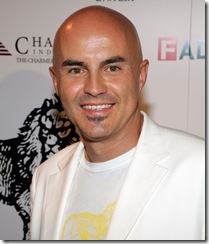
    Today we are featuring an interview with Rex Aspeling . Rex has been associated with the denim industry for a long time and though from South Africa , he has implemented a  large number of denim apparel projects worldwide. 

    Hi Rex. Welcome to Denimsandjeans.com. Tell us something about yourselves and your  company ?

    rex I Joined the industry in 1976 where I trained as a machinist and qualified as Industrial Engineer. Worked and operated in South Africa, Lesotho, Botswana, Malawi, Mozambique, Swaziland, China, India, Bangladesh, Poland, Malta, USA, Mauritius, Madagascar both for Vf  Corp and HD Lee as Director . Set up Supply chains or factories in all the above mentioned countries.

    My company Magic Sourcing offers an end to end sourcing service to companies looking to leverage the capabilities of the Asian supply markets with a strong focus on delivering savings to our clients’ bottom line.
    Working exclusively for the benefit of the client, with personalised teams, we cover the full sourcing cycle including market analysis, supplier qualification, supplier auditing, sample development, negotiation, selection and purchase order management (quality and logistics).

    You have been in South Africa for a long time. How large is the denim  industry in South   Africa?

    About 51585 million square meters were manufactured and 50453 million square meters were imported  The industry in South Africa has virtually disappeared because of imports and inflexible legislation.

    How many jeans do you think South Africa must be consuming ?

    Around 50 millions units

    South Africa was once an exporter of denim fabrics and jeans. But due to currency changes  , the exports have been severely affected. Do you see any changes coming up in this aspect?

    The factors affecting export are as follows:

    • A viable Exchange rate for manufacture in South Africa would be US$1.00=ZAR 8.00 + whereas currently it is around 7.2 rands to a dollar.
    • Only denim exports using fabric manufactured in SADC- South African Development Community * is duty exempt. This is in spite of the fact that we have no meaningful quality denim Manufacturer with Competitive prices.
    • Labour Cost

    * Currently SADC has a membership of 15 Member States, namely; Angola, Botswana, Democratic Republic of Congo (DRC),Lesotho, Madagascar, Malawi, Mauritius, Mozambique, Namibia, Seychelles, South Africa, Swaziland, United Republic of Tanzania, Zambia and Zimbabwe.

    How do you see denim fashion in South Africa changing over last few years? What are the latest trends in denim that you see ?

    Fits- Men’s and ladies fits have been increasingly important with Everyone developing fits to suit their target market.

    Embellishments The bling ERA is now part of every denim garment. It is no longer just a fancy embroidery stitch which branded the garment. Laser etching, Crystals, metallic threads and numerous other items now contemporary fashion.

    Wet Finishes- Stone washing has dissapeared and been replaced by Acid and neutral enzymes. Effluent is now a criminal offence with potassium permanganate banned by most customers.

    Dry finishes Standard damages on the waistline, hem and pockets is now the norm. 80% of jeans are now sold with Sanding/ Brushing and damages.

    Fabrication The addition of polyester because of cost has detracted from authentic denim.

    Price- Basic fashion at a price is sold by all chain stores. These basic denim jeans are great value for money and most people in South Africa now own one or 2.

    Premium Denim Most South Africans buy one of the aspirational denim brands. They are seen as must have’s even if they live in a shack.

    Latest Trends : Military details on the jeans.

    What would be average selling prices of jeans in South Africa ?

    Retail selling price is around  -R150 or  US$12.75    
    FOB  price : US$4.75

    Is there a market for premium denim ($100 plus) in South Africa ?

    Yes but limited .

    Which countries are the main sources as jeans suppliers to South Africa .Do you see any changes coming due to increasing costs in South Africa ?

    China is the largest supplier.
    Prices are a huge issue because of the 45% duty.

    And on a personal note , tell us about jeans that you wear  ?

    My jeans are made in my personal block in the new fabrications.


    To contact Rex, leave comments under this article ..

    denim jobs

  • International Denim Conference– On DVD

    conference denim dvd2

    The first ever two-day “International Conference on Denims & Jeans” was held at IIM Ahmedabad on 29th and 30th October under the chairmanship of Dr. PR Roy, Director – Fibre2Fashion and Former Group CEO, Arvind Ltd. The event was well attended by more than 500 delegates from the industry wherein the distinguished speakers presented an enlightening discourse on the global and Indian Denim & Jeans industry.

    The topics lined up at the conference ranged from Overview of the Indian and US jeans industry, Technology Developments and Innovations as well as Marketing Strategies in the Denim & Jeans sector, Recovery and Recycling of cotton waste, Branding and Retailing, Indigo wool and silk, Organic cotton denims and many more. The highlight of the conference was a panel discussion on denims.

    Speaking about the overall success of the denim conference, Dr PR Roy, Father of Denims in India had this to say;

    "I am extremely delighted the way the industry participated and supported this great event. This for the first time, allowed the denim and jeans sector stalwarts, to come under one roof and interact. I sincerely believe that this will substantially help India, to position itself as a leading global denim player in the foreseeable future".

    Supplementing to his views, Chakor Jain from VF Corporation added that "It was an honor to get an opportunity to present at the conference".

    Mr. Aroon Hirdaramani from Sri Lanka acknowledged "The conference was a great success. We found it very informative and were able to meet a large number of people from industry"

    Mr. Kunal Lekhadia from Kunal Organics made an indeed flattering remark by saying;

    "I must congratulate Fibre2Fashion for organizing such a great event. Your efforts were indeed commendable. I have never seen a textile show of this magnitude organized in India in such an efficient manner"

    To extend to the entire industry, a complete knowledge of this conference, Fibre2Fashion has come out with a DVD covering the full proceedings of the “International Conference” along with expert panel discussion on current and future prospects for Denim & Jeans Industry.

    Here is a detailed list of topics covered by various speakers during the conference.

    1. Inaugural Address
      Maheshwar Sahu, Principal Secretary, Govt of Gujarat
    2. Denim and jeans: A global perspective and India’s potential in a competitive marketplace
      Robin Anson, Managing Editor, Textiles Intelligence, UK
    3. Overview of Indian Denim Business
      Rajiv Dayal, Mafatlal Denims
    4. New Product Development in Denims
      Dr. PR Roy & Dr. JJ Shroff, Malwa Group
    5. Premium Denims & India "Branding & Retailing"
      Darshan Mehta, Reliance Brands
    6. Recovery and Recycling of waste in Denims
      Dr. Burger & SK Joshi, Truetzschler
    7. Denim" Offering From Ring & Rotor Systems
      Gerd Moche, Oerlikon Schlafhorst
    8. Organic Cotton & Denims
      Mahesh R, Arvind Ltd
    9. Sustainable Denims
      Manish Bansle, Dystar
    10. Jeans Manufacturing
      Manish & Sumit, Juki
    11. Panel Discussion on Denims
      Session Chairman: Mr. SK Gupta, Raymond Uco Denims
      Panel: Arvind Ltd, Chirpal, Aarvee, Bhaskar, LNJ Denims, Prashant, Ukil
    12. Overview of Indian Jeans Business
      Chakor Jain, VF Corporation
    13. US Denim & Jeans Industry
      Jenna Caccavo, Cotton Inc, USA
    14. Future Trend and Technologies in Jeans Treatment
      Enrique Silla, Jeanologia, Spain
    15. Marketing Strategies of Indian Denim Players to compete
      Rajesh Narkar, Malwa Group
    16. Innovations in Denim Weaving
      Terada, Tsudakoma, Japan
    17. Denim Warp Preparation
      Navin Agarwal, ATE
    18. Garment Finishing
      Sai Prasanna, Dystar
    19. Modified Starch for Textile Sizing
      Pradeep Bora, Anil Ltd
    20. Cotton Reuse, An Indian Perspective
      VV Mundhe, Acetex
    21. Advanced Functional Denims
      K Suresh, Clariant
    22. Spykar
      Sanjay Vakharia
    23. Reliance Trends
      Vipin Tyagi

    To buy the international conference DVD , just click here
    or on the image below .

    conference denim dvd2

  • Artistic Fabric Mills – An Innovative Denim Company From Pakistan

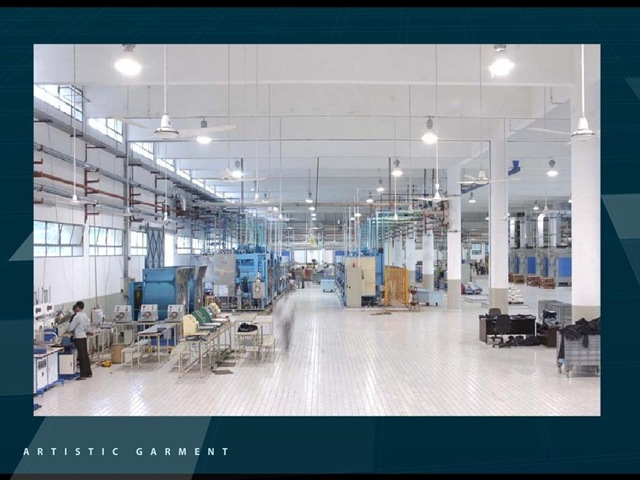
     image Pakistan had always had a strong textile industry due to historical reasons and an  abundance of cotton fibre grown in the country . However, the denim component has been developing the fastest in the last decade – with Pakistan touching almost 350 million mtrs of denim fabric production p.a. There are many players in the denim industry of Pakistan  , but some of them like Artistic Fabric Mills/ Artistic Garment Industries  stand out due to their innovative approach  . We thought it might be a good idea to speak to the owners  of the group – Mr. Javed Ahmed  and Mr. Iqbal Ahmed-  to know more about their companies and about Pakistan Denim Industry in general.

    Tell us briefly about the history of the company.

    Artistic has been a pioneer in the textile industry of Pakistan. It all started in 1949 with an enterprising man and his dream to own mills one day.

    In the last 60 years, with this vision the company expanded from a small retail shop to establishing many garment factories. The Artistic group has come a long way since its initiation. The 1990’s saw the first venture into the denim field. Vertical growth took new meaning and denim-weaving plants were set up. Artistic Fabric Mills (AFM) and Artistic Garment Industries (AGI) have recently expanded to become a fully vertical set up and are together one of the leading manufacturers of high fashion denim fabrics and garments in the region, offering high end customers innovative products, premium quality and efficient service.

    Presently, we have doubled our Fabric capacity with the help of our new Denim Mill -AFM 2, which has a 36 Rope Indigo Dyeing Technology. We will be looking to produce 40 million meters of Premium Denim Fabric annually in addition to 12 million Garments from our garment set-up, which includes an in-house State-of-The-Art laundry.

    Why did Artistic Garments choose denim as an area of growth ?

    I guess you could say Denim is in our blood !

    There are actually several factors that influenced us. For example raw materials; Pakistan is the fourth largest cotton producer in the world with an annual production of 14 million bales. This makes Textiles one of the most important industries in the country. We could have chosen other segments within this industry such as twills, home textiles etc. but we have always been very passionate about Denim. It is a fascinating product- always changing and evolving yet staying true to its core.

    Every season we see something new and innovative in this field and that really excites us. The glamour associated with denim is quite attractive as well. You constantly see it featured in movies, endorsed by celebrities, on the runway and now it’s making its way into Couture. Also, the various denim tradeshows provide an opportunity to network with denim lovers from around the world, teaching you a lot about the industry and its infinite possibilities.

    How do you think Artistic Fabric Mills is different from other denim mills in Pakistan?

    Firstly, we are one of the oldest Denim mills in the country. However, the oldest doesn’t always mean the best. Being the best is about Innovation, dedication, investment and a true passion for denim – all of which are qualities we pride ourselves upon.

    We like to think of ourselves as leaders in the Pakistan market rather than followers. The reason for this being that investing in the best technology and human resources is one of our fundamental beliefs. With a vision to serve the buyers better, we move forward with an experienced team of people and a strong orientation to latest technical know-how.

    Artistic Fabric Mills continuously strive to be the best by investing in superior R&D.

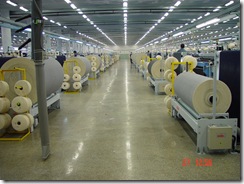
    We use only the finest quality dyes and liquid indigo. Our weaving department is equipped with the latest Projectile and Rapier looms. We have modern finishing and mercerizing set ups, with an added bonus of Stenter technology, through which we create premium finishes and coatings.

    AFM also has foreign fabric/yarn designers and technologists on board, who have a plethora of experience in this field. They have a good pulse on the future denim market trends and accordingly develop a collection with new colors and warps every season. In addition to this, we have an office in Los Angeles, California to keep up with the latest Denim Trends originating from the West Coast (the home of Premium Denim Jeans in the US). On the European side, our organization has a showroom in Stockholm, Sweden with a denim guru there to develop a broader and more versatile range of fashion concepts.

    There is a famous quote: “Even if you are on the right track, you will get run over if you keep standing there”. Therefore, we are always trying to innovate and improve ourselves. Our team has set high production quality standards and works hard to sustain them.

    All in all it’s our integral values that make us different. We have a loyal and sincere approach to our product and the customer. With us its about multiplying value, we believe in giving more value to our customers in return for their business.

    What are your other denim fabric styles, which are your best sellers ?
    artistic fabric mills We at Artistic Fabrics and Garments have a great relationship with Invista and our vintage stretch collection using their LYCRA® fiber always gets a great response from buyers.

    As far as our recent best sellers are concerned- For Womens The new Super stretch with soft hand feel and Jeggings have been quite popular recently.

    For Men’s Rigid, 100% cotton based subtle cross hatch constructions, heavier weights with Left Hand Twills and softer feels is one of our best selling category. Most popular are the black bottoming, pure indigo and green indigo shades. The coated and over dyed denim range is always a top favorite for designers.

    Coated denim seems to be getting popular. Do you also feel so ?

    Definitely. We have been very innovative in exploring different coating technologies and chemicals.

    Coating is the next big thing because of the high and lows one can achieve and the multiple washes that are possible. It adds a whole new dimension to the normal denim fabric and what wash experts can do with it. We see the trend growing with raw coated finishes and vintage looks.

    Artistic Fabric Mills will be launching the New collection of our coated fabrics at the Hong Kong edition of the Kingpins show in November.

    You also have a large garment division. Is denim the main product there?
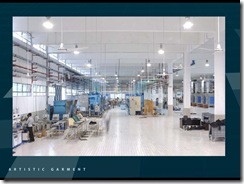
    artistic garment industries Actually, Denim is the only product at Artistic Garment Industries. 100 % of the garments are stitched using Denim fabrics. Primarily, we manufacture denim jeans and cater to all types of bottoms: Straight leg, boot cut, skinny etc. Apart from jeans, we also produce denim jackets.

    The output capacity is about 1,000,000 garments per month, which covers many different age groups from Toddlers to Adults. The production at AGI has been enhanced by our state of the art laundry facility, which was established in early 2007. This modern plant is equipped with the latest Italian washing machines and can be compared with any of the world’s top laundries.

    Which are your main markets? Would you like to share names of some of your main buyers with us?

    Roughly half of our exports go to the US market. The other half goes to the European market. Many of the Middle to Upper Tier Fashion Brands are our main buyers.

    What new trends do you observe emerging in the denim jeans silhouettes?

    Men’s silhouettes have remained fairly constant over the past couple of seasons. We’re used to seeing the usual straight leg or boot cut styles. Comfort Stretch seems to be getting more popular for men.

    On the other hand, the women’s collection has been tailored by major changes in fashion trends. While the boyfriend and skinny fits remain popular, leggings/jeggings are taking the markets by storm. We think the tapered/skinny boy friend along with skinny cargoes will be big soon. However, the women’s market changes more quickly so in the near future, the market will want something new.

    Pakistan denim industry is getting bigger. Can you tell us something about its size, growth etc ?

    It is getting bigger indeed. This means more competition for us. However, we enjoy the challenge.

    Presently there are about 15-20 denim mills in Pakistan, and about 35-40 companies involved in denim fabric or denim garment production.

    The Monthly Production is about 30 million meters of finished Denim Fabric.

    Direct Employment of 18,000 People in industry. A major part is employment on contractual basis.

    The Textile sector contributes to a 60% share in the exports of the country.

    Presently in Pakistan, Denim Production is on top in Textile Sector due to Export & Garments Industry. Export of denim has shown a 27% increase per annum in the Dollar value since 2005.

    Denim is now one of the key apparel sectors and the driving force behind the apparel exports of the country. Total apparel exports from Pakistan were approx US$ 1.23 Billion in 2008-09. This sector still has potential for further growth.

    (Statistics taken from the Pakistan Textile Journal).

    How does Pakistan compete with countries like Bangladesh and China for denim exports?

    As compared to Bangladesh, we have an advantage of having an abundance of cotton and greater experience in this field. Bangladesh is catching up fast and with their advantage of cheaper labor we often compete fiercely with them on price. Pakistan has an edge due to the availability of the Basic Raw Material though and having the Yarn locally produced. The AGI/ AFM nexus has the added benefit of a Strong Spinning Mill being part of our vertical set up. Pakistan has also benefited from a more favorable exchange rate for export in recent times.

    China has historically been a strong competitor but lately we feel we have come to par with them as the number of local trained Professionals and Technicians for the Denim field increases in Pakistan. We strive to continuously improve and enhance ourselves to rise above the competition from this region.

    The recent floods in Pakistan have caused a lot of devastation. Do you think the floods will affect the denim industry or the textile industry as a whole ?

    The recent floods really have been quite catastrophic. However, fortunately for the Textile Industry the flood waters did not affect any of the major urban cities. The main impact has been through the damaged cotton crop. There is some speculation that around 2-3 million bales might have been affected.

    Luckily in some areas that have not been hit by the floods, the rain has actually benefited cotton and this year Pakistan was expecting a bumper crop as some farmers had opted for cotton instead of rice and sugarcane so despite the damage, the total crop might equal last years amount. Furthermore, Pakistan will gain from the fact that next-door neighbor India has lifted the restriction on Cotton Exports and therefore, will import a fairly large quantity from across the border. So overall the rates should be at par with New York Cotton Exchange. We feel the Pakistani Textile Industry is quite resilient and will not be so severely impacted by the floods.

    How is Pakistan denim industry dealing with the environmental issues like waste water disposal etc ?
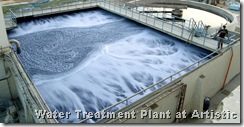
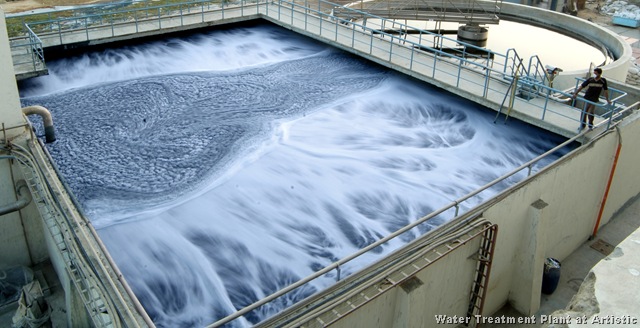
    WWTP One of AFM/AGI’s main goals aside from quality service and on time delivery to its customers is to be environmentally friendly and adhere to social compliances. Therefore over 4000 employees at AGI are enjoying all the social benefits, as we are compliant approved by all our customers. In the past we have been approved by ISO and we established a state of the art Waste Water treatment Plant (WWTP) in 2007 with the help of an Italian company ,

    What is your forecast for the demand growth in the next 2 years ?

    We predict that the next 2 years are going to be challenging but rewarding at the same time. Denim is a lifestyle and that culture will never cease so we hope it will grow bigger and better.

    There is usually a lot of movement in denim and currently we see a definite shift towards the Pakistani market. With our new mill coming up we are definitely looking forward to the near future as we constantly endeavor to upgrade ourselves with revolutionary ideas and adapt to the fast changes in trend.
  • Market For Blue Denim Jackets in US

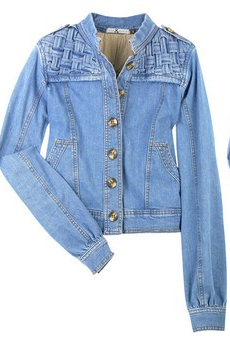
    image We have been hearing of a revival in the blue denim jackets and that the demand seems to be picking up in the same with some forecasters also suggesting a starting of a trend on Double Denim. But is it really so ?

    The figures don’t tell the same story. Lets take a look at the total imports of denim jackets in US in 2007,2008 and 2009


    US Imports of blue denim jackets in 2007-2009

    2007

    2008

    2009(Jan – Nov )

    2.9 million pcs 1.79 million pcs 1.30 million pcs

    Source : US customs

    The imports of Blue Denim Jackets in US has actually reduced over a period of 2007-2009. Though this data may not cover some other jackets which do not fall under the “Blue Denim Jackets” category, their quantity is expected to be small.
    Thus, the data belies any expectations of a great surge in denim jackets demand.

  • Is Denim In For A Boom Period?

    denim jeans boom copy

    Despite the economic recession ,denim was one of the few apparel items to have maintained positive growth during the last one year. However, some segments of Denim like Super Premium Denim had been had been hit by the recession ,causing sales to slump.

    However, now it seems that Denim Industry is in for a boom period.  What is the reason for this optimism. Well, it has got to do something with the  increased sales figures of denim jeans in USA and orders with the denim mills around the world.

    1. Sales of denim (women’s) into USA has increased 6.3% in the first six months of this year. The import figures for men’s jeans is also positive (I shall post the report on the same shortly)
    2. Denim fabric companies are full of orders. Companies in countries like India are full of orders for their denim fabrics. This portends well for sales of the next season. In my discussions with some other mills in China and Pakistan, the same positive sentiment was reflected.
      I am hoping that this positivity pervades in denim mills in other parts of the world too.
  • Levi’s India adjust pricing strategy


    Levi’s India plans to vacate the middle price segment and concentrate on the lower and the higher ends.Its Signature brand – which is the value offering – will see a further fall in price and start at Rs 900 instead of Rs 1000(USD 22 instead of USD 24 approx.). On the other hand, the premium segment will see an increase of about 15% in average pricing and increase to about Rs 2400(about USD 58). The report by Economic Times also mentions that in the next six months, the company will roll out its high-fashion, high-end brand Levi Rivet nationally.
    The company is also planning to increase its adspend significantly during the next few months as it sees a slowdown and counts on its advertising to perk up the sales and take an increasing share in the 10 million value jeans and about 3 million premium jeans market in India.
    Levi’s has been continously moving in the direction of vacating the mid-priced segement – as I mentioned in a previous post also and probably this is a sign of times to come for many large denim labels. The mid-priced segment of the Jeans is experiencing the miniumum growth and its share is being taken up by local brands who are more adaptable to local conditions (in India brands like Spykar,Killer etc)

    Related articles : Levi’s ipod Jeans in India
    Levi’s Footwear range in India
    Levi’s new model for India – actor Akshay Kumar