This is a technical article by Harry Mercer on the process of Shade control in Indigo dyeing. This is the third in the series. The first and second part of this article were published before .
Standard Illuminants
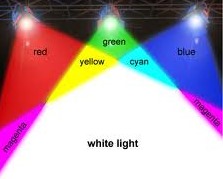
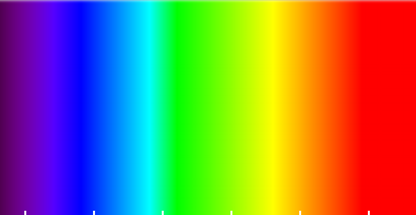 As stated earlier in this series, colour starts with a light source or illuminant. Illuminants have been standardized since 1931 by the Commission Internationale d’Eclairage (CIE). Illuminants are specified by a reference colour temperature such as 6500 degrees Kelvin., which is commonly referred to as D6500, (D identifying as a “daylight source). D6500 is a standard daylight illuminant in the United States and Northern Europe, originally to replicate light on the north side of a building in Chicago at noon. This specification of a light source by a colour temperature was originally established with a device known as a blackbody radiator. This is a small metal sphere with an opening which emits this specific illuminant when heated to a temperature of 6500 degrees Kelvin. Another example is Illuminant A, basically the colour of a tungsten filament lamp, which has a heavy red influence and a correlated colour temperature of 2856 degrees Kelvin.
Specular Component
“Specular†refers to the mirror-like quality of a fabric surface-the manner and directions in which light is scattered, which is a separate consideration from the colour itself. Appearance of a fabric is a combination of color and surface effects. The specular reflection of a sample differs depending on fiber characteristics, yarn count, yarn twist, fabric construction and finishing. These surface effects are neutralised during visual colour evaluation by using specific viewing geometries which relate the angle of the light source to the fabric and the angle between the human observer and the sample. For example, the 45˚/0˚viewing geometry, which neutralises the specular component, allowing a clear view of the colour only, means that the angle between the light source and the sample is 45˚ and the angle between the observer and sample is 0˚ or perpendicular to the sample. Colour measuring instruments offer this and other special viewing geometries to eliminate the specular or surface factors in measurement. If it is desired to include the specular component, then the option known as Specular Excluded (SEX) can be selected. The other option is include the specular component known as Specular Included (SIN). The Specular Excluded is superior for focusing on dyeing variation and prediction of washed colours, while Specular Included measurements are useful for rating the combined colour and physical differences of denim.
Tolerances
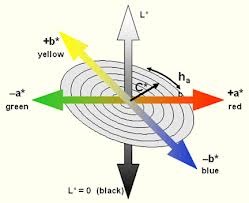
A tolerance, in regard to colour measurement, is a numerical difference between the standard color approved by the customer and the colour measurement of the fabric that was provided to the customer. In order to be indicative of a true visually noticeable colour difference, the tolerances should be established based on what a human being would recognize as a visual difference between 2 colours. As a general rule, if there is a total colour difference of ΔE equal to 0.2 between 2 samples, these samples can be considered visually different. With Indigo-dyed denim, this is also true if the colour difference between 2 samples has a value of ΔL = 0.2 in light-dark difference or Δb = 0.2 in yellow-blue difference. However, shades of Indigo are more sensitive in the Δa, red-green difference. In the U.S., it was standard to use a tolerance of only 0.08 for Δ a, meaning that if 2 samples differed by that much, they were considered different shades. This is not only because of the greater visual contrast in red-green differences, but also because of Indigo colour after washing. As Indigo develops a redder or less green shade, it loses colour in washing more quickly. For that reason, the Δa is a good general indicator of how easily Indigo will fade. Δh (hue difference) provides the same indication and is a more precise predictor.
Many denim operations, as well as other textile operations use larger tolerances to specify shade differences from standard. These can be as high as 1.0ΔE to distinguish a slight shade difference, but this tolerance size allows up to 5 different shades to be shipped to the customer as the same colour.
By the numbers
Only by intelligent use of available colour data can the extensive problems with managing shade variation in Indigo dyed denims be systematically brought under the control needed to conform to the customer’s expectations. Colour measuring instrument programs provide massive amounts of direct information that is objective, but the data must be studied and analyzed in order to effectively manage colour, which is the most critical factor in denim success. Factors such as Standard Deviation are the most useful in determining progress, or the lack of it, in reducing Indigo shade variation. The Standard Deviation will demonstrate the relative degree of variation in Indigo dyeing between companies, products, machines, procedures, workers etc. and is the best tool for setting objectives for managers. In far too many denim companies, little concern is demonstrated within the production areas for identifying the sources of colour variation. The standard approach is to resort to shade-sorting or tapering programs that only establish the degree of failure in colour management.
Recommendations
1) ILLUMINANT- Illuminant A has long been recognized as a better light source for distinguishing true colour differences in denim, because of the greater sensitivity of Indigo to red-green colour difference. This will increase the number of to allow the laundry to sort the fabric more reliably in terms of wash-fastness.
2) SPECULAR COMPONENT-While the Specular Included is normally used for fabric shipments, the Specular Excluded is more useful for evaluating the effects of dyeing directly, avoiding the influences of weaving and finishing on denim which is significant.
3) TOLERANCES-Review the colour tolerance used in shade sorting or tapering to determine if it is realistic and allows conformance to the customer’s expectation.
4) COLOUR ORDER SYSTEM- While the L*a*b* colour arrangement is in common use, the L*c*h*(chroma and hue) arrangement allows better communication between denim producers and customers. While the L*a*b* arrangement orders colour in a way that approximates how garment buyers see colour, the L*c*h* arrangement relates more directly to how colour managers, as in dyeing perceive colour.
5) EDUCATION-In order to raise the level of professionalism of those responsible for colour management, detailed, scientifically-based training is badly needed in the denim business in every sector in order to minimize dissatisfaction on the part of customers. There are training resources available from colour instrument vendors on line or colour experts for in-factory training. Selection of staff for colour nmanagement is critical since less than 5% of people are able to grasp the concepts involved, so objective evaluation of colour staff is necessary to maintain an image of professionalism.
 This is a guest post by Harry Mercer. Mr. Mercer has 30 years experience in the denim business including 3 prominent U.S. denim companies.He is an expert colorist for measurement and color matching as well as textile testing. He can be contacted here
Denimsandjeans.com Bangladesh – The first denim show in Bangladesh on 1st and 2nd March 2014. Don’t miss it !! Want to visit ? Get an invite here