Tag: Indigo Dyeing

  • Denim Pollution – Solutions To Sulphur Dyeing Wastes

    denim dyeing wastes

                            This is a guest post by Harry Mercer
    The problem of treating wastewater from denim dye waste is significant in many developing countries. Either the costs of treating these wastes affects profit margins or the waste goes untreated and is discharged directly into rivers.

    The most serious pollution problem results from the use of sulfur dyes in denim. Once the sulfur dye is applied the cotton is squeezed and washed. Typically, 50% or more of the sulfur dyes are washed off, producing water contamination that is difficult to remove from water.

    Techniques have been developed to greatly reduce and even eliminate sulfur dyes as a source of textile pollution:

    • Unlike most types of cotton dyes, sulfur dyes can be recovered and re-used. The contaminated water from sulfur dyeing usually contains enough dye and chemicals to produce lighter shades without additions of dye or chemicals. For example, the wash-water from sulfur-black dyeing can be concentrated through evaporation, filtration or it can be re-used by adding enough dye and chemicals to produce the standard shade. There are methods for titrating sulfur dye with copper sulfate, reducing agents can be added to bring the ORP to the correct level and the alkali can be titrated with a 2-endpoint titration with HCl and formaldehyde. Using these techniques, the sulfur dye can be recycled which saves money and ends the pollution. It should be noted that sulfur dyes precipitated with an acrylic type flocculant cannot be re-used.
    • I have developed methods for sulfur dyeing that fix the dye completely, so that none is lost in washing, leaving the wash water completely clear. Depending on the quality of the dye,  which reducing agents are employed and the pH of dyeing, various inexpensive buffers can be employed that will fix 100% of the dye which eliminates the colored waste and also reduces the amount of dye needed by a sulfur black shade by 50% or more.These  methods were developed over a 20 year period and have employed them  in Brazil, Ecuador, Indonesia,  Phillipines and Thailand.
    • There are also cold-dyeing methods that also eliminate the dye waste 100%, saves energy and has colorfastness approaching that of a vat black.
    • Reducing agents are a major source of Chemical Oxygen Demand. Sodium dithionite sold commercially as sodium hydrosulfite has a COD of 0.22 kilograms per kilogram of 100% hydrosulfite. Since it is normally produced using zinc metal as a catalyst, there is also  some presence of heavy metal contamination. There are non-polluting substitutes that can be used with many Indigo-dyeing methods. Sodium sulfide-type reducers are commonly used, however they can be easily replaced for hot-dyeing methods with reducing sugars which includes sugar, dextrins (corn-sugar) and molasses. These have been offered by chemical companies for decades and basically break down under conditions of high temperature and high pH (11) into hydrogen and alcohol, which both escape into the air.
    • Sulfur blacks do not require chemical oxidation, in fact peroxide will reduce the colorfastness of sulfur blacks and acid-oxidation will weaken the yarn. – After applying sulfur black, it should be allowed to cool in air which takes the dye out of reduction and allows oxidation with atmospheric oxygen. The initial washing should be  cold in order to avoid washing off any color and also to allow further oxidize with  oxygen-rich cold water. The final wash should be warm, about 60 degrees, which will  remove alkalies and residual reducing agents. If noticeable color is removed, the dyeing procedure requires adjustment.


    imageThis is a guest post by Harry Mercer. Mr. Mercer has 30 years experience in the denim business including 3 prominent U.S. denim companies.He is an expert colorist for measurement and color matching as well as textile testing.

  • Indigo Blue Dye: Not Only Blue – Some Interesting Facts

    indigo dye Indigo has been in use as a blue colorant for thousands of years as a natural dye, which was produced from the Indigophera plant in India and China and with woad in Europe. Indigo cultivation was introduced in the Americas in the 18th century, first in the West Indies and then in South Carolina. Indigo has throughout history been the colorant most in demand and current production levels are reported to be around 17,000 tons per year. Indigo was employed as a blue dye for wool primarily, until the 20th century, in fact, Indigo is a better dye for wool than cotton, being much easier to apply. There was another natural Indigo that was produced by shellfish at the eastern end of the Mediterranean Sea, known as Tyrian Purple, famous for producing the “royal purple” shade in antiquity. This dye is chemically different from the plant-derived Indigo only by the presence of bromine in the structure.

    In 1897, the BASF company began marketing synthetic Indigo which 002 - Indigo Dyegreatly increased the supply of Indigo-dyed fabrics. Once the technology for production of synthetic vat dyes was developed, a wide range of new colorants based on Indigo were available by the 1920’s. The COLOUR  INDEX , published by the Society of Dyers and Colourists in the 1924 edition, lists 54 colorants that were variants of Indigo !. The color range included the

    • Reddish brominated Indigo
    • Indigo Red
    • Indigo Yellow
    • Indigo violets
    • Oranges
    • Browns
    • Greys
    • Scarlets.

    In the 19th century natural Indigo was commonly used for printing and many of these new colorants were used for printing, especially of calico fabrics. The blue Indigo that is familiar as C.I. Vat Blue 1 is also referenced as C.I. Pigment Blue 66, when it is applied in printing.

    Other Indigoid colorants include:

    C.I. Vat Blue 5 produced by brominating Vat Blue 1 in nitrobenzene. In the 1990’s one U.S. denim company, Avondale, used this dye on a small 12-rope range to produce a fabric that was wildly popular in the fashion denim business.

    C.I. Vat Red 41, a bright red thioindigo which can be produced withindigo molecule thiosalicylic acid. This is a very versatile vat red in that it can be blended with blue Indigo in alkaline sodium hydrosulfite as in normal Indigo dyeing, be applied like a sulfur dye with sodium polysulfide in continuous or batch opertions as well as garment dyeing. Thioindigo possesses the unusual characteristic of photochromism, changing color on exposure to light. One way to test the dye in order to assure that it is thioindigo, is to disperse it in chloroform in which the color shifts from a violet to a yellowish-red.

    C.I. Vat Black 1 and C.I. Vat Brown 42 are simply mixtures of blue Indigo and thioindigo.

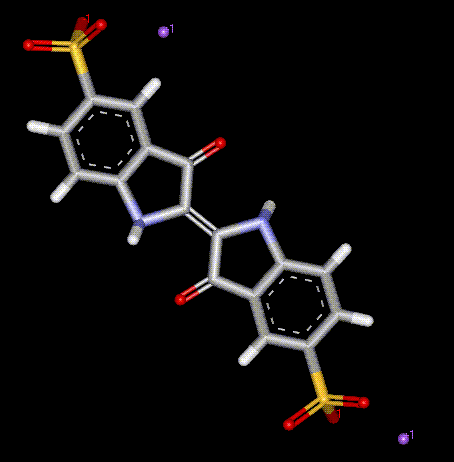
    C.I. Food Blue 1 is produced by sulfonating Vat Blue 1 in order toindigo food molecule produce 5,5′ indigotin disulphonic acid. This version is also listed as C.I. Acid Blue 74 and when insolubilized with aluminum salts becomes C.I. Pigment Blue 63. The highly-pure Food Blue 1 is used for coloring beverages, toothpaste, candy, mouthwash – in short, anything edible that is blue will use this form of Indigo, as well as use as a hair dye. Indigo has also been long in use to produce the blue color in fireworks !.

    Is Indigo Safe For Living Things?

    Indigo is so safe for living things that is has long been used to color medical sutures of  polyester, which is required because undyed-white sutures appear much like nerves and when the surgeon removes the sutures, the color prevents a nerve from being mistakenly cut. Originally, medical sutures were dyed with Indigo with solvents under pressure, but since then Indigo is dispersed in melted polyester resins, which are then extruded as filaments.

    All forms of Indigo exhibit the special brightness that is characteristic of the Indigoid structure and a full range of Indigo colors can be achieved readily on standard Indigo dyeing equipment by blending. Most of these dyes have steadily disappeared from market, having been largely replaced by the anthraquinones, however, they are simple to produce and perhaps there is a dye supplier that is interested in marketing this range of dyes, especially for the denim market !.

    imageThis is a guest post by Harry Mercer. Mr. Mercer has 30 years experience in the denim business including 3 prominent U.S. denim companies. He is an expert colorist for measurement and color matching as well as textile testing.

  • Dyes Used For Denim Dyeing – A Description


    This is a technical writeup on various types of dyes used in Denim Dyeing by one of our guest writers – Adnan

    Indigo Dyes

    Background

    Indigo, or indigotin, is a dyestuff originally extracted from the varieties of the indigo and woad plants. Indigo was known throughout the ancient world for its ability to color fabrics a deep blue. Egyptian artifacts suggest that indigo was employed as early as 1600 B.C. and it has been found in Africa, India, Indonesia, and China.

    The dye imparts a brilliant blue hue to fabric. In the dying process, cotton and linen threads are usually soaked and dried 15-20 times. By comparison, silk threads must be died over 40 times. After dyeing, the yarn may be sun dried to deepen the color. Indigo is unique in its ability to impart surface color while only partially penetrating fibers. When yarn dyed with indigo is untwisted, it can be seen that the inner layers remain uncolored. The dye also fades to give a characteristic worn look and for this reason it is commonly used to color denim. Originally extracted from plants, today indigo is synthetically produced on an industrial scale. It is most commonly sold as either a 100% powder or as a 20% solution.

    History

    The name indigo comes from the Roman term indicum, which means a product of India. This is somewhat of a misnomer since the plant is grown in many areas of the world, including Asia, Java, Japan, and Central America. Another ancient term for the dye is nil from which the Arabic term for blue, al-nil, is derived. The English word aniline comes from the same source.

    The dye can be extracted from several plants, but historically the indigo plant was the most commonly used because it is was more widely available. It belongs to the legume family and over three hundred species have been identified. Indigo tinctoria and I. suifruticosa are the most common. In ancient times, indigo was a precious commodity because plant leaves contain only about small amount of the dye (about 2-4%). Therefore, a large number of plants are required to produce a significant quantity of dye. Indigo plantations were founded in many parts of the world to ensure a controlled supply.

    Demand for indigo dramatically increased during the industrial revolution, in part due to the popularity of Levi Strauss’s blue denim jeans. The natural extraction process was expensive and could not produce the mass quantities required for the burgeoning garment industry. So chemists began searching for synthetic methods of producing the dye. In 1883 Adolf von Baeyer (of Baeyer aspirin fame) researched indigo’s chemical structure. He found that he could treat omega-bromoacetanilide with an alkali (a substance that is high in pH) to produce oxindole. Later, based on this observation, K. Heumann identified a synthesis pathway to produce indigo. Within 14 years their work resulted in the first commercial production of the synthetic dye. In 1905 Baeyer was awarded the Nobel Prize for his discovery.

    At the end of the 1990s, the German based company BASF AG was the world’s leading producer, accounting for nearly 50% of all indigo dyestuffs sold. In recent years, the synthetic process used to produce indigo has come under scrutiny because of the harsh chemicals involved. New, more environmentally responsible methods are being sought by manufacturers.

    Raw Materials

    The raw materials used in the natural production of indigo are leaves from a variety of plant species including indigo, woad, and polygonum. Only the leaves are used since they contain the greatest concentration of dye molecules. In the synthetic process, a number of chemicals are employed as described below.

    SOURCES AND USES: –

    A variety of plants, including woad, have provided indigo throughout history, but most natural indigo is obtained from those in the genus Indigofera, which are native to the tropics. In temperate climates indigo can also be obtained from woad (Isatis tinctoria) and dyer’s knotweed (Polygonum tinctorum), although the Indigofera species yield more dye. The primary commercial indigo species in Asia was true indigo (Indigofera tinctoria, also known as Indigofera sumatrana). In Central and South America the two species Indigofera suffructicosa and Indigofera arrecta (Natal indigo) were the most important.

    Natural indigo was the only source of the dye until about 1900. Within a short time, however, synthetic indigo had almost completely superseded natural indigo, and today nearly all indigo produced is synthetic.

    In the United States, the primary use for indigo is as a dye for cotton work clothes and blue jeans. Over two billion pairs of jeans around the world are dyed blue with indigo. For many years indigo was used to produce deep navy blue colors on wool.

    Indigo does not bond strongly to the fiber, and wear and repeated washing may slowly remove the dye.

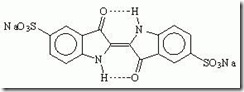
    Indigo is also used as a food coloring, and is listed as FD&C Blue No. 2. The specification for FD&C Blue No. 2 includes three substances, of which the major one is the sodium salt of Indigotindisulfonate.

    Indigotinesulfonate is also used as a dye in renal function testing, as a reagent for the detection of nitrates and chlorates and in the testing of milk.
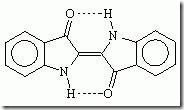
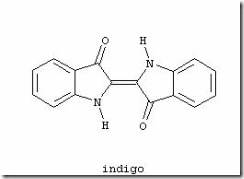
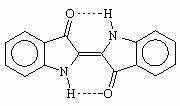
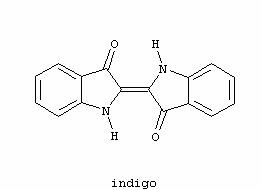
    clip_image002INDIGO MOLECULE

    CHEMICAL PROPERTIES: –

    Indigo is a dark blue crystalline powder that melts at 390°–392°C. It is insoluble in water, alcohol, or ether but soluble in chloroform, nitrobenzene, or concentrated sulfuric acid. The chemical structure of indigo corresponds to the formula C16H10N2O2.

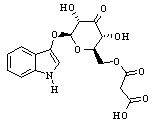
    The naturally occurring substance is indican, which is colorless and soluble in water. Indican can easily be hydrolyzed to glucose and indoxyl. Mild oxidation, such as by exposure to air, converts indoxyl to indigo.

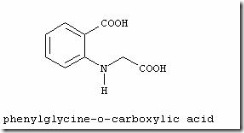
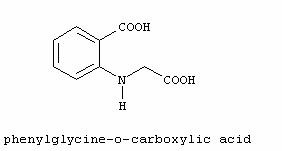
    The manufacturing process developed in the late 1800s is still in use throughout the world. In this process, indoxyl is synthesized by the fusion of sodium phenylglycinate in a mixture of sodium hydroxide and sodamide.

    Several simpler compounds can be produced by decomposing indigo; these compounds include aniline and picric acid. The only chemical reaction of practical importance is its reduction by urea to indigo white. The indigo white is reoxidized to indigo after it has been applied to the fabric.

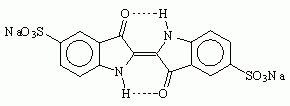
    Indigo treated with sulfuric acid produces a blue-green color. It became available in the mid-1700s. Sulfonated indigo is also referred to as Saxon blue or indigo carmine.

    Tyrian purple was a valuable purple dye in antiquity. It was made from excretions of a common Mediterranean Sea snail. In 1909 its structure was shown to be 6,6′-dibromoindigo. It has never been produced synthetically on a commercial basis.
    clip_image004

    INDIGO CARMINE

    HOW THE DYE WAS PRODUCED IN INDIA 

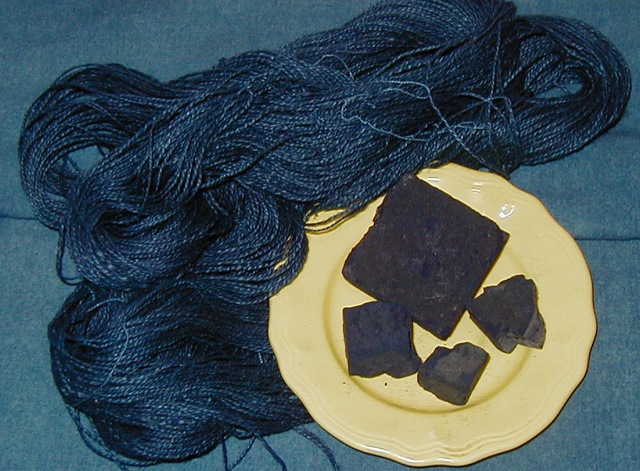
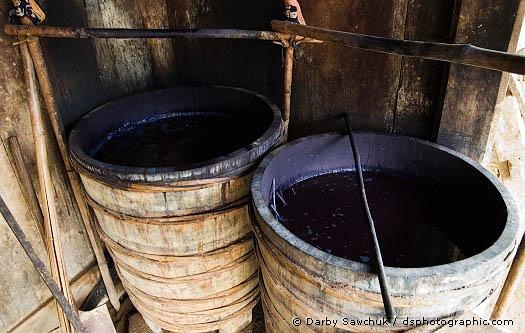
    The cut plant is tied into bundles, which are then packed into the fermenting vats and covered with clear fresh water. The vats, which are usually made of brick lined with cement, have an area of about 400 square feet and are 3 feet deep, are arranged in two rows, the tops of the bottom or "beating vats" being generally on a level with the bottoms of the fermenting vats. The indigo plant is allowed to steep till the rapid fermentation, which quickly sets in, has almost ceased, the time required being from 10-15 hours. The liquor, which varies from a pale straw colour to a golden-yellow, is then run into the beaters, where it is agitated either by men entering the vats and beating with oars, or by machinery. The colour of the liquid becomes green, then blue, and, finally, the indigo separates out as flakes, and is precipitated to the bottom of the vats. The indigo is allowed to thoroughly settle, when the supernatant liquid is drawn off. The pulpy mass of indigo is then boiled with water for some hours to remove impurities, filtered through thick woollen or coarse canvas bags, then pressed to remove as much of the moisture as possible, after which it is cut into cubes and finally air-dried Nature 1 November 1900

    Indigo dye is an important dyestuff with a distinctive blue color (see indigo). The natural dye comes from several species of plant, but nearly all indigo produced today is synthetic. Among other uses, it is used in the production of denim cloth for blue jeans. The form of indigo used in food is called "indigotine", and is listed as FD&C Blue No. 2.
    clip_image006

    PHYTOCHEMISTRY OF INDIGO

    Now just a bit of chemistry about how the compounds in plants are converted into indigo…

    clip_image008

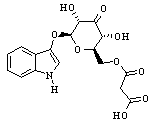
    In Indigofera species, the precursor of indigo is indican 
    (left), indoxyl-β-D-glucopyranoside,

    While in woad it is mainly isatan A (right)
    clip_image010

    INDUSTRIAL SYNTHESIS OF INDIGO

    Current world production of indigo is 17,000 tons/year, mostly (40%) produced by BASF in Ludwigshafen. That is where things started in July 1897, using a process developed by von Heumann. It started with naphthalene…

    clip_image011clip_image012clip_image011[1]clip_image012[1]clip_image012[2]clip_image014clip_image016clip_image018clip_image020clip_image022clip_image024

    VAT DYES

    Vat dyes are used in the dyeing and printing of all types of cellulose fibres, and also of blends of cotton with polyester. In their coloured form they are insoluble pigments, so their applications depend on reversible reduction-oxidation (redox) reaction. In dye bath the pigment is converted into a water-soluble form using a strongly alkaline solution of a powerful reducing agent. This form the sodium “leuco” compound of the dye, which is soluble in water but often different in colour from the original in pigment. It is then allowed to dye the cellulose in this water-soluble from once exhaustion is completed the leuco compound is oxidized.

    REDOX REACTIONS

    Oxidation-reduction reactions (redox reaction) are important in textile colouration because they are an essential part of the process of the application of vat and sulphur dyes. In rather oversimplified terms, when a compound id oxidized it gain oxygen when something is reduced it loses oxygen. Reduction of a substance can also be thought of as gaining oxygen atoms, and oxidation as losing hydrogen atoms. For example when hydrogen reacts with oxygen to form water the hydrogen to become oxidized and the oxygen is reduced. In a redox reaction there is always a compound acting a reducing agent (hydrogen in this example). The reducing agents become oxidized the reaction by the compound that is being reduced, which is acting as an oxidizing agent. (In this case oxygen)

    clip_image025 NaOH Na+ + OH

    Sodium Sodium Hydroxide

    Hydroxide ion ion

    In the water molecule each hydrogen atom shares the only electron it possesses by pairing with one of the six electron of the oxygen atom, to form a covalent bond. Thus the hydrogen atom has lost one electron to become oxidized and the oxygen atom is reduced by gaining electrons. This is a more general way of expressing the phenomena of oxidation and reduction.

    Oxidation = entails the loss of electrons by the oxidized compound

    Reduction = entails the net gain of electrons by the reduced compound

    vat dyes such as indigo and compounds derived from anthrequinone are applied after the temporary reduction of two carboxyl group in a conjugated chain, this convert the dye in to a colorless water insoluble form. The conversion is carried out using a strong reducing agent and in this reaction the two oxygen atom becomes reduced –O – and the two hydrogen atoms are oxidized to H+. The reduced form is called the leuco vat acid, and is applied from an alkaline. Once on the fibre it can be re -oxidized back to the insoluble carbonyl form by air or by the use of an oxidizing agent.

    Sulphur dyes are also applied using a redox reaction mechanism, in which sodium sulphide is used as the reducing agent,

    CHEMICAL NATURE OF VAT DYES

    A large majority of vat dyes are based on the anthraquinonoid or the indigo (or thioindigo) chromophores; indigo, one of the oldest dyes still in use, remains popular through the wide use of indigo-dyed anthrequinone dyes are complex polycyclic quinines (Appendix 1), and they all possess two carbonyl groups (C = O) linked by alternate single and double bonds in a conjugated chain. The molecular arrangement is responsible for the easily reversible redox reactions on which the application of vat dyes depends.

    In earlier countries, when all textile colorants where obtained from natural sources, indigo plant is steeped in a large vat. It is forming this ancient vatting process that the term fermentation vat dyes are derived. Fermentation converts one of the plant constituents into the soluble leuco dye, which diffuses out of the plant. The replacement of the natural by synthetic indigo at the end of the nineteenth century gave the imputes to research on other syntheses vat dyes have since followed.

    Synthetic vat dyes are costly because they are difficult to prepare, so their use is usually directed to the higher quality fabrics. Nevertheless, they are widely used and noted for their high fastness to light, in the dyeing of fabric for uses such as awning, curtains, upholstery, military and naval uniforms and high quality gabardines.

    High fastness to bleaching is another strong point of the anthraquinonoid group. This is exploited in the production of patterned fabric from vat-dyed yarn in which the white areas of the can be safely bleached out after weaving.

    Anthraquinonoid vat dyes are widely used in the manufacturer of for example good quality, shirting’s, table cloths, towels, sportswear, high quality over all, fabrics of women and children clothing and tropical suiting, and yarns and effect threads where repeated washing will be required. With careful dye solution, the use of vat dyes allows is that the range lacks scarlet, maroon and wide shades.

    APPLICATION OF VAT DYES

    Both the extent of reduction and the rate at which equilibrium between the reduced and oxidized from is achieved are of practical significance. Vat dyes vary in the speed with which they go undergo reduction (Na2S2O4), which is capable of completely reducing even the most stable of vat dyes. As a result any difficulties in vatting can be over come by raising the vatting temperature, increasing the concentration of reducing agent or prolonging the vatting time. The vatted dyes must be kept in a strongly alkaline solution, because its leuco from is an insoluble acid. If instead of being formed as its water soluble salt, it will not readily oxidize to the coloured form.

    There are still some application methods in which reduction and adsorption in the fibre take place rapidly and almost simultaneously. Under those conditions the rate and extent of reduction can be decisive factors in the dye stuff choice for example, in textile printing. Premature oxidation of the leuco compound in his print paste must also be avoided during both storage and steaming. This condition is usually met by using as the reducing agent sodium formaldehyde sulphoxylate (Formosul) a compound that is fairly stable in air at room temperature and develops the necessary action during steaming.

    Variables such as pigment practical size and crystalline from can affect the rate of reduction but these are controlled by the dye manufacturing. Consequently the colourist needs to concentrate only on the temperature and the concentration of reducing agent.

    Leuco compounds can be applied by batch wise methods similar to those used for other dye classes, but there are difficulties in obtaining leveling dyeing. The necessary high concentration of sodium hydroxide and reducing agent affect the exhaustion. The difference is that the option of reducing the concentration of the addition is not available, because they are needed to form the leuco compound. Serious leveling problems can be lessened by raising the temperature of dyeing and then cooling to obtain satisfactory exhaustion, or by using a dye bath auxiliary that restrains the rate of exhaustion. A different approach is to use specially formulated to stable dispersion of the pigment, in which form they are evenly distributed on the fabric by padding (pigment padding), followed by working the padded fabric through a of caustic soda and sodium dithionite on a jig. Pre-pigmentation can be carried out using package, jig, winch or beam dyeing machines provided specially formulated vat dyes are used. Once the pigmentation is completed, sodium hydroxide and sodium dithionite are added to the dye bath to reduce the pigment and allow the leuco day salt to diffuse into the fibre.

    Oxidation in air or in solution is then used to regenerate the pigment. A soaping treatment is given to the fabric at the end of the dyeing process this is essential, both for cleaning the dyed fabric and for developing the final shade. In some cases a change in the crystalline form of dye accompanies the change in shade.

    SOLUBILISED VAT DYES

    The need to reduce vet dyes before use makes their application a cumbersome process. Although it is possible to isolate the reduced form of the dye. It is too readily oxidized in air for the manufacturer to provide the dyer with the leuco compounds. it is possible however to convert the leuco acid into the leuco ester, a derivative that has greater resistance to oxidation and grater solubility in water. Such ester can be formed by the reaction of a hydroxyl group of a leuco acid with sulphuric acid forming a sulphuric ester. The sodium salt of such esters are stable and can be stored until required for use. Since the ester group is only weakly attached to the rest of the dye molecule, it is easily removed by the action of sodium nitrate in dilute sulphuric acid. The regenerated leuco compound may then be oxidized back to the pigment form.

    Solubilised vat dyes are less rapidly taken up than are the more conventional vat dyes and are mainly used for the production of pale shade. As with ordinary vat dyes application under alkaline condition is essential, thus eliminating wool from the list of possible substrates because alkaline condition modifies the wool fibres. The low up take and higher cost of solubilised vat dyes make them uneconomical for deep shade however and for theses normal vat dyes alternative have to be used.

    A interesting property of solubilised vat yes is their sensitivity to light in the solubilised state. This is used to produce “photographic” print on fabric.

    clip_image026R – OH + H2S2O4 R – OH + H2S2O4 + H2O

    Leuco vat sulphuric sulphuric ester

    Dyes acid

    SULPHUR DYES

    Deposition of insoluble pigments inside fibres may achieve more cheaply using sulphur dyes. But with these the shade gamut is restricted to back, mauves, olives, Bordeaux and reddish-browns. One of the earliest and best known sulphur dyes is Cl sulphur black 1, which is popular black with good fastness properties still in use today.

    Like vat dyes, sulphur dyes are reduced and applied as soluble leuco compounds that need to be kept under alkaline condition, but sulphur dyes need only sodium sulphide to act as both alkaline and reducing agent. A simplified the version of the reaction is represented in following equation. The structure of the chromophores of sulphur dyes is complex and unknown. Again like vat dyes, these dyes can not be applied to wool without damage to the fibres due to the action of sodium sulphide on the cystine cross links. After exhausting the dye bath for approximately 1 hour at 60-90Co the fabric is thoroughly rinsed and exposed to the atmosphere, where oxidation generates the mechanically entrapped insoluble pigment.

    One disadvantages of certain sulphur dyes (although, strangely, this problems appears to arise with the black shade only) is that dyed material stored under condition of high humidity and temperature can lose its nature strength. This is because inadequate washing-off after dyeing can lead to the slow generation of sulphuric acid in the fibre, arising from the presence of sulphur.

    Sulphur dyes are used mainly in the dyeing of cellulose fabrics and in blend of cellulose with polyester, nylon and acrylic fibres. Typical application is for heavy drill fabrics. Corduroys, overalls, denim, awning and canvas. Limited quantities are also consumed in the colouration of silk, paper and more widely, leather.

    clip_image026[1]Ar’ – S – S- Ar’ Reduction with Na2S Ar’ – S – S- Ar’

    About the author: Adnan is a textile engineer and working with a reputed denim garment company in Pakistan.He is looking after new denim developments.

  • Indigo Rope Dyeing : Some Important Technical Considerations

    rope dyeing

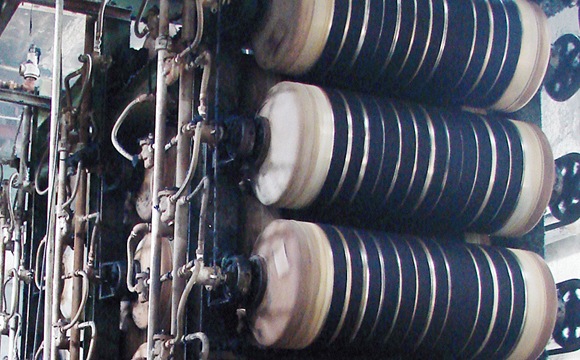
    Rope Dyeing is considered a superior dyeing technology where the dyeing uniformity achieved is better than other Indigo Dyeing technologies like Slasher Dyeing.
    However, Rope Dyeing is a also a more difficult dyeing technology. One needs to master its nitty gritties to get the best out of the system.

    I , recently came across a very well written article on Rope Dyeing and thought it appropriate to share here.  The article mentions in great details the technical points to be kept in consideration while using Rope Dyeing..

    Read on only if you are very technically oriented !

    Notes on Yarn for Rope Dyeing

    * Yarn faces stress and stretch at ball warping, rope dyeing, rebeaming, sizing and loom shed so elongation of yarn should be more than stretch at (ball warping + Robe Dyeing+ Rebeaming + Sizing )= (2-3%) + Loom shed (about 5%)

    * Tension at Ball warping should be less by 7-8% of single yarn strength.

    * Strength CV should be within limits as it may give rise to weak points

    * The tendency of yarn to migrate at rope dyeing can be countered by less micronaire of yarn ( should be around 3.8-4.2)

    * More dropping of short fibers at long chain beaming is good

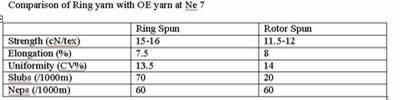
    *The sensitivity settings for neps is set at +280 for rotor spun yarn and not +200 as in case of ring spun yarn. The reason for this is that the structure of rotor spun yarn is intrinsically different from that of conventional ring spun yarn. Neps in rotor yarn tend to be spun into the solid yarn body rather than remaining on the yarn surface, which is typical of ring spun yarns. Although embedded in the yarn core, these neps still represent a short mass defect and will therefore trigger the imperfection counter upon exceeding the preset value. However, compared to neps that are attached to the yarn surface, fully embedded neps are barely perceptible for the human eye. Thus, in order to balance the typical visual appearance of rotor spun yarn with the imperfection counts, +280 sensitivity setting is a common convention for rotor spun yarns.

    Comparison of Ring Yarn with OE yarn at Ne 7

    oe yarn ring yarn for denim

    1.

    Process of dyeing of sulphur color in Indigo Dyeing Range:

    1st Wash tank: mercerisation by taking 22% NaOH ie. 250 gpl
    2nd Wash Tank: Hot Wash
    3rd Wash Tank: Cold Wash
    2. In 1st and 2nd dye bath take sulphur color 6-8% on the weight of the yarn sheet. Temperature 90 deg. cel. The solution contains the following:
    1. solubalised sulphur color: 150 gpl
    2. Na2S–> reducing agent: It is added to increase its reducing power
    3. Caustinc Soda –> 10 gpl–> reducing agent
    4. Wetting agent–> 2gpl
    5. Antioxident Sulphide ( Glucose paste–> 5gpl). This is added to prevent the oxidation of of Sulphide solution. It will always remain in reduced form
    ( Alos if the shade is slightly greyish, one can add tiny tinge of sulpher blue–> 20gpl)
    in III, IV and V dye bath–> cold wash
    in 6th dye bath. We take H2O2(30%)+Acetic Acid(2:1 by weight). H2O2 acts as an oxidising agent. But as it acts on neutral pH (=7) and after cold bath the solution is slightly alkaline, to make it neutral wil add acetic acid. Acs in alkaline pH, oxidising action of H2O2 will be similar to the bleaching action, which may cause tendering in the fabric.
    7th and 8th Dye Bath: Cold Wash
    Wash Box Number 4: Here washing is done with detergent and soda ash at 60-70 deg.c
    5th and 6th Wash Box: Hot Wash
    7th wash Box: Here softner is added at 25 gpl. It is cationic softener with pH 4.5 to 6.5. As during oxidation of sulphur, strength is reduced by 10%. On a yarn sulphur is of two types :
    1. Free Sulphur
    2. Reacted Sulphur.
    The free sulphur will react with moisture in the atmosphere to form:
    H2O + S –> H2SO4
    Which tenders the yarn. Now at acidic pH reaction is much faster. So we add only a small amount of softener (25 gpl) as against that in indigo which is 100gpl.
    3rd Point
    Over all during sulphur dyeing and storing, the yarn strength is reduced by 15% as compared to Indigo.
    4th point
    If ball formation takes place of sulphur dyed warp at loom shed, then we can taken in 4th dye bath little Na2S+Caustic to reduce the free sulphur.

    Technical Considerations in Rope Dyeing for Indigo dyed Denim.

    The passage of yarn in rope dyeing is as follows:
    Pre-scouring –>hot wash–>cold wash –> Dye baths–> hot wash–>cold wash–> application of softener
    lets discuss these processes one by one:
    Pre-scouring
    1. The objectives of pre-scouring are the removal of wax content from cotton, removal of trapped air from cotton yarn and Making yarn wet
    2. This is done at 90 o C
    3. We use the following ingredients at pre-scouring stage:
    Caustic Soda: Its quantity depends upon the quality of cotton fibres used in the mixing. Generally we take 2-4% of caustic soda. It removes the wax by the action of soapanification.
    Wetting agent: It is anionic in nature
    Sequestering Agent: Even with the use of water softening, it is very difficult to find the desired softness in water ( about 2-3 ppm) . So we use the agent to make the water soft.
    4. Why Trapped Air should be removed. The reason for this can be understood as follows:
    In 1 kg of yarn, there is approximately 2 litres of air. 1 litre of air decomposes 1.8 litres of Sodium Hydrosulphide. It will cause uneven dyeing and more consumption of Sodium Hydrosulphide ( hydro).
    5. Absorbency of yarn may be checked after scouring.
    Hot wash
    As some caustic is carried by the yarn after pre-scouring, so hot water is given at 70-800C. If this is not done, this yarn will go into the dye-bath which will change the pH of the dye-bath.
    Cold Wash
    After hot wash, yarn temperature is more. To bring it back to its room temperature, cold wash is given to it.
    INDIGO DYEING

    1. Indigo is not a perfect vat color. It may be called a trash vat color. The constant of substantivity for other colors is 30, for indigo it is only 2.7. So there is a need of 5 to 6 dye baths and make the use of multi-dip and multi-nip facility to increase the penetration.
    2. The dyeing is done at room temperature as indigo belongs to Ik class of vat dyes, where dyeing is done at room temperature and oxidation is done by air only and not by chemicals. If oxidizing agents are used, they will cause stripping of colors.
    3. Indigo is not soluble in water. So it is reduced with Sodium Hydrosulphide. Then caustic soda is added to make sodium salt of vat colors to make it soluble. To reduce 1 kg of Indigo, 700 gms of sodium hydrosulphide is required. However some extra SHS needs to be taken to avoid some decomposition of SHS.
    Practically it is prepared in the following sequence
    -Take indigo
    -Add caustic
    -Then reducing agent
    4. When caustic is added to indigo, it is an exothermic reaction. It is allowed to cool down, then before sending it to feeder, sodium hydro-sulphide is added. Reducing agent is not added first as it will be decomposed first, so consumption of it will increase. It is also not advisable to take solubalised vat, as offered by some companies due to the following reasons:
    a. If it is used after 6 months, there will be a decomposition of sod. Hydrosulphide. It will become partially soluble. Then to make it soluble again, more SHS has to be added.
    b. Transportation is difficult
    c. Cost is more
    5. Feeding System
    Rat of flow of yarn is given by
    ((No of ropes x no of ends x speed of machine)/ count x 1.693 x 1000)
    in kg of yarn / minute
    So we can determine the rate of feed of indigo. It is very important that replenishment of indigo is there as any variation will result in the change of shade and also if level is more, there is a problem of over-flow.
    6. If total capacity of dye bath for example is 15000 litres, then circulation must be 3 times the volume. If it is less then there are 100% chances of getting a lighter shade.
    7. Core and ring dyeing effect
    This effect is obtained by multidip-multinip facility
    8. pH of the Dye bath should be kept in between 10.5-11.5. At this pH , sodium salt of Indigo is mono phenolic form. At this form, the strike rate of dye is very high. So after washing, there will be a better dye effect. At pH 11.5 to 11.7, at this affinity is less, so dye effect will be less prominent.
    pH is controlled by the addition of caustic soda.
    9. Testing of Hydro
    TOTAL HYDRO
    We take 10 ml of indio with SHS in 30-35 ml of water. It is set for one minute and shaken. As air will decompose SHS. So vacuum created will fetch the water from above. If 3 ml of water is required, then concentration of hydro is 3 gpl. As a thumb rule, concentration of total hydro should be min. 1.5 gpl.
    REDUCED HYDRO
    It is the hydro that is used for the reduction of Indigo. It should be around 0.7 ( 1000 kg of Indigo needs 700 kg of hydro to reduce it). For testing we take 10 ml of dye solution and 30 ml of water and 5-6 drops of 40% formaldehyde and shake it for one minute. The water that goes gives the readings of the reduced hydro.
    Total Hydro- Reduced Hydro = free hydro
    If Total hydro is min. 1.5 gm/lit. then free hydro must be min. 0.5 gms/ litre which acts as buffer
    10. Also hydro reduction capacity is measured by mV meter which measures the Redox Potential.
    It should be around 760-800
    Through the day, the redox potential should be +- 20 mV of the norm. If it is more then the process control is a failure.
    Caustic–> It is around 0.4 to 0.5 times the hydro used.
    Washing
    Rubbing fastness of indigo is very important. On a scale of (1-4), it is 2. Washing is done to improve the rubbing fastness.
    Wash at 60 deg.–> Wash at 60 deg.–> Wash at room temperature–> wash with softener
    Why Softener:
    1. The rope is going to be opened at Long Chain Beamer. It the softener is not used, opening will be hampered.
    2. It is generally 1.2% of the weight of the yarn. It is a cationic softener. It is always having pH in the range of 4 to 55. Softening is done at room temperature. If high temperature is used there is always some chance of tendering of yarn.
    3. Concept of Buffer pH is given by Virkler USA, they say by addition of this, there is 40% less consumption of Indigo for same shade depth.
    4. Metering Consumption
    If solution is of 900 litres
    10% Indigo–>90 litres
    Hydro–> 90*.7 = 63 kg
    Caustic–> 63*0.445= 28 kg.

    It belongs to a VAT class of dyes. It has a dark blue color wit a bronze lustre. It belongs to KI class of dyes. In this class, dyeing is done at cold and air oxidation is done to reoxidise the dye. It can be applied on both cellulosic and protein fibres. For protein fibres, a weaker alkaline solution is used. It can be reduced by NaOH and Na2SO4 in water to give monophenolate and biphenolate ions as complete solution. Reduced form of Indigo is called leuco indigo. Leuco has got low affinity for cellulosic fibres. Dye take up can be improved by:
    1. Either mercerisation of cellulosic fibres before by dyeing
    2. or by adopting multidip, squeeze and airing process, so that dye is coated on the fibre layer by layer
    Indigo can be further developed into Halogenated derivatives and sulphonated derivatives. Halogenated derivatives give better fastness properties and brighter shades, whereas sulphonated derivatives gives a soluble blue dye, good dye and is applicable on protein fibres.
    reaction :
    Image 1
    Although indigo is a vat dye, it can be regarded as a ‘trash’ dye, the dyeing and fastness properties are in no way comparable to other class of vat dyes. It is due to these properties, that make it an excellent dye for denim. The on tone fading and the bleach down properties of indigo blue has generated a lot of denim jeans fashions like stone, ice faded looks, etc. These special effects cannot be simulated by the other classes of dyes.
    During Preparatiuon of stock vat, the following points must be remembered:
    1. Vatting temperture should be as close to room temperature as possible.
    2. Stirring should be minumum, unnecessary stirring affects the stability of reduced vat.
    3. Volume of the reduced vat should be kept constant for every stock vat batch, as the constant volume will ensure a constant replenishing amount.
    For rope dyeing system, with chemical replenishment
    with Stock replenishment
    Indigo: NaOH: Na2SO4 :: 1:0.8:0.8
    Without stock replenishment
    indigo: NaOH: Na2SO4:: 1:1:1.2
    Chemical Feeding
    NaOH: Na2SO4: : 1: 1.2-1.6
    ie. for approximately 60 gpl of NaOH–> 120 gpl of hydro is required

    Indigo Dyeing process control

    1. Concentration of Hydrosulphite
      It is measured by vatometer. It should be from 1.5 gpl to 2.5gpl , or by redox potential of dye bath which should be from -730 mV to -860 mV.
      2. Caustic Soda or pH value
      Should be from 11.5-12.5
      3. Dye concentration in Dye bath
      it is measured by spectrophotometer. It should be in g/l
      Guidelines
      High Indigo Concentration –> Shade is greener and lighter
      Low Indigo Concentration –> Shade is dull and Red.
      High pH or Caustic Concentration –> Redder and lighter
      Low pH or caustic concentration –> greener and darker
      Dipping Time
      Longer the dipping time, better will be the penetration and lesser will be the ring dyeing effect. It varies from 15-22 seconds.
      Squeeze Pressure
      High pressure will lead to lower wet pick up and result in lesser color and better penetration. At rope dyeing, squeeze pressure is 5-10 tonnes, ie. wet pick up is as low as 60%. Hardness of squeeze roller is about 70-75 deg. shores. It sqeeze rolls are too hard then there are chances of slippage and uneven yarn tension.. If squeeze rollers are too soft then shading will occur. Surface of the squeeze rolls should be ground twice a year.
      Airing Time
      It should be 60-75 seconds. Longer airing time results in high tension on the yarn and subsequent processes will become difficult.
      Drying
      Insufficient or unevenly dried yarns will result in poor rebeaming
      Calculation of Replenishing Dye feed/min
      Conc. of stock vat is g/l= 90
      range speed in yards/min=25
      count = 7s
      totoal ends = 4100
      Wt of yarn dyed /min= (4100*25*1000)/(7*840*202)= 7924 gms
      shade desired = 2%
      Amount of dye to be replenished/min= 158.5 gms
      Effect of pH
      At pH of 10.5 to 11.5, there will be formation of more monophenolate ions, which lead to higher color yield, as strike rate of the dye to the yarn bundle is very high, and wash down activities will be very good.
      At pH higher than this, dye penetration will be less and wash down characteristics are also poor.
      Testing
      1. Alkalanity in Dye Bath Liquor
      Pipet 10.0 ml of vat liquor into 100ml of distilled water in a 150 ml beaker. place under continuous agitation and insert the electrodes of a pH meter caliberated at pH 7.0 with standard buffer solution.
      Titrate with tenth normal HCl ( 0.1 HCl) to pH 7.0 (ml = A)
      calculate
      g/l of NaOH = A *0.40
      2. Hydro in Dye bath Liquor
      Add 2 ml of 37% HCHO to 150 ml beaker. Add 2 ml of dye range liquor . Add 6 ml of 25% glacial acetic acid solution prepared by diluting 1 part acid with 3 parts water. Add 2 ml of starch/KI indicator. Add ml of water. Titrate with 0.046 N ( prepared by diluting 460 ml of 0.1 N Iodine to one liter ) solution until the color changes from emarald green to bluish purple.
      G/l of hydro= mo fo 0.046N of Iodine
      Importance of High Concentration of Free Hydrosulphite
      The clearest shades with minimum reddish streaks are observed at by relatively high conc. of hydrosulphite. On the other side, with lack of hydrosulphite, the leuco indigo is less dissolved and thereby adheres to a greater extent to the fibres. With lack of hydrosulphite furthermore, the amount of unreduced dyestuff by oxidation at the upper level of the liquor and through activiation of unfixed dyestuff, gets separated from the fibrous material would constantly rise as the reducing agent for creating leucoform would be missing. Under these circumstances a reddish bronze like shade results due to dispersion of not reduced dyestuff in the yarn. The min. proportion of hydrosulphite should be around 1.3 to 1.5 gpl in case of rope dyeing and 3-4 gpl in case of sheet dyeing. Also to avoid the lack of hydrosulphite or Indigo at certain places in the immersion, vat, the whole quantity of the liquor should be circulated 2-3 times every hour.
      Reaction Time
      At very short reaction time, an adequate liquor exchange ( i.e. the amount of chemicals consumed and replaced by fresh addition of reduced indigo) is not assured. This has a negative influence on dyeing and depth of dye penetration. In addition to this the time available for diffusion of dyestuff until oxidation commences is too short. To ensure an even and good depth of dye penetration by dyeing in several passages, the reaction time should be 20-30 sec. for each vat (eg. at a speed of 20m/min for a reaciton time of 10 seconds, the immersion path should be maximum 3.3 meters).
      A reaction time exceeding 60 seconds should be avoided as the amount of dyestuff again get reduced and released may again supersede that of additionally take up dye stuff, resulting in higher shades.
      Softening Agent: 8 g/lit
      Drying: Rest humidity should be 30% and then sized.
      Addition of chemicals
      1. Red Tinge: reduce addition of NaOH, increase slightly Na2S2O3
      2. Darkish Red: increase Hydro
      3. Light Greenish: decrease Hydro
      4. Dark Green: Increase Caustic

    Indigo dyeing calculations

    For 12 ropes, at 24 m/min, of 344 ends of 14000 m length of 7s count.
    wt of yarn = (12*344*14000*100*453.6)/(7*840*36*2.54*1000) kg= 5000 kg
    at 24 m/min, a lot of 14000 m will be completed in 14000/24 = 583.3 min
    at 1.8% shade
    100 kg of yarn needs–> 1.8 kg of Indigo
    5000 kg of yarn needs –> 90 kg of dye
    at 100 gpl
    100 gms of dye = 1 lit of solution
    90 kg of dye = 900 litres
    900 litres should be completed in 583.3 min
    1 litre would be completed in = 583.3/900= 38.8 seconds
    so flow rate will be 38.8 seconds / litre
    Similarly flow rate of caustic and hydro can be determined
    Hydro is taken around 100 gpl
    caustic is taken around 90 to 100 gpl

    Indigo preparation sequence

    In a tank of 1000 liters:
    a. take 400 litres of water (soft)
    b. add setamol ws–> 4 g/l (stirring) ( dispersing solution)
    c. Add 100 kg of Indigo ( at 1.8 % shade -see the indigo calculations- stirring)
    d. add caustic soda –> stirring ( for solubilising and pH)
    e. allow to cool it for 2/3 hours
    f. Add hydrosulphide ( As reducing agent)
    g. Make the solution to 1000 l by adding water.
    If pH is fluctuating, if it is > 11.7 then hydro is added (2-3 kg), if (<11.2) then caustic is added.
    For 100 kg of Indigo,
    Caustic Required= 90 kg
    Hydro Required= 80 kg

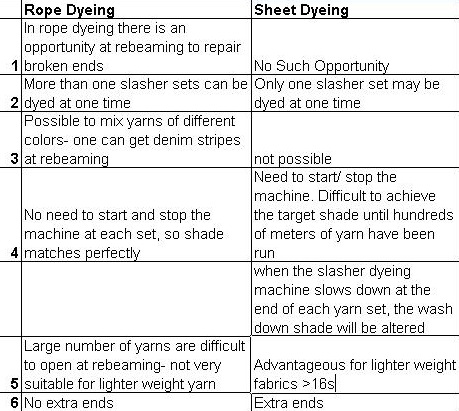
    Difference Between Rope Dyeing and Sheet Dyeing

    rope dyeing slasher indigo

    About the author : M Bilal Tariq has worked as a Deputy General Manager in a reputed Denim Mill in Pakistan . He is a textile Engineering Graduate and also maintains a Denim Blog