Author: Sandeep Agarwal

  • New Denim Data Sections Launched

    We are happy and proud to announce the public launch of  new data sections related to denim industry. These sections provide various kinds of information and data related to denim industry worldwide.
    To explain better, we have first created a video below from these sections which you can see here and then I can explain what these sections are about ..

    Denim Buyers in USA and Shippers Worldwide

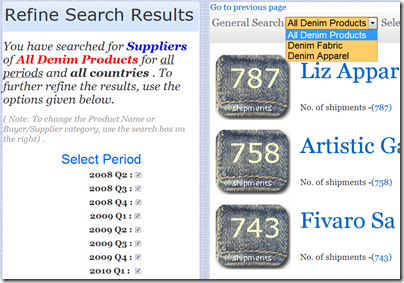
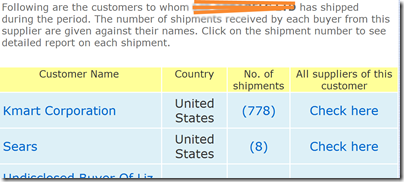
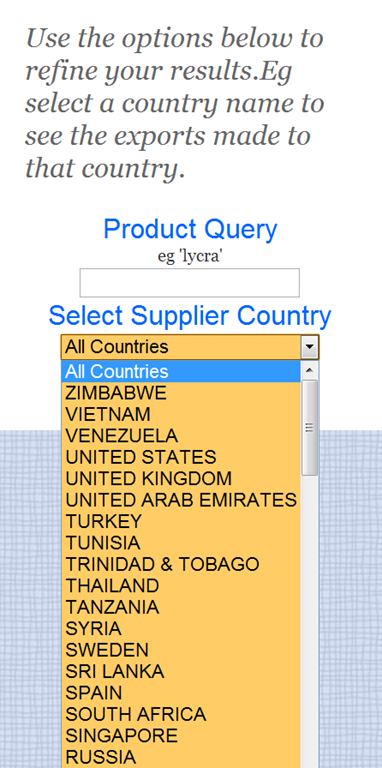
    This section gives micro information on the shipments made related to denim products from around the world to US . Thus it would be possible to find out which companies in US are buying what denim products from which factories and suppliers around the world  . The contacts of buyers and suppliers both would be visible so that the members can benefit from their availability. 
    Since the data is searchable, it would be possible to see , eg , which are the important suppliers from ‘Vietnam’ to US or to find the companies in US and around which are buying denim products from China.. 
    We have created the databases since the period starting 2008 mid.

    image

    shipper and buyers

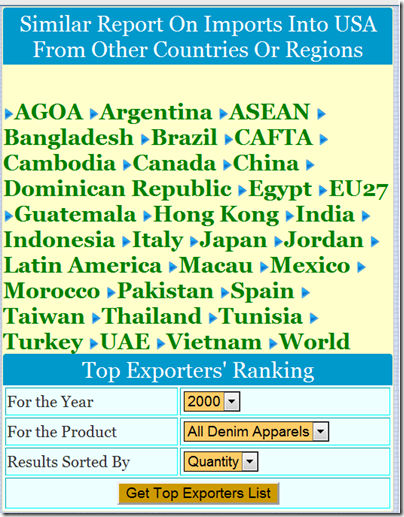
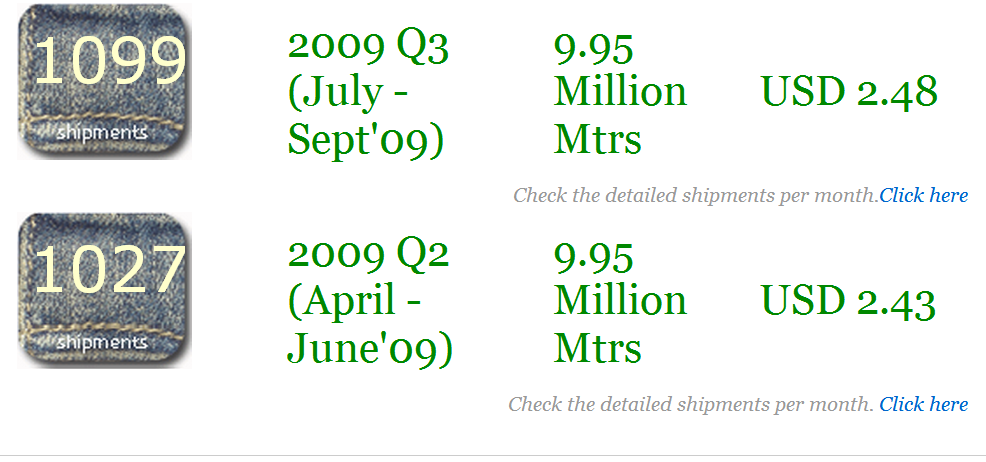
    Macro Data on Imports into US and EU

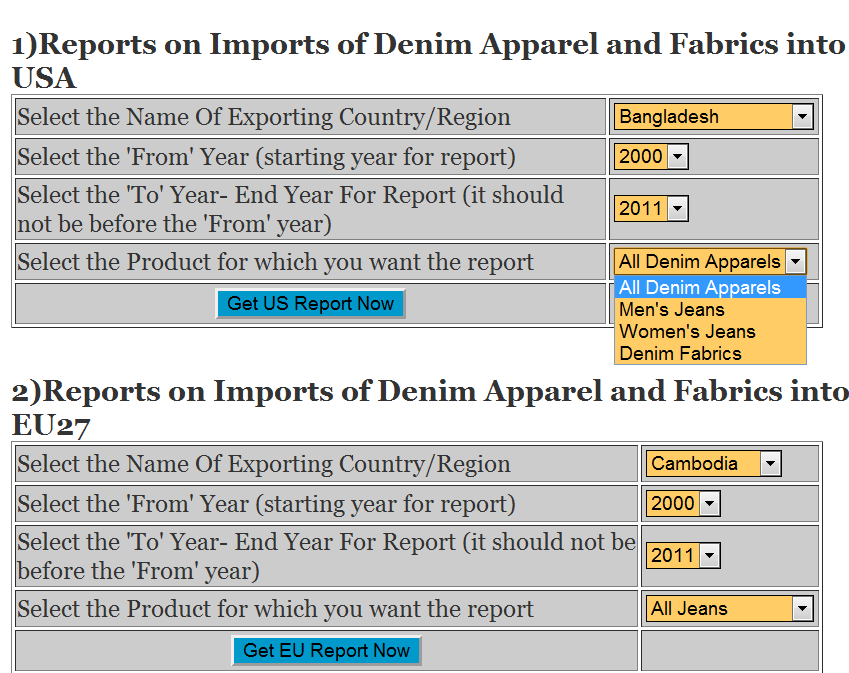
    • Want to find out how much were exports of Jeans from Bangladesh to EU in 2005
    • or from China to US in 2011 .
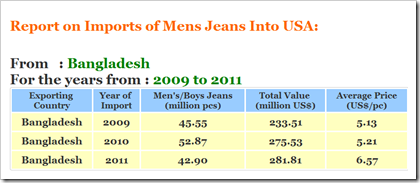
    • Check this section to know which countries are becoming important suppliers of denim products to these regions. Also find their average export prices and volumes etc.

    image

    image

    image

    The data shows shipments made from 2000 to the latest available period and is helpful in sourcing and management decisions.

    India Denim Fabric Exports

    Our third section deals with checking out the prices and volumes of shipments made by Indian denim mills to countries around the world .. Thus it would be possible to have an idea of fabric prices and trends for shipments made from India . Also, it would be interesting to find the countries where more Indian fabric is being shipped. But , no mills or buyer names would be available in these reports and these would be more of macro reports of statistical nature.

    image
    image

    Besides the above three, we also have a denim buyer section where buyers of jeans and denim products from some countries are listed.

    The above sections are constantly updated enabling our subscribers to get new info on a regular basis. To get more info on these sections including pricing etc, contact us here

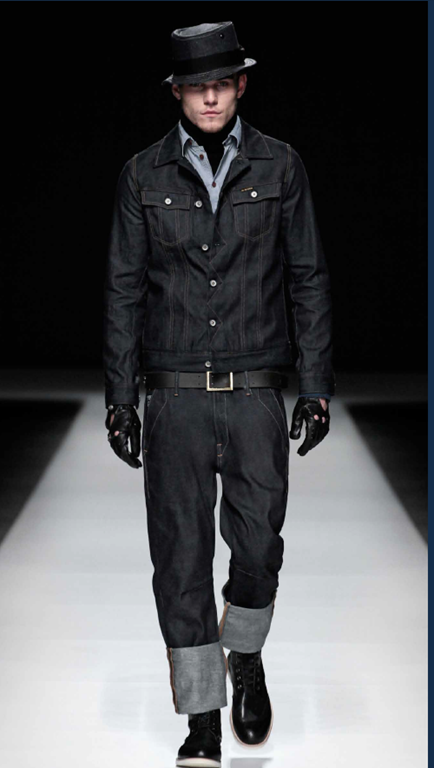
  • G-Star Autumn / Winter 2012 Collection

    image


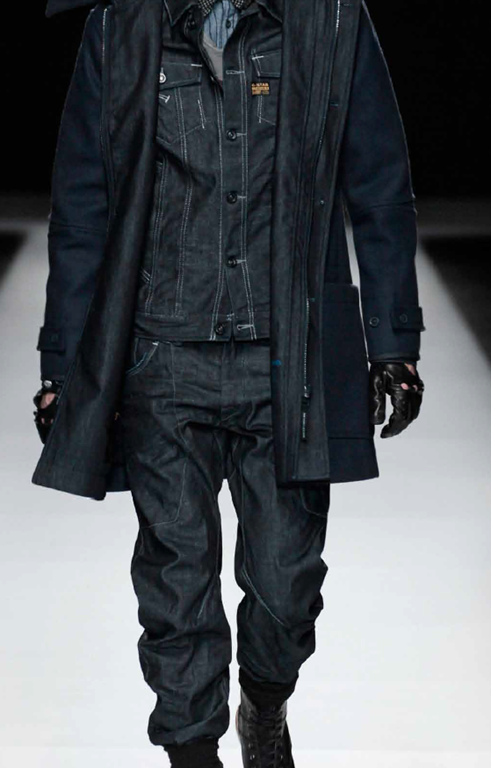
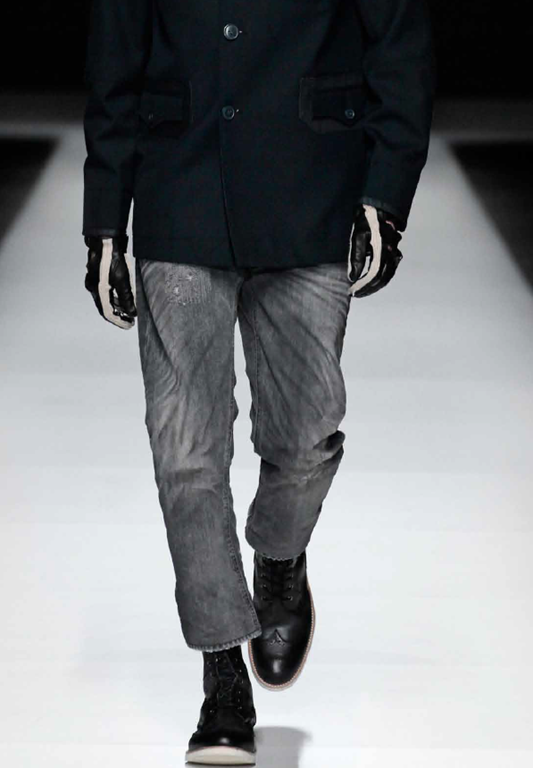
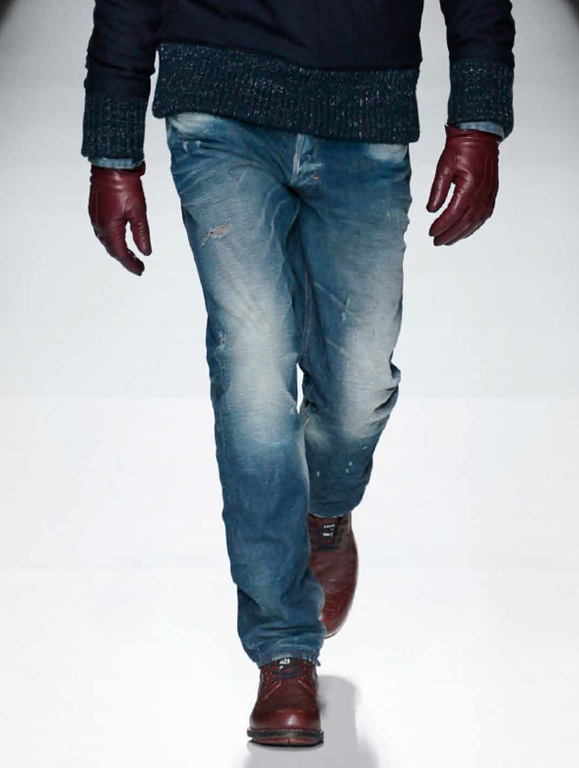
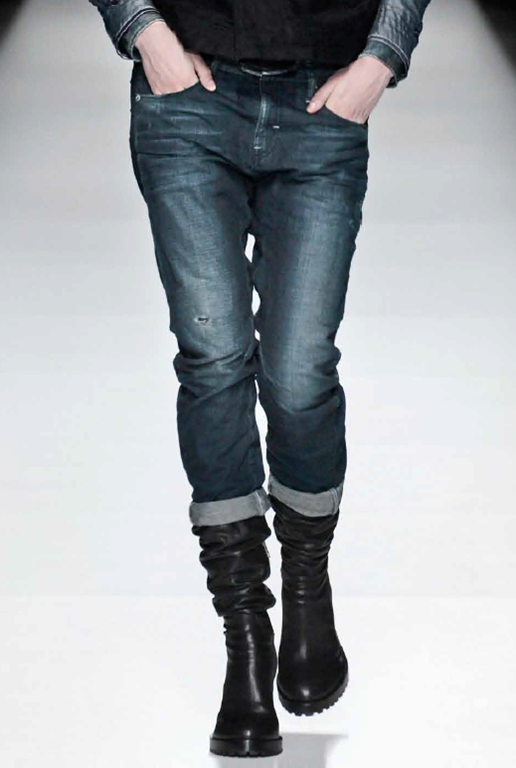
    G-Star , as always , comes out with some great denim products . G- Star Raw  collection has the following differentiating characters this Winter….

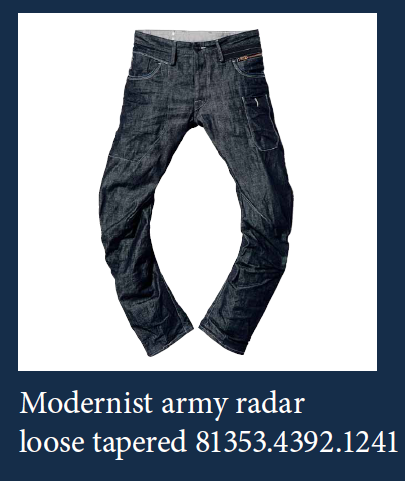
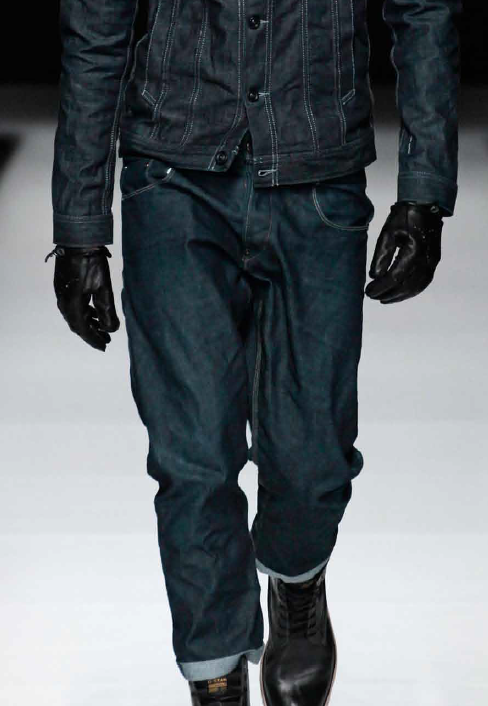
    • Key Style – this season key denim style is the Radar, due to its lowered pockets,this denim has a low slung look while actually not being worn low.
    • Washings – DeepTonesâ„¢, G-Star’s new and unique molecular treatment causes  denim to hardly fade when washed; making sure that dark denim stays dark for those denim freaks who love dark denim…
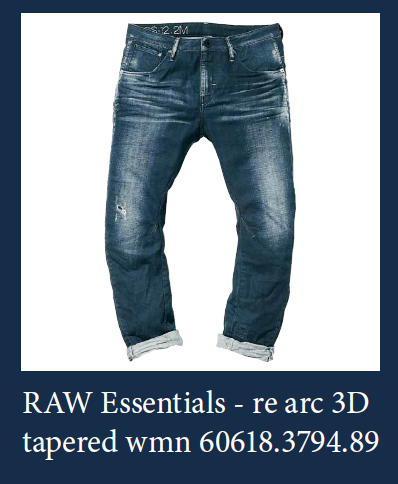
    • RAW Essentials – the top range of G-Star’s denim line, with tailored hand finishing and innovative washes applied to the finest European and Japanese selvedge denims.
    • RAW Correct Line – mixes formal wear tailoring with street wear details to create a dynamic, elegant and modern wardrobe.
    • Laundry Army – offers clothing that is comfortable and functional with military inspired details to give you a look that is cool and confident.

    We are presenting the collection here in two presentations  one each on Men’s and Women’s . This collection can be viewed online here :

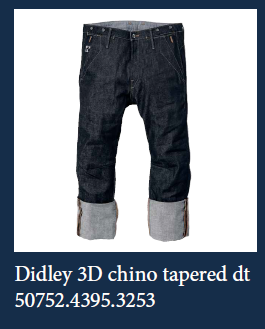
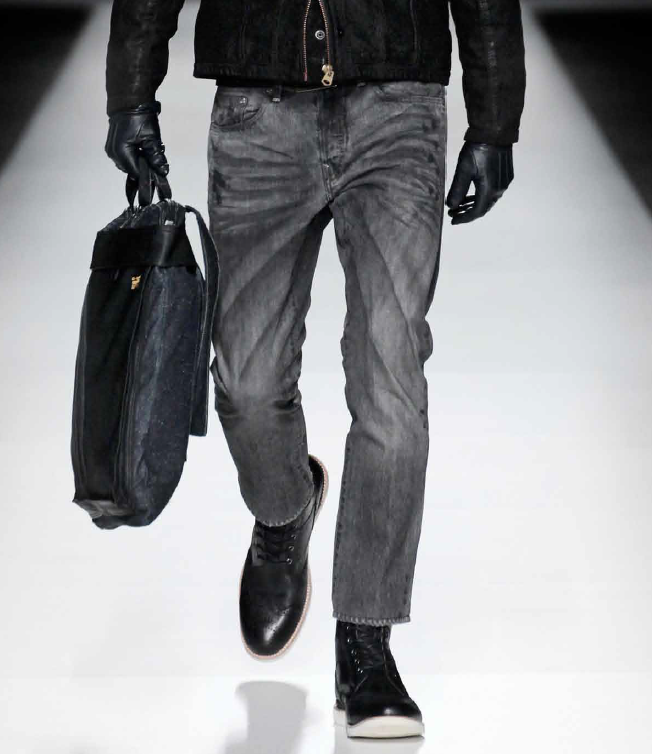
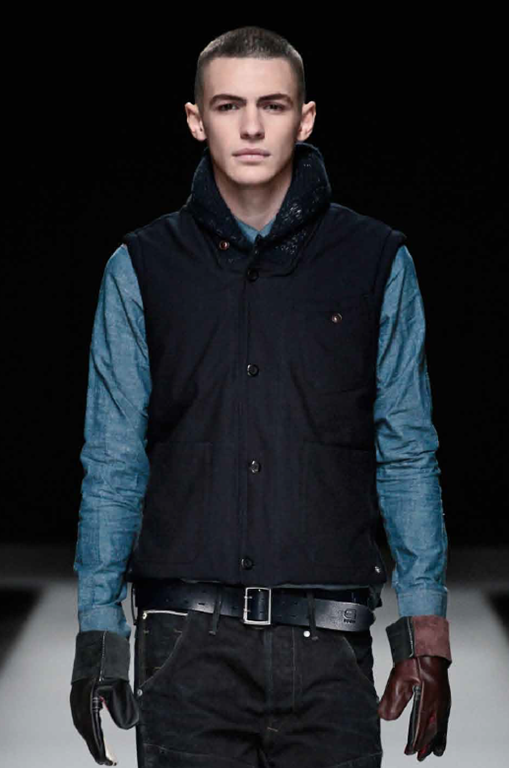
    Here are also some pictures from the collection.

    3D Chino tapered G Star Jeans3D Chino tapered G Star Jeans

    Modernist Army Radar G- Star Jeans

    Modernist Army Radar G- Star Jeans

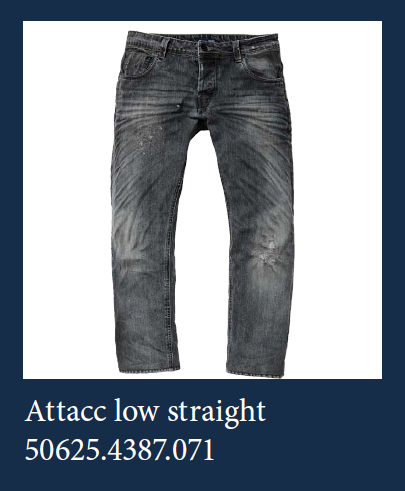
    Attac Low Straight G-Star jeans

    Attac Low Straight G-Star jeans

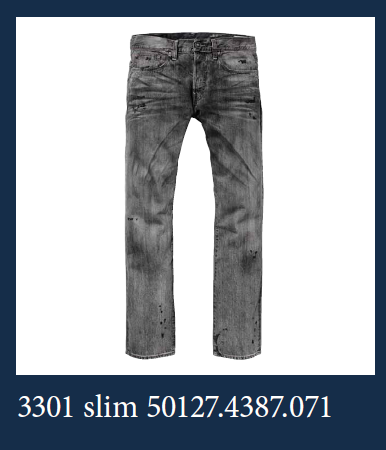
    G-Star 3301 Slim Jeans

    G-Star 3301 Slim Jeans

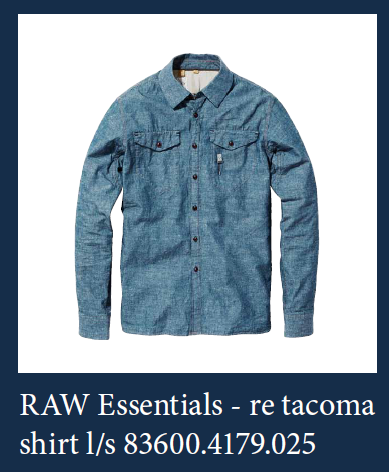
    Raw Essentials - re Tacoma , G Star

    Raw Essentials - re Tacoma , G Star

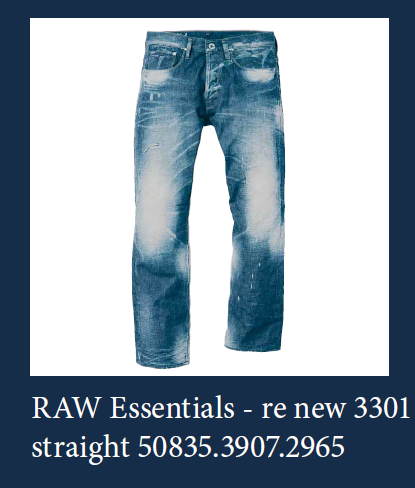
    Raw Essentials - re new 3301 G Star

    Raw Essentials - re new 3301 G Star

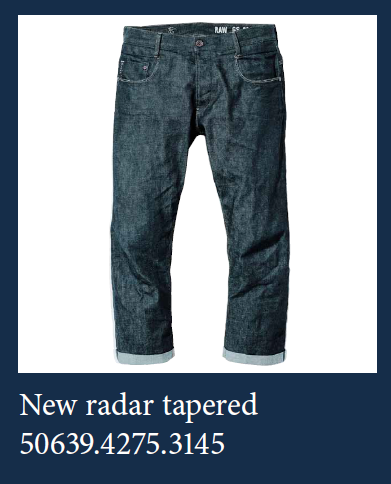
    New Radar Tapered G Star

    New Radar Tapered G Star

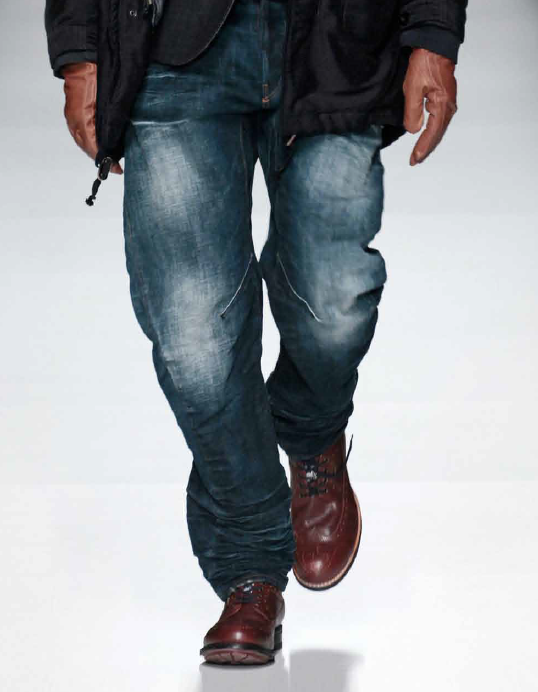
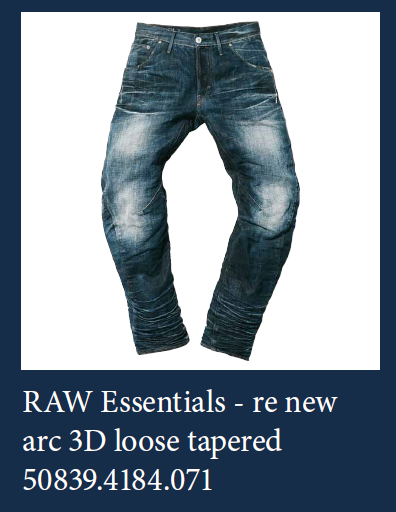
    Raw Essentials - Re new Arc 3D loose tapered G Star

    image

    raw essentials tapered women G Star jeans

    raw essentials tapered women G Star jeans

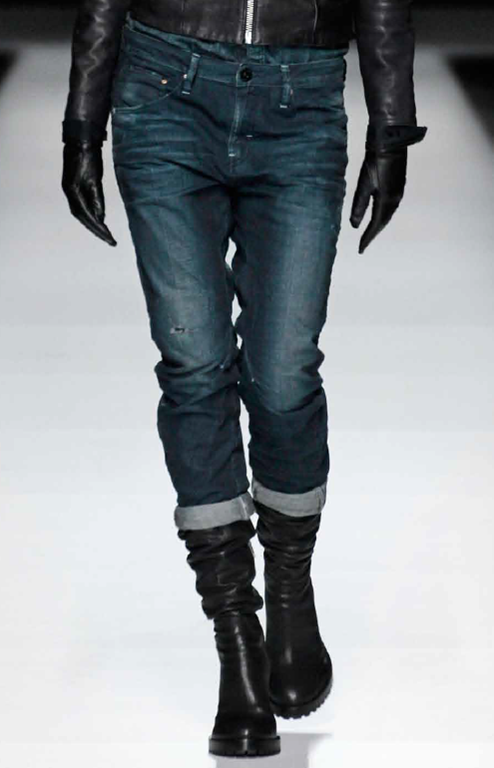
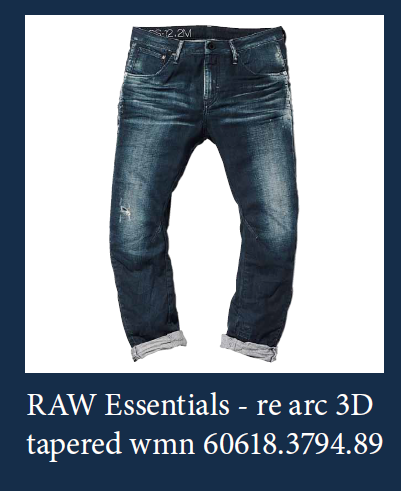
    Raw Essential Re Arc 3d Tapered Women G Star

    Raw Essential Re Arc 3d Tapered Women G Star

    Sponsored Link:
    image

  • Denim Mfg. Process : Part 1–Spinning

    Denim Academy - OrtaAs mentioned before , we are starting the denim production education series of articles. The content for these articles on various stages of denim production has been kindly provided by Denim Academy of Orta Anadolu – the premium denim mill from Turkey.  The first article concentrates on the Yarn production process upto the formation of Rope – ready for dyeing.

    Preparation

    Yarn Preparatory - Denim Manufacturing Process
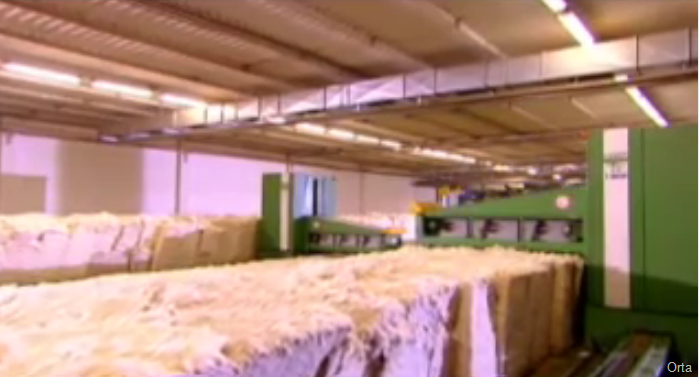
    Yarn spinning starts with the transfer of the cotton bales from warehouse chosen by a special software to the blowing room feeder as a initial step of yarn spinning process. From this point onwards, cotton undergoes preparation processes like cleaning, opening and blending with the content of other bales. During this process, the fibers which are too short are extracted.


    Carding

    Carding Process - Denim Manufacturing

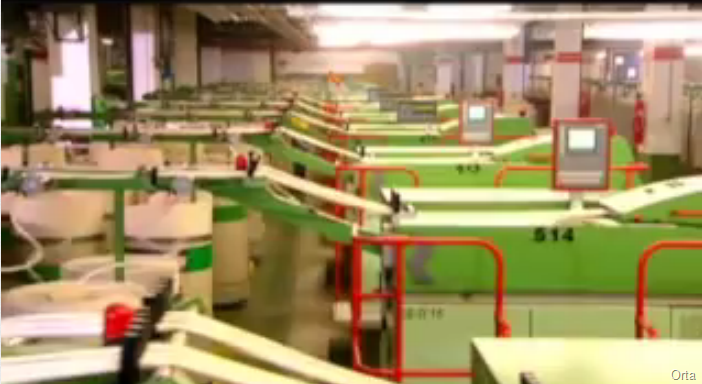
    The cotton fibers are then subjected to a carding operation that ensures that the fibers are parallel to each other. At the same time a vigorous and detailed cleaning of material to be used in yarn production is carried out in order to be ready for the next phase of manufacturing. As a result of the cottonCarding Process - Denim Manufacturing fibers are transformed from the compressed , randomly mixed material containing impurities to SLIVER which have been neatly stacked in cans ready for the next processes. The main processes in carding machines are;

    • Opening of the fiber bundles to separate
    • Removal of extraneous and dust
    • Elimination of short fibers
    • Removal of neps
    • Obtaining fiber evenness
    • Blending properly
    • Producing sliver from cotton fibers

    Drawing: Draw Frames

    image

    In draw-frames, slivers from different carding machines are brought together to form a homogenous blend and parallelism of the fibers is further enhanced. The fiber hook-ends that are a part of the fiber nature are flattened and fibers are further elongated.

    Roving Frames

    Roving Frames - Denim Manufacturing

    In order to monitor the weight per unit length of the Sliver under control highly developed electronic regulation systems are utlilized. The Sliver  from the drawing frame operation with uniform mass per unit length are further drawn out by the roving frame operation . They are then wound on to tubes which can be used on the yarn machines. Roving is the final step beforeimage yarn is produced.   In the roving frame process, A particular amount of draft force is applied on sliver where the yarn does not only get thinner, but also twisted to keep its strength, as the fiber quantity in cross-section area decreases.

    Spinning – Ring Frames

    Spinning Process - Denim Manufacturing

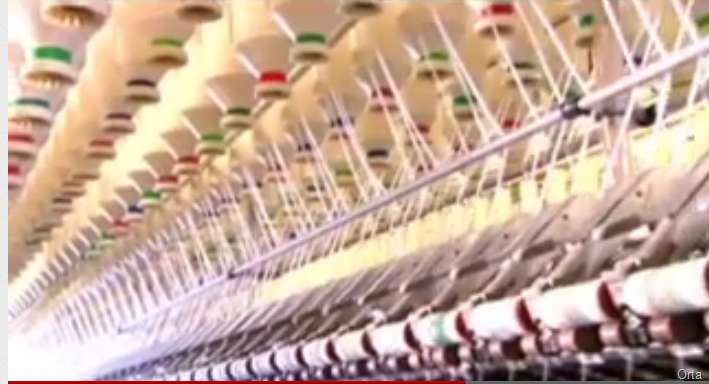
    After this operation ,the Rovings are subjected to a further  drawing out operation on the ring machines and are further thinned out to the required yarn thickness. During this operation the yarn gravity is subjected to a twist in order to give it the required durability. The ring machine determines the surface  structure  and the  physical attributes of the yarn being produced. Due to the yarn production system that can also produce effects, the yarns can be given the effects that will determine effect the visual appearance of the fabric. It is worth noting that all the yarn production machines at Orta have the ability to create effects in the yarns. The Spinning frame sets the yarn count by adjusting the draft, gives required amount of twist and winds it on to the cops (small tubes).  The yarn produced through Ring Frame is more soft and has more strength and character as compared to those produced by the Open End machines.


    Winding

    Winding Process - Denim Manufacturing

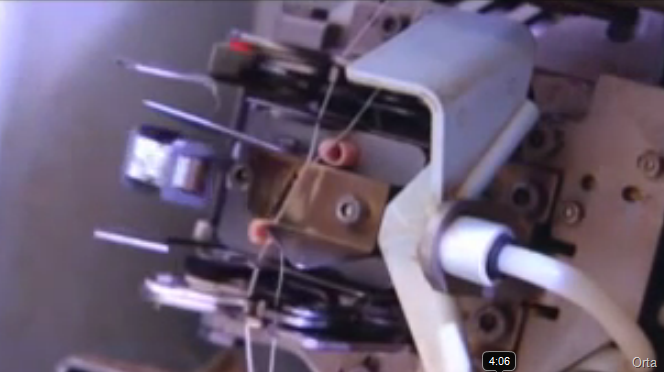
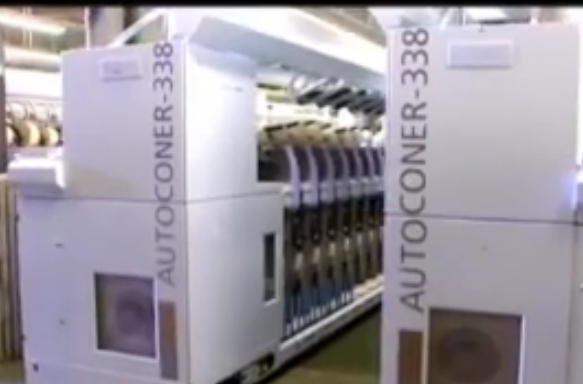
    The last phase of the yarn production is the Winding Process. Here the cops produced by the ring machines are spliced (joined) together and transformed into the bobbin format of specific length . The Splicing process is very important from the point of view of productivity of the subsequent phases where bobbins will be used and final appearance of the fabric. During the winding process , the yarns are monitored forWinding Process - Denim Manufacturing every mm of the way by high technology sensors on the bobbin machines and the faulty areas that may affect the texture of the fabric are eliminated. Any yarn defects (unevenness, yarn count, thin&thick places etc.) are detected and removed during winding.   Yarn spinning is completed by winding process.

    Ball Warping

    Creel Section - Ball Warping : Denim Manufacturing
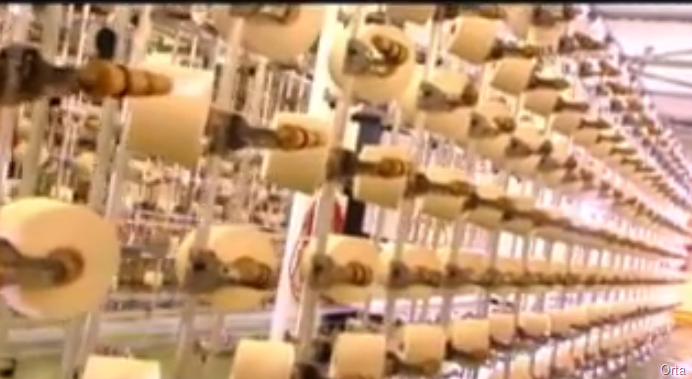
    Ball Warping –from the point of view of color quality and authentic appearance is the preliminary preparation for the Rope Dyeing System- which is the preferred system of denim production. The yarns that will be used in the warping of the fabric are stacked in the ball warping machines Creel section and all brought to the front of the machine to be transformed  into Rope . The Rope thus produced and Cones are warped as ropes at ball warping and prepared for Indigo rope dyeing process.

    Check out the entire spinning process from video below provided by the  Denim Academy .

    Denim Manufacturing Process–Yarn Spinning

    Contact the Denim Academy

  • Denmark : Denim Jeans Imports 2010-2011

    denmark denimDenmark , with a population of only about      is a small country  compared to many other countries in EU with a population of only about 5.5 million . The Danish apparel retail is valued at over $6.5 billion and is sizeable for the country of such a small population.   The country has a decent consumption of denim garments due to popularity of denims and it is estimated that the per capita consumption is about 4 jeans per person p.a with over 20 million pieces of jeans sold in Denmark.

    So where do the jeans come to Denmark from ?

    The jeans most come to Denmark in big quantities from

    • China
    • Turkey
    • Bangladesh

    and small quantities from Pakistan , India etc. China enjoyed a market share of about 50% in the total jeans imported into Denmark in 2010. However , within a year , it lost about 4-5% points and the share is being taken up countries like Bangladesh, Turkey, Pakistan and India. This reflects the growing

    Lets have a look at the quantities and prices at which the jeans are coming to Denmark  from some of the important exporting  countries in 2010 and 2011 …

    Country

    2010( qty in million pcs)

    2011
    (qty in million pcs)

    2010 (Price in Euro/pc)

    2011
    (price in Euro/pc)

    China 10.21 8.76   6.28   6.58
    Turkey 5.22 5.44 14.37 16.27
    Bangladesh 1.84 2.84   4.21   5.85
    India 0.35 0.91   8.50   9.42
    Pakistan 0.29 0.34   8.14   9.24

    Looking at the table above , it is clear that China is losing market share rapidly due to rising costs. Also, its surprising to see that Turkey is gaining share – reflecting that speedy turnaround and very high quality garments are required for this market and the prices touching Euro 16+ are not less either. 
    Bangladesh and India are quickly gaining share of the market though the prices that India gets are far above those of Bangladesh.

    Sponsored Link:

    image

  • Colombia Denim Buyers

    Colombia Denim Report - BuyersWe are listing herebelow some buyers of denim fabrics from Colombia who have bought denim fabrics in end Dec 2011 from various denim mills around the world.  These buyers have bought denim from mills in Mexico , Turkey, US, Brazil, Taiwan and many other countries. Also given in this report are :

    a) Name of buyers who bought denim fabrics from different mills.
    b) The names of mills from where they bought the denims.
    c) An idea of the products they bought and the prices at which they bought – this gives a fair idea of the quality of the buyer .
    d) Contact details of these buyers.

    This report is available to our subscribers of Special Reports

    [private_special]

    Buyer in Colombia Suppliers from world Qantity (sq mtrs) Prod. Desc Price (USD per sq mtr)

    MERCADEO Y MODA S.A

    Isko Denim ,Turkey

    69,136

    Pedido 3791 4.81

    PERMODA LTDA

    SUMMO TEXTILES CORP ,Panama

    63,873   4.89

    PERMODA LTDA

    SUMMO TEXTILES CORP ,Panama

    62,073   4.82

    FLORAL S. A

    Tavex ,Brazil 86,448 TAVEX-TA004767 2.92

    COMERTEX S.A

    MANUFACTURAS KALTEX SA DE CV , Mexico

    73,944   2.45

    Here are some details on these buyers :

    MERCADEO Y MODA S.A

    Cl 14 52a 370 Lc 201; Medellin; Antioquia, Colombia
    Phone : +57-4-4489010
    Contact Person : Juan Camilo Mejia Lalinde
    MNG, Spanish clothing sales company in Colombia has a history of 5 years. Currently engaged in the manufacture and sale of Garments brands Mango and Zara

    Permoda LTDA

    Cr 60 N No 11 – 00 In 2 ; Bogota; Cundinamarca, Colombia
    Phone: +57-1-2948999
    Involved in the Creation and marketing of brand clothing and complementary accessories to clothing,including footwear, jewelry etc.

    COMERTEX S.A

    Cra 17 Autopista Palenque Chimita No 60-170; Giron; Santander
    Phone: +57-7-6760000
    Website:http://www.comertex.com.co/index.php?idi=2

    Comertex began operations in 1974 as a family business trading in textiles as a result of a clear mission of the changing environment has established itself as one of the most solid companies in the country.

    Floral S. A

    Cod Uap 600 Nit 800 147 745 2 Carrera 52 No 19 80 Medellin Colombia
    Phone: 574-444 8886

    [/private_special]

  • Denim Academy By Orta Anadolu

    Denim fabric has a particular production process which is closely connected with garment manufacturing and laundering. It has its unique terminology and practices, which have been cultivated by experience. Being the supplier of globally known brands and manufacturers, Orta Anadolu, the premium denim mill from Turkey , tries to share its know–‐how and experience with its partners. In 2002, Orta launched “Denim Academy“. Denim Academy is a training program and online reference dedicated to all aspects of denim fabric production.

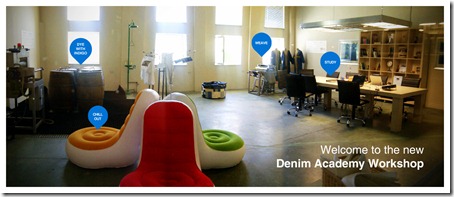
    DA studio

    The aim was to Integrate all essential information which would help resolve conflicts and develop solutions for brands, manufacturers and laundries. It is mainly intended for Orta customers, but academicians and students also visit the academy. Denimacademy weaving workshop

    The training program is based on a 2–‐day workshop at Orta’s Kayseri factory. Cotton, yarn spinning, weaving, dyeing, sanforizing, finishing and inspection are the topics covered; typically by a walk–‐through of the production line, followed by in–‐depth workshops. Denim Academy is not a routine factory visit. Participants attending the programme not only get familiar with denim processes, but are also able to ask questions to fabric technicians and discuss production–‐related issues. It is a great environment for industry experts to share their experience.

    HISTORY

    Denim Academy has a history of 10 years. The first academy members were in Orta Factory June, 2002. The number of Denim Academy members has reached 300 since then. The program has been enhanced with “Mobile Denim Academy” and “Reverse Denim Academy” versions. Mobile Denim Academy is intended for larger groups and offers the possibility to apply the Denim Academy program outside Orta premises via audio–‐visual educational materials. Reverse Denim Academy workshops happen in manufacturing and laundry sites, where DA tutors and manufacturing people meet and exchange solutions.

    CONTENT

    The program is tailor–‐designed for a group of 5–‐6 participants. Therefore, there is Not any preset calender. Upon the application, DA team tries to understand the particular Needs in order to offer the most suitable workshops.

    DA WORKSHOPS

    2 years ago, Denim Academy has added 3 workshops to its curriculum.

    • Indigo Workshop
      Offers the participants to understand the basic facts about indigo dyeing, a–‐hands—‐on Experiment in a pilot set–‐up.
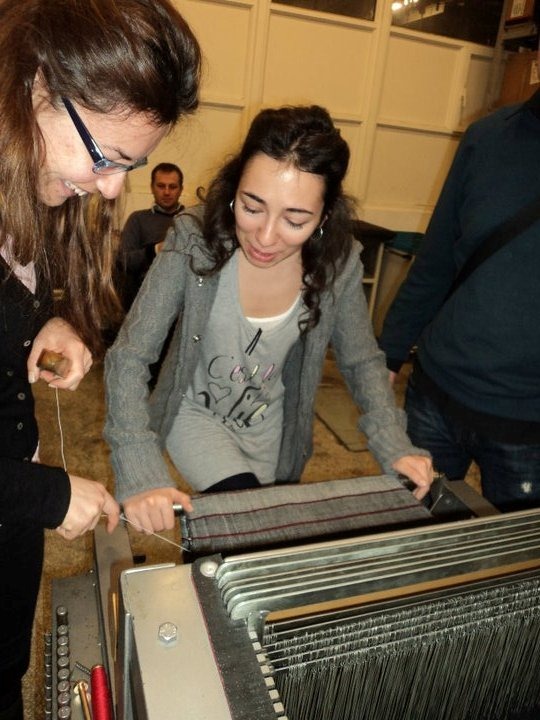
    • Denim Academy has a sample loom to run “Weaving Workshop” where participants can literally weave denim in any of the twill types.
    • The mini–‐kitchen at Denim Academy Studio enables students who wants to create different coating effects on denim fabric. “Finishing Workshop” is continuously developed with Q&A sessions.

    Denim workshop Orta

    All training modules are supported with booklets, DVDs and other necessary visual materials which are owned and certified by Orta. Denim Academy now works on “Denim Wiki” which intends to gather relevant information at the disposal of anybody who is in need. With the birth of their  sustainability division’s website, ortablu.org, we intend to expand the diffusion of this invaluable know–‐how to the online community.

    We shall soon also be publishing informational material –written/videos etc  from the Denim Academy and shared by Orta with us ,on each process  of denim production starting from Spinning and upto Finishing in a series of articles . They would be interesting for anyone connected with the denim industry . So keep watching this space for the info ……

    For more information and application contact the Denim Academy

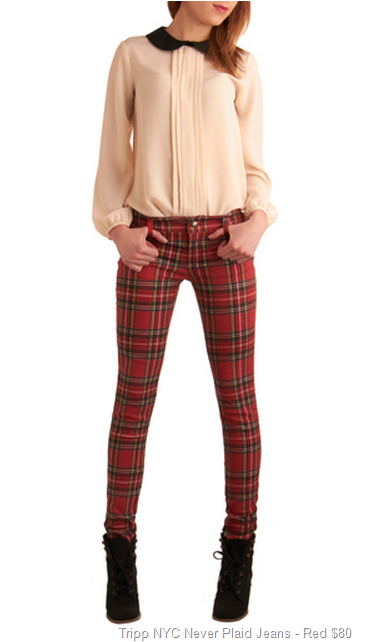
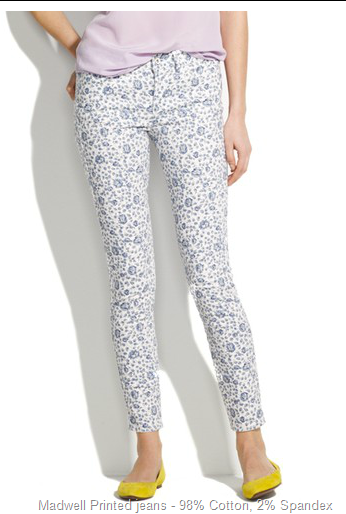
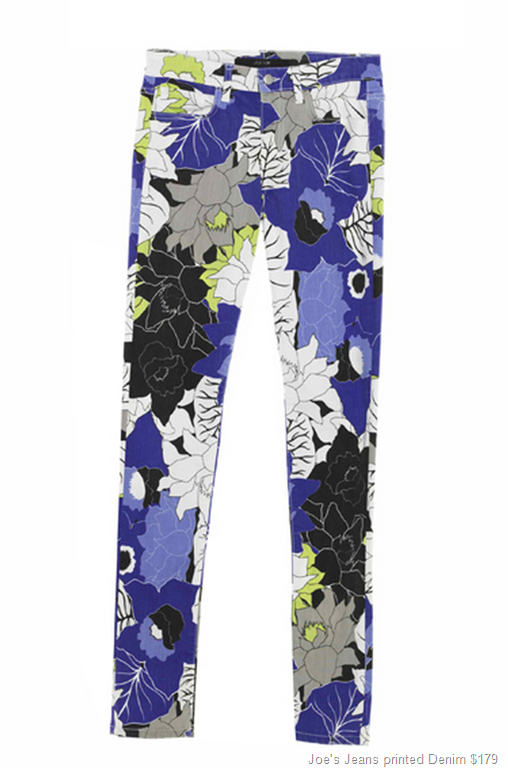
  • Printed Denim Trend 2012

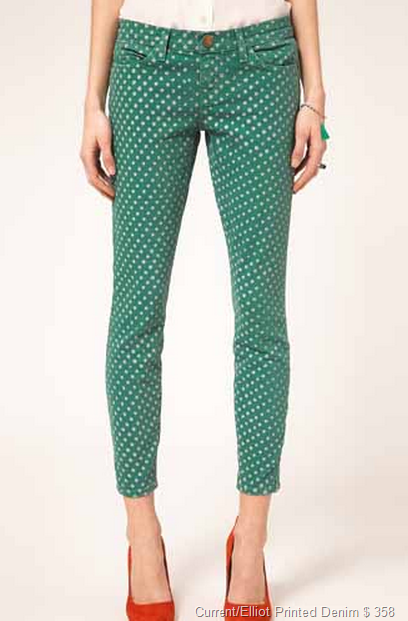
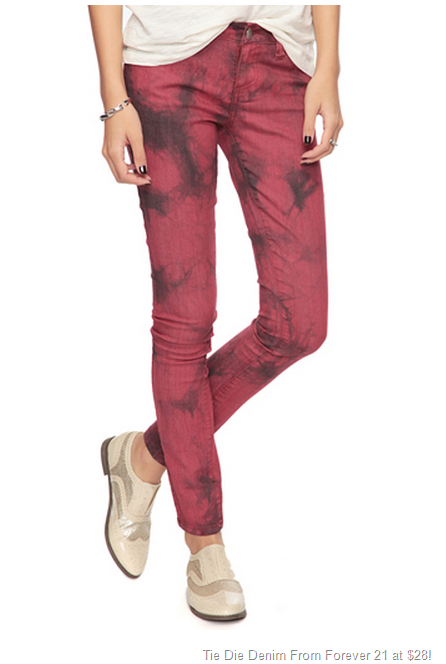
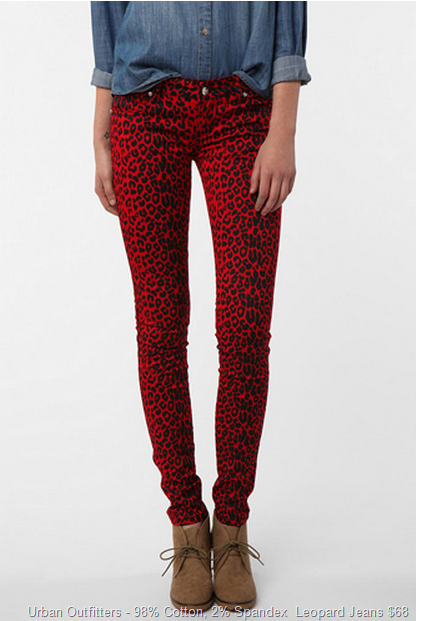
    Printed denim – whether it is floral prints , animal motifs or just abstract prints , is taking the retail by storm and forces us to bring more looks forward for our readers. . It looks like denim has turned into an artist’s canvas where he can just paint anything. That’s the creative impulse generated by this great fabric – denim ! Here are some cool printed jeans designs from various brands worldwide  for inspiration .

    Current/Elliot Printed Denim

    image

    Urban Outfitters - 98% Cotton, 2% Spandex  Leopard Jeans $68

    Tripp NYC Never Plaid Jeans - Red $80

    Madwell Printed jeans - 98% Cotton, 2% Spandex

    image

    Note the sudden and shocking difference in prices of some brands and retailers ! But that inequality has always been there , isn’t it ?

    And if these photographs are not enough, here is a steamy video from Joe’s Jeans on printed denim .

  • EU Exports Of Denim Fabrics 2010- 2011

    Eu Denim Exports EU denim production capacity has been reducing constantly and due to increased costs of production and the resultant shifts of productions to Asia .
    The shifting of denim fabric production to Asia has also been increasingly supported by increased apparel production in Asian and other countries. As a result EU denim mills have to increasingly ship their fabrics overseas for conversion- which in any case they were doing to countries like Tunisia and Morocco. More countries have been added to this list and the fabrics are now being shipped across Asia .

    Lets have a look at the places where denim mills in EU are shipping their fabrics in 2010 and 2011 . Basically we will see :

    a) The countries where the major shipments are being made.
    b)The quantities shipped to these countries .It gives an idea as to which countries are importing more of EU fabrics.
    c)The value and average prices of these fabrics.
    d)Comparison of all the above for both the years 2010 and 2011
    e)Countries covered are Tunisia, Morocco, USA, Turkey, India, Egypt , China and Hong Kong.
    f)Total EU export during this period of 2 years.

    This report is available to our Special Reports Subscribers.

    [private_special]

    Country Year Sq Mtrs( million) Mtrs mill. (at 15ocm width) Value (million Euros) Av. Price (Euro/sq mtr) Av. Price
    Euro/
    mtr
    Tunisia 2010 23.73 15.81 100.36 4.23 6.34
      2011 18.12 12.08 90.17 4.97 7.46
    Morocco 2010 16.48 10.99 47.18 2.86 4.29
      2011 12.40 8.27 12.40 3.40 5.10
    USA 2010 7.50 5.04 22.22 2.93 4.40
      2011 7.15 4.77 20.43 2.85 4.28
    Turkey 2010 14.09 9.39 38.7 3.67 5.50
      2011 12.36 8.24 45.38 3.73 5.60
    India 2010 1.60 1.06 7.00 4.38 6.57
      2011 .87 .57 5.67 6.54 9.81
    Egypt 2010 1.45 0.97 5.04 3.46 5.19
      2011 1.17 0.78 5.50 4.67 7.01
    Brazil 2010 2.39 1.59 2.22 0.92 1.39
      2011 0.12 0.08 0.08 0.61 0.92
    China 2010 0.26 017 1.41 5.31 7.97
      2011 0.30 020 1.64 5.42 8.13
    Hong Kong 2010 0.95 0.63 3.87 4.05 6.08
      2011 0.81 0.53 7.00 4.83 7.24
    All Countries 2010 81.98 54.65 263.38 3.21 4.81
      2011 65.37 43.58 250.33 3.82 5.74

    As we can see that the highest shipments of EU have been to Tunisia and Morocco. However, upcoming and increased shipments can be seen to India , and USA also. But it is also noteworthy that the total shipments sent from EU have been falling and have reduced significantly in 2011 to the tune of about 20% indicating the reduced competitiveness of the area in exports.

    [/private_special]

  • PRPS Denim : Thru Pictures

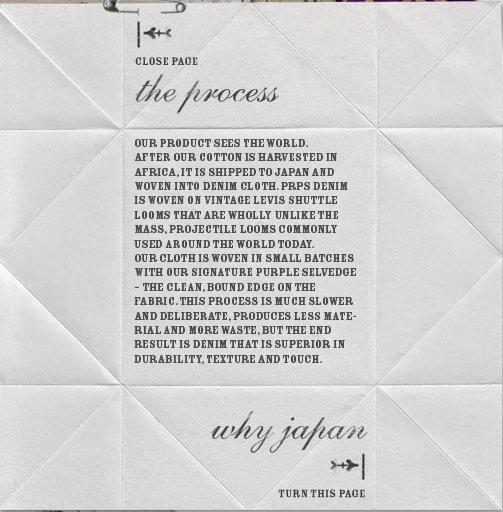
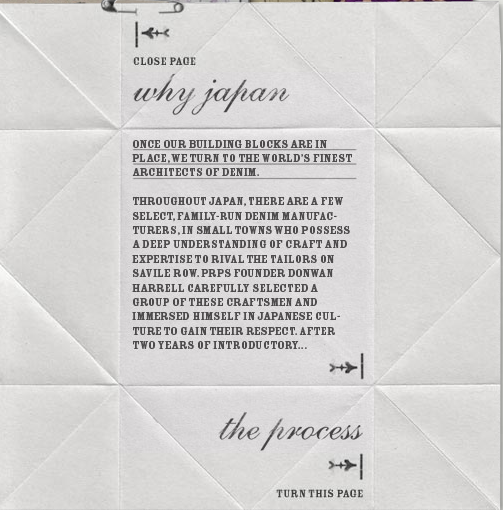
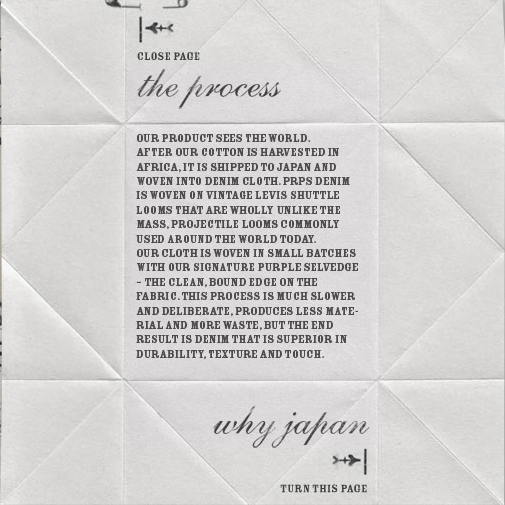
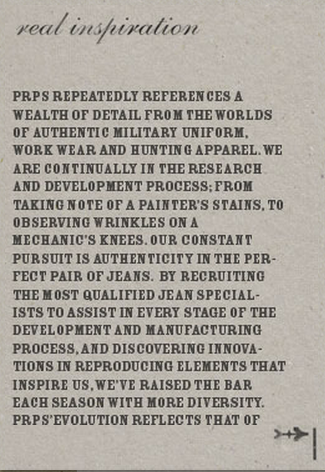
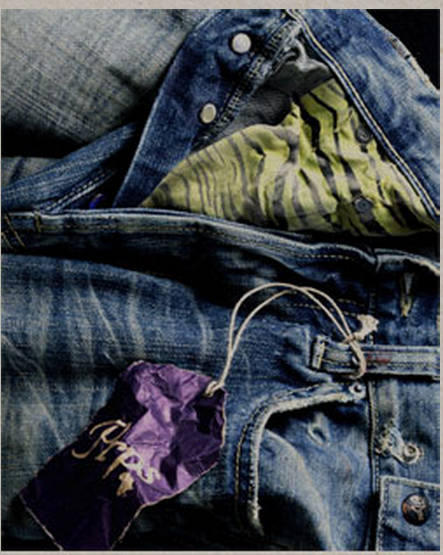
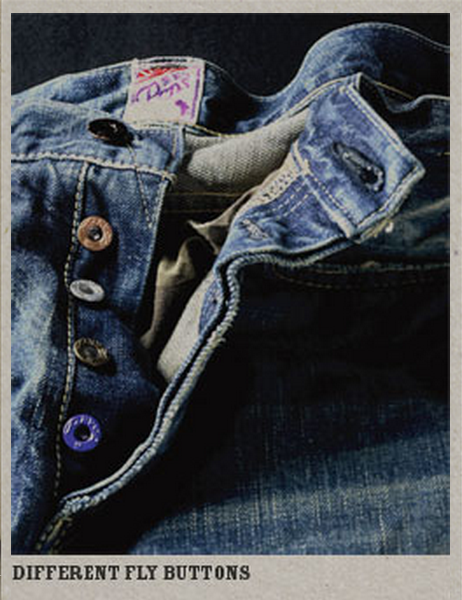
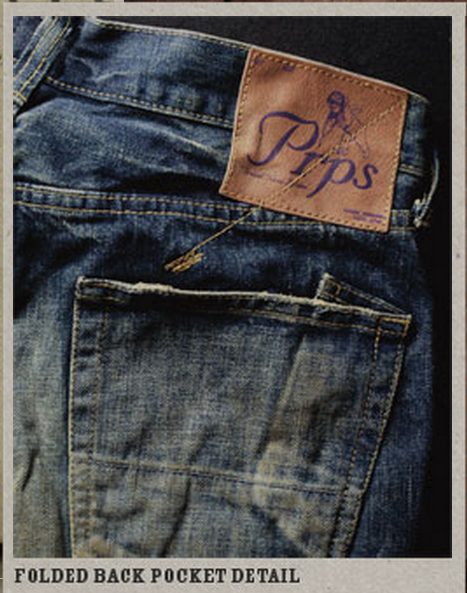
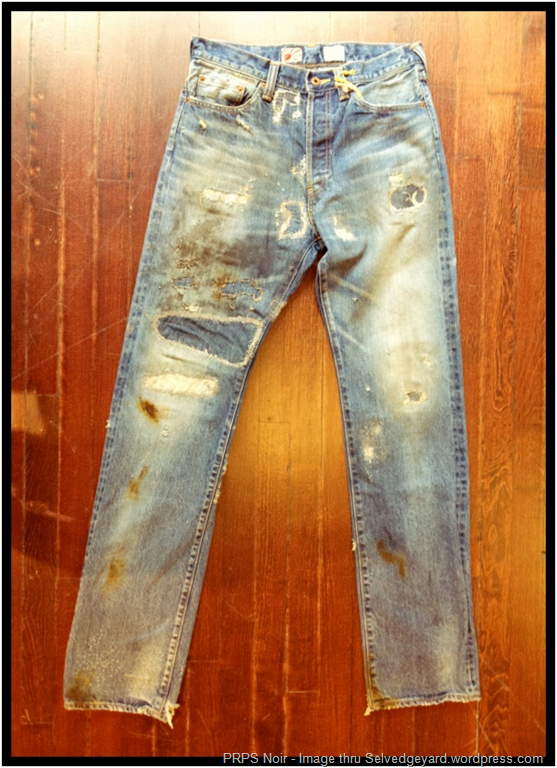
    PRPS is one of the most reputed Japanese denim brand started in 2003 by Donwan Harell with the philosphy that authenticity is the first priority. Each item in the collection is conceived with a specific purpose and function in mind. No Detail is overlooked – there is extraordinary attention to detail !

    Lets check out  PRPS is pictures

    PRPS Denim Jeans Collection

    PRPS Denim Jeans Process

    PRPS Denim Jeans Process

    PRPS Denim Jeans Process

    image

    image

    image

    image

    image

    image

    image

    image

    Note: The jeans shown above may take more than a week of painstaking efforts to make.


  • AGOA–Denim Exports 2011

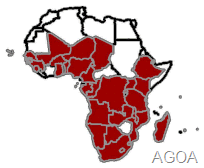
    imageThe African Growth and Opportunity Act (AGOA) was signed into law on in May 2000 as Title 1 of The Trade and Development Act of 2000. The Act offers tangible incentives for African countries to continue their efforts to open their economies and build free markets.

    AGOA provides duty-free and quota-free treatment into US  for eligible apparel articles made in qualifying sub-Saharan African countries through 2015. Qualifying articles include:

    • apparel made of U.S. yarns and fabrics; apparel made of sub-Saharan African (regional) yarns and fabrics until 2015, subject to a cap;
    • apparel made in a designated lesser-developed country of third-country yarns and fabrics until 2012, subject to a cap;
    • apparel made of yarns and fabrics not produced in commercial quantities in the United States;
    • textile or textile articles originating entirely in one or more lesser-developed beneficiary sub-Saharan African countries;
    • certain cashmere and merino wool sweaters; and eligible handloomed, handmade, or folklore articles, and ethnic printed fabrics.

    Under a Special Rule for lesser-developed beneficiary countries, those countries with a per capita GNP under $1,500 in 1998,  enjoy an additional preference in the form of duty-free/quota-free access for apparel made from fabric originating anywhere in the world. The Special Rule is in effect until September 30, 2012 and is subject to a cap.

    During the 2011 review process, President Obama determined that all the countries currently eligible for trade preferences and other benefits under the African Growth and Opportunity Act (AGOA) would remain eligible and that no new countries would be added as AGOA beneficiaries.

    President Obama also signed a presidential proclamation reinstating Côte d’Ivoire, Guinea and Niger as eligible for AGOA benefits. Each of these countries was previously ineligible, but during a separate review process, the president determined that they had met the act’s eligibility criteria.

    The top five beneficiary countries were Nigeria, Angola, South Africa, Republic of Congo and Chad. Other leading AGOA beneficiaries included Gabon, Lesotho, Kenya, Mauritius and Swaziland.

    Denim Apparel Exports– What is the Status ?

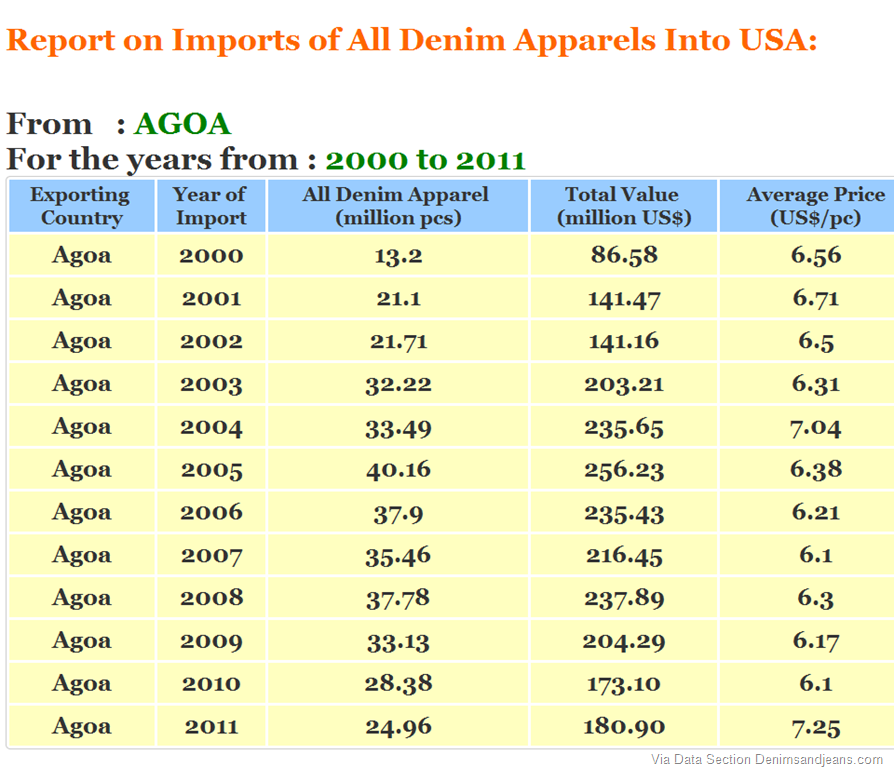
    How has AGOA region countries been doing when it comes to denim apparel exports ? Lets have a look at the data of the last 10 years of exports from AGOA region to US.

    denim apparel exports to us from africa

    When we look at the data , we find that the exports of denim apparel from AGOA to US actually peaked in 2005 when quota regime was just being dismantled. After that , the apparel exports have been more or less flat. In 2010 and 2011 , the exports have actually dipped substantially – reducing the importance of AGOA as a region for export of denim products. In 2011 alone – there has been a fall of over 15% in exports from this region to US. Almost similar fall was there in 2010 over 2009 .. When we look at specific countries , we find the scenario not too rosy for some countries:

    • Madagascar : 84% reduction in quantities exported in 2011 over the same period in 2010
    • Mauritius : 34% reduction in 2011

    However, some countries from AGOA like  still remain interesting for denim production.

    List of countries that fall in AGOA region

    Angola,Benin,Botswana,Burkina Faso,Burundi,Cameroon, Cape Verde, Chad, Comoros,Congo (DROC),Congo (ROC), Djibouti , Ethiopia,Gabon, Gambia ,Ghana ,Guinea ,Guinea-Bissau,Kenya ,Lesotho,Liberia ,Madagascar ,Malawi,Mali,
    Mauritius,Mozambique,Namibia,Niger ,Nigeria ,Rwanda ,Sao Tome & Prin ,Senegal,Seychelles , Sierra Leone, South Africa, Swaziland,Tanzania ,Togo ,Uganda and Zambia

    Sponsored Link:

  • LESOTHO–Denim Buyers, Export Figures , Fabric Import etc.

    lesotho subscriberThe Kingdom of Lesotho is a unique country in Southern
    Africa. Completely surrounded by its only neighbour
    South Africa, land-locked and geographically small, Lesotho
    is classified as a Least Developed Country (LDC) by the
    United Nations. Together with Botswana, Namibia,  South
    Africa and Swaziland, Lesotho forms the Southern African
    Customs Union (SACU) – the oldest customs union in the
    world. 
    Historically, Lesotho’s export capacity has been small, and
    most of its exports were traditionally destined for the
    South African market. However, over the years, Lesotho
    has pursued an export-led development strategy as part of
    its overall goal for economic development and eradication
    of poverty. Part of this strategy involves utilisation of trade
    preference arrangements such as the United States’ African
    Growth and Opportunity Act (AGOA) and the European
    Union’s Everything But Arms (EBA) initiative. These have
    contributed to the diversification of export markets,
    especially to the US.

    [private_special]

    The formal garment industry started in Lesotho in the early 1980s. This was primarily as a response by South African-based clothing companies to avoid the sanctions imposed on South African manufactured goods by the US and Europe. Also, the Lesotho National Development Corporation offered incentives to the South African industrialists who set up in Lesotho.

    Most of these industrialists originally came from Taiwan in Southeast Asia. These entrepreneurs brought valuable capital, skills, and knowledge of the international textile market. Increasingly, South African companies are also investing in Lesotho, providing diversity of markets and products.

    How is Lesotho doing when it comes to manufacturing and exporting of denim garments to US . Lets see the data for the last 10 years .

    Exports of denim apparel from Lesotho to US.

    Year Qty (million pcs) Value (USD million) Av. Price (usd/pc)
    2001 9.74 63.08 6.48
    2002 9.28 61.16 6.59
    2003 11.48 72.64 6.33
    2004 13.57 94.06 6.93
    2005 17.31 108.93 6.29
    2006 15.80 92.21 5.84
    2007 15.84 92.79 5.86
    2008 16.29 96.69 5.94
    2009 14.43 82.45 5.72
    2010 15.64 91.76 5.87
    2011 15.84 114.07 7.2o

    The exports of denim apparel to US have not shown a fall in shipments during 2011 over 2010. This is phenomenal considering that the total shipments of denim apparel to US fell by over 14%. This shows the increased importance of Lesotho as an upcoming export centre.

    Also , it needs to be noted that on an average over 70% of denim apparel shipped to US are in the Mens/Boys category reflecting that the buyers are more inclined to place Men’s jeans and apparel orders into Lesotho.

    Lets see who are the major exporters of denim garments from Lesotho and to whom are they exporting .

    C&Y Garments (Pty) Ltd

    Contact Person: Factory Manager: Mr Leon Wang / Sales: Mr Jimmy Chou
    Tel: +266 22 316 621
    Fax: +266 22 322 752
    Email: jimmychou@nienhsing.com.tw
    Website
    :
    www.nht.com.tw

    Profile:
    Category: Denim bottoms (also twill and corduroy).
    Capacity: Approx 35,000 dozen per month (420,000 units).
    C & Y is a part of the Nien Hsing Textile Co. of Taiwan. Located in 15,000m², the factory employs approximately 2,000 workers. Most of the factory’s production is for the USA market, and main customers are Levi Strauss, The Children’s Place, Dress Barn, VF , Indigo Sportswear, Indigo Sportswear(LA) etc.

    CGM Group /Presitex Enterprises (Pty) Ltd)

    Contact Person: CEO: Mr Dalvi
    Tel: +266 22 32 6452
    Fax: +266 22 326 458
    Email: dalvi@cgmgroup.co.ls

    Website: www.cgmgroup.com

    Profile:
    Manufacturers Denim bottoms (also twill, corduroy and other woven fabrics).
    Capacity: About 42,000 dozen per month (500,000 units).
    CGM Industrial (Pty) Ltd, the biggest Jeans Manufacturer in South Africa, is a multi-national organization with vertical infastructure over 8 countries and area — the headquarters in Maseru, Lesotho and jeans manufacturer mainly in Maseru and Dimbaza as well as a fabric mill and sourcing office in Durban, South Africa,Located in 23,400 m², the factory employs approximately 4,200 workers. The company produces for both the USA and South African markets. Main US customers are Levi Strauss, Wal-Mart, K-Mart, Jones Apparel, Squeeze, Paco and Pepe; SA customers are Woolworths, Edgars, Mr Price, Ackermans and Pep.

    Global Garments Co. (Pty) Ltd

    Contact Person: Factory Manager: Mr David Huang / Sales: Mr Jimmy Chou
    Tel: +266 22 312 544
    Fax: +266 22 312 445
    Email: jimmychou@nienhsing.com.tw
    Website: www.nht.com.tw

    Profile:
    Category: Denim bottoms (also twill and corduroy).
    Capacity: 40,000 dozen per month (480,000 units).
    Another factory which is a part of the Nien Hsing group , it is Located in 22,000m² the factory employs 2,300 workers. Most of the factory’s production is for the USA market, and main customers are Levi Strauss, The Children’s Place, Fi-Fun, Paco, Primark, Contempo and C&Y.

    Nien Hsing International Lesotho (Pty) Ltd

    Managing Director: Mr Chin Yi Lin / Sales: Mr Jimmy Chou
    Tel: +266 22 326 655
    Fax: +266 22 326 649
    Email: jimmychou@nienshing.com.tw
    Website
    :
    www.nht.com.tw
    Profile:
    Manufactures :Denim bottoms (also twill and corduroy).
    Capacity: About 42,000 dozen per month (504,000 units).
    Nien Hsing Mexico is a part of the Nien Hsing Textile Co. of Taiwan. Nien Hsing Textile Co., Ltd. manufactures and sells denim fabrics, jeans wear, and casual wear in Taiwan.The company serves retailers, importers, and brand owners. Nien Hsing Textile Co. was founded in 1986 and is based in Taipei, Taiwan. Located in 20,000m² the factory employs 2,400 workers. Most of the factory’s production is for the USA market, and main customers are Gap Inc, The Children’s Place, Zana-di, Paco , C&Y .

    Shipments of Denim Fabric From India to Lesotho

    We are giving herewith details of the shipments made of denim fabrics by Indian denim mills to Lesotho buyers. The Image below gives an idea on the volume and prices of shipments made by Indian denim mills to Lesotho.. On an average over about 3-4 million mtrs of denim fabrics gets shipped to Lesotho from India annually . If we look at the trend, we will find that the average prices of fabrics shipped was highest in the second and third quarters of 2011 . However the prices slid back to about $3.3 showing the impact of reduced denim prices .

    image_thumb4_thumb

    [/private_special]
  • Floral Print Denim Jeans -2012

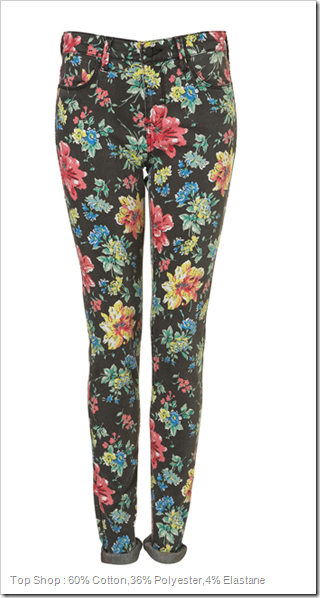
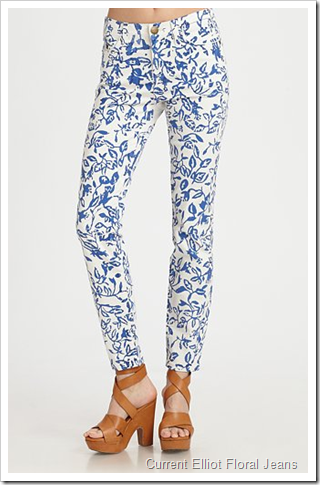
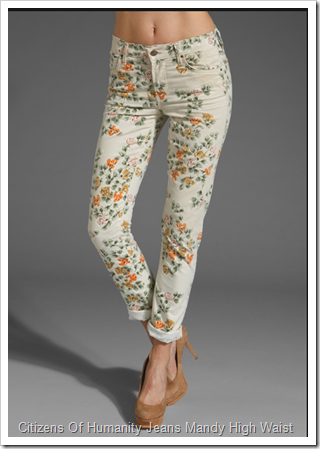
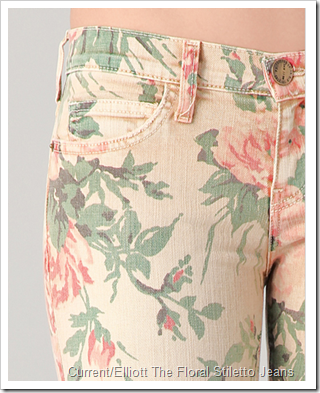
    Color denims have been the strongest trend seen in the Spring/Summer 2012 season. Another trend complementing the color denims is the Floral Prints Denim Jeans for the Women which is creating its own space alongside the color denims.  Usually complementing with super stretches and light weight denims, the floral prints can be seen in the collection of many of the top denim brands. Lets have a look at some of the styles :

    Top Shop : 60% Cotton,36% Polyester,4% Elastane Floral Denim

    Current Elliot Floral Jeans

    image

    image


    The floral print denims have been around for some time and this season they are complementing the color denims. Such trends are never in huge volumes as not many  people(ladies here) can carry them off comfortably. Hopefully many will do this year…….

    Sponsored Link:
    Black Denim Control