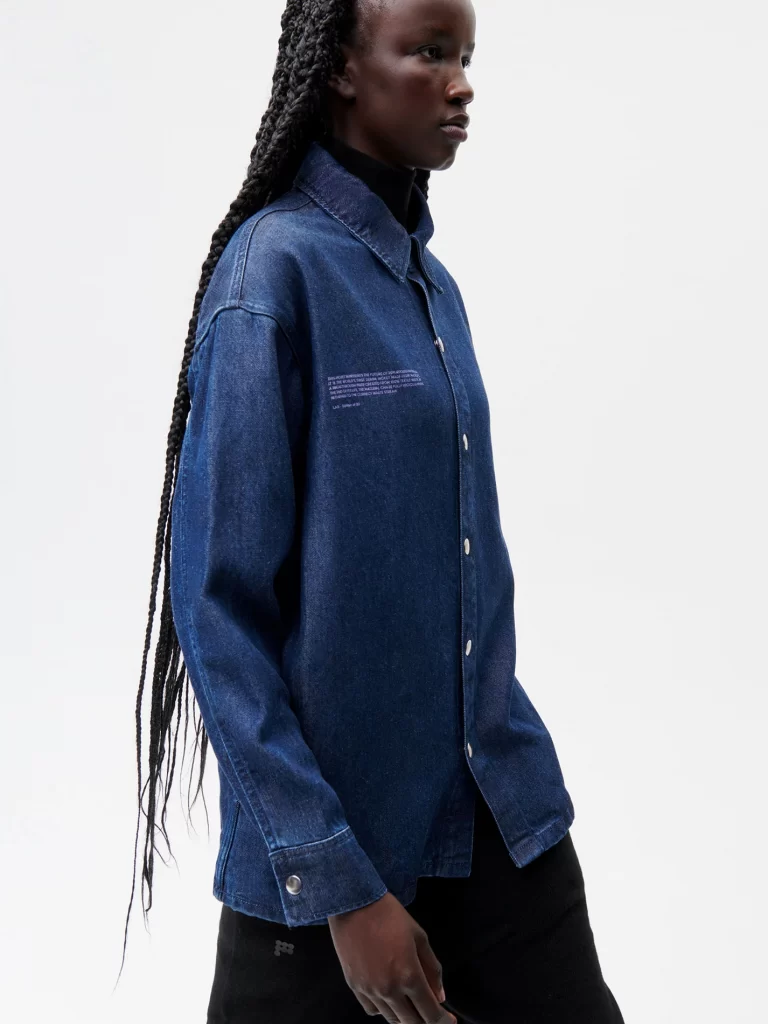
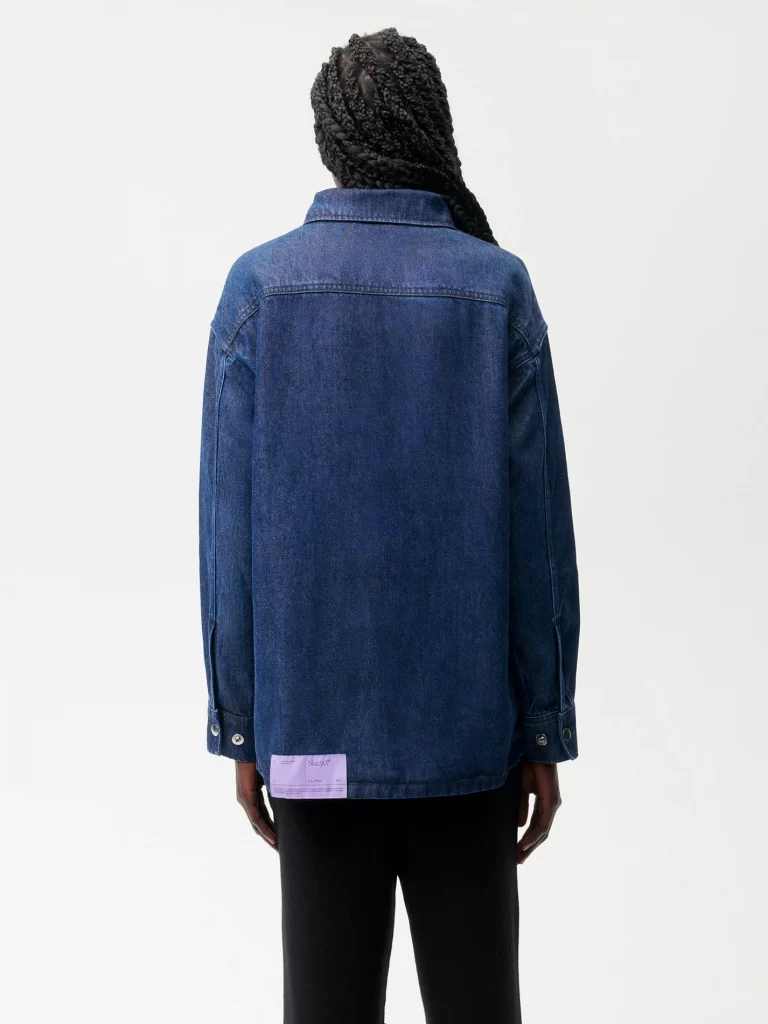
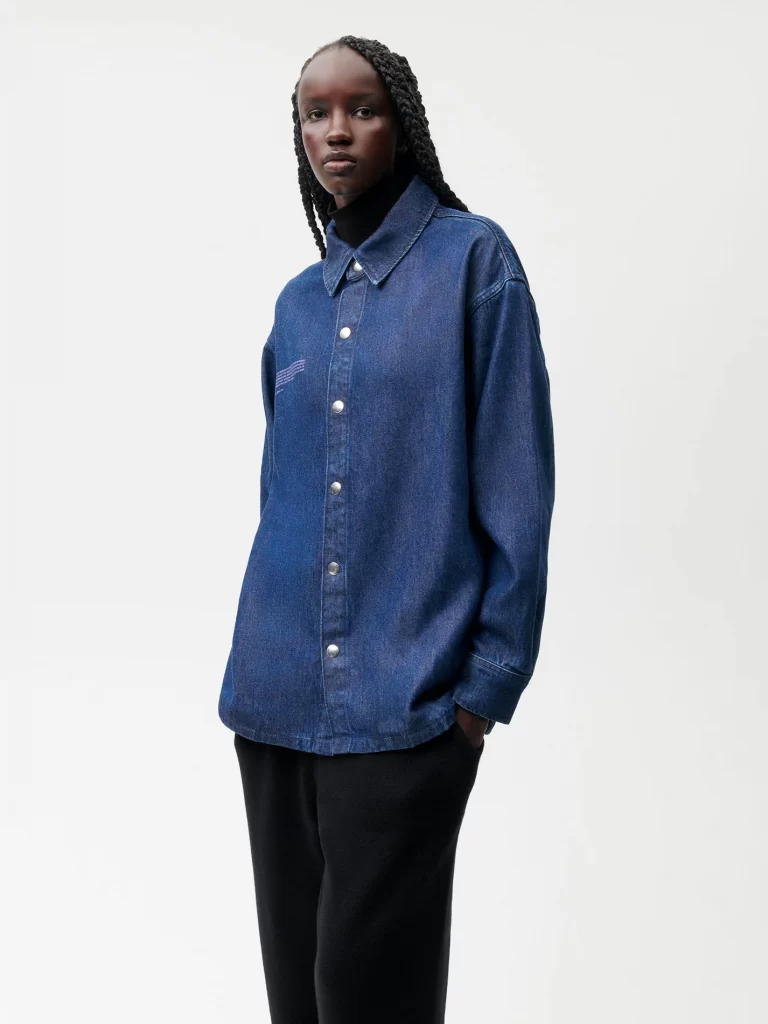
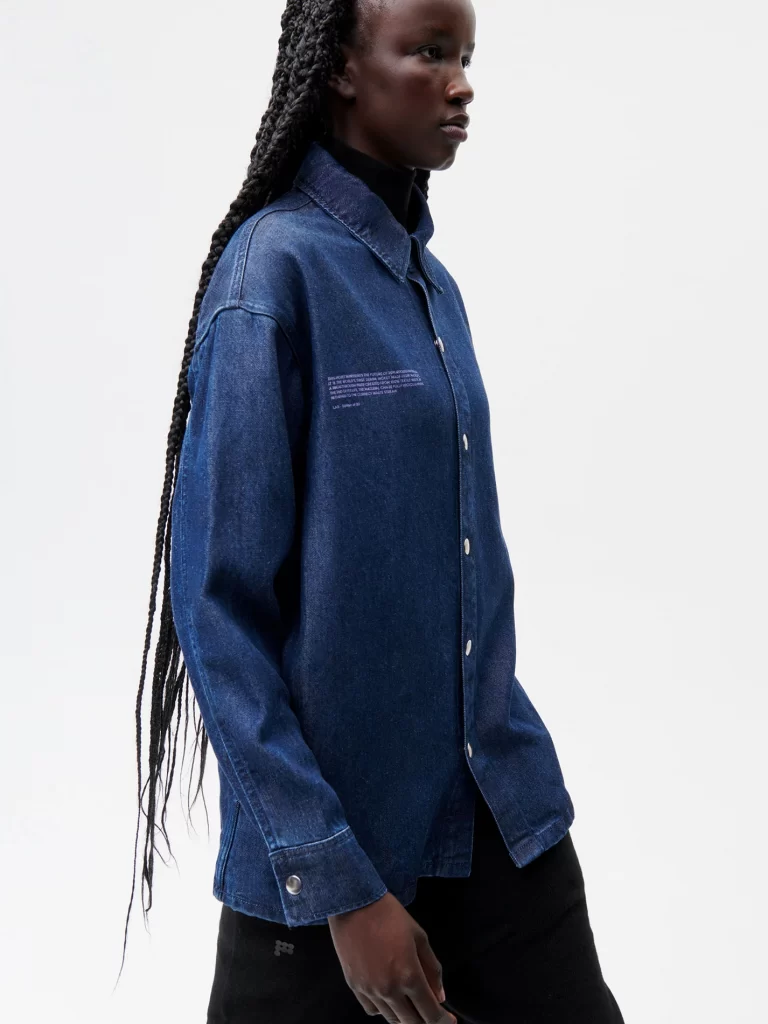
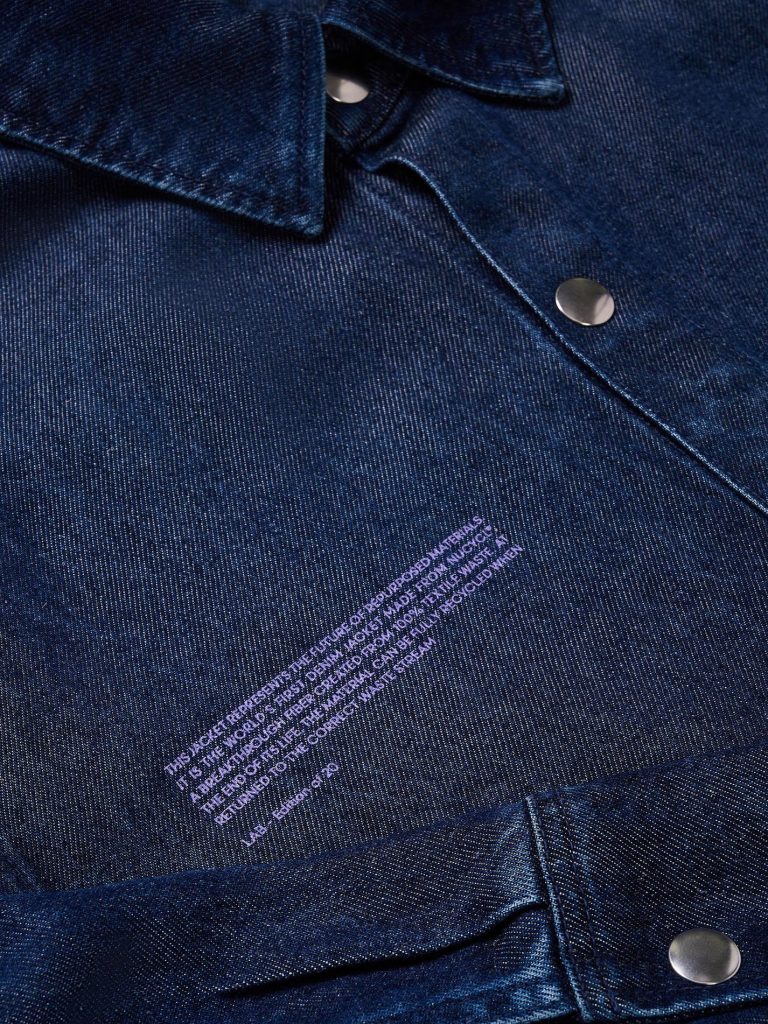
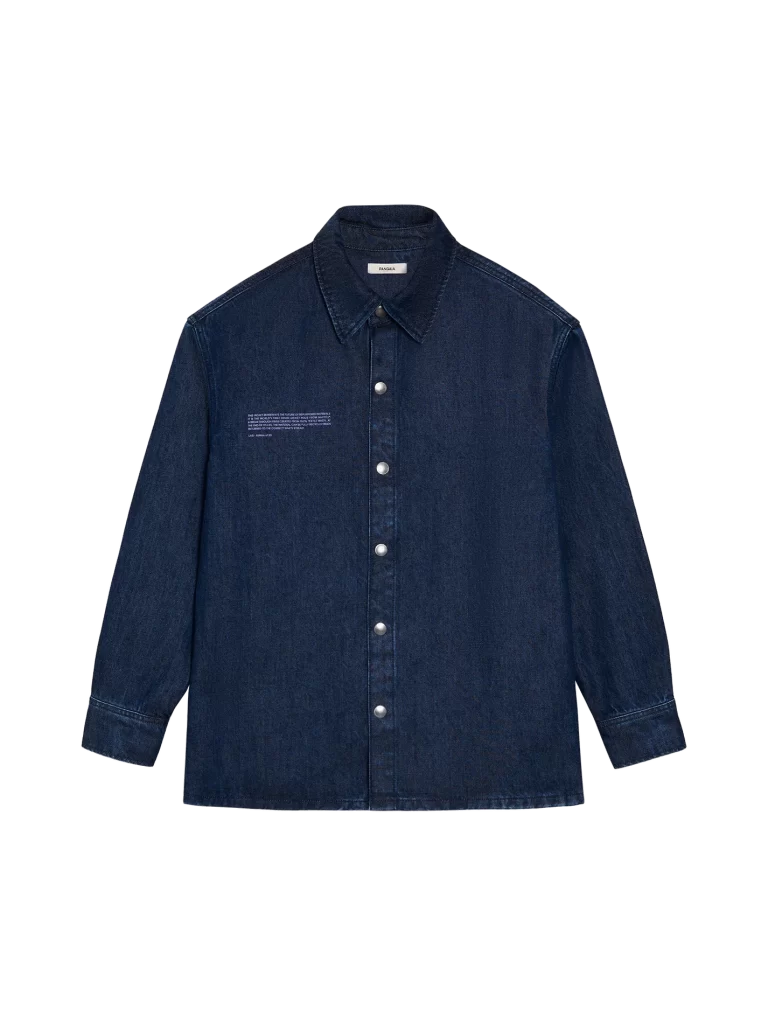
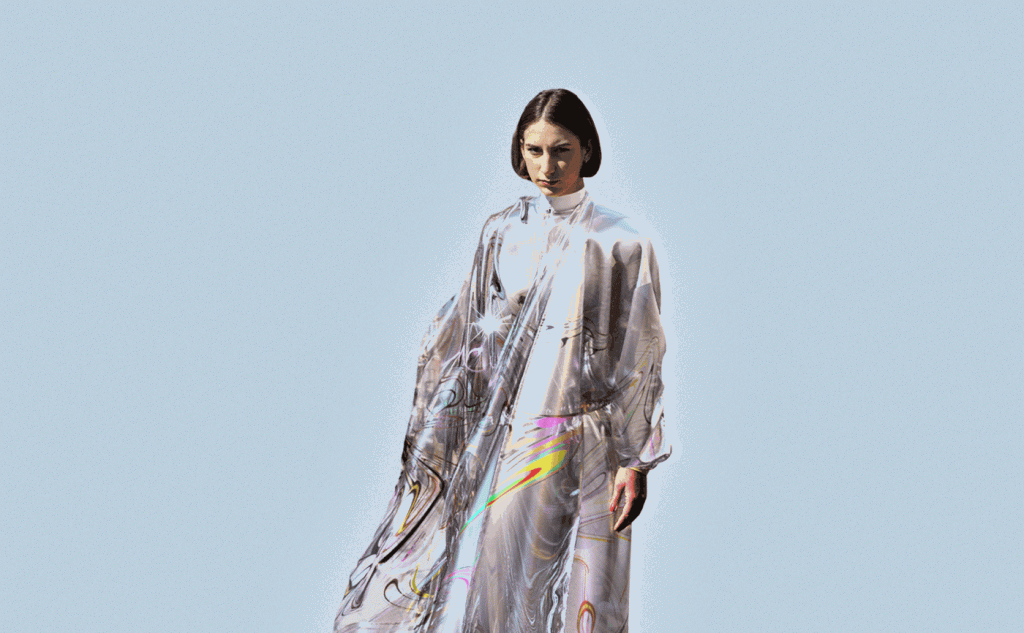
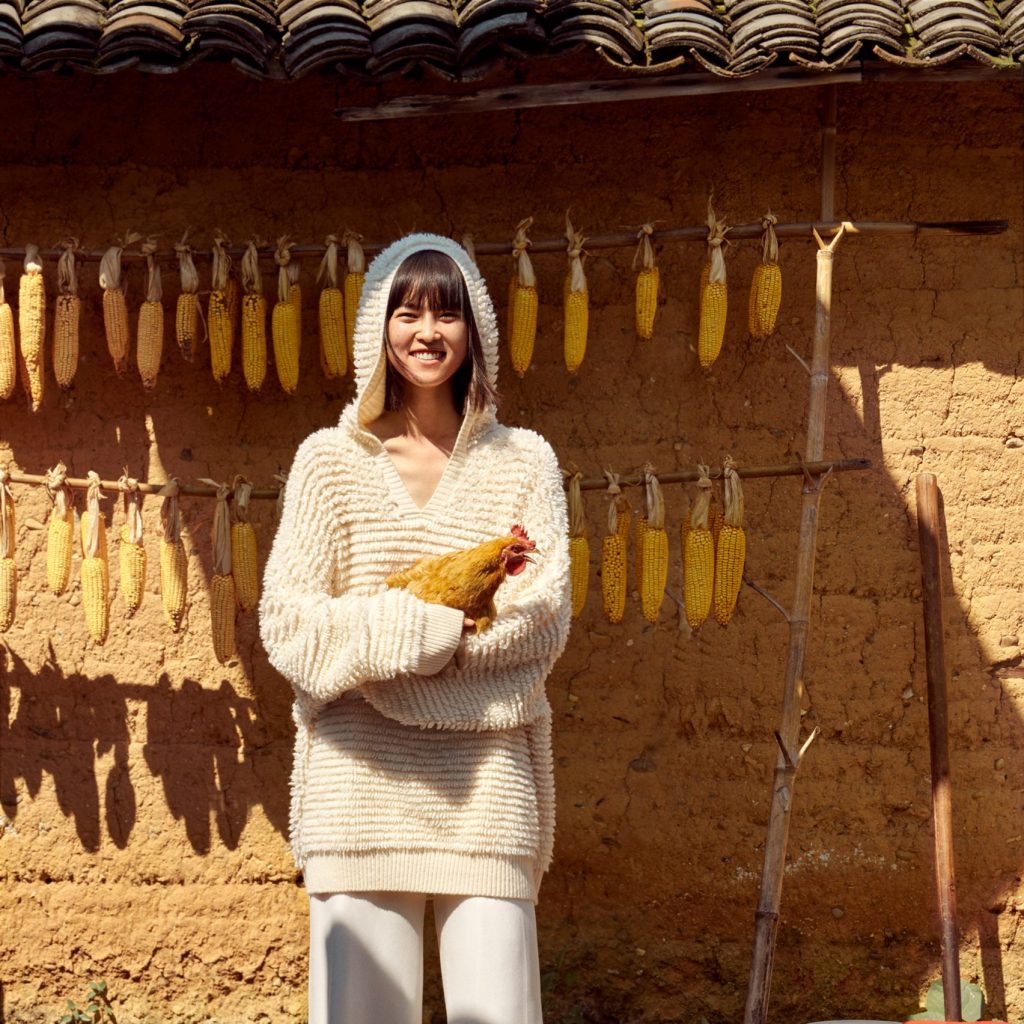
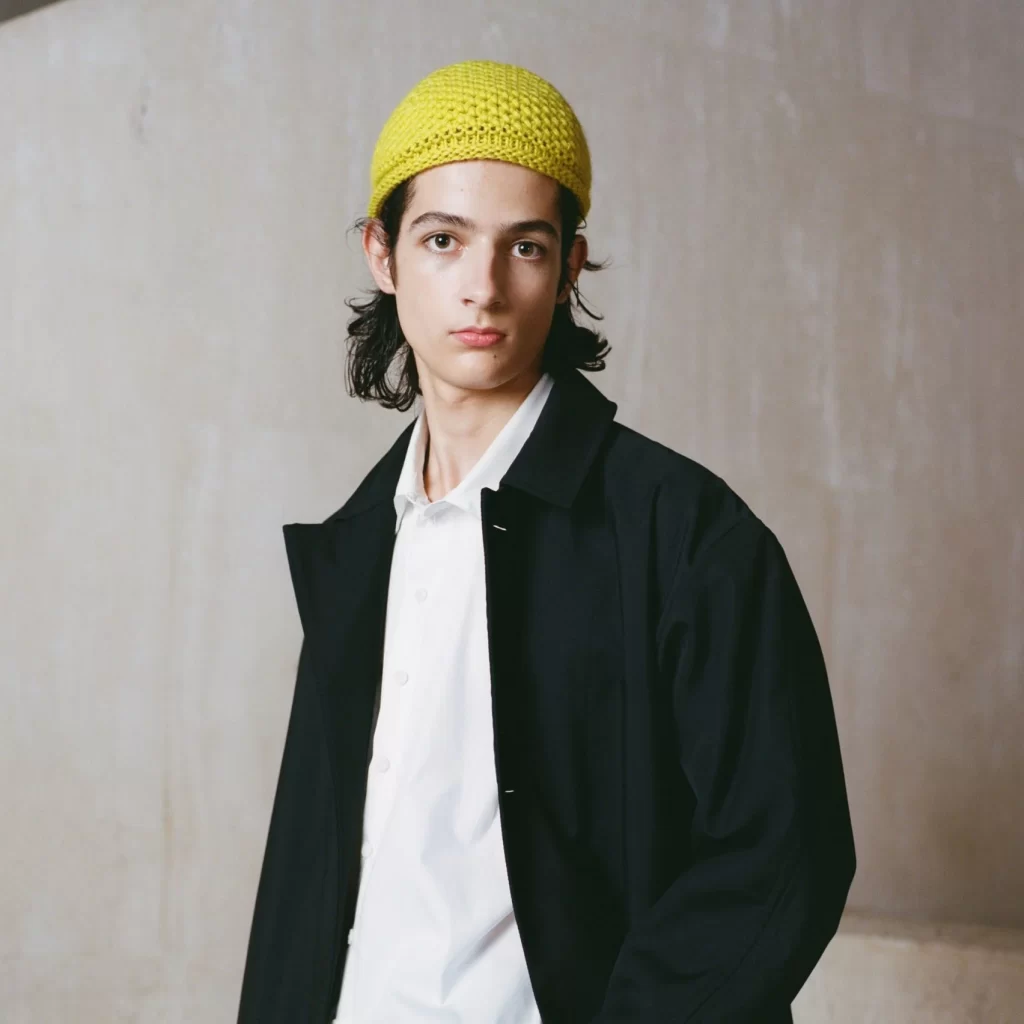
PANGAIA has done it again! The company’s innovation center, PANGAIA Lab, has once again brought cutting-edge technology to everyday objects. The latest example of this is the oversize denim jacket that they just dropped recently. As the name suggests, this product is taking denim to a whole new level with its oversized fit and modern styling. This product launch is a result of a partnership with Evrnu, another pioneering company in fashion tech innovation. With their groundbreaking use of new materials and techniques, PANGAIA Lab is setting the stage for a radical transformation within the denim industry. People can now get ahead of trends by wearing seemingly futuristic pieces right now!
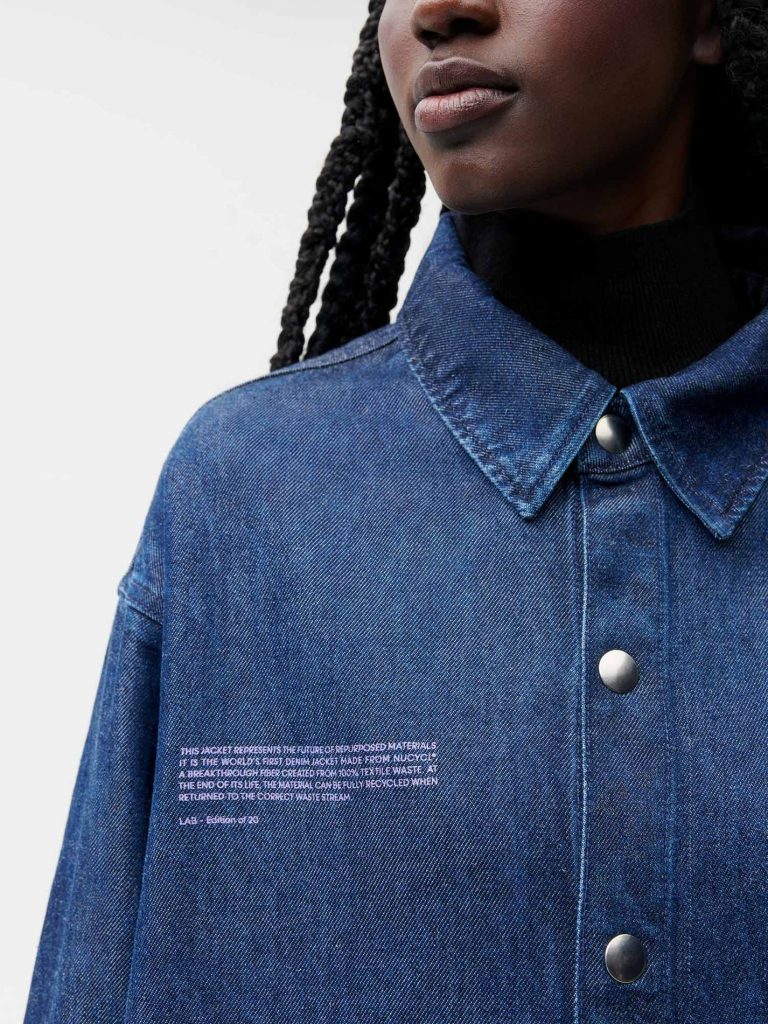
If you are looking for a sustainable wardrobe, RENU Jacket from PANGAIA is the perfect option for you! The jacket is made of NuCycl, a polymer fabric which features an array of sustainable benefits.
These two companies are focused on improving the quality and value of already existing fabrics through innovative recycling technologies. By doing this, they hope to reduce reliance on virgin, fossil fuel derived or animal derived resources. Especially when it comes to improving sustainability and giving more options when it comes to garment production. As a result, their work stands for the highest caliber of innovation in the field of recycled fibers. Using their own proprietary technology to break down existing fibers into new ones and partnering with fashion brands for specialized projects, these companies demonstrate their promise for improved quality from recycling technology.
NuCycl, created by EVRNU, is a revolutionary fiber made from pre & post consumer textile waste . It can be recycled up to 5x without sacrificing quality or performance. This unique fiber is 4x stronger than other cellulosic fibers like cotton and majority of man-made cellulosic fibers (MMCF). Besides, it helps to divert textile waste from going into landfills. NuCycl’s groundbreaking use of pre and post consumer textile waste allows for endless possibilities when it comes to designing new fabrics, garments and products with sustainability in mind.
The RENU jacket from PANGAIA’s modern wardrobe is a stylish piece of apparel designed to be worn over a hoodie. What sets it apart from other jackets is the use of NuCycl, a substantial and resource-intensive substitute for cotton. NuCycl doesn’t need to be combined with any virgin fiber and can more easily be recycled than traditional fibers. This makes the jacket an eco-friendly alternative to traditionally sourced materials. The oversized fit allows for extra layers if needed. This makes this jacket not only stylish but also earth-friendly in its design.
If you are looking to reduce your carbon footprint , RENU Jacket from PANAGIA is definitely worth checking out! Click here
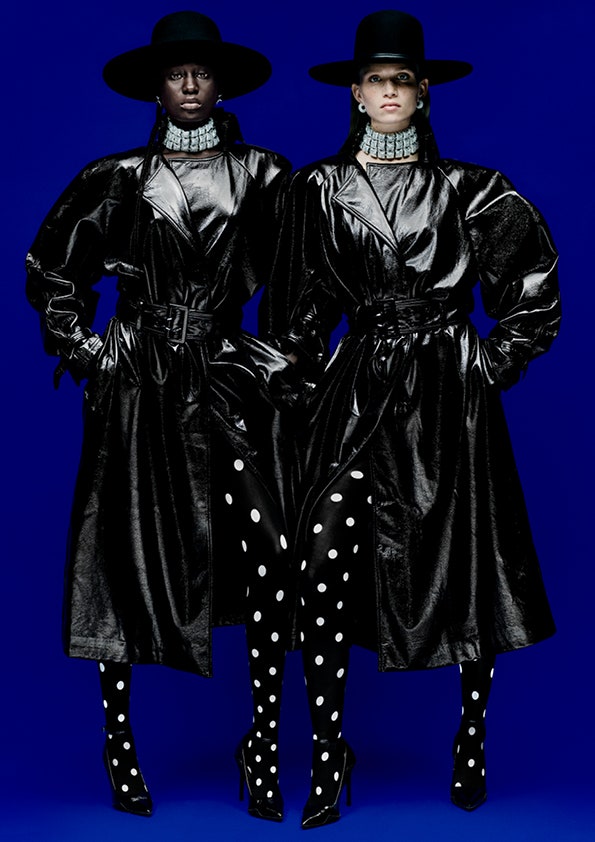
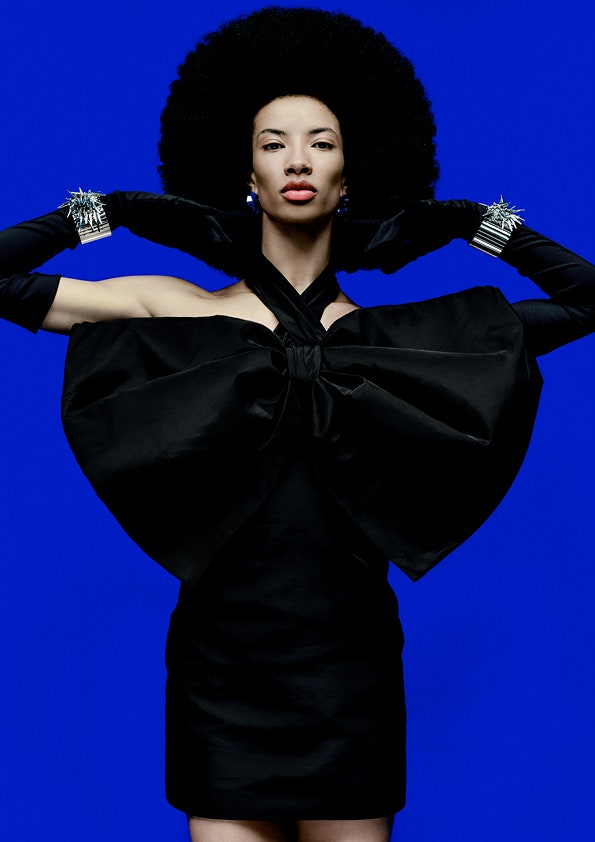
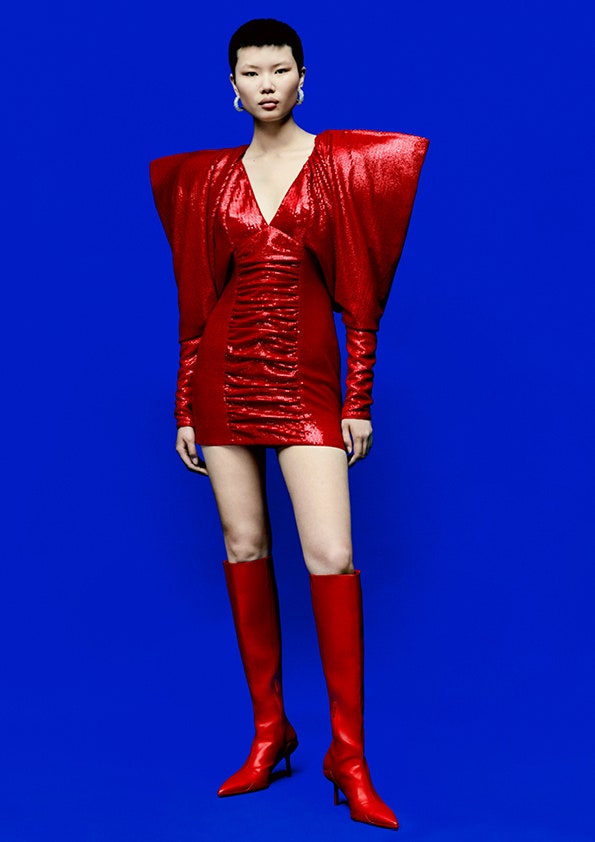
An interesting collaboration between the world renowned Dutch fashion designer David Laport and G-star – ‘Denim After Dark’ has enabled create a unique capsule collection The collection combines iconic denim silhouettes with Laport’s eye for detail, bringing a unique twist to the classic look.
We wanted to make something glamorous. Something feminine. Something totally different. And of course, something in denim.â€
The preeminent collection brings a new line of ready-to-wear offerings and is an expression of G-Star Raw’s long standing heritage in denim and Laporte’s design ethos. This collaboration presents us with couture dress pieces that are created with a delicate femininity as well as structural design. Moreover, the gap between couture designs and ready-to wear pieces is bridged making them more wearable.
Get Ready To Dress Spectacularly!
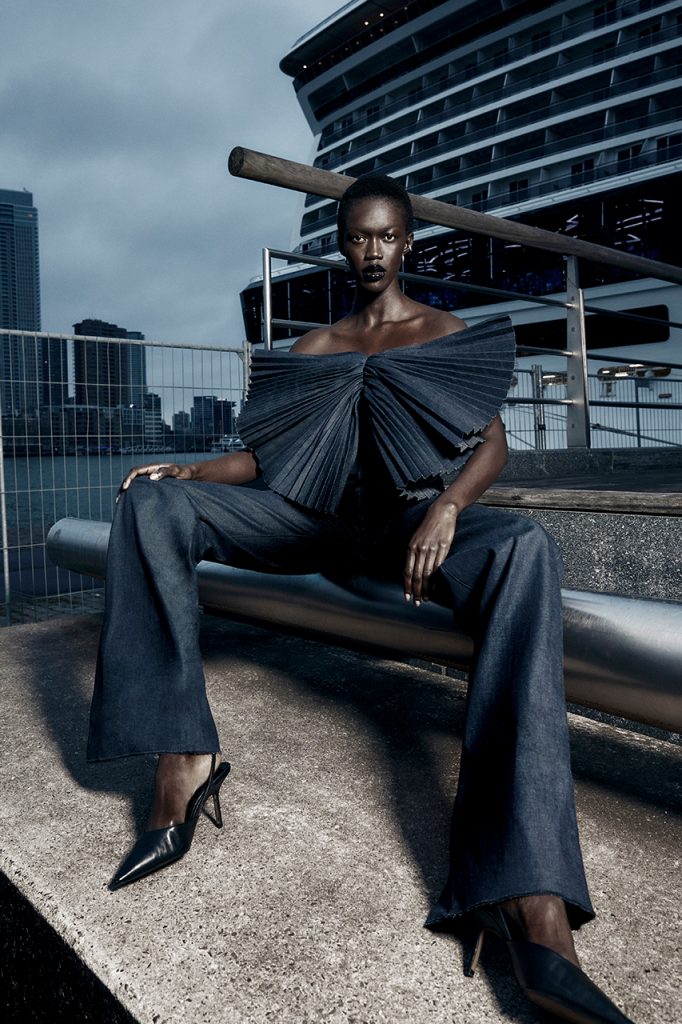
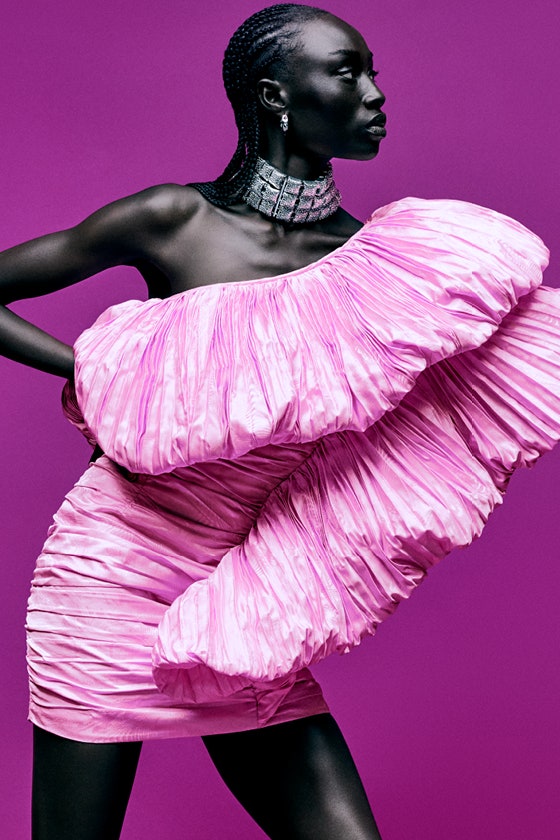
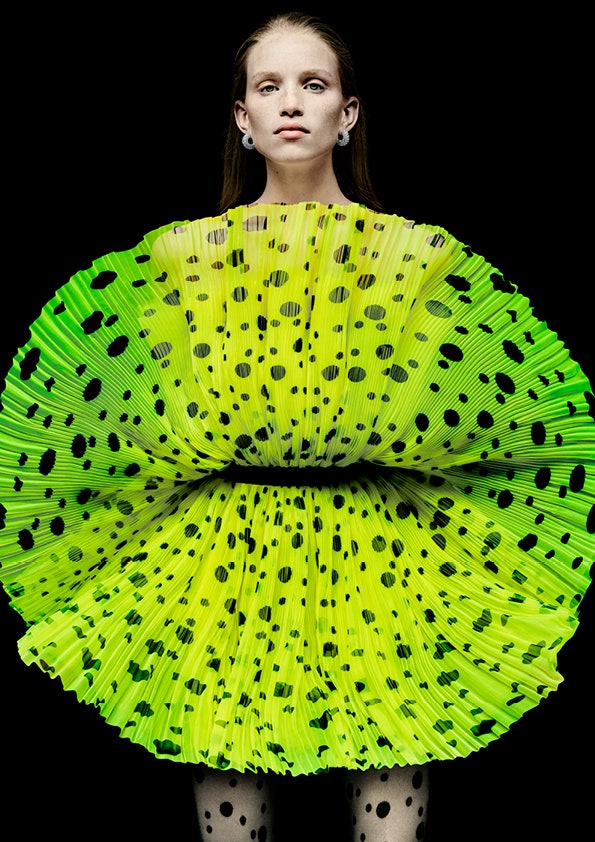
Signature pleat design & sculptural cuts transform casual pieces like the Bow Top into must have evening wear. The Haute Couture dress refreshes the collection with an effortless elegance making sure that you look and feel your best even after dark.
Stand out with a genius combination of Japanese selvedge denim and luxury tulle. Setting off Laporte’s signature pleating technique, you’ll be graced with an exquisite voluminous ruffle for that one-of-a-kind look. Stand out from the crowd in this exclusive mini-dress boasting a creative reimagining of classic style.
The collaboration between the duo was captured by South-African fashion photographer ultimately produced images that both celebrate nocturnal adventures and pay ode to the endless possibilities of denim design. The unexpected combination of unbridled masculine energy and feminine elegance is sure to spark curiosity with the audience.
G-Star’s raw aesthetic is paired with Laport’s delicate pieces creating a unique and interesting statement in the fashion world. Check out their collection here all in one place.
Want to explore more trending collections? Attend Denimsandjeans exhibitions in Vietnam (March 1-2) and India (April 26-27) and witness the collection yourself. Find out more here
It features an exclusive range of dresses, jumpsuits, bodysuits and tops with unique designs that prioritize comfort. The preeminent pieces include the Pull-on Flare Jeans, Indigo Modern Knit Midi Dresses, and Fit for Success Jumpsuit, alongside the four-way stretch denim offering with sizes ranging from XS to 5XL making them perfect for everyone. What’s more, the collection uses recycled cotton which makes it environment-friendly as well!
No Zippers or Buttons? Yess! You Heard It Right
Soft Sculpt is very well designed and holds and hugs all the right places providing a super comfy fit. Using soft knit fabric that offers just the right amount of stretch and structure to tackle those curves with ease, with no buttons or zippers needed. With three styles to choose from- Skinny, Flare & Palazzo silhouettes – the choice is there for most of the ladies.
With this innovative fabrication made to fit your curves perfectly, you’ll get the most flattering look ever! Check out their latest drops all in one place and find pieces that are so curve fitting ! . Experience the smoothness, stretch, and hold of soft sculpt fabric and enjoy a perfect fit like never before!
Want to explore more trending collections? Attend Denimsandjeans exhibitions in Vietnam (March 1-2) and India (April 26-27) and witness the collections yourself. Find out more here
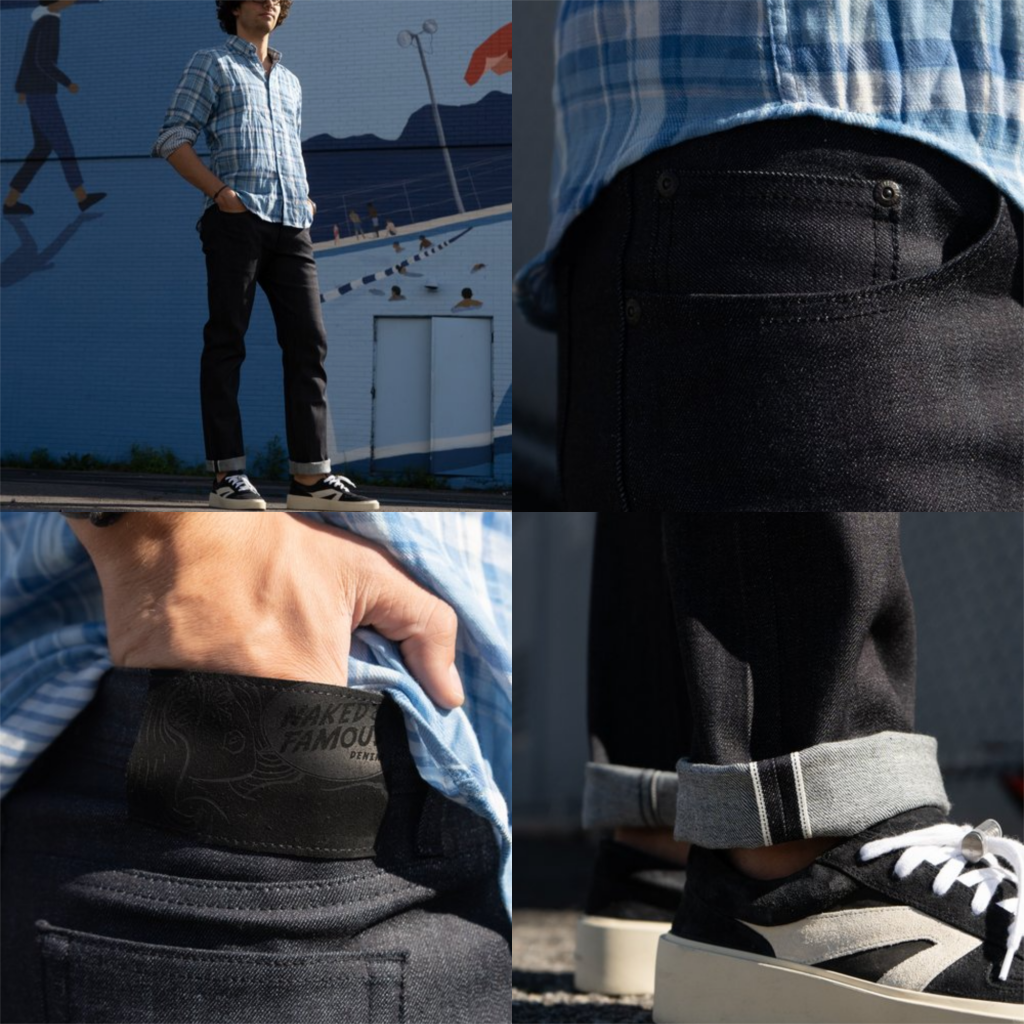
The famous Naked and Famous denim from Canada is self proclaimed Japanese denim aficionado , using the same in most of their products. In their FW22 Collection , there are some exquisite products out of which we chose some of the 3 of the most most attractive ones and bring out in this post.
Rope Dyeing
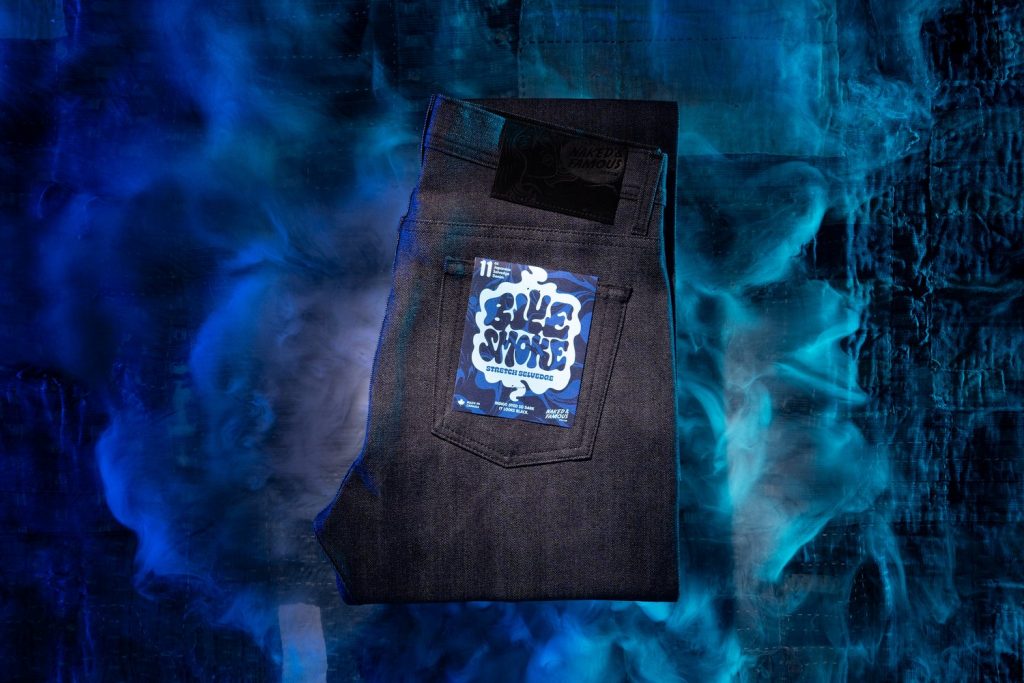
Blue Smoke Selvedge
Raw denim often fades from deep indigo to lighter blue tones and finally white. Rope Dying , as we all know , is a unique dyeing procedure that causes this. White cotton yarns are repeatedly submerged in indigo dye during this process, but the strands are never submerged for long enough for the indigo to permeate the center core of the yarn.
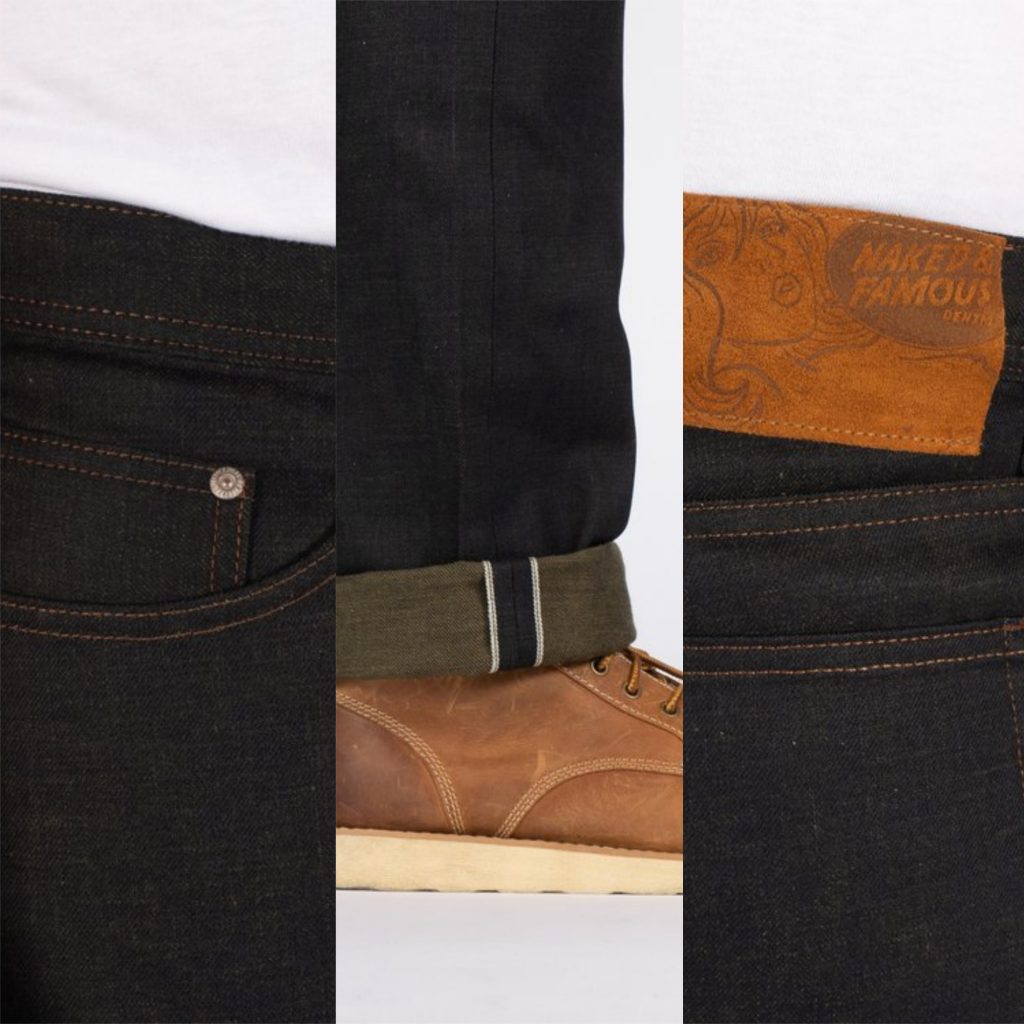
Naked and Famous Blue Smoke Selvedge Denim
The Blue Smoke Stretch Selvedge appears to be a basic 11 oz selvedge denim. It has a classic appearance at first glance with a black exterior wrap, however it is actually a dark shade of indigo shadow. The white weft that can be seen peeking through the twill lines adds to this. The key to this fabric’s unique Smokey color is a small amount of black tint that is mixed into the dye. Thus, these begin as a clean denim with tonal features but gradually the blue fades and intensifies with wash. More and more of those tonal details will emerge in contrast to the denim. The Blue Smoke Stretch selvedge is a terrific option for year-round wear.
Composition: 98% Cotton, 2% Elastane
Design: Black Stitching, Black Suede Patch
Color: Dark Indigo x WhiteFabric Weight: 11ozFabric Origin: JapanMade in: Canada
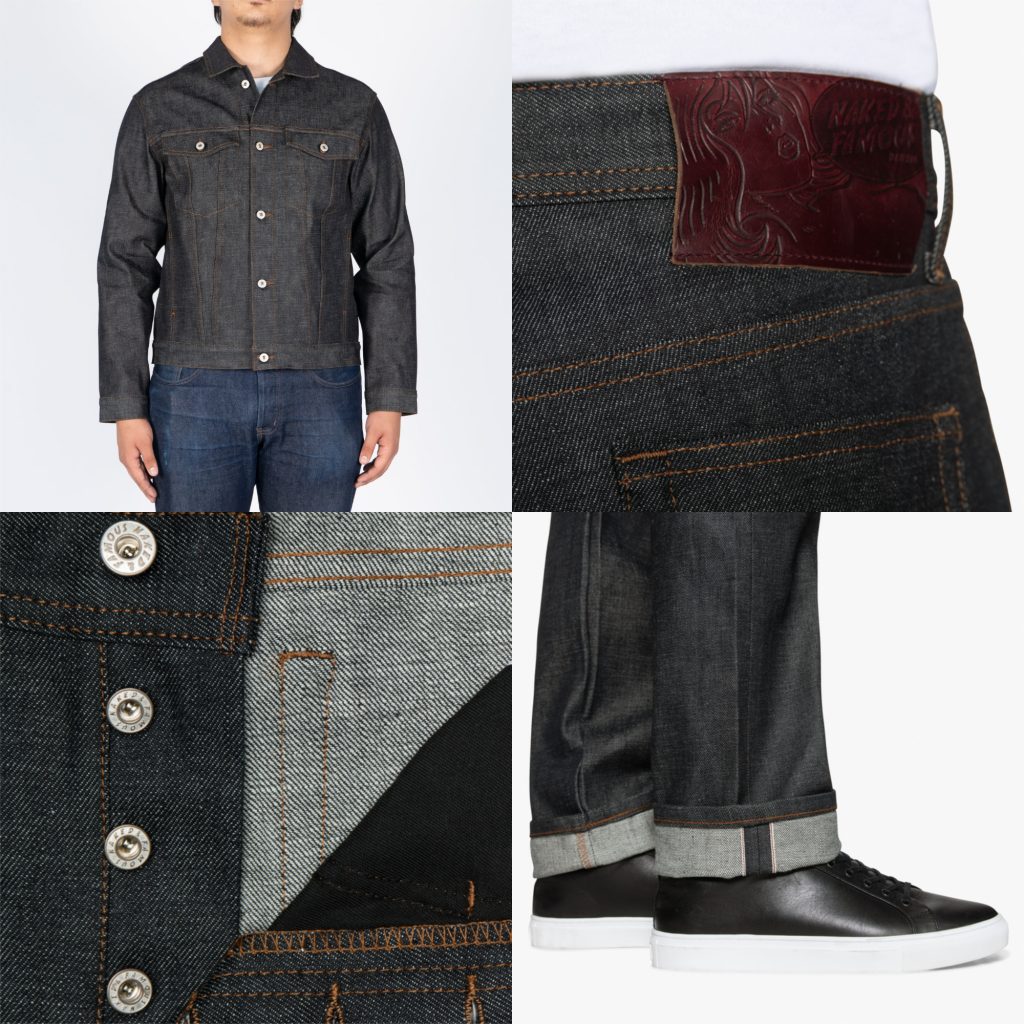
Red Gradient Core Denim
The 12.5oz “Red Gradient Core” denim is a special Japanese Selvedge denim woven on antique shuttle looms specifically for Naked & Famous. Here the yarn was dyed initially with a permanent reactive red dye and then rope dyed with indigo. After certain use, the core will reveal the variety of red hues to achieve a fading gradient tone. Sanforized to prevent shrinkage, the jeans retain a firm texture that will soften with wear. The jeans were made, cut, and stitched in North America.
Composition: 100% Cotton
Color: Indigo x WhiteFabric Weight: 12.5ozFabric Origin: JapanMade in: Canada
Catechu Selvedge
Naked and Famous Catechu Selvedge Denim
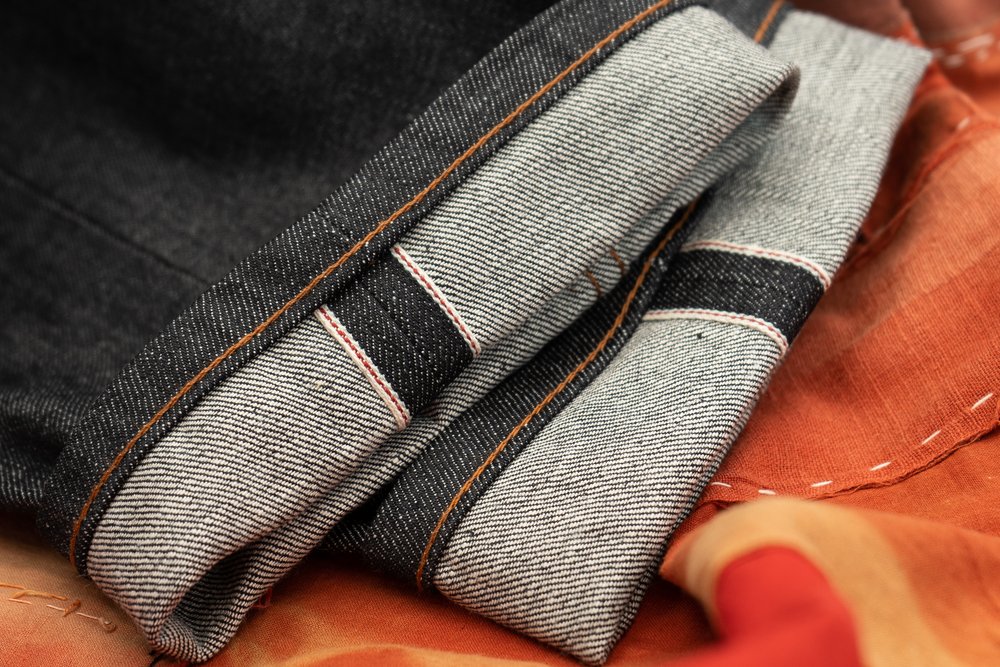
The Catechu Selvedge is a 12 oz. Japanese Selvedge Denim that has had its inside weft naturally dyed with Catechu dye derived from trees. The Catechu dye is created by boiling, evaporating, and collecting the residue from the Acacia tree. This indigo denim has a warm earth tone that can be seen peeking through the twill lines. To see the color of the interior completely, flip up the cuff. Short slub cotton yarn is used to weave the indigo warp, giving the denim additional personality and highlighting vertical fading. The Catechu Selvedge has the traditional raw denim feel and is stiff and crisp. With contrast stitching, a green line selvedge ID, a suede leather patch, and silver metallic buttons and rivets, this item was cut, sewed, and constructed in Canada.
Composition: 100% Cotton
Color: Indigo x CatechuFabric Weight: 12ozFabric Origin: JapanMade in: Canada
The fashion industry has put in a lot of work in recent years to digitally convert and adapt fashion to the digital world. Non-fungible tokens (NFTs) and blockchain technology are being used by brands to attract, authenticate, and engage with customers all around the world. But what precisely is NFT? Recently, a new trend of using NFTs to combine blockchain technology with creative intellectual property has emerged. The concept has grown across all market sectors, and today premium fashion merchants are now participating in the NFT business. Because changes are so important and complicated, the luxury fashion and beauty sectors have created extensive documentation to better comprehend the competitive environment. Without a doubt, the blazing fires of NFTs have ignited a burning desire for blockchain technology in the fashion industry.
WHAT ARE NFTs?
NFTs are cryptographic assets created with the use of blockchain technology. It allows for the transfer of value across a non-replicable medium. It can be a one-of-a-kind, non-recurring token that cannot be partitioned but can be used to depict real or virtual world items, including the token’s own attributes and ownership, all while staying inside a blockchain representation. This equips NFTs with the distinct characteristics that make them so appealing. Smart contracts, which are software programmes that regulate actions such as authenticating ownership and restricting their transferability, are used to generate NFTs.
When a person creates an NFT, they write the smart software code that governs the NFT’s properties and contributes those qualities to the NFT’s blockchain. NFTs are digital files made as jpg, png,.mov, or 3D fashion files prior to getting minted (connected) to a blockchain. They are more than simply a chase to cryptocurrency. NFTs are controlled and authenticated as digital assets via digital accounting records or blockchains, and they are kept in digital wallets in the same way as cryptocurrencies and other assets are, and they serve as valuable objects sold in the digital environment.
In simple language, NFTs cannot be copied or hacked and are not mutually interchangeable, which means, no two NFTs are the same. They are non-fungible, which signifies that instead of obtaining an actual object that you may wear (and which almost certainly has many replicas in the real world), you will instead receive a one-of-a-kind JPG file that cannot be replicated.
ROLE OF NFT IN FASHION INDUSTRY
The fashion and beauty industries have made a determined effort in recent years to enhance a true and precise knowledge of business developments in order to encourage new terms that are consistent with current corporate practices. Fashion’s the only chance of re-entering the fast-paced digital train was to build NFTs, as it had entirely missed the boat with E-commerce. When e-commerce first emerged, a huge number of businesses were completely disinterested in exploring the new channel. The fashion business has become significantly more cautious since then. Sustainable fashion and beauty is a big incentive for younger millennials and Gen Z market groups. Prestige companies may use NFTs to create unique experiences for their customers, increasing brand awareness, engagement, and revenue. Despite the apparent advantages, however, fashion has yet to find out the ideal way to utilize NFTs.
NFT fever had gripped the year 2021. With the growth in Google searches for NFTs, the NFT business saw $2.5 billion in revenue during the first half of 2021, up from $13.7 million the year before. With the fashion business seeking to unlock the technology’s capabilities, it’s no surprise that Karl Lagerfeld has already stated that another release is in the works after their premiere in the virtual world.
As popular as the Karl Lagerfeld NFTs have been, it’s critical for companies to grasp how NFTs vary from other sectors that are more acclimated to selling digital items. This is mostly due to the fact that conventional fashion firms, who are known for their reluctance to digitalization, are finding it difficult to let go of their physicality. As a result, individuals who follow this business are often left wondering what NFTs are, why everyone is eager to cash in, and what they imply for a market that has stayed steadfastly physical for so long.
PLUSES AND MINUSES OF NFTs IN FASHION INDUSTRY
As a designer, an NFT may produce virtual fashion goods that are separate from real-life products, addressing the problem of digital apparel reproduction. NFT broadens the selection of one-of-a-kind things. A fashion company may utilize it to offer its own show video or customized backstage photos. When it comes to digital copies, the NFT makes it simple for collectors to find the original copy they desire. NFT might have an influence on the resale market not only by keeping track of changes in ownership of a given item but also by paying corporations a premium whenever their goods are sold in the second-hand high-end market, for example.
Regardless of their individual advantages, however, NFTs are still a pretty modern investment strategy that may provide buyers with unexpected challenges. Some issues to be aware of and investigate more before purchasing NFTs, such as the fact that anybody can take a picture of the artwork, upload it to a blockchain, and sell it, therefore purchasers must ensure that they are purchasing NFTs from the artist or that the seller has the authorization to sell the NFT. By themselves, NFTs are unable to link the production or ownership of an NFT to a real person in the physical world or to verify that the NFT’s creator has the fundamental entitlements to connect that NFT with a certain creative work.
BIG FASHION BRANDS JOINING NFT MARKET
Below is a breakdown of the many brand tactics for handling the NFT area in the fashion industry, including specific adjustments, how bitcoin carbon emissions are being mitigated, and what’s next in the space.
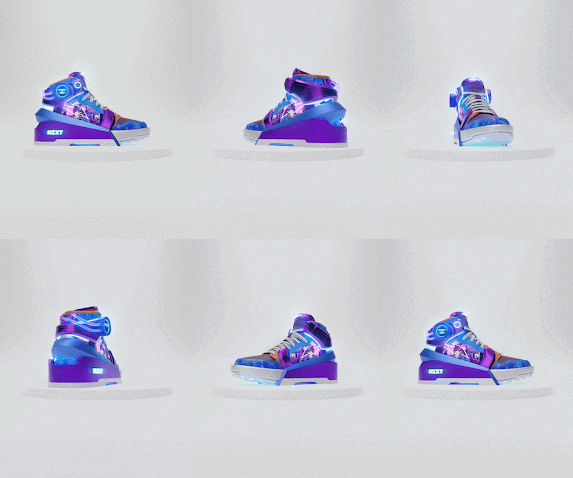
RTFKT’s Virtual Sneakers
The RTFKT brand was founded in 2019 and quickly established itself as a leader in the virtual sneaker market. Early in 2021, the company worked on a project with “Fewocious,” a well-known crypto artist who was only 18 at the time. He created three virtual sneakers that buyers could “try on” via Snapchat before entering an auction to buy them. The top bidder was also given the opportunity to receive a tangible pair of sneakers to try in person. The partnership lived up to the expectations, selling 600 pairs of sneakers in just 7 minutes for a total of 3.1 million dollars.
Since then, RTKFT has expanded its portfolio by collaborating with “The Fabricant” to produce a new collection of seven virtual products, which received $8 million in their most recent financing round.
GUCCI Selling NFTs
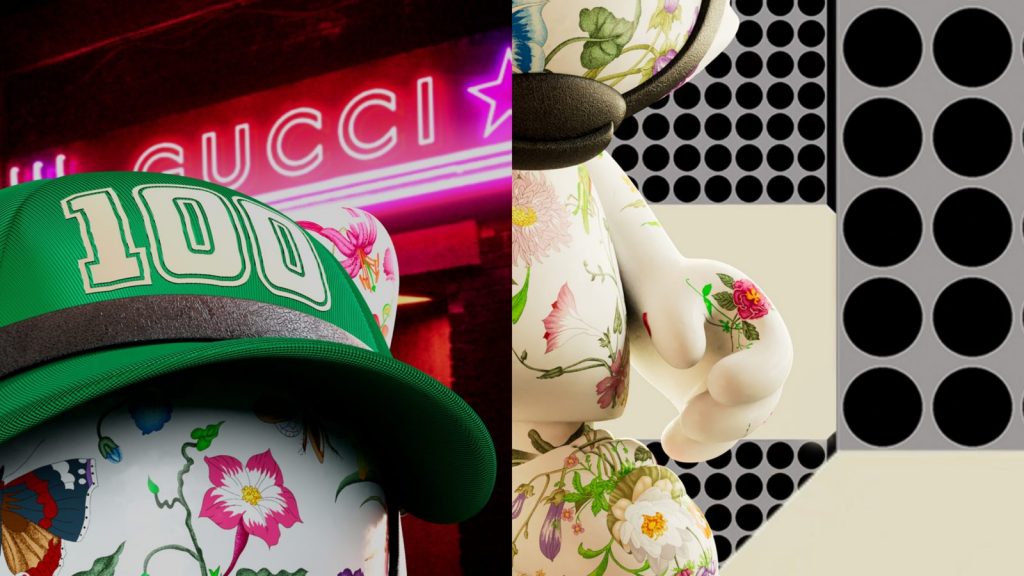
Gucci was the first luxury house to venture into the world of non-traditional textiles. The NFT of the legendary Italian fashion business was inspired by a movie by their “Aria” collection in cooperation with Alessandro Michele, rather than being patterned after fashion products. Christie’s auctioned this four-minute clip for a whopping 25,000 million dollars.
Louis Vuitton- NFTs collecting Game
On the occasion of its founder’s 200th birthday on August 4th, Louis Vuitton merged fashion and technology by releasing “Louis the Game,” an adventure-style game in which players must navigate around Vivienne’s dollhouse.
Aside from that, gamers flocked to various locations to acquire 200 candles to commemorate the 200th anniversary of their birth. The trip included 30 hidden NFTs and 10 NFTs created in partnership with prominent NFT artist “Beeple.” This game’s NFTs are free to gather and not for sale to the general public.
Prada’s Partnership With Adidas
In the latest incarnation of luxury in the metaverse, Prada is presenting its first NFT in collaboration with Adidas: an audience digital work in a Beeple-style collage.
Anyone may register to upload an image using a specifically developed filter that will be modified, jumbled up, and 40% of the image erased to make the image anonymous starting on January 24. Three thousand of the individual images will be chosen at random and minted as one-of-a-kind NFTs by Adidas for free. The owner of the artwork will be the person who submitted it, and they will be able to sell their NFT on the secondary market. Zach Lieberman, a digital artist, and creative coder will subsequently merge the selected photographs into tiles into one massive patchwork NFT.
Burberry With Blankos Block Party
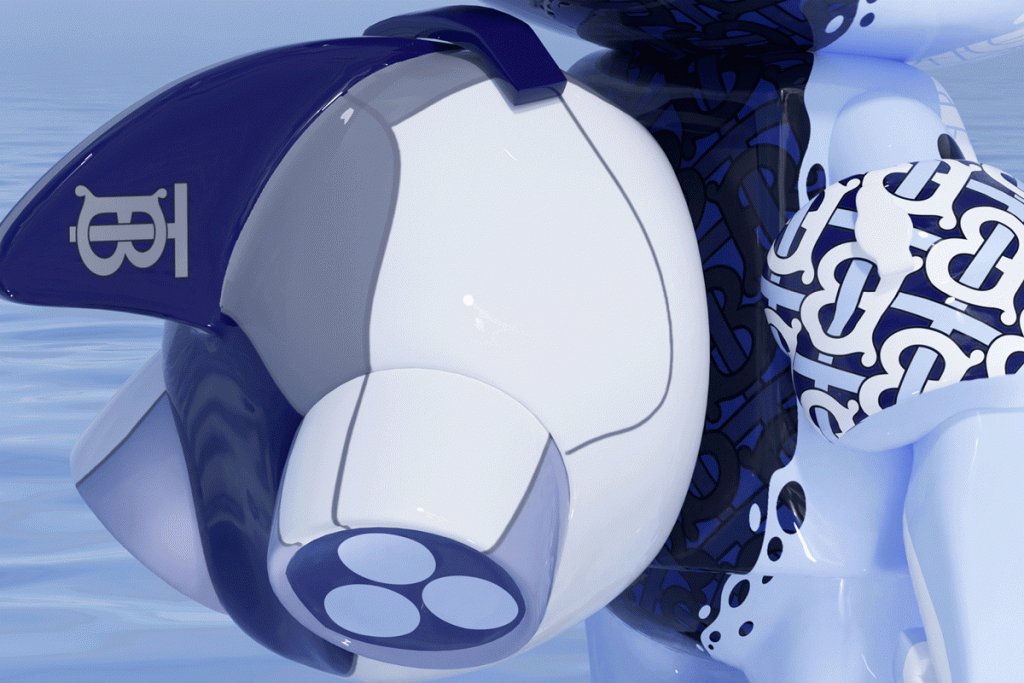
Burberry collaborated with a video game company to create its own NFTs. After the triumph of its own game, B Bounce debuted in 2019, the brand went into the digital world by collaborating with Mythical Games’ Blankos Block Party on a charming shark Blanko that can be acquired, updated, and sold in-game. The Burberry NFT, unlike Ethereum, does not function on the energy-intensive Proof of Work crypto paradigm, but rather on a proprietary EOSIO blockchain protocol that uses a significantly less energy-intensive Proof of Authority methodology.
Overpriced- Scannable Hoodies
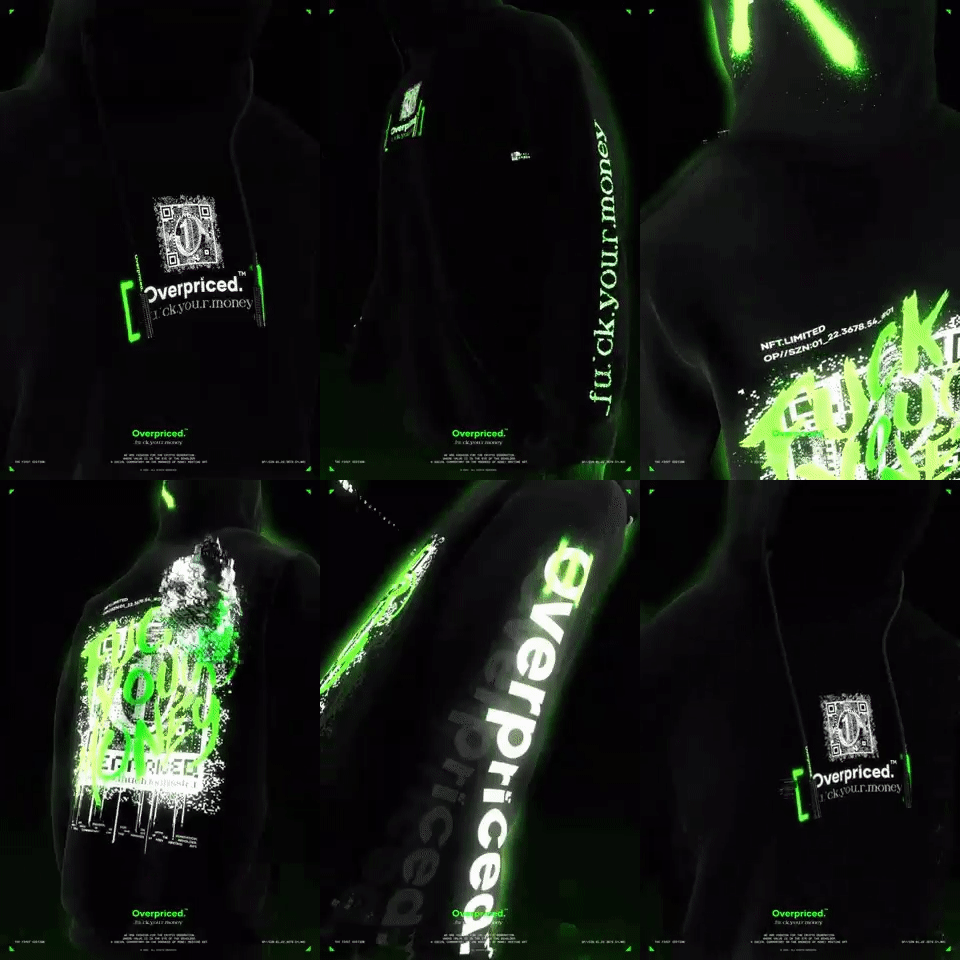
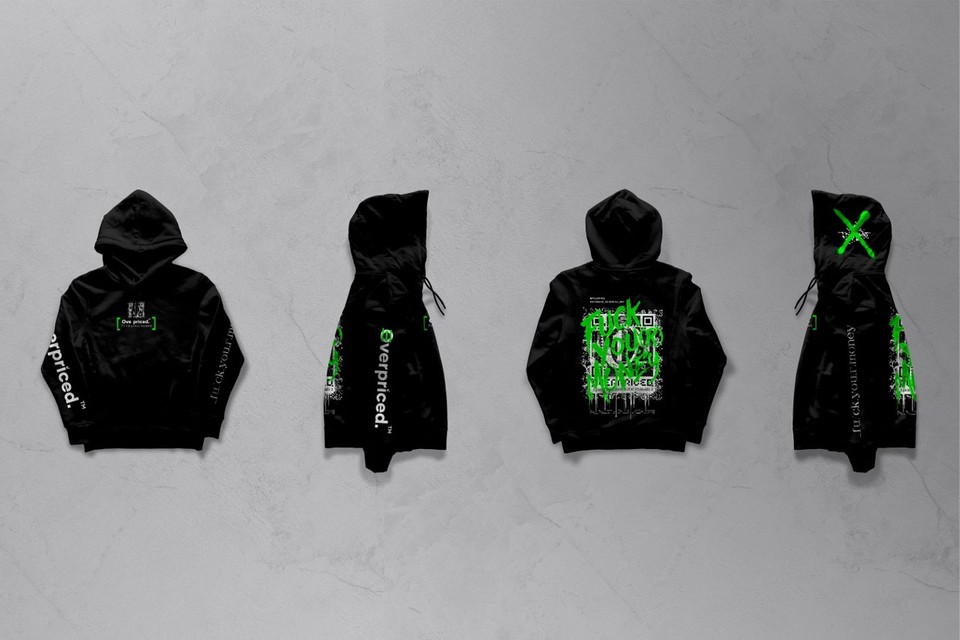
Overpriced, the world’s first NFT-driven fashion business, has created a real-life sweatshirt with a scannable code that allows the hoodie’s owner to show it around. This sweatshirt is being auctioned for $26,000 USD on the NFT site “BlockParty.”
Because most fashion labels, such as Balenciaga and Fortnite, place their NFTs inside closed systems, the concept of a virtual wardrobe that moves across multiple gaming platforms and digital worlds is still a work in progress. Polygon, for example, is attempting to alter this. Dolce & Gabbana, a luxury fashion business, has launched NFTs on the platform, emphasizing the ease with which their clothing may be moved between many digital “worlds.” “There’s going to be a lot of money in the NFT fashion industry,” said Joseph Pallant, the creator of the Blockchain for Climate Foundation and an NFT specialist.
FUTURE WITH FASHION & METAVERSE- UNLOCKING LIMITLESS POSSIBILITIES WITH NFT MARKET
The co-founder of stablecoin Tether, William Quigley said, “I’m betting that the revenue model for the metaverse is going to be NFTs.†The Bitcoin pioneer, Quigley, sees the Metaverse as “a massive economic force that will profoundly affect people’s lives in the years ahead.†The fashion industry must grasp that NFTs are all about digital item ownership, and the Metaverse is merely extending that notion into one or more virtual worlds in order to prepare for the metaverse’s future. Despite the fact that the Metaverse as a business model is still in its infancy, NFTs are turning this creative playground to life.
Neuno, created by Natalie Johnson, sees the promise of NFTs as well. Neuno is urging the fashion industry to reach a digital utopia where one may possess a unique piece of “fashion history” by bridging the gap between the actual world and NFTs.
You can’t discuss NFTs and the Metaverse without mentioning the recent emergence of NFT markets, which provide users with a location to purchase and trade NFTs. Investors such as billionaire entrepreneur Mark Cuban, music tycoon Jay-Z, and Google Ventures, which give seed, venture, and growth-stage capital to digital firms, have taken notice of some of these sites. The vocabulary of the future will revolve around NFTs, cryptocurrency, blockchain, skins, and metaverse.
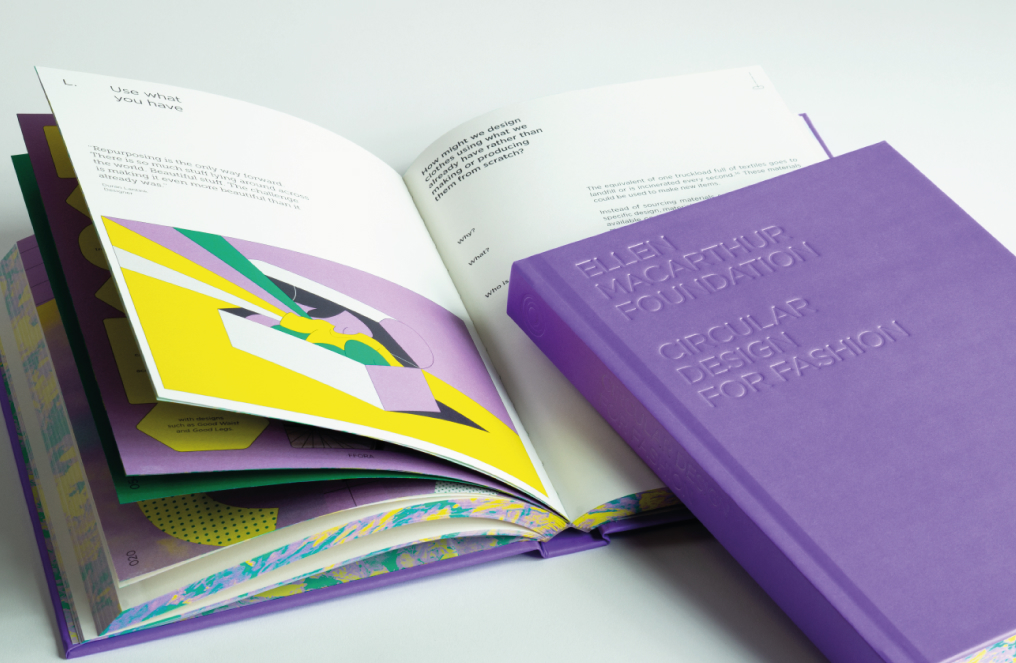
Circularity has been discussed by Dame Ellen MacArthur since 2010, although the concept has only lately gained popularity. After retiring from sailing 12 years ago- MacArthur being the first woman to solo around the globe- she founded the Ellen MacArthur Foundation to bring together the worlds of business, education, fashion, agriculture, and beyond to conceive a dramatic transformation to a “circular economy.” A circular economy, in contrast to our existing linear concept of creation, consumption, and disposal, entails reducing waste, keeping items in circulation, and renewing nature.
MacArthur launched the book on the 2nd of December, 2021, at Business of Fashion VOICES. Circular Design for Fashion was created in honor of fashion’s enormous potential to change to a circular economy, as well as its creatives – enthusiastic disruptors who are always looking for new ways to innovate. The book introduces a new design approach and inspires designers to think about how they might help shape a more resilient and successful fashion sector that addresses climate change and biodiversity loss. Investigate the challenges of creating with three concepts in mind: reducing waste and pollution, cycling products and resources, and renewing nature. The book presents an assorted mix of voices, well-known names like Stella McCartney, Gabriela Hearst, and Eileen Fisher, as well as upcoming designers like Bethany Williams and Duran Lantink, upcycling professionals like ADIFF’s Angela Luna and Loulwa Al Saad, regenerative agriculture assets like Fibershed and FarFarm, Gucci and its parent company Kering, and some of the industry’s most successful corporations like Inditex, Fast Retailing, and H&M.
SUBSISTENCE BY CIRCULAR DESIGN
Many firms and designers in the fashion field have begun to take initiatives to remove waste and pollution from their product lifecycles in recent years. Elodie Rousselot, the strategic design manager at Ellen MacArthur Foundation says, “I think we’re witnessing a beautiful moment in the industry, where many are actively looking at how they can change their businesses and the way they design products to be fit for the circular economy.†The goal of circular design is to create goods and services that don’t have a linear life cycle with a beginning, middle, and conclusion. The goal is to create goods that can “be produced to be made again,†as ex- CEO of IDEO, Tim Brown phrased it.
The move to a circular economy (CE) presents designers with a variety of new issues and necessitates particular knowledge, tactics, and methodologies. The CE idea broadens the scope of the design process and encourages the incorporation of new knowledge domains and abilities. Throughout all phases of the design process, substantial engagement with stakeholders and specialists is required for the CE to be implemented successfully in reality. Design firms have responded to the CE by forming dedicated CE research and design workgroups, facilitating information flow, constructing their own circular strategies and techniques, and pursuing long-term client relationships that encourage designers to become involved in the lifecycles of crafted artifacts rather than viewing design projects as one-time events. Many designers have taken the initiative too. Amongst such designers are the six contributors, highlighted by Rousselot in MacArthur’s book, who are at the forefront of the movement towards the circular fashion industry.
ORANGE CUTURE BY ADEBAYO OKE-LAWAL
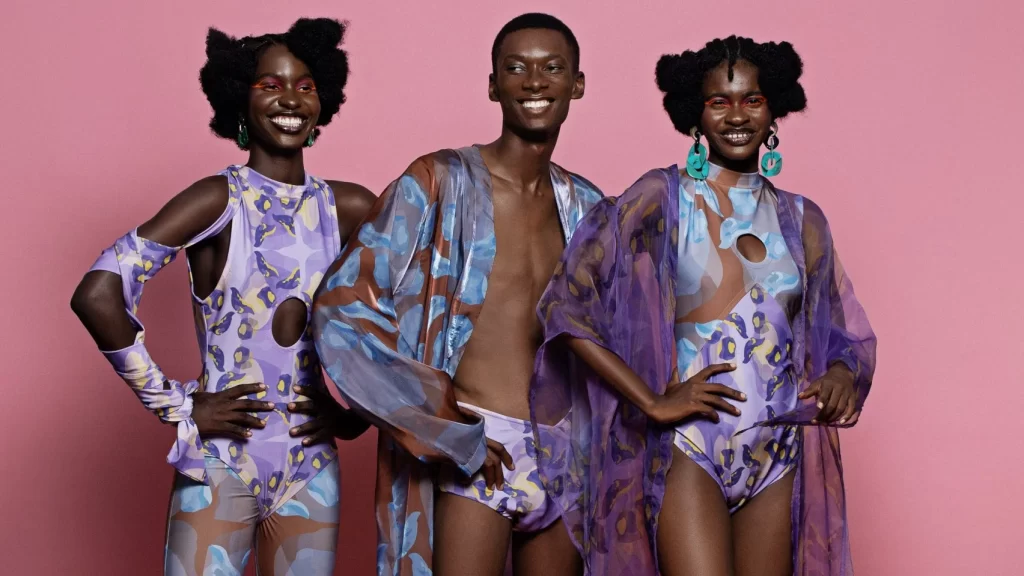
Adebayo Oke-Lawal creates gender-neutral clothing with a 90 percent indigenous Nigerian supply chain that includes everything from material procurement to dyeing and printing. The designer tries to guarantee that money stays in the community through his Lagos-based label Orange Culture, while also training his suppliers and staff about sustainable manufacturing processes so that they may apply what they’ve learned to other initiatives.
“They’ve also begun encouraging shoppers to return undesired clothing so that it may be turned into new outfits and sold again. It’s more than just a repair service. It’s almost as though the clothing had a new narrative to tell.” Rousselot said, “Orange Culture uses the offcuts from its manufacturing process to form new products or elements such as lining.â€
RAEBURN BY CHRISTOPHER RAEBURN
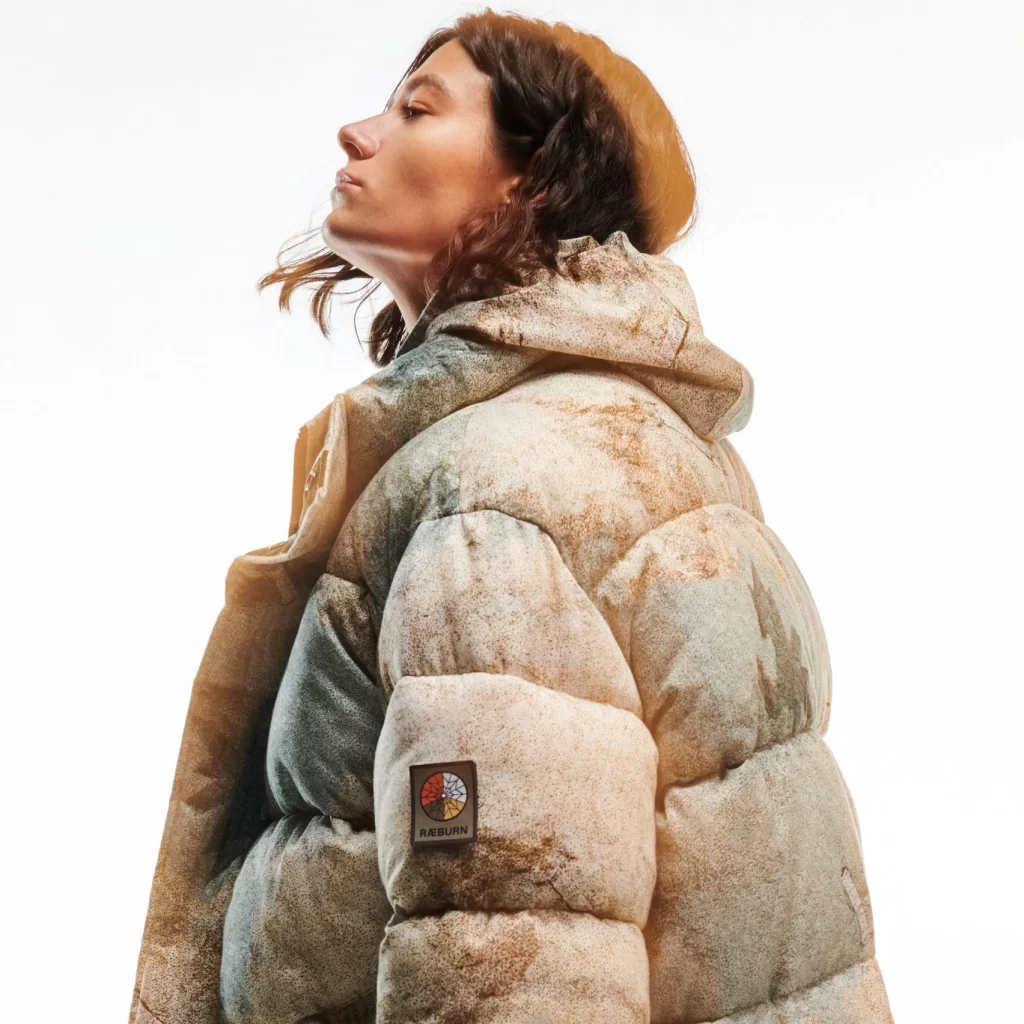
Whilst pursuing fashion design in London in the early 2000s, Christopher Raeburn began working with excess fabrics and clothes, purchasing unworn military coats from the 1950s for £1 apiece and reworking them into new outfits. Since then, he’s pushed to expand the use of reused materials in mass production with his own British Fashion Award-winning label Raeburn, along with switching ‘Timberland’ to regeneratively cultivated leather as creative director for the footwear company.
“He was one of the first to bring this practice to a commercial scale, in a way that is attractive and different from what you would expect from an ‘eco brand,†Rousselot said.
ICICLE BY YE SHOUZENG AND TAO XIAOMA
Icicle, a Chinese company founded in 1997 by husband-and-wife team Ye Shouzeng and Tao Xiaoma, uses five primary materials – cashmere, linen, wool, silk, and cotton – that is sustainably sourced and lightly treated to preserve the attention on the fibers’ inherent beauty. To maintain transparency and protect the welfare of garment workers, the company does all of its design and manufacture in-house at its own facilities.
Rousselot quotes about the innovative couple- “They are bringing this different perspective to a circular design, which is based on traditional Chinese philosophy and runs counter to the Western idea that we’re born, we die and then that’s itâ€
MARINE SERRE
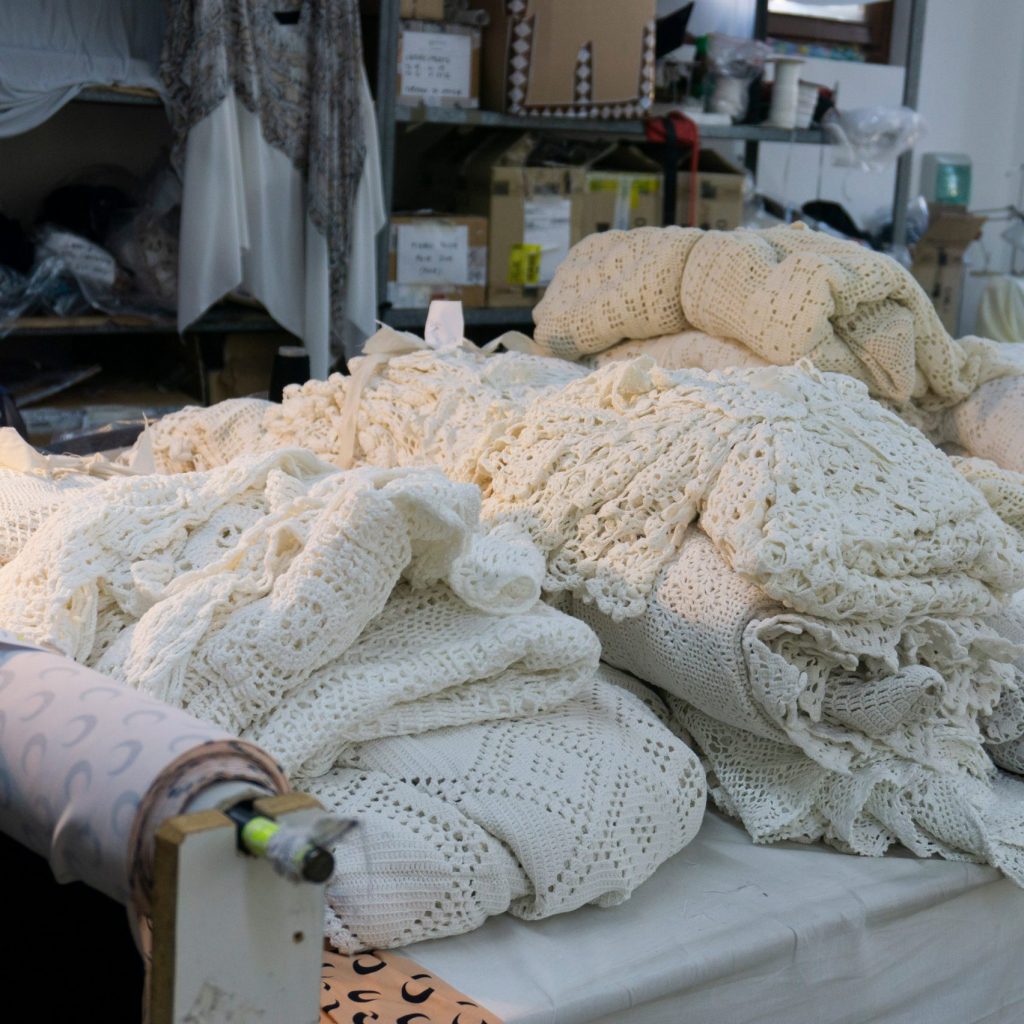
Aside from her signature crescent moon motif, French designer Marine Serre is recognized for using repurposed materials such as household linens, carpets, and towels in 50% of her designs. Serre’s work, which was awarded the esteemed LVMH prize in 2017 and is distributed by big shops like Selfridges and Browns, demonstrates that waste materials, notwithstanding their nasty reputation, may have a place in the premium fashion industry.
“She’s extremely cutting edge in the way she designs with these textiles,†Rousselot said. “In fashion design, usually what students are taught to do is to define a color palette that will guide their collection and then find the fabrics to match.â€
FIBERSHED
Fibershed is a non-profit organization that assists businesses in gaining access to hyper-local textile supply chains by employing regenerative agricultural techniques that retain carbon in the soil rather than releasing it. Designer Phoebe English recently produced a line of outfits for the COP26 climate conference in conjunction with its regional arm in South East England, for which all fabrics were farmed, dyed, spun, and processed within a 250-kilometer radius of her London studio.
Rousselot quotes- “This approach means you are not growing hectares of cotton, you’re growing different types of crops that naturally thrive in the area such as nettle or hemp.â€
NKWO BY NKWO ONWUKA
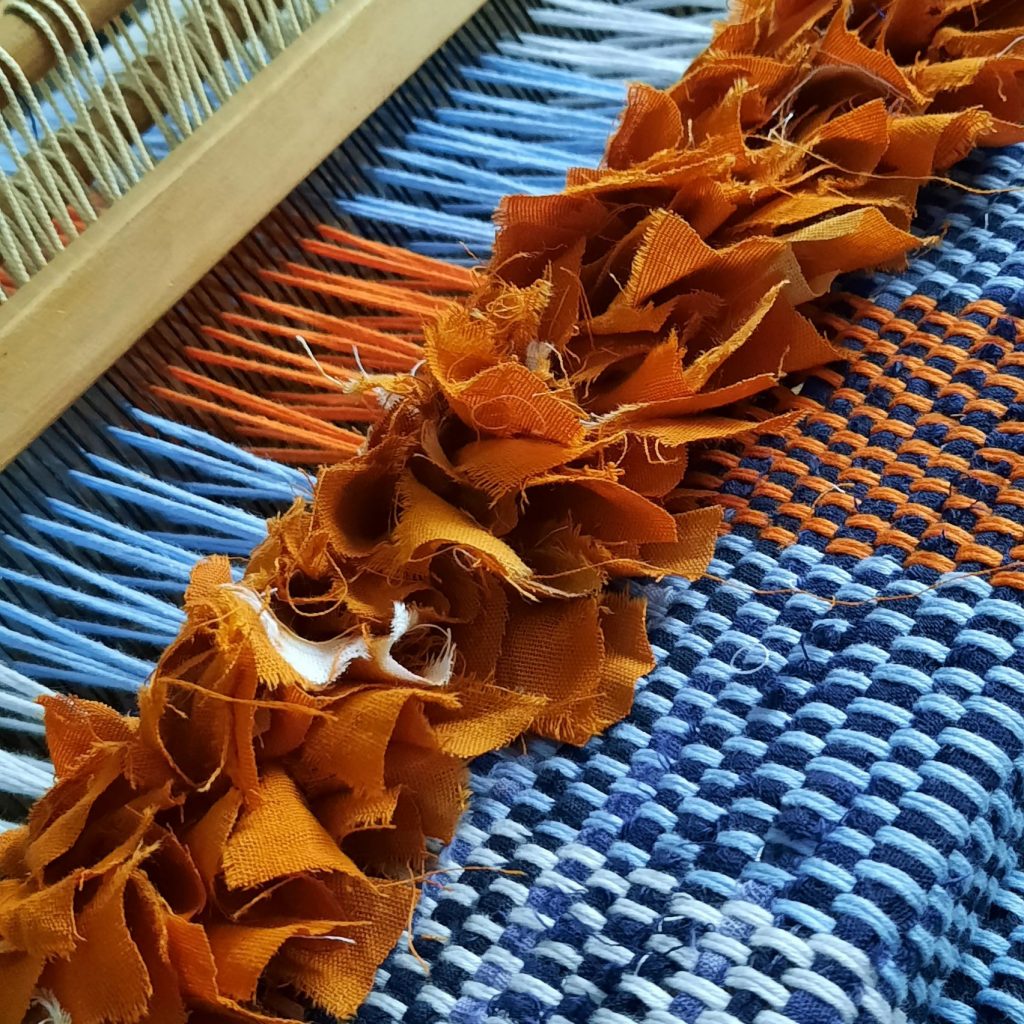
Nkwo Onwuka, a British-Nigerian designer, created Dakala, a new African textile that looks like hand-loomed fabric but is manufactured by stripping and putting together discarded denim pieces. She currently instructs indigenous women in Abuja to use their traditional textile crafts abilities to manufacture new garments from the heaps of garment trash transported to Nigeria from western nations, with the goal of “weaving waste into prosperity.”
“She’s also started looking at sourcing cotton locally,†Rousselot explained. “Nigeria doesn’t grow a lot of cottons but unlike in Kyrgyzstan, where it’s a cause of desertification, in Nigeria, it can grow rain-fed so it doesn’t require extra irrigation.â€
CIRCULAR FASHION: THE CURRENT SCENARIO
The circular fashion industry is being embraced by more than just independent or eco-friendly apparel manufacturers. 64 of the world’s largest fashion brands, including Adidas and Inditex, inked a pledge in January 2018 to speed the transition to a circular business model. Adidas, for example, decided to address the issue of materials by gradually implementing a 3-Step Loop Strategy, in which Step 1 is to use recycled materials, Step 2 is to make those recycled materials part of a loop that can be reused, and Step 3 is to bio-fabricate the materials of the future so that when they come out of the loop, they are biodegradable and can be returned to nature without endangering it.
Denim is a wardrobe must for millions of individuals all over the world. The manufacture of a single pair of jeans in traditional way consumes 3,781 liters of water, which is a fact that the majority are unaware of. However, of late, we have seen that Ellen MacArthur foundation and other initiatives in the industry have ensured that the industry moves firmly in the direction of circularity and we hope to see huge changes very soon.
The Ellen MacArthur Foundation had created The Jeans Redesign, a set of recommendations aimed at encouraging the denim industry to embrace the circular economy more effectively. Hundreds of companies have already signed on and committed their support. Among them are Gap, H&M, Wrangler, and a many other well-known brands. In June 2021, the first redesigned jeans utilizing the criteria was finished, proving that circular jeans may be made now.
IMPORTANCE OF CIRCULAR FASHION ON PLANET
“Cradle to Cradle is like good gardening; it is not about “saving†the planet but about learning to thrive on it,†a quote by Michael Braungart says it all. The contemporary industrial infrastructure’s design goal is to provide an appealing product that is inexpensive, complies with rules, performs well enough, and lasts long enough to fulfil market expectations. With a projected worldwide population of nine billion people by 2030, nature will face unprecedented challenges in meeting human demands. The purpose of circular fashion is to guarantee that clothing is manufactured from safe and renewable materials, that innovative business models increase its usage, and that old clothing is reused. We want to see the garment industry progress to a future where every material is securely used and reused, ecosystems are protected, and people have meaningful jobs. This is the circular fashion philosophy, as well as why it is so vital.
Clothes are an outward manifestation of our personality, and while variety is important, we should be more careful of how much we really need.
It’s always difficult to find the right jeans whose measures meet their branding. Consumers, designers, and suppliers have all been working together to re-imagine denim from the rivets up, owing to the growing awareness of the need for sustainable fashion. Below, we have enumerated some denim brands that design jeans with eco-wise and sustainable efforts to aid you with the best possible buy this year.
1. LEVI’S
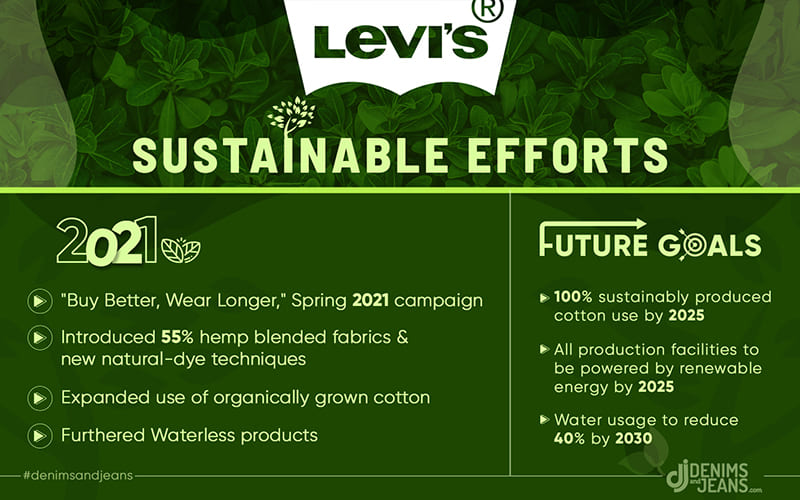
Levi Strauss & Co. is a global leader in jeanswear and one of the world’s top brand-name apparel companies. This year, the brand launched its “Buy Better, Wear Longer,” Spring 2021 campaign, which raises awareness about shared responsibility and the environmental implications of apparel production and consumption. The introduction of 55% hemp blended fabrics, new natural-dye techniques, the expanded use of organically grown cotton, and the recyclability of every Wellthread garment was inculcated by the brand. Levi’s Wellthread used a technique by which ultrasonic waves are used to apply the dye to the fibre. The brand also used Water< Less techniques which have saved more than 3.5 billion litres of water since they were introduced nearly a decade ago. A few of the company’s central goals for the future are to use 100 per cent of sustainably produced cotton by 2025, its supply chain will have reduced greenhouse gas emissions by 40% and by 2030, water usage in the industry in water-stressed areas will be reduced by half.
2. NUDIE JEANS
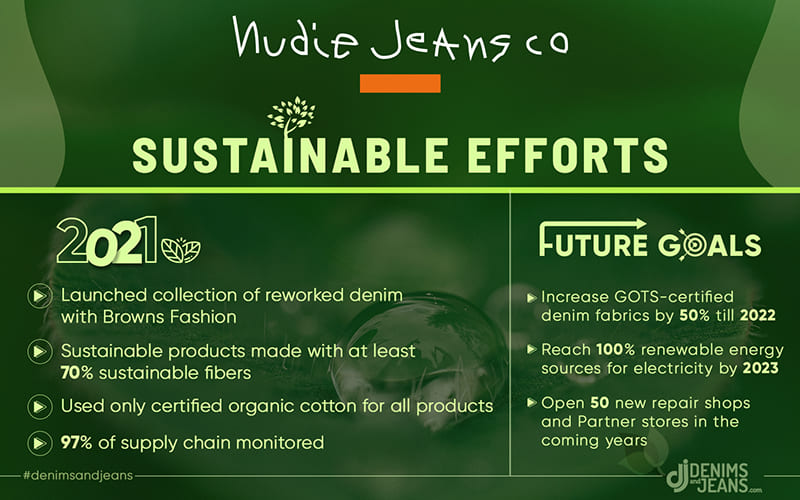
This Swedish denim company delivers and preserves a tradition true to the fabric’s history and attributes by thinking in terms of wear, tear, and repair rather than fast fashion. Teaming up with London-based retailer Browns Fashion, Nudie Jeans has created a collection of 16 denim pieces, all reworked from pre-existing denim. The brand has already repaired 45900 jeans for free and has produced 98.6% Sustainable products. 2021 was the third full year in which it used only certified organic cotton for all the cotton products.
Moreover, according to its Sustainable Material Tool the brand defines a garment or accessory as sustainable when it contains at least 70% sustainable fibres. The brand aims to increase number GOTS-certified denim fabrics to reach 50% of all denim fabrics by 2022 and reach 100% renewable energy sources for electricity used in all Nudie Jeans operated facilities by changing energy subscription or investing in Renewable Energy Certificates by 2023. Nudie Jeans also plans to open 50 new permanent Repair spots, including Repair Shops, Partner stores and Repair partners in the coming years.
3. PANGAIA
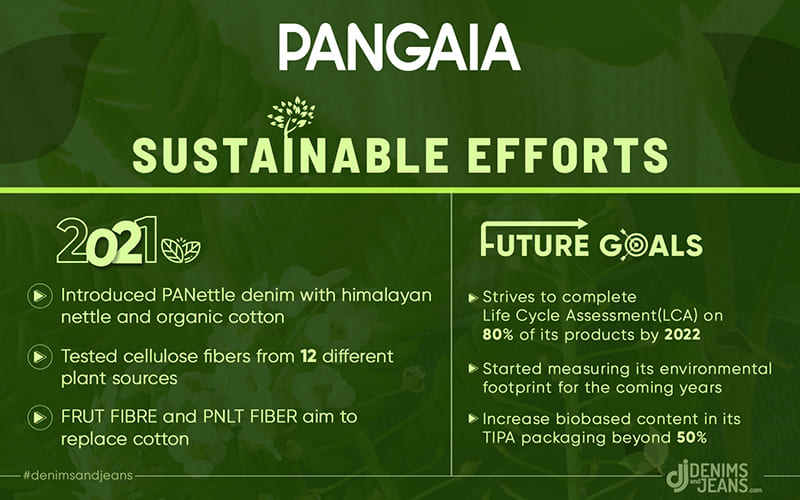
Pangaia is a direct-to-consumer materials science company bringing breakthrough textile innovations and patents into the world through everyday lifestyle products. This year, the brand introduced its sustainable denim PANettle, a mix of naturally regenerating wild Himalayan nettle, organic cotton, and PPRMINT for longer-lasting freshness. To diversify its material sources and lessen reliance on traditional cotton, the company employs wild Himalayan nettle. The denim produced is coloured with state-of-the-art water and dye-saving technologies, and the thread is made entirely of biobased cellulose. Non-galvanized, recyclable stainless-steel buttons are also used in denim. The brand created FRUT FIBER and PLNT FIBER to replace cotton in their product line. The two cellulose fibre blends were successfully produced and supplied by Pangaia from fruit and plant raw material sources.
4. RE/DONE
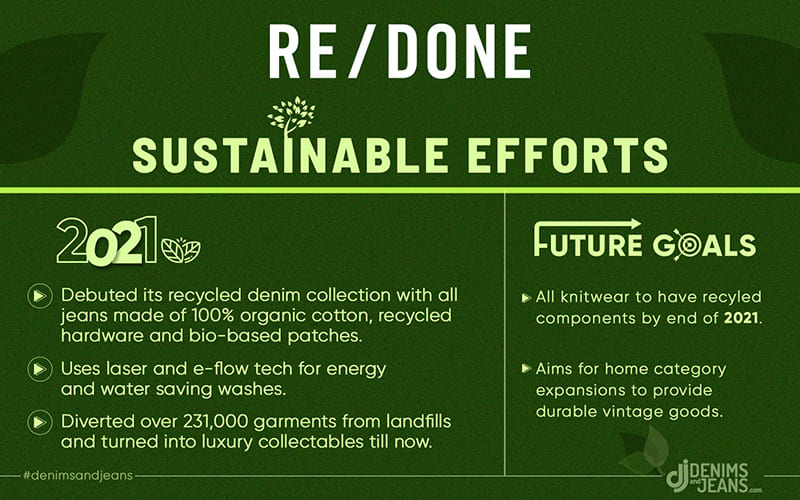
Redone is known for reconstructing Levi’s vintage jeans into modern fits, giving a sense of uniqueness and rareness to each consumer. The brand debuted its first collection designed in line with the Ellen MacArthur Foundation’s Jeans Redesign project guidelines. All jeans are made of responsibly sourced 100 per cent organic cotton, recycled hardware, and bio-based patches, and include a hangtag with a QR code that provides consumers with a full traceability report documenting the lifecycle of each product. Items are shipped using recycled, oxo-biodegradable poly bags. The manufacturer also uses laser and e-flow technologies for energy- and water-saving washes and uses a three-stage purification system to reduce water waste. Since its launch, Re/Done reports that it has diverted more than 231,000 garments from landfills.
5. EVERLANE
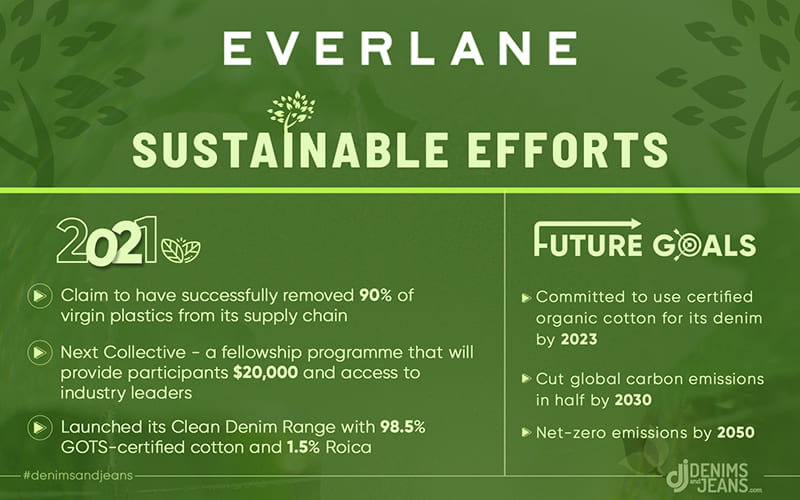
A millennial-favourite DTC clothing brand, Everlane announced a very ambitious sustainability goal: to eliminate virgin plastic from its supply chain, packaging, offices and stores by 2021. By now, it has successfully removed 90% of all virgin plastics from its supply chain. Following through on its commitment to exclusively using certified-organic cotton by 2023, the denim brand debuted what it calls its cleanest denim to date. All items in the Clean range feature 98.5 per cent GOTS-certified organic cotton and 1.5 per cent Roica. Each piece is produced with microplastic-free dyes and recycled trim. It also debuted its Fall/Winter 2021 ad campaign entitled “Get into Denim†to adorn the brand’s collection of organic denim. Everlane is now looking for early-stage entrepreneurs to join the Next Collective, a fellowship program that will provide participants with $20,000 and access to industry leaders in sustainability, fashion, design, business and innovation.
6. MADEWELL
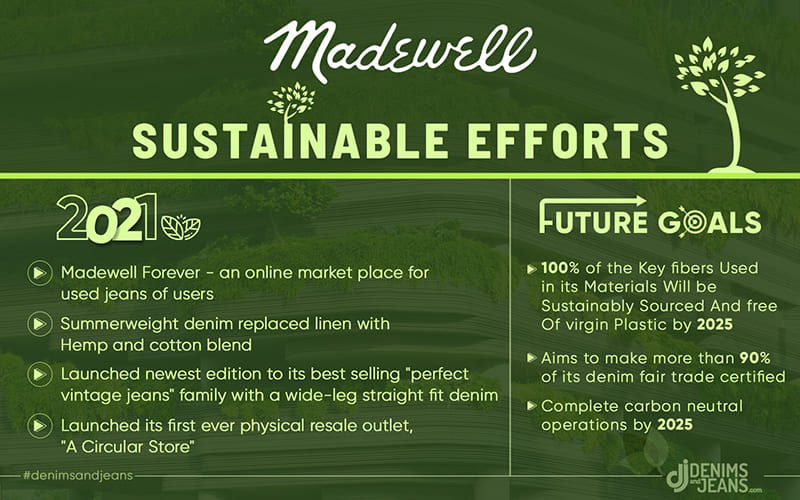
Madewell, which is known for its denim, is an apparel retailer that promotes creativity, diversity, and self-expression. This year, the brand introduced a new part of its website called “Madewell Forever,” which helps customers find a new home for their well-loved jeans, whether they’re clearing out their wardrobe and seeking a new home for them or they’re in the market for a new pair of denim.
Madewell Forever had around 3,000 pairs of secondhand Madewell jeans in a wide range of fits and styles, most of which ranged from $35 to $50. Furthermore, its spring 2021 collection called Summerweight Denim was designed to replace linen as one’s go-to choice for summer bottoms. The fabric is made from a blend of hemp and cotton which is wrinkle-free, moisture-wicking, breathable, and lightweight. The brand aims to source 100% sustainable and virgin-plastic-free fibres for all materials by 2025. It also aims to make more than 90% of its denim fair trade certified. By 2025, the brand strives to do carbon neutral operations entirely.
7. REFORMATION
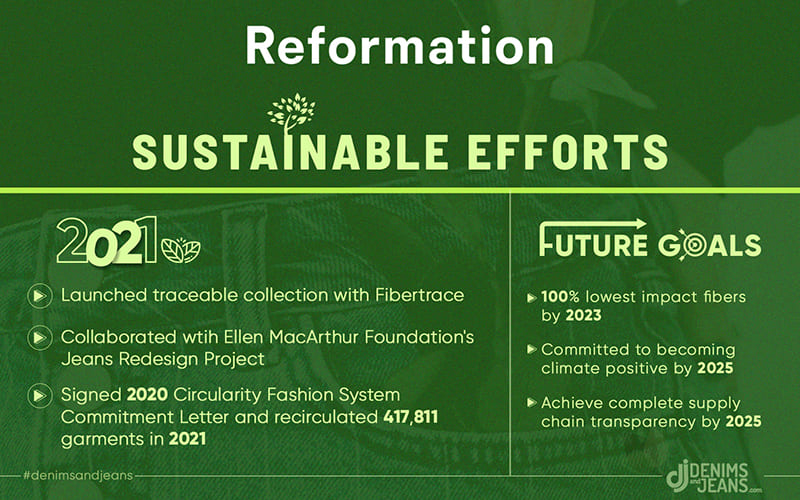
The cult favourite label, Reformation has been dabbling in denim, through vintage capsules and designer collaborations. Reformation launched their denim collection in collaboration with FibreTrace, which labels fabrics with a unique pigment that can be tracked and validated throughout the garment supply chain. This effort is in line with Reformation’s goal of complete supply chain transparency by 2025. This year, the brand also signed the 2020 Circularity Fashion System Commitment Letter, with the goal of recirculating 500,000 garments in the next five years and have already been able to reuse or recycle 417,811 garments in 2021 itself. Reformation also teamed up with the Ellen MacArthur Foundation’s Jeans Redesign program to achieve its commitment to transforming the way jeans are produced.
8. OUTLAND DENIM
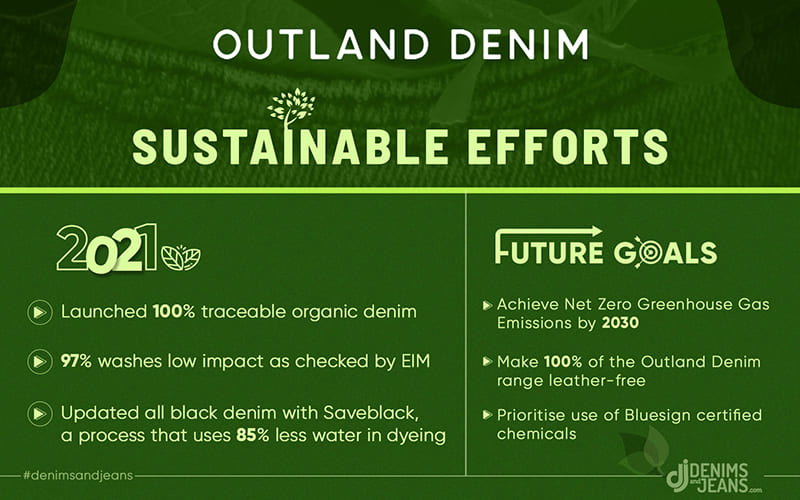
This Australian denim company gained popularity after Meghan, Duchess of Sussex, wore a pair on her royal tour in Australia in 2018. Measured through third-party Environmental Impact Measurement criteria, 97 per cent of Outland Denim’s washes are categorized as “low impact.†This year, Outland Denim expanded its rigid jeans options, collaborated with fellow Aussie brand Spell on a line of vintage-inspired denim staples, introduced ready-to-wear and celebrated a milestone in its traceability journey, marking 100 per cent traceability of its organic cotton denim. It also updated all-black denim to denim dyed using Saveblack, a process that uses 85 per cent less water compared to conventional dyeing. The company stated that it is targeting net-zero emissions by 2030 through practices, policies and by offsetting those emissions that cannot be reduced. It also commits to make 100% of the Outland Denim range leather-free and prioritise use of Bluesign certified chemicals.
9. MUD JEANS
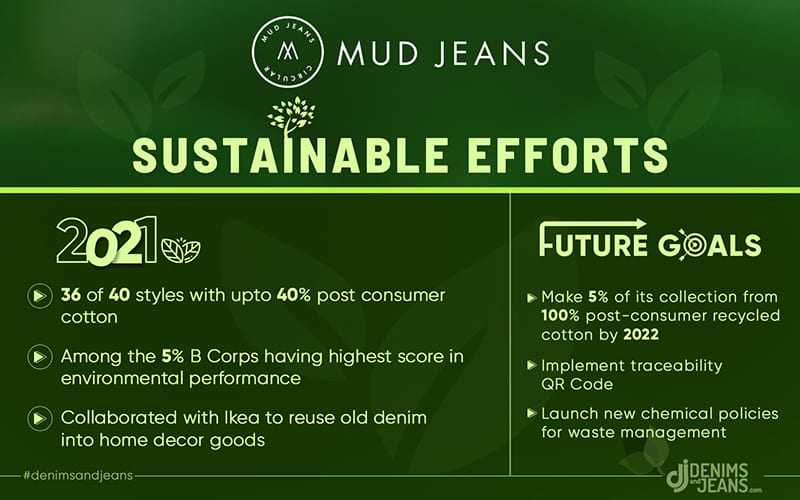
A sustainable and fair trade certified denim brand based in the Netherlands, Mud Jeans has a business model to sell or rent jeans, at the end of their life and then make old jeans into new ones. It has a design process based on circular production, with the use of materials that are easy to repurpose and recycle. 36 of Mud Jeans’ 40 plus styles are made up of 40% post-consumer recycled cotton which is twice the industry average.
Out of 4000 certified B Corporations worldwide, MUD Jeans is among the 5% B Corps with the highest score in environmental performance. The Dutch fashion brand has also collaborated with Swedish home decor brand Ikea to give textiles a second lease of life, specifically, denim. Its sustainability goals include making 5% of its collection from 100% post-consumer recycled cotton by 2022, implementing traceability QR Code and launching new chemical policies for waste management.
10. FRAME
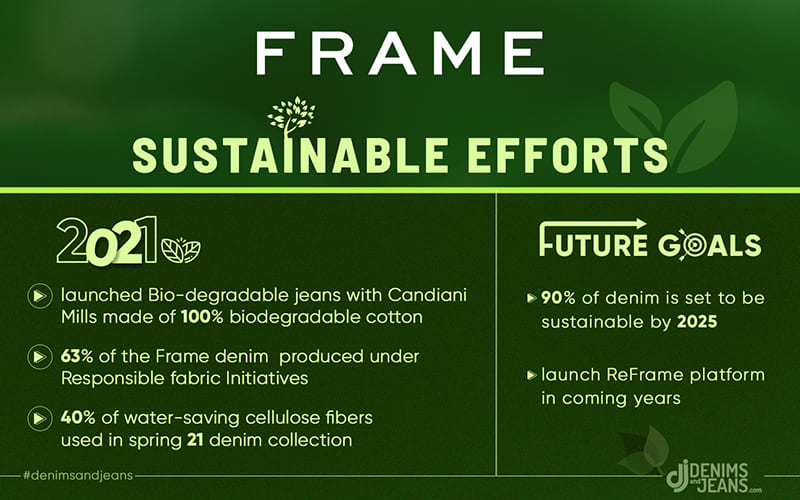
American fashion brand Frame launched Bio-Degradable jeans in partnership with Candiani made from 100 percent cotton that is 100 percent biodegradable. For its fall/winter 2021, Frame revamped its menswear line with trendy cuts for timeless pairs of washed black and indigo jeans. This year it also launched its circular denim collection under EMF Jeans Redesign Project that included denim pieces made of 100% cotton and post-consumer material.
For FRAME Winter 2021, 63% of the FRAME denim line is projected to be responsibly produced according to its Responsible Wash and Responsible Fabric Initiatives. Â 40% of the fibers in its Spring and Summer 2021 Collections are made with either recycled or water-saving cellulose fibers. Its future goals include: 75% of FRAME Denim is set to be sustainable by the end of 2022, 90% of FRAME denim is set to be sustainable by the end of 2025. The brand will launch ReFrame in the coming years.
Continuing our weekly news snippets, here are some interesting ones for Week 49
BETTER COTTON ALL SET TO REDUCE GHG EMISSIONS 50% BY 2030
World’s largest cotton certifier, Better Cotton has established a target of cutting its cotton’s overall greenhouse gas emissions per ton by half. Better Cotton has sought to make cotton production more sustainable across the world since its foundation in 2009. It has taught over 2.5 million farmers worldwide and raised 99 million euros since 2010, with that figure expected to rise to 125 million euros by the 2021-22 season.
According to recent research, Better Cotton manufacturing has a 19% lower GHG emissions intensity per ton of lint than production in China, India, Pakistan, Tajikistan, and Turkey. Better Cotton expects to release four further objectives in 2022, with the target’s deadline set for 2030, based on a 2017 baseline. Soil health, pesticide usage, smallholder livelihoods, and women’s empowerment are all addressed. “This is a pledge for Better Cotton farmers and a stake in the ground for the global cotton sector. Nearly a quarter of the world’s cotton is currently produced under the Better Cotton Standard. We aim to at least double that by 2030.†said CEO of Better Cotton, Alan McClay.
KONTOOR BRANDS ANNOUNCES ITS 2020 SUSTAINABILITY REPORT
Kontoor Brands has presented its sustainability report for 2020. The business, which owns the brands’ Wrangler and Lee, has been devoted to improving its sustainability goal, with this being its second report in the two years since it went public. According to the report, Kontoor has cut its water use by more than 8 billion liters since 2008, and it is on track to save 10 billion liters by 2025.
Kontoor has also obtained 50% of its cotton responsibly, with the goal of utilizing 100% sustainably sourced cotton by 2025. The report also stated that Kontoor is on pace to employ 100 percent preferred chemistry by 2025 and plans to establish a climate target for carbon emissions in 2022. The business emphasized the social aspect of sustainability by establishing community development projects in Bangladeshi factories. The brand has also worked with the Herproject of Business for Social Responsibility, which aims to enhance access to healthcare for Bangladeshi textile workers.
TENCEL COLLABORATES WITH MORE THAN 40 BRANDS TO REDUCE CARBON EMISSIONS
Sustainable textile manufacturer Tencel has teamed up with over 40 brands, celebrities, and NGOs to launch the #MakeItFeelRight effort to decrease carbon emissions. The movement’s goal is to contribute to the worldwide reforestation effort in order to help rescue the earth, and it has already received over 7,500 pledges. Each commitment results in the planting of a tree.
Sustainable campaigners including Xenia Adonts, Lily Cole, and Chen Ai Ling, as well as businesses like Boyish, Reformation, and Lavender Hill, have endorsed Tencel. The brand also collaborated with artist Bodil Jane to produce promotional artwork, which was subsequently featured on the campaign’s website. “Carbon emissions are a global problem and as such must have global solutions. As a partner of the #MakeItFeelRight campaign we strongly believe that Tencel’s sustainability initiatives, which are enabled by brands and driven by consumers, are a great way to make a positive impact through reforestation,†said Diana Chaplin of One Tree Planted.
INDITEX, ZARA’S OWNER, REVEALS RECORD Q3 SALES AND PROFITS
Zara’s parent company stated record sales and earnings in the 3rd quarter of the year as it recovers from the pandemic. Inditex’s sales in the three months to October 31 were 21% higher than a year ago at constant currency and 10% higher than in 2019. According to the Spanish company, retail and online sales climbed by 33% between November 1 and December 10, 2020, and 10% between November 1 and December 10, 2019. The growth in sales aided the group’s 273 percent gain in net profit to 1.23 billion euros in the third quarter. Meanwhile, online sales increased by 124% in constant currency compared to 2019. According to the group, internet sales would make for more than 25% of total sales in FY2021. “Sales are returning to normal levels, and online sales continue to expand,” the business said of its present finances.
J.C. PENNEY WELCOMES THE EXPANSION OF FOREVER 21 TO 100 STORES
The addition of Forever 21 to JCPenney’s brand portfolio has been announced. The brand will be sold at 100 JCPenney shops around the United States, as well as on the retailer’s website. JCPenney’s reputation as a retailer for teenagers and adults will be strengthened by this action. The introduction of Forever 21 at JCPenney is being supported with a 360-degree marketing effort that includes in-store, e-commerce, social media, and direct mail advertising. The style of Forever 21 is inspired by the West Coast, with neutral and trendy aesthetics interwoven into its design. “Forever 21 and JCPenney share a mission to make the latest trends accessible to all while inspiring unique style and confidence. The addition of this brand to our portfolio rounds out our Young Minded assortment and brings an exciting new element of in-the-moment fashion,†said Michelle Wlazlo, executive vice president and chief merchandising officer at JCPenney.
H&M’S SALES UP BY 11% IN Q4 AS DEMAND SURGES
In local currencies, net sales at H&M Group climbed by 11% in the fourth quarter of 2021 compared to the same period the previous year. In local currency, the company’s net revenues climbed by 12% for the fiscal year 2021, according to a statement. Net sales climbed by 8% to 56,813 million Swedish krona in the fourth quarter, and by 6% to 198,967 million Swedish krona for the entire year when converted to SEK. Despite persistent limitations and the pandemic’s negative impacts, the H&M group’s earnings in local currencies were up to the same level as in the fourth quarter of 2019. Around 100 stores were temporarily shut at the start of the quarter, mostly in Southeast Asia. Around 115 stores were mostly closed at the end of the quarter, predominantly in Austria and Slovakia.
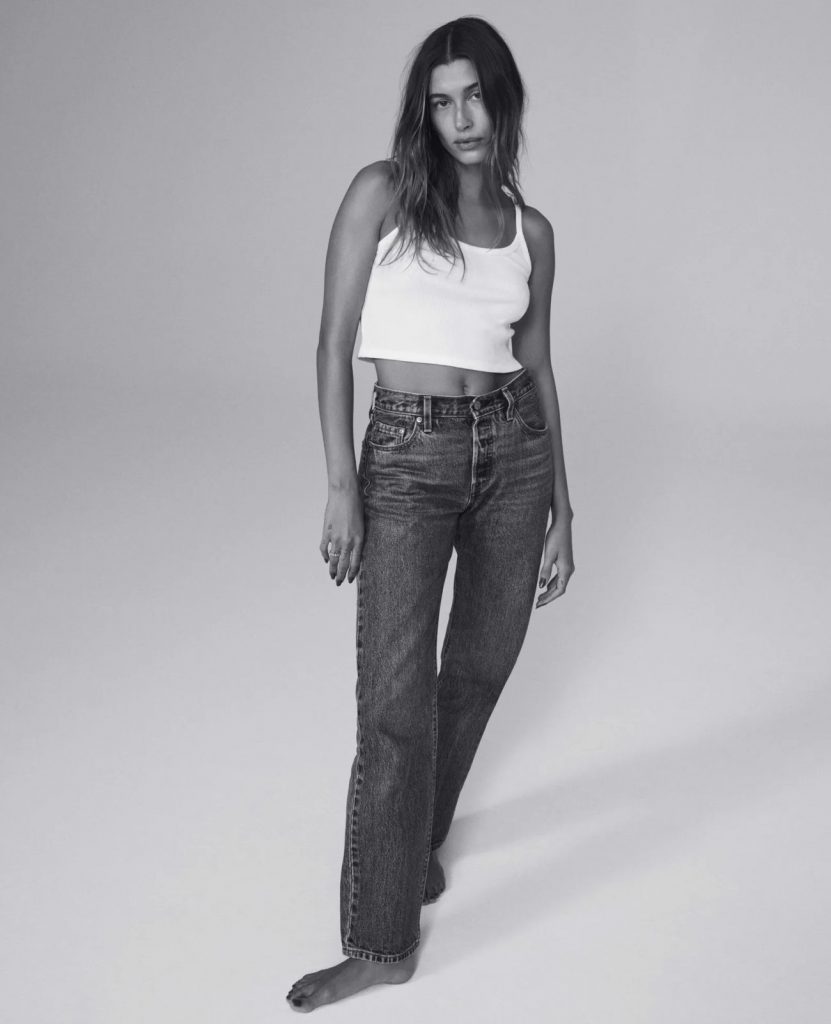
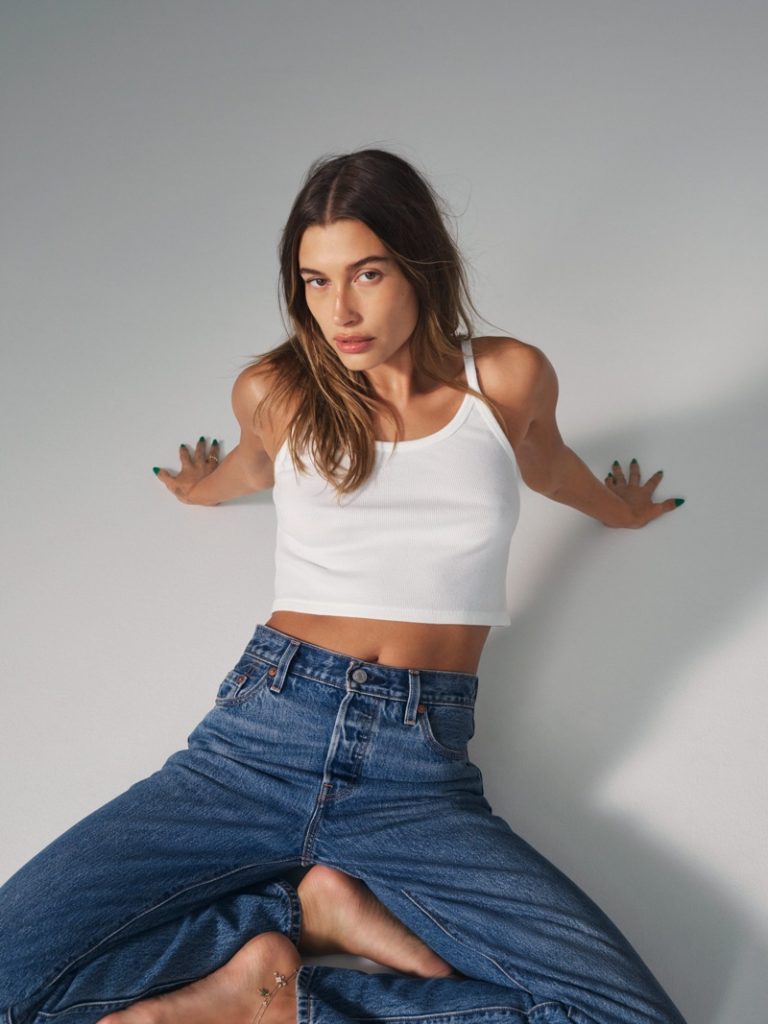
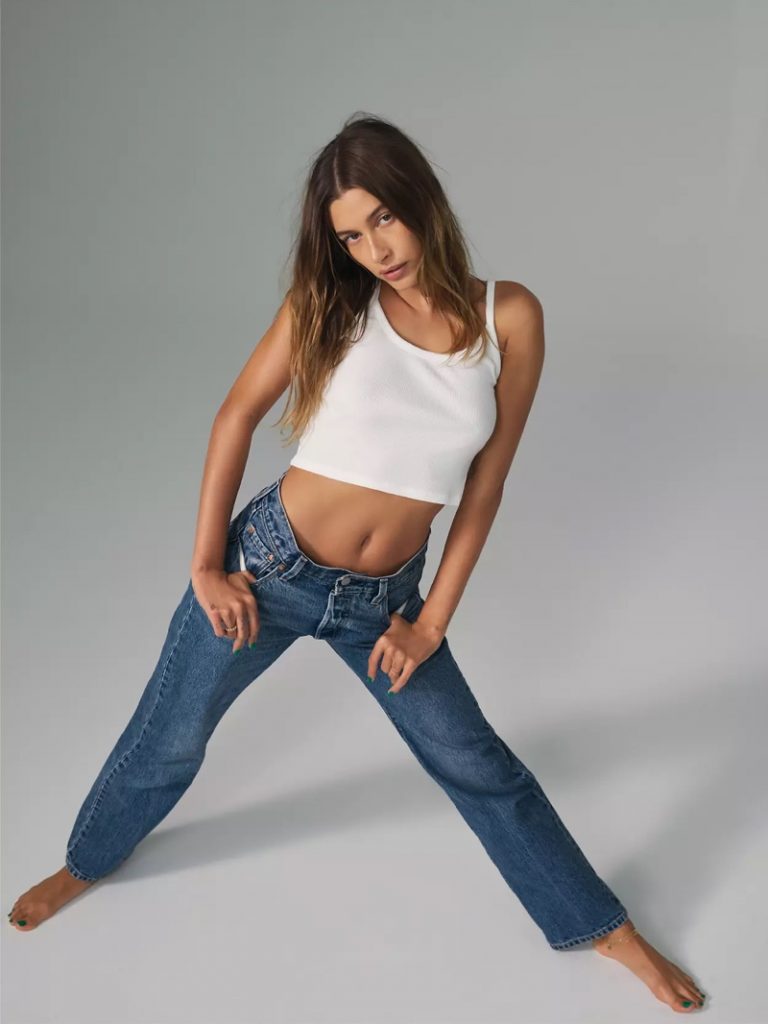
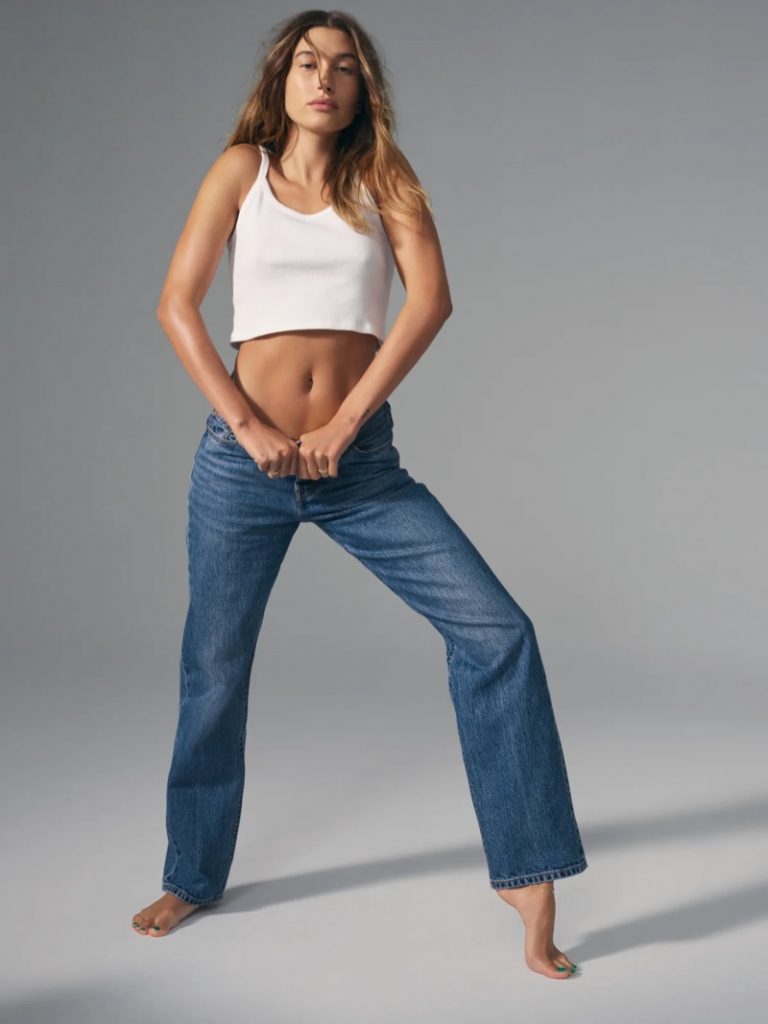
Finding the ultimate pair of jeans may be difficult, so it’s easy to long for the jeans one wore in the past, the ones that appeared to fit perfectly. To give one a new wardrobe staple, denim giant Levi’s brings in the new ’90s 501 jeans which are inspired by the vintage stance, putting us on a nostalgia for the classic Levi’s 501 denim. Levi’s launched a new take on its iconic 501 jeans on December 1, and the brand collaborated with American Model Hailey Bieber to do so.
Hailey Bieber is never hesitant about her passion for all things ’90s-inspired, and in her latest Levi’s campaign, the 25-year-old model shared her perspective on the legendary decade.
“I’ve talked a lot about ’90s silhouettes, ’90s movies, ’90s supermodels, ’90s actors and actresses, and it’s just fascinating to me,” she said in an exclusive interview with Levi’s.
WHAT ONE GETS IN THE NEW 501 JEANS
While the original Levi’s 501 ’90s jeans have never fallen out of style, the new Levi’s 501 ’90s jeans are likely to become a slightly distinct sort of staple this season.
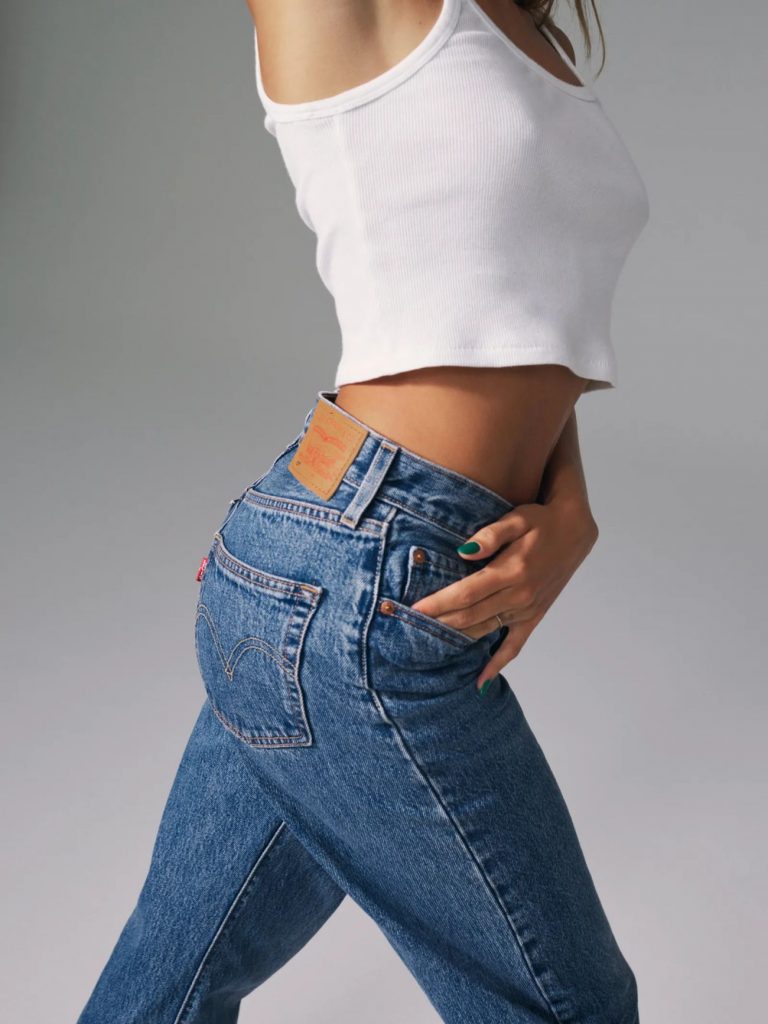
The jean rests just below the waist and has a more relaxed fit through the seat and leg, offering a fashionable yet roomier fit that can be scaled up or down depending on how the customer chooses to wear it. The fit lets people attain a slouchy, laid-back aesthetic without becoming baggy all around. The 501 ’90s jeans come in two washes and sizes ranging from 23 to 34, with inseams of 30′′ and 32′′. Drew Me In, which Hailey appears to be wearing in the campaign pictures, and Mad Love are the two medium washes that have been launched.
“It’s a jean that’s not only physically comfortable but taps into that nostalgia of a jean you loved and wore back in the day,†said Jill Guenza, Levi’s Strauss & Co. vice president of design for women’s apparel. While finishes have been pristine and stonewashed for a long time, Guenza believes it is good to showcase a comeback to well-worn and vintage-inspired jeans.
All of the pairs were made using the brand’s WaterLess technique, which uses up to 96 per cent less water than traditional denim finishing. The Levi’s 501 90s retails for $98-$108. For now, these jeans are only available to buy on the Levi’s App.
THE AD CAMPAIGN
Levi’s has long been a household denim classic, and Hailey Bieber has always been an admirer and face of the brand. Hailey has gladly revealed her go-to pair of the season. In an interview, she earlier stated that she enjoys “a baggier denim fit more than anything.” According to the brand, the new 501 ’90s jeans are almost precisely Hailey’s style.
She fronts a series of studio pictures photographed by Stevie Dance for the campaign. She is dressed in a white tank top and Drew Me In jeans in a medium wash. The shoot is styled by Andrew Mukamal, who has tousled tresses by hairdresser Bryce Scarlett and equally impressive makeup by Nina Park. “It’s cool to look upon an era that you were born into and just draw inspirationâ€, said Hailey.
Earlier this year, Levi’s celebrated its iconic 501 Originals style with its campaign featuring a diverse group of stars. Hailey Bieber, Naomi Osaka, Barbie Ferreira, and Emma Chamberlain appeared in-studio images captured by Micaiah Carter. Known for its durability, the cast wore 501 Original pieces ranging from jean jackets to casual t-shirts and straight-cut jeans. The brand’s ambassadors showcased their favorite ways to style and wear their 501s. The campaign evoked a spirit of creativity, authenticity, self-expression, and originality.
Earlier this year, Levi’s introduced its first-ever Machine Learning (ML) Bootcamp, which drew industry-wide acclaim and piqued the curiosity of a large number of employees. With an inflow of new ideas and practitioners, data science, machine learning, and artificial intelligence (AI) solutions have spread all across the company, speeding how things can be done better, quicker, and more efficiently. Data Science serves a variety of purposes, from controlling the brand’s supply chain to providing analytical real-time data to its retail outlets.
Its second batch of 58 workers completed the eight-week intensive course recently, where they learned coding, Python programming language, statistics, and other skills. It had around 450 workers apply for limited slots in the first year of the course, and they taught more than 100 employees from more than 20 locations across North America, Europe, and the Asia Pacific.
Rather than educating new tech hires to speak fashion, brands like Levi’s are teaching the current workforce to speak tech. Levi’s launched the program in May as part of ongoing attempts to expedite digitalization and move to a direct-to-consumer approach. After cutting off 700 corporate staff as part of the 2020 store closures, Levi’s is now building a number of new tech-centric stores.
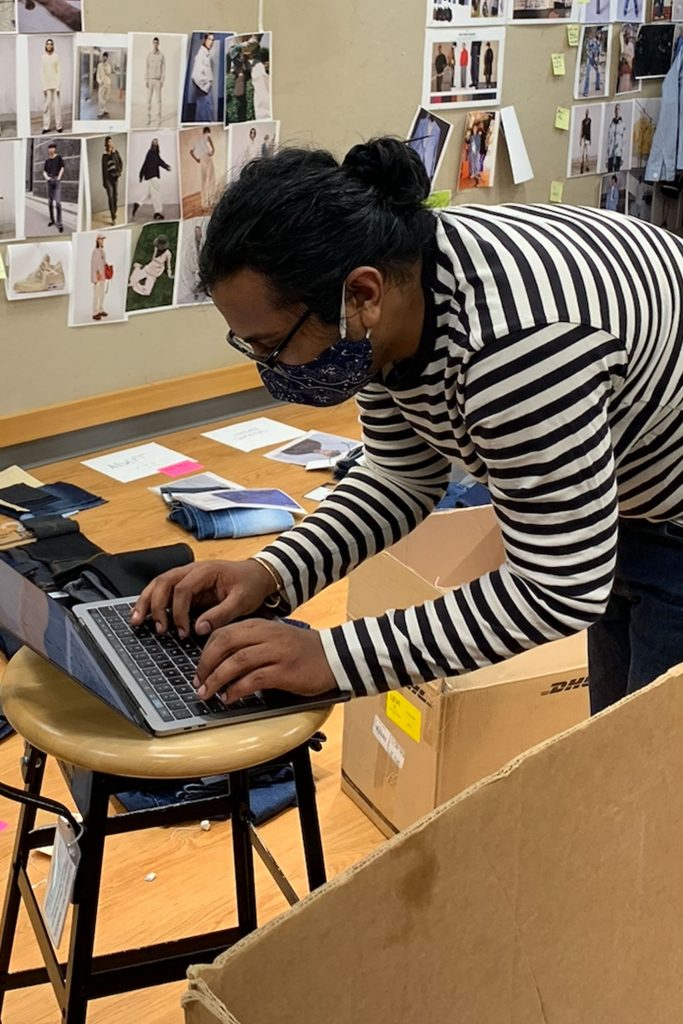
Ronald Pritipaul who has served as denim head for Levi’s now has a new role of associate data project manager for computer vision. Surprisingly, Ronald has no background in computer science. He does, however, have an engrained dedication to Levi’s and a comprehensive understanding of the day-to-day difficulties that must be solved. He is one of 40 recent graduates of Levi’s first machine learning “bootcampâ€. It was during his time in bootcamp that Ron started to question how he’d actually implement these new skillsets.
“The fashion industry has largely accepted the need for digitization, but recruitment of the necessary tech talent is a challenge. And once new hires adjust to working in fashion, they’re often poached by others. We used to call this the endless cycle of frustration,†says Katia Walsh, Levi’s SVP and chief strategy and AI officer, who is leading the project.
ADAPTING TO THE NEW CHANGE
Walsh comes from the worlds of telecoms (Vodafone) and finance (Prudential Financial). While machine learning intensives are new to the fashion industry, Walsh notes out that they are hardly new to Amazon and Google. She believes herself to be an “unusual fashion executive.” She feels that her entire career has been about using technology to get a competitive edge, yet this industry is still very analogue, highly manual, and fueled by creativity and intuition. As a result, the company is aiming to transform the analogue into the digital, the manual into the automated, and the imprecise into the precision.
The program has already proven well. Several workers have created technology tools to automate specific parts of their work, and at least five companies have approached Levi’s to share insights, something that Levi’s is doing.
“We have a great brand as a physical manufacturer of physical goods. But at some point, I also see a future for us as a manufacturer of digital products,†said Walsh.
BUILDING THE RIGHT WORKFORCE
Levi’s has made the programme eligible to any internal applicant. The purpose is to broaden and diversify the pool of people with technical expertise, as well as to identify problems that tech teams may have overlooked.
Employees must apply in order to get recruited. In addition to a “no-code challenge” that assesses analytical skills, problem-solving, curiosity, tenacity, and resilience, they are required to describe how they would utilise data science in their professions. Entrants have arrived from 20 different locations, including Levi’s corporate offices, retail stores, distribution centres, and data centres. Some of them do not have a college degree.
The bootcamp has been designed as an eight-week virtual course in which employees are paid their regular salaries while engaging in 10-hour days of lectures, team exercises, individual work, homework, and office hours. The second cohort of 60 individuals is now in session, which means that by the end of the year, 100 people will have finished the programme. So far, 450 people have applied, vastly outnumbering the company’s expectations. Walsh discovered that shifting the culture toward digitization and automation did not simply foster new talents in current personnel. It also helps the business retain outside hires, breaking the old “cycle of frustration.”
HOW AI INFLUENCES DESIGN AT LEVI’S
Ronald claimed to use available technologies to improve an existing algorithm and use a neural network created particularly for garments. This algorithm might, for example, define the edges of a garment, detect button placements, and determine pockets, among other things, and then store that image in a single layer for designing.
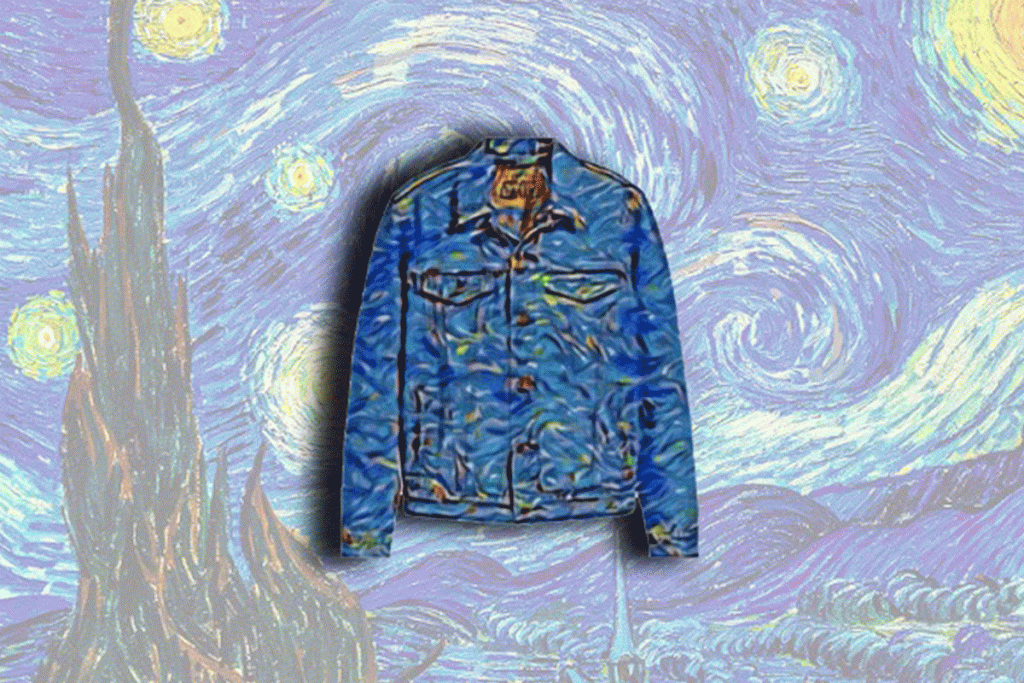
Ronald decided to create a new Levi’s Trucker jacket to put his algorithm to the test. He drew inspiration from his love of art history. Among the many references were Van Gogh’s Starry Night, David Hockney’s Apple Tree, and Jasper Johns’ Corpse and Mirror II. The program was able to describe different aspects of the art pieces such as brush strokes, colour, and edges. By using the same algorithm, and with the click of a button, the software could recreate thousands of unique alternative designs instantly.
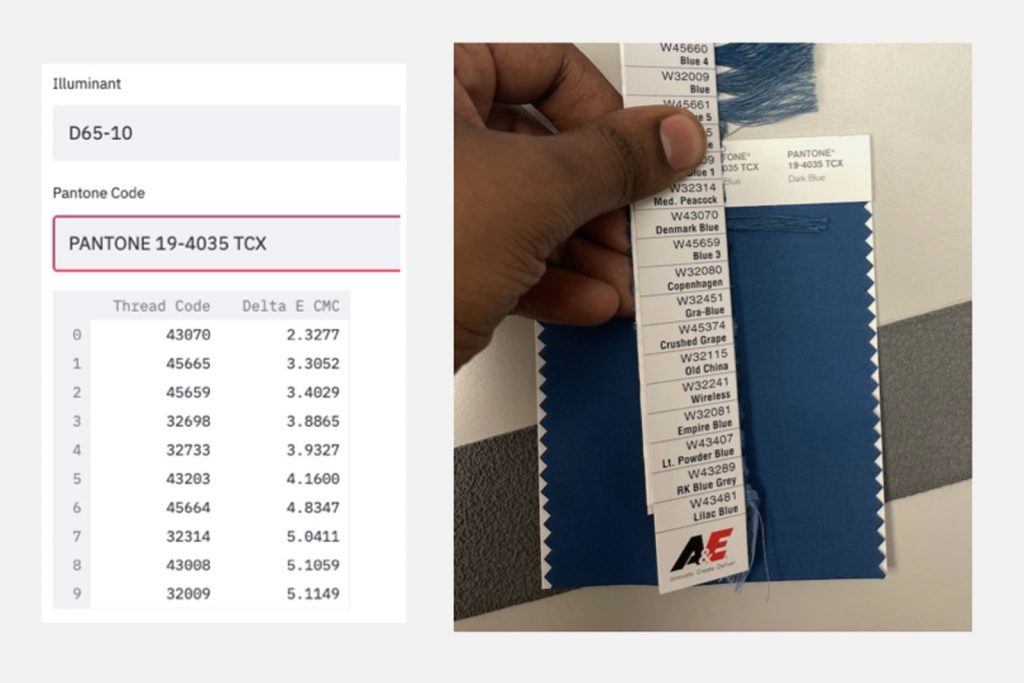
Whilst, Ronald has also built a new app that automatically matches threads to fabrics using a specified Pantone palette and solved a major problem point of his fellow designers. These innovations are all the more astounding given that Ronald only completed the bootcamp a few months ago.
It’s a wonderful illustration of how technology can help and influence workloads beyond the routine data and AI space, forming new dynamics.
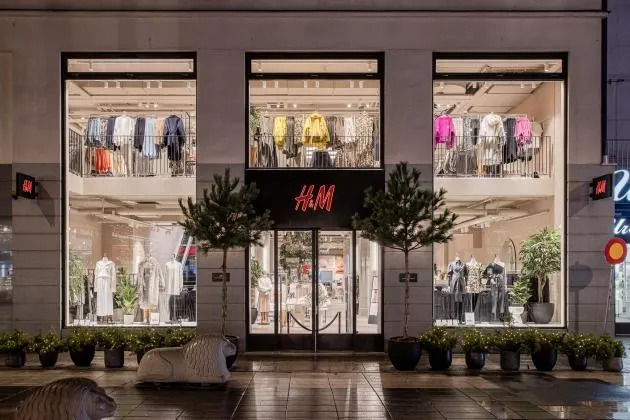
The Circular design story collection that features a blend of sustainability and style, is the latest addition to H&M’s Innovation stories. The collection addresses circular production as an approach to achieving sustainability. It is the fourth and most recent addition to H&M’s Innovation Stories—”Circular Design Story,” which will be launched on December 9 and will dwell on more circular design techniques and fabrics. It is themed on the ideas of sustainability and joy.
The collection showcases H&M’s commitment to a more circular production process by utilizing a multitude of cutting-edge recycled and recyclable materials, along with paying close attention to adaptation and usability. The Swedish fashion giant has also partnered up with Normani, Gigi Hadid, and Kaia Gerber to celebrate the thrill and anticipation of party-prep and dressing up.
A CLOSER LOOK AT THE CUTTING-EDGE MATERIALS
The range, which employs circular design concepts and sustainable materials, was produced by the H&M design team in collaboration with stylist Ib Kamara, who served as a creative advisor. The H&M team evaluates the steps of the garment development process, looking at estimated lifespan, materials, and design approach, using a design tool called the Circulator. The tool enables the team in developing more sustainable and circular elements and to reach their goal of becoming climate positive by 2040. H&M plans to use the technology to develop all of its pieces by 2025.
Repreve Our Oceans, a fiber generated from bottles gathered on shorelines and coasts, is one of the sustainable materials employed in the collection. The assortment will also include Resorts, a dissolvable sewing thread, and Vega, a vegan substance formed from grape skins, stems, and seeds wasted during the winemaking process. Ambercycle’s Cycora, which is created from old clothing and end-of-life textile waste, will also be used.
The collection is for folks who want to explore and express themselves, and the campaign, which was publicly released earlier this month, reflects this exuberant spirit. It was shot by Rafael Pavarotti, a pioneering photographer, and is titled “Just before the party starts.” The theme reflects the joy of getting ready, as well as the optimism and individualism of people who love fashion, glamming up, choosing new outfits, posing in front of the mirror, dancing, and being free. Kamara and Pavarotti were both actively urged to bring their vibrant, colorful visions to existence.
“I was proud to work with H&M on a collection that is so committed to circularity and positive change, while also embracing style, bold color, great fit. It’s a really multifaceted, rich collection, and it captures a special feeling for me; the excitement and anticipation of getting ready, of choosing a look and making oneself into a star.†Said Ib Kamara, Stylist, and Creative Advisor H&M.
WHAT THE COLLECTION HOLDS
Most of the pieces are versatile, enabling them to create a variety of looks. Blazers may be worn as dresses, straps can be used to vary the fit of shirts or jackets, adjustable zips can make trousers wider, and a ball gown can be detached into a top and skirt. The collection’s longevity is maintained by a unique twist on these classic design elements. Polka dots, bows, frills, tailoring, and jacquard are all featured. Normani, Gigi Hadid, and Kaia Gerber, among others, have collaborated with the brand on the campaign, with sneak peeks of the collection being posted on Instagram. From a pink strappy sequin dress made of recycled polyester to a fitted ensemble composed of discarded materials, each piece in the collection has gained its own distinct aesthetic.
According to Ella Soccorsi, concept designer at H&M, fashion can alter, excite, and empower people. She asserts that the collection is a tribute to that idea, as well as to the specific exhilaration that comes with getting ready to go out, just before the party, styling oneself, preparing to head into the night with friends, full of joy and energy.
The collection is deliberately designed to be cherished, shared, repaired, and recycled. It acknowledges a bold revolutionary outlook and self-expression. The brand marks fashion’s fun and eccentric essence while driving the industry forward to a more circular future.
“People get a picture in their head when you talk about circularity. With a Circular design story, we wanted, to show it is possible to do a bright, fashion-focused collection that is designed with circularity in mind. We wanted to show new possibilities, and offer something hopeful.†said Ann-Sofie Johansson, Creative Advisor at H&M.
ABOUT H&M INNOVATIVE STORIES
H&M Innovation Stories, which launched in early 2021, is driven to foster ecologically viable resources, technology, and production techniques. Previous stories have covered the Science Story, which focused on sustainable products, the Color Story, which campaigned for environmentally conscious color techniques, and the Co-exist Story, which approached animal-friendly fashion.
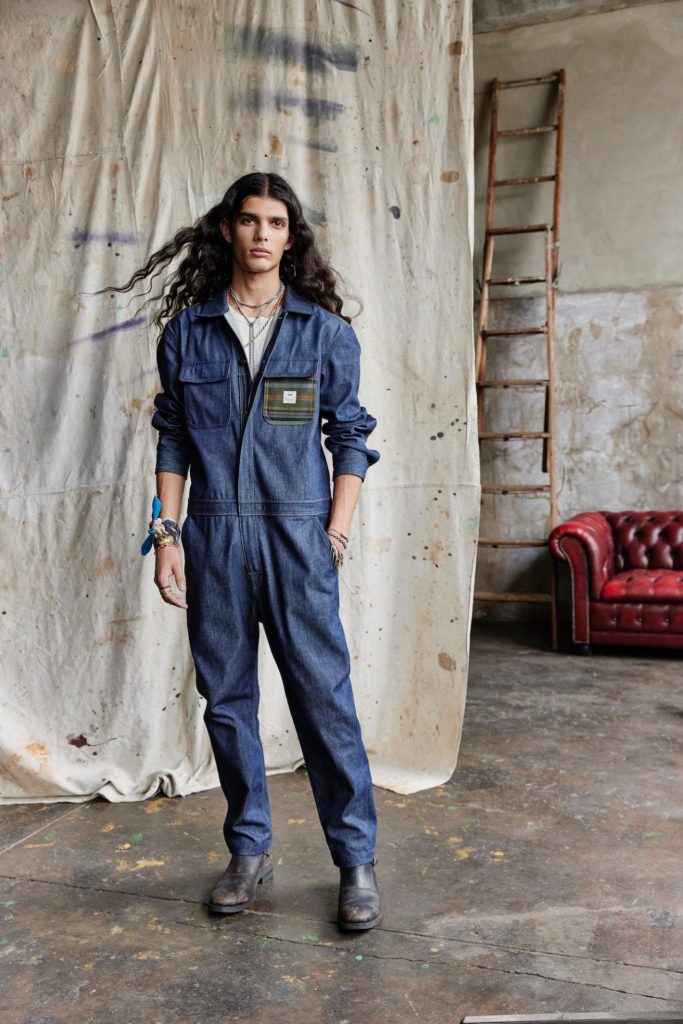
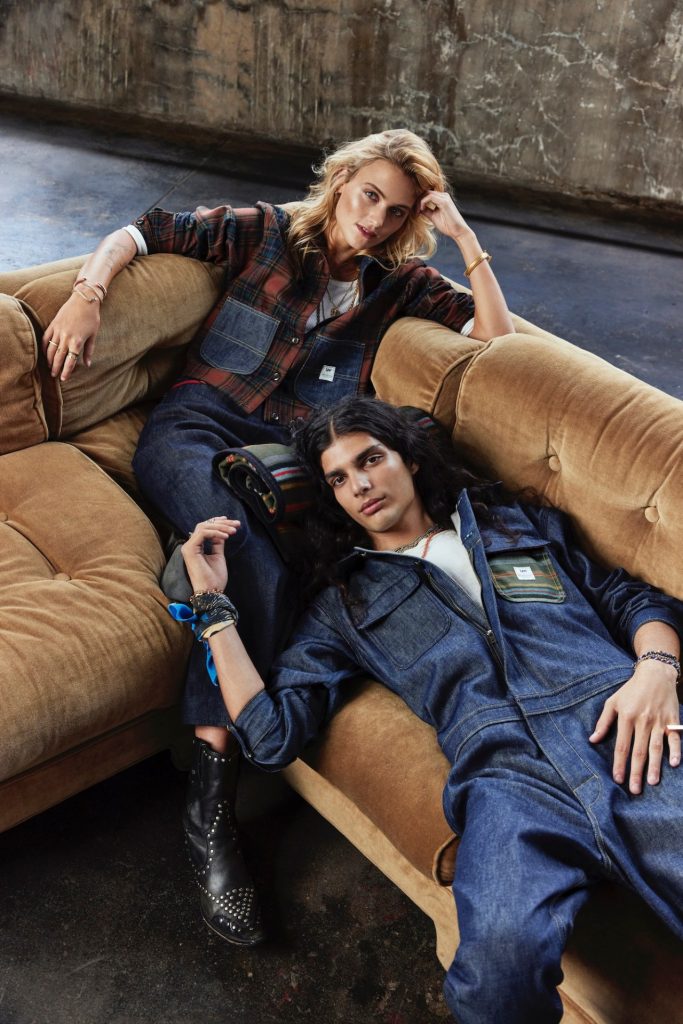
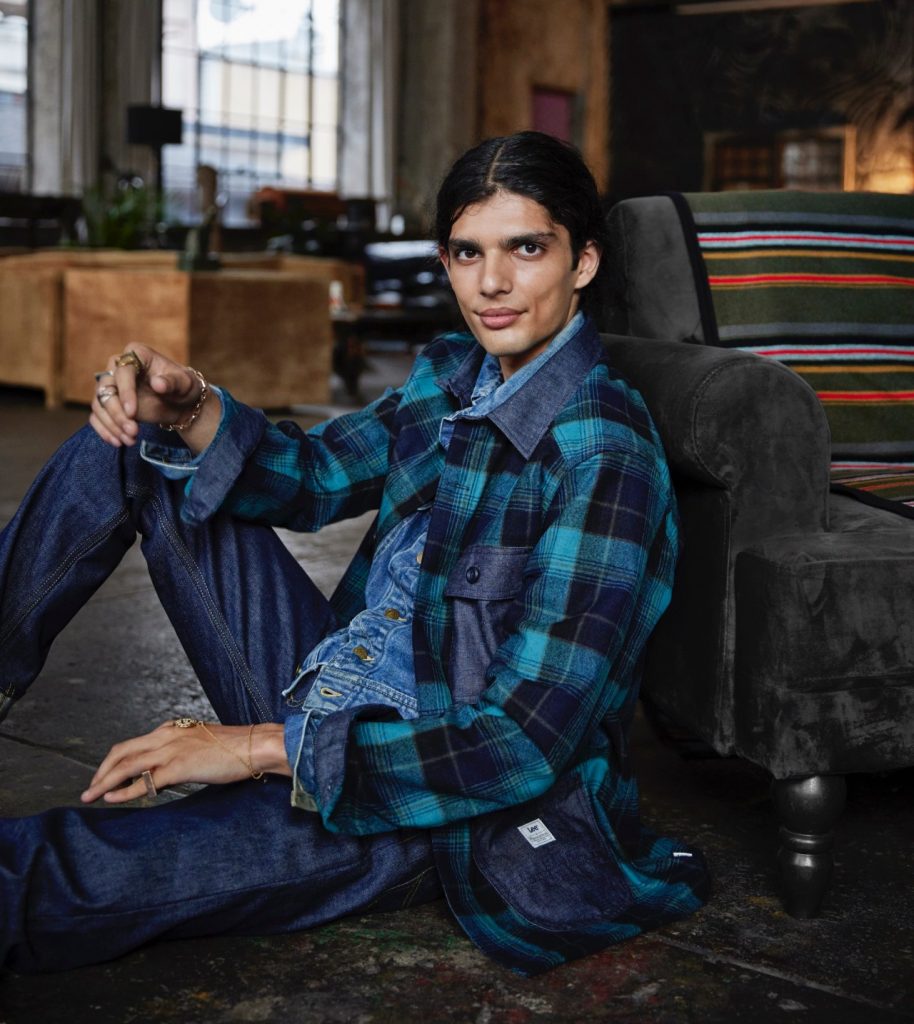
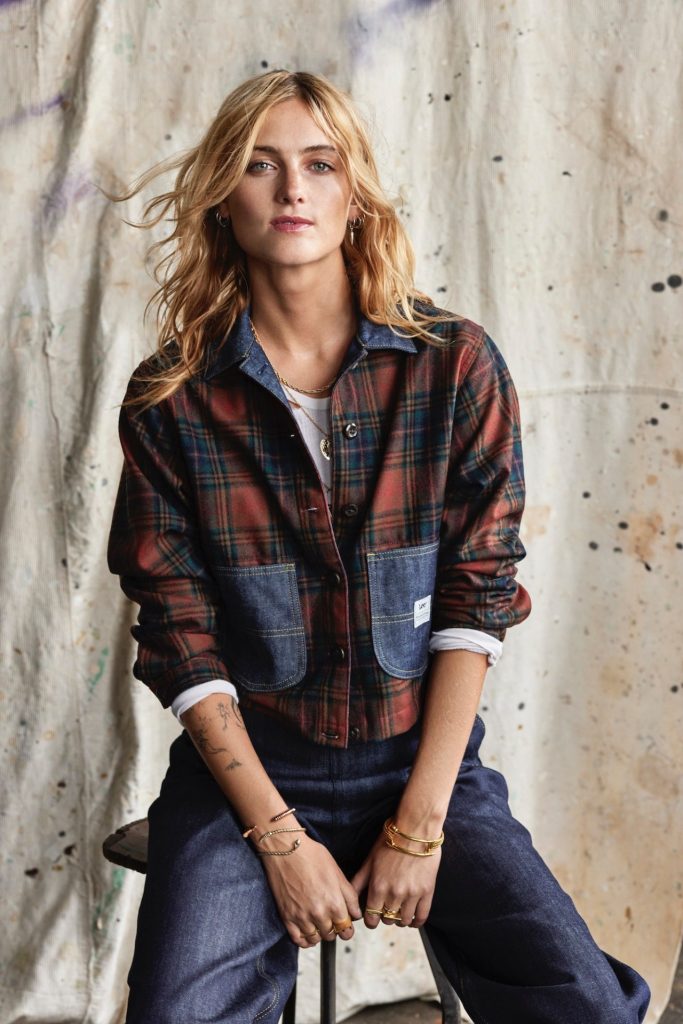
Iconic American brands Lee and Pendleton have recently announced the launch of their first collaboration. Lee, the famed fashion label known for its ageless aesthetic, and Pendleton Woolen Mills, the family-owned lifestyle brand based in the Pacific Northwest, have joined forces on a selected capsule that honours American craftsmanship and artistry. Both Kontoor-owned brands designed and created an assortment that reflects their origins in a contemporary way, while having almost 300 years of textile and garment-making expertise between them.
“Working with Lee was a perfect pairing for Pendleton. Their authentic American heritage brand echoes Pendleton’s dedication to quality, design and textile innovation,†said Peter Bishop, Pendleton executive vice president of merchandise and design.
The denim range perfectly captures the American outdoor-meets-work wear vibe.
WHAT THE COLLECTION OFFERS
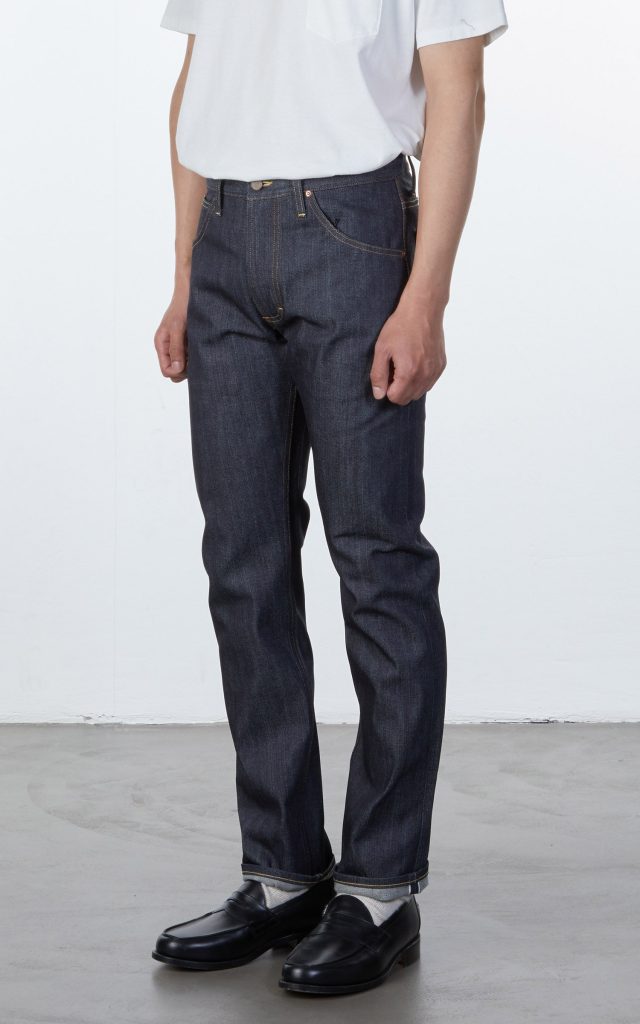
This limited-edition ensemble retraces wardrobe staples from the brands’ 300 years of collective clothing experience. Original Lee silhouettes including the Lee 101 Jean, Union-Alls, and Storm Rider Jacket have been reinterpreted with Pendleton intricate designs. Each heritage pattern has been recreated in completely new colors on fabric made in the United States. Woolen pieces are harnessed as shirting material and can be seen on collars, pockets, and piping. A minimal wool blanket is also contained in the assortment.
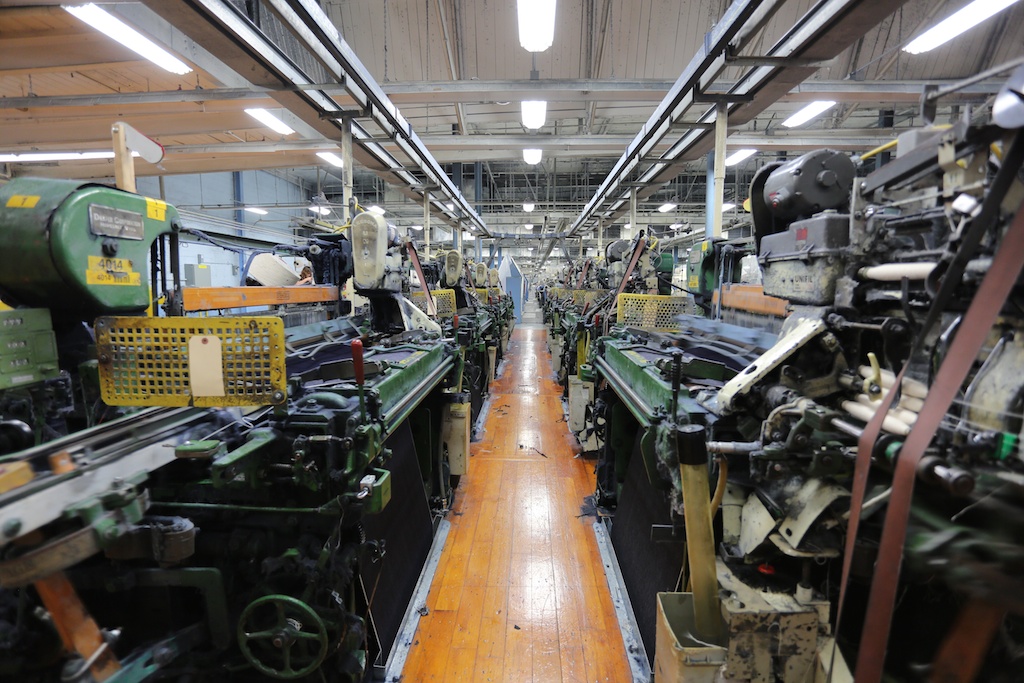
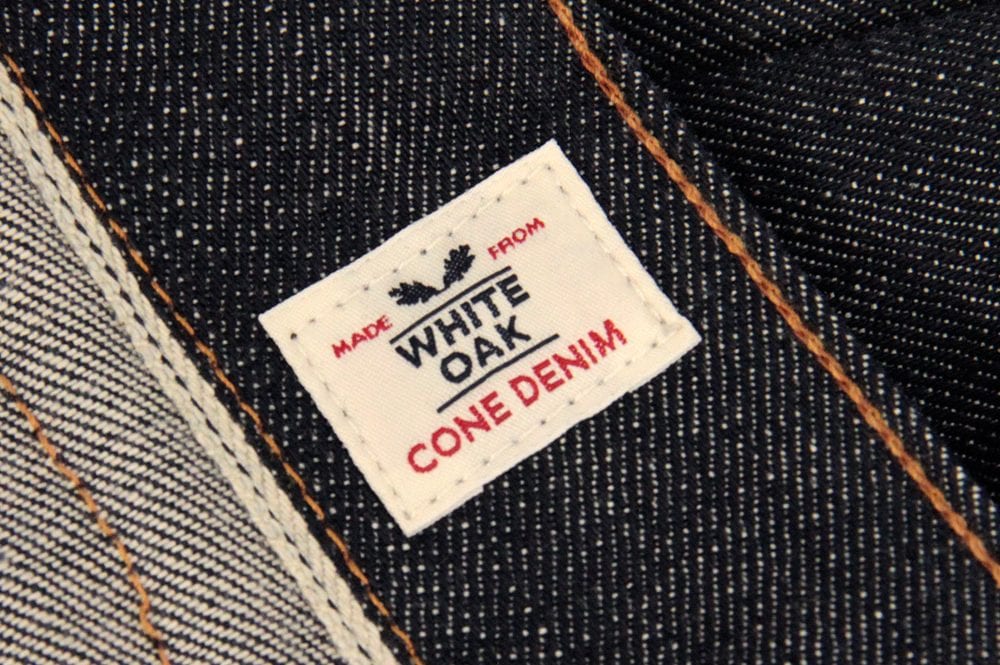
The jeans are handcrafted and produced locally in Greensboro, North Carolina, adding to the capsule’s distinctiveness. These designs provide some of the last remaining American selvedge denim from Cone Denim’s White Oak Mill, which closed in 2017. The fabric, which was spun on old Draper shuttle looms that could only generate 100 yards per day, is yet another thread in this capsule’s that ties links with American textile history. Lee and Pendleton are both wholly accustomed to co-branded endeavors.
The woolen mill has transferred its signature designs to a wide range of items, including Ariat boots, Vans shoes, and Kith loungewear, as well as Hunter ceiling fans and Sunbrella outdoor home accessories. Meanwhile, Lee has increased its collaborative efforts to appeal to a broader range of customers. This year, Lee debuted collaborations with H&M, The Hundreds, and Alife.
As seen by Betty Madden, Lee vice president of global design, Pendleton’s choice of color and patterning has proven to be of great ingenuity for the denim manufacturer.
“Working together is a dream come true. We’ve taken a fresh design approach and incorporated Cone Mills’ selvedge denim to make this collection heirloom quality with stunning craftsmanship. I’m thrilled with this collaboration.†Said Betty Madden, Lee vice president of global design.
THE WHITE OAK SELVEDGE FABRIC
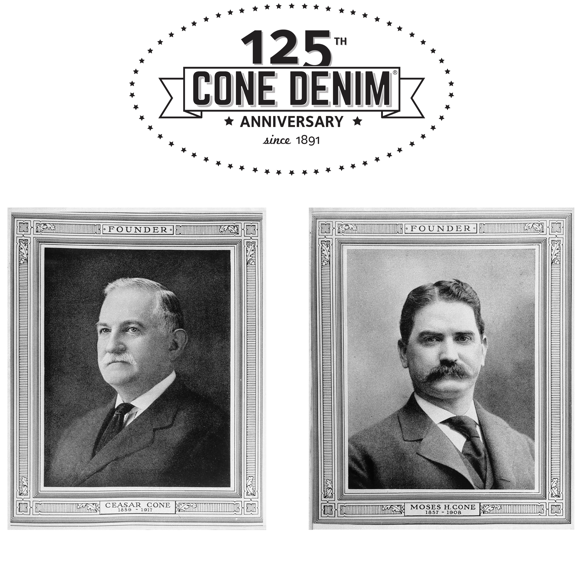
The origins of American selvedge fabric, especially the white oak plant, dates back to 1905. The phrases selvedge denim and self-edge – or self-finished cloth edges – are related. Selvedge denim jeans use the self-edge as a completed seam in the jean construction, particularly along the outseam. Selvedge denim is made using traditional weaving processes. Authentically weaved on antique looms. Selvedge looms were widely used in denim weaving until the mid-to-late-nineteenth century. As global demand for denim increased, US mills began updating their gear to increase production speed, rendering selvedge looms obsolete. Older selvedge looms were slower and produced less consistently. With the demand for denim workwear skyrocketing in the United States. Moses and Ceasar Cone were noted for producing selvedge denim on its 3×1 draper looms, for which it became most famous.
Cone’s famous selvedge denim has been created in the White Oak facility since it was bought in 1905, and the plant was named after a big oak tree that previously stood in its shade. After decades of increasingly disposable jeans from large manufacturers, customers increasingly learned to value the toughness, longevity, and build quality of denim manufacturers like Cone. Today, selvedge weaving has regained prominence due to the weaving technique’s legacy and the mills that prefer to produce it.
THE LEE 101 JEANS
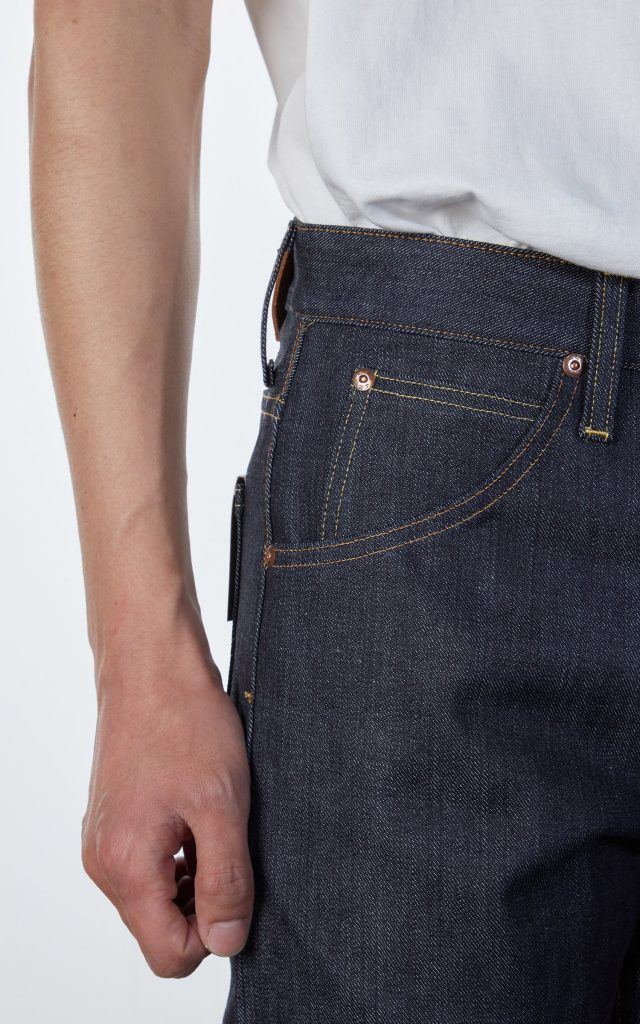
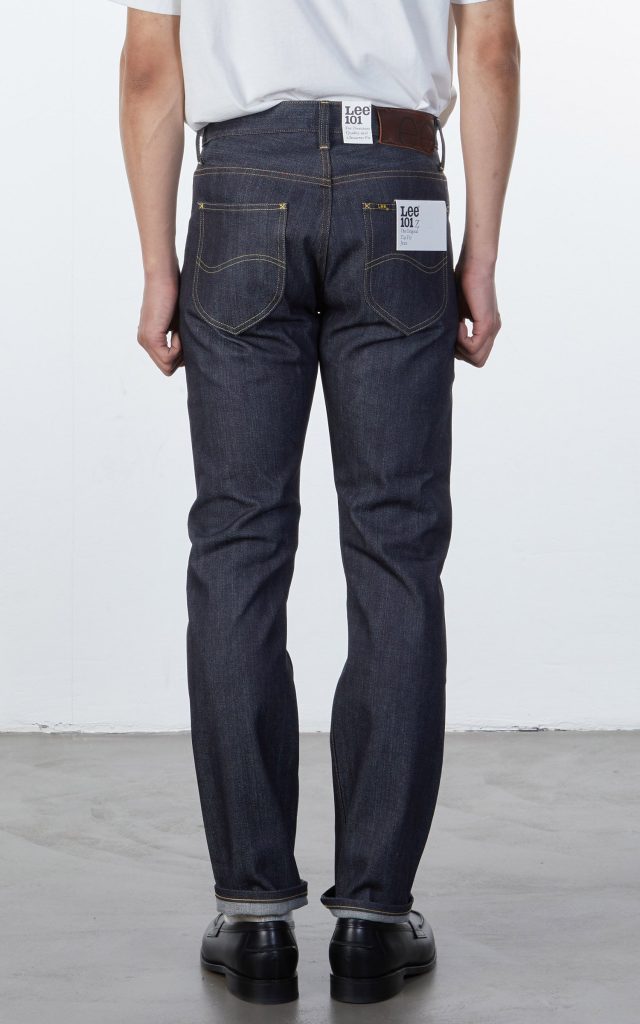
The first pair of Lee 101 jeans was crafted in the American Midwest in 1924. A heavy-duty, robust pair of jeans to fulfill the now-legendary Cowboy’s work and leisure needs. The groundbreaking, crisp fit designed in high-quality textiles meant that the 101 became renowned among both weathered lone riders and showmen like rodeo stars. The unique vintage denim is colored and then woven using looms that have been utilized in Japan for the previous 50 years. Back pockets with an S-curve and a spade shape, X-tacks, a hip pocket label, and Lee brand rivets and buttons. Now in the ninth decade of the 101’s existence, Lee intends to launch a line of clothing to commemorate the 101’s historically significant background, proudly displaying the exquisite workmanship and glorifying the pioneering spirit that inspired it.
Men’s and women’s pants, shirts, jackets, and Union-Alls are included in the collection, as is a limited-edition woolen blanket with an exclusive Pendleton stripe design. The collection, which ranges in price from $175 to $400, is available online on Lee’s and Pendleton’s websites. It will also be accessible in select Pendleton stores and local boutiques later this month.