Searching for queries on Google or Yahoo related to Denim, Jeans, Denim brands,Denim apparel, Denim Reports and Statistics is normally a pain since so many results are there(and many are irrelevant) that it is difficult to separate good results from the bad..
Check out This Search Engine which is specially made for Denim Search . I found results not very bad and the good thing is that even the pages down the line ie pages 3rd,4th, 5th and so on, also have some relevant information. However, it would be good to have some comments on the same from other users..
Category: General
-
Denim Search Engine
-
What do owners of famous Japanese brands wear?
Would’nt it be interesting to know what kind of Jeans the owners of famous Japanese denim brands like Sugarcane,Flat head, Iron Heart etc wear ?
Well just came across this video on youtube which shows the jeans worn by the owners of these brands and the length for which they wore it..Though the video does not give very good closeup of the jeans, one can just have a feel of the jeans.
Another interesting thing to note is the average period in which they washed their jeans.. It differs -From 15 days for Iron Heart owner to more than 2 months for Flat Head owner..Goes on to show that there are no set rules when it comes to washing ones jeans..
[youtube=http://www.youtube.com/watch?v=_WB6BTuuIQw&rel=1] -
Fall 2007 Denim trends – Wide legged and Skinny Jeans
Denim for fall 2007 is going to be a story of two extreme styles – Skinny and Wide Legged . Skinny jeans has been in for quite some time with various celebrities including Kate Moss endorsing the same. Now Kate Moss , Lindsay Lohan, Naomi Campbell, Angela Basset and others have been seen in Wide Legged Jeans(see my previous post).
However, wide legged jeans is going to have more appeal as it can fit a larger range of bodies and is a fresh look since it has not been around quite a while. It is also expected that both the trends will go on simultaneously and skinny jeans is not going to fade away so easily.Among the Wide legged Jeans there can be a simple Casual style and a Trouser style. Both are same silhouette but with different details. Trouser style has slash pockets and trouser style waistband and crease whereas the Casual will be much more casual.
Wide legged jeans are not and neither expected to be Distressed. They are very clean and flat – an indication of influence of 70s……
The CLEAN and FLAT look required for Wide Legged Jeans may create further demand for the already popular FLAT FINISH DENIMS (mercerised).. Washing treatments may be less rigorous thus saving the manufacturers some bucks ( which they will spend on the extra fabric they use !)
[ad#for-post-top-1]
Related Posts:
Skinny Jeans from Topman
Skinny Jeans coming back?[ad#for-post-top-1] -
Premium Denim Brand providing the best fit ?
We all know about the importance of fit in the buying decision of a premium denim. It is estimated in various polls that fit contributed almost 85% to a buying decision related to Premium Denim.
I think then its in place to know which brand – out of so many out there – provides the maximum satisfaction related to fits. Though I know that this is a subjective question – since a brand providing a good fit for one may not be good for other – it would be good to know which brand takes the most votes. I have considered important brands like 7 for all Mankind, True Religion, Earl Jeans, Rock & Republic,Paige, Nudie, Miss Sixty, J Brand,Evisu, Diesel etc etc.. Sorry for boring.. NOw you can go ahead and poll – Click here to reach the poll and select the Brand with best fit
Click on View Results to see the result of this poll.. We have received over 200 votes till 21st Sept 2008
-
‘Kato’ – Original Denim from Japan
I just do not seem to be stopping to write about Japanese denim. There actually is so much to learn from them that it feels great to write about them.
‘Kato’ is a brand from Japan which is making special Natural Jeans. Their Jeans are made from Zimbabwe Cotton and are dyed by the ‘Hank System’ in natural indigo . This is the oldest system of dyeing cotton in Indigo in which the yarn spends one day in dyeing to the core and another day is spent hanging in a steam room.. The Denim is then woven on 32″ slow shuttle looms ..The jeans are hand riveted and details hand stitched..
All these slow processes add up to the cost a lot . However, Connoiseur items are not made easily and by everyone and are also not affordable by everybody (prices in range about USD 300)..
ANd the looks are COOL…..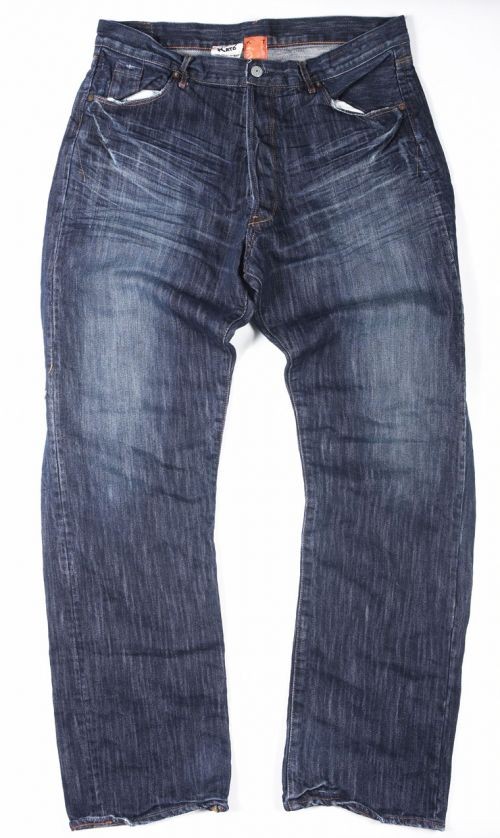
By the way, pertinent to mention that Hiroshi Kato of ‘Kato’ also designed some selvedge denim for Arvind in India..
-
VF acquires ‘7 for all Mankind’
VF Corp. has announced the acquistion of the iconic Premium Denim Brand ‘ 7 for all Mankind‘. They paid about USD 775 million for the purchase of ‘Sevens'(as it is commonly known) which is currently having a turnover of about USD300 million.
‘Sevens’ was started in 2000 by Peter Koral and based in LA ,launched the craze for premium denim in the US. The brand quickly earned critical acclaim due to its innovative use of fits,fabrics and washes in denim.The company is growing as a true lifestyle denim brand and expanding its product line to include sportswear,handbags,footwear etc. It is sold at luxury stores like Barneys NY, Neiman Marcus,Saks and speciality boutiques in over 80 countries around the world.
It seems a sensible purchase for VF since they were struggling to have a recognised premium denim line in their collection. Also with about 20% margins and an expected growth of 15% p.a, the ‘Sevens’ makes financial sense. ‘Sevens’ will be included in the VF’s new lifestyle based brand coalition – ‘ VF Contemporary Brands‘ which will currently also include another acquired brand – Lucy Activewear.
Lets wait and see how VF will retain and add value to the ‘Sevens’ brand as till now most of premium denim brands have been personality driven entities.
-
Export of W/G Jeans from India to EU 2000 to 2006
I have previously given the figures of the exports of M/B Denim trousers from India into EU.
Now, the figures for Women/Girls Cotton Denim Trousers are given below.
These figures clearly show some trends and we can have a look at themEXPORT OF W/G JEANS FROM INDIA TO EU 2000-2006
New Page 1 YEAR Units Exported Value in Euros Price/Jeans (Euros) 2000 563592 4478589 7.9 2001 1351961 9467001 7 2002 1915561 14016407 7.3 2003 1215116 9451086 7.7 2004 802137 5211775 6.4 2005 3037462 15975346 5.2 2006 2894183 17257882 5.9 From the above we can see some trends clearly.
1. Pre 2005 year(quota period) - the prices were much better than post quota.
2.Post 2005 - the volumes have jumped up substantially - but only in 2005.
3.2006 has been a stagnant year in terms of growth in exports. Though the prices have improved in 2006 - which maybe partly due to usage of better quality of fabrics in the Trousers as the basic denims are not much in demand.Lesson for Indian exporters : The opening of quota has made things more competitive and the exporters have to compete with countries like Bangladesh, Vietnam etc and the prices will not be so easy to achieve as that in the quota period.
-
Denim company in India best in product development?
There are a large number of denim mills in India – more than 22. Some of them are quite old – like Arvind – while many of them have started operations in the couple of years.
The success of a denim company greatly depends on the kind of product development that it does. Each mill has its own special products and cater to different segments of the market.
There are varying views regarding the quality of developments of different companies.
I think, it would be good if we can place this question to the Denim Industry and see the results.
Click on ‘Results to see the results of this poll.. -
Denim mill considered best and most reputed in the world?
There are hundreds of Denim Mills around the world. However, some of them are known by their names to all those who know denim while others are not so well known. It would be great to know which denim company would the readers consider as the BEST DENIM COMPANY IN THE WORLD..
Which is the BEST DENIM COMPANY IN THE WORLD?
You can vote here and see the results also.
-
Denim terms
There are so many terms associated with denim that it is difficult to have an exhaustive list. However, I am giving whatever terms I can recall . I hope they will be useful for those wanting to learn about the basics of denim……….
3×1 vs. 2×1 weave
This refers to the number of weft threads per warp thread. Most denims have been traditionally 3×1 weaves, though lighter weight denims (under 10.5 ounces/sqare yard) often use the 2×1 configuration.Nowadays even higher weights of denim are using 2×1 for creating new designs.
Broken Twill
Instead of the twill running to the right or left, broken twill jeans (traditionally considered the cowboy-preferred denim) contain no distinct direction of weave. The weave is instead alternated right and left – the end effect resembles a random zig-zag. Wrangler made the first broken twill jeans in 1964. Broken Twill was designed to combat the twisting effect that was a characteristic regular twill (and considered a ‘fault’ by many at the time). By going on both directions, the tension in the yarns is balanced in Broken Twill. Wrangler has been one of the highest user of this kind of denim.
Left Hand Twill
This refers to the direction that the denim is woven. Left hand twill denim is softer to the touch than right hand twill, and was originally used by Lee denim. . Left hand twill is easy to spot, as the weft threads appear to move upward and to the left as opposed to upward and to the right.The softness is due to the direction of the twill being in alignment with the twist direction of the fibres in the yarn.
Beam
A large spool where warp yarns are wound into a warp sheet so they can then be used for weaving or dyeing. Fabric also may be wound on beam.
Bull denim A 3×1 twill weave piece dyed fabric, made from coarse yarns. Weights can vary from 9 oz’s/sq yard up to the standard 14 oz’s/sq yard. It’s basically a denim without indigo.Calendering
A process by which the fabric is made compact, flat and glazed. Usually the fabric surface is not flat, particularly in ordinary quality plain weave fabrics, because of the round shape of the yarns and interlacings of warp and weft at right angles to each other. In such a fabric it is seen that whilst the fabric may be quite regular, it is not flat. In calendering, the fabric is passed between the rollers of a calender machine, in which heavy rollers rotate in contact under pressure. The yarns are squashed into a flattened elliptical shape; the intersections are made to close-up between the yarns. The fabric surface becomes flat and compact. The improved planeness of surface in turn improves the glaze of the fabric. The calender machines can have several rollers, some of which can be heated and varied in speed, so that in addition to pressure a polishing action can be exerted to increase luster.Carding
The industrial yarn preparation process where raw cotton is separated, opened, cleaned and made into sliver.Combing
An industrial yarn preparation process where fibers are combed to make them parallel in the sliver and short fibers and impure foreign elements are taken out.Cotton
Cotton, genus Gossypium, one of the world’s most important crops, produces white fibrous bolls that are manufactured into a highly versatile textile. The plant has white flowers, which turn purple about two days after blooming, and large, divided leaves. Length of fiber ranges from 3/8″ to 2″ (Egyptian, Sea Island). The longer the fiber, the higher the price and the more luxurious the fabric. Cotton withstands high temperatures, can be boiled and hot pressed. It is resistant to abrasion has good affinity to dyes, and increases in strength 10% when wet.Crocking
The removal of dye from a fabric by rubbing. Crocking can be caused by insufficient dye penetration or fixation, the use of improper dyes or dyeing methods, or insufficient washing and treatment after the dyeing operation. Crocking can occur under dry or wet conditions. Denim is notorious for crocking, which is very hard to control due to indigo’s dye properties. But that is also the beauty of the denim which increases the life of denim.Dips
Immersion (or dipping) of yarn or fabric into dye vats. When denim warp threads are dipped in indigo, and then emerge to oxidize, the shade darkens achieving deeper degrees of depth. Generally, indigo yarns are dipped anywhere from 8 to 16 times, but can be more or less depending on final shade and wash desired.Pseudo ring-spun
A variation of open-end spinning that makes the final fabric appear to be ring-spun. Although slubs appear in the fabric, it still does not have the inherent strength, softness and fastness of true ring-spun denim.Finishing
A general term which covers treatment of a fabric to give a desired surface effect such as flat, napped, mercerized, sanforized, etc. Some finishes add luster, others give a muted dull effect. Special finishes can be applied to make a fabric crease-resistant, waterproof, etc. A finish often contributes much to the “feel” or “hand” of a fabric. It may be said that “cloth is made in the finishing.”Flat finish
Special process done at mill to impart fabric with an even wash down effect and very clean surface. Originally liquid ammonia was used, but most suppliers now use mercerization plus calendering processes to achieve the flat surface. Mercerization swells up the cotton fibers and allows the calendering to press flat the surface. They consider this as an imitation process to the use of ammonia, which is toxic and not allowed in commercial use in most countries. (see mercerization and calendering)Indigo
While indigo dye was originally extracted from the Indigofera Tinctoria plant, today’s indigos are man-made. Pure indigo does not have any sulfur dye, so it is harder to de-colorize and gives a bluer more brilliant cast.Indigo is actually the main property of denim which is ensuring its resilience.The more indigo fades, the better look it gives(unlike other dyes) and this ensures longivity of the denim products.Loom
The mechanical device that weaves yarn into denim fabric. There are many types of looms, handloom, treadle loom, power loom; the term loom means any weaving machine. Most denim is now made on projectile looms.Mercerization
A process of treating a cotton yarn or fabric, in which the fabric or yarn is immersed in a caustic soda solution and later neutralized in acid. The process causes a permanent swelling of the fiber, resulting in an increased luster on the surface of the fabric, an increased affinity for dyes, and increased strength.Open-end yarn
A process for making coarse yarns used in denim. It is faster and cheaper than ring spinning. Fibers are fed into a high-speed rotor shaped like a cup. The end of a yarn is placed inside and drawn out as the fibers accumulate on the “open end.†Open-end yarns are not as strong as ring-spun yarns of the same size, because some of the fibers do not lie parallel to the axis of the yarn. One can have open-end yarn in either warp or weft (OE X RS, RS x OE) or both warp and weft (OE x OE).Oxidation
Where oxygen and another substance chemically join. Occurs when indigo yarn comes out of the indigo bath between dips, and is critical for the dyestuff to penetrate the fiber.Ring dyeing
Refers to lack of full penetration of dye all the way to the core of the yarn. This effect occurs naturally in the process of indigo dyeing. When abraded, either by normal wear or through a garment finishing technique, the white core becomes exposed and affects the overall color and appearance of the garment, giving denim a unique appearance that improves with age.Ring-spun yarn
Originally all denim used ring spun yarns, but in the Seventies, a lot of ring spinning for denim was replaced due to the lower cost of open-end spinning. Fibers are fed onto the end of the yarn while it is in the twisting zone, which consists of a ring, a ring traveler and a bobbin rotating at high speed. The yarn produced is more uneven than open-end yarn, but it is stronger and smoother to the touch because the fibers are more parallel. Because the yarns in denim are relatively coarse, open-end spinning provided a less expensive way to make yarns for denim. You can have ring spun yarn in either warp or weft (RS X OE, OE x RS) or both warp and weft (RS x RS).RingxRing
Also called Ring-Ring, Double Ringspun. RingxRing denim is denim where both the warp and weft (filler) threads are made of ring-spun yarn. Typically only premium, more expensive denim brands use this method, as it is more labor intensive and thus more costly to produce. The result however, is a very textured denim, and is much softer than open-end or single ring-spun. It is more obvious when looking at the weft threads (underside of the denim).Rope dyeing
Considered as the best possible method to dye indigo yarns. The yarns are twisted into rope before being dipped into the indigo dye. Three hundred to 400 ends (or threads) are gathered to form a rope, and then 12 to 36 ropes are dipped into a series of dye boxes along an indigo dye range.Right Hand Twill
This refers to the direction that the denim is woven. The opposite of Left Hand twill, this weave is much more common, as almost all jeans are woven with right hand twill. The weft (filler) threads will be visible in upward-right diagonal lines on right-hand twill jeans.Sandblasting
As it sounds, compressed airguns shoot sand onto jeans to create abrasion. Sometimes a ‘tracer’ dye is added so that the ‘shooter’ can more accurately judge the volume and accuracy. Very fast, but quite a clumsy way to achieve fading. [from ringring]Sanforizing
Sanforizing denim is a method of stretching and manipulating the cloth in the factory prior to any washing so that any shrinking during future washes will be minimalized. It is important to note if your raw jeans are sanforized or not before determining what size to buy, non-sanforized jeans will shrink 7-10%, while sanforized jeans will shrink 1-5%(except shrinkage in the stretch jeans where it can be higher in some cases). Normally all denim is sanforised .
Selvage
Also spelled selvedge. The small woven edge that is parallel to the warp, and that prevents the cloth from raveling. All denim has selvedge- otherwise it would unravel, but normally with wide looms it is hard to detect and blends into the fabric. Old 28/29 inch shuttle looms produced denim where selvages were closed with a colored yarn. The color was used so mills could easily identify each customers fabric – vintage Levi’s jeans had a single red stripe along both selvages, Lee’s had a blue/green along one, Wrangler’s was yellow. Now authentic selvage is very expensive, as only a few old looms are still working and high-end Japanese denim mills own most of these. The reason why selvedge is better? First it just looks cool, especially if one rolls your jeans up. Second it is rare, so not every jean has it. Third, it is considered more “authentic”, since most of it is made on ring/ring and stronger and has more character than regular non-slevedge denim. Mills now have ability to create very authentic ring spun denim on wider looms (without colored selvedge) that are as strong and have as much character as vintage selvedge.Shade
While all denim is blue, every mill offers its own specific cast or hue, which is generally referred to as shade. Shade can be affected by where indigo dye was purchased, size of dye vats, whether sulfur was mixed with indigo, etc. Because of this, every denim quality will wash down differently depending on the mills dye recipe. In order to give customers a vast range of wash options, it is important to buy cloth in a variety of shades (pure indigo, blue/black, sulfur top, sulfur bottom, etc). If you start with only one denim shade, the range of possible washing is limited. Shading control is very important for the mills since the manufacturers of jeans need to know that they do not have too many shades – which will spoil their collections.Shade batching
The process of selecting batches of fabrics into homogeneous shade lots to obtain consistent color continuity in garment making.Shade blanket
Where fabric is cut from each roll of fabric, sewn together, with roll numbers on the back of each pad to allow manufacturers to wash and identify all shade colors of each roll. This is an important tool in cutting apparel made from denim to ensure you cut garments from the same shade group.Shuttle
The weft insertion device that propels the filling yarn across (over and under) the warp yarns. Shuttles used to be (shuttle looms) wooden with a metal tip.Singeing
A phase of finishing when the fabric surface hair is burnt (or singed) using a controlled flame, to give a clean appearance to the fabrics.Sizing
Mills coat yarn with polyvinyl alcohol and starch for strength, and paraffin to make it easier to weave into cloth and handle in sewing.Skying
Process in which the indigo dye is oxidated, or exposed to the air, a step that is necessary to develop and fix the color. Same as oxidation.Slasher dyeing
Slasher Dyeing dyes the yarns in warp beam form. It is a continuous process which combines dyeing and sizing in a single operation. Dyeing is done by continuously passing warp yarns in beam form through several (at least 5) troughs of indigo dye liquor. The dyed yarns are then sized and wound onto a warp beam to be ready for use in the weaving process. Slasher dyeing is usually of inferior quality as compared to rope dyeing in shade evenness or side-to-side shade variations. With the slasher dyeing, the penetration of dyestuff is poorer, and it easily reveals an uneven pick-up along its width with the distortion of the pad-roll. However, with improved technology, slasher dyeing has improved in quality control and matches Rope Dyeing to some extent.Also, in rope dyeing, the yarns of the ropes have to be rebeamed, and be sized to the final warp beam. In this mixing process, small dyeing faults and minor variations in dyeing will be obscured.Sliver
Continuous strands of fiber untwisted that come from carding.Slub yarn
A yarn that is spun purposely to look irregular in shape (length and diameter). Usually slub yarns are very regular in repeat and size. Denim made with slub yarns have the benefit of showing white streaks after denim is stonewashed, so it provides a garment with more character and interest.Staple Short lengths of fibers, normally measured in inches or fraction of inches, like those naturally found in cotton and wool.
Sulfur bottom
Process in which warp yarns are pretreated with sulphur dye prior to being dipped into indigo. This promotes a quicker wash down (the sulphur protects the yarn’s core from the indigo), and can change the cast or hue of the denim to yellow or gray for a vintage look. Sulphur bottoms can be regular, heavy or extra heavy, depending on the desired effect. It is also used to give a darker look on the denims without using extra indigo.Sulfur top
Yarns are sulphur dyed after they have been indigo-dyed. This adds depth to color and is sometimes used to create novelty looks.Stone washing
French husband & wife team, Marithe & Francois Girbaud claim to have pioneered this technique of washing jeans in a machine with small pumice stones. Independently, the Japanese jeans company, Edwin also make this claim. The pumice stones are generally taken from southern Italy (the whitest and most expensive), Turkey and Indonesia (darkest and cheapest).Stone washing process aims to speed up the fading of the denims – which was previously attained by the users by months of continuous use.Unwashed Denim
Also called rigid, or raw denim. Typically when denim is manufactured it is sent to a laundry to undergo many washing processes to give it a worn look. Unwashed denim, however, is not washed before it is sold to the customer (although some companies will sell a one-wash jean). It is stiff, and depending on the weight can feel as though you’re walking in sheet-metal. It will also be very dark and will sometimes appear black. Traditionally, all jeans were sold unwashed and it was up to the customer to break them in.Warp Thread
Warp threads are the indigo-dyed thread. Also commonly called “surface threads,” as they account for a majority of the thread you see on the surface. It is the opposite on the underside of the jeans, where the weft (filler) threads are more visible, and the warp threads are in the minority. They are woven in and out of the weft thread vertically to create the denim twill.Weft (Filler) Thread
Weft, or filler, threads are traditionally ecru-colored, however many companies now bleach their weft threads or dye them. The weft is visible mostly on the underside of the denim, but resemble diagonal stripes on the surface. They are woven in and out of the warp threads horizontally to create the denim twill.Whiskering
Also known as ‘Cat’s Whiskers’. These are the crease lines around the crotch. Industrially these can be done with laser, sandblasting, machine sanding, handsanding and abrasive rods. Same techniques are used for ‘knee whiskers’ (whiskers on the sides of knees) and ‘honeycombs’ (crease marks on the back of the knee). -
Patents for Denim fabric and Jeans
For those interested in knowing what can be the next big thing in Denim/Jeans, keep a watch on the patents being awarded in this space..
Follow this link frequently(which I do sometimes – but I am still lazy to go through frequently) on
Patent Monkey -
More of wide Legged Jeans
The wide legged jeans , especially from J Brand are being worn by more and more of celebrities .
Last couple of weeks have seen celebs like Naomi Campbell and Angela Basset , among others, have been seen wearing wide legged jeans.
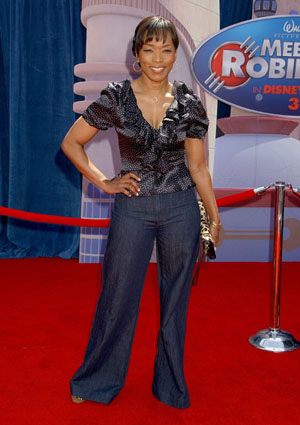
But can’t really understand whether the ladies are really comfortable in these wide legged jeans. But who cares – its the Fashion that matters..