Category: Interviews

  • A Conversation With Tuchawee Sonthirati | Indigoskin

    indigo skin

    Denim is a special fabric, not only because it is probably the most versatile fabric ever made , but also because it enables its lovers to become artists . And artists don’t need to be mass producers , they just need to create great paintings and they have instant recognition and followers. Same goes with a number of smaller niche denim brands worldwide. They don’t need to be Lev’s or a Gap to create great denims. What is needed is just a very high degree of passion for denim fabrics for using it as a canvass to create great jeans..

    One such denim brand is Indigoskin from Thailand..We can call it a ‘SIANESE’ or ‘JAPAMESE ‘label – since it uses both Thai and Japanese denim character.

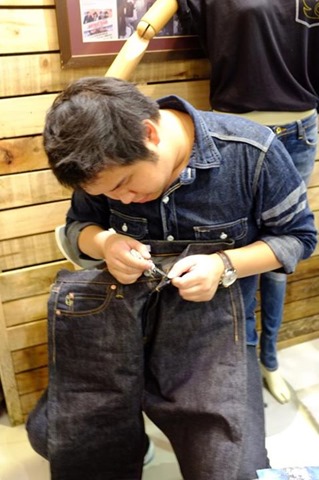
    The owner designer of this brand –58129_588306794527005_522938592_n Tuchawee Sonthirati is a great denim enthusiast and his label  is loved in eastern regions – Japan, Thailand, Hong Kong , Taiwan etc.. He sells these jeans in his own Indigoskin stores. We spoke to him to find what makes him and his denim passion tick ..

    1.Hi Tuchawee ! Welcome to our site. Do tell us something about your Indigoskin brand

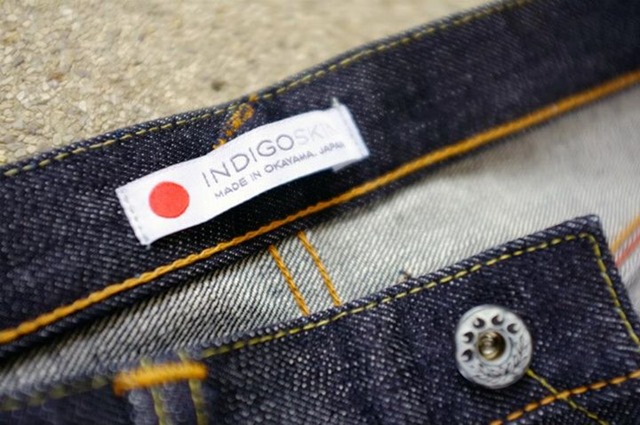
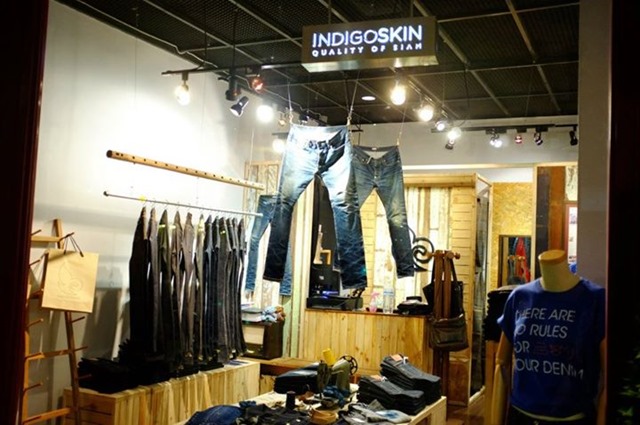
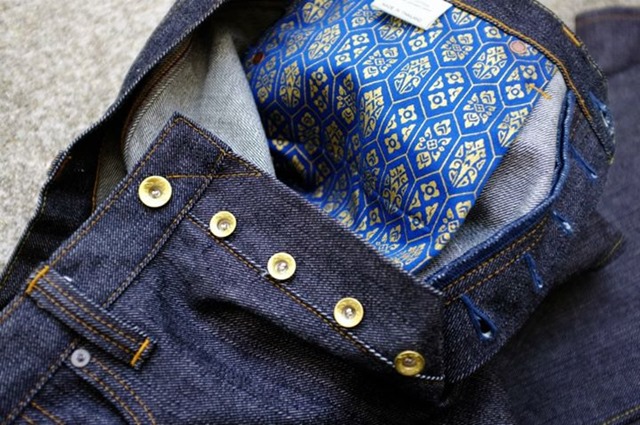
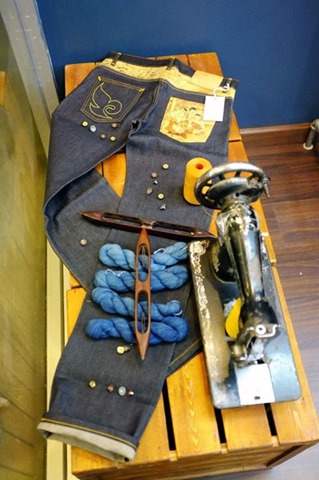
    Indigoskin is a brand of passions Inspired by my wholehearted love for jeans. Indigoskin intends to convey the concept of “The Quality of Siam” though a perfect blend between traditional Thai art and quality Japanese denim.

    Indigo skin

    2.You are a raw denim aficionado .. Why raw denim fascinates you?

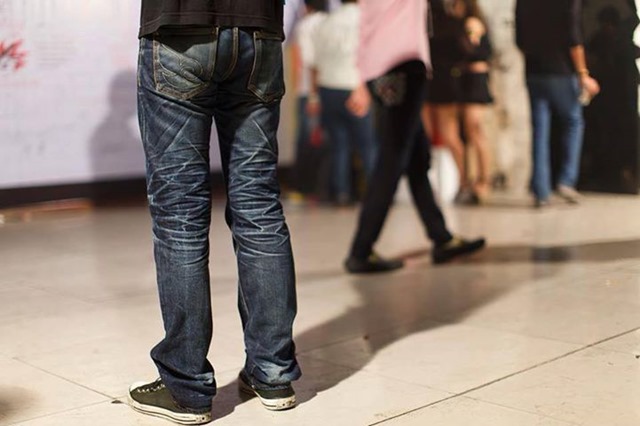
    Raw denim is very fascinating. The time you wear it, more beautiful you get from it. Can’t imagine the world with out raw denim.

    raw denim indigo skin

    raw denim from indigo skin thailand

    3.What characteristics do you look for in a raw denim fabric?

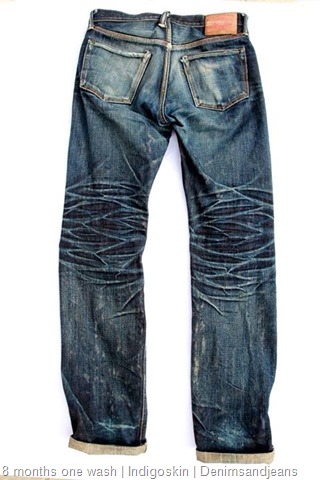
    I like a lot of character from denim. I am always searching for best denim for Indigoskin. Mostly I like how indigo colour turns out after you wear it for couple of years.

    raw denim washed

    raw denim 8 months 1 wash

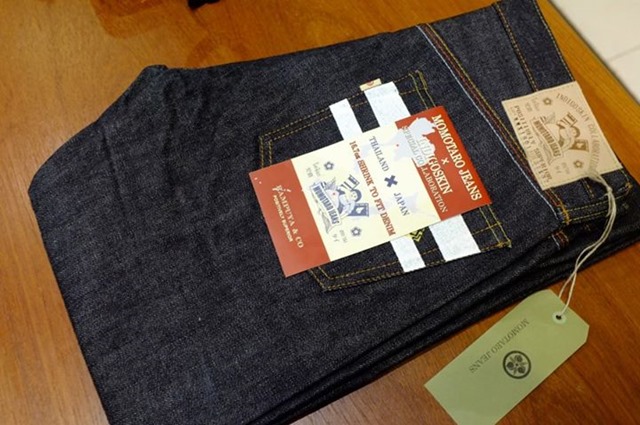
    4.You have collaborated with Momotaro jeans to create a special limited edition of jeans. What was it about ? I am sure customer response must have been great ..

    I have been a good friend with Momotaro jeans team. So we decided to make our collaboration project base on what we love about our concept and then put them together. We made 80 pairs of them and sold out in 1 day.

    indigoskin x momotaro jeans

    5.You are based in Thailand . Still you maintain very close and strong relations with Japanese denim world.. Do you think Japanese are the best ?

    Indigoskin is mostly made in Thailand but I used all denim fabrics from Japan. Every year I go to Japan to meeting with the fabrics mill to create my own denim and that make us a good friends . What I like about using Japanese fabrics is they are always willing to help you create you own fabrics with a small quantity (It is expensive but I think it worth with). There are so many fabrics mill that I want to try on my collections (Such as "Cone"). I think each fabrics mill around the world have there own strength.

    indigo skin denim jeans thailand

    6. Do you plan to go global with Indigoskin brand?

    Yes soon.

    7.What makes it difficult for other origins to come close to Japanese ?

    My last collections mostly come with mix cotton type of fabrics. That make each model come in a very unique way. example V-series (V from Vintage) come with 18 oz exclusive Japanese fabrics, I used mix cottons to created rough surface denim but inside is very soft. also I repeat dyed process to make the denim as dark as they can. It is really nice.

    8.Any advice for the lovers of raw denim?

    My advice ? Just wear it the way you are, and denim will show the way you live.

    Tuchawee plays not only with a jeans but with anything to do with denim and indigo.

    tuchawee sonthirati

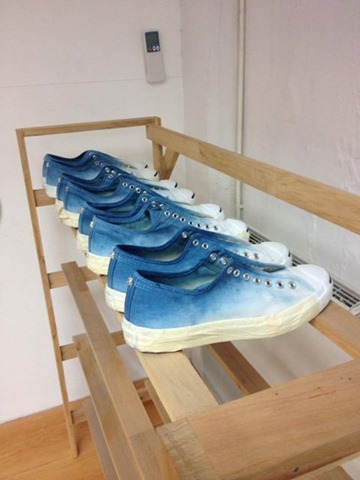
    Whether its working on an indigo dyed white canvass shoes ( a recent project )

    indigo dyed shoes

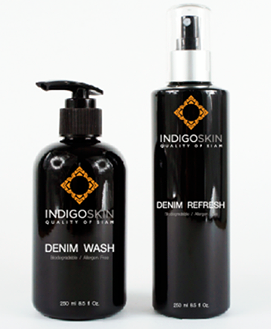
    or working on a spray for the aficionados of raw denim so that their denim remains disinfected and smell proof, he does it all. 

    1173776_648966881794329_561579670_n

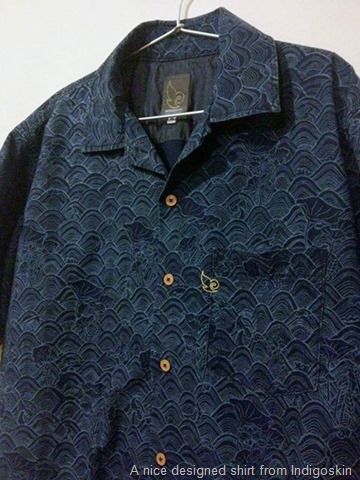
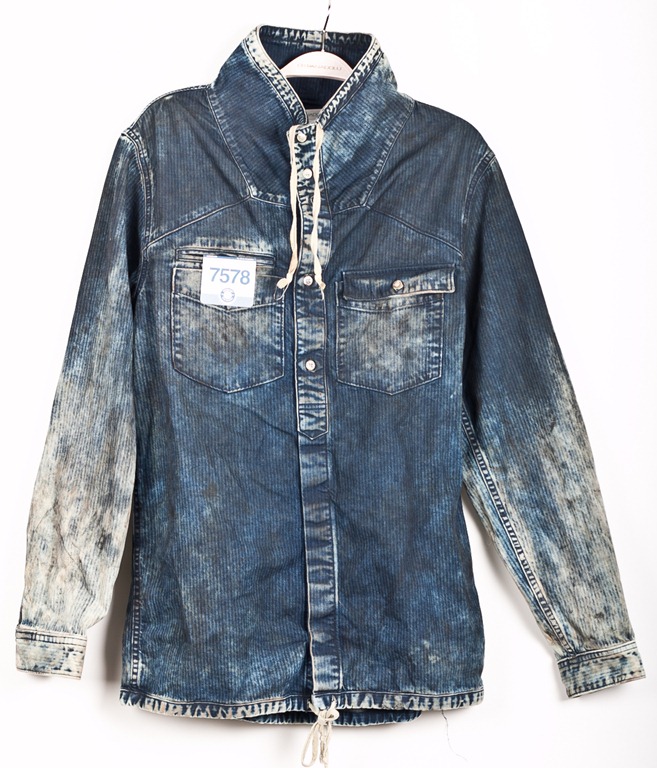
    indigo denim designed shirt

  • A Conversation With Vasco Pizarro | Ice Washing & More..

    • Capacity of washing 25,000 garments per day
    • Dyeing capacity – 10,000 kg per day
    • Finishing and logistics -15 000 Denim + 15 000 Knits/wool/mohair    per day
    • Printing  – about 10,000  per day

    These figures look relevant for washing and finishing houses in countries like China, Bangladesh and other Asian countries with high production capacities . Europe was long left behind in this race as the costs soared and it was unviable to wash  and finish at mass scales  in Europe..Also , washing and finishing on denim is an art that Italians have perfected in Europe and whenever a discussion on this topic comes up, one tends to immediately think of them . Hence , when we come to know that the above figures pertain to a washing / finishing  house  of Europe and that too non-Italian , we need to sit straight and take notice !

    Pizarro, based in Portugal,  is a large company doing full package servicespizarro denim washing for large brands/ retailers and dealing with EU and US markets mainly.  I spoke to the Marketing Director  of the company – Vasco Pizarro – to find out what makes this company tick and enables it to swim against the tide. After the conversation, I could sum up their secret of growth  in a few words – ‘Innovation in technology and systems’.. Our conversation goes thus :

    1.Hi Vasco! Yours  is a large washing / finishing & logistics/ printing/dyeing  house  in Europe. Can you explain in more details about your company.

    This year marks the 30th anniversary of Pizarro S.A. My father, along side my mother, started this company in a small garage with just one machine. We still manage the company in family with my family fully involved in the business. Today we have 650 workers divided in laundry house, dye house, print house and finishing house, although in the most part of our business we work only in garment, for some top level brands we supply full package.

    2.Washing laundries/ dye houses in Europe are disappearing . How is your company growing from strength to strength?

    Yes you are correct Sandeep, in fact these types of companies are disappearing from Europe. Our company grows through a mix of factors like these: We have a very good balance between scale economy and high level brands. We have a relationship with the Inditex group for almost 25 years and we have adapt our structure to respond very very fast to all our clients. Beside that the finishing & logistcs is of a great value to all our clients because we can receive raw garments and put them ready to go to the stores in 2/3 days. The cost of labor in Portugal is not as high as the rest of Europe and we have a very good financial business that reduces heavily the costs with the whole structure and not only labor but chemicals, machines, etc. We only invest in things that can allow us to evolve constantly, for example for you to have an idea we were the first European company to automatize   the dye house in 1993, then the laundry house We were the first company to have the three levels of certification, Quality, HSW and Environmental.. We are always in the cutting edge technology, but also our team of professionals is one that we are very proud of.

    3.Icelite  – achieving the sandblasted look with dry ice is one of the latest technologies. Your company is understood to have  invented this process .Pl tell us something about it . Is it a commercially feasible and future ready technology?


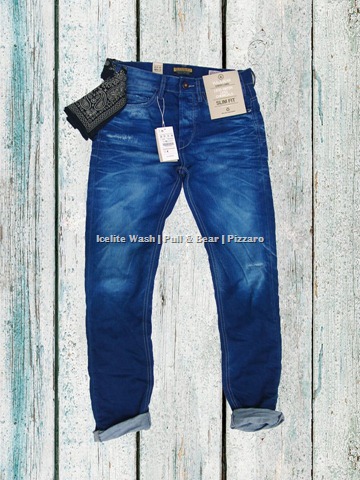
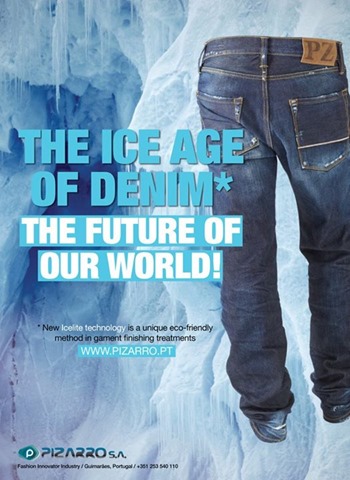
    The idea started in 2011 and when some brands responded to the incident in Turkey and the health problems that emerged due to the use of silica in the sand.With that in mind my father start doing several tests with different materials and equipment. He first tested it with a water blast .But the results were insufficient and he turn to a great friend of his that is a manufacturer in Italy. They both start exploring ice. The journey was not easy, but in 2012, in September we receive the first Icelite machine in the world.

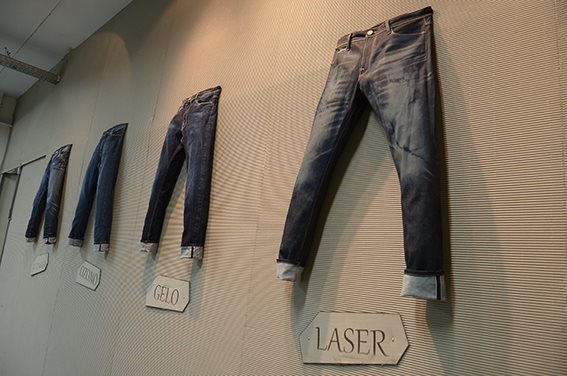
    pull and bear pizarro icelite wash denim

    pizarro icelite washing

    pizarro icelite washing machine

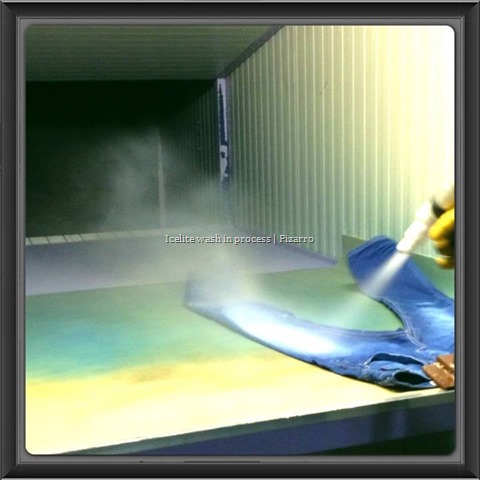
    The machine uses CO2 to create ice that is store at -70 degrees.Those small particles are used to create an abrasion blast that gives that vintage look to the garments.It can be used in every type of garment and the savings are significant:
    – 70 litres of water per garment
    -and 150 grams of chemicals per garment

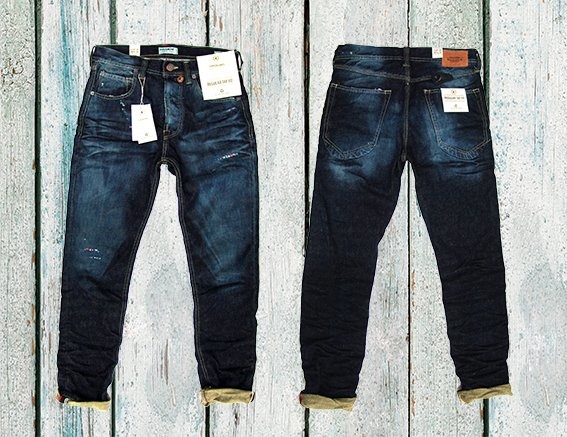
    These effects and final looks that you see in our garments are due, not only with the icelite, but also mixing ozone washes and laser washes. We called it EcoWash.

    4. These are big saving.. but do you plan to shift major part of your washing to Icelite technology? It must be expensive..

    We have a big project in mind that will revolutionize even more these savings and will allow us to turn the Icelite even more competitive that the sandblast. These will allow almost any company that want to work with us to do garments with Icelite. For now its a little bit more expensive to do so and therefore only the high level and Pull&Bear are doing it..So as you can see its already in a commercial success and we believe it will be the future of Denim.

    5.You also print a huge number of garments in your company. Do these include denim garments also ?

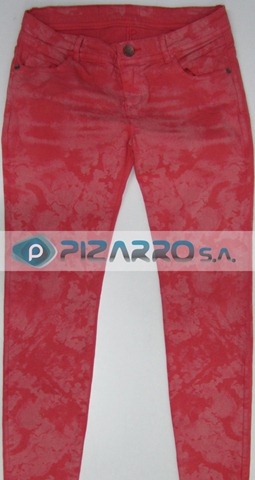
    We are printing a great deal of Denim garments…the demands of our clients are with vintage prints without touch.Even on jackets, if its Denim these are the prints that are trendy. Specially on vintage looks, total garment laser or just partial is something that our clients are asking a lot. All our prints are done garment by garment..

    7.. Do you see any specific trends in denim washes for SS14 ?

    For trends we  see that the vintage look (in terms of trying to imitate the  natural aging of garments) its something that is not going to stop. Furthermore the 3D whiskers are also something that is not going to stop. Another trend that we see is the  imitation of leather or glow on jeans – leather coating and  metallic coating.

    Here is a video on Icelite  process and some cool pics from Pizarro..

    pizarro denim washes 1

    pizarro denim washes

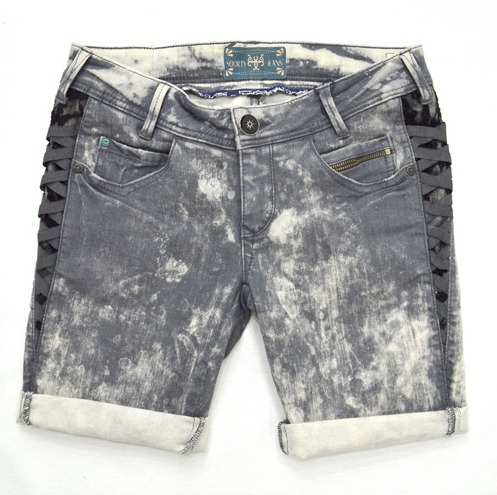
    pizarro icelite wash

  • Interview With Arsal Kassim | Kassim Textiles Pakistan

    imagePakistan is continuously developing as a large centre of denim production. With over 30 denim mills, it becomes important to understand what is happening in this part of the denim world.  Today we are featuring an interview with Mr Arsal Kassim – the Creative  Director at Kassim Denim .

    1. Please tell us something about Kassim Denim and its history

    Kassim Denim falls under the umbrella of the Machiyara group, which already had a strong corporate presence of about 25 years before jumping on the denim bandwagon. But when we started out with Kassim Denim in 1991 we had absolutely no background in denimology. We just had one mission in mind – to respond to the global denim demand.

    Rebels with a cause, we started a sustainable revolution with a vertically integrated setup. Out of affection for this absolutely wonderful planet that we inhabitate, our denim ambitiously reaches for a higher reading – It’s our platform to conscious couture. Combining the details, manufacturing techniques and fabrications that make denim so desirable, we painstakingly engineer and meticulously research sustainable fibres at our well equipped labs to produce high quality organic denim.

    Twenty two years down the lane, we continue to build a culture of intelligent consumerism producing eco-responsive denim that finds its way into responsible closets. Today, Kassim Denim fabricates 31.2 million metres of eco-responsive denim annually and accounts for 5% of the national denim production.

    2. What are the main product strengths of your company? What kind of customer base do you cater to?

    Injeanuity is our only strength, really. We respond to the ever changing fashion scenario by showcasing timely innovations that aid in keeping denim’s momentum moving forward. We are always trying to redefine denim. We keep on asking ourselves – is denim simply a mix of spun yarns dyed in indigo, or is it much more beyond that? We have never stopped thinking about how to make some of our fabrics even softer while others stiffer. How to add more sheen to the fabric, how to make our fabrics stronger, how to create more washing effects? We are even thinking of what kind of washing effect, what color of threads or cutting could match our fabric best. Being the serious denim heads that we are at Kassim Denim, you get more than just a piece of fabric. We are constantly experimenting on new sustainable concepts like recycled polyester and cotton, Tencel®, spare denim and hemp. Catering to the expanding sketchpad of possibilities for denim, we employ visionary technological processes to produce an assortment of weaves, colours, finishes and details. Our innovative role in exploring and developing new sustainable production techniques makes us lead the way.

    Kassim’s meticulously researched and ecologically sustainable denim is then shipped to the finest “denim-centric” manufacturers, wholesalers and retailers globally. Our eco-friendly nature makes us popular with the Europeans, which also gives us the chance to get a preview of the hottest global trends. From street wear to haute couture – our denim adapts European runways to cosmopolitan boulevards across the globe in Turkey, Italy, Germany, Spain, Bangladesh, South America, and Egypt.

    3. We hear of some interesting products from Kassim for S/S14. Can you throw some light on it?

    We are constantly looking at new and innovative ways of using denim and experimenting with different techniques for that all important new season favorite. But at the same time we defy glamour. Denim is something which forms into second skin by the user so our collection has to reflect the feeling of everyday life. For summers, two major introductions are lightweight fabrics in vivid colors and knitted denims. Color has made a comeback with a bang. The female color palette is sugary pastels – all milkshake and ice cream inspired. We are featuring matt and chalky pastels and vivid flat brights in a range of primary shades giving a vintage look to powdered pinks, peaches and brighter blue shades.

    We are also doing natural yarns, including linen and hemp, which update lightweights with neppy textured character. Partly in response to the need to reduce cotton consumption and also for the interesting textural qualities these fibers impart. Our finishing is imitating aged denim finishes with powdered coatings and vintage looks. We are also blending linen with our premium cotton combed yarns for a stunning effect, producing super-soft, subtly flecked denim. The slubby and neppy nature of linen and hemp gives an authentic textural interest to apparel weights. Hemp and nettle are also to be seen alongside a cotton/paper blend. Uneven smoked effects are another highlight. We are also doing Tencel® and Modal® denim which is a brilliant, super-soft fabric. It breathes, feels cool in the heat and warm in cooler temps. At the same time, it makes the apparel extremely easy-care and crease-resistant. Summer at Kassim is very colorful, very exciting. Definitely worth watching out for.

    4.    Your company is an integrated manufacturer – from yarn to finished fabric. How does it help you add value for your customers?

    We aim to create clothing in classic, timeless styles that are constructed out of the finest materials to the highest standards. There are 1,400 people at our manufacturing plant with only one job – to inspect our denim at each stage of the production process. We are actively involved in the full life cycle from the selection of the type of cotton we use to weave our denim and the design and preparation of our yarn, through to the application of various finishing processes. Being a vertically integrated setup gives our clients the edge to custom made denim at each stage of production.

    We make denim as a labor of love. We use only the best long staple cotton farmers can harvest – result is that our denim is surprisingly soft to the touch. Our spinning department employs customized technology from the best European machinery suppliers which enables us to produce the most intricate blends of yarn with a fine eye for quality. At our dyeing unit while we propagate Indigos for denim, our choice for the environment remains clearly green. The technology for loop and rope dyeing is the latest from Italian experts. Our weaving department is supplied with flawless beams, where we believe in really pushing the limits of the denim loom. Our assorted collection of over 4,000 fabric types emphasises the impact of mystique and is showcased bi-annually to the high end fashion industry through our team of Turkish and Italian consultants. The finishing unit puts a modern spin on the original denim. Our collection comes in finishes that range from super soft silicone rinses to extremely technical vintage replica effects. This amount of control over the raw materials and the production processes gives us the opportunity to produce fabrics that are not only consistent but are designed to give the most brilliant and natural wash down effects.

    Quality control at Kassim borders on the insane – we share the same sensitivity that our clients do. Our collection is eventually housed at Zara, Bershka, G-Star, Jack & Jones, Levi’s, H&M, Cheap Monday, Mango, and River Island – speaking volumes for itself.

    4. What are the trends emerging that you see for denim?

    The denim industry has been taking a sharp turn into a digital dimension. We should be witnessing exciting stuff with forward pushes into technical, graphic arenas and a new age of smart denim with a more premium look and feel. The introduction of laser technology is also positive, which is leading to a fresh wave of digital and graphic designs. Denim fans can expect to see a strong progression of dramatic, high-contrast colors as well as digitally engineered photo finishes. Also regarding the construction of denim, reports are showing a focus on weave innovation like 3-D technology to create a hybrid of denim that is texturised and visually woven. Denim experts are pioneering several technological advancements used within the laundry and construction that are going to be driving new breeds of denim into the next season.

    6. Denim has undergone a massive transformation over the last two decades. In early 90s denim used to be a 14.5 oz standard product and today all kinds of fibers, dyeingtechniques, weaves ,finishes etc are used . How much future scope do you think is left to take these developments further?

    The story of denim is well-known and better told through the wealth of well-researched books on the subject. The key point is that generation after generation, denim devotées simply cannot get enough of the blue jean—the global anti-uniform and nonconformist fashion statement. But many of today’s workers are more likely to wield a computer mouse than a pickaxe. They need a new kind of denim – casual yet dressy, relaxed yet professional.

    Manufacturers have answered this schizophrenic request in a variety of ways. Today’s denim comes in new styles, fabrics, weights and colors, all rolled into garments that can be worn both on the construction site and in the penthouse suite. To achieve this corporate casual look, manufacturers offer a variety of fabrics, including twill, chambray, cotton/linen blends and denim/oxford blends. On the surface, denim appears to be a unique and easily identifiable fabric. But it can be disguised as twill or blended with a variety of natural and synthetic fibers. And that is how over the decades, designers have evolved denim and its place in our wardrobes. Denim manufacturers are diversifying by producing garments that can be worn in a corporate environment. Denim is more and more frequently blended, and some manufacturers are even trying the denim weave with other fabrics entirely. Mixing it with Spandex or Tencel gives it form and a closer, smoother fit, while other fabrics offer a completely different feel.

    All these different fabrics and blends are necessary, to keep the denim market competitive, to cater to the needs of promotional products distributors and to help differentiate between the increasing number of denim producers. I think the market is going casual but dressy, with lighter fabrics.

    Manufacturers are also experimenting more with textures, and lighter weight fabrics. They are cautiously expanding their color base as well to include non-traditional hues. In an effort to appeal to a more fashion-cautious corporate market, manufacturers are introducing new styles every day. The story is simple – the future of denim is in the retail, while that of the manufacturers in creativity.

    7.    Europe was undergoing some difficult times and now seems to be on recovery path. But with Pakistan getting GSP benefits, Pakistan manufacturers are getting some advantage. Do you think it makes EU much more imp for Kassim.

    Pakistan has an important place in denim fabric and apparel manufacturing. It’s not only our production volume of jeans and other denim apparel that sets us apart. A lot of local mills including ours are heavily investing in research and development, thus innovation in various stages of denim manufacturing is our major strength.

    Pakistan’s trade with EU mainly comprises textiles that are 55 per cent, followed by leather products. EU remains Pakistan’s largest trading partner receiving 18 per cent of Pakistan’s exports and providing nine per cent of its total imports. The overall volume of trade between the EU and Pakistan is worth $8,256 million with a trade surplus of $729 million in Pakistan’s favor. Most of our clientele is based in EU and with EU granting duty free status to Pakistan (backed by Germany which receives 20% of Pakistan’s total denim exports to EU) we are definitely looking forward to exciting ventures. Overall this will also improve the sustainability of our manufacturing sector and will create additional businesses and job opportunities.

    8.    How do you see the growth of Pakistan denim industry in the coming years?

    The denim component has been developing the fastest in the last decade – with Pakistan touching almost 600 million square meters of denim fabric production per annum. There are about 40 major players in the denim industry of Pakistan, producing about 50 million square meters of finished denim fabric monthly. Denim is the mainstay of the Pakistani textile industry.

    The top global denim fabric exporting countries including China, Hong Kong, Turkey, Italy, Pakistan, the USA, India, Japan, Spain and Brazil together accounted for as much as 83% of world denim fabric exports. Almost all of these countries witnessed a decline in their denim fabric exports in 2009-10. The only exception was Pakistan, whose exports rose by a remarkable 75% during the year 2009-10. On the other hand export of cotton denim fabrics from Pakistan increased from 45 million sq meters in 2005-06 to 229 million sq meters in 2009-10, thus showing an average increase of 50% per annum in terms of quantity.

    A series of advantages including a falling currency, cotton fiber and yarn availability, modern equipment and strong incentives have progressively built a wealthy denim industry, which aid in denim apparel production and direct denim fabric exports to other Asian countries and also to Turkey. The continuously depreciating currency of Pakistan has majorly helped in maintaining the competitiveness of the industry but it is not a factor which can sustain the industry in the long run. Some mills in Pakistan have definitely tried to invest heavily in product development and innovation and this is probably the best way which will keep the industry going strong in the coming years.

    9.    Do you see Pakistan becoming even more important player in the world denim industry considering China slowly reducing their capacities?

    Denim manufacturers in Pakistan are looking to reposition themselves in the global market as Chinese companies are reducing their production, owing to their increasing energy and labor costs. While individual companies like ourselves will continue to make their best efforts to get a share of global business, this opportunity needs to be leveraged at the country level. China has denim capacity of 2.5 to 3 billion meters compared to Pakistan’s current capacity of around 600 million meters. We will have to wait and watch how much production is being cut by China and which customers will come to Pakistan instead of China. At this point, we cannot single out one generic competitor. The global denim market is clearly segmented into premium denims, fashion denims/value for money denims and mass denims. In premium denims, Pakistan’s competition is with Italy, Japan and a couple of Turkish mills. In fashion denims, our competition is with Turkey, Thailand, some Chinese mills and a couple of Indian mills. And in mass denims there is competition from majority of Chinese, Indian and Bangladeshi denim manufacturers. Pakistan has the advantage of having duty free access to consuming markets like Europe and Canada. With strong policies at government level we shall be able to make Pakistani denim industry more competitive and benefit from China’s production cut, adding more growth value at about 15% per annum.

    10.   Lastly, how do you think Kassim would like to add value for its customers?

    We are fortunate to have a leadership that defies the conventional confines of the boardroom and is actively involved in everything every day. The blueprint of our successful manufacturer-customer relationship lies in being fair, being real and urging others to do the same. This moral fibre woven into our culture supports our courage to make bold decisions on the fringe, making injeanuity matter – always. That is our contagious attitude in a nut shell and this is exactly what helps us add value in our own unique way.

    For more details on Kassim denim, contact at this email address
  • Interview With Michael Kininmonth, Lenzing

    During my last visit to Denim by PV , Paris , I spoke to Michael Kininmonth (Project Manager)  from Lenzing Fibers.  There were discussions about various activities of Lenzing related to denim industry . He talks about the increased importance of eco sustainability in the current market scenario and its increased importance in the coming years. He talks about his experiences about how denim usage is changing over the years specially in Asia . The discussion is presented in the form a video  and  it can be seen below (only online).


    Check out updated Denim Fairs list in 2013 .

  • Interview With François Girbaud

    Marithé François Girbaud is a famous clothing company based in France. It was founded in 1964 by François and Marithé Girbaud.

    Marithe Francois GirbaudDuring my recent visit to Denim by PV (Paris)  , I had the opportunity to speak to François  Girbaud .  He was kind enough to give his views on various issues related to development in denim fabrics . But the main focus of the discussion was on eco friendly techniques and he expressed his concern over insufficient progress in the industry on this aspect. He also exhorts youngsters to come out and innovate with new techniques and processes of jeans production which have lesser impact on environment. Here is a video on this interaction with him.

    Internationally based clothing brand Marithé François Girbaud was founded in 1964 by designers François and Marithé Girbaud who specialized in unique casual clothing, using uncommon styling and fabricates for comfort. Notably in 1977, they launched the first baggy jeans. In 1980, the company launched the legendary X-pocket.The legendary X-pocket jeans presented a style that was embraced by young men and hip-hop artists everywhere.

  • Interview With Ms Nargis Soorty–Director Soorty Denim, Pakistan

    Soorty Denim PakistanSoorty denim is one of the fastest growing denim companies from Asia and highly focused on the Research and Development activities. Based in Pakistan, they are a vertically integrated group with activities from Spinning to Garment mfg. We spoke to the dynamic director of the company – Mrs. Nargis Soorty to find out how the company is growing and the areas it is focusing on :

    1. Please tell us something about Soorty Denim and its history..

    The name Soorty is synonymous with garments since the last 25 years. Soorty Denim’s history is comparatively newer. In fact, the first denim mill was built in 2005 with a view to cater its own garment needs. After the success of the first mill, the second mill was also started to cater to the export of fabrics after a tremendous increase in demand in global markets. We can now proudly claim our mill as about the largest one in Pakistan with a capacity of 3.2 million meters per month. Out of our capacity of 3.2 million meters/month, around 1.4 million is used to produce 60,000 garments a day and the remaining 1.8 million is available for exports of fabric.

    Soorty Denim has been the fastest growing denim mill in Pakistan since its inception. Soorty Enterprises Ltd. as a whole employs more than 12,000 people in 12 units across Karachi. Our factories are certified by ISO 9001:2009, BSCI, SA 8000, GOTS, OE 100 as well as WRAP.
    Our vertical integration helps us achieve precision and the utmost excellence in the manufacturing of our garments, right from its foundations. Going forward, we feel those companies who have garment and spinning units under their own umbrella will be the ones succeeding long-term.

    2. What are the main product strengths of your company ? What kind of customer base do you cater to ?


    U-398BOur vision is to bring the right product in the market at the right time – to be proactive, ever-evolving, innovative and product development leaders. We are ready to experiment with anything new. Currently, we are mainly doing bottoms, specializing in constructing high quality fabrics for use in ladies high stretch jeggings. We experiment with different kinds of slubs and fibers such as modal, viscose and wool and weave with techniques that add value and uniqueness to our product. Coupled with our European laundry and garment expertise, we always have the extra edge when it comes to new developments. Our washing plant has collaborated with an Italian laundry team of 6 technicians from Martelli who have provided 2 years’ worth extensive training to our employees. The plant is one of its kinds in Asia and has been acclaimed by some buyers as the best they have seen in the region. We take pride in our ability to produce any sort of wash currently in the market.

    Having our own RnD dept. in both denim and garment divisions alsosoorty denim fabrics benefits us tremendously as both teams are constantly researching and working together to create new collections and conjure new ideas. At the denim mill, our product development manager from Montebello works on our seasonal collections and a different Italian designer works with us in the garment division. Washing expertise is always available for help and experimentation during their research. The washing unit actually has its own RnD dept. that helps in research for different types of washes. Having this whole vertical chain helps us work like a single unit, stay connected and ultimately develop a superior product in a short timeframe.

    soorty denim productsSoorty’s production model has the flexibility to produce for high street retailers as well as high fashion brands. Our high end product coupled with cutting edge prices means companies ranging from Gstar, Diesel, Tommy Hilfiger and Rock and Republic to Inditex Group, Esprit, Tom Tailor, C&A, Mango, Dorothy Perkins and a few others all benefit from our services. We have been working with some of them for many years in order to forge the strong relationships that now exist between us. We are currently exporting around 15 million jeans and twills yearly.

    3..We hear of some interesting products from Soorty for A/W13 . Can you throw some light on it ?

    Soorty always brings something new to its fabric collectionCoated denim fabrics Soorty, something unconventional & rich in its values. Since denim is all about innovation, concepts & refined ideas in the right direction, for our Autumn Winter collection 13/14 we have decided to experiment with avant-garde weaves as well as employ the over-arching theme of sustainability.

    To accommodate the large customer range, the collection is divided into groups ranging from Leather Coated, Color denim, Weft Dyed to Back side coated and some special finishes.

    In today’s world Denim is just not any regular fabric and that’s why our team has crafted & engineered the products with special fibers & finishes. Yes, we have taken it to a next level by incorporating trendy fibers like Tough Max, Thermolite, Wool, Recycle, Super Soft, Elasto-Soft, Dual Fx & T400.

    One of the most significant elements of the collection is that we have added a special group named (Mile Stone) which is one of the customers most loved fabrics of all time. It reflects Soorty’s true heritage, passion & devotion to Denim.

    4. Your company is an integrated manufacturer – from yarn to garments .How does it help you add value for your customers?

    Soorty womens denim collectionWe can proudly say that Soorty is the best example of vertically integrated manufacturer. We feel going forward the success of Denim mills will be accredited to garment manufacturing. The backward integration of Soorty is the perfect example.

    Our research and development team in denim and garment division work in cordination to bring out new collection and new ideas continuously, starting from yarn to washing techniques. Having the complete setup under one umbrella is an advantage in today’s competitve world.

    5.The denim industry grown very well in Pakistan over the last decade. What do you think are the reasons for the same?

    Pakistan is one of the largest producer of cotton. It has the short staple courser cotton ideal for denim fabric. Besides, Pakistan was he pioneer in textile industry. During the quota free regime till 2005 Pakistan was one of the duty free countries for EU. This gave the industry more and more oppurtunity to invest and prosper. We have institutes and experience which give us an advantage over our neighbouring countries. Almost 55% of our export is textile..

    6. What are the trends emerging that you see for denim fabrics , garment styling , washes etc?

    The emerging trends for the future seem to reflect on an emphasis onwomens denim fall winter 2013 new fibers and weaving techniques. Denim is now becoming an integral part of every wardrobe and it seems as though cleaner looks will become popular in concord with its new role as practical, every day clothing. The fabric will also have a richer feel and look which will make it more versatile and appealing for not only work wear but every other occasion too. Additionally, the washes will be focused towards greater sustainability and eco-friendliness. Styling will vary from simple to more innovative cuts which will enhance the body contours giving a slimmer silhouette.

    7. Denim has undergone a massive transformation over the last two decades . In early 90s denim used to be a 14.5 oz standard product and today all kinds of fibers,dyeing techniques,weaves ,finishes etc are used . How much future scope do you think is left to take these developments further?

    In the past decade science has advanced by leaps and bounds . There is so much more room for improvement. I see a lot more new development in fibre and slubs. The weaving techinques will be adjusted accordingly to having that cutting dge advantage of such versatile fabric. Making it not only sustainable but giving the comfort and stretch needed in this fast pace lifestyle.


    8. We have been hearing of talks between Indian and Pakistan ministries to alter duty structures so that import of fabrics from either country into other becomes duty free. Do you think this could help the denim industry  ?

    This is going to be a key part in the interest of both the countries .Pakistan being a huge producer of textile and India has a hige consumer market. We see a lot of oppurtunity with the right policy in place I think both countries will have an advantage.


    9. Europe is undergoing some difficult times. Do you think this will affect the consumption of denim there?

    Europe is going through a correction phase which will no doubt effect the economies every where. Denim growth will be affected momentarily.The top retailer are planning to venture into new markets in BRIC which will keep the steady growth.


    10. How is Soorty adding value for customers in such difficult times?

    Our team thrives on new findings and loves to experiment with new discoveries and for this reason we have a monthly collection on our website which our customers have excess to and they can choose the fit or the wash look for their new season. There is a tab for accessories as well. With only a click of the button a new product is created. Soorty always delivers “value for money”. This is our policy and our customers have an advantage since they work with us. Being a vertically integrated company our customer has the best lead time to new developments and advantage over others to react to the demand and supply of today’s volatile fashion industry.

    For more info on Soorty’s denim collection contact at this email address .
    Check out the presentation of  Men’s and Women’s Denim Collections for Fall /Winter 2013-14 below :

  • Interview With Ebru Karakoc :Orta Anadolu

    Orta Anadolu is one of the well known premium denim millOrta Anadolu and has been serving the denim industry for over 25 years.  I spoke to Ebru Karakoc – Marketing Director and Burak Baykaldi on the latest products and innvoation from Orta.

    Could you tell us something about the history of Orta Anadolu..

    Orta started manufacturing fabrics 55 years ago and during the early 80s the owners decided to focus on denim production only. The vision was not just to produce denim fabrics but to work with the best brand names in the industry. Soon Orta Anadolu became a preferred manufacturer to worldwide recognised jeanswear brand names. Levis appointed Orta Anadolu as a 01 fabric manufacturer confirming the quality of the vintage denim production capability and as the market evolved Orta Anadolu proactively started offering fabrics and services for the sportswear brands as well as the fashion brands.

    Today the production capacity reaches 60 million meters with the 2 vertical plants in Kayseri Turkey and Manama Bahrain. The company headquarters is in Istanbul and through the global sales and marketing operation Orta Anadolu serves brands and manufacturers in Europe, USA, Colombia, Australia, Bangladesh, Japan, North Africa and Turkey. The focus remains on strong partnership understanding with the customers who are valued as the main asset of the company. The production infrastructure is updated according to the needs of the market. Denimservices within the Kayseri premises provides garment making/finishing possibilities to evaluate the newly developed fabrics promptly with a capacity to produce 25,000 garments to present the line. Orta Blu is the sustainibility division of Orta Anadolu established in 2011 and follows and shares social missions and promotes a sustainable life style.

    Orta is among the most reputed denim mill around the world. What makes it tick ??

    Orta focuses on long-term relations with its customers rather then operating on transaction bases. The expert consultants and the management team aim to provide proactive solutions for its global customers. The Orta staff turnover is very low both in white and blue collar teams and this enables the company to specialise in manufacturing skills as well as customer relations. Product development and constant innovation for the jeanswear market as well as the fashion market are key driving factors for the sucess of the company. Orta team makes it happen.

    c)You come out with innovative products at regular intervals. Can you tell us something about the latest ones..

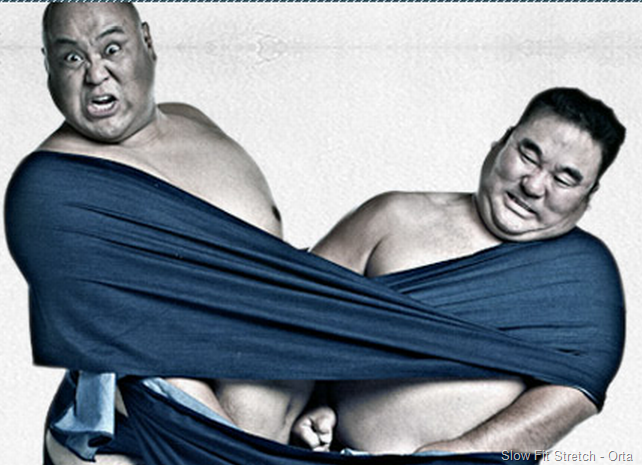
    Slow Fit Stretch Denim Fabric - Orta

    Slowfit concept is one of the latests innovations. Where we use combination of methods to achieve soft but high performance jeans. Combinations of different fiber like tencel , cupro, viscose etc. for softness and combination of PES, PA, Elastane for higher performances.

    Consumers will be much more happy with super soft high performance fabrics.

    HD = high definition denim. We have a concept of fabrics where customers can easily get surface abrasion after scraping. We offer this concept especially for waterless garment finishes. Most of the customers having problem to get a nice natural look after waterless finishes on garments. This technology creates easy clean abrasion after scraping and washing. Compared to normal fabrics you clearly see and HD look.

    The Alchemy finished products from Orta has some great supersoft capabilities – I had reviewed this earlier.. Can you throw some more light on this special finish. How long does it last in home laundries ?

    Alchemy finish will stand home laundry washes all the lifecycle of the fabric. Alchemy gives a permanent softness. When we compare alchemy and nonalchemy fabrics ; we see that the touch difference of nonalchemy fabrics after home laundry washes is much more than alchemy fabrics. Means alchemy fabrics will stay soft even after homelaundry washes.

    e)I am sure you deal with most of the reputed denim brands. Could you name some of the reputed customers..

    Levis, Lee, Wrangler Diesel, DSquared, Replay, Guess, Armani, Miss Sixty, Energie, Meltin Pot, Fornarina, Sisley, Benetton, Met Jeans, J Brand, GAP, J Crew, Banana Republic, Paige, Mother Jeans, Seven for all Mankind, Citizens of Humanity, True Religion, Current Elliot, Hudson, G-Star, Denham, Hugo Boss, Tommy Hilfiger, Scotch&Soda, Paul Smith, Burberry , Uniqlo, Tennis etc.

    Orta Anadolu is known for its social missions. What is the philosophy behind it ?

    Orta Blu Social Missions
    Orta Anadolu has always made donations however in 2011 it decided that it should share its experiences and build sustainable communities globally if it wanted to give back to the world that we all share. Thus Orta Blu was establised both as an on-line and off-line platform. Orta’s main business is making and selling fabrics however the expertise behind the production as well as the global philosopical vision enables it to promote models of sustainable communities which can use its core product and create value-added approaches. In its first social mission Orta Anadolu has teamed up with UNICEF in Italy and Beirut and has created a production unit to support a project based on turn-back to school for girls in a rural village in Akkar. The project enabled 80 girls to go back to school, 15 women to learn how to make garments and 1000 uniforms were distributed to the school children in need.
    Orta is not simply making and selling fabrics but creating sustainable projects around the world.

    What do you think about the Asian markets – particularly India, China etc ? Do you see these markets developing well over the next few years ?

    Orta is looking at the Asian markets and is building strategies to serve the jeanswear garment manufacturers which serve global markets as well as the growing local retail brands needs in these regions. Orta expects major growth in Chinese as well as Indian markets. The global luxury brands are moving in Asian markets since 5 years and as the buying power of consumers in these markets increase the demand for advanced fabrics will grow. The e-commerce in China is expected to grow to 60 billion usd in 5 years and this will invigorate the growth of the fashion industry.

    Here are some product images and videos from the company

    Video: This is a back stage action at Orta Anadolu “Slow-Fit” stretch denim shoot with Sumo Wrestlers..!

    The Power of Slow Fit Stretch !

    I Core Indigo Painted Denim

    Alchemy Fabric Video :

    Alchemy : Turns Denim into Gold

    Herring Bone - I Core Denim

    Color Denim 2013 Summer - Orta

    Color Denim 2013 Summer - Orta

    _MG_7551

    Contact Ebru / Burak  Here

  • Agave Denim – An Interview With Jeff Shaffer

    jeff shaffer Many denim brands have taken birth in garages or living rooms  and have grown from a small sapling to large trees. Agave denim from US is one such brand which started in 2002 with the passion of a single person operation in California producing only 8 jeans and  has now grown into a brand which people are taking note of.. It is also a brand which does 100% manufacturing in US using  mainly Japanese denim.

    We speak to Jeff Shaffer – owner/designer – to find what makes Agave denim tick..

    What prompted you to start a denim label and how did it grow and reach its present state?

    I have always been in love with denim jeans.  From my early days 501’s and Zeppelins to my Diesel’s and G-Stars.  In 1993, I went to Japan to visit vintage clothing and denim shops.  I met a lot of the vintage dealers and saw all of the super cool small companies building 501 reproductions.  I wanted to make great jeans too.  My first brand was called BC Ethic and we did some cool denim.  In 2002, I founded Agave with the mission “Agave exists to design and produce the best tailored, most beautiful and highest quality denim jeans, authentically sewn and hand finished, exclusively in California.”  I started out really small and I was my only employee for the first three years.  Then, I slowly added staff and increased distribution.  Agave has never been about being big but about being great.  Always focused on product.

    What makes your denim line different from every other denim line out there?

    Quality.  I use the best fabrics in the world.  Mostly Japanese denim and Italian.  I spend twice as much as most brands on fabrics.  I focus on ring spun yarns, mostly long staple or ELS.

    Are all your jeans produced in US?

    Yes

    What inspired you to become a denim designer?

    Necessity.  Couldn’t afford to hire a designer.

    I understand Agave uses mainly Japanese and Italian denim fabrics. What tells you to select a particular fabric – is it market trends that you read or is it just your own inner instinct and liking which enables you to select new fabrics?

    Inner Instinct.  I am a fabric freak.  We stock 75 fabrics. 75 SKUS IN MENS ALONE WHICH IS OVER 7 FITS per season and offer every variation of denim.  2×1, 3×1, RHT, LHT, Broken Twill, Selvage, Stretch, Rigid in weights from 7oz to 16oz.

    Is it an art to select a new fabric?

    Not an art.  Passion and Intuition.

    Do you think Asian fabrics are catching up with those from Italy or Japan?

    Yes but then will never match because they lack the soul.

    Why do you think the Asian fabrics lack soul?

    Perhaps this is too strong of statement. There are two parts to the answer. One has to do with passionate artesian Japanese weavers and the other has to do with American workwear. Japan has an ancient history of indigo dyed fabric dating back centuries. At some point when denim became an important texile the japanese weavers started making denim as opposed to silk and other fabrics. They put their passion into the denim rather than treating like a commodity. The understood the unique idiosyncrasies of blending yarn sizes, different shades of indigo, all the different weaves like 2×1 3×1 1×1 broken twill and how all this related to American workwear. It is possible to export that passion from japan to china. I am sure there are native Chinese that are starting to understand this but it will take a while. Even so the cultures are very different. It is the Japanese that have created markets for highly evolved tastes like sushi and selvage.

    What makes a successful designer for a denim brand? Someone who works on expected trends or someone who follows his own instincts without worrying about trends?

    • Understanding your customer.   Talent.
    • BOTH

    What are you denim predictions for the next 12 months for both men and women?

    RAW, RINSE, DARK & NATURAL, CLEAN, INTENTIONAL, BEAUTIFUL, IMPECCABLE TAILORING.

    One of the greatest trends that we have seen recently in denim are Jeggings . What is your take on this trend? Will it last and become a generic trend that lasts for a long time or will it fade out  soon ?

    IT IS PRETTY MUCH OVER.  WOMEN ALWAYS WANT SOMETHING DIFFERENT.

    Dry and wet processing makes a critical difference to denim production. With water conservation becoming an important topic, do you think that waterless processing will gain in importance in next few years?

    Yes. Sustainability will become more and more important as the environment deteriorates.

    Agave Gold Purist Jeans is one of your great products in selvedge denim .  Are all selvedge denims popular with your customers?

    NO.  SELVAGE IS FOR TRUE BLUE BLOODS.  A LOT OF MY CUSTOMERS DO LOVE SELVAGE BUT MANY LOVE SOFT FABRICS.

    What other international markets do you intend to expand to?  Do you see China and India as important markets for the future?

    We are starting to build our oversees distribution. CHINA, INDIA AND BRASIL ARE THE NEXT BIG MARKETS.

    Here are some of the jeans from Agave..

    Agave-denim


    Sponsored Link:

  • s.Oliver : Interview With Florian Schneider

    s.Oliver is a German lifestyle company which manufactures fashion apparel, accessories, and lifestyle products for men, women, boys, girls, and children. With over $1.2 billion Euro in sales and presence in over 25 countries in Asia , Western and Eastern Europe,  the company has  some of the coolest collection of denim in Europe . I thought that it might be good idea to speak to Florian Schneiderthe head of Product Development Denim at s.Oliver Asia – and find out what makes the company so cool and to learn from him about  the latest in denim developments .

    s-oliver-denim-collection-g

    Hi Florian. Tell us something about s.Oliver ..

    s.Oliver is one of the most successful fashion and lifestyle companies in Europe, and was founded by Bernd Freier in Würzburg, Germany, in 1969. The company’s head office is still in Rottendorf in Franconia today. s.Oliver now employs over 7000 people worldwide, and is represented by 240 of its own stores, 300 franchise stores, 2559 shop-in-shops, and on 3281 areas all over the world.

    b) Which are your best denim products?

    Our best selling product over the years is a 5-pocket NOS jean for our Casual Women segment. Great fit, classic denim and subtle but perfected vintage wash. Even though we have fantastic products with stunning washes, which range from traditional authentic –e.g. railroad worker inspired jeans – to modern interpretations such as leather-like coatings and washes with a new richness of color, I think it is commercial products with well balanced wash where we are at our absolute best.

    b) How do you think is the demand for denim in Europe currently?

    Germany is our main market and its economy is recovering at a surprisingly good rate, so does private consumption. The trend towards Chinos and garment-dyed 5-pockets for sure has hurt denim demand a bit, but the impact for us is rather small.

    However, the signals I am getting from mills show a trend to an overall slowdown in Europe.

    c) Do you think the consumption is on the rise even with the economy being not so good?

    In my opinion, consumption in Europe or the US will stay flat for the next couple of years and then eventually pick up speed. In general, rising consumption in developing countries should make up for slow sales elsewhere. This is quite interesting, as the cause for the rising consumption, which is increased salaries and higher living standard, is also the cause why factories struggle to find workers, and brands have difficulties to source for the low prices they are used too.

    d) What do you think are the latest trends in denim?

    Besides the usual periodical changes in leg shape, clean look vs. vintage wash, and a few longer lasting trends like jeggings, there are two major developments: diversification of garment styles and diversification of denim fabrics.

    Denim is expanding far into foreign territory with products such as jeggings, denim down jackets, fully lined denim blazers, knit denim sweat pants, fluid lyocell dresses, and denim chinos. Material variety is leading the pace and getting more diverse to the extent that the line between denim and other products is blurring. Can knit denim be considered denim? What about indigo yarn dyed chambray, indigo over-dyed linen herringbone, jacquard woven denim, indigo corduroy?

    Overall there is a lot of excitement and I think we are just at the beginning of a big development.

    Now, to give you a more traditional answer, I’d say that 70’s styling is catching on, vintage effects will be overall reduced and denim with wool content or heather weft will be an important novelty. Metallic and leather like coatings have a come-back. Slim fits for men are getting more important, so does cotton/elastane denim for men, and high stretch denims with novelty yarns.

    e) Comfort is becoming an increasingly important word in denim which has enabled trends like jegging to be very strong. We have also seen brands like Diesel launching special comfort wear jeans like “Jogg Jeans”. Do you think this is a long term trend?

    Europe has been slower than the US in embracing the soft & comfortable trend. However, the super-trend “jeggings” and the success of smaller brands like Current/Elliott that had super soft denim in their collections changed that.

    In addition to that, since nowadays denim products include much more than traditional work wear or work wear inspired fashion and can come in the form of any type of garment, hand feel and comfort requirements vary a lot, and tend to go to the soft side.

    The trend is here to stay, once the consumer is used to comfort, he or she will not like to go back to less comfortable products. An exemption to that are of course people who have a soft (no pun intended) spot for traditional denim and for that reason of course prefer stiff raw denim jeans.

    f)What kind of washes and treatments on denim  do you think are popular ? Which is your personal favourite ?

    Vintage washing has come a long way, and s.Oliver is very successful with authentic washes. 3D whiskers are a must on most of our washes. Subtle color spray or rubbed-on color is important to add additional depth to the fabric surface and increase richness of color. Dark finishes are getting more popular as are grayish tones.

    My favorite wash is a vintage wash that is hand sanded – not sandblasted, washed down with water, enzymes and stones only – without the use of bleach, is not resin treated, and has broken edges not from grinding but from natural formation during washing.

    g) China is getting expensive. Do you see shifting of denim production capacities from China to other countries due to this?

    The main production area for denim in China is Guangdong Province in the South. Costs are rising in Southern China and labor is increasingly hard to find, so there is indeed a trend to source from other countries like Vietnam or Bangladesh – but also from other provinces in China. Some provinces especially in the North and West still have favorable regulations and low labor cost.

    Recently, high cotton prices put even more pressure on brands to compensate rising material costs by lower cm and washing costs.

    It is important, though, to keep in mind that other countries have limited work force supply as well, and living standards are on the rise in most developing countries. Considering that the pool of workers in these countries is far smaller than in China, the work force supply can run dry very fast and salaries go up quickly as a result. Therefore it remains to be seen how much of production capacity can be shifted away from China.

    h) What do you think about India as a denim sourcing hub?

    India has a large cotton production, very good mills and plays a center role for denim fabric sourcing. It is close to production places like Bangladesh and Pakistan.
    Since rules have changed and Bangladesh can enjoy the GSP+ benefit even if material origin is in a third country, Indian mills should be able to benefit. In terms of jeans garment manufacturing, I am not sure how big a role India is playing for the European market at this moment, but there is definitely a potential.

    i) On a personal note, how many jeans do you have in your wardrobe? How many times do you wear them before you wash them??

    I own around 25 pairs, mostly collector’s items and s.Oliver jeans, but currently I wear only two – a Filippa K raw selvedge jeans which I have not washed yet but plan to wash after 8-10 months of wear, and my favorite s.Oliver vintage jeans, which I usually wash after three to four times wearing.

    k) Thanks for being on Denimsandjeans.com Any guidance for our readers who are great denim enthusiasts?

    Always go for quality instead of quantity!

    About Florian : florian Florian studied mathematics and philosophy at the University of Hamburg before deciding to change his major and follow his passion for design. He then continued to pursue his dream outside his birth country in the Big Apple, where he ended up as a designer with DDCLAB.  Inspired by Roberto Crivello of DDCLAB and the brand’s undying commitment to technology and design, he got hooked on denim, continuing to work in the field as a designer, wet processing manager and product developer.

  • Interview With Stefano Aldighieri

    stefano1We had previously talked to Stefano – Ex creative director Seven For All Mankind , Hudson Jeans and Design Director (Levi’s) – last year and I thought that it might be a good idea to catch up with him again to see what changes have come in the denim market since. He runs ‘ Another  Design Studio’  providing design services to denim brands.

    Hi Stefano ! Welcome once again to our site . How do you think the denim scenario has changed in the last 1 and half years since we last interviewed you ?

    Hello Sandeep , great to talk to you again!  Well, it is obvious that the global financial turmoil has affected negatively all sectors, ours included; business got tougher for everyone!

    Has your business of marketing and design consultancy for brands been affected by these changes?

    I think a lot of prospective customers had to ‘freeze’ their projects because of the general uncertainty; luckily, we operate with a few solid companies that are weathering the storm, so, even though we were unable to expand, we are still busy. I should add that it is actually in times like this that the services of companies like mine should be valued even more, since nobody can afford to make expensive mistakes and tapping into experienced sources can only help.

    There are clearly signs of falling imports and sales of denim into US. Is it a temporary phenomenon?

    There are ALWAYS ups and downs in denim sales; the last year has had, in addition to the above turmoil, an unprecedented rise in the cost of cotton, which has thrown another heavy wrench in the wheel. Some companies felt that they could no longer speculate in long term lead times from off shore and tried to source more goods closer to home, shortening the lead times, and therefore minimizing their risks a little. Some hiccups along the way and a general panic did the rest.

    We hear of contrary reports on premium denims.Some suggest that the prices of premium denims have not fallen and have actually risen whereas others suggest otherwise. What are your views?

    First of all, please allow me to make one comment about the terminology: i feel that ‘premium’ is the most abused term in our industry, and it has lost most of its meaning. People nowadays call anything ‘premium denim’, it has become an excuse to justify prices that are often too high for what the product is really worth.

    Whenever a recession hits, you will normally see that low priced goods do better, high end luxury items do better (!!), and everything else in the middle struggles; it sounds crazy that the top end of the market would actually do BETTER in a recession, but the reality is that the small 1-2% of the world population who make ridiculous money are not affected the slightest by any recession, and they often shop EVEN MORE for unnecessary luxuries.

    The average person however, who ASPIRES to look like such individuals, now has to choose between splashing for a new pair of overpriced jeans or paying some bills.

    The size of the $100+ jeans market is always a matter of conjecture? Can you throw some light on it ?

    I doubt that anyone has a real figure, numbers are thrown around all the time; it is a segment that has had a tremendous growth over the last 8-10 years, and it has perhaps reached its apex (I am simply making a conjecture, obviously); the current recession will give it another shakedown, and then it might recover when things pick up again. I personally believe that the segment that has a real growth potential is the current "nowhere’s land", between your average priced jeans (think $40-60) and the over $100.

    a) Los Angeles  is still holding out when it comes to premium denim production. b) Do you think this could last very long given the high costs of production in L.A ?

    a)Yes and no; laundries and contractors are nowhere as busy as they used to be, and everybody is scrambling for business.

    b)There are two elements to this: one is the squeeze on margins that everybody is feeling (partly because of raw materials, partly because of slow sales which impact retailers and therefore brands); the other one is that it is no longer enough to claim that simply because something is ‘made in l.a.’, it automatically justifies its high cost. This is something that must be earned, through product innovation, superior manufacturing quality and fast, reliable turnaround. If these elements are not present, i think it becomes hard to justify the higher costs. Even today, one can make excellent jeans not far from the USA, using the same fabrics, same machines, same washing equipments and same know-how (Guatemala and Mexico spring to mind).  I am all in favor of supporting local labor and domestic manufacturing, but it must be justifiable.

    What do you think are some of the most important elements of denim ?

    As far as the fabric is concerned, obviously the yarn and the shade; garment-wise, we need more original styles and a different approach to garment wash/finishing.

    There is a growing interest among apparel companies in US and other countries to launch their own denim label. What do you think it takes to a launch a denim label specially in US ?

    It is insanity; because of a couple of exceptions to the rule, where some lucky people managed to rise to success like rockets, everybody thinks that creating a new denim line is easy. IT IS NOT. Furthermore, nobody NEEDS yet another copy of something that is already out there. The stores and the general public need -and may respond well to- original concepts, not another regurgitation of the same.

    Any advice to our readers regarding new developments in Denim?

    Nothing is really new; my advice is to look at vintage and try to figure out how to interpret elements of vintage into new, fresh, modern products.

  • Denim Industry In South Africa – Interview With Rex Aspeling


    Today we are featuring an interview with Rex Aspeling . Rex has been associated with the denim industry for a long time and though from South Africa , he has implemented a  large number of denim apparel projects worldwide. 

    Hi Rex. Welcome to Denimsandjeans.com. Tell us something about yourselves and your  company ?

    rex I Joined the industry in 1976 where I trained as a machinist and qualified as Industrial Engineer. Worked and operated in South Africa, Lesotho, Botswana, Malawi, Mozambique, Swaziland, China, India, Bangladesh, Poland, Malta, USA, Mauritius, Madagascar both for Vf  Corp and HD Lee as Director . Set up Supply chains or factories in all the above mentioned countries.

    My company Magic Sourcing offers an end to end sourcing service to companies looking to leverage the capabilities of the Asian supply markets with a strong focus on delivering savings to our clients’ bottom line.
    Working exclusively for the benefit of the client, with personalised teams, we cover the full sourcing cycle including market analysis, supplier qualification, supplier auditing, sample development, negotiation, selection and purchase order management (quality and logistics).

    You have been in South Africa for a long time. How large is the denim  industry in South   Africa?

    About 51585 million square meters were manufactured and 50453 million square meters were imported  The industry in South Africa has virtually disappeared because of imports and inflexible legislation.

    How many jeans do you think South Africa must be consuming ?

    Around 50 millions units

    South Africa was once an exporter of denim fabrics and jeans. But due to currency changes  , the exports have been severely affected. Do you see any changes coming up in this aspect?

    The factors affecting export are as follows:

    • A viable Exchange rate for manufacture in South Africa would be US$1.00=ZAR 8.00 + whereas currently it is around 7.2 rands to a dollar.
    • Only denim exports using fabric manufactured in SADC- South African Development Community * is duty exempt. This is in spite of the fact that we have no meaningful quality denim Manufacturer with Competitive prices.
    • Labour Cost

    * Currently SADC has a membership of 15 Member States, namely; Angola, Botswana, Democratic Republic of Congo (DRC),Lesotho, Madagascar, Malawi, Mauritius, Mozambique, Namibia, Seychelles, South Africa, Swaziland, United Republic of Tanzania, Zambia and Zimbabwe.

    How do you see denim fashion in South Africa changing over last few years? What are the latest trends in denim that you see ?

    Fits- Men’s and ladies fits have been increasingly important with Everyone developing fits to suit their target market.

    Embellishments The bling ERA is now part of every denim garment. It is no longer just a fancy embroidery stitch which branded the garment. Laser etching, Crystals, metallic threads and numerous other items now contemporary fashion.

    Wet Finishes- Stone washing has dissapeared and been replaced by Acid and neutral enzymes. Effluent is now a criminal offence with potassium permanganate banned by most customers.

    Dry finishes Standard damages on the waistline, hem and pockets is now the norm. 80% of jeans are now sold with Sanding/ Brushing and damages.

    Fabrication The addition of polyester because of cost has detracted from authentic denim.

    Price- Basic fashion at a price is sold by all chain stores. These basic denim jeans are great value for money and most people in South Africa now own one or 2.

    Premium Denim Most South Africans buy one of the aspirational denim brands. They are seen as must have’s even if they live in a shack.

    Latest Trends : Military details on the jeans.

    What would be average selling prices of jeans in South Africa ?

    Retail selling price is around  -R150 or  US$12.75    
    FOB  price : US$4.75

    Is there a market for premium denim ($100 plus) in South Africa ?

    Yes but limited .

    Which countries are the main sources as jeans suppliers to South Africa .Do you see any changes coming due to increasing costs in South Africa ?

    China is the largest supplier.
    Prices are a huge issue because of the 45% duty.

    And on a personal note , tell us about jeans that you wear  ?

    My jeans are made in my personal block in the new fabrications.


    To contact Rex, leave comments under this article ..
    denim jobs

  • Interview With Mr. Rajiv Dayal – MD Mafatlal Denim Mill (India).
    Mafatlal Denim is one of the well known denim mills from India.  The company has been present on the Indian denim firmament for over 15 years and were among the first in India  to have  collaborations with established international denim  players like Burlington  .  I recently interacted with the Managing Director of the company – Mr. Rajiy Dayal – to understand more about products and markets of Mafatlal Denim.  Here are some of the questions I asked him.

    Can you tell our readers a little about Mafatlal Denim ?

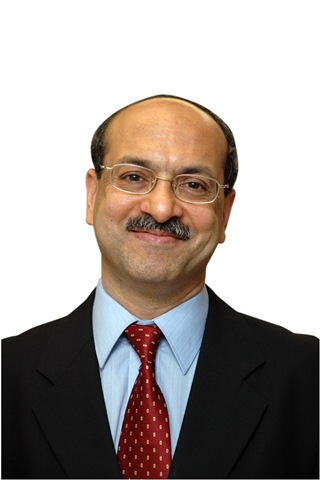
    Rajiv Dayal -1 (2) The Arvind Mafatlal Group ( AMG ) had , in year 1996 , formed a 50:50 equity Joint Venture Company with Burlington Industries ( USA ) called Mafatlal Burlington Industries Ltd. The Company commenced production in it’s state-of-the-art composite denim plant , located in Navsari , Gujarat , in 1997 , with a capacity of 10 Million meters of denim fabric per annum.Subsequently in 2006 , the Arvind Mafatlal Group bought Burlington’s 50% equity in the JV and the Company’s name was changed to Mafatlal Denim Limited ( MDL ).
    In 2007-08 , Mafatlal Denim increased its capacity from 10 million mtrs per annum  to 20 million mtrs.

    What do you think are the main strengths of Mafatlal Denim as a denim player ?

    Mafatlal Denim has been in the business of manufacturing and marketing value- added , differentiated denim fabrics now for over 14 years and is a reliable supply chain partner for many Indian and Global brands.

    Mafatlal Denim’s strength is in its ability to understand Indian and Global customer requirements , as well as fashion trends and offer products / Denim Collections , thru its constant efforts in Product Development and innovation.

    The latest denim range of Mafatlal includes a number of theme products  like “Chic “ and “Formal Wears” . Can we know more about the same and other new products.

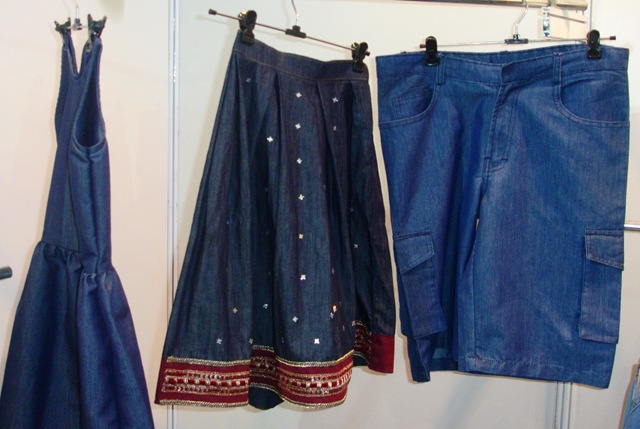
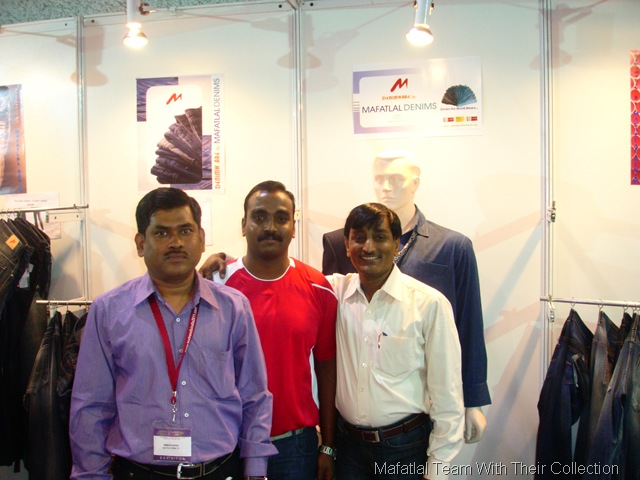
    DSC05955 The “Chic Collection” , which we have just launched , is a light weight denim collection , which can be used to make innovative garments for ladies and children , using fashion denim fabrics in conjunction with ethnic Indian work , like zari borders and traditional embellishments. You have seen a few samples of this collection in the form of a denim skirt and a child’s dress.
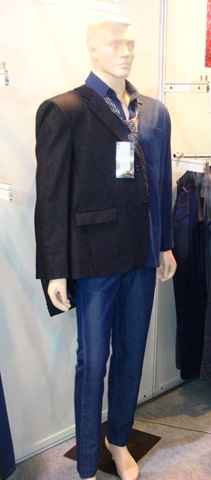
    Mafatlal Denim has also launched a Formal Wear denim Collection , whichDSC05957 can be used to make garments ( trousers , jackets ) for office wear. This is another effort from MDL to create a new market segment for denims in India.

    Where is Mafatlal Denim more focused – domestic market or exports market ?

    Mafatlal Denim , presently exports about 30% of its production , the balance 70% being for the very rapidly growing Indian market.Our customers include Indian brands like Levis , Mufti, Spykar , Allen Solly and International Brands like Marks and Spencer , LIMITED, Pepe Jeans etc.

    How is Mafatlal Denim addressing the key issue of rising cotton prices. Do you think buyers are adjusting to the situation ?

    The prices of cotton have exponentially increased globally from around 70-80 cents a pound a year ago to extremely high levels of 160-180 cents a pound currently ( over 100% ) . As this is a global phenomenon , worldwide producers of cotton fabrics ( including denim ) have had to increase fabric prices .
    However , whilst the fabric prices have increased by over 50% over the last 1 year , due to the cotton price increase, the retail garment prices have increased by 10-15% and I feel this increase has been accepted ( though grudgingly ) by the consumers.

    How long do you think that cotton prices would take to come back to normal levels ?

    A very difficult ….. and a million dollar question …. commodity prices depend on a lot of global factors like cotton sowing acreage , yields , supply ,demand ( specially by China ), stock levels and lastly ,but very importantly , speculation. I hope cotton prices come down during the later part of 2011 and 2012 . But we will have to keep our fingers crossed.

    The Indian domestic denim market is simply booming What do you think are the reasons for the same ?

    There are several reasons for the rapid growth of the denim market in India :
    a. An excellent demographic profile in India , where the median age of the of the population is below 28 years , and the popularity of denim products has grown tremendously in the last decade . One of the other reasons , is Denims popularity with Bollywood Stars like Akshay Kumar and Katrina Kaif !

    b. Denim fabric producers , garment / washing producers and designers , have all creatively been able to make a very attractive basket of denim garments for consumers of all ages .

    c. Of course, the versatility of denim is one the important factors for the popularity of denim …… Denim is comfortable, easy to maintain and stylish.

    d. Besides the urban markets, the rural markets are growing very rapidly, due to the increasing buying power as well as product awareness and availability.

    e. A very rapidly growing retail and brand network in India , which allows customers to easily access brands and products of their choice , as well as make shopping a pleasurable experience.

    f.. Many Buying Houses from all over the world are now coming to India to source denim garments for their Indian retail business , as well as for their global requirements

    There are strong international denim trends like Jeggings which are getting stronger. How is Mafatlal gearing up for these trends?

    Mafatlal Denim does have a range of denim products, which are light weight and have the comfort of stretchability. This is very popular , specially for ladies and children’s brands.

    What are the other trends that you see  in denim fabric  constructions and finishes ?

    Popular denim trends currently are light weight denims , coated and mercerized denims with multiple wash effects and clean optics.

    What are the estimates of  production and growth in denim fabric and garments production in India ?

    The total denim fabric production in India is currently about 650 Million Meters per annum. ( 2011 ) and estimated to cross 700 MMPA in 2012. It is expected to grow at 10% pa over the next decade and had the potential of reaching 1.5 Billion meters by 2020.

    The denim fabric consumption in India ( for domestic brands and garment exports ) is about 400 -450 Million meters per year currently -2011 , and is expected to grow in the coming decade at the rate of 10-12 % every year. Presently , 200 -225 MMA of denim fabric is being exported .

    Are there any plans for expanding the fabric offering or that of garments ?

    Mafatlal Denim has a capacity of 20 Million meters a year and we do not have any plans presently for increasing denim fabric manufacturing capacity. We are carefully evaluating the denim garmenting business and would decide on a strategy shortly.

    How is the environmental consciousness among the consumers affecting denim manufacturers ?

    I firmly believe that consumers all over the world would like to buy products which are Ecology friendly . Most denim manufacturers are aware of this and are gearing themselves to conform to all environment standards.

    Mafatlal Denim is a responsible denim fabric producer and we conform to all Environment Standards and are ISO 14001 and Oeko-tex ( Germany ) certified.

    Contact Mr. Rajiv Dayal on  This Email Address

    DSC05963