Color denim is the flavour of the season. With a number of denim brands bringing out their own versions of color denims collections, Wrangler was not to be left behind. Wrangler launch a range of colored denim and shorts in time for the S/S 2011 season. Frayed denim shorts and skinny jeans are revived in this season’s sweetest shades of candy floss pink, lemon sherbet and baby blue .
Green is the signature color of the season, a flash of outdoors.The Field Jacket is SS11’s icon piece, washed-out and lightweight. Pair it with green cast denim for an authentic vintage look. Bright greens are bold on T-shir ts; more muted tones feature on dresses and leather jackets.
Colors – greens, purples, blues, whites, yellows, reds, faded blacks – star t out as deep primaries, but brighten into a comic book palette as summer heats up.
There has been a fall in demand of denim apparel in US and even the EU in the last 6 months. The fall in demand and hence imports to US had started setting in the last quarter of 2010 itself and is continuing since then. Lets look at the figures of denim exported by two important exporting countries to the US in the first quarter of 2011.
Country
Year/ quarter
Total Denim Apparel (pcs)
Total Value (in USD)
Average Price ( USD/pc)
Change in qty. over last year
Bangladesh
2010 / Jan- March
11.72 million pcs
$62.23 million
$5.30
Bangladesh
2011/ Jan- March
11.44 million pcs
$60.65
$5.29
-2.44%
Mexico
2010/Jan-March
27.93 million pcs
$214.70
$7.68
Mexico
2011/ Jan- March 2011
25.52 million pcs
$202.59
$7.93
-8.6%
Source: US customs We can see that the figures of two important exporters of denim jeans and apparel to US are not very encouraging and are indicative of a steady fall in denim demand. The figures from China are also not too encouraging – in fact they are worse than the above . The Chinese exports of denim apparel fell by over 11% in the first quarter of 2011 !! These figures are indicative of a tough year for denim ahead and also a reminder to the denim exporters that they have to continuously search for and invest in newer markets and reduce their dependence on the traditional western markets which are still not out of recession in real terms.
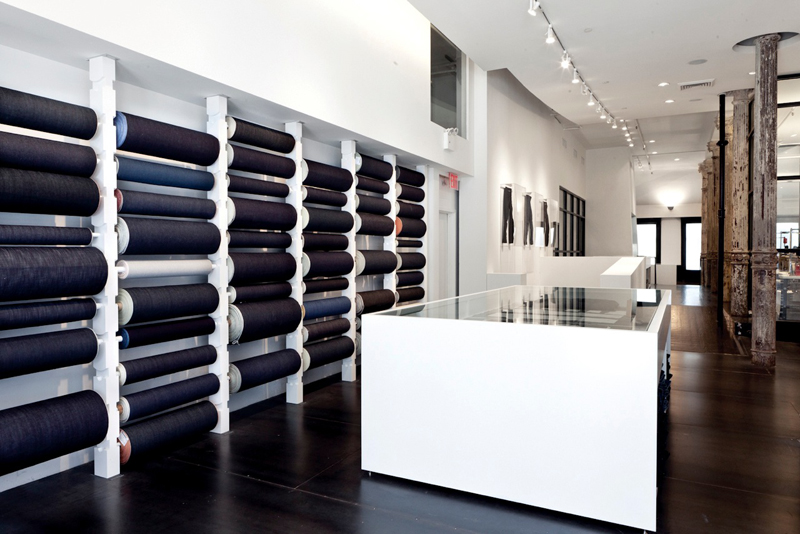
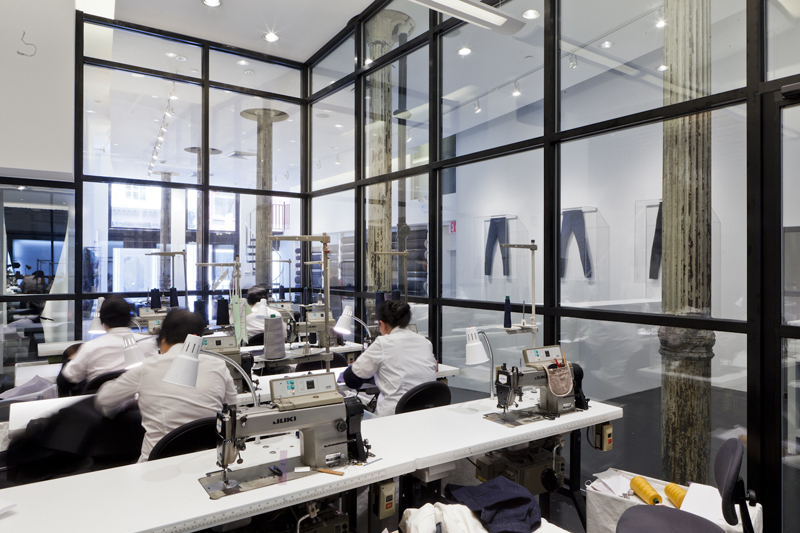
Scott Morrison, founder of reputed denim brands like Earnest Sewn and Paper Denim delivers a new denim-focused concept shop,3×1, in SOHO area of New York , that looks to push the boundaries of limited edition clothing. Named on the 3×1 twill weave of denim fabrics and also represents Morisson’s third founding of a denim label , the new store for 3×1 flagship produces on-site most garments sold in the store. The in-house production is limited to between 8-24 pieces of any given style, and less than 25 pieces are made per day.
Besides the limited edition jeans, a bespoke denim service is also offered, allowing patrons to work individually with Morrison and his pattern-maker to create his or her own pair of jeans from start to finish. Customers can select :
Fabrics – over 100 to chose from mills in Japan, US , Italy etc
Select an existing cut – though bespoke its not 100% custom made jeans.
Chose buttons , rivets , stitching thread and other accessories
It is probably the most unique denim store around the world with a gallery , retail store and a jeans manufacturing unit all combined into one 4000 sq feet plus store in the expensive SOHO shopping area of New York. Shoppers can watch jeans being made behind the glass walled panels where sewing units are installed. It is going to be a great experience for visitors to see the ‘magical’ process of making the jeans. The retail space is open to the public on Wednesday – Sunday (11am – 7pm), while bespoke appointments are typically reserved for Monday and Tuesday. However, one must be ready to be set back by $300-$1500 for purchasing denim from the store!
The store will also make denim bags in limited edition – really limited ! – with a new design being made after every 24 bags are done .
3×1 15 Mercer Street New York, NY 10013 +1.212.391.6969 Contact them on email by clicking here
About Scott Morisson : In 1998, at the age of 25, Scott was hired to oversee a new denim division of Mudd Jeans, based in NYC. Jack Jeans, as it would be known, struggles to find its place in the better jeans market, and in an attempt to bring the failing concept to life, Scott developed a new idea for an American made denim collection that would compete with the likes of Diesel and Replay. His vision was realized in 1999 when the Jack jeans division was closed, and the company instead chose to invest in Morrison’s new concept: Paper Denim & Cloth. Over the next 4 years at Paper Denim, Scott’s reputation in the industry grew. As co-founder and designer of Paper Denim & Cloth, he quickly established the growing operation as one of the world’s preeminent denim brands. Inspired by that growth he began incorporating other areas of personal and cultural interest into the budding lifestyle concept. Morrison also published, personally, a limited Edition retrospective of emerging underground artists, in a book called Boredom 2003 which further fused his 2 great loves, underground art and innovative design. He also worked as the creative designer at the famous Japanese denim brand ‘ Evisu’.
Orta Anadolu – the famous denim mill from Turkey has come up with a unique denim fabric finishing process which changes the structure of the fabric . The process has a large number of pluses but the biggest being its eco – sustainability with about 90% of chemicals being used in close circuit and almost zero water being used ! The fabric made using this unique washing process is being launched at the Bread and Butter – Berlin (BBB) on July 6th . The fabric has already been tested by a number of companies and people in the industry to check out the specifics and Ebru Karakoç from Orta feels the response has been terrific !
Denham – the Jean maker : has made a collaboration with Orta to use Alchemy one for presenting collection at Pitti and will also be doing at BBB.
Piero Turk – the famous denim designer who has washed Alchemy One has remarked that it was very easy to retrieve true authentic vintage look on rigid fabric easily and that he could apply 3 dimensional finishes without much effort.
Antonio di Battista who has also conducted wash trials has revealed that the fabric transforms into a very luxurious look with an amazing hand-feel in the simplest finishes.
What can be achieved with Alchemy One process of finishing?
As per Orta Anadolu, the following characteristics can be achieved in the denim and other fabrics by this finishing process :
improved bulk .
improved lustre .
high strength .
reduced extensibility .
increased affinity for dyes of certain types .
enhanced evenness of dye take up.
can be used as a treatment for durable press finish.
delivers better physical performance with better visuality and hand-feel.
improves the tensile strength and dimensional stability of cotton rich fabric
“improved properties over mercerizing†. It would perform further processing, including dyeing and finishing, that would provide the fabrics with “performance properties that are not achievable with conventional methods.
permits the use of less resin than other mercerization techniques, it could achieve better performance with respect to strength.
alters the visuality of the fabric and makes the fabric smoother and brighter.
reduces the use of softener, resin, antipilling enzyme in denim garment finish.
processes the fabric with almost zero water consumption.
The image below shows the advantages of the process quite nicely .
Here is a small but artistic video from Orta Anadolu on the Alchemy One process
To know more about the Alchemy One finish process , contact Ebru Karakoc from Orta Anadolu by clicking here or visit their stall at Bread and butter on July 6th 2011 at 1600 hrs at Luna park !!
We all know that cotton prices have been killing the textile industry till a few months back . The unrelenting rise in the price of cotton had led to the increase in fabric prices for most of the garment factories and hence ultimate buyers. The fabric prices were increased by almost each denim mill and sometimes to the tune of 50% or more . The apparel buyers and retailers had no option but to bear the increased costs. However, the prices at the retail level in the major markets of US and EU did not undergo or reflect the changes in the costs. So , how much was the actual increase in prices for denim apparel shipped to US ?
The major impact of these increased prices has been visible in the shipments made in the first few months to the US and the EU . It would be interesting to see how the prices of imports were affected in the first few months of 2011 (January to April) compared to the average prices in 2010.
Import of Denim Apparel Into USA – 2010 and 2011 (Jan-April)
From
Price (US$/pc) 2010
Price (US$/pc) 2011 Jan- April
Difference
World
7.15
7.71
+7.26%
China
7.27
7.9
+8.66%
Pakistan
6.44
7.48
+16.1%
Vietnam
7.05
7.74
+9.78%
We can see from the above table that the average increase in the prices of imports of all denim apparel from around the world into US is 7.26% . But when we see individually , we find that the increase in prices is different from different countries . The increase in prices from Pakistan was the maximum with the prices in first four months of 2011 crossing the prices in 2010 over 16% ! Other important countries too had their share of increase in prices . But if we really see , the increase in prices of apparel is still not justifying the increase in fabric prices – which increased at places by even more than 50%
This shows that the various players in the supply chain have absorbed part of the increase in prices . There is also a possibility of impact of cost reduction measures taken at various levels of production and sourcing.
We have also seen that the retail prices in US did not show much of increase and as a result some of the retailers like Gap have to suffer huge loss of income . Now, with the prices of cotton crashing by over 40% , it remains to be seen how the prices of apparel will move. Will these retailers be pressurizing their suppliers to reduce prices significantly to cover their own losses. Will the sourcing price of denim apparel fall to below pre cotton increase levels ? It remains to be seen. However, the lesson that can be drawn from the entire episode are that :
There is a constant need to monitor the possibilities of supply chain efficiencies to reduce costs of production . Companies should not wait for events like sudden increase in raw material increase to focus on this aspect.
The prices at the consumer level are very difficult to increase especially when the economies are not in that great a shape.
Innovative products are the only way to get higher margins from the market and basic products will always be under price pressures.
Further to the launch of the Diesel Powder, it would be pertinent to check out some of the latest denim styles from Diesel which celebrate the femininity. There are lots of skin-tight and figure-hugging shapes, made possible by stretch fabrics and the new “jegging†family. There’s a wide selection of classic, boyfriend and bootcut styles – as well as a fantastic flare
that’s sure to tempt the fashionistas . And even the most traditional cuts are laden with details that make them uniquely Diesel. False pockets, zipped pockets, enlarged coin pockets, extra rivets and eye-catching stitching: we believe devilishness is in the details. There are also drop-crotch, carrot and sarouel styles, which are the ultimate in fashion without sacrificing any measure of glamour. And the names of these styles are no less fancy and glamorous ..
Here are over 23 such styles – slim fits and leggings dominate with a couple of flares thrown in !!
1 .NEVY
Fit : Slim / Tapered Slim cross over belt – workwear backpockets – Low waist slim fit
2. Matic
Fit : Slim / Tapered Trademark “pop up†fifth pocket.-Slim legs – sexy low waist - alluring rear design with curved yoke – small back pockets – low-slung belt loops.
3. Clushy
Fit : Slim / Tapered Zipped rear pockets -Cinch construction – Rear higher than the front – Arrow stitching on the hip - delivers a slim effect - a special coin pocket.
4. Cherick
Fit : Slim / Tapered Biker Soul – Low Waist – Cross Over Belt with double button closure – V cut in the waistband – Push Up effect by back pockets – Leg pattern to shape the calves – Slit Hem
5. Louvely
Fit : Slim / Bootcut Flares + Slim Leg : a perfect contrast – Knife Edge Pleats – Feminine back Pockets – Advance stitching
6. Hushy
Fit : Slim / Ankle Length Ankle Length slim fit – Front patch pockets – Rear shaping back pockets – Lengthening effect
7 . Debi
Fit : Regular / Tapered Mild Carrot Silhouette – Boyfriend look – Medium Wasit – Wide Front Pockets – Pleats in Front and Back of Leg
8 . Staffy
Fit : Regular / Tapered Boyfriend fit – low crotch – Drop Down Back Pockets – Soft Waistband – Low rise Yoke with dart details – Stitching at Hip for slim shape
9. Livy
Fit : Super slim / Straight Super Slim fit legs – rounded back pockets – Pleats on the yoke – Great for lovers of Super Skinny
10. Hi – VY
Fit : Super slim / Straight  Longer and slimmer legs – feminine yoke – tight fitting yoke – Antithesis of boyfriend jeans !!
11 . Zivy Jeans
Fit : Super Slim / Ankle Length Zip on Livy is a Zi-Vy ! – Vertical stitching in back Pockets – Super slim fit
12. Bi- Bi
Fit : Super Slim / Legging Stitched front Pockets – Biker Style stitching on knee – super stretch fabrics – Super Skinny tight jeans !!
13. Livier
Fit : Super Slim /Legging Super Soft Fabric – narrow hem ….
14. Stretchic
Fit : Super Slim / Low crotch Super slim legs – tight hem- dropped crotch – boyfriend touch –
upper back pocket and yoke
15. Biszou
Fit : Super Slim / Legging Ankle length legging- – stictching details on the knee – tight hem
16 . Halais
Fit : Regular / Tapered Boyfriend fit – star emboridery at the waist – small star rivet details – back knee pleats
17. Ronhoir
Fits : Regular and straight Regular small boot cut fit – rich front and back pocket details – cool rivets
18 . Tintsie
Fit : Regular / Low Crotch Workwear inspired – boyfriend attitude – super low crotch – hammer pockets – advanced stitching on hip
19 . Ashtair
Fit : Regular / Low Crotch Sarouel fit with super low crotch – big front pleat – drawstring fastening – boyfriend fit with super soft fabric .
20 . Lowette
Fit : Regular/ Straight Special curved 360 degree yoke – Designed pockets for push up effect – stripe on front fifth pocket – micro eagle on back pocket .
21. Lowky
Fit : Regular slim / Straight Reinforced waistband with zigzag stitching – curved yoke and back pockets – comfortable but rebellious
22. Lhela
Fit : Regular / Straight Lot of rivets – special back pocket construction – waist is curved and low – super slim fit leg
Diesel has launched a new collection marked ‘The Powder of Diesel’. The collection is inspired by the world of pigments in cosmetics – the blushes, eyeshadows, powders and more (ladies would know better..). Diesel wants to give these shades to their denim collection. With bright colors , light fabrics , jegging and other styles , it might just turn out to be a great selection for the summers for the girls ! Diesel took the color denim trend to the next level by adding a secret ingredient: powder.
“Don’t just be cool – be Powderfulâ€!!
What is Diesel + Powder ??
Well , what happens ladies when you get ready everyday using various cosmetics including powder.. If you are in a hurry or have butter fingers, some of the powdery cosmetics get sprayed all over yourself. The powder shines on the jeans or any other dress that you might be wearing. So ! , Diesel decided to do it on purpose to blend cosmetic references with latest innovations in fabric cut and styling. So you will find various colors of powders sprayed over these jeans and this should draw a lot of attention to you and your jeans !
What are the washes done on the Diesel Powder collection ?
Washing is the probably the most crucial element in this collection. So it was in place to see what kind of washes are being done .Here are some of the cool washes for the Diesel powder collection :
1)8Y4 WASH :
The 8Y4 “Sugar Goddess†is one of the star washes of the collection. The dark indigo fabric contains XLA cotton, a Lycra fiber that has been modifi ed to make it especially resistant. The denim undergoes several treatments – including dirty applications – before the all-important Powder of
Diesel pinkish effect is obtained by hand sponging with natural color pigments.
2) 65Z Wash
The 65Z “Glamarama†takes advantage of soft, superstretch lightweight denim fabric. A touch of “Powder†pink is added via manual localized sponging using natural pigments. A luminous effect is obtained by ironing
the denim in the final phase.
3) 8MZ Wash
The 8MZ “Splash of Talc†is another star wash, seen at its best advantage on the Matic fit. A 13 ounce base is softened with a number of complex manual treatments. A final press gives the fabric a luminous summer look. Localized sponging using oxidizing elements on pockets and hems adds further touches of light.
4) 8PT Wash
The 8MZ wash crops up again in a modified form in the 8PT “Dream
Stream†version, seen on the Nevy cut. It’s a broken and destroyed
variation, using a manually applied color spot treatment.
5) 8 NM Wash
Last but not least in this section is the 8NM “Blue Me Away†wash. A
clouded effect is achieved thanks to a combination of an initial sandpaper
treatment and an all-over manual spray treatment. This effect is highlighted by a bleach treatment .
These were some of the cool washes from Diesel on their powder collection . We will cover some more cool washes from Diesel shortly . So keep watching !!
Martelli Europe is one of the most reputed washing laundries around the world and brings out specialized washes at various times. The company is highly focused on contributing to new developments which result in environment friendly techniques . I spoke to the Managing Director of Martelli Europe – Mr. Mauro Angelini – regarding the same and he was quite emphatic on the contribution of new vintage wash developments which may help to reduce CO2 emissions and contribute in other ways to make them more environmentally sustainable compared to traditional washes..
What are the new developments that Martelli is presenting currently ?
We are currently working on several research levels. There is what we do for our customers and there is what we do for us not to "flatten". In this case we are studying the washing more environmentally sustainable in the sense that it involves a lower CO2 emissions, because they use less energy. It is not a simple process, we are working primarily with suppliers of chemicals like Garmon, in order to reduce CO2 emissions with washes and finishes using cold temperatures. Then, as always, we work hard to offer our "vintage effect" which is always greatly appreciated by all customers. Regarding dyeing even here we are from several years an avant-garde cold-dye.
Many brands and retailers have banned sandblasting. What are the new technologies that are being used for achieving similar results ? Are these technologies viable ?
Regarding sandblasting there is to say that in Martelli Europe we have always managed to propose the same or almost the same effect, without recourse to sandblasting. We are aware of the dangers which involves blasting , also we have to say, it is greatly reduced in new sealed implants the risks for operators. However, our thinking is that every process under high pressure produces dust, this sooner or later go airborne and is filled by someone. I do not think there is a powder that protects worker health, on the contrary, there are dusts that cause silicosis and others that cause asthma and other problems. I wonder if you simply replace the sand with vegetable or metallic abrasives, powder in the air remains. Similarly, using type solutions of carbon dioxide ice, certainly don’t help the environment and costs that do not believe customers want to endure. We go forward on our way, trying to use the technologies we have available. Customers appreciate our approach.
I hear that you are implementing the SA 8000. Can you tell us more about the same ?
It is true Sandeep and thanks for the question, we’re starting with the SA8000 which is the last after the ISO14001 ISO 9001 the OHSAS18001 we already have with the UKAS. Even here we are following with consistency in the way of quality, total quality. North European customers especially appreciate the fact that we have certifications, with SA8000, some multinational companies can forgo to make the social audit direct, as there has been announced by one of these. We are a company who has care of environmental issues but also of its employees.
How is the denim market in terms of washing requirements? Do you see any difference in the current market requirements compared to last year ?
There is a growing trend to ask three-dimensional finishings (3D) with resins, then there is always required the vintage effect is probably our strength. As regards fabrics, in the summer collections all customers have a model with cotton stripes fabric.
Are the brands trying to save on washing to reduce the cost of their garments keeping in view the increased cotton prices ?
It was as a rule attempt to reduce costs with suppliers. Some young or inexperienced buyers sometimes tends to overdo it and it is how to cut the branch where you’re sitting. Now this trend it is slowly disappearing, the world is changed a little. The relationship with suppliers today it is not only “cost-money†it should be strategic in terms of partnership. The most experienced buyers and sourcing managers, remember that we (all supply chain)are clothing fashion industry. We cannot copy the speculative and short-sighted attitude of certain finance, particularly now after we’ve seen disasters that brought us the crisis of 2008. Today in clothing from fabric to the laundry, we see many closures and few openings, I don’t think it is still the case to cut costs.
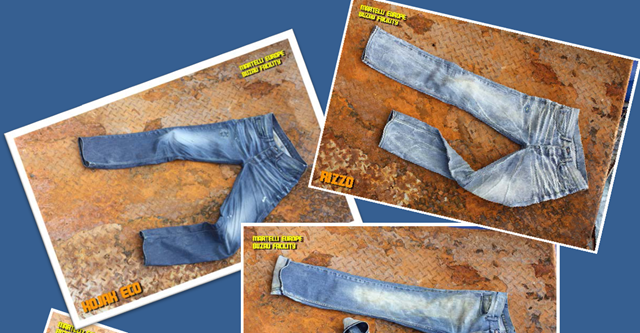
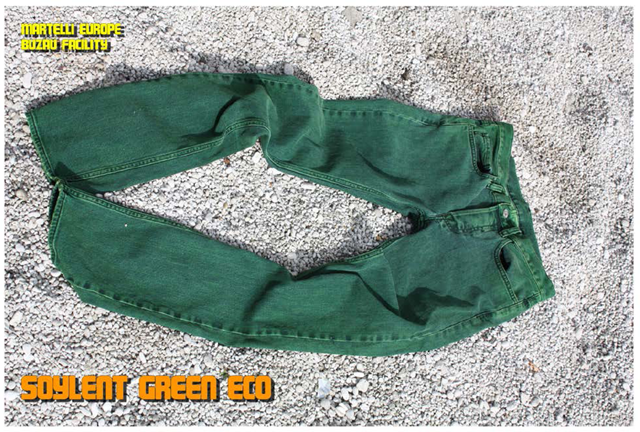
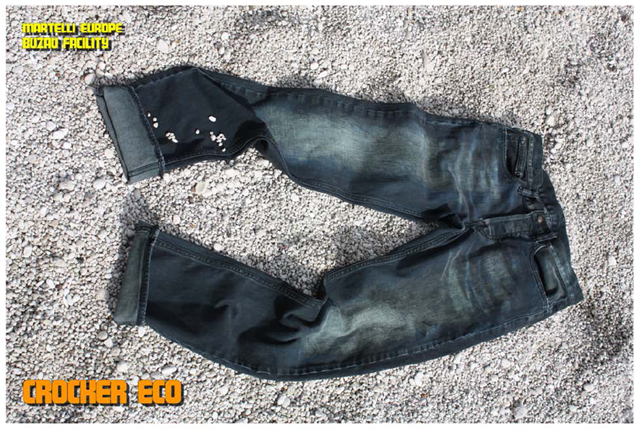
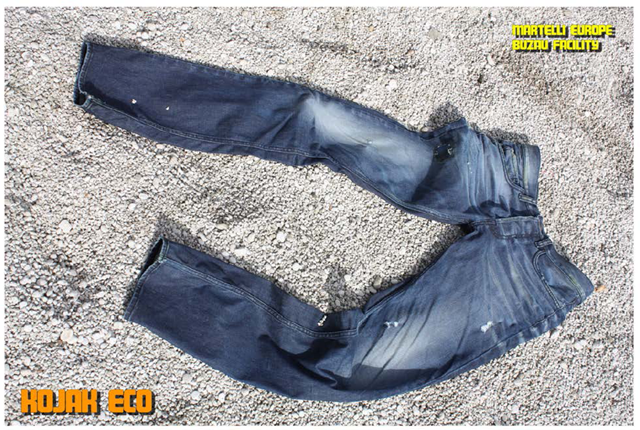
Here are some details on the vintage washes that Martelli is presenting :
SOYLENT GREEN – ECO
Wash Details : KURABO FABRIC: SW STONE WASH + COLD DYEING = ECOLOGICAL TREATEMENT DUE TO THE TEMPERATURE SAVING: * BY USING COLD STONE WASH IT RESULTS A SAVING OF 30 ° C, WHICH ALSO REPRESENTS A SAVING OF 3 m³ CH4 (METHAN ) OUT OF BURNING = APPROXIMATELY 5.7 Kg OF CO2 EMISSION IN THE AIR * BY USING COLD DYEING IT RESULTS A SAVING OF 30 ° C, WHICH ALSO REPRESENTS A SAVING OF 3 m³ CH4 (METHAN ) OUT OF BURNING = APPROXIMATELY 5.7 Kg OF CO2 EMISSION IN THE AIR
CROCKER – ECO
Wash Details :
KURABO FABRIC: SW STONE WASH + COLD DYEING + WORN EFFECTS MADE 100% MANUAL = ECOLOGICAL TREATEMENT DUE TO THE TEMPERATURE SAVING: * BY USING COLD STONE WASH IT RESULTS A SAVING OF 30 ° C, WHICH REPRESENTS ALSO A SAVING OF 3 m³ CH4 (METHAN ) OUT OF BURNING = APPROXIMATELY 5.7 Kg OF CO2 EMISSION IN THE AIR * BY USING COLD DYEING IT RESULTS A SAVING OF 30 ° C, WHICH REPRESENTS ALSO A SAVING OF 3 m³ CH4 (METHAN ) OUT OF BURNING = APPROXIMATELY 5.7 Kg OF CO2 EMISSION IN THE AIR
KOJAK –ECO
Wash Details : KURABO FABRIC: ECOLOGICAL VINTAGE GAINED THROUGHT AMPLE WATER AND TEMPERATURE SAVINGS = 3D EFFECT (3D EVOLUTION) + MULTIPLE MANUAL WORN EFFECTS + COLD STONE WASH : * BY USING COLD STONE WASH IT RESULTS A SAVING OF 30 ° C, WHICH REPRESENTS ALSO A SAVING OF 3 m³ CH4 (METHAN ) OUT OF BURNING = APPROXIMATELY 5.7 Kg OF CO2 EMISSION IN THE AIR * BY COMBINING COLD STONE WASH WITH NEUTRALIZING IT RESULTS A SAVING OF APPROXIMATELY 16L OF WATER / UNIT * BY USING RESINS WHICH POLYMERIZE AT 90° C INSTEAD OF 140 ° C, IT RESULTS A SAVING OF 3 m³ CH4 (METHAN ) OUT OF BURNING = APPROXIMATELY 5.7 Kg OF CO2 EMISSION IN THE AIR * THIS TYPE OF RESINS DOES NOT CONTAIN FORMALDEHYDE
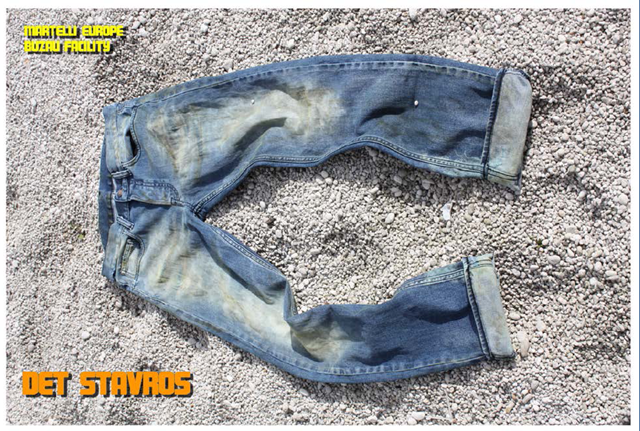
DET STAVROS
Wash Details : KURABO FABRIC: SW STONE WASH + MULTIPLE WORN EFFECTS / COLOUR MADE 100% MANUAL: * BY USING COLD STONE WASH IT RESULTS A SAVING OF 30 ° C, WHICH REPRESENTS ALSO A SAVING OF 3 m³ CH4 (METHAN ) OUT OF BURNING = APROXIMATELLY 5.7 Kg OF CO2 EMISSION IN THE AIR
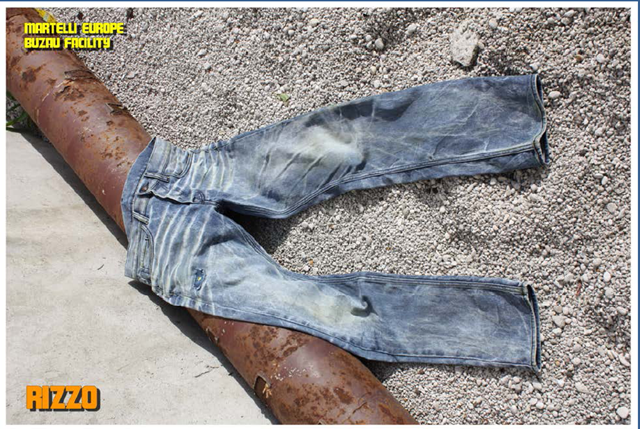
RIZZO
Wash Details : KURABO FABRIC – AN OLDER TYPE OF TREATEMENT MEANING DRY DECOLORATION, BUT COMBINED WITH NEW PROCEDURES SUCH AS 3D EFFECTS CAN GENERATE INTERESTING RESULTS, MAINLY WASHINGS WITH A MORE AGGRESSIVE VISUAL IMPACT ** THIS TYPE OF PROCESS ALSO HAS AN ECOLOGICAL ASPECT DUE TO THE FACT THAT IT REDUCES THE WATER CONSUMPTION WITH APPROXIMATELY 16 L / UNIT, UNLIKE A DECOLORATION MADE WITH A NORMAL WASHING MACHINE.
You can just watch all these presentations in a slideshow below :
The retailers worldwide are resorting to increases in prices to make up for the increased costs – most of which have been attributed to the increase in cotton prices. Though the cotton prices have started to ease, the impact on the supply chain will be visible for some time to come. As previously mentioned , GAP announced its forecast of reduced earnings leading to the largest fall of share price in over a decade . Businessweek now reports that the apparel brands are finding that they do not have much pricing power over budget conscious consumers and the only way to fight the increased prices is to cut costs .
Companies are resorting to “Deconstruction Experts†– companies who help to reduce the cost of the garment . These companies , eg Kurt Salmon – are helping a number of their clients to find the ways to cut costs without making the change felt to the consumers.
Various suggestions being given by these experts to cut costs. Fabric comprises as much as 50 percent of a garment’s costs. Cutting it more carefully to reduce waste can reduce by a few cents, Zippers that come in a big roll are cheaper than ones custom-made for specific garments .Brown – Vice Chairman , Kurt and Salmons , recently examined a pair of men’s khakis that sell for $29.50 and spotted a coin pocket. Eliminating it zaps a nickel, he says. Watch pockets are an easy cut, since few men use them anymore. So are logos and decorative stitching inside the waistband—visible to men only when they put on their pants.
However, this cost cutting cannot be taken beyond a point . The customers can easily switch over to another brand if they find cheaper plastic buttons, smaller pockets or reduced quality of waistband or other visible changes.
However, i feel that the brands/retailers which have been able to absorb these increased costs and have not made significant changes to their prices or product quality will be able to get the benefits in the next one year. The impact of increased prices of cotton is going to go away as we are seeing the prices of cotton falling and the retailers will not have to work too much on cost reductions. We might see GAP’s share price rising in the next 6 months again !!!!
The denim players have seen some tough times in the last 1 and half years. With the cotton prices going through the roof (having almost doubled), the mills were previously hard pressed to make their buyers understand the increase in costs and tried to get the prices increased. The process was slow as getting sharp increases in prices from buyers is never too easy. However, the awareness of the cotton price increase was there among buyers and many of them , reluctantly , agreed to increase the prices . Now, with cotton prices crashing, the strike by garment manufacturers against govt. duties , reduced demand etc has suddenly led to a situation of oversupply of denim fabric with prices falling . According to reports, most of the mills have large stocks and the next 2 months look tough for the denim market. The players who were specializing mainly in the polyester denims and with no exports have been hit more hardly. The prices of polyester denim seem to have fallen about Rs 15-20 per mtr (35-45 cents/mtr) and those of cotton in the range of Rs 10 (2o cents approx). However, with festive season sale starting from July, it is expected that the demand would stabilize during this period.
Cotton Prices
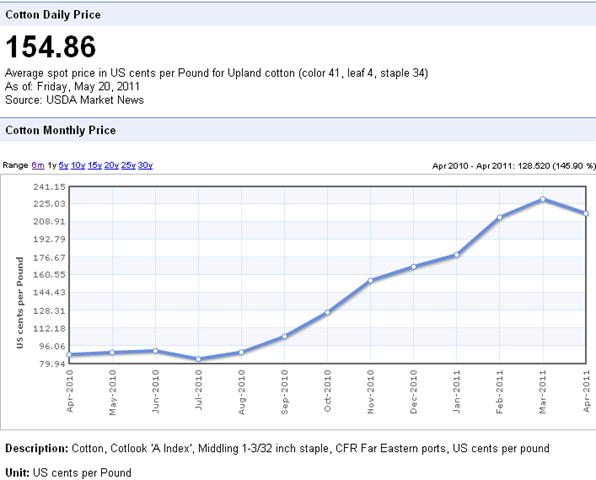
Cotton price increase in the last one year have actually played a spoilsport and have not helped anyone – neither the mills, nor the retailers and of course not the consumers. It has created a lot of uncertainty in the market and is still doing so. The cotton prices had increased dramatically last year and peaked during Feb this year. However, suddenly the prices have started crashing with a better forecast of cotton production. In India, the prices have come down from almost Rs 65000 a candy (35 to Rs 42000 a candy – about 33% fall in 2 months !! Internationally , also prices have been reducing on a similar note :
Month
Price Per Candy
Price Per Kilo in Rs
Price per kilo in USD(@Rs45/USD)
Difference
Feb 2011
63000
Rs 177
3.93
May 2011
42000
Rs 118
2.62
-33%
The movement of international cotton prices over the last year can also be seen here.
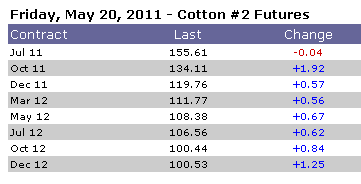
The outlook of future prices of cotton also do not look that good. The crop for 2011-12 is expected to be very good at about 127 million bales with cotton planting around the world projected to rise by 7% in 2011/12 to 36m hectares– the largest in 17 years.. The cotton futures market in US is projecting prices much lower than current levels . See below :
The international retailers too had to bear the brunt of the cotton price increases. Many of them could not pass on the price increases in the denim and other fabrics to their consumers. Eg GAP management said late thursday
“….second-half product costs per-unit, factoring rising cotton and other costs, are now expected to rise about 20%, more than it anticipated, as it began to purchase goods for the holiday season. Its lower-priced channels such as Old Navy and the outlet stores that compete on price would be hit the hardest and would have the least room to pass on any cost increases…..â€
Gap has been testing the depth, frequency and length of discounts to help offset margin pressure. It plans to be less promotional and experiment with marketing ideas to drive traffic that do not involve discounting.For instance, at the company’s struggling Gap brand in the U.S., instead of having a 40% off the entire chain, the company plans to have promotions such as 40% off women’s products excluding denim, he said.
Similarly , many other retailers have not been able to pass on the increase in sourcing costs to their consumers and are feeling the heat of increased costs.
Now, with falling prices of cotton, the mills will be faced with the prospect of reducing prices for the retailers and other customers when already many of them have a stock of 3-4 months of cotton at higher prices. It would be a double whammy for the mills as they try to deal with their customers again and try to hold on their prices as costs have not gone down.
Another problem related to exports for denim mills in India would be the DEPB – a scheme under which they got incentive of about 7.5% on exports is coming to an end and being replaced by Duty drawback scheme where they would get almost 4% less. This would further shave off another 4% from the margin of exporters and will not give any help .
As mentioned before, the strike by garment manufacturers in India – which lasted about a month , left a huge impact for both fabric and spinning mills. The companies are reeling under the impact of the reduced production for this time which can hardly be covered up . Most of the spinning mills are running under capacity and holding huge stocks with prices of yarns falling on a daily basis. It is hoped that the market would get some sanity after end of June when demand starts to pick up for festive season .
Follow us on FACEBOOK or TWITTER to get more reports on denim industry directly.
The Indian market is a fast growing market for denim products. From a small market in early 1990s , we are looking at a market today which consumes over 250 millions pcs of jeans in a year and is growing at a pace of over 10%. Going at this pace, the Indian market will overtake that of US – which consumes about 590 million pcs of denim apparel – in about 6 –7 years !
This makes the market for denim in India very serious .. It has enabled a number of new mills to make entry into the denim market in the last 3-4 years and their productions have got absorbed easily. We are also looking at a number of expansions in the market in the coming year and the production capacity of Indian mills is likely to cross 750 million mtrs pa. Large international denim mills have started showing interest in the market despite high rate of import duties – to gain an early foothold in the market which is expected to be of huge size in the coming years.
Arvind mills is the largest denim mill in the market and is present in almost every segment of the market . Being market leaders , they are in a position to study the market deeper . One of the ways to study about the happenings in the market is to get to see what people are wearing on the streets. This is one of the activities the company does to study the market and regularly arranges street wear shoots in various Indian cities. This gives further insights into the market. They have kindly shared some of these streetshots with us and we are reproducing them herebelow in different presentations. The shots have been taken separately in the three big markets – Delhi, Mumbai and Bangalore. Its interesting to see what people are wearing in these cities . It must be remembered while watching these shots that about 85% of the denim market in India is still dominated by unorganized sector and less than 15% share is held by brands. Another fact of the matter is that , again , about 85% of the market share is held by men’s denim – and the rest by women’s and children. This is basically due to conservative nature of Indian society – something which is changing fast !
Some interesting observations from these pictures . Please take them with a pinch of salt since these could change with change in the timing and places where shots are taken! .
Denim consumers in Delhi like more of embellishments , embroidered and generally differentiated looks as compared to other markets.
Mumbai likes more of dark and subtle looks on their denim .
Girls generally have a preference for skinny fits in all the three cities.
Distressed looks are generally not in – probably its difficult for youngsters to convince parents in India the logic to buy a torn jeans !!
Hardly any color denim is visible . This will change with the season and hopefully 2012 will see more of colors.
Girls in Delhi are more conscious of denim fashion – sorry Mumbai and Bangalore !
For the lower ends of the market, accentuated embroideries, big streaks and cross hatches , bold whiskers and big patches of sandblasting or pp washing are visible. But as we have seen before, the consumers grow up very fast and change their preferences. Poly denim, which was probably one of the highest selling denim product , seems to have lost some sheen over time.
As we mentioned in our previous report on last quarter imports in 2010 , the denim apparel import continues to fall in the first 2 months of 2011. The fall is not small –at about 6.3% – compared to the same period in 2010. The fall is even more when one considers that the last quarter of 2010 , the imports had fallen by 6.8% .
Period
2009
2010
2011
Fall %
Oct – Dec
157 million pcs
148 million pcs
-6.8%
Jan – Feb
74.5 million pcs
69.8 million pcs
-6.3%
This fall is even more surprising when we consider that retail sales of clothing in US is not falling and had in fact increased in the last quarter of 2010 by about 5% .
What could be the possible reasons for this fall of denim imports ?
There could be a number of reasons for this continued decrease in imports of denim jeans and apparels into US . Some of these could be :
The rising price of cotton had the max impact on the jeans costing and forced retailers to promote other bottoms as they were not really able to pass on the price increase to the consumers.
The continued boom in denim consumption in the last three years has peaked out and is in a consolidation phase where inventories need to cleared from the system.
The recession in US and EU had actually helped increase the sales of jeans since jeans are a- MOG- “Multiple Occasion Garment†-ie they can be worn on various social and even official occasions . Thus it made economic sense for consumers to buy jeans compared to other bottoms. Hence the increased sales of denim in past few years cannabalised on the sales of other bottom products.
The competing products of denim like piece dyed bottoms , corduroys have been suffering as compared to denim when it came to consumer choice . Is there time coming back ????
Whatever the actual reason , it seems likely that the fall in consumption in jeans will continue this year. The industry needs to brace up for the situation in the short term . However, there no long term worries as Denim is an Evergreen product and it only seems to be a correction phase.