There has been a general slackness in the denim and other apparel biz in the US since the beginning of the year . As mentioned in one of our previous reports , the fall in imports of denim apparel into US had been high – at about 6.3% in the first two months of 2011. However, when we look at the figures that have come out for the period of Jan – August ‘2011 , the figures are more disturbing and indicative of a consistent fall in imports. Lets have a look :
Imports of denim apparel into US from Jan-Aug ‘2010 vs Jan-Aug ‘ 2011
Imports from
2010
2011
Change %
World
408 million pcs
350 million pcs
–14.3%
China
132 million pcs
101.6 million pcs
-23.5%
China has shown the most significant fall in export figures and some other countries like Bangladesh, Cambodia etc also follow but in smaller percentages.
The imports have fallen significantly in 2011 when compared to the same period in 2010. This fall is significant since we have seen that denim sales have ditched the recessionary pattern in the past that other apparel products have shown. In 2010 , apparel sales and (correspondingly imports) were falling for most of the products but denim continued to bulldoze its way to growth . This was reflective of the need by consumers to substitute other apparel items (specially trousers) with jeans as jeans is a ‘Multi Occasion Apparel’ and buying a good pair of jeans actually cuts down the budget of some consumers who wish to substitute a number of other trousers with that jeans. However, the consistent fall this year reflects that there is some saturation point reached due to the continuous increased spending on denim . We need to , however, wait till the beginning of next year to see if this falling trend carries off in the next year. But there are no huge reasons to worry. Denim has always shown a trend where it surges ahead for 3-4 years and then goes down a bit for about 1 –2 years and then rebounds sharply. So , what we all can do at the moment is keep our fingers crossed and wait for some good news in the coming months.
The denim brand from U.S – True Religion – beat the impact of cotton prices , low demand and other negative factors to achieve a cool 10.2% growth in the third quarter of 2011. The company is not depending on the domestic US market for its growth. During the quarter, True Religion said it granted the Envols International Trading Co exclusive distributorship in China and non-exclusive distributorship in Hong Kong through an agreement that extends to December 2016. Envols, known for expanding the wholesale and retail presence of the Giorgio Armani brand in China, will fund and operate True Religion Brand Jeans retail stores, shop-in-shops and other premium retail concepts in the region. It is not surprising to see True Religion targeting the Chinese market as China, India and Brazil are now being targeted by most retailers to achieve growth.
True Religion retails its denim for as much as $300 and it was in a better position to reduce the impact of risen cotton prices. However, it also performed well in international markets . Here is a breakup of its third quarter sales :
Sales in third quarter 2011
$108.4 million (against $92.8 million in 2010
Sales in US (33.5% growth)
$61.8 million
International Sales
$23.5 million
Note:True Religion Apparel, Inc. designs, manufactures, markets, distributes, and sells through its wholly-owned subsidiary Guru Denim, Inc under the True Religion Brand Jeans trademarks. The Company sells its jeans in the United States and abroad to upscale retailers and boutiques. This includes Nordstrom, Bloomingdales, Bergdorf Goodman, Urban Outfitters and other fashion boutiques.
The lawmakers in the US Congress introduced a legislation in July to provide provide duty-free treatment to textile and apparel imports from the 13 least-developed countries that are not currently beneficiaries under any U.S. trade preference programme. These countries are Afghanistan, Bangladesh, Bhutan, Cambodia, Kiribati, Laos, Maldives, Nepal, Samoa, Solomon Islands, East Timor, Tuvalu and Vanuatu.Called the the Asia-South Pacific Trade Preferences Act (S. 1443) , this act , once enacted , would provide effective from 1 January 2012 duty-free treatment to garments and other products similar to those afforded to beneficiary countries under the African Growth and Opportunity Act (AGOA) from African and Sub Saharan region. To be eligible for preferential duty treatment:
A beneficiary country would have to demonstrate that it is making continual progress toward establishing the rule of law, political pluralism, the right to due process and a market-based economy that protects private property rights.
Preferential treatment would be available for ten years and would be limited each year to no more than the applicable percentage (beginning at 11 percent and gradually increasing to 14 percent) of the aggregate square metre equivalents of all textile and apparel articles imported into the United States in the most recent 12-month period for which data are available.
A third-country fabric provision would grant preferential treatment through 31 December 2019 for textile and apparel articles made with yarn or fabric originating in any country.
US textile industry and even the lawmakers have been historically vary of giving duty benefits to Bangladesh , Cambodia etc because of two reasons. One reason is that providing this benefit to these countries would have an adverse impact on the countries in the AGOA region The AGOA region mainly comprises of the following countries
Angola,Benin,Botswana,Burkina Faso,Burundi,Cameroon, Cape Verde, Chad, Comoros,Congo (DROC),Congo (ROC), Djibouti , Ethiopia,Gabon, Gambia ,Ghana ,Guinea ,Guinea-Bissau , Kenya ,Lesotho, Liberia,Madagascar,Malawi, Mali, Mauritius ,Mozambique , Namibia,Niger ,Nigeria ,Rwanda ,Sao Tome & Prin ,Senegal, Seychelles , Sierra Leone, South Africa, Swaziland,Tanzania ,Togo , Uganda and Zambia.
The second reason has been that US has been aware that China would benefit in terms of yarn and fabric shipments to Bangladesh and Cambodia once the duty benefit is given as imports of yarn and fabric from third countries would be allowed under the treaty.. However, if enacted, the treaty would also chip into the already reduced pie of Chinese exports which are reeling under the increased cost pressures. But it would help in creating alternative medium sized apparel manufacturing hubs to slowly replace the large Chinese apparel hubs over a period of time and reduce the dependence of US on China.
Which country would benefit the most ?
Apparently it looks like Bangladesh , Cambodia and Laos would be the main winners from this treaty. Bangladesh is already enjoying the huge benefits of duty free imports to EU and if it also gets the same benefit from US, it would be party time in Bangladesh ! However, one thing to consider is that in 2011 Bangladesh has exported about $2.5 billion worth of goods under chapter 52 and and 62 out of the total exports of about $27 billion. This is about 9% of the imports of these items into US. So Bangladesh is very close to the 11% limit that the treaty may initially impose and will restrict the amounts to which Bangladesh can increase its exports. On the other hand Cambodia and Laos would have substantial scope of increase in exports . For denim fabric exports, these countries would become an important destination as apparel exports increases from these countries.
Congress Approves Biggest U.S. Free-Trade Agreement Since 1994
On another note , a treaty for duty free trade with Colombia , Panama and South Koreahas been passed by the Congress yesterday . A number of products would be covered and US is seeking to increase its chemical, pharmaceutical and farm exports to these countries. Duties on almost 95% industrial and consumer would be phased out within 5 years .. More details on this treaty would be provided in a separate report. Till then , keep reading Denimsandjeans.com 🙂
Last year Levi’s had launched Levi’s® Water<Less™ collection which used upto 96% less water in washing. With about 1.5 million jeans manufactured , Levi’s was targeting to save about 16 million litres of water..
For the Fall/ Winter 2011 , Levi’s will have about 12 million jeans in the Waterless collection and it hopes to save over 150 million litres of water. That is a significant amount of water saved and the increase from 1.5 million pieces to 12 million pcs is also quite a jump within an year.
In an effort to reduce the impact on workers , Levi’s had previously banned its vendors from using the sandblasting operation to protect the health of their workers. This step by Levi’s was emulated by many other retailers and brands including H&M . I think that even the waterless jeans concept would be similarly emulated.
12 million jeans , though a big quantity, is not even 0.3% of total jeans manufactured in the world . But , when Levi’s is strongly pushing the waterless jeans concept, it is highly likely that the positive impact of this step on environment would be realized by other important retailers and brands. And if over the next few years , this concept snowballs into a major trend , it would be really helpful in offsetting a part of the constantly increasing negative impact of jeans production on the environment.
As Erik Joule, SVP, Levi’s Men’s Merchandising & Design  rightly says
“I’ve always believed the businesses not only have the ability to change the world — they have a duty to do so….â€
Scientists and researchers are already forecasting that there will be a severe shortage of water  for over 1 billion urban dwellers by 2050.. Though the year seems quite far away, it is imperative for various industries to understand the importance of developing water saving techniques for their own survival.
14.5oz was supposed to be normal jeans and one used to consider 15.5oz as heavy jeans. Then we heard about 18oz jeans and 21oz jeans was considered a shock …!
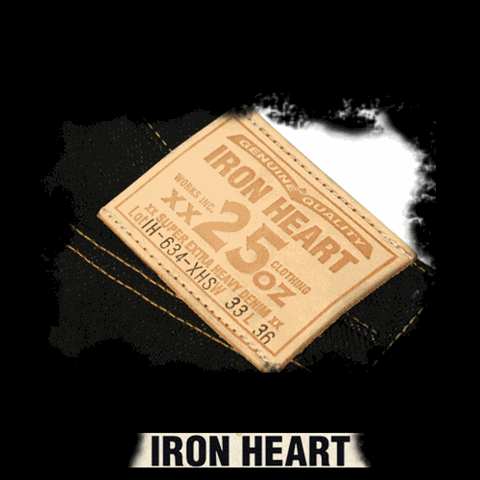
So , how do we react to a 25oz denim jeans from Iron Heart ??
Iron Heart – denim brand from Japan – excels at making jeans which justify its name – Iron Heart . Created by bikers from Japan in search of a tough jeans to support their passion – biking , the jeans is actually now bought internationally by over 90% customers who are non-bikers .. The reason may lay in the desire to buy a jeans that will last a lifetime ..
We had previously interviewed Giles Padmore from Iron Heart (UK) to know about how the brand developed and the concept behind it . When they just launched the 25 oz denim , it was time again to speak to him and get into the thick of a 25oz Jeans ..Its not really easy to make a 21oz denim and stitch it , let alone a 25oz denim. Iron heart gets their fabric made exclusively at a Japanese denim mill which can do this kind of product. I was sure it must have been really tough and Giles confirmed the same.
Hi Giles, welcome back to Denimsandjeans.com . Another first from Iron Heart – a 25oz denim jeans .. Wow !! Who would be the typical customer for such jeans?
We don’t really have a typical customer, but I guess the people who will be buying these are people who like to wear something really special. These are not for the faint of heart and will take some time and dedication to tame.
It must be really tough making these jeans.. How did your people manage to weave it in the first place ?
It was really tough, we lost a lot of fabric in the weaving process. Typically in the weaving room, one person will look after a number of shuttle looms. With the 25oz denim we had to dedicate a full time person to oversee the loom that was weaving the 25oz denim. This way we could spot problems with the weave immediately are make adjustments.
With such a heavy denim, how do you manage the starch component? It would be really difficult to wash it off..
Starch actually is not much of an issue. We soaked these jeans after construction to remove most, if not all of the starch. When you get them, they will feel super stiff, but that is down to the density of the denim,not to the amount of starch in the fabric.
Maintaining comfort in a heavy jeans is not easy.. Have you also worked on this aspect ?
True, they certainly hurt for a couple of weeks, but after that they start to soften up and become very comfortable.
Stitching such a jeans must be a nightmare ? Must have broken a large number of needles ..!
It was a nightmare! In the first run we needed to produce 300 pairs, we had to make 370 just to ensure that we had the 300 perfect jeans we needed. We had to develop a number of new ways of using our vintage sewing machines to construct the jeans. Bar tacking the belt loops on was the most dangerous and we had to insist that the workers wore eye protection!
As I understand about Iron Heart – you do not care about denim trends.. You create specialized jeans for your customers whom you understand well . Does this help you to create exclusivity and does away with the need of going for volumes ?
We try and make stuff that will look as good in 20 years as it does to day. Simple, classic, well made garments. We do not aim for exclusivity, but we are well aware that are clothing is not for everyone.
I once again congratulate you on creating these exclusive jeans.. Wishing you all the best. Any advice for our readers ?
Thank you. If you do buy a pair of these, make sure you tuck your tee shirt in for the first few weeks, if you don’t, you’ll be bleeding……
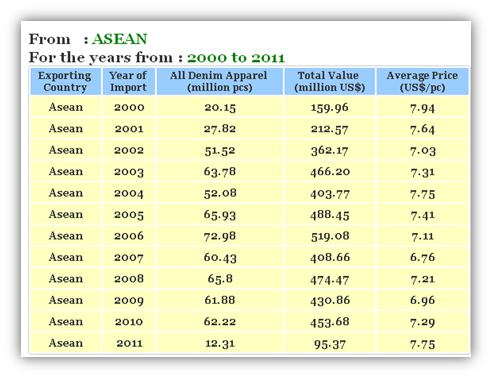
ASEAN region comprises countries like Brunei, Burma(Myanmar), Cambodia , Indonesia , Laos, Malaysia, Phillipines , Singapore and Thailand . These countries have been getting important in the denim world . Lets see what denim apparel they are exporting to US and at what prices .
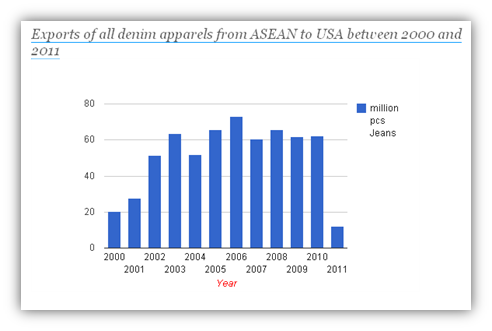
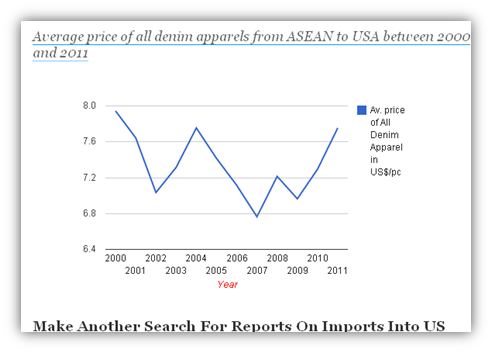
Here is a snapshot from our data section on the figures of exports to US from ASEAN countries for the last 10 years including the first quarter of 2011.
So , we can see from the above images that :
The total exports from ASEAN to US is almost stable. However, if we go into individual country exports , we will find that there is a realignment with some countries losing their exports and countries picking up the volumes.
The average prices of exports have started to pickup from the last 2 years and specially in 2011 – showing the impact of cotton prices.
The first quarter of 2011 has not been very good and the volumes are below the average of previous year. This reflects the trend of falling denim exports to US.
Today we are featuring an interview with Rex Aspeling . Rex has been associated with the denim industry for a long time and though from South Africa , he has implemented a large number of denim apparel projects worldwide.
Hi Rex. Welcome to Denimsandjeans.com. Tell us something about yourselves and your company ?
I Joined the industry in 1976 where I trained as a machinist and qualified as Industrial Engineer. Worked and operated in South Africa, Lesotho, Botswana, Malawi, Mozambique, Swaziland, China, India, Bangladesh, Poland, Malta, USA, Mauritius, Madagascar both for Vf Corp and HD Lee as Director . Set up Supply chains or factories in all the above mentioned countries.
My company Magic Sourcing offers an end to end sourcing service to companies looking to leverage the capabilities of the Asian supply markets with a strong focus on delivering savings to our clients’ bottom line. Working exclusively for the benefit of the client, with personalised teams, we cover the full sourcing cycle including market analysis, supplier qualification, supplier auditing, sample development, negotiation, selection and purchase order management (quality and logistics).
You have been in South Africa for a long time. How large is the denim industry in South Africa?
About 51585 million square meters were manufactured and 50453 million square meters were imported The industry in South Africa has virtually disappeared because of imports and inflexible legislation.
How many jeans do you think South Africa must be consuming ?
Around 50 millions units
South Africa was once an exporter of denim fabrics and jeans. But due to currency changes , the exports have been severely affected. Do you see any changes coming up in this aspect?
The factors affecting export are as follows:
A viable Exchange rate for manufacture in South Africa would be US$1.00=ZAR 8.00 + whereas currently it is around 7.2 rands to a dollar.
Only denim exports using fabric manufactured in SADC- South African Development Community * is duty exempt. This is in spite of the fact that we have no meaningful quality denim Manufacturer with Competitive prices.
Labour Cost
* Currently SADC has a membership of 15 Member States, namely; Angola, Botswana, Democratic Republic of Congo (DRC),Lesotho, Madagascar, Malawi, Mauritius, Mozambique, Namibia, Seychelles, South Africa, Swaziland, United Republic of Tanzania, Zambia and Zimbabwe.
How do you see denim fashion in South Africa changing over last few years? What are the latest trends in denim that you see ?
Fits-Men’s and ladies fits have been increasingly important with Everyone developing fits to suit their target market.
Embellishments– The bling ERA is now part of every denim garment. It is no longer just a fancy embroidery stitch which branded the garment. Laser etching, Crystals, metallic threads and numerous other items now contemporary fashion.
Wet Finishes- Stone washing has dissapeared and been replaced by Acid and neutral enzymes. Effluent is now a criminal offence with potassium permanganate banned by most customers.
Dry finishes– Standard damages on the waistline, hem and pockets is now the norm. 80% of jeans are now sold with Sanding/ Brushing and damages.
Fabrication– The addition of polyester because of cost has detracted from authentic denim.
Price- Basic fashion at a price is sold by all chain stores. These basic denim jeans are great value for money and most people in South Africa now own one or 2.
Premium Denim – Most South Africans buy one of the aspirational denim brands. They are seen as must have’s even if they live in a shack.
Latest Trends : Military details on the jeans.
What would be average selling prices of jeans in South Africa ?
Retail selling price is around -R150 or US$12.75 FOB price : US$4.75
Is there a market for premium denim ($100 plus) in South Africa ?
Yes but limited .
Which countries are the main sources as jeans suppliers to South Africa .Do you see any changes coming due to increasing costs in South Africa ?
China is the largest supplier. Prices are a huge issue because of the 45% duty.
And on a personal note , tell us about jeans that you wear ?
My jeans are made in my personal block in the new fabrications.
To contact Rex, leave comments under this article ..
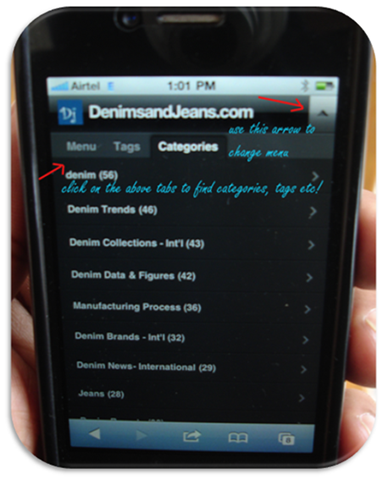
Denimsandjeans.com is now iPhone friendly. So many of our readers who wished to easily check our reports through their iphone – can now be happy!
How to read the latest denim reports on iphone ?
Just open the ‘Safari’ browser on iphone and open www.denimsandjeans.com. You would see the above image immediately on site opening Also not only the reports , you can check out easily our different pages and categories , tags etc easily from the iphone without needing to see the entire site . This will also help in easy loading of the site and easy searching of our reports.
Do let us have your feedback and let us know how you find this new application …
Gap’s 1969: LA and Beyond fall 2011 campaign has cast real people, and will be based primarily online, with national magazines and point-of-sale media as supporting media, says the company. The new campagin will be rolling out on the brand’s Facebook page and other online destinations magazines including Glamour, GQ, InStyle, People StyleWatch and Vogue.
Developed by Gap’s Global Creative Centeri n NY together with Ogilvy and Cool Hunting Gap’s 1969 studio, creating the company’s denim line, is the ï¬rst to get a treatment by the company’s marketing department to highlight ‘what’s different and inventive at Gap,’ says chief marketing ofï¬cer Seth Farbman.
‘We want our customers to see who’s behind the product and how their individual personalities and lifestyles influence what we offer in our stores around the globe.’
To show that Gap is not just another denim retailer but ,Gap’s new global marketing campaign tells the story of its 1969 fall collection from the inside out. Starting with the personalities behind the denim, 1969: L.A. and Beyond gives a transparent look at the designers and how they come together each day to create the latest in denim fits, fabrics and washes. Taking it from the studio to the real world, the campaign also shows how the denim comes to life in various cities by the people who wear it. All this is perhaps to give a more human and individualistic touch to their 1969 jeans .
Led by creative director Rosella Giuliani (formerly vice president of design and merchandising at Seven For All Mankind), the 1969 design team is a collective of artists, musicians, action sports junkies and trendsetters. Women’s design director, Nicole King-Burroughs, turns to art for style inspiration, while women’s merchant, Masako Konishi, views fashion as more instinct than intellect, applying emotion as opposed to regulated rules to make her fashion choices. Men’s design director, Jason Ferro, brings his background as a rebel skater, surfer and musician to the design table, while men’s merchant, Cale Margol, uses denim as a canvas to tell a modern and progressive story. Wash specialist, Rob Crews, started in the industry when he was just 16 years-old and fell in love with the creative process of taking raw denim into a washed state through different hand treatments. A series of over 30 videos gives a sneak peek into how the collection is made. Here is one of the videos :
Providing further inspiration to the design team, the 1969 studio feels like the personal atelier of a denim architect, not the headquarters of a global brand. Once a cigar factory, the vast and open loft studio is based in the heart of the garment district on West Pico Boulevard in downtown Los Angeles. This Gap denim epicenter is an ever-changing canvas for ideas, featuring art books, mood boards, vintage buttons, Japanese work wear catalogues and back issues of surfer magazines, set against a backdrop of sun-filled floor-to-ceiling bay windows.
“When I first joined Gap, I was surprised by the unexpected, untold stories across the brand—particularly about our people and the real-life experiences and situations they’re inspired by,†said Seth Farbman, Gap’s Chief Marketing Officer. “Fall is our first step in sharing what’s different and inventive at Gap, and we’re starting with our 1969 studio. We want our customers to see who’s behind the product and how their individual personalities and lifestyles influence what we offer in our stores around the globe.â€
Aligned with how people want to discover and share information, 1969: L.A. and Beyond will live primarily in the digital world via a series of video vignettes and sponsored editorial on Gap’s Facebook page and on outlets such as DailyCandy, FabSugar, Glam, Hulu, LookBook, Pandora, Refinery29, RollingStone and TrendCentral. The campaign was developed in Gap’s Global Creative Center in New York, and is designed to be global with different parts of the campaign allowing international markets to balance according to their needs.
To make the campaign more lively , Gap has also launched the Pico Trucks in some cities of US where Tacos (a mexican food) and other items will be served to people who are wearing a Gap product – FREE !
1969 Fall Collection Gap’s 1969 fall collection continues to demonstrate Gap’s commitment to bringing the same premium fabrics and fits as other premium denim brands at a much more accessible price point. Taking denim beyond the five-pocket blue jean, the fall collection explores the idea of “jeanswear meets sportswear.†It evolves the line from jeans to stretch leggings, cords, tailored dress shirts and jackets. With an emphasis on sophisticated fabrics, the collection feels modern and sexy while maintaining a denim lifestyle vibe.
The women’s signature Legging Jean is fresh for fall in a variety of new fabrics and colors, including the Ponte Knit Legging in black and olive, the Gummy Legging in black and khaki, and the Legging Cord in both neutral and pop colors. Also big for fall is the High Rise Pintuck Trouser in a non-traditional indigo denim, the Skinny Boot in black, and the fashion crop in fits such as the Cropped Slim, the High Rise Cropped Straight and the Cropped Boot.
The menswear collection is also focused on signature fits in new fabrics and colors. Highlights include the Drop Crotch Skinny in charcoal, the Slim Trouser in dolphin grey, the Super Skinny Clean in grey and the Slouchy Slim Rocker in black. The collection also features pieces that are either a natural extension of denim or that pair nicely with jeans, including the lightweight chambray jacket, a lightweight denim blazer and tailored dress shirts.
“Fabric and fit are the keys to the fall collection— focal points of every piece. We’ve taken beautiful and interesting fabrics and then tested their reaction to different cuts, washes and dyes. The result is a range of new styles and fits that stretch beyond denim into a broader collection,†said Rosella Giuliani, Gap’s 1969 Creative Director.
Denim prices range from $59.50-$69.50 for more basic styles and $59.95-$89.95 for more fashion-forward styles and higher-end fabrics.
About Gap Inc. Gap Inc. is a leading global specialty retailer offering clothing, accessories, and personal care products for men, women, children, and babies under the Gap, Banana Republic, Old Navy, Piperlime, and Athleta brands. Fiscal year 2010 net sales were $14.7 billion. Gap Inc. products are available for purchase in over 90 countries worldwide through about 3,100 company-operated stores, about 175 franchise stores, and e-commerce sites.
Bread and Butter happened on July 6th – 8th and , though belated, here is a cool denim report from the show here. Stylesight – the leading trend agency worldwide - have kindly shared this report with us . The report can be seen in this presentation below
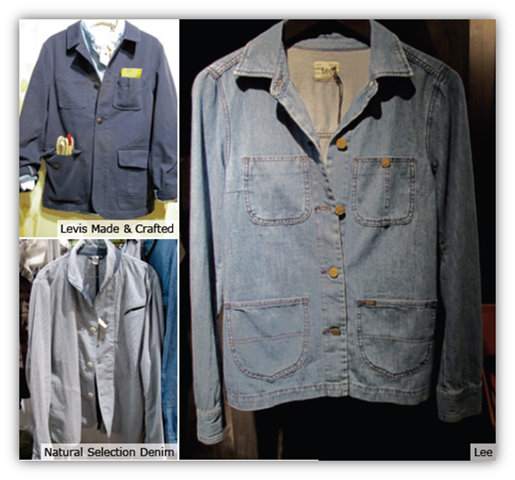
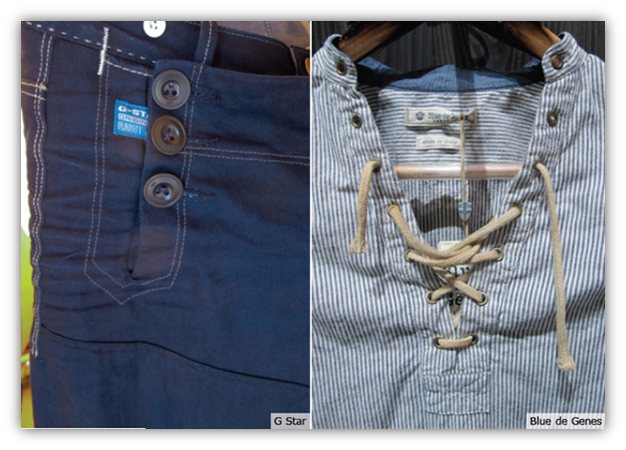
Here are some cool items in denim noticed with various denim brands.
Grafter Shirt – Cool Item
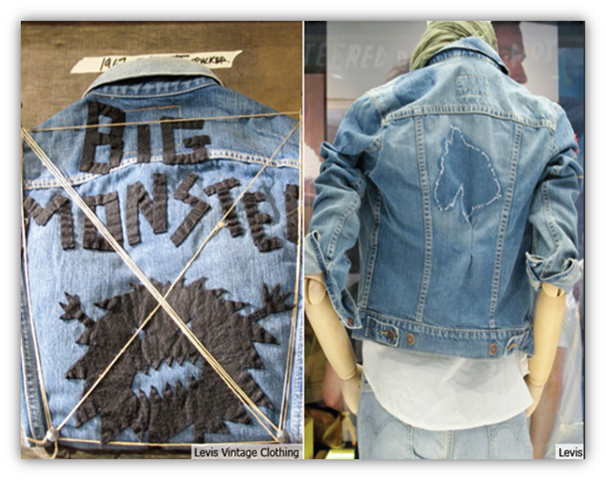
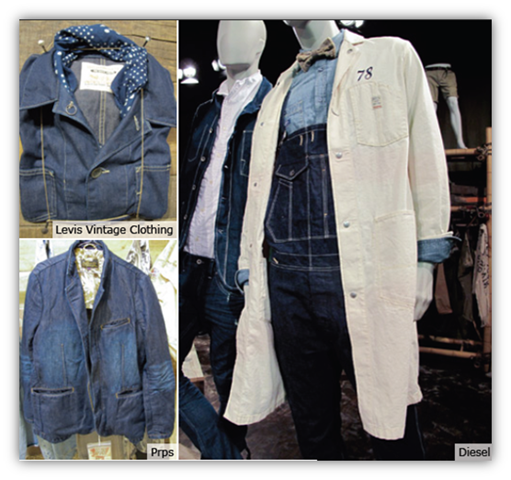
The railroad jacket has saturated the Men’s market, and new weights update the item for S/S 12. 8-11 oz weight denims and chambrays / Shirts with squared-off hems and large pockets / Shawl collars offer a maritime spin / Bright red-cast indigos are reminiscent of Chinese chore coats .
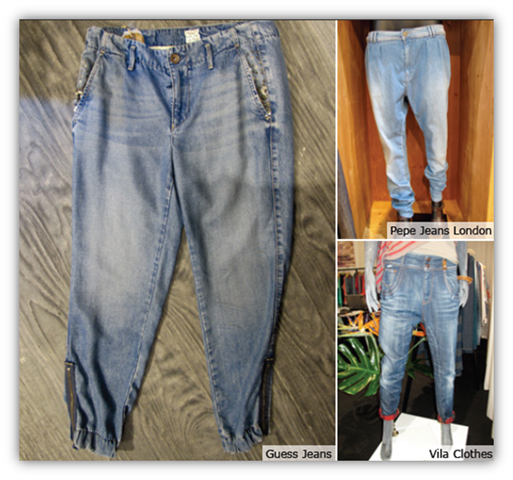
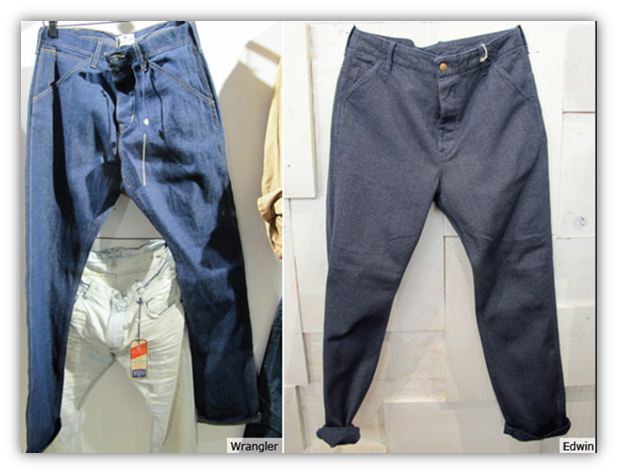
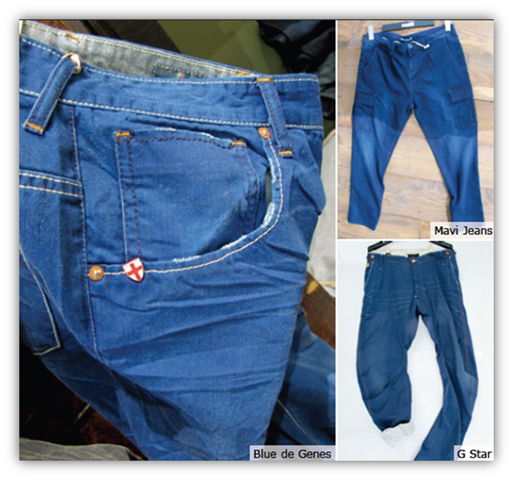
The looser, casual pant continues to trend for both guys and girls. Lightweight fabrications like TENCEL® mixes and jersey denims / Strong active direction with elasticized waistbands and hems / Loose and relaxed cargo styling / Dropped or elongated flies and seats / Roomy through hips with tapered hems.
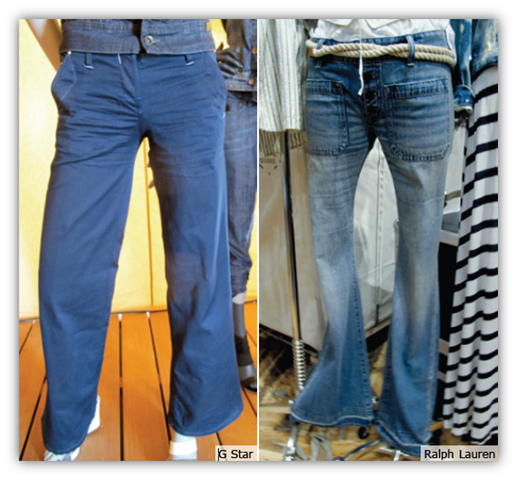
Flared Sailor Pants – Cool Item
The flare gets a nautical makeover, taking it into Summer 2012.Wide-leg flares in saturated indigos / Sailor pant-inspired stitch-down front pockets / Clean or glossy finishes / Slash trouser pockets and tie-waist details.
Guys Smart N Lose !
Lightweight denims and chambrays / Coated and water-proof surfaces / Longer jackets with drawstring waists / Half- placket popover tops / Nautical detailing such as lace-up necks and contrast white drawstrings / Saturated deep and bright indigos.
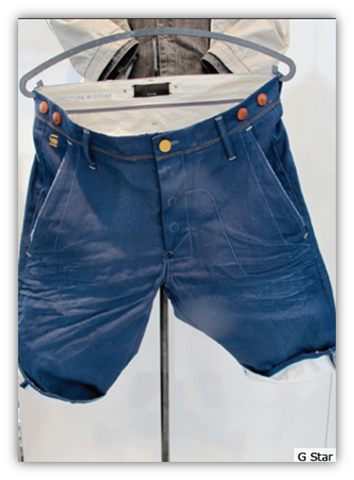
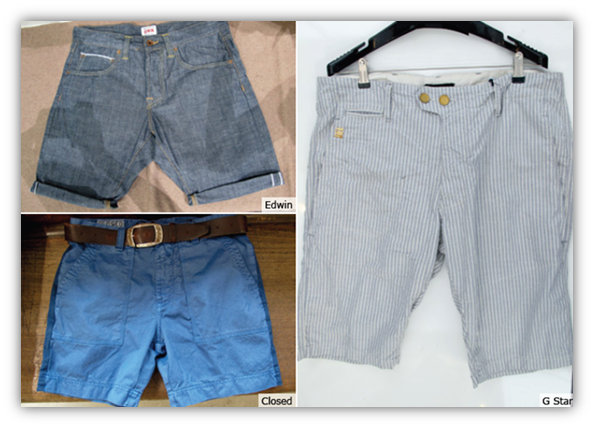
Prepster Shorts – Cool Item
Guy’s shorts smarten up with refined, mid-thigh inseams and trouser styling. Lightweight and relaxed Summer item / Straight cut and worn neat on the hips / Stitch-through front pockets or trouser slashes / Satorialist, tab-front fly / The selvedge chambray trouser-short is a key item for S/S 12.
Styling Trends
Sartorial Worker
Button-down collars and bow ties / The railroad jacket is given a tailored update / 40s Land Girl references / Fitted chore coats / Neckerchiefs complete this 40s look.
Tokyo Prairie – Styling Trend
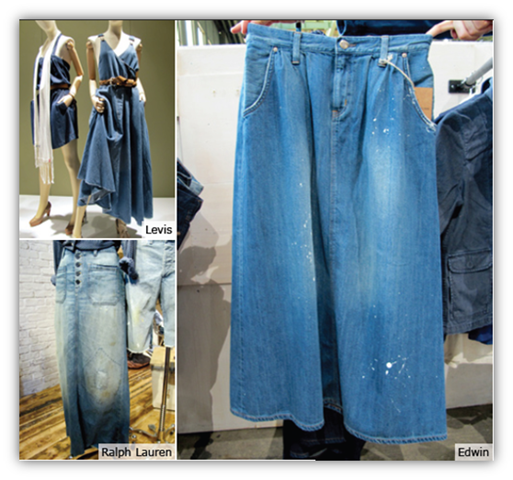
The prairie trend drives new, long silhouettes into the Women’s market.The full-length prairie skirt emerges as a new item / Exposed button flies and slash or patch pockets / Full, A-line culotte shapes / Draped dresses with prairie styling / Zip-front skirts at Tiger of Sweden are a modern take .
Naval Styling – Styling Trend
Naval influences drive the workwear trend forward for next Summer.Key items include the sailor pant with stitch-through front pockets and the double breasted peacoat / Fisherman sailor, button-front details / Indigo and white color palette / Railroad or hickory stripes / Lace-up front openings / Anchor motifs on buttons and coin pockets.
Fabric Trends
Azure Indigo – Fabric Trend
Royal blue has hit the saturation point for S/S 12. Fashion-forward shade is reminiscent of Chinese worker jackets / Glossy and raw in vibrant tones / Lightweight fabrics are key for this Summer fashion shade / Over-dyeing accentuates vibrancy / Yarn-dyed warps and weft.
Salt N Pepper Constructions
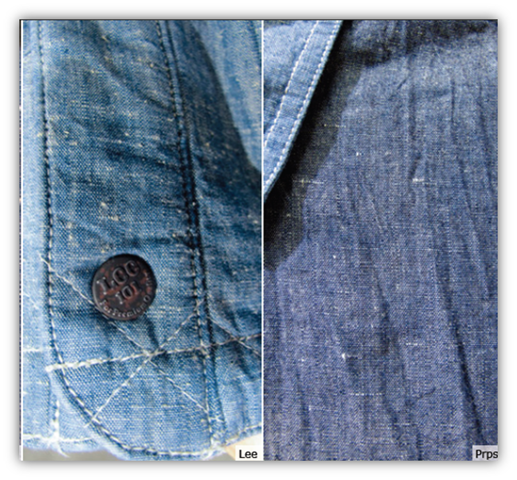
The return to durable worker fabrications leads to salt n pepper constructions. Twisted threads include indigo and ecru, grey, brown and white / Marled and flecked effects / Salt n pepper wefts for a more subtle texture reverse / Shirting weights / Rigid workwear looks / Traditional twisted yarn techniques for added strength..
Fabric Trend : Indigo Pattern
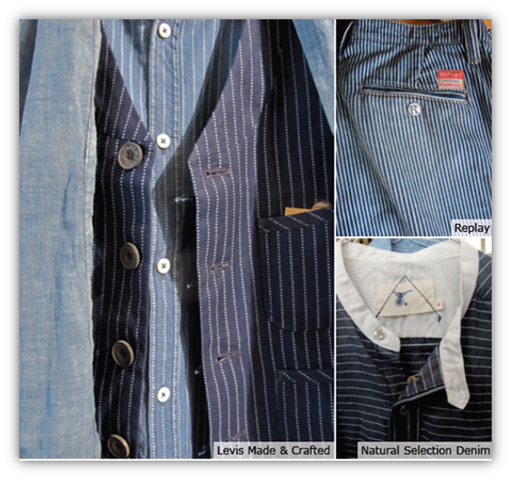
Trending for a few seasons, railroad stripes are joined with dots and micro repeats for S/S 12.Railroad, ticking and hickory stripes / Wabash spots and “Stifel†inspired prints / Modernized bandanna and neckerchief prints in indigo and ecru / Multi-layered and colored stripes at Leviʼs Made and Crafted.
Neppy Chambray – Fabric Trend
The overwhelming trend for chambray in the marketplace leads to textured fabric updates. Slubby and neppy yarns offer rustic character to basic weaves / Sky-blue indigo shades / Basic chambray shirts are re-invented / Quilted surfaces at Lee add to surface texture.
Print and Pattern Trends
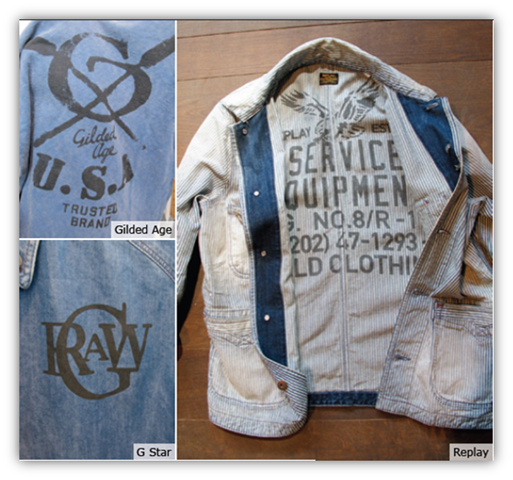
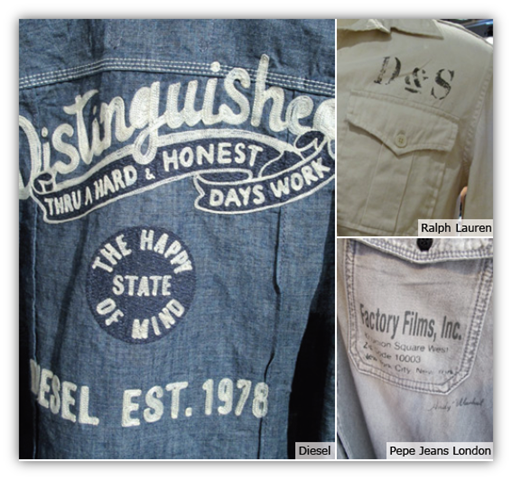
Print and Pattern : Grain Stack Stamps
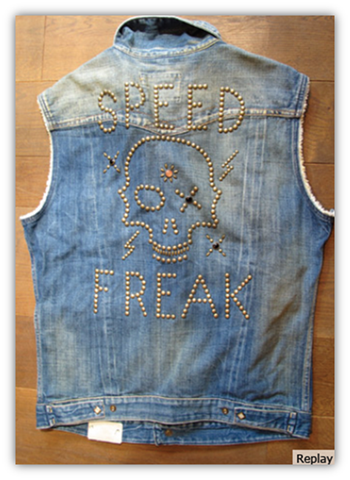
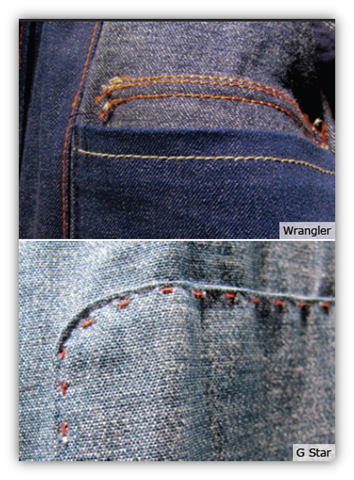
Classic rubber stamped workwear branding is joined by Americana slogans and updates. Solid black on indigo or ecru / Branded symbols and logos / Nautical and workwear references / Destroyed and worn finishes / Cornelli and chain stitches / Mechanic’s coverall looks. Solid black on indigo or ecru / Branded symbols and logos / Nautical and workwear references / Destroyed and worn finishes / Cornelli and chain stitches / Mechanic’s coverall looks.
Design Details
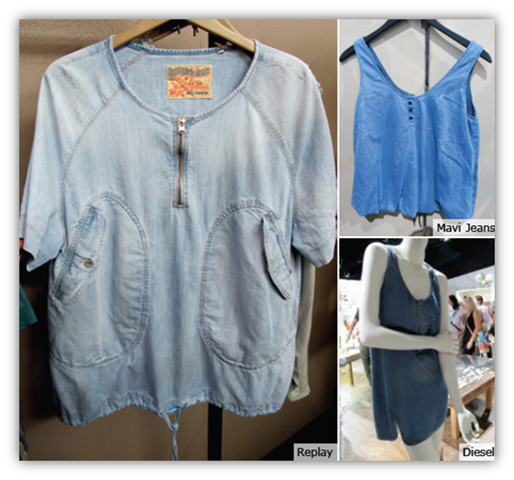
Ladies Utility – Design details
Clean, minimal styling drives new Women’s tops and dresses.
Graphic Patch – Design Details
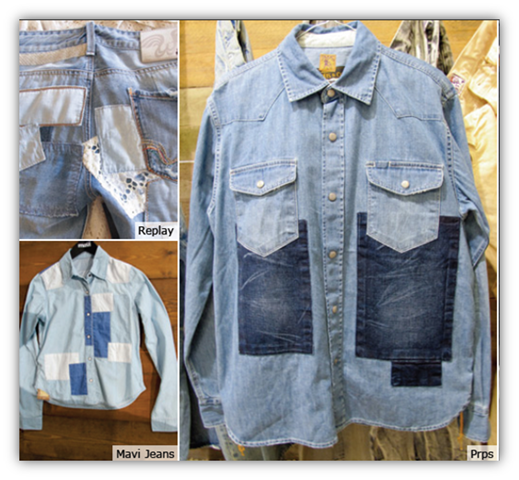
Last season’s patch-and-repair looks are stylized and re-worked for Summer 2012. Multi-patched tonal indigos / Graphic and geometric placements / Clean seam detailing / Contrast pockets, collars, internal linings and front plackets.
Wash and Color
Clinical Ecru – Wash and Color Trend
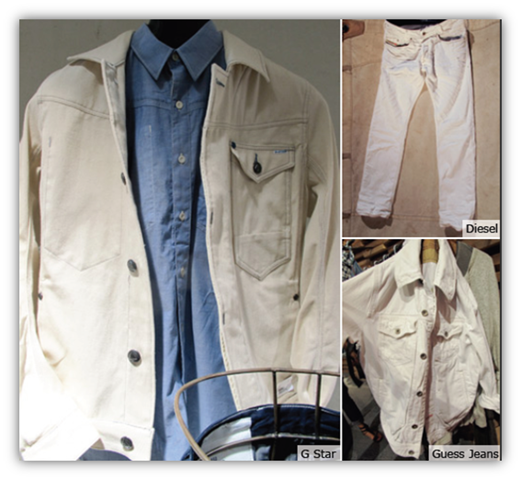
Ecru takes prominence as the Summer shade of choice for denim. Clinical lab coats and Western jackets look fresh in the color / Unrefined and unbleached cottons / New Summer white alternative / Predominantly for Menswear.
Color Ranges -Wash + Color Trend
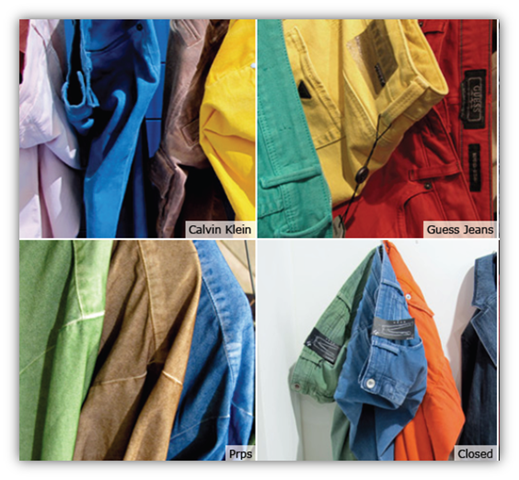
Recent color palettes are given a quirky update for next season. Classic primary colors / Off-beat or muted tones / Burgundy and salmon hues both at Lee and Tiger of Sweden / Sun-bleached mustards, acid washed brown and burnt orange / Saturated hues.
About Stylesight: Stylesight is a leading provider of trend content, tools and technology for creative professionals in the fashion and style industries. Visit their website by clicking here
China has been dominating the textile industry scene for over 2 decades. The low cost , high volume model of Chinese manufacturing did wonders for the Chinese economy as well as enabled the retailers worldwide to provide cheap clothing to their consumers year after year. It also enabled China to create huge clusters of textile and garment manufacturing – eg Xintang – which is supposed to be producing and processing over 1 billion mtrs of denim !
However, all is not so well in China nowadays . The days of cheap labour seem to be thing of the past . A recent report by WWD is insightful and brings out the changes in the Chinese economy as it tries to move to its next stage of development. Some excerpts :
The cost of labour is continuously rising . Three years ago a skilled worker would make less than $400 a month , but now the wages are in the range of $550 to $600+ . Guangzhou province has raised the minimum wages which is again affecting the costs of production.
The labour is getting assertive and restive and there are reports of strikes and riots by workers in different manufacturing areas . Recently , over 4000 workers staged a three day strike at a Korean owned factory. Such incidents were unheard of before in China.
As the prices are going up , the orders are going down. Many units in the Xintang area have shut down for not availability of orders . Though there are no numbers available, a large number of factories have closed down as per people having a pulse on the place. Many orders are being lost to Vietnam and other neighbouring countries.
The soft demand from EU and US is not helping the units in any way and is only adding to the woes.
The Chinese govt. seems to have already decided that low cost model of Chinese production will no longer work in the future and its emphasis is to create an economy based on innovation rather than manufacturing by 2020 . This vision will have profound effect on the world manufacturing industry as we will see a large number of textile and other products shifting bases of production to other countries. Countries like Vietnam, Bangladesh, Cambodia are sure to gain from this change. But will larger countries like India also benefit ??? Possibly yes, because the large retailers and brands would not like to be over dependent on smaller countries for their entire productions. We have recently noticed interest by a few international retailers, who did not have presence here , to set up the shop in India.
An interesting article on Wall Street Journal explores how the premium denim labels cost $300 or more. For those who buy $50 jeans from Levi’s , it is at many times unpalatable to see that the jeans are priced at $300 +.
The market had started moving in a direction since early 2000’s when a good amount of manufacturing started happening in the US. A True Religion jeans which costs $50 in US can end up being wholesaled at $150 and retailed at $335!! The margins in the chain are very high to cover the huge marketing budgets and other costs of working the line in the US and with retail markups touching 2.6 to 3 times.. But there are also benefits for the manufacturers to produce in the US – keeping a close tab on fashion and reacting quickly. When Jeff Rudes, founder and chief executive of J Brand, saw designer Jil Sander’s electric colors in New York’s Jeffrey boutique earlier this year, he asked his designers to come up with a hot pink and an emerald green color for jeans. Five days later, the first, small run of jeans were shipping into Barneys New York. It would have taken months to get the same product out of a manufacturing unit in China. This kind of quick turnaround is a major factor for the premium brands to survive despite high prices.
But it is not that the prices of premium denim have not taken a hit due to the ongoing recession. Most of the brands have reduced their average prices below $200 and $150 is claimed to be about the minimum level to be qualified as a premium label – though we still have companies like Gap selling their 1969 jeans at around $70 or even Uniqlo selling at lower prices with fabrics still being from Japanese mills ! . It is anybody’s guess at what can be termed as premium jeans. If only very high priced labels are termed as premium jeans, we would have a very small % of jeans in US qualifying for the same – maybe around 1% – though their sales value at over $1 billion would not be insignificant.
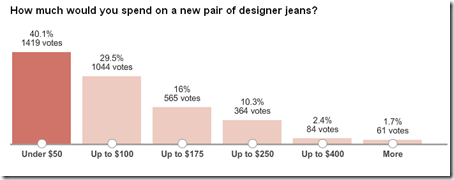
It is also interesting to see the results from the WSJ poll on what average price the consumers are ready to pay for their jeans. Interestingly , about 15% consumers in the poll are still ready to pay over $250 for their jeans.. So the craze for premium denim continues !!
 There has been a general slackness in the denim and other apparel biz in the US since the beginning of the year . As mentioned in one of our previous reports , the fall in imports of denim apparel into US had been high – at about 6.3% in the first two months of 2011. However, when we look at the figures that have come out for the period of Jan – August ‘2011 , the figures are more disturbing and indicative of a consistent fall in imports. Lets have a look :

 Last year Levi’s had launched