Tag: sustainable denim

  • Sustainability Report 2018- NUDIE JEANS

    Sustainability Report 2018- NUDIE JEANS

    NUDIE JEANS, a Swedish denim brand which was founded in 2001, recently launched its Sustainability Report for FY 2018. The company has a sale network in over 50 countries and has recently opened 31 Nudie Jeans Repair Shops, all of them offering Free Repair service. The Repair shops are located in Gothenburg, Stockholm, Oslo, London, Munich, Malmö, Zurich, Barcelona, Berlin, Sydney, Melbourne, Brisbane, Tokyo, Nagoya, Osaka, New York, Amsterdam, and Los Angeles. In 2018, the brand has reported a turnover of EUR 34.9 million.

    Nudie has been focusing on Sustainability for few years now . In 2017, the brand claimed to achieve 100% organic cotton in all cotton products and in 2018, they launched Re-use (reselling old jeans)  Online and Free Repair Shops initiatives under their recycling program and also they let go of leather on denim and have moved on to patches made with paper .

    In 2018 they sold around 2,900 pairs of Re-use jeans  and collected around 10,500 pairs of old Nudie Jeans in their Repair Shops. This is an increase of 3,000 pairs compared to 2017, and the brand is hoping to have more and more people who could come and return their jeans which are of no use to them. This enables them to prolong the life of the cotton fiber, regardless of whether this is as a pair of Re-use jeans, patches, new accessories or as a new fiber blend in a new pair of jeans. In 2018 they also repaired 55,173 pairs of jeans which collectively saved 44,000 kg of clothes from being thrown away and 386, 000, 000 liters of water. For the full year of 2018, the company also claimed to produce 98.8% sustainable products and for them, a garment or an accessory is sustainable only when it contains at least 70% sustainable materials. The company also got featured in ‘Fair Wear Foundation’ Leaders category for the 5th year in a row.

    The company has further launched several initiatives to achieve its sustainability goals which you will find later in this report.

    FACTORS OF SUSTAINABILITY


    A. Materials Used

    1. Organic Cotton: Nudie Jeans only uses organic cotton since 2017. According to reports, the company revealed that around 85% of the organic cotton used for Nudie Jeans products is being sourced from Turkey and the second largest sourcing country for cotton in India. In 2018, a total of 386,398 kg organic cotton was used, including organic Fairtrade cotton, which makes up 95 % of all material use. In 2018, total 12,890kg of organic Fairtrade cotton was used.

    2. Recycled Cotton: During 2018, the company used recycled cotton in a few of their tops i.

    3. Polyester: In 2018, the brand introduced the use of recycled polyester as the main material in a few of their styles. In 2018, 1,466 kg of recycled polyester and 1,765 kg of virgin polyester were used.

    4. Lyocell: In 2018, 31 kg of TENCELâ„¢ Lyocell to produce Nudie Jeans products was used and In the coming year, the company would like to increase the use of TENCELâ„¢ Lyocell .

    5. Wool: In 2018, the company has used only recycled wool, 1,685 kg in total, for their products.

    6. Leather:  According to the report, the brand works only with such Leather Suppliers who are Gold rated, according to The Leather Working Group. Out of the 2 leather jacket styles they made in 2018, one is made in semi-vegetable tanned leather. The majority of leather accessories were made in full vegetable-tanned leather. This is one way of decreasing chemical use in the leather industry, but until the company can guarantee that the animal comes from a certified organic farm, Nudie Jeans will not define their leather products as sustainable. In 2018, Nudie Jeans used 751 kg chrome-tanned leather and 1,544 kg vegetable-tanned leather.

    7. Jacron: In 2018, the company stopped using leather patches on denim and replaced them with a Jacron patch. Jacron is a material made of FSC-labeled cellulose fibers and acrylic polymers. Offering leather free denim was a natural step in Nudie Jeans´ sustainability journey. In 2018, 1,502 kg of Jacron was used.

    8. Trims: All of Nudie Jeans’ buttons, rivets and snap fasteners are claimed to be made under environmentally safe (EMAS) and transparent conditions by Berning & Söhne in Germany. They source threads from Coats and zippers from YKK and are bought locally by their nominated suppliers in each supplier country. The booklets in the back pocket of each pair of jeans are made in Denmark by A-tex and the paper used is FSC-certified. The woven Nudie Jeans tag and paper waist tag are made in Turkey by A-tex, and the paper bag for underwear is made locally in India with recycled cotton. The Jacron patch is made from FSC-labeled cellulose fibers and is produced for Nudie Jeans in northern Italy. In 2018, the company is still working with plastic buttons made in Portugal for shirtings. In 2018, 2,581kg of copper, 689 kg stainless steel, 102 kg zink and 324 kg of polyamide was used for all the metal buttons and rivets.

      Though these volumes don’t look huge, we need to remember that Nudie is a small brand which is making efforts to be sustainable at different stages of their production processes. Sustainability Report 2018 –NUDIE JEANS

    CHEMICALS

    According to the Sustainability Report 2018, Nudie Jeans took several measures in order to reduce the use of the chemical. The company decided to only work with suppliers with approved wastewater systems, as chemicals released with wastewater are a large source of chemical pollution. Nudie Jeans requires all of its suppliers, whether production is outside or within Europe, to comply with European legislation and regulations on chemicals.

    All Nudie Jeans suppliers must sign and follow their Chemical Policy, including their Restricted Substance List (RSL) which is based on the European chemical legislation REACH, but with stricter limitations for many of the listed chemicals. In 2018, Nudie Jeans continued to map which denim qualities and washes could be made according to GOTS criteria, and have encouraged their suppliers to become GOTS certified or to increase their use of GOTS certified chemicals. No % reduction of chemicals during 2018, was revealed in the report.

    TRANSPORT

    For outgoing shipments from the warehouse in Sweden, Nudie Jeans use trucks for delivery in Europe and airfreight for all other destinations. According to the report, the company is planning to allow the suppliers to deliver according to the timeframe decided to avoid airfreight where possible and to promote sea fright.

    In 2018, the total CO2kg emissions from transports increased by 5% compared to 2017. Both incoming and outgoing deliveries increased their emissions by 5% each. The increased emissions in 2018 were due to growing delivery volumes. Airfreight deliveries to customers have intensified, largely due to the fact that Nudie Jeans’s online business has grown by over 16% in the last year.

    Sustainability Report 2018 –NUDIE JEANS

    TRANSPARENCY

    For Nudie Jeans, transparency is a key part of the sustainability work. All the production data is visually displayed on their website where one can click on the products and receive detailed information about the production premises. The Production Guide is updated four times a year according to the season presented in the Repair Shops.

    They also publish Production Guide which is very comprehensive and enables the user to access the information on audit procedures, materials, transportation, audit summaries, and general supplier info. They have also mapped all suppliers and subcontractors working with their products, including sewing, laundry, packing, and printing. The raw material suppliers are mentioned with links to their websites.

    Sustainability Report 2018 –NUDIE JEANS

    WORKPLACE

    Nudie Jeans, in additions to their collections, believes its employees one of the most important resources as they offer the vigor and strength needed. The company has 171 employees globally and the Head Office in Go – Gothenburg employs 70 people. The management group consists of 11 members. The Head Office covers all aspects of the business including design, product development, sustainability, wholesale, retail, e-commerce, finance, marketing, supply chain management, customer service, IT and HR. The majority of the employees at Nudie Jeans Marketing are employed full-time. Numbers from 2018 show that only 6% of all employees worked part-time, of which 1.5% are men and 4.5% are women. All Nudie Jeans employees with children are entitled to parental leave. In 2018, a total of 11 people were on parental leave, 45% men and 55% women. All employees that were on parental leave have returned to work. In 2018, a total of 54 employees were on sick leave, 29 men and 25 women. In total, these employees were absent for 3,550 hours. Men account for 44% of this leave and women 56%.


    Crescent Booth At My Earth My Denim

  • H&M Sustainability Report 2018

    H&M Sustainability Report 2018

    Hennes & Mauritz AB, a Swedish multinational and also one of the biggest clothing-retail company, has recently released its SUSTAINABILITY REPORT for 2018. In 109 pages of the report, the company has reported its efforts towards sustainability and also the future plans to enlarge the ambit of sustainability in its entire supply chain. Before we move towards the key highlights of this report, let’s look at some key figures of H&M below. Currently, the company operates in 71 markets with 4968 physical stores and have online shopping facility in 47 markets which collectively bring 22,696 million USD of net sales. The company is currently working with 2383 factories globally and has claimed to 800 million customers on an annual basis.

    H&M Sustainability Report–2018

    As stated in the report, the company has categorized its vision and strategy under the following three key ambitions:

    100% LEADING THE CHANGE

    1. Promote and scale innovation
    2. Drive transparency
    3. Reward sustainable actions

    100% CIRCULAR & RENEWABLE

    1. A circular approach to how products are made and used
    2. Use only recycled or other sustainably sourced materials
    3. A climate positive value chain

    100% FAIR & EQUAL

    1. Fair jobs for all
    2. Inclusion and diversity

    “From the beginning, our role has been to democratize fashion. Today, that means making it sustainable: it’s the only way we’ll keep making great fashion and design available today, tomorrow and for generations to come. We will continue our work to lead the change towards a sustainable fashion industry”, says Anna Gedda, Head of Sustainability H&M Group.

    H&M Sustainability Report–2018

    FACTORS OF SUSTAINABILITY

    RECYCLING

    As per the released report, the company claimed to recycle 57% of all materials used during the course of production/manufacturing in 2018 which is 23% more than what they had last year. So far as the recycling of cotton is concerned, it reached 95% and the company is targeting for 100% for next year. The report further stated that, approx. 20,649 tonnes of textiles were collected for reuse and recycling through their collecting initiative which is 16% more than last year and represents the equivalent of 103 million T-shirts. The company also managed to reduce the carbon emission by 11% from the year 2017 and as per the report, the group set new goals of reducing absolute GHG-emissions in the company’s own operations by another 40% by 2030.

    Not only production but H&M has also reportedly set a new goal of using either 100% recycled or sustainably sourced materials for all kind of packaging by 2030. The group has also created a roadmap to save the consumption as well as to re-use wastewater, which will be supported by WWF, and the target would be to reduce the water usage by 25% in production and to recycle 15% of wastewater back into production processes by 2022.

    “Recycled materials are truly a win-win: they stop waste material from going to landfill and reduce the use of virgin raw materials. However, for many types of textiles, viable recycling solutions either do not exist or are not commercially available on a large scale. We are therefore collaborating with scientists and innovators to tackle this change, but at the same time working to increase other sustainably sourced materials as quickly as possible”, says Cecilia Brännsten, Environmental Sustainability Manager H&M Group.

    H&M Sustainability Report–2018

    TRANSPARENCY

    Taking the entire narrative of Transparency to a different level, according to the report , later in April, H&M and H&M Home will add more information to its products on hm.com, enabling customers to find out in which factory their favorites products were produced, as well as further information on material composition and solutions for re-using and recycling products that are worn-out.

    The group has also launched The Take Care Concept in further four markets, offering customers guidance, repair services, and products to care for their garments so they can live a longer life. The company has invested a lot of resources in the Artificial Intelligence to ensure the effectiveness in the entire supply chain and also to make it easier to ensure a good match between production and demand, thus saving energy, transport, and resources.

    “Big change requires bold actions and the courage to aim high. At the same time, we have to be humble to the challenges our planet is facing. So if we want to make a real change, we have to be brave, push the boundaries and not be afraid to fail.” ANNA GEDDA, HEAD OF SUSTAINABILITY, H&M GROUP

    EQUAL AND FAIR PAY

    For a fair pay, the group has launched Fair Living Wage Strategy, under which the company set some targets last year and the result of which has been published in this report. Here is what their’ target and result :

    Goal: Ensure that supplier factories producing 50% of H&M Group’s product volume are implementing improved Wage Management Systems by 2018.

    Result: Exceeded the goal. 67% of their product volume is made in factories that are implementing improved Wage Management Systems. This covers 500 factories and about 635,000 workers.

    Goal: Ensure that supplier factories producing 50% of H&M Group’s product volume have democratically-elected worker representation in place by 2018.

    Result: Exceeded the goal. 73% of their production volume is made in factories that have democratically-elected worker representatives in place. This covers 594 factories and about 840,000 workers.

    Goal: Ensure that 100% of supplier factories In Bangladesh have democratically-elected worker representation in place by 2018.

    Result: Reached this goal ahead of schedule. 100% of their tier 1 supplier factories in Bangladesh had democratically-elected worker representation by December 2017.

    Goal: 90% of business partners should regard H&M Group as a fair business partner by 2018.

    Result: Reached this goal, 93% of their business partners see H&M Group as a fair business partner by 2018.

    With such encouraging results, now the company is also focusing on building industry collaborations. Therefore, a conglomerate of 22 brands, several Industries, a global trade union representing the textile workers, have been formed which will come together within the collaboration platform. The objective is to create a ground-breaking system change and to transform the textile industry by promoting collective bargaining agreements, that are supported by brands’ responsible purchasing practices. The brands within this arrangement have signed a Memorandum of Understanding which commits them to ensure that their purchasing practices facilitate the payment of a living wage.

    “The fact that 22 global brands have come together to tackle the issue of wages in the textile industry makes ACT a really ground-breaking coalition. It’s a true game-changer for the industry, paving the way for collective bargaining agreements and making it possible to find solutions at industry level which will stand the test of time. By ensuring that brands’ purchasing practices are included in the equation, a crucial step in creating a solid foundation for fair living wages has been taken”, says Jenny Fagerlin, Global Social Sustainability Manager H&M Group.H&M Sustainability Report–2018

    Keeping the sustainability in the center, Denimsandjeans Vietnam is also coming up with its 4th edition of Denim Show under the theme- MY EARTH MY DENIM which is scheduled for June 12-13 at Ho Chi Minh City. To get the invites, log on to www.vmshow..denimsandjeans.com.

  • Denim Buyback Program Of J.Crew

    Denim Buyback Program Of J.Crew

    Following the initiative started by J.crew since 2014 with Blue Jeans Go Green to recycle the denim wih insulation technology , the brand has come with another buyback program in partnership with Habitat For Humanity. This retailer is expandning its denm recycling program in association with Habitat For Humanity to recycle the used jeans into materials for charity to ensure that all the unwanted denim is put into good use.According to the retailers, the average American home can be insulated with about 2,000 pairs of jeans.

    Denim Buyback Program–J.Crew | Denimsandjeans

    As an incentive, J.crew is offering a $20 for a new pair of jeans for every pair brought in for recycling.As compared to the other such brands like Rag & Bone which only offer a minimal discount, it is a very generous contribution towards recycling. This partnership with Habitat For Humanity comes with the expansion of the environmentally friendly Eco jeans collection by J.Crew.To donate, the customers are needed to just turn in their gently worn denims to the J.Crew or Madwell sstores nearby.

    “Our denim recycling program allows us to help our customers dispose of waste responsibly by giving their jeans a new life in the form of housing insulation and keeping them out of landfills,” said Gonzalo Pertile, director of corporate social responsibility at J.Crew.“This is one of the steps we’re taking as we embark in our sustainability journey. We believe that some challenges require strong partnerships to make the most meaningful impact.”

    J.Crew is certainly following the trend for minimal amount of waste generations.A win – win situation for all , this program benefits everyone by donating the jeans for $20 and that too form any brand that will eventually leads in the prevention of throwing the used jeans as a waste. J.Crew’s effort for charity and upcycling denim for a good cause is certainly admirable.

    Denim Buyback Program–J.Crew | Denimsandjeans

    Denim Buyback Program–J.Crew | Denimsandjeans

    image:J.Crew

  • KG Fabriks – Sustainability Efforts By Denimsandjeans Exhibitors – V

    KG Fabriks – Sustainability Efforts By Denimsandjeans Exhibitors – V

    KG Fabriks Limited , is a denim fabric manufacturers from India who have spent a lot of time and effort in making their production processes sustainable and the company has recently been certified by TUV NORD. The company excitedly mentions :

    “Right from its inception in 2005, we have boldly taken the sustainability route for denim production. As the first organisation to use biomass to fuel our processes, KGFL also adopts energy efficient measures, water recycling and controls greenhouse emissions in its endeavor to pioneer planet-friendly denim fabrics. KGFL is far ahead of other denim mills in terms of True Sustainability.  An Audit has been conducted by TUV NORD to classify our products as Green Products combined with trademarked “Green Dnm” swing tag.”

    The “Green Dnm” swing tag with QR code on each garment conveys a precise message to the customer according to KG Fabriks :

    “Earth Friendly Fashion. Conscious Denim. Denim fabric made with so little water that it helps save precious drinking water. Green Dnm swing tag on your garment shows your support for the future of our children”

    KG Fabriks Gets “ Green Dnm” Swing Tag

    The company further claims

    100% Raw Material Utilisation, Optimum Dye Penetration, 96% ETP Water Recovery and Green Energy concepts combined with Social Sustainability in terms of employment to backward and underprivileged communities led to KG Fabriks’ products certified as Green Products by TUV.   Sustainable measures at KG Fabriks result in potential savings in terms of water  (equal to supplying drinking water to 800, 000 people everyday),  massive usage of recycled polyester fibers  (close to 5,500,000 pet bottle recycled polyester used every month) and maximizing green energy (solar & wind).

    We spoke to Mr Srihari Balakrishnan – Managing Director – at  KG Fabriks  to understand why he feels their efforts on sustainability are really special :

    When did KG Fabriks start working on sustainability?

    We started our journey on sustainability 5 years back. We became a Zero Liquid and Zero Solid Discharge company first and this helped us to reduce our Chemical footprint by over 30% compared to a conventional denim company.We took extensive trials on reducing water, chemical and carbon footprints and stabilised on all these fronts an year ago.

    We approached sustainability in a holistic manner, starting from complete utlisation of cotton fiber and yarns, lowest usage of water per meter with highest recovery in the industry, optimum usage of dyes and chemicals combined with reuse / recycle technologies and moving more towards renewable energy sources. Today, close to 50% of the energy we use is from renewable sources and in next 3 years, close to 80% will be from renewable sources.

    You recd. the TUV certificate . Has any other denim mill received the same. What is the importance of this certificate and how much time and efforts it took you to get it .

    This certificate is first of its kind in the denim world. TUV NORD conducted the audit for 90 man-days in all our manufacturing locations which includes our spinning mills, value addition facilities and denim plant.

    The audit comprised of evaluating our approach towards conscious usage of raw materials, reducing water consumption and maximising recovery, adaption of renewable energy, reusage of dyes and chemicals along with Zero Liquid and Zero Solid Discharge techniques. They also verified three years’ data on each and every claim we made. Our “Green Denim” fabrics is a “Product and Process certified” wholesome development in the denim industry. In fact, after we have has this holistic approach, we are being approached by a number of certifying agencies to certify our denim either in the closed loop or in the cradle to cradle programs and we are evaluating our option on which program will be more useful for our company, in our onward journey towards super sustainability.

    Congratulations on getting Green Dnm tag. Can the apparel retailers use this tag ? Will you be doing co branding with some retailers on this.

    Yes, retailers can use this swing tag on their garments. We have already started shipping the tags to few of our customers against their orders. The QR code on the reverse side of the tag takes you to our website that talks about our earth friendly sustainable approach. We are also talking to some retailers on co-branding. In fact, our Green Denim could be tagged along with other certified products like Organic, BCI, tencel, etc. to make the fabric more eco-friendly. And if they use dry process in garment making, the final jeans becomes really sustainable.

    What is the future efforts in direction of sustainability that you see.

    We are working on certain in-house developed proprietary technologies to make our products and processes Super Sustainable. We are hopeful of further reducing the carbon footprints to considerable levels with our proprietary technologies viz., i-Wash, i-TopUp and p-Acid, which are in alpha stage at the moment and will move to beta stage in another three months’ time. In another 12 months, we will set the future of Denim, leaving other denim mills 20 years behind in sustainability. Today there are two options for denim mills, to buy certificates or be truly sustainable. We have taken option 2, decided to become truly sustainable. This will not only help conserve water, but also reduce chemicals etc.

    Our conservation efforts have helped save drinking water needs for 800,000 people every day. Recycled polyester usage amounts to 5,500,000 PET bottles being converted into fabrics every month. Successful implementation of proprietary technologies will lead to reduction in water discharge by our dyeing machine by 90% and ETP operations by 50%

    “Let us leave the earth liveable for future generations”.

    KG Fabriks Gets “ Green Dnm” Swing TagKG Fabriks Gets “ Green Dnm” Swing TagKG Fabriks Gets “ Green Dnm” Swing TagKG Fabriks Gets “ Green Dnm” Swing Tag


    Denimsandjeans Vietnam | 4th Edition

  • Prosperity Textiles –  Sustainability Efforts By The Exhibitors Of Denimsandjeans | Part IV

    Prosperity Textiles – Sustainability Efforts By The Exhibitors Of Denimsandjeans | Part IV

    Continuing our series of articles on sustainability efforts by our exhibitors, we are bringing the third in the series with the first two reports being already published and can be found here , here , and here. In the 4th report , we are covering Prosperity Textile from China showcasing their efforts towards the same .

    P R O S P E R I T Y

    As a large-scale denim fabric manufacturer with 80 million yards capacity, Prosperity Textile is dedicated to push for sustainable development in denim since founded in 1999, focusing on eco material, green energy and clean production. According to them , In 2017, 20% of  their product sales were from sustainable collections, and they have developed a wide range of eco-friendly products, from sustainable cotton to TENCEL™ Lyocell and from recycled polyester to water/chemical-less dyeing, RE+INVENT denim collection.

    One of the latest highlights, they are adding recycled cotton to promote the circular economic idea, which is also certified with Recycled Content Standard. They mention that they  manage to keep the original blue color of the recycled stuffs, weaving this yarn in the weft, which exhibits super-nice blue faded cast too. Truly vintage and easy-to-identify the recycled concept. And for the dyes they use CARMINE BLUE, which is their signature free-of-hydrosulfite dyeing technology with pre-reduce liquid indigo.

    Prosperity Textile – Sustainability Efforts By The Exhibitors Of Denimsandjeans

    Prosperity further mentions that in Jul 2016, they have successfully connected a 218 KW solar system on the rooftop of our warehouse to the grid, in 25 years, the average annual electricity generation is 190,000 kWh, reducing CO2 emissions by 198 tons a year. They are also expecting to install another 2 MW solar projects in coming years, to cover more energy use with clean energy.

    Prosperity Textile – Sustainability Efforts By The Exhibitors Of Denimsandjeans

    According to Prosperity Textile, they are also acting as a pioneer and choosing the first sustainable innovation in the weaving industry: the brand-new iSAVER™ equipped on R95002denim by Itema, for its newly-opened denim mill in Vietnam. This new technology is able to completely eliminate the left-hand weft waste, allowing to insert the weft yarns in the fabric without the need of additional yarns. iSAVER™ significantly reduces raw material waste, leading to tangible benefits in terms of machine’s efficiency, cost reduction and energy saving. The company mentions that this is for the first time a sustainable solution in weaving equipments has been implemented saving 1000 Kg of cotton per machine per year – about 3% of the total raw materials .

    Prosperity Textile – Sustainability Efforts By The Exhibitors Of Denimsandjeans

    As a result, while the total denim production output at Prosperity Textile in 2017 was increased by 20% to 2016, they claim that they have successfully managed to reduce the GHG emission per meter by 5.4%, water and electricity consumption was also down by 11.5% and 7.9% respectively, per meter.

    Prosperity Textile – Sustainability Efforts By The Exhibitors Of Denimsandjeans

    The company is emphatic in its commitment to sustainability and concludes :

    “Prosperity Textile is committed to sustainability development, and closely works with many third-party certification institutions to make sure the claims of our production and products are true and accurate. We have been awarded the certifications of ISO 9001, 14001, Oeko-Tex® 100, OCS, RCS, Textile Security Label, etc., and are also the members of LYCRA EXCHANGE, BCI, COTTON LEADS and SAC. In Apr 2015, Prosperity received the awards of Top 5 in energy reduction of CLEAN by Design 2014 from Natural Resources Defense Council and World Bank. And in 2016, Prosperity Textile became the first Chinese denim mill joining bluesign® system”


    The next article in sustainability series would be published soon !

    IND & VM Show Dates Lin'-

  • H&M Speaks To Denimsandjeans On Their Sustainability Efforts

    H&M Speaks To Denimsandjeans On Their Sustainability Efforts

    H&M is the retailer most often in news for its sustainable activities. As a group policy, the retailer is moving towards higher levels of sustainability for its apparel products setting up tight goals and targets. For a company as big as H&M, it’s not really an easy task to make their huge supply chain to move in the same direction as their goals. We wanted to understand how the company is planning to do this and how they see sustainability becoming an integral part of their objectives in the coming times. We spoke to Ms. Cecilia Brännstens, Environmental Sustainability Manager, H&M Group to find more about their efforts in this direction and she apprised us about the same.

    1.H&M is now the biggest user of sustainable cotton and man-made cellulosic materials globally. It must have been an uphill task. What did it take to reach here?

    This has been a journey that has evolved during the years and we have become more ambitious along the way. We believe that a company of our size and scale has a responsibility as well as an opportunity to lead the change towards a more sustainable fashion and design industry. We started in the 90s to use organic cotton and back in 2010 we went one step further setting our goal to only use sustainably sourced cotton by 2020. A few years back we set the high ambition to become fully circular and renewable which includes, among many other things, our aim to only use recycled or other sustainably sourced materials by 2030. Since our circular approach takes the whole value chain into consideration, from design, materials, production, process, use, reuse and recycle, we have also worked with setting concrete actions in each area. From how to design for circularity to how to improve our water and chemical management.

    2. Congratulations on creating the ambitious goal of using only sustainably sourced materials by 2030. How feasible will this be considering the huge number of suppliers you have globally?

    In 2017 already 35% of our total material was sustainable sourced materials, so we are fully committed that we will achieve it. The reality we face today is that shifting from a linear to a circular business model is challenging, mainly due to lack of technology to make recycling fully scalable. That´s way we are actively investing in innovation to overcome this challenge, as it will play a key role to reach our 2030 goal. Of course, we need to have our committed suppliers onboard on this journey to succeed. All our commercial business partners have signed our sustainability commitment and share our vision. Since we are present in our sourcing markets, that gives us a unique position to have daily contact with our suppliers, which helps us to build long-term relationships with them.

    3.Cotton is your largest input material. We understand in 2017 about 59% of it was from sustainable sources like BCI, Organic etc. What % currently cotton forms in your total usage of materials. Do you see that there will be a further growth in this share as you move the path of sustainability?

    Yes, we see a growth within these materials (organic cotton, recycle cotton and BCI cotton) since it is the material we use the most. Our goal is as mentioned for all our cotton to come from sustainable sources by 2020. H&M group is , according to Textile exchange , the biggest user of sustainable cotton which includes, organic, recycled, and cotton from BCI.

    H&M Speaks To Denimsandjeans On Their Sustainability Efforts

    4. Renewable energy is another front where many global players are focusing on. Is this aspect under your radar too. Can you enlighten us on the same?

    We have set an ambitious goal to become climate positive by 2040, and we have identified 3 main areas to achieve it, where renewable energy and energy efficiency are two of them (third being climate resilience). To become climate positive means that we will remove more emissions from the atmosphere than we are responsible for creating. Ways of reaching our goal is for example:

    1. Sourcing only 100 % renewable electricity in our own operations. In 2017, 96% of all the electricity used in our stores, offices and warehouses came from renewable sources.
    2. We are expanding production of renewable electricity through windmills and solar panels on warehouses as well as IT data centers.
    3. We have invested in GO2 – an innova­tive project that bundles the cost of our renewable energy usage with a contribution to new renewable energy supply.

    H&M Speaks To Denimsandjeans On Their Sustainability EffortsH&M Speaks To Denimsandjeans On Their Sustainability Efforts

    5. There are varied versions and interpretations of sustainability. How do you define sustainability?

    By definition, sustainability means to lead your business in a way so you meet the needs of present and future generations, using the resources responsibly. It is all about using materials that decrease the dependence on virgin resources, require less chemicals, energy and water and minimize the amount of materials that ends up as waste. It is also about being a fair and equal company.

    6. Supply chain side has seen great improvements over the last few years in terms of sustainability especially with the efforts of retailers like H&M. But there is the consumption side which again has a large environmental footprint. Do you think anything can be done on this front?

    Yes we do, and one thing we can do as a company is to ensure that we create products that can be used for as long as possible and that our customers can care for them in a sustainable way. As an example, in spring 2018 H&M launched the “Take Care” project in Germany ( this will be rolled out in several markets ) It is an initiative that aims at helping customers prolong the life of their products, providing guidance, inspiration as well as services and products to refresh, repair and remake their clothes. H&M also has a global garment collecting initiative which means that our customers can bring unwanted textiles to our store, so we can give them new life by reusing or recycling them.

    H&M Speaks To Denimsandjeans On Their Sustainability Efforts

    7.Sustainability still does not have a uniform and standardized way of measurement. Do you think in near future we can have a measurement tool or a score which can enable the consumer to gauge the sustainability of apparel products easily? 

    We support full customer transparency, we were among the first global fashion companies making its supplier list public and we are taking steps to provide more information on product level. On that note H&M fully supports the initiative to develop a consumer labelling system allowing the customers to compare products from a sustainability perspective, even from different brands, the Higg Index. With the Higg Index we hope that in the future there is a label available for customers that provide all sorts of information about a certain garment covering environmental as well as social aspects.

    8.What changes you see in the denim supply chain over the next decade as there is increased consumer awareness about the environmental impacts of their jeans.

    Denim production comes with some challenges, mainly due to the amount of water, energy and chemicals used. Since 2015, we have scored all our denim products using Jeanologia’s Environmental Impact Measurement tool. This third-party tool helps us and our suppliers measure, set targets and reduce water, energy and chemical use in our denim production. In 2017, 55 % of our denim products achieved “green “ level, which means they used a maximum of 35 liters of water per garment during the treatment processes.

    H&M Speaks To Denimsandjeans On Their Sustainability EffortsH&M Speaks To Denimsandjeans On Their Sustainability Efforts

    9.Any other efforts on sustainability side which you might like to share with our readers. 

    We see that sustainability is a question for the whole fashion industry. H&M group are working on bringing partners together to identify challenges and share innovative ideas and solutions. We want to lead the change across our own operations and those of the industry and break new ground to improve the way our products are designed and made. We believe the best way to change the perception on the fashion industry is to lead by example and build awareness. Having a clear sustainability strategy, with concrete goals, road maps and actions, while being open and transparent on progress and challenges on the way.


    H&M Speaks To Denimsandjeans On Their Sustainability Efforts

  • Naveena – Sustainability Efforts By The Exhibitors Of Denimsandjeans |  Part III

    Naveena – Sustainability Efforts By The Exhibitors Of Denimsandjeans | Part III

    Continuing our series of articles on sustainability efforts by our exhibitors, we are bringing the third in the series with the first two reports being already published and can be found here and here . In the 3rd report , we are covering Naveena Denim Mill from Pakistan showcasing their efforts towards the same .

    Naveena Denim Mill , Pakistan (NDM)

    The company stresses their efforts towards sustainability in their own words

    “NDM has been making good efforts for safeguarding Environment, Natural Resources through Implementation of Sustainable Research Based Product Development and using Global accredited Compliance . The company believes Sustainability as an important factor of production to make sure that the world will continue to have, the water, materials, and resources to protect human health and  environment. NDM has collaborated with Dystar & Archroma for sustainable dyes and Jeanologia for sustainable finishes which are certified by ISO.The processes involved reduces the amount of carbon dioxide and other harmful gases emitted into the air.”

    They list out some of their sustainable inputs they use in their products :

    • Repreve- A fiber made from recycled materials. Reduces energy consumption and conserves petroleum-based resources by offsetting the need to produce virgin synthetic fibers.
    • Lenzing Modal®– A modal fiber from Lenzing, is naturally soft on the skin and ecological. The fiber is produced, using Edelweiss technology. Edelweiss stands for a “symbiotic” production process – pulp, the raw material, is produced at the same site as the Modal fiber itself. Thus production can be done while going easy on energy and other resources.
    • BCI or Better Cotton Initiative-  A multi-stakeholder initiative – from producer to retailer – who have decided to act together to reduce the damaging environmental and social consequences of cotton production and make the sector’s future more secure.
    • Waste Recycling– NDM uses ETP (Effluent Treatment Plant) in dying processes which allows wasted water to be recycled and reused for dying, sizing, finishing and washing.Special recycled cotton yarn is used to manufacture fabric at NDM which is basically in the raw form.

    Horizon : The Sustainable Fabric Production By NDM

    Horizon is claimed to be an innovative and cutting-edge combination of eco-friendly dyeing and finishing processes . HORIZON combines Naveena’s existing Ecolean + Aqualter processes for dyeing and H2NO for finishing, reducing the event load while saving water, time and energy. As per Naveena, the process uses 81% less water, 40% less energy and %50 less steam compared to conventional process, it improves EIM score by 40%. It also uses less water dyeing for indigo colors with no salt formation.

    Naveena-4_thumb6Naveena_thumb10

    HORIZON claims to guarantee no back-staining and improved crocking.  The result is 95% sulphate reduction, 82% reduction in chemical oxygen demand and 95% total suspended solids.

    naveena-2_thumb14

    Naveena describes the H2NO system :

    “Designed in collaboration with Jeanologia, H2NO uses an eco-friendly technology that reproduces ozone gas conditions. The technology is a ground-breaking innovation for denim supply chain, since it uses ozone and requires no steam, chemical or water in the process. The technology conserves up to 90% water and energy. Using this new process, the mill saves 12 liters of water per jeans and saves 10 to 12 tonnes of chemicals annually. The technology improves the mill’s E.I.M. score by more than 40%. The result is cleaner fabric that requires fewer washes and that ultimately reduces brands’ costs. An advanced dyeing process designed to save our most valuable resource, “water”, Aqualter uses dramatically less water, energy and steam compared to conventional dyeing process. It uses up to 15% less energy, up to 90% less water and up to 80% less cotton waste while producing the same indigo effects.”

    The company shares the following results of their sustainable system vs the conventional dyeing system.

    naveena-3_thumb7

    The next article in this series would be published soon !

  • Forces Of Nature – A Sustainable Collection By Jaden Smith For G-Star Raw

    Forces Of Nature – A Sustainable Collection By Jaden Smith For G-Star Raw

    The rapper turned designer – Jaden Smith has come up with newly designed pieces for G Star Raw recently. This exclusive collection is very special on many counts and specially seems to be strong on sustainability front . The collection has been dedicated to the beauty and power of nature as all the pieces are designed and engineered with sustainable materials as per G-Star Raw. The collection has been categorized into three segments – WATER , EARTH AND ECLIPSE defining the three different colors in the collection. Jaden Smith named this collection – FORCES OF NATURE.

    Let’s take a quick tour of this collection

    W  A  T  E  R

    To emphasize water’s singularity and to convey the utmost respect for this quintessential force of nature, the blue colorway of this collection is made with world’s first Cradle to Cradle Certified™ Gold G-Star Denim Fabric . This fabric is made from 100% organic cotton and supposedly features the cleanest indigo technology which uses 70% less chemicals, requires no salts and has no salt bi-product, thus leaving a clean and recyclable water effluent. A contemporary take on workwear style, this jacket offers strong detailing and a flawless fit. Shank button closures and multiple pockets bring functional undertones. The jacket features a blue colorway graphic patch drawing inspiration from the shades of water.

    F a b r i c

    This Jacket is cut from Cradle to Cradle Certifiedâ„¢ Gold G-Star Denim Fabric and as per G-Star , has the following characteristics.

    • Developed with RFTPi-Raw for the Planet Indigo formulated in partnership with DyStar®, G-Star and Artistic Milliners.
    • Raw for the Planet Indigo and uses 15% less indigo, 70% less chemicals, no salts, and produces no salt by-product during reduction and dyeing process. Consequently saving water and leaving clean and recyclable water effluent.
    • 100% Organic Cotton
    • 8 dip indigo
    • 3×1 right hand twill construction with rich surface character. Mid weight 10.5 oz denim

    D-Staq RFTP Water 3D Deconstructed Jacket

    FORCES OF NATURE–A Sustainable Collection By Jaden Smith For G-Star Raw

    Spiraq RFTP Patches Water 3D Slim Jeans

    FORCES OF NATURE–A Sustainable Collection By Jaden Smith For G-Star Raw

    E  A  R  T  H

    Inspired by raw earth and the creatures that live on it, this colorway has been executed in raw organic cotton and has used no dye whatsoever, making the fabric sustainable and recyclable. The twill construction is made of 100% organic cotton yarns, completely undyed. Due to the untreated organic yarns, the garments receive an off-white hue with natural speckles unique to each garment.

    F a b r i c

    Inspired by the raw concept, Zelz Ecru Denim O has been stripped to its purest fundamental form. G-star says it has highly pronounced twill lines of Zelz Ecru Denim O give an impression of a tough and heavy surface, yet this base is a midweight denim with a soft hand feel thanks to the nature of the left hand twill construction.

    • Digitally printed
    • Undyed & untreated
    • 100% Organic Cotton
    • 3×1 left hand twill
    • Mid-weight 10.5 oz

    D-Staq RFTP Earth 3D Deconstructed Jacket

    FORCES OF NATURE–A Sustainable Collection By Jaden Smith For G-Star Raw

    Spiraq RFTP Patches Earth 3D Slim Jeans

    FORCES OF NATURE–A Sustainable Collection By Jaden Smith For G-Star Raw

    E  C  L  I  P  S  E

    Zelz Black Denim O is first of its kind in the market. G-Star says its their most sustainable black denim due to holistic approach when it comes to the choice of fiber, black dyestuff, its transport, its packaging and the actual dye application.

    F a b r i c

    G-Star is emphatic about the qualities of this black denim. It was done in collaboration Archroma and Artistic Milliners.

    • It features liquid dyestuff that leaves an easy to clean and recyclable water effluent.
    • The black dye used in this denim is produced at Archroma’s ‘Zero Liquid Discharge’ sustainble manufacturing plant which is located near by Artistic Milliners.
    • No chemical contact for workers, and no packaging drums and dye residues to dispose off.
    • The dye application onto the fiber is done in a 5-step process compared to the conventional 8-10 steps.
    • It saves 52% water, 65% energy, 71% CO2 and 14% chemicals compared to conventional black.
    • 100% Organic Cotton
    • 3×1 left hand twill, Mid-weight 10.5 oz

    D-Staq RFTP Eclipse 3D Deconstructed Jacket

    FORCES OF NATURE–A Sustainable Collection By Jaden Smith For G-Star Raw

    Spiraq RFTP Patches Eclipse 3D Slim Jeans

    FORCES OF NATURE–A Sustainable Collection By Jaden Smith For G-Star Raw

    On the whole a great looking collection with sustainability as one of its core strengths. Check out the video for this collection.

    https://www.youtube.com/watch?v=1e0H7EPAr1k

     Pic Courtesy : G Star Raw Website

  • Bio Indigo From AMA Herbal With Life Cycle Analysis

    Bio Indigo From AMA Herbal With Life Cycle Analysis

    The textile world is working very hard to become 100% sustainable as soon as possible. Almost all brands and mills are working on it. Most of the factors in terms of raw material as yarn, processing and supply chain have been worked on. But Natural Dyes is kind of unexplored area in sustainability approach. One of the reasons could be the unavailability of data for calculation of sustainable benefits.

    AMA Herbal Laboratories in India has made a breakthrough in this regard.  CEO  Mr Yawer announces :

    “We have made a breakthrough in the dyeing sector by presenting Bio Indigo® dye with Life Cycle Analysis (LCA) for the first time. LCA is a scientific, analytic approach in calculating benefits that brands can get on a sustainable balance sheet by just switching to Bio Indigo® in denim production.”

    Bio Indigo® dye is obtained from leaves of plant Indigofera tinctoria was commonly known as indigo which also exhibits medicinal properties. One of the major characteristics of the Indigo plant is that it is a legume and contributes in fertility to the soil. Many coconut farmers have reported higher yields in coconut water by planting Indigo in the periphery. It also acts as a nitrogen source when used as a compost.

    Mr. Yawer further adds :

    “Bio Indigo® dye comes in powder form and is certified on “GOTS Version-V”, and has “ZDHC”, “REACH” to its credit. Its Fastness properties, the process of dyeing and method of use remains same or at par with synthetic indigo. Many large denim mills form Turkey, India, Pakistan, China, Italy, and Japan are already using Bio Indigo® on their rope dyeing machines. Bangladesh Denim world is also showing a good response to the concept. Designers are loving Bio Indigo® for its greener cast and the kind of wash effect that it gives.”

    Denim and indigo blue go hand in hand. Initially, all denim was made with Natural Indigo only but now Indigo is mainly produced synthetically. Synthetic indigo (another name – Indigotin, CAS no. 482-89-3) is produced through a chemical process and makes up for the majority of commercially produced indigo dye in the denim industry.

    To support their claim of Bio Indigo® dye being a sustainable product as well as compare with Synthetic Indigo Dye, AMA Herbal Laboratories have evaluated its environmental impacts using Life Cycle Assessment approach as per ISO 14040/44 standard. AMA Herbal Laboratories entrusted Thinkstep Sustainability Solutions Pvt Limited, a subsidiary of Thinkstep AG, Germany for the LCA study of Bio Indigo® dye using GaBits Software system and Thinkstep Professional databases and services. The study helped evaluate the various environmental impacts of the Bio Indigo® dye and how it stands compared with the Synthetic Indigo Dye.

    For dyeing of one kg of cotton yarn, synthetic dye consumption is lesser than natural indigo dye. Thus, to make a fair comparison, the functional unit was defined as one kg of dyed cotton yarn. The inventory used in the study consisted of all the production steps from indigo leaves produced in the farms to Bio Indigo® Dye production followed by its use in cotton yarn dyeing. For synthetic dye, similar system boundary i.e. the production of Synthetic indigo dye followed by its use in the cotton yarn dyeing was considered in the study.

    Rope dyeing, being the most common technology for dyeing in the denim industry was considered. It consists of twisting the yarn into a rope then quickly dipped into Indigo baths. This dyeing technique is considered a superior dyeing technology where better dyeing uniformity is achieved.

    Mr Yawer was very happy about the results achieved:

    “Dyeing with our Bio Indigo® dye has 16% lesser acidification potential, the global warming potential was 9% lower, the primary energy demand was also 8% lower whereas the fresh water demand was 0.4 % higher. The difference in the positive impacts was in the range of 0.4%-23% for various environmental factors defining sustainability of denim.”

    “Additionally, the study was used to compare environmental impacts for production of 1 kg of both the Dyes. Except for fresh water consumption, all the other environmental impacts are 10-100% lesser in case of Bio Indigo® Dye.”

    He further explained about the difference regarding Bio Indigo® made by their company vs natural indigo available from other sellers :

    ” Natural Indigo has been primarily been made by the artisans based out of villages and small towns who grow the plant and extract the indigo . Due to their limitations, they are not able to give a standardized product on a commercial scale. Besides, it is also very difficult for them to control the usage of effluent and waste produced from such productions . AMA herbal is perhaps the first company to come out with a standardized natural indigo produce with specified discharges. We recover about 60% of the water used in the dye production while the rest is almost evaporated. The solid spent created from the production is used as bio-fuel and bio-fertilizer. Also, Traditional Natural Indigo contain various impurities, these impurities do not allow this product to run on Rope dyeing/slasher machine. Where as our Bio Indigo® is upgraded version that can run on rope/slasher without any problem. Natural indigo so manufacture is our Bio Indigo®. Also we are the first to have done a LCA of the produce and hence the sustainability experts can be reassured that they are getting a product with minimum impact on the environment.”

    We were apprehensive of the high cost of natural indigo to which he replied :

    “Bio Indigo® is more expensive than synthetic indigo. However, when we consider the cost of usage of synthetic indigo on environment and the additional cost which is applicable in case of many other sustainable processes, the usage of Bio Indigo® would come out much more feasible. Besides, with the latest increases in prices of sythetic indigo, the gap between the two has considerably reduced. “

    AMA herbals summarized the results as follows:

    • The impact contribution of dye production in both cases of dyed cotton yarn production is not more than 8-9% across various impact categories. The major impact contribution comes from the cotton yarn and  energy consumption in rope dying process. Use of Bio Indigo® dye leads to impact reduction, from the credits, it generates as a raw material as well as utilization of dye wastewater in agriculture as a source of nitrogen.
    • The impacts from dyes are highly dependent on the quantity of the dye required. Better utilization of Bio Indigo® dye will lead to further impacts reduction.
    • This study provides Life Cycle Inventory (LCI) and Life Cycle Impact Assessment (LCIA) as regional averages (India) across the industry for dye manufacturing.
    • Decisions, as well as the choice of modeling approaches and assumptions, can influence the results of LCA.
    • Bio-diversity is not assessed in this study due to its limitations in the LCA methodology
    • The decision should not be taken on toxicity parameters due to their high level of uncertainty. But when compared with Synthetic Indigo Dye, Bio Indigo® dye has lesser impacts for sure.

    Bio Indigo Launch By AMA Herbal India | Denimsandjeans

    Bio Indigo® dye can provide denim brands and manufacturers with a sustainable solution of having lesser environmental impacts. In general, natural dyes have certain advantages over Synthetic dyes. Natural dyes are non-toxic, non-allergic and now one can say they have a reduced negative environmental impact than synthetic dyes. The water consumption can be reduced by engaging sustainable farming practices. AMA Herbal Laboratories will explore this area as the next step in their LCA journey. To become sustainable, fashion industry needs sustainable materials. Bio Indigo® dye thus promises in this endeavor.

    Bio Indigo® available in powder form for Rope Dyeing

    & Ready to use pigment form for coating and printing of textile.

    AMA Herbal can be contacted at bioindigo@amaherbal.com or more information is available at www.amaherbal.com

  • C&A: Jeffrey Hogue Speaks With Denimsandjeans On The Launch Of Their C2C Gold Certified Sustainable Jeans

    C&A: Jeffrey Hogue Speaks With Denimsandjeans On The Launch Of Their C2C Gold Certified Sustainable Jeans

    Dutch Fashion Retailer – C&A , has become the world’s first retailer to offer jeans that are completely Cradle to Cradle CertifiedTM at the Gold level. The entire concept has been designed in partnership with Fashion for Good, a global platform that aims to make all fashion good, the jeans are supposed to have been made with completely sustainable materials and were produced in compliance with the high Cradle to Cradle CertifiedTM Gold level. The primary objective of C&A is to make sustainably produced fashion the new normal and not something which seem to be an out of the box . Keeping all such things in the mind , the dutch retailer has kept the price very competitive and hence the the retail price for the men and women’s jeans is only 29 euros.

    C&A’s Cradle to Cradle CertifiedTM collection is marketed under the #WearTheChange campaign, launched in the spring of 2018. The goal of the campaign is to bundle products with various attributes that make them more sustainable compared to conventionally produced garments, such as Bio-Cotton and Cradle to Cradle CertifiedTM, making it more visible for the customer.C&A deliberately chose jeans – a very complex garment and iconic product. Since jeans are made of different components – and numerous production processes are required – suppliers and factories were selected thoroughly and materials were tested and certified. Some elements, such as the lining material or sewing thread, had to be completely redeveloped.

    Q&A With Mr. Jeffrey Hogue ( Chief Sustainability Officer) On The Launch Of The Most Sustainable Jeans By C&A

    Denimsandjeans.com had a Q&A session with Mr Jeffrey Hogue – Chief Sustainability Officer Of C&A , to know more about the jeans and the sustainable efforts which have been made by C&A.

    Q&A With Mr. Jeffrey Hogue ( Chief Sustainability Officer) On The Launch Of The Most Sustainable Jeans By C&A

    1. Congratulations for coming out with the first C2C Gold certified jeans. It must not have been an easy task creating these jeans. Why do you feel these are the most sustainable jeans globally.

    Thank you. It was indeed a remarkable year of dedication, innovation and collaboration that has led to this achievement. The Cradle-to-Cradle Certified(TM) product standard is globally recognized as the only holistic, third-party standard able to certify circular products. It certifies all aspects of product manufacturing, such as the sourcing of the raw materials, the use of chemicals, water or energy in manufacturing, the design for material reutilization and the social conditions in the value chain. In other words, the C2C Certified(TM) Products Program is the only product-based certification that is based on rigorous, science-based criteria for all aspects of sustainability. No one in the world has ever before achieved the Gold level certification with a complex product such a jeans.

    2. The project took you over a year . It must have been a long journey . Pl tell us how did you go about this project and difficulties you faced.

    In the case of the denim jeans project, around one year was needed to bring the product to shelves. We were indeed facing a couple of challenges. More complex products consist of more components from several suppliers. The first challenge was the complexity of the network of partners involved. Companies supplying e.g. the fabric, the sewing thread, the fabric dyes, the Interlining, metal trims and buttons printing and laundry services and chemicals and many others needed to be integrated. To mention another challenge: Washing, dyeing, printing and finishing processes also often include a large number of chemicals. Generally, the more complex the product is, the more chemical processes are involved. Every single component needed to be assessed for Material Health for the final product to be certified but the list of previously C2C assessed materials was rather limited. We therefore had to build up everything and look for innovative solutions.

    3. We understand you are launching the jeans at Euro 29/- which seems a reasonable price given the effort that goes into the same. Are you sending a message that sustainable fashion is also cost effective.

    Absolutely. We want to mainstream sustainable fashion, taking it from niche to normal. We believe everyone should be able to look and feel good every day, without compromising the lives of those who make their clothes, or the planet we source from. Ultimately, we want to be at a point where consumers do not need to make a choice between looking good, feeling good and doing good.

    4. What are the sustainability goals of C&A for the near future . Any goals specified for different apparel , specifically for jeans ?

    We are making great progress against our 2020 Global Sustainability Framework which is published in our annual Sustainability Report. We have to take a leap of faith, setting bold goals that may seem impossible to achieve in order to push ourselves and the industry further.
    We have a strong commitment for certified organic cotton. We started this commitment in 2005 with only 1 million garments made of organic cotton. Today, we are the largest volume buyer of certified organic cotton worldwide, with over 170 million pieces sold in 2017. We’ve reached a leadership position that we had not envisioned was reachable – or even possible – when we started out. We see the same possibilities with the work we are doing right now with our our C2C Certified collection. So far we have brought to market over 2 million pieces of Cradle-to-Cradle Certified(TM) apparel, maintaining the most sustainable fashion collection currently on the market at this scale. It is only by taking this leap of faith that we will prove that it can be done, engage our customers and inspire the industry to take action. Eventually, we want to create a new norm in how clothing is designed for its next use: only good materials and chemicals, made with 100% renewable energy and 100% recycled water – and produced in a way that offers dignity and fairness to workers.

    5. There are still varied ways of measuring sustainability which consumers cannot easily understand. Do you think in near future we can have a measurement tool or a score which can enable the consumer to gauge the sustainability of an apparel product easily.

    The question if a one fashion product has been produced more sustainability than another product is very hard for a consumer to judge. Sustainability remains a very complex topic. To help our customers to make better informed purchase decisions, we work with third-party standards such as the Cradle to Cradle standard. In 2018, we reached a key milestone in our sustainability journey with the launch of #WearTheChange, our first global, multi-channel sustainability communications campaign. It was launched in Europe in February 2018, across in-store, online and print touch points. All products advertised under #WearTheChange are produced and sourced in a way that is more sustainable than conventional methods. Every one is backed by a verifiable sustainability claim: for example, certified organic cotton or Cradle-to-Cradle CertifiedTM. The #WearTheChange message is clear: every little step counts. We are inviting customers to join our sustainability journey with an inspiring and optimistic message that it’s possible to look good and feel good, with no compromises.
    In addition, we are working closely with the Sustainable Apparel Coalition, a leading apparel, footwear, and textile industry alliance for sustainable production, to further develop the Higg Index with regards to consumer and product communication. We believe, the Higg Index has the potential to enable retailers to communicate clear, comparable, and meaningful sustainability scores publicly. Using one common language to share sustainability efforts should support consumers to make better informed purchasing decisions.

    Below are some denim pieces which have been launched under the same concept of Sustainability and the same can be seen here .

    Q&A With Mr. Jeffrey Hogue ( Chief Sustainability Officer) On The Launch Of The Most Sustainable Jeans By C&A Q&A With Mr. Jeffrey Hogue ( Chief Sustainability Officer) On The Launch Of The Most Sustainable Jeans By C&A

    Q&A With Mr. Jeffrey Hogue ( Chief Sustainability Officer) On The Launch Of The Most Sustainable Jeans By C&A Q&A With Mr. Jeffrey Hogue ( Chief Sustainability Officer) On The Launch Of The Most Sustainable Jeans By C&A

    Q&A With Mr. Jeffrey Hogue ( Chief Sustainability Officer) On The Launch Of The Most Sustainable Jeans By C&A Q&A With Mr. Jeffrey Hogue ( Chief Sustainability Officer) On The Launch Of The Most Sustainable Jeans By C&A

    About C&A

    With approximately 1,500 branches in 18 European countries and more than 31,000 employees, C&A Europe is one of Europe’s leading fashion retailers. Every day, C&A Europe welcomes more than two million visitors and offers high-quality fashion for the whole family at affordable prices. In addition to our European branches, C&A is also present in Brazil, Mexico and China.

    For more information about C&A, please visit www.c-a.com.

    About the Cradle to Cradle Products Innovation Institute

    The Cradle to Cradle Products Innovation Institute is a non-profit organization whose mission is to turn the making of things into a positive force for people, the economy and the planet. Founded by William McDonough and Dr. Michael Braungart, the Institute administers the Cradle to Cradle Certifiedâ„¢ Product Program, a guidance system for assessing and continually improving products based upon five sustainability characteristics: material health, material reuse, renewable energy, water stewardship, and social fairness.

    *Cradle to Cradle® is a registered trademark of MBDC. Cradle to Cradle Certified™ is a certification mark licensed by the Cradle to Cradle Products Innovation Institute.

  • Project F.L.X By Levis

    Project F.L.X By Levis

    Just recently we had G-Star released their ‘Most Sustainable Jeans’ collection and we now have Levi Strauss catching up the sustainable bandwagon and has come out with Project F.L.X – which they claim is the most sustainably washed denim.

    Levi Strauss & Co. introduces Project F.L.X. (future-led execution), a new operating model that brings denim finishing into the digital era. By digitizing denim finish design and development, the company is enabling a more responsive and sustainable supply chain at an unparalleled scale. Project F.L.X. radically reduces time to market and eliminates thousands of chemical formulations from jeans finishing. Through Project F.L.X., the company is claiming is that they are achieving the ultimate balance of agility and sustainability, while upholding their standards of craftsmanship, quality and authenticity. LS&Co. has begun piloting Project F.L.X. with select vendors and retail partners and will roll it out across its supply chain in a phased approach over the next two years. The rollout of this new digital platform will be phased over time, with a goal of being fully scaled in 2020.

    HOW ITS STARTED

    Project F.L.X. was built in-house at LS&Co.’s Eureka Innovation Lab by a team of designers, developers, chemists and engineers passionate about revolutionizing the apparel industry to better meet consumer needs while also doing right by the planet and the people who work in the apparel supply chain. A number of LS&Co. team members were retrained and reskilled in software development and laser operations. Retraining will be a key tenet as this new model rolls out globally. To help unlock the benefits of more sophisticated laser technology, LS&Co. turned to long-standing partner Jeanologia, a leader in eco-efficient solutions for fabric and garment finishing. Since 1993, Jeanologia operated with the ambition of advancing sustainable apparel manufacturing by delivering disruptive technologies, including ozone, laser and e-flow finishing systems. The company’s like-minded focus on scalability was essential to supporting LS&Co.’s end-to-end, transformative vision.

    “We believe it is possible to be both agile and sustainable without compromising the authenticity our consumers expect from us,” said Chip Bergh, president and CEO of Levi Strauss & Co.

    clip_image002

    clip_image004

    Four Major Developments Under Project F.L.X. :

    1. Replace manual techniques and automate the time-consuming, labor-intensive and chemical-reliant process of hand-finishing: For more than 30 years, the apparel industry has used hand-finishing to accentuate worn, faded design elements on denim. By using lasers in new ways, finishing time is cut dramatically – from two to three pairs per hour to 90 seconds per garment, followed by a final wash cycle.

    2. Create “photo-real” finished garments digitally: By digitizing the finish design and development process, LS&Co. designers can now create finishes and final garments with a revolutionary new imaging tool. Built by LS&Co., this advanced imaging capability cuts finishing design and development time in half (from months to weeks and sometimes days) and is so accurate the digital files can be sent directly to the vendor and quickly scaled to mass manufacturing.

    3. Take advantage of on-demand and even hyper-local production capabilities: By delaying decisions on final products until much later in the process, LS&Co. can radically reduce its lead times from more than six months to as fast as weeks or days in some cases. This is made possible by staging garments that await their on-demand finish order closer to the market.

    4. Eliminate thousands of chemical formulations from its supply chain: LS&Co. plans to reduce the total number of chemical formulations used in its finishing process from thousands to a few dozen. This is a major step forward in the company’s commitment to achieving zero discharge of hazardous chemicals by 2020 and furthers its goal of pioneering more sustainable apparel.

    “With this new model, we can deliver the authentic and iconic products we’re known for in an incredibly responsive and responsible way,” said Liz O’Neill, senior vice president and chief supply chain officer for Levi Strauss & Co. “The advanced imaging capability is a game-changer for us, and something that has eluded our industry for years.”

    “One of the biggest challenges we face as an industry is ensuring we have the right products at the right time as well as the ability to respond to our customers’ evolving needs with speed,” said Paige Thomas, Executive Vice President and General Merchandise Manager for Men’s and Kid’s at Nordstrom Inc. “The team at Levi’s is working towards this challenge by contributing to the future of the apparel industry as one that’s both agile and uncompromising on quality, while improving sustainability. We’re excited to be part of it.”

    clip_image006

    clip_image008

    clip_image009

    clip_image011

    When we quickly compare the G-Star RFTPi jeans and the Levi’s F.L.X jeans, we find that there are differences among them in terms of scope of sustainability. While the G-Star jeans covers even the cotton aspect and the dyeing of the fabric and even covering the accessories, Levi’s jeans gets its sustainability score from the processes used in jeans finishing where they use the modern laser and other methods to achieve zero chemical and very less water usage . But our vote would go to G-Star as their scope seems wider and they have tried to cover the major inputs into the jeans rather than only covering the jeans finishing part.

    https://www.youtube.com/watch?v=SMDlbNpE6dU

  • H&M Green And Conscious Exclusive collection

    H&M Green And Conscious Exclusive collection

    The Eco Sustainability is the need of hour which has been well understood by the Denim Industry. Consequently , everyday new efforts are being made to ensure the sustainability and the very recent development is that the Swedish clothing company ,H&M, is moving into sustainable fashion . This Retail powerhouse H&M has taken this very innovative initiative on a much larger scale than expected .

    Eco Sustainability has been a focus for H&M for some time now. A few years back H&M started the initiative to recycle used garments .The company had rolled out a global garment recycling program in which anyone can donate their clothing and in return of that the company will give a token discount of 15% in a form of voucher which can be used by the donor on the next purchase. To collect the cloths, the bins are placed near the cash registers to prevent any ambiguity. Stores accept any clothing irrespective of brands.

    H&M has been collecting more than fourteen thousand tons of clothing since 2013. Once the cloths are collected , they are sent for further processing and classifications. Clothing which found to be very much worn are reused as cleaning cloths and otherwise. Sometimes they are also recycled into raw materials for new products. Those clothing which can be possibly worn again are sold at second hand stores. New collections are being designed with these old clothes .

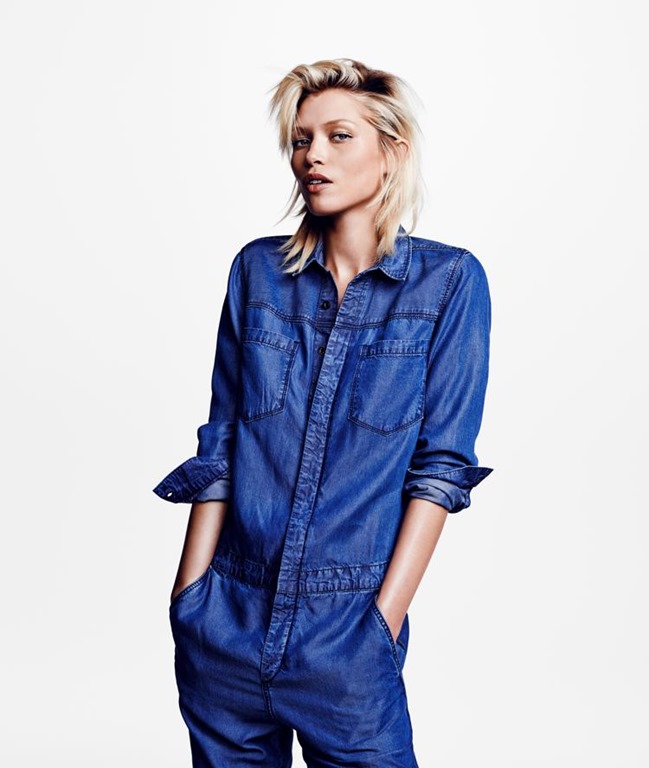
    Sixteen new denim styles for men, women and children made from recycled cotton collected in H&M’s Garment Collecting initiative were recently introduced at stores. The items include jeans, jackets, joggers, zip-up hoodies, joggers and jumpsuits.

    H&M Conscious Exclusive collection

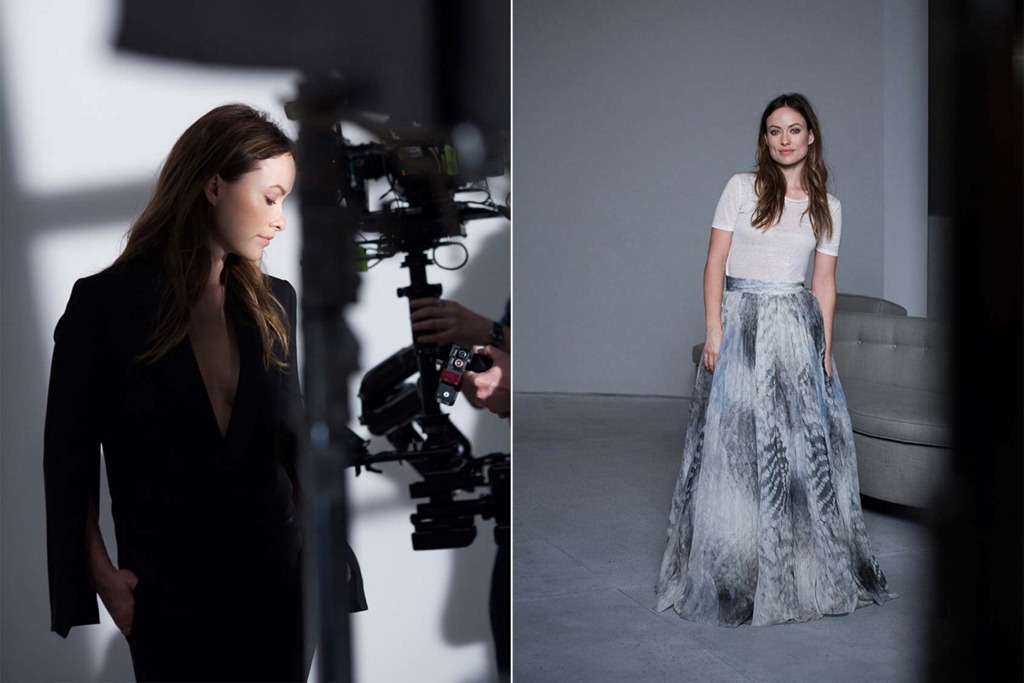
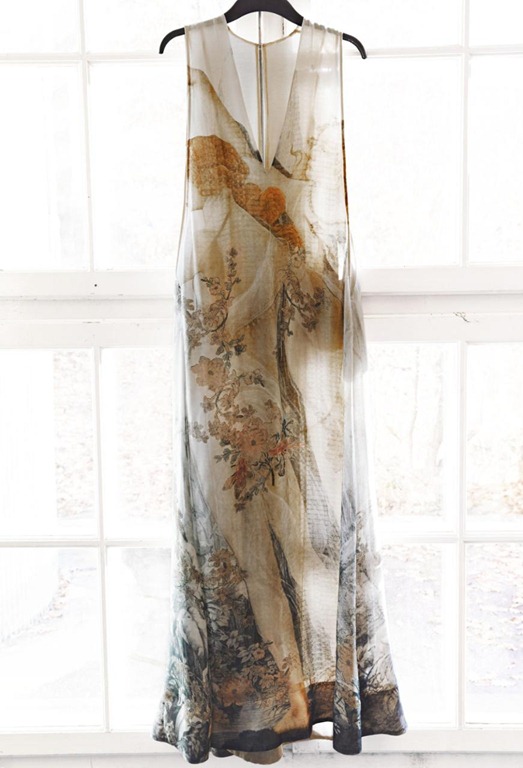
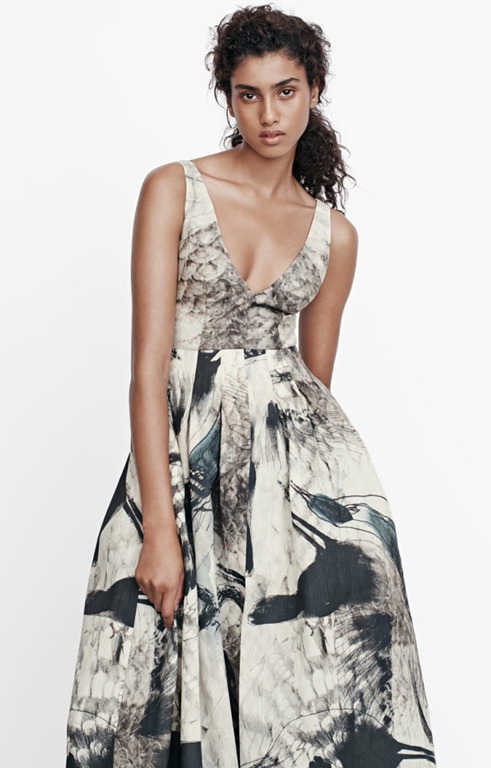
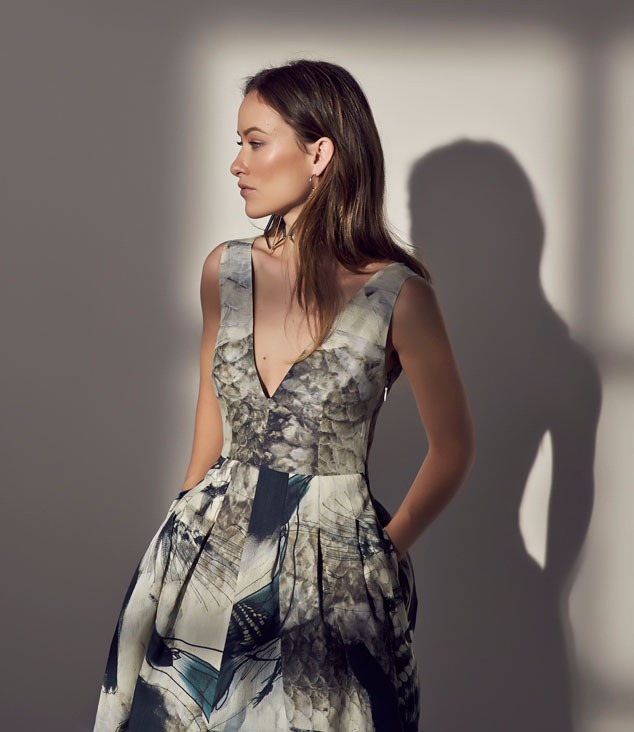
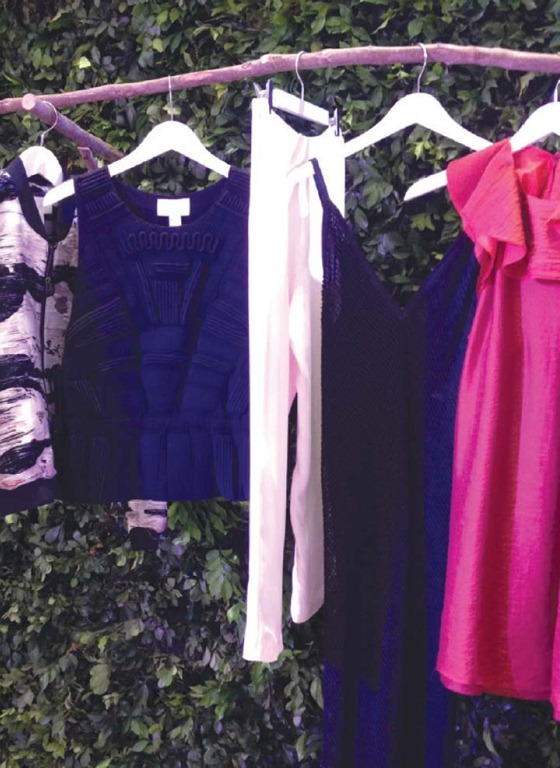
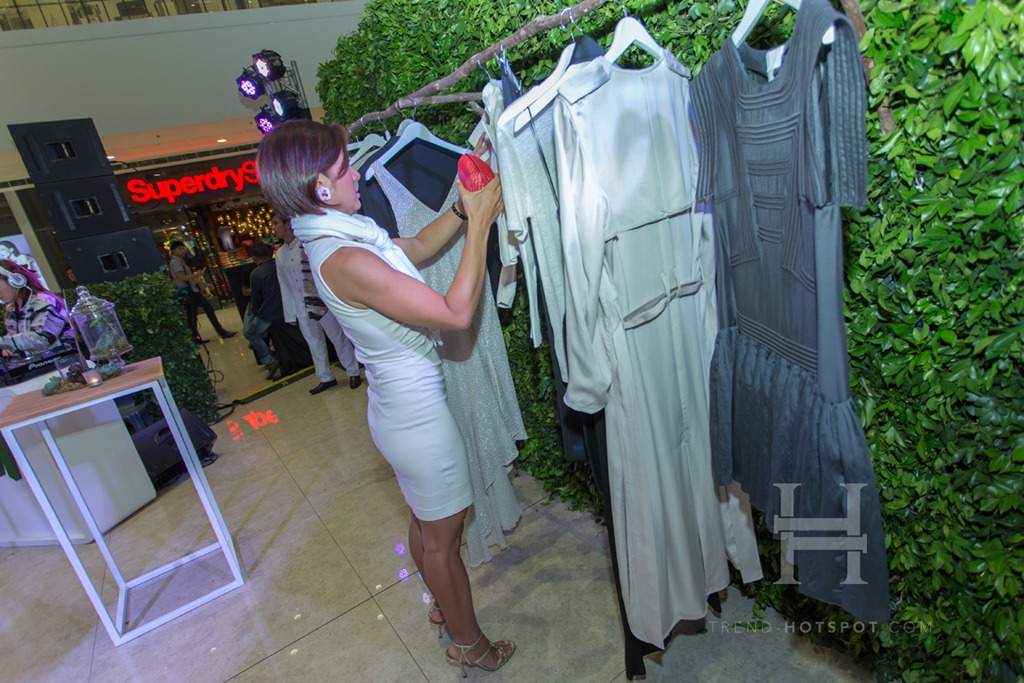
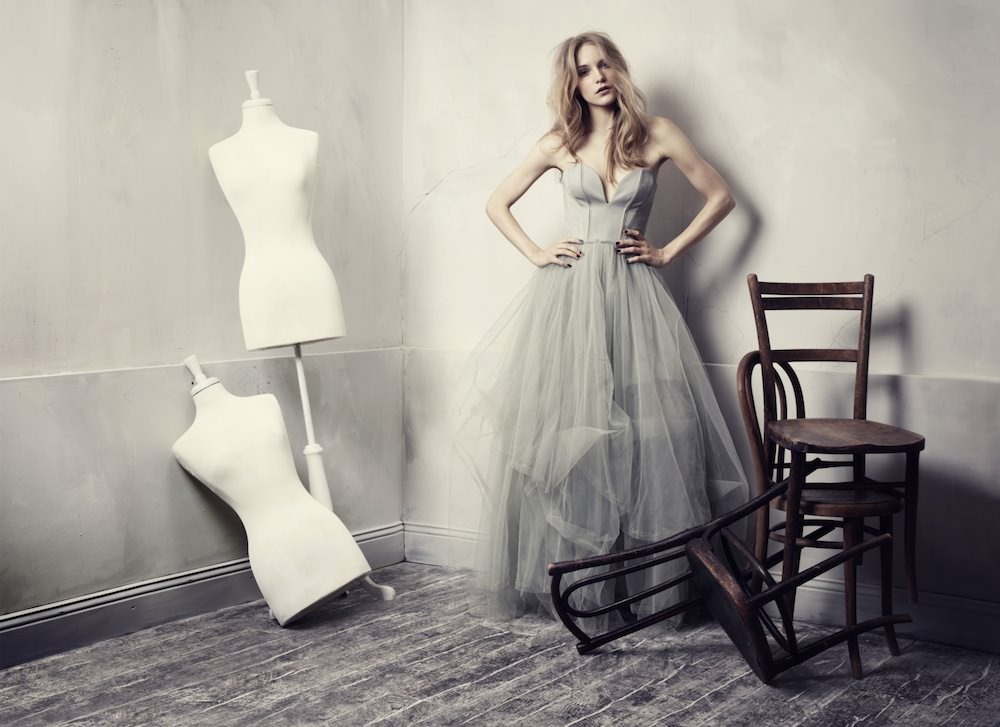
    After collaborating with the Musée des Arts Décoratifs, located in the Palais du Louvre in Paris,the chain is set to celebrate the new H&M Conscious Exclusive collection.The new H&M Conscious Exclusive Collection features organic materials,recycled wool, Tencel, and recycled sequins.The whole collection is dreamy and showcases gorgeous prints, elegant dresses and versatile separates. The natural color palette ties perfectly with the environmental theme of the range.Some of its apparel is created from recycled worn clothes – many coming through its collection of customers’ unwanted garments. For its Close The Loop collection, recycled fibers from shredded unwanted clothes are blended with organic yarns to produce durable denim.Continuing the sustainability is fashionable theme, H&M have created sustainable glamour via their Ambassador, Actress Olivia Wilde who is known for her efforts for a sustainable environment.

    H&M Conscious Collection | Denimsandjeans.com

    H&M Conscious Collection | Denimsandjeans.com

    H&M Conscious Collection | Denimsandjeans.com

    H&M Conscious Collection | Denimsandjeans.com

    H&M Conscious Collection | Denimsandjeans.com

    H&M Conscious Collection | Denimsandjeans.com

    H&M Conscious Collection | Denimsandjeans.com

    H&M Conscious Collection | Denimsandjeans.comH&M Conscious Collection | Denimsandjeans.comH&M Conscious Collection | Denimsandjeans.com

    H&M Conscious Collection | Denimsandjeans.com

    H&M Conscious Collection | Denimsandjeans.comH&M Conscious Collection | Denimsandjeans.com

    H&M Conscious Collection | Denimsandjeans.com

    The range shall be launched at Musée des Arts Décoratifs located in the Palais du Louvre in Paris  on  Thursday 7th April to coincide with the opening of the hotly anticipated exhibition, Fashion forward.