Category: denim

  • Denim Dry Processing For Creating Vintage Jeans

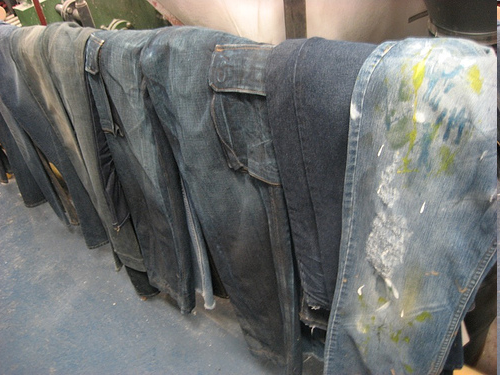
    The distressed jeans that we see around everywhere undergo a wide variety of wet as well as dry treatments to get the desired effects.  Here I shall try to explain some basic Denim Dry Processing techniques. In the creation of vintage denim jeans, dry processes play a very important role and hence important to understand.

    Denim Dry Processing – Basic know how

    Destroying denims is as much an art as it is a technique. Details are added using a fine abrasive paper on a scraping tool. And extra whiskering can be added with sand paper. Sometimes a bit of local tint staining is being done into the local areas to emphasize the lighter parts. The jeans then go for a washing with pumice stone to blend in the whiskering and tinting / over dyeing. Where the folds and wrinkles go is where the art part comes in, it’s often through observation of where wear patterns are typically found. For some of mine I have several pairs of old well worn thrift store jeans that I use as a template to guide where I want the wear patterns. I chalk in where I want the details and then they are finished off site by me in my finish workshop. Some of what is done to customize jeans are patented secrets, no one other than those who work for these companies knows the exact techniques or the abrasives and chemicals used to achieve certain special effects. Here I am revealing some basic facts to the denimsandjeans.com readers……………..

    Below is list of operations being carried out on denim garment to achieve VINTAGE (used/worn out) look……

    • Hand Sand / Hand Scraping
    • Sand blasting
    • Whiskers
    • Chevrons
    • Knee Star / knee whiskers
    • Hot Spot
    • Tacking
    • Grinding
    • Damages / Destruction
    • PP Spray
    • PP Brush / towel
    • Patch / repair
    • Bleach spots
    • Resin application
    • Pigments & Local tint application etc…..

    1.Denim Hand Sand / Scraping
    clip_image001clip_image002

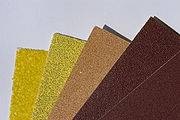
    Hand sand is step which is generally being done in rigid form of garments to get distress look. Locations can be front thigh & back seat or its can be overall / global application as per Standard. Emery paper is being used to scrape the garments in particular placement & design. Emery paper comes in different number generally start from 40 till 600 and above , higher the number finer the emery paper, lower the coarseness of the paper. In garment industry from 220 , 320 & 400 number papers are most popular & widely used.

    Purpose of doing this process is make used worn out look to the garments.

    The most important factor is to select right number of paper according to the fabric strength & intensity need. Feathering / merging white sanded part to dark blue area in such way that it should look natural & not artificial.

    Scraping can be done on inflated rubber balloons for better effect ( horizontal or vertical its up to operators convenience ) , even it can done plain wooden board of garment size & hand pressure should be uniform in order to get better results.

    Hand sanding must be started from intense part & feathering out on less intense part gradually. One garment must by done by one operator only to have balance intensity on both the legs.

    2.Sand Blasting

    This process is isolated now a days due to health hazards & buyers do not like the results of sandblast because its covers the characteristics of fabric. This process being done by using different kin d of sand blown to garments with air pressure to rub out the color.

    3.Whiskers/ Moustaches , Chevron , Knee Star, Hot Spot
    clip_image003clip_image004clip_image005

    On Denim, whiskers / Mustaches , Chevrons are nothing but the worn out lines / impression generated by natural wearing on hip & thigh area. There are many designs & pattern available.

    This is being done manually with help of sharp edge Emery paper rolled on fine wood stick or pasted on plastic material. Before starting execution placements & pattern must be marked on garments, this will help operator to execute the pattern right to match the aesthetics of garment.

    Hot spots are heavy/intense area on thigh or knee which is made purposely to create used look & on knee area if any whiskers line are there, called knee star.

    All above operations are carried out in width direction hence its appears intense than hand sand with less strokes, because hand sand is carried out in length direction.
    clip_image007

    4.Tacking & Grinding

    Tacking: is a process which is being done by swift tag machine with the help of plastic or nylon tag pins in rigid form of garment to get very heavy contrast ( rigid & washed ) on waistband, bottom hems, back pocket & front pocket corners etc.. after completing wash cycle, it must be removed from garment before making softening.

    Grinding: is being done on pocket edges & bottom hems edges by running against abrasion surface or stone to achieve worn out effect. Many different make of machines & pen grinding tools are available in the market which runs with pneumatic system.

    5.Damages/Destruction
    clip_image008

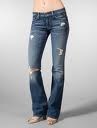
    One of the most popular distressing effects currently , ‘Destruction’ is an art which make denim look unique & used. To make destruction pen type of stone tools being used in mid of wash process to apply on desired area. It can also be achieved by cutting it thru knife the warp yarns & keep the weft yarn as is to show white thread. Holes also can be made by cutting weft & warp yarns. These are all manual processes & every garment will look unique & different than others.

    6.POTASSIUM PERMANGNATE SPRAY/RUB & BLEACH SPRAY
    clip_image009

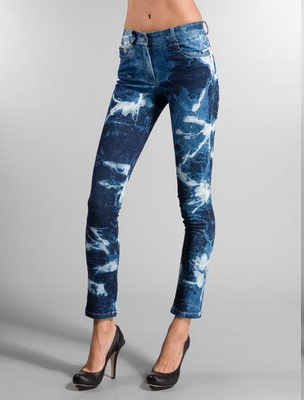
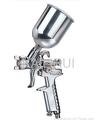
    PP Spray is being done  on denim garments to achieve local abraded area to appear whiter than back ground indigo color shade. This can be applied by spray gun or by towel dipped in to PP Solution & rubbed on desired area followed by neutralization in wet process. This process can be done in rigid after doing hand scrape or in the middle of the wash. Doing after enzyme or bleach cycle will give more natural & white effect that doing in rigid. There are many additives can be added in order to achieve desired intensity and look.

    The same way bleach solution also can be spray or rubbed on the garments on desired area. But this process is very complicated & needs highly skilled operators to execute it followed by immediate neutralization.

    There are many parameters needs to be taken into control for doing PP or Bleach spray…. Spray gun pressure, width of spray, flow & way of spraying.

    Note:Safety of operators must be taken in to consideration and it must be ensured that he should wear mask, gloves & eye glasses etc…

    7.Patch & Repairs along with Bleach Spots
    clip_image010

    These are totally manual processes to give uniqueness to Denim and to make it  look VINTAGE.

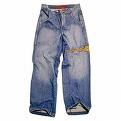
    First cut or damage the units intestinally to desired area & then make hand repairs or machine repair to look natural. Diluted bleach can be used to spot the desired area followed by neutralization in wet process.

    These process are time consuming hence productivity is low & reproducibility is very difficult but similar aesthetics can be achieved.

    When we talk about Vintage denim, every garment should look unique & not a photocopy !. These garments are sold at very high prices so customer should have a feeling of uniqueness & feeling different from others. Vintage denim are signature/ autograph of a brand & its image.

    8.Resin Application( 3D Effect )
    clip_image011clip_image012

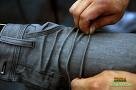
    Resin ( Formaldehyde free ) being used for achieving 3D effect ( 3 Dimensional ), Rigid Look etc. This process can be done by spraying or dipping the garments in to Resin, Catalyst, Silicone & PU solution in right combination according to the fabric strength & desired effect needed.
    After application of resin solution in right proportion, make manual designing as needed on the thigh, hip & back knee area to get 3Dimentional effect. After making it , it should be manually dried with hot press or hair dryer & then must be cured in oven at right temperature, time as mentioned in resin product manual.

    If resin not cured properly , 3 D effect will not be permanent & can cause skin irritation/rashes to the wearer. Highly skilled operators needs to execute this process in order to get consistency & uniformity.

    Whole garment can have crushed look by resin dip & crushed manually followed by oven curing. Silicone plays an important role in getting softer hand after oven.

    Special streaky effect & Crackles also being done by applying resin on desired area followed by scraping & pp spray then neutralization.

    9.Pigments & Local  Tint ( Staining)  Application

    Need to choose right color of pigment or tint with binder or fixer to apply locally on denim to get vintage look. This process also needs an artist to execute it nicely to merge the tint with ground indigo color & should not look too artificial. Pigments & Local tint also can be applied through spray gun or rubbing on desired area of denim garment. After application its must be cured in order to have permanent effect on jean.

    As we can see from all the dry denim processes mentioned above, they are mainly manual processes. The quality of the worker can make or break the garment. Hence , great care has to be given to select the right personnel for these jobs.

    Saurabh Pic (1) About the Author : This is Guest article by Saurabh Rai .He is a  Textile Chemist by Profession & a Denim Finishing Expert .He is working in one of the most well known denim brand in Middle East as their denim washing head. Contact him on email here  . Want to write guest articles ? Check here
  • Denim Washing – Basic Steps and Guide..

    image

    Fashion is today incomplete without denim. Denim comes in all forms, looks and washes to match with every dress . It would be difficult to believe that the same denim was originally employed in clothing for the pants and overalls worn by miners on the west coast(US). A number of technological factors have contributed to making denim the fashion icon that it is today – including vast improvements in spinning, weaving, finishing etc. One of the most important part of creation of the beautiful denim jeans is the washing . Washing plays such an important part in the denim chain because of the umpteen effects that the consumers are looking for on their jeans . Lets talk a bit about denim washing …


    BASIC DENIM WASHING PRINCIPLES

    Below is the brief introduction to common steps done & followed in denim garments washing in Laundries across the world. Different kind & make of machines being used across the globe to hit similar results.

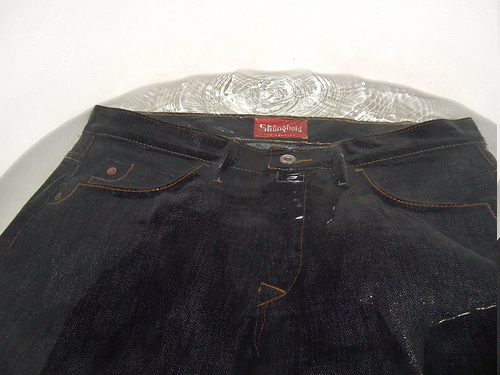
    Every small step in denim washing makes a big difference because indigo dye has very poor wet & dry rubbing fastness. All parameters are critical to maintain for repetitive results. Eg Many laundries across the Globe ignore the importance of pH M:L:R & R P M of machine.

    Some  important steps in the process of Denim Washing


    1. Pre treatment ( Desizing, Rinsing, Scouring etc)
    2. Enzyme or Stone wash
    3. Clean up to adjust the desire effect
    4. Bleaching
    5. Tinting / Dyeing
    6. Softening & Much more…..

    1.PRE TREATEMENT

    image

    This is very first & basic step but most important step of washing. Here the fate of denim garment is decided that its going to appear good or bad. Good Pre treatments avoid streaking, stiffness & color loss. This process removes impurities, starch & stains during handling of fabric.

    This step is also called desizing ( Removal of Size applied during denim fabric making in weft yarn ). All the woven fabric contains size on them due to reasons to strengthen the yarn for weaving.There are many types of sizes available in the market but they can be divided in two major groups.

    1. Water Soluble (CMC or PVA based sizes ) and
    2. Dissolvable sizes in water ( Starch based ). Starch based sizes are most commonly used due to cheap prices & readily availability.

    Methods of Removing Sizes from Denim Jeans……

    · Washing with High Alkaline agents ( i.e. Soda ash )

    · Washing with High Acidic agents (i.e. Acetic acid )

    · Washing with Oxidative chemicals ( i.e. Hydrogen Peroxide )

    · Enzymatic desizing with Alfa amylase .. This is eco friendly & convenient .

    2.Enzyme  & Stone Washing  Process  Of Denim  Garments

    image

    There are four kind of Enzymes available in market for Denim Laundry business..

    • Amylase …. Desizing
    • Cellulase …. For Salt & pepper effect , contrast
    • Laccase…. … bio bleaching
    • Catalase …… Peroxide killer

    Enzyme is kind of protein that is obtained from fermentations method from naturally existing bacteria & fungi. The structure of Enzyme is a biological polymer and it can be found in every cell. Generally called as Cellulase & it works on cotton( Cellulosic fiber ) only. Enzyme are living organisms which will attack a specific molecular group.

    There are mainly three kind of Cellulase being used for Denim washing , Neutral, Acid and Bio polishing Enzyme. Enzyme are very sensitive with parameters in washing cycle i.e, pH , Temperature & time. If any of these parameters are not up to the mark, result will not be accurate.

    The reaction of enzyme can be easily controlled, its biodegradable products, so they eco friendly.

    Bio Polishing Cellulase are being used to have protruded fiber removal from denim & oven fabric. This is also widely known as Anti pilling enzyme.

    Any Cellulase used in process must be cleaned/killed after the process completion by simply disturbing the parameters ie. By raising high temp. or raising pH to alkaline where no Cellulase withstand.

    Cellulase are available in 3 categories

     Neutral

    Acidic &

    Hybrid enzymes.

    Neutral enzyme gives better salt & pepper effect with very less back staining & its generally come sin powder form & also retains better strength of fabric than acidic Cellulase. Where as acidic cellulase give faster results but with too heavy back staining & cuts down the indigo color, also affects the strength of fabrics.

    Now a days laundry people needs faster results in less time & money hence chemical suppliers combined Neutral & acid cellulase in such way that it works faster & with better results than acid cellulase with cost effectiveness & known as Hybrid enzyme.

    Laccase is bio bleaching agent & alternative for conventional bleaching agents. This impart greyer cast to blue denim & enhances salt & pepper effect. But due to high cost & low self life, laundries do not prefer it.

    3.CLEAN UP

    After finishing Enzyme wash it is must to add clean up process for better results & garments appearance & that can be done in various ways & methods. As clean up is a must process to be carried out after every chemicals steps done for any garments which allows next process to happen smoothly. All processes mentioned below kill/ deactivate the active enzymes process which is necessary in order to protect/retain garment strength……

    • a.Hydrogen peroxide in alkaline pH clean up enhances the brightness & rich blue tone of indigo.
    • b.By using non ionic detergents in medium to high temperature
    • c.By doing two good hot water rinse etc….


    4.BLEACHING

    image  

    This in one an important step in washing denim & can be done by various bleaching agents …..

    • a.Calcium hypo chlorite
    • b.Sodium hypo chlorite
    • c.Hydrogen peroxide
    • d.Potassium permanganate

    First two chemicals are commonly being used for every medium to vintage denim but when it comes to super vintage & light shade its advisable to use potassium permanganate bleach to cut the color faster till half way & then neutralize it & go with Liquid ( Hypo ) bleach to adjust the desired shade. This process helps to get Greyer cast & also protects the lycra/spandex , retain elasticity.

    Hydrogen Peroxide is rarely used as bleaching agent when very less color loss required or if fabric is sulphur top. As it takes longer time to give desired effect.

    Potassium Permanganate is also being used on 100%  sulphur black denim fabric for bleaching/reducing agent to get unique effects. As its not production friendly till laundry have very expertise team to handle this program, otherwise it will result in many shades & cast.

    Proper Neutralizations of bleaching process is very essential in order to get rid of fabric strength , bad smell from garment, yellowing & skin irritation etc…

    4.Tinting & Dyeing


    Tinting is a process where very less amount of tint is involved & mainly direct dye is being used to do this process. This is being done to change hue/cast/tone of indigo. As soon as quantity of tint color increases & it cover up indigo, reaches the level of dyeing.

    Tinting being used to give garments a used / vintage & muddy look. This process takes from 5 minutes to 15 minutes time for better results followed by dye fixing & clean up of superficial dye.

    Dyeing is being done on very light shade of Indigo, Ecru/ grey denim & Ready for dyeing denim.

    •  There are various Types Of Dye . THe comparison of these dyes is given in the chart herebelow:

    1-Direct Dyes

    2-Reactive Dyes

    3-Pigment Dyes

    4-Sulphur Dyes

    Direct Dyes Reactive Dyes Pigment Dyes Sulphur Dyes

    Economical

    Costly

    Cost Efficient

    Economical

    Wide range of shades

    Wide range of shades

    Styling ( limited to dull shades)

    Shades are dull

    Short Cycles

    Long Cycle

    Short to long Cycle

    Short to long Cycle, depends upon shade

    Ease of application

    Water Consumption High

    Machine contamination, but hard to obtain consistency, harsh hand feel

    Sulphur Odour & harsh hand feel

    Smooth Appearance

    Smooth Appearance

    Smooth Appearance

    Smooth Appearance


    5.SOFTENING PROCESS

    Softening process of Denim is very critical. As denim is very heavy in compare with other fabrics hence its needs softening. During this process there is a big problem -the discoloration of denim i.e change in shade or loss of whiteness, giving a yellow tint is commonly known as yellowing. By using normal softener will lead to ozone problem. Indigo dyed fabric are even more prone to yellowing.

    As it’s a widespread problem & there in no single reason for its cause. Instead a number of condition can singly or in combination lead to the problem. Yellowing in not specific to certain fibers, finishes or washing processes. It is not specific to chemicals or chemical treatment but certainly some of the factors among these can lead to the yellowing. As cotton & all organic polymers develop yellowing in time.

    Light , acids, impurities, detergents & chemical contribute to yellowing problems.

    Temperature of drying & curing can impart yellowing due to scorching of the cotton. Therefore good control must be used to minimize this type of damage.

    Hence its advisable to use Antiozonate softener which prolong ozone reaction of Indigo & keep garment in good condition.

    MINIMISATION OF YELLOWING RISK:

    Its Impossible to eliminate yellowing but it is possible to prolong & reduce the conditions which causes classical yellowing:

    · Ensure bleaching neutralization & rinsing is proper

    · Minimize back staining

    · Avoid use of chemicals which cause yellowing

    · Avoid leaving garment in open air for longer time

    · Control drying & curing temperatures

    · Using right Antiozonate softener with right pH


    Saurabh Pic (1) About the Author : Saurabh Rai  is a  Textile Chemist by Profession & Denim Finishing Expert .He is working in one of the most well known denim brand in Middle East as their denim washing head. Contact him on email here. Want to write guest articles ? Check here
  • Denim Maniacs – Publicize Yourself

    Are you a denim maniac ??

    Well actually let me try to define who is a denim maniac.

    1. A person who loves denim :)  .
    2. A person who can think about denim even in his dreams !
    3. A person who has worked with denim – either at fabric, garment or marketing stage for a long period of time.
    4. A person who has specialized knowledge on denim production, finishing, marketing ,fashion trends ,or other aspects of denim.


    If you are the person described above, you fall in the category of ‘Denim Maniac’. If you are one and would like to show your knowledge on various aspects of denim to the world, denimsandjeans.com is the right place for it.


    We are publishing articles from various denim experts around the world with full credit to the article contributor and a link to his/her site. You can check a sample article here .


    If you are a the person described above and interested in publishing an article on Denimsandjeans.com , just send me a small email at sandeep@denimsandjeans.com  with a brief profile of yours and the topic that you might be interesting in writing on. Remember, I shall help to refine the article if need be – so don’t worry if you have never written an article..

  • Sewing Denim Fabrics – Some Recommendations

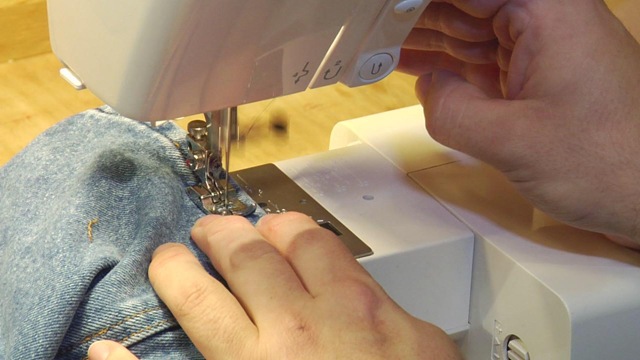
    sewing denim jeans

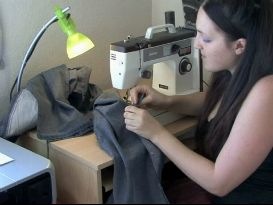
    Sewing is an important part of the entire process of the creation of correct jeans. In this article, we shall find the main types of sewing , sewing yarns normally used and some do’s and don’ts on sewing.

    Types of Stitch For Denim Fabrics


    A)Double Backstitch

    This type of stitch is important not only with regard to the finish of the jeans but is also used for the

    1. Preparation of the fly.
    2. Placing patch pockets
    3. Decorative backstitching on pockets
    4. Extra Strong seams
    5. Preparation of the waist


    B)Double Chainstitch

    Though many of its end uses are similar to double backstitch, some other applications are :

    1. Double extra-strong seams
    2. Preparation of the waist
    3. Closing seams as safety seams


    C)Overedging

    This type of stitching is applied to polishing or overedging jobs, such as folds over flies, visible pocket seams and hems and jointly with the double chainstitch, as safety stitch for closing seams , such as side seams or seasm as used on crotches a, as well as for closing pocket sacks.

    Sewing yarns for Denim Fabrics

    The ideal yarns for manufacturing jeans ar e the contiuous polyester yarns lined in cotton. Thye offer advantages as regards the high resistance of the Polyester core, with the cotton improving the  safety of the seam , even on automation and perfectly harmonising with the denim fabrics.

    There are various degrees of yarn thickness available for the manufacture of jeans..

    1.Polyester-Cotton Yarn H25 (Nm25/3) and H35(Nm25/2)

    Both the degrees of thickness are used for trimming seams , both in double backstitch and dboule chainstitch. H25 yarns is mainly used for getting a marked effect  and H35 for a subdued effect.

    Thickness of needle suggested : Nm.120 to 140 for H35 and Nm 130 to 160 for H25

    2. Polyester-Cotton Yarn H50 (Nm35/2)

    This sewing yarn is ideal as lower yarn for spools or anchors , combining with thicker yarns for trimming stitches as well as for trimming stitches for lower relief seams.

    Thickness of needle suggested :Nm 100-120

    3. Polyester Cotton Yarn H75 (Nm 50/2)

    Mainly used for non-visible closing seams , both in double backstitch and in double chainstitch,. Due to concentration , this i s also used for overedging.

    Thickness of needle suggested – Nm 100-120

    4.Polyester Cotton Yarn H120(Nm 80/2)

    To Overedge the pocket sacks , preference is give, sometimes due to cost, to specially fine seewing yarn since the consumption of thread for overedging is much higher as against dobule backstitch or double chainstitch on the same length of seam.

    Thickness of needle suggested – Nm 80 -100


    Suggested Stitches per cm – for denim fabrics using the above yarns.

    H25 – 1.5  to 2.5 stitches/cm

    H35 – 2 to 3 stitches/cm

    H50 – 2.5 to 3.5 stitches/cm

    H75(Nm 50/2) – 3.5 to 4 stitches/cm

    H120 (Nm80/2) – 3.5 to 5 stitches/cm


    Some recommendations for sewing stretch denim fabrics

    Stretch denim is different from other normal fabrics and sewing has to take into account that the lycra thread should not get damaged during the stitching. Some recommendations:

    a)Pattern making : Front and back trouser trouser legsmust be sewn with the weave.

    b)Sewing guide notch : It is important that the front/back components of the jeans have sewing guide nothces in order to avoid possible shifts when sewing, since the notches erve as reference for the sewing process along the seam.

    c)Spreading out : Maximum 6 –7m lenght and 30-35 layers , and spreading out must be done with machine to avoid different tensions.

    d)Cutting : not before 2 or 3 hours have lapsed in order to allow the fabric to relax.

    e)Sewing :Use chain type sewing machine, with minimum 5-6 stitches per cm and sewing RPM at 3000-5000

    A difference of 0.5 cm between components could cause twists.

    f)It is important that the inside legs and sides of garments should be made in the opposite directions.

    g)If there is surplus fabric in one component on making up the garment, do not cut this off , as this would lead to different shrinkage on washing in the cut component and therefore deformation.

    h)Washes: Since stretch fabrics have  elastane in the weft or even sometimes in warp also, they must never be subjected to the same washing procedures as applied on Denim Fabrics made of 100% cotton. Stone washing must be effected with enzyme products (but they should not be acidic as they reduce the weight and resistance) , together with used stones at 50%. Hypochlorite must never be used as this damages the elastane.

    i)Ironing : A temperature over 180 degrees celcius begins to damage the elastane. Hence care should be taken accordingly.

    denim jeans

  • Munich Fabric Start – Denim Fair from 1st to 3rd September 2009

    For those wishing to be in constant touch with the latest denim fabric trends , Munich Fabric Start is one of the important fairs where denim mills from around the world shall be displaying their latest products. The Munich Fabric Start is a bi-annual fair with the last fair held on 3rd Feb 2009.

    When and where  is the show ?

    The show shall be starting on the 1st Spetember through 3rd September at Munich ,Germany.

    Which Denim Mills are expected to participate  in the show ?

    The  core group comprises of Denim Mills like Hellenic Fabrics (Greece), Ortaanadolu(Turkey),Italdenim(Italy),KuraboDenim (Japan) ,Raymond UCO Denim (India), Kuroki (Japan)  etc .
    Some new mills are expected to participate this time including  Rainbow Denim (India) , Kassim Textiles (Pakistan) , Swift (France) etc..

    What is the denim trend motto this time ?

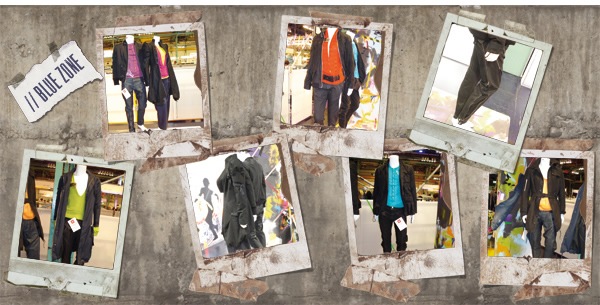
    The bluezone is oriented towards the motto “Sonic Youth”. This trend theme stands for an anti-establishment movement and the individual lifestyle of a rebelling youth ready to fight for its ideologies – whatever it means !
    WSGN – a leading fashion and style forecaster will present the denim trends in the forum area..

    Some highlights of the last fair in Feb’09

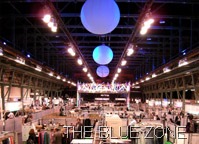
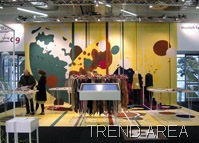
    1. Last time around, about 59 denim mills, washing plants and finishers participated in the the denim zone – The Blue Zone – exhibited their fabric collections and new finishes.  In the last show, an interesting highlight was the presentation of  over 16 styles of  jeans and tops  of Xfit lycra created by the students of the University of Hanover under the auspices of the Bogner Jeans .
    2. Denim fabric trends : Bleached ocean blue ranging from light blue to almost white, bold destroyed effects, fabrics in washed medium colours, arty and moon-washed fabrics, coloured and washed-out denims, striking graphics, colourful prints, raw denim,
      but dark, denim shirts, glitter effects.
    3. Download the report on the denim zone – the Blue Zone – here
    4. Some denim related photographs from the last Munich Start Fair
      teaser_bluezone
      Denim trend
      munich fair denim
      ortaanadolu
  • Denim Fairs & Exhibitions Worldwide

    We have created a new page on the site regarding the Denim Fairs and Exhibitions that take place around the world. All the important fairs held in last 6 months and the fairs to be held in the next 6 months shall be listed here – though I will try to list a bit more of them.


    The interesting part would be that the fairs which have been held will have links to the reviews on denim against their name. Thus even if you have not visited the fair, you can have a fairly good idea of the fair from these links.


    Just visit this link on Denim Fairs & Exhibitions  and bookmark this page for future reference. Also, leave comments if you feel any important fair has been missed..

  • Energie Spring/Summer 2009 Denim Collection

    Energie is a young trendy denim brand from Italy which places considerable value on non-conformity and freedom.Using finest fabrics and with focus on stylish washes, Energie has a collection of some finely created jeans.

    The Spring/Summer 2009 collection is also non-conformist with a lot of ‘Acid Washed- Grunge denim’ seen.  Focus is still on dark denims washed heavily ,bleached and given acid wash looks. There  seems to be an abscence of ripped, torn denim which is the flavour of the season with most of the brands.. See the 38 second video for some quick looks :


    Also Visit Our Special Page on Denim Collections

  • How A Pair Of Nudie Jeans Are Made?

    For those who have not seen the full manufacturing process of a jeans right from the Cotton Cleaning to Final Packing of jeans, this small video would be a interesting piece to watch.

    Prepared by Nudie JeansTV – the official YouTube channel for Nudie Jeans Co., it covers all the aspects of manufacturing of jeans by Nudie Jeans. Though the process would be more or less same for all denim manufactured, the finishing and washing processes can sometimes differ from company to company.

    The first 1 minute of the video show the Denim Fabric manufacturing process (which is actually not done by Nudie or most of the denim brands – but by denim mills around the world) and then the interesting part starts showing the application of hand sanding and other finishing techniques. Enjoy the video!


    Related Posts : Pepe Jeans Behind The Scenes Spring/Summer ‘09 Collection

  • 100 jobs cut at ITG Denim Plant in Greensboro , USA

    International Textile Group Inc. has cut 100 jobs at its White Oak denim-manufacturing plant in Greensboro — about 25 percent of the work force.

    It is the second time in five months that the company has eliminated jobs at the plant in an attempt to balance production capacity with demand for its denim from such customers as Levi’s. ITG cut 150 jobs in December as part of eliminating yarn production at the plant.

    • We have seen considerable negative news related to Denim plants originating in last one year specially from US and Europe –

    M0unt Vermon Mills cuts 250 jobs at Trion Plant

    UCO Denim Unit Shutting Down

    Hope we don’t see many more of these news …..

  • Denim Videos on Boyfriend Jeans & Turn Baggy Jeans into Skinny

    Following in the series of interesting denim videos for our readers, here are a couple of other videos which you should interesting. The first one will be useful for those who want to know what to wear with Boyfriend Jeans – this is one of commonly asked questions and many girls are looking for an answer on this. This video from Nordstrom gives you some ideas on the same. The second will help those who want to turn their baggy jeans into skinny .


    What to wear with Boyfriend Jeans?


    How to turn your baggy jeans into Skinny Jeans?

  • Denim buyers – Fabrics & Jeans dt. 16th March 2009

    Here is the weekly report on links to Denim Buyers’ enquiries from around the world.


    Buyers of Denim Jeans

    1. Denim Jeans – Stretch.
    2. Denim Jeans required from Bangladesh Suppliers .
    3. Stock lots of Children Jeans .
    4. Buyer looking for Kids Jeans Manufacturer in Guangdong.


    Buyer of Denim Fabrics

    1. Premium Ring Selvedge Denim 14 oz or more .
    2. Black Denim Fabric 15000 yards.

    These enquiries have been collected from other sites. Denimsandjeans.com is not responsible for the accuracy or otherwise of the same. Please exercise reasonable caution while proceeding on the same.

  • Interesting Denim Videos – Assorted (10th March 2009)

    As I mentioned previously, we shall be posting every week interesting videos on  the net Denim . Here are a couple of videos to start with. Do leave your comments whether this weekly post on Denim Videos will be of interest or not.

    The first one is a fashion video by H&M and two of their designers show what they feel shall be in trend in denim this summer .

    H&M Fashion Video

    The second video would be interesting for those who want to create their own vintage jeans. It shows how you can turn your jeans into vintage jeans using coffee !

    DIY Vintage Jeans With Coffee 

    This post is part of series of weekly reports on denim videos. If not already subscribed, you can receive free email updates by entering your email address on the right panel.