Category: denim

  • Indigo Rope Dyeing : Operation , Duties, Inspections & Responsibilities


    Morrison Spectrum Indigo Range

    Morrison Textile Machinery is a global leader in textile processing machinery. They are particularly famous for its Rope Dyeing Machines for denim  fabrics and have installed over 200 machines worldwide. They have shared with us some information on the ‘Duties and Responsbilities of the Indigo Dye operators’ and this info would be useful for many of our readers(with technical background)  who come from various denim mills around the world. Here is the summary of the information provided by Morrison.

    “Based on our experience in the start-ups and operations of over 200 indigo rope and dye ranges, we have prepared a listing of the basic duties which must be included for the maintaining of a proficient operation of the indigo rope range.

    These  duties and functions are broken down into into three parts :

    1. Duties  to be performed before starting the range
    2. Duties to be performed while the range is in operation  and
    3. When it undergoes a normal shutdown.

    Normally, 3 operators would run this operation. However, in the beginning, we certainly suggest more during the training period.During this time, the most qualified personnel may be selected to become the head operator or unit supervisor — whatever the title might be.

    Assignment of these various duties and responsibilities will be left up to the dyeing manager, but all the operators should become aware of the many and various duties which must be performed.
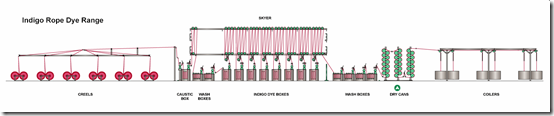
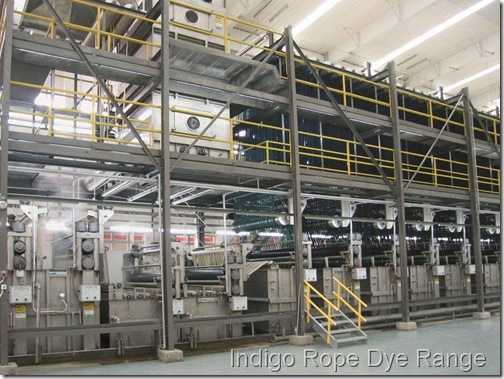
    indigo rope dye range

    I. Before Starting The Range

    1. Turn on steam — Check supply.

    a. Dry Cans

    b. Prescour Box

    c. Rinse boxes – Softener box (if applicable)

    2. Check all valves for proper position for "RUN".

    Indigo Boxes and Circulation System

    a. Discharge Lines – Indigo Boxes – Open

    b. Leveling Lines – Open

    c. Indigo Feed Lines – Open

    d. Restriction Valve – Feed Header – Partially Closed – To be run 12 – 15 PSI on 6 – Dip. Run wide open on 8 – Dip.

    e. Pump – out line to Holding Tank – Closed

    f. Return Line from Holding Tank – Closed

    3. Make sure prepared box mixes are transferred to the boxes and the box volumes are correct. Fill to the overflow.

    a. Prescour

    b. Indigo boxes (if charging or replenishing)

    Softener box (if used)

    4. Recheck and Set Steam Controls

    a. Prescour Box

    b. Softener Box

    c. Dry Cans

    5. Check circulation filter to make sure it is clean.

    6. Check indigo and chemical metering pump filters.

    7. Turn on main power to range.

    8. Turn on circulation pump (manual). Run 10 minutes then turn off.

    9. Recheck for proper valve positions are correct for flow through desired filters and pumps.

    10. Make sure all feed mixes are prepared and adequate volume is available for startup and beginning of run.

    a. Indigo Stock Mix

    b. Indigo feed mix. If not running supplemental chemical feed or hydro boost, do not add hydro until just before the range is started.

    c. Chemical feed mix (if running chemical feed). Have pre-cooled caustic and water prepared and hydro weighed. Do not add hydro to the chemical feed tank until just before the range starts.

    d. Prescour Feed Mix

    e. Softener Mix (if used)

    11. Check for proper position of valves on all feed tanks.

    a. Drain valves – closed

    b. Valves to feed pumps – Open

    c. Valves to other auxiliary feed tanks -closed

    d. Valves to indigo stock transfer – closed

    12. Following tank valves are OPEN

    a. Indigo feed to metering pump – open

    b. Prescour feed mix to box level control or transfer pump – open

    c. Softener feed tank to metering pump or flowmeter – open

    d. Chemical feed tank to metering pump – open

    13. Make sure valves to metering pumps (at pump area) are in proper position.

    14. Check Indigo Box Conditions

    pH: 11.8 – 12.0

    ORP: 780 – 800

    Hydro Tit: Single vatometer reading:

    1.8 – 2.0

    Caustic Tit: 1.8 – 2.0 G/L

    If necessary, adjust the box conditions upwards with an addition of hydro and/or caustic.

    Make up in solution and add to the boxes or use the metering pump if desired.

    If addition is necessary, circulate 10 minutes and recheck conditions after turning off circulation pump.

    15. Wind lead-line slack onto the ball warps.

    16. Open tension bar (if closed).

    17. Recheck all feed line valves to metering pumps.

    18. Check indigo feed and chemical feed (if used) pumps for specified delivery. Recheck and adjust if necessary.

    19. Lower all nip rolls and check for proper nip pressure.

    20. Set switches on circulating and feed pumps to "automatic" position. Pumps will now start and stop with range.

    21. Turn on and adjust water nip sprays at rinse boxes.

    22. Recheck temperature and level in the prescour box.

    23. Check temperature in the softener box.

    24. Turn on softener feed (if used) at box flow indicator and control or metering pump.

    II. Dutiea and Responsibilities while the range in running

    1. START RANGE

    a. Observe compensator positions and watch for slack warps.

    b. Observe tracking and watch for problems with lead line.

    c. Recheck metering pump – only to see that they are pumping.

    d. Prepare to change lead line tubs to yarn tubs at coilers.

    e. Observe for any abnormal behavior of coiler operation.

    f. Recheck dry cans and condition of moisture in running yarn at coiler.

    g. Lay out end of rope at coiler position designated for "lay-out" inspection.

    2. During 1st 20 minutes of running

    a. Check water sprays at nip rolls on rinse boxes.

    b. Check roll nip pressures.

    c. Check compensator arm positions. Trim vernier rheostats if necessary.

    d. Make sure tension bar at front of range (draw roll) is open o- no drag.

    e. Recheck for desired drying conditions – 5 to 7% moisture left in the yarn.

    f. Observe running warps at each box – especially for laps on sky rolls.

    g. Check dosification of metering pumps. Record.

    h. Check flow and level in prescour (or sulfur bottom) box.

    3. 1st 20 minutes of operation

    a. Check flow and temperature of softener box.

    b. Recheck range speed.

    c. Check circulation pump operation.

    d. Observe coiler operation.

    e. Check indigo box conditions – record. Determine if conditions are satisfactory. Record data in log book or control monitor sheet.

    4. Specific Duties While Range is Running.

    Perform duties and record in Log Book

    a. Check flow to softener box (if used) – also temperature.

    b. Check range speed.

    c. Check circulation pump operation. Observe pressure on discharge restriction valve (if applicable).

    d. Clean circulation filters every 3 hours.

    e. Check indigo box conditions hourly and record.

    f. Check indigo and chemical feed metering pump delivery hourly and record.

    g. Constantly patrol range. Look for any abnormalities. Patrol and observe.

    – lap-ups – sky rolls and other areas

    – bearing noise – unusual metering pump noise

    – interruption of metering pump delivery

    – reduction problems (indigo squeeze nips)

    – abnormal tension – compensators unbalanced

    – incorrect water spray at nips

    – high or low level in indigo boxes

    – drying conditions – too damp or too dry

    – incorrect air pressure at nips

    – motor overload

    h. If machine stops, insure that circulation and metering pumps stop with range.

    i. If range is necessarily slowed down, make sure metering pumps are adjusted.

    j. Prepare new feed mixes prior to need. Keep chemical stock near preparation area.

    k. Turn in new feed mixes just after old mix is exhausted. Rinse dye tanks before new indigo preparation.

    l. Check "wet out" of yarn in sample from prescour mix.

    m. Observe warps for problems or lost ends.

    III. When Dyeing Range Stops- End of Set

    1. Adjust the tension bar at the stock draw roll to induce tension on the incoming lead lines. Do this before "pulling off" and plaiting leads.

    2. Turn off metering pumps and circulation pump.

    3. Turn off water and steam at nip sprays and boxes.

    4. Close valves from feed tanks.

    5. Raise all nip rolls.

    6. Drain wash boxes and prescour box. Remove any lapped up ends from rolls.

    7. Flush out lines and metering pumps. Left over chemical feed may be used if pump piping is appropriate.

    NOTE: Never leave indigo in the metering

    pumps for an extended period of time.

    8. Clean metering pump and circulation pump filters.

    9. Turn off power to range.

    10. Tie "bow ties" in lead lines at all accessible areas. This prevents fraying of lead lines, prevents laps.

    11. Check and clean metering pump back pressure valves. Replace diaphragms if questionable. This should be practiced weekly.

    12. Clean feed tanks that are empty.

    13. If low volume is in the indigo feed tank, transfer back to the indigo stock tank

    14. Small volumes of chemical feed mix may be pumped through the metering pumps into the range. This in many cases will avoid hydro addition to the boxes when the range is restarted.

    15. Check and remove any yarn lapped on sky rolls.

    16. Clean range area – floor, etc.

    17. Dispose of any empty drums, bags, etc.

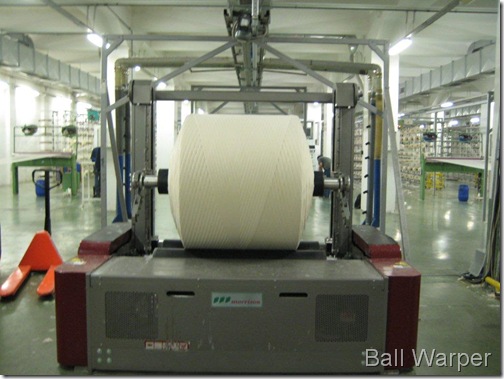
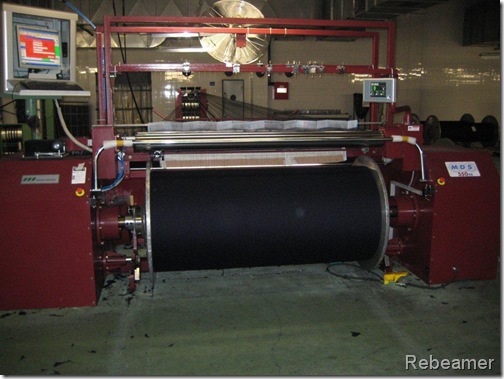
    About  : Morrison Textile Machinery is a global leader in textile processing machinery.Since its founding nearly fifty years ago, Morrison Textile Machinery has been designing and producing the  textile dyeing and finishing machinery for fabric producers worldwide. Known the world over for their Rope Dyeing Machines, Morrison has also started producing denim preparation machines like Ball Warpers and Rebeamers – and as a result becoming a single source of machines for Indigo Rope dye and denim finishing.
     

    Orta Taper

    rebeamer indigo yarn

  • Denim Jobs Update

    As we previously announced the launch of the jobs board at Denimsandjeans.com. I would like to inform about the latest additions to this board . It is now much more extensive and can be used by professionals around the world for searching for denim jobs .

    Denim jobs in USA

    This section is now very extensive and enables one to find denim jobs in various states/cities of USA including L.A, New York and many other places. Have a look at the picture below. The arrow shows the cities in US for which the denim jobs can be searched. Just click on any of the cities to find latest denim jobs in those cities.

    jobs1


    jobs2

    The left panel on the board also enables one to filter the results by various other criteria eg Designer jobs, Production Jobs and can be combined with other criteria of job type like  Permanent, Part-time, Contract etc and the results can be collectively filtered. See image on the left side


    Denim jobs in rest of the world

    What about denim jobs in the rest of the world?
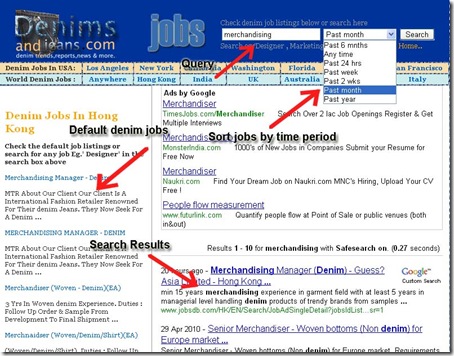
    We have now made it easier to find latest denim jobs in various countries around the world eg Hong Kong, Italy, Australia, Canada, India etc.  Have a look at the image  below  :

    jobs3

    Just click on ‘Anywhere’ if you are searching for jobs at any place around . Once you are on the new search page, just search for any query eg ‘Designer’. You will find new job listings in the search results which would be from anywhere in the world.  However, if you want to restrict your search to any particular country, we have given the option for some countries including Hong Kong, India, UK, Australia, US, Canada and Italy. We shall be adding more individual country searches soon.
    Just click on any country name and the search page for that country will open. Eg, for denim jobs in Hong Kong, we click on ‘Hong Kong’ and we immediately get results for denim jobs there. Searching for any position eg ‘ ‘Merchandising’– would enable one to find the merchandising jobs in Hong Kong. Similarly , jobs in other countries can also be searched individually.

    jobs hongkong

    Thus you can use the extensive jobs board for searching for almost any kind of denim job around the world. 

    Posting denim related requirements

    Companies can also post their denim jobs on our jobs board and get eyeballs of a large number of denim professionals .  For a small fee, the jobs would be posted on the main job search page and remain there (at the Top) for 30 days .This , however, entails a small fee .

    image

    We would be very happy to receive reader comments on our jobs section and it would enable us to make this service more useful to the industry.

  • How To Sew Extra Heavy Thread Sizes In Denim Jeans ?

    sewing-thread This is the second in the series of  technical bulletin and guide from American & Efird ( a global leader in denim sewing threads) for the benefit of denim garment manufacturers.

    In this technical guide it can be  understood how to sew extra heavy threads on denim to make the the products unique .Retail designers are always looking for a way to make their products unique and this definitely applies to sewing denim garments. From a thread perspective, this can include various options as listed below :

    1) Using contrast color threads

    • For all topstitching operations
    • For different operations
    • For different needles of the same operation

    2) Using threads that will maintain their color regardless of the wash process.

    • Using a 100% polyester thread dyed with disperse dyes.

    3) Using threads that will wash-down depending on the severity of the finishing process.

    • Using a cotton wrapped core thread.
    • Using an true indigo dyed cotton wrapped core thread

    4) Using a thread that looks different than regular stitching thread.

    5) Using different thread sizes that give a bolder stitch appearance.

    In this guide, we will concentrate this option ie use bolder stitches on denim jeans .

    Larger Thread  Sizes  That  Give A Bolder  Topstitch  Appearance

    image

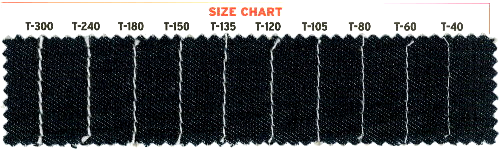
    Tex Size = Gram Weight Per 1000 meters of undyed yarn 

    Years ago the most common size of thread used for topstitching denim was a Tex 60 or 80 or possibly Tex 105 size threads. Recently many manufacturers have graduated to a Tex 120 size thread to give a slightly bolder stitch appearance. Today, many denim designers are looking at much heavier thread sizes including Tex 150, Tex 180, Tex 240 and even Tex 300.image
    This has created problems for many denim garment manufacturers because their normal denim sewing machines were not designed for these heavier threads.

    WHAT DETERMINES THE THREAD SIZE THAT CAN BE SEWN ON A SEWING MACHINE?

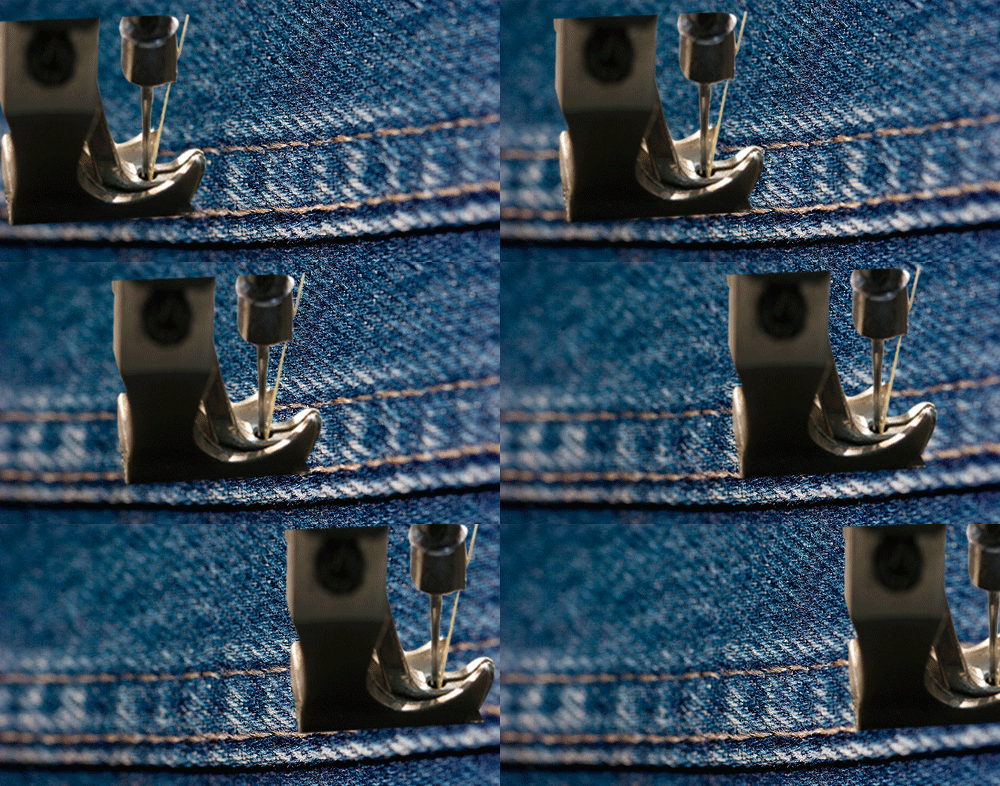
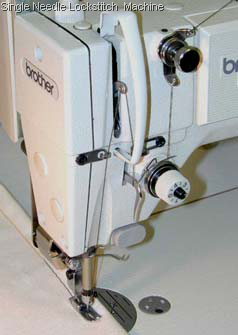
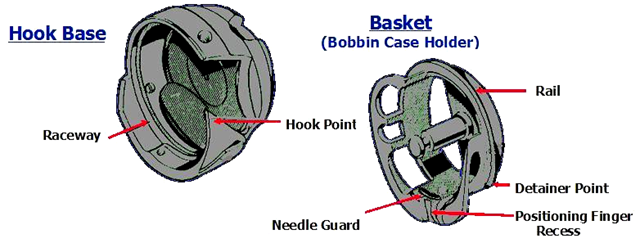
    On 301 lockstitch machines, the maximum needle thread size that can be Single Needle Lockstitch  Machine sewn is usually determined by the capacity of the hook or shuttle in the machine, and the size of the needle being used. There must be enough clearance between the bobbin case holder and the hook base to allow the thread to move freely around the hook during the stitch formation.
    Sometimes an older hook will work better on larger threads because it has more play in the raceway allowing for more clearance for the thread.
     

    The hook must also accommodate the use of larger than normal needles. In some cases, the retainer or gib of the hook is shaped differently to allow the  denim sewing
    thread to of the hook with less resistance. Note that the hook must be properly lubricated.

    Many sewing machine companies do make higher capacity Hooks that will allow larger threads to be sewn, but these are generally very expensive.
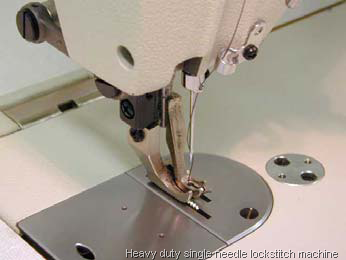
    Heavy duty single needle lockstitch machine There are also machines designed for sewing very heavy threads used for sewing upholstered
    furniture and leather goods. Some manufacturers are purchasing these types of machines so they can sew extra large thread sizes up to Tex 500 or Tex 600 thread sizes!.

    Heavy duty single needle lockstitch machine

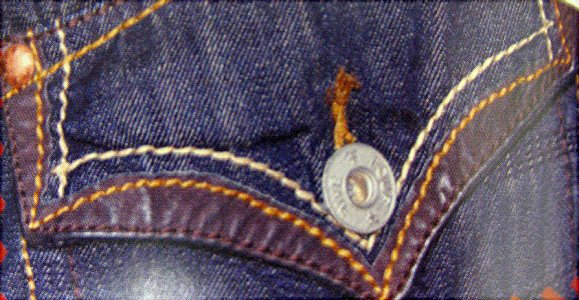
    Another option for sewing heavy threads on 301 lockstitch machines is to sew the heavy thread in the bobbin and using a regular size thread in the needle. This means that the seam is inverted when it is sewn. This is a common practice when setting front pockets or outlining the fly on a 5-pocket jean.
    It is easier to use heavier thread sizes in the needle position ofimage
    chainstitch machines
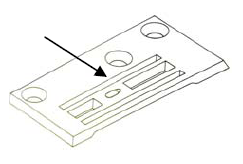
    , however, even these machine sometimes must be modified to allow the thread to be pulled up from under the needle plate with the least amount of resistance. This may include increasing the size of the needle hole in the needle plate.

    RECOMMENDED NEEDLE SIZES FOR HEAVY THREADS

    Most manufacturers who are sewing heavy denim are using a size 140 needle. When sewing heavier thread sizes, larger needle sizes must be used. Note: many times using a larger needle size will increase the occurrence of fabric damage and broken stitches due to needle-cutting.

    Thread Tex Size

    Minimum
    Needle Size (metric)

    T-105 – T-135 140
    T-150 150
    T-180 160
    T-240 200

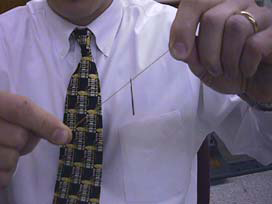
    image A simple test to determine if the needle and thread are compatible is to thread the needle with about 12 inches of thread. Hold the thread fairly taught, at a 45-degree angle, and with a circular motion make the needle twirl around the thread. As the twirling motion of the needle slows down, the needle should slide freely from the top to the bottom of the suspended thread. If the needle does not slide easily, then sewing problems Heavy Duty Single Needle Lockstitch Machine will probably result.

    THREAD TENSIONS REQUIRED FOR HEAVY THREAD SIZES

    Generally a heavier thread size will require more thread tension to properly set the stitch on denim fabric. The heavier the sewing thread being used, the more needle thread machine tension that will be required. Lockstitch machines will also require heavier takeup spring pressure. Also, all of the thread guides and eyelets may need to be used to help control the thread
    during the sewing cycle. This will also help to keep “French” knots from forming in the thread path that can restrict the proper flow of thread to the needle.

    Related Post : The A&E guide on ‘Denim Garment Stitching Recommendations’

    Need any advice on denim sewing ? Contact Al Irvine from A & E at this email address.

  • Denim Pollution – Solutions To Sulphur Dyeing Wastes

    denim dyeing wastes

                            This is a guest post by Harry Mercer
    The problem of treating wastewater from denim dye waste is significant in many developing countries. Either the costs of treating these wastes affects profit margins or the waste goes untreated and is discharged directly into rivers.

    The most serious pollution problem results from the use of sulfur dyes in denim. Once the sulfur dye is applied the cotton is squeezed and washed. Typically, 50% or more of the sulfur dyes are washed off, producing water contamination that is difficult to remove from water.

    Techniques have been developed to greatly reduce and even eliminate sulfur dyes as a source of textile pollution:

    • Unlike most types of cotton dyes, sulfur dyes can be recovered and re-used. The contaminated water from sulfur dyeing usually contains enough dye and chemicals to produce lighter shades without additions of dye or chemicals. For example, the wash-water from sulfur-black dyeing can be concentrated through evaporation, filtration or it can be re-used by adding enough dye and chemicals to produce the standard shade. There are methods for titrating sulfur dye with copper sulfate, reducing agents can be added to bring the ORP to the correct level and the alkali can be titrated with a 2-endpoint titration with HCl and formaldehyde. Using these techniques, the sulfur dye can be recycled which saves money and ends the pollution. It should be noted that sulfur dyes precipitated with an acrylic type flocculant cannot be re-used.
    • I have developed methods for sulfur dyeing that fix the dye completely, so that none is lost in washing, leaving the wash water completely clear. Depending on the quality of the dye,  which reducing agents are employed and the pH of dyeing, various inexpensive buffers can be employed that will fix 100% of the dye which eliminates the colored waste and also reduces the amount of dye needed by a sulfur black shade by 50% or more.These  methods were developed over a 20 year period and have employed them  in Brazil, Ecuador, Indonesia,  Phillipines and Thailand.
    • There are also cold-dyeing methods that also eliminate the dye waste 100%, saves energy and has colorfastness approaching that of a vat black.
    • Reducing agents are a major source of Chemical Oxygen Demand. Sodium dithionite sold commercially as sodium hydrosulfite has a COD of 0.22 kilograms per kilogram of 100% hydrosulfite. Since it is normally produced using zinc metal as a catalyst, there is also  some presence of heavy metal contamination. There are non-polluting substitutes that can be used with many Indigo-dyeing methods. Sodium sulfide-type reducers are commonly used, however they can be easily replaced for hot-dyeing methods with reducing sugars which includes sugar, dextrins (corn-sugar) and molasses. These have been offered by chemical companies for decades and basically break down under conditions of high temperature and high pH (11) into hydrogen and alcohol, which both escape into the air.
    • Sulfur blacks do not require chemical oxidation, in fact peroxide will reduce the colorfastness of sulfur blacks and acid-oxidation will weaken the yarn. – After applying sulfur black, it should be allowed to cool in air which takes the dye out of reduction and allows oxidation with atmospheric oxygen. The initial washing should be  cold in order to avoid washing off any color and also to allow further oxidize with  oxygen-rich cold water. The final wash should be warm, about 60 degrees, which will  remove alkalies and residual reducing agents. If noticeable color is removed, the dyeing procedure requires adjustment.


    imageThis is a guest post by Harry Mercer. Mr. Mercer has 30 years experience in the denim business including 3 prominent U.S. denim companies.He is an expert colorist for measurement and color matching as well as textile testing.

  • Denim Sewing Threads – Garment Stitching Recommendations And Guide

    image American & Efird (A&E) is a global leader in denim threads manufacturing. With over a century of experience in industrial threads , they come out with number of technical bulletins to help and guide denim garment manufacturers to optimize seam performance in denim stitching so that not only rejections due to stitching are minimized but also the life of the garment is extended with better stitching.

    Here are some recommendations from A & E to optimize seam performance.

    Denim Jeans – Optimizing Seam Performance

    Selecting the proper thread for denim garments is very important to minimize sewing and seam performance issues. There is an old saying that:

    Thread only makes up a small percent of the cost of the finished product … but shares 50% of the seam responsibility.

    A typical pair of adult size jeans will have from 200 to 250 yards of thread in them depending on the seam construction. Most major jean manufacturers have experimented with different thread types to reduce cost but most have found that corespun threads give the best overall
    performance. Most jean manufacturers put their products through various wash processes after manufacturing and some of these processes can be very harsh. The cost of these wash processes can be from $.75 to $3.00 per jean or more depending on the chemicals, stones, enzymes and process time required. The amount of thread used in a jean typically costs between $.25 and $.30 while the wash-process can cost up to $3.00 per jean.
    The thread must be able to withstand all of these processes … and hold the seams together for the life of the garment.
    When you talk about sewing denim, there are four key issues that need to be considered:
    1) What is the weight of  denim fabric?
    2) How large  topstitching thread is required?
    3) What finishing procedures will the jeans be subjected to?
    4) What quality issues need to be addressed?
    With these questions answered, you will be able to produce jeans that meet the requirements for today’s  huge variety in Jeanswear. From a basic 5-Pocket Jean to the most creative pair of High-Fashion Jeans, your sewing plant can produce the quality for each.
    The thread of choice used by most quality denim garment manufacturers for topstitching and stress seams include corespun threads ie

    What Are Corespun Sewing Threads?

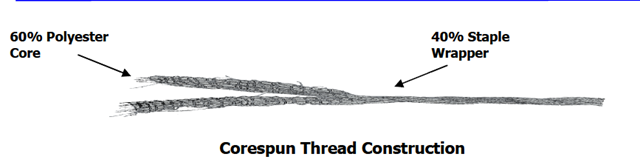
    Core threads are made by spinning a wrapped of cotton or polyester staple around a bundle of continuous filament polyester fibers to form a yarn and then two or more of these yarns are twisted together to form a corespun thread. Generally the core makes up approximately 60% of the thread construction contributing to a more uniform and higher tenacity sewing thread as compared to a 100% spun polyester sewing thread. For example, a T-60 PW Core thread will have a breaking strength of approximately 8.7 lbs. while a T-60 Spun Polyester thread will have a breaking strength a little over 5 lbs.

    core spun denim thread

    Corespun Thread Construction

    Cotton wrapped  core spun threads have very good needle heat resistance. When wrapped with a polyester wrapper, core spun threads have excellent chemical resistance and color fastness. The fibrous surface on either thread reduces the shiny look and also contributes to superior frictional characteristics as the thread passes through the sewing machine.

    • Some designers prefer the thread to wash-down during the wash processes and if this is the case, you would select a Cotton-Wrapped Core thread . Degrees of color fastness will vary with particular shades. With this known factor, a user of Cotton-Wrapped Core should look at all wash codes to ensure that the thread color will be appropriately maintained. Also  recommended is  doing pre-production wash testing to assure that the wash-down look will
      be acceptable.
    • On the other hand, many jean designers want the thread to maintain its color for the life of the garment and offer a signature look.  If color fastness is key, then select a Polyester-Wrapped Core thread . Also with Polyester Wrapped products you have the option of picking the desired color from a color palette to obtain the look you want after the wash procedures. This will allow greater shade control, which will be maintained after continual washes by the consumer. Doing pre-production wash testing prior to going into production is still recommended.
      Cotton-Wrapped and Polyester Wrapped Core threads offer excellent abrasion resistance to the varied wash codes the denim garments may be exposed to.

    Thread Size

    Both of these thread types are available in sizes to meet the variety of denim fabric weights. From a Tex 40 to a Tex 120, you can achieve the desired performance throughout the sewing floor and after the varied finishing processes. Utilize the correct size to obtain the desired look while maintaining seam integrity. Some basic sizes utilized in today’s denim manufacturing are:

    Needle Thread Looper Thread Serging Application
    Tex 150 – T-300 Tex 80 or Tex 60 T-40 or T-60 Extra Bold appearance
    Tex 120 to T135 Tex 80 or Tex 60 T-40 or T-60 Bold appearance
    Tex 80 or Tex 105 Tex 60 or Tex 40 T-40 or T-60 Normal
    Tex 60 Tex 60 or Tex 40 T-40  
    Tex 40 Tex 40 * T-40  

    *8 oz denim usage or Chino twills

    Cut or Broken Stitches

    denim stitchingMost manufacturers of denim and twill  garments that pre-wash garments after they are assembled have experienced problems with excessive “cut” or “broken” stitches. In fact many manufacturers have found this problem to be significant reaching in excess of 30 to 40% of the
    products being sewn
    .
    Many times this problem occurs when adenim stitching thread  previously sewn stitch-line is crossed during a subsequent sewing operation and the needle damages the thread in the seam. Broken stitches can also occur when there is excessive abrasion or chemical degradation of the thread during the wash process. Let’s now discuss what are some  of the solutions to these problems.

    Solutions To Cut Or Broken Stitches

    • Many manufacturers have significantly reduced the number of “cut” and “broken” stitches by using high-performance sewing threads on stress seams. Make sure the correct thread type and size are being used in both the needle and bottom (looper) positions. Core threads that have a continuous filament polyester core are much more resistant to cutting and degradation than 100% spun polyester thread constructions.
    • Usually the larger the thread size, the more resistant the thread is to being cut by the needle or failure due to chemical degradation or heat. Because of this many manufacturers have increased the thread size on critical operations including waistbanding, seat seaming, etc. Typical thread sizes used on heavy denim run from T-105 down to T-60 depending on the desired look. Typical thread sizes used on twills used in the manufacturing of chino pants run from T-40 to T-60.
    •  Inspect the needle point at regular intervals and check for sharp or burred points. If the needle point is damaged, replace the needle. Many companies have found that it is best  just to replace the needle on critical operations once or twice a day.
    • Check for signs of needle heat or excessive heat exposure during laundering that may be melting the thread. Usually if the thread has been damaged by heat, the thread will have a hard melted surface that can be felt or seen using a magnifying glass. If you suspect
      that needle heat is a problem, try using a special coated needle or needle coolers to  reduce needle heat. Make sure the thread has the proper type and amount of lube. Most major thread suppliers have developed high-performance lubricants to minimize heat
      damage on polyester threads. A cotton wrapped core thread may be more resistant than a 100% polyester thread.
    •  Use proper thread tensions. Make sure the stitch on the seam line is loose and able to move if it is hit by the needle. Tight machine thread tensions will NOT allow proper flexibility in the stitch and will increase “cut-stitch” damage. Generally on chainstitch seams, the ideal stitch balance is when the needle loop on the underside of the seam lays over half way to the next needle penetration. This can be checked by unraveling the looper thread and observing the needle thread on the underside of the seam or checking the ratio of needle to looper thread. It is normally recommended that this ratio be
      approximately 60% needle thread to 40% looper thread consumed.
    • Check the edges of the needle plate and presser foot needle holes to make sure they do not have any sharp edges or burrs that can damage the thread during sewing. Properly remove all burred or sharp surfaces making sure not to oversize the needle holes which
      can lead to excessive “flagging”.
    • Inspect the feed dog teeth directly behind the needle holes and make sure they are not sharp. If required, buff the feed dog teeth with a wire wheel or with a stone if they appear to be sharp. Be careful not to remove too much of the feed dog teeth that could hinder the feeding or interfere with chaining.
    • Use the minimum amount of presser foot pressure to get a uniform stitch length. Excessive presser foot pressure can cause the thread to be damaged when it is compressed against a relatively sharp surface. On some machines it is sometimes necessary to use a presser spring with fewer coils per inch to give more consistent pressure even when crossing heavy seams.
    • The proper type and capacity folder should be used to prevent stalling when crossing heavy seams. Feed stalling will increase the chances of “cut” stitches.

    DAMAGE DURING PRE-WASHING

    Sometimes partially damaged thread from the sewing operation will fail during stone washing or other processes. Most of the time this damage is difficult to detect but should be investigated using the suggestions mentioned on the previous pages. On the other hand, many seams are damaged during the wash processes due to excessive abrasion, chemical degradation, and heat degradation.

    denim stitching problem

    To reduce damage to the thread in the seams,  the following is suggested:

    • Make sure the correct thread type, construction and size is being used. For example, the product  Perma Core® NWT.
    • Work with your laundry to develop standards with regard to the type and amount of chemicals, rocks, cycle times and temperatures that are being used in both the washing and drying processes. You should monitor and properly test the following:
      a) Any changes of rocks and chemicals from one vendor to another
      b) Changes of cycle times
      c) Changes in temperature during the washing or drying cycles
    • Evaluate the best way the garment should be processed, whether it should be inside-out or right-side-out, the fly buttoned or not buttoned, etc. Care should be taken if the garments are turned right-side-out when they are still wet. Extra moisture in the garments can cause excessive whipping of the bottom hem seam causing excessive
      damage.

    To know more about denim stitching , different types of threads and guides on stitching ,  visit here.

  • G2 Waterless Denim Washing Machine From Jeanologia

    image Jeanologia is  a company from Spain dedicated to providing eco friendly finishing solutions for  garments – specially denim.  With a corporate tagline of  “The Science of Finishing” it has been their mission for last 15 years to enhance industrial garment finishing through technology & know how.

    The concept of ‘Sustainable Denim’ – an eco friendly approach to denim is being enhanced by their various machines , the foremost of which is the G2 Waterless Washing Machine. This is a unique washing machine which washes denim jeans with about 60% less water  and almost no chemicals…….!!  In  Hongkong, Jeanologia had a large hall dedicated to their “Truth & Light show” where they displayed their uniquely washed garments.  The visiting denim experts were asked to select , from pairs of jeans, the jeans which had naturally aged and the one which had been made by Jeanologia with the help of their laser technology and unique G2 washing machine.Most of them could not differentiate between the two . It was an interesting way to understand that real aging effects could be achieved with eco friendly washing methods.

    How does G2 work ?

    Air from atmosphere is transformed into a blend of active oxygen and ozone called ‘Plasma’.This plasma is used to age garments. The plasma is transformed into purified air before it is returned to the atmosphere.

    What kind of  washing effects can it provide on the jeans ?

    G2 can provide various effects on the jeans like

    •Casting:

    • Aged Cotton – unique yellow cast for true vintage looks in Pure Indigosimage
    • Gray casts for a retro look

    •Cleaning:

    • Removes backstaining & loose indigo without detergents

    •Bleaching without the bleach!

    •Eliminates the need for Potassium Permaganate spraying.

    •Blacks and grey denim fade without turning brown.image

    •Eliminates yellow from bleach look.

    •Improves crocking in dark finishes.

    •Provides various other fashion finishes.

    If so less chemicals are used, how are these washing effects attained?

    Jeanologia use laser technology instead of chemicals to mark the washing details.If desired, further effects can be given manually by grinding and scraping. The laser maps out the washing details required and then the garment is given a short wash. The garments are then placed in G2 where the laser effects are brought out with the plasma. The garments are then rinsed and dried. This is how the washing details are attained.

    Is it possible to duplicate washing effects of an existing jeans ?

    Yes, with their laser technology, the washing effects of an existing jeans can be mapped out and then replicated on new garments . This does away with the trial and error approach to replicating vintage washing effects.

    What is capacity of the G2 machine in terms of load factor ?

    The machine has a capacity of 50 kgs ie it can wash about 3000 jeans in a day. G2’s programmable software system automatically adjusts gas concentrations to reflect load conditions (i.e., jeans, tees, wet, dry, etc).

    From a case study of actual production in the US,the company claims that using G2 can result in 67% savings in energy and water, 55% savings in time and 85% saving in chemicals and can thus provide a saving of $0.44 per garment washed besides contributing to environmental protection and reducing health hazards for the workers.

    Denim jeans  washing is one of the most environment polluting activity in  the apparel industry . According to Professor John Anthony Allan from Kings College London, a Kg of jeans comes to us after about 10,850 litres of water has been used ie 1 Kg of jeans has this much of embedded water . Of course this includes even the water used in growing cotton. But the carbon  footprint of jeans is very high.  In the recent years , the increased requirement for specialized washes has further increased the environmental impact of denim production. In such a scenario, any technology that makes it possible to cater to fashion requirements and at the same time contributes to environmental protection, should be welcomed .

    Here is a slideshow presentation on G2 Machine

    Jeanologia can be contacted here : Michelle Branch

  • Indigo Blue Dye: Not Only Blue – Some Interesting Facts

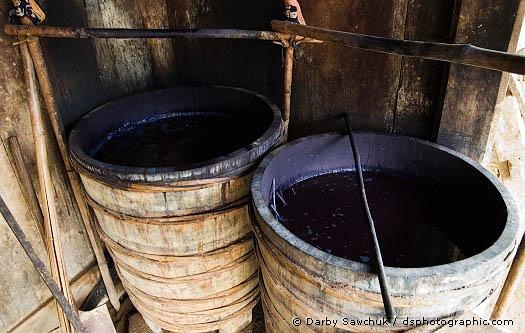
    indigo dye Indigo has been in use as a blue colorant for thousands of years as a natural dye, which was produced from the Indigophera plant in India and China and with woad in Europe. Indigo cultivation was introduced in the Americas in the 18th century, first in the West Indies and then in South Carolina. Indigo has throughout history been the colorant most in demand and current production levels are reported to be around 17,000 tons per year. Indigo was employed as a blue dye for wool primarily, until the 20th century, in fact, Indigo is a better dye for wool than cotton, being much easier to apply. There was another natural Indigo that was produced by shellfish at the eastern end of the Mediterranean Sea, known as Tyrian Purple, famous for producing the “royal purple” shade in antiquity. This dye is chemically different from the plant-derived Indigo only by the presence of bromine in the structure.

    In 1897, the BASF company began marketing synthetic Indigo which 002 - Indigo Dyegreatly increased the supply of Indigo-dyed fabrics. Once the technology for production of synthetic vat dyes was developed, a wide range of new colorants based on Indigo were available by the 1920’s. The COLOUR  INDEX , published by the Society of Dyers and Colourists in the 1924 edition, lists 54 colorants that were variants of Indigo !. The color range included the

    • Reddish brominated Indigo
    • Indigo Red
    • Indigo Yellow
    • Indigo violets
    • Oranges
    • Browns
    • Greys
    • Scarlets.

    In the 19th century natural Indigo was commonly used for printing and many of these new colorants were used for printing, especially of calico fabrics. The blue Indigo that is familiar as C.I. Vat Blue 1 is also referenced as C.I. Pigment Blue 66, when it is applied in printing.

    Other Indigoid colorants include:

    C.I. Vat Blue 5 produced by brominating Vat Blue 1 in nitrobenzene. In the 1990’s one U.S. denim company, Avondale, used this dye on a small 12-rope range to produce a fabric that was wildly popular in the fashion denim business.

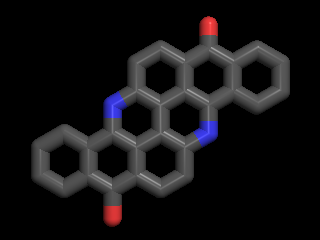
    C.I. Vat Red 41, a bright red thioindigo which can be produced withindigo molecule thiosalicylic acid. This is a very versatile vat red in that it can be blended with blue Indigo in alkaline sodium hydrosulfite as in normal Indigo dyeing, be applied like a sulfur dye with sodium polysulfide in continuous or batch opertions as well as garment dyeing. Thioindigo possesses the unusual characteristic of photochromism, changing color on exposure to light. One way to test the dye in order to assure that it is thioindigo, is to disperse it in chloroform in which the color shifts from a violet to a yellowish-red.

    C.I. Vat Black 1 and C.I. Vat Brown 42 are simply mixtures of blue Indigo and thioindigo.

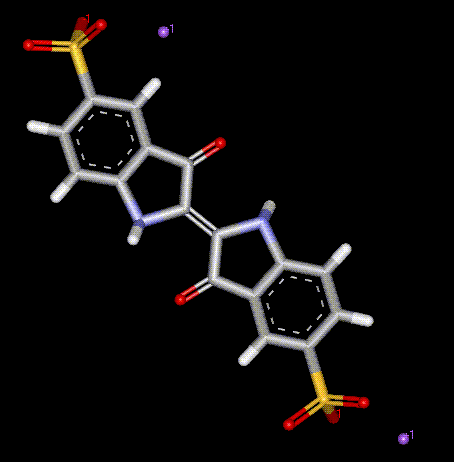
    C.I. Food Blue 1 is produced by sulfonating Vat Blue 1 in order toindigo food molecule produce 5,5′ indigotin disulphonic acid. This version is also listed as C.I. Acid Blue 74 and when insolubilized with aluminum salts becomes C.I. Pigment Blue 63. The highly-pure Food Blue 1 is used for coloring beverages, toothpaste, candy, mouthwash – in short, anything edible that is blue will use this form of Indigo, as well as use as a hair dye. Indigo has also been long in use to produce the blue color in fireworks !.

    Is Indigo Safe For Living Things?

    Indigo is so safe for living things that is has long been used to color medical sutures of  polyester, which is required because undyed-white sutures appear much like nerves and when the surgeon removes the sutures, the color prevents a nerve from being mistakenly cut. Originally, medical sutures were dyed with Indigo with solvents under pressure, but since then Indigo is dispersed in melted polyester resins, which are then extruded as filaments.

    All forms of Indigo exhibit the special brightness that is characteristic of the Indigoid structure and a full range of Indigo colors can be achieved readily on standard Indigo dyeing equipment by blending. Most of these dyes have steadily disappeared from market, having been largely replaced by the anthraquinones, however, they are simple to produce and perhaps there is a dye supplier that is interested in marketing this range of dyes, especially for the denim market !.

    imageThis is a guest post by Harry Mercer. Mr. Mercer has 30 years experience in the denim business including 3 prominent U.S. denim companies. He is an expert colorist for measurement and color matching as well as textile testing.

  • Pocketing for Denim Jeans That Go With The Vintage Looks

    Pocketing material is used in most trousers including denim jeans. It comes in various qualities going from 100% cotton to nlyon and polyester pocketing. 
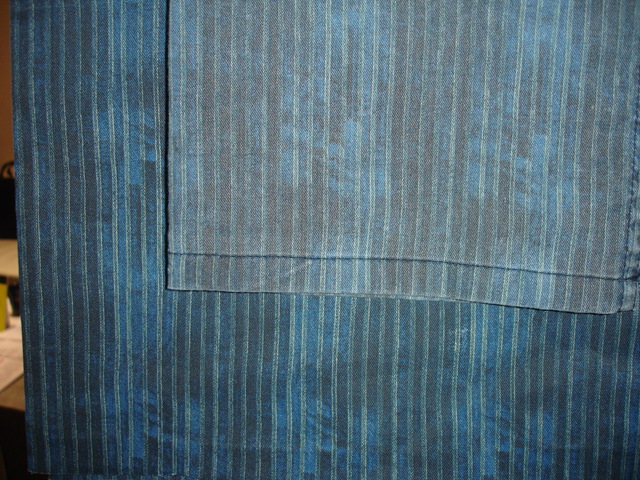
    Normally denim jeans use white, cream or similar lighter shades of different qualities of  pocketing fabrics . But what pocketing do you use if you are creating a vintage jeans and want your pocketing material to completely align with the looks of the jeans ? You want to show that your pocketing is as aged as your jeans ?

    Normal pocketing fabrics do not work in such a case . One has to use specialised pocketing fabrics which actually fade with the washing processes done on the jeans.. However, that is not enough – one has also to ensure that the fading of the pocketing fabric stops at certain stage and it retains color which does not bleed on to the undergarments.

    I came across some fabrics from Copen at Kingpins Hongkong , which actually have all the characteristics mentioned above.  I found the fabrics quite interesting – some of them are shown below :

    DSC05019 DSC05020

    DSC05023

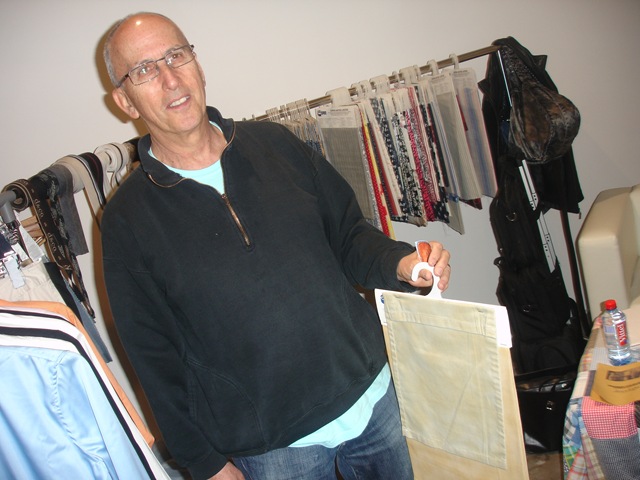
    Barry Emanuel from Copen showed me a number of such interesting fabrics which they supply to almost all major denim brands in the US. With the premium denim space getting more competitive, the brands are always looking at various ways to distinguish themselves from other brands and as Barry told me

    “ In a premium denim jeans everything has to be premium whether it is fabric, the pocketing, the rivets, tags or any other accessory’ .
    He also says “We have made pocketing fabrics – which is otherwise a very boring product – into a very interesting and lively product”. Agreed..

    About Copen :
    Copen was established in 1946 and has been in business for over 55 years. The company was originally a waistband manufacturer with a factory located on a military base in Jackson Tennessee. The company manufactures pocketing fabrics , waistbands ,printed bias tapes etc at various locations around the world.

  • Dirty Denim – A Look Into L.A Denim Business

    The wave of upscale jeans started in 2003 when a large number of national and international players descended upon Los Angeles and it became the centre of the denim growth story and  home to master denim technicians .

    Here is a series of some very interesting videos on the denim business – “Dirty Denim”- in L.A. The documentary created by Douglas Keeve is web exclusive and runs in 4 parts .Why the documentary has been named Dirty denim ? – Probably because of the stealing and cutthroat activities of many denim brands.

    Dirty Denim – First Episode

    In the first episode, we hear from top denim designers and technicians including Jeff Rudes(J Brand), Mik Serfontaine(Serfontaine), Gavin and Drew Foster(Chip & Pepper), Peter Kim(Hudson Jeans) and more…

    It is interesting to see that how serious or dirty the denim business is . Gavin and Drew Foster(the twin brothers at Chip & Pepper) mention that  they foresaw the premium denim wave coming and just plunged into it creating a multi million dollar business.

    Dirty Denim – Episode 1 Video

    Dirty Denim – Episode 2

    The second episode is quite interesting too. It shows the importance of the washing process in the creation of premium denim or any denim for that matter.
    And hitting the nail on its head, Chip & Pepper brothers  say–“ You can get the best denim in the world , but if you don’t have the right guy that knows what he is doing, he will f… it up”. Its a very interesting to watch the passion that the denim manufacturers put into their production. It is also clear that the manufacturers have to be on their toes all the time getting the right washes, creating new looks to beat the competition.

    Dirty Denim Episode 2 Video


    In the next post , the other two videos in the series will be posted and we will come to know why denim is dirty ?

  • Donate Your Old Jeans, Get 30% Off GAP And Help Insulate Homes

    image image

    Have some spare old jeans which you can dispense with ? Go to any Gap store and return your old jeans and get 30% off denim purchases at (selected) Gap stores till March 14th.

    Initiated by the Cotton Incorporated , the Cotton: From Blue to Green Project takes your old jeans and converts them into Ultra touch Natural Cotton Fibre Insulation for communities in need.

    The first From Blue To Green denim drive in 2006 collected 14,566 denim pieces across the US, more than double the anticipated amount. Since then, the project has expanded its reach through partnerships with national retailers and organisations including American Eagle Outfitters, Bloomingdales, National Jean Company, Ernest Sewn and G by Guess.

    To date, the UltraTouch Natural Cotton Fiber Insulation manufactured by Bonded Logic Inc. has recycled enough denim to create natural cotton fibre insulation for over 540 homes.The COTTON. FROM BLUE TO GREEN.® denim drive is a call-to-action to donate denim and give it “new life” by converting it to UltraTouch™ Natural Cotton Fiber Insulation. The insulation is then provided to communities in need to assist with building efforts. UltraTouch™ is composed of 85% recycled cotton fibers and is an environmentally safe, non-itch insulation without carcinogenic warnings, formaldehyde or chemical irritants. It provides exceptional thermal performance and acoustically provides 30% better sound absorption than traditional fiberglass insulation. In addition, it is one of the only insulating products that contain an active mold/mildew inhibitor.

    image


    PS:This offer is not valid online, at Gap Outlet, Gap Factory Store, or The Gap Generation stores. Not valid on Converse® or Stella McCartney for GapKids/babyGap.

  • Acne Jeans Autumn/Winter 2010 Denim Collection

    Here is a video – a little too hot- for the  Acne Jeans A/W 2010 denim collection .

    Here is another video – “Behind the scenes at the AW 2010 Presentation”

    Behind the scenes at the AW/10 Presentation from Acne Studios on Vimeo.


    Acne Jeans is a Swedish denim jeans  manufacturer and part of the Stockholm-based design firm “Ambition to Create Novel Expressions” (ACNE). Acne is a Swedish group of companies founded in 1996 in Stockholm. The denim offshoot began in 1997 when ACNE designed 100 pairs of jeans to distribute among friends, family and clients of the company. Before long a public request for these raw denim jeans with red stitching appeared and the following year (1998) Acne Jeans released its first collection. Ever since Acne Jeans has released two yearly collections every spring and autumn.

    The products designed by Acne Jeans follow a very minimalistic style which also characterizes other Scandinavian fashions designers  Acne Jeans is known to do things their own way. For example, Acne Jeans abstains from advertising in any fashion magazine, instead they have published their own fashion magazine Acne Paper twice each year since 2005.


  • The Rise and Fall of the U.S. Denim Manufacturing Industry: 1960-2010

    denim industry in usa

    Denim Fabric has been produced in the United States since the 1830’s. The denim twill weave results in high strength and durability. For those reasons denim has been used for centuries in garments worn by sailors, farmers, cowboys and laborers of all types.

    Denim Industry In US Till 1960s

    The Indigo-dyed denim produced in the U.S until the 1960’s was possibly the least fashionable of apparel fabrics. Since denim was primarily found in garments for manual laborers, it was widely viewed as being “low-class”. When I was in my 4th year of public school, students were not allowed to wear denim at school. The quality of denim, other than its strength and comfort, was the worst among apparel fabrics. Interestingly, one of the most common defects were slubs, that resulted from poor cotton blending, but later became fashionable.

    Denim production remained at relatively stable, but low levels until the 1970’s, when the demand reached explosive levels as a result of the potential for color fading of Indigo. Until the 1960’s this color loss after washing was not a characteristic of Indigo-dyed denim. Prior to that time, it was completely unacceptable to consumers to pay for garments that lost color after washing. Indigo dyeing machinery and procedures were quite different from those in use today. With the old procedures the basic Indigo color would remain unchanged for the life of the garment.

    In an attempt to reduce the cost of Indigo used to dye denim, the dyeing procedure was altered in order to reduce the solubility of Indigo. This resulted in a heavy concentration of dye at the surface of the yarn, but not allowing the dye to penetrate into the interior of the yarn. This produced the so-called “ring-dyed” effect in which the cotton fibers in the interior of the yarn to remain white. With this method, a very dark shade of Indigo could be produced with 1.5% Indigo instead of the 3% required previously.

    This manufacturing change, while reducing costs, was in the short-term a disaster for the denim business that many observers thought would lead to its extinction.

    The 1970s

    The astonishing reversal of circumstances that occurred in the 1970’s has generally been credited to the “youth rebellion”. In particular, an American film, ”Easy Rider”, portrayed young men wearing faded jeans, riding motorcycles and smoking marijuana. Faded jeans became associated with rebellion and independence.

    Rise Of Denim In High Fashion

    The rise of denim in high-fashion was completely unexpected and more difficult to comprehend.

    There is a famous anecdote that has been often cited. The story is that in New York City, a high-fashion princess walked by a construction site where all the workers wore denim garments. She was fascinated by the faded, worn appearance of the garments and asked the workers about it.

    The construction workers explained that they could not wash the garments at home because the sand and cement would damage the motors in their home washing machines. Therefore, in order to clean the garments, they put them into a cement mixer with water, detergent and rocks, which resulted in the faded, worn appearance. This is a logical explanation for the origin of stone-washing.

    As a result of the new denim fashion, demand for denim increased far beyond capacities that were then available. Prices increased and existing denim companies (5 at the time) rushed to expand production and other textile companies moved quickly to enter the denim business. Several failed, largely as a result of an inability to master the challenge of denim weaving.
    The rapid expansion of denim production was achieved. However, fabric quality was generally poor. Initially, this was not a problem since the demand for denim, even low-quality fabric, was so great that even the worst denim could be marketed at a profit.

    The 1980s

    Eventually by the early 1980’s, the important customers like Levi’s had made increasing demands for higher quality denim. The leading denim companies, Cone and Burlington, instituted quality assurance programs in all areas, most notably in dyeing and finishing, that dramatically improved their fabric quality. Burlington published an impressive manual for denim quality that reflected their determination not to ship any fabric to a customer unless it was “right”.

    In a period of a few years the U.S. denim business went from near extinction, producing some tens of million of meters per year, to hundreds of millions. The U.S. was the center of the international denim business with a reputation for the highest quality denim produced under conditions of high efficiencies.

    The Decline Of The US Denim Mfg. Industry

    By around 1990, the U.S. denim industry was showing signs of decline. Some of the key reasons for that decline are listed below.

    1. The U.S. government was until the 1980’s very supportive and protective of the U.S. textile business. Other U.S. industries were favored to export to some foreign countries in exchange for those countries being allowed to send more textiles to the U.S.
    2. The World Bank, which receives its funds from American taxpayers, provided enormous funds to developing countries, much of which was used to improve their ability to compete with U.S. textile companies.
    3. The emergence of China as an economic power is a result of a mobilization of that nation’s resources with the single-minded goal to eventually become a world power. No democracy could have directed a program that massive in order to rapidly become dominate in manufacturing and also in global finance. The U.S textile market was a primary target of the Chinese.
    4. The denim manufacturers in the U.S. were slow to react to the Chinese threat. It has been suggested that if the U.S. denim companies had worked together as an industry-team the damage could have been limited.
    5. Denim executives in the U.S. were shy about taking risks and avoided making the hard, strategic decisions for long-term survival. Instead of mounting a defense of their industry, they often looked to joint ventures outside the U.S. as away to economic salvation. While these joint-ventures provided short-term benefits, U.S. domestic manufacturing was weakened in the long-term.
    6. U.S. denim companies in the 1980’s concentrated on expanding their production capacity to the point that they became too big to effectively control. Producing large volumes of denim became an end-in-itself, even when market-demand could not justify it. The overproduction resulted in larger inventories and lower prices.
    7. The 1980’s witnessed a burst of corporate greed in the U.S. Textile companies were a favorite target of financial looters, both inside and outside the textile companies. Many textile executives sought to enrich themselves by arranging for compensation in the millions of dollars. There were cases of top managers in textile companies that, fearing a takeover of the company by outside investors, arranged for management buy-outs, in which the companies assumed massive debts so that the managers could become owners of the company.
    8. Major purchasers of denim, the “Brands”, developed a strategy to increase the scale and profits of their business. This strategy was characterized by cunning and driven by ruthless greed. The objective was to expand garment volume and create garment price stability, but still increase their profits. This has been accomplished by forcing fabric suppliers to accept smaller margins, even though garment prices stayed the same. The reduced margins paid to the fabric suppliers are absorbed as profits by the big apparel companies.
    9. There was a significant change in the attitudes of American consumers toward clothing. Americans had long appreciated quality in their garments and had been willing to pay for it.By the 1990’s, young people generally demonstrated what could be a clothing “fetish”. They typically own enough clothes so that they can wear something different every day for weeks.They have more disposable income than any previous American generation, but they prefer quantity over quality. They passion is for getting the cheap bargain and are generally indifferent to quality.

    image This is a guest post by Harry Mercer. Mr. Mercer has 30 years experience in the denim business including 3 prominent U.S. denim companies . He is an expert colorist for measurement and color matching as well as textile testing.