Author: Sandeep Agarwal

  • Boot Cut Vs Skinny Jeans : Which Style Is More Popular ?

    Skinny Jeans are supposed to be the most popular style in women’s jeans currently and they are also catching up in the men’s style with a lot of men attracted to this style.
    Ideally the jeans sold by /through  any large retailer (offline or online )  or through online auction should have the largest % of sales in the Skinny styles .. But this assumption is belied when we look at the sales made on  Ebay during  the period August 2010 to July 2011 ..
    Its the BOOT CUT style that takes the cake !

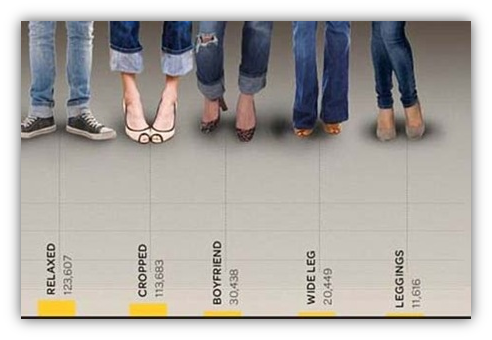
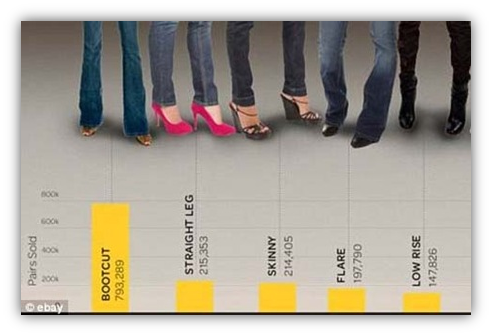
    So , out of about 3 million pairs of jeans sold through Ebay during July 2010 to August 2011, about 793,000 pairs of jeans ie about 28% of jeans were in boot cut style .  The straight leg jeans sold were about 215,000 and the Skinny came at the third number at about 214,000 jeans.  See the list of different jeans sold in different quantities :

    image

    image

    Does this mean that Boot Cut jeans are more popular than the Skinny Jeans???
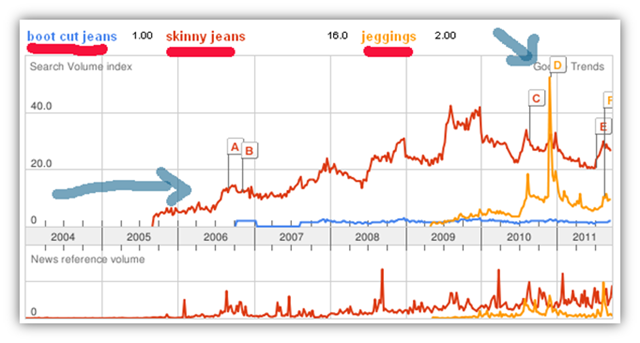
    We really cannot say so .. If we look at Google trends on searches related to Boot cut jeans Vs Skinny Jeans , we will find a different story. The skinny jeans as a search item far exceeds in the number of searches as compared to Boot cut jeans.. And we know that Google searches do reflect the tendencies of consumers to search for the products they want .. Lets have a look at the chart below :

    image

    The Google trend chart for the period 2004 to 2011 shows the searches made for :
    Boot Cut Jeans
    Skinny Jeans
    Jeggings

    As we can see from this chart, the search for skinny jeans has been dominating since the 2005 when skinny jeans started to become popular . It kept on increasing in popularity though we see some dip in 2010 and 2011. However, if we look at the Boot Cut Jeans searches, we will find that they have been almost flat since 2005  and they seem far behind in popularity compared to Skinny Jeans..
    Jeggings trend is interesting – The word JEGGINGS was recently coined in around 2009 and we can see searches related to Jeggings rise from a few to a huge number which crosses that of Skinny in mid of 2010.. Jeggings indeed started as a trend in 2009 and was hugely popular in mid 2010 and still continues to be popular (point D) . It seems to be more popular than Boot Cut..
    However, we need to remember that consumers sometimes search more for products that they do not know and hence searches for Jeggings suddenly peaked in 2010 . Whereas products like Boot Cut are taken as regular products and probably not searched so much. 
    Whatever said and done , it can be concluded that high of Boot Cut jeans may indicate a growing trend to buy these jeans but Skinny Jeans cannot be just wished away!. It is not going anywhere at least for some time.

  • 25oz Denim Jeans From Iron Heart !!

    14.5oz was supposed to be normal jeans and one used to consider 15.5oz as heavy jeans. Then we heard about 18oz jeans and 21oz jeans was considered a shock …!

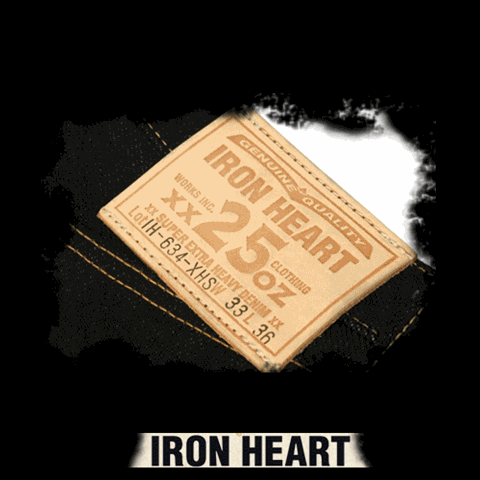
    So , how do we react to a 25oz denim jeans from Iron Heart ??

    Iron Heart – denim brand from Japan – excels at making jeans which justify its name – Iron Heart . Created by bikers from Japan in search of a tough jeans to support their passion – biking , the jeans is actually now bought internationally by over 90% customers who are non-bikers .. The reason may lay in the desire to buy a jeans that will last a lifetime ..

    Iron-Heart-Jeans2

    We had previously interviewed Giles Padmore from Iron Heart (UK) to know about how the brand developed and the concept behind it . When they just launched the 25 oz denim  , it was time again to speak to him and get into the thick of a 25oz Jeans ..Its not really easy to make a 21oz denim and stitch it , let alone a 25oz denim. Iron heart gets their fabric made exclusively at a Japanese denim mill which can do this kind of product.  I was sure it must have been really tough and Giles confirmed the same.

    Hi Giles, welcome back to Denimsandjeans.com . Another first from Iron Heart – a 25oz denim jeans .. Wow !! Who would be the typical customer for such jeans?

    We don’t really have a typical customer, but I guess the people who will be buying these are people who like to wear something really special.  These are not for the faint of heart and will take some time and dedication to tame.

    It must be really tough making these jeans.. How did your people manage to weave it in the first place ?

    It was really tough, we lost a lot of fabric in the weaving process.  Typically in the weaving room, one person will look after a number of shuttle looms.  With the 25oz denim we had to dedicate a full time person to oversee the loom that was weaving the 25oz denim.  This way we could spot problems with the weave immediately are make adjustments.

    With such a heavy denim, how do you manage the starch component? It would be really difficult to wash it off..

    Starch actually is not much of an issue.  We soaked these jeans after construction to remove most, if not all of the starch.  When you get them, they will feel super stiff, but that is down to the density of the denim,not to the amount of starch in the fabric.

    Maintaining comfort in a heavy jeans is not easy.. Have you also worked on this aspect ?

    True, they certainly hurt for a couple of weeks, but after that they start to soften up and become very comfortable.

    Stitching such a jeans must be a nightmare ? Must have broken a large number of needles ..!

    It was a nightmare!  In the first run we needed to produce 300 pairs, we had to make 370 just to ensure that we had the 300 perfect jeans we needed.  We had to develop a number of new ways of using our vintage sewing machines to construct the jeans.  Bar tacking the belt loops on was the most dangerous and we had to insist that the workers wore eye protection!

    As I understand about Iron Heart – you do not care about denim trends.. You create specialized jeans for your customers whom you understand well . Does this help you to create exclusivity and does away with the need of going for volumes ?

    We try and make stuff that will look as good in 20 years as it does to day.  Simple, classic, well made garments.  We do not aim for exclusivity, but we are well aware that are clothing is not for everyone.

    I once again congratulate you on creating these exclusive jeans.. Wishing you all the best. Any advice for our readers ?

    Thank you.  If you do buy a pair of these, make sure you tuck your tee shirt in for the first few weeks, if you don’t, you’ll be bleeding……

    And if you wish to buy this $480 Jeans, click on this link .

  • Jeans – Made In Britain !

    In UK –in western Wales, a small town charmingly called Cardigan with a population of 4000 once churned out 35,000 pairs of jeans every week for 30 years. In this small town , over 400 people worked in the jeans factory . With the closure of the last denim factory in Britain, these craftsmen have nowhere to practice their skills. Some of them have spent close to 30,000 hours honing these techniques of denim making.

    A company called HIUT is trying to bring the humming sound of jeans manufacturing again to this town. The difficult task is being undertaken by the David Heiatt and he is trying to make moves to change all this in this centuries-old town. The company HIUT is being built with money invested by a number of small shareholders all around UK – another unique experiment in building a denim company ..  But  it is really not an easy task  with the costs of production on UK being so high !

    However, there are factors which are supporting such endeavours. Recession has made the consumers in Britain reassess consumerism. They are realizing the disadvantages of outsourcing. The local manufacturing Made In Britain Logoskills are dying and Britain is continuously facing a reduced share of manufacturing in its GDP and is now close to only 12% of GDP.  Consumers  are starting to realize the importance of manufacturing being done in UK to lift the country out of recession. Hence , “Made in Britain” goods are finding increasing support from the consumers.  Govt. has realized this and a made in Britain logo was issued last year so that consumers could easily identify the goods made locally and , hopefully, not get put off by the higher price tag.
    This is a sure step by the govt. to promote local manufacturing and to help Britain regain at least some of its manufacturing prowess.

    The failure or success of such experiments will determine whether in the future we can look at a decent amount of manufacturing shifting back to the western countries. The factors are supporting such exercise at the moment with the consumers there realizing that the cheap “throwaway consumption” is actually happening at their own cost in the long run. There is an increasing trend to buy “Less but Better Goods”  which are of course more expensive. We have seen the success of premium denim brands in the US with local manufacturing and that gives strength to this concept.
    Also, with governments in EU and US realizing that losing manufacturing capabilities has huge impacts in the long run – not only direct in terms of losing such mfg. capabilities , but also in terms of losing innovative capabilities which emanate from manufacturing.  And they will be whole heartedly supporting initiatives to increase manufacturing activities .

    So lets wait and watch whether the consumers will lap up the costly locally produced jeans in the UK or not !! Because whatever said and done ,  “ Consumer is the King" !!

    Here is a classic  story from Britain on “Less but Better” . I found it on HIUT’s website !

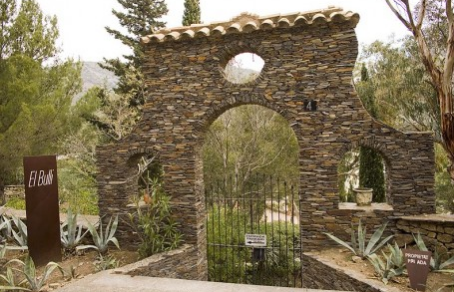
     After watching a lecture given by Jacques Maxim in the 1980’s, imageFerran Adria decided to close his restaurant for 6 months a year. He would use the time to research and create new dishes. Today, El Bulli only opens 160 nights of year and never at lunch. The restaurant seats no more than 52 diners. The number of chefs and house staff is greater than the number of guests. It may not make for a great business, but it does make for great food. Two million people apply each year for the 8000 odd seats. That means 1,992,000 are disappointed each year.

    Follow us on

    Sponsored link :

    Amefird :Global leader in denim threads

  • ASEAN : Exports Of Denim Products To US From 2000-2011

    ASEAN region comprises countries like Brunei, Burma(Myanmar), Cambodia , Indonesia , Laos,  Malaysia, Phillipines , Singapore and Thailand . These countries have been getting important in the denim world . Lets see what denim apparel they are exporting to US and at what prices .

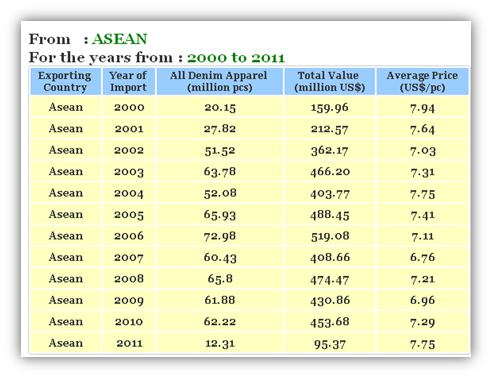
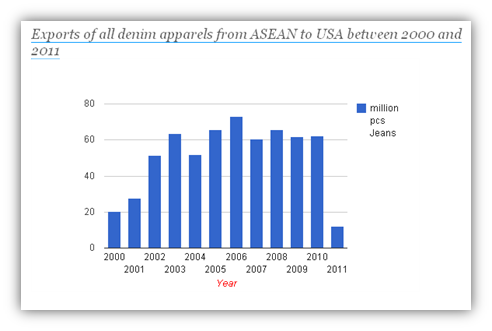
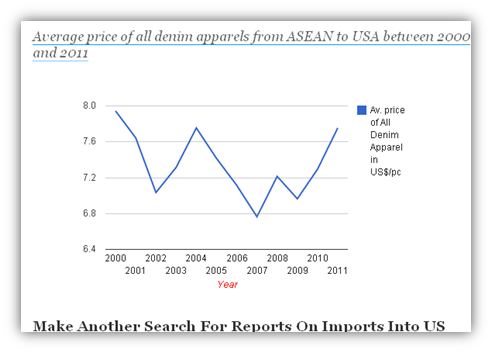
    Here is a snapshot from our data section on the figures of exports to US from ASEAN countries for the last 10 years including the first quarter of 2011.

    US Imports Of Denim From Asean Countries

    Denim Apparel Exports from ASEAN to US

    Average price of Denim Exports From Asean To US

    So , we can see  from the above images that :

    • The total exports from ASEAN to US is almost stable.  However, if we go into individual country exports , we will find that there is a realignment with some countries losing their exports and countries picking up the volumes.
    • The average prices of exports have started to pickup from the last 2 years and specially in 2011 – showing the impact of cotton prices.
    • The first quarter of 2011 has not been very good and the volumes are below the average of previous year. This reflects the trend of falling denim exports to US.
  • Pajama Jeans – Sleep In Your Jeans !

    The ever growing popularity of denim helps in the growth of other related products which hitch hike their way to success  on the bandwagon of denim .
    We had previously written about the Denim Abstraction Collection – which enabled a Japanese company to produce vintage looking jeans from fleece products.
    There is now another pileon (no pun intended) on the denim bandwagon.
    These are the Pajama Jeans …

    Pajama Jeans

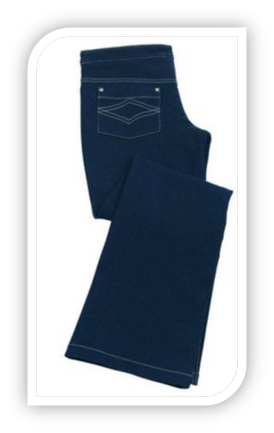
    What are these and why they may be special  ?Pajama Denim Jeans

    Despite the name, these knickers have as much in common with denim blue  jeans as a blue bath towel. They’re more  like drawstring waistband loungewear with faux five-pocket detailing including contrast stitching, back-pocket embroidery and rivets rendered in a stretchy knit that’s a blend of cotton and Spandex (DormiSoftâ„¢ fabric) and has the same fleece-like backing you’d find in a pair of standard-issue sweatpants.

    However, what is special is the consumer interest that this product is generating. The LA times reports that the Pajama Jeans may crack the 2 million piece mark in sales by the end of this year.  This is a huge figure for a product which is actually a pseudo denim ..

    The price range at $39.95 (including a tee)  is quite easy compared to the denim prices , but not very cheap for a pair of sweats. 

    Lesson For Denim Marketers

    The popularity of  Jeggings , stretch and psuedo denim from fleece  and other similar products should leave no doubt in the minds of the denim makers that the consumers are :

    • Still very high on denim  and would like to use other products which imitate denim looks.
    • They want COMFORT.. Comfort is the key mantra.   And it is driving the whole industry !
    • There are still market segments which many may not have thought of . Eg , these Pajama jeans for women gives them a great flexibility to look great the whole day and complete all their chores  comfortably . And this is is at a reasonable price…  A cool combination to create a new market niche ..
  • Good Denim – A Survey

    Benedikt Luedke is a fashion designer from Netherlands .As  a part of his dissertation  he is taking a survey – “Good Denim”  – and it will be  a part of his   MA Fashion and the Environment at London College of Fashion .

    We are supporting him to gather data on jeans usage so that we can look at some interesting results which will be published on our site. The survey takes about 1 – 3 minutes to complete. You can see all questions on one page, just click "submit" on the bottom of the page after you’ve answered all of them and you’re done!

    The survey is completely anonymous and the data will be used for university research.

    So  , just try to take out 3 minutes of your time and you will contribute to an interesting survey and share its results .. Click on the image below to take the survey :

    image

  • Denim Geek – Johnny Diamandis X Cat Footwear

    “Denim is expanding far into foreign territory to the extent that the line between denim and other products is blurring…  “  said one of the denim geeks that we interviewed recently.

    He is quite right . When we look at the new creations from denim , it is difficult to believe how the originality of denim in its vintage form is created and replicated in products not generally associated with denim.

    A number of denim related products have been seen but the challenge is to recreate the originality of denim into other products so that denim does not lose its character .

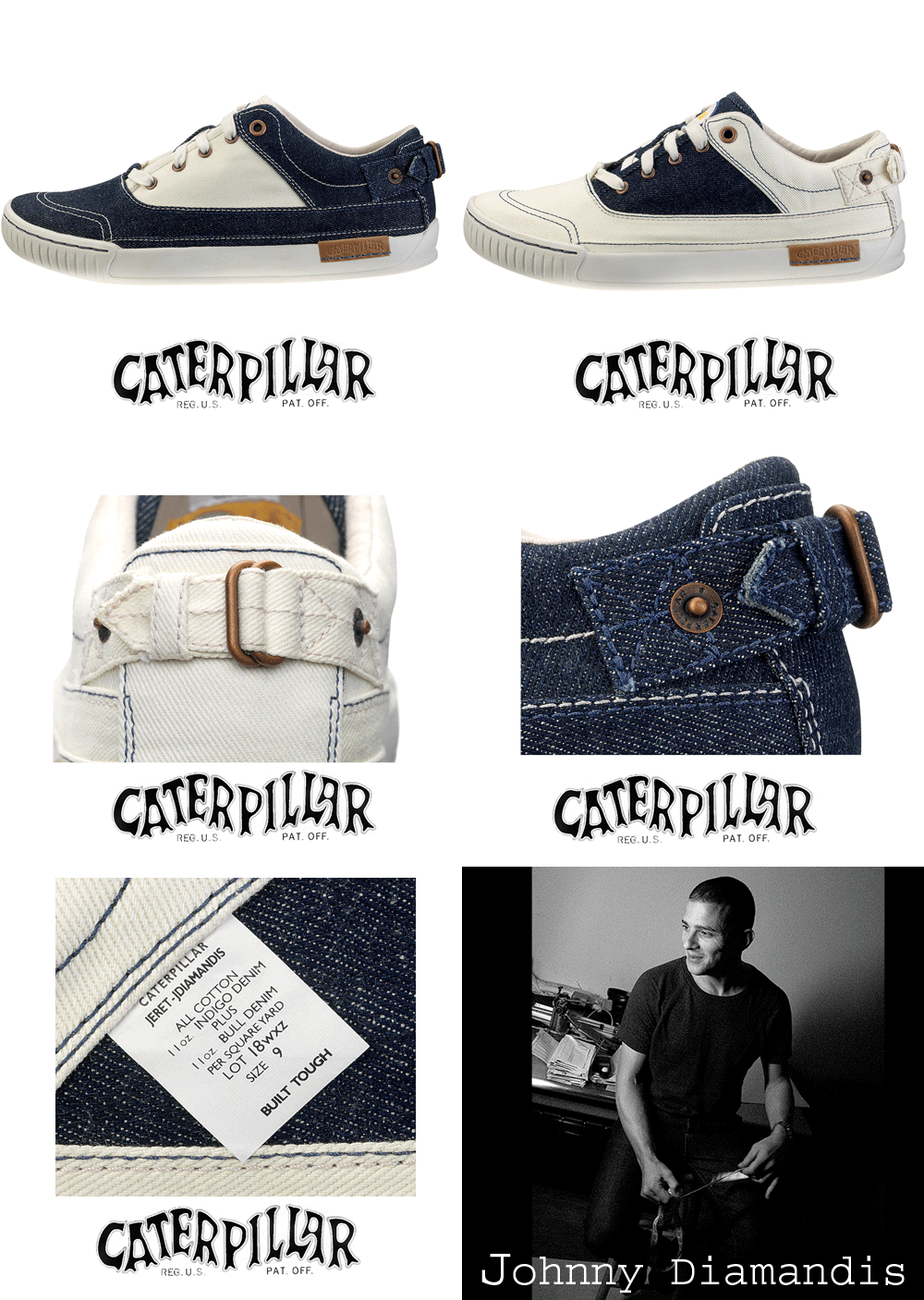
    One such example came to our notice recently – the Jeret –J Diamandis Denim Geek shoe.  Created by J Diamandis– ex International Creative Director  Evisu   – in collaboration with CAT footwear  (see his previous interview at our site)

    Jeret-J-Diamandis-Denim-Sho


    Following an approach from Cat Footwear, Diamandis (UK-born, NYC-based alumnus of Evisu, Burberry and others) figured that the workers who used Caterpillar’s heavy machinery to build the pre- and postwar USA would likely have been denim-clad as they toiled. He realized too that just as Caterpillar was growing into the industrial giant it is today, denim was in the process of evolving as a truly American product. ‘There’s a real parallel there,’ he observes. Out of this grew the idea of applying to a shoe (Diamandis’ very first) the denim expertise he’d been schooled in at Evisu, along with elements from a ‘40s deadstock denim pant he’d uncovered in Tokyo and become somewhat obsessed with. ‘I attempted to morph those beautiful old jeans into a shoe,’ is his succinct explanation.

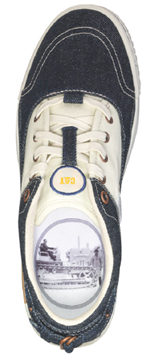
    denim shoe cat The resulting ‘Denim Geek’, in both mid and lo-top versions, features a two-tone upper crafted out of indigo and bull denims, both 11oz in weight. The former was sourced by Diamandis for its subtle greenish hue, which marks it out from the reddish tint inherent to much mass-produced denim. To the rear is added the cinch that was prominent on denim pants from the 1870s through to World War 2, planted firmly in place with metal rivets, while laces thread through a central ‘belt loop’. A removable tag details the shoe’s specs, placed externally as was once the norm with jeans.  In an unusual touch for a sneaker, it appears screen-printed on the insole.  Ultimately, Diamandis wished to create a shoe that will age and wear according to how the wearer lives, just as his beloved raw denim jeans do:


    “Denim is unrivaled in its ability to age in such a way, and so it had to be denim that we used. Half the enjoyment of this project has been anticipating how the shoes are going to look after people have really lived in them….” said Johnny Diamandis .

  • s.Oliver : Interview With Florian Schneider

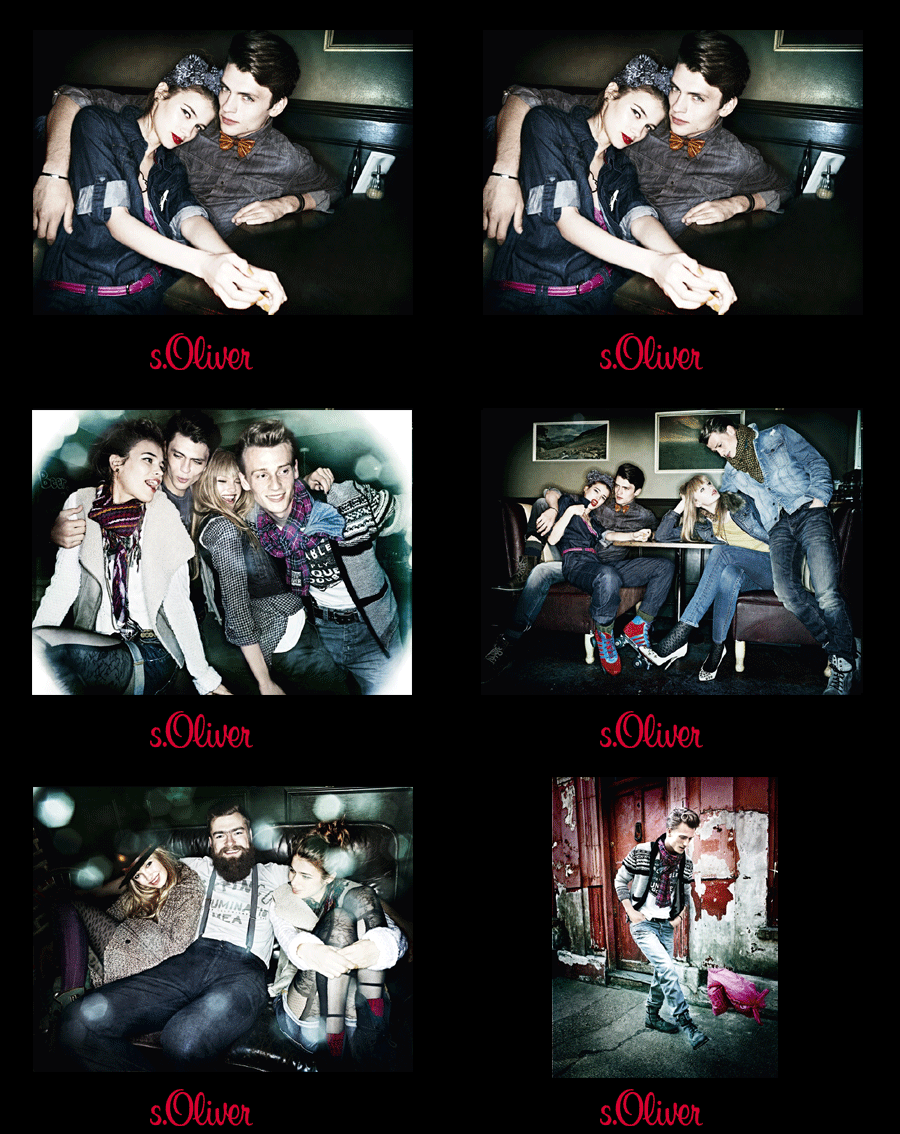
    s.Oliver is a German lifestyle company which manufactures fashion apparel, accessories, and lifestyle products for men, women, boys, girls, and children. With over $1.2 billion Euro in sales and presence in over 25 countries in Asia , Western and Eastern Europe,  the company has  some of the coolest collection of denim in Europe . I thought that it might be good idea to speak to Florian Schneiderthe head of Product Development Denim at s.Oliver Asia – and find out what makes the company so cool and to learn from him about  the latest in denim developments .

    s-oliver-denim-collection-g

    Hi Florian. Tell us something about s.Oliver ..

    s.Oliver is one of the most successful fashion and lifestyle companies in Europe, and was founded by Bernd Freier in Würzburg, Germany, in 1969. The company’s head office is still in Rottendorf in Franconia today. s.Oliver now employs over 7000 people worldwide, and is represented by 240 of its own stores, 300 franchise stores, 2559 shop-in-shops, and on 3281 areas all over the world.

    b) Which are your best denim products?

    Our best selling product over the years is a 5-pocket NOS jean for our Casual Women segment. Great fit, classic denim and subtle but perfected vintage wash. Even though we have fantastic products with stunning washes, which range from traditional authentic –e.g. railroad worker inspired jeans – to modern interpretations such as leather-like coatings and washes with a new richness of color, I think it is commercial products with well balanced wash where we are at our absolute best.

    b) How do you think is the demand for denim in Europe currently?

    Germany is our main market and its economy is recovering at a surprisingly good rate, so does private consumption. The trend towards Chinos and garment-dyed 5-pockets for sure has hurt denim demand a bit, but the impact for us is rather small.

    However, the signals I am getting from mills show a trend to an overall slowdown in Europe.

    c) Do you think the consumption is on the rise even with the economy being not so good?

    In my opinion, consumption in Europe or the US will stay flat for the next couple of years and then eventually pick up speed. In general, rising consumption in developing countries should make up for slow sales elsewhere. This is quite interesting, as the cause for the rising consumption, which is increased salaries and higher living standard, is also the cause why factories struggle to find workers, and brands have difficulties to source for the low prices they are used too.

    d) What do you think are the latest trends in denim?

    Besides the usual periodical changes in leg shape, clean look vs. vintage wash, and a few longer lasting trends like jeggings, there are two major developments: diversification of garment styles and diversification of denim fabrics.

    Denim is expanding far into foreign territory with products such as jeggings, denim down jackets, fully lined denim blazers, knit denim sweat pants, fluid lyocell dresses, and denim chinos. Material variety is leading the pace and getting more diverse to the extent that the line between denim and other products is blurring. Can knit denim be considered denim? What about indigo yarn dyed chambray, indigo over-dyed linen herringbone, jacquard woven denim, indigo corduroy?

    Overall there is a lot of excitement and I think we are just at the beginning of a big development.

    Now, to give you a more traditional answer, I’d say that 70’s styling is catching on, vintage effects will be overall reduced and denim with wool content or heather weft will be an important novelty. Metallic and leather like coatings have a come-back. Slim fits for men are getting more important, so does cotton/elastane denim for men, and high stretch denims with novelty yarns.

    e) Comfort is becoming an increasingly important word in denim which has enabled trends like jegging to be very strong. We have also seen brands like Diesel launching special comfort wear jeans like “Jogg Jeans”. Do you think this is a long term trend?

    Europe has been slower than the US in embracing the soft & comfortable trend. However, the super-trend “jeggings” and the success of smaller brands like Current/Elliott that had super soft denim in their collections changed that.

    In addition to that, since nowadays denim products include much more than traditional work wear or work wear inspired fashion and can come in the form of any type of garment, hand feel and comfort requirements vary a lot, and tend to go to the soft side.

    The trend is here to stay, once the consumer is used to comfort, he or she will not like to go back to less comfortable products. An exemption to that are of course people who have a soft (no pun intended) spot for traditional denim and for that reason of course prefer stiff raw denim jeans.

    f)What kind of washes and treatments on denim  do you think are popular ? Which is your personal favourite ?

    Vintage washing has come a long way, and s.Oliver is very successful with authentic washes. 3D whiskers are a must on most of our washes. Subtle color spray or rubbed-on color is important to add additional depth to the fabric surface and increase richness of color. Dark finishes are getting more popular as are grayish tones.

    My favorite wash is a vintage wash that is hand sanded – not sandblasted, washed down with water, enzymes and stones only – without the use of bleach, is not resin treated, and has broken edges not from grinding but from natural formation during washing.

    g) China is getting expensive. Do you see shifting of denim production capacities from China to other countries due to this?

    The main production area for denim in China is Guangdong Province in the South. Costs are rising in Southern China and labor is increasingly hard to find, so there is indeed a trend to source from other countries like Vietnam or Bangladesh – but also from other provinces in China. Some provinces especially in the North and West still have favorable regulations and low labor cost.

    Recently, high cotton prices put even more pressure on brands to compensate rising material costs by lower cm and washing costs.

    It is important, though, to keep in mind that other countries have limited work force supply as well, and living standards are on the rise in most developing countries. Considering that the pool of workers in these countries is far smaller than in China, the work force supply can run dry very fast and salaries go up quickly as a result. Therefore it remains to be seen how much of production capacity can be shifted away from China.

    h) What do you think about India as a denim sourcing hub?

    India has a large cotton production, very good mills and plays a center role for denim fabric sourcing. It is close to production places like Bangladesh and Pakistan.
    Since rules have changed and Bangladesh can enjoy the GSP+ benefit even if material origin is in a third country, Indian mills should be able to benefit. In terms of jeans garment manufacturing, I am not sure how big a role India is playing for the European market at this moment, but there is definitely a potential.

    i) On a personal note, how many jeans do you have in your wardrobe? How many times do you wear them before you wash them??

    I own around 25 pairs, mostly collector’s items and s.Oliver jeans, but currently I wear only two – a Filippa K raw selvedge jeans which I have not washed yet but plan to wash after 8-10 months of wear, and my favorite s.Oliver vintage jeans, which I usually wash after three to four times wearing.

    k) Thanks for being on Denimsandjeans.com Any guidance for our readers who are great denim enthusiasts?

    Always go for quality instead of quantity!

    About Florian : florian Florian studied mathematics and philosophy at the University of Hamburg before deciding to change his major and follow his passion for design. He then continued to pursue his dream outside his birth country in the Big Apple, where he ended up as a designer with DDCLAB.  Inspired by Roberto Crivello of DDCLAB and the brand’s undying commitment to technology and design, he got hooked on denim, continuing to work in the field as a designer, wet processing manager and product developer.

  • Sustainable Denim – Eco-Labeling and Environmentally Friendly Denim Production

    This is a guest article by  Dr. Wolfgang Schrott, University of Applied Sciences Hof  on sustainable denim .

    Denim, especially Blue Jeans, is meanwhile the biggest article segment in the textile industry. Besides many colors and shade variations, effects and cuts, which ongoing changes with the fashion, many brands have combined from the beginning of the denim fashion in the 60s a promotional message with their advertisement campaigns. From the “Young Rebels” (60s), “Western Style” (70s), “US lifestyle” (80s), “Italian Fashion” (90s) the today’s pre-dominate message is “leisurewear for young and old”. In combination with general lifestyle slogans many brands added also an ecological message as the environmental awareness is picking up in well-situated customer segments.

    This eco-positioning of the brand was communicated with the customers via adverts and hang tags on the jeans and pointed out a singular aspect out of the total denim production chain. Therefore the today’s eco labelling does not cover the entire jeans production, although the message is closely related to the offered blue jeans in the point of sales.

    Since the beginning of the millennium different detached eco messages could be seen on fairs and in the shops, covering environmental as well as social aspects of the denim production, but all failed in achieving a sustainable sales support.

    This might be a proof that the – especially eco-sensitive – consumer is not as uninformed as many marketing and advertising experts do believe. On the other hand many eco-relevant production aspects are no longer actively promoted but are declared as standard in case of requesting for them. This is the case for child labor as well as or the avoidance of sandblasting as well as for the avoiding of banned products and processes (poisonous or hazardous products and processes, e.g. heavy metals, carcinogenic, mutagenic or toxic to fish and aqueous organisms products).

    Organic Denim

    organic denim Looking back onto the last 10 years of eco-relevant marketing of denim articles, this started with a big campaign for “Organic”. It was a marketing campaign for organic cotton, which is a strict regulated cotton growing under natural condition, avoiding all kind of synthetic product support. From the very beginning of this campaign we pointed out, that the limitations of the organic cotton growing causes inefficient yield of the limited soil, need far more irrigation and less optimal cotton quality. Although higher effort in the total production chain of organic products is necessary (e.g. separation from the regular cotton production lines), many well known denim producer invested in the organic production to be prepared for the consumer’s demand caused by the organic promotion. Due to the limited organic cotton production, at the beginning of the organic campaign many cotton articles had been labeled with Organic hang tags, although they contained less than 5% organic cotton and more than 95% regular cotton. This mislabeling was stopped by the GOTS organization and today only articles with majority of organic cotton as substrate are allowed to be labeled with “Organic”.

    Natural Jeans

    In parallel to the organic-campaign several brands used the consumers demand for natural products to offer a natural jeans, being a Blue Jeans not only produced out of organic cotton but also dyed with natural indigo. Earlier evaluations by DyStar Textilfarben GmbH showed clearly, that natural indigo is – as well as organic cotton – not only not available to the market’s demand (therefore many natural indigo samples were identified as mixtures from natural and synthetic indigo) but also the eco balance of the natural indigo dyestuff production process in total is in disfavor compared with an environmental optimized indigo synthesis. Still today the indigo production process developed by BASF Aktiengesellschaft and the pre-reduced indigo (as 40% solution) established in the global denim market by DyStar Textilfarben GmbH are perceived as Best Available Technology (BAT). Besides the low yield of the natural indigo production in plants, a problem is caused by the insolubility of indigo in water. Therefore for the extraction of indigo from the natural plant big amounts of alkali is necessary, which regularly contains small amounts of heavy metals. After the dyeing process most of the heavy metal can be found on the Blue Jeans.

    Dyeing Process

    Also, for the synthetic indigo the production process and the purification process of the primary indigo as well as the finished product is a most important quality issue for the indigo dyeing result as well as the amount of the necessary reducing agent. Aniline is luckily no longer an issue since this starting material for the indigo synthesis during purification and finish of the commercial product is diminished below critical limits. Based on the eco-efficiency analysis, developed by BASF, it was shown already in 2000 that the total eco balance of the production of Blue Jeans based on pre-reduced indigo and using the electrochemical dyeing process is the optimum.

    The electrochemical dyeing (ECD) process, which was proven in lab and pilot plant scale but is not yet established in the market place, replaces the chemical reducing agent hydrosulfite completely by electrons from the main. This technology reduces waste water pollution significantly and betters the ecological and economical situation in the dye house. Unfortunately this new technology was not supported by a labeling concept from retailers. Therefore the big denim producers were afraid to invest into the new machinery, needed for the ECD process.

    This is also the situation in sulphur dyeing, especially with C.I. Sulphur Black 1, the most important dyestuff for black denim, which is also used for topping and bottoming of dark indigo blue dyeing and needs a lot of environmentally critical sulphur based reducing agents. Instead of using the electrochemical dyeing process and avoiding all type of chemical reducing agents, today in sulphur dyeing the environmentally non hesitating glucose is used as best option, which causes in the necessary quantities huge COD- and CSB values in the effluent.

    After dyeing the cotton yarn and weaving the denim fabric is partly treated for special effects before cutting and sewing to garments. The blue denim fabric can be dyed in regular dyeing machines or printed or coated. The minimal application technologies are in this part of the production chain environmentally most friendly. A first production scale installation based on the patented foam application was realized by Gaston Systems at Orta Anadolu in Kayseri/Turkey.

    Garment Treatments And Washing

    Garments are mostly treated with physical and/or chemical methods to achieve special effects; especially for denim, the typically worn (vintage) look. Among the chemical methods the chlorine bleach (based on sodium hypochlorite) was widely used but disappeared – at least in Europe – due to the AOX problematic. Also special processes, e.g. the patented “moon wash”, based on a potassium permanganate bleach is no longer common. Achieving different, more cleaner, looks the peroxide, oxygen and ozone bleach is picking up in garment finish due to less environmental impact.

    Instead of chemical methods and besides the established stone wash other mechanical processes (labor intensive) and laser application (investment) are increasing. The economically preferred sandblasting is banned by many brands since health problems at workers were detected.

    The last production step in the denim chain is the final washing of the garments in industrial laundry machines. In this machines the garments can also be over-dyed with other dyestuffs (direct dyes, reactive dyes, pigments) or treated (finished) with other effect chemicals*) for special effects (e.g. soft hand, shine). As long as the used dyestuffs and effect chemicals are environmentally friendly, the most important impact in the laundries is the big quantity of water used and the high load of effluent produced there, because all process chemicals**) from the entire denim production chain are replaced from the raw jeans into the waste water. Therefore the knowledge about the previous production processes and an optimal wash-off process is essential for the environment, as well as an efficient waste water treatment plant.

    On the latest BREAD & BUTTER fair (July 2011 in Berlin), one of the most important fairs for the denim brands, only few environmental aspects were promoted actively this time. Among them the saving of water in the laundries was predominant.

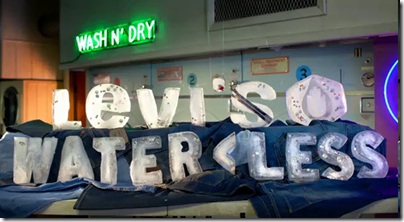
    The US based denim giant Levis, which was ongoing promoting eco effects during the last years, presented now a “waterless” concept, achieving alevis water less denim jeans significant saving of water in the denim finish. One element of the concept is the use of ozone as bleaching agent. At least the efficiency of the process compared with other treatments (denim finish processes including washing) can only be quantified, if – neglecting the many fashion and effect orientated processes – exactly specified standard washing processes are defined. This proposal was already established by DyStar Textilfarben GmbH with its pre-reduced indigo customers in the quality control of indigo dyeing (the wash down behavior is an important quality criterion for the indigo dyeing [ring dyeing]). The actual discussion and marketing concepts of global denim brands is forcing to establish a wash-off standard to avoid mislabeling again.

    As well shown on BREAD & BUTTER by Japan Rags was a patented water-free denim finish “ Japan-RAGS ZERO ”, which – for the time being limited to six shades – is an ozone based finish process without of any water. This is hardly understandable due to the normally necessary wet of the substrate. On the other hand a totally water free garment finish means that all process chemicals**) from the denim production chain remains in the final blue jeans and can be removed firstly in the household wash by the consumer. Based on a total environmental evaluation of the Blue Jeans , this cannot be the optimum .

    The eco-awareness meanwhile has arrived at the big denim finisher (laundries), as many of their activities show. The German Jeans maker Joker Jeans had already years ago heavily invested in an ozonisation of its waste water treatment system in Southern Germany.

    Freshtex, Heilbronn/Germany , meanwhile producing in 10 countries as global player in the denim industry, has announced this year a company-wide recycling concept, which will be marketed and communicated by an own sustainability label. Also the Italian Martelli Group, one of the globally most innovative denim finisher, has presented in 2011 a new ecologically preferable finishing concept which supports a particular production step . The used products  are removed after “having done the job” mostly by washing off into the waste water.

    Recycling Denim

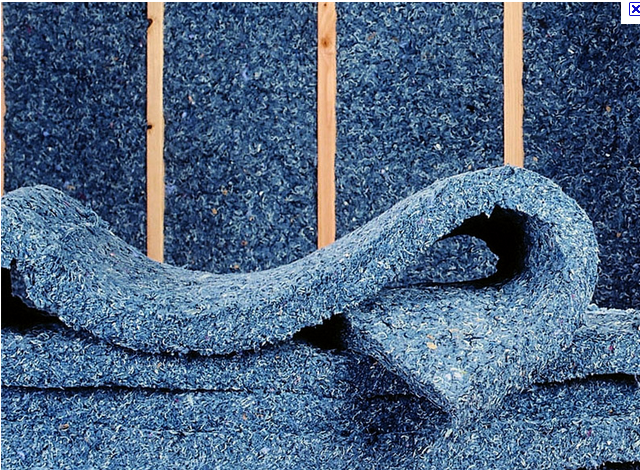
    Another eco-relevant theme in the textile and especially in the denim industry is “Recycling”. In the past there could be found different approaches and realization by different producers and brands. The mostdenim insultation important directions are re-use of waste and raw materials in the production chain (e.g. cotton, process water) and the recycling of fabric , used garments and all kinds of textile waste for other application segments (e.g. fleece or non-textile application like isolation material). At least for accessories, e.g. Denim Bags, denim waste from the production was used.
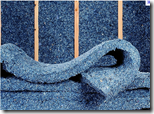
    A ‘real’ denim recycling starting from worn out Blue Jeans as raw material in the denim production chain, as established in the paper industry for packing and newspaper, was evaluated only from few producers, e.g. Orta Anadolu in Kayseri/Turkey. The article segment is big enough to achieve a technical and economical interesting process, if several big denim brands would agree in a mutual concept. For this concept only the absence of non-recyclable raw materials is necessary. Then, a pure cotton Blue Jeans could be liberated from all metal parts and labels and shreddered. The shreddered denim, mainly cellulosic material, could be similarly deinked as realized in the paper industry for another origin of cellulosic material. The so achieved recycling cotton could as is or as mix with fresh cotton used again as raw material in the denim production chain. This “real denim recycling” could become more attractive for the consumer by launching a pledge (for a recyclable jeans). Additionally such an “R-Jeans” would generate an attractive marketing concept, especially for the growing, environmental-conscious customers.

    Which ideas remain to a technical orientated visitor of the last denim fashion fairs?

    Nothing really new – more labels, more action, hopefully in the right direction!

    What is the right direction regarding an environmental friendly denim production ?

    Surely a sustainable denim production has in terms of the eco-efficiency analysis to show an optimum for the environment as well as to be commercial feasible. The development and comparison of sustainable denim production processes therefore should be measured by the eco-efficiency analysis procedure.

    In principle, innovative and eco-friendly products and processes should be economically attractive if the cost for waste water cleaning and other environmental protection initiatives are calculated  realistically. Most important for all ecological evaluations and comparisons of Blue Denim production concepts is the aspect, that the entire denim production chain is compared, because many process steps and products used in it have implementations on the following production step(s). Therefore only a total process comparison can offer a real comparison.

    This total process approach was firstly presented 2006 by DyStar Textilfarben GmbH in its econfidence® denim concept. Unfortunately, this concept could not fully realized in the denim industry due to the insolvency of DyStar Textilfarben GmbH. Examples out of the concept for a sustainable denim production are: Electrochemical dyeing (ECD)  on rope and slasher dyeing ranges, Minimal Application Processes in the denim production, electrochemical dyeing (ECD) and especially  electrochemical bleaching (ECB) in garment dyeing/finishing machines (laundry machines), combination processes and recycling concepts in denim laundries and garment finishing mills, eco-efficiency evaluation of denim processes (analogously to econfidence® Denim).

    The today’s Best Available Technology (BAT) in denim production as well as the future denim production trends are summarized in a separate publication of the author (in preparation). The result out of this publication can be summarized as follows:

    Summary

    The sustainable denim production in future will be always a process, involving all single steps of the entire denim production chain. Hereby, the optimum comes from harmonizing the used products, machinery equipment and process parameters to an optimum. In this process of development it would be very helpful, if the retailers (global jeans brands) could not only implement a global jeans recycling concept but also orientate the future eco-labeling on BAT parameters. Minimizing environmental impact and cost in the denim production will mean the use of minimal resources, chemicals, energy and water as well as minimal CO2 emission.

    Notes:

    *) effect chemicals: products, e.g. dyestuffs, optical brighteners, softeners, which causes a special effect on the textile material and keeps on the garment  during wearing.
    **) process chemicals: products, e.g. reducing agents dispersing agents, detergents which supports a particular production step and which are removed after “having done the job” mostly by washing off into the waste water.

    clip_image002Dr. Wolfgang Schrott has more than 25 years experience in the chemistry and textile industry with BASF SE and DyStar Textilfarben GmbH. He has always been focusing on sustainable concepts based in environmental friendly products and processes and developed many new products and machinery equipment. The last 15 years he was focusing on the denim production process and is a specialist in textile dyestuffs. Besides business consultancy he is now teaching as professor for textile chemistry and ecology at the University of Applied Sciences in Hof, Germany.  Contact him by email here
  • Interview With Stefano Aldighieri

    stefano1We had previously talked to Stefano – Ex creative director Seven For All Mankind , Hudson Jeans and Design Director (Levi’s) – last year and I thought that it might be a good idea to catch up with him again to see what changes have come in the denim market since. He runs ‘ Another  Design Studio’  providing design services to denim brands.
    Hi Stefano ! Welcome once again to our site . How do you think the denim scenario has changed in the last 1 and half years since we last interviewed you ?

    Hello Sandeep , great to talk to you again!  Well, it is obvious that the global financial turmoil has affected negatively all sectors, ours included; business got tougher for everyone!

    Has your business of marketing and design consultancy for brands been affected by these changes?

    I think a lot of prospective customers had to ‘freeze’ their projects because of the general uncertainty; luckily, we operate with a few solid companies that are weathering the storm, so, even though we were unable to expand, we are still busy. I should add that it is actually in times like this that the services of companies like mine should be valued even more, since nobody can afford to make expensive mistakes and tapping into experienced sources can only help.

    There are clearly signs of falling imports and sales of denim into US. Is it a temporary phenomenon?

    There are ALWAYS ups and downs in denim sales; the last year has had, in addition to the above turmoil, an unprecedented rise in the cost of cotton, which has thrown another heavy wrench in the wheel. Some companies felt that they could no longer speculate in long term lead times from off shore and tried to source more goods closer to home, shortening the lead times, and therefore minimizing their risks a little. Some hiccups along the way and a general panic did the rest.

    We hear of contrary reports on premium denims.Some suggest that the prices of premium denims have not fallen and have actually risen whereas others suggest otherwise. What are your views?

    First of all, please allow me to make one comment about the terminology: i feel that ‘premium’ is the most abused term in our industry, and it has lost most of its meaning. People nowadays call anything ‘premium denim’, it has become an excuse to justify prices that are often too high for what the product is really worth.

    Whenever a recession hits, you will normally see that low priced goods do better, high end luxury items do better (!!), and everything else in the middle struggles; it sounds crazy that the top end of the market would actually do BETTER in a recession, but the reality is that the small 1-2% of the world population who make ridiculous money are not affected the slightest by any recession, and they often shop EVEN MORE for unnecessary luxuries.

    The average person however, who ASPIRES to look like such individuals, now has to choose between splashing for a new pair of overpriced jeans or paying some bills.

    The size of the $100+ jeans market is always a matter of conjecture? Can you throw some light on it ?

    I doubt that anyone has a real figure, numbers are thrown around all the time; it is a segment that has had a tremendous growth over the last 8-10 years, and it has perhaps reached its apex (I am simply making a conjecture, obviously); the current recession will give it another shakedown, and then it might recover when things pick up again. I personally believe that the segment that has a real growth potential is the current "nowhere’s land", between your average priced jeans (think $40-60) and the over $100.

    a) Los Angeles  is still holding out when it comes to premium denim production. b) Do you think this could last very long given the high costs of production in L.A ?

    a)Yes and no; laundries and contractors are nowhere as busy as they used to be, and everybody is scrambling for business.

    b)There are two elements to this: one is the squeeze on margins that everybody is feeling (partly because of raw materials, partly because of slow sales which impact retailers and therefore brands); the other one is that it is no longer enough to claim that simply because something is ‘made in l.a.’, it automatically justifies its high cost. This is something that must be earned, through product innovation, superior manufacturing quality and fast, reliable turnaround. If these elements are not present, i think it becomes hard to justify the higher costs. Even today, one can make excellent jeans not far from the USA, using the same fabrics, same machines, same washing equipments and same know-how (Guatemala and Mexico spring to mind).  I am all in favor of supporting local labor and domestic manufacturing, but it must be justifiable.

    What do you think are some of the most important elements of denim ?

    As far as the fabric is concerned, obviously the yarn and the shade; garment-wise, we need more original styles and a different approach to garment wash/finishing.

    There is a growing interest among apparel companies in US and other countries to launch their own denim label. What do you think it takes to a launch a denim label specially in US ?

    It is insanity; because of a couple of exceptions to the rule, where some lucky people managed to rise to success like rockets, everybody thinks that creating a new denim line is easy. IT IS NOT. Furthermore, nobody NEEDS yet another copy of something that is already out there. The stores and the general public need -and may respond well to- original concepts, not another regurgitation of the same.

    Any advice to our readers regarding new developments in Denim?

    Nothing is really new; my advice is to look at vintage and try to figure out how to interpret elements of vintage into new, fresh, modern products.

  • Denim Industry In South Africa – Interview With Rex Aspeling


    Today we are featuring an interview with Rex Aspeling . Rex has been associated with the denim industry for a long time and though from South Africa , he has implemented a  large number of denim apparel projects worldwide. 

    Hi Rex. Welcome to Denimsandjeans.com. Tell us something about yourselves and your  company ?

    rex I Joined the industry in 1976 where I trained as a machinist and qualified as Industrial Engineer. Worked and operated in South Africa, Lesotho, Botswana, Malawi, Mozambique, Swaziland, China, India, Bangladesh, Poland, Malta, USA, Mauritius, Madagascar both for Vf  Corp and HD Lee as Director . Set up Supply chains or factories in all the above mentioned countries.

    My company Magic Sourcing offers an end to end sourcing service to companies looking to leverage the capabilities of the Asian supply markets with a strong focus on delivering savings to our clients’ bottom line.
    Working exclusively for the benefit of the client, with personalised teams, we cover the full sourcing cycle including market analysis, supplier qualification, supplier auditing, sample development, negotiation, selection and purchase order management (quality and logistics).

    You have been in South Africa for a long time. How large is the denim  industry in South   Africa?

    About 51585 million square meters were manufactured and 50453 million square meters were imported  The industry in South Africa has virtually disappeared because of imports and inflexible legislation.

    How many jeans do you think South Africa must be consuming ?

    Around 50 millions units

    South Africa was once an exporter of denim fabrics and jeans. But due to currency changes  , the exports have been severely affected. Do you see any changes coming up in this aspect?

    The factors affecting export are as follows:

    • A viable Exchange rate for manufacture in South Africa would be US$1.00=ZAR 8.00 + whereas currently it is around 7.2 rands to a dollar.
    • Only denim exports using fabric manufactured in SADC- South African Development Community * is duty exempt. This is in spite of the fact that we have no meaningful quality denim Manufacturer with Competitive prices.
    • Labour Cost

    * Currently SADC has a membership of 15 Member States, namely; Angola, Botswana, Democratic Republic of Congo (DRC),Lesotho, Madagascar, Malawi, Mauritius, Mozambique, Namibia, Seychelles, South Africa, Swaziland, United Republic of Tanzania, Zambia and Zimbabwe.

    How do you see denim fashion in South Africa changing over last few years? What are the latest trends in denim that you see ?

    Fits- Men’s and ladies fits have been increasingly important with Everyone developing fits to suit their target market.

    Embellishments The bling ERA is now part of every denim garment. It is no longer just a fancy embroidery stitch which branded the garment. Laser etching, Crystals, metallic threads and numerous other items now contemporary fashion.

    Wet Finishes- Stone washing has dissapeared and been replaced by Acid and neutral enzymes. Effluent is now a criminal offence with potassium permanganate banned by most customers.

    Dry finishes Standard damages on the waistline, hem and pockets is now the norm. 80% of jeans are now sold with Sanding/ Brushing and damages.

    Fabrication The addition of polyester because of cost has detracted from authentic denim.

    Price- Basic fashion at a price is sold by all chain stores. These basic denim jeans are great value for money and most people in South Africa now own one or 2.

    Premium Denim Most South Africans buy one of the aspirational denim brands. They are seen as must have’s even if they live in a shack.

    Latest Trends : Military details on the jeans.

    What would be average selling prices of jeans in South Africa ?

    Retail selling price is around  -R150 or  US$12.75    
    FOB  price : US$4.75

    Is there a market for premium denim ($100 plus) in South Africa ?

    Yes but limited .

    Which countries are the main sources as jeans suppliers to South Africa .Do you see any changes coming due to increasing costs in South Africa ?

    China is the largest supplier.
    Prices are a huge issue because of the 45% duty.

    And on a personal note , tell us about jeans that you wear  ?

    My jeans are made in my personal block in the new fabrications.


    To contact Rex, leave comments under this article ..

    denim jobs

  • Premium Denim Jeans Made In L.A !

    Here is a an interesting article from LA times which shows how the premium denim is still going strong and how Los Angeles is still the mecca for the premium denim manufacturing in the USA.
    Jerome Dahan , CEO Citizens of Humanity , says that he could make the jeans in China or other places at 30-40% lesser cost ,but he prefers to do so in L.A . Michael Geller , CEO of Paige Premium Denim agrees with him and says the production being in L.A , it is very easy for him to just hop into the car and reach the washing or sewing site to rectify any errors that may crop up in production. 

    The production of jeans in L.A is NOT cheap ! The fabrics that are being used by such brands can be  costly as $25 per yard !.  Simple  style details such as 5 stitches per inch (which have to be done by hand ) , using different threads , having a cool embroidered back pocket  etc can set you back by 20-30 dollars. Sampling is a huge cost . Geller says that it costs about $400-$500 to create a single sample that has to be shown to prospective buyers. 
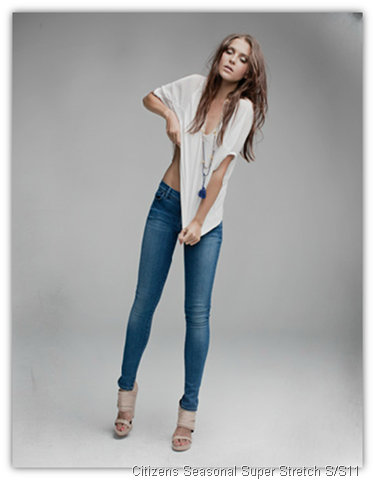
      citizens seasonal super stretches

    citizens ponte linen denim jeans

    But despite all these odds of high costs of manufacturing in L.A , the customers are still ready to pay the very high retail prices which may reach over $500 per pair of jeans. Brands like Citizens of Humanity are not deterred and produce over a million jeans a year . This is a phenomenal number for jeans to be made in costly production centre like L.A.  With the premium denim market (Over $100 a jeans) estimated to be over 20 million pieces in US and value of the same being around $2 billion, the numbers are not small though not very big either.

    But what will happen if the economy slides further in US or EU. Will the high prices of premium denim jeans be still acceptable. We have seen in the last three years that the volumes of premium denim have not affected too  much due to the recession though of course the growth of this segment  has been affected. One of the purported reason for the same was that premium denim cannabalized on other apparel categories ie consumers in the west thought it was better to buy a pair of good jeans and replace their buying for a few other bottoms that they were buying as jeans could be wore at a multiple occasions . Also , the desire of the consumers to own at least a pair of premium denim is strong and that desire is keeping this segment of the industry on the push. Big retailers like Gap have been trying to bring out premium denim products at lower prices , consumers are yet to wholeheartedly accept them. A question that comes to mind of many a consumer is

    “ We are ready to pay the extra cost  for the high quality that we are getting . But why do we need to pay the multiple times that number to pay everyone in the chain till retail point so that an extra $1 of cost ends up being charged to the consumer as $4 or $5 .. Is there a way to retain the high quality without being required to pay the entire supply chain the multiple?

    May be in near future we may develop new methods of retailing which may do away with a part of the chain which brings the product to the consumer at a lower cost . The web has done its part in reducing that cost , but still it is not satisfactory . Consumers are not satisfied unless they see the product and feel it . We look forward to the day when an innovative way of retailing brings high quality products to consumers with very small additions to cost in the chain.