Denimsandjeans.com is probably the most frequented site on the net for denim supply chain professionals from mills, brands , retailers , manufacturers around the world (hope we did not sound pompous– just a little proud..!) . We are opening some new sections on our site where the companies could advertise themselves and make themselves and their products visible to our discerning visitors . These places on our site are :
a)Sidebar : We have one slot available on the sidebar which enables a company to be visible to all the visitors on our site. This is probably the most valuable location available on the site.
You would have found our ‘Denim Mills Directory’ page coming on the top. These are just some of the possible searches and effectively if a buyer is searching for a denim mill anywhere around the world, they would land on this page . With a large number of denim mills around the world listed here , the buyers are able to reach their desired mills. But how would it feel to be on the top of this world list of denim mills and get the first and immediate attention of the buyers/visitors. Well, the slot on this page will enable one denim mill to have the right to first being viewed and visited and to be on the top of the Denim Directory . Indeed a cool place for a mill to be !!
c)Denim Brands : This page is again one which we are proud of as it is being continuously loved and listed as a top page to visit for finding about denim brands worldwide. We feel happy that many visitors searching looking for accurate information on denim brands are able to find it here. Try searching ‘Top Denim Brands’ , or ‘Denim brands in USA’ , Denim brands from Japan and you will land up here . There is one slot available on this page. As we go further deeper into this section , we give details on denim brands worldwide through this section and details on individual brands look like this – click here. With almost all top denim brands worldwide finding similar pages in our directory , we are offering a single slot on all of these pages ..
d)Denim Collections : What if you wanted to have a look at denim collections from some top brands worldwide for S/S09 and A/W’ 10 and S/S’09.. Either search for it on google one by one or just reach this page and find links to these collections. In any case , if you search for denim collections on Google , you are going to reach here ! Again , we are offering one slot on this page.
e)Under Articles : We have one slot available for denim companies who might want to be visible to our visitors at the end of ALL ARTICLES on our site. Not a location which any visitor would miss to notice !
For more details on terms and rates visit this page or email us by clicking here . And before I forget to mention, we will also be shortly starting the facility for creating a dedicated page for those who want to be more visible on our site. This page will be totally dedicated to that company and shall list out details on the company and display its products too! But only denim industry related companies shall be invited to join …..
Environmental sustainability in apparel production is an important aspect and is expected to get more and more important in the coming times. There are various aspects to environmental impact in apparel production particularly in the production of denim jeans . Though all the stages of denim production from cotton growing to finishing jeans affect environment , the washing of jeans is an area which does directly affect the environment due to its impact on water resources , discharge of chemicals and many other pollutants in the process. Washing managers in many companies are keen to reduce this pollution and they are keen to make their processes sustainable . Many actions are being taken by the managers to do the same whether it be getting better chemicals, using less water in washing and umpteen others.
But how to measure the environmental impact of the washing ?
Can it be quantified ?
Is there any way that processes be compared on a yardstick and compared to see their comparative environmental impact to enable the washing manager to make a decision on a process ?
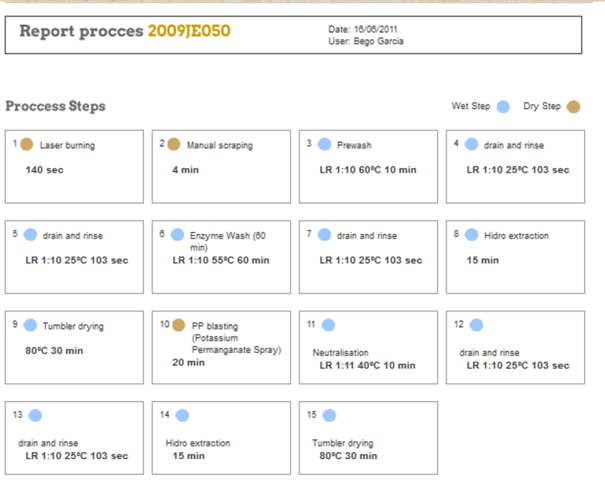
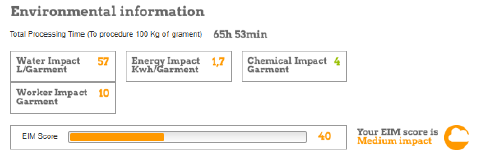
The EIM Software (Environmental Impact Measurement ) software from Jeanologia aims to provide this decision making tool to the washing managers. It provides an understanding the Environmental impact in the following individual categories:
Water consumption
Energy consumption
Chemical product used
Worker health
The software aims to provide the user to identify the major causes of environmental hazards as he puts in the details of his washing process and help the managers to arrive at a decision on which processes to select
Garment finishing processes are complex and the number of combinations in the laundry processes to have a determine look are infinite. The number of variables involved in a laundry process are very high and the environment where the processes are made influence directly in the final scores. With such an adverse scenario Jeanologia tried to create not the perfect tool but a simple and efficient one that can give a close approximation to reality.
Orta Anadolu – the famous denim mill from Turkey has come up with a unique denim fabric finishing process which changes the structure of the fabric . The process has a large number of pluses but the biggest being its eco – sustainability with about 90% of chemicals being used in close circuit and almost zero water being used ! The fabric made using this unique washing process is being launched at the Bread and Butter – Berlin (BBB) on July 6th . The fabric has already been tested by a number of companies and people in the industry to check out the specifics and Ebru Karakoç from Orta feels the response has been terrific !
Denham – the Jean maker : has made a collaboration with Orta to use Alchemy one for presenting collection at Pitti and will also be doing at BBB.
Piero Turk – the famous denim designer who has washed Alchemy One has remarked that it was very easy to retrieve true authentic vintage look on rigid fabric easily and that he could apply 3 dimensional finishes without much effort.
Antonio di Battista who has also conducted wash trials has revealed that the fabric transforms into a very luxurious look with an amazing hand-feel in the simplest finishes.
What can be achieved with Alchemy One process of finishing?
As per Orta Anadolu, the following characteristics can be achieved in the denim and other fabrics by this finishing process :
improved bulk .
improved lustre .
high strength .
reduced extensibility .
increased affinity for dyes of certain types .
enhanced evenness of dye take up.
can be used as a treatment for durable press finish.
delivers better physical performance with better visuality and hand-feel.
improves the tensile strength and dimensional stability of cotton rich fabric
“improved properties over mercerizing†. It would perform further processing, including dyeing and finishing, that would provide the fabrics with “performance properties that are not achievable with conventional methods.
permits the use of less resin than other mercerization techniques, it could achieve better performance with respect to strength.
alters the visuality of the fabric and makes the fabric smoother and brighter.
reduces the use of softener, resin, antipilling enzyme in denim garment finish.
processes the fabric with almost zero water consumption.
The image below shows the advantages of the process quite nicely .
Here is a small but artistic video from Orta Anadolu on the Alchemy One process
To know more about the Alchemy One finish process , contact Ebru Karakoc from Orta Anadolu by clicking here or visit their stall at Bread and butter on July 6th 2011 at 1600 hrs at Luna park !!
We all know that cotton prices have been killing the textile industry till a few months back . The unrelenting rise in the price of cotton had led to the increase in fabric prices for most of the garment factories and hence ultimate buyers. The fabric prices were increased by almost each denim mill and sometimes to the tune of 50% or more . The apparel buyers and retailers had no option but to bear the increased costs. However, the prices at the retail level in the major markets of US and EU did not undergo or reflect the changes in the costs. So , how much was the actual increase in prices for denim apparel shipped to US ?
The major impact of these increased prices has been visible in the shipments made in the first few months to the US and the EU . It would be interesting to see how the prices of imports were affected in the first few months of 2011 (January to April) compared to the average prices in 2010.
Import of Denim Apparel Into USA – 2010 and 2011 (Jan-April)
From
Price (US$/pc) 2010
Price (US$/pc) 2011 Jan- April
Difference
World
7.15
7.71
+7.26%
China
7.27
7.9
+8.66%
Pakistan
6.44
7.48
+16.1%
Vietnam
7.05
7.74
+9.78%
We can see from the above table that the average increase in the prices of imports of all denim apparel from around the world into US is 7.26% . But when we see individually , we find that the increase in prices is different from different countries . The increase in prices from Pakistan was the maximum with the prices in first four months of 2011 crossing the prices in 2010 over 16% ! Other important countries too had their share of increase in prices . But if we really see , the increase in prices of apparel is still not justifying the increase in fabric prices – which increased at places by even more than 50%
This shows that the various players in the supply chain have absorbed part of the increase in prices . There is also a possibility of impact of cost reduction measures taken at various levels of production and sourcing.
We have also seen that the retail prices in US did not show much of increase and as a result some of the retailers like Gap have to suffer huge loss of income . Now, with the prices of cotton crashing by over 40% , it remains to be seen how the prices of apparel will move. Will these retailers be pressurizing their suppliers to reduce prices significantly to cover their own losses. Will the sourcing price of denim apparel fall to below pre cotton increase levels ? It remains to be seen. However, the lesson that can be drawn from the entire episode are that :
There is a constant need to monitor the possibilities of supply chain efficiencies to reduce costs of production . Companies should not wait for events like sudden increase in raw material increase to focus on this aspect.
The prices at the consumer level are very difficult to increase especially when the economies are not in that great a shape.
Innovative products are the only way to get higher margins from the market and basic products will always be under price pressures.
Further to the launch of the Diesel Powder, it would be pertinent to check out some of the latest denim styles from Diesel which celebrate the femininity. There are lots of skin-tight and figure-hugging shapes, made possible by stretch fabrics and the new “jegging†family. There’s a wide selection of classic, boyfriend and bootcut styles – as well as a fantastic flare
that’s sure to tempt the fashionistas . And even the most traditional cuts are laden with details that make them uniquely Diesel. False pockets, zipped pockets, enlarged coin pockets, extra rivets and eye-catching stitching: we believe devilishness is in the details. There are also drop-crotch, carrot and sarouel styles, which are the ultimate in fashion without sacrificing any measure of glamour. And the names of these styles are no less fancy and glamorous ..
Here are over 23 such styles – slim fits and leggings dominate with a couple of flares thrown in !!
1 .NEVY
Fit : Slim / Tapered Slim cross over belt – workwear backpockets – Low waist slim fit
2. Matic
Fit : Slim / Tapered Trademark “pop up†fifth pocket.-Slim legs – sexy low waist - alluring rear design with curved yoke – small back pockets – low-slung belt loops.
3. Clushy
Fit : Slim / Tapered Zipped rear pockets -Cinch construction – Rear higher than the front – Arrow stitching on the hip - delivers a slim effect - a special coin pocket.
4. Cherick
Fit : Slim / Tapered Biker Soul – Low Waist – Cross Over Belt with double button closure – V cut in the waistband – Push Up effect by back pockets – Leg pattern to shape the calves – Slit Hem
5. Louvely
Fit : Slim / Bootcut Flares + Slim Leg : a perfect contrast – Knife Edge Pleats – Feminine back Pockets – Advance stitching
6. Hushy
Fit : Slim / Ankle Length Ankle Length slim fit – Front patch pockets – Rear shaping back pockets – Lengthening effect
7 . Debi
Fit : Regular / Tapered Mild Carrot Silhouette – Boyfriend look – Medium Wasit – Wide Front Pockets – Pleats in Front and Back of Leg
8 . Staffy
Fit : Regular / Tapered Boyfriend fit – low crotch – Drop Down Back Pockets – Soft Waistband – Low rise Yoke with dart details – Stitching at Hip for slim shape
9. Livy
Fit : Super slim / Straight Super Slim fit legs – rounded back pockets – Pleats on the yoke – Great for lovers of Super Skinny
10. Hi – VY
Fit : Super slim / Straight  Longer and slimmer legs – feminine yoke – tight fitting yoke – Antithesis of boyfriend jeans !!
11 . Zivy Jeans
Fit : Super Slim / Ankle Length Zip on Livy is a Zi-Vy ! – Vertical stitching in back Pockets – Super slim fit
12. Bi- Bi
Fit : Super Slim / Legging Stitched front Pockets – Biker Style stitching on knee – super stretch fabrics – Super Skinny tight jeans !!
13. Livier
Fit : Super Slim /Legging Super Soft Fabric – narrow hem ….
14. Stretchic
Fit : Super Slim / Low crotch Super slim legs – tight hem- dropped crotch – boyfriend touch –
upper back pocket and yoke
15. Biszou
Fit : Super Slim / Legging Ankle length legging- – stictching details on the knee – tight hem
16 . Halais
Fit : Regular / Tapered Boyfriend fit – star emboridery at the waist – small star rivet details – back knee pleats
17. Ronhoir
Fits : Regular and straight Regular small boot cut fit – rich front and back pocket details – cool rivets
18 . Tintsie
Fit : Regular / Low Crotch Workwear inspired – boyfriend attitude – super low crotch – hammer pockets – advanced stitching on hip
19 . Ashtair
Fit : Regular / Low Crotch Sarouel fit with super low crotch – big front pleat – drawstring fastening – boyfriend fit with super soft fabric .
20 . Lowette
Fit : Regular/ Straight Special curved 360 degree yoke – Designed pockets for push up effect – stripe on front fifth pocket – micro eagle on back pocket .
21. Lowky
Fit : Regular slim / Straight Reinforced waistband with zigzag stitching – curved yoke and back pockets – comfortable but rebellious
22. Lhela
Fit : Regular / Straight Lot of rivets – special back pocket construction – waist is curved and low – super slim fit leg
Diesel has launched a new collection marked ‘The Powder of Diesel’. The collection is inspired by the world of pigments in cosmetics – the blushes, eyeshadows, powders and more (ladies would know better..). Diesel wants to give these shades to their denim collection. With bright colors , light fabrics , jegging and other styles , it might just turn out to be a great selection for the summers for the girls ! Diesel took the color denim trend to the next level by adding a secret ingredient: powder.
“Don’t just be cool – be Powderfulâ€!!
What is Diesel + Powder ??
Well , what happens ladies when you get ready everyday using various cosmetics including powder.. If you are in a hurry or have butter fingers, some of the powdery cosmetics get sprayed all over yourself. The powder shines on the jeans or any other dress that you might be wearing. So ! , Diesel decided to do it on purpose to blend cosmetic references with latest innovations in fabric cut and styling. So you will find various colors of powders sprayed over these jeans and this should draw a lot of attention to you and your jeans !
What are the washes done on the Diesel Powder collection ?
Washing is the probably the most crucial element in this collection. So it was in place to see what kind of washes are being done .Here are some of the cool washes for the Diesel powder collection :
1)8Y4 WASH :
The 8Y4 “Sugar Goddess†is one of the star washes of the collection. The dark indigo fabric contains XLA cotton, a Lycra fiber that has been modifi ed to make it especially resistant. The denim undergoes several treatments – including dirty applications – before the all-important Powder of
Diesel pinkish effect is obtained by hand sponging with natural color pigments.
2) 65Z Wash
The 65Z “Glamarama†takes advantage of soft, superstretch lightweight denim fabric. A touch of “Powder†pink is added via manual localized sponging using natural pigments. A luminous effect is obtained by ironing
the denim in the final phase.
3) 8MZ Wash
The 8MZ “Splash of Talc†is another star wash, seen at its best advantage on the Matic fit. A 13 ounce base is softened with a number of complex manual treatments. A final press gives the fabric a luminous summer look. Localized sponging using oxidizing elements on pockets and hems adds further touches of light.
4) 8PT Wash
The 8MZ wash crops up again in a modified form in the 8PT “Dream
Stream†version, seen on the Nevy cut. It’s a broken and destroyed
variation, using a manually applied color spot treatment.
5) 8 NM Wash
Last but not least in this section is the 8NM “Blue Me Away†wash. A
clouded effect is achieved thanks to a combination of an initial sandpaper
treatment and an all-over manual spray treatment. This effect is highlighted by a bleach treatment .
These were some of the cool washes from Diesel on their powder collection . We will cover some more cool washes from Diesel shortly . So keep watching !!
Martelli Europe is one of the most reputed washing laundries around the world and brings out specialized washes at various times. The company is highly focused on contributing to new developments which result in environment friendly techniques . I spoke to the Managing Director of Martelli Europe – Mr. Mauro Angelini – regarding the same and he was quite emphatic on the contribution of new vintage wash developments which may help to reduce CO2 emissions and contribute in other ways to make them more environmentally sustainable compared to traditional washes..
What are the new developments that Martelli is presenting currently ?
We are currently working on several research levels. There is what we do for our customers and there is what we do for us not to "flatten". In this case we are studying the washing more environmentally sustainable in the sense that it involves a lower CO2 emissions, because they use less energy. It is not a simple process, we are working primarily with suppliers of chemicals like Garmon, in order to reduce CO2 emissions with washes and finishes using cold temperatures. Then, as always, we work hard to offer our "vintage effect" which is always greatly appreciated by all customers. Regarding dyeing even here we are from several years an avant-garde cold-dye.
Many brands and retailers have banned sandblasting. What are the new technologies that are being used for achieving similar results ? Are these technologies viable ?
Regarding sandblasting there is to say that in Martelli Europe we have always managed to propose the same or almost the same effect, without recourse to sandblasting. We are aware of the dangers which involves blasting , also we have to say, it is greatly reduced in new sealed implants the risks for operators. However, our thinking is that every process under high pressure produces dust, this sooner or later go airborne and is filled by someone. I do not think there is a powder that protects worker health, on the contrary, there are dusts that cause silicosis and others that cause asthma and other problems. I wonder if you simply replace the sand with vegetable or metallic abrasives, powder in the air remains. Similarly, using type solutions of carbon dioxide ice, certainly don’t help the environment and costs that do not believe customers want to endure. We go forward on our way, trying to use the technologies we have available. Customers appreciate our approach.
I hear that you are implementing the SA 8000. Can you tell us more about the same ?
It is true Sandeep and thanks for the question, we’re starting with the SA8000 which is the last after the ISO14001 ISO 9001 the OHSAS18001 we already have with the UKAS. Even here we are following with consistency in the way of quality, total quality. North European customers especially appreciate the fact that we have certifications, with SA8000, some multinational companies can forgo to make the social audit direct, as there has been announced by one of these. We are a company who has care of environmental issues but also of its employees.
How is the denim market in terms of washing requirements? Do you see any difference in the current market requirements compared to last year ?
There is a growing trend to ask three-dimensional finishings (3D) with resins, then there is always required the vintage effect is probably our strength. As regards fabrics, in the summer collections all customers have a model with cotton stripes fabric.
Are the brands trying to save on washing to reduce the cost of their garments keeping in view the increased cotton prices ?
It was as a rule attempt to reduce costs with suppliers. Some young or inexperienced buyers sometimes tends to overdo it and it is how to cut the branch where you’re sitting. Now this trend it is slowly disappearing, the world is changed a little. The relationship with suppliers today it is not only “cost-money†it should be strategic in terms of partnership. The most experienced buyers and sourcing managers, remember that we (all supply chain)are clothing fashion industry. We cannot copy the speculative and short-sighted attitude of certain finance, particularly now after we’ve seen disasters that brought us the crisis of 2008. Today in clothing from fabric to the laundry, we see many closures and few openings, I don’t think it is still the case to cut costs.
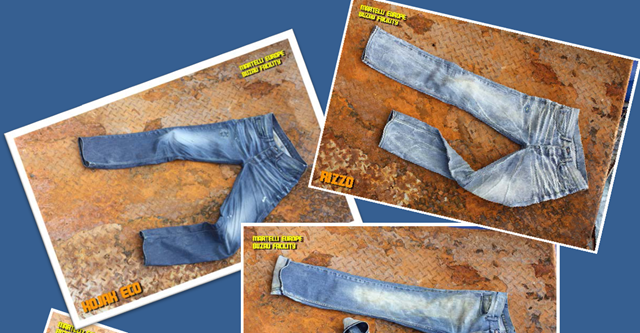
Here are some details on the vintage washes that Martelli is presenting :
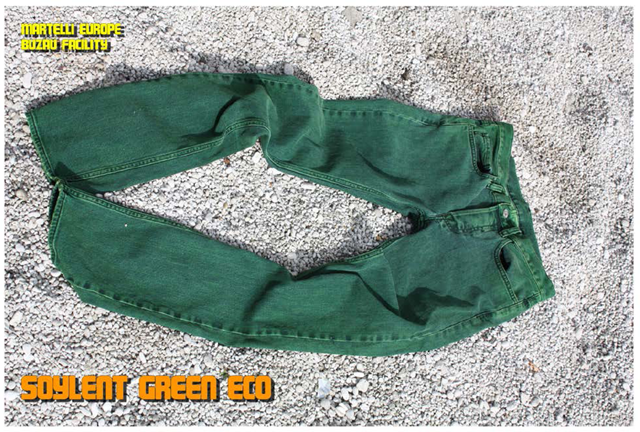
SOYLENT GREEN – ECO
Wash Details : KURABO FABRIC: SW STONE WASH + COLD DYEING = ECOLOGICAL TREATEMENT DUE TO THE TEMPERATURE SAVING: * BY USING COLD STONE WASH IT RESULTS A SAVING OF 30 ° C, WHICH ALSO REPRESENTS A SAVING OF 3 m³ CH4 (METHAN ) OUT OF BURNING = APPROXIMATELY 5.7 Kg OF CO2 EMISSION IN THE AIR * BY USING COLD DYEING IT RESULTS A SAVING OF 30 ° C, WHICH ALSO REPRESENTS A SAVING OF 3 m³ CH4 (METHAN ) OUT OF BURNING = APPROXIMATELY 5.7 Kg OF CO2 EMISSION IN THE AIR
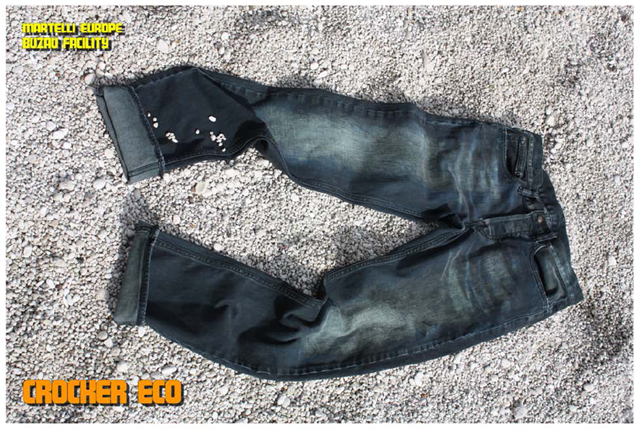
CROCKER – ECO
Wash Details :
KURABO FABRIC: SW STONE WASH + COLD DYEING + WORN EFFECTS MADE 100% MANUAL = ECOLOGICAL TREATEMENT DUE TO THE TEMPERATURE SAVING: * BY USING COLD STONE WASH IT RESULTS A SAVING OF 30 ° C, WHICH REPRESENTS ALSO A SAVING OF 3 m³ CH4 (METHAN ) OUT OF BURNING = APPROXIMATELY 5.7 Kg OF CO2 EMISSION IN THE AIR * BY USING COLD DYEING IT RESULTS A SAVING OF 30 ° C, WHICH REPRESENTS ALSO A SAVING OF 3 m³ CH4 (METHAN ) OUT OF BURNING = APPROXIMATELY 5.7 Kg OF CO2 EMISSION IN THE AIR
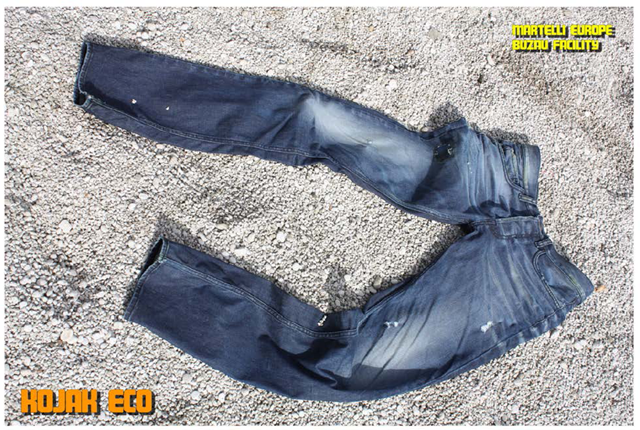
KOJAK –ECO
Wash Details : KURABO FABRIC: ECOLOGICAL VINTAGE GAINED THROUGHT AMPLE WATER AND TEMPERATURE SAVINGS = 3D EFFECT (3D EVOLUTION) + MULTIPLE MANUAL WORN EFFECTS + COLD STONE WASH : * BY USING COLD STONE WASH IT RESULTS A SAVING OF 30 ° C, WHICH REPRESENTS ALSO A SAVING OF 3 m³ CH4 (METHAN ) OUT OF BURNING = APPROXIMATELY 5.7 Kg OF CO2 EMISSION IN THE AIR * BY COMBINING COLD STONE WASH WITH NEUTRALIZING IT RESULTS A SAVING OF APPROXIMATELY 16L OF WATER / UNIT * BY USING RESINS WHICH POLYMERIZE AT 90° C INSTEAD OF 140 ° C, IT RESULTS A SAVING OF 3 m³ CH4 (METHAN ) OUT OF BURNING = APPROXIMATELY 5.7 Kg OF CO2 EMISSION IN THE AIR * THIS TYPE OF RESINS DOES NOT CONTAIN FORMALDEHYDE
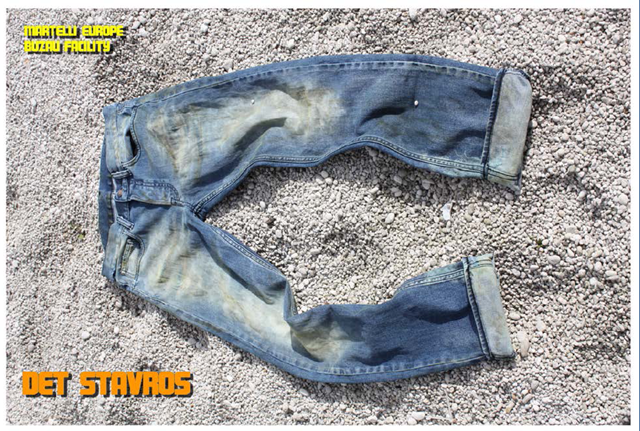
DET STAVROS
Wash Details : KURABO FABRIC: SW STONE WASH + MULTIPLE WORN EFFECTS / COLOUR MADE 100% MANUAL: * BY USING COLD STONE WASH IT RESULTS A SAVING OF 30 ° C, WHICH REPRESENTS ALSO A SAVING OF 3 m³ CH4 (METHAN ) OUT OF BURNING = APROXIMATELLY 5.7 Kg OF CO2 EMISSION IN THE AIR
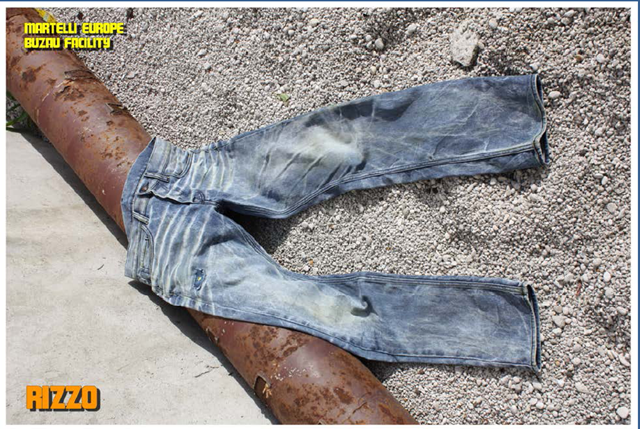
RIZZO
Wash Details : KURABO FABRIC – AN OLDER TYPE OF TREATEMENT MEANING DRY DECOLORATION, BUT COMBINED WITH NEW PROCEDURES SUCH AS 3D EFFECTS CAN GENERATE INTERESTING RESULTS, MAINLY WASHINGS WITH A MORE AGGRESSIVE VISUAL IMPACT ** THIS TYPE OF PROCESS ALSO HAS AN ECOLOGICAL ASPECT DUE TO THE FACT THAT IT REDUCES THE WATER CONSUMPTION WITH APPROXIMATELY 16 L / UNIT, UNLIKE A DECOLORATION MADE WITH A NORMAL WASHING MACHINE.
You can just watch all these presentations in a slideshow below :
Bluconnection – an innovative indigo dye manufacturing company from Singapore has compiled a comprehensive compendium about the history , chemistry and application of Indigo dyes. We are producing some extracts from this compendium . Also show is the complete presentation in a slideshow under the article and it can also be obtained in PDF form Free by email from Paul Cowell of Bluconnection.
Indigo History
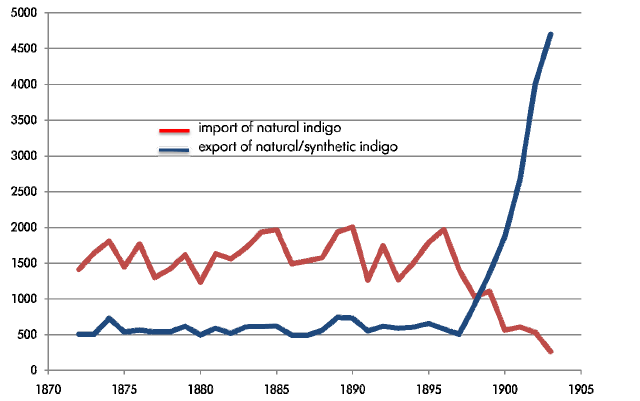
The roots of indigo go back into the stone age when our ancestors used indigo in cave art and for painting their bodies. for at least 6,000 years indigo has been used as a dye, for example the colouration of textiles. the oldest evidence for this was found during excavations in the indus valley between bricks forming a small vat in the ground. it is suggested that this is why we call it indigo, a greek word meaning “coming from India.†There are many plants containing the precursor of indigo, before indigo was synthesized, it was extracted from these plants – in the beginning probably just by chewing them. historically, indigo maintained it’s place since it was the only blue dye available and still today, after more than 150 years of organic chemistry and quite a few competitive dyes of blue colour, it is still the most efficient blue dye or pigment. in fact there is no other substance that creates such intensive blue colour with such few carbon atoms in its molecule. In the high and late middle ages – about 500 to 1000 years ago – the most important dye for black, blue and brown shades was gained from a plant called “dyer’s woad†(isatis tinctoria). woad was grown in England and Germany and the areas and towns involved in growing and trading woad became extremely wealthy. many rules and regulations gave privileges to those communities in order to maximize and maintain their earnings from woad. This dye was not called indigo. Indigo only came to Europe later during the modern age. Although today we know that both dyes had the same chemical structure. In the course of increasing overseas trade, colonialism and slavery, indigo was produced on large plantations in subtropical regions, e.g. in India and along America’s Atlantic coast. this indigo was extracted from a plant named “indigo fera tinctoriaâ€. It was purer and gave a more brilliant shade. despite the ongoing privileges protecting the woad industry, this indigo gained more and more market share. in Nurenberg it was written that even the death penalty was imposed on those found guilty of having used indigo. nevertheless, woad had nearly disappeared by the second half of the 19th century. by that time the global annual consumption of natural indigo had reached 5,000 metric tons. Indigo had largely contributed to the wealth of the companies and patrician families involved in overseas trading. due to this, the pioneers of organic chemistry were challenged to find a way to synthesize indigo. In 1883 Adolf von Baeyer, a German professor and winner of the 1905 nobel prize in chemistry, discovered the chemical structure of indigo. based on this work, synthetic indigo production was developed at Badische Anilin & Soda Fabric (BASF) and started in an industrial scale. within only a few years synthetic indigo almost completely replaced the natural indigo imported from overseas.
imports and exports of indigo in the German Empire
The production and sales of synthetic indigo followed the graph of a typical product cycle. It grew during the first years and declined later because the chemists had developed other dyes with better yield and superior fastness properties. having understood chemically the principle way of applying indigo, reduction to a dye and oxidation to a pigment on the fiber, a number of other vat dyes were synthesized. however, indigo never has been defeated and after decades as a niche product it came back as the dye for denim in the late 50’s of the last century. Production of synthetic indigo had it’s revival during the second half of the last century and indigo has become the most important textile dye.
Jeans fashion has reflected the change towards a more liberal attitude.
Work wear. originally gold seekers, later cowboys, craftsmen etc.
In the 50s BASF was prepared quite well for this hype. Nevertheless BASF’s indigo capacity could not meet the huge global indigo demand during the 60s and 70s. The increasing prices encouraged quite a few competitors to invest in indigo production, particularly in China. it is said that in Hong Kong an indigo drum could be sold for a lot of money. Former sales managers tell about customers who issued blank cheques hoping to get hold of some extra kilograms of indigo.Huge indigo production capacities had been built up in China by the middle of the 90s. with a total capacity around 100,000 tons for a global indigo market of ~30,000 tons. Today we estimate a global indigo market consumption of ~60,000 tons. Due to excess capacity for synthetic indigo this market became an oligopoly during the 1990s. lower and lower prices made the smaller producers disappear. Indigo by nature has a number of unique features making it successful:
it supplies favored shades from black to navy to sky blue.
these shades are balanced – not too brilliant or artificial and not too dull.
as a pigment it would not participate in metabolism making it very safe for human contact, in fact indigo is used as food dye and as medical indicator applied intravenously.
it is “designed†to exist as reduced soluble form during dyeing and as oxidized form as blue pigment.
it’s soluble form is not sensitive to water hardness and this allows the dyeing of greige or minimum pretreated cotton.
Shown below is the complete presentation and as mentioned above you can also get a Free PDF file by sending an email to Paul Cowell
American and Efird – has listed out some of the most common seam inequalities in the manufacturing of denim jeans . The company lists out the defects and suggests solutions for removing these defects. We are summarizing the results from A & E below :
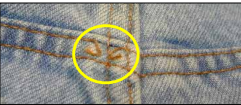
1.BROKEN STITCHES – NEEDLE CUTTING
Description : Where the thread is being broken where one seam crosses another seam (ex: bartacks on top of waistband stitching, seatseam on top of riser seam ) resulting in stitch failure.
Use a larger diameter thread on operations
where the thread is being cut.
Make sure the proper stitch balance is being used. On a chainstitch seam on denim, you normally would like to maintain a 60%/40%
relationship of Needle thread to Looper thread in the
Seam.
Use needles with the correct needle point.
Change the needles at regular intervals on operations
where the Needle Cuts are occurring frequently.
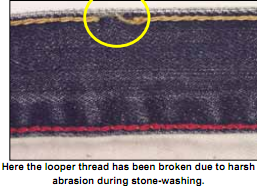
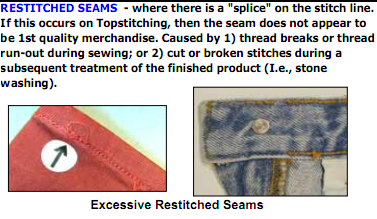
Description : where the thread is broken during stone-washing, sand blasting, hand sanding, etc. Broken stitches must be repaired by restitching over the top of the stitch-line.
Recommended Solution :
Use a larger diameter thread on operations where
excessive abrasion is occuring (ex: use T-120 on
Waistband);
Make sure stitches are balanced properly.
Use a Magic air entangled thread in the looper due to its lower
seam profile making it susceptible to abrasion
(ex: use T-90 or T-135 Magic in loopers of the Yoke, Seat
and Waistband seam);
Monitor the Finishing Cycle for compliance to specs.
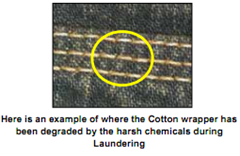
3. Broken Stitches : Chemical Degradation :
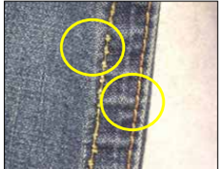
Description : where thread is being compromised by the chemicals used during laundering resulting in loss or change of color and seam failure.
It is recommended to go to larger thread sizes when the
Denim Garments will be subject to Harsh Chemical
washes.
To achieve the best laundering results make
sure that the water temperatures and PH Levels are
correct and that the proper amounts and sequence of
chemical dispersion are within guidelines.
Make sure the garments are being rinsed properly to neutralize the
chemicals in the fabric.
Monitor the drying process, cycle times, and temperatures to make sure they are correct so that the best possible garment quality can be
achieved.
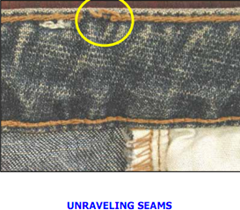
4. Unravelling Seams :
Description : where either the stitch has been broken or a skipped stitch has
occurred. This will cause seam failure unless the seam is Restitched.
Recommended Solution :
This may include going to a higher
performance thread designed to minimize sewing
interruptions.
Observe sewing operators for correct
material handling techniques.
6. Sagging or Rolling Pockets :
Description : where the pocket does not lay SAGGING OR ROLLING POCKETS flat and rolls over after laundering.
Recommended Solution :
Make sure the sewing operators are not holding POCKETS
back excessively when setting the front pocket.
Make sure the hem is formed properly and that excessive
fabric is not being being put into the folder that will cause
the hem to roll over.
Check to make sure pocket is cut properly and that pocket curve is not too deep.
Use a reinforcement tape on the inside of the pocket that may
help prevent the front panel from stretching along the bias
where the front pocket is set.
The type and weight of denim, along with the fabric construction, may contribute to this problem. Contact your fabric supplier for assistance.
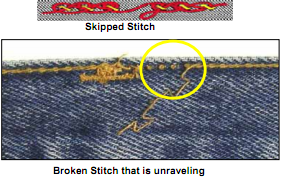
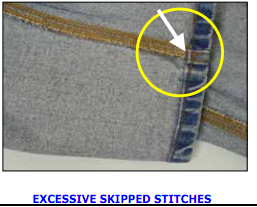
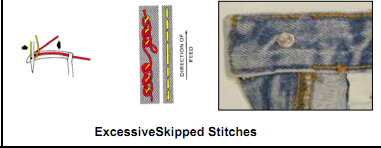
5.Skipped Stitches
Description: where the stitch forming device misses the
needle loop or the needle misses the looper loop. Skips are usually
found where one seam crosses another seam and most of the time
occurs right before or right after the heavy thickness.
Recommended Solution :-
Use corespun thread.
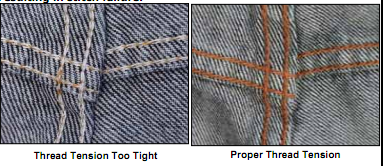
Use minimum thread tension to get a balanced stitch.
Use the ideal foot, feed and plate that helps to minimize
flagging.
Training sewing operators NOT to stop on the
thickness.
Make sure the machine is feeding properly
without stalling.
Make sure the machine is not back-feeding.
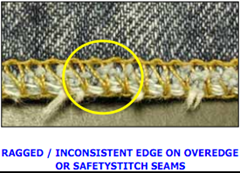
6. Ragged – Inconsistent Edge
Description : where the edge of the seam is
either extremely “ragged” or “rolls” inside the stitch.
Recommended Solution :
Make sure the sewing machine knives are sharpened and
changed often.
The knives should be adjusted properly in relationship to the “stitch tongue” on the needle plate to obtain the proper seam width or width bite.
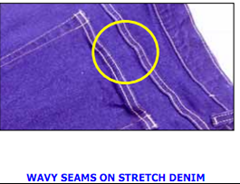
7. Wavy Seams On Stretch Denim
Description : where the seam does not lay flat and is wavy due to the fabric stretching as it was sewn or during subsequent laundering and handling operation.
Recommended Solution :Â
Use minimum presser foot pressure.
Instruct sewing operators to use proper handling techniques and not
stretch the fabric as they are making the seam.
Where available, use differential feed to compensate for the
stretch of the fabric.
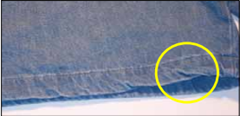
8. Ropy Hem
Description: is where hem is not laying flat and is skewed in ROPY HEM
appearance .
Recommended Solutions :
Instruct the sewing operator to make sure they get the hem started correctly in the folder before they start sewing.
Also, make sure the don’t hold back
excessively as the seam is being sewn.
Use minimum roller or presser foot pressure.
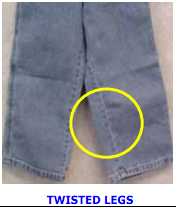
9. Twisted Legs :
Description : is where the sideseam twists around to the front  of the pant and distorts the appearance of the jeans .
Recommended Solution :
Instruct the sewing operator to
match the front and back properly so they come out the
same length. Sometimes notches are used to insure proper
alignment. They should NOT trim off the front or back with
scissors to make them come out the same length.
Make sure the cut parts are of equal length coming to the
assembly operation.
Check fabric quality and cutting for proper skew.
Make sure the sewing machine is adjusted
properly for uniform feeding of the top and bottom plies
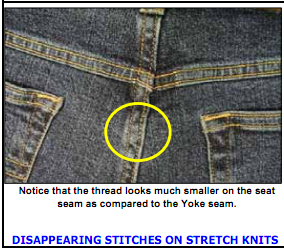
8. Disappearing Stitches in Stretch Denim
Description : is where the thread looks much smaller on seams sewn in the warp direction than in the weft direction of the fabric
Recommended Solution :
Use a heavier thread size (T-120, ON STRETCH DENIM
T-135, T-150) on topstitching.
Go to a longer stitch length (from 8 to 6 spi). 3) Make sure the thread tensions are as loose as possible so the thread sits on top of the
fabric rather than burying in the fabric on seams sewn in
the warp.
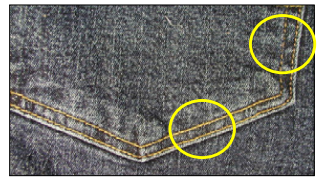
10. Thread Discoloration after Laundry
Description : is where the thread pics up the indigo dyes from the fabric giving the thread a ‘dirty’ appearance. A common discoloration would be the pick-up of a greenish or turquoise tint.
Recommended Solution :
Use thread with proper color fastness characteristics.
Correct PH level (too low) and Water Temperature (too low) during
laundry.
Use the proper chemicals & laundry cycles.
Use Denimcol PCC in wash or similar additive.
Do Not overload washers with too many garments at one time
The retailers worldwide are resorting to increases in prices to make up for the increased costs – most of which have been attributed to the increase in cotton prices. Though the cotton prices have started to ease, the impact on the supply chain will be visible for some time to come. As previously mentioned , GAP announced its forecast of reduced earnings leading to the largest fall of share price in over a decade . Businessweek now reports that the apparel brands are finding that they do not have much pricing power over budget conscious consumers and the only way to fight the increased prices is to cut costs .
Companies are resorting to “Deconstruction Experts†– companies who help to reduce the cost of the garment . These companies , eg Kurt Salmon – are helping a number of their clients to find the ways to cut costs without making the change felt to the consumers.
Various suggestions being given by these experts to cut costs. Fabric comprises as much as 50 percent of a garment’s costs. Cutting it more carefully to reduce waste can reduce by a few cents, Zippers that come in a big roll are cheaper than ones custom-made for specific garments .Brown – Vice Chairman , Kurt and Salmons , recently examined a pair of men’s khakis that sell for $29.50 and spotted a coin pocket. Eliminating it zaps a nickel, he says. Watch pockets are an easy cut, since few men use them anymore. So are logos and decorative stitching inside the waistband—visible to men only when they put on their pants.
However, this cost cutting cannot be taken beyond a point . The customers can easily switch over to another brand if they find cheaper plastic buttons, smaller pockets or reduced quality of waistband or other visible changes.
However, i feel that the brands/retailers which have been able to absorb these increased costs and have not made significant changes to their prices or product quality will be able to get the benefits in the next one year. The impact of increased prices of cotton is going to go away as we are seeing the prices of cotton falling and the retailers will not have to work too much on cost reductions. We might see GAP’s share price rising in the next 6 months again !!!!
This presentation is courtesy Stylesight.com – leading trend agency worldwide.
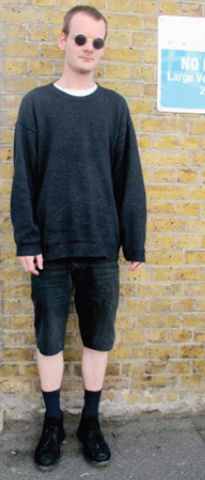
Dazed & Confused is a British style magazine, that was set up in 1992 and published monthly. Its founding editors were Jefferson Hack and Rankin. Topics covered include music, fashion, film, art and literature.
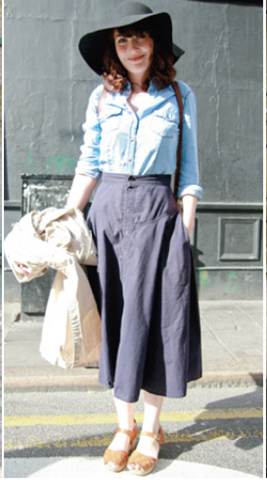
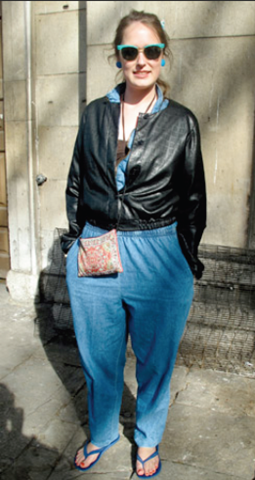
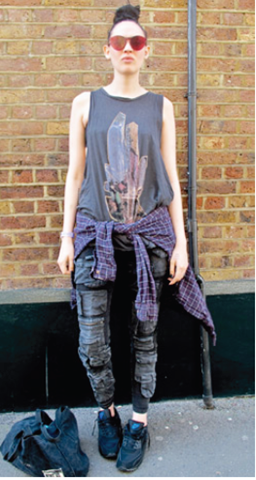
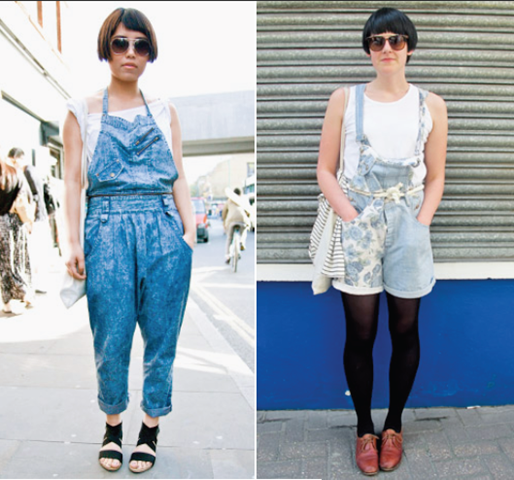
In April 2011, Dazed and Confused launched its first Dazed Live festival. This was a two day festival with focus on radical ideas and inspirational art. Dazed live boasted performances from some top bands and DJs New York alt band Gang Gang Dance, noisy experimentalists Factory Floor and cosmic disco legend Black Devil Disco Club. The buzz around this burgeoning festival translated into an explosion of defiant colors and fresh silhouettes that ranged from 90s-inspired grunge denim to refined sartorial styles.
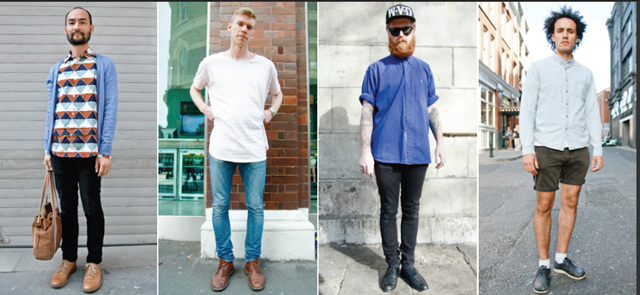
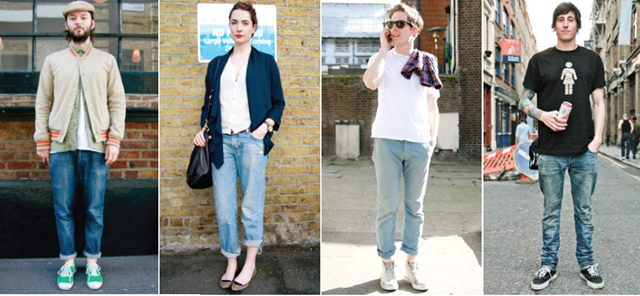
Best of Men Styling
Modest, understated, cool and classic looks were the underlying theme for Dazed Digital!s best-dressed men. Pared-down Scandinavian styling mixes clean denim with simple relaxed tees / Tailored summer shorts with lightweight chambray shirts for a smartly sartorial look / The mix of denim and ethnic-inspired prints continues for menswear / 1980s SoCal skater styling with graphic caps, heavy black sunglasses, bold retro shirts and unfussy pants.
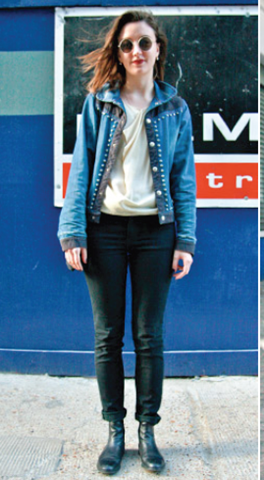
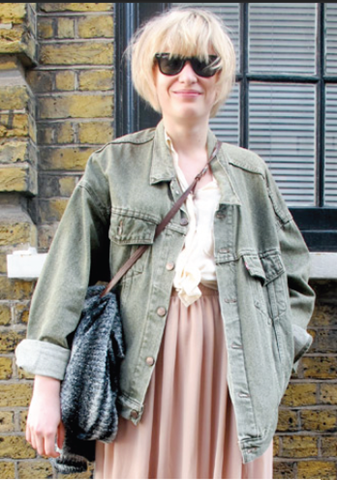
Best of Women Styling
Girls at Dazed Digital favored stonewashed looks and vintage finds. Fabric-blocked truckers with rivet embellishments / Paneled biker jeggings update in vibrant acid washes / 70s smart and classic denim looks / Denim-inspired chinos emerge as substitutes
Shadows Styling
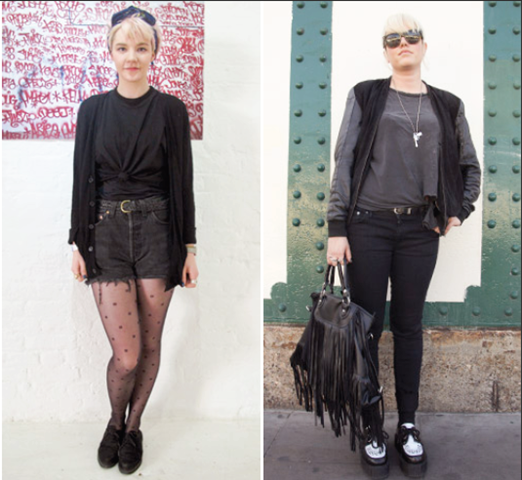
Black-on-black styling is important for London!s young men and juniors. All-black ensembles for summer / Shredded shorts and cut-off tees / Juxtaposition of slim and oversized silhouettes continues / Drapey neo-goth inspirations / Rough patchwork adds dimension and texture
L o o s e n U p !
Regular, tapered fits with a soft rolled hem become the unisex silhouette for the season. Regular vintage looks to slim and straight fits / Double-rolled or pinch rolled hem accentuates taper / 6-7/8ths inseam / Simple, clean and square cuts or stacked and loose fit shapes / Urban, streetwear styles as well as authentic time-worn looks / Shape confirms the gradual transition away from skinnier silhouettes
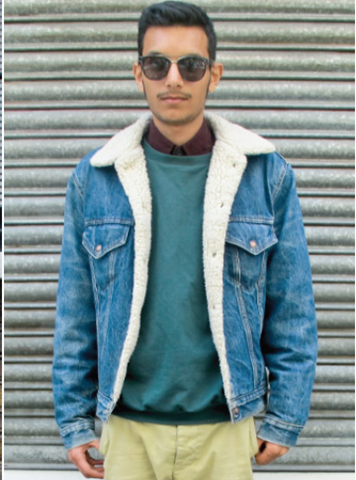
Upsized Truckers
Oversized, rounded and baggy trucker silhouettes continue as a trans-seasonal favorite for girls and guys this spring. Reworked proportions give the upper body volume and drape / Unstructured versions in lightweight denim / Upsized and boxy blocks have 80s or grungy feel / Mid-cast stone washing for spring.
Boyfriend Shirt
Coming after Boyfriend jeans are now the boyfriend shirts !. Oversized shirts replace jackets for spring / Trans-seasonal layers over dresses / Western chambray constructions / Sun-bleached chambray / Worn-in bright indigo casts / Animal prints on yoke panels for a directional look
Bib And Brace
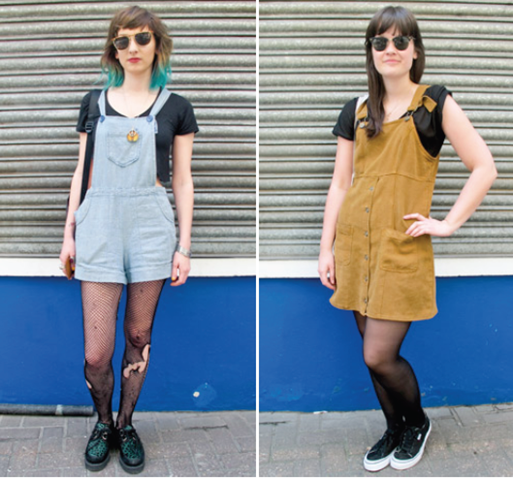
Women!s playsuits and jumpsuits remain major festival favorites. 80s-inspired bib and brace-style hot pants / 1990s girly floral inserts / Low and loose boyfriend silhouettes with casual brace details / Feminine halter neck and cinched waist updates / Washed-out mid-casts and baby blues
Dazed Pinups
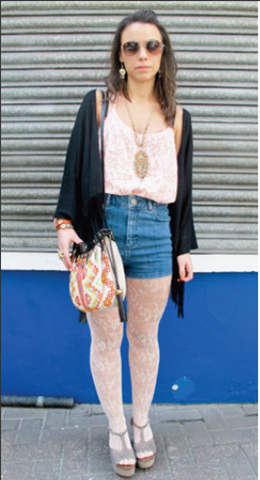
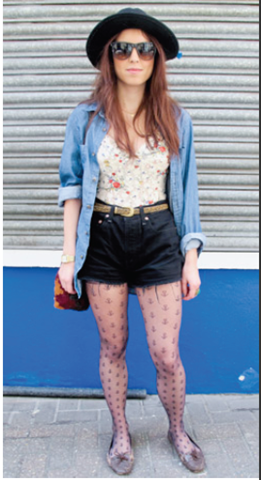
Pin-up shorts remain key trans-seasonal items and festival staples. High-waisted shorts are key for juniors / Mid-thigh lengths / Extra short cuts with nipped-in waists / 1980s look with translucent patterned tights / Rolled, distressed cuffs / Retro mid-casts and faded washes
The denim players have seen some tough times in the last 1 and half years. With the cotton prices going through the roof (having almost doubled), the mills were previously hard pressed to make their buyers understand the increase in costs and tried to get the prices increased. The process was slow as getting sharp increases in prices from buyers is never too easy. However, the awareness of the cotton price increase was there among buyers and many of them , reluctantly , agreed to increase the prices . Now, with cotton prices crashing, the strike by garment manufacturers against govt. duties , reduced demand etc has suddenly led to a situation of oversupply of denim fabric with prices falling . According to reports, most of the mills have large stocks and the next 2 months look tough for the denim market. The players who were specializing mainly in the polyester denims and with no exports have been hit more hardly. The prices of polyester denim seem to have fallen about Rs 15-20 per mtr (35-45 cents/mtr) and those of cotton in the range of Rs 10 (2o cents approx). However, with festive season sale starting from July, it is expected that the demand would stabilize during this period.
Cotton Prices
Cotton price increase in the last one year have actually played a spoilsport and have not helped anyone – neither the mills, nor the retailers and of course not the consumers. It has created a lot of uncertainty in the market and is still doing so. The cotton prices had increased dramatically last year and peaked during Feb this year. However, suddenly the prices have started crashing with a better forecast of cotton production. In India, the prices have come down from almost Rs 65000 a candy (35 to Rs 42000 a candy – about 33% fall in 2 months !! Internationally , also prices have been reducing on a similar note :
Month
Price Per Candy
Price Per Kilo in Rs
Price per kilo in USD(@Rs45/USD)
Difference
Feb 2011
63000
Rs 177
3.93
May 2011
42000
Rs 118
2.62
-33%
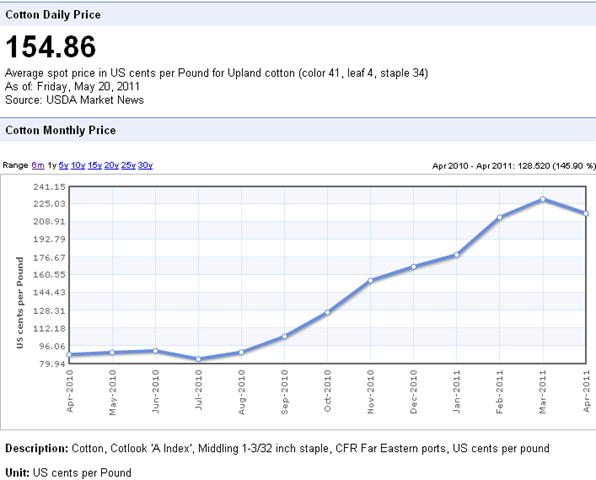
The movement of international cotton prices over the last year can also be seen here.
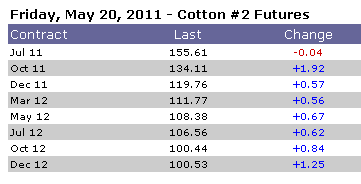
The outlook of future prices of cotton also do not look that good. The crop for 2011-12 is expected to be very good at about 127 million bales with cotton planting around the world projected to rise by 7% in 2011/12 to 36m hectares– the largest in 17 years.. The cotton futures market in US is projecting prices much lower than current levels . See below :
The international retailers too had to bear the brunt of the cotton price increases. Many of them could not pass on the price increases in the denim and other fabrics to their consumers. Eg GAP management said late thursday
“….second-half product costs per-unit, factoring rising cotton and other costs, are now expected to rise about 20%, more than it anticipated, as it began to purchase goods for the holiday season. Its lower-priced channels such as Old Navy and the outlet stores that compete on price would be hit the hardest and would have the least room to pass on any cost increases…..â€
Gap has been testing the depth, frequency and length of discounts to help offset margin pressure. It plans to be less promotional and experiment with marketing ideas to drive traffic that do not involve discounting.For instance, at the company’s struggling Gap brand in the U.S., instead of having a 40% off the entire chain, the company plans to have promotions such as 40% off women’s products excluding denim, he said.
Similarly , many other retailers have not been able to pass on the increase in sourcing costs to their consumers and are feeling the heat of increased costs.
Now, with falling prices of cotton, the mills will be faced with the prospect of reducing prices for the retailers and other customers when already many of them have a stock of 3-4 months of cotton at higher prices. It would be a double whammy for the mills as they try to deal with their customers again and try to hold on their prices as costs have not gone down.
Another problem related to exports for denim mills in India would be the DEPB – a scheme under which they got incentive of about 7.5% on exports is coming to an end and being replaced by Duty drawback scheme where they would get almost 4% less. This would further shave off another 4% from the margin of exporters and will not give any help .
As mentioned before, the strike by garment manufacturers in India – which lasted about a month , left a huge impact for both fabric and spinning mills. The companies are reeling under the impact of the reduced production for this time which can hardly be covered up . Most of the spinning mills are running under capacity and holding huge stocks with prices of yarns falling on a daily basis. It is hoped that the market would get some sanity after end of June when demand starts to pick up for festive season .
Follow us on FACEBOOK or TWITTER to get more reports on denim industry directly.
 Denimsandjeans.com is probably the most frequented site on the net for denim supply chain professionals from mills, brands , retailers , manufacturers around the world (hope we did not sound pompous– just a little proud..!) . We are opening some new sections on our site where the companies could advertise themselves and make themselves and their products visible to our discerning visitors . These places on our site are :





 American and Efird – has listed out some of the most common seam inequalities in the manufacturing of denim jeans . The company lists out the defects and suggests solutions for removing these defects. We are summarizing the results from A & E below :