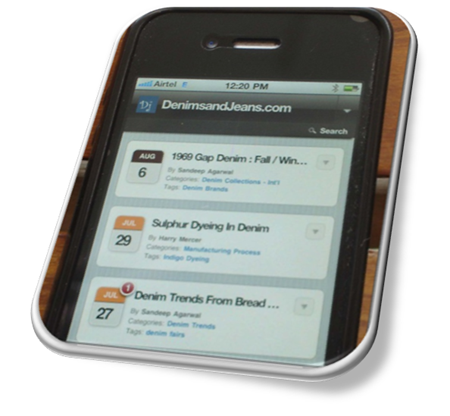
Denimsandjeans.com is now iPhone friendly. So many of our readers who wished to easily check our reports through their iphone – can now be happy!
How to read the latest denim reports on iphone ?
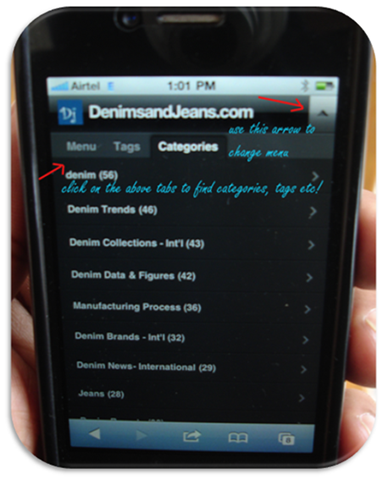
Just open the ‘Safari’ browser on iphone and open www.denimsandjeans.com. You would see the above image immediately on site opening Also not only the reports , you can check out easily our different pages and categories , tags etc easily from the iphone without needing to see the entire site . This will also help in easy loading of the site and easy searching of our reports.
Do let us have your feedback and let us know how you find this new application …
Gap’s 1969: LA and Beyond fall 2011 campaign has cast real people, and will be based primarily online, with national magazines and point-of-sale media as supporting media, says the company. The new campagin will be rolling out on the brand’s Facebook page and other online destinations magazines including Glamour, GQ, InStyle, People StyleWatch and Vogue.
Developed by Gap’s Global Creative Centeri n NY together with Ogilvy and Cool Hunting Gap’s 1969 studio, creating the company’s denim line, is the ï¬rst to get a treatment by the company’s marketing department to highlight ‘what’s different and inventive at Gap,’ says chief marketing ofï¬cer Seth Farbman.
‘We want our customers to see who’s behind the product and how their individual personalities and lifestyles influence what we offer in our stores around the globe.’
To show that Gap is not just another denim retailer but ,Gap’s new global marketing campaign tells the story of its 1969 fall collection from the inside out. Starting with the personalities behind the denim, 1969: L.A. and Beyond gives a transparent look at the designers and how they come together each day to create the latest in denim fits, fabrics and washes. Taking it from the studio to the real world, the campaign also shows how the denim comes to life in various cities by the people who wear it. All this is perhaps to give a more human and individualistic touch to their 1969 jeans .
Led by creative director Rosella Giuliani (formerly vice president of design and merchandising at Seven For All Mankind), the 1969 design team is a collective of artists, musicians, action sports junkies and trendsetters. Women’s design director, Nicole King-Burroughs, turns to art for style inspiration, while women’s merchant, Masako Konishi, views fashion as more instinct than intellect, applying emotion as opposed to regulated rules to make her fashion choices. Men’s design director, Jason Ferro, brings his background as a rebel skater, surfer and musician to the design table, while men’s merchant, Cale Margol, uses denim as a canvas to tell a modern and progressive story. Wash specialist, Rob Crews, started in the industry when he was just 16 years-old and fell in love with the creative process of taking raw denim into a washed state through different hand treatments. A series of over 30 videos gives a sneak peek into how the collection is made. Here is one of the videos :
Providing further inspiration to the design team, the 1969 studio feels like the personal atelier of a denim architect, not the headquarters of a global brand. Once a cigar factory, the vast and open loft studio is based in the heart of the garment district on West Pico Boulevard in downtown Los Angeles. This Gap denim epicenter is an ever-changing canvas for ideas, featuring art books, mood boards, vintage buttons, Japanese work wear catalogues and back issues of surfer magazines, set against a backdrop of sun-filled floor-to-ceiling bay windows.
“When I first joined Gap, I was surprised by the unexpected, untold stories across the brand—particularly about our people and the real-life experiences and situations they’re inspired by,†said Seth Farbman, Gap’s Chief Marketing Officer. “Fall is our first step in sharing what’s different and inventive at Gap, and we’re starting with our 1969 studio. We want our customers to see who’s behind the product and how their individual personalities and lifestyles influence what we offer in our stores around the globe.â€
Aligned with how people want to discover and share information, 1969: L.A. and Beyond will live primarily in the digital world via a series of video vignettes and sponsored editorial on Gap’s Facebook page and on outlets such as DailyCandy, FabSugar, Glam, Hulu, LookBook, Pandora, Refinery29, RollingStone and TrendCentral. The campaign was developed in Gap’s Global Creative Center in New York, and is designed to be global with different parts of the campaign allowing international markets to balance according to their needs.
To make the campaign more lively , Gap has also launched the Pico Trucks in some cities of US where Tacos (a mexican food) and other items will be served to people who are wearing a Gap product – FREE !
1969 Fall Collection Gap’s 1969 fall collection continues to demonstrate Gap’s commitment to bringing the same premium fabrics and fits as other premium denim brands at a much more accessible price point. Taking denim beyond the five-pocket blue jean, the fall collection explores the idea of “jeanswear meets sportswear.†It evolves the line from jeans to stretch leggings, cords, tailored dress shirts and jackets. With an emphasis on sophisticated fabrics, the collection feels modern and sexy while maintaining a denim lifestyle vibe.
The women’s signature Legging Jean is fresh for fall in a variety of new fabrics and colors, including the Ponte Knit Legging in black and olive, the Gummy Legging in black and khaki, and the Legging Cord in both neutral and pop colors. Also big for fall is the High Rise Pintuck Trouser in a non-traditional indigo denim, the Skinny Boot in black, and the fashion crop in fits such as the Cropped Slim, the High Rise Cropped Straight and the Cropped Boot.
The menswear collection is also focused on signature fits in new fabrics and colors. Highlights include the Drop Crotch Skinny in charcoal, the Slim Trouser in dolphin grey, the Super Skinny Clean in grey and the Slouchy Slim Rocker in black. The collection also features pieces that are either a natural extension of denim or that pair nicely with jeans, including the lightweight chambray jacket, a lightweight denim blazer and tailored dress shirts.
“Fabric and fit are the keys to the fall collection— focal points of every piece. We’ve taken beautiful and interesting fabrics and then tested their reaction to different cuts, washes and dyes. The result is a range of new styles and fits that stretch beyond denim into a broader collection,†said Rosella Giuliani, Gap’s 1969 Creative Director.
Denim prices range from $59.50-$69.50 for more basic styles and $59.95-$89.95 for more fashion-forward styles and higher-end fabrics.
About Gap Inc. Gap Inc. is a leading global specialty retailer offering clothing, accessories, and personal care products for men, women, children, and babies under the Gap, Banana Republic, Old Navy, Piperlime, and Athleta brands. Fiscal year 2010 net sales were $14.7 billion. Gap Inc. products are available for purchase in over 90 countries worldwide through about 3,100 company-operated stores, about 175 franchise stores, and e-commerce sites.
This is a guest post by Harry Mercer. It tells about the best practices in Sulphur dyeing for fashion denim and was a part of the presentation made at Dhaka by him on a seminar on Sulphur Dyes by Fenazol
The Nature of Sulfur Dyes
Sulfur dyes are a form of vat dyes – they are water-insoluble and in order to apply to fibers must be made water-soluble through the process of reduction.
Reduction is a chemical process in which hydrogen is liberated. The hydrogen reacts with the dye and permits a water molecule to attach to the dye. The dye is transported into cotton fiber by the water.
This reduced dye must then be oxidized. Oxygen reacts with the hydrogen producing water. Removing the hydrogen makes the dye insoluble, which results in the dye becoming physically trapped inside the fiber.
The Uses of Sulfur Dyes
Sulfur dyes are commonly used for black, blue, brown, khaki and green colors.
Sulfur dyes are applied to cellulosic fibers and blends of cellulosics with polyester, nylon and acrylics.
Sulfur dyes can be applied with little difficulty and with excellent results at a relatively low cost.
With good application methods, sulfur dyes are extremely wash-fast, however, they are usually not fast to chlorine bleaching.
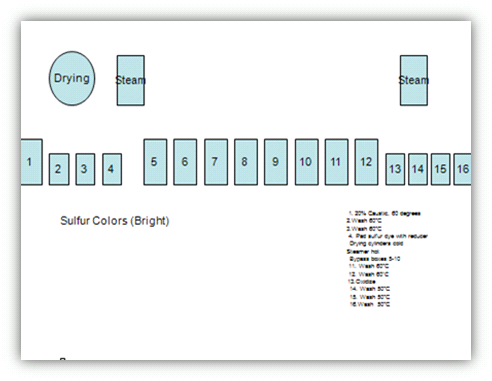
Dark and medium colors are the most common with sulfur dyeing. Light colors can be produced by special procedures involving blended reducing agents, blends of surfactants, controlled oxidation and preparation methods like Mercerizing and bleaching.
Dark, dull sulfur dyeing
•Sulfur blacks are commonly applied in the 1st box on Indigo machines.
•The sulfur black dye molecule exists as very large polymers which require high temperatures for penetration into fibers (90-95 degrees).
•The maximum amount of sulfur black dye that can be efficiently applied is 4%on weight of cotton of a pure sulfur powder or 20% of a standard liquid (20% dye strenght). Darker sulfur blacks can be achieved by adding a sulfur blue.
•Sulfur blacks are best oxidized with an air passage like Indigo.
Sulfur dyeing procedures have been used to create a full range of colors including browns, yellows, greens, violets, reds, orange and neutrals (light/medium greys)
Producing special colors with these processes involves the use of true sulfur dyes alone or in combination with sulfurized vats or special direct dyes that can be applied with special sulfur dyeing procedures.
For success in fashion markets with these colors, marketing is focused on color “themes†such as “earth tonesâ€, “urbanâ€, sport or university colors.
Control Of Light Sulphurs
In order to match specific colors, dyes with greatly different affinity factors are mixed.
Different affinity factors result in these dyes being picked up at different rates, so special methods are necessary to avoid color variation.
Sulfur colors should be applied from 30 to 60 degrees to avoid color variation and must be chemically oxidized.
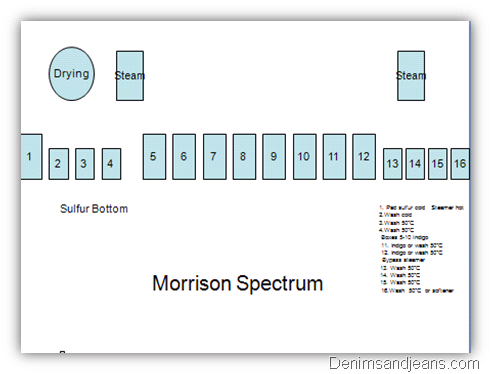
Bottoming of Indigo dyed yarns produces a darker, brighter effect with Indigo.
The purpose of bottoming originally was to produce a darker color with less Indigo.
While large amounts of sulfur dye can be applied in the 1st box, most of the sulfur is removed by hydrosulfite in the Indigo dye.
Unlike other sulfur dye applications, a pH of 12 with sodium hydroxide is helpful to retard the dyeing for color consistency.
A temperature of 60 degrees or less should be used to lower the affinity factor for consistent color.
Problems With Sulphur Bottoming
Sulfur bottoming can provide lighter shades because most of the dye applied in the 1st box is removed by the hydrosulfite in the Indigo boxes.
The affinity factor (rate of dyeing) at high temperatures of sulfur dyes results in shade variation.
If sulfur black is applied as a bottom, the Indigo boxes are contaminated with a yellow compound which causes discoloration of pure Indigo shades. Sulfur blacks are typically produced by polymerizing 2,4 –dinitrophenol(reddish-yellow) with sulfur. Hydrosulfite in the Indigo boxes-reduces the sulfur black to this yellowish compound.
Sulfur bottoming should be conducted at temperatures of 30-60 degrees for consistency. Unlike other sulfur dyeing which should be conducted at pH 11, sulfur bottoming can be conducted better at pH 12 with sodium hydroxide which acts as a retarder to slow the rate of dyeing.
Sulfur black dyes are low-intensity dyes that require large amounts for dark shades.
The amount of sulfur black that will produce the darkest shade when applied properly is 4% of a 100% powder or 18% of a 20% liquid.
It is difficult for cotton to easily absorb that quantity of dye in a way that produces a very dark shade.
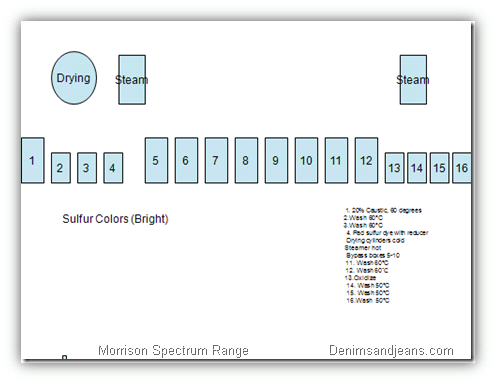
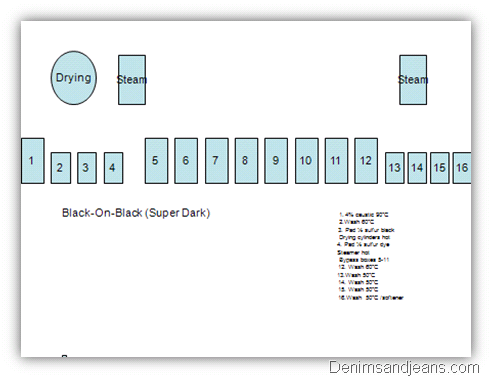
One method that has been used to produce darker, more colorfast sulfur blacks on yarn is to apply 50% of the dye, then dry the cotton, air oxidize and without washing, proceed to a second dye-box where the dye is applied again, dried oxidized with air again and washed.
Boxes:
1. 4% caustic 90°C 2.Wash 60°C 3. Pad ½ sulfur black Drying cylinders hot 4. Pad ½ sulfur dye Steamer hot Bypass boxes 5-11 12. Wash 60°C 13.Wash 50°C 14. Wash 50°C 15. Wash 50°C 16.Wash 50°C /softener
Reducing Agents For Sulphur Dyes
Because sulfur dyes cannot be dissolved in water directly, reducing agents must be utilized to produce hydrogen which allows the dye to attach to water.
Any standard reducing agent can be used to dye sulfurs including reducing sugars (dextrins), sodium hydrosulfite, sodium bisulfite, sodium sulfide, sodium polysulfide and sodium hydrosulfide.
Selection of reducing agents
Reducing agents for sulfur dyes should be selected according to the type of dyeing (batch or continuous), temperature of dyeing (cold or hot) and depth of color (light or dark).
The reduction potential measured in millivolts for continuous sulfur dyeing as on Indigo machines should be at least -600 for dark, dull shades and at least -700 for bright, colorfast shades.
The best sulfur dyeing for bright, consistent and colorfast shades requires blends of reducing agents.
Advances in sulfur dyeing
Cold dyeing of sulfurs is possible on Indigo machinery in a full range of colors.
This procedure has long been utilized by craft dyers in Asia.
Cold dyeing of sulfurs have the advantage of requiring only 50% as much sulfur dye,
Energy savings, excellent colorfastness, no polluting dye waste and less cotton damage for a soft touch and higher weaving efficiency.
Special Notes
Dyeing with 100% sulfur blacks on yarn results in lower weaving efficiency. Normal yarn break levels with black can be achieved with improved washing and the use of buffers in dyeing.
Sulfur blacks can be dyed with special procedures that provide wet rub-fastness of 4 and good washfastness even after 20 launderings.
Caution And Care
The recommendations of many sulfur dye suppliers result in dye waste of 50% or more, which increases dyeing costs by twice that is necessary. Also, most of the additional chemicals used in sulfur dyeing, especially for blacks, are unnecessary.
The use of fixatives after sulfur bottoming are often recommended to increase dye shades, but these are destroyed by the hydrosulfite in the Indigo boxes.
For more details on sulphur dyeing , check the site of FENAZOL
This is a guest post by Harry Mercer. Mr. Mercer has 30 years experience in the denim business including 3 prominent U.S. denim companies. He is an expert colorist for measurement and color matching as well as textile testing.
Bread and Butter happened on July 6th – 8th and , though belated, here is a cool denim report from the show here. Stylesight – the leading trend agency worldwide - have kindly shared this report with us . The report can be seen in this presentation below
Here are some cool items in denim noticed with various denim brands.
Grafter Shirt – Cool Item
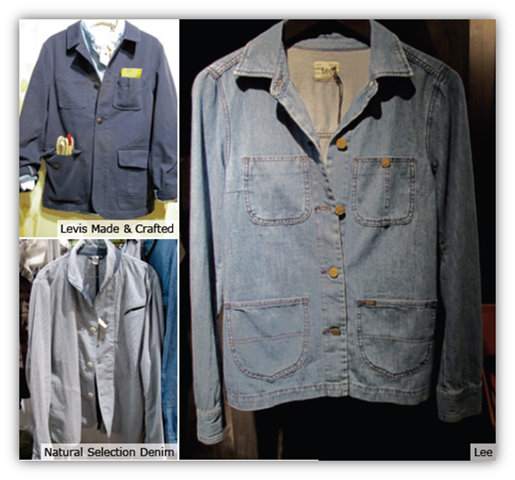
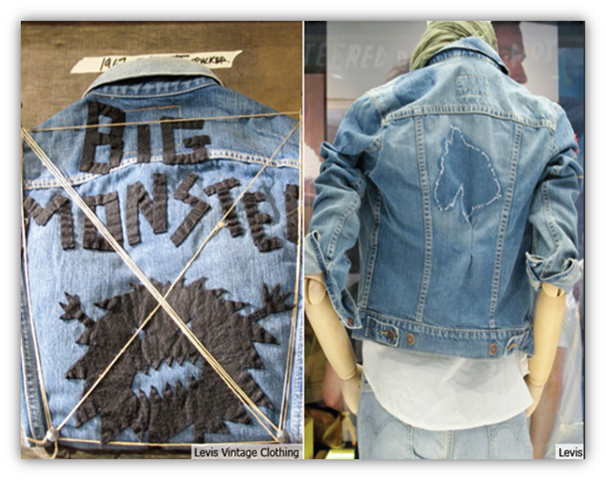
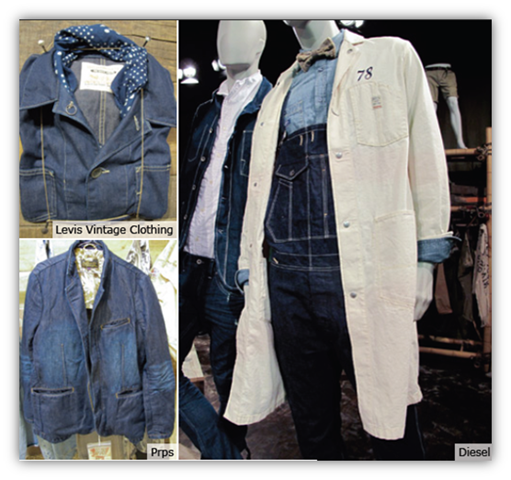
The railroad jacket has saturated the Men’s market, and new weights update the item for S/S 12. 8-11 oz weight denims and chambrays / Shirts with squared-off hems and large pockets / Shawl collars offer a maritime spin / Bright red-cast indigos are reminiscent of Chinese chore coats .
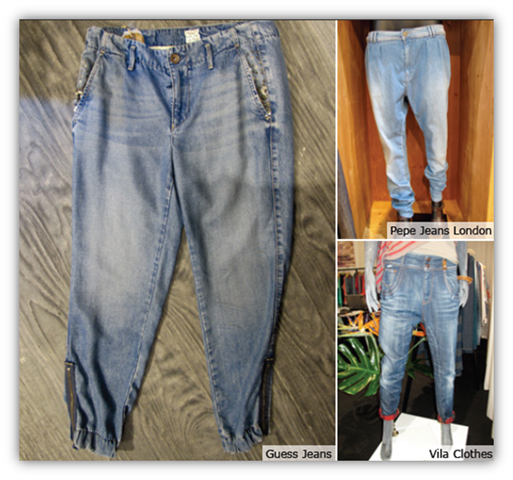
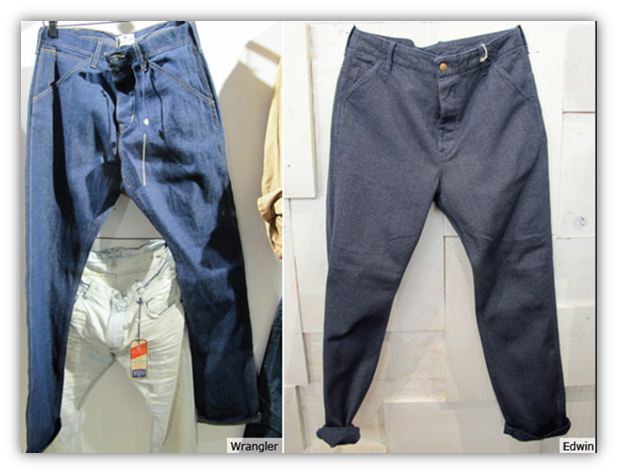
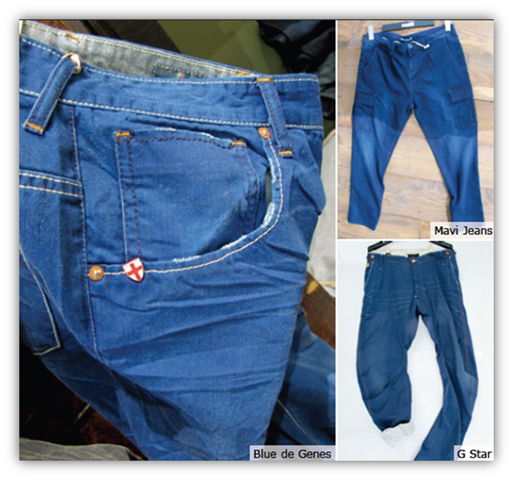
The looser, casual pant continues to trend for both guys and girls. Lightweight fabrications like TENCEL® mixes and jersey denims / Strong active direction with elasticized waistbands and hems / Loose and relaxed cargo styling / Dropped or elongated flies and seats / Roomy through hips with tapered hems.
Flared Sailor Pants – Cool Item
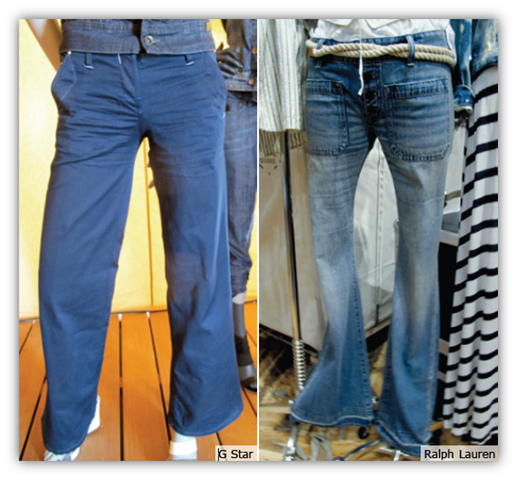
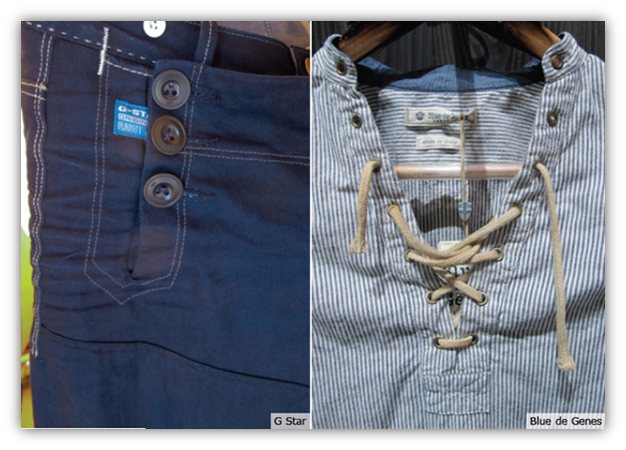
The flare gets a nautical makeover, taking it into Summer 2012.Wide-leg flares in saturated indigos / Sailor pant-inspired stitch-down front pockets / Clean or glossy finishes / Slash trouser pockets and tie-waist details.
Guys Smart N Lose !
Lightweight denims and chambrays / Coated and water-proof surfaces / Longer jackets with drawstring waists / Half- placket popover tops / Nautical detailing such as lace-up necks and contrast white drawstrings / Saturated deep and bright indigos.
Prepster Shorts – Cool Item
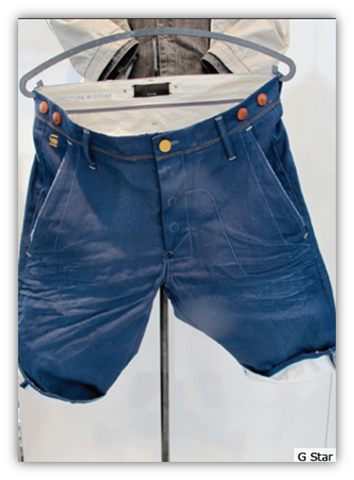
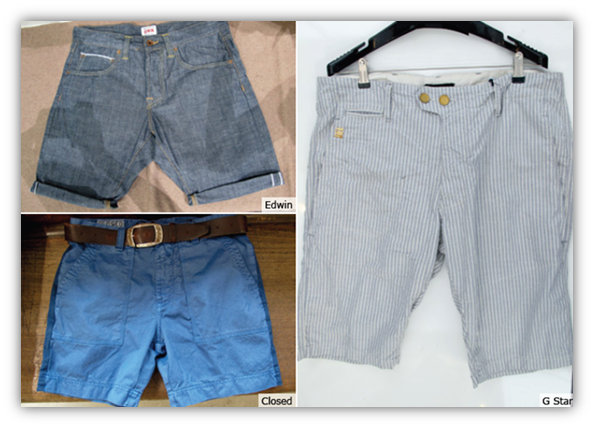
Guy’s shorts smarten up with refined, mid-thigh inseams and trouser styling. Lightweight and relaxed Summer item / Straight cut and worn neat on the hips / Stitch-through front pockets or trouser slashes / Satorialist, tab-front fly / The selvedge chambray trouser-short is a key item for S/S 12.
Styling Trends
Sartorial Worker
Button-down collars and bow ties / The railroad jacket is given a tailored update / 40s Land Girl references / Fitted chore coats / Neckerchiefs complete this 40s look.
Tokyo Prairie – Styling Trend
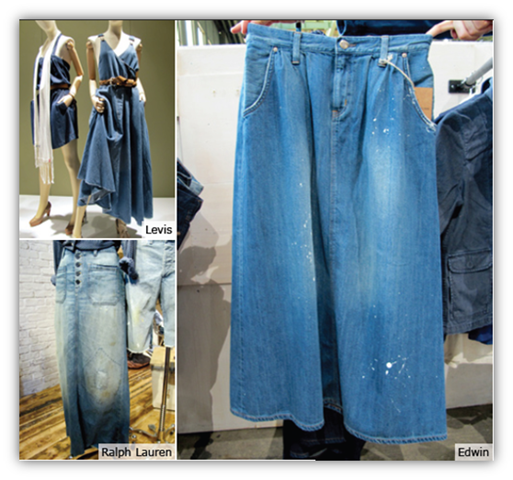
The prairie trend drives new, long silhouettes into the Women’s market.The full-length prairie skirt emerges as a new item / Exposed button flies and slash or patch pockets / Full, A-line culotte shapes / Draped dresses with prairie styling / Zip-front skirts at Tiger of Sweden are a modern take .
Naval Styling – Styling Trend
Naval influences drive the workwear trend forward for next Summer.Key items include the sailor pant with stitch-through front pockets and the double breasted peacoat / Fisherman sailor, button-front details / Indigo and white color palette / Railroad or hickory stripes / Lace-up front openings / Anchor motifs on buttons and coin pockets.
Fabric Trends
Azure Indigo – Fabric Trend
Royal blue has hit the saturation point for S/S 12. Fashion-forward shade is reminiscent of Chinese worker jackets / Glossy and raw in vibrant tones / Lightweight fabrics are key for this Summer fashion shade / Over-dyeing accentuates vibrancy / Yarn-dyed warps and weft.
Salt N Pepper Constructions
The return to durable worker fabrications leads to salt n pepper constructions. Twisted threads include indigo and ecru, grey, brown and white / Marled and flecked effects / Salt n pepper wefts for a more subtle texture reverse / Shirting weights / Rigid workwear looks / Traditional twisted yarn techniques for added strength..
Fabric Trend : Indigo Pattern
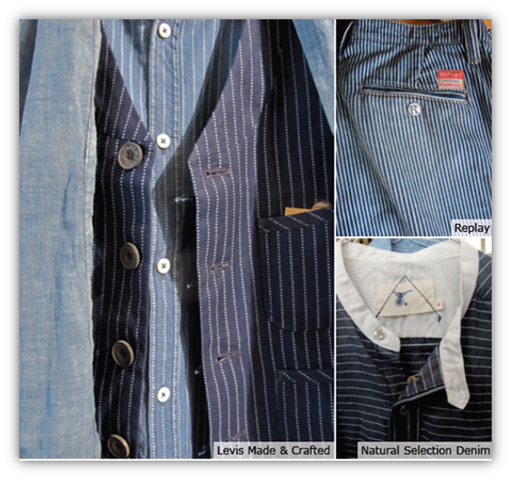
Trending for a few seasons, railroad stripes are joined with dots and micro repeats for S/S 12.Railroad, ticking and hickory stripes / Wabash spots and “Stifel†inspired prints / Modernized bandanna and neckerchief prints in indigo and ecru / Multi-layered and colored stripes at Leviʼs Made and Crafted.
Neppy Chambray – Fabric Trend
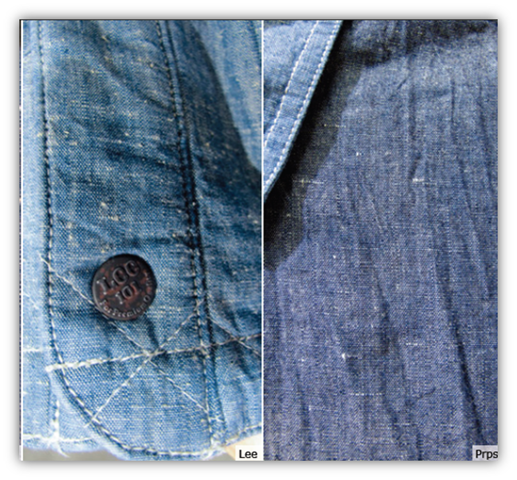
The overwhelming trend for chambray in the marketplace leads to textured fabric updates. Slubby and neppy yarns offer rustic character to basic weaves / Sky-blue indigo shades / Basic chambray shirts are re-invented / Quilted surfaces at Lee add to surface texture.
Print and Pattern Trends
Print and Pattern : Grain Stack Stamps
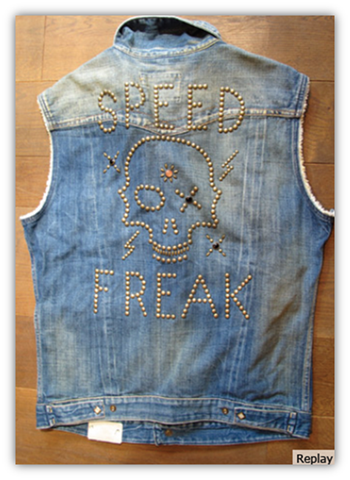
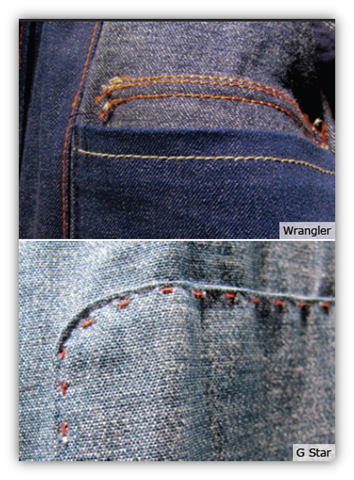
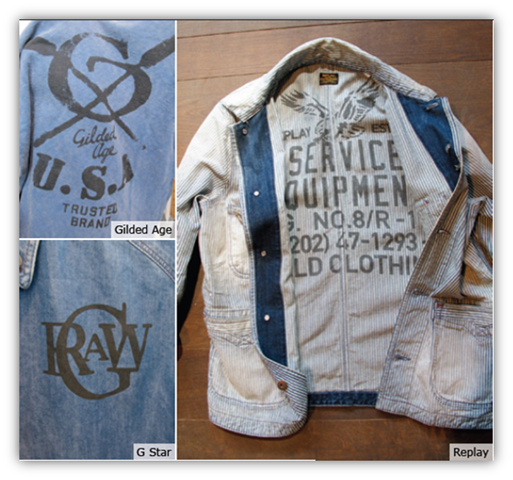
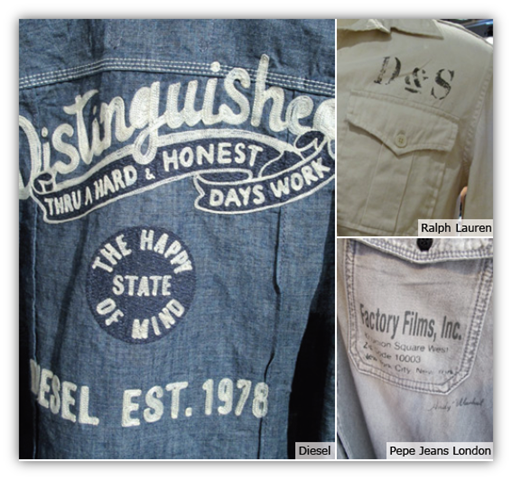
Classic rubber stamped workwear branding is joined by Americana slogans and updates. Solid black on indigo or ecru / Branded symbols and logos / Nautical and workwear references / Destroyed and worn finishes / Cornelli and chain stitches / Mechanic’s coverall looks. Solid black on indigo or ecru / Branded symbols and logos / Nautical and workwear references / Destroyed and worn finishes / Cornelli and chain stitches / Mechanic’s coverall looks.
Design Details
Ladies Utility – Design details
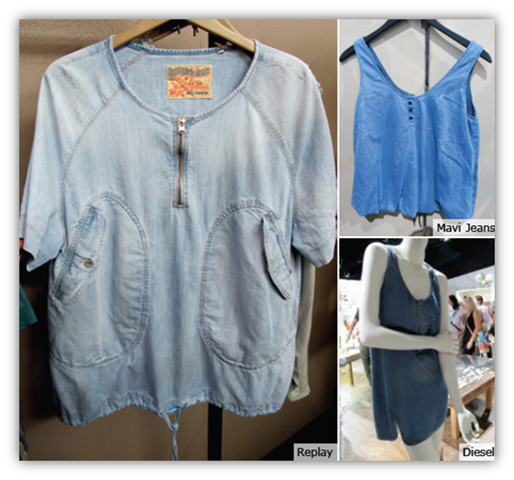
Clean, minimal styling drives new Women’s tops and dresses.
Graphic Patch – Design Details
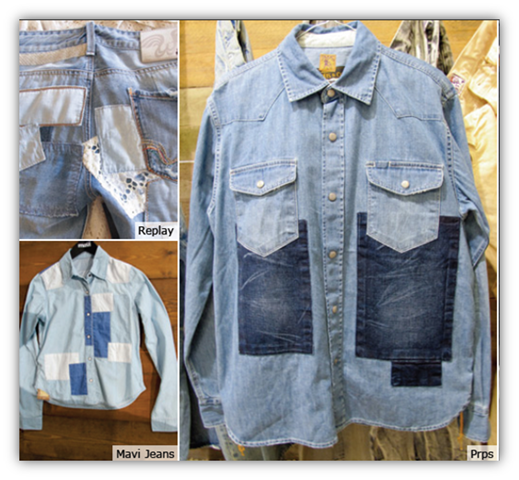
Last season’s patch-and-repair looks are stylized and re-worked for Summer 2012. Multi-patched tonal indigos / Graphic and geometric placements / Clean seam detailing / Contrast pockets, collars, internal linings and front plackets.
Wash and Color
Clinical Ecru – Wash and Color Trend
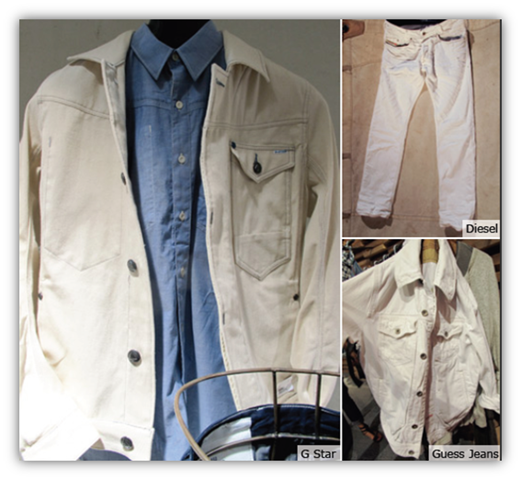
Ecru takes prominence as the Summer shade of choice for denim. Clinical lab coats and Western jackets look fresh in the color / Unrefined and unbleached cottons / New Summer white alternative / Predominantly for Menswear.
Color Ranges -Wash + Color Trend
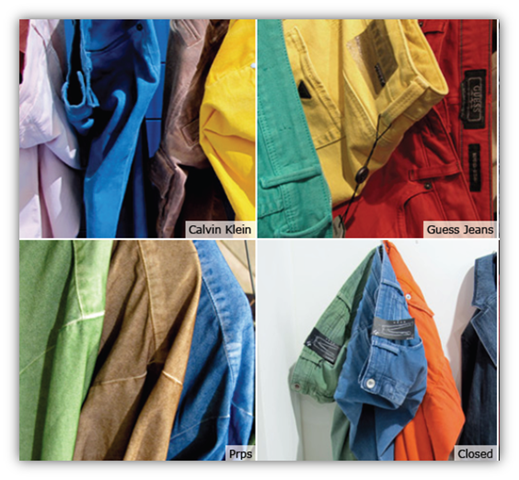
Recent color palettes are given a quirky update for next season. Classic primary colors / Off-beat or muted tones / Burgundy and salmon hues both at Lee and Tiger of Sweden / Sun-bleached mustards, acid washed brown and burnt orange / Saturated hues.
About Stylesight: Stylesight is a leading provider of trend content, tools and technology for creative professionals in the fashion and style industries. Visit their website by clicking here
China has been dominating the textile industry scene for over 2 decades. The low cost , high volume model of Chinese manufacturing did wonders for the Chinese economy as well as enabled the retailers worldwide to provide cheap clothing to their consumers year after year. It also enabled China to create huge clusters of textile and garment manufacturing – eg Xintang – which is supposed to be producing and processing over 1 billion mtrs of denim !
However, all is not so well in China nowadays . The days of cheap labour seem to be thing of the past . A recent report by WWD is insightful and brings out the changes in the Chinese economy as it tries to move to its next stage of development. Some excerpts :
The cost of labour is continuously rising . Three years ago a skilled worker would make less than $400 a month , but now the wages are in the range of $550 to $600+ . Guangzhou province has raised the minimum wages which is again affecting the costs of production.
The labour is getting assertive and restive and there are reports of strikes and riots by workers in different manufacturing areas . Recently , over 4000 workers staged a three day strike at a Korean owned factory. Such incidents were unheard of before in China.
As the prices are going up , the orders are going down. Many units in the Xintang area have shut down for not availability of orders . Though there are no numbers available, a large number of factories have closed down as per people having a pulse on the place. Many orders are being lost to Vietnam and other neighbouring countries.
The soft demand from EU and US is not helping the units in any way and is only adding to the woes.
The Chinese govt. seems to have already decided that low cost model of Chinese production will no longer work in the future and its emphasis is to create an economy based on innovation rather than manufacturing by 2020 . This vision will have profound effect on the world manufacturing industry as we will see a large number of textile and other products shifting bases of production to other countries. Countries like Vietnam, Bangladesh, Cambodia are sure to gain from this change. But will larger countries like India also benefit ??? Possibly yes, because the large retailers and brands would not like to be over dependent on smaller countries for their entire productions. We have recently noticed interest by a few international retailers, who did not have presence here , to set up the shop in India.
AEO is a famous retailer in USÂ with denim as a cornerstone products. It would be interesting to know more about the store and to see how the store has performed , what types of jeans and at what prices are they selling currently.
Founded in 1977, American Eagle Outfitters, Inc. is an apparel and accessories retailer with an annual turnover of over $2.8 billion and operates more than 1,000 retail stores in the United States and Canada, and online at ae.com. The Company also operates a wholesale segment under the Free People and Leifsdottir brands. Through its family of brands, American Eagle Outfitters, Inc., offers clothing, accessories and personal care products.
The Company operates under the American Eagle, aerie by American Eagle, and 77kids by american eagle (77kids) brands. As of January 29, 2011, the Company operated 929 American Eagle Outfitters stores, 148 aerie stand-alone stores and nine 77kids stores. As of January 29, 2011, it operated 1,086 stores in the United States and Canada under the American Eagle Outfitters, aerie and 77kids brands. During the fiscal year ended January 29, 2011 (fiscal 2010), it opened 34 new stores, consisting of 14 AE stores, 11 aerie stores and nine 77kids stores. During fiscal 2010, it remodeled 18 stores, including 17 AE stores and one aerie store.
The American Eagle Outfitters brand targets 15 to 25 year old men and women, achieving the perfect combination of American prep and fashion. Denim is the cornerstone of the American Eagle product assortment, which is complemented by other key categories, including sweaters, graphic t-shirts, fleece, outerwear and accessories. Though Abercombie and Fitch is sometimes considered a competitor of American Eagle, the merchandise offered by American Eagle is considered to be “retro/vintage” cost-efficient clothing, whereas Abercrombie & Fitch merchandise has become an internationally-known “near-luxury” line of clothing with “preppy”, high-grade & high-priced fashions, on the same level with that of companies such as the Polo Ralph Lauren company.
The retail price range of AEO jeans is usually between $39.50 to $49.50 , though some jeans are sold at $79.50 also. However, a majority of the jeans are being sold at discounted prices and the average achieved prices hover around $29.50 . Here is a look at some of their women’s denim jeans and it is interesting to see that most of the styles are either skinny or jeggings .
SKINNY JEAN : STYLE: 0436-7050
Product Details:
100% Cotton
Soft cotton denim
Low rise
Sexy skinny 13″ leg opening
Extreme rip & repair detailing
Bleach splatter details
Original price – $79.50. Currently discounted to $49.95
SKINNY JEAN : STYLE: 0436-7049
Product Details:
98% Cotton, 2% Spandex
Softest stretch cotton denim
Low rise
Sexy skinny 13″ leg opening
Five-pocket style
Extreme distressed detailing
Price : $79.59 . Currently discounted to $29.99
JEGGING : STYLE: 0431-7996
Product Details:
89% Cotton, 9% Elasterell-P, 2% Spandex
• Soft stretch cotton denim
• Fit like your favorite legging
• Low 7.75″ front rise
• Higher 13″ back rise
• Most fitted 10.75″ leg opening
Price- $49.59. Currently discounted to $29.99
SKINNY JEAN : STYLE: 0432-7994
Product Details:
98% Cotton, 2% Spandex
• Soft stretch cotton denim
• Low 8″ front rise
• Higher 13.25″ back rise
Slim through the hip and thigh
Skinny 12.75″ leg opening
Price – $49.50 . Currently discounted to $29.99
SKINNY JEAN : STYLE: 0432-7947
Product Details:
99% Cotton, 1% Spandex
• Softest stretch cotton denim
• Low 8″ front rise
• Higher 13.25″ back rise
• Slim through the hip and thigh
• Skinny 12.75″ leg opening
Medium antique denim wash
Whiskered details
Price – $39.50 .Currently discounted to $19.99
STRAIGHT JEAN – STYLE: 0435-7907
Product Details:
79% Cotton, 21% Elasterell-P
Soft stretchiest cotton denim
Low rise
Straight fit from knee down
Slim fit through the hips
15 1/2″ leg opening
Deep indigo denim wash
Price – $39.50 . Currently discounted to $19.99
FAVORITE BOYFRIEND JEAN : STYLEÂ 1432-7087
Product Details:
99% Cotton, 1% Spandex
Soft stretch cotton denim
Low 7.75″ front rise
Higher 13″ back rise
Easy through hips & thighs
Relaxed through the knee
20″ leg opening
Vintage medium dark wash
Fading and whiskering
Price – $39.50 . Currently discounted to $29.99
JEGGING ANKLEÂ Â : STYLE: 0431-7089
Product Details:
71% Cotton, 27% Polyester, 2% Spandex
Softest stretch cotton denim
Fit like your favorite legging
Sleek and slim
Most fitted 10.75″ leg opening
Slightly cropped calf length
Zipper detail at ankles
Horizontal seams at knees
Flap back pockets
Military cargo leg pockets
Price – $59.50. Currently discounted to $19.95
JEGGING ANKLE : STYLE: 0431-7114
Product Details:
69% Cotton, 29% Polyester, 2% Spandex
Soft stretch cotton denim
Sleek and slim
Sleek light grey wash
Belt loops, zip and button fly
Back flap-patch pockets
Flap cargo pockets at legs
Curved front and coin pockets
Most fitted 10.75″ leg opening
Price – $59.50 . Currently discounted to $19.95
And to stress the denim roots of American Eagle, here is a nice ‘Denim Song’ from AE.
An interesting article on Wall Street Journal explores how the premium denim labels cost $300 or more. For those who buy $50 jeans from Levi’s , it is at many times unpalatable to see that the jeans are priced at $300 +.
The market had started moving in a direction since early 2000’s when a good amount of manufacturing started happening in the US. A True Religion jeans which costs $50 in US can end up being wholesaled at $150 and retailed at $335!! The margins in the chain are very high to cover the huge marketing budgets and other costs of working the line in the US and with retail markups touching 2.6 to 3 times.. But there are also benefits for the manufacturers to produce in the US – keeping a close tab on fashion and reacting quickly. When Jeff Rudes, founder and chief executive of J Brand, saw designer Jil Sander’s electric colors in New York’s Jeffrey boutique earlier this year, he asked his designers to come up with a hot pink and an emerald green color for jeans. Five days later, the first, small run of jeans were shipping into Barneys New York. It would have taken months to get the same product out of a manufacturing unit in China. This kind of quick turnaround is a major factor for the premium brands to survive despite high prices.
But it is not that the prices of premium denim have not taken a hit due to the ongoing recession. Most of the brands have reduced their average prices below $200 and $150 is claimed to be about the minimum level to be qualified as a premium label – though we still have companies like Gap selling their 1969 jeans at around $70 or even Uniqlo selling at lower prices with fabrics still being from Japanese mills ! . It is anybody’s guess at what can be termed as premium jeans. If only very high priced labels are termed as premium jeans, we would have a very small % of jeans in US qualifying for the same – maybe around 1% – though their sales value at over $1 billion would not be insignificant.
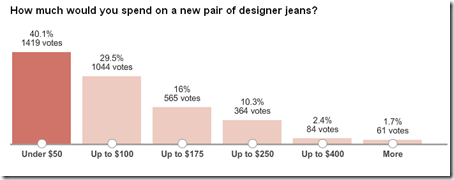
It is also interesting to see the results from the WSJ poll on what average price the consumers are ready to pay for their jeans. Interestingly , about 15% consumers in the poll are still ready to pay over $250 for their jeans.. So the craze for premium denim continues !!
Pakistan had always strong textile industry due to historical reasons and an abundance of cotton . With over 380 million mtrs produced and over 150 million mtrs of denim fabrics being exported by Pakistan in 2009-10 , denim is probably the most imp segment of the Pakistani textile industry.
In a recent report Dr Noor Ahmed Memon from Pakistan mentions that top global denim fabric exporting countries are China, followed by Hong Kong, Turkey, Italy, Pakistan, the USA, India, Japan, Spain and Brazil. Together, these countries accounted for as much as 83% of world denim fabric exports. Almost all of these countries witnessed a decline in their denim fabric exports in 2009-10. The only exception was Pakistan, whose exports rose by a remarkable 75% during the year 2009-10. On the other hand export of cotton denim fabrics from Pakistan increased from 45 million sq meters in 2005-06 to 229 million sq meters in 2009-10, thus showing an average increase of 50% per annum in terms of quantity.
What are the major markets for Pakistani denim fabrics ?
Lets see which are the major markets for Pakistani denim fabrics for the year 2009-10
Country
Quantity (mill. sq mtrs)
Qty. Linear mtrs (160cm width)
Bangladesh
71.4
44.62
Turkey
61.36
38.35
Italy
9.09
5.68
Hong Kong
4.30
2.68
India
4.08
2.55
Source : FBS Pakistan
Turkey is one of the major markets for denim fabric exports from Pakistan . With about 39 million mtrs of denim fabric being exported to Turkey in 2009-10 , it is a major market for Pakistan . However, this export is going to be severely affected with Turkey increasing duties on imports and which will be now 24.5% from 24th July 2011 . The duties on garments also would be 52% – which again will be quite prohibitive . This step by Turkey is going to further affect the denim mills in Pakistan which are already facing the brunt of worldwide fall in demand of denim fabric during the current year.
The other markets for Pakistan like Bangladesh (the most imp one) and others are expected to keep on performing unlike Turkey. The surprising point to note is that India is becoming an important market for Pakistani denim fabrics . Though the quantities of about 2.5 million mtrs in 2009-10 is still small, it is indicative of the potential of the Indian denim market and it seems that it will become more important in the coming years. Both the garment exporters from India as well as the local brands are becoming important in India as they are getting more aggressive and to differentiate themselves , they buy fabrics from around the world – Italy, Turkey , Spain etc and with Pakistan becoming an imp. source.
The challenge for mills from Pakistan would be to find destinations for denim fabrics as shipments to Turkey go down. Also, the continuously depreciating currency of Pakistan has helped in maintaining the competitiveness of the industry but it is not a factor which can be depended upon for long . Some mills in Pakistan have definitely tried to invest heavily in product development and innovation and this is probably the best way which will keep the industry going strong in the coming years.
Want to learn more about how to resolve everyday stitch and seam quality problems with denim? If you do , a free workshop by American and Efird will give you useful knowledge on how to overcome the most typical seaming problems. A&E develops the content and creates these programs as a special means to help companies increase productivity. Topics covered include:
Review of common stitches used in denim and why each is used.
Detailed overview of 5 pocket Jean construction techniques .
How to overcome common seam quality problems?
Minimizing broken stitches after stone-washing, hand sanding, etc.
Introduction of special threads for a distinctive look.
Maximize sewing and seam performance but keep thread cost to a minimum.
How to improve the quality and appearance of your denim sewn products ?
Better understanding of denim seam construction methods .
How to Trouble-shoot Common Stitching Problems and offer Suggestions to your Sourcing Companies ,Vendors and Contractors on ways to improve the quality of Your Products.
This 2 hour Seamology – Making Quality Denim Garments workshop is loaded with practical, helpful ideas that can assist companies in resolving everyday sewing issues. The companies just need to provide a space for the presentation and A and E provides the handouts and the workshop Free! For more info on the workshop , contact Mark Hatton or Al Irvine
Color denim is the flavour of the season. With a number of denim brands bringing out their own versions of color denims collections, Wrangler was not to be left behind. Wrangler launch a range of colored denim and shorts in time for the S/S 2011 season. Frayed denim shorts and skinny jeans are revived in this season’s sweetest shades of candy floss pink, lemon sherbet and baby blue .
Green is the signature color of the season, a flash of outdoors.The Field Jacket is SS11’s icon piece, washed-out and lightweight. Pair it with green cast denim for an authentic vintage look. Bright greens are bold on T-shir ts; more muted tones feature on dresses and leather jackets.
Colors – greens, purples, blues, whites, yellows, reds, faded blacks – star t out as deep primaries, but brighten into a comic book palette as summer heats up.
There has been a fall in demand of denim apparel in US and even the EU in the last 6 months. The fall in demand and hence imports to US had started setting in the last quarter of 2010 itself and is continuing since then. Lets look at the figures of denim exported by two important exporting countries to the US in the first quarter of 2011.
Country
Year/ quarter
Total Denim Apparel (pcs)
Total Value (in USD)
Average Price ( USD/pc)
Change in qty. over last year
Bangladesh
2010 / Jan- March
11.72 million pcs
$62.23 million
$5.30
Bangladesh
2011/ Jan- March
11.44 million pcs
$60.65
$5.29
-2.44%
Mexico
2010/Jan-March
27.93 million pcs
$214.70
$7.68
Mexico
2011/ Jan- March 2011
25.52 million pcs
$202.59
$7.93
-8.6%
Source: US customs We can see that the figures of two important exporters of denim jeans and apparel to US are not very encouraging and are indicative of a steady fall in denim demand. The figures from China are also not too encouraging – in fact they are worse than the above . The Chinese exports of denim apparel fell by over 11% in the first quarter of 2011 !! These figures are indicative of a tough year for denim ahead and also a reminder to the denim exporters that they have to continuously search for and invest in newer markets and reduce their dependence on the traditional western markets which are still not out of recession in real terms.
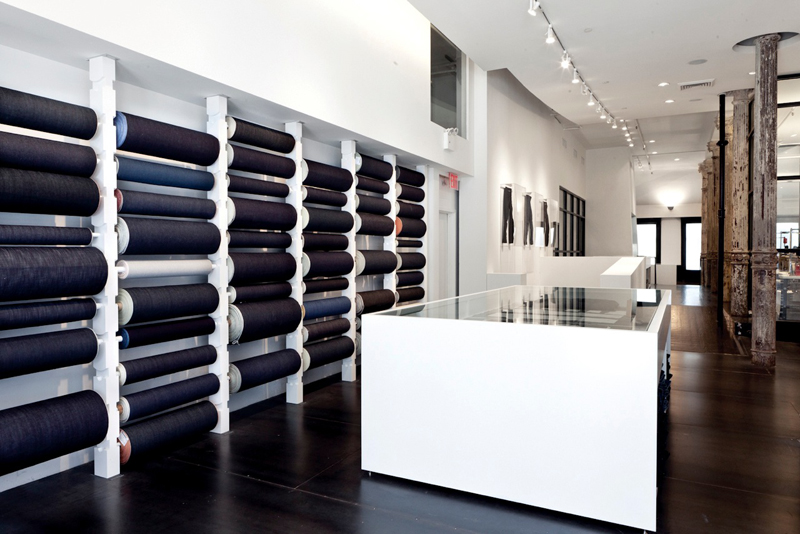
Scott Morrison, founder of reputed denim brands like Earnest Sewn and Paper Denim delivers a new denim-focused concept shop,3×1, in SOHO area of New York , that looks to push the boundaries of limited edition clothing. Named on the 3×1 twill weave of denim fabrics and also represents Morisson’s third founding of a denim label , the new store for 3×1 flagship produces on-site most garments sold in the store. The in-house production is limited to between 8-24 pieces of any given style, and less than 25 pieces are made per day.
Besides the limited edition jeans, a bespoke denim service is also offered, allowing patrons to work individually with Morrison and his pattern-maker to create his or her own pair of jeans from start to finish. Customers can select :
Fabrics – over 100 to chose from mills in Japan, US , Italy etc
Select an existing cut – though bespoke its not 100% custom made jeans.
Chose buttons , rivets , stitching thread and other accessories
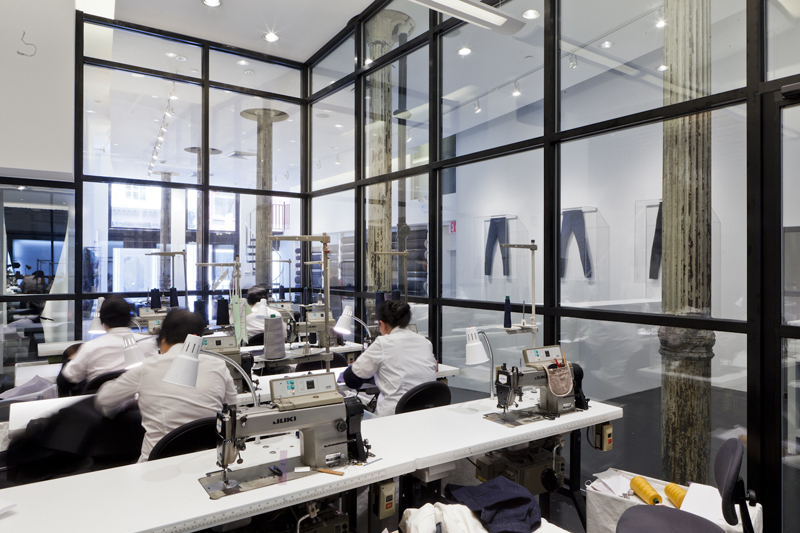
It is probably the most unique denim store around the world with a gallery , retail store and a jeans manufacturing unit all combined into one 4000 sq feet plus store in the expensive SOHO shopping area of New York. Shoppers can watch jeans being made behind the glass walled panels where sewing units are installed. It is going to be a great experience for visitors to see the ‘magical’ process of making the jeans. The retail space is open to the public on Wednesday – Sunday (11am – 7pm), while bespoke appointments are typically reserved for Monday and Tuesday. However, one must be ready to be set back by $300-$1500 for purchasing denim from the store!
The store will also make denim bags in limited edition – really limited ! – with a new design being made after every 24 bags are done .
3×1 15 Mercer Street New York, NY 10013 +1.212.391.6969 Contact them on email by clicking here
About Scott Morisson : In 1998, at the age of 25, Scott was hired to oversee a new denim division of Mudd Jeans, based in NYC. Jack Jeans, as it would be known, struggles to find its place in the better jeans market, and in an attempt to bring the failing concept to life, Scott developed a new idea for an American made denim collection that would compete with the likes of Diesel and Replay. His vision was realized in 1999 when the Jack jeans division was closed, and the company instead chose to invest in Morrison’s new concept: Paper Denim & Cloth. Over the next 4 years at Paper Denim, Scott’s reputation in the industry grew. As co-founder and designer of Paper Denim & Cloth, he quickly established the growing operation as one of the world’s preeminent denim brands. Inspired by that growth he began incorporating other areas of personal and cultural interest into the budding lifestyle concept. Morrison also published, personally, a limited Edition retrospective of emerging underground artists, in a book called Boredom 2003 which further fused his 2 great loves, underground art and innovative design. He also worked as the creative designer at the famous Japanese denim brand ‘ Evisu’.