Author: Sandeep Agarwal

  • Cheap Chinese Denim – Getting Killed By Rising Labor And Cotton Prices

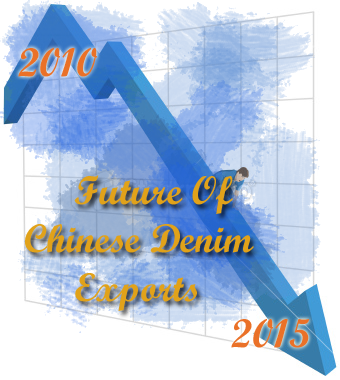
    chinese exports of denim The era of Cheap Chinese denim is over – says a report by Telegraph , UK.
    The rising labour costs in China coupled with the effect of Cotton price is killing the Chinese denim exports. The retailers who had a great time buying very cheap denim and retailing them as low as $5 – $10 will now have to shelve out much more amounts to get similar quantity .

    Xintang , the Denim capital of the world – with over 260 million pieces of denim production and a very large quantity of jeans production is the worst hit . This city is DEDICATED TO DENIM with over 5000 factories from the very small ones to those who make over 60,000 pairs of denim  a day can be found here. The quantity of jeans produced here is so high that the Pearl River which flows nearby has actually turned Indigo Blue !!!

    So what’s ailing Denim Production in Xintang and China in General ?

    • Rising Labour Costs: The labour cost used to be as low as GBP 30 /month  – about 350 Yuan and now is as high as GBP 470 ($760 or 5ooo Yuan)  in some places .Though the actual labor rates will fall somewhere between, it is still a huge increase.  This phenomenal increase in labour cost is crippling the industry and many factories say that they have not made profits for 2 years.  Since the labor class cannot get the price they want to survive in expensive South China, they are moving towards inland China where large construction projects etc are coming up and the cost of living is cheap. This has led to a reduction in availability of labor for production. So its double whammy – high labor costs and reduced supply !
    • Cotton Costs : Cotton prices have hit all the countries around the world and China is no exception. It has been hit more by the reduced production in Pakistan, Australia and reduced exports by India have complicated the position in China which is highly import dependent when it comes to Cotton.  This has led to a very high increase in denim prices in China. Though the buyers are trying to reduce the impact of cotton prices by using polyesters  and marketing as shiny denim,  it is not really compensating too much. However, cotton impact may fade out in a year or so..
    • Factories Loosing : The jeans manufacturers are hardly making profits where they previously could make up 20 percent easily. Now if they make 5% , they consider themselves lucky. The Chinese Govt. is not able to give the kind of support that it used to give before and the units are finding it difficult to survive on their own.
    • Currency Impact : The stronger currency is not helping the matters at all.  Just to give an example, the Chinese Yuan was 7.29 to USD on 1st Jan  2008 and is now 6.57 . That is a 10% increase in about 2 years.
    • Chinese Govt. Apathy : Chinese government seems to have become apathetic to the denim industry . It is tightening the screws on the polluting denim industry and is enforcing the environmental regulations more strictly – closing many of the factories in the process. The govt. has probably reduced priority for this industry and is focusing on generating employment from alternative projects especially in Inland China.  This is not going to help the industry.

    So What Does Future Hold For Jeans Manufacturers In China ?

    With the current trends, it seems that the jeans manufacturers in China – especially South China –are going to have a tough time making money. They can only survive if they get high priced orders – which are few to come. This will lead to the survival of the fittest with many factories having to either close down or to shift to alternative products.  China may still manage to have the productions shifted to inland China where costs are low, but they cannot do it overnight. It will take a long time .

    What are the alternatives to China for sourcing denim garments ?

    A number of other countries in the vicinity have developed their industry and are coming up well – whether its Cambodia, Vietnam, Bangladesh etc. However, none of them has the capacity to produce the volumes or has the infrastructure to match that of China.  Even countries like India and Pakistan would benefit  directly by way of increased garment exports or indirectly by way of increased fabric exports.  It will take time for them to come up and match the potential of China.  The US and EU are encouraging these alternative destinations as production centres , one of the reasons why EU passed the New GSP Regulation.

    Will all the impact on prices of denim products , can there be a scenario where the demand for denim products actually fall as the retailers try to promote alternative products ?  We have already seen a massive fall in imports of denim products in US in the last quarter of 2010. Is it an indication of things to come ?
  • Download Denim Thread Consumption And Thread Cost Garment Calculators

    image

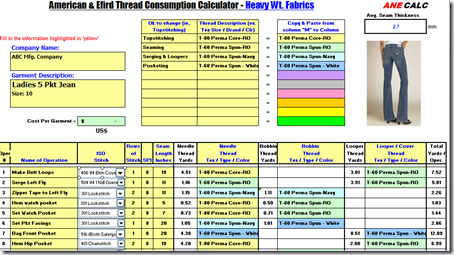
    AneCalc is a tool developed by American & Efird to assist in estimating the thread consumption and cost per thread cost per jeans / garment alongwith the number of cones one needs for a given programme. The tools are the in the form of a an excel spreadsheet and one has to just enter basic information to get the consumption and costs.

    There are basically three AneCalc spreadsheets.

    Lightweight : 2- 4 oz weight fabrics.

    Medium weight : 5-8 oz fabrics.

    Heavy Weight : 9 –15 oz fabrics.

    The weight of the fabric determines the ratio of  needle to bottom thread on the thread consumption table.

    For each sewing operation on the garment , you will need to list the name of the sewing operation, what ISO stitch type is being used , how many rows of stitches are there , the Stitches per inch , and the length of the seam .

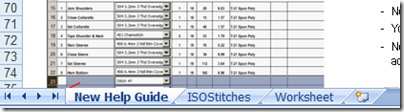
    When you download the spreadsheets, you will find different tabs as shown below

    image

    Chose the ‘New Help Guide’ to understand how to use this tool and ISOStitches to understand different kind of stitches. The actual working is done on the ‘Worksheet’.  You can change the name of the threads that you use under column ‘M’ of the worksheet.

    Download the calculators

    If you need help with the calculators, leave a comment under the post .

  • 4.6% Growth In Import Of Denim Jeans Into USA In 2010 Over 2009

     up-or-down-denim The denim apparel imports into USA has increased by a marginal 4.6% in 2010 over the volumes of 2009 . This is quite surprising as the increase in imports during the first 6 months of the year was 12.6% and as I mentioned in a previous report. This actually means that the imports in the second half of the year have actually dropped in second half. Let’s see from the table below :

    Imports Of All Denim Apparel Into US  2009-2010

    Period

    2009 million pcs

    2010  million pcs

    % change

    Ist Half

    238

    268

    +12.6%

    2nd Half

    346

    343

    -.87%

    Total

    584

    611

    +4.6%


    From the table above, we can clearly see that the volumes of denim apparel import into US have actually shown a declining trend in the second half of the year 2010 .  This declining trend actually set in the last quarter of 2010. The imports in the
    • last quarter of 2009 were 157 million pcs
    • last quarter of 2010 were 148 million pcs .

    That means that in the last quarter itself, the fall in imports is to the tune of 6.8% – a very large fall . If this trend of falling imports continues in the first half of 2011 , then we are looking at a very negative story on denim consumption in US . But since only one quarter in 2010 has shown a negative story, there is still hope and maybe the first quarter of 2011 will make the things more clear ..

    There can be many possible reasons why this fall is happening . One of the main reasons could be the increase in prices of denim due to rising cotton prices, which is making the highest impact on Denim as denim is almost the heaviest product using cotton. It would be interesting to study whether the sales of all clothing has also shown a similar downward trend during 2010. Though , there is a time lag between the imports of a product and its actual sales at retail stores, the imports also are indicative of the sentiments of retailers which are based on their sales forecasts which depend on actual sales happening in the stores.

    The following table shows the total sales in clothing stores in US during 2009 and 2010

    Total Clothing Sales in US – Last Quarter of 2009 and 2010

    Period

    2009  $billion

    2010
    $ billion

    Change

    Jan – Dec

    $152.21

    $158.91

    +4.4%

    Oct – Dec

    $45.93

    $48.42

    +5%

    Though these figures are for values (USD) , they clearly show that the sales of all clothing stores put together have actually shown a very positive increase during the year with about  4.4% increase in the year and about 5% increase in the last quarter itself. 

    The denim imported in the last quarter of 2010 would be retailed in the first quarter (mostly) and the actual retail sales of clothing stores in the first quarter of 2010 would indicate whether it is only denim which is losing steam or not..   Lets keep our fingers crossed..


  • Fair Trade Cotton – Denim Collection From Topshop And More….

    Topshop recently announced a collection of Denim and other apparel products made from Fair Trade Cotton.  In these times of explosive cotton price increases, companies and buyers may have forgotten about the ‘Fair Trade Cotton’ , but there are retailers who are taking it up on a long term basis as a means to give benefit to producers.  Before we go into details, it would be interesting to understand what is Fair trade cotton and actually- What is Fair Trade .. Let’s take some questions and get a better insight .

    What is Fair Trade ?

    To define simply, Fair Trade looks for poverty alleviation and works through three main actors:

    • producers located in poor countries.
    • organizations that trade, support and usually certify the products and..
    • the customers who recognize those products and buy them.

    Fair Trade organizations seek to establish a long term relationship with producers. This helps eliminate the uncertainty they usually suffer, either due to lack of access to market information, to erratic prices or to plain abuses from prey middlemen. In this collaborative frame, trading NGOs also provide upfront payment or financing for harvest costs and technical advice for organic farming, for example. Apart from that, Fair traders help their providers when disaster strikes.

    How Can  A Product Be Certified As Fair Trade ?

    It takes several criteria to certify a product as a Fairtrade one; they include specific quality standards and general requirements like child labor control, gender equity, democratic organization and respect for Nature. This, in turn, renders nice environmental benefits for mother Earth. Once a supporting NGO has checked that criteria are in place, they back the product; some of those products may be marked with a label . Producers start receiving a higher price for their goods… and also a Premium: an extra amount of money intended for community development purposes. 

    This way, producers get a wage which is enough for a decent living, community development becomes possible and  consumers can rest assured (by the certifiers) that they are buying a product with no exploitation trail behind.

    Cotton is only one of the products to be certified as Fair Trade product. There are a number of "Fair Trade certified label" logos out there, granted by a similar number of organizations. Certifying organizations are the trust builders of this whole system, as in many cases it is those labels which differentiate an ordinary product from a Fair Trade one. Fair trade logo’s are issued by a number of organizations for a number of products. Some of these are :

    Fair Trade FLO logoThis is the most common logo in Europe, adopted in 2003 by most countries (spanish version shown); it is granted by the Fair Trade labelling organizations international (aka FLO), based in Germany and who also runs the Fair Trade register. FLO is the umbrella for all the world labeling initiatives

    TransFair USA logoFair Trade Certified â„¢ logo granted by TransFair, an USA based organization which certifies lots of products, mainly food. They have a specialized certification procedure for each of them.


    Fair Trade OriginalFair Trade Original, from the Netherlands, issues this label for their own range of products


    For more details on other fair trade organizations visit Fair Trade Hub

    Now Coming To Fair Trade Cotton ;  What , How And Where ?

    FLO releases a standard for seed cotton  which gives the minimum requirements for that cotton seed . This has benefited farmers to grow better crops under security and now farmers in various countries  are receiving  higher than in the conventional market. Like other Fair Trade certification criteria, that for cotton encourages certified producers to diversify their crops, both for their food security

    So basically, Fair trade cotton is a cotton which is upto at least certain standard, which is not made by exploitative means and provides value to the producers by way of security and higher prices and to consumers by way of assurance that the product does not have exploitative trail.

    Now coming back to our main story – Topshop has recently announced that it is using Fair Trade Cotton for its mainline Moto Denim Collection .The capsule collection introduces new shapes including the ultimate mini hot pant in bleached out and dark denims. This will encourage other denim retailers to get into Fair Trade cotton for denim products and enable better realizations for the producers and themselves.

    Topshop is not alone in the Fair Trade game. Sainsbury’s has announced that it will source all of its Fairtrade cotton from a cooperative supplier in Gujarat, India. With over 890 stores, Sainsbury is the world’s largest retailer of Fair Trade products – though most are food products.

    Ninad Gupte, from the Project Executive Body Agrocel in India  said: "Sainsbury’s is the largest consumer of Fairtrade cotton from our projects in Gujarat. Cotton prices are very unstable so guaranteeing our farmers a minimum price and pre-financing the Fairtrade social premium, offers security that has not been possible in the past. Through this initiative, our farmers cooperative body has been able to improve conditions by investing in projects like providing clean drinking water and health check ups."

    Liz Jarman, Sainsbury’s Head of Fairtrade said:

    "Clothing is a major feature of Sainsbury’s Fairtrade offer and we are proud to be supporting cotton farmers in a way which has not been seen before. Sainsbury’s sell an average of 250 Fairtrade t-shirts per hour, which means a total Fairtrade premium of $250,000 per year to benefit cotton farmers in Gujarat."

    This initiative will benefit over 1200 farmers in Gujarat , India.

    It also needs to be mentioned that the Fair Trade fortnight will take place from Feb 28 to 13th March and  Asos, Topshop and Marks & Spencer besides  others will take part in the same. The initiative, which will be running from 28th February to 13th March, is called ‘Show off your label’ and will include a customer participation page on Facebook.

  • Interview With Mr. Rajiv Dayal – MD Mafatlal Denim Mill (India).

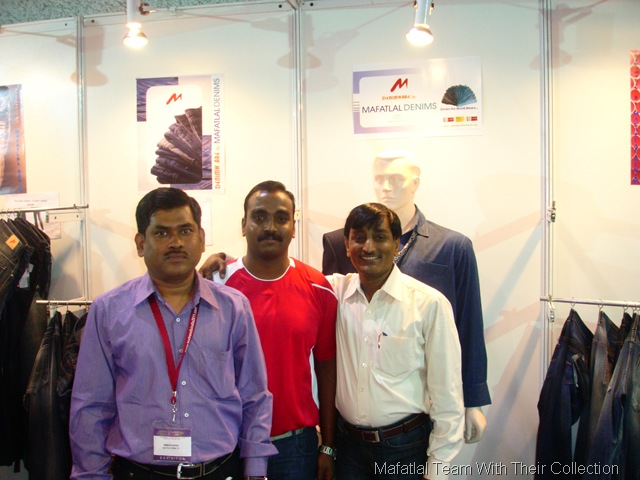
    Mafatlal Denim is one of the well known denim mills from India.  The company has been present on the Indian denim firmament for over 15 years and were among the first in India  to have  collaborations with established international denim  players like Burlington  .  I recently interacted with the Managing Director of the company – Mr. Rajiy Dayal – to understand more about products and markets of Mafatlal Denim.  Here are some of the questions I asked him.

    Can you tell our readers a little about Mafatlal Denim ?

    Rajiv Dayal -1 (2) The Arvind Mafatlal Group ( AMG ) had , in year 1996 , formed a 50:50 equity Joint Venture Company with Burlington Industries ( USA ) called Mafatlal Burlington Industries Ltd. The Company commenced production in it’s state-of-the-art composite denim plant , located in Navsari , Gujarat , in 1997 , with a capacity of 10 Million meters of denim fabric per annum.Subsequently in 2006 , the Arvind Mafatlal Group bought Burlington’s 50% equity in the JV and the Company’s name was changed to Mafatlal Denim Limited ( MDL ).
    In 2007-08 , Mafatlal Denim increased its capacity from 10 million mtrs per annum  to 20 million mtrs.

    What do you think are the main strengths of Mafatlal Denim as a denim player ?

    Mafatlal Denim has been in the business of manufacturing and marketing value- added , differentiated denim fabrics now for over 14 years and is a reliable supply chain partner for many Indian and Global brands.

    Mafatlal Denim’s strength is in its ability to understand Indian and Global customer requirements , as well as fashion trends and offer products / Denim Collections , thru its constant efforts in Product Development and innovation.

    The latest denim range of Mafatlal includes a number of theme products  like “Chic “ and “Formal Wears” . Can we know more about the same and other new products.

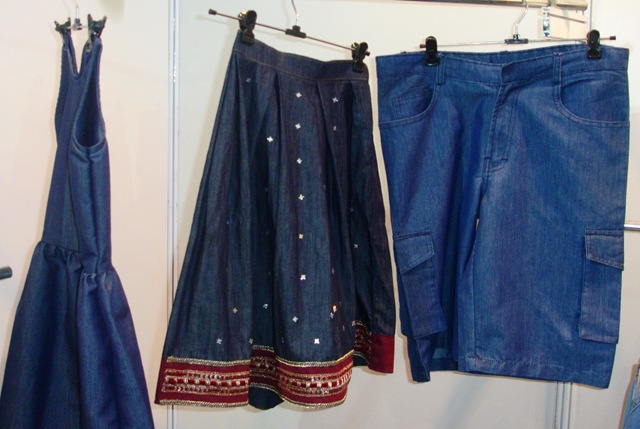
    DSC05955 The “Chic Collection” , which we have just launched , is a light weight denim collection , which can be used to make innovative garments for ladies and children , using fashion denim fabrics in conjunction with ethnic Indian work , like zari borders and traditional embellishments. You have seen a few samples of this collection in the form of a denim skirt and a child’s dress.
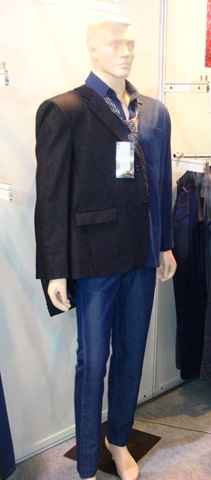
    Mafatlal Denim has also launched a Formal Wear denim Collection , whichDSC05957 can be used to make garments ( trousers , jackets ) for office wear. This is another effort from MDL to create a new market segment for denims in India.

    Where is Mafatlal Denim more focused – domestic market or exports market ?

    Mafatlal Denim , presently exports about 30% of its production , the balance 70% being for the very rapidly growing Indian market.Our customers include Indian brands like Levis , Mufti, Spykar , Allen Solly and International Brands like Marks and Spencer , LIMITED, Pepe Jeans etc.

    How is Mafatlal Denim addressing the key issue of rising cotton prices. Do you think buyers are adjusting to the situation ?

    The prices of cotton have exponentially increased globally from around 70-80 cents a pound a year ago to extremely high levels of 160-180 cents a pound currently ( over 100% ) . As this is a global phenomenon , worldwide producers of cotton fabrics ( including denim ) have had to increase fabric prices .
    However , whilst the fabric prices have increased by over 50% over the last 1 year , due to the cotton price increase, the retail garment prices have increased by 10-15% and I feel this increase has been accepted ( though grudgingly ) by the consumers.

    How long do you think that cotton prices would take to come back to normal levels ?

    A very difficult ….. and a million dollar question …. commodity prices depend on a lot of global factors like cotton sowing acreage , yields , supply ,demand ( specially by China ), stock levels and lastly ,but very importantly , speculation. I hope cotton prices come down during the later part of 2011 and 2012 . But we will have to keep our fingers crossed.

    The Indian domestic denim market is simply booming What do you think are the reasons for the same ?

    There are several reasons for the rapid growth of the denim market in India :
    a. An excellent demographic profile in India , where the median age of the of the population is below 28 years , and the popularity of denim products has grown tremendously in the last decade . One of the other reasons , is Denims popularity with Bollywood Stars like Akshay Kumar and Katrina Kaif !

    b. Denim fabric producers , garment / washing producers and designers , have all creatively been able to make a very attractive basket of denim garments for consumers of all ages .

    c. Of course, the versatility of denim is one the important factors for the popularity of denim …… Denim is comfortable, easy to maintain and stylish.

    d. Besides the urban markets, the rural markets are growing very rapidly, due to the increasing buying power as well as product awareness and availability.

    e. A very rapidly growing retail and brand network in India , which allows customers to easily access brands and products of their choice , as well as make shopping a pleasurable experience.

    f.. Many Buying Houses from all over the world are now coming to India to source denim garments for their Indian retail business , as well as for their global requirements

    There are strong international denim trends like Jeggings which are getting stronger. How is Mafatlal gearing up for these trends?

    Mafatlal Denim does have a range of denim products, which are light weight and have the comfort of stretchability. This is very popular , specially for ladies and children’s brands.

    What are the other trends that you see  in denim fabric  constructions and finishes ?

    Popular denim trends currently are light weight denims , coated and mercerized denims with multiple wash effects and clean optics.

    What are the estimates of  production and growth in denim fabric and garments production in India ?

    The total denim fabric production in India is currently about 650 Million Meters per annum. ( 2011 ) and estimated to cross 700 MMPA in 2012. It is expected to grow at 10% pa over the next decade and had the potential of reaching 1.5 Billion meters by 2020.

    The denim fabric consumption in India ( for domestic brands and garment exports ) is about 400 -450 Million meters per year currently -2011 , and is expected to grow in the coming decade at the rate of 10-12 % every year. Presently , 200 -225 MMA of denim fabric is being exported .

    Are there any plans for expanding the fabric offering or that of garments ?

    Mafatlal Denim has a capacity of 20 Million meters a year and we do not have any plans presently for increasing denim fabric manufacturing capacity. We are carefully evaluating the denim garmenting business and would decide on a strategy shortly.

    How is the environmental consciousness among the consumers affecting denim manufacturers ?

    I firmly believe that consumers all over the world would like to buy products which are Ecology friendly . Most denim manufacturers are aware of this and are gearing themselves to conform to all environment standards.

    Mafatlal Denim is a responsible denim fabric producer and we conform to all Environment Standards and are ISO 14001 and Oeko-tex ( Germany ) certified.

    Contact Mr. Rajiv Dayal on  This Email Address

    DSC05963

  • Bayer CropScience and Olah Inc. sign unique licensing agreement on cotton brands FiberMax® and Stoneville®

    image image

    Bayer CropScience and New York-based textile and apparel company Olah Inc. (owners of the famous KINPGINS SHOW )  have signed a licensing agreement to use the Bayer CropScience cotton brand names FiberMax® and Stoneville®. Under this ten-year agreement, Olah has been granted an exclusive license to develop and market the two brands for apparel and home furnishings. The agreement covers initially North America, Mexico and Japan and can be extended to more countries. It also includes the right to sublicense the brand names to other manufacturers. Financial details of the agreement were not disclosed.
    Both FiberMax and Stoneville cotton brands are well-known in the cotton and apparel industries, and each offers a unique quality profile that is appealing to different segments of the textile industry. FiberMax is high quality, long-staple upland cotton mainly grown in the United States that is ideally suited for finished goods that require finer yarns for manufacturing. Such products include t-shirts, chinos, towels and bedsheets . Stoneville cotton is strong and suitable for use in heavier weight fabrics and apparel including rugged outdoor work, sports and casual wear such as jeans.
    As a result of this agreement, for the first time, consumers will be able to purchase cotton garments or home furnishing goods labeled as manufactured with FiberMax or Stoneville cotton. This branding approach will benefit consumers in two major ways.

    • Firstly, consumers will know immediately that the fabrics have been manufactured from high-quality cotton fiber.
    • Secondly, FiberMax and Stoneville goods will be identified with cotton growers from different areas, answering the consumer’s growing desire for information about the origin of the products they buy.

    “Together, Olah Inc. and Bayer CropScience will create a unique connection between cotton producers, spinners, merchants, textile manufacturers, retailers and consumers,” said Joachim Schneider, Head of the BioScience business group at Bayer CropScience. “And Bayer CropScience will continue to invest heavily in growing its cotton business, including new research and development innovations targeted at improving fiber quality, yields and stress tolerance.”
    “This agreement provides us with the means to develop new products for today’s consumers using best-in-class technology, production techniques and style,” said Olah Inc.’s CEO Andrew Olah. “At the same time it grants us the ability to document the origin of the cotton used in our apparel and home furnishing products on a mass scale, thus providing consumers with transparency that is revolutionary in today’s apparel business.”
    About Bayer CropScience
    Bayer is a global enterprise with core competencies in the fields of health care, nutrition and high-tech materials. Bayer CropScience AG, a subsidiary of Bayer AG with annual sales of about EUR 6.5 billion (2009), is one of the world’s leading innovative crop science companies in the areas of crop protection, non-agricultural pest control, seeds and traits. The company offers an outstanding range of products and extensive service backup for modern, sustainable agriculture and for non-agricultural applications. Bayer CropScience has a global workforce of 18,700 and is represented in more than 120 countries. This and further news is available at: www.press.bayercropscience.com.
    About Olah Inc.
    Founded in 1959, Olah Inc. is a global textile and apparel development and marketing firm with offices in New York, Los Angeles and Hong Kong. Supported by dozens of experienced cotton, textile and apparel professionals, Olah Inc. consults to textile companies, retail and apparel brands throughout the world, and also created and hosts the internationally-renowned denim supply chain show – The Kingpins Show. Expanding the gamut of these shows,

  • Gap Expanding The 1969 Jeans Offering ?

    image Gap had introduced the mid priced premium jeans – 1969  – in 2009  and had created ripples in the denim market. Having worked over the supply chain for a couple of years, Gap was able to introduce the 1969 jeans and was able to make an impact in the denim market which it was rapidly losing over the last few years.
    The following year also saw some revival in the financial fortunes of Gap. 

    Though there had been mixed signals on the success of 1969 Jeans , the recent  addition of a retail location in Manhattan signals that the 1969 premium brand of Gap is doing well. The brand, recently signed a long-term lease for what will be a 2,800-square-foot Gap 1969 store at 513 Broadway, New York , between Spring and Broome streets in Soho. The shop will primarily sell the company’s Gap 1969 denim collection, along with some apparel from Gap’s regular collections.

    This will be the third 1969 store for Gap in the US – the other two being Los Angeles and Chicago .  The addition of the new store seems all the more important because it is estimated that Gap has not added a new store in New York for over 7 years.

    This new development is in line with the improved denim sales in US in 2010 and bodes well for the denim industry for the coming times.

    Previous reports related to Gap 1969Promotion Strategy , Clever Strategy   , 1969 Jeans launched ………

  • New Denim Video Section At Denimsandjeans.com

    We are pleased to announce that we have created a new denim videos section at Denimsandjeans.com. This section has a collection of denim videos related to all aspects of denim production – from cotton growing to retailing and advertising of jeans. Currently we are starting with a small number of these videos and this section will be continuously updated so that you don’t need to look for denim related videos at any other place !.

    Here is how to use this section :

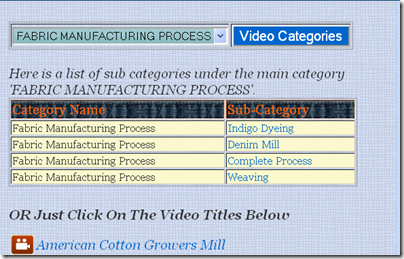
    Step 1 : Go to to Videos Category page 

    Step 2 : Select a Category – Eg Fabric Manufacturing Process

    image 

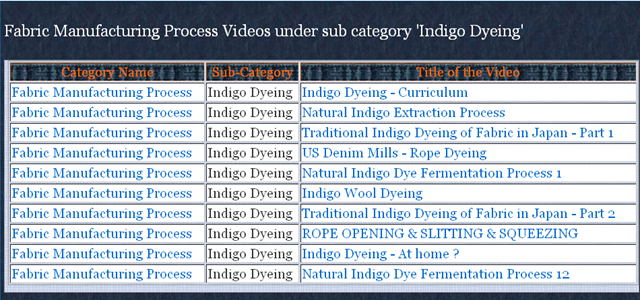
    Step 3 : Select sub category and see the video titles on this page

    image

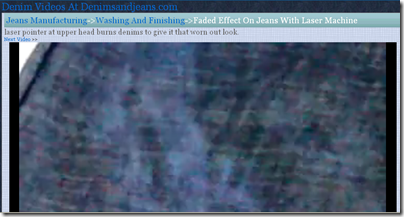
    Step 4 : And just watch videos in large size

    image

    You can also leave comments for the video and share the videos on your Facebook or Twitter accounts.

    Do send me your feedback on how you find our initiative and suggestions  for improvement (there is always some 🙂 )

  • International Denim Conference– On DVD

    conference denim dvd2

    The first ever two-day “International Conference on Denims & Jeans” was held at IIM Ahmedabad on 29th and 30th October under the chairmanship of Dr. PR Roy, Director – Fibre2Fashion and Former Group CEO, Arvind Ltd. The event was well attended by more than 500 delegates from the industry wherein the distinguished speakers presented an enlightening discourse on the global and Indian Denim & Jeans industry.

    The topics lined up at the conference ranged from Overview of the Indian and US jeans industry, Technology Developments and Innovations as well as Marketing Strategies in the Denim & Jeans sector, Recovery and Recycling of cotton waste, Branding and Retailing, Indigo wool and silk, Organic cotton denims and many more. The highlight of the conference was a panel discussion on denims.

    Speaking about the overall success of the denim conference, Dr PR Roy, Father of Denims in India had this to say;

    "I am extremely delighted the way the industry participated and supported this great event. This for the first time, allowed the denim and jeans sector stalwarts, to come under one roof and interact. I sincerely believe that this will substantially help India, to position itself as a leading global denim player in the foreseeable future".

    Supplementing to his views, Chakor Jain from VF Corporation added that "It was an honor to get an opportunity to present at the conference".

    Mr. Aroon Hirdaramani from Sri Lanka acknowledged "The conference was a great success. We found it very informative and were able to meet a large number of people from industry"

    Mr. Kunal Lekhadia from Kunal Organics made an indeed flattering remark by saying;

    "I must congratulate Fibre2Fashion for organizing such a great event. Your efforts were indeed commendable. I have never seen a textile show of this magnitude organized in India in such an efficient manner"

    To extend to the entire industry, a complete knowledge of this conference, Fibre2Fashion has come out with a DVD covering the full proceedings of the “International Conference” along with expert panel discussion on current and future prospects for Denim & Jeans Industry.

    Here is a detailed list of topics covered by various speakers during the conference.

    1. Inaugural Address
      Maheshwar Sahu, Principal Secretary, Govt of Gujarat
    2. Denim and jeans: A global perspective and India’s potential in a competitive marketplace
      Robin Anson, Managing Editor, Textiles Intelligence, UK
    3. Overview of Indian Denim Business
      Rajiv Dayal, Mafatlal Denims
    4. New Product Development in Denims
      Dr. PR Roy & Dr. JJ Shroff, Malwa Group
    5. Premium Denims & India "Branding & Retailing"
      Darshan Mehta, Reliance Brands
    6. Recovery and Recycling of waste in Denims
      Dr. Burger & SK Joshi, Truetzschler
    7. Denim" Offering From Ring & Rotor Systems
      Gerd Moche, Oerlikon Schlafhorst
    8. Organic Cotton & Denims
      Mahesh R, Arvind Ltd
    9. Sustainable Denims
      Manish Bansle, Dystar
    10. Jeans Manufacturing
      Manish & Sumit, Juki
    11. Panel Discussion on Denims
      Session Chairman: Mr. SK Gupta, Raymond Uco Denims
      Panel: Arvind Ltd, Chirpal, Aarvee, Bhaskar, LNJ Denims, Prashant, Ukil
    12. Overview of Indian Jeans Business
      Chakor Jain, VF Corporation
    13. US Denim & Jeans Industry
      Jenna Caccavo, Cotton Inc, USA
    14. Future Trend and Technologies in Jeans Treatment
      Enrique Silla, Jeanologia, Spain
    15. Marketing Strategies of Indian Denim Players to compete
      Rajesh Narkar, Malwa Group
    16. Innovations in Denim Weaving
      Terada, Tsudakoma, Japan
    17. Denim Warp Preparation
      Navin Agarwal, ATE
    18. Garment Finishing
      Sai Prasanna, Dystar
    19. Modified Starch for Textile Sizing
      Pradeep Bora, Anil Ltd
    20. Cotton Reuse, An Indian Perspective
      VV Mundhe, Acetex
    21. Advanced Functional Denims
      K Suresh, Clariant
    22. Spykar
      Sanjay Vakharia
    23. Reliance Trends
      Vipin Tyagi

    To buy the international conference DVD , just click here
    or on the image below .

    conference denim dvd2

  • New Jeans From Levi’s To Save 16 Million Ltrs Of Water In 2011 Spring

    levis water less denim jeans

    Levi’s has started offering a new collection of jeans which consumes less water .

    The logic behind this ?

    Levi’s did a ‘Cradle to grave’ study for its 501 jeans and found that about 3480 ltrs of water in its entire lifetime !! . This is a phenomenol amount of water to be spent on a single pair of jeans . The majority of this water is spent by consumers during the washing process of jeans at their homes . Though Levi’s could not control the water that consumers use at their homes, it decided to use the ozone technology to wash its new collection so that it could save 28% of the water that is spent in finishing process.

    The Result : A new collection of Jeans from Levi’s which

    a)Will save about 10 ltrs of water per jeans .
    b)Levi’s expects to sell about 1.5 million such pairs ie about 15-16 million ltrs of water saved.

    Here is a very interesting video from Levi’s to explain their concept of water saved in this new collection.


    However, though the intention of Levi’s is quite noble, the effort on its part will only save 0.3% of the water that is used in the life cycle of  the jeans.  The jeans manufacturing causes a lot of damage to the environment in terms of its entire production cycle from Cotton growing , to dyeing and weaving and finishing .There is a need to reduce the consumption of not only water but also energy, pesticides and to ensure that wastes are recycled .  There needs to be developed a concerted campaign to draw attention to the damage that is being done and alternative technologies need to be developed for the same.  Eg a number of companies are producing ozone washing machineries – which should be encouraged , lazer washing is another technology which saves a lot of ecological damage .

    At consumer level , we need to make the people aware of the need to wash their clothes only when necessary and this applies to all clothes including denim jeans.  Then only it might make some REAL impact on the environment.

  • Wish You A Happy New Year 2011

    Wishing all our readers and visitors a Very Happy New Year 2011.. May this year be full of happiness, success and prosperity for you and your family..


    happy-new-year2-denim

  • Wish You A Merry (Denim !) Christmas

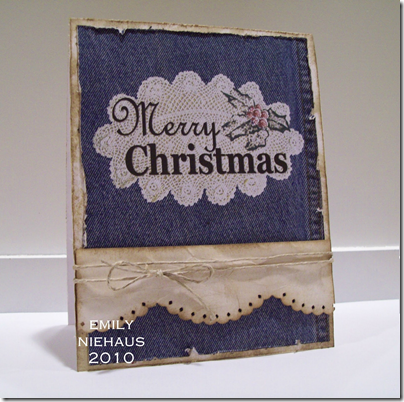
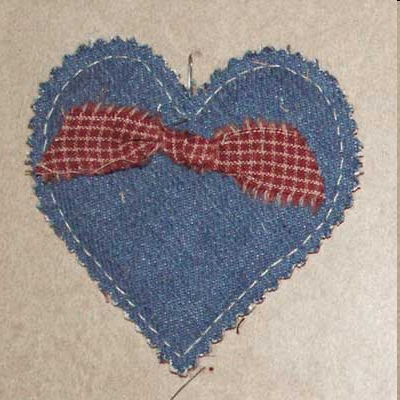
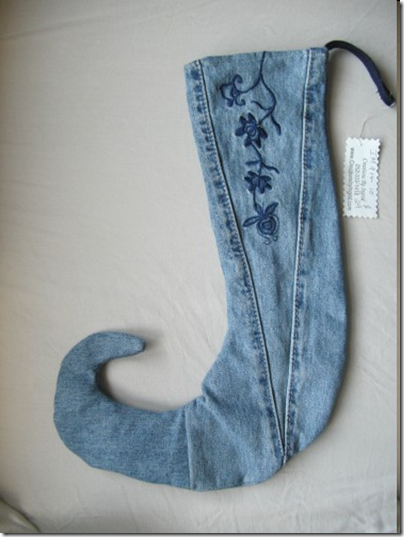
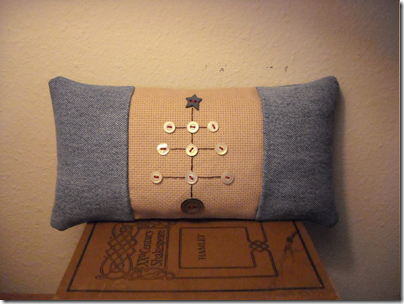
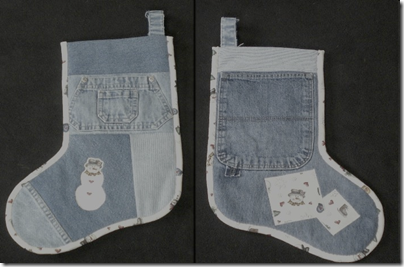
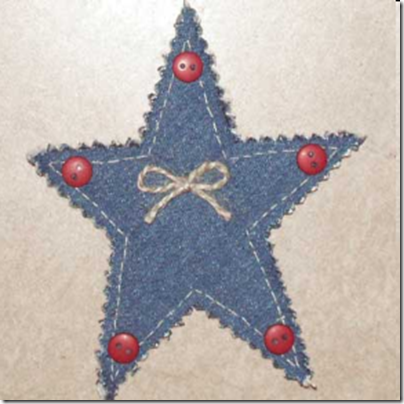
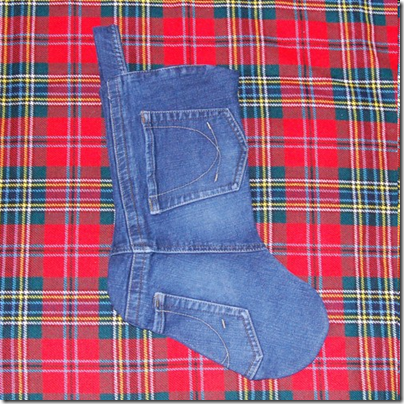
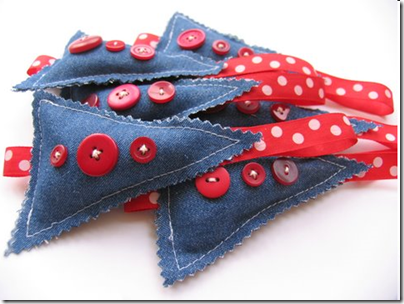
    For those who think that Christmas has nothing to do with denim, need to take a look at the photographs of different Christmas products in denim .Click on the photographs to see more details. Hope you like .

    Wish you A Merry Christmas And A Very Happy New Year


    denim christmas

    denim christmas

    denim christmas

    denim christmas

    denim christmas

    denim christmas

    denim christmas

    denim christmas

    denim christmas

    image