Author: Sandeep Agarwal

  • EU GSP – Changes In Rules Of Origin From LDC Countries Incl. Bangladesh – Jan 2011

    EU has recently notified the changes in the rules of origin from certain LDC countries which will simplify the procedure of granting the GSP benefits to the exporting countries and will also benefit other countries involved in supplying raw materials to the country exporting the final product.

    There are basically three formats under which EU provides GSP benefits to exporting countries :

    • The standard GSP : , which provides preferences to 176 Developing Countries and Territories on over 6200 tariff lines;
    • GSP + : The special incentive arrangement for sustainable development and good governance, known as GSP+, which offers additional tariff reductions to support vulnerable developing countries (currently 16) in their ratification and implementation of 27  international conventions in these areas;
    •  Everything But Arms (EBA) arrangement, which provides Duty-Free, Quota-Free access for all products for the 49 Least Developed Countries (LDCs). Under this arrangement , started in 2001, EU granted duty free access for all products except arms without any quantitative restrictions . These countries are :

    Afghanistan  Angola  Bangladesh Benin  Bhutan Burkina Faso Burundi Cambodia  Cape Verde Central African Republic Chad  Comoros Islands (Islands)  Congo, Democratic Republic of  Djibouti  East Timor Equatorial Guinea Eritrea  Ethiopia  Gambia Guinea  Guinea-Bissau  Haiti  Kiribati  Laos  Lesotho  Liberia  Madagascar Malawi  Maldives  Mali  Mauritania  Mozambique  Nepal Niger  Rwanda  Samoa  São Tomé & Principe  Senegal  Sierra Leone  Solomon Islands  Somalia  Sudan  Tanzania  Tuvalu  Togo  Uganda  Vanuatu  Yemen  Zambia

    As per the new notification of EU regarding change of rules or origin, it seems that all the above countries are going to benefit and can export duty free to EU even if only stage of processing (ie garment making in case of apparel) has happened in that country. Consequently , these countries will be able to import fabrics from any country in the world and export apparel duty free to the EU. A maximum content of 70% of non-originating material can be used for getting the GSP benefit. However, this percentage will differ from product to product.

    There is also a possibility that the following countries also get the benefit of zero duty export based on the second criteria of vulnerability . These countries are : Tajikistan, Uruguay, Turkmenistan, Peru, Panama, Paraguay , Nigeria, Fiji, Dominican Republic , Kenya and some others. This list keeps on updating each year and has to be referred with the EU to see the latest status.

    Who is going to Benefit ?


    1. Apparel Exporters in LDCs : The main winners of this change would be the garment exporters in these LDC countries – specially Bangladesh, Cambodia , Lesotho etc. 
    2. Fabric Exporters in nearby countries : Fabric exporters to Bangladesh from countries like India, Pakistan, China, Thailand, Indonesia would be greatly benefitted as currently they are at a disadvantageous position against the local mills in Bangladesh who enjoy easy sales due to the GSP benefit that is received by garment exporters using their fabrics.
    3. EU Importers : The importers of apparel in EU would be benefitted due to reduced costs of apparel . Or rather , we should say that they would benefit from the costs of apparel which do not increase as much as they would normally due to the highly increased cotton costs.
    4. Other industries in Bangladesh etc LDCs : Eg the plastic industry in Bangladesh would greatly benefit from using imported materials to export plastic products to EU.

    Who can be the losers ?


    1. Bangladesh textile mills : The textile industry can be the biggest loser as it loses its main advantage ie the GSP benefit. It will now have to compete with the strong textile industry in India, Pakistan, China and other countries in the open market. To take an example, currently most denim mills in Bangladesh  enjoy a sold out position and some mills do not actually have a marketing department ! . This situation is likely to change.  However, we have seen before that the powerful textile lobby of Bangladesh has fought against the benefits being passed on to other countries . Eg , under current rules, EU allows the fabric of India and Pakistan to be used for getting GSP benefit. But Bangladesh, under pressure from its textile lobby , has not passed this benefit.  It is now  fighting hard against changes also and it is anybody’s guess how much they will be successful.  But the chances of reversion of EU decision or the capacity of the Bangladesh Textile Mills to put a spanner in the works seems limited as they are pitted against all the other industries in Bangladesh including apparel – who are benefitting from this development. However, this  loss of profit for the Bangladesh textile mills could be for short term period . In the longer run, it would help the industry to upgrade itself and compete with the best in the world. In any case, they will continue to enjoy the logistic benefit .
      Taking some examples, we can also see that the textile industry in Bangladesh may also benefit from the changed rules in some sectors :

      Example 1 :  Chapter 58  Special woven fabrics; tufted textile fabrics; lace; tapestries; trimmings; embroidery etc. For these products, either the weaving can be done in Bangladesh or Printing accompanied by at least two preparatory or finishing operations (such as scouring,  bleaching, mercerising, heat setting, raising, calendaring, shrink resistance processing, permanent finishing, decatising, impregnating, mending and burling) can be done  where the value of the unprinted fabric used does not exceed 47,5 % of the ex- works price of the product. This may raise possibility of  increased production of some textile items in Bangladesh.

      Example 2 :  A yarn, of heading 5205, made from cotton fibres of heading 5203 and synthetic staple fibres of heading 5506, is a mixed yarn. Therefore, non-originating synthetic staple fibres which do not satisfy the origin rules may be used, provided that their total weight does not exceed 10 % of the weight of the yarn.

    2. Garment industry in India and other Non-LDC countries : The impetus that the garment industry in Bangladesh receives or for that matter Cambodia receives, will be at the cost of the garment industry in the vicinity countries. India is already unable to compete with Bangladesh in garment exports and when the duty free advantage comes into place, India’s garment exports will be further eroded as buyers flock to the LDC countries to source their goods. India, China, Indonesia, Vietnam and some other countries could be big losers in the garment export game. Pakistan may not be that affected as it has the currency advantage with it.

    Calculating The Benefits

    If the garment exported from Bangladesh using Pakistani / Indian  fabric was priced at $6 / pc  (CIF) previously ,  it attracted a duty of 72 cents @12% . The whole of this duty amount would now be saved. Currently , for denim fabrics, the mills in Bangladesh enjoy a premium of about 20-50 cents per mtr over other suppliers from Pakistan, India, Indonesia etc. This translates into a benefit of about 30 to 70 cents per garment.  Once the new rules of origin are in place, this margin will actually be reduced to very little or almost nil. Hence the denim mills in the surrounding countries can expect an increase in the prices of their denim fabrics from 10 cents to 25 cents per mtr assuming that the importer in EU will try to take away  50% of advantage by way of reduced garment prices.

    And it is not only the denim industry that is going to be affected. Lets take some examples of exports from Bangladesh for products other than apparel which also open up possibilities for exporters.

    The EU notification no. 1063/2010 for the change of rules is given here in a presentation . You can also search within this document or just select fullscreen to see complete document.

    EU -Rules of Origin Changes for GSP From 2011

  • Guess Men’s Denim 2011 Spring/Summer Collection

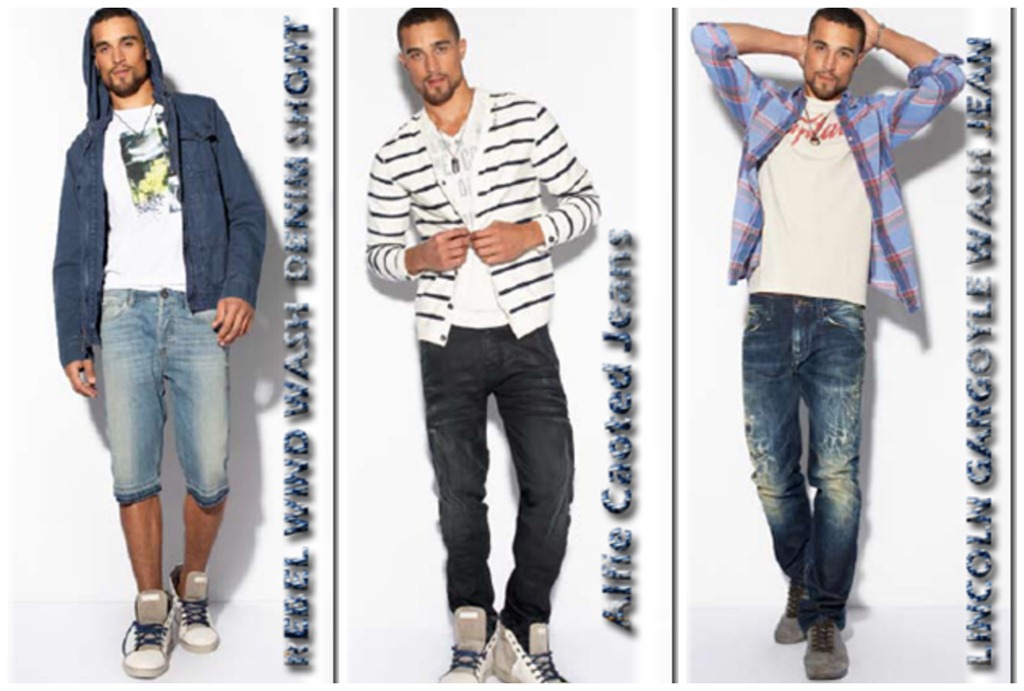
    The Guess  men’s collection 2011 Spring / Summer  takes its fashion influences from the rural Catskills area of upstate New York. The collection is dominated by casual-wear that takes fashion cues from vintage utility garments and modern silhouettes. The spring / summer deliveries are broken down into

    • Cape Heritage : Cape Heritage takes fashion cues from classic vintage Americana themes. The collection mixes casual wear with soft tailored contemporary pieces. Worn and over-washed fabrics take the stage when it comes to knits and denim giving an overall relaxed vibe to the delivery.
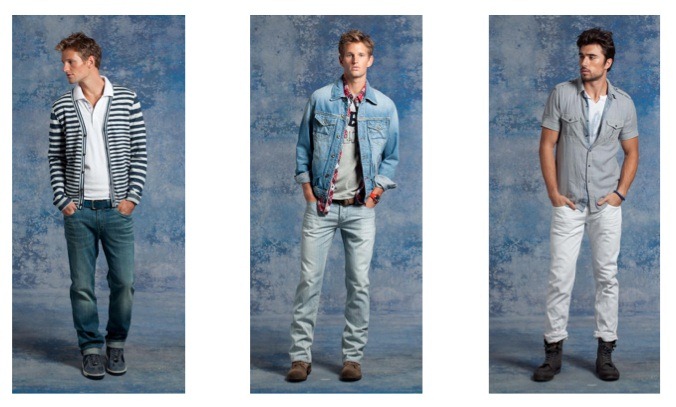
    • Brave New World : Brave New World introduces a combination of coastal and urban influences. Worn in and vintage age washes round out the collection .

    There are some noticeable fabric , styling and wash trends in this Spring Summer denim collection 2011 from Guess . The most obvious are :

    • Coated denim fabrics being used in a number of styles
    • Chambray fabrics have been used both in shirtings and bottoms.
    • Double denim (denim top and bottom) are being supported in the collection indicating its continuance as a denim trend for the next couple of seasons.
    • Denim shorts for men are a major part of the collection.
    • Vintage and dark washes continue in all their glory.

    GUESSMENS2011SUMMER3

    GUESSMENS2011SUMMER3

    GUESSMENS2011SUMMER3

    GUESSMENS2011SUMMER3

  • Heritage Denim Is The Buzzword For Denim Brands

    The word ‘Heritage denim’ has been in vogue for a couple of seasons now. This report by Stylesight checks out  the different brands who are exploring their heritage seriously and reviving it the form of reproduced lines .

    Key denim brands have been undergoing a change over the last few seasons.
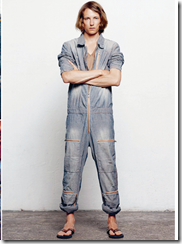
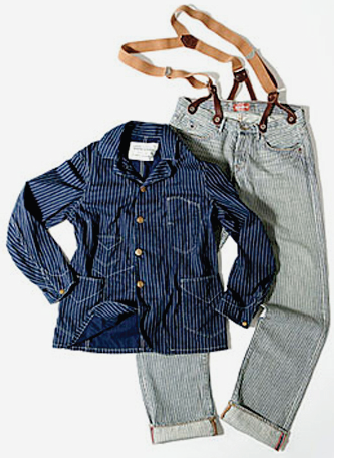
    First noticed at trade shows in early 2008 (as probably a knee-jerk reaction to the credit crunch and consumers refocusing on durability and quality), brands began looking into their archives and going back to their workwear roots for inspiration. No-nonsense vintage styling, tried and tested “can!t bust "em” craftsmanship and authentic branding reemerged in the denim market. Today, labels like Levi!s (for its LVC range) delve into extensive archives, while others are being more loose and conceptual with simple takes on what!s traditional and authentic. Either way, “heritage” remains the key denim buzzword.

    Levi’s Vintage Clothing

    Levis Vintage Clothing

    Established in 1853 and making denim overalls since the 1870s, Levi’s® has a vast denim history. The jeans brand giant was one of the first to explore its heritage with its Levi!s Vintage Clothing (LVC) line in 1999, and has gone on to re-release many pieces from its expansive San Francisco archive. With 13 different evolutions from 1890 to today, the 501 range stands out as the core of the Levi’s® brand. Levi!s® meticulously reproduces hardware, trim, details, branding and packaging for this collection, and also uses its archive to provide heritage inspiration for the rest of the company’s  lines.

    Lee Jeans – Lee the Archives

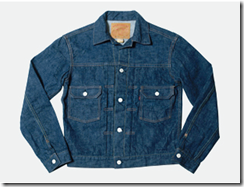
    H.D Lee Jeans heritage Formed in 1889 by Henry David Lee as the Lee Mercantile Company at Salina, Kansas, Lee originally produced denim dungarees and jackets. In February 2009, after 120 years in business, Lee decided to explore its back catalog with the introduction of Lee, The Archives. Unique pieces like the mechanic!s “Union-All”, invented by H.D. Lee in 1913, and the Original Lee House Mark Jelt Denim Work Jacket from the 40s comprise this range.
    The company has also introduced Lee 101, a more accessible range that focuses on trademark cuts, top-end fabrics and modernized historical details. The range repackages Lee!s rich heritage for the modern denim lover and has proved highly successful.

    Wrangler – Blue Bell

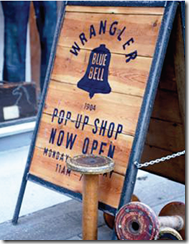
    In 1904, after buying several sewing machines, CC Hudson founded thewrangler blue bell jeans Hudson Overall Company, which became a pioneer during the early years of workwear and later led to the Wrangler brand. In 1919, the name changed to Blue Bell Overall Company, after a railroad bell in the factory turned blue from indigo dust. In 1943, Hudson acquired the Casey Jones Work-Clothes Company and the rights to its barely used brand name, Wrangler. Over the years, Wrangler has revisited the “Blue Bell” name and logo for select lines. To celebrate the company!s history and archive, Wrangler launched a premium casualwear collection under the iconic name for Fall 09. The bell logo, branded buttons and classic details such as saw-tooth panels on shirts are key aspects of  this high-end capsule.

    Closed

    image Closed dates back to late seventies Italy, when it quickly captured the market with its now iconic pedal pusher jeans, which offered a significantly new idea at the time. Now a German-based jeanswear brand, the company
    has celebrated its rich heritage in recent years, re-featuring the iconic details and branding of its original success story. Closed!s discreetly angled (at 33º) “X Pocket” and its woven label flies are uniquely recognizable. Proud of its heritage, Closed remains a family-oriented enterprise with strong core values.

    Stronghold

    Stronghold jeans, the first denim workwear from Los Angeles and once mainStronghold jeans competitors of Levi!s, were originally produced by Brownstein, Newmark and Louis in the early 1900s. In 2004, Von Dutch veteran Michael Cassell and former North Beach Leather director Michael Paradise resurrected the 1895 Stronghold Jean Company, bringing back authentic, handmade denim. “Our reproduction of this classic brand celebrates old world workmanship, selvedge fabrics and original details, achieving a timeless style, fit and finish.” Pieces come in authentic workwear fabrics like duck canvas and railroad stripes, and focus on 100% authentic details and constructions.

    Rising Sun

    rising sun jeans We often think of ourselves as actually working in the early 1900s with our 21st century minds intact.” In its own words, Rising Sun & Co.“handcrafts indigo clothing that captures the optimistic spirit of America”. Founded by Lucky Brand owner and former designer Mike Hodis, the Pasadena-based denim brand is all about craftsmanship, the rebirth of workwear, period-correct jeans and time-proven techniques. Expert craftsmen create
    selvedge organic and raw denim in-store on antique shuttle looms from the U.S.’s oldest denim mill, which is then sewn into garments on turn-of-the-century sewing machines.

    Warehouse Jeans – Lot 484

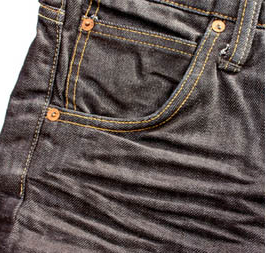
    With its high-quality, handcrafted reproduction jeans, Warehouse is a verywarehouse jeans japan popular niche denim brand in Japan that heralds the authenticity and heritage of vintage jeans cuts like Levis 501!s and Lee jeans from 1934. Having collaborated with J.Crew, the label is also well known for its work with vintage store Hellers Café. Their limited edition “Lot 484” jeans utilize Warehouse!s 14-ounce Memphis cotton selvedge denim that was woven and dyed in Japan. Details include rusted steel rivets and fly buttons. The Japanese are known for their dedication to perfecting denim, and Warehouse is at the top of its game.

    Earnest Sewn

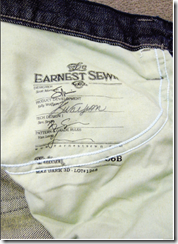
    image Founded by denim genius Scott Morrison in 2004, Earnest Sewn was an early adopter of Japan!s purist attitude towards denim, integrating the wabi-sabi aesthetic (which translates to “the beauty of things imperfect, modest, and unconventional”) with denim’s Americana past. The label!s “product sewn in earnest” ideology is dedicated to maintaining pride in its workmanship and commitment to authenticity. Overseen by three people from start to finish, each garment is designed, sewn and washed with a commitment to the way jeans were made in the Old West.

    apparelinsiders

  • Guess Women’s Spring / Summer Denim Collection 2011

    Guess introduced a spring collection that incorporates vintage American influences on which the Guess brand was built.

    The women’s spring collection is broken down into two main stories: Traveling Faire and Wild Romance. Traveling Faire, the first of the spring deliveries, is built upon American classic vintage style combined with California chic. Some features :

    • Gypsy inspired stripes , florals and vintage washes.
    • Lightweight fabrics are used both for leggings and regular jeans.
    • Patchwork detailing ties into the bohemian styling influences.
    • Red and white colors can be seen .
    • Floral printed denim takes on a more important role.
    • Hi-waisted shorts and jeans are offered in a variety of pastel shades.

    guessJeans2011ss1    guessJeans2011ss13

    guessJeans2011ss4 guessJeans2011ss5

    guessJeans2011ss7 guessJeans2011ss8

    guessJeans2011ss9 guessJeans2011ss10

    guessJeans2011ss11 guessJeans2011ss12

  • Resin Treatments: Giving Value addition to Vintage Denim garments

    This is a very detailed technical guest article about Resin treatments from Saurabh Rai

    image Today we will talk about Resin & its use in Denim garments industry to create unique & vintage looks which add value to denim garments & improves its saleability  in market.

    In 80’s we have seen Resin being used to give non press , iron free trousers & now we are using in Denims to make wrinkles & creases to look natural vintage which stays after multiple home laundries.

    The present invention relates to processes and methods for treating Denim garments. In particular, the invention relates to the treatment of denim made of cotton, cotton blends and synthetic fabrics for the purpose of imparting no press properties thereto.

    Typical Resin treatment process for Non denim garments for Durable Press finish:

    Lets talk about wrinkle free, durable press or crease free finish on non denim trousers. A variety of techniques and additives have been suggested for use in the treatment of cotton fabrics to obtain durable press properties. A typical process suggests the use of a low-formaldehyde glyoxal resin (10%), a non-ionic wetting agent (0.2%), an amino functional silicone (3%), a polyethylene emulsion (2%), and acetic acid to maintain pH in aqueous solution wherein water comprises the remaining 84%. Then load the machine with the garments prior to the addition of the liquid mix components. Once the mixture components are added, the garments be allowed to soak for between six and ten minutes without agitation. The offload & do hydro extract & semi dry.

    The amount of time required to reach the target moisture level will depend on the weight of the fabric, the temperature of the dryer, the duration of the drying cycle, and the extent to which the garments are tumbled. However, it is important to keep the drying temperature below a temperature which will cause the resin to set.

    Once the garments have been dried to the proper moisture level, they are ready for the pressing and final cure steps. It is important to press and finally cure the garments without substantial delay, i.e. delay of more than approximately 12 to 24 hours, depending upon the weight of the fabric comprising the garments. Denim fabrics can be held between the drying and the pressing steps longer than lighter weight fabrics, because they tend to more readily retain moisture. Pressing of the garments in accordance with the present invention is done with a garment press capable of exerting a vacuum on the garment through the lower plate of the press. Initially, the garments are positioned with the aid of a vacuum to eliminate wrinkles and they are subsequently subjected to a steam treatment for approximately five seconds with the vacuum turned off. Steam is then applied to the garment through the top plate of the press for approximately 5 seconds. Finally, the garments be pressed for non denim to get wrinkle free, durable press finish or crunched for denim where ever 3D effect needed and cured.

    The  current technology of post cure being introduced for non denim garments process gives an option to produce a garment with smooth drying and wrinkle resistant properties along with sharp creases that are durable for the life of the garment. In this process the resin is padded onto the fabric and dried at low temperature. The fabric is then cut, garment constructed and creases pressed into the garment. A high temperature cure in this configuration is given to cross-link the resin. This process, though giving excellent results, has not been too successful with garment manufacturers owing to obvious limitations of colors, styles and fabric weight, and the need for a direct interface between mills, garment manufacturers and retailers.

    Chemicals being added to process & its functions

    The non ionic wetting agent reduced surface tension of the fiber & allows chemical penetration, so cross linking can take place throughout the fiber cross-section. A high density polyethylene restores some of the lost tear strength and abrasion resistance by providing lubrication. It also has a synergetic effect with silicone or fatty-based softeners to improve hand feel. Among the silicone softeners, amino functional or reactive polysiloxanies with silanol functional end-groups act as elastomeric finishes imparting higher crease resistance, good dimensional stability and excellent soft handle . They can also reduce free formaldehyde release by replacing part of the resin.

    Above processes and methods provides a commercially practicable method for imparting durable press characteristics to fabrics containing cotton. Garments treated by the methods set forth herein may be made to have durable press and softness characteristics which are both superior and consistent from batch to batch and maintaining an acceptable level of garment wear and durability

    Description

    The wrinkle free finish is being done by cross-linking cotton. Permanentclip_image001 press finishes function by forming cross-links between adjacent cellulose polymer chains. Then cross-linked cotton does not allow fibers to shrink & thus wrinkles will not form. In todays’s world DMDHEU- Di methyl Di hydroxyl Ethylene Urea is the main cross-linking agent. With magnesium chloride as the acid catalyst to initiate a reaction, it forms cross links in the amorphous regions of the fiber.

    There are many modified version of DHDHEU’s are available in market as tailor made products, easy to use & with low formaldehyde. Formaldehyde release is always a big issue & it may cause cancer to human body. Hence Internationally free formaldehyde parameter being set up to maximum 75 PPM. There are new inventions/ research being done with no formaldehyde resin application but some how or other its not so popular either they are not as durable as resin or very high in cost to use in mass production.


    How Resin works:

    Resins work by reacting the nitrogen atoms of each resin molecule with the hydroxyl group of the cotton fabric. The reaction forms a linkage between the resin and the cotton fibers giving the cotton un shrink pattern in which shape is being made & cured.

    Resins being cures in acidic pH with particular heat & temperatures. To maintain pH catalysts can be used, as these are salts of acid. Oven curing is needed to reach right temperature ( 145 – 160 C ) & time ( 7 – 22 min ) as per Resin tech bulletin advice.

    Fabric strength loss may results up to 50 percent & it completely depends on fabric weight, construction & fiber content. Shade change also occurs due to resin cross linking.

    Methods of applying Resin on the denim garments

    The major application methods currently used are based on the following processes: garment-dip; spray application.

    In the garment-dip method, garments are constructed from non-resinated fabric, then impregnated with a resin formula similar to that used in the non denim garments process, extracted to about 65 per cent wet pick-up and then tumble dried to 8-10 percent moisture content, a critical factor that is determined using a moisture meter.

    In the spray method, the resin is applied by spraying it onto the garment during tumbling in an enclosed rotational device, or on spray booth where garments being hanged to inflated balloons & sprayed a measured quantity of resin solution. A microprocessor is used to meter the exact amount of chemicals and to control the rotation time, desired wet pick-up, spray rate and process time. The garments are then treated for different 3D effects, crunched or whatever designed intended to produce, used for both menswear and women swear with the market moving towards washed-down looks and softer handles.

    Parameters to be considered while Choosing denim fabric for Resin finish

    The garment finisher usually does not manufacture his own fabric and he may be faced with unacceptable losses in tensile strength, tear strength and abrasion resistance in the fabric when cross-linking. Because of the added value, garments rejects due to low strength may prove to be more expensive than fabric rejects.

    For producing an acceptable 3D effects Denim, several precautions must be taken in fabric selection:

    · The base fabric must have sufficient strength to withstand 40-60 per cent loss in tensile and tear strength and still maintain sufficient strength to provide a garment of acceptable wear life and durability

    · It must also have excellent absorbency to allow resin to penetrate into the very interior of the fibres and form crosslink’s. Surface adhering resins do not serve any useful purpose and are inefficient and wasteful

    · If the fabric is dyed the dye must be fast to acid catalysis and high temperatures. Sulphur dyes, which are known to generate acid upon storage, are to be strictly avoided & Lycra/Spandex based fabric also should be tested on elongation before mass production.

    · Residual extractable on the fabric (like starch from size) can react with resin and lower its effectiveness, a high degree of size removal is thus essential

    · Fabric pH should be between 6.5 to 7.0.

    Selection of machinery & Oven

    Many aspects must be considered when choosing the technology; type or product (Tops & Bottoms), process, time, temperature, 3D, and chemicals.

    For high quality 3D crunching / whiskers, the two most important criteria are temperature and control of cycle. Presses should be equipped with high-heat, cast aluminum heads or with supplementary electrical heaters to give a processing temperature of approximately 150 – 180 degree centigrade. This temperature is crucial as it starts the curing process and controls the effects.

    There are various types of 3D making equipments available in the market ie. Wire crinkle, Decca/crunching machines, then aluminum flex pipes & also man made leg hangers on which natural 3D effects being carried out.

    While selecting an Oven, garment manufacturer must analyze their products to be produced, place/space & capacity of production accordingly they can choose from medium to big size of batch or continuous oven which are readily available with many machinery producers.

    A tunnel oven is faster but requires a certain amount of garment preparation and a material handling system to and from the tunnel. Air flow pattern in these ovens controls temperature fluctuations, movement of the garment and effect formation and is therefore the most important selection criteria. The air velocity is finally controlled, in as much that temperature fluctuation has been brought down to a remarkable 3 degree Centigrade over a single garment. Developments are also underway to perfect microwave curing technology. As against normal convection curing, the temperature rise in microwave ovens is expected to be quicker, uniform throughout the fiber cross section, and to give minimum damage to the fiber.

    There are many Resin suppliers available in the market & they sell their products in combination of their own recipe & even they are expert enough to suggest you right resin combinations for your denim garments to get unique look with low formaldehyde.

    Using resin on garments is only one major danger is leaching of free formaldehyde if resin is not cured properly due to any parameters being ignored in a process ie. Temperature and time.

    Hence for dealing with resin application skilled man power is pre requisite.Readers are most welcome to ask any question & add their experience on this page.


    About Saurabh Rai : A Textile Chemist by  profession with 13+ years ‘progressive experience in designing, creativity in wet & dry processing of denim garments in the Apparel Industry and general management with well known MNC companies across the globe. Delivered consistent contributions to productivity and revenue growth through expertise in product sourcing, product development and vendor development .He likes to keep a track of  forthcoming fashion market trends. Contact him at this email address.

  • Denim By Premier Vision : Dec 1st and 2nd, 2010

    denim by premiere visionThe seventh edition of the Denim by Premiere Vision will be held in Paris at Halle Freyssinet  on Dec 1st and 2nd , 2010. with about 69 exhibitors exhibiting their denim related products. It is about the similar size as the June edition but larger than the December edition .

    Apart from the products from the exhibitors, there will be some interesting areas to visit in the show .

    Blue Garden: A garden… out of the blue at Bossa stand.  An interaction of sunlight (lasers), water and plants (indigo dyes) – almost like nature intended. The project is the brainchild of the  Turkish denim mill Bossa, Italian design consultants Meidea, and Itaclab, a centre of expertise noted for its innovation and research into washing techniques.

    Invista – Blue Tonic Bar
    Invista is one of the largest producer of integrated fibers and polymers and owners of LYCRA brand. Invista proposes a global fabric and garment collection around five themes: Dress for Success, Stretch Your Imagination, The Black is Back, Color My World, and The Great Performances.Another quite interesting place to visit would be Blue House at Arvind – the denim mill from India. They would be presenting a traditional weaving loom and display natural indigo dyeing processes.  With the interest in traditional weaving methods  growing , this might be  an interesting place for denim connoisseurs to go to.

    Here is a list of all exhibitors (with their website links) for ready reference !

    Company Name
    (With website link)
    Country Core Activity
    Artistic Denim Mills Pakistan Weaver
    Alliance Textiles Morocco Garments/Finishings
    Artistic Milliners Pakistan Weaver
    Arvind Ltd India Weaver
    Atlantic Confection Morocco Garments/Finishings
    Atlantic Mills Co. Thailand Weaver
    BA-TU Tekstil Turkey Garments/Finishings
    Berning France Accessories
    Berto Italy Weaver
    Best One Morocco Garments/Finishings
    Bossa Denim Turkey Weaver
    Calik Denim Turkey Weaver
    Candiani Itay Weaver
    Cappio Tessuti Italy Weaver
    Central Fabrics Hong Kong Weaver
    Close to Clothes France Accessories
    Crossing Morocco Garments/Finishings
    Denim Authority Tunisia Garments/Finishings
    Denim De L & ILE Mauritius Garments/Finishings
    Denim Valley Spain Weaver
    Denimo Turkey Weaver
    Denimatrix(American) USA Weaver
    Deridesen Turkey Accessories
    Dorlet France Accessories
    Dynamo Denim Turkey Weaver
    Eclair Prym Morocco Accessories
    Eco Yaa South Korea Garments/Finishings
    Layanderia Emmetre (Malwa Industries) Italy/India Laundry/Weaving
    GFM Textile Germany Weaver
    Global Denim Turkey Weaver
    Gonser Group Tunisia Garments & Finishing
    LA Griffe Tunisia Accessories
    GTX Srl(Gentex) Italy Weaver
    Hecking Denim(new) Germany Weaver
    Hellenic Fabrics Greece Weaver
    ICOMA Morocco Weaver
    INCI Buttons Turkey Accessories
    Indicott Turkey Weaver
    ITV Italy Weaver
    Invista Switzerland Fibers Producer
    Isko Turkey Weaver
    Italdenim Italy Weaver
    J-Val Italy Accessories
    Kipas Denim Turkey Weaver
    Kuroki Co. Japan Weaver
    Marassi Denim Turkey Weaver
    Matesa Tekstil Turkey Weaver
    Montebello Italy Weaver
    Okinawa Italy Accessories
    Orta Anadolu Turkey Weaver
    Panama Trimmings Italy Accessories
    Paris Texas Morocco Garments/Finishings
    Prosperity Textiles Hong Kong Weaver
    Real Kom Tekstil Turkey Garments/Finishings
    Realteks Turkey Garments/Finishings
    Tejidos Royo Spain Weaver
    RSP 51 Spain Weaver
    Textil Santanderina Spain Weaver
    Sartex Tunisia Garments/Finishings
    Tavex Spain Weaver
    Texcart Srl Italy Accessories
    Texpro Tunisia Garments/Finishings
    Turteks Turkey Accessories
    UCO Raymond Belgium/India Weaver
    Vicunha Europe Switzerland Weaver


    Here is the address of the venue :

    Halle Freyssinet
    55 Boulevard Vincent Auriol • 75013 Paris, France
    T: +33 (0)8 11 11 55 55

  • 2010 :Increase Of 14% In Imports Of Denim Jeans Into USA During First Half

    US is the most important market for denim jeans exporters around the world. Any changes in demand in US affects a number of exporters worldwide . With the recession having hit US , the demand for most textile and related products had taken a hit . Luxury goods imports had been particularly hit . However, if we see the trend of denim imports over last 2-3 years , we find that that it has been mostly positive and quite encouraging in the current economic scenario. The year 2010 has seen a marked increase of over 14% in imports of these items into the US as compared to last year with both Mens/Boys and Womens/ Girls jeans showing a vast increase in imports over the same period last year . When we speak of Men’s / Boys jeans , they showed an increase of about 12.8% in volumes from 116 million pieces last year to 131 million pieces this year. In terms of prices, the same increased marginally by 1.54% adding icing to the cake . See the table below :

    Import of Mens’/ Boys Jeans & Breeches into US 2009 and 2010

    Year

    Volume

    Av. Price

    2009 (Jan- June)

    116.79 million pcs

    $ 7.01 /pc

    2010 (Jan- June)

    131.76 million pcs

    $ 7.12/pc

    % Change

    +12.81%

    +1.54%

    Source: US Dept of Commerce

    The total Mens/Boys jeans imported into US in the year 2009 was 241 million pieces reflecting that imports in the first half of the year are lower than those in the second half. This normally remains the trend in most of the years . Going by the rate of increase in imports in the first half of this year , we could see Men’s/Boys jeans touching a record import of about 270 million pcs in the year 2010 . It is also interesting to see who are the main exporting countries for Men’s/Boys’ Jeans into US . Let’s have a look at the table below :

    Major Exporters of Men’s / Boys jeans and Breeches to USA (figures in million pieces)

    Country

    2009

    2009 Jan- June

    2010 Jan- June

    % Change

    Mexico

    100.90

    42.98

    48.92

    – 5%

    Bangladesh

    45.52

    16.78

    21.07

    +28.30%

    China

    44.28

    15.33

    19.78

    +26.80%

    Egypt

    14.78

    5.98

    7.04

    +30%

    Pakistan

    14.70

    5.66

    6.48

    +37%

    Nicaragua

    8.29

    2.94

    4.24

    +105%

    India

    2.4

    0.75

    0.82

    +8.9%

    We see from the above table that most of the countries increased their exports of Men’s/Boys’ jeans to USA in 2010. However, certain South American countries like Mexico , Honduras etc suffered reductions in their export figures indicating clearly that the source of jeans is shifting to Asian countries. Mexico, however, remains the largest exporter despite the fall and maintains substantial lead over the second highest exporter – Bangladesh. Bangladesh stands out very strongly as a denim exporter and clearly overshadows its large neighbour – India – in terms of denim jeans exports. India has been poorly lingering at these levels of exports and is clearly non-competitive in terms of pricing and also not being a receipent of tariff and other benefits for imports into US.

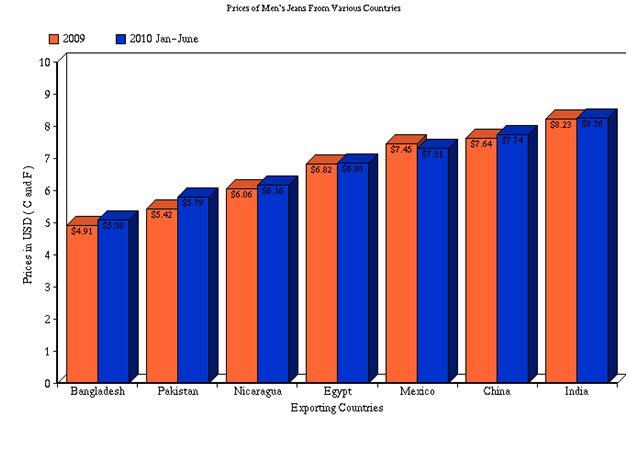
    Lets also see if the average prices for exports of jeans has changed in this period from these countries.

    Country

    2009

    2010 Jan- June

    % change

    Mexico

    $ 7.45

    $ 7.31

    -1.88%

    Bangladesh

    $ 4.91

    $ 5.08

    +3.46%

    China

    $ 7. 64

    $ 7. 74

    +1.31%

    Egypt

    $ 6.82

    $ 6. 86

    +0.5%

    Pakistan

    $ 5.42

    $ 5.79

    +6.82%

    Nicaragua

    $ 6.06

    $ 6. 16

    +1.52%

    India

    $ 8.23

    $ 8. 26

    0.36%

    denim import figues

    As we can see from the graph above , Bangladesh is the cheapest source of denim jeans to USA . On the other hand , ironically , China is one of the most expensive country exporting denim jeans to US. The costs in China have been continuously rising and with their currency not remaining as favourable as it was before , China will not be looked upon as a source of cheap denim garments. However, it is also a fact that there is a renewed emphasis in the Chinese textile industry to move up the value chain and it is showing in their export figures as more and more value added garments are added. Pakistan got the highest increase in prices of 6.82% over 2009 on top of 37% increase in volumes and strengthened its place among the Men’s denim market in US .

    Now , lets also have a look at the figures related to imports of Women’s/ Girls denim jeans into USA during 2009 and 2010.

    Import of Women’s/ Girls’ Denim Jeans and Breeches Into USA

    Year

    Volume

    Av. Price

    2009 (Jan- June)

    110.86 million pcs

    $ 7.04 /pc

    2010 (Jan- June)

    129.10 million pcs

    $ 6.98/pc

    % Change

    +16.50%

    -0.90%

    The imports of the Women’s/Girls’ denim jeans into US have shown even more robust growth in the first half of the year with a whopping 16.%% increase over the same period in 2009. This growth trend in both the segments is indicative of strong growth in demand and sales in US for the entire denim sector. Though the prices of the women’s denim showed a slight decrease of 0.90%, it hardly dampens the positive sentiment on this front. This trend is expected to continue over the whole year and , like Mens/Boys jeans, expected to produce record import figures this year.
    It would be interesting to see where this increase in denim imports is mainly coming from :

    Imports of Women’s / Girls’ Denim Jeans and Breeches into US 2009-1010

    Country

    2009

    2009 Jan- June

    2010 Jan- June

    % Change (Jan-June)

    China

    115.72

    41.95

    60.70

    +44.70%

    Mexico

    27.09

    10.94

    11.32

    +3.5%

    Bangladesh

    23.14

    7.98

    10.64

    +33.38%

    Egypt

    14.72

    6.82

    5.97

    -12.47%

    Vietnam

    16.32

    7.78

    6.70

    -13.86%

    Cambodia

    11.07

    5.23

    6.02

    +15.13%

    Pakistan

    6.92

    2.94

    2.67

    -8.9%

    India

    4.17

    1.34

    1.62

    +20.53%

    As we can clearly see from the table above, China is totally dominating the scene when it comes to the jeans in the women’s category. It already has a share of close to 40% (of imports ) and which it is adding on to rapidly with a growth of 44% in 2010 export figures over last year. Women’s denim is high fashion oriented with smaller lead times , a large number of styles and washes which change frequently .. China’s dominance in this segment clearly indicates its strength in catering to these market needs and demands . Besides China the other countries showing great volumes and growth are Bangladesh and Cambodia. Vietnam and Egypt are also high volume exporting countries – though it seems that both have suffered a temporary setback in exports during 2010. Pakistan is not very strong in the women’s denim and India is again at the bottom of the table with hardly any impressive figures.

    To understand how prices are moving in a continuum over the last year , lets compare the prices of the whole year 2009 with those in the first half of year 2010.

    Prices of Women’s/ Girls denim jeans during 2009 and 2010

    Country

    2009

    2010 Jan- June

    % change

    Bangladesh

    5.27

    4.96

    -5.82%

    Mexico

    9.25

    9.31

    +0.60%

    China

    7.04

    6.92

    -1.79%

    Egypt

    6.30

    6.73

    +6.82%

    Pakistan

    6.31

    6.49

    +2.84%

    Vietnam

    5.50

    6.46

    +17.63%

    Cambodia

    7.47

    7.22

    -3.38%

    India

    7.43

    7.04

    -5.32%

    A look at the figures of prices from various countries throws up interesting facts. Jeans from Mexico are the highest priced , expectedly , as it provides enables turnaround and serves the quick fashion category. A large number of brands like to push products into the market quickly by getting them manufactured in nearby countries like Mexico and then based on customer response, place the repeat orders (with longer lead times ) in countries like China or Bangladesh. Bangladesh again remains the cheapest source followed by Vietnam and Egypt . Vietnam has shown a strong performance with a 17% increase in prices over last year .

    On the whole, the denim scenario in US seems quite positive in the near term. Coming during these recessionary times , this performance is highly encouraging and bodes well for the industry . However, it also needs to be noted that denim sales are actually cannibalizing on the sales of other non-denim products as consumers are looking for clothing which they can use at multiple occasions to reduce their overall expenditure. As the economy improves significantly , we may , ironically , see some negative impact on sales of denim jeans into US.

    jobs denim

  • Denim Abstraction Collection

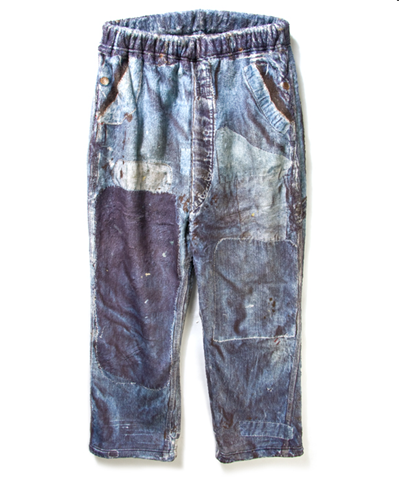
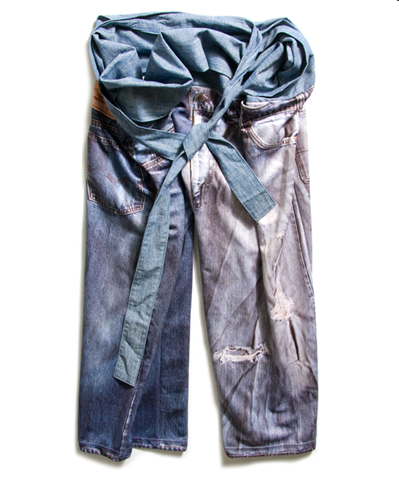
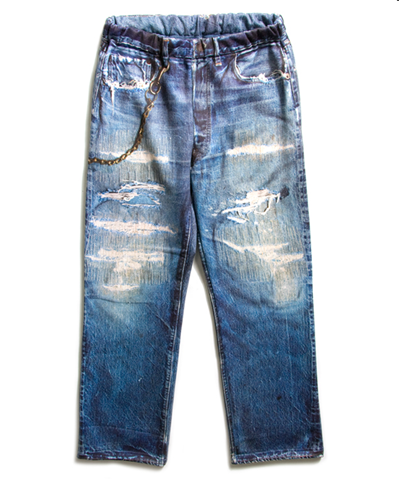
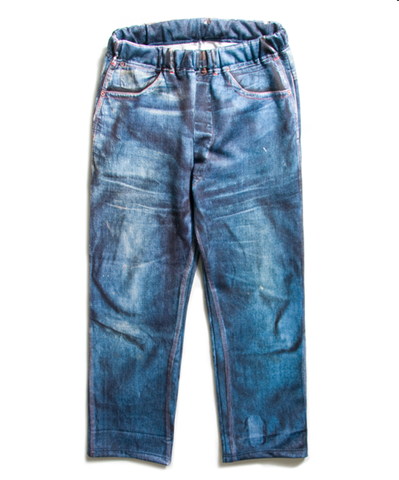
    What do you think of  the vintage denim jeans shown below ?

    image

    image

    Would you like to own one of these vintage jeans ?

    image

    And what if you found that these jeans do not fade further ?

    image

    And that  these are actually not jeans  made of denim fabrics??

    These are actually made up of uniquely digitally printed fleece and according to Stylesight , are talk of the Japanese blogging world.  This is a collection by the Talk About The Abstraction  and made with a theme derived from vintage denim.  Also see report by Slamxhype .
    Though not actually not denim, the product is expected to be a hit with digital printing technology bringing great new looks to a  simple fleece product. Soft feel of the fleece fabric will further add attraction to this product. 
    So we have another cool product Inspired By Denim  and will hopefully keep on having many such innovations dropping in at regular intervals. However, none of these products threaten the denim domain as long as technology to dye and process denim remains as expensive as it is today.

  • Cyclic Trends In Denim Jeans

    This is a guest post by Sourabh Sharma. He writes about the cyclicality of trends in denim fits in this article.

    Jeans are a second skin to many, including myself. For boys and girls, men and women, and dudes and babes, jeans are the epitome of style, comfort, and are often referred to as timeless. However, the varying ‘fit’ combinations of waist rises, leg openings and ankle openings across the several decades since jeans were first made popular have always evoked mixed feelings. On the one hand I am always fascinated, and on the other I frequently cringe looking at the styles of yore (especially on me, in unforgotten photo albums, in the days of glossy photographs kept safely in withering albums). It is a natural phenomenon to want to conceal adolescent fads that seem almost inexplicable today. I am a Generation Y (aka millennial) guy, so I have lived through the straight-leg, boot-cut, and have arrived at the skinny, with waist rises dropping throughout the time period. Along with my passion for collecting and observing jeans and denim styles worldwide, I am curious to see how these styles have evolved over time, in terms of ‘fit’.

    Not PhD equivalent research by any means, but enough to get a hold of the way jeans trends have become almost cyclical. Thankfully, the ‘research’ is made possible by the lucrative trend-spotting already conducted by curious Georges like myself, by speaking with numerous first hand designer sources and acquaintances, and by simply having a fashionable set of parents who have lived through many more denim variations than I have my slightly-over-two-decades span of life. I was curious to learn primarily about the evolution of the ‘fit’ element of jeans, not so much the embellishments, garnishings you might say, and distress factor, which can all combine nicely into an investigation of its own.

    The history of denim is fascinating, right from its unfashionable roots of the 1500s, to the patenting of its rivets in 1873 (to think these actually have  a purpose!), to the various taboos and associations of jeans with cultural elements. I have looked primarily at the last six decades, as these have been the years that have escalated the demand and popularity of jeans, and have had the most impact on today’s jeans culture. Moreover, for practical purposes, these are the decades in which I still have mortal sources to recount their experiences, who are always the best and wisest resource (with the most terrific of personalities and storytelling abilities, too).

    ‘Knowns’ regarding Trends in Denim Fashion

    As is the case with any experiment, I have laid out a few ‘knowns’ in my background clause. The first of these ‘knowns’ is that this is a unisexual study, looking at denim influences amongst the trendy, psychographically youthful, metropolitan and internationally well traveled crowd (this is my target market, or my sample space, in marketing and statistical terms, respectively).  Despite having not lived around for many years, I have definitely kept my eyes on trends, and have noticed that although men’s fashion may be slightly behind women’s fashion, it does follow the same path, especially when it comes to jeans. So, I feel that I can rightfully assume no gender barriers to denim fashion over time. Secondly, having lived and traveled in the Americas, Europe, Asias and Africas of the world, the second ‘known’ is that fashion moves westwards, an ironic twist to the fact that Easterners often want to behave in an unorthodox of Western way. I find Asia to be on top of the trend tier, with the most creative ideas for any outfits, especially jeans. Europe tends to also lead with its prowess in fashion shows and the elite aura that it exudes Northern America, for its business savvy mindset and lack of work life balance, seems to lag behind in accepting trends as they surface. Many women in my life have complained about this fact; for if they are American, they find themselves looking a little plain in Europe and especially in Asia, whereas if they are European or Asian, they see themselves looking a little too glam, or at least overdressed, in the Americas. Add this time delay to the natural slowness of men in accepting cultural trends (my first ‘known’), and you find men like myself buying outfits in Asia in 2005 and wearing them in the US in 2010 when they are just becoming a rage. I guess David Zinzenko’s detailed fitness and nutrition tips for maintaining body sizes really do come in handy to still enable one to fit into the styles over the years! (yes, guys do care and do need to work out too).

    Variables of Jeans ‘Fit’

    Returning to my ‘research’, if one may call it that, I have broken jeans into three identifiable parts that characterize the evolution of the ‘fit’ over time:

    Waist rise: Defined as the length measurement between the crotch and waist, it is interesting to see the variations in rise from sitting at the hips and barely there to tummy tucking and belly covering.

    Leg openings: This includes everything from below the butt-area to halfway down the calf, so basically what covers the knee area and its surroundings. The variations range from balloon-wide opening to the unbreathably clingy.

    Ankle openings: This mainly focuses on at the lower leg, and more specifically around the ankle area, ranging from shoe-tripping flared to choking skinny.

    Although I have sources and data on exact centimeters and inches that the rise is, or the diameter of the ankle, etcetera, I will leave the statistical analysis for a private study. For the purposes of trend spotting in a more perceptual and diagrammatic way, I have instead come up with hypothetical but relatively comprehensive extreme ranges for each of the three jeans arenas, and have classified trends in the last six decades accordingly, with the middle/median line symbolizing the ‘standard’ acceptable norm.  These can be noticed as follows.

    Evidently, what my findings show are the definite cyclicality in denim jeans trends over the years, along with a divergence of simultaneously existing trends in the past few years. This is probably in virtue of rising populations, the wholehearted acceptance of denim jeans as a convenient must-have, the inevitably diversifying tastes, and the increasing resources for multiple designs.

    Combining the trends yields an interesting pattern that correlates with historical and cultural influences, indicating how denim jeans are indeed a second skin to the populations of the world. The evolving trend is not merely created, but seems to be more a reflection of the perception of the society and its culture at various points in time. So, an interesting insight will arise from a more historical and perceptual element of analyzing denim trends.

    On trying to better grasp the evolution and cyclical trends of the ‘fit’ of jeans, clearly identified above ,I have chosen to proceed as follows. I have split the decades into culturally influential time periods, aptly defined as eras, which do not necessarily correlate with the decade spillovers. This is exhibited as follows. Bear in mind that the collective trend diagram is for visual purposes; the vertical axis is slightly skewed as it is conceptual, not numerical, which is done for simplicity (i.e. smaller in terms of rise indicates extremes lower than the average 30 cm/12 inch rise in denim jeans, as low as sometimes 2.5 cm / 1 inch; while large in terms of leg openings could be as high as 20 or 26 inches for wide leg jeans; etc. Nevertheless, the trends are readily apparent) .

    The last few years have been the most interesting, exhibiting not only the prominent trend is made popular by the millenials and fashionistas, but how an almost opposite trend lurks forward and prevails. Perhaps this is due to the fact that in these years, jeans have gotten smaller, lower, skinnier and overall require a more fit lifestyle and body, contrary to increasing obesity rates in many nations. The alternative trend (in a lighter shade in the figures) is perhaps in the mindsets of those seeking solace, comfort, alternative fashion, or are perhaps just a large chunk of late adapters.

    Era A: Star Stuck Jeans

    The likes of Marilyn Monroe left guys lusting with modestly slim jeans, whilst Elvis rocked the world with the dude’s version, as did James Dean, making it unisex at a time when gender fashion separation was quite prominent. The waist rise wasn’t given as much dominance, and the classic fit was at the waist, as it supposedly should be. At this point in time, jeans were not a fashionable item, but just a casual addition to a wardrobe, akin to its roots of being used for comfort during laborious work.

    Era B: Party Time Jeans

    The Beatles proceeded with the slim jeans trend, but the introduction of what our parents and grandparents call ‘hip hugger‘ jeans were a rage, popularized by rock icons, and were almost a precursor to the present day low rise trend. In retrospect, clearly this was the start of a rebellious and party centric trend that would eventually push the envelope in years to come, and bring jeans out of the casual closet and into the fashionable one. Interestingly, the newly positioned denim jeans were actually harder to get!

    Era C: Hippie Disco Jeans

    In this era, the disco scene became popular as the hippie culture took over the entire world, which, contrary to the tail of fashion following, wanted to be more ‘Western’.  ‘Hip huggers’ turned into low waist jeans, with wider and wider flares being christened as visually accurate ‘bell bottoms’. As is the case with any fashion fad, diversification is inevitable to occur, and the likes of elephant bell jeans also popped up, with flares so large they covered the shoes in entirety! Talk about tripping hazards.

    Era D: Breathable and Workable Jeans

    With the disco backlash, a derogatory term to something so culturally influential, flared bottoms reached an end as straighter jeans were demanded, in a modestly slim fit, thus marking a comeback of narrower ankles. However, baggy jeans came back in style with the hip hop and rap culture. These were also times of heightened global warming awareness, so perhaps people felt the need to breathe in their jeans. Waistlines also crept back up due to the more ‘straight leg’ feel (which I personally think is the least flattering of all fits). For practical purposes, including a rise in women joining the workforce, high waists and straight legs were in style, with baggy ruling the youthful boy’s nest. Designers jumped on the band wagon to capitalize on the increasingly popular goldmine of fashion.

    Era E: Provocative Jeans

    I call this era provocative since this marks a prominent rise in underwear exposition. If jeans were a fad on the framework of products, then this was the time when the low respect came into play, as jeans lost their fashionable and must-have position to other fabrics. Yet, a king never lies low for long, and the low rise ‘bumster’ jeans made a comeback, thus marking a repetition point in this cycle, as a successor to the earlier ‘hip hugger’. The credit belongs to designer Alexander McQueen who changed the face, or the derriere, of denim jeans. Initially these were paired with baggy jeans and made popular by the oddly popular concept of ‘sagging’, thus revealing men’s boxers and underwear (giving these a reason to become a raging trend of their own, for both men and women). Gradually, the jeans themselves began to slim down, too, particularly for women. The low rise was still a taboo, and restricted amongst the boldest of populations: the uber fashionable and extremely elite, or simply followers of Kate Moss’s strategic first move at Alexander McQueen’s show.

    Era F: The Joyous Enjoyous Jeans

    This is when laws got liberal, and the world became more united as if saluting entering a new century together. This was indeed the case, as celebrations became viral with joy, worldwide were shared via emerging social media forms and are still recalled today. The feelings seemed to have reciprocated on the world’s most loved attire. The low rise jeans became more acceptable and less of a taboo, thanks to the acceptance of starry characters like Britney Spears.  The next comeback, and thus a mark of cyclicality once again, was the widening ankles. Fashion enthusiasts thankfully glossed over the term ‘bell bottom’ replaced it with flared bottoms and the popularly called ‘boot cut jeans‘, thus lending to a visual image of being less dramatic than their bell bottom parent. The difference was the slimness of the fit at the leg and knee. Freedom and breathability was thus the main association with denim of this era.

    Era G: The Split-Personality Jeans

    With the low rise style at its peak, the skinny, drainpipe style of jeans returned, marking a repeat in this element of the cycle too. This was to the critiqued dismay of populations worldwide, as it went beyond the slimness of the 80s and into a skin clinging skinny style, with the notion that its wearer had to fall into its size reference.

    The strange thing about the mid 2000s onwards has been the dual nature of fashion. Whilst it is apparent that trends are leaning towards lower, skinnier, slimmer, it is almost as if the bulk of the population is starting to feel discomforted by the aspirational aspect, and is clinging onto what we may call fashion of the yore. This explains why boot cut and moderately flared jeans have not disappearing entirely. High rise jeans, such as the Not Your Daughter’s Jeans brand, are also in style for their tummy tucking marketing to trendy baby boomer women. Men of hip cities, and particularly those of non-metropolitan areas, are completely averse to low rise and skinny fit, explaining their lack of adaption to the new styles of denim. The point was emphasized by Dockers’ sexist advertisement which blatantly mocked the skinny jeans trend for men, albeit its archaic undertones probably encouraged a higher trial rate!

    Remarks about Cyclicality

    The most apparent finding here is the cyclicality of the trends, and how the three main fit elements, namely waist, leg and ankle, always recombine to form the next trend. The cycles of all three do not necessarily correlate, else things would be too predictable.

    The low rise trend of Period B made a comeback in Periods F and G.

    The slim leg trend of Period C made a comeback in Period G.

    The skinny ankle of Period B made a quick comeback in Period D, and a more prominent one in Period G.

    Jeans trends seem to return every 3 to 4 of my defined eras. So, the upcoming fashions may not be too difficult to foresee (albeit trends like diversification, along with the importance of fabric type, embellishments, etc., can cause significant differentiation; these require yet another insightful exploration!).

    What’s Next?

    Naturally one may wish to anticipate what is next in terms of ‘fit’, obviously without ignoring the possibility of diversifying the current ‘fit’ elements via garnishing jeans with embellishments, destroying them via various strategic techniques, etc.  The unveiled trends give prominent hints that the duality will continue, at least for some time, despite Kate Moss’s influential prowess in sporting the high rise jean, marking an end to the popular and beloved (personal votes here, too) low rise. Ironically, she modeled Alexander McQueen’s ‘bumster’ jeans too, so things indeed do come into a complete cycle. So, here is some basic yet strategic advice for both consumers and designers.

    As a consumer, one must invest in both flared, lose and high waist denim, alongside low slung skinny jeans. Both are likely to remain for a while, but the more extreme a trend gets, the less it is lauded in the long run, and the more repulsive it looks in retrospect. The indication hear is of the way we laugh at bell bottoms, or laugh at whale tails. This does not mean that people should look identical, like packs of cards; individuality should and always will be praised, and one should not shy away from displaying a quirky or crazed streak. But with few likes, limited closet space and few resources and options at hand, invest smartly, as you would in stocks.

    As a designer, the waters turn murkier. A designer must first look to see what their designs are relaying: comfort or fashion, or the tiptoe friendly bridge joining both. Also, one must check to see who the target market is: those following trends to the tee, or the late adapters of the cycle. Bearing these elements in mind, designers should go for either the risky niche jeans strategy for the fashionable and conscious, or the universally embracive denim for the evergreen comfort huggers. Again, this depends on their positioning, appetite for risk and differentiation, and forward thinking strategy.

    At the end of the day, nothing is predictable, but seeking trends in the most random aspects of the past is a rewarding exercise, particularly if it indicates that some things will remain around forever… like jeans!

    About Sourabh:
    sourabhSourabh Sharma is  professionally a marketer, a strategist and an engineer, has worked in corporate arenas for cosmetics and consumer products, but has flexibly crossed paths with the fashion arena, both via work and through perpetual passion. He has worked with brands that sponsor fashion weeks worldwide, yet the inclination towards fashion has been more inevitable. With denim being his favorite conversation piece, it is only natural that he chooses to investigate denim throughout the tides of time, cutting through barriers of trends, culture and creativity. He runs the blog – Food, Fashion and Frameworks

  • List Of Top Denim Brands Worldwide

    We had a page for linking the top denim brands worldwide . However, it was not sufficient as it provided only links to the sites of these brands. Hence we decided to create a separate section altogether for the brands worldwide.

    We have just completed the phase I of the project and you can browse through the list of denim brands in some of the countries. We have mainly taken brands which have originated in a particular country. Eg. though Levi’s is sold around the world, it will be listed under ‘Denim Brands in USA’ . You can easily browse through the brands in different countries and get details like :

    1. Brief Description  of the brand.
    2. Address
    3. Email / Phone / Fax  Numbers – wherever availalable.
    4.Website Address
    5. Latest News :
    This is an innovative feature which enables you to see the latest news on the brand (wherever there is a news).

    Let me explain stepwise :

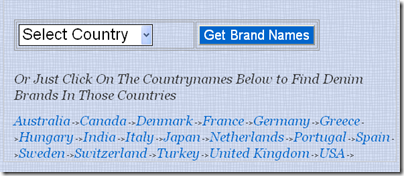
    Step 1 – Open the Top Denim Brands Page

    Open the section  by clicking on this link , you will find the option to select the country for which you may see the denim brands for . Select a country or just click on the link on the countries that are given below to checkout the brands in that country.

    image

    Step 2 – List of Brands In A Country

    You will see the list of brands in a particular country . It would look something like this.

    image

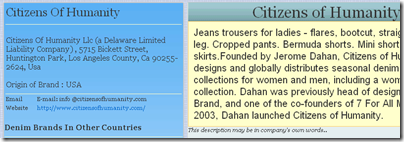
    Step 3 – Get The Details Of A Brand

    On the brand details page, you will find on the left panel , the details like Description , Address, Email , Website etc . See here

    image

    In many cases, you might also find the latest news related to the brand under the heading ‘Related News’.  See below :

    image

    Since this is a beta launch, there could be some errors or misses . Please bear with us  and send us your comments if you find anything amiss.

    Hope you like you our new initiative 🙂 .

    Once again here is the  LINK TO THE TOP DENIM BRAND SECTION.

  • Denim Is Dead (Distressed?) . Long Live Denim !!

    This is a guest post by Sourabh Sharma. He gives a great analysis on the distressed denim  with a historical perspective in this article.

    We live in times when distress is actually in fashion.

    denim is deadI was surprised when I realized this. To think everyone preaches the exact opposite. My addiction to denim has made me curious about another trend that I have not quite embraced; distress.

    On unbuttoning a favorite pair of jeans, I noticed the words “Denim is Dead” engraved on the button. I looked at my marginally frayed and excessively faded  jeans, and thought, perhaps denim is indeed dead . This is not denim, or the classic denim that I have known for a lifetime. But then I noticed a smaller inscription on the rivet. Recalling that the rivet is to a pair of jeans like a spine is to a human being, thus the mandatory asset to hold a pair of jeans up and in place, I closely examined what it said. “Long Live Denim”; a stark juxtaposition to the former statement, and one that I will discuss later. It is an interesting acknowledgment of my conquest to know why distressed jeans are so important to fashion history, and so prevalent in today’s world.

    denim skirt fashionAs if warning consumers of the distressful economic times to come, distressed jeans have technologically advanced over time and become a symbolic fashion staple . Wherever I go, regardless of what city or transit-zone, regardless of what type of location it is, an airport or club, restaurant or beach, I always see it. A bony knee, poking out of a perfectly asymmetric ripped hole, a chunk of thigh peeking out through what looks like the survival from a tiger attack, and sometimes I wonder if I’m looking at someone who is missing the homeless sign from their fingertips, or whether the Armani shirt or Jimmy Choo heels that they are wearing with the denim carcass is in fact stolen. I know that sometimes one can tastefully rise above regularity and seem eccentric, but this fad takes a while to swallow.

    Why should I wear denim that is so worn? Worn is an interesting word. It can either mean pre-possessed, or overused. In both cases, it epitomizes distress. And distress is the new fashion statement.

    Or maybe not so new. Unbelievable as it sounds, distressing denim has been in style for about five decades. However, unlike the analysis of denim openings and waist rises, the distress phenomenon is not cyclic, but additive. With each add on, designers instantly craft combinations of denim creations, in effect creating a layering effect of various types of designs, levels of distress, etc. filtering down to what we have today: strategically ripped denim.

    Types of Distress (for Denim)

    Un-distressed Jeans

    With distress being so much in vogue, a term for the un-distressed, plainer counterparts seems to have languished over time. Classic, perhaps? Nevertheless, these are as they seem. Some categorize them as grandparents’ jeans, blaming the ever widening generation gap. Jeans have historically first been worn by carpenters and workers, when utility and comfort were more prominent factors than style. Which explains why this look is often one that goes negative on the scale of flattery, with bulges in inappropriate places, and tapering so stark that it makes its wearers seem like they are auditioning for a circus that is going out of business. However, off late the trend  has revived itself in the form of trouser jeans. Much like Classic Coke’s timeless taste proposition, these offer a timeless fashion proposition.

    I squirm at these too, for they are closer to trousers than they are to jeans. Yet on the other end of the spectrum, we have distressed jeans. Having worked and dined with many designers, I have found that there is actually a process that goes into distressing jeans, despite many people’s willingness to massacre their own vintage denim so as to keep up with the trend.

    Applique Technique

    Applying something on denim is akin to accessorizing it, as it does not deviate from the essence. Splattered paint is a fashionable recollection of yesteryears. Although it started off as painting simply on jeans to form uniform colors and hues, the messy and chaotic look revived itself with the grunge era, as a form of self expression, and still prevails today. Embroidery on jeans started as a symbol of grace, but quickly moved towards self expression, too. Over the years, embroidery has gotten louder and more creative, differentiated from its archetypal ‘pretty’ routine. Embroidery’s natural next extension is embellishment, often intertwined with embroidery. This falls into two categories; the aesthetically pleasing, and the disorientingly chaotic. The pleasing segment ensures symmetry and style, mostly on back pockets and leg linings. The experimental ones offered more than just sequins and patches, but relays whole stories. The combination of these appliqué techniques yields a creative and chaotic look, evoking emotional adjectives like wild and free, the very words that form the foundation of distress.

    Worn Jeans

    Fraying is a natural phenomenon. Jeans as a fabric tend to stretch, and thus the ends fray with repeated wearing. If one works in bent over positions for whatever reason, the knees lose color and texture. Due to the way humans walk, the edges of the hips can give way over time to. The concept of worn jeans came into limelight with pre-washed jeans, an idea initiated by Lee and followed by the Abercrombies and the Gaps. This made fraying such a demanded style that consumers did not have to wait for their jeans to fray naturally, but could either expedite the process, or better yet, purchase a pair of worn jeans. For dramatic frayed denim jeanseffect, the whiskering technique is utilized, drawing attention to the worn out streaks around the crotch area, inevitably impacting a consumer’s choice for the perfect fitting jeans. As if pre washing jeans was not enough, stone washing became popular, starting with private designers in France, with the use of various stones like pumice and pea gravel, enabling a fiber plucking and rip inducing effect, usually achieved by washing the denim with these stones, or by scraping effectively. Stones are now classified by their porosity and abilities to induce damage. Acid washed jeans give them a more uniformly coarse feel, for a level of distress that is a notch higher.Acid washing also allows for more creativity, depending on how and where it is utilized. Sand blasting, usually used to clean or etch a surface, was first conceived by Italian designers, almost like a hybrid of acid washing and stone washing. Mass retailers have greedily lapped the concept, marketing their jeans for the active, trendy, or simply sexually charged youth. The actual sand blasting technique has attracted some negative buzz due to health concerns for workers used to manufacture denim with this technique. Bleached jeans amplify the natural wear and tear, especially in that they bleed the blue out of denim. Bleaching dramatizes the distress, thereby making it more appealing. After all, all dramatic things have a tendency to garner more attention.
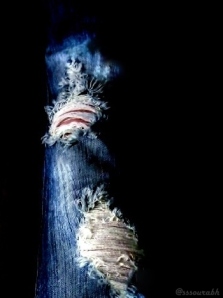
    Strategically Ripped Jeans

    Strategically ripped jeans, as I like to call them, are an amalgamation of all the aforementioned distress factors and techniques. These lead to the strategic and inevitable fraying and ripping of jeans at various predictable areas around the leg, knee, hip and butt zone. As noticed, distress is not a sequential process, but an additive one, using several techniques in simultaneity to create an almost customizable level of distress to suit a mood or an occasion. Its not only retailers, but even top end designers that have lapped up on the trend. They are for any occasion too; severe distress for the beach, tasteful distress for a party, and slouchy distress for a brunch. There is no bar; the jeans are available for everyone at varying levels of design, distress, and price, from Paris Fashion week to Lakme India Men’s Fashion week, from a mere twenty dollars to an appalling three thousand dollars. And for seek luxury within distress, there are the diamond encrusted jeans for over a million dollars. Whatever the case, distress prevails throughout.

    The Chaotic Denim Market

    Due to such trends, we live in an era where there is not just one denim market. It has been segmented into various categories based on tastes, occasions, preferences, geographies, social acceptabilities, and  many more refined market segments, each of which has a surplus of brands associated that cater to it. Denim has gone into use beyond jeans, and into jackets, bags, car seat covers, and numerous other accessories and products. Some have argued whether we live in a denim bubble which will burst soon. Judging from the rising sales of denim, the annual introduction of new denim brands, the forays of all designers into the web of blue, regardless of whether they are mass or niche, and an equator-wide range of price points luring consumers from all market segments, I do not foresee the denim bubble bursting anytime soon.

    So what is the point of wearing a pair of denim jeans that has is so worn? Why do silhouetted ramp models continue to strut in these shards of fabric, inevitably inspiring the world? Why does Zac Efron succumb to wearing his jeans multiple times to give them a worn in look, and perhaps marginally worse, admit to doing so?

    The Mindset Framework, which relies on emotional intelligence and emotional attraction, can explain the target market segments that such distress appeals to. However, distressed denim is more than just an appeal. To better understand the existence of a trend that has permanently cemented itself in the history of fashion, I think it is more appropriate to look at the the four quadrants of pressure which influence decision making.

    Explaining the Trend: The Four Quadrants of Pressure

    I feel that there are four types of pressures that drive a trend into continued existence. These are perhaps the key to deciphering which fads are lovemarks in my favorite marketing framework. These pressures are placed upon individuals to make decisions, and can be well adapted to explaining the success of distressed denim.

    denim buying pressure

    Business Pressure

    Businesses thrive to capitalize on a presently profitable idea. The pressure is thus to reinvent the success, or diversify from it, keeping its essence in tact.

    Durability: Denim is definitely durable. Unlike other fabrics which become synonymous for wardrobe malfunctions, denim rips do not necessarily translate into irreparable damage. Denim is a fabric which can still be physically held up, and deemed wearable, even after exposed to deathly conditions. Although this is perhaps an ode to the patenting of its rivets, it is this characteristic that has prompted businesses to test the durability of denim by exposing it various levels of distress in the name of product development.

    Reinvention: Distress is one of those rare elements that is not replicable. Ever notice how some retail brands promise customized distress to ensure no two pieces are alike? This gives creative minds a virtuous cycle of continuous reinvention with regards to the distress phenomenon. The tears, cuts, embellishments and numerous other techniques give birth to a plethora of combinations, especially when paired with the various sizing and fit variationsthat consumers are assaulted with in a denim store. Both creative enthusiasts and tactful businessfolk see this as a win-win situation. And when such a situation exists, businesses compete vigorously to reap the maximum benefit.

    Diversification: Diversification from a successful product is a classic growth strategy. Distressed denim is akin to what one marketers may call a line extension. Denim colors have never really taken off as a trend, with the exception of perhaps black or white jeans, but even these fall pale in comparison to classic hues of blue. So, if you cannot change the color, you may as well change the texture. Simply ripping the fabric has successfully become both a consumer friendly and a business friendly trend. This explains the start of businesses like “Destroyed Brand” or “Indi”, which monetize the trend and destroy your clean, plain jeans for you! When is the last time you paid to have something damaged?

    Societal Pressure

    Society often coerces us into doing things that are seemingly correct, or are simply being done by everyone around us.

    Me-Too : What’s in vogue is always followed, sometimes mindlessly. While the ‘me too’ phenomenon generally spells doom for a brand, it is sometimes quite successful if done right. This explains the rise of fads like Crocs and Lance Armstrong bracelets. Similarly with denim fashion, once something is in style, worn on catwalks or by celebrity favorites, or simply created by easily devoured brands, it becomes gaped and aped worldwide. Hence the success of distressed denim, owing its popularity to societal pressure and the human psych!

    Emotional Pressure

    Feelings have the power to overpower us. There are some things that we simply cannot bear to ignore, bear to part with, for fear that the aftermath will be intolerable.

    Adoration: Although adoration for something does not explain why one would purchase a pair of worn jeans, it does validate why one never wishes to part with a pair that has been a companion for eons. Clinging onto an item that is akin to an artery in your heart, and thus irreplaceable, may be the reason why distressed jeans came into style in the first place, as the worn look relays an association of eternal companionship!

    Liberation: Strange (and sad) as it may seem, psychology has shown that destruction can be quite liberating. Bonfire parties fueled by end of term papers, chucking a delicately intact crystal wine glass against a tough stone brick wall, the classic movie scene of a person sweeping a tabletop worth of breakables and easing the tension by hearing the sequential crash, or a macho wannabe clutching a glass so hard that it shatters to release ketchup (oops, I mean blood). Psychology has shown that the snipping sound (even more magnified when snipping tough) is extremely gratifying to a distressed mind. Distress for distress?

    Frugality : Frugal consumers often see that if they can change the look of their jeans by simply distressing it, then why not? This explains the rise of DIY distress procedures, so readily available and so simplistic to undertake with the help of utensils like graters, knives and sandpaper! Combine this with the societal pressure of reusing and recycling, and you have a prefect value proposition for keeping the trend of distressed denim alive for centuries.

    Unknown Pressure

    As Oscar Wilde said, you can resist anything but temptation. And that which is unknown is, to some degree, very tempting.

    Enigma: As the classic gossip phrase goes: “Love it, hate it, but you cannot ignore it.” Ever thought of what this “it” is, especially if no emotion can be attached to it? More than any other era, now is the time to question why distressed jeans are so much in vogue, after so much damage has been done to them. With so many answers, there still lies a gray area in the realm of conviction, which gives distressed denim its veil of mystery. Wrapped in such enigma, there is something severely sexy about their appeal, so much so that nobody can pin point the exact reason for their success. And that is what makes them all the more appealing.

    Next Steps: More or Less Distress?

    I have not fully accepted the hype behind jeans that are damaged beyond repair, and sometimes do sympathize with the DIY folks who turn their vintage into carcass. And then, I envy those who can carry it off with amazing grace and poise. It is a classic dilemma that many are in, perhaps waiting to see just how much more successful this phenomenon can get, and whether it will ever diminish with time. So, will it? And if so, what’s next?

    jeansAs with all businesses, I believe that diversification, despite its many advantages, can be a plague. One issue that I have seen is that denim is no longer purely denim, but is often interwoven with the likes of lycra, nylon, or polyester, which factually reduce its durability. Jeans rest on the surface of durability, and to play with this core competency is a seemingly erroneous move. I do foresee this trend rising dramatically, as rivalrous designers churn out products to clamor for a finer niche in the densely segmented market, introducing jeans that relay different aesthetic feels. My feeling here is that designers should not stray too much from the crux of denim’s durability, unless it exponentially boosts marginal returns. Denim, as a fundamental foundation for all distress techniques, will remain unchanged.

    The distress factor itself however, is probably not going to disappear. We may go through a less distressed phase, when whiskered and slightly faded jeans are in vogue, but the snips and cuts will soon creep back in. With the penchant of distress for looking simultaneously drab and alarmingly stylish, this fad has become a lovemark, and much beyond it, and will not languish for many, many years.

    Recalling the juxtaposed phrase of “Denim is Dead” and “Long Live Denim“, tactfully placed in zones of undoing (button) and support(rivet), respectively, I realized how clever Topman is in engraving these onto their jeans.  In retrospect, this is a sattire of a proclamation using the same two phrases in synchrony, replacing ‘Denim’ with ‘The King’: “The King is Dead! Long Live the King!”. Naturally, the Kings in this reference refer to the former deceased King, and the successive heir, respectively; the phrase itself is used after the selection of a new monarch. Topman, my favorite brand of London origins, could not have nailed the reality and the irony of distressed denim more aptly. In some eras, in some regions, denim may seem dead, but will actually just be reinventing itself, perhaps going through a patch of distress. Its reign shall never die out; denim will indeed live forever. It may just change its face from time to time, owing to various levels of distress.

    Long Live Denim. With or Without Distress.

    Picture Courtesy: The Sartorialist

    About Sourabh:

    sourabh Sourabh Sharma is  professionally a marketer, a strategist and an engineer, has worked in corporate arenas for cosmetics and consumer products, but has flexibly crossed paths with the fashion arena, both via work and through perpetual passion. He has worked with brands that sponsor fashion weeks worldwide, yet the inclination towards fashion has been more inevitable. With denim being his favorite conversation piece, it is only natural that he chooses to investigate denim throughout the tides of time, cutting through barriers of trends, culture and creativity. He runs the blog – Food, Fashion and Frameworks
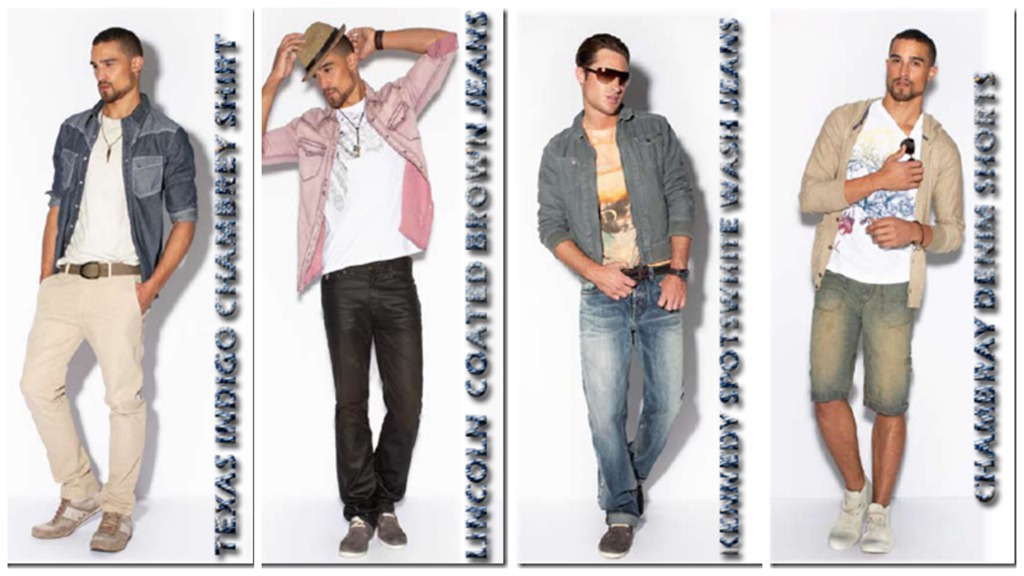
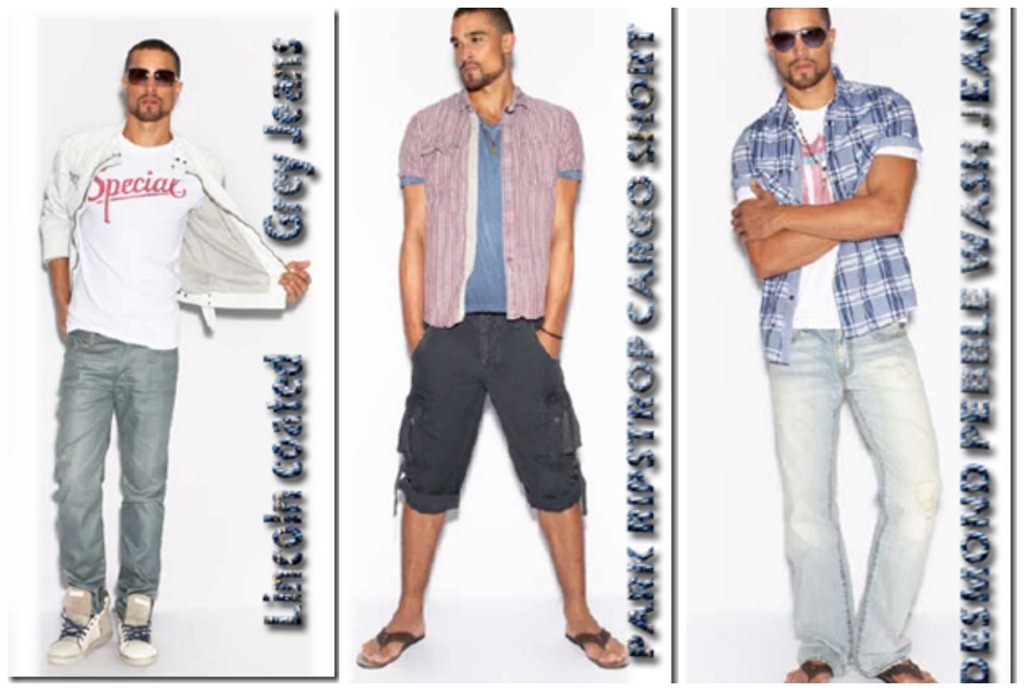
  • Denim Conference at Ahmedabad – Very Informative and Successful

    DSC05836

    The ‘International Denim Conference’ was held at Ahmedabad on 29th and 30th October and was a big success having been attended by over 500 delegates including the who’s who of the Denim Industry in India. CEOs  and Top executives of various denim companies were present at the conference and most of them gave their views on the various aspects of the Indian and world denim industry .

    Organized by Fibre2fashion.com and the Textile Association of India , the conference brought out some very interestings revelations and informations about the denim industry . Dr P R Roy – the father of Indian Denim Industry in India – and Managing Director at Fibre2fashion.com was instrumental in bringing up this conference. Some of the important  points related to the conference are summarized below :

    Comments on History of Denim

    Dr Roy informed that Indigo was cultivated and grown in India over 5000 years ago and it was used to dye cotton and wool . However, it did not see much commercialization in India till late eighties.  Denim industry was born in India in 1980s from the need to compete with the decentralized sector  and gave rise to the ‘Blue Ocean’ strategy – meaning moving to the denim sector to avoid the competition from decentralized sector. From just over 35 million mtrs produced in India in 1987 , we now have over 650 million mtrs of denim production produced by about 24 mills. 
    He also presented the unique products – Indigo Wool and Indigo Silk – from the stable of reputed denim company – Malwa Industries.

    Some Statistics on the World Denim Demand and Supply

    Keynote address was presented by Robin Anson of ‘ Textiles Intelligence’. He made an excellent presentation on how the denim is being demanded , produced , exported and imported in the last few years. The biggest denim fabric exporter without question is China which shipped fabric valued at around $920 million in 2009 to seize a global market share of 24.5 percent. The second slot was surprisingly held by Hong Kong (a large part of it probably  represents intra China – HK trade) with around $860 million and a share of 18.8 percent, Turkey with $325 million and 8.6 percent, Italy $300 million and 8.0 percent, Pakistan around $225 million and 6.6 percent, India around $180 million and 4.2 percent, followed by Japan, Spain and Brazil.
    Denim fabric imports by the US and the 27-member European Union have been plunging since 2005. From around $150 million in 2005, US imports have sky-dived to just round $75 million in 2009 and those of EU have sunk from €255 million to €150 in the same period.
    In the case of men’s jeans, the US imported around 110 million pieces from Mexico in the period Sept 2009 to Aug 2010. China and Bangladesh followed Mexico with exports totaling to around 70 million pairs, each. India stands at 14th place with exports amounting to around 1.5 million pieces in the same period and is preceded by countries like Nicaragua, Lesotho and Guatemala in jeans exports to the US. He mentioned that China was not a big threat in the denim industry since rising costs of labor and probable appreciation of Yuan would reduce the competitiveness of the Chinese fabrics. 
    A very interesting point made out by him was that China is considering connecting its backward and remote regions by high speed trains to the western Europe . If this happens over a period of next few years, it would revolutionize apparel sourcing in Europe as goods would reach from China in less than a day !!
    The global production of denim fabrics stands at about 5.5 billion mtrs currently.

    Growth in Indian Denim Industry , its Future and Growth Rates Worldwide

    A number of speakers gave details about the current situation of denim industry and its future prospects. Mr Rajiv Dayal , MD at Mafatlal Denims , mentioned that the value of denim fabric produced in India was:
    In 2005
      : Rs 46 billion (about USD 1.00 billion at  exchange rate of Rs 45/dollar) . Out of this about 70% was for domestic market.
    In 2010 : Rs 78 billion (about USD 1.73 billion ) out of which again about 70% would be for domestic market. (average price about Rs 120 per mtr or about $2.67 )
    In 2020 (projected) : Rs 220 billion (about USD 4.9 billion) and domestic market would again have a share of about 70%.  Total estimated production – 1.2 billion mtrs .
    Global denim markets have grown at about 2 – 5% over last few decades and current global fabric production of 5 billion mtrs is valued at about $13 billion (an average price of $2.60 / mtr).
    Indian Denim markets have grown at a CAGR of about 10-12 % in the last decade . The main drivers for this growth are the demographics – a population of about 50% between 15-35 years.  The domestic apparel market in India (all apparels) is estimated at about $36 billion currently and will increase to about $61 billion in 2015 and $100 billion in 2020.
    US and EU market : –1% to 5% growth expected and averaging around 3%.

    Focus on Environment – Organic Cotton

    An interesting presentation was made by Mr Mahesh of Arvind Ltd regarding the status of organic denim – demand and supply.  According to him , cotton is produced in over 65 countries and consumes over 16% of world’s insecticides – more than any other crop.  India produced over 29.5 million bales (170kg) of cotton in 2009-10  and used over 54% of all pesticides in India despite using only 5% of land.
    To counter the use of such high volumes of pesticides, Organic cotton is an alternative. The current demand for Organic cotton stands between $3-$4 billion and it outstrips supply.  
    Consumer interest in ‘Green’ products has enabled retailers like Wal-Mart, M & S , Woolworth , C & A and Carrefour to focus on and expand the sales of Organic cotton products.  C &A (Belgium) , Nike (US)  and Wal-Mart (US) are  the three top consumers of organic cotton worldwide.
    Organic cotton grown worldwide represents just 0.76% of world cotton production. This is likely to slowly increase as large increases are not possible immediately in Organic cotton.
    Organic Cotton Denim : Arvind has been focusing on organic cotton – producing 1 million mtrs in 2007 and currently manufacturing 8 million mtrs . Wal-Mart, Patagonia, H&M, C&A, Timberland, etc are the major supporters of Arvind’s organic denim initiative.

    New technologies for reducing  environmental impact

    A very interesting presentation was made by Enrique Silla – Chairman of the Jeanologia group  of Spain. He explained how water consumption can be Significantly reduced using the G2 Machines which use ozone to do the washing. This technology has a great potential for reducing the environmental impact of denim manufacturing as almost 42 litres of water are used for making one jeans. Stressing on the urgency of reducing the usage of water in jeans manufacturing, Levi’s has recently announced that it would introduce about 1.5 million pairs of jeans using 28% to 96% less water. 
    Another technology that Enrique Silla talked about was using laser  machines to get the scraping and other finishing effects on jeans. This reduces the adverse impact on humans during the finishing process . In view of the recent ban on Sandblasting by Levi’s and H & M , such technologies have a bright future.

    Impact Of Cotton Prices On Denim

    Most of the industry stalwarts expressed great concern at the rising prices of cotton  which have almost doubled in the last one year. The prices are on a 15 year high and with no sign of reducing. This has affected the margins of most denim mills and they have been frantically trying to pass this on to consumers. Mr S.K. Gupta – Director at Raymonds UCO denim raised this question in the panel discussion and this was taken up as a serious issue . Mr Sudhir Mukherjee of Arvind felt that the prices would see a correction in the near future and Mr Deepak Chiripal (CEO Chiripal denim ) felt that there was no need to panic and impose taxes on yarn exports from India . Robin Ansen of Textiles Intelligence mentioned that the final impact of increased cotton prices would be less than 5% on retail level and hence it should not be unduly worried about . Some retailers have already increased their prices by as much as 8% .  However, worries were clearly visible on the faces of denim professionals  with margins under sever pressure !!

    On Competition and Threat From Pakistan Denim Exports

    Pakistan has been ramping up its exports of denim and is currently a very strong player in the denim market. The panelists felt that the currency advantage of Pakistan played a great role in increasing their competitiveness. The latest provision of Duty advantages to Pakistan by the EU to the tune of Euro 200 million was also discussed by the panel . This would greatly benefit the denim industry of Pakistan and was  a source of increased competition for Indian industry. The panelists felt that Indian denim industry should make a joint presentation to the Govt. to take up the matter with the EU so that the industry does not suffer due to the advantages given to exports from Pakistan.

    Denim Trends and Sales in US

    An interesting presentation was made by Jeannah of Cotton Inc , USA . Some details from her presentation :

    • Most of the denim jeans are priced between $10-$39
    • 12% of consumers have purchased a jeans over $100 jeans in 2009.
    • Consumers own over 3 brands of jeans on an average .
    • Import of 569 million jeans in 2009 is second highest imports of jeans of 580 million jeans in 2005.
    • In 2010 – the figure would be much higher than 2005 figures.
    • Denim Trends for Fall 2011 and Spring Summer 2012 :
      Scout : Influence of bands, military , hunting  , uniform type aspects.  Smoky blues , Green Blues , Khaki crease and military looks, stitches etc.
      Industrial : Architecture trend related to warehouses , exposed pipes , ruptured sockets will inspire denim . Displayed by brands like G-Star, Versace .
      Influence of 30s & 40s :  Inspiration will be taken from Gangster movies from Hollywood of this period .

    There were a number of other interesting presentations including those by Darshan Mehta – CEO of Reliance Brands on the advantages of being ‘ Stupid – referring to an ad campaign by Diesel’. As a consequence of this presentation, “STUPID” became a ‘Respectable Word’  and on a lighter note, panelists referred to some industry stalwarts as ‘Stupid’ inviting laughters from the audience.  !!!!. This presentation considerably lightened the atmosphere at the conference. Another one by Chakor Jain of VF Corp – gave insights into the growth possibilities in Tier 2 and 3 cities in India with the young people demanding branded products. This augurs well for the growth of the sales of ‘Branded Jeans’ in India .

    There were still some more presentations including those  related to Denim processing and finishing but due to limited time and space, I will take them up at a later time. On the whole, the conference was very good, the atmosphere was charged and (not to forget ) the food was superb !