Author: Sandeep Agarwal

  • Indigo Dyeing With Loop Dyeing Machinery

    loop dyeing for denim

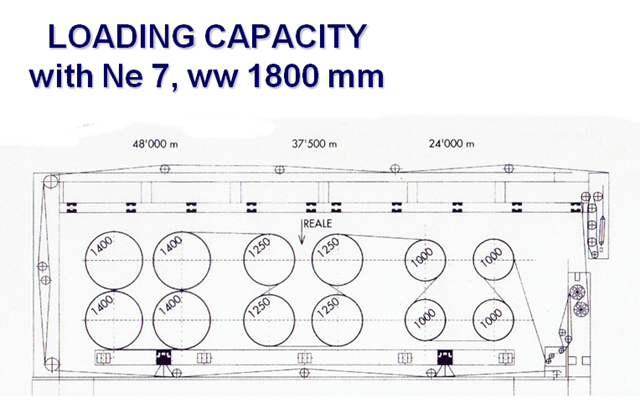
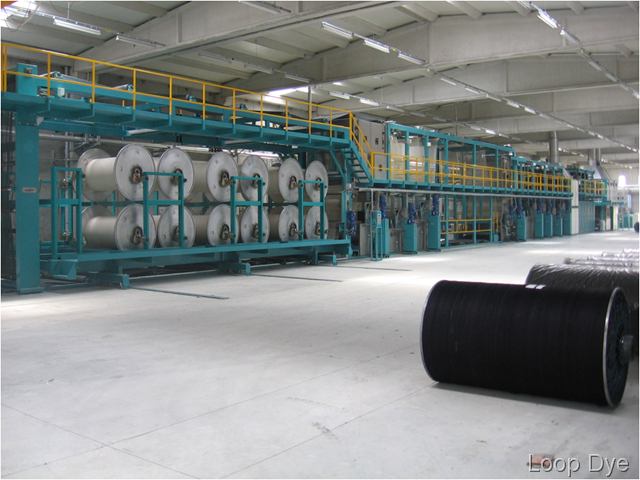
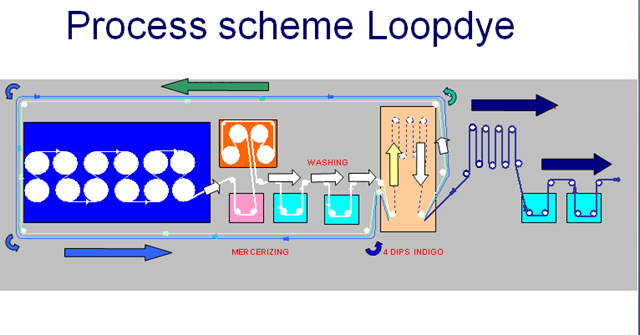
    The name “Loopdye” results from the method of skying or air passage for oxidizing the Indigo-dyed yarn and the method of passing through the Indigo dye. On the other 2 important Indigo machine types, the dyed yarn is passed through from 6-8 Indigo boxes on rope machines or 6-20 Indigo boxes on slasher (sheet) Indigo machines, multiple dye boxes being necessary for dark shades because only a small amount of Indigo can be applied in each immersion. After immersion in each Indigo dye box, the yarn is conducted through the air after each box, where the reduced Indigo (yellow-green) is oxidized or “fixed” by oxygen in the air returning to the original blue, then the yarn enters the next dye box, passes into the air and so forth until the required depth of shade is developed.

    In the case of rope and sheet ranges, this oxidation takes place above each dye box. In the Loopdye process, there is only a single Indigo box through which the yarn passes 4-5 times. The white cotton is pulled into the front of the machine and passes first through the pre-treatment boxes, then moves through a reactor which can be used for steaming or additional reaction time for sulfur- bottoming or Mercerization, followed by washing. The wet yarn then enters the Indigo dye box. When the yarn exits the dye box, instead of moving forward, the yarn is carried to the rear of the machine, around the top and rear of the yarn creel from where it started, passes under the yarn creel where it is returned to the Indigo box for another dye passage. This continuous passage of yarn between the yarn creel and the dye box is in the form of a “loop” which is almost circular. After making multiple loops through the Indigo dye box the yarn is conducted through wash boxes and on to drying cylinders. The Loopdye machine is a simplified version of a “sheet” or “slasher” Indigo machine. After drying the Indigo-dyed yarn, the yarn passes directly to sizing where the yarn is prepared for weaving. Because the sizing part of the machine must stop in order to remove a completed weaving beam, in order to prevent the dyeing unit from stopping as well, there is a yarn accumulator between the drying cylinders at dyeing and the wet-size boxes. When the yarn stops moving on the sizing unit, a series of parallel cylinders begin to move apart allowing the yarn from the dye unit to continue through dyeing and allows the size machine approximately 2 minutes of time to install an empty weaving beam and re-start the sizing machine.

    Loopdye Machines in the Denim Industry

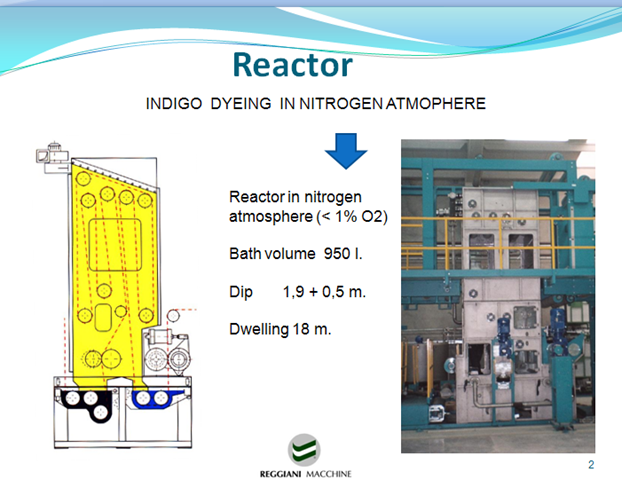
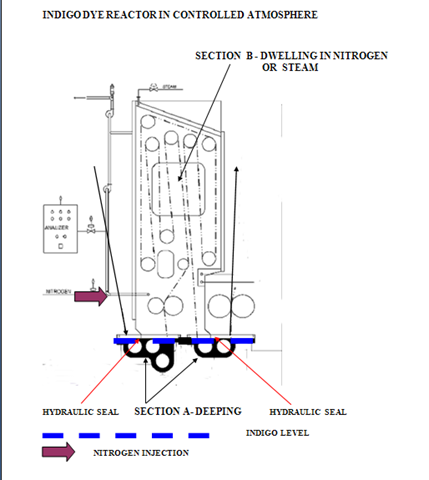
    In the early 1990’s, thee were approximately 30 Loopdye machines in use. Currently, the number is reported to be 60 or so. The biggest concentration of these machines is in Brazil. Vicunha employs 11 of these machines, Canatiba, Santana and Cedro have 2 units each, while Tavex, Tear, Textil Kafi, Santista have 1 each. There are 9 of these machines that have been equipped with nitrogen units which use nitrogen gas as protective blanket over the surface of the Indigo dye. The nitrogen gas prevents oxygen in the air from attacking sodium hydrosulfite resulting in more consistent dyeing and reducing consumption of hydrosulfite, lowering costs and pollution. There are other claimed advantages such as higher speeds and darker Indigo color.

    Advantages and Disadvantages

    1.  Productivity – When compared to a multi-box slasher machine, productivity is essentially equivalent since the yarn loading, start-up times and speeds are similar. Rope dyeing machines can produce up to 4 times as much dyed yarn.
    2. Capital Investment – The Loopdye machine has the lowest initial costs of continuous Indigo dyeing machinery, currently reported to be approximately 25% less than  8 dyebox slasher machine.
    3. Operating Costs – Maintenance and energy costs are reported to be approximately 20% lower with Loopdye when compared with slasher dyeing and even lower than with rope dyeing.
    4. Space requirements – The Loop machine with a single dye box requires less floor space than either sheet dyeing or rope dyeing. Rope machines also require higher ceilings because of the design of the airing arrangement.
    5. Indigo Dyeing Quality – The newer designs of Loopdye are reported to have little of the problems with Cross-Shade (side-to-side) shading than with slasher dyeing equipment. Indigo consistency from the start-to-finish of dyeing can be expected to be better with the inclusion of nitrogen units. Rope machines still have an overall advantage in terms of Indigo dyeing quality, but this may be overcome by employing improved chemical blending.
    6. Sulfur dyeing – The Loopdye machine can be equipped with a steamer for cold-pad sulfur bottoming which will provide greater consistency than a hot application in the 1st box. The Loop machine is not provided with enough boxes after Indigo dyeing for sulfur topping as the slasher dyeing is. With the newer methods for cold-sulfur dyeing, the Loop machine is ideal for sulfur colors since it the dye can be applied in only one box, which allows for faster color changes and less dye discarded after the dye lot is finished. Rope machines still have the greatest flexibility with regard to producing a full range of denim colors.
    7. Weaving Efficiency – The methods of dyeing, especially of sulfurs, has a direct effect on warp yarn breakage in weaving, which lowers operating efficiency as well as fabric and garment quality. Experience with the older design of Loopdye machines demonstrated higher levels of warp breaks in weaving than other Indigo machines. Rope dyeing results in the lowest-level of weaving stops, largely because yarn breaks in dyeing can be repaired at long-chain re-beaming.
    8. Versatility – In the higher denim fashion market, some companies like Vicunha have had success using a combination of Loopdye and slasher dyeing. Overall, the slasher dyeing with its greater number of application boxes offers more flexibility in product development, while rope dyeing provides the greatest flexibility for denim product development.
    loop dyeing

    loop dyeing indigo

    loop dyeing

    image

    nitrogen reactor loop dyeing

    For more information on the Loopdye process, contact Mr. Attilio Frescura and for informartion on advances in sulfur dyeing on Loopmachines  contact  Harry Mercer

    imageThis is a guest post by Harry Mercer. Mr. Mercer has 30 years experience in the denim business including 3 prominent U.S. denim companies. He is an expert colorist for measurement and color matching as well as textile testing.

  • Worldwide Denim Jobs At Denimsandjeans.com

    jobs1

    As we had previously mentioned, we have come out with a jobs section the site . This section enables readers to find the COOLEST denim jobs around the world at one place.  These include jobs from US and other places in the world. There are separate search options for jobs in Italy, India, UK , Canada, Australia etc.
    Our jobs section is constantly updated so that the freshest of jobs are visible .  Besides  , we now have a job listing feature where companies can list their jobs related to Denim Industry and these jobs can be seen by the top denim professionals through various mediums that we promote them including our groups Linkedin , through Google and other places.

    To know more details about our jobs section , you can  contact here

  • Denim Trends – Fabrics, Styling and Wash Trends for Fall 2010 and Summer 2011

    • What are the latest hot trends in Denim for this Fall and Spring/ Summer 2011 ?
    • What kind of denim fabrics are in demand by major brands ?
    • What kind of styles and silhouettes are moving the most and how are they affecting the fabric constructions and washing ?
    • What kind of washes and finishes on Denim are in demand and what kind of fabrics might be required to meet these finishes ?

    Too many questions  !! But we tried to provide an answer in a presentation on denim trends . It covers the denim trends in fabrics , silhouettes and washing/ finshing for the coming two seasons.  This trend report was also presented in the Annual Textile Convention of  The Mexican Textile Industry – held at Puebla .

    The trend report has been given below .

    Look forward to some more trend reports on denim being published shortly !

  • Denim Finishing – Fabric Processing Principles For Higher Quality And Profits

    finishing tips

    This is a guest post by Harry Mercer. This is a part of the  presentation that he made in the denim seminar held recently at Mexico  . It gives various tips about getting better quality denim fabrics by taking care of parameters at finishing stage.

    Why Is Finishing Quality Critical?

    Denim finishing is critical to profits in that customers who pay the highest prices are very demanding with regard to shrinkage differences between and within fabric rolls. These customers will accept fabric that is with 0-4% shrinkage, but with no more than 0.5% difference in one shipment.

    Challenges In Denim Fabric Finishing

    • Control of shrinkage between fabric rolls and within rolls is more difficult than with other fabrics.
    • The heavy weight, twill denim construction is dimensionally unstable after weaving.
    • Denim has high shrinkage after weaving, which requires very high compression(12-15%) at Sanforizing which can be difficult .

    Why Fabric Shrinks ?

    • Tension that is applied to cotton yarns in weaving results in yarns being stretched beyond their “natural length”.
    • When the denim garment is washed, water and agitation relax the yarns and they are returned to their minimal length.
    • Variations in tension at weaving produce variations in fabric shrinkage.

    Denim Finishing Process

    • In basic denim finishing, fabric arrives from weaving directly, without de-sizing, and is brushed to remove contamination, singed with flame to make the fabric smoother by reducing hairiness, padded with a simple recipe, passed over a pair of skew rolls to reduce fabric torque which causes skew movement and then dried.

    Finishing Recipes

    The basic objectives for a denim recipe are:

    • Provide lubrication for quality Sanforizing – Improve stability in garment cutting by the application of a stiffening agent.
    • Including a sewing lubricant to save the customer money with sewing needles and to reduce damage from needle burn.
    1. Sanforizing Lubricant

    • The Sanforizer mechanically pushes weft yarns together, which reduces shrinkage.
    • This mechanical shrinkage requires a high degree of friction between the rubber belt  and the denim.
    • A Sanforizing lubricant is necessary for the shrinkage to be consistent.

    2.   Sewing Lubricants

    • During the garment forming, the needles used for sewing become hot because of friction.
    • This heat damages the needle and can also produce holes in the garments.
    • A sewing lubricant reduces needle costs and results in better garment quality.
    • The garment cutting is also improved.

    Stiffening Agents

    • Also known as “hand-builders”, these are necessary to stabilize the fabric during fabric cutting to avoid “snapback”.
    • Snapback occurs when the weft yarns are stretched during cutting, then as the cutting blade moves up, the garment panel shrinks to a width smaller than planned, which produces a distorted garment.

    Finishing Chemicals

    • A non-ionic, fatty-acid softener based on stearic acid produces the best Sanforizing (8 grams of 100% softener per kilogram of fabric)
    • Polyethylene-based sewing lubricants are best. ( 2 grams of 100% per kilogram)
    • 40 or 90 fluidity tapioca starch is the best hand-builder used for denim.

    Finishing Procedure

    • Basic denim finishing chemicals should provide improved fabric surface effects for Sanforizing, cutting and sewing.
    • The finishing chemicals should not penetrate into the fabric, so no heat is required and no wetting agent is necessary.
    • For uniformity of chemical application, a wet pick-up of at least 70% should be used.

    Sanforizing Denim Fabrics

    There are 4 variables that are critical for shrinkage, fabric defects and elongation:

    1. Temperature

    2. Moisture

    3. Quantity of Pressure

    4. Time of Pressure

    1.Critical Temperature

    There are 3 critical temperatures:

    1. The temperature of the steam-heated cylinder which heats the rubber-belt.

    • If this temperature is too high or too low, the surface of the rubber-belt is not able to provide consistent compression.
    • Generally, cotton fabrics are processed easily between 105 and 125 degrees C.
    • Heavyweight denims which arrive from weaving with 12-15% potential shrinkage require about 140 degrees.

    2. Temperature of the Palmer Unit for drying the denim.

    3. Temperature of the fabric as it enters the rubber-belt.

    Fabric that is both hot and moist is easier to compress.

    • For heavyweight denim, 14% moisture and 80 degrees centrigrade provides adequate fabric elasticity.
    • For the best control, fabric moisture should be controlled by spray and cooling water at the Sanforizer, followed by heating before the rubber belt.

    2.Sanforizing Moisture Control

    • A general rule is that for each oz/square yard, 1% moisture should be applied. For example, for a 10 ounce fabric, 10% moisture.
    • Most denim finishing is now on the “integrated range. Moisture is controlled by the drying cylinders on the finishing machine, then fabric passes directly to the Sanforizer.
    • A final moisture of 4-5% is necessary in order to stabilize the fabric compression.
    • If the moisture is higher, the fabric will elongate which increases final shrinkage.
    • If the moisture is lower, the denim will elongate after absorbing moisture from the air.
    • Sanforizers require consistent steam pressure and should be located close to the steam source.

    Separate Sanforizing

    • In separate Sanforizing, the denim is dried to about 6% moisture by the dyeing cylinders on the finishing range.
    • Then the fabric is transported to the Sanforizer where the correct amount of moisture is applied by water sprays and by the cooling water for the rubber belt.
    • This system usually provides better control.

    3.Pressure (% of Compression )

    • Sanforizing is a form of “mechanical shrinkage”.
    • If a fabric has 12% shrinkage with 20 weft yarns/cm and 3% at 22/cm, then 10% compression by the rubber belt will result in the weft being pushed together which increases the weft yarns from 20-22/cm and reduces the shrinkage by 10 points.

    4.Time Of Compression

    • Denim has a very high % of shrinkage as it arrives from weaving up to 15%.
    • The heat, moisture and time of pressure determine the control of shrinkage. – The time of pressure is determined by the speed of Sanforizing.
    • Heavy denims should not be Sanforized at more than 35 meters/min. Slower speeds result in better control.

    Conclusion

    • Denim finishing is the most difficult of all apparel fabrics.
    • Control of fabric quality requires a higher level of control which begins at weaving
    • The moisture and temperature must be monitored and controlled at each step.
    • Sanforizing is more complicated than it appears and requires the most attention.

    For those who are interested in having deeper knowledge on denim finishing could perhaps check a new Denim Finishing Manual from Bozetto  called “Bozzetto Denim Finishing Handbook" – which provides indepth information and tips on denim finishing. Harry Mercer has been an important contributory to this manual .  This manual can be requested from Mr. Giacomo Mussetti  at giacomo.mussetti@bozzetto.it

    This is a guest post by Harry Mercer. Mr. Mercer has 30 years experience in the denim business including 3 prominent U.S. denim companies. He is an expert colorist for measurement and color matching as well as textile testing.
  • Arvind Mills Plans A Denim Plant At Bangladesh

    arvind bangladesh

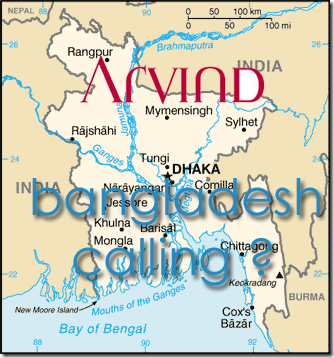
    Arvind , the largest denim company in India with a capacity of about 110 million mtrs , is planning to set up a manufacturing plant in Bangladesh in a 80:20 joint venture with Nitol Group of Bangladesh . The planned investment is about $69 million over a period of three years. In the first phase, a plant of 10 million mtrs would be set up with an investment of about $25 million and then it will be scaled up in the coming years.

    Why Arvind Wants To Put Up  A Plant In Bangladesh ?

    There are just too many reasons to justify this move by Arvind. In fact , there could not be a better place  for Arvind to go for to set up a new plant for denim.

    • It is a Huge Market and consumes almost around 300 million mtrs of denim p.a out which about 100 million mtrs is imported . We have seen a number of new denim plants been set up in Bangladesh in the last few years and this has taken the domestic production capacity up to 200 million mtrs.
    • Bangladesh enjoys the GSP benefit to the EU ie the garment exports from Bangladesh to EU are duty free . This provides a huge benefit to the local industry in Bangladesh – a benefit Arvind aims to tap.
    • Bangladesh was the top export performer in the EU market in 2009 with a 6% growth whereas most of other countries suffered a fall in exports to EU to global recession. Bangladesh exported a total of Euro 5.9 billion worth of goods (over 90% were garments) to EU.
    • Bangladesh exported a total of about 89.6 million pieces of jeans to EU in 2009 against only 8.1 million pieces from  India .

    There are significant cost advantages in Bangladesh as compared to India. These relate to labour  costs, power costs and cost savings due to efficiencies of scale. Eg, the power cost in the Comilla Export Processing zone  ,where Arvind will set up its plant , is about Taka 4.18 /kwh which translates to about Rupess 2.69 (about 6 cents) . Compare this with the cost of power that Arvind is currently incurring– Rs 3.8/kwh at Naroda plant and Rs 4.7/kwh at its Santej plant (about 8.5 to 10.5 cents/kwh). There will thus be a saving of about 30% in power costs alone. The labour, overheads and freight costs would be some of the  other categories where Arvind would save substantial costs.

    The lower costs in Bangladesh are one of the reasons why the average price of export of Denim Apparel from Bangladesh was  Euro 4.17 in 2009 as compared to Euro 9.46 from India . The difference is Huge ! .  In all likelihood, Arvind will go for a forward integration for export of garments from Bangladesh and aim to utilize all its fabric for own orders. This will mulitiply the gains accruing to it .

    All the above mentioned factors and more have contributed to Bangladesh becoming a favourite destination for denim garment exporters and encouraging the denim major Arvind to set up base there .

  • 1000 Denim Professionals Connected – First Milestone !

    1000 subscribers copy
    We are pleased to announce that Denimsandjeans.com has reached the first milestone of 1000 subscribers . On this occasion , WE WANT TO THANK ALL OUR SUBSCRIBERS FOR BEARING WITH US 🙂 .
    I think it would be in place to give some details about our subscribers  . Most of them are professionals from :

    • Denim Brands in US and Europe including large retailers .
    • Denim Mills in US, South Amercia,  Turkey, India , Pakistan , Hong Kong etc.
    • Denim garment exporting companies from Bangaldesh, Hong Kong, India, China , Vietnam , Turkey etc
    • Denim Machinery manufacturers.
    • Some research and media organizations.

    What does this number of 1000 mean ?

    It means that every article that we create goes (complete)  to all these people who are situated in various areas of the world and connected by the common thread of  the word ‘ Denim’ .  The increasingly higher profile of our subscribers and readers inspires us to come out with even better articles and information. We try to reach out to various parts of the denim industry worldwide and bring out interesting information for our readers. 

    Need to thank more people

    Denimsandjeans.com is  a free service and we will want to keep our regular report section like this . However, since running site needs financial support, we depend for the same on our sponsors/advertisers. We would like to give  ALL our advertisers a  BIG THANK YOU.  I would like to mention in particular about a couple of our advertisers :

    1) American and Efird : Is one  of the world’s foremost manufacturers of sewing threads and industrial yarns, A&E’s global presence extends from Asia to Europe to the Americas. It specializes in Denim yarns with various innovative products like Perma Core® NWT , D-Core® NWT – which are used in garments made for most reputable brands.

    2) Morrison Denim Systems : The famous company manufacturing Rope – Dyeing Machines which are installed in almost all the major denim mills around the world . It also manufactures Ball Warpers and Rebeamers.

    What Else ?

    We would also like to thank our Guest Writers who regularly bring their valued knowledge through the submission of their articles. In particular , I would like to thank Harry Mercer , Rik Vannienwenborgh and Saurabh Rai. We are fortunate to have a large number of other readers who regularly visit our site for information on denim world . These are people who love our site and regularly give us feedback to us .  Its also great to know that Google indexes our articles very well and top lists them so that  a large number of people who are looking for information on denim reach our site .

    So what’s ahead

    We plan to increase the quality and quantity of our reports so that we can cover more and more of the denim world . We have an ambitious target of reaching All The Denim Professionals In The World and in this we need your help . If you could send the following to your denim contacts  , it would be really nice and enable more people to know about and benefit from our site.

    “Denimsandjeans.com is a cool site on denim industry with regular reports , news and trends being published. You can subscribe to it FREE by entering your email address at the page which opens from this link – Click Here.”

    So we once again thank all of you for Reading , Appreciating and Contributing to our site and we look forward to your continued participation. THANKS.

  • Talking About Kaihara Denim Mill And Uniqlo Jeans

    image Telegraph UK has come out with an interesting report on Kaihara Denim Mills and Japanese denim . Japanese denim always draws rave reviews about its quality and methods of production which makes it stand apart from other mills around the world. Japanese denim has always been fascinating the denim world due to its great quality, selvedge weaves (on old shuttle looms) and passion for perfection  that goes as a very important ingredient . But the  report from Telegraph comes out with some interesting facts about Kaihara and Japanese Denim Brand ‘Uniqlo’  which also produces its premium denim range at the same location.

    • Kaihara denim mill was started in 1893 to manufacture Indigo Kimonos. For those who are not aware – Kimono is a Japanese traditional garment worn by women, men and children.
    • Kaihara uses a large quantity of  Pima cotton from US as it is one of the best cottons in the world. This would come as a surprise for many other denim mills as Pima cotton is hardly used for denim  due to its high cost. However, if a top of the line product has to be made, the ingredients have to go in accordingly !.
    • Rope dyeing technology is used in the manufacture of denim. 
    • Uniqlo jeans are also manufactured in Bangladesh and China to keep the costs down. So what happens is that the jeans made from the best denim mill are available at reasonable prices (eg starting from $39.50 in US !)  . So where on the one hand , most premium denim brands are available at prices of &100 and above, Uniqlo manages to bring out jeans made from a great denim fabric at a very reasonable price – making it affordable for masses.

    The constant barrage of information on Japanese denim has increased the awareness amongst consumers about the importance of fabrics in the jeans. This has also partly helped a brand like Uniqlo to sell its jeans . The report mentions that Sam Lobban, the menswear buyer at Selfridges, attributes this to an increased awareness among savvy buyers of authentic fabrications.

    “What really makes Japanese selvedge so superior is the depth of colour – the specialist washing techniques take to selvedge denim better to give a more 3D and rich colour.’ Just as important as the finish is the shape of the jean. ‘Selvedge denim tends to be on a more "regular" fit,’”Lobban says.

    Something About Uniqlo

    It would be in place to say something more about this important Japanese retailer . Uniqlo is a  blend of the words "unique" and "clothing" – and 3-4 years ago , it would’ve meant nothing to anyone but the exceptionally well-travelled. The Japanese chain launched itself into the UK in November 2007 by opening two huge new stores in one day (it was actually a relaunch; it tried first in 2001 but scaled back). Since then, its popularity in Britain has exploded. In the midst of the worst recession in Britain since the Second World War, UK sales since Christmas have been up 140 per cent on the same period last year Worldwide, the store says it sells 400 million items a year.

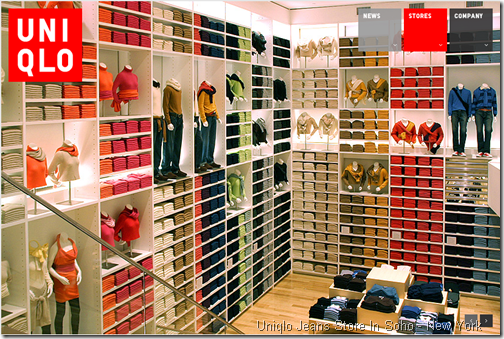
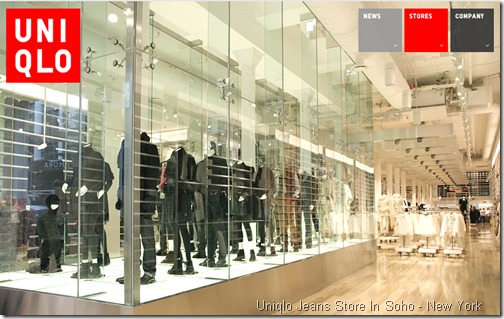
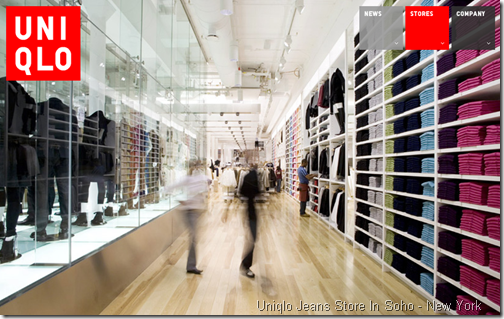
    Its New York store in SOHO (the only store in US)  is their largest store anywhere in the world with a huge  89000 sq feet of space and an unbelievable  rent of $20 million a a year .

    Uniqlo Jeans Store In Soho - New York Uniqlo Jeans Store In Soho - New York Uniqlo Jeans Store In Soho - New York

    Uniqlo already has a prescence in the Chinese market with about 47 stores and has just entered the Russian market. It is eyeing Indian market and is sure to make an entry within an year or two . With the kind of quality of jeans it has, it is surely going to give the existing players (including Levi’s) a run for their money.

    Working with over 100 factories throughout Asia, UNIQLO is distinctive in that it combines the quality and craftsmanship that is synonymous with Japanese culture with the ability to manufacture in high volume, thereby offering consumers affordable everyday products with exceptional attention to every detail. For this reason, UNIQLO’s can offer its customers denim from the same denim fabric mill used by many high-end denim brands at a substantial savings. And if you are looking for some customer reviews on Uniqlo, here are some.

    It would be interesting to see the prices of some other Japanese denim brands when we are talking about Uniqlo. These prices were posted in our previous post on Blue in Green Soho – Japanese Denim Shop

    Denime – $298-$325
    Eternal – $255
    Evisu Japan – $240-$385
    Fullcount & Co. – $275-$330
    Momotaro Jeans – $250-$315
    Oni Denim – $185-$585
    Paul Smith Japan – $325
    Pure Blue Japan – $169-$559
    Samurai Jeans – $275-$665
    Skull Jeans – $240-$350
    Somet – $210-$295
    Studio D’Artisan – $265-$620
    Sugar Cane & Co. – $265-$370
    Sunrise Japan – $348-$358
    The Real McCoy’s – $248-$368
    Warehouse Co. – $245-$275

    JAPANESE DENIM

  • International Denim Conference Being Held At Ahmedabad – India

    Denim Conference 

    An international conference on Denim is being held at Ahmedabad – the denim capital of India- on October 29th and 30th, 2010 . Organized by Fibre2fashion and the Textile Association of India  , the conference will have the who’s who of India’s denim industry as well as a number of overseas delegates in attendance – making it a very interesting event  for the denim industry professionals to learn about the intricacies of Indian denim industry  as well as for networking.

    The conference shall be chaired by Dr P. R . Roy  – the  Ex- Chief Executive of Arvind Mills (also known as the father of Indian Denim Industry )  and and shall have a number of speakers from the  industry . Some details on the  topics and discussions at the conference :

    Inauguration & Keynote Address:

    Topic Speaker
    Strategic Issues in managing Global Denim Business:
     Sanjay Lalbhai,* CMD, Arvind Ltd.
    India’s potential in the International Market for Denims & Jeans vis-a-vis China, Bangladesh, Pakistan & Srilanka. Robin Anson, Managing Editor, Textiles Intelligence, UK

    Other Speakers

    Topic Speaker
    Global Brands entry into emerging Indian Market Shumone Chatterjee – Head Marketing, Levi’s  ( Asia Pacific Region)
    Premium Denims & India – Branding & Retailing Darshan Mehta – CEO, Reliance Brands
    Overview of Indian Denim Business Rajiv Dayal – MD, Mafatlal Denim
    Panel Discussion on Jeans* Chaired by J Suresh – CEO, Arvind Brands
    US Denim & Jeans Industry Jenna CaccavoCotton INC, USA
    Functional Denims Prof. Yi LiHong Kong Polytechnic, HK
    Overview of Indian Jeans Business Chakor JainVF Corp
    Organic Cotton & Denims Mahesh & Alok Dubey – Arvind Ltd
    New Product Development in Denims Dr. PR Roy, Dr. JJ Shroff & Mr. MK DebMalwa Group
    Marketing Strategies of Indian Denim Players to compete Rajesh Narkar – Malwa Group
    Sustainable Denims Manish Basle – Dystar
    Garment Finishing Sai Prasanna – Dystar

    List of sponsors include companies like Arvind Ltd , Levi Strauss Aarvee Denims , Malwa Group , Mafatlal Denims  , Chiripal Group , Suryalakshmi , Bhaskar Denims , Jupiter Comtex , Raymond Uco Denim , Dystar , Kunal Organics , LNJ Denims , Jaytex , Toyoda , Morrison , Tsudakoma etc.

    The conference will be held at Indian Institute of Management – the premier Management Institute of  India .  For more details on the conference , contact :

    Nirav Shah : nirav.shah@fibre2fashion.com or visit

    image 

    About the Organisers :
    Textile Association of India : TAI – Textile Association (India), is a large professional body and has membership from top executives, textile manufacturers and technocrats from the textile and allied sectors with 27 units spread over all major textile hubs in the country. The Ahmedabad Unit is the second largest with more than 4000 members. Seminar, Lectures, Group Discussion, Road Show and organizing conferences and exhibitions are some of the major activities undertaken  by the Ahmedabad unit of TAI.
    Fibre2fashion : Fibre2Fashion is the worlds largest B2B platform for global Textile  industry. It updates about  the latest developments taking place globally in the textile, apparel and fashion industry.Fibre2fashion strategically facilitates the sourcing and marketing requirements for the Textile & Apparel Industry.

  • Denim Seminar: Improved Denim Manufacturing in Dyeing and Finishing

    Improved denim manufacturing

    An important seminar on denim manufacturing is scheduled to take place in Puebla –Mexico on September 23rd and 24th 2010. The Mexican Textile Institute will be sponsoring the  seminar titled "Improved Denim Manufacturing in Dyeing and Finishing" .

    Topics include:

    • Denim Finishing Techniques for Highest Quality and Profits;
    • Chemistry and Application of Sulfur Dyes in Denim;
    • Denim Product Development Techniques;
    • Chemistry of Indigo Dyeing,
    • Special Dyeing Techniques,
    • Design of Indigo Dyeing Machinery;
    • Garment Finishing Techniques for High Fashion, Advances in Warping and Re-beaming.

    Given below are some  details of the presentations at the seminar .

    YARNS AND FABRIC CONSTUCTIONS FOR DENIM PRODUCT DEVELOPMENT

    Fiber selection, fiber blending, spinning, warping and weaving considerations for special effects and higher quality and efficiency.

    (30 minutes)

    DENIM YARN PREPARATION

    Covers the technical aspects of ball-warping and re-beaming with a review of the latest advances in these processes.

    Power point presentation courtesy of Morrison Machinery.

    (30 minutes)

    CHEMICAL ASSISTANTS FOR DYEING AND FINISHING DENIM

    How to select chemicals for superior results.

    • Includes laboratory evaluation and production applications.
    • Advises on chemical types of products that provide the best quality at lowest costs and commonly-used textile chemicals that should be avoided.
    • Surfactants including wetting agents, dispersants, soaping agents and how to evaluate and apply them.
    • Sequestrants for improved pretreatment, dyeing and washing.
    • Oxidizers for sulfur dyeing
    • Reducing agents usable in Indigo and sulfur dyeing
    • Softeners used in dyeing and finishing, with emphasis on cationic versus non-ionic types.

    (30 minutes)

    INDIGO DYEING

    The chemical mysteries of Indigo Dyeing are explained in detail with the best methods for controlling reactions between Indigo, sodium hydroxide and sodium hydrosulphite including improved mixing procedures, the effects of time and temperature, methods for measuring and correcting the concentrated feed mix and calculations useful for Indigo dyeing.

    • How Indigo dyeing is affected by temperature, humidity, yarn tension and barometric pressure is discussed.
    • Correction of common dyeing problems of color variation from start-to-finish and from side-to-side.
    • Product development techniques In Indigo dyeing including specific chemical pre-treatments, controlling dye penetration into fibers and yarns, use of alkaline and reductive buffers, producing dark denims with 1.0 to 4.0% Indigo and light denims with from 0.1 to 0.8% Indigo.
    • Practices for higher weaving efficiencies and lower pollution.

    (90 minutes, should divide into 2 parts)

    SULFUR DYEING FOR DENIM

    Discussion of the chemistry of sulfur dyes, the advantages and disadvantages of using sulfur dyes.

    • Methods are discussed for dyeing the darkest and most colorfast sulfur blacks with less dye and very low pollution as well as dyeing light shades with single sulfur dyes (grey, blue,brown, green, red) and sulfur dye combinations (khaki, violet,orange,turquoise etc.)
    • Problems and solutions for dyeing bottoms and tops. Explains why commonly-used bad practices in sulfur dyeing regarding temperature, pH, reduction and oxidation result in excessive costs, unnecessary pollution, low colorfastness, consistency and low weaving efficiency

    (60 minutes)

    DENIM FINISHING

    Explains why denim is the most difficult cotton fabric to finish, especially in regard to control of shrinkage.

    • Provides strategies for controlling shrinkage to within +/-0.5%, improving fabric yield in order to increase profits and reduce color variation in Sanforizing.
    • Discusses causes and corrective actions for all common denim finishing defects and how to develop optimal finishing recipes for highest fabric quality and lowest finishing costs.
    • Included are advances in denim product development with regard to flat-finishing, resin finishing, stretch denims and special appearance effects.

    (60 minutes)

    A. Frescura, Jaeggli Mecanno Tessile, Italy.

    Manufacturer of Indigo dyeing machinery who will discuss design features of Looptex, slasher dyeing and rope ranges including nitrogen systems, circulation systems, dye preparation and sizing machinery.

    (45 minutes).

    Giacomo Mussetti, Bozzetto Fine Chemicals Italy

    will explain the types of chemicals recommended for Indigo dyeing. Discussion includes the technical aspects of wetting agents, sequestrants, oxidizers, fixatives, and dispersants.

    Maurizio Morosini, Garmon

    Will explain advances in specialty chemicals for denim laundries that market to the highest denim fashion sectors. Demonstrates examples of unusual effects of denim garments including 3-dimensional effects and other exciting appearance effects.

    Besides, the organizers mention that  there are a number of  valuable methods for increasing denim profits that they will  reserve for a separate meeting for any denim executives that are present.

    Presentation materials available in Spanish and English. There  will also be  simultaneous translation from English to Spanish in site for those who could needed .

    Those who cannot attend the seminar can also view the same through the web . The organizers shall provide the facility for the same to companies.

    For details contact

    Miguel Andreu at  maandreuster@gmail.com

    Instituto Textil Nacional, A.C.
    23 Poniente No. 920, Col. Centro . CP 72,000Puebla, Puebla. MEXICO. T el (52-222-243 1525)

  • 7 for all Mankind Sale – Few VIP Passes Available !

    7 for all mankind jeans sale

    Most of us know and love Sevens Jeans. They are the pioneers in the premium denim segment and have won millions of hearts. with their great jeans – fit , finish , fabric et al.

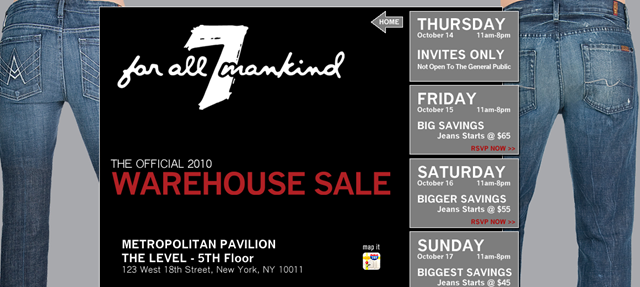
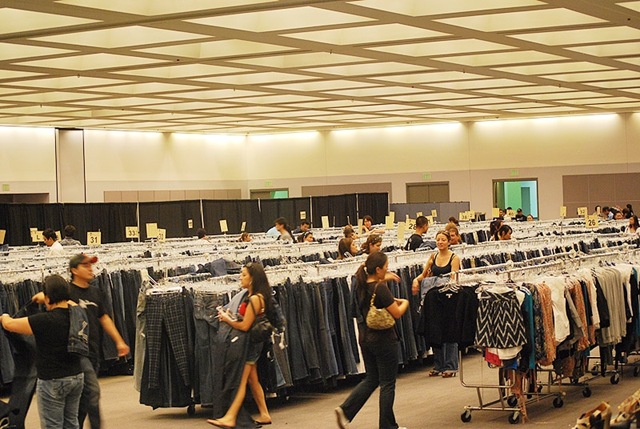
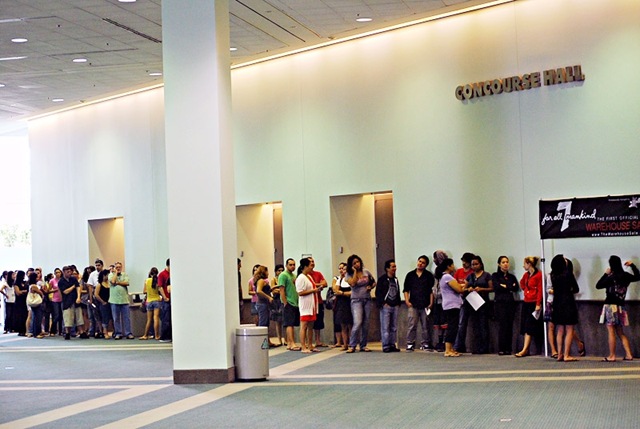
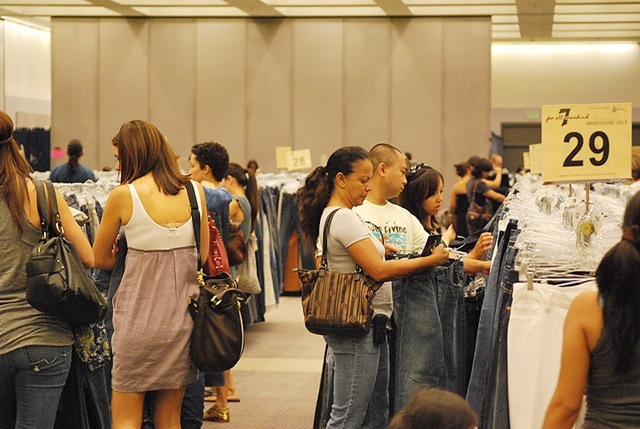
    7 for all mankind denim jeans sale Sevens , now owned by VF , came out with their first sale last year . There were over 10,000 people who went to the sale and it was a huge rush with long queues outside the venue . The second sale is now due in a couple of weeks  and if you are a denim lover , this  is not an event to miss.

    Warehouse people, who are organizing the sale , were kind enough to offer VIP passes to our readers . These passes basically give access to the sale on the first day when very limited number of invitees are allowed in and you might even find some celebrities in the ‘Denim Lounge’ .

    Our readers can get 10 VIP passes for the New York Sale and 10 VIP passes for the Los Angeles Sale . To get a VIP pass, just leave a comment below with your email address and also the city name (New York or LA) for which you need it and we will ensure the pass reaches you . PLEASE LEAVE YOUR COMPLETE FIRST AND LAST NAME AND IT WILL BE ENTERED IN A LIST NEAR THE DOOR TO THE SALE..Remember, it is on a First Come First Served basis . So , be fast and do not be left standing in the long queues as people were last year .

    7 for all mankind denim jeans sale

    7 for all mankind denim jeans sale

  • Sandblasting Abandoned By Levi’s and H & M

    Levi’s and H & M have announced that they will no longer place orders for sandblasted garments (included jeans) due to the health hazard they pose.

    image Sandblasting has been used by the clothing industry to give some products (specially denim jeans ) a worn look but the process, if done incorrectly, it can expose workers to crystalline silica, a compound found in sand. Crystalline silica has been classified as a human lung carcinogen, according to the Occupational Safety and Health Administration. Dust can enter the lungs and form scar tissue, reducing the ability of the lungs to take in oxygen.

    “We’ve implemented rigorous standards for sandblasting in our own supply chain but we decided that the best way to help ensure no worker — in any garment factory — faces the risks associated with exposure to crystalline silica is to move to end sandblasting industrywide,” said David Love, senior vice president and chief supply chain officer at Levi Strauss & Co.

    Scientists, unionists and some nongovernmental associations, particularly in major manufacturer countries such as Turkey, India and China, say the widespread technique causes the lung disease silicosis.

    Though both companies had procedures in place to control the sandblasting procedure, they decided not to depend on their suppliers to follow them and rather decided to abandom the technique altogether .

    “H&M has had health and safety requirements for sandblasting for several years. Like all other Code of Conduct requirements, the monitoring of sandblasting practices has been part of our extensive Full Audit Program,” said Karl Gunnar Fagerlin, production manager at H&M, according to a report on the firm’s official website. “At the same time, [ensuring] that these standards are being observed by all of our suppliers and their subcontractors has proven too difficult. In order to make certain that no worker producing denim garments for H&M risks his or her health, we have decided to quit purchasing and retailing sandblasted products,” he said.

    “There are other ways to achieve a worn finish,” the release by Levi’s said. “We’re confident our customers – no matter how they like the finish of their jeans – feel the same way.”

    I think it is a very welcome move by Levi’s and H & M. We have seen incidences of problems caused to health of workers in countries like Turkey , India and China . It is only hoped that the denim industry as a whole would abandon Sandblasting as there are way many other options available today to get similar effects.

  • Exports Of Denim Fabrics and Apparel From Turkey To USA 2009-2010

    Turkey is an important country for denim products – both as an importer and well as an exporter. As an importer, Turkey imports a large amount of fabrics from various Asian countries including India, Pakistan, Indonesia, China etc. As an exporer, Turkey is one of the most important exporter of Denim garments to EU. It has a special relationship with Italy and Turkey has imbibed a lot of Italian denim designing techniques – besides developing their own. 

    When it comes to US, Turkey has seen a mixed relationship . Whereas the exports from Turkey to US were quite strong , exports of denim jeans   have seen a fall in the recent times as US increased its imports from countries like Bangladesh, China , Vietnam, Cambodia etc.  However, it was quite interesting to note that the exports of denim fabrics from Turkey to US jumped more than 75% in the first six months of 2010 (Jan-June) as compared to same period in the last year .

    Exports of Denim Fabrics
    to USA  2009 – 2010

    Year Quantity  (million sq mtrs) Quantity (million mtrs @ 160cm width) Average Price
    (USD/mtr at 160 cm width) CIF
    2009 (Jan- June) 0.975 .609 7.35
    2010(Jan – June) 1.717 1.07 7.16
    Change + 76.1 % + 76.1% -2.35%

    Though the total exports of denim fabrics from Turkey to US are still miniscule at about 1 million mtrs p.a , the average prices at which they are exported are quite good indicating  . Denim jeans production in US is confined to making expensive premium denim and they require good denim fabrics in small quantities and it is to this market that Turkish denim exporters are catering partly.

    Lets see how the exports of denim jeans and other garments from Turkey to US fared during the last one year .

    Exports of Denim Jeans and other Denim Garments to US 2009-2010

    Year Quantity 
    (  pieces)
    Value  in Million USD Average Price per pc (USD)
     
    2009 (Jan- June) 2,40,000pcs 3.879 16.16
    2010(Jan – June) 3,60,000 pcs 5.685 15.79
    Change +50 % + 46.6% -2.29%

    Again the market for Turkish denim garments in US is very small. The reason is probably the prices at which Turkey is able to export its denim jeans . Whereas US imports denim jeans from around the world at an average price of $71.5 ( in 2009) , Turkish prices are averaging about $16 . Turkey is basically catering to a small segment of garment importers who do not want to produce in US and still need to make high quality garments with prices that are much lower than that of Japanese denim or Italian denim . But the trend of exports of Denim fabrics and garments to US from Turkey aligns with the general trend of imports of these products into US. There has been a general increase in imports of denim jeans and fabrics into US indicating a strong trend in denim consumption .