Author: Sandeep Agarwal

  • Artistic Fabric Mills – An Innovative Denim Company From Pakistan

     image Pakistan had always had a strong textile industry due to historical reasons and an  abundance of cotton fibre grown in the country . However, the denim component has been developing the fastest in the last decade – with Pakistan touching almost 350 million mtrs of denim fabric production p.a. There are many players in the denim industry of Pakistan  , but some of them like Artistic Fabric Mills/ Artistic Garment Industries  stand out due to their innovative approach  . We thought it might be a good idea to speak to the owners  of the group – Mr. Javed Ahmed  and Mr. Iqbal Ahmed-  to know more about their companies and about Pakistan Denim Industry in general.

    Tell us briefly about the history of the company.

    Artistic has been a pioneer in the textile industry of Pakistan. It all started in 1949 with an enterprising man and his dream to own mills one day.

    In the last 60 years, with this vision the company expanded from a small retail shop to establishing many garment factories. The Artistic group has come a long way since its initiation. The 1990’s saw the first venture into the denim field. Vertical growth took new meaning and denim-weaving plants were set up. Artistic Fabric Mills (AFM) and Artistic Garment Industries (AGI) have recently expanded to become a fully vertical set up and are together one of the leading manufacturers of high fashion denim fabrics and garments in the region, offering high end customers innovative products, premium quality and efficient service.

    Presently, we have doubled our Fabric capacity with the help of our new Denim Mill -AFM 2, which has a 36 Rope Indigo Dyeing Technology. We will be looking to produce 40 million meters of Premium Denim Fabric annually in addition to 12 million Garments from our garment set-up, which includes an in-house State-of-The-Art laundry.

    Why did Artistic Garments choose denim as an area of growth ?

    I guess you could say Denim is in our blood !

    There are actually several factors that influenced us. For example raw materials; Pakistan is the fourth largest cotton producer in the world with an annual production of 14 million bales. This makes Textiles one of the most important industries in the country. We could have chosen other segments within this industry such as twills, home textiles etc. but we have always been very passionate about Denim. It is a fascinating product- always changing and evolving yet staying true to its core.

    Every season we see something new and innovative in this field and that really excites us. The glamour associated with denim is quite attractive as well. You constantly see it featured in movies, endorsed by celebrities, on the runway and now it’s making its way into Couture. Also, the various denim tradeshows provide an opportunity to network with denim lovers from around the world, teaching you a lot about the industry and its infinite possibilities.

    How do you think Artistic Fabric Mills is different from other denim mills in Pakistan?

    Firstly, we are one of the oldest Denim mills in the country. However, the oldest doesn’t always mean the best. Being the best is about Innovation, dedication, investment and a true passion for denim – all of which are qualities we pride ourselves upon.

    We like to think of ourselves as leaders in the Pakistan market rather than followers. The reason for this being that investing in the best technology and human resources is one of our fundamental beliefs. With a vision to serve the buyers better, we move forward with an experienced team of people and a strong orientation to latest technical know-how.

    Artistic Fabric Mills continuously strive to be the best by investing in superior R&D.

    We use only the finest quality dyes and liquid indigo. Our weaving department is equipped with the latest Projectile and Rapier looms. We have modern finishing and mercerizing set ups, with an added bonus of Stenter technology, through which we create premium finishes and coatings.

    AFM also has foreign fabric/yarn designers and technologists on board, who have a plethora of experience in this field. They have a good pulse on the future denim market trends and accordingly develop a collection with new colors and warps every season. In addition to this, we have an office in Los Angeles, California to keep up with the latest Denim Trends originating from the West Coast (the home of Premium Denim Jeans in the US). On the European side, our organization has a showroom in Stockholm, Sweden with a denim guru there to develop a broader and more versatile range of fashion concepts.

    There is a famous quote: “Even if you are on the right track, you will get run over if you keep standing there”. Therefore, we are always trying to innovate and improve ourselves. Our team has set high production quality standards and works hard to sustain them.

    All in all it’s our integral values that make us different. We have a loyal and sincere approach to our product and the customer. With us its about multiplying value, we believe in giving more value to our customers in return for their business.

    What are your other denim fabric styles, which are your best sellers ?
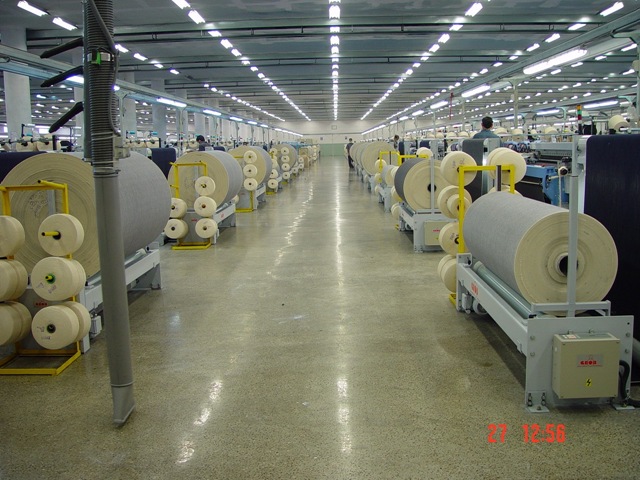
    artistic fabric mills We at Artistic Fabrics and Garments have a great relationship with Invista and our vintage stretch collection using their LYCRA® fiber always gets a great response from buyers.

    As far as our recent best sellers are concerned- For Womens The new Super stretch with soft hand feel and Jeggings have been quite popular recently.

    For Men’s Rigid, 100% cotton based subtle cross hatch constructions, heavier weights with Left Hand Twills and softer feels is one of our best selling category. Most popular are the black bottoming, pure indigo and green indigo shades. The coated and over dyed denim range is always a top favorite for designers.

    Coated denim seems to be getting popular. Do you also feel so ?

    Definitely. We have been very innovative in exploring different coating technologies and chemicals.

    Coating is the next big thing because of the high and lows one can achieve and the multiple washes that are possible. It adds a whole new dimension to the normal denim fabric and what wash experts can do with it. We see the trend growing with raw coated finishes and vintage looks.

    Artistic Fabric Mills will be launching the New collection of our coated fabrics at the Hong Kong edition of the Kingpins show in November.

    You also have a large garment division. Is denim the main product there?
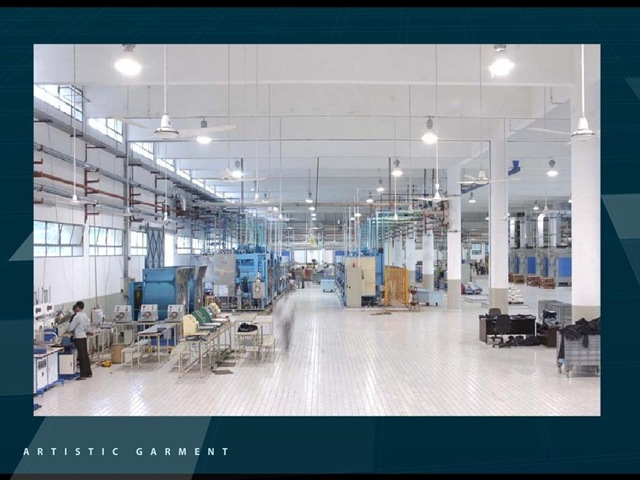
    artistic garment industries Actually, Denim is the only product at Artistic Garment Industries. 100 % of the garments are stitched using Denim fabrics. Primarily, we manufacture denim jeans and cater to all types of bottoms: Straight leg, boot cut, skinny etc. Apart from jeans, we also produce denim jackets.

    The output capacity is about 1,000,000 garments per month, which covers many different age groups from Toddlers to Adults. The production at AGI has been enhanced by our state of the art laundry facility, which was established in early 2007. This modern plant is equipped with the latest Italian washing machines and can be compared with any of the world’s top laundries.

    Which are your main markets? Would you like to share names of some of your main buyers with us?

    Roughly half of our exports go to the US market. The other half goes to the European market. Many of the Middle to Upper Tier Fashion Brands are our main buyers.

    What new trends do you observe emerging in the denim jeans silhouettes?

    Men’s silhouettes have remained fairly constant over the past couple of seasons. We’re used to seeing the usual straight leg or boot cut styles. Comfort Stretch seems to be getting more popular for men.

    On the other hand, the women’s collection has been tailored by major changes in fashion trends. While the boyfriend and skinny fits remain popular, leggings/jeggings are taking the markets by storm. We think the tapered/skinny boy friend along with skinny cargoes will be big soon. However, the women’s market changes more quickly so in the near future, the market will want something new.

    Pakistan denim industry is getting bigger. Can you tell us something about its size, growth etc ?

    It is getting bigger indeed. This means more competition for us. However, we enjoy the challenge.

    Presently there are about 15-20 denim mills in Pakistan, and about 35-40 companies involved in denim fabric or denim garment production.

    The Monthly Production is about 30 million meters of finished Denim Fabric.

    Direct Employment of 18,000 People in industry. A major part is employment on contractual basis.

    The Textile sector contributes to a 60% share in the exports of the country.

    Presently in Pakistan, Denim Production is on top in Textile Sector due to Export & Garments Industry. Export of denim has shown a 27% increase per annum in the Dollar value since 2005.

    Denim is now one of the key apparel sectors and the driving force behind the apparel exports of the country. Total apparel exports from Pakistan were approx US$ 1.23 Billion in 2008-09. This sector still has potential for further growth.

    (Statistics taken from the Pakistan Textile Journal).

    How does Pakistan compete with countries like Bangladesh and China for denim exports?

    As compared to Bangladesh, we have an advantage of having an abundance of cotton and greater experience in this field. Bangladesh is catching up fast and with their advantage of cheaper labor we often compete fiercely with them on price. Pakistan has an edge due to the availability of the Basic Raw Material though and having the Yarn locally produced. The AGI/ AFM nexus has the added benefit of a Strong Spinning Mill being part of our vertical set up. Pakistan has also benefited from a more favorable exchange rate for export in recent times.

    China has historically been a strong competitor but lately we feel we have come to par with them as the number of local trained Professionals and Technicians for the Denim field increases in Pakistan. We strive to continuously improve and enhance ourselves to rise above the competition from this region.

    The recent floods in Pakistan have caused a lot of devastation. Do you think the floods will affect the denim industry or the textile industry as a whole ?

    The recent floods really have been quite catastrophic. However, fortunately for the Textile Industry the flood waters did not affect any of the major urban cities. The main impact has been through the damaged cotton crop. There is some speculation that around 2-3 million bales might have been affected.

    Luckily in some areas that have not been hit by the floods, the rain has actually benefited cotton and this year Pakistan was expecting a bumper crop as some farmers had opted for cotton instead of rice and sugarcane so despite the damage, the total crop might equal last years amount. Furthermore, Pakistan will gain from the fact that next-door neighbor India has lifted the restriction on Cotton Exports and therefore, will import a fairly large quantity from across the border. So overall the rates should be at par with New York Cotton Exchange. We feel the Pakistani Textile Industry is quite resilient and will not be so severely impacted by the floods.

    How is Pakistan denim industry dealing with the environmental issues like waste water disposal etc ?
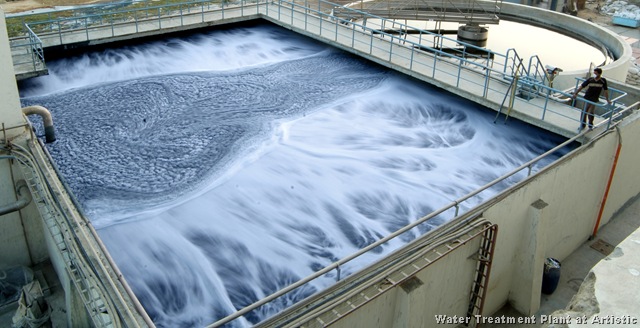
    WWTP One of AFM/AGI’s main goals aside from quality service and on time delivery to its customers is to be environmentally friendly and adhere to social compliances. Therefore over 4000 employees at AGI are enjoying all the social benefits, as we are compliant approved by all our customers. In the past we have been approved by ISO and we established a state of the art Waste Water treatment Plant (WWTP) in 2007 with the help of an Italian company ,

    What is your forecast for the demand growth in the next 2 years ?

    We predict that the next 2 years are going to be challenging but rewarding at the same time. Denim is a lifestyle and that culture will never cease so we hope it will grow bigger and better.

    There is usually a lot of movement in denim and currently we see a definite shift towards the Pakistani market. With our new mill coming up we are definitely looking forward to the near future as we constantly endeavor to upgrade ourselves with revolutionary ideas and adapt to the fast changes in trend.

  • Levi’s Launches Denizen – The Denim Brand For Emerging Markets

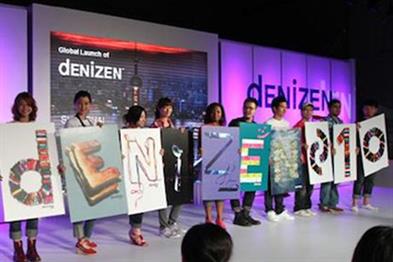
    Levi’s seems to be betting on greater growth from emerging markets like India, China , Korea and Singapore . It launched last week a new brand called ‘Denizen’ .Denizen is the first brand out of Levi’s stable to be launched out of US . The brand is said to be built around the needs of the new emerging middle class and is all about giving them jeans at affordable price points and up-to-date fits and finishes .  In an interview with CNBC TV 18 , Levi’s CEO John Anderson mentioned that China and India are two important markets for Levi’s. Both have similar and fast growing middle class with consumers aspiring to get into global brands but are restricted due to the price factor.
    Levi’s is aiming to price its Denizen brand in the range of $40-$55/= and it will be expensive than the Signature brand.  Denizen has been launched in China first , then in Singapore and Korea and then it will be test marketed in India .  Already having a strong sales in India, Levi’s seems to be focusing on China and Korea to achieve better market shares there too. It is expecting a double digit growth rate both in China and India and these growth rates will help it power its worldwide growth.

    The dENiZEN brand is designed for 18 to 28-year-olds who seek high-quality jeanswear and other fashion essentials at affordable prices. The product collection – including a variety of jeans, tops and accessories – complements active lifestyles and empowers consumers to express their aspirations, individuality and attitudes.

    “The dENiZEN  brand is made for a new generation of young people who are motivated and forward-looking,” said Terence Tsang, senior vice president, dENiZENâ„¢ brand, Levi Strauss & Co. “It offers an updated twist on classic essentials, encouraging consumers to create their own style and find their own voice. With the dENiZENâ„¢ collection, we present quality jeans that are fit for everybody.”

    To represent this new generation of consumers who inspired the development of the dENiZENâ„¢ brand, the company is also introducing dENiZENâ„¢10, an innovative and unique pan-Asian social media project involving real people with unique personalities and individual voices.

    The dENiZENâ„¢ brand selected ten individuals from across the region – China, Hong Kong, Singapore, Korea and India – to capture the mood of “Asia Rising”. These ten people represent the spirit of the dENiZENâ„¢ brand. They are optimistic global citizens passionately pursuing their dreams. The dENiZENâ„¢10 will spend 100 days sharing their experiences and response to the new brand on social media channels – as well as their thoughts on various life themes that speak to the new generation.

    Approximately 50 dENiZENâ„¢ retail stores will open their doors to shoppers by the end of 2010 across China, Korea and Singapore.

    Levi’s has been adopting some very unique marketing techniques to become the largest denim brand in India and these include innovative schemes like Denim on Credit . With the upcoming launch of the Denizen brand, Levi’s can hope to deepen its penetration here .

    Note: The global headquarters of Denizen brand will be based in Hong Kong (suppliers pl note ! )

  • Celebrities Adorning Hudson Jeans

    Hudson Jeans collection is  known for a great  fit and craftsmanship, the iconic union jack logo and signature triangle flap back pocket. Created from  premium denim from some of the finest mills in Europe and Japan, all Hudson products are hand finished  . The jeans are popular among various celebrities . Check out some of them enjoying the Hudson Jeans recently .

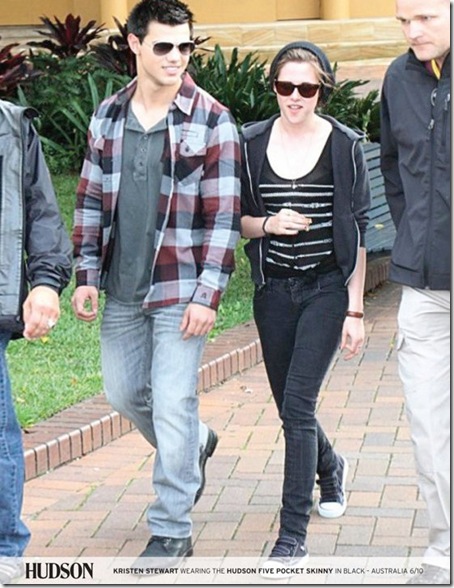
    Kristen Stewart wore HUDSON’s Five Pocket Skinny Jeans in Black in Australia recently. Stewart, better known as Bella, was with costar Taylor Lautner doing a press tour in Australia for the next installment of the Twilight Saga.

    Kristen Stewart in HUDSON

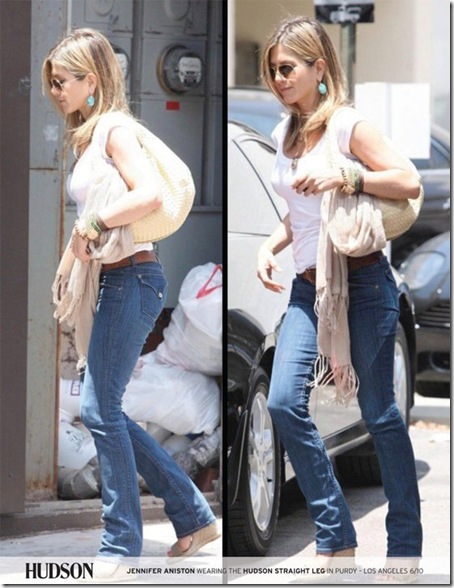
  • Actress Jennifer Aniston was recently seen wearing HUDSON Straight Leg jean in Purdy after leaving the spa two weeks ago in Los Angeles. The jeans feature silver buttons and rivets and Hudson’s signature back flap pockets.
    Jennifer Aniston in HUDSON
  • Last week, Rihanna looked nothing short of red as she left Philippe Chow in Los Angeles with boyfriend Matt Kemp. The 22-year-old “Te Amo” singer paired her bright red sweater with a pair of HUDSON Collection Darted Skinny Jeans in Sun Bleach. Rihanna topped off her look with black heels for a perfect date night look.
    Rihanna in Hudson Jeans
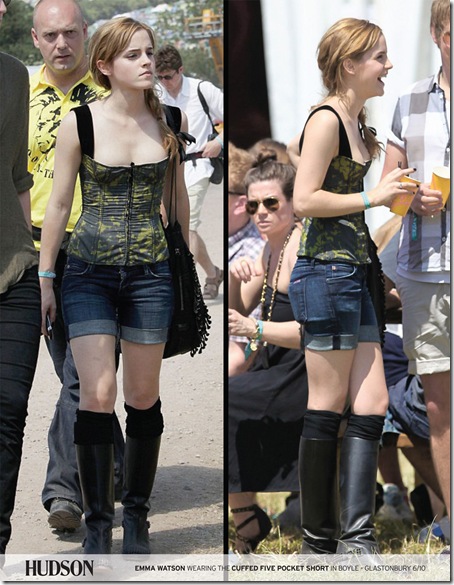
  • And there’s Emma Watson, one of the stars of Harry Potter, who wore HUDSON’s Cuffed Five Pocket Short in Boyle paired with a corset top and black wellies to the Glastonbury festival this past weekend. Be sure to look out for Watson in the Harry Potter and The Deathly Hollows due to come out this November!

    emma watson hudson jeans

    And if you are interested, do check out the interview that we had with Hudson Jeans’ creative director Benjamin  Taverniti .

  • R By 45rpm Denim Jeans – A Chat With Ehren At NY Store

    DSC05540 Japanese denim is famous for its attention to detail – like many other things in the Japanese culture. That is the reason the Japanese denim brands stand out and outshine most other denim brands and have cult following  around the world. One such brand is R by 45rpm .  I visited their store in SOHO , New York , last month and chatted around with Ehren at the store and I found that he is deeply knowledgeable on denim matters . It was fun and very  interesting to discuss with him regarding 45rpm and denim in general .

    Hi Ehren !  Tell me something about the 45RPM jeans that we can see   here ?

    All our jeans are made with Zimbabwe organic cotton. They are all selvedgeDSC05533 denim. We do all our weaving on antique vintage denim selvedge looms which we have slowed down to increase the slubby texture . We also control the quality of our yarn in order to make sure that instead of a flat machine feel their should be slubby structure. We use a variation of either synthetic based indigo dyes or organic plant dyes . A lot of our organic indigo stuff is dyed by hand.

    What is the advantage of dyeing by hand ?


    sythetic indigo wash down‘Advantage’ may not be the word – it is the outcome. The advantage of dyeing is the color of course – it is a much richer and very serious blue . The people might call the advantage  to the fact that over time instead of washing  out and color fading very dramatically at certain areas – on your thighs etc – anything like thisNatural Indigo Wash Down After 10 years (shows a synthetic washed jeans)  whiskers etc – that is not going to happen that with natural indigo dye . It could happen but it is very very difficult to get there . You have to almost make it happen . If you normally wear  those jeans ,they won’t naturally fade like this over time and you will get a more even sort of distribution of color .  Have a look at these jeans I am wearing . After 10 years of use they will  eventually reach this color ( see the comparison in the picture above) . When they started they were this color – you will see that it lines up very evenly over time and still keeps a very intense , very vivid blue as opposed to synthetic blue which fades much more.

    Tell me what is so special about your yarns

    Most  special thing about our yarns is the way  we control the quality of our yarn . I suppose instead of just making mass produced machine spun yarns , a lot our stuff is done by hands. Even the stuff which is not done by hands, we control it and purposely make sure that it has  a slubby vintage texture to it .

    What is the price range of 45 RPM Jeans ?

    We are doing $368 and above .

    Going up to $ 1000 ?

    Our top of the line denim  before tax is in the  $800- $900 range . But you can make it more expensive by adding Silver rivets , custom distressing etc . We offer like 2 years , 5 years , 7 years custom distressed washes.  We have studios in Japan to do these washes.

    So that can be done on individual orders ..

    Yes,  Bespoke denim  basically.

    How many times should denim be washed at home?

    There is a sort of a debate on that. And I actually personally fall on both sides of the debate.  There are people who want to wear raw denim imagecontinuing as much as possible without it to get more extreme , more severely individualized color fade and that  looks really really cool and it works . If you don’t wash them very often , and then wear as much as you  can  and then wash them , you will notice much more lines behind the legs and much more direct lines above here (near the crotch) .

    The disadvantage to that is that Jeans are an organic material – its cotton. Over time bacteria gets into there and starts eating away at the denim . So when you do that , the denim is not necessarily going to last a long time . You could reverse that by patching it up or by washing them often – you could make them last longer. But if you do not wash them , you should expect them to fall apart . Your pockets are going to fall apart , your knees are going to come apart ……

    That’s your personality on your jeans .

    Exactly . Other thing to do is to turn them inside out and wash them after every 2-3 times you wear them . Very short wash , just a very little detergent . You will get a more even fade , you will not get very expressive lines on your jeans  but they will probably last a little longer and still look great . My suggestion is

    “If you have natural  indigo denim ,  I would recommend washing it pretty well. If you have synthetic indigo denim ,  I would personally recommend wear them as long as you can  , get some awesome color going and then rock them …”

    Thank you so much  Ehren. Our readers really love 45 rpm Jeans .

    We are happy. Thanks and have a great day.

    Here is a video on the chat with Ehren (Those who are reading this report in email will have to go online to see the video).

    Here are some snaps from the store and its location :

    R by 45rpm
    SOHO STORE
    169 Mercer St.
    (Between Houston & Prince Sts.)
    New York, NY 10012
    Tel:917-237-0045

    Contact R by 45rpm at this email address


    45rpm 45rpm jeans

    45rpm denim jeans 45rpm denim jeans

  • Super Stretch , Comfort , Recovery and Other Denim Selections From Invista

    Invista sponsored the recently held Kingins show and  will be sponsoring the upcoming next few shows in LA  , Hong Kong and Shanghai . They also displayed some of their cool denim products at the NY show .
    Lycra name being synonymous with stretch , most of the products were stretch related though some of them were also non- stretch and were broadly divided into four fabric themes . I spoke to Kristin Altimari and she explained all the denim themes that Invista is focusing on .

    Super stretch denim Theme

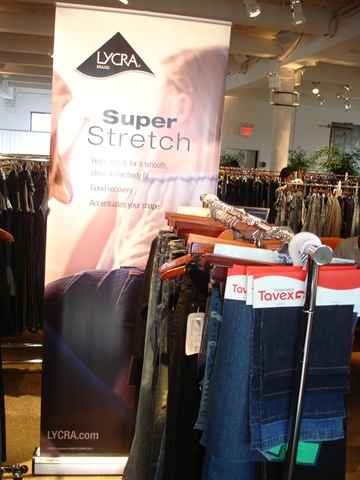
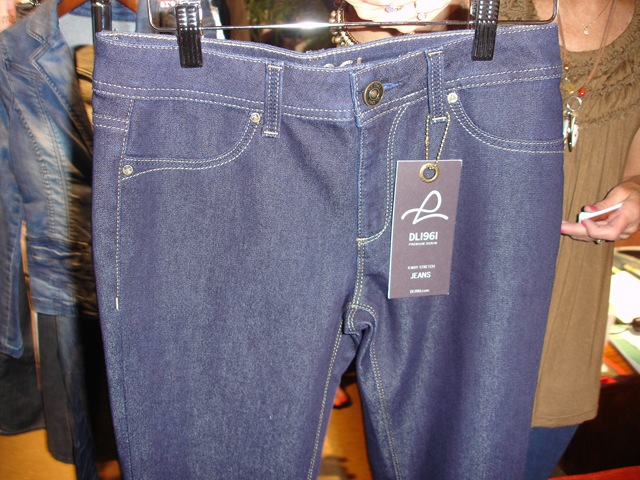
    DSC05584 Super stretch are those fabrics with more than 30 percent stretch –are called super stretch . These  are easily one of the hottest trends on today’s denim landscape. The consumer’s desire for comfort and fit, paired with a fashion trend that favors slim, body curving silhouettes, have helped give birth to this whole new category of denim. Super stretch fabrics can range from very lightweight “jegging” styles, to more traditional 10 to 12 oz denims. But making high quality super stretch fabrics and garments poses unique design challenges for mills and brands alike.
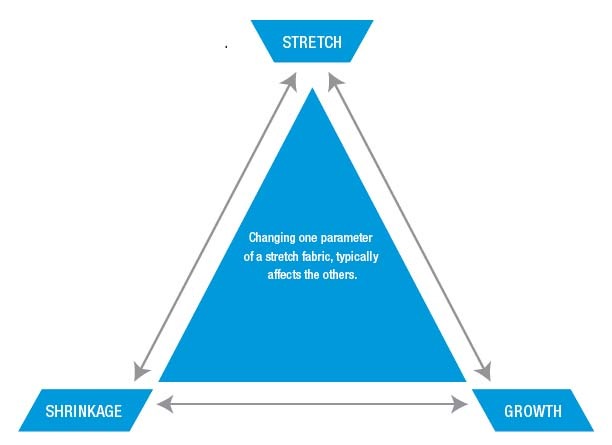
    Typically, as the level of stretch in a fabric is increased , you also increase the potential for higher shrinkage and/or higher growth. Think of the three parameters—stretch, shrinkage, and growth—as the three points of a triangle, with stretch at the top. As you move stretch to a higher point, the base of the triangle (shrinkage and growth) tends to change as well.

    diagram copy
    The end result can be a fabric with poor dimensional stability.
    INVISTA has developed quality guidelines and best practices for creating super stretch fabrics. The use of LYCRA® fiber and LYCRA® T400® fiber together and in recommended proportions can result in  achieving the optimum balance of stretch, recovery and shrinkage.

    Super Comfort Denim Theme

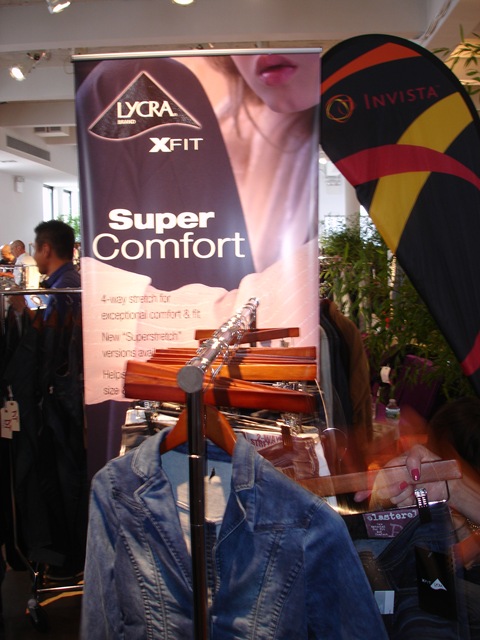
    DSC05592 The super comfort category takes comfort and fit to the next dimension. Though introduced in 2006, INVISTA’s XFIT LYCRA® fabric technology has been advanced further to present a  new super stretch versions of XFIT LYCRA® fabrics take that concept even further, bringing comfort and all around movement to even the sleekest of silhouettes . These fabrics combine the best attributes of Lycra fiber and Lycra T400 fiber – providing super comfort and freedom of movement in all directions.


    lycra T 400

    Super Recovery Denim Theme

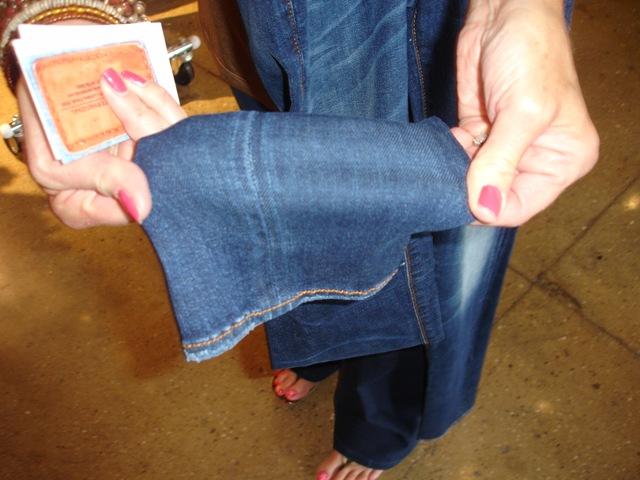
    DSC05585 Another hot category is fabrics with super recovery. These fabrics often appear similar to super stretch fabrics because of their significant “snapback.” Although stretch levels are more consistent with those of standard stretch fabrics (e.g. 20 to 25 percent stretch), these fabrics seem “more stretchy” because they have more powerful recovery. The enhanced power comes from LYCRA® T400® fiber which has a permanent, coil-like structure, so it always wants to return to its original shape. New yarns such as the textured LYCRA® T400® fiber provide excellent recovery, as well as a soft hand . I stretched some of these fabrics to see the recovery and they just snapped back to their original shape in a jiffy.

    Super Durability Theme – Cordura Denim

    DSC05593 The CORDURA Denim fabric collection combines the authentic look and feel of 100% cotton denim with long lasting durability. According to Cindy McNaull, CORDURA brand marketing director,


    "These fabrics have up to four times the abrasion resistance of comparable 100% cotton fabrics, making them ideal candidates for rugged applications such as skateboarding and workwear…”

    These fabrics have a nylon mix and use a technology that has been used in the military clothes for decades . The result is a super lasting denim fabric for “Rough and  Tough Wear”


    Invista has paired the T 400 brand name with the Lycra fiber brand name to make it easier for the customers downstream to easily associate the T 400 brand with the Lycra brand.  Though Lycra and its properties are well known, T 400 is sometimes not so completely understood. Here are some typical questions which will help understand T 400 better :

    What is Lycra T 400 fiber ?

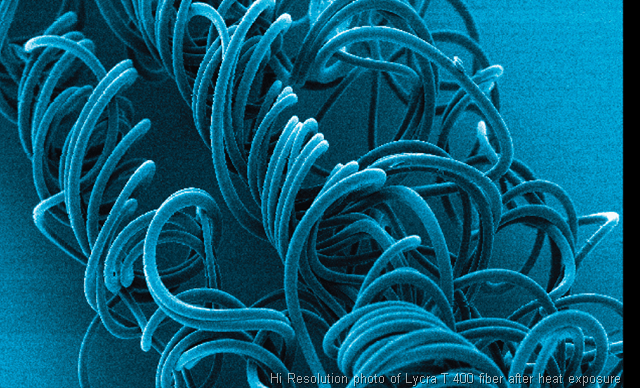
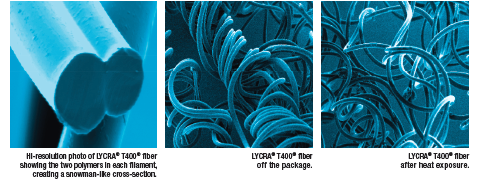
    LYCRA® T400® fiber is a special type of bicomponent fiber in which two different polymers are joined together within each filament. The differential shrinkage between these two polymers provides a smooth, helical crimp.
    Additional crimp is developed during the dyeing and finishing process when the fiber is exposed to heat. The result is fabrics and garments with  great stretch and recovery properties .

    image

    How is Lycra T 400 fiber used ?

    LYCRA T400 fiber can be knit or woven in its bare state into garments. For certain applications where cotton is used, core-spun LYCRA T400 yarns may be preferred.

    What is the content of T 400 as compared to Lycra elastane fiber ?

    Weight for weight, LYCRA  T400 fiber provides stretch and recovery to textured yarns but less than LYCRA elastane. Thus, to achieve a given level of stretch and recovery in fabrics, LYCRA® T400 fiber content will normally be greater than LYCRA® elastane content .The following table shows typical fiber contents of garments with LYCRA  elastane and garments with LYCRA T400 fiber.


    Garment Typical Lycra Elastane content Typical Lycra T 400 fiber content
    Jeans / Pants 2 to 4% 10-25%
    Woven shirts 2 to 6% 10- 25%
    Knit Shirts 5 to 10% 15- 25 %
    Swimwear 18 to 22% 45 – 50 %
    Underwear 2 to 5 % 15 – 20%

    For any further information contact Kristin at this email address ..

  • Can 5 Cents Make A Difference To The Looks and Value Of Denim Jeans ?

    There are various material and process inputs that go into the making of a denim jeans – fabric , cutting and sewing , washing , adding embellishments etc . Each of these adds up a good amount of money to bring out the production cost of the jeans. Then there is packing , transportation , duties , retailing cost and so on………….

    How do 5 –15 cents look like in this whole costing process ? Not much I guess . But spend correctly , they can cause a difference in the look of the jeans – even giving it a premium look .  And what if you come to know that many of the established  denim brands like 7 for All Mankind  , Gap  , Jones Apparel etc are also using this as one of the techniques to give their garments that premium look ?

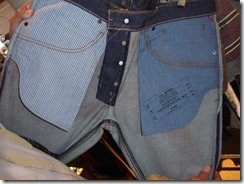
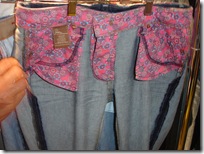
    Well, we are talking here about the pocketing in the jeans . This is one of the boring areas of the jeans which not many manufacturers or , for that matter, even consumers bother to pay much attention . But , premium brands are paying attention and they are giving that designed or vintage  look to the pockets in their jeans .  The idea behind this is that when you are talking premium , every part of the jeans has to speak that language and plain cream colored  pockets do not speak that language.  The pockets could be given vintage look , or a washed look to match the wash down look of the jeans or it may even have the logo printed – appearing at the same spot in all jeans !

    And the advantages do not end at that .

    What happens when a customer is looking at about a 100 odd jeans in a shop and needs to decide which one to pick up first to see ?
    Lets say , one of the  jeans has that special pocketing and inner waist band with mulitcolored washed down stripes . The chances are good that this jeans will catch the eyes of the customer – raising the possibility of sale.

    DSC05703I was enlightened on this aspect of importance of pocketing fabrics when I met Barry Emanuel of Copen at Kingpins New York. He showed me the various and very interesting pocketing materials they are manufacturing and supplying to almost all top denim  brands in US.  Many of these fabrics could wash down and match the washed look of the denim jeans . Some of them had logos of the company specially printed at a particular spot or even others had two different types of  colored pockets.

    DSC05698 DSC05704

    Here is also a small video which shows the washed blankets made from these fabrics and views from Barry Emanuel.

    Contact Barry . Email here

  • A Chat With Jeannie Cumiskey of Tavex Denim

    logoinstitucional With a history of more than 150 years , Tavex is a name to reckon in the global textile industry. Starting in 1846 as “‘Fábrica de Hilados, Tejidos y Estampados de Bergara” , the mill produced Indian and other cotton fabric using the indigo dye right from the beginning. It took the strategic decision to invest in denim manufacturing in 1970 and brought the first Rope Dyeing machine to Spain. Thereafter , it has been a story of continuous growth and expansion crossing various milestones on the way. A few years back , Tavex and Santiesta (Brazil) merged and created a large textile conglomerate.

    On the recent visit to  New York , I met Tavex team who participated in the show . It was a good oppurtunity to know more about the company and I chatted with Jeannie who looks after the marketing and product development for the North American market  . She  very kindly updated me with  various informations. Here are some excerpts from the chat :

    Hi Jeannie, Tavex and Santiesta have merged. How is the group operating now ?

    clip_image002[3]The merger  happened almost 4 years ago . Tavex and Santiesta came together and created the NEW Tavex Corporation . We are doing upwards of 150 million mtrs of denim and we all work under the Tavex umbrella for denim . We manufacture both flats and denim. Denim is made in Morocco, Brazil , Chile , Argentina and Mexico .

    Flats and work wear fabrics are produced in Morocco and Brazil. TAVEX purchased 2 factories in Mexico a couple of years back WITH THE INTENT OF doing DENIM product at the same level as we do in Europe but closer to the American market. These factories are the primary responsibility for the North American Sales team although we also represent our highly influential European collection here in the US, as well.

    Under Santiesta name , is denim not produced any more ?

    Denim is  all Tavex now . A Lot of people still reference Santista,  in South America , because it has always  been a big name in denim and it  is still very much a part of  our workwear / uniform  business in Brazil..

    So  probably you are the second biggest in the world now for denim production ?

    We are the largest in the Americas and Europe , but not completely sure how we stack up to some Chinese mills. So I am guessing that we are 2nd .

    How have the last couple of years been for Tavex’s growth ?

    The last 3 years for Tavex have been all about restructuring to meet the needs of each region . In Europe and the US , in particular , we made many many changes – buying plants , moving or replacing equipment , hiring new teams etc . But , today , we have overcome all the start up and restructuring issues and have emerged a much stronger force . We have always had a strong financial position . But , today , the company worldwide is much stronger in product innovation , quality and service . We are expecting  great results for 2010.

    What are the latest trends in the denim fabrics that  you are noticing?

    Stretch and more stretch, always with a soft touch , continues to be the biggest volume trend. In Mexico, we have put a LOT of emphasis on growing our stretch business – both comfort and stretchy stretch. We have a great deal of internal yarn capability that allows us to offer a wide range of fabric characteristics that emulate our premium , European stretches , but manufactured much closer to the market. We have a very nice menswear business . In better fashion basics that we are continuing to expand with new shades, finishes and yarn aspects as we see the menswear market continuing to demand better , more interesting fabrics as well. One of our largest programmes is actually a stretch programme for the men’s market . We see this segment growing as well.

    Any other products of Tavex that you would like to tell us about ?

    tavex amazon tex We have a few really unique developments like eco friendly , fair trade products and Wellness textiles. We have a finish called Amazon Tex which comes from a nut which is harvested in the Amazon that supports the indigenous people of the rain forest . We are also embarking globally on Therapeutic or Wellness textiles . Our first development in our ‘Denim Therapy ‘ Group is called ‘ Energizing’ . It is regular denim improved with a bio – ceramic complex application. This application pulls the far infra red rays of the stun, stimulating the molecules in the body , which in turn improves ciruclation and gives you a better sense of well being . It also improves your equilibrium giving you better balance .We have had a lot of fun proving this improved balance with our customers. It really works and the BENEFIT  is IMMEDIATE . The application has been used in lot of high tech fabrics like skiwear and medical apparel . This is the first time it has been APPLIED TO FABRIC FOR EVERYDAY CLOTHING.  It is not a cheap process but there is a growing market out there – Clothing for the elderly , skate / surf / performance market etc . We think this is a very exciting category and will continue to introduce new and and different therapeutic concepts into this segment.

    Which dyeing technology do you use ?

    We have Rope and Slasher in all locations .


    And here are some pictures from their Summer 2011 collection

    Tavex Global Tribes :
    South America with Africa, India with aborigines.Multicultural humanity: respect for different cultures and traditions.

    tavex aborigines

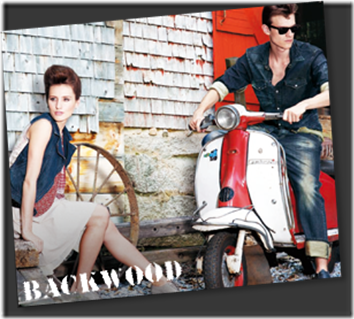
    Tavex Backwood :

    The combination of rock and roll with hillbilly, in the 1950s and 1960s.
    Young escape to rock and roll icons.

    tavex backwood

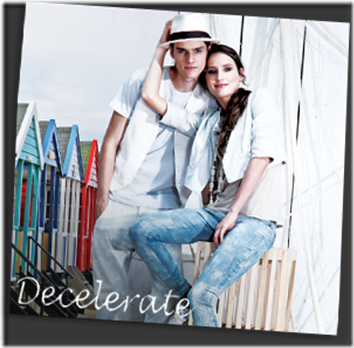
    Tavex Decelerate :
    Northern coast of Europe, sandy beaches and landscapes swept by the wind, MILAN, L.A.
    tavex decelarate

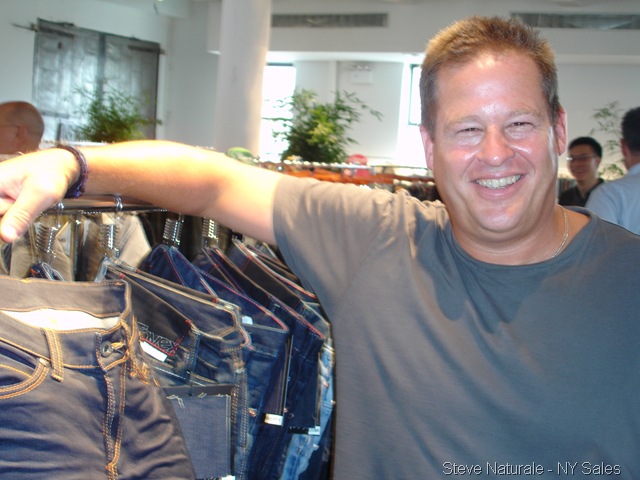
    And since Jeannie won’t allow me to put up her picture , I could only put one of  Steve Naturale from NY Sales 🙂


    DSC05580


    Contact Tavex – Email here

  • Blue in Green Soho – A Great Japanese Denim Shop

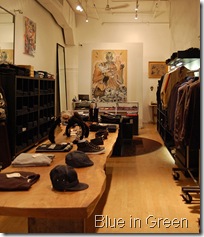
     blue in green sohoFor the denim fanatics , Japanese denim is the holy grail. And for such people, there is one store in New York which is a must visit  – Blue in Green Soho . This is one of the most famous denim shops in the US because it stores and sells a number of very well known Japanese denim brands exclusively .

    During my recent visit to New York , I felt it imperative to visit this famous store . In the well known fashion locality – Soho – the shop is rather non-descript from outside and you can miss it if you are not looking carefully . However, once you enter the shop, the smell and sights of  raw Japanese denim fills up your eyes.  I met Gordon – the owner of the famous store and got him into talking about his store  . He is quite a shy guy and did not want to face the camera . But it was a really very interesting discussion I had with him and I  learnt  certain  new aspects of the Japanese denim world.

    Gordon – Why, when and how  did you start this shop with a unique proposition ?

    gordon_pic We started in Jan 2006 and the main reason was that my partner and I were designing a clothing line and we were looking around for stores to sell our own  line. During this time ,we came across this place and came to the idea to actually start our own store instead of finding stores to sell. And the idea was taken forth that some brands Japan and Europe would like to be selling in US . Once people started to find that we are catering to these denim brands from Japan – it brought a big interest in this . We started off small and little by little people started finding out and as that grew and we put off our plans for our own line and concentrated on selling these Japanese denim brands.

    Why did you chose to sell Japanese brands ?

    Aahhhh……  My partner is Japanese and we have been going back and forth  toDSC05544 Japan for over 12 years . I learnt to speak Japanese and I was kind of into the Japanese culture – so to say – before we opened the store and so when decided to do this , it was a kind of  natural influence on us already and we knew about a lot of stuff that was going on there and wasn’t happening in the US. We knew we had to have denim selection in our store but we were not sure we would be able to make popular business with the denim in the US. We knew that people had tried a couple of times and did not succeed very well with doing it . When you start a business, you try to store something that no one has and something which has a different concept specially in a place like New York city where there is lot of competition. We wanted stuff in the store that was as much about craftsmanship as it was about fashion and we tried to follow that up even outside jeans – everything that we buy – our clothing , shoes , jackets our workshoes , we always have tried to chose stuff  at the same level of quality with same  attention   paid to quality , fabrics, fashion and fits . There was another part of the attraction to the Japanese denim and that thing is Raw – I have always liked Raw jeans – whether it was a cheap $25  Raw Jeans…..

    So that you could have your persona on the jeans ….?

    Right. Actually in the beginning I just liked the dark color . My attraction was – years before we opened the store – it was more about the color and the raw texture .I did’nt get into pre distressed jeans even as a teenager . We knew we wanted to bring the raw jeans and Japanese denim was a natural choice.

    How come Japan is making better jeans than US when US has been making jeans for about 150 years?

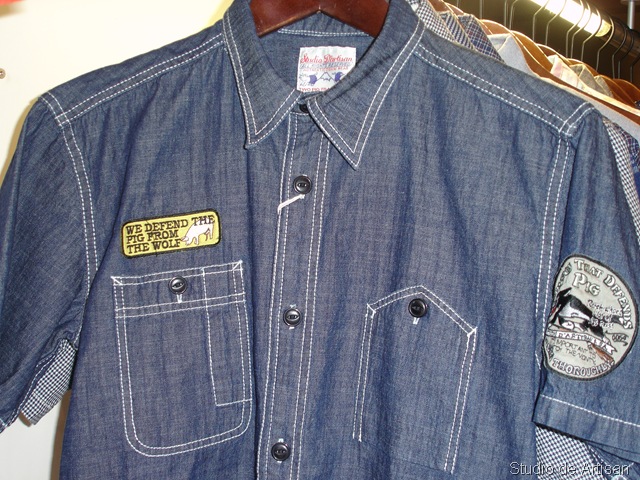
    studio de artisan I think …I would’nt say its better . US is just not doing it . In the early days we had several mills that were producing denim on old looms but now probably we really only have one mill with shuttle looms – maybe a couple more about which people do not know . As  denim companies became bigger, they stopped using wooden shuttle  looms  and started using projectile looms . People had no use for them and they were broken down or thrown away, In Japan they also had wooden shuttle looms but they were not really making denim on the same doing  other things like  silk , wovens or whatever they were doing but there were not much emphasis on denim at that time. But when they started getting making into denim themselves, and when they started getting into vintage jeans  and saw the details that the selvedge denim were made on shuttle looms, they realised that they have not thrown away these machines .  When it came time to setup to produce these denim, they had all the tools to make these denim. US does not just have the tools anymore .Its hard to say we can do it as well but we do not have the machinery. And we may not have the talent and the skill of the workers to do it. In Japan and in area  where they are making jeans – Okayama area – they were making school,military and police uniforms . It was a production facility 100 years ago and it still is- it never stopped being so  They have just moved from one product to another . Its always being quality work.

    Don’t you think the Japanese  put in more passion in their work ?

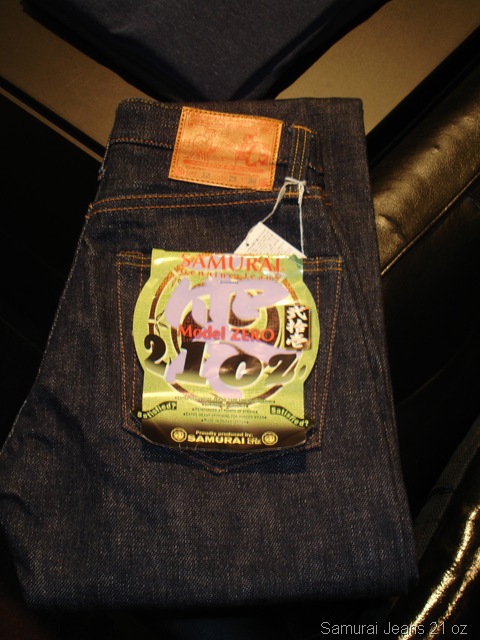
    Japan is about a tenth the size of the US. Living in Japan can be  like living insamurai jeans 21 oz California- sizewise . Imagine that all these people in that area – you can filter in actually a lot of good talent in a smaller place. In a place like US we have people sprinkled around the country , but they are just not in one area . You cannot lock them in one area – one city and if we could , I am sure we could produce amazing work. But there is much more concentration in Japan and when it became a  big  business, they got serious and said hey ‘ it is a premium product, people are paying for it , they can’t produce fast enough. Lets concentrate more ….’. There are people with these skills who  came out and said that hey I can do this , I enjoy this work and I need the work. There is more emphasis on the quality of work , handmade work, craftsmanship of product on a broader scale in Japan. In US it is about how fast and how much you can produce. If we can’t ,we will find a country which can do it for us.  In Japan its not like this and they are quite strict on these things where the consumer sort of demands certain level of quality and a lot of time its Japanese quality they want. It is  therefore desirable to keep things within the country. Discerning consumers want home made quality . Japan prides itself on its quality . US wants quality too – but they are not mostly very concerned where its made. Again in Japan I think , its  old  vintage jeans and clothing that a lot of people were attracted to in early 80s when boom started happening for vintage products. When they started dissecting the products, they found that most of the goods are hand made. They did’nt have the automatic controls  or robots which produced them etc and if we want to make like these we have to make it by hand . Its a slower process , more tedious but its true to original and it looks more cool. Its hand made and stitch is not always straight . A little bit crooked ……….

    Should not be  too perfect …

    And that’s another thing which is why this stuff has worked well in Japan. You know what it is  like hand blown glass, drinking glasses,  silverware – the little imperfections is what let people know that its hand made . In US people want things to be perfect , look a certain way -mass produced . I think its not good or bad – its just a different choice.  And I think for people who are into fashion but also want fashion that also has a bit of story and passion in it , things which are hand made will be a bit  more attractive to those people than the things which are mass produced , auto controlled . I think Japan had the right things at the right time – the old machines ,people who could use them , skilled eyes which would pick up on the small details which they knew would attract people that were into these quality goods. Outside of jeans really I feel there is  not much demand from the fashion world for the ‘Made in Japan’ products. There are High Fashion Japanese brands which too  have demand but not necessarily because they are made in Japan but because they are a brand. But for the guys who are into Jeans – the customers are definitely demanding ‘Made in Japan’ label.

    Which are the Japanese brands that you have in your store and what are their price ranges?

    Denime – $298-$325
    Eternal – $255
    Evisu Japan – $240-$385
    Fullcount & Co. – $275-$330
    Momotaro Jeans – $250-$315
    Oni Denim – $185-$585
    Paul Smith Japan – $325
    Pure Blue Japan – $169-$559
    Samurai Jeans – $275-$665
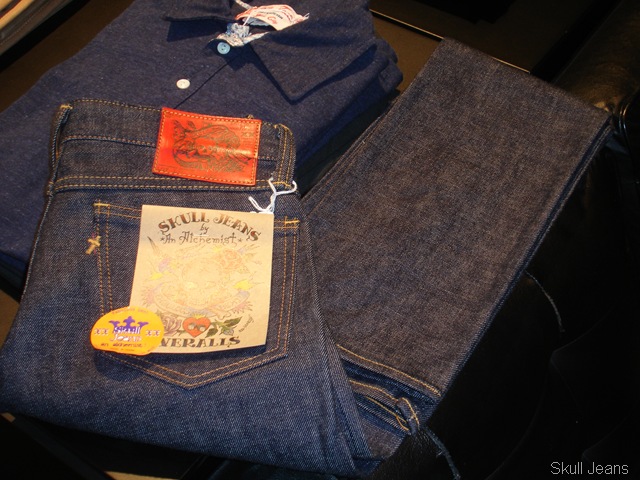
    Skull Jeans – $240-$350
    Somet – $210-$295
    Studio D’Artisan – $265-$620
    Sugar Cane & Co. – $265-$370
    Sunrise Japan – $348-$358
    The Real McCoy’s – $248-$368
    Warehouse Co. – $245-$275

    We also have started our own label ‘Blue in Green’ which is made 100% in Japan.

    Which brand has the most styles ?

    Samurai jeans  has the highest number of styles .This is followed by Pure Blue Japan, Studio D’Artisan, and Somet.

    Thanks Gordon. Keep up the good work.

    Thanks  Sandeep


    43200_frt The store also carries a beautiful Union Special machine  from the 1950s for  hemming purposes . This machine is nowadays  quite difficult to find and is much sought after by denim companies. For those who want to visit Blue in Green can go to 8 Greene Street , New York . Ph: 212-680-0556  or  Email here

  • Why Use Core Spun Threads For Denim Sewing In Place Of Spun Poly Threads?

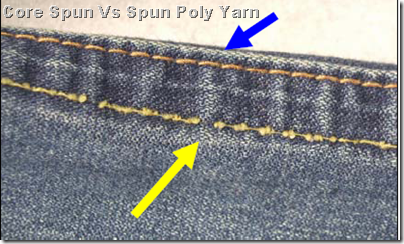
    core spun vs poly spun yarn

    American and Efird  brings out an interesting comparison between Corespun and Spun Threads to help understand the difference between the two better and the reason why corespun gives better results in denim sewing .

    What are Corespun Threads ?

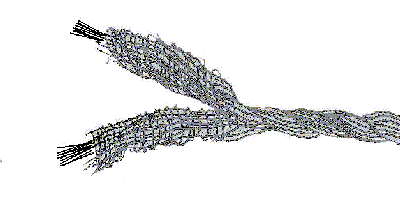
    image Corespun threads, sometimes referred “pcore” or “polycore” or “cottoncore”, are made by wrapping a staple polyester or cotton wrapper around a continuous filament bundle of polyester fibers during spinning, and then plying these yarns into a sewing thread. The continuous filament polyester core makes up approximately 60% of the thread construction. This core contributes to:

    • Higher strength per size (higher tenacity)
    • Greater uniformity in size, strength and other physical characteristics•
    • A higher initial modulus or resistance to stretching contributing to better loop formation and reduced seam puckering.
    • Better ply security – fewer unravel type thread breaks
    • Superior abrasion resistance & durability

    The wrapper of a corespun thread can be either staple polyester or staple cotton. The wrapper gives the thread a fibrous surface that contributes to:

    • A softer “hand” or feel than a 100% continuous filament threads
    • A matte finish stitch appearance similar to a spun thread construction
    • Superior frictional characteristics compared to a continuous filament threads
      The Poly wrapper contributes to :
      o Superior color fastness, chemical and abrasion resistance
      o Higher strength than cotton wrapped corespun threads
      o Superior “union dyeing” because of one-step dyeing process
      The Cotton wrapper contributes to :
      o Superior needle heat resistance
      o A “wash-down” stitch appearance


    What are the benefits of using core spun yarns on denim ?

    Corespun threads (eg Perma Core®NWT) are :

    • 40 to 50% stronger than spun polyester threads the same size
    • Superior sewability on both manual and automatic machines with minimum interruptions – fewer restitched seams.
    • Helps to Minimize Open-Seams and Seam Failure
    • Allows the use of smaller diameter thread to minimize Seam Puckering or Needle cutting
    • Helps to minimize broken and cut stitches after finishing.

    Spun Polyester Threads (PP Threads) – An Analysis

    image

    Spun Polyester threads, sometimes referred to as “PP” or “PP Spun”, are made by spinning 100% polyester staple fibers into yarns and then plying these yarns into a sewing thread. Spun Polyester threads are normally made in a two or three ply constructions depending on the yarn size. Spun polyester threads generally have much lower single end breaking strength than corespun threads. A comparison below of two products – a corespun and a spun polyester thread from A & E brings out some facts :

    Core Spun Vs Spun Polyester Yarn – Technical Specifications

    Here are some technical specifications of two yarns  from the same company – one Core Spun and the other Spun Poly – to find out some differences between the two.

    Perma Core® Core Spun Yarn

    Tex Size T-18 T-24 T-30 T-40 T-60 T-80 T-105 T-120
    Yarn Size 59/2 45/2 35/2 29/2 18/2 15/2 12/2 15/3
    Av. Strength(lbs) 2.1 2.7 3.5 4.5 7.8 9 10.6 13.51
    Elongation (% at break ) 21.5 20.5 21.5 21.5 24.2 24.8 26.3 25.7
    Shrinkage
    (BW)
    <1% <1% <1% <1% <1% <1% <1% <1%
    Shrinkage
    (HA)
    <3% <3% <3% <3% <3% <3% <3% <3%
    Loop Strength (lbs) 2.7 4.0 5.2 6.3 11.6 13.3 15.8 20.5

    Perma Spun®  – Poly Spun Yarn

    Tex Size T-21 T27 T-40 T-60 T-80 T-105 T-120
    Yarn Size 53/2 43/2 29/2 19/2 14/2 16/3 16/4
    Av. Strength(lbs) 1.6 2.1 3.2 4.7 7.1 9.7 10.6
    Elongation (% at break ) 16.1 16.3 17.0 18.0 18.6 19.9 18.5
    Shrinkage
    (BW)
    <1% <1% <1% <1% <1% <1% <1%
    Shrinkage
    (HA)
    <3% <3% <3% <3% <3% <3% <3%
    Loop Strength (lbs) 2.7 3.1 4.8 7.9 11.3 15.1 16.9

    As can be seen from the specifications, there is a significant difference in strength of the core spun and spun polyester yarns, even though they have been manufactured by the same company. Local spun polyester yarns could have still lower strengths raising the possibilities of increased sewing ruptures after washing.


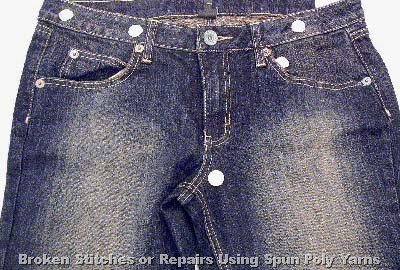
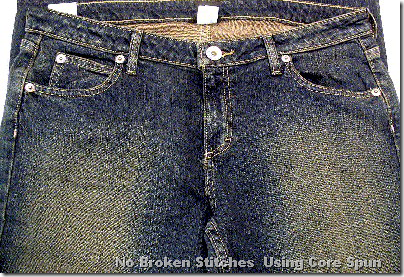
    spun polyester yarns denim Core Spun Yarn Denim

    Cost Vs Performance

    Core spun yarns are definitely more expensive than the spun polyester yarns.  The usage of these yarns can increase the cost of production . However, using spun polyester yarns can increase the possibility of broken stitches and rejected garments or needing repairs.

    A & E mentions that certain manufacturers have tried to use both Core Spun and Spun Poly to achieve a balance between costs and performance.

    Since overedge seams consume the most thread, they will used spun polyester on these operations while continuing to using corespun threads on all topstitching and stress seam operations.

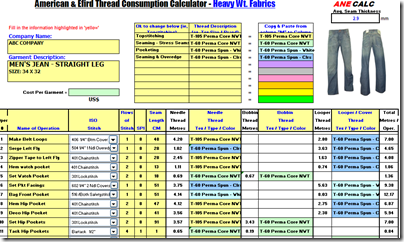
    If you are using a combination of different threads, you can find the total thread cost per garment by  using the ANECALC from the company. This calculator will help to find the total thread cost per garment – though it will not give the thread cost saved or made due to performance of sewing thread. Click on the image below  to download the calculator for Men’s Jeans – heavy weight fabrics.

    image

    For other calculators related to Men’s Carpenter Jeans , Ladies Jeans, Missy’s Jeans, Kids Jeans and Kids Carpenter jeans (both in yards and mtrs) go to this page and download (under the heading ANECALC APPAREL GUIDELINES).

    Also check  ‘How to sew extra heavy threads in sizes in denim jeans ?”

  • Bread and Butter Berlin (BBB) July 7th – 9th 2010 – A Review Of Denim Trends

    This is a guest post by Rik Vanniewenbourgh

    The Bread and Butter this season was an extravagant party with lot of enthusiasm and energy showing up in the show . The video below catches some of this energy from the party.

    First impressions from the Bread and Butter

    Some of the key denim trends at the show were :

    Vintage Denim

    A lot of attention towards vintage denim came from brands like Levi’s / Wrangler / G- Star / Tommy Hilfiger etc.

    ADRIANO GOLDSMIED with his name already well know in the World as designer (design jeans) had a very good collection which shows how you  need to make and present vintage denim!!!!
    Retro and Vintage IS IN…….

    Color Trend

    Trend is towards more and more dark colors.

    Style Pattern

    Jeggings for women is an increasingly popular trend with small special designs and smaller legs .

    Fabric Trends

    Slubs are disappearing towards more even qualities . But the fabrics are slightly shiny (achieved with hot calendering and under pressure) .

    Garment Washing Trends

    Trend is more towards unwashed or slightly rinsed washes.

    A Note On Turkish participation

    Turkish brands have paid much attention to the fair and there  were many people on the fair , including brands like  MAVI / CROSS etc.

    Turkey is very important for Europe as supplier and it reflected in the fair. The reasons for this importance are :


    -short lead time

    -price / quality is excellent

    -quality is good and consistent and trust full

    -small orders possible to get from Turkey

    -already years experience and regards communication excellent with their

    customers and are very open.


    Here are some very cool visuals  from the show .

    BBB BERLIJN 2010 JULY goldscmied

    BBB BERLIJN 2010 COOL DENIM

    BBB BERLIJN 2010 JULY JEGGINS BBB BERLIJN 2010 JULY 024


    BBB BERLIJN 2010 JULY 038

    BBB BERLIJN 2010 JULY 046

    image

    And here is slideshow for the visuals from the show .


    rik

    This is a guest post by Rik Vanniewenborgh who has over 30 years experience in Denim Industry. He has worked over 25 years in the VF Corporation(Belgium) in various capacities (including quality control). This post is from his recent visit to the BBB Berlin Jeans Fair.Contact him on email here

  • Cross-Shade Variation (CSV) In Indigo Dyeing : Causes and Solutions


    indigo yarn shadeCSV is a serious problem that occurs on the great majority of Indigo dyeing equipment in which yarns dyed on one side of the machine are a different shade from the yarns on the opposite side. This problem is so common that it is generally accepted as unavoidable, especially in sheet ranges.

    Basically, the problem arises as a result of the uneven distribution of Indigo within the dye box: 

    • The Indigo dye is initially mixed in a feed tank at concentrations of from 70-100 g/l. This concentrated mix is then pumped into a recirculation line in which the dye flows in a pipe that passes around the outside of the dyeing section of the machine.
    • The recirculation line normally has smaller pipes  that carry fresh dye directly  into the dye boxes on one side of the boxes and pipes on the other side of the boxes that pull the partially exhausted dye back into the recirculation line.
    • In the recirculation line, concentrated dye mix from the feed tank is blended with the diluted dye mix removed from the dye boxes which creates an equilibrium between the 70-100g/l Indigo feed mix and the dye box concentrations which range from 1-5 g/l.
    • The CSV problem results because as the more concentrated dye and chemical mix enters the dye boxes, there is a sudden increase of dye and chemicals on the entry side of the dye boxes and as the dye/chemical mix spreads across the yarn sheets, the concentrations are gradually reduced as they are pulled toward the exit side of the dye box.

    Problem of Solubility:

    • Vat dyes, which include Indigos and sulfurs, exist as colloidal particles when subjected to reduction.
    • While reduction renders these dyes soluble enough to penetrate cellulose, they do not exist as a true solution as do acid or cationic dyes, which will immediately and uniformly distribute in water.

    • The colloidal particles, which exist as clusters involving varying numbers of dye particles are affected by gravity and will exhibit settling behavior. This means that once the initial acceleration of being forced into the dye box losses force, the larger clusters slow down and begin to sink, while lighter particles travel to the other side of the box.
    • Mathematically: V = 2r² (s-s’)g/ 9n, where V = rate of settling, r = particle radius, s =density of the particle, s’ = density of fluid, g = 980 (gravity constant) and n = viscosity of fluid.

    Improving Solubility of Indigo Dye

    • Some additives can improve the solubility of the dye which will reduce the CSV and also  shade variation from beginning to end of the dyeing.
    • Dispersing agents are commonly used in Indigo dyeing, however only very few are effective in the dye box. Insist that chemical suppliers demonstrate the dispersing action of reduced Indigo.
    • Since potassium hydroxide possesses vastly greater solubility than sodium hydroxide, an effective practice is to replace about 30% of the sodium hydroxide with the potassium form.
    • Include methanol or isopropyl alcohol in the dye, about 40 g/l in the feed mix and 10 g/l to start in the dye boxes.
    • Reduce concentrations in the feed mix. The typical practice in the U.S. for many years was to keep Indigo concentrations at 80 g/l, sodium hydroxide at 140 g/l (50%) and hydrosulfite at 70 g/l. Reducing the Indigo to 50 g/l is a proven way to improve shade consistency. The objection to this is that more liquor must be pumped into the machine, causing an overflow in the dye boxes, however this can be controlled by having low wet pickup on yarn entering the 1st dye box and increasing the wet pickup on yarn leaving the last dye box (75-80%).

    Machinery Considerations

    • CSV occurs on most types of Indigo dye machines, but is particularly a problem on sheet  Ranges.
    • In a sheet range the yarn is dyed, then sized immediately and carried to weaving with the yarns arrayed on the loom in the same order as they passed through the dye machine. Therefore, if there is a difference in shade from side-to-side in dyeing, the same variation will be present in the woven fabric.
    • Rope ranges have side-to-side variation in most machine designs, however the effects of  CSV can be easily corrected, by blending the ropes of yarn which instead of being arrayed as a single, flat-sheet are separated into bundles of 300-400 yarns each. For example, in a 24-rope range, the 1st 12 ropes on the left side may be, on average, darker than the 12 ropes on the right side. By utilizing a blending scheme such as combining the odd- numbered ropes (1,3,5…) into one fabric set and the even-number (2,4,6…), the variation will be averaged-out.
    • On sheet ranges, the optimal solution is to improve distribution of dye in the box.
    • The traditional recommendation for avoiding problems like CSV was to gently keep the dye in the box stirred in order to prevent settling which results in differing dye and chemical concentrations from side-to-side, top-to-bottom and from front-to-rear in the dye box. The practice was to “turn-over” the dye in the box at least 3 times per hour. In other words, with a 2000 liter dye box, the circulation system should pump 6000 liters into the box and pull out 6000 liters per hour. Unfortunately, circulation systems on Indigo machines have been downsized over many years, making this impossible. About 20 years ago, in collaboration with Morrison Textile Machinery, we were able to modify the recirculation system on a U.S. machine to correct this problem. By calculating a mass balance for the specific machine and dyeing objective and explaining it to the machinery engineer, a relatively simple modification solved the problem. An understanding of the complex dye chemistry along with fluid mechanics will solve any dyeing problem. Chemical engineers are the best qualified for significant improvements and collaboration with the machinery supplier can reap great rewards.
    • A final possibility is to use suitable submersible pumps inside the dye box for uniform distribution of dye and chemicals. The design of dye boxes on many machines present obstacles to insertion of such units into the box, but there is the possibility of mounting the pumps outside the box and submersing only the tubes, with one pump per dye box.
    • The CSV problem in the past has resulted from uneven wet pick up in the dye boxes. Check the wet pickup on each side of the squeeze roller by soaking a 10 gram sample of yarn and passing it through right and left sides and weigh again. If unequal, the roll pressure needs adjusting.
    • Another possible source of CSV is uneven yarn tension which can be caused by a guide roll that is not aligned. Higher yarn tension on one side of the dye box results in less dye penetration.

    A number of years ago, the U.S. company BJM Pumps developed a submersible pump that is not affected by alkalis or reducing agents and appears to be a good solution to CSV.

    imageThis is a guest post by Harry Mercer. Mr. Mercer has 30 years experience in the denim business including 3 prominent U.S. denim companies. He is an expert colorist for measurement and color matching as well as textile testing.

  • Chinese Denim Market – Consumer Preferences

    The Chinese denim market is  growing   at a fast pace with almost all major world denim brands having established a presence there to tap the increasing disposable incomes of the growing middle and upper middle class. Being the largest producer of denim fabric and apparel has helped in the penetration of the denim apparel in China.  A  report by USFDA brings out various aspects of the patterns of consumption of denim apparel in China.

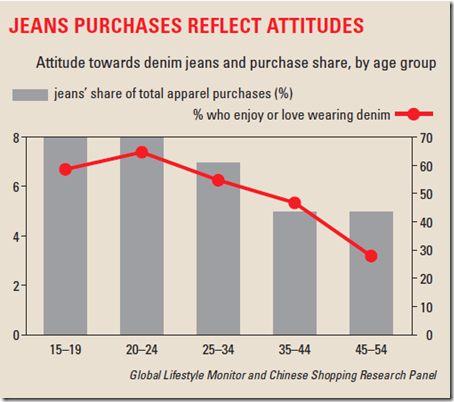
    Because of smaller housing in China, most Chinese consumers have smaller closets than Americans. Thus, Chinese tend to purchase and own fewer apparel. The report cites a survey by Cotton Incorporated – according to which -  Chinese consumers on average spent 7 percent of their apparel purchases on denim products, while the figure in the US was slightly higher at 10 percent.

    The survey revealed that denim jeans are getting more popular in China, especially among the younger set. Denim products’ share of apparel purchases is 8 percent among the consumer group aged 15 to 29, compared with 6 percent of those from 30 to 54.

    Denim jeans are the most purchased denim apparel. On an average, each Chinese consumer owns 4.2 denim jeans. The average unit purchase price of denim apparels is US$12 (RMB89). However, 26 percent of consumers said they don’t have any denim garments.

    Denim Products Owned By Urban Chinese Consumers

    Product Average Quantity
    Denim Jeans 4.2
    Denim Skirt 0.5
    Denim Short Pants 0.6
    Denim Jacket 1.0
    Denim Shirt 0.4
    Total 6.7

    The retail sector in China is getting sophisticated, from modern shopping malls to open market stalls. However, Chinese consumers’ buying habits differ sharply from that of the US. Nearly half of denim products are purchased at department stores, compared with only ten percent in the US. Thirty-one percent is purchased through supermarkets in the US, and only two percent for Chinese consumers. The clothing market – a traditional sale point – provides 16% of the denim sales .  

    Retailer Chinese Consumer(%) US Consumer(%)
    Department Store 44 10
    Speciality or Chain Store 25 58
    Clothing Market 16 N.A
    Small Clothing Shop 13 N.A
    Supermarket / Hypermarket 2 31
    Internet 0 1

    Sales and demand potential demonstrated by the China market has successfully attracted more international brands as well as luxury products. All top ten denim brands are available in the China market and Chinese consumers are becoming more brand conscious. When shopping for apparel, 38 percent of Chinese consumers prefer domestic brands and 22 percent prefer western brands. A quarter of Chinese consumers said they usually shop for a particular brand, which is very similar in the States at 24 percent.
    The following graph by Cotton Inc shows the Chinese love for denim across various age groups  . It shows that though the denim is , understandably, more popular with the younger age groups , the love is there even in higher age groups – portending well for the growth of the denim market in China.

    image