Author: Sandeep Agarwal

  • Search For Your Favourite Pair Of Denim Jeans

    What is your favourite pair of jeans? And how do you find it online?

    Is it from well known denim brands established for a long time eg ‘Levi’s, WranglerLee etc . Or do you fancy the famous premium denim brands like ‘7 For All Mankind’ , ‘ J Brand ‘ ,  ‘ True Religion’ etc ?  Some of us  are great  fans of  Japanese denim brands like ‘ Samurai’ , ‘Sugarcane’ , ‘Evisu’ ..  And there are denim brands like ‘ Iron Heart’   from Japan or ‘ Nudie’ from Sweden which have their strong fan following .
    How do you search for the obscure and the not so obscure denim brands or for that unique pair of jeans that your friend has recommended to you after visiting the Far East ? There are definitely many sites offering jeans online from various denim brands . But it is difficult to find most of the known denim brands from any single site.
    But there is always  Google (the Daddy) to help .. But searching on Google also is not so  easy and most of the time one ends up on pages which do not have any relation to the jeans that you want to search and buy.  One has to sift through a number of pages before coming to the right result pages – espeically in case of smaller – boutique brands.

    So , we decided to take a humble attempt at helping in the process of searching for the right pair of jeans for our readers.
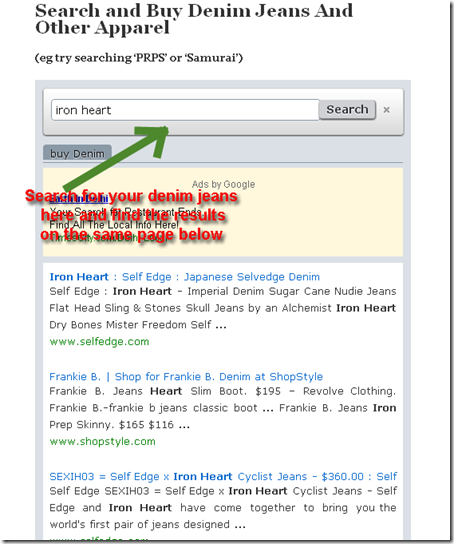
    We have created  a separate search page ‘ Search and Buy Denim Jeans’ where one can search for different brands/styles of denim jeans . Just visit this page and you can search for almost any kind of denim jeans .  Try searching for ‘ PRPS’ denim or ‘ Iron Heart’ denim ….

     search denim jeans This search function would be continously upbdated so that the latest and even more obscure brands could be detected from the deepest of web and brought out .
    It would be nice to have some feedback on this search function  so that we can improve it further…

  • Indigo Rope Dyeing : Operation , Duties, Inspections & Responsibilities


    Morrison Spectrum Indigo Range

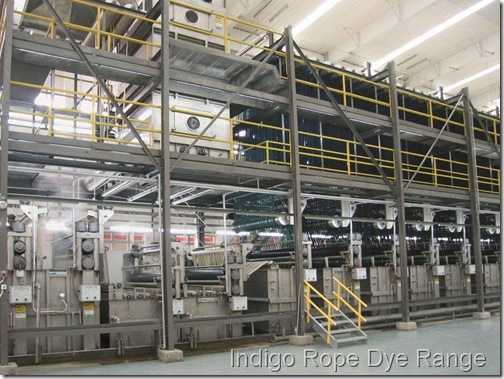
    Morrison Textile Machinery is a global leader in textile processing machinery. They are particularly famous for its Rope Dyeing Machines for denim  fabrics and have installed over 200 machines worldwide. They have shared with us some information on the ‘Duties and Responsbilities of the Indigo Dye operators’ and this info would be useful for many of our readers(with technical background)  who come from various denim mills around the world. Here is the summary of the information provided by Morrison.

    “Based on our experience in the start-ups and operations of over 200 indigo rope and dye ranges, we have prepared a listing of the basic duties which must be included for the maintaining of a proficient operation of the indigo rope range.

    These  duties and functions are broken down into into three parts :

    1. Duties  to be performed before starting the range
    2. Duties to be performed while the range is in operation  and
    3. When it undergoes a normal shutdown.

    Normally, 3 operators would run this operation. However, in the beginning, we certainly suggest more during the training period.During this time, the most qualified personnel may be selected to become the head operator or unit supervisor — whatever the title might be.

    Assignment of these various duties and responsibilities will be left up to the dyeing manager, but all the operators should become aware of the many and various duties which must be performed.
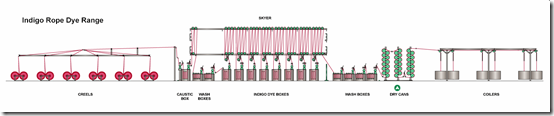
    indigo rope dye range

    I. Before Starting The Range

    1. Turn on steam — Check supply.

    a. Dry Cans

    b. Prescour Box

    c. Rinse boxes – Softener box (if applicable)

    2. Check all valves for proper position for "RUN".

    Indigo Boxes and Circulation System

    a. Discharge Lines – Indigo Boxes – Open

    b. Leveling Lines – Open

    c. Indigo Feed Lines – Open

    d. Restriction Valve – Feed Header – Partially Closed – To be run 12 – 15 PSI on 6 – Dip. Run wide open on 8 – Dip.

    e. Pump – out line to Holding Tank – Closed

    f. Return Line from Holding Tank – Closed

    3. Make sure prepared box mixes are transferred to the boxes and the box volumes are correct. Fill to the overflow.

    a. Prescour

    b. Indigo boxes (if charging or replenishing)

    Softener box (if used)

    4. Recheck and Set Steam Controls

    a. Prescour Box

    b. Softener Box

    c. Dry Cans

    5. Check circulation filter to make sure it is clean.

    6. Check indigo and chemical metering pump filters.

    7. Turn on main power to range.

    8. Turn on circulation pump (manual). Run 10 minutes then turn off.

    9. Recheck for proper valve positions are correct for flow through desired filters and pumps.

    10. Make sure all feed mixes are prepared and adequate volume is available for startup and beginning of run.

    a. Indigo Stock Mix

    b. Indigo feed mix. If not running supplemental chemical feed or hydro boost, do not add hydro until just before the range is started.

    c. Chemical feed mix (if running chemical feed). Have pre-cooled caustic and water prepared and hydro weighed. Do not add hydro to the chemical feed tank until just before the range starts.

    d. Prescour Feed Mix

    e. Softener Mix (if used)

    11. Check for proper position of valves on all feed tanks.

    a. Drain valves – closed

    b. Valves to feed pumps – Open

    c. Valves to other auxiliary feed tanks -closed

    d. Valves to indigo stock transfer – closed

    12. Following tank valves are OPEN

    a. Indigo feed to metering pump – open

    b. Prescour feed mix to box level control or transfer pump – open

    c. Softener feed tank to metering pump or flowmeter – open

    d. Chemical feed tank to metering pump – open

    13. Make sure valves to metering pumps (at pump area) are in proper position.

    14. Check Indigo Box Conditions

    pH: 11.8 – 12.0

    ORP: 780 – 800

    Hydro Tit: Single vatometer reading:

    1.8 – 2.0

    Caustic Tit: 1.8 – 2.0 G/L

    If necessary, adjust the box conditions upwards with an addition of hydro and/or caustic.

    Make up in solution and add to the boxes or use the metering pump if desired.

    If addition is necessary, circulate 10 minutes and recheck conditions after turning off circulation pump.

    15. Wind lead-line slack onto the ball warps.

    16. Open tension bar (if closed).

    17. Recheck all feed line valves to metering pumps.

    18. Check indigo feed and chemical feed (if used) pumps for specified delivery. Recheck and adjust if necessary.

    19. Lower all nip rolls and check for proper nip pressure.

    20. Set switches on circulating and feed pumps to "automatic" position. Pumps will now start and stop with range.

    21. Turn on and adjust water nip sprays at rinse boxes.

    22. Recheck temperature and level in the prescour box.

    23. Check temperature in the softener box.

    24. Turn on softener feed (if used) at box flow indicator and control or metering pump.

    II. Dutiea and Responsibilities while the range in running

    1. START RANGE

    a. Observe compensator positions and watch for slack warps.

    b. Observe tracking and watch for problems with lead line.

    c. Recheck metering pump – only to see that they are pumping.

    d. Prepare to change lead line tubs to yarn tubs at coilers.

    e. Observe for any abnormal behavior of coiler operation.

    f. Recheck dry cans and condition of moisture in running yarn at coiler.

    g. Lay out end of rope at coiler position designated for "lay-out" inspection.

    2. During 1st 20 minutes of running

    a. Check water sprays at nip rolls on rinse boxes.

    b. Check roll nip pressures.

    c. Check compensator arm positions. Trim vernier rheostats if necessary.

    d. Make sure tension bar at front of range (draw roll) is open o- no drag.

    e. Recheck for desired drying conditions – 5 to 7% moisture left in the yarn.

    f. Observe running warps at each box – especially for laps on sky rolls.

    g. Check dosification of metering pumps. Record.

    h. Check flow and level in prescour (or sulfur bottom) box.

    3. 1st 20 minutes of operation

    a. Check flow and temperature of softener box.

    b. Recheck range speed.

    c. Check circulation pump operation.

    d. Observe coiler operation.

    e. Check indigo box conditions – record. Determine if conditions are satisfactory. Record data in log book or control monitor sheet.

    4. Specific Duties While Range is Running.

    Perform duties and record in Log Book

    a. Check flow to softener box (if used) – also temperature.

    b. Check range speed.

    c. Check circulation pump operation. Observe pressure on discharge restriction valve (if applicable).

    d. Clean circulation filters every 3 hours.

    e. Check indigo box conditions hourly and record.

    f. Check indigo and chemical feed metering pump delivery hourly and record.

    g. Constantly patrol range. Look for any abnormalities. Patrol and observe.

    – lap-ups – sky rolls and other areas

    – bearing noise – unusual metering pump noise

    – interruption of metering pump delivery

    – reduction problems (indigo squeeze nips)

    – abnormal tension – compensators unbalanced

    – incorrect water spray at nips

    – high or low level in indigo boxes

    – drying conditions – too damp or too dry

    – incorrect air pressure at nips

    – motor overload

    h. If machine stops, insure that circulation and metering pumps stop with range.

    i. If range is necessarily slowed down, make sure metering pumps are adjusted.

    j. Prepare new feed mixes prior to need. Keep chemical stock near preparation area.

    k. Turn in new feed mixes just after old mix is exhausted. Rinse dye tanks before new indigo preparation.

    l. Check "wet out" of yarn in sample from prescour mix.

    m. Observe warps for problems or lost ends.

    III. When Dyeing Range Stops- End of Set

    1. Adjust the tension bar at the stock draw roll to induce tension on the incoming lead lines. Do this before "pulling off" and plaiting leads.

    2. Turn off metering pumps and circulation pump.

    3. Turn off water and steam at nip sprays and boxes.

    4. Close valves from feed tanks.

    5. Raise all nip rolls.

    6. Drain wash boxes and prescour box. Remove any lapped up ends from rolls.

    7. Flush out lines and metering pumps. Left over chemical feed may be used if pump piping is appropriate.

    NOTE: Never leave indigo in the metering

    pumps for an extended period of time.

    8. Clean metering pump and circulation pump filters.

    9. Turn off power to range.

    10. Tie "bow ties" in lead lines at all accessible areas. This prevents fraying of lead lines, prevents laps.

    11. Check and clean metering pump back pressure valves. Replace diaphragms if questionable. This should be practiced weekly.

    12. Clean feed tanks that are empty.

    13. If low volume is in the indigo feed tank, transfer back to the indigo stock tank

    14. Small volumes of chemical feed mix may be pumped through the metering pumps into the range. This in many cases will avoid hydro addition to the boxes when the range is restarted.

    15. Check and remove any yarn lapped on sky rolls.

    16. Clean range area – floor, etc.

    17. Dispose of any empty drums, bags, etc.

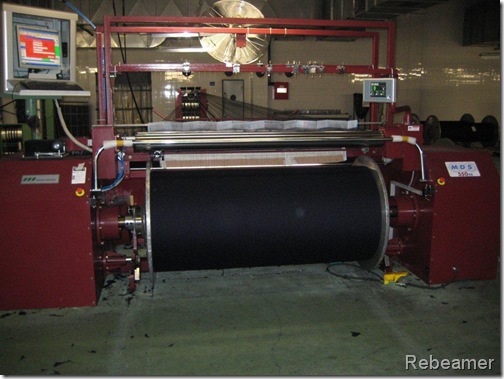
    About  : Morrison Textile Machinery is a global leader in textile processing machinery.Since its founding nearly fifty years ago, Morrison Textile Machinery has been designing and producing the  textile dyeing and finishing machinery for fabric producers worldwide. Known the world over for their Rope Dyeing Machines, Morrison has also started producing denim preparation machines like Ball Warpers and Rebeamers – and as a result becoming a single source of machines for Indigo Rope dye and denim finishing.
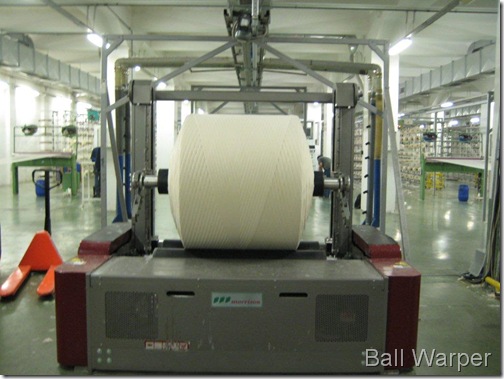
     

    Orta Taper

    rebeamer indigo yarn

  • Bangladesh Export Of Denim Jeans To EU : 2005-2009

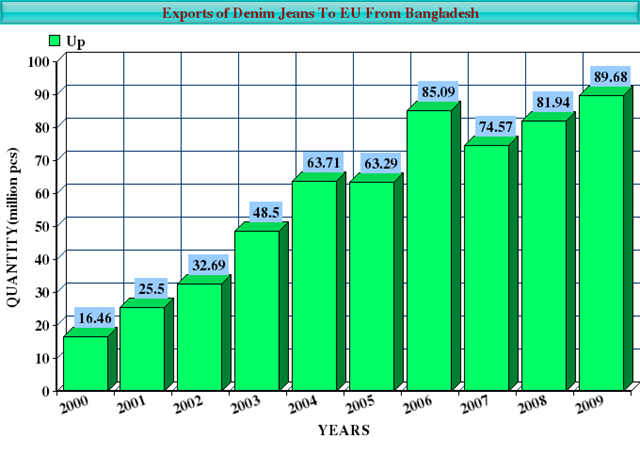
    Bangladesh is a major exporter of denim jeans to EU27. Being low priced and with special and indefinite duty free and quota free access under ‘Everything but arms’  initiative to EU , Bangladesh continues to dominate the EU denim import business.  Currently, it has about 19% share of the denim jeans import market in EU27 countries.

    Lets have a look at the figures of imports of denim jeans from Bangladesh for the last 10 years .

    Year Total Denim Jeans (million pcs) Value (million Euros) Average Price
    (Euro/pc CIF)
    2000 16.46 87.92 5.34
    2001 25.50 120.26 4.72
    2002 32.69 144.69 4.43
    2003 48.50 190.87 3.94
    2004 63.71 247.52 3.88
    2005 63.29 245.42 3.88
    2006 85.07 341.78 4.02
    2007 74.57 289.98 3.89
    2008 81.94 317.23 3.87
    2009 89.68 373.93 4.17


    denim prices bangladesh

    Thus we can see that the exports of denim jeans have increased by almost 400%  from 2000 to 2009 . There have been some years in which the exports increased by a large % as compared to the previous year . These years have been :
    2001    : Increase  54%
    2002   : Increase 28%
    2003   : Increase 48%
    2004  : Increase 31%
    2006 :  Increase 34%
    2009 : Increase 10%

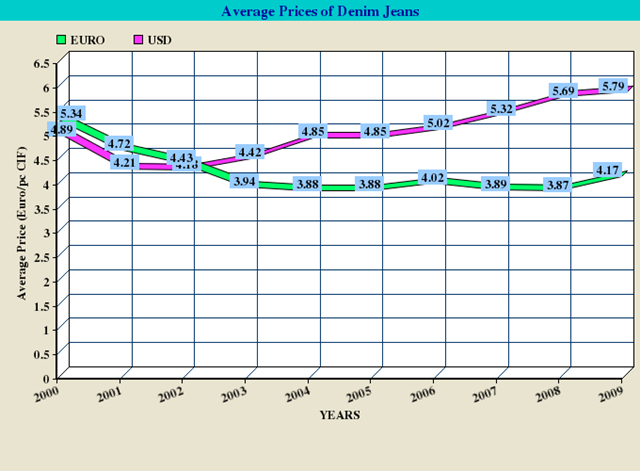
    The prices from Bangladesh have been more or less moving in a narrow range of Euro 3.8  to 4.20 since 2003. Though in earlier years, the prices were much higher, but recent years have seen the prices move around in this range. There is no clear trend in the prices from Bangladesh if we consider these figures. However,  would it be the similar situation if the Euro prices were converted to dollar prices . In the table below, we have taken the average conversion factor (from Euro to USD) for each year from 2000 to 2009 and applied the factor to the average prices for that year. This gives us the average dollar prices for export of denim jeans from  Bangladesh to Eu . With this table we will come to know whether there is really no trend for prices from Bangladesh:

    Year Euro To USD
    average factor
    Av Price  (Euro) Av. Price (USD)
    2000 1.09 5.34 4.89
    2001 1.12 4.72 4.21
    2002 1.06 4.43 4.18
    2003 0.89 3.94 4.42
    2004 0.80 3.88 4.85
    2005 0.80 3.88 4.85
    2006 0.80 4.02 5.02
    2007 0.73 3.89 5.32
    2008 0.68 3.87 5.69
    2009 0.72 4.17 5.79

    av prices of denim jeans

    In the table and chart above, we can see that actually the prices from Bangladesh are quite different than what Euro prices show. We can see that since 2002 the average prices  in Euro terms (from 2002 to 2009) have declined by more than 5% whereas there is an  uptrend in dollar terms  and the prices have increased from $4.43 per piece in  2002  to $ 5.79 in 2009 – actually showing an increase of  about 30%

    Dollar being the ruling currency worldwide, gives  a better picture of the prevailing price situation and it clearly reflects that the prices from Bangladesh are continuously and steadily rising over the years. This is despite the fact that the volumes have increased manifold during this period. The Bangaldesh denim export industry is only expected to grow stronger in the coming times . We have seen a number of denim mills also come up in Bangladesh and this strengthens the supply chain making it easier for Bangaldesh to go deeper into these markets.

    Also check : Exports of Jeans from Bangladesh to USA

  • Denim Jobs Update

    As we previously announced the launch of the jobs board at Denimsandjeans.com. I would like to inform about the latest additions to this board . It is now much more extensive and can be used by professionals around the world for searching for denim jobs .

    Denim jobs in USA

    This section is now very extensive and enables one to find denim jobs in various states/cities of USA including L.A, New York and many other places. Have a look at the picture below. The arrow shows the cities in US for which the denim jobs can be searched. Just click on any of the cities to find latest denim jobs in those cities.

    jobs1


    jobs2

    The left panel on the board also enables one to filter the results by various other criteria eg Designer jobs, Production Jobs and can be combined with other criteria of job type like  Permanent, Part-time, Contract etc and the results can be collectively filtered. See image on the left side


    Denim jobs in rest of the world

    What about denim jobs in the rest of the world?
    We have now made it easier to find latest denim jobs in various countries around the world eg Hong Kong, Italy, Australia, Canada, India etc.  Have a look at the image  below  :

    jobs3

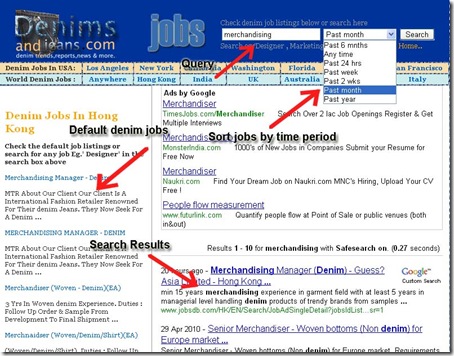
    Just click on ‘Anywhere’ if you are searching for jobs at any place around . Once you are on the new search page, just search for any query eg ‘Designer’. You will find new job listings in the search results which would be from anywhere in the world.  However, if you want to restrict your search to any particular country, we have given the option for some countries including Hong Kong, India, UK, Australia, US, Canada and Italy. We shall be adding more individual country searches soon.
    Just click on any country name and the search page for that country will open. Eg, for denim jobs in Hong Kong, we click on ‘Hong Kong’ and we immediately get results for denim jobs there. Searching for any position eg ‘ ‘Merchandising’– would enable one to find the merchandising jobs in Hong Kong. Similarly , jobs in other countries can also be searched individually.

    jobs hongkong

    Thus you can use the extensive jobs board for searching for almost any kind of denim job around the world. 

    Posting denim related requirements

    Companies can also post their denim jobs on our jobs board and get eyeballs of a large number of denim professionals .  For a small fee, the jobs would be posted on the main job search page and remain there (at the Top) for 30 days .This , however, entails a small fee .

    image

    We would be very happy to receive reader comments on our jobs section and it would enable us to make this service more useful to the industry.

  • How To Sew Extra Heavy Thread Sizes In Denim Jeans ?

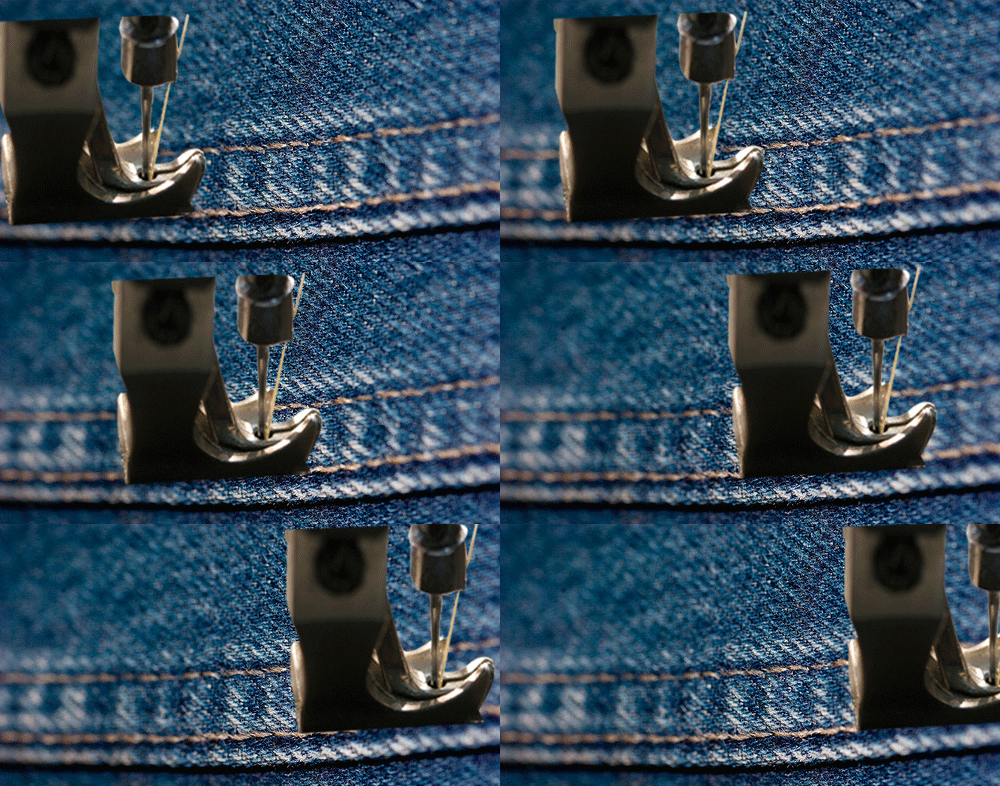
    sewing-thread This is the second in the series of  technical bulletin and guide from American & Efird ( a global leader in denim sewing threads) for the benefit of denim garment manufacturers.

    In this technical guide it can be  understood how to sew extra heavy threads on denim to make the the products unique .Retail designers are always looking for a way to make their products unique and this definitely applies to sewing denim garments. From a thread perspective, this can include various options as listed below :

    1) Using contrast color threads

    • For all topstitching operations
    • For different operations
    • For different needles of the same operation

    2) Using threads that will maintain their color regardless of the wash process.

    • Using a 100% polyester thread dyed with disperse dyes.

    3) Using threads that will wash-down depending on the severity of the finishing process.

    • Using a cotton wrapped core thread.
    • Using an true indigo dyed cotton wrapped core thread

    4) Using a thread that looks different than regular stitching thread.

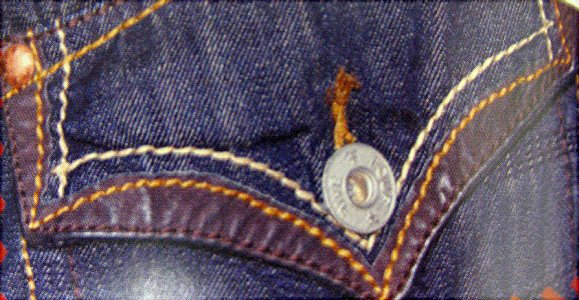
    5) Using different thread sizes that give a bolder stitch appearance.

    In this guide, we will concentrate this option ie use bolder stitches on denim jeans .

    Larger Thread  Sizes  That  Give A Bolder  Topstitch  Appearance

    image

    Tex Size = Gram Weight Per 1000 meters of undyed yarn 

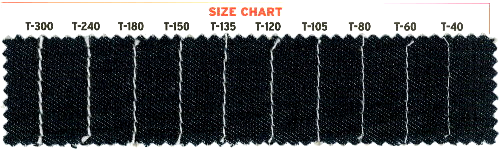
    Years ago the most common size of thread used for topstitching denim was a Tex 60 or 80 or possibly Tex 105 size threads. Recently many manufacturers have graduated to a Tex 120 size thread to give a slightly bolder stitch appearance. Today, many denim designers are looking at much heavier thread sizes including Tex 150, Tex 180, Tex 240 and even Tex 300.image
    This has created problems for many denim garment manufacturers because their normal denim sewing machines were not designed for these heavier threads.

    WHAT DETERMINES THE THREAD SIZE THAT CAN BE SEWN ON A SEWING MACHINE?

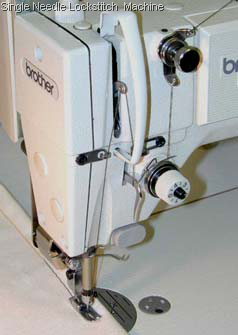
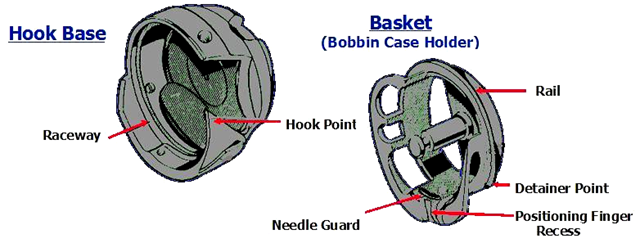
    On 301 lockstitch machines, the maximum needle thread size that can be Single Needle Lockstitch  Machine sewn is usually determined by the capacity of the hook or shuttle in the machine, and the size of the needle being used. There must be enough clearance between the bobbin case holder and the hook base to allow the thread to move freely around the hook during the stitch formation.
    Sometimes an older hook will work better on larger threads because it has more play in the raceway allowing for more clearance for the thread.
     

    The hook must also accommodate the use of larger than normal needles. In some cases, the retainer or gib of the hook is shaped differently to allow the  denim sewing
    thread to of the hook with less resistance. Note that the hook must be properly lubricated.

    Many sewing machine companies do make higher capacity Hooks that will allow larger threads to be sewn, but these are generally very expensive.
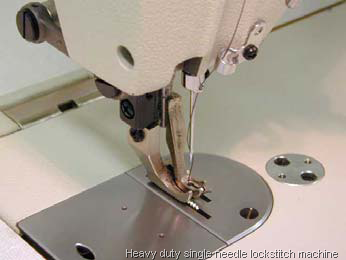
    Heavy duty single needle lockstitch machine There are also machines designed for sewing very heavy threads used for sewing upholstered
    furniture and leather goods. Some manufacturers are purchasing these types of machines so they can sew extra large thread sizes up to Tex 500 or Tex 600 thread sizes!.

    Heavy duty single needle lockstitch machine

    Another option for sewing heavy threads on 301 lockstitch machines is to sew the heavy thread in the bobbin and using a regular size thread in the needle. This means that the seam is inverted when it is sewn. This is a common practice when setting front pockets or outlining the fly on a 5-pocket jean.
    It is easier to use heavier thread sizes in the needle position ofimage
    chainstitch machines
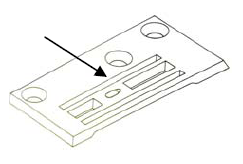
    , however, even these machine sometimes must be modified to allow the thread to be pulled up from under the needle plate with the least amount of resistance. This may include increasing the size of the needle hole in the needle plate.

    RECOMMENDED NEEDLE SIZES FOR HEAVY THREADS

    Most manufacturers who are sewing heavy denim are using a size 140 needle. When sewing heavier thread sizes, larger needle sizes must be used. Note: many times using a larger needle size will increase the occurrence of fabric damage and broken stitches due to needle-cutting.

    Thread Tex Size

    Minimum
    Needle Size (metric)

    T-105 – T-135 140
    T-150 150
    T-180 160
    T-240 200

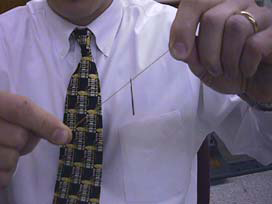
    image A simple test to determine if the needle and thread are compatible is to thread the needle with about 12 inches of thread. Hold the thread fairly taught, at a 45-degree angle, and with a circular motion make the needle twirl around the thread. As the twirling motion of the needle slows down, the needle should slide freely from the top to the bottom of the suspended thread. If the needle does not slide easily, then sewing problems Heavy Duty Single Needle Lockstitch Machine will probably result.

    THREAD TENSIONS REQUIRED FOR HEAVY THREAD SIZES

    Generally a heavier thread size will require more thread tension to properly set the stitch on denim fabric. The heavier the sewing thread being used, the more needle thread machine tension that will be required. Lockstitch machines will also require heavier takeup spring pressure. Also, all of the thread guides and eyelets may need to be used to help control the thread
    during the sewing cycle. This will also help to keep “French” knots from forming in the thread path that can restrict the proper flow of thread to the needle.

    Related Post : The A&E guide on ‘Denim Garment Stitching Recommendations’

    Need any advice on denim sewing ? Contact Al Irvine from A & E at this email address.

  • Difference Between $20 and $240 Jeans – An Evaluation

     what-jeans-to-buy1 What really is the difference between a $20 and a $240 jeans? There is a world of difference in the prices but how much should be the difference in quality to warrant this price difference. Normally it should be a lot and it could be on many  inputs that go into a jeans  :

    The difference could be related to  :

    • fabric quality
    • stitching quality
    • attention to details
    • washing effects
    • accessories used
    • fit
    • brand name
    • life of a jeans

    or a combination of a number of these or more  factors.

    ConsumerReports – a non-profit consumer welfare organisation -  evaluated evaluated seven women’s cotton/spandex boot-cut jeans in that price range, looking for sewing and fabric flaws, washing one pair of each five times, opening stitching at the waist to examine construction, and checking zippers . They produced a report with their findings and excerpts from this report are shared in this article.The seven jeans selected were  :

    1. Signature by Levi’s – Totally Slimming : $20
    2. Old Navy – The flirt curving dark balboa :$30
    3. Gap 1969 – Perfect boot :$70
    4. Levi’s – Skinny Dusk :$70
    5. Lucky Brand – Stockton Lola : $80
    6. 7 for all Mankind – Flynt : $155
    7. True Religion – Becky Silver Chainball : $240

    Their findings were :

    • Some cheaper jeans have better construction features such as interfacing under the waistband .
    • Levi’s Signature jeans shrunk maximum in the width at 2.5% while 7 for all Mankind shrunk maximum in length at 3% .
    • Lucky brand was the only jeans which did not shrink at all. It was , however, a highly distressed jeans . Zipper locks only in ‘down’ position.
    • Levi’s and Old Navy  jeans had stitching under waistband which limits stretching.
    • 7 for all Mankind had some features to justify their high price eg the  silver bling (on back pockets and  hiding inside a front pocket), a nice print fabric for the pocket bags (where it can’t be seen), big white stitches as an accent, and a zipper that won’t stay up unless it’s locked down.

    If we look at their findings above,  we will find that even the less expensive jeans can have features which may be better than  those of the more expensive premium denim jeans. An expensive jeans does not necessarily translate into a better jeans.
    (Note: However, since the sample size of this experiment has been small, we  do not say that a particular brand of jeans is better than the other.)

    However, having said that , we also need to understand that denim jeans are not bought for their technical features alone. In fact, most of the consumers are not even aware of technicalities of denim fabrics . They are , mostly, looking for a jeans which has a good hand feel, a great looking wash, a reasonably good fit ( this sometimes is the deciding factor for buying jeans)  etc. Brand name , celebrity endorsements and company name are also big factors in deciding regarding the jeans purchase as they provide the necessary ego massage to the buyer !.

    Normally , luxury products have a high proportion of brand value input and it combines with other factors to make them worth the money. But it is also to be ensured that the quality of  such high priced products needs to constantly outshine the quality of that of lower priced products . A $150+ premium denim  jeans may sell well during a boom time and on the strength of its brand name, but it will not keep on doing so if it does not provide quality that is much much better than the cheaper jeans available in the market. The owner of such high priced products need to feel proud of their purchase for a long period of time to sustain the high brand value that has been charged.

    About : ConsumerReports.Org is run by Consumers Union (CU) – an expert, independent, nonprofit organization whose mission is to work for a fair, just, and safe marketplace for all consumers and to empower consumers to protect themselves. The organization was founded in 1936 when advertising first flooded the mass media.

  • China To EU – Denim Jeans Export Quantities , Prices etc : 2007-2009

    china exports denim jeans

    China is a major exporter of denim jeans – men’s and women’s to the EU.
    China is very competitive price wise and seems to have been continuously investing in improving quality also. The exports from China to EU have been continuously rising and China is currently the largest exporter of denim jeans/breeches to EU27.

    Let’s have a look at the figures of exports of denim jeans/breeches from China  to EU27 

    Year Jeans Exported  (million  pcs ) Total Value
    (Euro)
    % inc.  in qty. over last year Av. Price
    per pc CIF
    (Euro)
    2007 101.24 559.42 +51.82% 5.53
    2008 180.85 827.13 +78.63% 4.57
    2009 195.80 926.71 +8.26% 4.73

    For the years 2007 and 2008, China has experienced a phenomenal growth in exports of denim jeans with more than 50% and 78% growth in the two years respectively. This kind of growth in exports over an existing large base is really good and shows the power of Chinese denim manufacturers to compete with the rest of the world , specially their competitiors like Bangladesh , Vietnam etc who are cheaper to them.  During 2009, the growth in exports slowed down during to general slowdown in Europe , but still maintained  decent 8% plus levels. We may see decent increase in exports in the year 2010 also.

    However, this growth that we are witnessing in the last 3 years would fade in comparison to the growth of 960% !that China got in the year 2005 over 2004 when quotas were lifted. China was only restricted by the quota regime and currently nothing seems to hold it back.

    Price wise , Chinese exports have registered slight downfalls but their prices still cannot be called as the cheapest as there are other countries exporting at lower prices. But China will not always remain very price competitive. It has issues on its currency – which it may have to devaluate slowly – and it may not always be able to provide the kind of export subsidies it is currently providing with export tax rebate at 16%.

    Note:      The EU27 region comprises of the following countries -:

    Austria , Belgium , Bulgaria , Cyprus , Czech Republic , Denmark , Estonia , Finland , France , Germany , Greece , Hungary , Ireland , Italy ,Latvia , Lithuania , Luxembourg , Malta , Netherlands , Poland , Portugal , Romania , Slovak Republic , Slovenia ,Spain , Sweden and United Kingdom.

  • Siwy Denim Autumn/Winter 2010 Collection Preview

    siwy denim jeans Siwy premium denim launched their Autumn/Winter 2010/2011 range experimenting with a number of flambuoyant washes and new fabrics . Siwy denim is only about 5 years old and was launched in 2005 .The female only brand infuses the LA-dominated denim category with a heavy dose of New York attitude and has been adorned by denim heads including Kate Moss, Sienna Miller , Nicole Richie and more .

    Siwy’s Fall / Winter 2010 collection provides siwy denim jeans 2010

    • Power trend cuts.
    • A wash spectrum that ranges from archival vintage to classic indigo
    • Usage of American and Italian power stretch denim.
    • From oversized fl are cut jeans (Anita) to signature acid ‘two tone’ bleached skinny’s .

    The signature Siwy silhouette remains in the super skinny ‘Hannah’ jean, debuting a number of new fabrics and washes for AW10, including Vegetarian crushed leather and metallic print.

    SIWY ALICE JEANS
    SIWY HANNAH ONE LOVE JEANS

  • Denim Pollution – Solutions To Sulphur Dyeing Wastes

    denim dyeing wastes

                            This is a guest post by Harry Mercer
    The problem of treating wastewater from denim dye waste is significant in many developing countries. Either the costs of treating these wastes affects profit margins or the waste goes untreated and is discharged directly into rivers.

    The most serious pollution problem results from the use of sulfur dyes in denim. Once the sulfur dye is applied the cotton is squeezed and washed. Typically, 50% or more of the sulfur dyes are washed off, producing water contamination that is difficult to remove from water.

    Techniques have been developed to greatly reduce and even eliminate sulfur dyes as a source of textile pollution:

    • Unlike most types of cotton dyes, sulfur dyes can be recovered and re-used. The contaminated water from sulfur dyeing usually contains enough dye and chemicals to produce lighter shades without additions of dye or chemicals. For example, the wash-water from sulfur-black dyeing can be concentrated through evaporation, filtration or it can be re-used by adding enough dye and chemicals to produce the standard shade. There are methods for titrating sulfur dye with copper sulfate, reducing agents can be added to bring the ORP to the correct level and the alkali can be titrated with a 2-endpoint titration with HCl and formaldehyde. Using these techniques, the sulfur dye can be recycled which saves money and ends the pollution. It should be noted that sulfur dyes precipitated with an acrylic type flocculant cannot be re-used.
    • I have developed methods for sulfur dyeing that fix the dye completely, so that none is lost in washing, leaving the wash water completely clear. Depending on the quality of the dye,  which reducing agents are employed and the pH of dyeing, various inexpensive buffers can be employed that will fix 100% of the dye which eliminates the colored waste and also reduces the amount of dye needed by a sulfur black shade by 50% or more.These  methods were developed over a 20 year period and have employed them  in Brazil, Ecuador, Indonesia,  Phillipines and Thailand.
    • There are also cold-dyeing methods that also eliminate the dye waste 100%, saves energy and has colorfastness approaching that of a vat black.
    • Reducing agents are a major source of Chemical Oxygen Demand. Sodium dithionite sold commercially as sodium hydrosulfite has a COD of 0.22 kilograms per kilogram of 100% hydrosulfite. Since it is normally produced using zinc metal as a catalyst, there is also  some presence of heavy metal contamination. There are non-polluting substitutes that can be used with many Indigo-dyeing methods. Sodium sulfide-type reducers are commonly used, however they can be easily replaced for hot-dyeing methods with reducing sugars which includes sugar, dextrins (corn-sugar) and molasses. These have been offered by chemical companies for decades and basically break down under conditions of high temperature and high pH (11) into hydrogen and alcohol, which both escape into the air.
    • Sulfur blacks do not require chemical oxidation, in fact peroxide will reduce the colorfastness of sulfur blacks and acid-oxidation will weaken the yarn. – After applying sulfur black, it should be allowed to cool in air which takes the dye out of reduction and allows oxidation with atmospheric oxygen. The initial washing should be  cold in order to avoid washing off any color and also to allow further oxidize with  oxygen-rich cold water. The final wash should be warm, about 60 degrees, which will  remove alkalies and residual reducing agents. If noticeable color is removed, the dyeing procedure requires adjustment.


    imageThis is a guest post by Harry Mercer. Mr. Mercer has 30 years experience in the denim business including 3 prominent U.S. denim companies.He is an expert colorist for measurement and color matching as well as textile testing.

  • Denim Sewing Threads – Garment Stitching Recommendations And Guide

    image American & Efird (A&E) is a global leader in denim threads manufacturing. With over a century of experience in industrial threads , they come out with number of technical bulletins to help and guide denim garment manufacturers to optimize seam performance in denim stitching so that not only rejections due to stitching are minimized but also the life of the garment is extended with better stitching.

    Here are some recommendations from A & E to optimize seam performance.

    Denim Jeans – Optimizing Seam Performance

    Selecting the proper thread for denim garments is very important to minimize sewing and seam performance issues. There is an old saying that:

    Thread only makes up a small percent of the cost of the finished product … but shares 50% of the seam responsibility.

    A typical pair of adult size jeans will have from 200 to 250 yards of thread in them depending on the seam construction. Most major jean manufacturers have experimented with different thread types to reduce cost but most have found that corespun threads give the best overall
    performance. Most jean manufacturers put their products through various wash processes after manufacturing and some of these processes can be very harsh. The cost of these wash processes can be from $.75 to $3.00 per jean or more depending on the chemicals, stones, enzymes and process time required. The amount of thread used in a jean typically costs between $.25 and $.30 while the wash-process can cost up to $3.00 per jean.
    The thread must be able to withstand all of these processes … and hold the seams together for the life of the garment.
    When you talk about sewing denim, there are four key issues that need to be considered:
    1) What is the weight of  denim fabric?
    2) How large  topstitching thread is required?
    3) What finishing procedures will the jeans be subjected to?
    4) What quality issues need to be addressed?
    With these questions answered, you will be able to produce jeans that meet the requirements for today’s  huge variety in Jeanswear. From a basic 5-Pocket Jean to the most creative pair of High-Fashion Jeans, your sewing plant can produce the quality for each.
    The thread of choice used by most quality denim garment manufacturers for topstitching and stress seams include corespun threads ie

    What Are Corespun Sewing Threads?

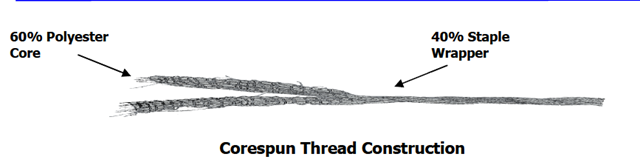
    Core threads are made by spinning a wrapped of cotton or polyester staple around a bundle of continuous filament polyester fibers to form a yarn and then two or more of these yarns are twisted together to form a corespun thread. Generally the core makes up approximately 60% of the thread construction contributing to a more uniform and higher tenacity sewing thread as compared to a 100% spun polyester sewing thread. For example, a T-60 PW Core thread will have a breaking strength of approximately 8.7 lbs. while a T-60 Spun Polyester thread will have a breaking strength a little over 5 lbs.

    core spun denim thread

    Corespun Thread Construction

    Cotton wrapped  core spun threads have very good needle heat resistance. When wrapped with a polyester wrapper, core spun threads have excellent chemical resistance and color fastness. The fibrous surface on either thread reduces the shiny look and also contributes to superior frictional characteristics as the thread passes through the sewing machine.

    • Some designers prefer the thread to wash-down during the wash processes and if this is the case, you would select a Cotton-Wrapped Core thread . Degrees of color fastness will vary with particular shades. With this known factor, a user of Cotton-Wrapped Core should look at all wash codes to ensure that the thread color will be appropriately maintained. Also  recommended is  doing pre-production wash testing to assure that the wash-down look will
      be acceptable.
    • On the other hand, many jean designers want the thread to maintain its color for the life of the garment and offer a signature look.  If color fastness is key, then select a Polyester-Wrapped Core thread . Also with Polyester Wrapped products you have the option of picking the desired color from a color palette to obtain the look you want after the wash procedures. This will allow greater shade control, which will be maintained after continual washes by the consumer. Doing pre-production wash testing prior to going into production is still recommended.
      Cotton-Wrapped and Polyester Wrapped Core threads offer excellent abrasion resistance to the varied wash codes the denim garments may be exposed to.

    Thread Size

    Both of these thread types are available in sizes to meet the variety of denim fabric weights. From a Tex 40 to a Tex 120, you can achieve the desired performance throughout the sewing floor and after the varied finishing processes. Utilize the correct size to obtain the desired look while maintaining seam integrity. Some basic sizes utilized in today’s denim manufacturing are:

    Needle Thread Looper Thread Serging Application
    Tex 150 – T-300 Tex 80 or Tex 60 T-40 or T-60 Extra Bold appearance
    Tex 120 to T135 Tex 80 or Tex 60 T-40 or T-60 Bold appearance
    Tex 80 or Tex 105 Tex 60 or Tex 40 T-40 or T-60 Normal
    Tex 60 Tex 60 or Tex 40 T-40  
    Tex 40 Tex 40 * T-40  

    *8 oz denim usage or Chino twills

    Cut or Broken Stitches

    denim stitchingMost manufacturers of denim and twill  garments that pre-wash garments after they are assembled have experienced problems with excessive “cut” or “broken” stitches. In fact many manufacturers have found this problem to be significant reaching in excess of 30 to 40% of the
    products being sewn
    .
    Many times this problem occurs when adenim stitching thread  previously sewn stitch-line is crossed during a subsequent sewing operation and the needle damages the thread in the seam. Broken stitches can also occur when there is excessive abrasion or chemical degradation of the thread during the wash process. Let’s now discuss what are some  of the solutions to these problems.

    Solutions To Cut Or Broken Stitches

    • Many manufacturers have significantly reduced the number of “cut” and “broken” stitches by using high-performance sewing threads on stress seams. Make sure the correct thread type and size are being used in both the needle and bottom (looper) positions. Core threads that have a continuous filament polyester core are much more resistant to cutting and degradation than 100% spun polyester thread constructions.
    • Usually the larger the thread size, the more resistant the thread is to being cut by the needle or failure due to chemical degradation or heat. Because of this many manufacturers have increased the thread size on critical operations including waistbanding, seat seaming, etc. Typical thread sizes used on heavy denim run from T-105 down to T-60 depending on the desired look. Typical thread sizes used on twills used in the manufacturing of chino pants run from T-40 to T-60.
    •  Inspect the needle point at regular intervals and check for sharp or burred points. If the needle point is damaged, replace the needle. Many companies have found that it is best  just to replace the needle on critical operations once or twice a day.
    • Check for signs of needle heat or excessive heat exposure during laundering that may be melting the thread. Usually if the thread has been damaged by heat, the thread will have a hard melted surface that can be felt or seen using a magnifying glass. If you suspect
      that needle heat is a problem, try using a special coated needle or needle coolers to  reduce needle heat. Make sure the thread has the proper type and amount of lube. Most major thread suppliers have developed high-performance lubricants to minimize heat
      damage on polyester threads. A cotton wrapped core thread may be more resistant than a 100% polyester thread.
    •  Use proper thread tensions. Make sure the stitch on the seam line is loose and able to move if it is hit by the needle. Tight machine thread tensions will NOT allow proper flexibility in the stitch and will increase “cut-stitch” damage. Generally on chainstitch seams, the ideal stitch balance is when the needle loop on the underside of the seam lays over half way to the next needle penetration. This can be checked by unraveling the looper thread and observing the needle thread on the underside of the seam or checking the ratio of needle to looper thread. It is normally recommended that this ratio be
      approximately 60% needle thread to 40% looper thread consumed.
    • Check the edges of the needle plate and presser foot needle holes to make sure they do not have any sharp edges or burrs that can damage the thread during sewing. Properly remove all burred or sharp surfaces making sure not to oversize the needle holes which
      can lead to excessive “flagging”.
    • Inspect the feed dog teeth directly behind the needle holes and make sure they are not sharp. If required, buff the feed dog teeth with a wire wheel or with a stone if they appear to be sharp. Be careful not to remove too much of the feed dog teeth that could hinder the feeding or interfere with chaining.
    • Use the minimum amount of presser foot pressure to get a uniform stitch length. Excessive presser foot pressure can cause the thread to be damaged when it is compressed against a relatively sharp surface. On some machines it is sometimes necessary to use a presser spring with fewer coils per inch to give more consistent pressure even when crossing heavy seams.
    • The proper type and capacity folder should be used to prevent stalling when crossing heavy seams. Feed stalling will increase the chances of “cut” stitches.

    DAMAGE DURING PRE-WASHING

    Sometimes partially damaged thread from the sewing operation will fail during stone washing or other processes. Most of the time this damage is difficult to detect but should be investigated using the suggestions mentioned on the previous pages. On the other hand, many seams are damaged during the wash processes due to excessive abrasion, chemical degradation, and heat degradation.

    denim stitching problem

    To reduce damage to the thread in the seams,  the following is suggested:

    • Make sure the correct thread type, construction and size is being used. For example, the product  Perma Core® NWT.
    • Work with your laundry to develop standards with regard to the type and amount of chemicals, rocks, cycle times and temperatures that are being used in both the washing and drying processes. You should monitor and properly test the following:
      a) Any changes of rocks and chemicals from one vendor to another
      b) Changes of cycle times
      c) Changes in temperature during the washing or drying cycles
    • Evaluate the best way the garment should be processed, whether it should be inside-out or right-side-out, the fly buttoned or not buttoned, etc. Care should be taken if the garments are turned right-side-out when they are still wet. Extra moisture in the garments can cause excessive whipping of the bottom hem seam causing excessive
      damage.

    To know more about denim stitching , different types of threads and guides on stitching ,  visit here.

  • Denim Industry In South China – History, Production Costs & More..

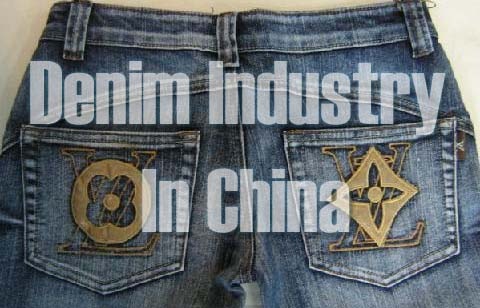
    denim industry china Hong Kong and Taiwan started to produce denim fabric and apparel in the mid-70’s. To take advantage of cheaper labor cost and abundant resources, Hong Kong manufacturers later relocated their factories to the mainland, mainly in Guangdong, Shanghai and Jiangsu province, about three decades ago. The Guangzhou No. 1 Cotton Textile Factory and the Shanghai Shenshi Textile Company were the first two Chinese companies that manufactured denim fabrics and apparel from cotton.

    With about three decades of experience , Guangdong province has a developed  denim industry supply chain,  support systems and hence a fully integrated industry. In addition to OEM exports, Guangdong manufacturers have developed their own brands for the domestic market. Guangdong produced about 1.26 billion mtrs of denim fabrics in 2007-2008 ie nearly half of the entire production of China. To put that into perspective, the total production of denim in India is about 600 million mtrs and in US the production is only about 90 million mtrs !! . The total production of denim fabric is estimated to be anything between 2.3 and 2.6 billion mtrs.

    Main Denim Production Centres

    Xintang, Kaiping, Jun’an and Dachong of Guangdong province are the major denim manufacturing bases in South China. Xintang wholesale market is the world’s largest for denim apparel. Xintang houses over 2600 denim related factories and produces about 31% of total Chinese denim production. The top three export markets for Xintang are US, Panama and Hong Kong.

    Kaiping : Three hours drive southwest of Guangzhou , Kaiping has developed a comprehensive denim production chain from raw materials to garment sewing. The area has over 450 companies involved with the denim industry with a denim related turnover of over US$ 600 million .

    Ju’nan : An another area of  important denim manufacturing base in China is Ju’nan  where over 1000 denim related companies produce over 100 million mtrs of denim apparel each year ! .

    Costs of denim production. Are they increasing ?

    Labor Cost :Denim production requires skilled labor and the cost of skilled labor seems to be increasing in China with some factories claiming the monthly cost of skilled labor to be in range of US$ 190-220 and this cost is on the increase. The Chinese Labor Contract Law implemented on 1st Jan 2008 require the employers to the employee’s social security fund – which has further increased operational costs (around $30 per person per month).The increased costs have pushed many factories to relocate to less developed regions in central China, such as Hunan province and Jiangxi province
    Environmental issues : According to the Chinese Ministry of Environmental Protection , the textile dyeing industry discharges over 7.5% of national wastewater. Only about 7 % of the waste water produced by the textile industry is recycled . The Pearl river delta is one of the most polluted areas in China and the main reason for this pollution is denim production.The denim manufacturers are  being forced by the government to recycle and reuse effluent waste chemicals such as dyes.  The pressure from the US and the European governments , the Chinese textile manufacturers are forced to upgrade their technology and manufacturing facilities – forcing add on costs .

    Appreciation of Yuan : Yuan has appreciated over 8% during the period from 2007 to 2009 and that has again eroded the margins . The currency is further expected to strengthen in the coming times and will further affect the margins of the manufacturers.

    Export rebates : But where on the one hand, the costs are increasing, the government has increased export tax rebates for textile and apparels to balance the same. The same was increased on 1st Jan 2009 to 16% from 11% . This has helped the industry suffer the impacts of increased costs , exchange rate losses etc.

    The denim industry is China is still growing and with increasing costs, it is trying to upgrade itself with new technology, product innovations , design skills, local brand development . To take  an example , a  Zhongshan denim factory has adopted the latest nano technology to produce lighter and more durable denim fabric.

  • Retail Price Structure Of Denim Jeans Imported Into EU

     denim jeans imported in eu CBI provides a detailed table for analysing the price structure of the  imported jeans in the EU. Basically, this table helps to find how the retail prices of the jeans can be approximately derived from the CIF prices of the jeans at which they arrive in EU. The jeans , after they arrive , add various kinds of costs which are reflected in their final retail price. However,  due to market segmentation, the table is divided into three categories under which jeans might be sold. These are the Low, Medium and High segments of the market. The wholesaler and retail margins vary significantly under these different segments – thus causing a different ratio of retail price to the CIF cost . The starting index is taken as 100 and different costs are added as % to this base index.

    Price Structure Of Jeans In EU

    Details Low Medium High
    CIF Rotterdam/Amsterdam 100 100 100
    Import Duties * * *
    -handling charges, transport,Insurance, banking services 8 8 8
    Sub-total 108 108 108
    Wholesaler’s Margin(25/33/50%) 27 36 54
    Sub-total 135 144 162
    Retailer’s Margin (40/60/75%) 54 86 122
    – net selling price 189 230 284
    VAT (19%  of net selling price) 36 44 54
    Gross selling or consumer price 225 274 338
    Ratio CIF/Consumer Price 2.2 2.7 3.4
    • Import tariffs( 0-12%) are not included in this calculation. The ratios will change a little when the tariffs are incorporated for individual countries.
    • VAT is taken for Netherland and will be different for different countries.

    Thus we can see that the ratio of  retail prices varies from 2.2 times to over 3.4 times the CIF value of the jeans into EU. This could vary a little when we consider the additional factors of duty and different VAT structures.  However, it helps us to have an approximate idea of how the price structure of denim jeans is done in EU. For more details, visit the CBI Market Info and download the report from there.