Author: Sandeep Agarwal

  • Av. Price Of Denim Apparel Imports In US Goes Down 7% in 2009

    denim apparel The average price of imports of denim apparels into US has gone down significantly in the year 2009 as compared to the year 2008 .The year 2008 had actually seen an increase of 1% in the average price of imports of denim apparels as compared to the year 2007. But when we come to the year 2009 , the average price has actually gone down by almost 7%.This was inspite of an increase of over 1.5% in volumes. It  reflects  the spillover affect of the recessionary period that hit the world and specially the US.

    Denim Apparel Imports -Value and Average Price

    Year Quantity(million pcs) Value(US$ million) Average Price (per pc)
    2007 549.09 4.172 $7.59
    2008 577.52 4.434 $7.67
    2009 584.74 4.180 $7.14

    source:us dept of commerce
    We can hope that the year 2010 would show an improvement in prices and the volumes as well as the reports trickling in are positive.

  • Acne Jeans Autumn/Winter 2010 Denim Collection

    Here is a video – a little too hot- for the  Acne Jeans A/W 2010 denim collection .

    Here is another video – “Behind the scenes at the AW 2010 Presentation”

    Behind the scenes at the AW/10 Presentation from Acne Studios on Vimeo.


    Acne Jeans is a Swedish denim jeans  manufacturer and part of the Stockholm-based design firm “Ambition to Create Novel Expressions” (ACNE). Acne is a Swedish group of companies founded in 1996 in Stockholm. The denim offshoot began in 1997 when ACNE designed 100 pairs of jeans to distribute among friends, family and clients of the company. Before long a public request for these raw denim jeans with red stitching appeared and the following year (1998) Acne Jeans released its first collection. Ever since Acne Jeans has released two yearly collections every spring and autumn.

    The products designed by Acne Jeans follow a very minimalistic style which also characterizes other Scandinavian fashions designers  Acne Jeans is known to do things their own way. For example, Acne Jeans abstains from advertising in any fashion magazine, instead they have published their own fashion magazine Acne Paper twice each year since 2005.


  • The Rise and Fall of the U.S. Denim Manufacturing Industry: 1960-2010

    denim industry in usa

    Denim Fabric has been produced in the United States since the 1830’s. The denim twill weave results in high strength and durability. For those reasons denim has been used for centuries in garments worn by sailors, farmers, cowboys and laborers of all types.

    Denim Industry In US Till 1960s

    The Indigo-dyed denim produced in the U.S until the 1960’s was possibly the least fashionable of apparel fabrics. Since denim was primarily found in garments for manual laborers, it was widely viewed as being “low-class”. When I was in my 4th year of public school, students were not allowed to wear denim at school. The quality of denim, other than its strength and comfort, was the worst among apparel fabrics. Interestingly, one of the most common defects were slubs, that resulted from poor cotton blending, but later became fashionable.

    Denim production remained at relatively stable, but low levels until the 1970’s, when the demand reached explosive levels as a result of the potential for color fading of Indigo. Until the 1960’s this color loss after washing was not a characteristic of Indigo-dyed denim. Prior to that time, it was completely unacceptable to consumers to pay for garments that lost color after washing. Indigo dyeing machinery and procedures were quite different from those in use today. With the old procedures the basic Indigo color would remain unchanged for the life of the garment.

    In an attempt to reduce the cost of Indigo used to dye denim, the dyeing procedure was altered in order to reduce the solubility of Indigo. This resulted in a heavy concentration of dye at the surface of the yarn, but not allowing the dye to penetrate into the interior of the yarn. This produced the so-called “ring-dyed” effect in which the cotton fibers in the interior of the yarn to remain white. With this method, a very dark shade of Indigo could be produced with 1.5% Indigo instead of the 3% required previously.

    This manufacturing change, while reducing costs, was in the short-term a disaster for the denim business that many observers thought would lead to its extinction.

    The 1970s

    The astonishing reversal of circumstances that occurred in the 1970’s has generally been credited to the “youth rebellion”. In particular, an American film, ”Easy Rider”, portrayed young men wearing faded jeans, riding motorcycles and smoking marijuana. Faded jeans became associated with rebellion and independence.

    Rise Of Denim In High Fashion

    The rise of denim in high-fashion was completely unexpected and more difficult to comprehend.

    There is a famous anecdote that has been often cited. The story is that in New York City, a high-fashion princess walked by a construction site where all the workers wore denim garments. She was fascinated by the faded, worn appearance of the garments and asked the workers about it.

    The construction workers explained that they could not wash the garments at home because the sand and cement would damage the motors in their home washing machines. Therefore, in order to clean the garments, they put them into a cement mixer with water, detergent and rocks, which resulted in the faded, worn appearance. This is a logical explanation for the origin of stone-washing.

    As a result of the new denim fashion, demand for denim increased far beyond capacities that were then available. Prices increased and existing denim companies (5 at the time) rushed to expand production and other textile companies moved quickly to enter the denim business. Several failed, largely as a result of an inability to master the challenge of denim weaving.

    The rapid expansion of denim production was achieved. However, fabric quality was generally poor. Initially, this was not a problem since the demand for denim, even low-quality fabric, was so great that even the worst denim could be marketed at a profit.

    The 1980s

    Eventually by the early 1980’s, the important customers like Levi’s had made increasing demands for higher quality denim. The leading denim companies, Cone and Burlington, instituted quality assurance programs in all areas, most notably in dyeing and finishing, that dramatically improved their fabric quality. Burlington published an impressive manual for denim quality that reflected their determination not to ship any fabric to a customer unless it was “right”.

    In a period of a few years the U.S. denim business went from near extinction, producing some tens of million of meters per year, to hundreds of millions. The U.S. was the center of the international denim business with a reputation for the highest quality denim produced under conditions of high efficiencies.

    The Decline Of The US Denim Mfg. Industry

    By around 1990, the U.S. denim industry was showing signs of decline. Some of the key reasons for that decline are listed below.

    1. The U.S. government was until the 1980’s very supportive and protective of the U.S. textile business. Other U.S. industries were favored to export to some foreign countries in exchange for those countries being allowed to send more textiles to the U.S.
    2. The World Bank, which receives its funds from American taxpayers, provided enormous funds to developing countries, much of which was used to improve their ability to compete with U.S. textile companies.
    3. The emergence of China as an economic power is a result of a mobilization of that nation’s resources with the single-minded goal to eventually become a world power. No democracy could have directed a program that massive in order to rapidly become dominate in manufacturing and also in global finance. The U.S textile market was a primary target of the Chinese.
    4. The denim manufacturers in the U.S. were slow to react to the Chinese threat. It has been suggested that if the U.S. denim companies had worked together as an industry-team the damage could have been limited.
    5. Denim executives in the U.S. were shy about taking risks and avoided making the hard, strategic decisions for long-term survival. Instead of mounting a defense of their industry, they often looked to joint ventures outside the U.S. as away to economic salvation. While these joint-ventures provided short-term benefits, U.S. domestic manufacturing was weakened in the long-term.
    6. U.S. denim companies in the 1980’s concentrated on expanding their production capacity to the point that they became too big to effectively control. Producing large volumes of denim became an end-in-itself, even when market-demand could not justify it. The overproduction resulted in larger inventories and lower prices.
    7. The 1980’s witnessed a burst of corporate greed in the U.S. Textile companies were a favorite target of financial looters, both inside and outside the textile companies. Many textile executives sought to enrich themselves by arranging for compensation in the millions of dollars. There were cases of top managers in textile companies that, fearing a takeover of the company by outside investors, arranged for management buy-outs, in which the companies assumed massive debts so that the managers could become owners of the company.
    8. Major purchasers of denim, the “Brands”, developed a strategy to increase the scale and profits of their business. This strategy was characterized by cunning and driven by ruthless greed. The objective was to expand garment volume and create garment price stability, but still increase their profits. This has been accomplished by forcing fabric suppliers to accept smaller margins, even though garment prices stayed the same. The reduced margins paid to the fabric suppliers are absorbed as profits by the big apparel companies.
    9. There was a significant change in the attitudes of American consumers toward clothing. Americans had long appreciated quality in their garments and had been willing to pay for it.By the 1990’s, young people generally demonstrated what could be a clothing “fetish”. They typically own enough clothes so that they can wear something different every day for weeks.They have more disposable income than any previous American generation, but they prefer quantity over quality. They passion is for getting the cheap bargain and are generally indifferent to quality.

    image This is a guest post by Harry Mercer. Mr. Mercer has 30 years experience in the denim business including 3 prominent U.S. denim companies . He is an expert colorist for measurement and color matching as well as textile testing.

  • Imports Of Women’s Denim Jeans Into US : 2007-2009

    In a previous report we mentioned that Imports of Women’s/Girls Jeans into US in the period from Jan-June 2009 increased over 6.34% over the same period in the year 2008. Lets see how this category fared over the entire last year and whether the same trend continued towards the end of the year or not.


    From 2007
    (million pcs)
    2008
    (million pcs)
    2009
    (million pcs)
    % inc. in 2009 over 2007 % inc. in 2009 over 2008
    World 249.59 269.54 278.91 +11.74% +3.35%
    China 43.75 60.63 115.80 +164.70% +47.63%
    Mexico 38.97 30.49 27.10 -30.45% -12.53%
    Bangladesh 15.77 18.47 23.13 +46.71% +20.18%
    Vietnam 7.62 12.83 16.32 +114.18% +21.39%
    Egypt 13.35 15.77 14.73 +10.37% -7.05%
    Cambodia 12.96 15.75 11.07 -14.52% -42.17%
    Jordan 9.00 9.56 8.06 -10.35% -18.47%
    Nicaragua 5.51 9.00 6.97 +26.58% -28.95%
    Pakistan 8.41 7.61 6.92 -17.76% -9.97%
    Indonesia 7.56 7.02 6.31 -16.51% -11.11%
    Sri Lanka 7.96 7.67 6.05 -24% -26.80%
    Madagascar 6.82 8.00 5.97 -12.57% -34.08%
    Lesotho 5.91 5.59 5.96 +0.85% +6.23%
    Kenya 3.64 6.15 5.04 +38.52% -22.12%
    India 2.93 4.76 4.18 +42.39% -13.96%

    Source:US Customs

    It is very interesting to see that the trend of increase in imports of women’s/girls jeans continued even in the second half of the year and a net increase of about 3.35%  was achieved on year on year basis (2009 over 2008). The undertone of imports is very strong and indicates a strong market for the women’s denim jeans in the US . This tone is expected to continue even in the current year.

    Winners :


    China , Vietnam and Bangladesh emerge as strong winners – improving their export performance continuously and in great volumes .China has specially increased its share dramatically.All of these three destinations are strong denim production centers providing low priced jeans. This does indicate that the buyers are definitely getting more and more price concious where denim buying is concerned. However, they also want a quality product and some cheaper destinations which could not probably provide the same –eg Cambodia- have emerged as losers. India has also improved its exports but the overall volumes are quite limited. Lesotho seems to have gained whereas as its sub-saharan fellow country Madagascar is losing its share. Out of the two, Lesotho is a cheaper producer of denim jeans and a number of denim factories(garments) have been established there by reputed manufacturers from around the world including Taiwan.

    Losers :

    Mexico and South American countries are among the biggest losers . Whereas in earlier years, these countries had captured a large % share of US imports of denim jeans, their importance is slowly reducing on account of increased costs of production . This is despite various advantages provided by the US government to them. Jordan is also losing its cost competitiveness and has lost some share to Egypt. Pakistan, Sri Lanka and Indonesia are surprise losers – even though being important denim centers and being low cost countries.

  • Oldest Pair Of Jeans – Want To Have A Look ?

    Update: As pointed out by Adriana of Deniminstitute  in comments , the oldest pair of jeans is actually from the 1880s and Levi’s bought it at USD 46,532/– . Thanks Adriana
    Just came across this interesting video on youtube regarding the oldest jeans available – a jeans belonging to the year 1890. Levi’s wanted to reclaim their jeans and bought it in 1997 at USD 25000/- . I am sure it would worth much more now..

    So, the lesson is – don’t throw away your old jeans !

    PS: Its interesting to note how the innovation of a  small rivet made a huge difference to the selling of jeans and made millions for the owners of Levi’s.

  • Arvind To Focus More On Organic Denim Production

    organic denim arvind Arvind Mills –India – is scaling up its Organic Denim Production to meet increased demand . Organic denim is witnessing a surge in demand worldwide with big retailers like Walmart  focusing on the same. Wal Mart is rumored to be aiming to convert almost all of its denims to ‘Organic’  .  The organic denim usage was popularized by some Japanese brands and then Italian and LA brands picked it up – as we mentioned in a previous report. .
    Now with large retailers jumping the ‘Organic’ bandwagon , we can see some real action coming up in this niche.

    Arvind is currently manufacturing about 6 million mtrs of Organic denim per month and aims to double the same in the coming 2 years. It has tied up with over 1000 farmers in India and buys organic denim directly from them under contract farming. This is definitely beneficial for the farmers as well as for Arvind itself.
    But the other aspect of the entry of Wal-Mart and other similar retailers in this segment  is that the price structure gets severely affected – what with Wal-Mart offering Organic Denims at USD 12 !
    It makes it much more difficult for other brands to offer Organic Denim as a premium product and offer a REAL ORGANIC DENIM ie denim which does not use any harmful chemicals at all in all stages of production . Denim manufacturing process spoils the environment at  various stages :

    • Many indigo dyes themselves have toxic substances. The release of indigo into the environment pollutes the same.
    • Denim washing uses a large number of chemicals harmful for the environment.
    • The whole process of denim washing is very wasteful in terms of high level of water usage.
  • Denim Reports,Trends Etc – From A Single Link

    Do you find it difficult to browse through a number of articles on Denimsandjeans.com and would like to see most of them but don’t have the time to browse through them. Would you rather prefer to sit back and watch as the articles unfold ? Well, its not a fanciful thought and you can do the same . Let me explain this :

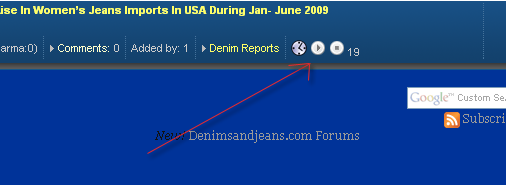
    Denim Reports : Visit this link and you find it opening like one of our denim reports with a frame like this on the top of the page :

    image On the frame you will find a counter which is set to 20 seconds by default – which means that you can view the current page for 20 seconds and then it will change to a new article(see image below).
    denims2 However , if you want to view the current article for more time, just press the  pause button  as below :
    pause
    If you don’t  , the frame will change to next article after 20 seconds (you can change it to any fixed period eg 100 seconds) and keep on moving like this . And you can just browse through a number of articles in a small period.

    What if you want to change the category of articles ? Eg go from Denim Reports to Denim Trends or any other category ? Well, click on the current category that is showing on the frame – in this case “Denim Reports”.
    denims3

    Now you can easily change the category of the articles and shift to a new category eg :Denim Mills . However, for the articles to play automatically, you will have to click on the CLOCK sign and set the time .

    And finally, if you don’t want to set any clock time but would still like to see the next article just click on NEXT at the top right of the frame .
    denims4
    You can also revert to previous article by clicking on PREVIOUS.

    You can save almost 70% time by viewing our articles like this  or if I can put it this way – “You can view 3 times more number of articles than you view by visiting the site normally”

    Here are some opening links so that you can start at one category and go to any category later on . Sit back have your coffee while our articles open up one by one in front of you !.

  • Diesel Coming To India – Finally !

    Diesel has been trying to enter India for a long time and its last attempt to tie up with Arvind Brands in India for a foothold in this growing market for luxury goods fell through.

    However, Diesel has finally tied up with Reliance Brands Ltd – a branch of Reliance Industries Ltd(largest private sector group in India). and is launching in the 3rd week of March.The company – Diesel Fashion India Reliance – will initially open 5 stores in India with two in Mumbai and one each in Delhi, Hyderabad and Bangalore.

    Diesel shall position itself in the super luxury segment and compete with brands like Hugo Boss , Paul Smith etc. Though the range starts from Rs 2,000/ (about USD 50) and goes upto Rs 50,000/- (about USD 1100 !) , the average price of the jeans will be in the range of Rs 8000 (about USD 170) to Rs 17,000(USD 370).

    The price segment that they have selected is quite high for the Indian market and it remains to be seen whether the Indian customer will be sufficiently drawn by the Diesel mystique to dig so deep into their pockets.
    Diesel is used to come out with provocative ads . It has recently launched its ‘Be Stupid’ campaign and plans to use this campaign to promote its debut Spring-Summer Collection 2010 in India.

    CEO Mr Darshan Mehta says

    “We’ll throw cool parties, we’ll shock and provoke the consumer, we’ll touch them at points that are most unexpected,…”. We’ll juxtapose ourselves in situations where suddenly, being stupid makes so much sense.

    Its a strange coincidence that the Diesel ‘Be Stupid’ campaign rings in somewhat similar connotations as does the message from most popular and highest grosser Indian movie of all times  ‘Three Idiots’ which was launched only a two months ago. Will Diesel be able to get some advantage from the ‘Idiots’. Here is a small video from the ‘Be Stupid’ campaign from Diesel.


    So, will Diesel be able to sell ‘Attitude’ in India ? Your guess is as good as mine.

    Some Provocative (shocking ?) ads from Diesel

    diesel sex sells ad image
    diesel sex sells ad diesel  ads
    diesel  ad diesel  ad
    diesel  ad diesel ad

     image

  • Denim Constructions

    Here are some typical denim grey fabric constructions

    Weave: twill 3/1 Z

    3/1 Denim Fabric Constructions

    Warp(ends/cm) Weft(ends/cm) Warp Tex Weft Tex Weave
    24 16 7 84 6 98 3/1
    25 16 7 84 6 98  
    24 16 7 84 5.5 107  
    20.8 15.5 7.4 80 6 98  
    27 19 7.5 78 6.7 88  
    24 17 7 84 6 98  
    23 15 11 8.5 11.8 50  
    23 16.5 7 84 7 84  
    24.6 16.5 6 98 7 84  
    30 18 8.6 71 7 84  
    25 26 7 84 5.5 107  
    26 21 11.8 50 11.8 50  
    22.8 16.5 6.7 88 6.7 88  
    25 18 7 84 7 84  
    27 18 7 84 5.5 107  


    Chambray Fabrics – Weave :Plain or 2/1

    Warp Weft Warp Tex Weft Tex Weave
    24 20 24 25 24 25 1/1
    27 16 24 25 24 25 1/1
    21 12 12 49 12 49 1/1
    23 16 12 49 14 42 1/1
    25 15 9 66 7 84 1/2
    23.3 16 16 37 12 50 1/2
    25 16 16 37 16 37 1/2
    25 15 9 66 12 50 1/1
    23 19 20 30 20 30 1/1


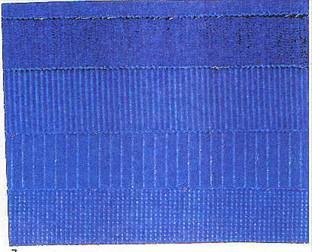
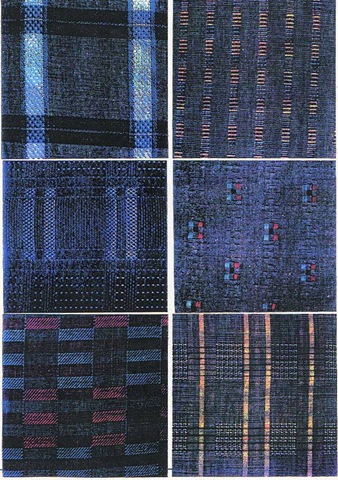
    Denim with stripes

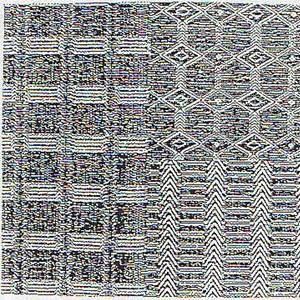
    Combination twill 3/1, plain 1/1 whipcord. Possibilities to achieve different fabric appearance.

    clip_image002clip_image003

    clip_image004clip_image005

       Stripes twill 2/1 + ½             Stripes twill 2/1 + plain

    clip_image006clip_image007

       Whipcord narrow strips       Whipcord weave strips

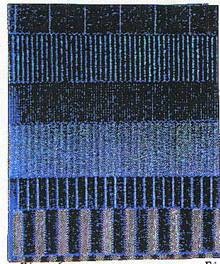
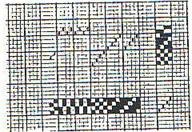
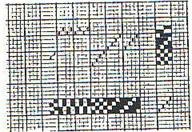
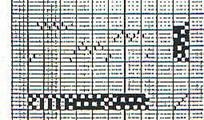
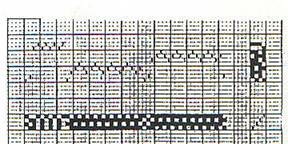
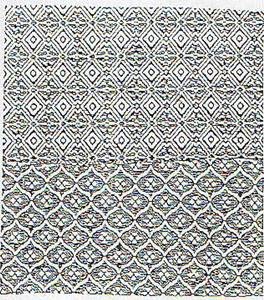
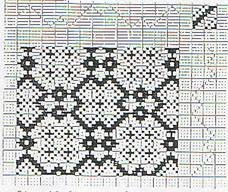
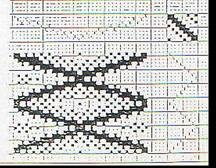
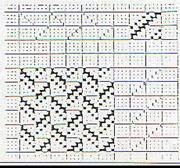
    Fancy fabric woven on dobby

    (fig. 3 + 5 woven on tappets) by inserting Lurex or count. Viscose filament in weft

    clip_image009clip_image010

    Fig. 1                                                 Fig. 2

    clip_image011clip_image012

    Fig. 3 Reversal drafting           Fig. 4 Fancy drafting

    clip_image013clip_image014

    Fig. 5 Broken drafting                Fig. 6

    Effects are achieved with multicolor WM and warp beam in high pos.

    clip_image016

    About the author: Adnan is a textile engineer and working with a reputed denim garment company in Pakistan.He is looking after new denim developments.

  • Imports Of Blue Denim Skirts In USA 2007-2009

    Let’s take a look at the import figures of Blue Denim Skirts into US in the last three years . We will find that the total imports of denim skirts has fallen in the last three years from 22.49 million pieces in 2007 to 13.72 million pcs in 2009(11 months). Also given are the few major exporters who are contributing to these imports with China on the top position.

    Imports of Denim Skirts In US –(2007-2009): In Million pcs

    From 2007 2008 2009(Jan-Nov) 2009 Vs 2008
    World 22.49 14.21 13.72  image
    China 13.21 8.66 6.93  image
    Bangladesh 1.94 2.13 2.83 image
    Cambodia 1.04 0.54 0.84 image
    India 1.04 0.52 0.63 image
    Vietnam 0.93 0.37 0.54 image
    Indonesia 1.02 0.51 0.49  image


    China has been the major exporter of this item to US – but it seems to be losing ground. However, it has still maintained a healthy 50% share of the blue denim skirt market(imports) into US. 

    Bangladesh seems to have improved their share drastically by almost 60% . Other countries have just about maintained their share or improved a bit.

    But on the whole the total imports for this item have fallen by almost 33% since 2007 indicating a not great a market and trend for the same.

  • LATENT DEFECTS in DENIM FABRICS

    This is  guest post by Harry Mercer

    Latent defects are ones that are not apparent in finished denim fabrics, but will appear after garment laundering. They are usually a result of procedures in denim sizing, dyeing and finishing that interfere with garment processing or cause spots, holes or streaks in garments. The most well-known is garment seam twist which results from incorrect skew adjustment.

    Holes :

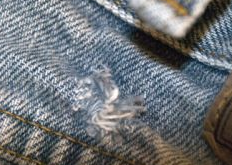
    image These result from weak places in the fabric, often where knots are in the fabric from repairing broken yarns in spinning or weaving. The problem occurs often in fabric that was re-finished, especially fabric re-Sanforized in order to correct shrinkage or skew. Fabric that has been re-finished has lower strength, inferior hand and a different washed appearance. For that reason, re-finished denim should not be mixed with denim finished only once and re-finished denim should not be sent to demanding customers.

    Spots : 

    These are usually caused by chemicals used in finishing or sizing that are not easily removed by laundry de-sizing or are not soluble and precipitate in garment de-sizing and re-deposit on the garments. Mineral oils, some cationic compounds, polyvinyl alcohol and other compounds often cause these problems. Chemicals that cause spots can be analyzed for their chemical composition and chemical treatments can be devised to correct these problems in the laundry. Also, the fabric supplier can be requested to cease using offensive products.

    Alternating Light and Dark Streaks :

    When an Indigo dyeing machine stops for more than a few minutes, the yarn that is immersed in the dye boxes will over-reduce and appear as light streaks after garment laundering. The yarns that are in the airing sections after the dye boxes will appear as dark streaks after laundering. The fabric producer can segregate this problem by identifying the yarn that was in the machine during the stop from just after the pre-wet section though the end of the drying section. The standard procedure of submitting a small washed sample of a fabric roll will not allow prediction of the presence of this type of streaking because the sample is taken from one end of a fabric roll and does not represent the appearance of the entire roll. These streaks appear and disappear in the fabric. For that reason, yarn that is involved in an Indigo machine stop should be segregated. The yarn from a machine stop produces such low quality fabric that it is almost not worth weaving. The causes of machine stops need to be rigorously investigated and action taken to eliminate them.

    Crack Marks:

    These are light streaks that usually appear in garments that do not follow warp yarns. These have often been caused by the use of acrylic hand-builders that result in very inflexible fabric. When the garment is entered into the washing machine, the acrylic film breaks forming a crack and the garment fades more along the area of the crack.

    Sudden Shade Difference After Laundering :

    After garment laundering a single leg panel, for example, will have 2 completely different shades, 1 light and the other dark, with a distinct, sharp break in color. This results when Indigo-dyed fabric is located on drying cylinders when the finishing machine stops for more than about 5 minutes. Applying high temperature to Indigo for long periods causes the Indigo in the deepest part of the yarn to sublime or evaporate and after surface Indigo is removed in laundering, the fabric part that was on the drying cylinders will be lighter. Therefore, this can not be seen in the original fabric.

    Sizing Spots or Streaks:

    Basic laundry de-sizing procedures are used to de-size carbohydrate-based sizes like starch or guar gums. Polyvinyl alcohol sizes can be more difficult to remove, especially from yarn that was over-dried in sizing. If not completely removed, polyvinyl alcohol can react with hypochlorite bleaches and result in permanent spots or streaks.

    image This is a guest post by Harry Mercer.Mr. Mercer has 30 years experience in the denim business including 3 prominent U.S. denim companies. He is an expert colorist for measurement and color matching as well as textile testing.

  • Arvind’s Profits Up On Better Denim Performance – 3rd Quarter 2009

    The improvement in denim market has started to reflect on the balance sheets of denim mills in India

    image Arvind  Mills from India has recently declared its financial results and has shown a profit of Rs 12.25 crores(USD 2.6 million approx.) for the third quarter as against a loss of Rs 33.17 crores(USD 7.5 million) in the corresponding period last year. Though the results are strictly not comparable because of demerger of its brands and retail business, they do reflect the positive sentiment on denim.

    Here are some figures on denim fabrics :

    • Growth of 36% in volumes over last year.
    • 16% growth in export volume .
    • Increase in domestic sale to 60% as against 54% last year – This also reflects the strong domestic market for denim in India.

    The figures do bode well for the denim industry in India and we should see other companies also bringing out great results.

    However, there are two factors which have been dampening the otherwise rosy scenario of denim industry :

    1. Cotton Prices: Cotton prices have been firming up since the beginning of the season – almost 25% + and are not expected to mellow down in the coming months. Being a major component of the denim cost, the prices of cotton immediately affect the bottomline.
    2. Weakening Dollar : The exchange rate of dollar against the Indian Rupee had reached levels of about INR 49- 49.50 per dollar. However, with strengthening rupee , the exchange rate has slid to about Rs 46 – a reduction of almost 6% +. This is perhaps one of the reasons why Arvind is focusing more on domestic market – of course not forgetting a 20% + growth rate in domestic demand of denim in India .