Author: Sandeep Agarwal

  • Market For Blue Denim Jackets in US

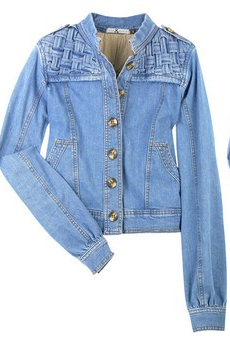
    image We have been hearing of a revival in the blue denim jackets and that the demand seems to be picking up in the same with some forecasters also suggesting a starting of a trend on Double Denim. But is it really so ?

    The figures don’t tell the same story. Lets take a look at the total imports of denim jackets in US in 2007,2008 and 2009


    US Imports of blue denim jackets in 2007-2009

    2007

    2008

    2009(Jan – Nov )

    2.9 million pcs 1.79 million pcs 1.30 million pcs

    Source : US customs

    The imports of Blue Denim Jackets in US has actually reduced over a period of 2007-2009. Though this data may not cover some other jackets which do not fall under the “Blue Denim Jackets” category, their quantity is expected to be small.
    Thus, the data belies any expectations of a great surge in denim jackets demand.

  • Acidic Damage in the Sulfur-Black Dyeing of Denim

    This is a guest post by Harry Mercer. His brief bio is given below the post.

    Dyeing of denim yarns and fabrics with sulfur black can present a number of problems that affect fabric profit margins as well as the quality and performance of black jeans. Problems include :

    • Dye waste (normally 50% or more in washing after dyeing
    • Color variation after garment laundering
    • Lower weaving efficiencies with black yarns
    • Contact dermatitis etc. All of these problems were solved in the past, unfortunately the technical expertise in using sulfur black has greatly diminished in recent decades.

    One of the most easily correctable problems is related to acid-damage to black yarns and fabrics, which results from the generation of a sulfur-based acid, possibly sulfuric acid. This results when the pH of the black-dyed cotton is too low to buffer this acid before they can attack the cellulose chain of cotton fibers. Sulfur black-dyed materials are unusual in that they should have a pH of around 11, after dyeing and before the cotton is dried. If significantly lower, the acid generated will result in lower fabric strength or higher yarn-breakage rates during weaving.

    Damage Resulting from Chemical Oxidation of Sulfur Black

    Sulfur dyes belong to the class of dyes known as “vats”. Vat dyes are insoluble in water and cannot be carried by water into fibers until made water-soluble. Solubility of vat dyes requires that they be first chemically reduced. The reduced dye enters the fiber where it must be oxidized to form the originally insoluble dye. Once made insoluble again, the dye is mechanically trapped inside the fiber.

    The chemical oxidation of most sulfur colors can be carried out with agents such as hydrogen peroxide or sodium bromate. Chemical oxidation of these dyes must be conducted at a low pH(4.5-5.5), which requires that an acid be incorporated. For sulfur colors other than black , including greys, browns, blues, violets, greens, turquoises etc., acidic chemical oxidation is necessary to produce bright, consistent and colorfast shades.

    Sulfur blacks are an important exception to this. As a rule, sulfur blacks should not be chemically oxidized. There are 2 reasons for this:

    • First, lowering the pH of a sulfur black with acid will result in the liberation of a strong, sulfuric-type acid that will attack the cotton cellulose.
    • Secondly, if sulfur black dyes directly contact acids directly, there will be a release of dangerous hydrogen sulfide gas.

    This occurs often on continuous yarn or fabric dyeing machines used for denim. Water in the the wash boxes after dyeing become heavily contaminated with sulfur dye, which is often carried over into the acidic oxidation box causing the reaction that releases the gas.

    There is a rule-of-thumb regarding how easily a vat dye can be oxidized: if a dye is easy to reduce, it is difficult to oxidize; conversely, if difficult to reduce, easy to oxidize. Sulfur blacks require high temperatures (85-90ËšC) for reduction, while all other sulfur colors can be successfully reduced and applied at temperatures as low as 30ËšC.

    Since they are difficult to reduce, sulfur blacks can be readily oxidized by atmospheric oxygen, in the same manner as Indigo, i.e., by passing the yarn or fabric through air. If the time between the dye box and the 1st washing is adequate to allow the cotton temperature to cool to 40ËšC, oxidation will be complete. The first washing should be conducted with cold or warm water since hot washing will promote re-reduction of the dye, resulting in unnecessary dye loss and inconsistent color.

    Oxidation of Sulfur Blacks in Batch Equipment

    In sulfur black dyeing in batch processes, air oxidation can be conducted on sulfur blacks after dropping the dye bath and circulating the fabric through air before washing. In package dyeing equipment, a compressed air line can be installed that is used to force air from the inside of the yarn package to the outside. In garment machines, uniform air oxidation is difficult and chemical oxidation of sulfur black may be the only option. However, hydrogen peroxide should not be used for sulfur blacks, this would result in a loss of colorfastness. This is probably because the huge sulfur black molecule is broken down into shorter units by peroxides which have less resistance to washing. If chemical oxidation is necessary, then a milder oxidizer such as sodium bromate should be used. After oxidation, the sulfur black dyed material should be buffered to a pH of 11.

    A good laboratory predictor of potential strength loss in storage is AATCC Test Method # 26:

    Ageing of Sulfur-Dyed Textiles: Accelerated

    A sulfur black-dyed sample of fabric or yarn is placed in a chamber where it is exposed to heat and humidity and dried. The material is allowed to condition and is tested in order to determine strength loss after ageing. The method can be demonstrated simply by placing a sample in a forced-draft oven with about 500 cc’s of water and removing it about 30 minutes after all the water has evaporated.

    harry mercer denim consultant This is a guest post by Harry Mercer.Mr. Mercer has 30 years experience in the denim business including 3 prominent U.S. denim companies. Also, as a result of being the laboratory manager of the American Association of Textile Colorists and Chemists (1986-1989, he is an expert colorist for measurement and color matching as well as textile testing.

  • US Jeans Buyers Care Most About Fit

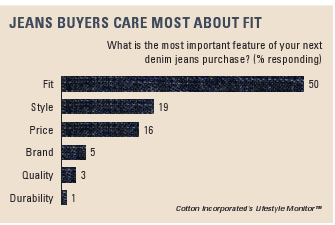
    Price has always been an important criteria for buyers of jeans . However, the success of premium denim jeans has shown that when purchasing denim , buyers are looking for many other things. A report by Cotton Inc on US consumers last year shows that fit is the most important criteria for the purchase of jeans.

    denim report

    50% of the buyers make a denim purchasing decision based on the FIT OF THE JEANS..

    Price has been a factor for jeans purchase only for 16% of the respondents. Against this , on an average , 84% of consumers purchase other apparel products based on Price..

    Other interesting facts about  US Denim consumers As Per Report :

    • 78% of consumers love wearing denim (should be higher !)
    • 62% of consumers bought denim because they needed to replace old ones and 28% wanted to get something new !
    • 96% of consumers own denim .
    • On an average US consumers own about 7 pairs of jeans – This is about 6% of their wardrobe.. This translates into about 105 garments owned by an average US consumer (wow!).
    • Women are more likely to care about fit 55 % vs 41% in case of men.

    Download the full report here or check out more denim reports here.

  • Dyes Used For Denim Dyeing – A Description


    This is a technical writeup on various types of dyes used in Denim Dyeing by one of our guest writers – Adnan

    Indigo Dyes

    Background

    Indigo, or indigotin, is a dyestuff originally extracted from the varieties of the indigo and woad plants. Indigo was known throughout the ancient world for its ability to color fabrics a deep blue. Egyptian artifacts suggest that indigo was employed as early as 1600 B.C. and it has been found in Africa, India, Indonesia, and China.

    The dye imparts a brilliant blue hue to fabric. In the dying process, cotton and linen threads are usually soaked and dried 15-20 times. By comparison, silk threads must be died over 40 times. After dyeing, the yarn may be sun dried to deepen the color. Indigo is unique in its ability to impart surface color while only partially penetrating fibers. When yarn dyed with indigo is untwisted, it can be seen that the inner layers remain uncolored. The dye also fades to give a characteristic worn look and for this reason it is commonly used to color denim. Originally extracted from plants, today indigo is synthetically produced on an industrial scale. It is most commonly sold as either a 100% powder or as a 20% solution.

    History

    The name indigo comes from the Roman term indicum, which means a product of India. This is somewhat of a misnomer since the plant is grown in many areas of the world, including Asia, Java, Japan, and Central America. Another ancient term for the dye is nil from which the Arabic term for blue, al-nil, is derived. The English word aniline comes from the same source.

    The dye can be extracted from several plants, but historically the indigo plant was the most commonly used because it is was more widely available. It belongs to the legume family and over three hundred species have been identified. Indigo tinctoria and I. suifruticosa are the most common. In ancient times, indigo was a precious commodity because plant leaves contain only about small amount of the dye (about 2-4%). Therefore, a large number of plants are required to produce a significant quantity of dye. Indigo plantations were founded in many parts of the world to ensure a controlled supply.

    Demand for indigo dramatically increased during the industrial revolution, in part due to the popularity of Levi Strauss’s blue denim jeans. The natural extraction process was expensive and could not produce the mass quantities required for the burgeoning garment industry. So chemists began searching for synthetic methods of producing the dye. In 1883 Adolf von Baeyer (of Baeyer aspirin fame) researched indigo’s chemical structure. He found that he could treat omega-bromoacetanilide with an alkali (a substance that is high in pH) to produce oxindole. Later, based on this observation, K. Heumann identified a synthesis pathway to produce indigo. Within 14 years their work resulted in the first commercial production of the synthetic dye. In 1905 Baeyer was awarded the Nobel Prize for his discovery.

    At the end of the 1990s, the German based company BASF AG was the world’s leading producer, accounting for nearly 50% of all indigo dyestuffs sold. In recent years, the synthetic process used to produce indigo has come under scrutiny because of the harsh chemicals involved. New, more environmentally responsible methods are being sought by manufacturers.

    Raw Materials

    The raw materials used in the natural production of indigo are leaves from a variety of plant species including indigo, woad, and polygonum. Only the leaves are used since they contain the greatest concentration of dye molecules. In the synthetic process, a number of chemicals are employed as described below.

    SOURCES AND USES: –

    A variety of plants, including woad, have provided indigo throughout history, but most natural indigo is obtained from those in the genus Indigofera, which are native to the tropics. In temperate climates indigo can also be obtained from woad (Isatis tinctoria) and dyer’s knotweed (Polygonum tinctorum), although the Indigofera species yield more dye. The primary commercial indigo species in Asia was true indigo (Indigofera tinctoria, also known as Indigofera sumatrana). In Central and South America the two species Indigofera suffructicosa and Indigofera arrecta (Natal indigo) were the most important.

    Natural indigo was the only source of the dye until about 1900. Within a short time, however, synthetic indigo had almost completely superseded natural indigo, and today nearly all indigo produced is synthetic.

    In the United States, the primary use for indigo is as a dye for cotton work clothes and blue jeans. Over two billion pairs of jeans around the world are dyed blue with indigo. For many years indigo was used to produce deep navy blue colors on wool.

    Indigo does not bond strongly to the fiber, and wear and repeated washing may slowly remove the dye.

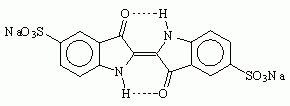
    Indigo is also used as a food coloring, and is listed as FD&C Blue No. 2. The specification for FD&C Blue No. 2 includes three substances, of which the major one is the sodium salt of Indigotindisulfonate.

    Indigotinesulfonate is also used as a dye in renal function testing, as a reagent for the detection of nitrates and chlorates and in the testing of milk.
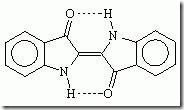
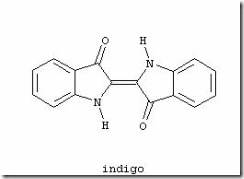
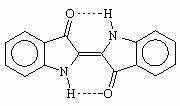
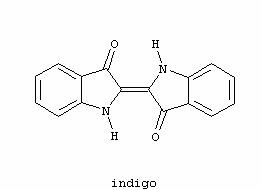
    clip_image002INDIGO MOLECULE

    CHEMICAL PROPERTIES: –

    Indigo is a dark blue crystalline powder that melts at 390°–392°C. It is insoluble in water, alcohol, or ether but soluble in chloroform, nitrobenzene, or concentrated sulfuric acid. The chemical structure of indigo corresponds to the formula C16H10N2O2.

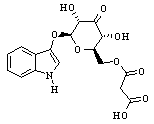
    The naturally occurring substance is indican, which is colorless and soluble in water. Indican can easily be hydrolyzed to glucose and indoxyl. Mild oxidation, such as by exposure to air, converts indoxyl to indigo.

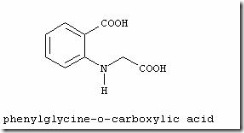
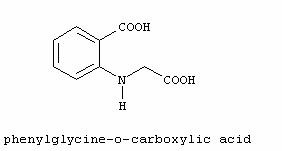
    The manufacturing process developed in the late 1800s is still in use throughout the world. In this process, indoxyl is synthesized by the fusion of sodium phenylglycinate in a mixture of sodium hydroxide and sodamide.

    Several simpler compounds can be produced by decomposing indigo; these compounds include aniline and picric acid. The only chemical reaction of practical importance is its reduction by urea to indigo white. The indigo white is reoxidized to indigo after it has been applied to the fabric.

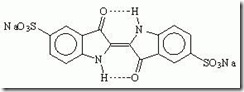
    Indigo treated with sulfuric acid produces a blue-green color. It became available in the mid-1700s. Sulfonated indigo is also referred to as Saxon blue or indigo carmine.

    Tyrian purple was a valuable purple dye in antiquity. It was made from excretions of a common Mediterranean Sea snail. In 1909 its structure was shown to be 6,6′-dibromoindigo. It has never been produced synthetically on a commercial basis.
    clip_image004

    INDIGO CARMINE

    HOW THE DYE WAS PRODUCED IN INDIA 

    The cut plant is tied into bundles, which are then packed into the fermenting vats and covered with clear fresh water. The vats, which are usually made of brick lined with cement, have an area of about 400 square feet and are 3 feet deep, are arranged in two rows, the tops of the bottom or "beating vats" being generally on a level with the bottoms of the fermenting vats. The indigo plant is allowed to steep till the rapid fermentation, which quickly sets in, has almost ceased, the time required being from 10-15 hours. The liquor, which varies from a pale straw colour to a golden-yellow, is then run into the beaters, where it is agitated either by men entering the vats and beating with oars, or by machinery. The colour of the liquid becomes green, then blue, and, finally, the indigo separates out as flakes, and is precipitated to the bottom of the vats. The indigo is allowed to thoroughly settle, when the supernatant liquid is drawn off. The pulpy mass of indigo is then boiled with water for some hours to remove impurities, filtered through thick woollen or coarse canvas bags, then pressed to remove as much of the moisture as possible, after which it is cut into cubes and finally air-dried Nature 1 November 1900

    Indigo dye is an important dyestuff with a distinctive blue color (see indigo). The natural dye comes from several species of plant, but nearly all indigo produced today is synthetic. Among other uses, it is used in the production of denim cloth for blue jeans. The form of indigo used in food is called "indigotine", and is listed as FD&C Blue No. 2.
    clip_image006

    PHYTOCHEMISTRY OF INDIGO

    Now just a bit of chemistry about how the compounds in plants are converted into indigo…

    clip_image008

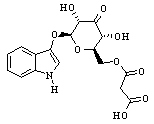
    In Indigofera species, the precursor of indigo is indican 
    (left), indoxyl-β-D-glucopyranoside,

    While in woad it is mainly isatan A (right)
    clip_image010

    INDUSTRIAL SYNTHESIS OF INDIGO

    Current world production of indigo is 17,000 tons/year, mostly (40%) produced by BASF in Ludwigshafen. That is where things started in July 1897, using a process developed by von Heumann. It started with naphthalene…

    clip_image011clip_image012clip_image011[1]clip_image012[1]clip_image012[2]clip_image014clip_image016clip_image018clip_image020clip_image022clip_image024

    VAT DYES

    Vat dyes are used in the dyeing and printing of all types of cellulose fibres, and also of blends of cotton with polyester. In their coloured form they are insoluble pigments, so their applications depend on reversible reduction-oxidation (redox) reaction. In dye bath the pigment is converted into a water-soluble form using a strongly alkaline solution of a powerful reducing agent. This form the sodium “leuco” compound of the dye, which is soluble in water but often different in colour from the original in pigment. It is then allowed to dye the cellulose in this water-soluble from once exhaustion is completed the leuco compound is oxidized.

    REDOX REACTIONS

    Oxidation-reduction reactions (redox reaction) are important in textile colouration because they are an essential part of the process of the application of vat and sulphur dyes. In rather oversimplified terms, when a compound id oxidized it gain oxygen when something is reduced it loses oxygen. Reduction of a substance can also be thought of as gaining oxygen atoms, and oxidation as losing hydrogen atoms. For example when hydrogen reacts with oxygen to form water the hydrogen to become oxidized and the oxygen is reduced. In a redox reaction there is always a compound acting a reducing agent (hydrogen in this example). The reducing agents become oxidized the reaction by the compound that is being reduced, which is acting as an oxidizing agent. (In this case oxygen)

    clip_image025 NaOH Na+ + OH

    Sodium Sodium Hydroxide

    Hydroxide ion ion

    In the water molecule each hydrogen atom shares the only electron it possesses by pairing with one of the six electron of the oxygen atom, to form a covalent bond. Thus the hydrogen atom has lost one electron to become oxidized and the oxygen atom is reduced by gaining electrons. This is a more general way of expressing the phenomena of oxidation and reduction.

    Oxidation = entails the loss of electrons by the oxidized compound

    Reduction = entails the net gain of electrons by the reduced compound

    vat dyes such as indigo and compounds derived from anthrequinone are applied after the temporary reduction of two carboxyl group in a conjugated chain, this convert the dye in to a colorless water insoluble form. The conversion is carried out using a strong reducing agent and in this reaction the two oxygen atom becomes reduced –O – and the two hydrogen atoms are oxidized to H+. The reduced form is called the leuco vat acid, and is applied from an alkaline. Once on the fibre it can be re -oxidized back to the insoluble carbonyl form by air or by the use of an oxidizing agent.

    Sulphur dyes are also applied using a redox reaction mechanism, in which sodium sulphide is used as the reducing agent,

    CHEMICAL NATURE OF VAT DYES

    A large majority of vat dyes are based on the anthraquinonoid or the indigo (or thioindigo) chromophores; indigo, one of the oldest dyes still in use, remains popular through the wide use of indigo-dyed anthrequinone dyes are complex polycyclic quinines (Appendix 1), and they all possess two carbonyl groups (C = O) linked by alternate single and double bonds in a conjugated chain. The molecular arrangement is responsible for the easily reversible redox reactions on which the application of vat dyes depends.

    In earlier countries, when all textile colorants where obtained from natural sources, indigo plant is steeped in a large vat. It is forming this ancient vatting process that the term fermentation vat dyes are derived. Fermentation converts one of the plant constituents into the soluble leuco dye, which diffuses out of the plant. The replacement of the natural by synthetic indigo at the end of the nineteenth century gave the imputes to research on other syntheses vat dyes have since followed.

    Synthetic vat dyes are costly because they are difficult to prepare, so their use is usually directed to the higher quality fabrics. Nevertheless, they are widely used and noted for their high fastness to light, in the dyeing of fabric for uses such as awning, curtains, upholstery, military and naval uniforms and high quality gabardines.

    High fastness to bleaching is another strong point of the anthraquinonoid group. This is exploited in the production of patterned fabric from vat-dyed yarn in which the white areas of the can be safely bleached out after weaving.

    Anthraquinonoid vat dyes are widely used in the manufacturer of for example good quality, shirting’s, table cloths, towels, sportswear, high quality over all, fabrics of women and children clothing and tropical suiting, and yarns and effect threads where repeated washing will be required. With careful dye solution, the use of vat dyes allows is that the range lacks scarlet, maroon and wide shades.

    APPLICATION OF VAT DYES

    Both the extent of reduction and the rate at which equilibrium between the reduced and oxidized from is achieved are of practical significance. Vat dyes vary in the speed with which they go undergo reduction (Na2S2O4), which is capable of completely reducing even the most stable of vat dyes. As a result any difficulties in vatting can be over come by raising the vatting temperature, increasing the concentration of reducing agent or prolonging the vatting time. The vatted dyes must be kept in a strongly alkaline solution, because its leuco from is an insoluble acid. If instead of being formed as its water soluble salt, it will not readily oxidize to the coloured form.

    There are still some application methods in which reduction and adsorption in the fibre take place rapidly and almost simultaneously. Under those conditions the rate and extent of reduction can be decisive factors in the dye stuff choice for example, in textile printing. Premature oxidation of the leuco compound in his print paste must also be avoided during both storage and steaming. This condition is usually met by using as the reducing agent sodium formaldehyde sulphoxylate (Formosul) a compound that is fairly stable in air at room temperature and develops the necessary action during steaming.

    Variables such as pigment practical size and crystalline from can affect the rate of reduction but these are controlled by the dye manufacturing. Consequently the colourist needs to concentrate only on the temperature and the concentration of reducing agent.

    Leuco compounds can be applied by batch wise methods similar to those used for other dye classes, but there are difficulties in obtaining leveling dyeing. The necessary high concentration of sodium hydroxide and reducing agent affect the exhaustion. The difference is that the option of reducing the concentration of the addition is not available, because they are needed to form the leuco compound. Serious leveling problems can be lessened by raising the temperature of dyeing and then cooling to obtain satisfactory exhaustion, or by using a dye bath auxiliary that restrains the rate of exhaustion. A different approach is to use specially formulated to stable dispersion of the pigment, in which form they are evenly distributed on the fabric by padding (pigment padding), followed by working the padded fabric through a of caustic soda and sodium dithionite on a jig. Pre-pigmentation can be carried out using package, jig, winch or beam dyeing machines provided specially formulated vat dyes are used. Once the pigmentation is completed, sodium hydroxide and sodium dithionite are added to the dye bath to reduce the pigment and allow the leuco day salt to diffuse into the fibre.

    Oxidation in air or in solution is then used to regenerate the pigment. A soaping treatment is given to the fabric at the end of the dyeing process this is essential, both for cleaning the dyed fabric and for developing the final shade. In some cases a change in the crystalline form of dye accompanies the change in shade.

    SOLUBILISED VAT DYES

    The need to reduce vet dyes before use makes their application a cumbersome process. Although it is possible to isolate the reduced form of the dye. It is too readily oxidized in air for the manufacturer to provide the dyer with the leuco compounds. it is possible however to convert the leuco acid into the leuco ester, a derivative that has greater resistance to oxidation and grater solubility in water. Such ester can be formed by the reaction of a hydroxyl group of a leuco acid with sulphuric acid forming a sulphuric ester. The sodium salt of such esters are stable and can be stored until required for use. Since the ester group is only weakly attached to the rest of the dye molecule, it is easily removed by the action of sodium nitrate in dilute sulphuric acid. The regenerated leuco compound may then be oxidized back to the pigment form.

    Solubilised vat dyes are less rapidly taken up than are the more conventional vat dyes and are mainly used for the production of pale shade. As with ordinary vat dyes application under alkaline condition is essential, thus eliminating wool from the list of possible substrates because alkaline condition modifies the wool fibres. The low up take and higher cost of solubilised vat dyes make them uneconomical for deep shade however and for theses normal vat dyes alternative have to be used.

    A interesting property of solubilised vat yes is their sensitivity to light in the solubilised state. This is used to produce “photographic” print on fabric.

    clip_image026R – OH + H2S2O4 R – OH + H2S2O4 + H2O

    Leuco vat sulphuric sulphuric ester

    Dyes acid

    SULPHUR DYES

    Deposition of insoluble pigments inside fibres may achieve more cheaply using sulphur dyes. But with these the shade gamut is restricted to back, mauves, olives, Bordeaux and reddish-browns. One of the earliest and best known sulphur dyes is Cl sulphur black 1, which is popular black with good fastness properties still in use today.

    Like vat dyes, sulphur dyes are reduced and applied as soluble leuco compounds that need to be kept under alkaline condition, but sulphur dyes need only sodium sulphide to act as both alkaline and reducing agent. A simplified the version of the reaction is represented in following equation. The structure of the chromophores of sulphur dyes is complex and unknown. Again like vat dyes, these dyes can not be applied to wool without damage to the fibres due to the action of sodium sulphide on the cystine cross links. After exhausting the dye bath for approximately 1 hour at 60-90Co the fabric is thoroughly rinsed and exposed to the atmosphere, where oxidation generates the mechanically entrapped insoluble pigment.

    One disadvantages of certain sulphur dyes (although, strangely, this problems appears to arise with the black shade only) is that dyed material stored under condition of high humidity and temperature can lose its nature strength. This is because inadequate washing-off after dyeing can lead to the slow generation of sulphuric acid in the fibre, arising from the presence of sulphur.

    Sulphur dyes are used mainly in the dyeing of cellulose fabrics and in blend of cellulose with polyester, nylon and acrylic fibres. Typical application is for heavy drill fabrics. Corduroys, overalls, denim, awning and canvas. Limited quantities are also consumed in the colouration of silk, paper and more widely, leather.

    clip_image026[1]Ar’ – S – S- Ar’ Reduction with Na2S Ar’ – S – S- Ar’

    About the author: Adnan is a textile engineer and working with a reputed denim garment company in Pakistan.He is looking after new denim developments.
  • Q&A With Ex-Evisu Creative Director – J Diamandis

    J diamandis head shot evisu-logoJ Diamandis worked for Evisu – the famed Japanese brand – for some years as its international  creative director. Besides denim designing, he is also involved in denim education at various internationally reputed design schools including Parsons in New York and RCA in London where he recently ran a project on reducing environmental impact during denim production. Here is a Q&A session I had with him on his work with Evisu and after. a

    Q. When and how Evisu brand started? 

    A. Tailor, Hidehiko Yamane, founded Evisu in Osaka, Japan in 1991. Disappointed with the mass produced jeans of the time Yamane set out to produce his own using (it was always widely rumored) vintage 1950’s denim weaving and garment sewing machinery from the USA whilst paying painstaking attention to traditional construction techniques and details. What followed captured the imagination of the detail obsessed Japanese fashion crowd and is was not long before interest spread globally. Yamane had created a cult brand.

    Q. How does Evisu stand out from other Japanese Denim brands?

    A. There are many other fantastic Japanese Denim Brands  that were born of a similar purist denim lover’s philosophy. Evisu managed to stand out due to a great story, a very recognizable logo, a very characterful founder/leader (Yamane) and a great collection of other clothing items that work well along with the denim such as sweats, tee’s, shirts etc.

    Q. You were the International Creative director in Evisu. How long did you work there?

    A.  I was with Evisu from 2003 to 2007, over 4 years

    Q. How was your experience of working with Evisu?

    A.  I had a very fun and very challenging experience. I joined at a time when the brand was already experiencing terrible counterfeit problems which were affecting sales and so on. A lot of my efforts therefore were focused on building back up the brand image and integrity and re-hauling without changing the brand’s essence and spirit. I am glad to say we achieved this successfully under my tenure receiving great press and increased sales.

    Q. How did you help Evisu to grow in international markets?

    A. Two key reasons I would say the first was the focus on brand image and integrity and re-hauling the brand without changing its essence and spirit. Secondly and quite interesting was that we had a global design team. Instead of having one design team under one roof we spread ourselves somewhat through Asia, Europe and the UK (our key markets) this meant that important local needs/ trends were met which was especially lucrative in large and important markets such as Italy and UK. I oversaw this process ensuring that brand identity and integrity were upheld across all markets. The brand grew tremendously in this period and we attracted a lot of collaborative partners (such as Puma) and opened some great stores.

    Q. Would you like to mention any interesting experiences that you had at Evisu?

    A. Most of my interesting experiences at Evisu involved traveling to Japan and being in the company of our enigmatic founder Yamane-San and his fantastic staff. Its probably better I spare you the details.

    Q. Who is the typical customer for Evisu?

    A. The Evisu customer varies greatly from country to country but the one thing that typifies an Evisu customer regardless is an appreciation of a quality product that lasts a long time and not a seasonal throwaway fashion item. In Osaka we had our own Evisu Repair Shop full of customers old Evisu jeans in for repair and patching. The old jeans looked fantastic with an amazing variety of patina’s unique to the wearer. My first collection for Evisu was inspired by this store and our findings there.

    Q. Which are the best selling jeans for Evisu?

    A.  In my 4 years the best seller was always the unwashed basic with a cream logo. I always loved and pushed for the completely plain without-logo option but they were always a hard sell

    Q. Most Japanese denim brands do not believe in volume games and prefer to be niche players. Is this the philosophy of Evisu as well?

    A. Certainly it was. Although as we grew our investors saw opportunity and we were pushed to be more commercial. As a designer moving from niche to mainstream is a tough transition unless you own the business!!

    Q. How is Japanese way of making jeans different from that of Europe or other parts of the world that you may have seen?

    I have worked with Italian and Japanese denim textile and sewing factories for many years and I find the approach similar. The factory philosophy is a craftsman style of approach as oppose to a business, commercial approach (in my experience). They seem to add the passion, craftsmanship and love into the garment or textile. As a designer this makes your job a lot easier and enjoyable. The Japanese and the Italians  are also the best textiles makers in the world but the Japanese absolutely rule on denim. Nobody makes denim like the Japanese, especially selvedge. They have been indigo dying for thousands of years so what do you expect! I had many great experiences working in these countries and found a similarity.

    Q. After Evisu, are you still connected with Denim?

    A. Yes I have continued to design denim as parts of wider collections but do not consider myself purely a denim designer as I enjoy all areas of design and have worked on most other categories including accessories. I am involved in education and have designed a denim-course that will run on Monday evenings at Parsons School through Spring in New York. I also guest lecture at the RCA in London, we recently ran a denim/sustainability project there.

    Q. What denim trends do you see the strongest in this year?

    A. I am not really a trend follower I leave that for the PR and marketing experts. In fashion generally trends are omnipresent depending on what kind of person you are and what sort of fashion and music you like.

    Q. What is your advice to denim lovers?

    A.  My advice is do not buy your jeans pre washed and vintage looking. Buy them unwashed and raw and let them wear down naturally with wear. Indigo is such a beautiful and unique dye that wears and washes away gradually like no other. It’s such a waste to have it blasted out. Customers should also be aware that the laundering and treating of denim has a negative impact on our environment, this is being addressed by the industry quite dramatically right now.

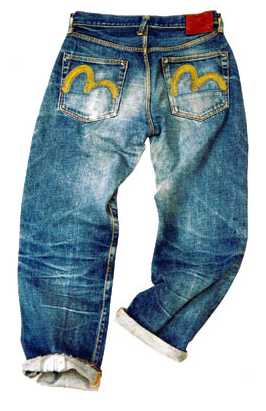
    Natural Wear Evisu Jeans

     NATURAL WEAR EVISU JEAN 

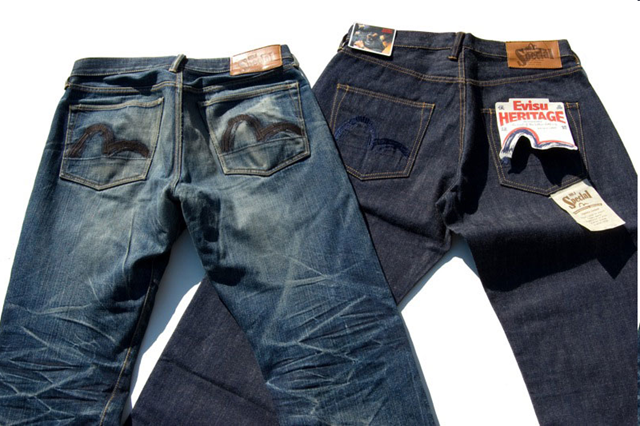
    Evisu Heritage

    image

  • Merry Christmas And Happy New Year

    Wishing all our readers a Merry Christmas and A Very Happy New Year..

    May this New Year be full of Health, Happiness and Success for you and your family.


    Check out some quick links to do some great shopping this festival season:

    1. Denim Deals: Madewell, Serfontaine, William Rast, Paper Denim & Cloth

    2. Paper, Denim &Cloth Sale

    3. Hot Deal of the Day: Denim Sale at Couture Candy


    Once again – Happy Christmas and A Great New Year …

  • Indigo Dyeing – Various Methods Explained And Compared

    The indigo dyeing and processing methods -currently used – for dyeing indigo warps were introduced from 1978- 1987 to obtain a higher productivity and savings in dyeing or to achieve the required darker shades (hard rock washing, super blue, soft denim), or softness of the yarn for final finishing. The following table gives you a comparison of the possible processing stages such as:

    1- Indigo rope dyeing process

    2- Indigo one sheet dye slashing

    3- Indigo double sheet dyeing

    4- Loop dye 1 for 6 (continuous dye slashing)

    5- Loop dye 1 for 6 with dyemer (continuous mercerization dyeing and sizing).

    For the five major Indigo dyeing methods for the basic denim, super blue denim, soft denim, stone wash denim, we also must take into consideration that a certain appearance of the garments is only achieved after a certain washing method. (Chemical washing, stone washing, hard rock washing), use of certain sizing agents (soft denim) or irregular appearance in warp or weft direction by using a yarn with slubs and neps (antic denim).

    The final finishing methods have influence on fabric construction and dyeing methods.

    CHEMICAL WASHED DENIM

    The creator of snow wash denim or of f-side denim is Edwin Co. Limited Japan. These chemical washed types of ready made garments show less tensile strength and a harder hand.

    STONE WASHING

    With soft stones it takes 20 – 30 min. to achieve the desire surface appearance.

    DRY BLEACH

    Soft rock are socked with chloride and the garment treated in washing machines.

    HARD STONE WASHING

    Treatment takes approx. 3 – 4 hours. A very soft hand the garments is achieved. Due to the extended time of treatment in washing with hard rocks the strength of fabric is influenced. This treatment requires improved yarn quality and deeper dyed shades. Hard stone washing fades out partly at hems and stitched lines.

    SUPER BLUE

    Deepness shade is achieved by dyeing in 8 – 12 dye boxes with rope dyeing methods. With mercerized yarn where the colour stays at the surface of the yarn (ring dyeing) with continuous loop dye range with integrated mercerizing and dyeing unit (dyemer).

    BLACK DENIM

    Sulfur dyed, padazoic dyed etc. on continuous dyeing sizing machines or loop dye ranges.

    INDIGO DYESTUFF AND ITS CHARATERISTICS

    Indigo has despite many other blue dyestuffs kept its popularity. This by no doubt is achieved by the fact that Indigo has a number of properties which have in this combination not yet been achieved by other single dyestuffs.

    The main properties are:

    • Pleasant colour shade.
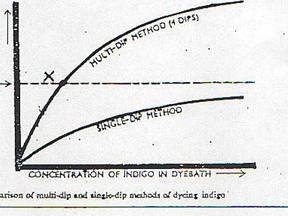
    • Possibility to achieve by simple repeated dipping, deep marine blue shade.
    • Possibility to dye cotton in cold dye bath.
    • Competitive in price.
    • Possibility to achieve an acceptable colour fastness and the exceptional advantage by repeated washing of fading colour, to keep the colour shade that always a clear, pleasant blue shade result.

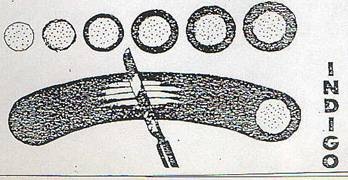
    The following drawing shows the symbolic  built-up of dye stuff of the yarn according to the multi-deep process.

    indigo dye denimThe sketch shows how Indigo layers one after the other are placed on the surface of the yarn then again scraped off, similar to knife through force or tension or by washing.

    An Indigo has only a very low affinity and the depth of colour of the fibre is achieved by repeated dipping / oxidation. Each dipping cycle occur in a certain balanced manner as dye stuff is observed by the fibre at the same time and part of the already oxidized dye stuff is reduced and migrates from the fibres.

    indigo dye denim

    With increasing dipping operations , the  balance of absorption / migration moves towards migration.

    A very important factor for the reduction of migration is the squeezing effect and the oxidation which follows. A high squeezing effect promotes a quick and thorough oxidation and reduces the migration and reduction in the following bye bath.

    With the low squeezing effect ie  with high liquid absorption, the purely visual impression of a good oxidation can be deceptive as the outer colour skin looks blue. In the core of the thread however  less vat dye stuff may be deposited

    indigo denim dye image

    Let us have a close look at the different dyeing systems.

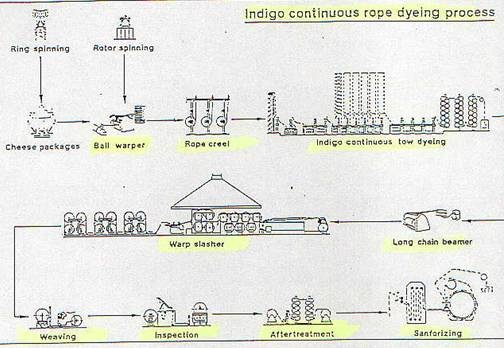
    CONVENTIONAL CLASSICAL CONTINUOUS INDIGO ROPE DYEING

    The classical rope dyeing system is very labor intensive and consists of:

    • Ball warping
    • Indigo dyeing
    • Rebeaming on long- chain-beamer
    • Sizing

    Yarn from the ring spinning machine is wound on automatic winding machines on to a suitable package either cylindrical or 5057 cone. The winders are directly linked to the ring spinning frames and the cops joint by splicing. OE yarns are directly creeled up on the Ball warper.

    The required No. of ends (usually 380 – 420 ends) are assembled into a rope. These ends are wound onto a core. The rope is guided similar as a cross wound package and wound into a ball, length of ball approx. 12 – 15.000 meters.

    A lease is inserted at the start and end of the rope. The facilitate Rebeaming every 1000 meters an additional lease is inserted. Usually 18 – 24 ropes are simultaneously process on the rope dyeing machine. Prior to dyeing, the ropes are boiled out and treated with caustic-soda and wetting agent to remove from the cotton oil, impurities which could influence the fastness for the dye.

    To dye with indigo, the ropes are immersed into the dye-bath. To dye in rope 30 – 60 seconds immersion (20 meters yarn) and 60 – 180 seconds are required for the oxidation of the Indigo dyestuff to ensure that also ends in the centre of the rope are equally dyed. Please note that squeezing pressure is important- 5 tons- as fastness of colour and shade depends on even squeezing pressure. The comparatively long immersion and oxidation time requires a comparatively expensive equipment of machinery.

    In order to obtain the required deep shade of blue colour the ropes are  immersed 5 – 6 times in a sequence of dye boxes with an oxidation range – so called skying – after each dye box. (Indigo belongs to the group of the vat dyes which is water-soluble in reduced solution and becomes an insoluble pigment when oxidized.

    ROPE DYEING PROCESS

    Having passed the dyeing and oxidation rage the ropes are guided through 2 or 3 washing boxes to wash off excessive dye .In the last box softener are added to ease the opening of the ropes. They are dried in a series of cans. The dried ropes which contain 380 – 420 ends are then deposited into large coilers .Rebeaming with 300 – 380 ends per rope is easier. These coilers are placed behind the long chain beamer where the Rebeaming and opening of the ropes takes place. In order to guarantee even yarn tension through Rebeaming on to a back beam ready for sizing the ropes are guided over a tension device which is placed approx.  10 -11 meters distance from the long chain beamer. Broken ends which very really happen during process of the rope dyeing are repaired at this process stage. Initially these machines were supplied without yarn stop motion but are available now a days on special request. This is of major importance as lost ends, fluff, 3 – tail ends and yarn remnants can cause inferior performance in weaving.

    The so prepared beck beams are now sized in a sizing machine preferably with 2 size boxes. The size pick up varies between 8 – 10%. In Europe mainly modified starches with binders are used, whilst in USA certain low % of PVA is applied in combination with starches by some companies. Depending on the final finishing process (washed denim) with no filler also CMC gives excellent performance in weaving. Special size mixes for soft denim will be discussed separately. We recommend however not to use PVA for sizing of denim as a surface of denim may show a leather skinned appearance.

    CONTINUOUS SLASHER DYEING SYSTEM

    Contrary to the Indigo rope dyeing system, for the continuous slasher dyeing and sizing back beams are used. That means that the total No of ends required for a weavers beam are dyed, dried, sized and dried simultaneously. The back beam contains similar to rope 380 – 420 ends but distributed evenly over the width of 140 or 160 cm between the flanges so the end lay parallel to each other, warp length 12 – 15.000 meters, similar to the rope dyeing system the full No of ends are pretreated (washed) dyed in 4 dye boxes and oxidized, no softener are used in the last wash box.

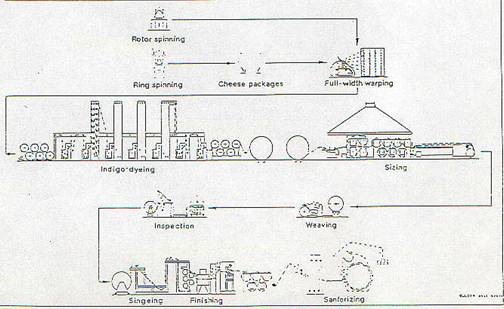
    CONTINUOUS INDIGO DYEING AND SIZING PROCESS

    SLASHER DYEING

    We must however consider that the squeezing effect is lower and therefore the danger of streakiness and shade variation from centre to out side is also higher. Consequently it would be better to reduce the warping width rather to 140 cm instead of using warper beams with 160 – 180 cm warping width.

    The immersion time in the dye boxes is approx. 10 – 15 seconds and time for oxidation 30 – 60 second. The final result is a weaver’s beam. This system allows the installation of less expensive dye rage and less additional preparatory machinery.

    One of the disadvantages previously when warp preparation (knots, weak, thick places) was not kept at a very high level was that ends sown in the dyeing range could cause major color variation through machine stops.

    DOUBLE SHEET CONTINUOUS DYEING

    Patents applied for double shade dyeing by E. Godau date back as 1976. With the system dyeing sizing is done in 2 operations. The main reason for dyeing of 2 sheet simultaneously is achieved a more even dyed sheet, that means 8000 – 8200 end are dyed, oxidized, dried and the full length of the warper beam 12.000 – 15.000 meters flange diameter. These beams are transported with the aid of air cushions to the sizing machine and the yarn sheet sized in double size boxes. Immersion time and oxidation time is the same as with continuous slasher dyeing.

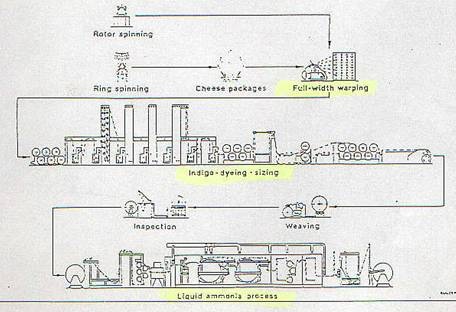
    Indigo full-width warping process

    double sheet dyeing process

    With double sheet dyeing the linear warp thread density is doubled. Therefore:

    • Squeezing effect is increased,
    • An even squeezing over the whole width is achieved,
    • Condensation and concentration of ends at one spot show compared to single sheet dyeing no colour strips formation, streakiness or shading in the finished fabric.
    • The production out put of the dyeing is increased by 75%.
    • Dyeing of 3 layers of yarn simultaneously is possible but very difficult to control the beaming on 3 big warp batches.

    Unfortunately the double sheet dyeing machine as well as the rope dyeing range cannot be linked with a sizing machine which must be regarded as disadvantage as the processes of dyeing and sizing must be carried out separately.

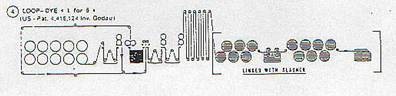
    Loop dye system 1 for 6

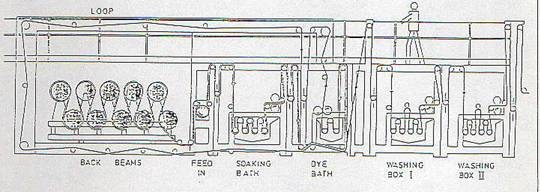
    Similar to the sheet dyeing systems 10 – 16 warper beams with the total number of ends required for the weaver beams are used. The warper beams are placed in a moveable warp creel which can be loaded whilst one set is in potation.

    loop dyeing process

    The yarn sheet is guided to the soaking bath through a feed-in system with tension compensation rollers. The soaking bath has the task to prepare the yarn for the following dyeing operation.

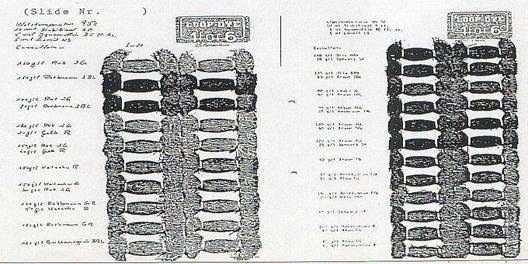
    The yarn sheet after having been immersed into a single indigo dye bath runs into a long loop where oxidation takes place. As you can see from the slide the back beams are inside the yarn sheet passes through the dye box as often as necessary to obtain the required deepness of shade. One of the advantages is:

    Ideal, utilization of Hydrosulphite through squeezing 4 – 6 layers simultaneously and oxidation of yarn in a comparatively long oxidation loop. After the oxidation the yarn sheet is guided through 2 washing boxes into a yarn accumulator and finally on to a series of drying cans, dried up to 25 – 30% final moisture content prior being immersed into size boxes, dried and wound onto a weavers beam.

    loop dyeing system

    The molecules are controlled DC drive to maintain warp tensions. Temperatures are automatically controlled as well as the PH value in the dye box. The automatic control unit of the PH value supplies automatically hydrosulfite and caustic soda to stabilize the present value from the start to end of a dye set.

    All rollers arein  contact with the dyed sheet are fluted, they keep the sheet in position and reduce deposit of dye and build-up of other deposit (fluff). In addition to width is controlled by guides to ensure even distribution of the yarn layer over the whole width of the dyed sheet.

    All accumulators placed between washing boxes and drying cans guarantees a continuous production of the dye range when a weaver beam has to be exchanged at the head stock.

    The creels can be loaded with back beam with 1200 mm diameter which allows to warp approx. 36.800 meters of yarn, count No 7, 5 (tex 78) or 50.000 m count No 10 (tex 60). This means that depending on the count normally one cyl-spool is used in warping to fill a warper beam.

    WARPING SPEED

    PRODUCTION

    Speed varies between 1000 m/min, 35 m/min. No 5, 5 (tex 107) and 42 m/min. No 10 (tex 60)

    MACHINE STOPS DURING SIZING

    For 36800 m, 4 recorded on expansion comb.

    WASTE OF MATERIAL

    Approx. 15-20 kg per set.

    TIME REQUIRED FOR CHANGE OF SET

    2 hour

    Linear warp densities in the squeeze.

    The linear density in the nip is calculated in the same manner as for sizing.

    Q= linear thread density

    F= ends in cm -1

    D= diameter of yarn

    clip_image016clip_image017clip_image016[1]D= 0,921 mm = 0,921 = 0, 29125

    clip_image018clip_image017[1]clip_image018[1] Nm 10 = 3.1622

    Q= F x D

    As already mentioned previously the warp density has an influence on colour fastness. A higher squeezing effect is achieved due to the over laying of the watp ends this also gives more side to side squeezing, therefore reduce strips formation. The high squeezing effect results also in better, quicker and proper oxidation and better colour fastness.

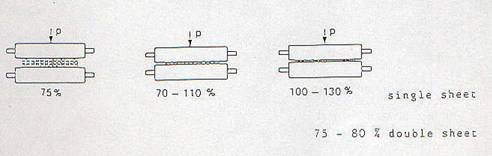
    It must be mentioned that recommended dip and oxidation times on warp dyeing ranges are of little use if not the squeezing effect is taken into consideration. Under a given squeeze pressure, for instance 500 kg the squeezing effect of the mentioned 4- dyeing systems can be compared. We can see that similar squeezing effect can be achieved with the loop dyeing system 1 for 6 (75%) as with rope dyeing 70 – 110%. Double dyeing with 2 layers width with 150 cm gives approx. 80% squeezing effect, whilst single sheet slasher dyeing varies depending on count between 100 – 130%.

    Loop dye 1 for 6 Rope-dyeing Slasher-dyeing

    clip_image020

    As only one short indigo dye bath is deeded only one feeding tanks, no separate feeding of chemicals is necessary.

    Dye liquor is use in 1500 1 instead of 6-4500 1, therefore less chemicals are in  use at same time.

    • Lowe power consumption.
    • Fine counts can be dyed as well (No 30)
    • For dark shades, black shades or other shades needed by fashion, other indanthrene dye stuff can be directly added into the indigo dye bath (indanthrene yellow or orange).

    LOOP DYE 1 FOR 6 COMBINED WITH DYEMER

    The demand for dark shades specially dark marine blue for super blue denims also led to new ideas in indigo dyeing ranges have been increased between 8-15 dye boxes with corresponding oxidation ranges.

    loop dye system

    In some cases Hydroxyaceton has been specially treated with high frequency. Besides achieving a darker shaded with the desire greenish touch it is very suitable for biological treatment.

    In order to achieve ring dyeing, mercerized yarn has also been used. Mercerizing prevents penetration of dye stuff into the inner code it is suitable for this purpose to obtain an optical blue effect and superior colour fastness and behavior in washing. Mercerizing is very costly, therefore new ways in continuous mercerizing and indigo dyeing was found.

    DYEMER

    The dyemer range is integrated.

    For impregnation padder for hot caustic solution is placed after the heating system. The yarn is guided over cold cylinders and with an adjustable roller the tension of the yarn sheet can be adjusted according to the required tension prior to the scouring in 2 more boxes.

    After having passed this, the yarn sheet is immersed into the dye box and the same process as with the loop dye method is repeated.

    CONTINUOUS DYEING AND SIZING ON THE DYEMER RANGE

    dyemer range

    If fashion needs other colours than indigo blue it is comparatively simply to dye and size on this range.

    Slasher Dyeing Vs Rope Dyeing – A comparison

    Comparison On Slasher Dyeing Rope Dyeing
    Required Space Less More
    Mercerizing Easy Difficult
    Manpower Less More
    Dye bath Less capacity More
    Yarn Can use Ne 1-30 without major change Can use Ne1-16 without major change
    Flexibility Flexibility to produce denim in different colors and small quantities Less flexible. Difficult to change colors.
    Cost Cost of production is lesser compared to Rope Dyeing Cost of production is more compared to Rope Dyeing

    About the author: Adnan is a textile engineer and working with a reputed denim mill in Pakistan.He is looking after new denim developments.

  • A/W 2010-11 Denim Trends Analysis

    Here is a detailed analysis and forecast of Autumn/Winter 2011 denim trends by Prosperity Textiles – a denim manufacturing company from Hongkong. This post is the first part of a 3 part series. Part I shows the trends falling under the header ‘Classic”

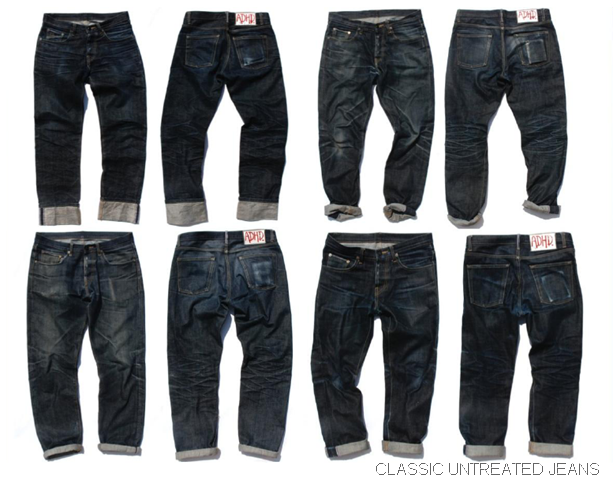
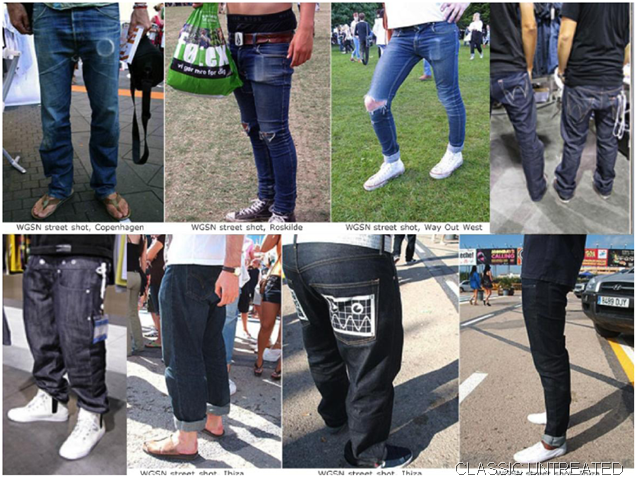
    A.Classic Untreated

    Denim Fabric Trend

    • raw Style – Selvedge
    • 3/1 twills
    • short rings , crosshatch
    • dark indigo
    • 12-15oz weight
    • Suitable for men’s jeans

    Laundry/Finishing Effects :

    • Unwashed
    • Dark Rinse
    • Grunge slashed
    • 3D Whiskers

    denim jeans trends

    denim jeans trends

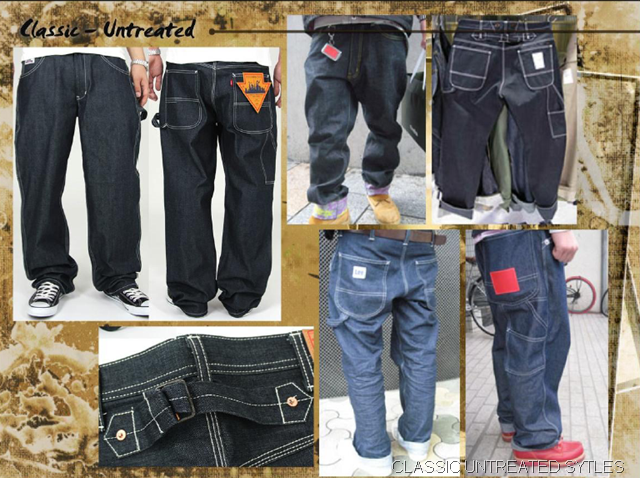
    Jeans Styling

    • Workers Style
    • 50s 501
    • XL Loose Fit
    • Classic Western Jacket

    denim jeans trends

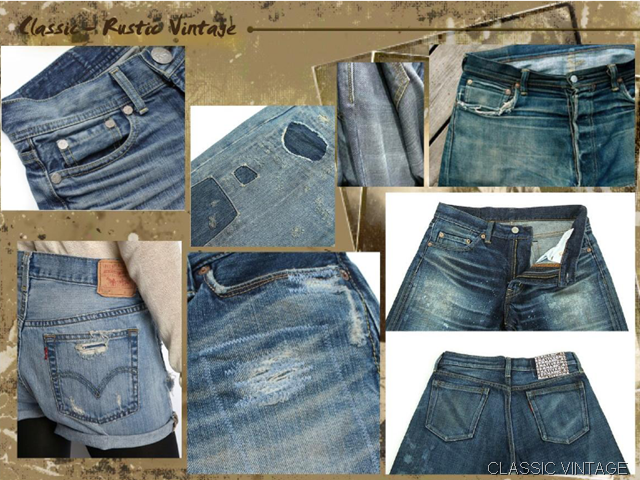
    B.Classic Vintage

    Denim Fabric Trends

    • Vintage Looks with selvedge
    • 3/1 twill, irregular weaves
    • crosshatch ,no slubs
    • Indigo/Grey color, Green Cast Indigo
    • Women’s jeans weight 11-12.5oz weight
    • Men’s jeans weight – 12.5oz to 14oz weight

    Laundry/Finishing Effects

    • Stonewashed
    • Aged & faded washing
    • Hi-Low contrast
    • Heavy Tinting
    • Patchwork

    denim jeans trends

    denim jeans trends

    Denim Styles

    • Workers Style
    • Cut-off gilet
    • 70s , 80s classic jacket
    • Boyfriend Fit
    • Daddy shirt for dress..

    denim jeans trends

    denim jeans trends


    This post shall be continued in two more parts listing the other trends as specified by Prosperity Textiles.
    In their own words “

    Our slogan is We redefine denim, our development is not from swatch, but from our understanding with denim trend; For fabric presentation, we build up our own garment design team for garment sampling£¬while we didn’t have real garment business.; When other mills complain that the market is becoming more and more tough, we still kept business growing at 30% these two years. The devil is in the details, and our secret is just in the details”.

    Contact Prosperity Textiles – email here.

  • Premium Denim Jeans Sale In Next 10 Days – Upto 80% off

    denim sale

    For the Holiday shopping ,here is a list of some of the denim sample sales that will take place in next 10 days or so. Do not forget to check out the great bargains

    1. DENIM SAMPLE SALE
      This Toronto Sample Sales event is all about premium denim, with 40 to 80 per cent off brands like True Religion, Hudson Jeans and J Brand. Dec. 17 to 19. Holiday Inn, 7095 Woodbine Ave., Markham, 416-399 ,New York
    2. Rag & Bone fall/winter sample sale, 100 (men’s) and 104 (women’s) Christopher Street (between Bleecker & Bedford streets);New York  212-727-2990 (women’s); 212-727-2999 (men’s). Hours: December 10 & 11 from noon to 8 p.m., December 12 from noon to 7 p.m., December 13 from noon to 5 p.m. .Get Denim Jeans under $80.
    3. The Denim and Dresses special sale from DJPremium.  Get ready to look dashing and dazzling this holiday season with DJPremium’s collection lineup.Get Evisu Jeans upto 40% off , Cheap Monday Jeans upto 35% off . Check out some of the jeans you can buy at discounts here.
  • Iron Heart – Japanese Denim Jeans That’s Tough..

    These are the toughest, strongest, most stubborn jeans in the world, no argument…

    iron heart

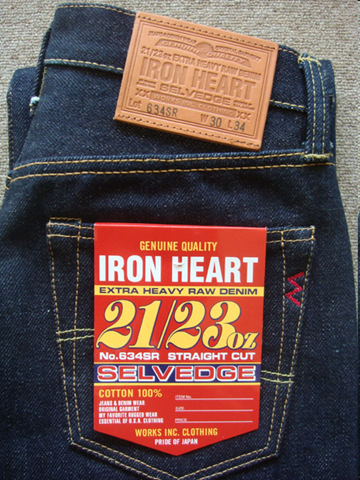
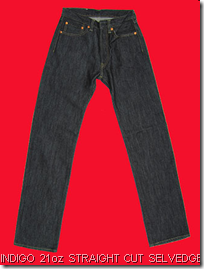
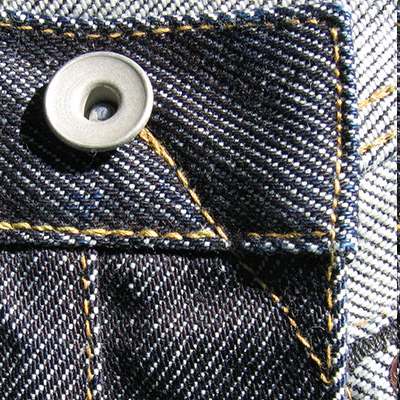
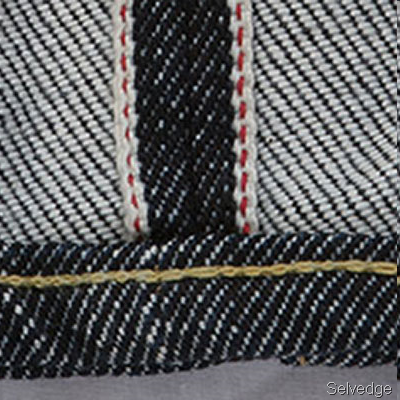
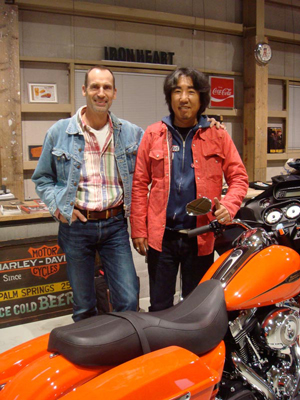
    This statement greets you when you visit the website of Iron Heart Jeans . It can leave one wondering whether it could be true . However, made with an average of 21 oz denim , the jeans are really tough and built to last a lifetime. Started over 9 years ago by Japanese bikers in search of the perfect jeans for daily riding, Iron Heart’s denim jeans and jackets are nothing short of impressive as they are not only tough but comfortable also.With all styles with a price tag of over $250, the jeans are definitely not cheap – but are worth the price.

    We had a Q & A session with Giles Padmore – the person (from UK) who introduced Iron Heart to the world outside Japan .

    I believe the Iron Heart jeans were started by Japanese bikers 9 years back.. Can you tell us more about how the brand originated and with what purpose in mind?

    Yes, Iron Heart was set up 9 years ago by Shinichi Haraki.  Haraki-san is a dedicated Harley Davidson fan and lover of vintage clothing.  His concept behind Iron Heart was to make clothing that worked perfectly for bikers and took absolutely no notice of fashion. He wanted his clothing to be beautifully made out of the highest quality fabrics, to be absolutely pure in function and last well, but age beautifully.  An interesting and not anticipated side effect is that his clothing is loved by non-bikers too, I would estimate that only 5-10% of the garments we sell outside of Japan are sold to bikers.

    How does Iron Heart stand out from other Japanese Denim brands ?

    I think that Iron Heart is unique in that it takes zero notice of fashion trends.  We have always concentrated on making the best clothing we can, irrespective of what is happening on the high street.  Our clothes have a timeless quality about them that will not date.

    Iron heart jeans are believed to be the heaviest jeans . Is it so ?

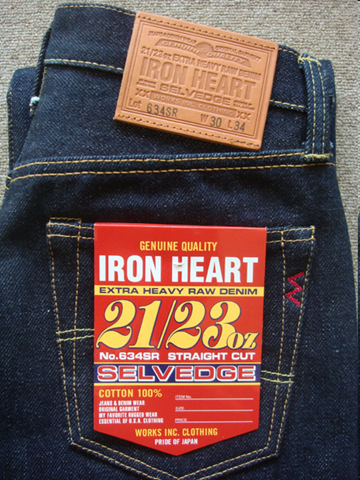
    Our normal weight denim is 21oz, this compares to 13-16oz for most other brands.  We also do the IH634SR which in its raw state is 21oz, but when washed comes out at a hefty 23oz.  There are a couple of denims out there that claim to be heavier, however our driving force is not to make the heaviest denim you can buy, but to make the best denim for the article we are creating.  Haraki personally designs from scratch all our denims, from the selection of the cotton, to the choice of the dye, to the weaving process.  One thing to note is that our 21oz denim is some of the most comfortable denim you can wear. 

    How does Iron Heart maintain the comfort aspect of the jeans in such a heavy fabric eg  -The  23 oz jeans (IH634SR) that you have launched recently?

    Because we use the highest quality long staple cotton, the warp and weft do not have to be overly spun to keep their integrity.  The result is that we can make a heavy denim that is really quite soft and comfortable.  Yes, it is true, you will have to suffer a little bit of pain to get the 23oz to submit, but once you have done that, they too are really comfortable.

    Is the denim fabric used in  Iron Heart jeans produced in  Japan only ?

    Yes 100%.  And more so it is designed from scratch by Haraki.

    Who is your typical customer ?

    3 main groups:

    1) People of all ages, including some still in their teens, who love the philosophy and cult status of Iron Heart

    2) People who want a proper pair of jeans made the way they used to be, in the traditional manner and with exceptional quality

    3) Bikers who like the idea of having a few extra ounces of denim between them and the tarmac if they have an accident

    Which are your best selling jeans ?

    IH634S, the 21oz straight cut selvedge jean

    Most Japanese denim brands do not believe in volume games and prefer to be niche players. Is this your philosophy as well ?

    This is absolutely our philosophy. We want to make sure as we grow, our quality does not suffer.  But partly, that is forced upon us because there is only one denim mill in Japan that can make the heavy weight denim we love to a quality that we will accept – and we take a 100% of that mill’s capacity!

    What denim trends do you see the strongest in the next year ?

    The short answer is that we don’t care!  The longer answer is that we see more and more people understanding that Japanese made denim and jeans are in a different league quality-wise than anything else on the market and as a result demand will continue to rise.

    What is your advice to denim lovers ?

    A pair of jeans is an extension of your personality and soul.  Buy a pair that you feel great in, then wear them as much as possible before washing them, that way they will mould and fade uniquely to your body shape and the way you live.  They will become part of who you are.

    23 oz denim jeans 21 oz denim jeans


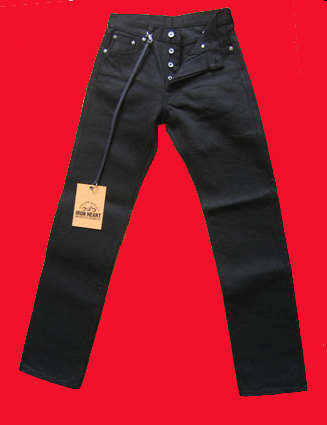
    japanese selvedge denim selvedge japanese denim
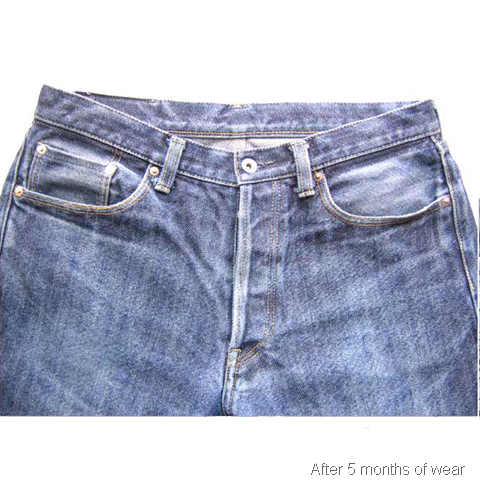
    After 5 months of wear vintage jeans image
    image image


    giles Giles  Padmore is the person who introduced Iron Heart to the world outside of Japan and has been working with Haraki-san for well over 5 years now.  He looks after all world-wide sales.  He lives in The UK, but  makes frequent trips to Tokyo to spend time with the Iron Heart HQ team.  He has loved denim all his life, and if he wears anything else, it is a cause for comment !. HE can be contacted on email here . And if you are impressed with jeans, buy them here.

  • Denim By Premier Vision Dec 2009 – Trends On Denim Fabrics And Jeans

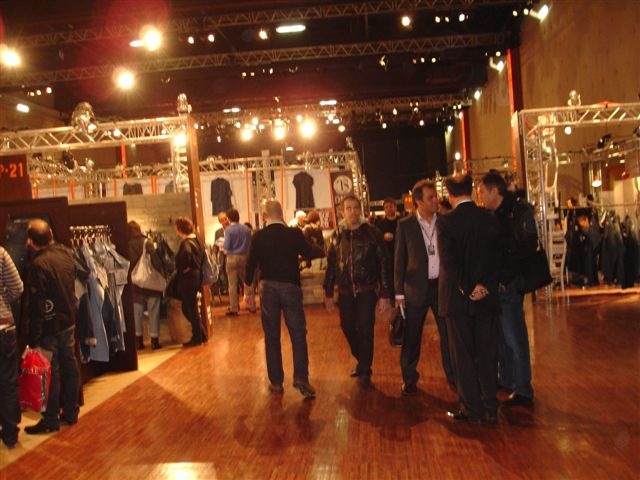
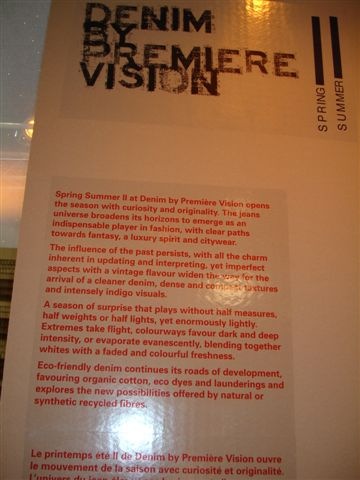
    The December edition of the Denim By Premier Vision  was a successful fair with a good summary of different qualities and finishings. The visitors showed a lot of interest in the new denim developments .


    What Were The New Denim Trends

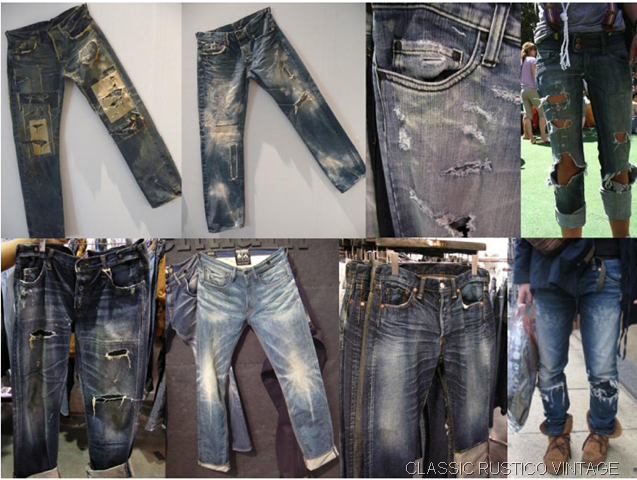
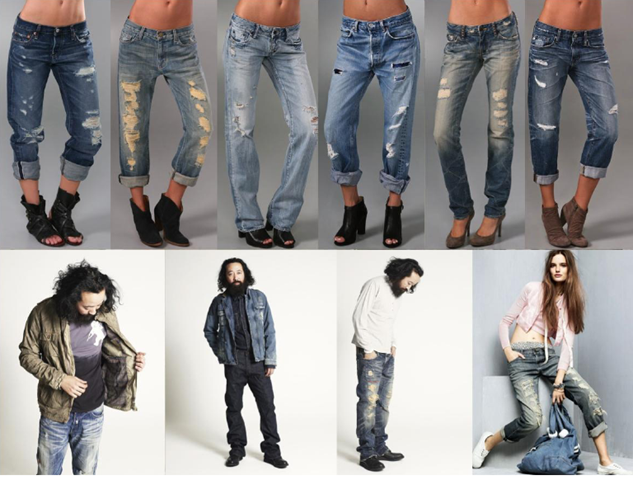
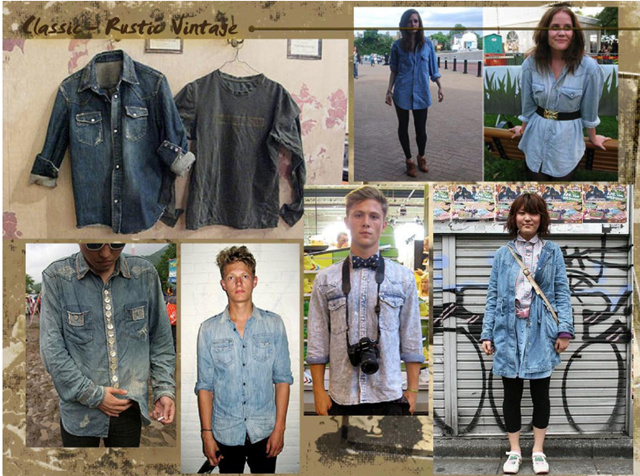
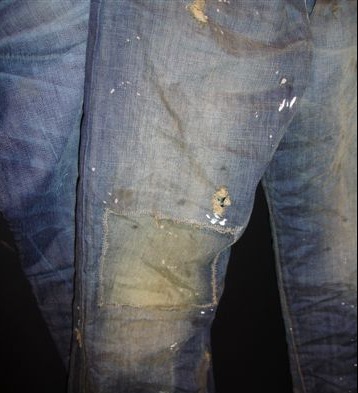
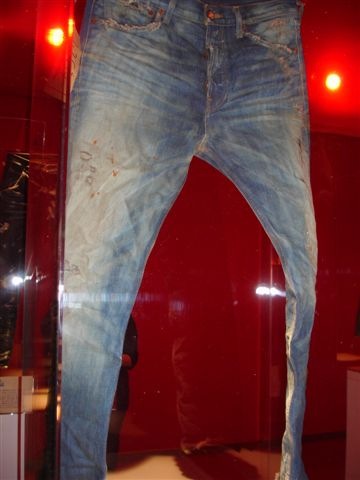
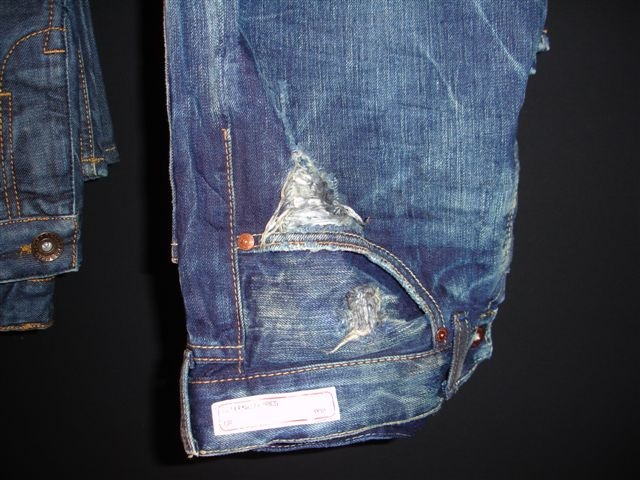
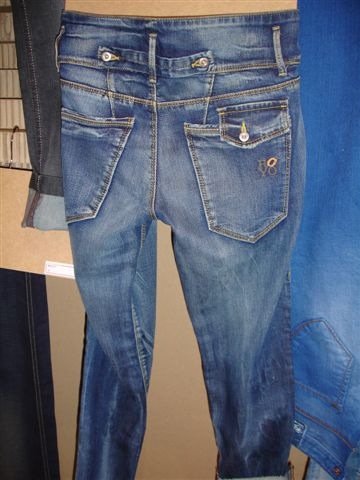
    This was a season of a perfectly imperfect jean. The following effects on denim jeans could be noticed:

    • hard abrasion-  ripped and torn denim!!!
    • dirt and stains .
    • oil marks .
    • very extreme washes!!!! + finishes
    • dirty and paint staining
    • paint and bleach spotted garments
    • holes
    • patch work
    • bleach spots
    • tye dyed (green casts)
    • warp cotton indigo + green fill dyed
    • pu coated jeans (with pigments)
    • permanent wrinkles + no pressing simple blowing of jeans and even without blowing..

    Another noticeable product was HIGH TECH DENIM——- special treatment on denim with special products which improve and activates blood circulation!! . The only question is  the permanancy of this kind of product.

    It was surprising to note that  ECO Denim  was not showing too much — perhaps due to the heavy and extreme washes.

    I could also notice new finishing plants and laundries attending the show.

    It seems that the revival of the jeans is now more concentrated on finishing and very comfortable stretch fabrics.


    Color Denimsystems

    Application of color on the denim was in various forms :

    • with pu coating weft color metallic yarn
    • coating + pu coating -pigment
    • overdying

    Cozy Denim

    Soft denims could be described as the ones with the following materials :

    • Tencel
    • T400/ Lycra
    • Bi-stretch-high stretch-open weaves

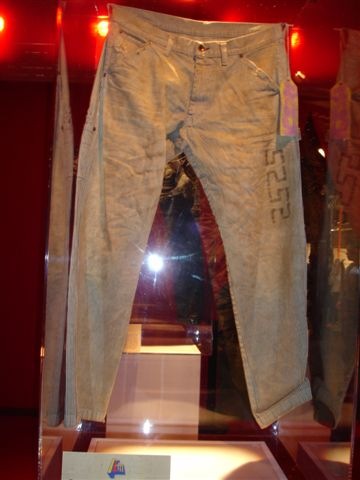
    Some Photographs From The Show

    denim by premier vision jeans

    denim by premier vision

    Click on thumbnails to see the larger image..

    mens jeans trends mens jeans trends denim mens jeans trends
    denim trends jeans denim trends jeans denim trends


    image This is a guest post by Rik Vanniewenborgh who has over 30 years experience in Denim Industry. He has worked over 25 years in the VF Corporation (Belgium) in various capacities (including quality control)and has travelled over around the world living and breathing denim. This post is from his recent visit to the Denim By Premier Vision Fair Edition December 2009.Contact him on email here.

    See some of his other posts here

  • Interesting Denim Video

    Check out this video by Put This On – showing an interview with the Rising Sun Jeans – producer of vintage denim -  and get answers to  some common denim related consumer questions..

    Note:You can see it online only..