Category: denim

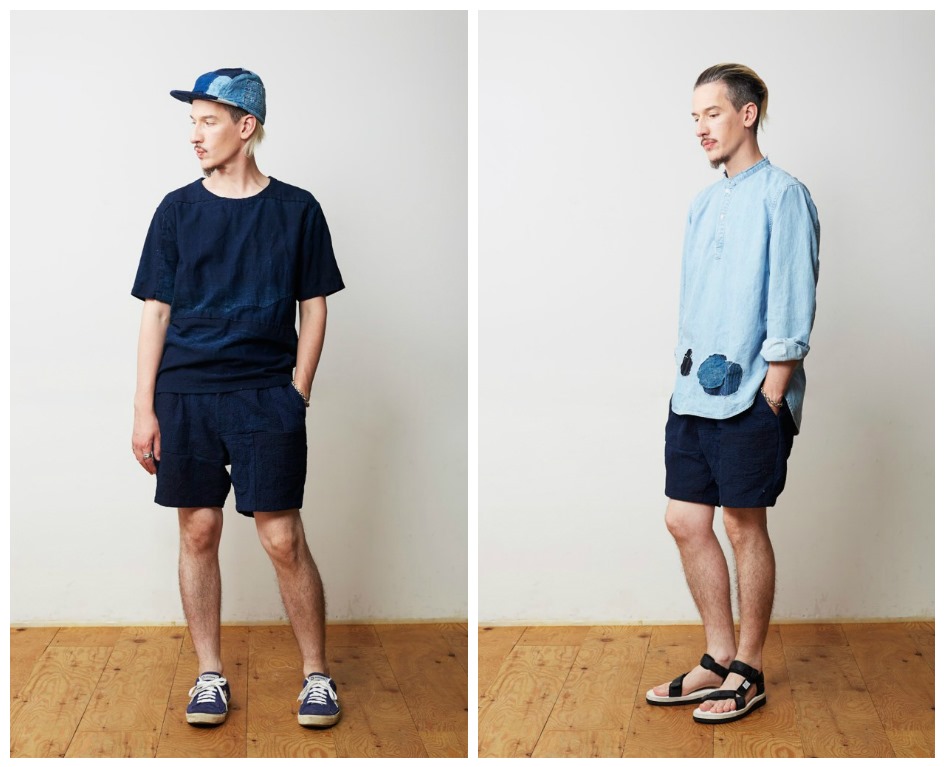
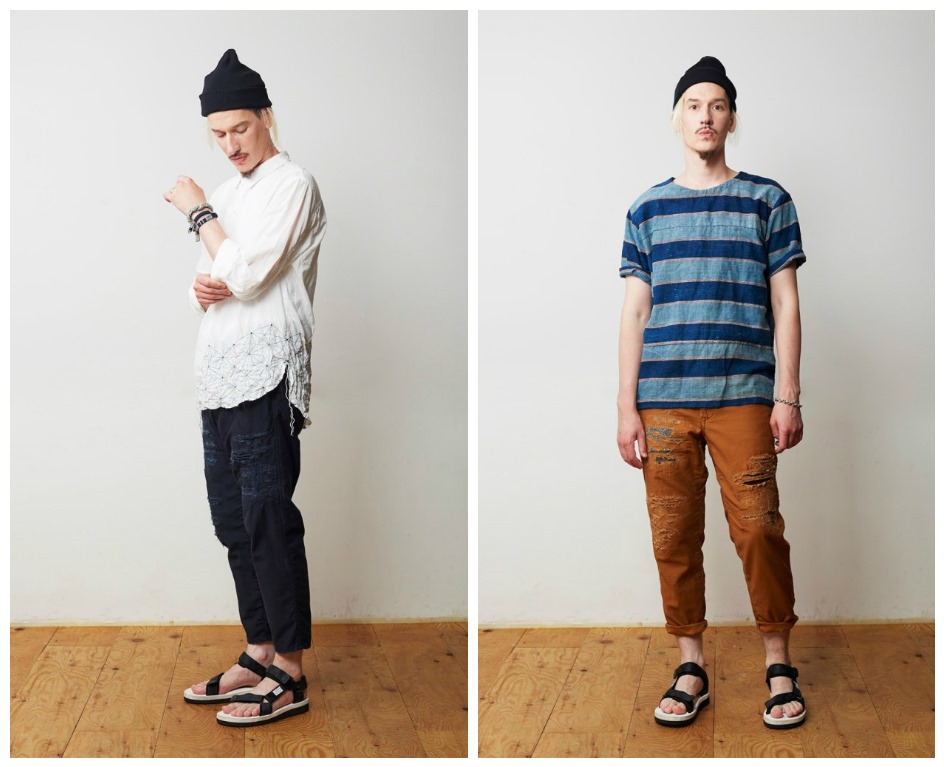
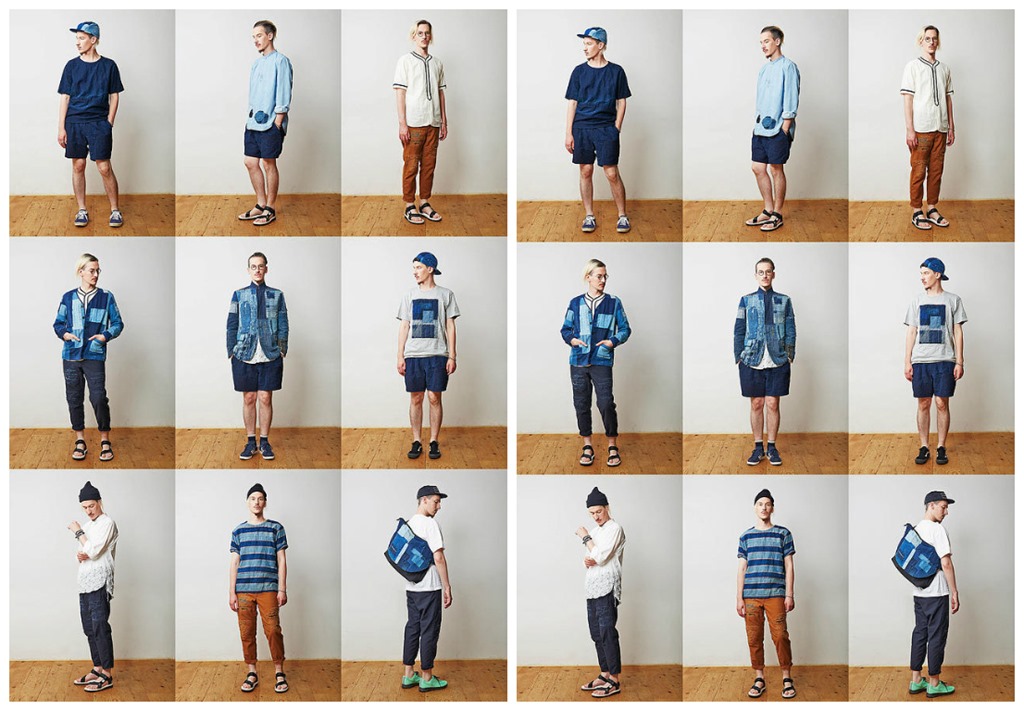
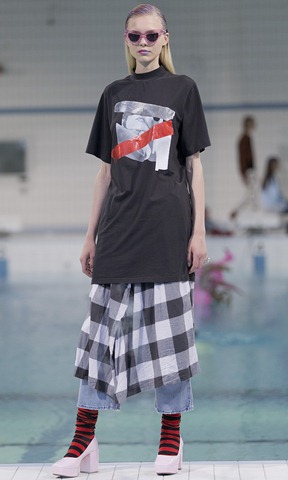
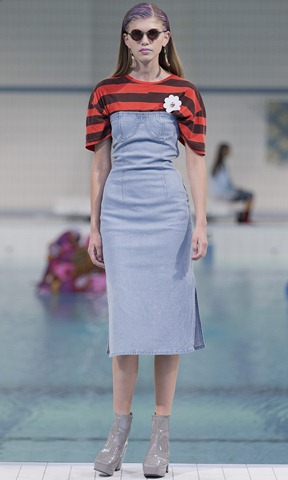
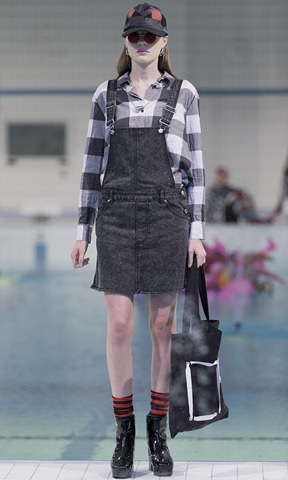
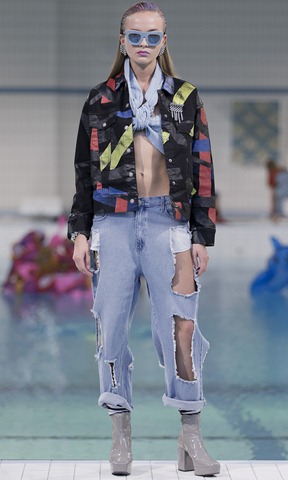
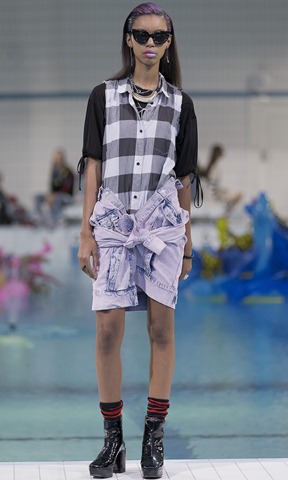
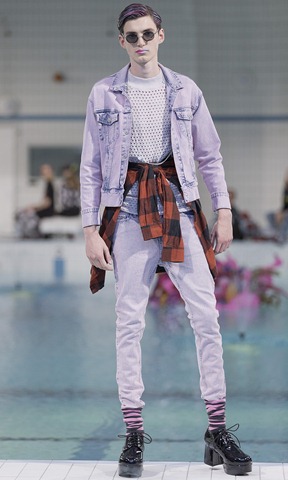
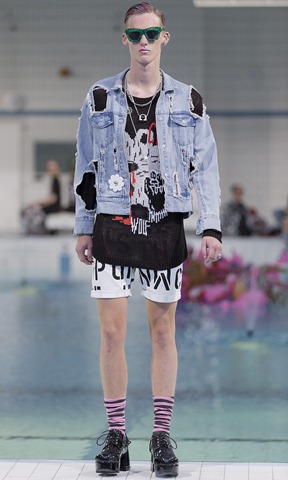
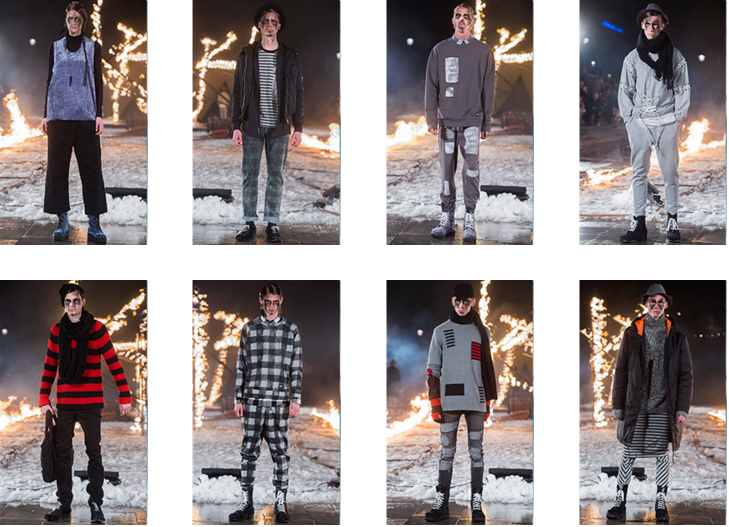
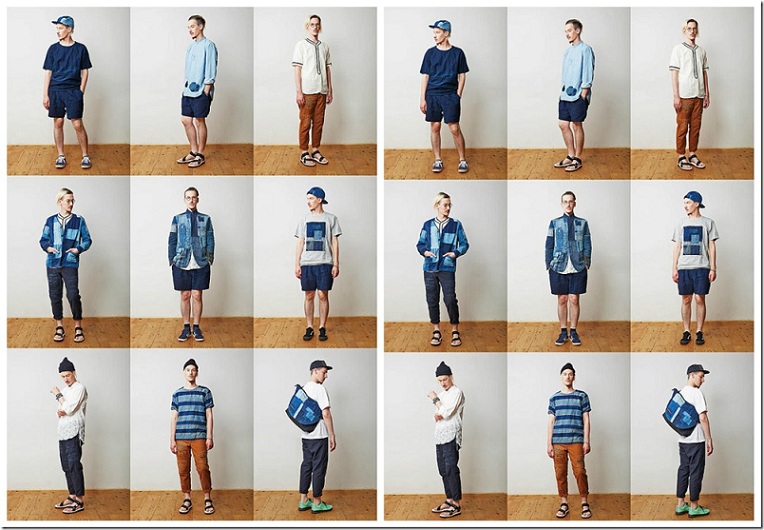
  • Kuon Spring/Summer 2016 Lookbook The Japanese label unveils its very first collection

    Kuon Spring/Summer 2016 Lookbook The Japanese label unveils its very first collection

    KUON means “eternity”,  “remote past or future”, and “permanence”. While appreciating the history and culture of vintage clothes or textiles, KUON always seeks for permanent, simple, authentic value, not bound by traditional values.KUON challenges the existing traditional notion on vintage clothes and revitalizes it with new value. KUON changes and re-invents the notion of vintage clothes.

    Shinichiro Ishibashi is the designer and creator of Kuon brand from Japan. After serving his apprenticeship at an established tailor in Marunouchi area, Tokyo prefecture, he worked as pattern maker for a regular manufacturer at Paris Collection.  In 2014 he became self-employed and started to design for several manufacturers on freelance basis. As from 2016 S/S, he became designer of KUON

    KUON , according to him, addresses social agenda via fashion business.

    “We believe that fashion possesses power to make people excited. KUON challenges the existing mass-production and consumption approach, instead we propose products and lifestyle where “stylish” and “socially good” can go together. KUON products bridges between people and society. “

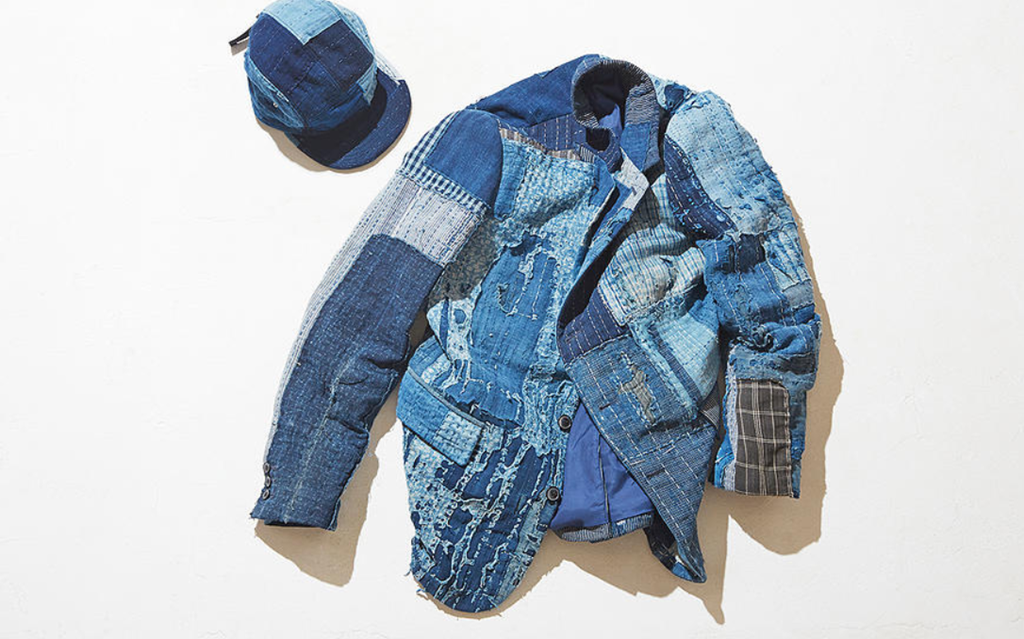
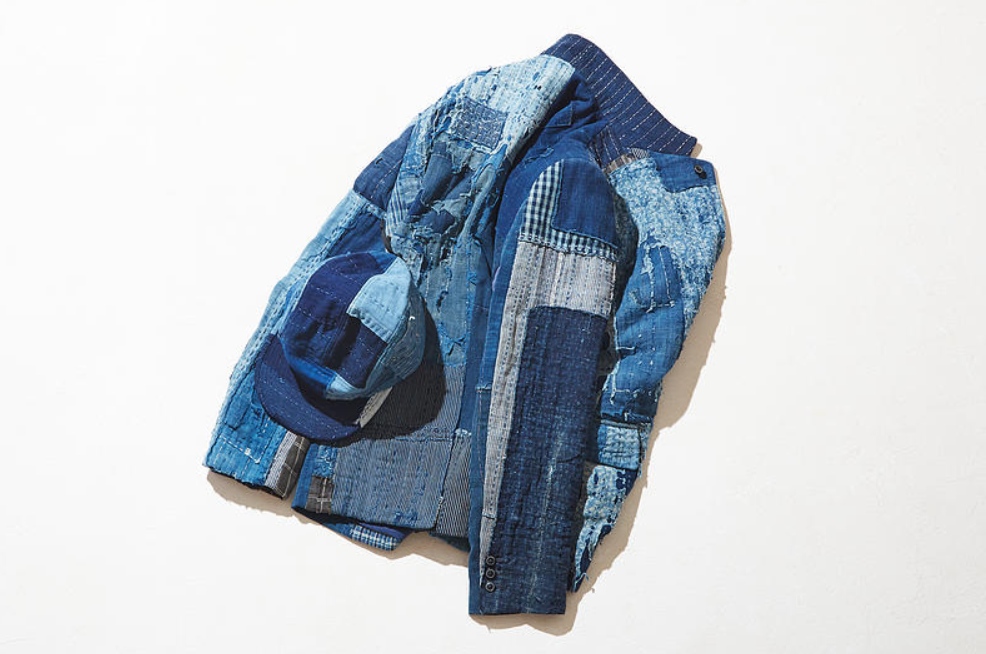
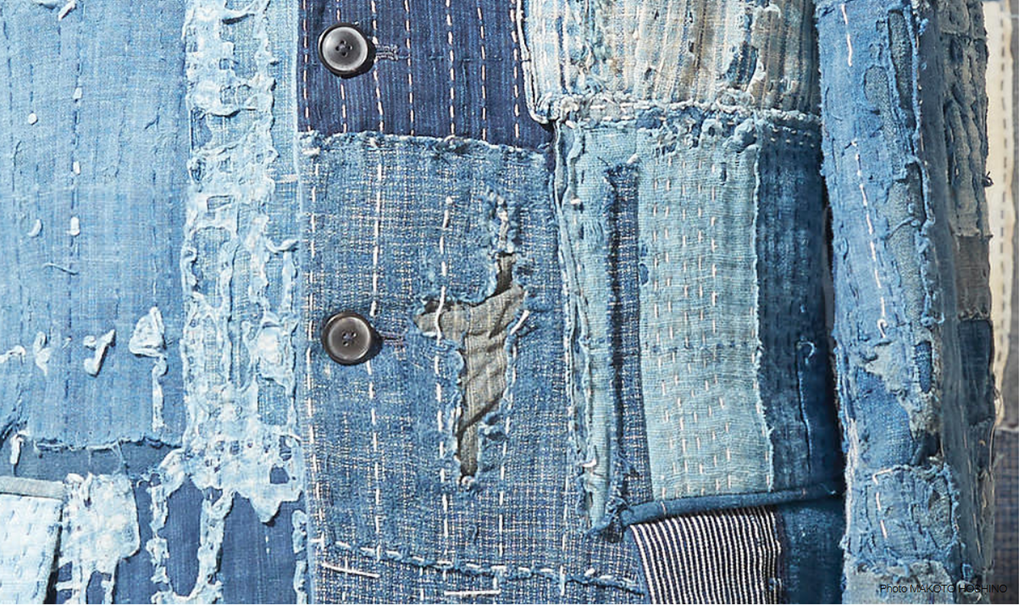
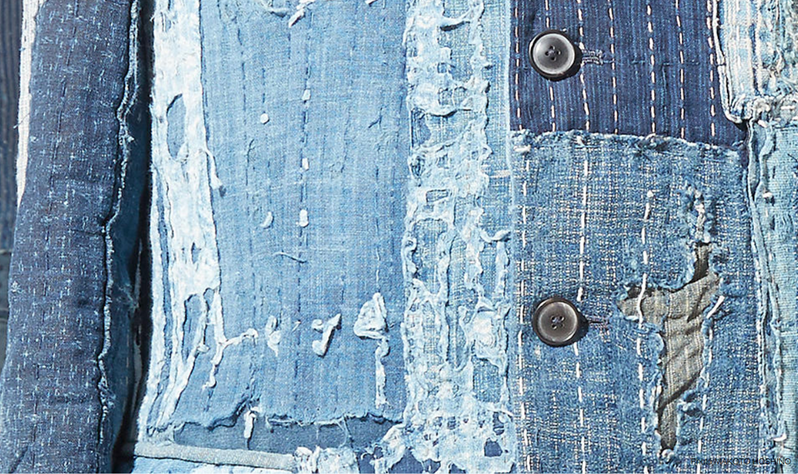
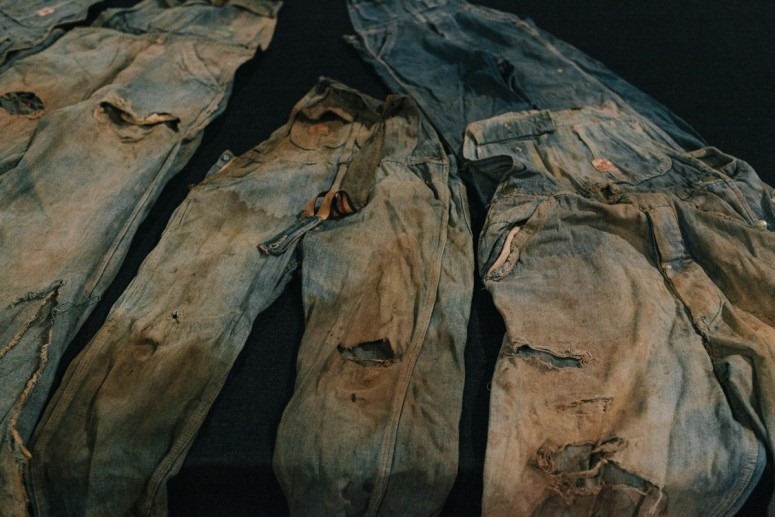
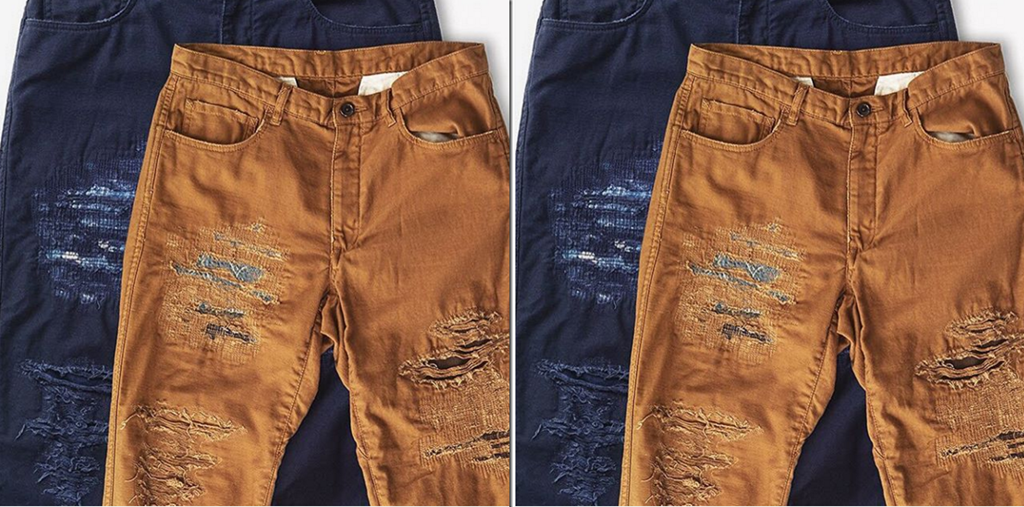
    Most of the BORO fabric KUON uses is anywhere from 50 to 150 years old. Fabric which is old and about to be thrown away, is used after it has been properly repaired. We can say this is the ultimate in eco-friendliness without the killing of any animals, and it is also easy on the environment. The people who repair the BORO are mothers who live in the Tohoku region, who suffered from the devastating earthquake that occured in Japan four and a half years ago. KUON cherishes the concept of making “stylish” clothing as a fashion statement.
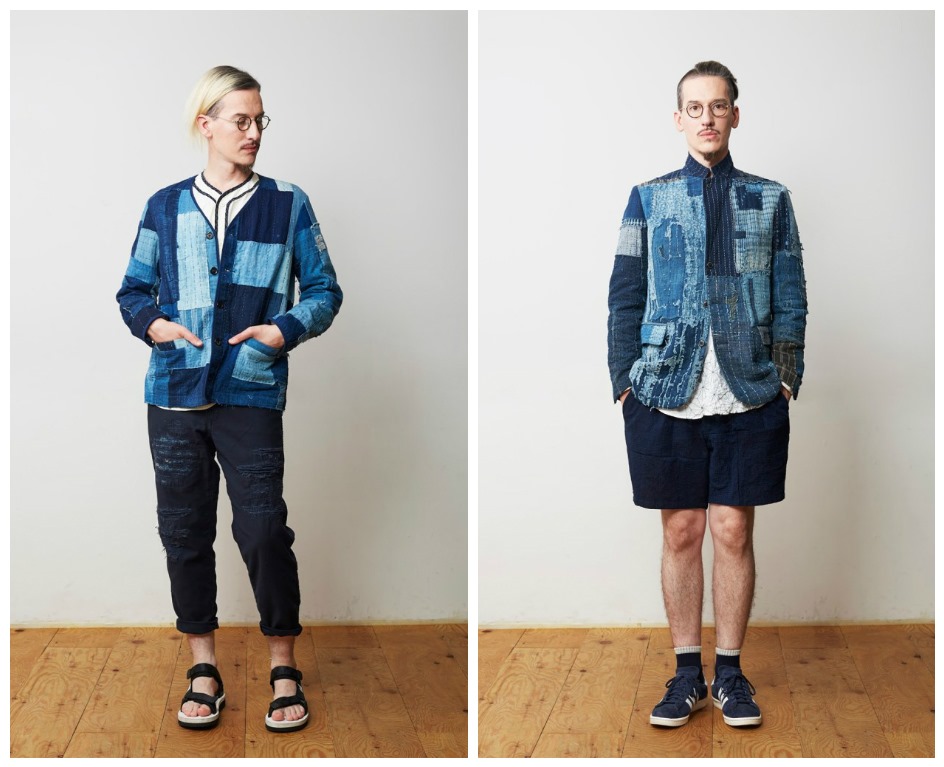
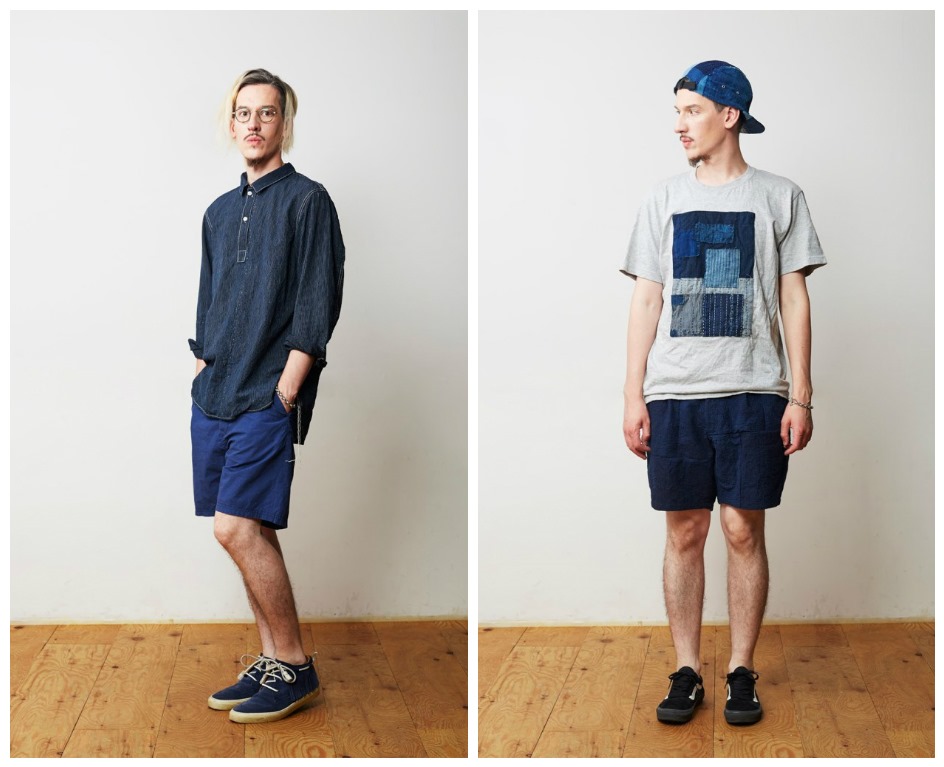
    kuon spring summer 16 denimsandjeans.com

    kuon spring summer 16 denimsandjeans.com

    kuon spring summer 16 denimsandjeans.com

    kuon spring summer 16 denimsandjeans.com

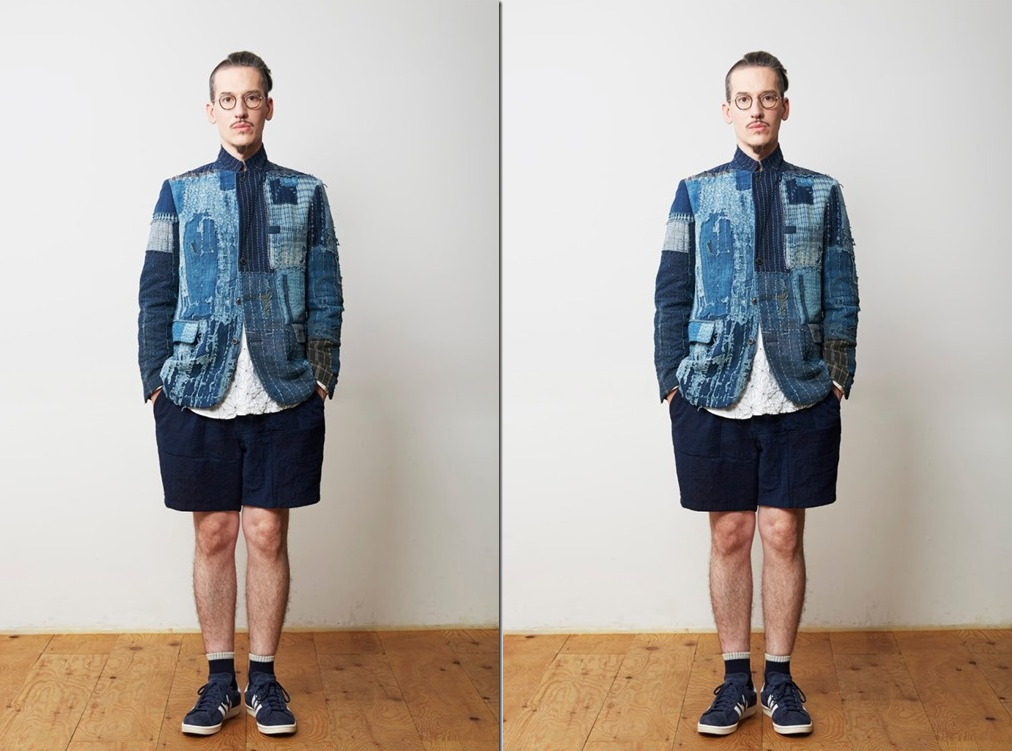
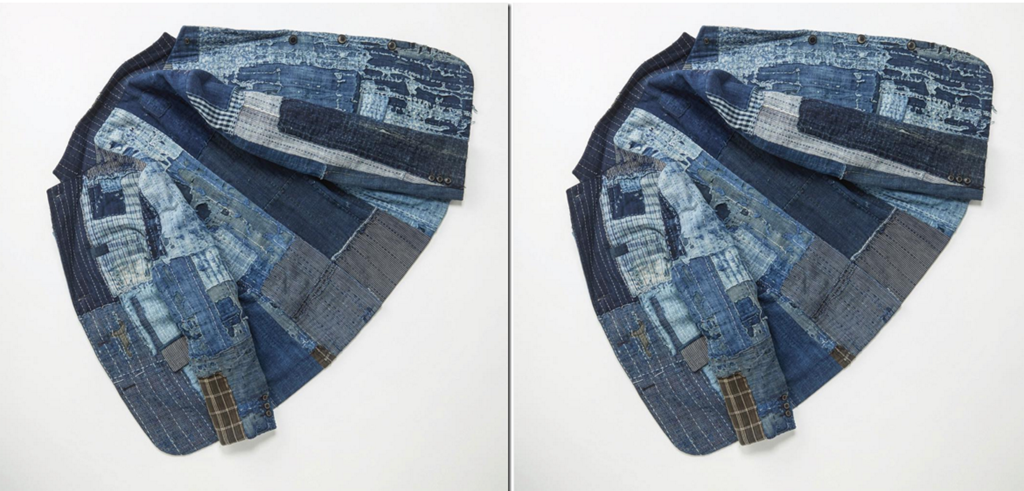
    BORO Jacket.This Jacket will be released in February 2016.
    kuon spring summer 16 denimsandjeans.com

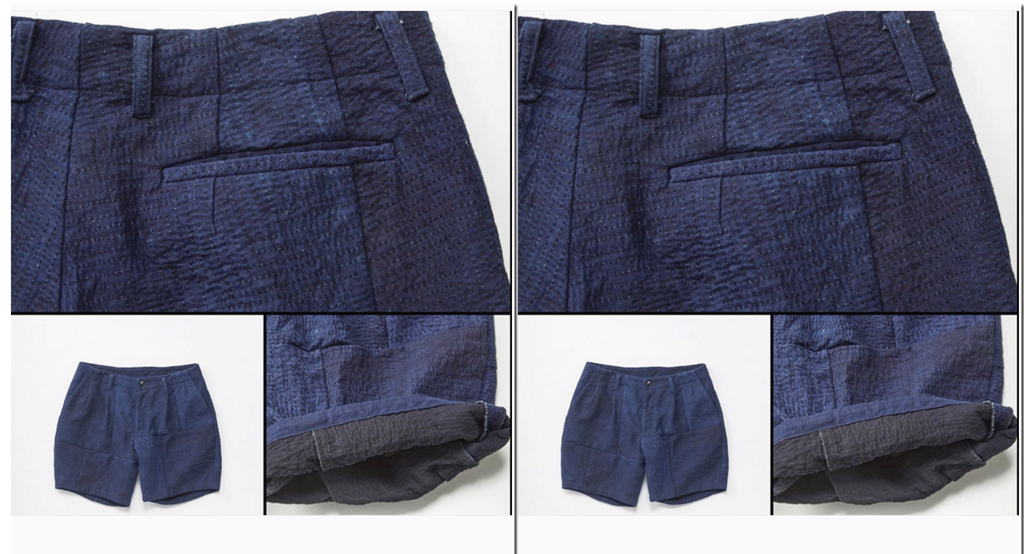
    These short pants are actually the most labor intensive product that  KUON produced Kuon used BORO from about 100 years ago on one on the sides and, for the opposite side, They also used a plain old fabric that they had SASHIKO in Otsushi town. It took about 80 hours in total!
    kuon spring summer 16 denimsandjeans.com

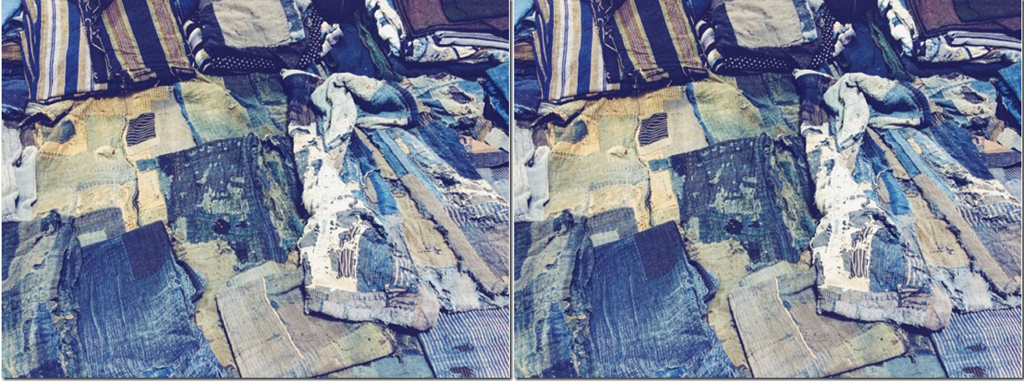
    This may be a mountain of treasures for kuon, and yet to many other people it may only be a load of garbage. But when it turns into actual clothes, it becomes so beautiful that many people are moved by it. This is why BORO is so interesting, and why we are so fascinated by it.
    kuon spring summer 16 denimsandjeans.com

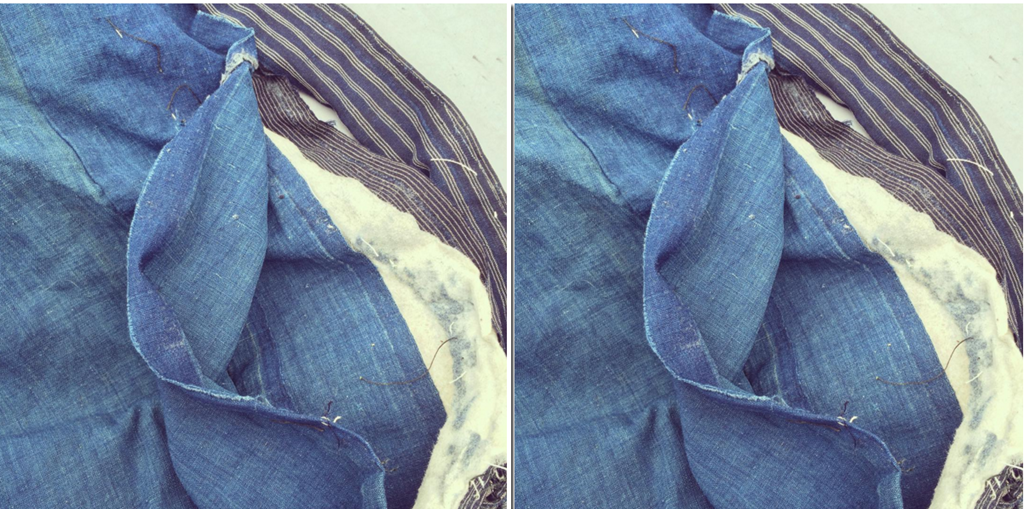
    Undoing the stitching of a kimono, washing it, and drying it. This is a very important process for KUON, and it is the hardest one. If the kimono has cotton inside, this really becomes a time-consuming job!
    kuon spring summer 16 denimsandjeans.com

    kuon spring summer 16 denimsandjeans.com

    KUON Pocket Tee

    kuon spring summer 16 denimsandjeans.com

    kuon spring summer 16 denimsandjeans.com

    kuon spring summer 16 denimsandjeans.com

    kuon spring summer 16 denimsandjeans.com

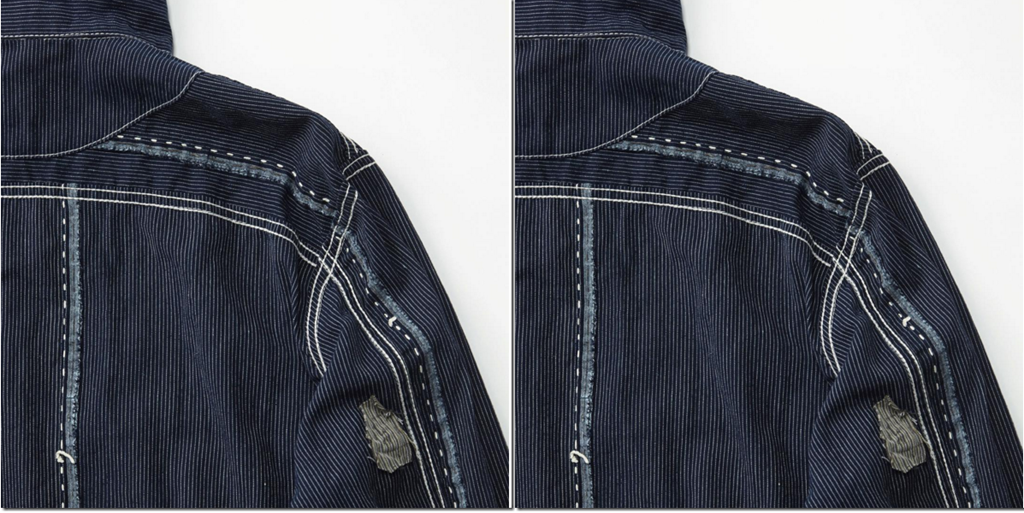
    Reverse side is  the essence of KUON.

    Traditional Japanese fabric has a width of only about 30cm, so when it is used to make clothing, there will always be several joints.Because you can see where the pieces come together, it is interesting to wear inside out as well.
    kuon spring summer 16 denimsandjeans.com

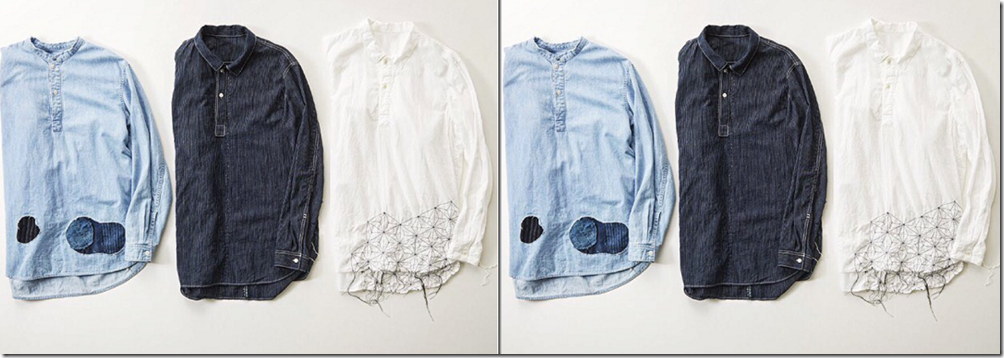
    This is called a ASANOHA by the traditional pattern of the sashiko.
    kuon spring summer 16 denimsandjeans.com

    kuon spring summer 16 denimsandjeans.com

    kuon spring summer 16 denimsandjeans.com

    Here are some answers from Mr Shinichiro regarding his brand Kuon. He does not know English and has replied in Japanese. We are publishing the same with hope to convert in English with suitable translation soon !


    1. What is the meaning of Kuon and why did you chose it.

    KUONは日本語で「永遠」「遠い過去と未来」を意味する「久遠」という言葉が元になっています。

    襤褸(BORO)は今から150-50年前の生地です。私たちは襤褸に限らず古いけれど素晴らしい世界中の生地を現代に甦らせ未来につなげることをテーマのひとつにしています。

    2. Your collection is supposed to be made of Boro fabrics 50-150 years old. How is that done. Pl explain to us. Does it mean no two garments are same?

    襤褸は日本中から探し集めています。それらを一度すべて解体し私たちのコレクションのデザインに落とし込みます。

    例えばジャケットで考えると、デザインは同じですが襤褸は一点物なので同じデザインのジャケットでもまったく同じ物は世界にひとつしかありません。

    3.How do you think Kuon can achieve a social purpose while making a fashion statement

    私たちは20世紀型の大量生産、大量消費に疑問を持っています。

    もちろんそれによってファッションがここまで進化したことはとても素晴らしいことだと思います。

    しかし21世紀に入って世界中の人々の価値観が大きく変化し始めています。

    新しいだけの物は次の新しい物が発表されれば古くなり価値を失います。

    しかし美しい物はいつまでも美しいのです。

    夕陽はいつ見ても美しいように襤褸にはいつまでも人を惹きつける美しさがあると思います。

    KUONはファッションを通じて新しい価値観の提案をしたいと考えます。

    またKUONで使用する襤褸はそのままでは使えない状態の物を多くあります。

    2011年3月に日本の東北地方に大きな被害をもたらした地震と津波で被災した岩手県大槌町のお母さんたちに襤褸の補修をお願いしています。

    このプロジェクトは単なる寄付ではありません。彼女たちは僕たちの大事なパートナーでKUONが大きくなるほどに彼女たちの仕事が継続かつ充実します。

    ファッションには人を元気にワクワクさせる力があると私たちは信じています。

    150年かけて熟成された生地を現代の人が補修をして甦らせそれを新しいファッションにして未来につなげる。

    こんなに興奮することはありません。

    4. How will you ensure supply of old Boro fabrics when your brand expands

    企業秘密の部分もありますが…

    KUONには日本を代表する古美術の専門家が何人もバックアップをしてくれています。

    私たちの元には日本中から貴重な襤褸がたくさん集まってきます。

    それでも襤褸は限られた資源ですので無尽蔵にあるわけではないので大切に扱っています。

    同じ襤褸を作ろうとしたら50年後になってしまうわけですから!

    日本でも近年投資目的で襤褸の価格が高騰しています。

    僕たちはそういう人たちからは買いません。

    なぜならそうすることで襤褸が単なる一過性のトレンドで終わってしまい、

    私たちの思い描くファッションの理想像とは違ってしまうからです。

    5. Boro fabrics are normally supposed to be about 30 cm wide. Does it make difficult to use these fabrics ?

    よくご存知ですね。

    もともと欧米から洋装が入ってくるまで日本人は着物を着てました。

    着物の生地幅は36cmくらいです。襤褸は両端が破けたりして使えるのは30cmくらいになります。

    それらをつなぎ合わせて仕立てます。しかも襤褸は大きさもそれぞれ異なります。

    その作業は今の工場にとっては難しく断れれますので私たちが予め処理をしてから工場に依頼します。

    このために通常の洋服作りの工程の倍以上の時間と労力が掛かると思います。

    6. When will your collection be available online ?

    来年の2月頃にオンラインストアもオープンできるように準備中です。

  • Report on Italy Denim Jeans Import 2010 -2014

    Report on Italy Denim Jeans Import 2010 -2014

    The recent economic recession noticeably affected the entire Jeans market. Almost all brands and product group sales in volume and value terms dropped . In this report, we would have a detailed  trend analysis of Denim Jeans of ITALIAN market and would also include some of the pertinent aspects of  that market including its trade quantities within EU and outside with the entire world.  We had done the analysis for the UK and the German market in the last report and this time we are doing for the ITALIAN market. ITALY is again an important country in the EU with a population of over 61.07 million and a per capita income of about $30,262. Let’s have a look at some vital figures from the ITALIAN market to get a broader framework of understanding about the denim market which includes the followings:


    Table No.

    Particulars

    1

    Imports of Jeans into ITALIAN Market from 2010 to 2014 from within EU and respective share of important countries from EU in ITALIAN market  described in 2 tables and 3 graphs.

    2

    Imports of Jeans from EU28 into Italian Market and their prices from different exporting countries.

    3

    Imports of jeans into ITALIAN Market from 2010 to 2014 from around the world – table and graph.

    4

    Share of ITALIAN market of EU28 v. ‘Rest of the world’ with a graph.

    5

    Share of exporting countries in the market of ITALY  2010-2014

    6

    Share of exports from and outside the EU 2010-2014


    [private_special]


    IMPORT FROM EU28 COUNTRIES

    Let’s start our analysis with the imports of jeans into ITALY from within EU.  In the diagrammatical explanation below, we can observe that ITALY imported about 10.11 million pcs of jeans from countries within EU IN 2014 – highest among them being from Belgium. Other important countries are France, Romania, Netherland, and Czech Republic etc. However, it needs to remember that these jeans could have been the ones that are re-distributed after importing from other countries or a part of them having been produced in EU. It’s interesting to note that the total jeans imported from within EU have shown only marginal growth and that from 9.24 million pcs to over 10.11 million pcs.

    Import of Jeans Into Italian Market From 2010 to 2014 From Within EU

    Country 

    2010

    2011

    2012

    2013

    2014

    % of 2014

    Belgium(BE)

    1.499

    2.183

    2.087

    2.444

    2.742

    27.12%

    Romania(RO)

    2.003

    2.585

    2.104

    1.939

    2.001

    19.79%

    France(FR)

    1.965

    1.369

    1.284

    1.599

    1.727

    17.08%

    Netherland(NL)

    0.506

    0.482

    0.574

    0.841

    0.922

    9.12%

    Czech Republic(CZ)

    1.831

    1.185

    1.031

    0.645

    0.677

    6.70%

    Denmark(DK)

    0.492

    0.690

    0.665

    0.638

    0.659

    6.52%

    Spain(ES)

    0.357

    0.437

    0.492

    0.484

    0.574

    5.68%

    United Kingdom(GB)

    0.894

    0.576

    0.534

    0.455

    0.509

    5.03%

    Greece(GR)

    0.050

    0.147

    0.071

    0.053

    0.071

    0.71%

    Hungary(HU)

    0.001

    0.000

    0.001

    0.026

    0.091

    0.90%

    Others

    0.298

    0.155

    0.258

    0.125

    0.138

    1.36%

    Total

    9.895

    9.808

    9.102

    9.247

    10.112

    100.00%

    From the above analysis, it can be easily drawn that Belgium  holds 27.12% share followed by Romania with 19.79% share in the import. One more thing that is very eye catching that the import quantities of Belgium has maintained a constant growth right from the year 2010 to 2014 while the import quantities of France has been reduced from 1.965 million pcs to 1.727 million pcs . However, it cannot be said that the mentioned numbers reflect products made in Belgium. A major part is probably re-exported.

    image

    The table below shows the average price of jeans imported into Italian Market from EU countries. The average price of import in 2014 for individual countries is given along with. The table and the graph below show the details of prices from important EU countries. Greece is the most expensive while Belgium and Hungary are  the cheapest one.

    Imports of Jeans Into Italian Market from within EU –2014
    Country  Pcs (in million) Average Price(Euro/Pcs)

    Belgium(BE)
    2.742 7.93
    Romania(RO) 2.001 15.47
    France(FR) 1.727 15.50
    Netherland(NL) 0.922 22.08
    Czech Republic(CZ) 0.677 25.69
    Denmark(DK) 0.659 12.86
    Spain(ES) 0.574 16.96
    United Kingdom(GB) 0.509 22.03
    Greece(GR) 0.071 23.33
    Hungary(HU) 0.091 3.80

    A vast difference in prices of jeans coming from different countries. Specially jeans from Hungary seem very cheap while those from Greece and UK are very expensive at about Euro 22/- .

    Imports of Jeans Into Italian Market from within EU –2014

    image


    IMPORTS FROM WORLD

    One cannot imagine the latest trend in the Apparel industry without considering the figures of Imports of Jeans around the globe; we cannot do the precise interpretation unless the information about world isn’t analyzed. Let’s analyze the jeans coming to Italy from the world. Bangladesh holds the largest share of 27.93% of Italy market in 2014 whereas Tunisia and Pakistan come next with 20.37% and 12.20% share. The total quantity imported in 2014 was about 31.711 million pcs whereas in 2010 it was about 30.348 million pieces showing a decent growth of about 5%.

    The graph below shows the breakup of market among the key players in 2014. Figures in million pcs.

    Country 2010 2011 2012 2013 2014 % of 2014
    Bangladesh 4.447 4.434 4.188 6.638 8.857 27.93%
    China 7.055 5.583 4.121 4.243 3.865 12.19%
    Egypt 0.942 0.481 0.315 0.162 0.225 0.71%
    India 0.327 0.153 0.074 0.206 0.357 1.13%
    Cambodia 0.002 0.035 0.187 0.612 0.788 2.48%
    Morocco 1.888 2.169 2.445 2.862 2.821 8.89%
    Mauritius 0.346 0.090 0.081 0.176 0.282 0.89%
    Pakistan 2.544 2.771 2.038 3.029 4.503 14.20%
    Tunisia 8.830 7.266 5.332 6.610 6.458 20.37%
    Turkey 3.731 4.071 3.639 2.961 3.363 10.61%
    Sub Total 30.113 27.054 22.420 27.499 31.519 99.39%
    Other 0.234 0.197 0.088 0.142 0.192 0.61%
    World 30.348 27.251 22.508 27.641 31.711 100.00%

    image

    TOTAL IMPORTS

    The total imports of jeans into ITALIAN Market can be now summarized up in the table below with shipments coming from both within EU and from outside. The share of EU in the French market is about 24.18% whereas 75.82% comes from rest of the world in 2014. If we look at the quantities imported from 2010 to 2014 from EU countries, it’s very apparent that there is only a marginal growth in the quantities however, if we look at the figures of World, it’s quite surprising that in the year 2011, 2012 and 2013, there was an adverse growth in the import quantities , the reason may be the impact of recession which affected the consumptions worldwide but it’s good to know that in the year 2014 , the import quantity has registered marginal growth.

    Imports of Jeans From The World (in million pcs)

    Year 2010 2011 2012 2013 2014 %
    World
    30.34 27.251 22.508 27.641 31.711

    75.82%
    EU
    9.895 9.808 9.102 9.247 10.112

    24.18%
    Total 40.243 37.059 31.61 36.888 41.823 100.00%

    So we see that  a total of about 41 million pcs of denim jeans were imported into Italy in 2014 which is a good number . About 75% of the same is coming from rest of the world and about 25% from within EU. However, it can be safely said that a large part of the  jeans coming from within EU is also coming from outside EU – first within other countries and getting sent to Italy. Italy also has a large production of jeans in their country. Though not growing it is a decent number and we will cover that in another report.

    image


    [/private_special]

  • Indigo Turtles- Helping Baby Sea Turtles with their First Steps…

    Indigo Turtles- Helping Baby Sea Turtles with their First Steps…

    Indigo Turtles- Helping Baby Sea Turtles with their First Steps

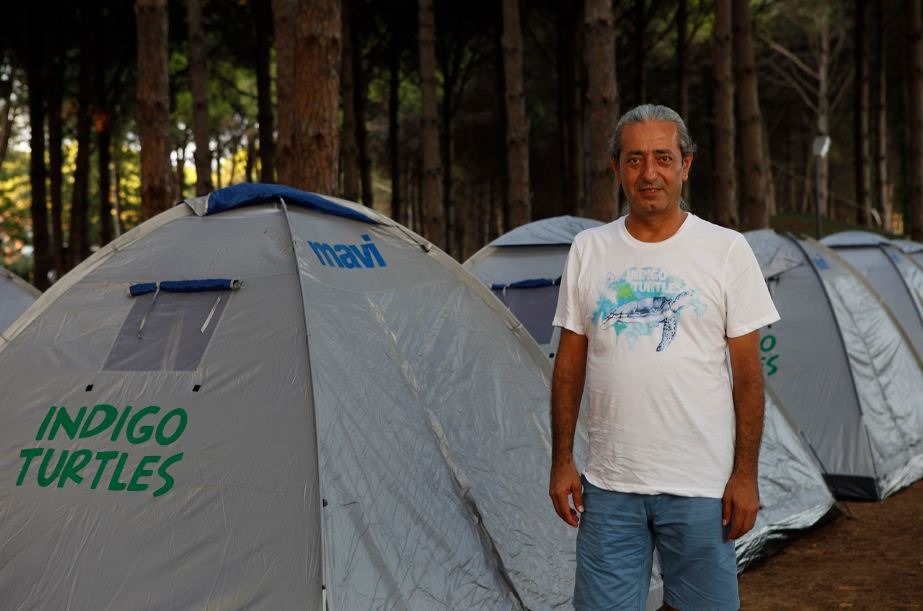
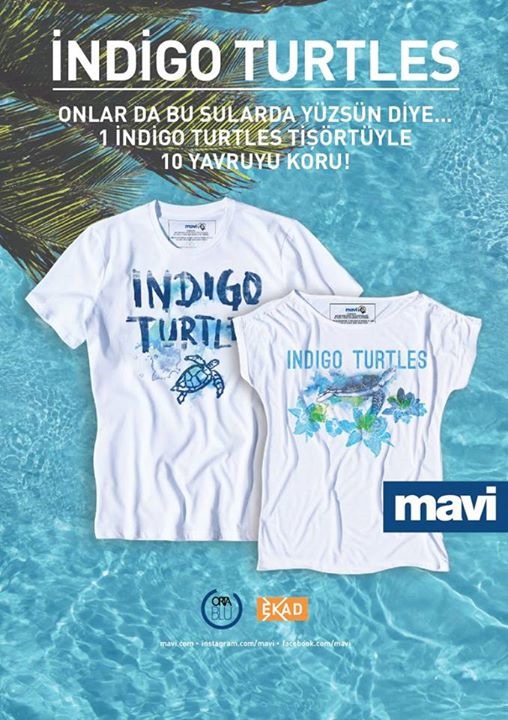
    Mavi has teamed up with ORTA to protect endangered sea turtles by supporting the Ecological Research Society’s (EKAD) Indigo Turtles project.Mavi, designer of contemporary denim styles inspired by the Mediterranean spirit, and Orta Anadolu, developer of innovative denim fabrics – both from Turkey – have joined forces to unite sea turtles – also called Indigo Turtles because of their color-  with their natural habitat.

    Indigo Turtles- Helping Baby Sea Turtles with their First Steps denimsandjeans.com

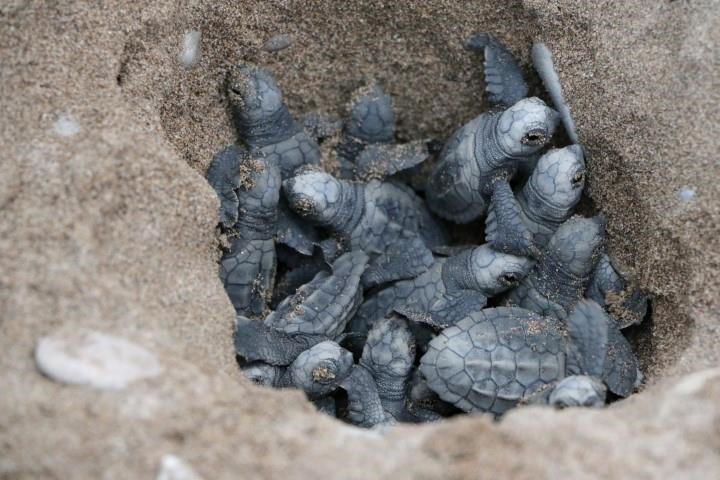
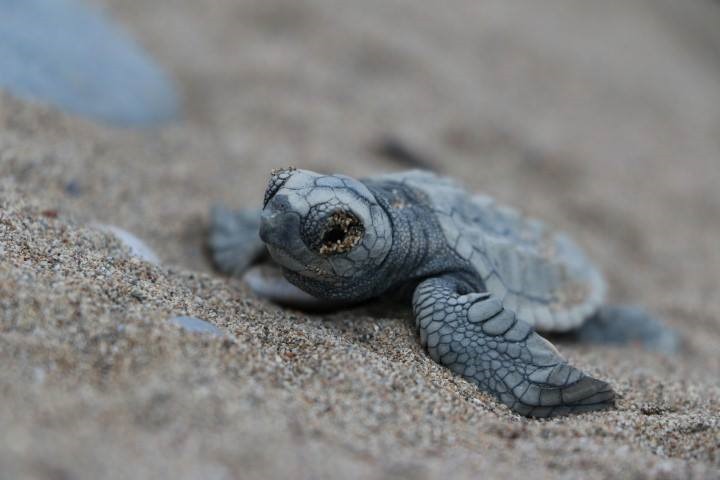
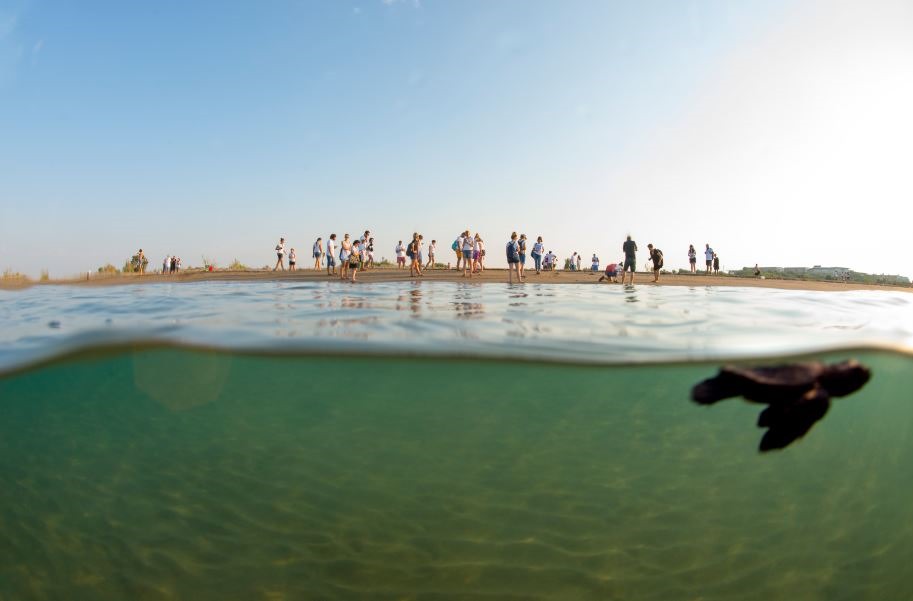
    The Indigo Turtles project aims to protect two species of sea turtles native to the Mediterranean, Caretta caretta and Chelonia mydas, each of which has been navigating the earth for over a hundred million years. The project kicked off last year, helping fifteen thousand hatchling turtles reach the relative safety of the sea. Facing many difficulties, only forty percent of hatchling turtles reach the water and only one in a thousand survive there after. The Indigo Turtles project not only offers the little turtles hands-on help in the field, but also utilizes its  network to raise awareness about the problem and its potential solutions.

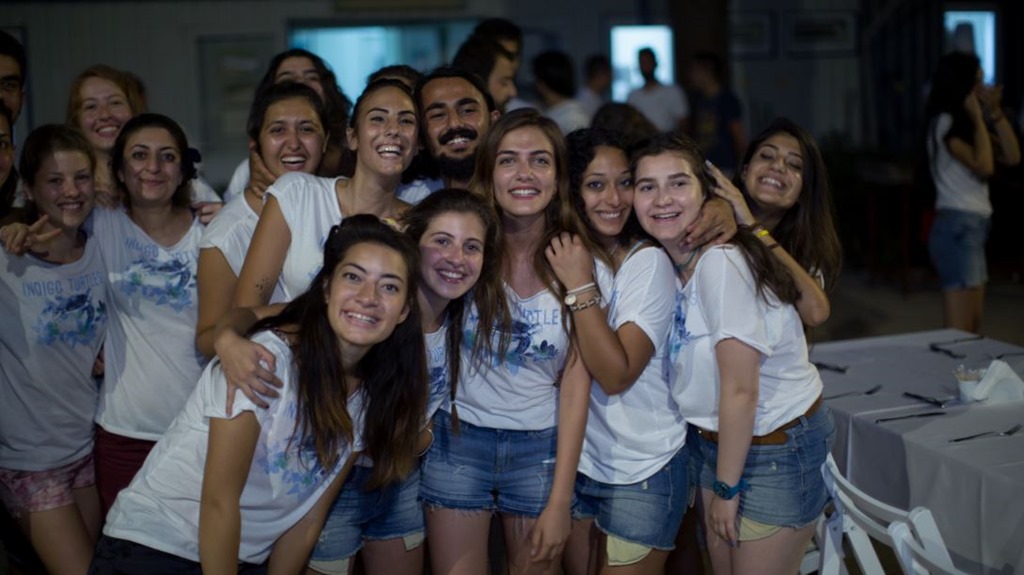
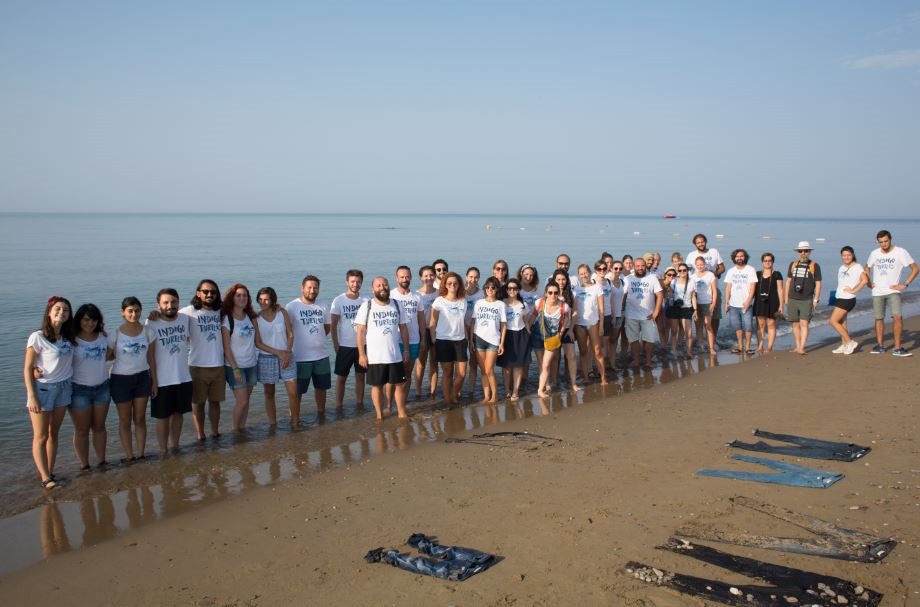
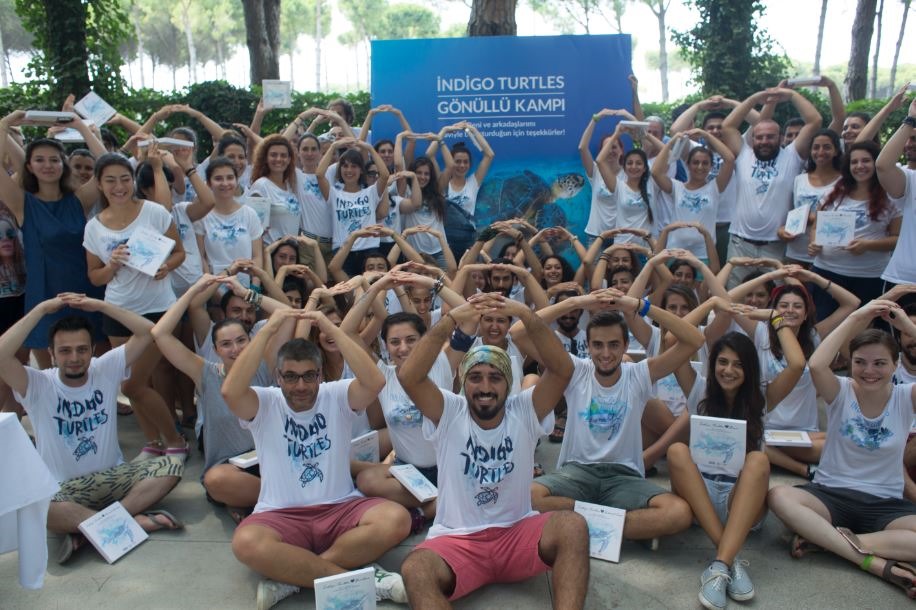
    Along with hundreds of university volunteers, customers and followers, Mavi and ORTA employees join EKAD’s efforts in Belek, near Antalya/Turkey, from June to September. Volunteers from around the world help hatchlings climb out of their nests and begin their journey towards the open ocean.

    Indigo Turtles- Helping Baby Sea Turtles with their First Steps denimsandjeans.com

    Indigo Turtles- Helping Baby Sea Turtles with their First Steps denimsandjeans.com

    Indigo Turtles- Helping Baby Sea Turtles with their First Steps denimsandjeans.com

    Indigo Turtles- Helping Baby Sea Turtles with their First Steps denimsandjeans.com

    Indigo Turtles- Helping Baby Sea Turtles with their First Steps denimsandjeans.com

    One T-shirt, ten sea turtles!

    Mavi has also created a special t-shirt for supporting this activity. Every purchase of a Mavi Indigo Turtle t-shirt can possibly safeguard the lives of ten baby sea turtles and makes a contribution to the Mediterranean basin. The t-shirts will generate resources to protect fifteen thousand hatchlings from four hundred nests. Indigo Turtles T-shirts are available online in Mavi USA

    Indigo Turtles- Helping Baby Sea Turtles with their First Steps denimsandjeans.com

    Some Facts On Indigo Turtles

    • The Ecological Research Society (EKAD) was established by academics, most of whom are specialists on biodiversity and natural conservation
    • The sea turtles have great importance for the Mediterranean’s marine and shoreline ecosystems, and a large proportion of Mediterranean sea turtle’s nesting grounds are on Turkey’s beaches
    • It takes fifteen years for a turtle to reach reproductive maturity. Providing a secure environment for them to mature in is vital for the Mediterranean’s ecology
    • In a secure environment, sea turtles live an average of sixty years.
    • Turtles spend most of their lives at sea. Only female sea turtles return to the beaches where they hatched to dig nests and lay eggs
    • As most of their time is spent at feeding sites and on over-wintering migration, sea turtles generally nest only once every three years
    • On average, a female sea turtle lays three thousand two hundred eggs and builds forty nests in her lifetime
  • Cone Denim Celebrates 110 Years Of White Oak Plant

    Cone Denim Celebrates 110 Years Of White Oak Plant

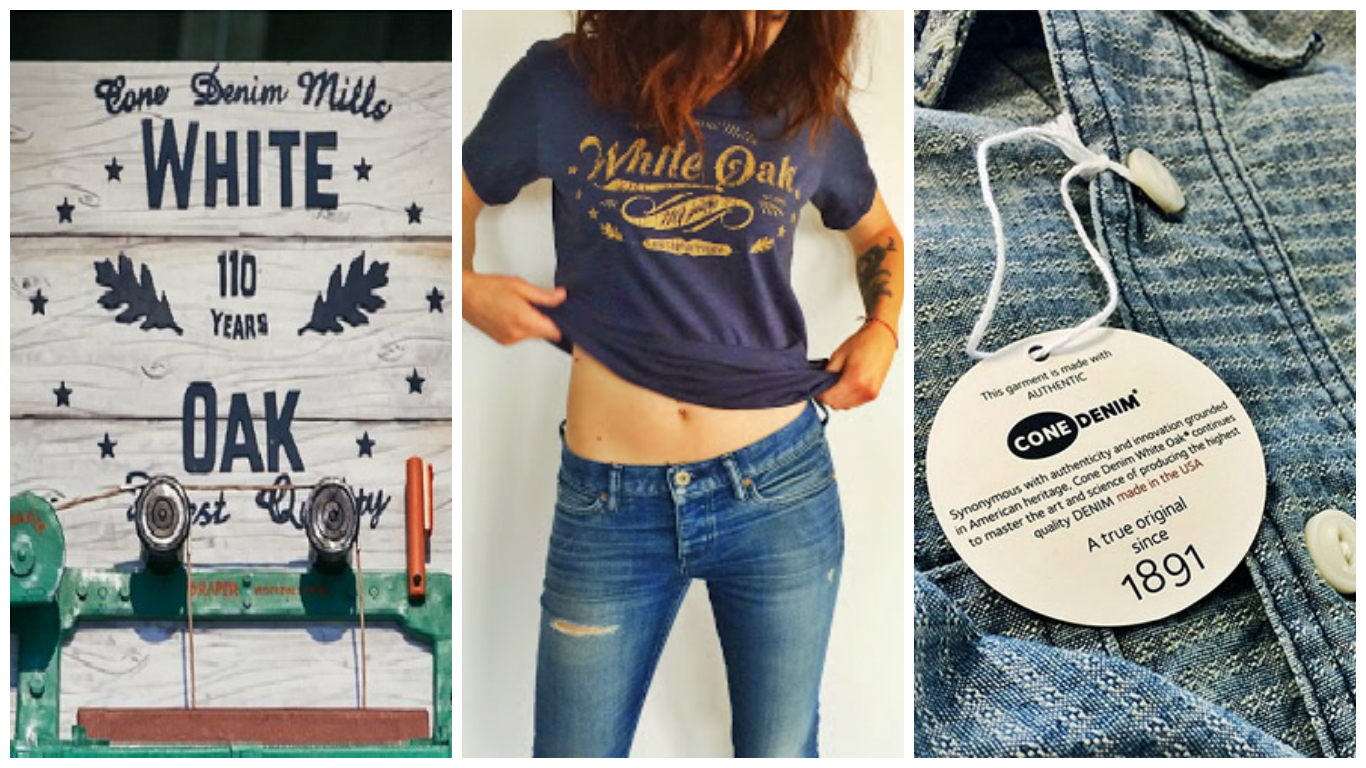
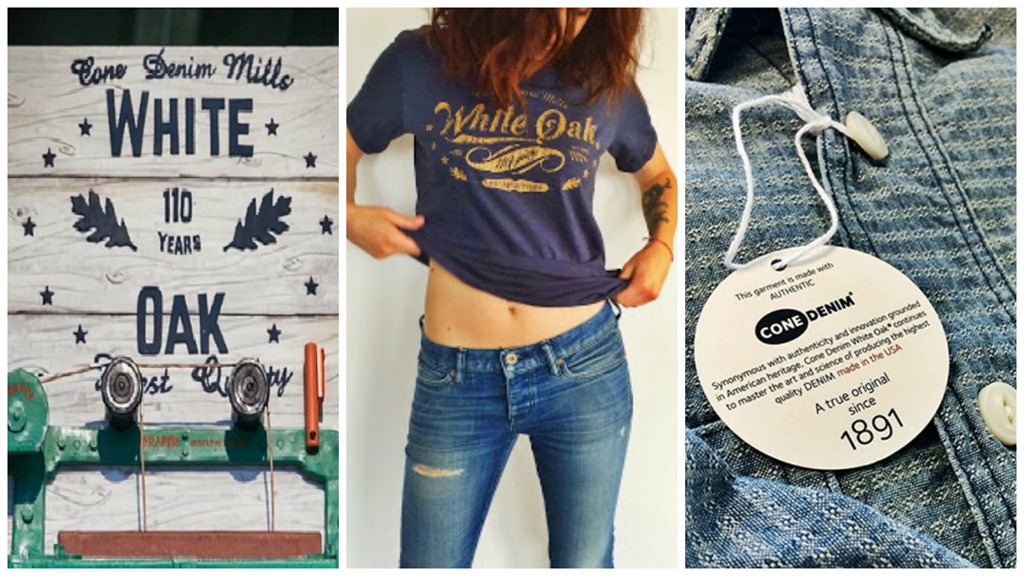
    Cone Denim recently celebrated 110th year of operation. Still true to its heritage, the White Oak Plant operates today creating Cone Denim’s authentic premium and vintage denim  on Vintage 1940s Fly Shuttle Looms as well as state of the art modern looms. Innovation and heritage combine to create the celebrated denims, White Oak originals.

    In 1905 brothers Moses and Ceasar Cone embarked on what would become an icon in the denim industry, a mill called White Oak. The turn of the century brought a new energy and excitement to America, and denim fabrics gained popularity as a favored “workwear”. The first bobbin of White Oak yarn was produced on April 20, 1905.

    Cone denim celebrates 110 years of manufacturing  with the release of a special T-shirt  and 100% profits from the sale of this T-shirt would go to support


    the Salvation Army Boys & Girls Club of Greensboro .


    “We are returning to our roots with the unveiling of Natural Indigo Selvage Denim, produced exclusively at its historic White Oak® mill in Greensboro, NC. The Natural Indigo Collection is “Crafted with Care in the USA” and created in celebration of White Oak’s 110 year anniversary –Cone denim says’”.

    “This is one of our most exciting developments,” says Kara Nicholas, Vice President Product Development + Marketing. “The celebration of White Oak’s 110 year anniversary made this the perfect time to bring together White Oak’s heritage and authentic selvage denims with new innovation in bio based natural dyes from plant based – US farmed indigo. As far as we know, this is the first time that natural indigo has been used in scalable production in the United States in over 100 years.”

    Cone Denim Natural Indigo

    Some Cool Cone Products

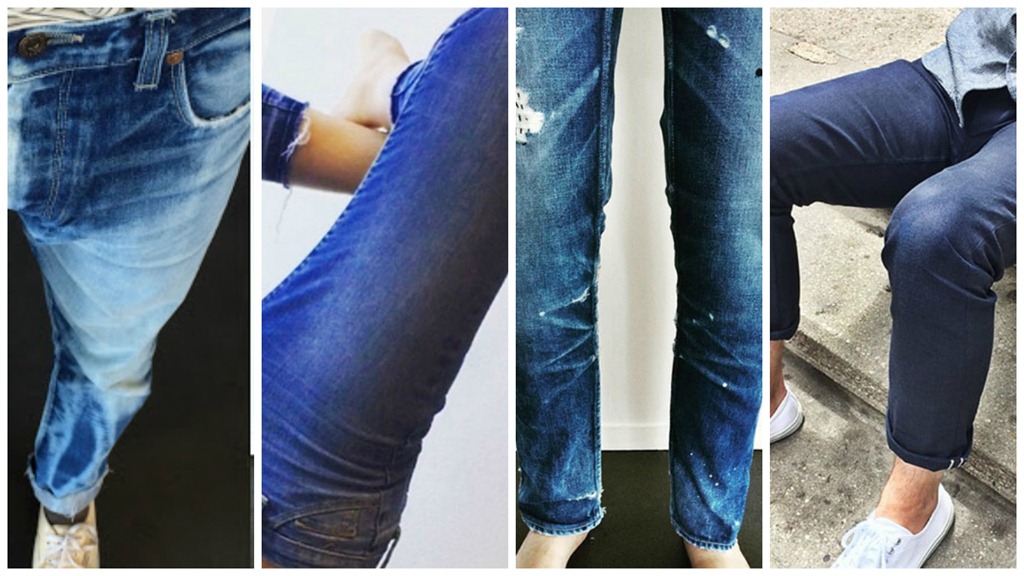
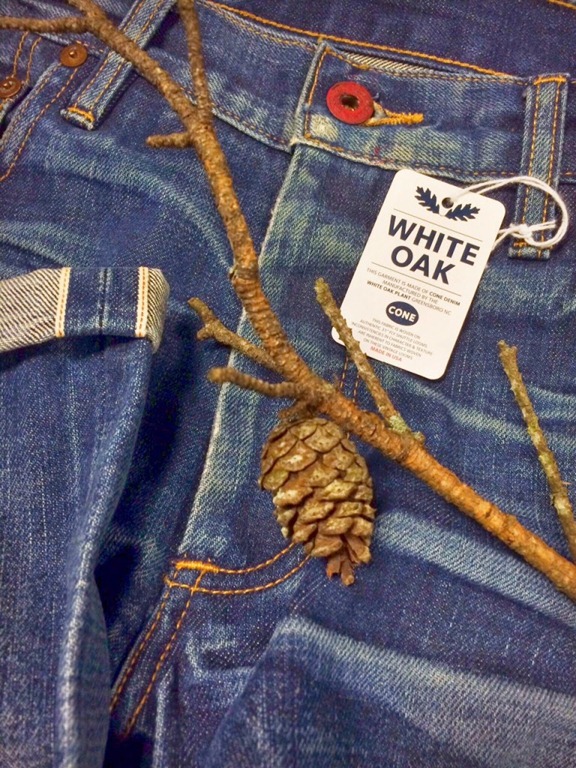
    Coming out with their Top Secret line of Selvedges to commemorate their 110 years Cone denim White Oak brings out some cool natural indigo colors and fabric structures to give a very different look and feel to the selvedges (see pics below).

    Cone Denim Celebrates 110 Years Of White Oak Plant

    Cone Denim Celebrates 110 Years Of White Oak Plant

    Cone denim Detail shots of knees and whiskers for month 4 of the W660 WhiteOak110 selvage denim wear test

    Cone Denim Celebrates 110 Years Of White Oak Plant

    WhiteOak110 collection style 7237 “Floral” shirting fabric is finally here in a 6.25 oz 100% cotton Dobby weave woven at the one n only White Oak mill.

    Cone Denim Celebrates 110 Years Of White Oak Plant


    Some Vintage Garments From Cone Collection

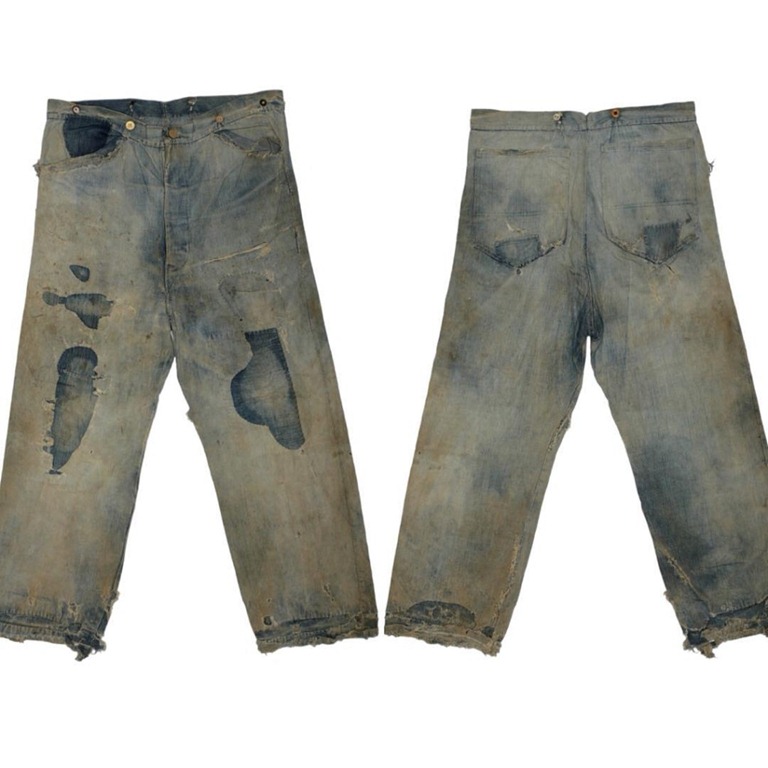
    We also bring below some of iconic heritage garments from Cone collection – some of which are over 100 years old and listed by Cone.

    Cone Denim Celebrates 110 Years Of White Oak Plant

    The mid-1900’s waist overall is from an unknown brand and the owner practically wore them to pieces, as evident by the extensive hand-mending and patchwork seen throughout, not to mention the lack of indigo left in yarns. These appear to be heavily customized by the wearer as well- the single needle stitching, unfinished seams and miscellaneous suspender buttons sewn onto the waist band all suggest that at one point these could’ve been started life as bib overalls and turned into a version more closely resembling the 5-pocket denim jeans.


    Cone Denim Celebrates 110 Years Of White Oak Plant

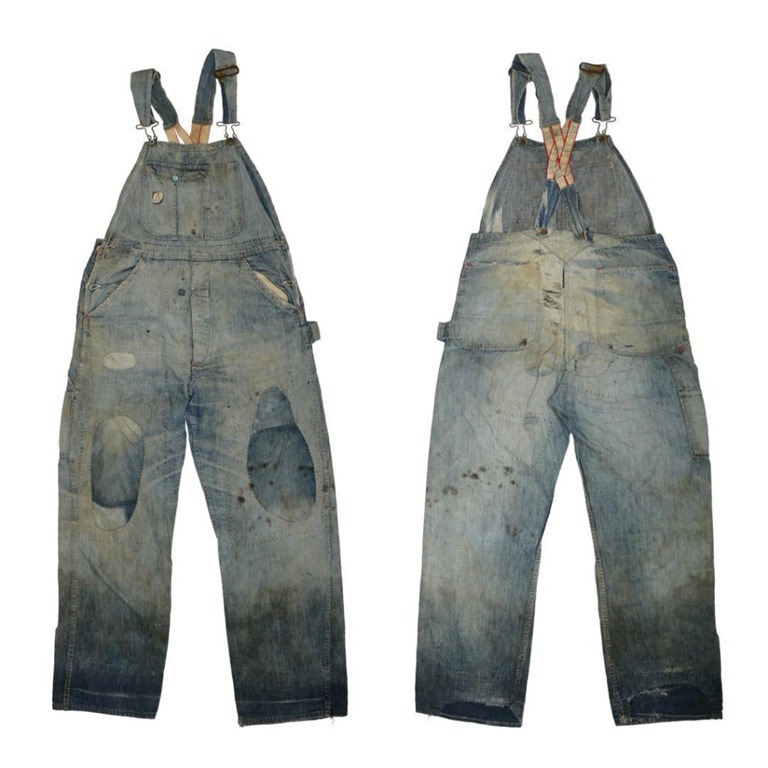
    A pair of heavily worn bib overalls from Blue Bell brand back in the ’40’s. This low back model has heavy hand-stitched patchwork repairs throughout, triangular suspender reinforcement, and printed “Blue Bell” label. There were several versions of Blue Bell’s label and the layout of this particular one indicates it is an earlier design. On later model garments the bell on the label is slightly tilted at an angle. Branded buttons read either “SANFORIZED” or “BLUE BELL.” The suspender straps were taken from an Anvil brand garment.

    Cone Denim Celebrates 110 Years Of White Oak Plant

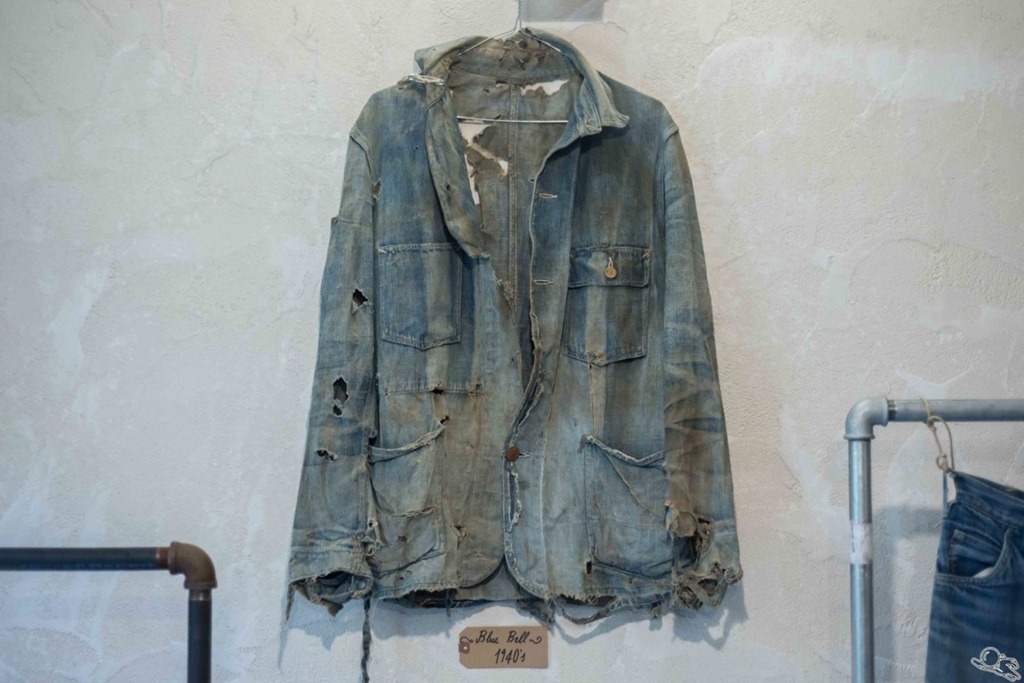
    A hickorystripe popover style work wear shirt with chambray trim along the bottom circa 1940. The patchwork, hand-stitched repairs and lack of industrial fasteners, together with the “one operation” style of seeing indicates that this shirt was either homemade, or fashioned by a local seamstress. The front and back of the garment shows the sun-bleached outline of the bib and straps of the overalls the wearer paired it with.


    Cone Denim Celebrates 110 Years Of White Oak Plant

    Heavy hand repairs with a missing back left leg exposing cross sections of patchwork mending give way to a two back pocket bib design low back model with triangular suspender reinforcements.

    And given below is a video from CONE proudly declaring that their fabrics are ‘STILL MADE IN AMERICA’ !


    Still Made In America from Cone Denim on Vimeo.

  • Paris Fashion Week SS16 Looks

    Paris Fashion Week SS16 Looks


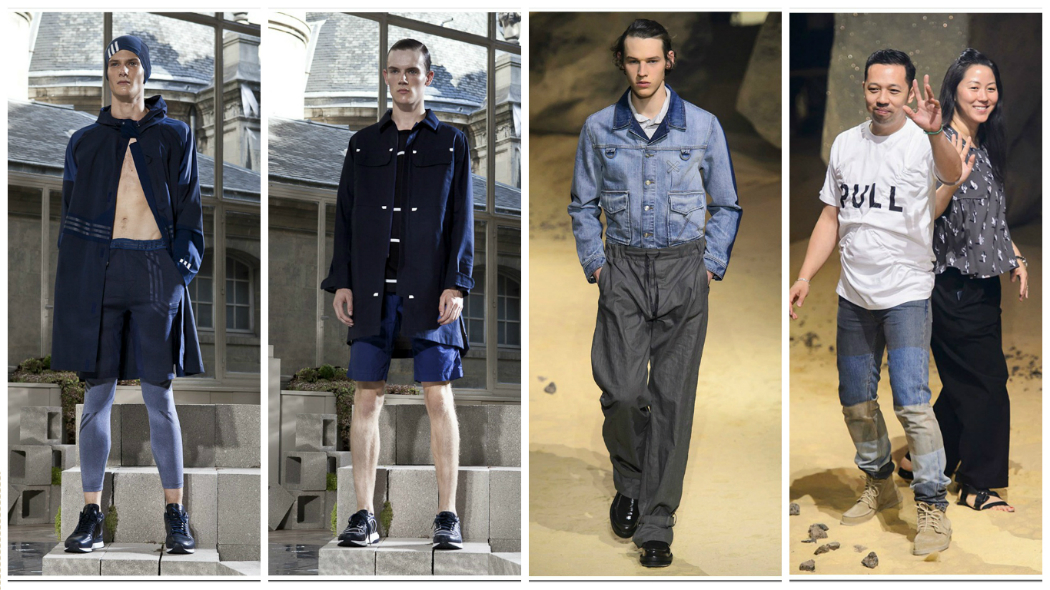
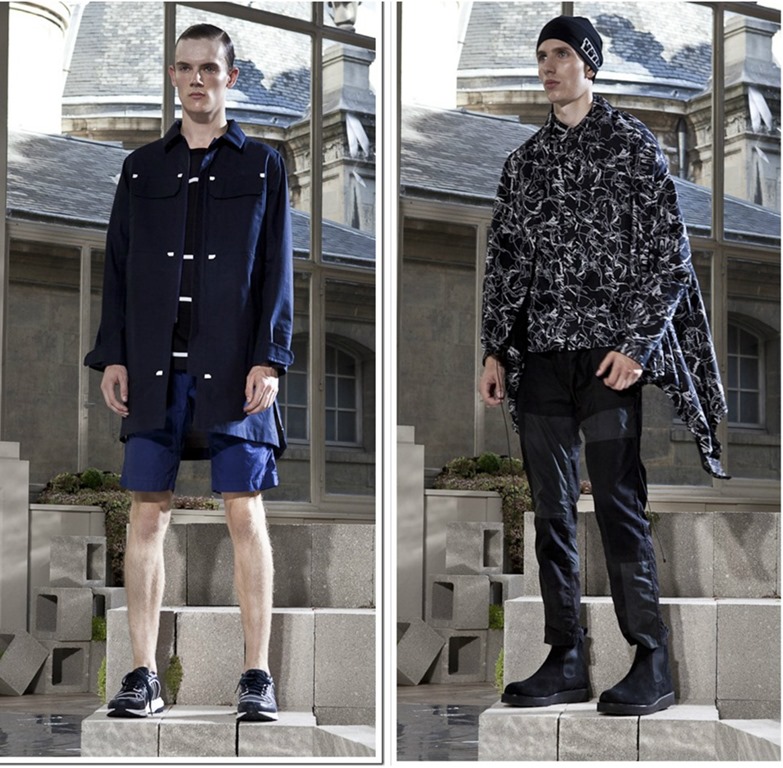
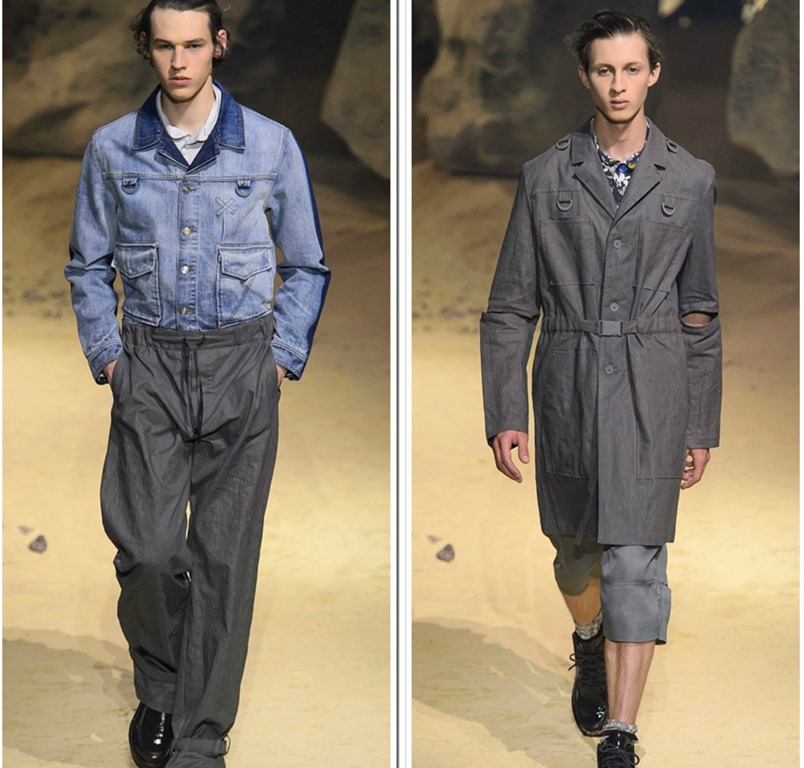
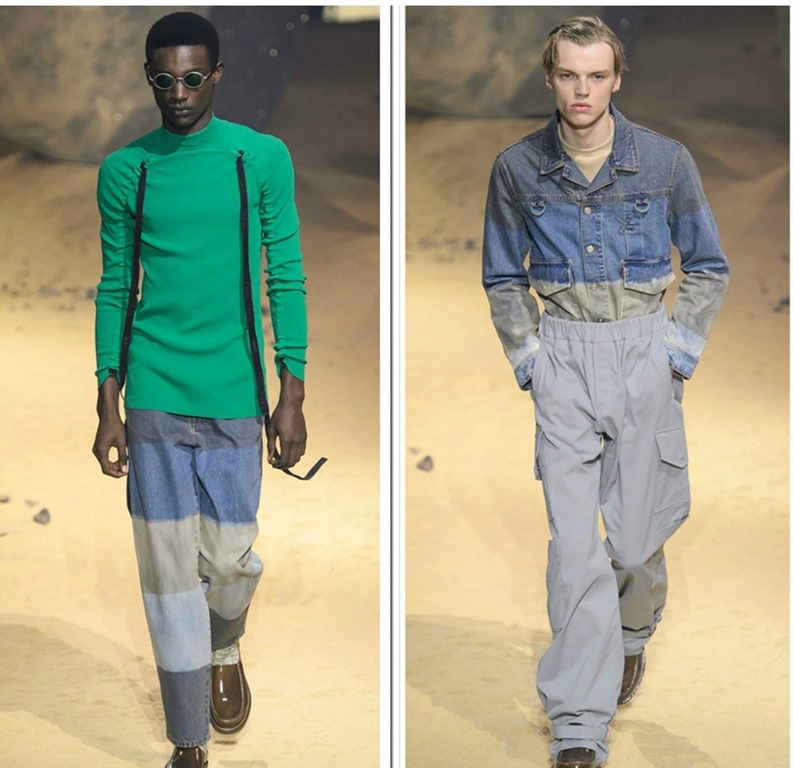
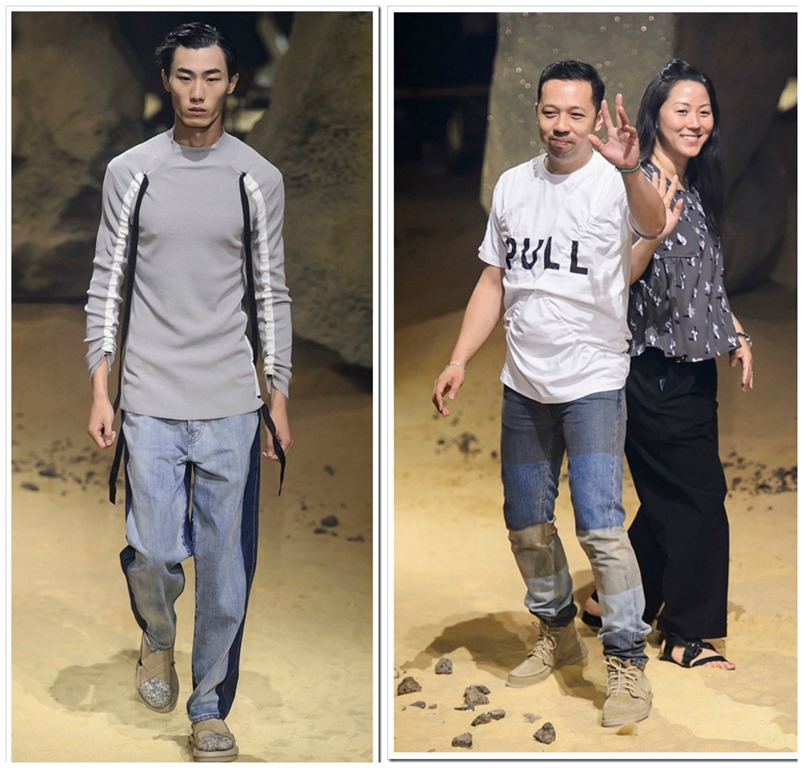
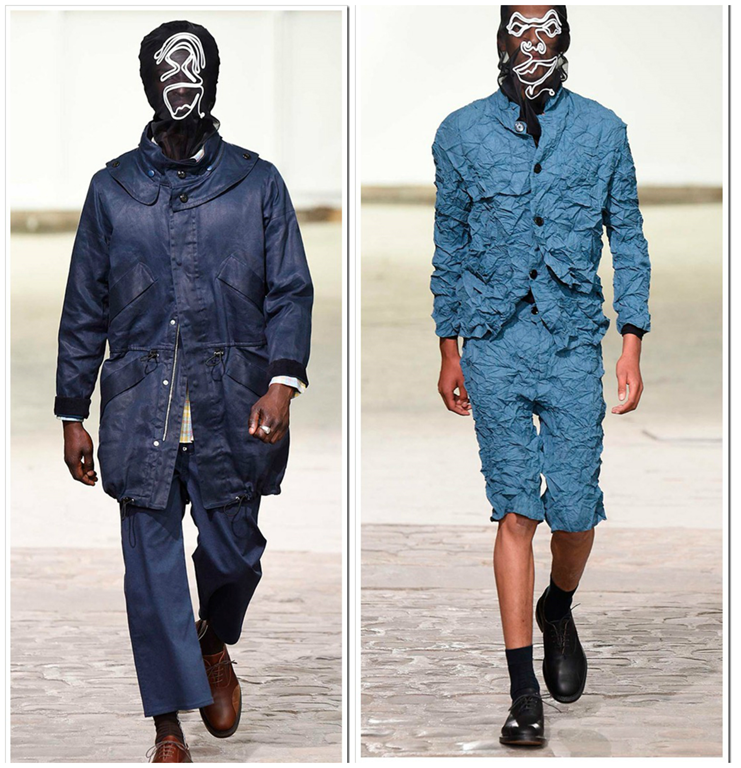
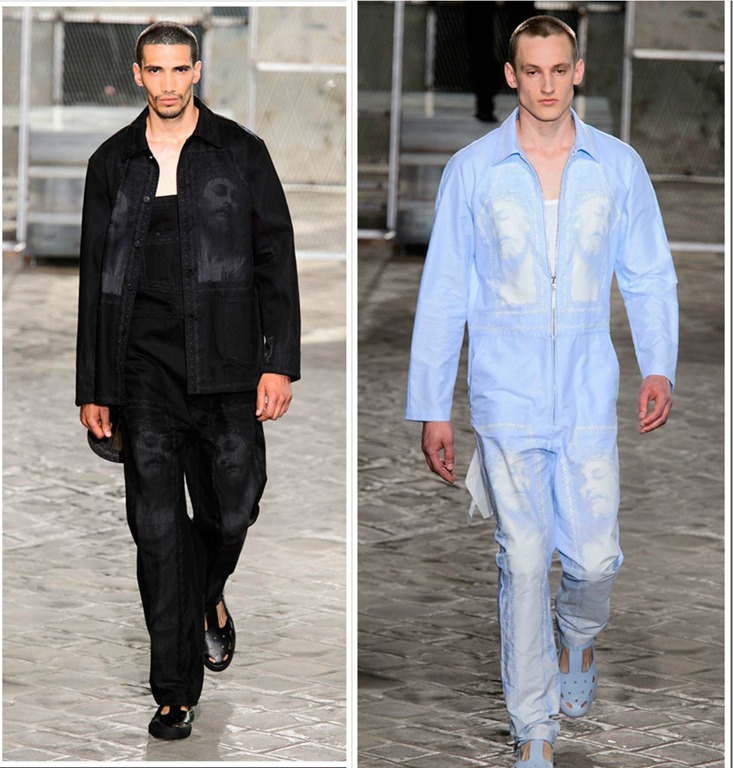
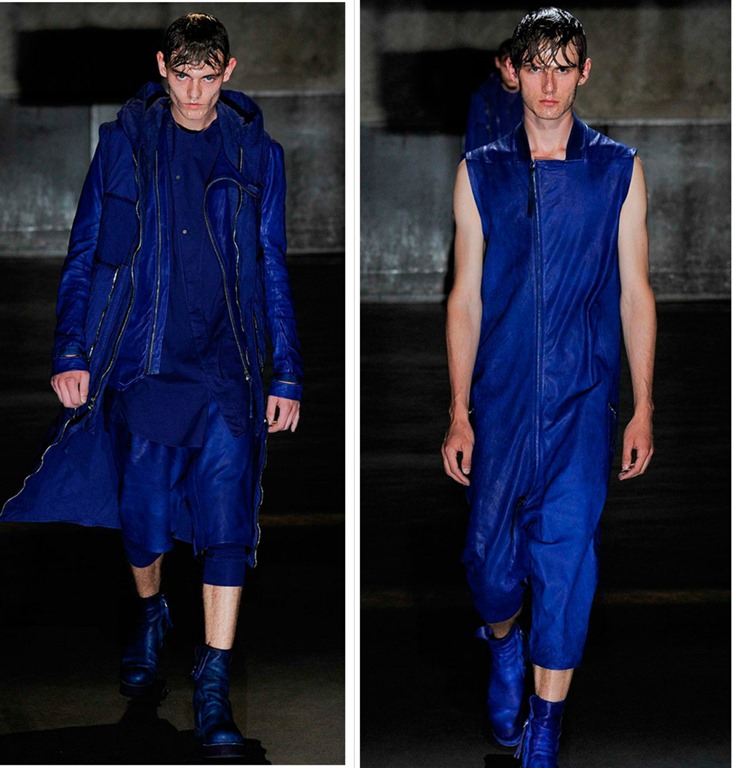
    The recently held Paris Fashion week brought out some fresh looks from the famous and the (yet) not so famous brands specially when it comes to Denim. We bring here the looks from some of those brands including the denim focused brands like Kenzo,  non-conventional ones like Adidas and others. We see many strong indigo tones, some interesting indigo rainbow wash looks from Kenzo, graphic looks on denim by Givenchy, glazy shiny looks from Philip Lim and some ‘wet looks’ in overalls and bomber jackets from Boris Bidjan.

    Adidas SS’16

    Paris Fashion Week SS16 Looks denimsandjeans.com

    Kenzo Ss’16

    Paris Fashion Week SS16 Looks denimsandjeans.com

    Paris Fashion Week SS16 Looks denimsandjeans.com

    Paris Fashion Week SS16 Looks denimsandjeans.com

    Julien SS’16

    Paris Fashion Week SS16 Looks denimsandjeans

    Givenchy SS’16

    Paris Fashion Week SS16 Looks

    3.1 Phillip Lim SS’16

    Paris Fashion Week SS16 Looks

    Boris Bidjan Saberi SS’16

    Paris Fashion Week SS16 Looks

    Paris Fashion Week SS16 Looks denimsandjeans.com

  • Denim PV | AW16 Trends

    Denim PV | AW16 Trends

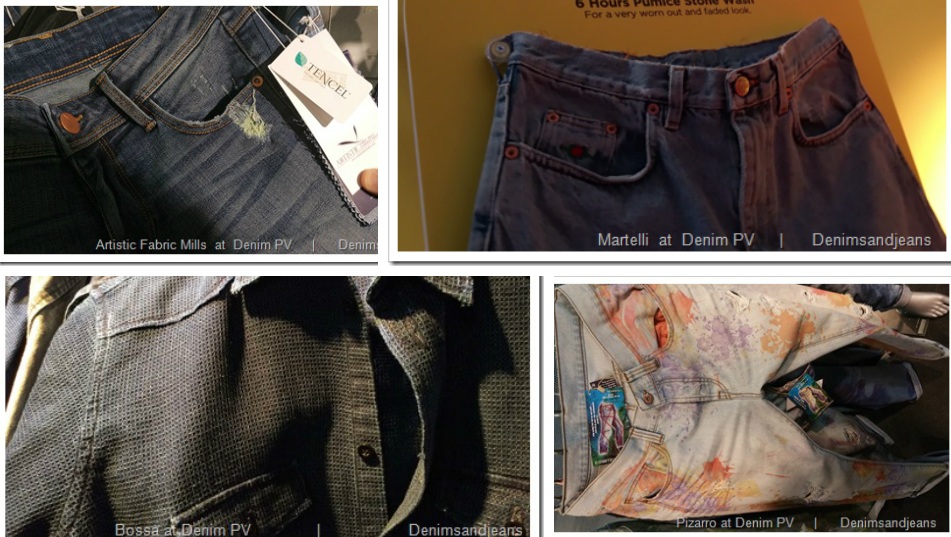
    If we speak , belatedly (!) of two  important trend take aways from PV , it would be the variations in the existing categories of knit denim , super stretches . Both of these are not new looks and have been around for a while. However, these fabrics are undergoing transformation and refinement with better fabric characteristics . Buyers were looking for better fabric characteristics including strength, recovery , growth, compression and body shaping effects. For super stretches , buyers increasingly looked for higher recoveries and growth (less than 3%) parameters.  Colors Palette emerging for the AW’16 collection included –Green cast, Blacks washed down to greys, stay blacks and blues and bright shades of alternative blue color. Sustainability is getting bigger ,more encompassing and covering more aspects of denim production. Chemicals with the eco credentials eg Green Screen verified chemicals  from Garmon used by a number of companies, Vegetable dyes  (Vegan) dyed fabrics from Orta or the sustainable Khadi denims woven on handlooms from Arvind, Oxygene  fabrics from Calik which require lesser time to be treated, Recycled  post consumer wastes  from Artistic Milliners , Soorty and Artistic Fabrics  to  create sustainable fabrics. Garment processing also saw further development with Pizarro’s announcement of its patent pending technology of Sublimation printing on natural fiber fabrics including cotton , silk, wool and others adding another dimension to denim treatments. Also important was the mutations in the Selvedge category. Selvedges are no longer just nice rigid fabrics. They are also undergoing changes as companies experiment with different variations including stretches, finishes and coatings, weft colors and more.

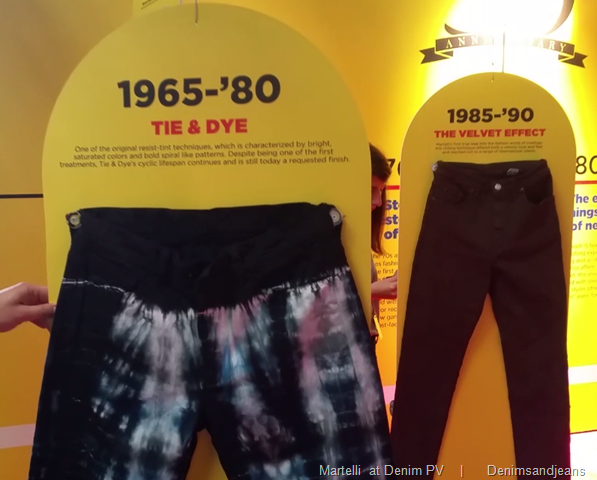
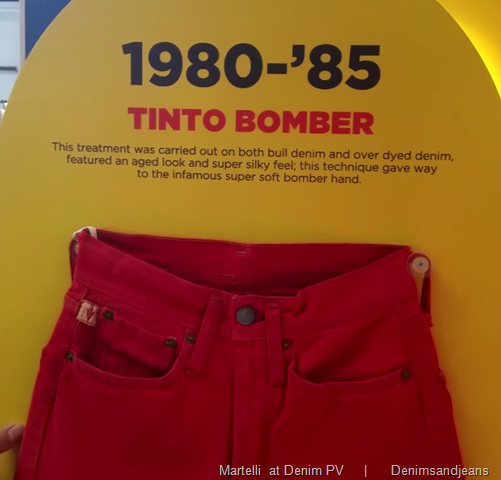
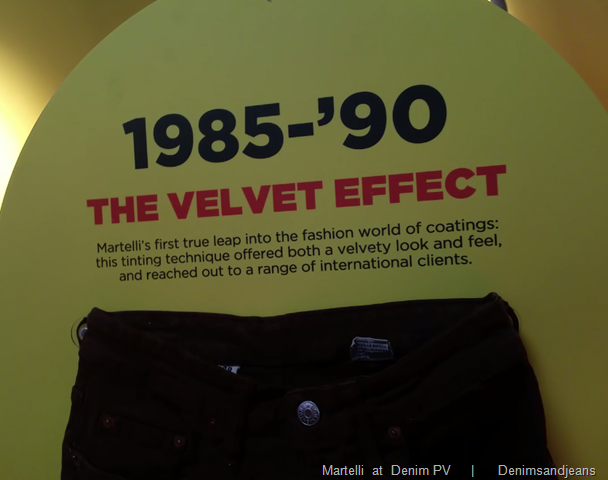
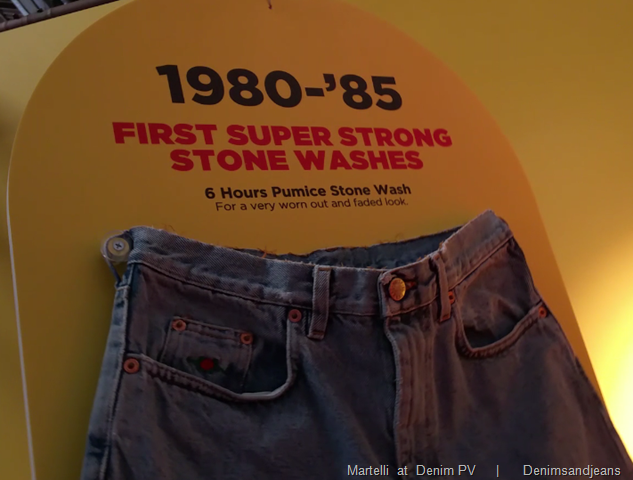
    The show also saw the 50th anniversary of Martelli – the washing power house from Italy ! It was quite interesting to see how Martelli greatly contributed to the growth of fashion industry in the last 50 years. From the 60s to still omnipresent tie and dyes to Tinto Bombers (bringing aged and silky effect) to Velvet effect (early coatings) a complete story of the important developments in fashion washing could be found at Martelli !

    Martelli  at Denim PV     |      Denimsandjeans

    Martelli  at Denim PV     |      Denimsandjeans

    Martelli  at  Denim PV     |      Denimsandjeans

    Martelli  at  Denim PV     |      Denimsandjeans

    Now we come to developments and creations by individual mills and companies. We tried to cover as many companies as possible but due to limited time , we can bring developments from few companies only in this article . We are giving below the details from collections of some of the companies  (placed in alphabetical order).

    Artistic Fabric Mills, Pakistan

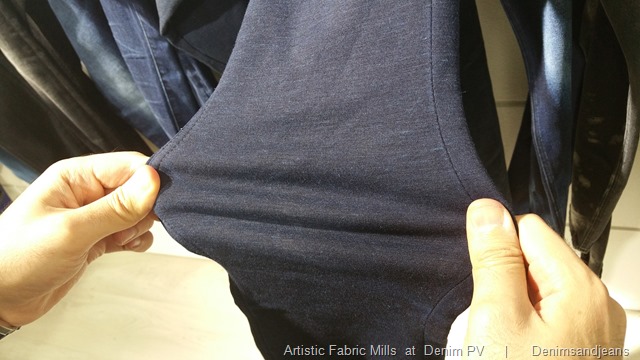
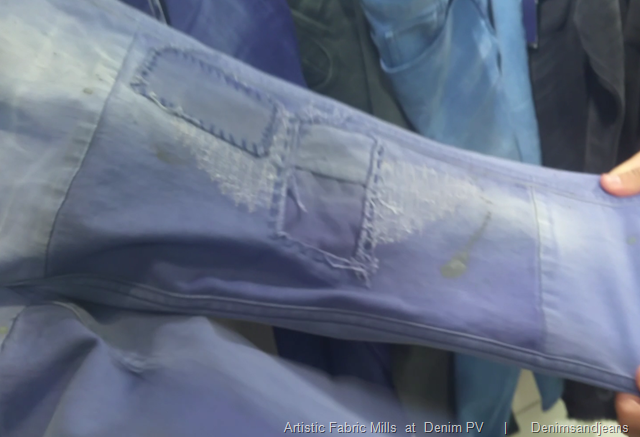
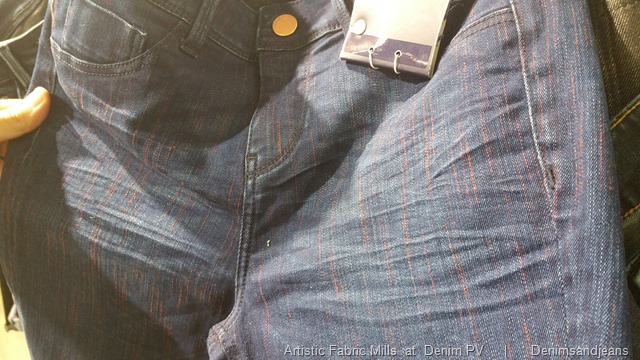
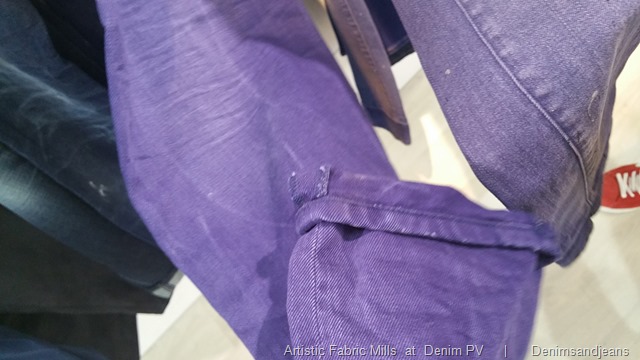
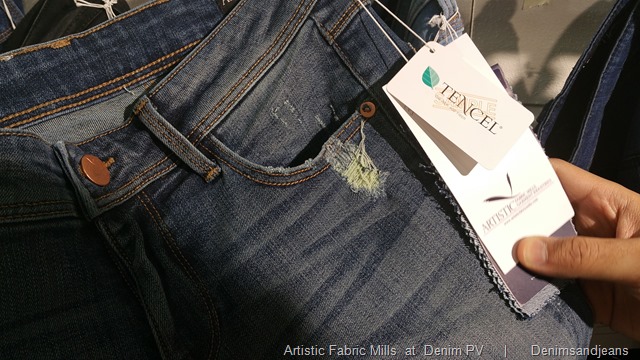
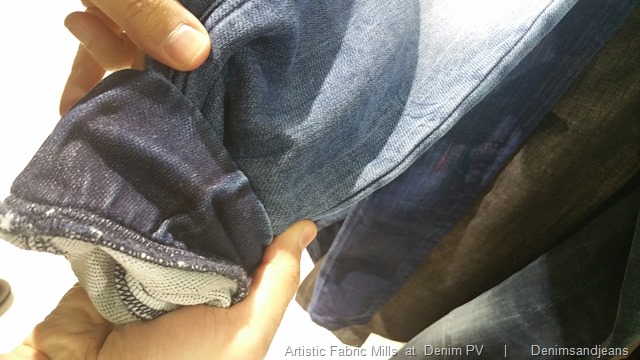
    AFM has been playing around with technical upgradations in fabrics specially stretch fabrics . Director Mr Hasan Javed mentions that their  new super stretches have <3% growth and the focus was also on getting rigid look in comfort stretches. They also brought out  new looks like colorful injection slubs, tencel combinations in PFD, light weight shirts , leather coats , Stay blues, Scuba denims etc. Post consumer waste with recycled poly was also being used in their collection.

     Artistic Fabric Mills  at  Denim PV     |      Denimsandjeans

     Artistic Fabric Mills  at  Denim PV     |      Denimsandjeans

     Artistic Fabric Mills  at  Denim PV     |      Denimsandjeans

     Artistic Fabric Mills  at  Denim PV     |      Denimsandjeans

     Artistic Fabric Mills  at  Denim PV     |      Denimsandjeans

     Artistic Fabric Mills  at  Denim PV     |      Denimsandjeans

    Artistic Milliners, Pakistan

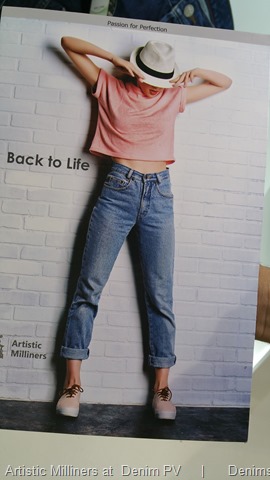
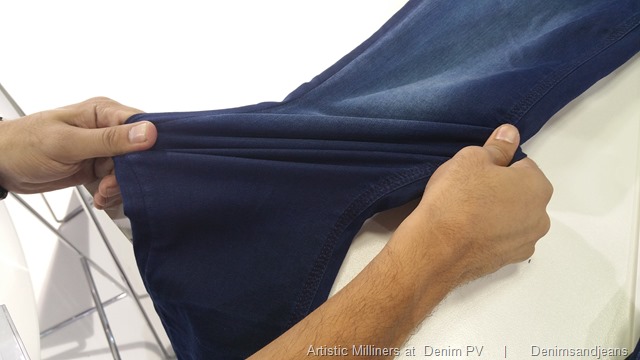
    Focus on sustainability through their Back to life collection which is basically made using PCW (post consumer wastes) mostly in warp . Director Mr Omer Ahmed mentions that  company is the largest denim supplier of post consumer waste recycled fabrics. Most of the collection has less than 3% growth. AM focused on further refining its existing portfolio of fabrics with improved parameters, finishings etc. Besides, Back to life, their other product categories were:
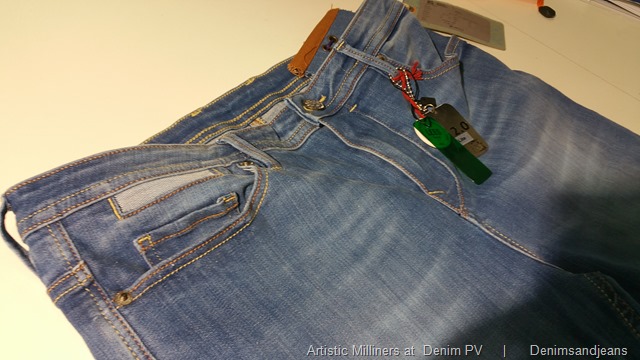
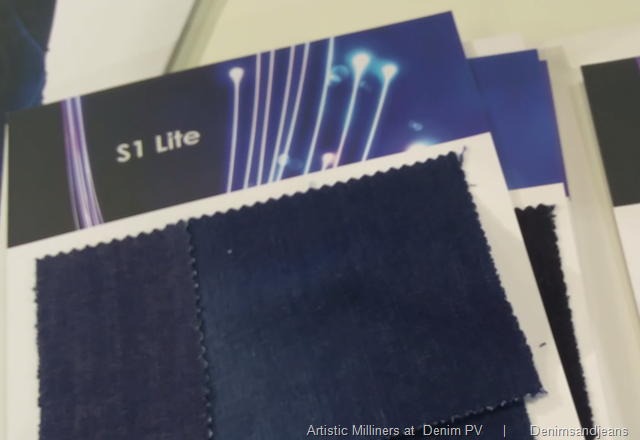
    S1 Lite -  refinement of the stretch fabrics with about 60% stretch , higher strengths and lighter fabrics for jeggings.
    Neoprene – 80% stretch fabrics.
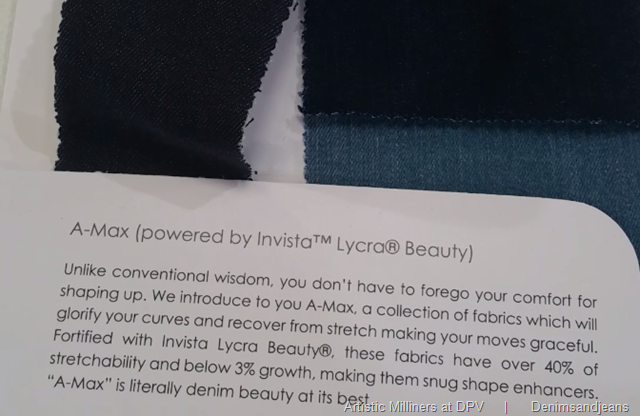
    A-Max– is powered with Invista Lycra beauty with about 40-45% stretch ability, less than 3% growth and the right amount of compression and body shaping as per Artistic Milliners .

     Artistic Milliners at  Denim PV     |      Denimsandjeans

     Artistic Milliners at  Denim PV     |      Denimsandjeans

     Artistic Milliners at  Denim PV     |      Denimsandjeans

     Artistic Milliners at DPV     |      Denimsandjeans

     Artistic Milliners at  Denim PV     |      Denimsandjeans

    Arvind , India

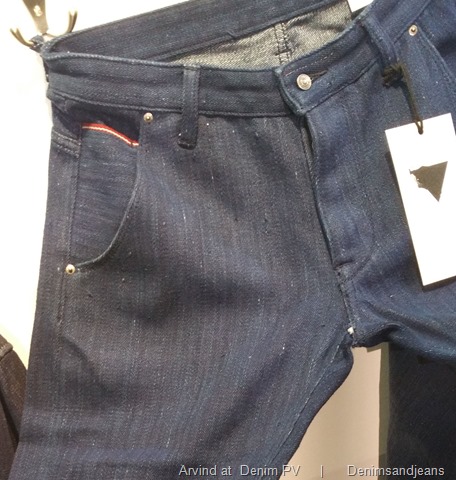
    One of the important parts of Arvind’s collection was the ‘Khadi Denim’. Khadi has been a part of cultural heritage of India where the fabrics were made by weavers on handlooms. The art started dying as it could not compete with the machine made fabrics . Arvind seeks to reinvigorate the eco sustainable art with their Khadi Denims. The fabric is Hand spun, Hand dyed and Hand woven .

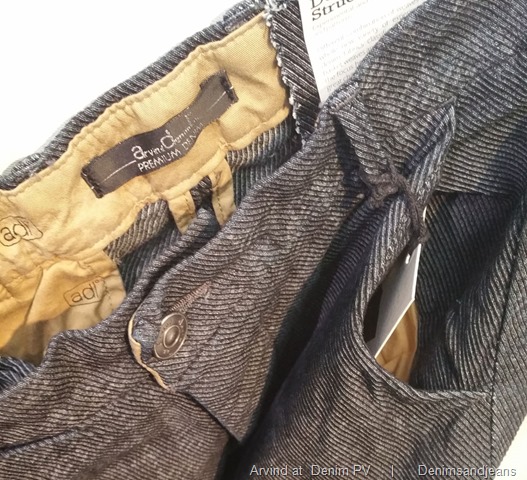
    Neo Cords – the indigo cords had more options with

    Mutant Denim– knit denims with coatings – PU, pigment etc – and various kinds of finishes and with super stretches as well.

     Arvind at  Denim PV     |      Denimsandjeans

    Arvind at Denim PV2

    Arvind at Denim PV

    Arvind at Denim PV      Denimsandjeans

    Arvind at Denim PV 1     Denimsandjeans


    Bossa, Turkey

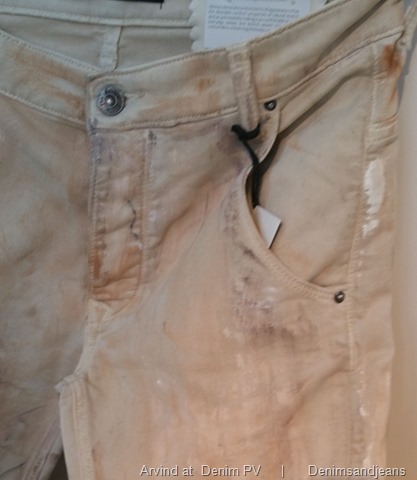
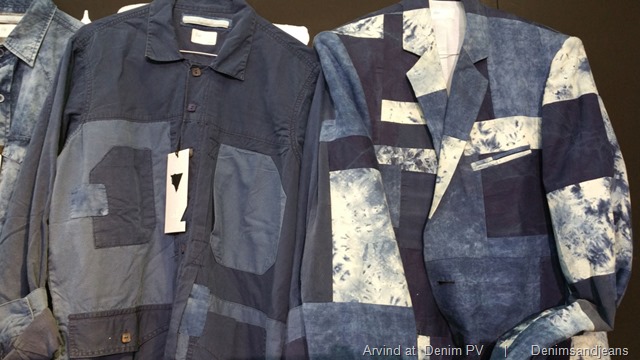
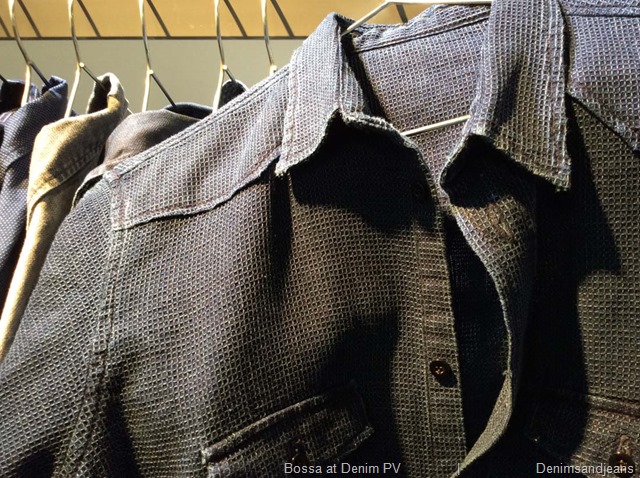
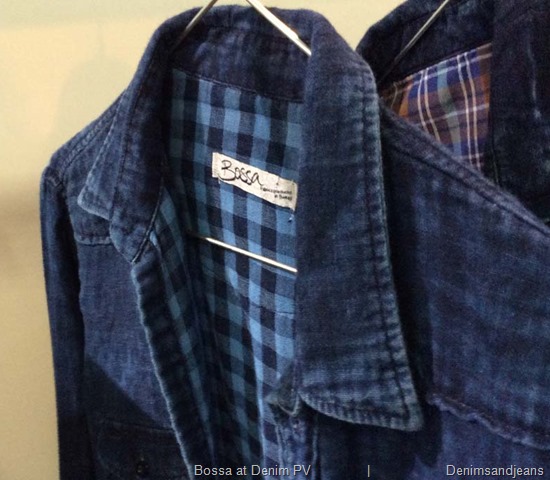
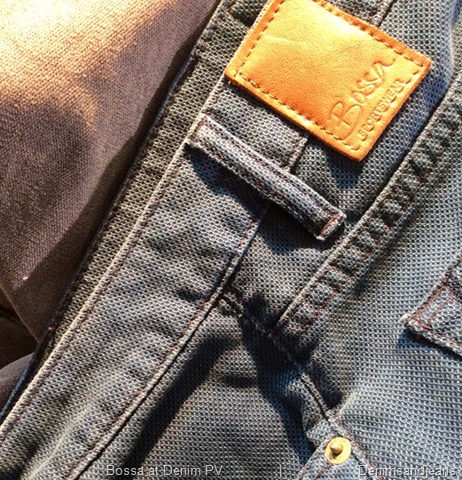
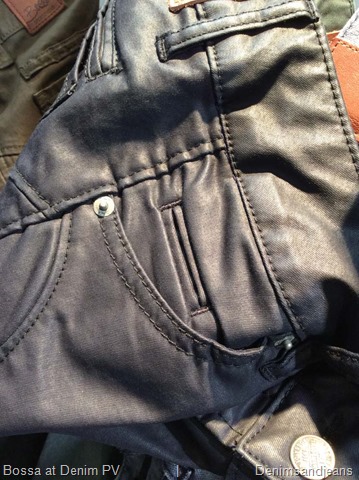
    Bossa brings out selvedges with varied looks including melange yarns, Natural denims – from organic cotton, natural indigo dyed etc, recycled fabrics in cool stretches, Knitted denims , Leather coatings ,Tencel fabrics for softer touches, 70s OE look denim from ring yarns, Super soft fabrics using special yarns and chemicals, Stay Indigo fabrics with upto 40 laundries, Stay blacks . Satins with overdyed and other finishes, Cross hatches in super stretches and more. The company focuses a lot on designed indigo shirtings and brought out different weaves – including waffles, double faces etc – combination of dyeing techniques etc for their AW16 collection.

    Bossa at Denim PV       |                   Denimsandjeans

    Bossa at Denim PV              |                   Denimsandjeans

    Bossa at Denim PV              |                   Denimsandjeans

    Bossa at Denim PV              |                   Denimsandjeans

    Calik, Turkey

    Calik came out with  innovative  fabrics –OXYGENE with 5Less : less energy, less water, less chemicals, less pollution and less time . The Oxygene fabrics can be treated more quickly (about 50–60% faster than with normal denim) and uses smaller quantities of chemicals, water and consumes less energy. “Our new Oxygene denims represent the future of denim,” says Hamit Yenici, Managing Director.
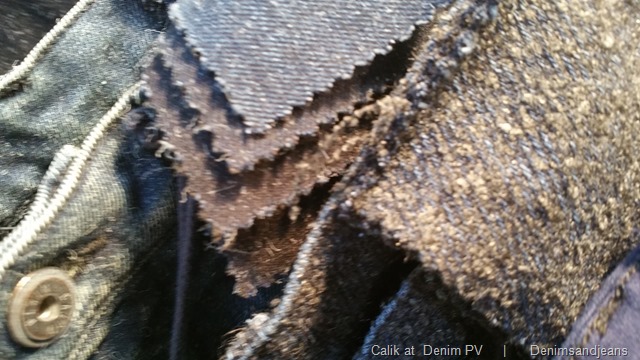
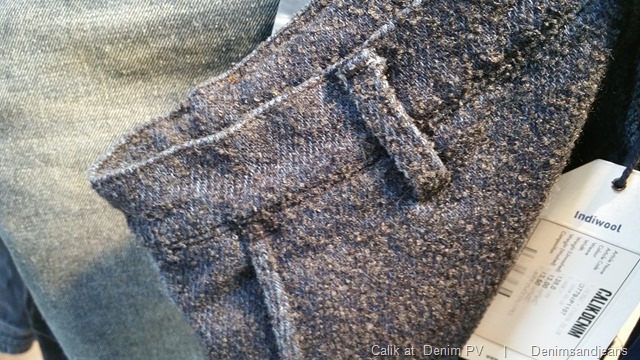
    Besides they also had some cool wool denims, Maxima – Warp stretches,  Vintage looks (Blue Seeds) and denims with  Crailar fiber for a slubby , linen look denims and other qualities.

    Calik at  Denim PV     |      Denimsandjeans

    sCalik at  Denim PV     |      Denimsandjeans

    Calik at  Denim PV     |      Denimsandjeans

    Calik at  Denim PV     |      Denimsandjeans

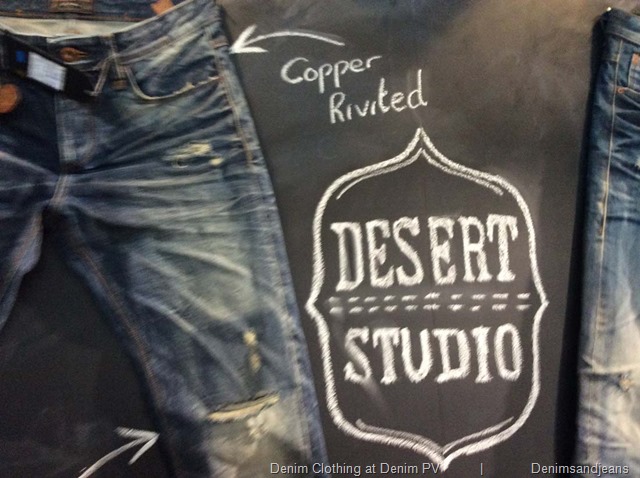
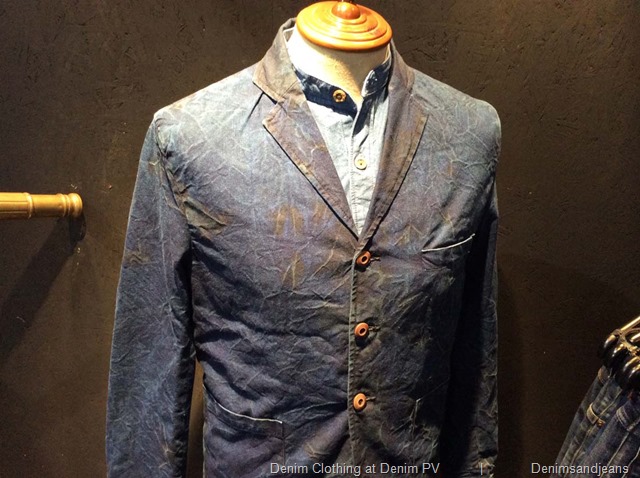
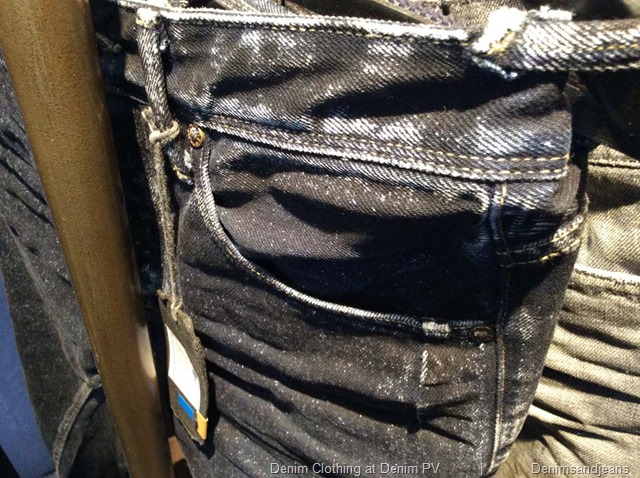
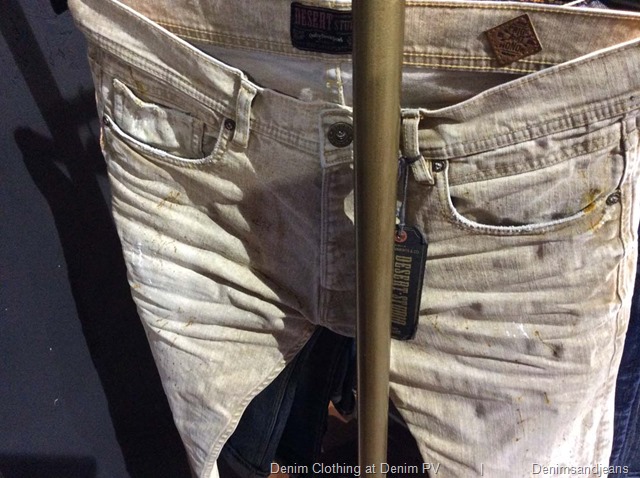
    Denim Clothing – Desert Studio, Dubai

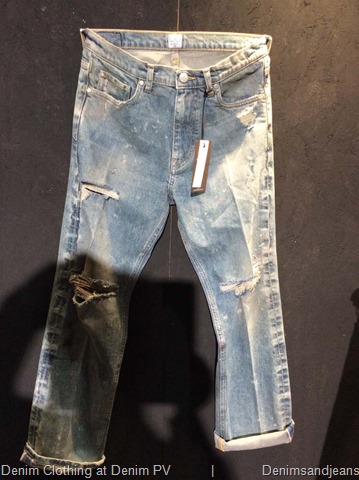
    The Desert studio at Dubai  by Denim Clothing Company (Pakistan) was launched about a year ago. Starting from a small studio where the buyers could come for sample development and very small orders, the company has grown it into a full fledged factory where well over 100,000 pieces are being produced in a month. Using waterless and eco friendly techniques at Desert Studio , the company focuses on bringing  out some cool washes and pieces for their customers quick turnaround orders.

    Denim Clothing at Denim PV          |            Denimsandjeans

    Denim Clothing at Denim PV          |            Denimsandjeans

    Denim Clothing at Denim PV          |            Denimsandjeans

    Denim Clothing at Denim PV          |            Denimsandjeans

    Denim Clothing at Denim PV          |            Denimsandjeans

    Jeanologia, Spain

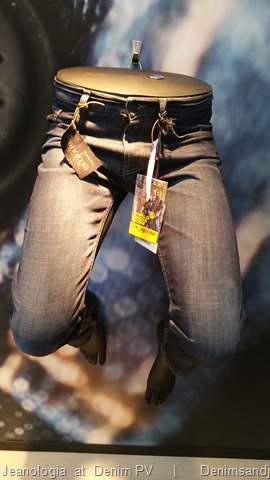
    Jeanologia is offering new technologies aimed at customizing apparel and accessories both at retail and industrial level . Their new Nano laser technology is a small scale machine connected to a scanner and a wide variety of products and materials can be customized and personalized according to the needs to the retailer, customers or even for small capsule collections.

    Jeanologia  at  Denim PV     |      Denimsandjeans

    Kurabo, Japan

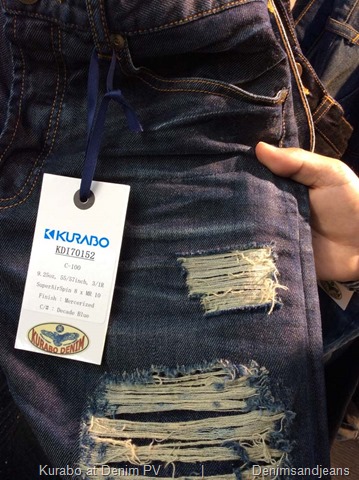
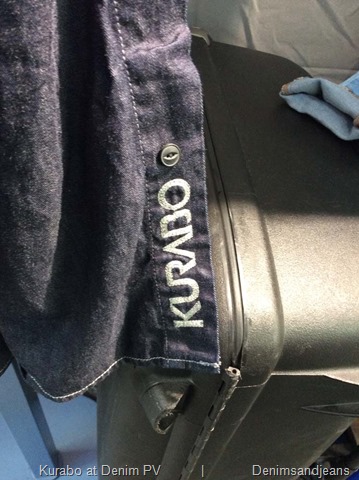
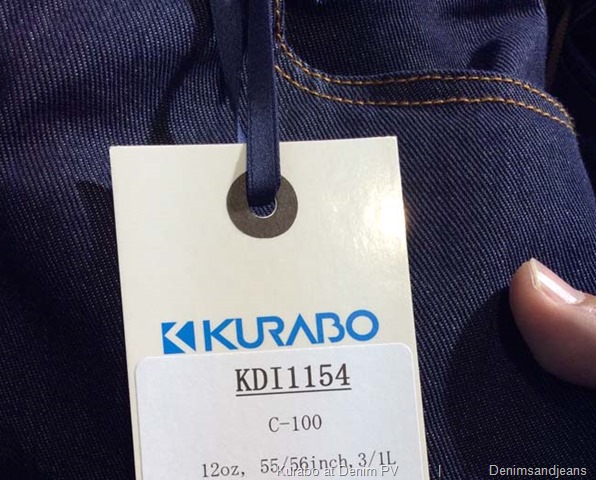
    Kurabo Japan focuses on a limited number of products mainly with the tech twist. Their Airspin  yarn denims offer soft handle in rigid denims . Their super compact (very less air) yarns with their secret spinning technique enables very clean and hairless fabrics for that very shiny look in the cotton denims.

    Kurabo at Denim PV          |            Denimsandjeans

    Kurabo at Denim PV          |            Denimsandjeans

    Kurabo at Denim PV          |            Denimsandjeans

    Orta Anadolu, Turkey

    Comfort squared – with multi directional stretch technology Orta aims to provide 360 degree of performance and comfort.

    Body frame – With over 60% stretch in 360 degrees of elasticity the fabrics by Orta also seeks to offer slimming and curve enhancing effects.

    Cozy denim – Designed for winters, wool denims with about 18% wool fiber  also have anti-odor , moisture control and super soft hand feel to the fabrics.

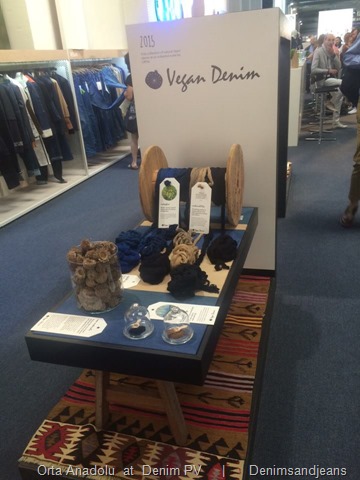
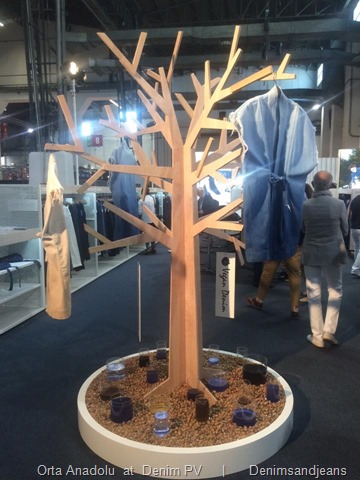
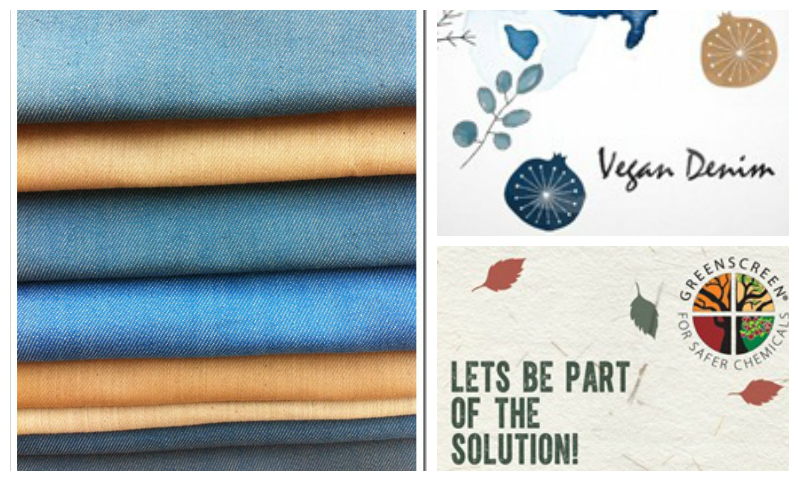
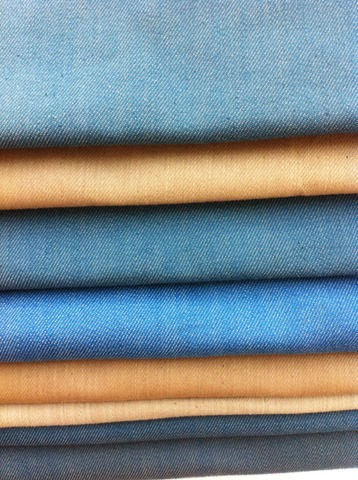
    Sustainability focus – With their Vegan denims –dyed with vegetable dyes- and Green Screen fabrics , the focus on sustainable part of denim could be increasingly felt.

    Orta Anadolu  at  Denim PV     |      Denimsandjeans

    Orta Anadolu  at  Denim PV     |      Denimsandjeans

    Orta Anadolu  at  Denim PV     |      Denimsandjeans

    Pizarro , Portugal

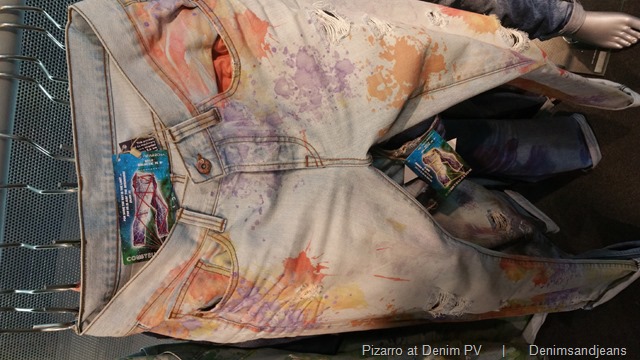
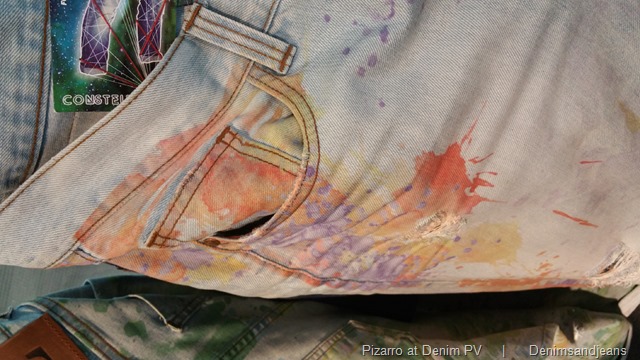
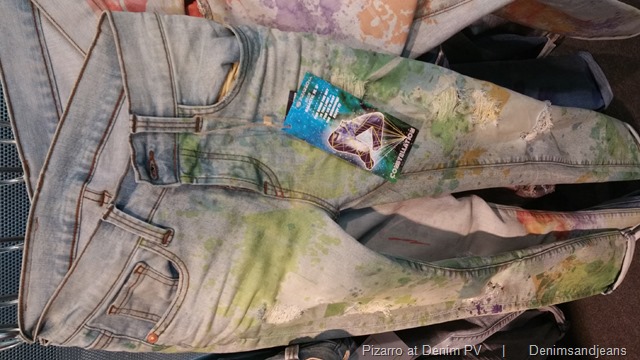
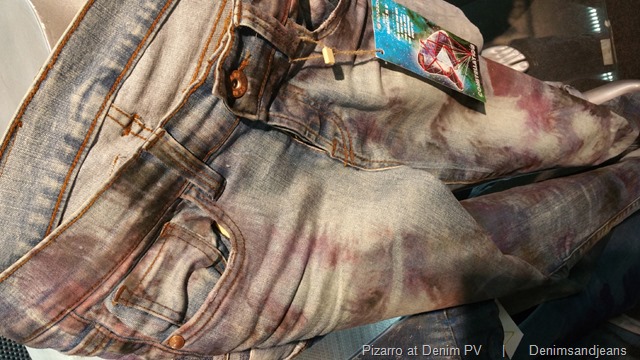
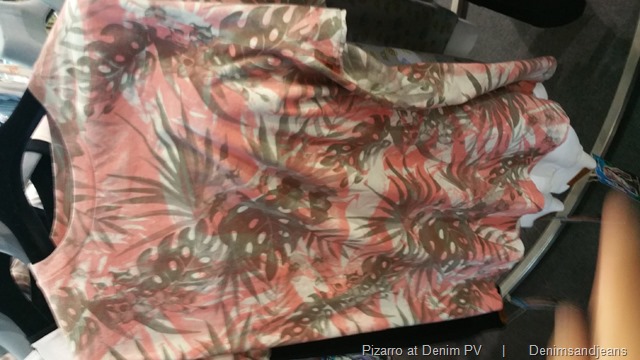
    Pizarro laundries from Portugal have always been at the helm of new developments related to washing. They bring out their latest processing technology – Sublimation Print On Natural Fibers . With this technology, Pizarro claims that they can do sublimation prints on Cotton , Silk and other natural fiber garments in industrial bulk . Vasco Pizarro , Marketing Director says ‘It is now possible to efficiently do sublimation printing in Eco sustainable way on cotton and all other natural fiber garments of any kind and in bulk. We feel this innovation will change the industry.’

    Pizarro at Denim PV     |      Denimsandjeans

    Pizarro at Denim PV     |      Denimsandjeans

    Pizarro at Denim PV     |      Denimsandjeans

    Pizarro at Denim PV     |      Denimsandjeans

    Pizarro at Denim PV     |      Denimsandjeans

    Pizarro at Denim PV     |      Denimsandjeans


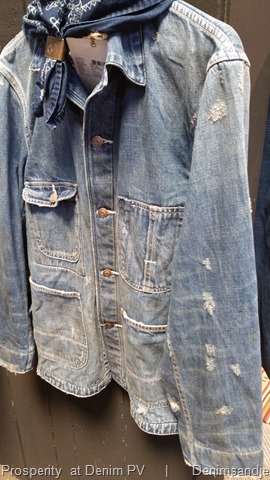
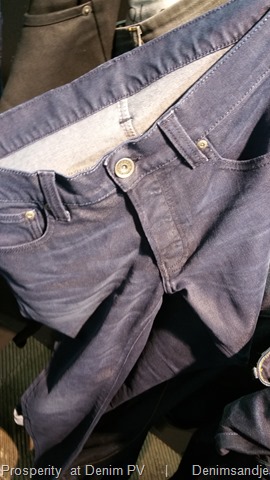
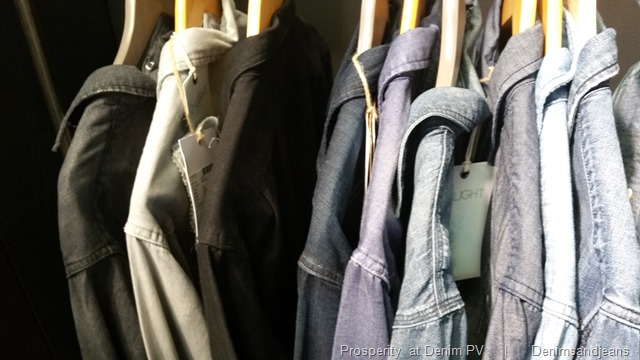
    Prosperity , China

    Some of the concepts brought out by Prosperity were:

    F2 : fit and function – hybrid fiber technology  transferring human heat outside and helps increase the energy levels

    J-Fit : easy stretch fabrics which do not need pressure to get that stretch. Double functionality with sorina fibers.

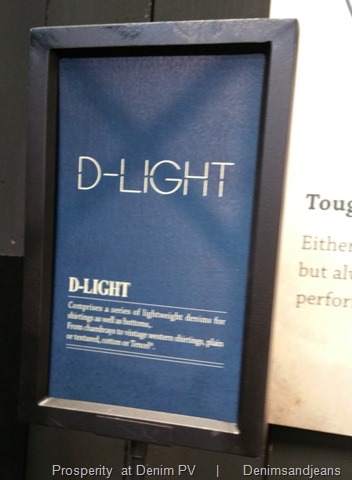
    D-light – light weight fabrics
    Blue Force – tough denim built for strength

    Heritage denims – inspired by traditional collection  , Grey colors

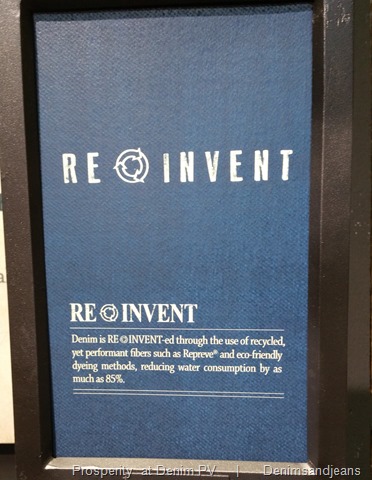
    Re-Invent – using recycled fibers like Reprieve and eco friendly dyeing methods reducing water consumption by about 85% as claimed by the co.

    Prosperity  at Denim PV     |      Denimsandjeans

    Prosperity  at Denim PV     |      Denimsandjeans

    Prosperity  at Denim PV     |      Denimsandjeans

    Prosperity  at Denim PV     |      Denimsandjeans

    Prosperity  at Denim PV     |      Denimsandjeans

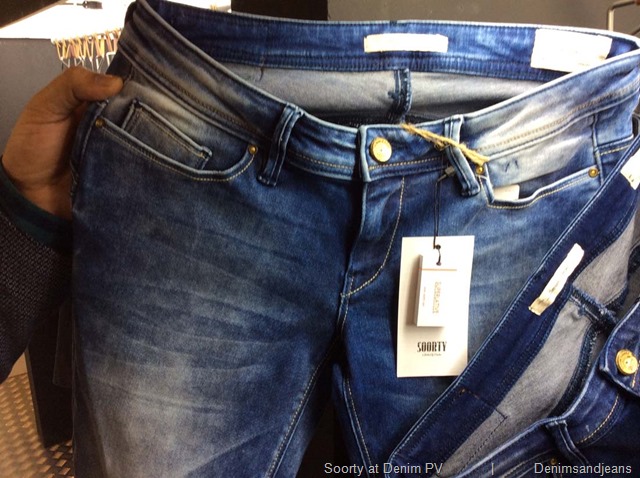
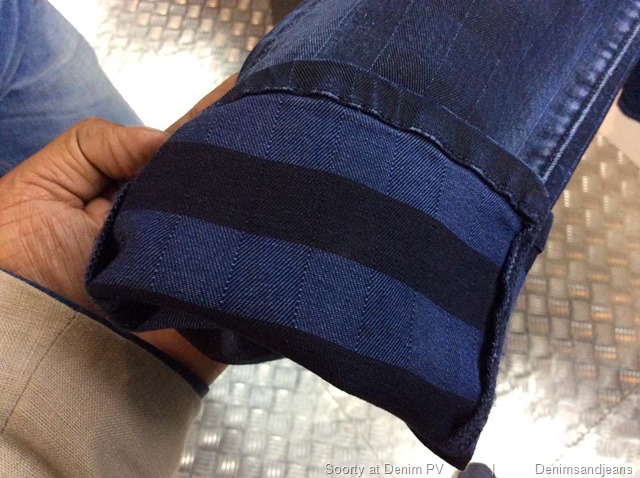
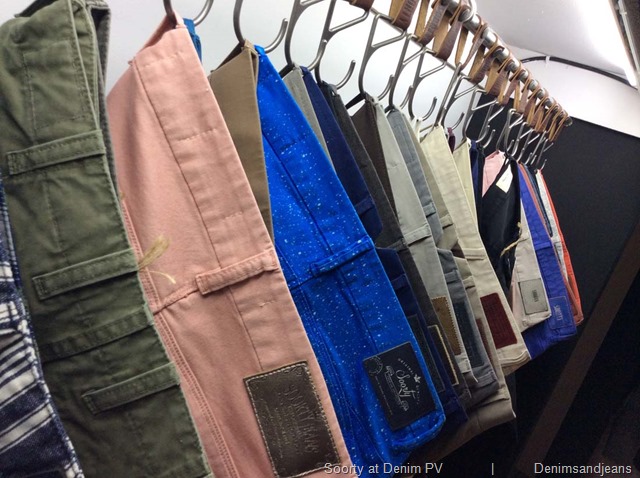
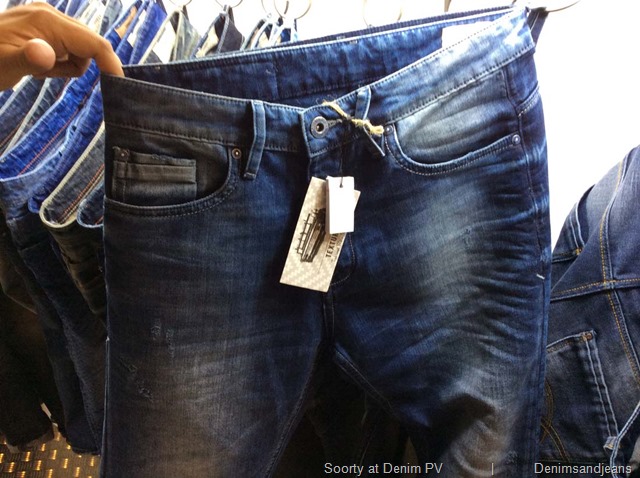
    Soorty

    Soorty brought out the following concepts.

    Denim VIP Special Fibers i.e. Tencel, Modal, Wool, Lurex and etc.

    Onyx Black. New Black; More shine; Improved Fastness

    3. Coil Spring Denim. (Stretch 30-40% and Growth is up to 3% max)

    4. Crystal Blue. (New Color; Nascence of Deep Blues)

    5. Full Blue (New Color; Extreme Blue for Magnetism)

    6. Sage Blue. (New Color; Greendigo)

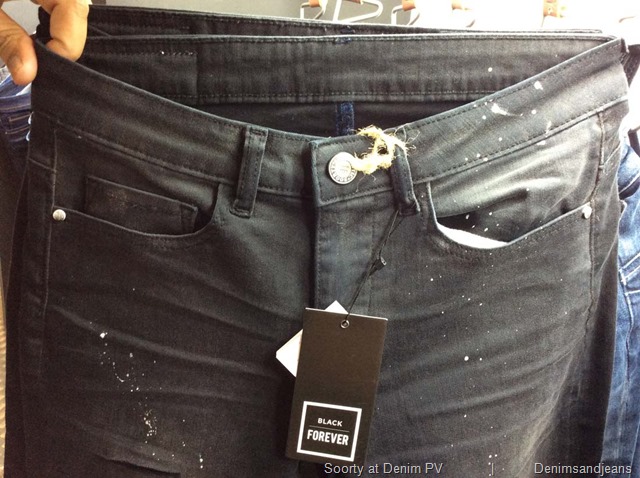
    7. Black Forever. (Special Black Dyed; Never Goes To Grey; Meant to be black)

    8. Zumba. (4 Way Stretch)

    Soorty at Denim PV            |          Denimsandjeans

    Soorty at Denim PV            |          Denimsandjeans

    Soorty at Denim PV            |          Denimsandjeans

    Soorty at Denim PV            |          Denimsandjeans

    Soorty at Denim PV            |          Denimsandjeans

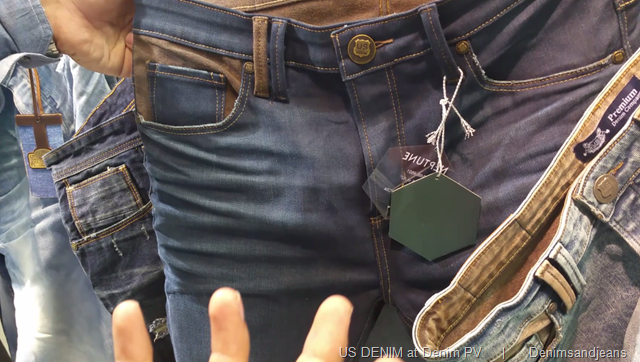
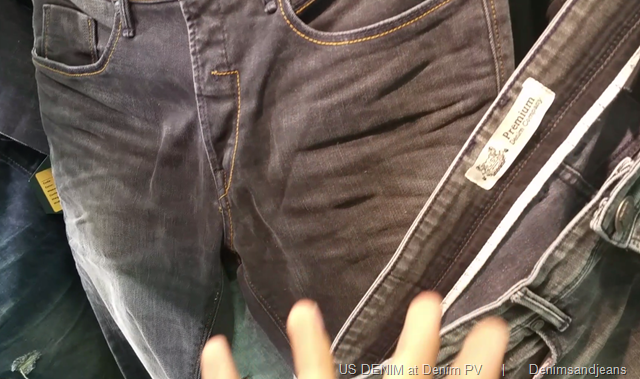
    US DENIM

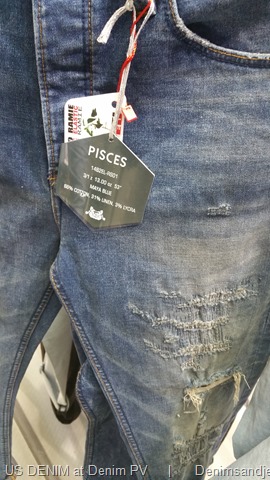
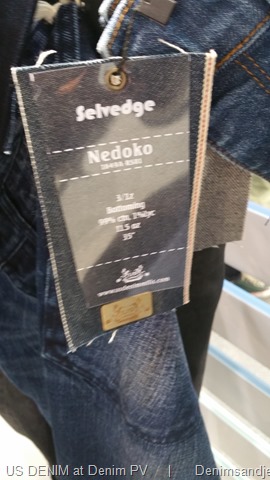
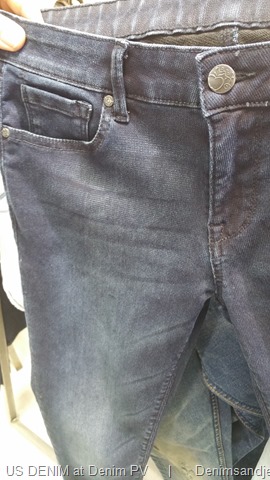
    Concentrated on vintage rigid fabrics, pure indigos, greys, green casts, multiple overdyed looks, post consumer waste in the weft, Crailar fabrics which are not only sustainable but also give that linen look, neppy denim with better contrasts. Besides their selvedge lines had multiple variations in colors, stretchability etc.

     US DENIM at Denim PV     |      Denimsandjeans

     US DENIM at Denim PV     |      Denimsandjeans

     US DENIM at Denim PV     |      Denimsandjeans

     US DENIM at Denim PV     |      Denimsandjeans

     US DENIM at Denim PV     |      Denimsandjeans

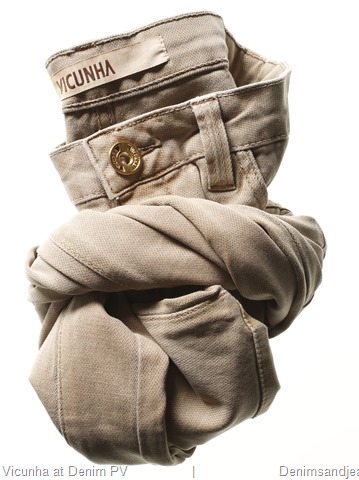
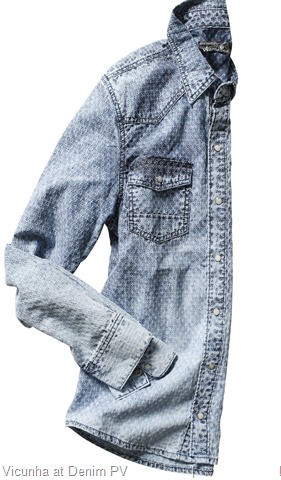
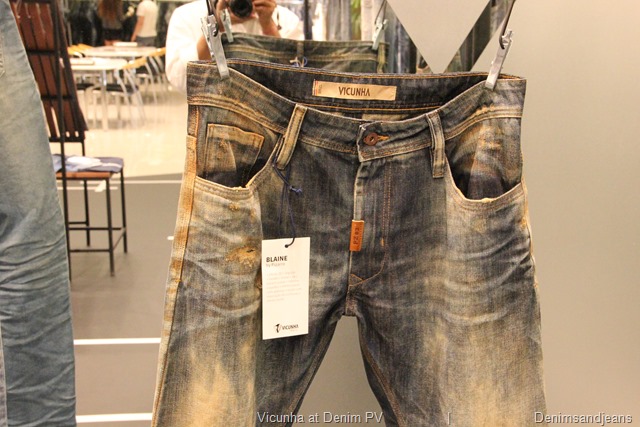
    Vicunha, Brazil

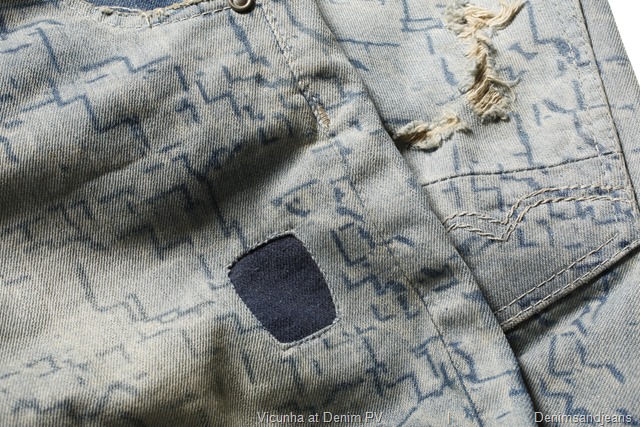
    Vicunha came out with some interesting concepts.

    Perfect Fit  :A high-performance denim with high degree of flexibility .
    Athletic Denim : Jogging knit denims come out with  76% stretch provides
    incredibly unrestricted movement and allows for a wide range of wash options.
    True Denim : With Gregory or Jon the authentic jean makes a definitive comeback in genuine vintage and
    raw effects.
    Transforming denim: Coloured materials coated beforehand with indigo when subjected to the washing process let the original colour beneath
    the indigo shine through once again, creating unique and exciting 3D effects.

    Vicunha at Denim PV                |                     Denimsandjeans

    Vicunha at Denim PV                |                     Denimsandjeans

    Vicunha at Denim PV                |                     Denimsandjeans

    Vicunha at Denim PV                |                     Denimsandjeans

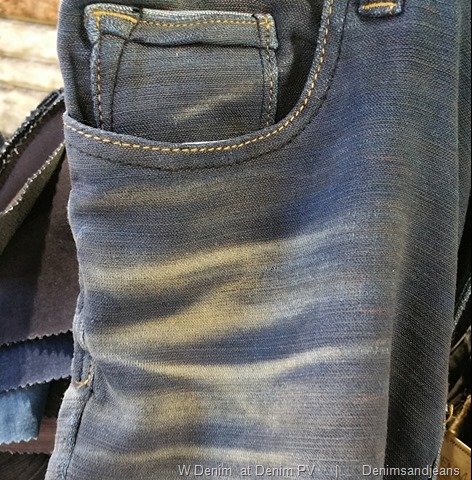
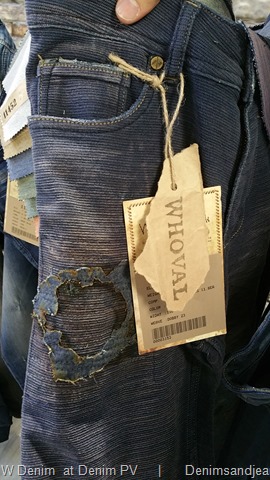
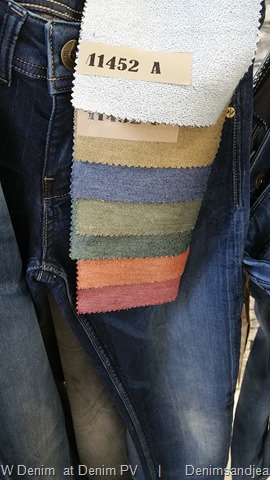
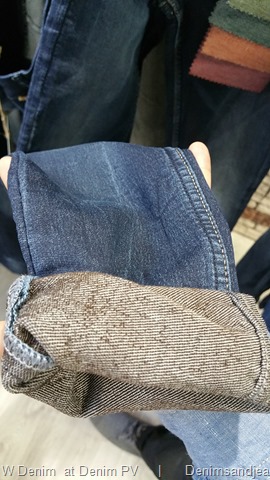
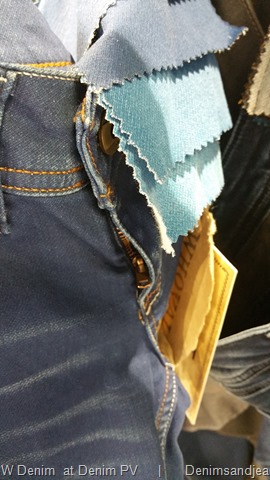
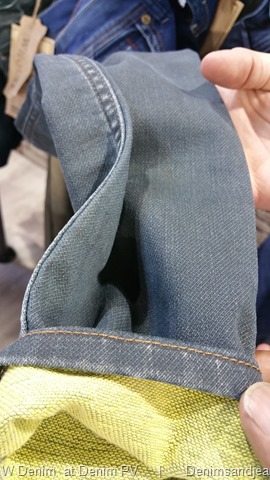
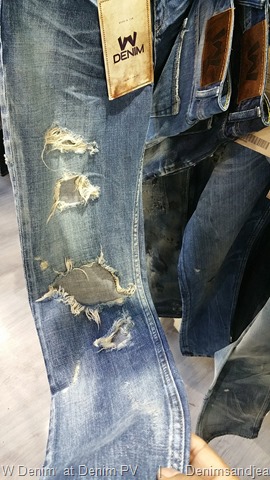
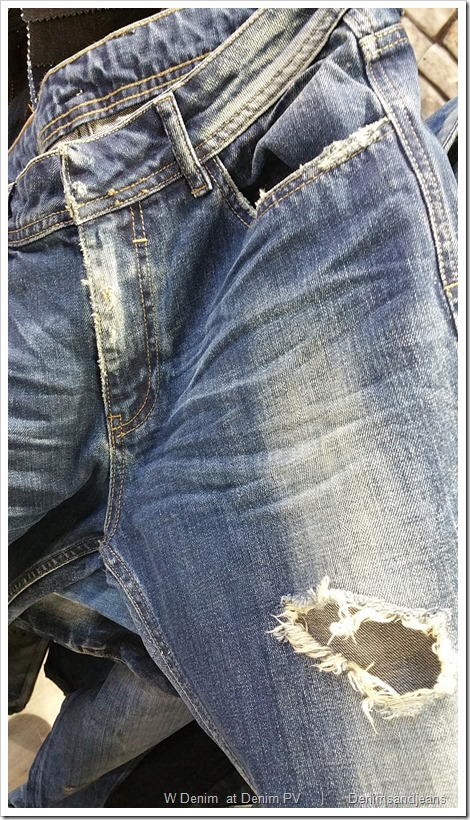
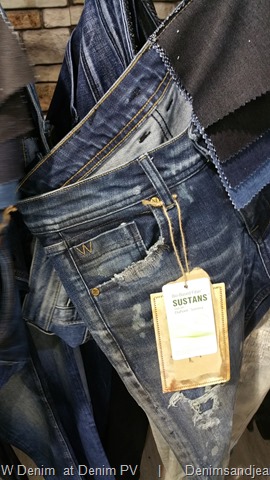
    W Denim, Turkey

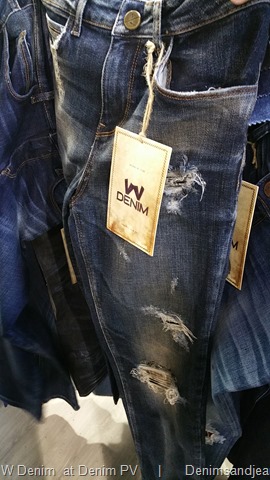
    This relatively new denim company from Turkey, brings out some innovative concepts in fabrics and washing.

    Extreme – Special Fibers to ensure good recovery, authentic slubs.

    Miners – Vintage and real denim looks

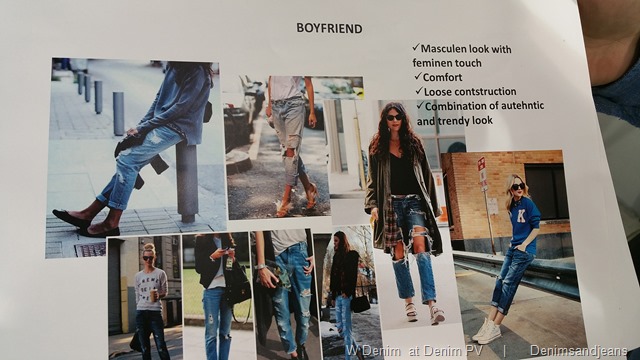
    Boyfriend – Men’s look with feminine touches, loose constructions , authentic and trendy looks

    Shirting concepts – A variety of shirting concepts.

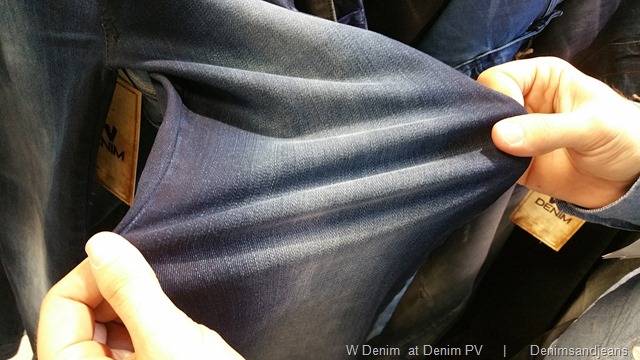
    Alternative Perspective – Knit look denims which can be washed like normal denims and given all treatments.

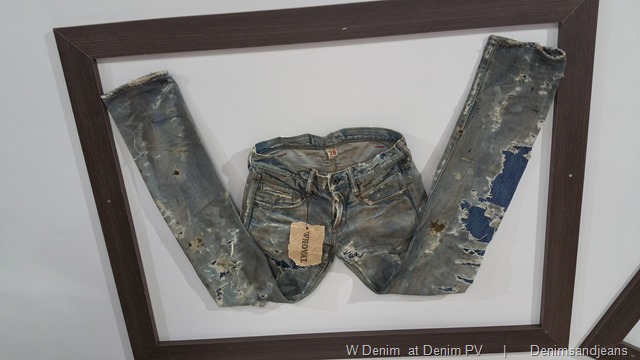
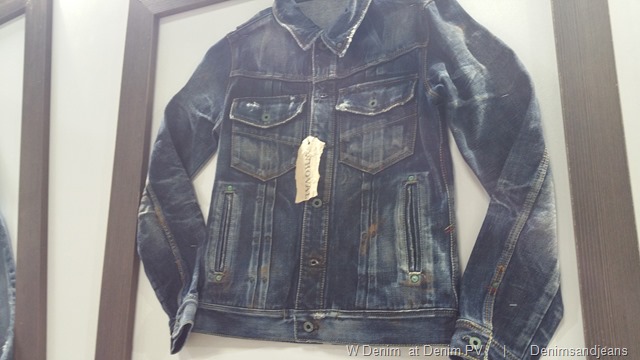
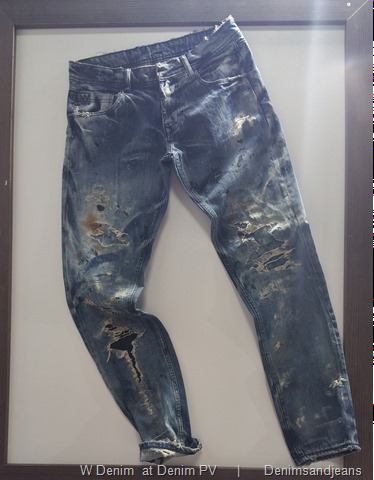
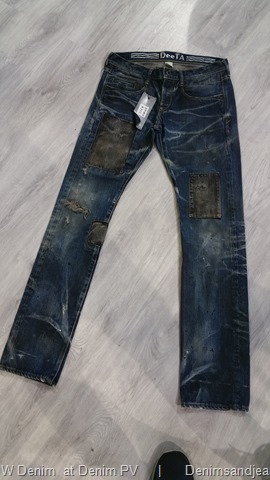
    Roots – W denim brings together special articles from their collection and have them washed from a reputed Japanese laundry and the results are cool.

    W Denim  at Denim PV     |      Denimsandjeans

    W Denim  at Denim PV     |      Denimsandjeans

    W Denim  at Denim PV     |      Denimsandjeans

    W Denim  at Denim PV     |      Denimsandjeans

    W Denim  at Denim PV     |      Denimsandjeans

    W Denim  at Denim PV     |      Denimsandjeans

    W Denim  at Denim PV     |      Denimsandjeans

    W Denim  at Denim PV     |      Denimsandjeans

    W Denim  at Denim PV     |      Denimsandjeans

    W Denim  at Denim PV     |      Denimsandjeans

    W Denim  at Denim PV     |      Denimsandjeans

    W Denim  at Denim PV     |      Denimsandjeans

    W Denim  at Denim PV     |      Denimsandjeans

    W Denim  at Denim PV     |      Denimsandjeans

    W Denim  at Denim PV     |      Denimsandjeans

    W Denim  at Denim PV     |      Denimsandjeans

  • Vegan Denim and Greenscreen – New Sustainable Initiatives from Orta

    Vegan Denim and Greenscreen – New Sustainable Initiatives from Orta

    Vegan Denim

    vegan_Denim_PR_image_1 ORTA, Turkey , brings out a new angle to sustainability with their VEGAN Denim, a collection of denim fabrics  produced exclusively with vegetable and natural dyestuff at an industrial scale.

    What makes the concept special is its unique dyeing methodology that has never been applied at industry scale before.  ORTA claims that it is the first in the industry to produce fabric using this method at an industrial scale with VEGAN Denim.

    The art of dyeing is as old as human civilization. Man learnt to use different kinds of natural coloring agents to dye cloths. The major obstacle for dyeing fabric with natural dyestuff has been the difficulty in producing good color intensity and shade consistency. This problem was due to the vegetal dyestuff’s lack of efficacy when applied to cotton.

    Orta has developed a new dyeing technique that thoroughly overcomes the problems of affinity and consistency. As a result of long-term research and study, this technology ensures an increase in affinity of dyestuff to cotton. The results show greater stability and consistency in dyeing. Thanks to the VEGAN methodology, it is easy to obtain intense shades in both vegetal indigo and natural colors. ORTA VEGAN Denim is an effort by the company towards sustainability. A responsible product, ORTA VEGAN Denim seems to  uses less water, less energy and fewer chemicals than conventional dyeing methods. As per the company , the energy consumed is 30%less ,the water consumption is 70 lt less/kg fabric.


    Orta Vegan Denim

    ORTA has obtained a legal patent for the process and it is subsidized by European Union Research Funds.

    GreenScreen 

    Orta Anadolu and Garmon Chemicals join forces to be the first in the industry to apply the GreenScreen® methodology on denim fabrics.

    Press_Release_image Environmental solutions are required as a response to game-changing business transformations that are starting to take place in the apparel industry. Those changes are driven by an increasing pressure coming from public opinion asking the textile industry for a way more ethical approach. To retain their positions of strength, fashion / lifestyle brands and industrial actors alike nowadays have to re-think the level of responsibility of the chemistry present on their products and prioritize it alongside the consumer insights and technical expertise required to conceive and produce the innovative products they need. This has allowed Garmon Chemicals and Orta Anadolu to pioneer a successful breakthrough approach to a new breed of highly conscious denim materials.

    “GreenScreen® for Safer Chemicals” is a revolutionary, publicly available and transparent chemical hazard screening method developed by the NGO “Clean Production Action” (CPA) to help our society move quickly and effectively towards the use of greener and safer chemicals. It’s an assessing methodology purely based on toxicology and aimed at identifying safer chemicals.

    Garmon Chemicals is the first company to have obtained GreenScreen® certification on a large number amount of their chemicals and currently leads the way, by far, in garment processing. Orta Anadolu has decided to pioneer the adoption of garment chemistry onto textile, leading to the development of denim fabric advancements. Orta Anadolu and Garmon Chemicals, through their GreenScreen® collaboration, pave a new way of working based on the simultaneous presence of very diverse disciplines. This cross-functionality is efficiently used to generate new knowledge and set an example to follow.

    Orta Anadolu launched its sustainability division ‘OrtaBlu’ in 2010 in order to communicate company’s sustainability efforts and to promote responsible production plus lifestyles. Garmon sets its ecological standards by sustainability by innovation and efficiency. The company believes that sustainability brings the opportunity to innovate and become a pioneer in textile industry and builds greater emotional connection between brand and the community. Being well aware of these facts, and Orta Anadolu and Garmon Chemicals volunteered for the environmental missionary as they burden to introduce GreenScreen® Methodology.

    Greenscreen finished products are not a specific collection but are for the customers who request for the same. Currently mainly chemicals used in finishing are certified and it is hoped that later the indigo and other chemicals used in dyeing could also be certified.


    I asked Ebru Ozaydin , marketing manager at Orta Anadolu , if  using such technologies   will make difference to sustainability and if the customers are ready to pay extra for such products. She replied

    “We always believe our industry can find greener and safer solutions and create awareness for the end consumer.That is why we established our sustainability division 5 years ago. It is not only Vegan Denim or GreenScreen finished products but also other best practices such as Better Cotton, AlchemyOne…
    We can not ask the cost of sustainability from the end consumer, it is more of a culture, a philosophy, an approach, seeing the overall picture and being aware of the realities while doing business and try to come up with better solutions. And it is the responsibility of all members in the supply chain. The customer is now more aware, knowledgeable and asks for more, better, safer, cleaner.I think we’re far from the point thinking that it is a marketing gimmick. On the contrary, it is a necessity.”

  • Brazil – In A World Of Its Own!

    Brazil – In A World Of Its Own!

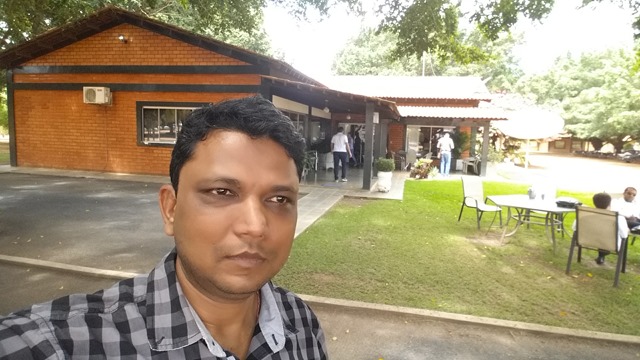
    I was on  a recent visit to Brazil – one of the most fascinating countries in the world . Thanking Vicunha for inviting me to visit this beautiful country, it was quite an experience getting a feel of this country that lives in its own world  . With a population of only about 200 million , the country is huge with a size of over 8.5 million sq km – more than double the size of India. The Brazilian culture is one of the world’s most varied and diverse as it has been a melting pot of nationalities which brought brought ideas, innovations and belief systems from around the world (specially Portugal)  shaping the local societies significantly. All of these different influences have meant that the modern-day Brazilian culture is unique and very complex.

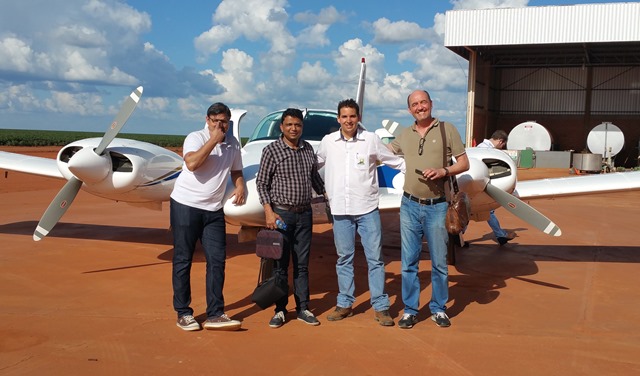
    One of the most important part of this visit worth mentioning was the visit to the biggest farm  that I have visited in my life. A thrilling 2 hour flight from Brasilia in a 4 seater plane took us to the farm in Bahia with the pilots managing with twists , turns and ducks to avoid the heavy water laden dark clouds and occasionally giving the jitters .  We reached the farm and landed on its own airstrip – it has 2 for its own fleet of planes used for spraying chemicals, pesticides ,  etc . With a total area of about 50,000 hectares and producing cotton and soya , it is not easy to comprehend  the actual size of this farm. If this farm had a 1 km width, it would be 500 km in length !! The farm had actual in farm road length of about 400kms (within its actually cultivated area of 30,000 hectares)– a massive operation by any standard and managed by its staff of about 200 people.  The farm had some great arrangements for all the people who stayed there  and looked more like a resort than a farm house. The workers, as we understand from them, were paid salaries higher than the minimum of about $310 regulated by the govt.

    Brazil – In A World Of Its Own! | Denimsandjeans.com

    Brazil – In A World Of Its Own! | Denimsandjeans.com

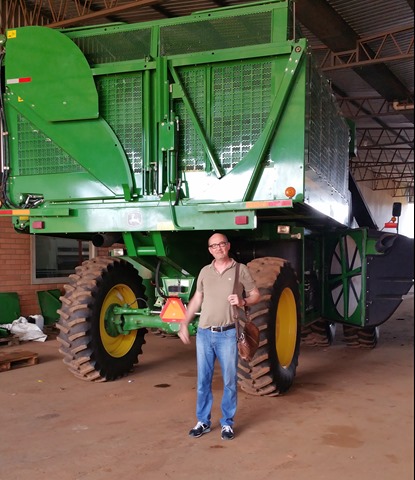
    We went around the farm and had a look at their operations and how they controlled such a huge area . The farm was highly mechanized with latest machines to manage the large area besides a few planes to help in sowing . The sowing system was well planned to ensure that the seeds could be sown in a way that they could be harvested in right sequence so that the subsequent processes could be aligned and timed when the crop matures. The harvesting machines were huge , dwarfing even tall ones (!) , and could harvest over 20 hectares in one day.

    Brazil – In A World Of Its Own! | Denimsandjeans.com

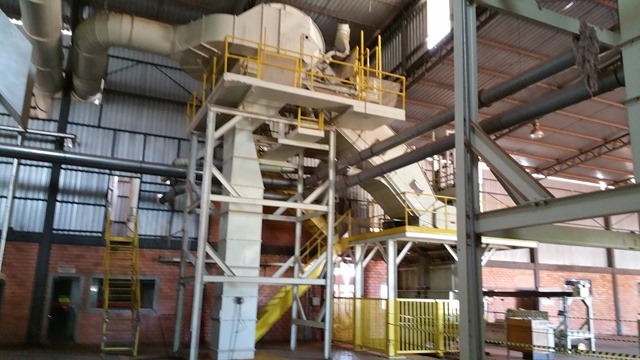
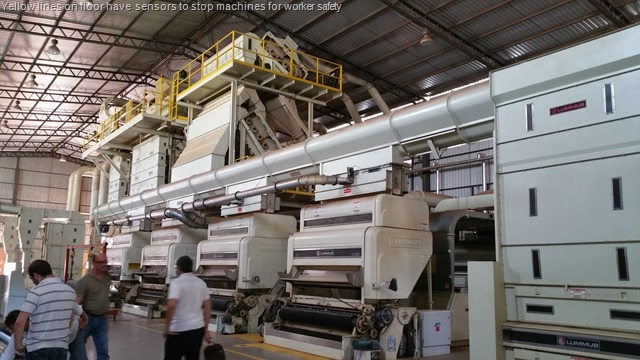
    With  a large in house ginning plant , the farm could gin its own cotton . One of the interesting feature of the ginning plant was the high level of security features , mandated by the govt. , which added to the costs of ginning but made the ginning process  safer. Worker safety regulations in Brazil are stringent and seem to be strictly enforced by the govt.

    Brazil – In A World Of Its Own! | Denimsandjeans.com

    Brazil – In A World Of Its Own! | Denimsandjeans.com

    Many of the farms in Brazil are circular in shape. This is a unique shape (normally minimum 100 hectares )and  is specially made to ensure easier irrigation. If you notice there is a large pipe going through the radius of the farm. This huge pipe – sometimes in few km  length– ensures that each part of the farm is irrigated equally and at same time.

    Brazil – In A World Of Its Own! | Denimsandjeans.com

    Brazil – In A World Of Its Own! | Denimsandjeans.com

    Sustainability

    Cotton production in Brazil is mainly controlled by the ABRAPA – the Brazilian cotton grower’s association. The association has its own certification whereby it provides the right methods of cotton production and certifies the farms following the parameters. There has been a benchmarking process between ABRAPA and BCI. It is an agreement  allowing for the grower to obtain, at their discretion, the BCI licensing together with the ABR certification. This is an important development for Brazilian growers whereby they are able to give BCI certification to the final user of cotton (like mills) easily. Thomas Dislich (Director Europe, Vicunha)  mentions that this is a very positive development and enables them to give BCI certificate to their customers for most of their production and is helping them to make their own contribution towards sustainability.

    Coming to the visit to Vicunha mills which I was eagerly looking forward to, it was a pleasure to visit their plant at Fortaleza – probably the largest denim plant at one location worldwide- besides the other plant at Natal. Vicunha is the largest denim producing company worldwide with over 15 million mtrs of production per month. Brazil, as a whole , has an annual capacity of about 650 million mtrs pa in denim.  The company gives high priority to employee welfare and I understand from the senior executives that the cost of benefits given to them is almost equal to their financial salary.  Among other benefits to workers like medical, family welfare, air conditioned transportations, it was good to note that all the workers to top management had lunch in the large and very well equipped canteens  arranged by the mgt. – signifying the importance given to all employees.  One of the interesting feature of the plant was the recycling done of the dyed waste generated at the plant. A large, indigenously designed plant, converted the dyed yarn waste into fibers and these were used in the right combination with the raw cotton to generate regular denim but with a recycled component.

    Brazil – In A World Of Its Own! | Denimsandjeans.com

    Brazil – In A World Of Its Own! | Denimsandjeans.com

    Brazil – In A World Of Its Own! | Denimsandjeans.com

    Brazil – In A World Of Its Own! | Denimsandjeans.com

    The above images show how the dyed yarn waste is converted into sliver and then yarn. This yarn is further used for further dyeing and to get the desired product. The company mentioned that it was a regular process with them and it ensured them to recycle most of such waste and to create better qualities for their customers.

    Sao Paolo , the next destination – is a city with a very cosmopolitan and trendy vibes. A city supposed to be populated with over 20 million people – is a city in love with denim. Most of the people – whether males, females or children – wore denim in some form or another. Brazil is actually supposed to be having highest per capita consumption of denim worldwide . Fashionable women could be seen in trendy flares , capris , dresses, jackets, skirts etc in a wide variety of washes – distressing being one of the most common one.

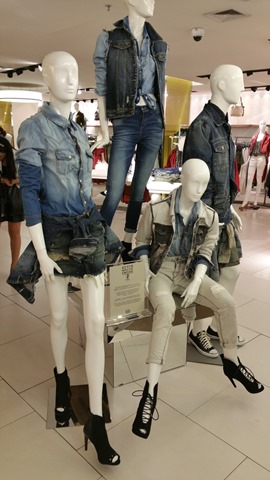
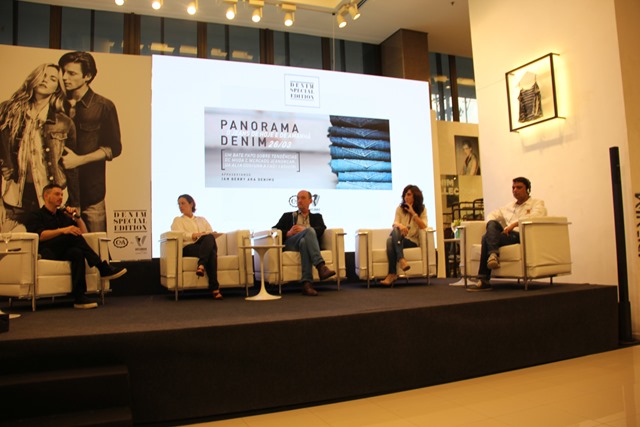
    image Another highlight of the visit was the occasion of launch of Denim Special Edition  C&A by Vicunha . This special collection was created by Vicunha for C&A . Focused on Premium denim, the collection bets in different shades of blues, black and grey with super stretches, fabrics that reinforce the return of authentic denim and light items of hosiery.The launch was marked by presentations and panel discussions – Panorama Denim– at Vicunha showroom ( a lovely place) with people like Ian Berry of Denim Art fame, C&A Brazil Product Director and others contributing their views on denim industry.


    Brazil – In A World Of Its Own! | Denimsandjeans.com

    IMG_7235

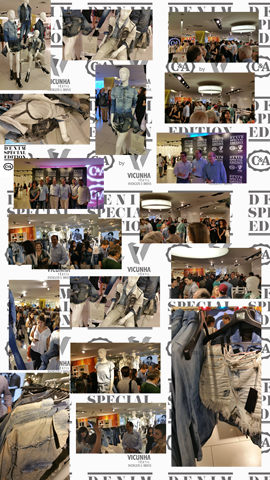
    The actual launch took place in a C&A store in the evening with the fashionistas and who’s who of the industry being present. The collection , in some cool washes, was targeted for customers looking for premium denim at cool prices .The collage below reflects some looks and moments from the launch .

    Denim Special Edition C&A by Vicunha copy

    The visit to Brazil would be incomplete without mentioning the visit to their large wholesale market area in central Sao Paolo , alongwith my friend Andre Duarte who kindly took me there, which has thousands of shop selling denim and other apparel to retailers who come from around the country. It was interesting to see the huge and highly organized wholesale market  focusing on denim on such a large scale. Many people there claim that it is the largest denim wholesale market around the world.

    Wholesale Market Sao Paolo 3

    On the whole a very eventful trip that enabled me to have a glimpse into what Brazil is all about . The country works and lives with  its own rhythm  and it has a very distinct aura of its own. I found most people very warm and welcoming and one feels at home immediately. The pace of life is relaxed in most cities and people take their time working hard and enjoying at the same time.  It was quite an experience feeling this country and I thank Thomas Dislich and all at Vicunha for kindly arranging the memorable visit.

  • Tom Ford Fall 2015 Runway Patchwork Denim Collection

    Tom Ford Fall 2015 Runway Patchwork Denim Collection

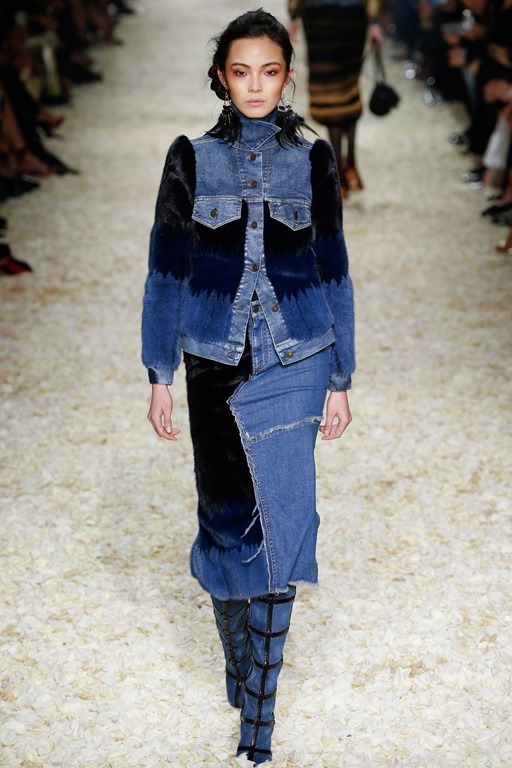
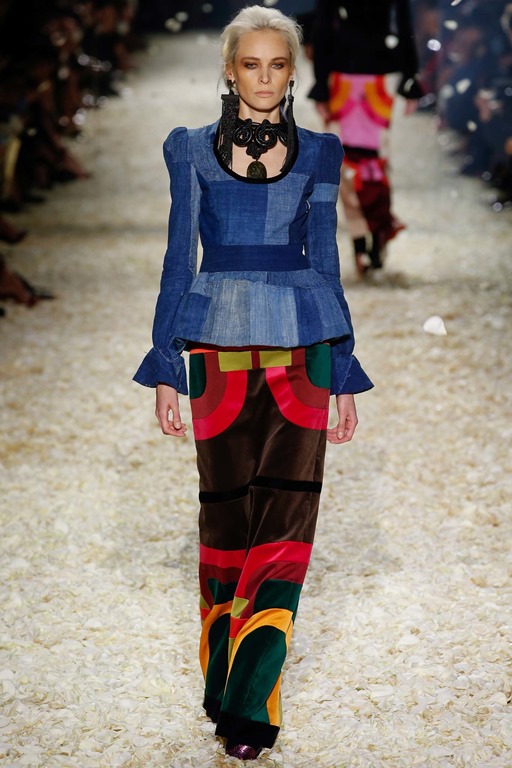
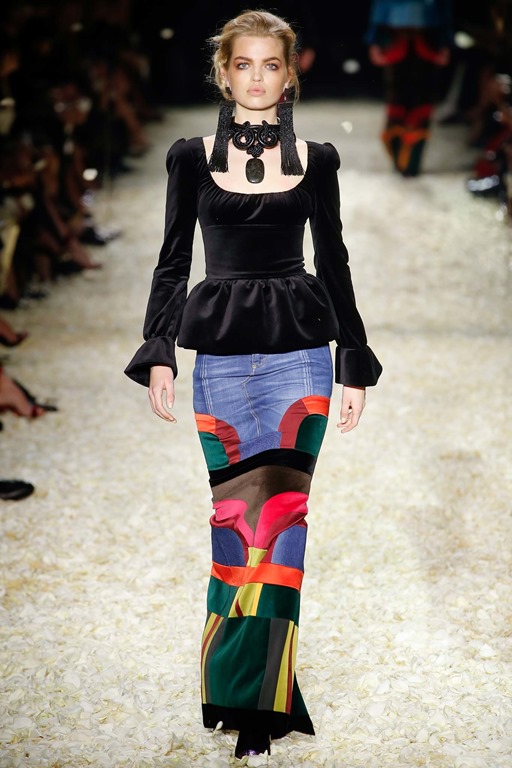
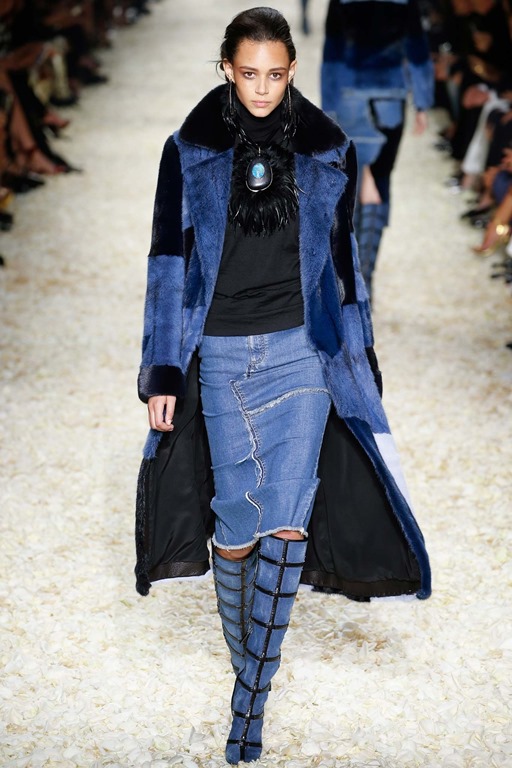
    Thomas Carlyle “Tom” Ford is an American fashion designer and film director. He gained international fame for his turnaround of Gucci and the creation of the Tom Ford label before directing the Oscar-nominated film A Single Man.  While at Gucci he had made a ultra-lux jeans which sold for $3134 !!

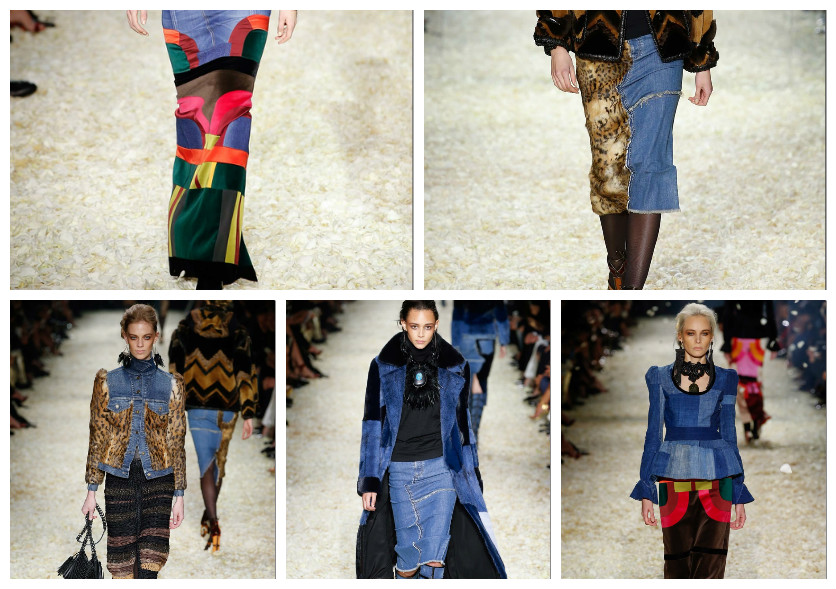
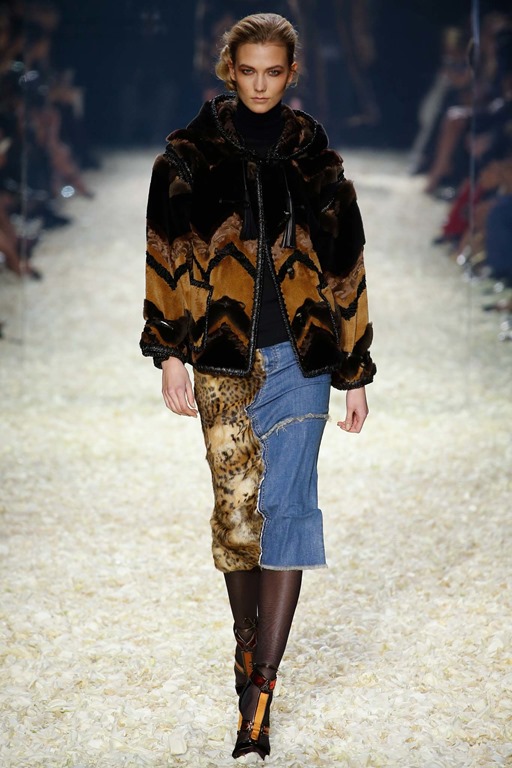
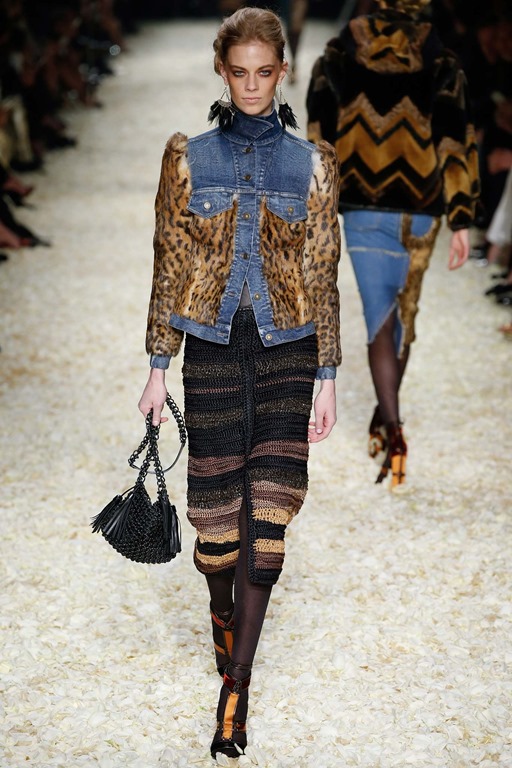
    On a recent runway presentation of his Fall 2015-16 collection at L.A , we saw a lot of patchwork denims with all kinds of fabric combinations besides denim including denim look velvets. The patchwork concept was taken down event to the boots !

    It was denim and not like denim . Knee-length skirts, pants where the utilitarian fabric just showed at the highest part of the leg, and jackets embellished with leopard. The whole idea of his collection was to use the utilitarian denim and luxurious denim colored fabrics to make those high end celebrity clothes.

    Tom Ford Fall 2015 Runway Patchwork Denim Collection

    Tom Ford Fall 2015 Runway Patchwork Denim Collection denimsandjeans

    Tom Ford Fall 2015 Runway Patchwork Denim Collection denimsandjeans

    Tom Ford Fall 2015 Runway Patchwork Denim Collection

    Tom Ford Fall 2015 Runway Patchwork Denim Collection

    Tom Ford Fall 2015 Runway Patchwork Denim Collection

    Tom Ford Fall 2015 Runway Patchwork Denim Collection

  • Importers of Denim Fabrics in Colombia – Sep-Nov ’14

    Importers of Denim Fabrics in Colombia – Sep-Nov ’14

    Further to our previous reports on Colombian denim import market, we are providing the the details of denim imported there from Sept to Nov’14. The report includes the following:

    • Names of top 10  importing buyers in Colombia during this period.
    • Contact details of such importers where available.
    • Quantities of denim imported by them
    • Prices of such denim imported .
    • Top exporting countries to Colombia with their total export figures during this period.


    [private_special]

    In the following table we will see the list of top importers of denim fabrics into Colombia during the period Sept-Nov’14. We list out below 10 top importers who imported denim. Also given are their quantities of imports during this period and the average prices at which they are importing. Some of these buyers imported over 4 lac meters during this period. The highest quantities were imported by Comertex S.A – over 4,67,000 mtrs. However the prices of imports were very low – about $2.2 per sq mtrs. Some of the buyers, however, managed to pay high price for their imports. Tennis S.A imported about 2,00,000 mtrs but paid prices about $6.90 (per mtr at av.150 cm width) . So the price given by each buyer varies significantly. However, we need to also keep under consideration that the Colombian currency has depreciated significantly in the last few months. Hence the price paying capacity of the buyers is also greatly reduced in dollar terms.

    Details of Purchases Of Top 10 Importers

    Buyer Name Quantity Purchased
    (Approx.)
    Cif in Usd Avg. Price/Sq. Mtr Avg. Price in linear mtr.(150cm width)
    COMERTEX S.A 4,67,312.45 6,92,923.18 1.48 2.22
    COLOMBIANA DE COMERCIO S.A 4,26,778.12 8,35,677.26 1.96 2.94
    SURTIJEANS S A 3,76,715.44 4,84,528.12 1.29 1.93
    STILOTEX S.A.S 3,55,324.6 7,67,194.3 2.16 3.24
    PRODUCTORA DE TEXTILES DE TOCANCIPA S A TOPTEX S A 2,26,758.56 2,75,528.44 1.22 1.82
    TENNIS S.A 1,94,434.63 8,94,177.57 4.60 6.90
    RODRIGUEZ FRANCO Y CIA S C S ORGANIZACION NACIONAL DE COMERCIO 1,80,872.02 2,41,486.77 1.34 2.00
    STF GROUP S.A 1,76,724.93 5,31,307.69 3.01 4.51
    PRIMATELA S.A 1,64,128.12 4,48,862.9 2.73 4.10
    C.I.EXPOFARO S. A. S 1,57,938.04 6,12,328.04 3.88 5.82


    Some details on the buyers can be had from the list below. For more info on buyers, pl do visit our earlier reports on Colombia here, here and here to get more insights into buyer details.

    COMERTEX S.A

    Cra 17 Autopista Palenque Chimita No 60-170; Giron; Santander
    Ph: +57-7-6760000
    Website: http://www.comertex.com.co/index.php?idi=2


    COLOMBIANA DE COMERCIO S.A

    CL 11 31 A 42,BOGOTA
    Ph : 57-1-3649777


    SURTIJEANS S A

    Carrera 62 # 12-30, Bogotá, Colombia


    TENNIS S.A

    Cl 39 S 26-09 Envigado Envigado, Colombia


    RODRIGUEZ FRANCO Y CIA S C S ORGANIZACION NACIONAL DE COMERCIO

    Calle 59 8 47 Bogota, 204 Colombia

    Ph: +57-12127777


    STILOTEX S.A.S

    Cra 106 # 15-25, Manzan 5 Ints. 13-14

    Website: http://www.stilotex.com/


    PRODUCTORA DE TEXTILES DE TOCANCIPA S A TOPTEX S A

    Cra 43 N’ 9-46, Bogota
    Ph: +57-7-5663000


    PRIMATELA S.A

    Kra 63 17b 50; Bogota D.C; Bogota D.C

    Ph: +57-1-4137166


    C.I.EXPOFARO S. A. S

    Cra 52 N°29A 111, local 211, Medellín, Antioquia, Colombia
    Ph: +57-4-3500030


    Top Exporting Countries

    The top exporting countries to Colombia remained China and India. However, the prices from India specifically are very low and touching almost $2 per linear mtr of 150cm. China is slightly better with over a price of $2.7 . Mexico is much better at $4.55 and the most  expensive fabrics come from Turkey and Italy. From the under mentioned 10 countries, over 4.5 million mtrs of denim fabrics were imported into Colombia. Brazil, a neighbor for Colombia , also managed to export at good prices almost similar to China. However, it is interesting to see that Pakistan gets good prices on its exports of denim fabrics compared to China, India, Brazil and even USA. At $2.58/sq mtr or $3.86/mtr , it is a decent price for export fabrics.

    Top Supplying Countries During Sept.-Nov’14

    Country Of Origin
    Sq mtrs
    CIF usd
    Price
    Avg Price in mtr
    CHINA 1,787,115.56 3239316.89 1.81 2.72
    INDIA 1,234,253.68 1674763.74 1.36 2.04
    MEXICO 4,86,711.78 1476584.35 3.03 4.55
    BRAZIL 3,18,620.78 593712.36 1.86 2.80
    TURKEY 2,77,375 1198507.38 4.32 6.48
    PAKISTAN 2,43,764.57 627879.4 2.58 3.86
    ITALY 1,17,718.73 569321.7 4.84 7.25
    PERU 73,332.42 116977.18 1.60 2.39
    UNITED STATES 70,603.47 160031.47 2.27 3.40
    GERMANY 55,118.66 210031.48 3.81 5.72

    Note: We will be shortly doing an annual report on Colombia listing out the major buyers, major suppliers , their prices and other details to have a complete overview of this market.

    [/private_special]

  • Cheap Monday’S Spring 2015 Collection

    Cheap Monday’S Spring 2015 Collection

    Cheap Monday was born in 2004 as an alternative for people who wanted fashionable jeans but didn’t agree with the increasing prices of the brands which were popular at the time.

    It all started in March 2004 when the tight denim with the characteristic skull logo first hit the market.But to tell this story correctly, we have to go back to November 2000 when Örjan Andersson, Adam Friberg and two of their friends opened a small second hand store in a Stockholm suburb. The store was called Weekend and was only open during Saturdays and Sundays. Despite its remote location, and thanks to a very good selection of garments, the store went well and the decision to team up with Lasse Karlsson and open up a bigger shop in central Stockholm was made. The store was a full-time concept, open every day of the week, and therefore got the name Weekday .From the start Weekday carried high-fashion and exclusive denim brands mixed with second hand clothing – a blend that attracted young, trendy Stockholmers.

    Some of the denim sold in the shop was very expensive and Örjan felt there was a need for cheaper, but still fashionable jeans. The first Cheap Monday style ‘Tight’ was born, at this point made exclusively as an in-store brand. An unwashed, very tight fitted stretch denim jean for a shockingly good price! It was an immediate success and the first 800 pairs sold out in a couple of weeks. The skull logo was made by Örjans’ friends Björn Atldax and Karl Grandin who previously had helped out with the imagery for the two stores.

    In January 2005, Cheap Monday was developed into a brand with full scale collections and the distribution was extended to selected stores in Sweden as well as abroad. From the first delivery of 800 pairs of jeans in March 2004, the production has reached a new level in terms of pieces as well as in product range.

    Today Cheap Monday carry main collections for men and women as well as three in-season drops/season. The collections also include baby, accessories, glasses, underwear and shoes.In 2008 the brand joined forces with H&M and in November 2009 the very first Cheap Monday Store opened up in Copenhagen.Without traditional marketing but with a strong idea on how to present the brand, Cheap Monday can today be found in more than 35 countries in about 1800 stores all over the world.

    SS’15 Collection

    Scribbled, doodly prints, ruchings, delicate bow straps mixed with a sporty look on satin interlock fabrics with puff sleeves and stencilled allover prints on denim and jerseys. Sporty drawstrings play an important part on woven, sweat and jersey. It’s a juvenile, punk look with pink checked flannel shirts and skirts for women and a denim check on men. We mix a leaner, longer silhouette on shirts and sweats for men and a boxier, cropped on women. The jeans look is heavily bleached down with a strong back-to-denim feature in washes and fits. Mixed with biker cuts, zips and coatings the black and 90’s blue blends together in a pinky, yet modern way. A pop out-theme is a super trashed denim look, contrasted by tinted pastel shades in over dyed jackets and bottoms. Focus denim styles for the spring 2015 Collection are shorts on women and men and 90’s boyfriend fits for women. Spray-On, their skinniest and stretchiest jeans model ever, is now available for men as well.

    cheap monday 1

    cheap monday 2

    cheap monday 3

    cheap monday 4

    cheap monday 5

    cheap monday 6

    cheap monday 7

    cheap monday 8

    cheap monday 9

    cheap monday 10

    cheap monday 10

    cheap monday 10

    cheap monday 10

  • Swedese collaborates with Nudie Jeans To Recreate Classic Lamino Chair In Denim

    Swedese collaborates with Nudie Jeans To Recreate Classic Lamino Chair In Denim

    “To have made one good chair maybe isn’t such a bad lifetime accomplishment”. The quote comes from the founder of Swedese and creator of the Lamino chair, Yngve Ekström. The chair was voted “best Swedish furniture design of the 20th century”, and claiming it to be only a good chair, is quite an understatement.

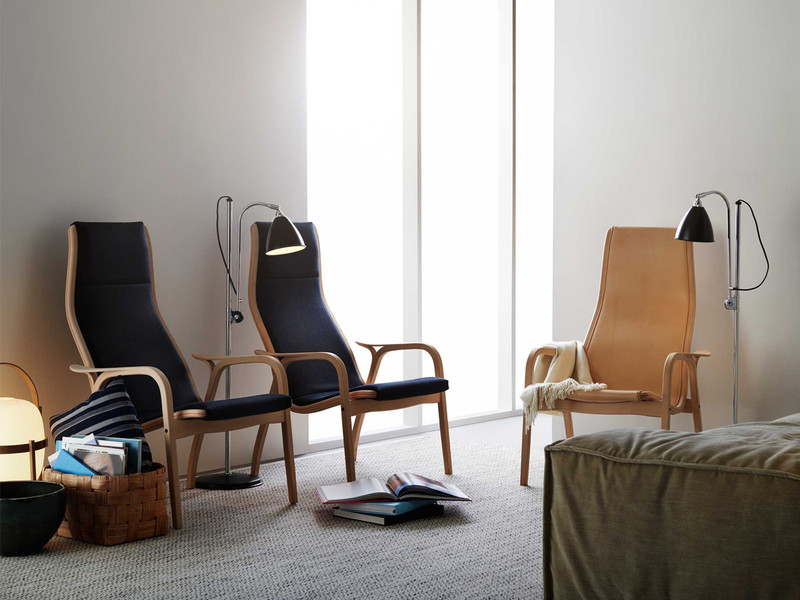
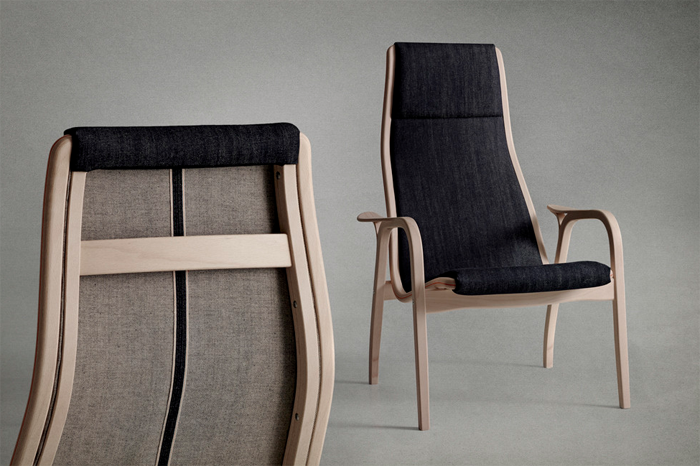
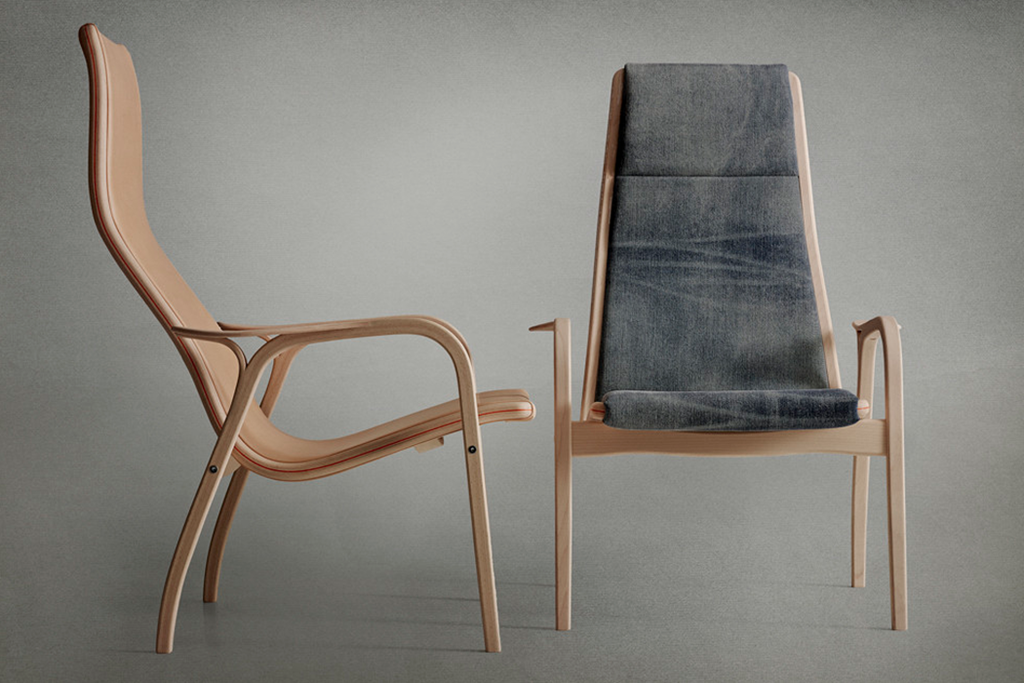
    Design, function and tradition were key words when Yngve Ekström designed the Lamino chair. His vision was clear; a simple, comfortable chair, so he designed an easy chair made from glue-laminated bentwood veneer with a seat made from sheepskin.

    nudie jeans 2

    nudie jeans 2

    Organic Kaihara Selvedge

    Organic Kaihara Selvedge

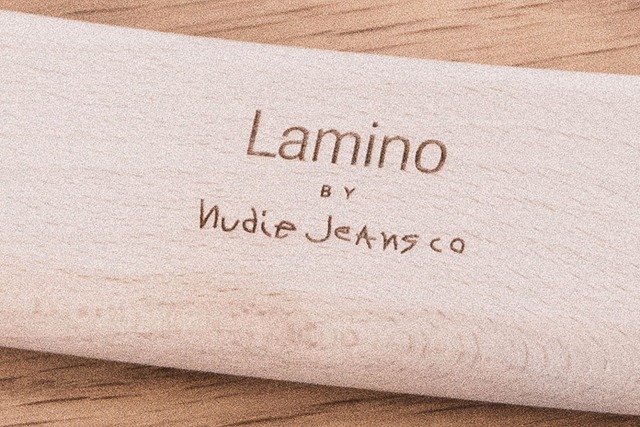
    To celebrate the 70th anniversary of Swedish furniture producer Swedese, Nudie Jeans were asked to do an interpretation of their classic Lamino chair. Since 1956, over 300.000 Lamino chairs have been produced by skilled craftsmen at the factory in Vaggeryd, SmÃ¥land, Sweden. During the process Nudie realized that Swedese and Nudie Jeans share the same view on sustainability, and that the materials they use work really well together. Hence they went in for a collaboration to produce a Lamino chair with a denim touch. This is more than a collaboration. It’s a tribute to sustainability, both in terms of design and lifespan.

    “We share the same passion for natural and raw materials, craftsmanship, and high quality construction and production. Products that are supposed to be used, that age beautifully and develop patina over time. The predilection for functional and sustainable design can maybe be explained by our common roots in Småland, Sweden.” – Maria Erixon, Creative Director at Nudie Jeans

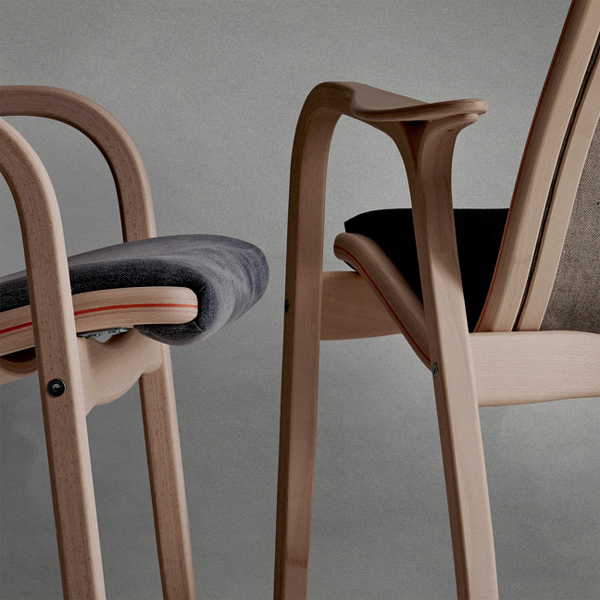
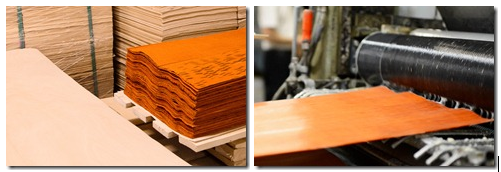
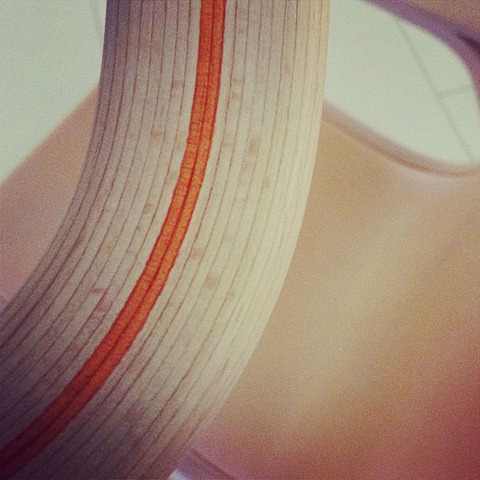
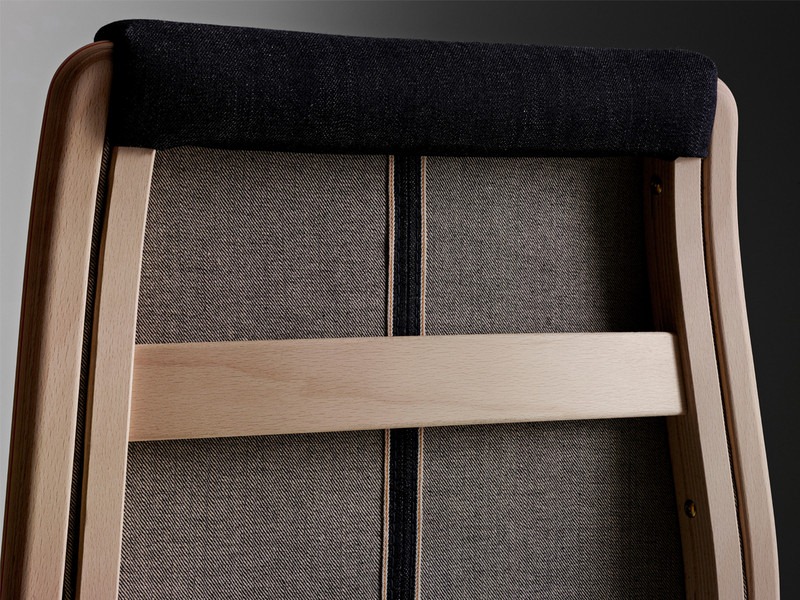
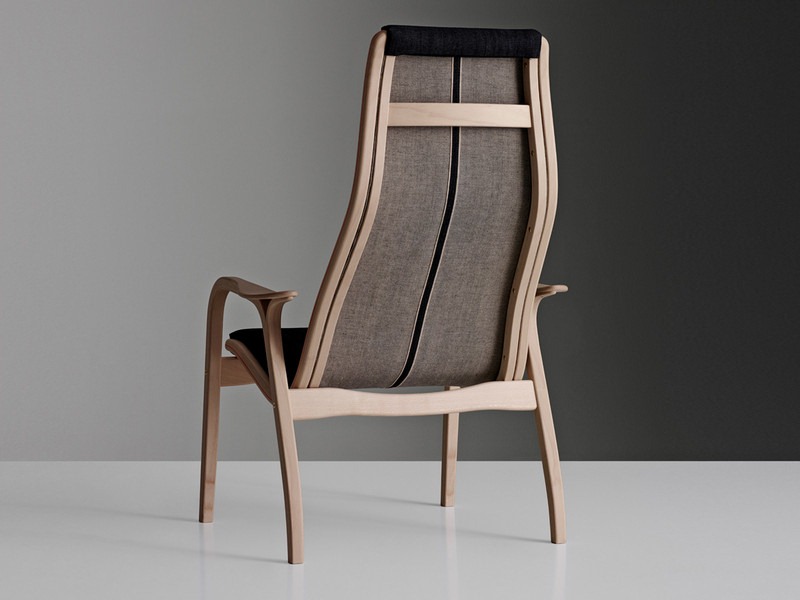
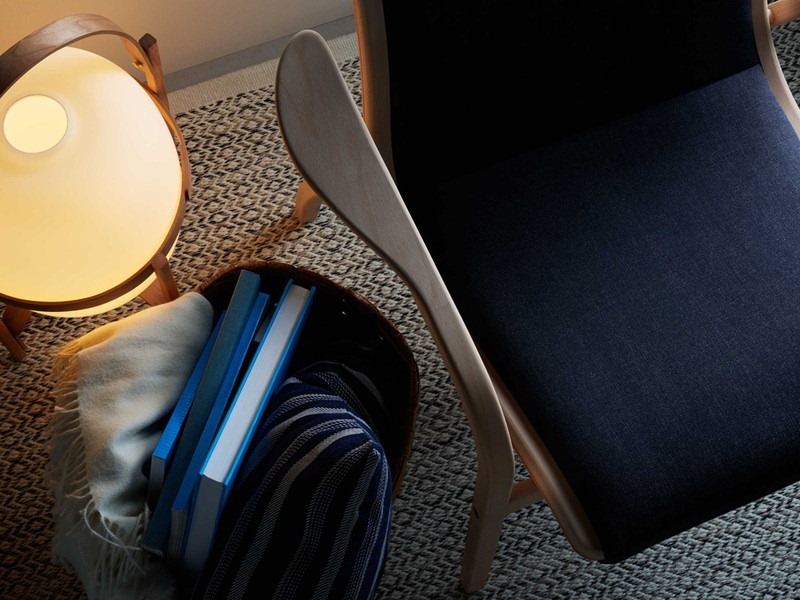
    We chose materials that age beautifully. The frame is made with untreated beech veneer, with a few layers of orange colored veneer in-between – which of course comes from the orange stitching of our selvage. The seat comes in three different variations: a dry, organic, Kaihara selvage option, a pre-washed, hand-treated selvage option made by our washing experts at ITAC in Italy, and a natural leather option, vegetable tanned by Tärnsjö Garveri.

    Over the years, Amnesty and Nudie Jeans have collaborated on a bunch of different projects to raise awareness about Amnesty’s work. And for this project, Swedese and Nudie Jeans donate €50 to Amnesty for each chair sold.

    A cool chair with a sustainable and denim twist indeed !

    Organic Kaihara Selvedge   Lamino-by-Nudie-Jeans

    Lamino-by-Nudie-Jeans_10

    Lamino-by-Nudie-Jeans

    Lamino-by-Nudie-Jeans

    Lamino-by-Nudie-Jeans-Detail

    Images courtesy of Nudies Jeans