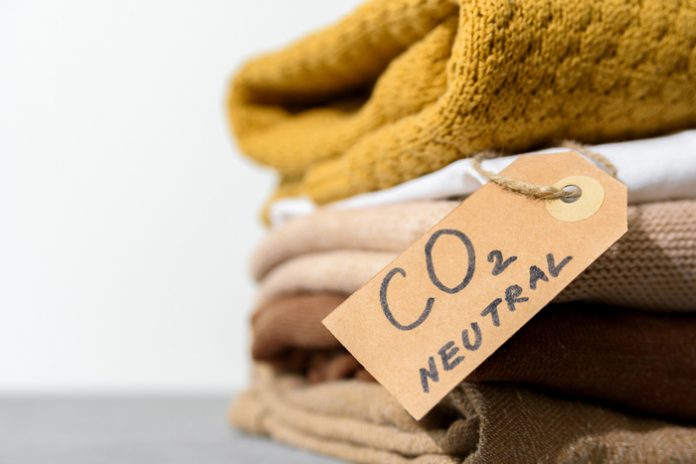
H&M, Ikea, B&Q, and Walmart have launched a new climate change initiative to drive action on encouraging other retailers to achieve carbon reduction targets. They have partnered with the COP26 High-Level Climate Action Champions to initiate “Race to Zero Breakthroughs: Retail Campaign”. This initiative is supported by the World Business Council for Sustainable Development (WBCSD)..
Up till now, only 5% of retail businesses have so far committed to taking action to limit global warming. Making the retail business agree to this sort of initiative is hard as the price of sustainability is huge. With their multi continent sourcing models, the impact on environment emanates not only from the material ingredients but also processing , packaging and shipping. It has been estimated that sometimes something as simple as a T-Shirt may involve total shipping distance of over 10,000 km for assembling the materials at one place and then dispatching the same to stores. The impact is enormous and it also makes it very difficult for the retailers to reduce their carbon footprint as they may have to recalibrate their sourcing models .
These 4 retailers have pledged to support industry-wide campaigns to promote climate action and encourage other retailers to outline their intentions to reduce carbon emissions and keep global warming below 1.5 degrees Celsius – ensuring that 50% emissions are reduced by 2030 by setting science-based goals and commit to achieving net-zero emissions from vehicles by 2050 at the latest, and join the “zero-emission race” initiative.
“I encourage the retail industry to join us and take immediate climate action to halve global emissions by 2030. Together, we can win the Race to Zero,†said Nigel Topping, UN High-Level Climate Champion for COP26.
WBCSD chief executive Peter Bakker said: “This campaign is a call to retailers everywhere to take ambitious climate action as they increasingly recognize the risks posed by climate change across their supply chains and operations.
Bakker also stressed that “the climate emergency, together with the loss of nature and rising inequalities, is the greatest and most complex challenge of our timeâ€.
“We need more retailers to join the UNFCCC’s Race to Zero and showcase leadership and commitment, like H&M Group, Ingka Group (Ikea), Kingfisher, and Walmart.â€
“Only by joining forces and collectively rethinking the industries, like retail, will it be possible to tackle them,†he said.
In 2019, Amazon and the climate non-profit organization Global Optimism jointly launched the Climate Pledge, which is a similar movement. The members of the climate pledge promise to achieve the Paris Agreement ten years ahead of schedule and achieve carbon neutrality by 2040. Verizon, Siemens, Microsoft, and Best Buy are among 108 signatories to the pledge.
With a broad support for the carbon reduction targets across industries, we may see a much more coordinated efforts and solutions which may bring results quicker than we anticipate. “If intentions are sincere, results will found “.
Arief Labu has been working in the denim industry in Bangladesh for over 15 years since 2006. He started in product development, moved on to wash R&D, and then to wash production and product management. He has worked with well-known companies and brands like G-star, Bestseller etc and his work experience encompasses countries such as India, Vietnam, Pakistan, Cambodia, UAE, Sri Lanka, and Bangladesh. He has literally been a witness and a part of the booming denim industry in Bangladesh and has had the opportunity to see it from different angles. He also saw the various problems that came with the growth and were always keen to work out ways to resolve them. One of the issues he found in the industry was the lack of measurability of the resources used in laundry and the inability of the companies to create concrete data of resource usage. This set him thinking to try to find a solution to this problem and with a team; he developed a software cum hardware solution called AiMAT. We spoke to him about the product and what it means and how it can be used and we bring this Q&A that we had with him.
Hi Arief, you have come out with a new software called AiMAT. Can you let us know more about it?
Thanks for asking, yes, we did, it is just like its name, Automated Industrial Measurement and Analysis Tool. It is not only software but a combination of hardware and software. The purpose of the same is to help the washing/laundries to come out with real-time data on usage of water, chemicals, fuel, etc, inputs in their factory. It also enables the calculation of this data based on buyer, order, period, and other parameters, making it easy for the supplier to generate reports as he wishes. It can also help the buyer to monitor resource usage on his order in real-time and this I believe is the biggest advantage. Other positives are:
Having data automatically
Knowing the real uses of chemicals, water, electricity, fuel, and ETP.
Knowing the real data of carbon generation.
Analyzing data and automatic report system, accessible from any internet destination.
Transparency at the highest level. The base for any kind of sustainability.
Digitalization of chemical uses.
Knowing the uses of Brand wise, order-wise, style-wise, or pcs-wise. Also, yearly, monthly, weekly, and day-wise.
What is the applicability of this tool? Who would really benefit by implementing this and how?
This tool is basically to be used by the washing/laundries where the most of the resources are used. The laundries can easily control and monitor their consumptions of water, chemicals, electricity, Gas etc. The most important aspect of this solution is that it is Not dependent on any kind of machine, chemical etc. It can be applied in ANY LAUNDRY. The One Click reporting system also is very helpful to know order wise, style wise, period wise details of resources and it greatly helps in Management control and improving sustainability credentials.
With this system, everyone would be benefitted.
Factory
By knowing the exact consumptions.
By knowing the exact cost of the production.
By knowing the real chemical consumption
By knowing the exact rewash/rework amount.
By knowing the real productivity.
By knowing the real time production status.
By knowing if the production is really getting sustainable or not.
By having more specific control over the production.
Brand
All these factory benefits are really a benefit for the real product owners.
By knowing if the production same as the development.
By knowing if the ETP is performing properly or not.
By knowing exactly what is the consumption for their own products.
Does not have to be dependent on a third party company to know if the product is sustainable or not.
Having transparency on the laundry.
Be able to have confident sustainable marketing strategy.
So you mean that the hardware and software will be connected and bring live data from machines in the laundry without needing for manual input?
This tool is more a hardware then and a software. Avoiding any manual input requires mechanical support and in this case, it is quite big. All hardware’s are connected with the software to generate and analyses data.
How do you ensure the authenticity of data?
All support tools are ECC certified and authenticated for accurate data.
All the tools are calibrated from one standard accurate value.
The periodic audit will be performed on all hardware, to make sure, data are real.
Any difference and tools will be checked physically.
We also welcome any third-party company to come and check.
Do you think that this kind of software can help companies in sustainability monitoring?
Yes, Over here no % is used, valuations are no created, nor it is based on any previous record. It gives you information, based on what is happening now. If you know the exact use it is simple to say it is sustainable or not. Data is refreshed every 5 minutes, to know the exact results or the productions. It also helps you to see if the wash machines are using the same recipe and time. It also helps in monitoring ETP performance. The biggest plus is that it enables monitoring real-time data transparently.
How can fashion brands make use of AiMAT for their monitoring purpose? Can it be done in real-time by them?
The brands can use this tool for various objectives of theirs. E.g. they can
Monitor if the product consumption is the same as it is declared or not.
Monitor factory’s growth as sustainable production.
Monitor if the ETP is working or not.
Monitor factory’s wash production status.
In addition, since Data is updated every 5mins, so, it is real-time. With extra investments, we can also provide a Cell phone app for both monitoring and reporting.
How much time it takes to setup such a system in a typical laundry
3 to 6 months minimum. Most of the time is taken for getting the imported hardware in-house and its installation.
What are your plans looking ahead to ensure that this system is installed and recognized as a tool for monitoring in the industry?
With-in the company ownership, we are building a model factory for denim, with sewing and washing facility. Our plan is to install the solution there as a showcase. However, due to corona situation, we got late.
The initial plan is to inform Global companies, who initiate sustainable projects. Besides, we want to take this to the denim community, to brands and factories so that all can fulfill various objectives that they want to achieve from this solution.
We are also looking for investors who want to associate with us, take this tool to the next level, and serve a bigger part of the global denim industry.
To connect with Arief for more info, contact him on this email Mohammad@tds-bd.com
H&M Foundation, a Global Change award winner, has supported early-stage innovation since 2015 while giving opportunities to people whose ideas can bring a change in the fashion industry. Startups struggle immensely to gather the funding and support to be able to change the world as we know it. H&M Foundation makes sure the voices of these startups are heard.
H&M Foundation came up with The Billion Dollar Collection, essentially a fashion collection you can’t buy (unless you’re Jeff Bezos of course) because the price tag of each product (startup) reflects the funding they require. They present 10 innovative sustainable fashion startups that could revolutionize the fashion world.Â
The Foundation’s main motive is to create a shift in the fashion industry where sustainability and innovation are implemented as default practices by 2030. Accenture brought its 360-degree value approach to the collection with the 2030 UN Sustainable Development Goals in mind to illuminate the potential of these startups. The model shows each innovation could have a big positive impact on the planet if allowed to scale. The impact potential is indicative of high-level estimations of the innovations’ multi-dimensional value potential in 2030.
“The Billion Dollar Collection presents a unique opportunity to help the fashion industry reinvent itself through sustainable innovations that can fuel future growth and bring positive change. By adopting our 360-degree value approach for this collection, we are demonstrating how these innovations can deliver value across multiple dimensions including sustainability – and move past narrowly defined views of value,†says Jill Standish Senior Managing Director and Global Retail Industry Group Lead at Accenture.
She believes Sustainability is fueling the future of fashion. Along with moving to digital platforms, sustainable fashion is the other approach that is accelerating at a very fast pace. According to a recent consumer study by Accenture, 81% of shoppers globally now feel strongly that companies should do more to preserve the environment. Further, 62% of people shop following their values, and businesses are listening.
SEACHANGE
“Through a powerful jet engine that plugs directly into existing production systems, SeaChange wants to eliminate wastewater at its source to improve the environmental footprint of the fashion industry.”
A lot of dyes and chemicals are used to get the right colors, finishes, and look of the garments. These processes are very harmful because these dyes and chemicals end up in the water and conventional wastewater treatment isn’t able to take care of it, the polluted water turns into a thick, toxic sludge and is often pulled up on land, resulting in chemical discharge through the soil and carbon emissions. Basically, the problem is moved around, not solved.
Now, this is where SeaChange steps in, their mission is to eliminate pollution at its source by providing innovative and economical wastewater treatment systems. With their novel patented approach to water purification, SeaChange offers a way to make the clothes we want while protecting the environment.
How does their technology work?
The SeaChange technology plugs directly into existing factory systems and separates the water from toxins in one single step with the help of a powerful jet turbine. The water is released as clean water vapor into the atmosphere, and the sludge is converted into a concentrated dry powder that can be reused.
The support required
SeaChange requires $5,000,000 to convert its ideas into reality.
Competition
Primary competitors are traditional large water treatment contractors that employ decades-old technologies that were originally developed for sewage/ municipal water treatment.
SeaChange’s impact potential according to Accenture
Will lead to wastewater elimination
Social sustainability; improved living surroundings
Reduction of 470,000 metric tons of CO2 emissions annually in 2030
VEGEA
“With a vision of transforming the leather goods industry, Vegea contributes to a sustainable fashion future by making beautiful vegan leather out of leftovers from winemaking”
Every fashion enthusiast has a leather jacket, a pair of leather pants, and a pair of leather boots. A leather jacket is essentially a staple for fashion lovers. The impact of real leather on the environment is destructive due to its toxic substances and carbon dioxide emissions. Vegea hopes to bring in demand for vegan alternatives.
How is Vegan Leather produced?
Italian team VEGEA has a sustainable solution to all of the above by using leftovers from wine production to create a fine leather-like material. Traditionally, the skins, stalks, and seeds are considered waste and therefore burnt, leading to carbon dioxide emissions. Instead, VEGEA uses this material and loops it into a circular model where waste is turned into a valuable resource.
Business Model
Focusing on B2B, VEGEA produces and sells its product to customers in multiple industries, such as fashion, furniture, automotive, and packaging. The material is adapted depending on the technical requirements of each field of application.
The support required
Vegea requires $6,000,000 to convert its ideas into reality.
Competition
VEGEA’s main and direct competition is oil-based synthetic leather. But the material also challenges animal-based leather and provides a solution to growing market demand for sustainably produced leather alternatives.
Vegea’s impact potential according to Accenture
Creating sustainable ways to make customer’s favorite fashion statement pieces
No animal handling
Reduction of 1200 metric tones of fossil fuels raw material annually in 2030
MYCOTEX
“By developing a manufacturing method based on biomaterials, MycoTEX creates products that require less water than natural fibers do, and use no farmland or chemicals. its first product is made of mushroom roots and can – once it’s worn out – be buried in the ground and decomposed.”
Customers have their demands set right; they want clothes to fit them perfectly, are made of natural materials, and are manufactured using methods that are clean, transparent, and produce zero waste. This is a difficult task for brands, especially considering they often need to deal with a complex, old supply chain.
How does MycoTEX solve this problem?
MycoTEX provides a sustainable solution to all of this. It has developed a seamless manufacturing method allowing for custom-made clothes made from compostable mushroom roots. Its ground-breaking method solves several major issues in the industry as it reduces the cost, waste, and labor intensity of cut and sew operations, replaces plastics and leathers with compostable materials while also improving the comfort and fit of fashion products.
Business Model
B2B with 3 revenue streams:
Fee per sold (bulk) item from strategic partners
Manufacturing license
Mark-up percentage on finished products from brands (royalties)
The support required
MycoTEX requires $3,000,000 to convert its ideas into reality.
Competition
The competition, like MycoWorks, Ecovative, Bolt Threads, Mogu, and MycoTech, all use a solid-state fermentation process based on the agricultural waste that needs to be developed from scratch. MycoTEX has a biotech approach and uses a liquid fermentation process that has already been proven, using significantly less space and time than the agricultural approach, and making it easier to scale.
MycoTEX’s impact potential according to Accenture
No hazardous chemicals or farmland needed
On-demand production (speedy and agile)
910,000 m2 saved leather waste annually with MycoTEX’s production solution in 2030
DIMPORA
“A biodegradable and mineral-based membrane for outdoor wear, which is both waterproof and breathable, enabling outdoor enthusiasts to enjoy nature without harming it”
To make outdoor wear waterproof, breathable, and dirt repellent, it is treated with fluorinated chemicals. We may not even know but our simple hike on a mountain most likely leaves a toxic trace. Once these chemicals are released into the environment, it can take several hundred years until they break down. These pollutants have been found anywhere from mountain lakes and polar bears to human bloodstreams.
How did Dimpora tackle this problem?
Dimpora has come up with EcoPur and Sane Membrane products which provide not just one of the two- waterproofness and breathability but both. This has never been done before but Dimpora excelled in bringing such a solution. The solution can be added to any type of garment in a micro-thin membrane that shields against the elements in a sustainable way.
Business model
Dimpora replaces existing materials with sustainable options. With three product families in its portfolio, it can gain from multiple revenue streams-+ Products (membranes or laminates) produced by collaboration partners and sell directly to brands as well as converters specializing in modifying or combining materials to create new products
Licensing to manufacturers that gives access to a larger market.
Soon, 3D products will be licensed and developed in collaboration with large partners.
The support required
Dimpora requires $8,000,000 to convert its ideas into reality.
Competition
Dimpora competes with conventional performance outdoor membranes containing fluorine and the fluorine-free membranes that have entered the market. Currently, the fluorine-free alternatives aren’t as comfortable, stretchy, or water-resistant as the chemically treated garments.
Dimpora’s impact potential according to Accenture
Waterproof, breathable material with less environmental impact for consumers
Follows social sustainability, improved working conditions due to no solvents used in production
850 metric tons of textiles enabled to be saved from linear single-use and discarded textiles annually with the Sane Membrane solution in 2030
This article will be continued in Part 2 . Keep watching !
Nudie Jeans distinguishes itself in the crowded premium denim space by offering consistent quality and added value in each collection. Its clothing is made of 100% organic cotton denim and the company prides itself on social responsibility and transparent production. Founded in 2001 in Gothenburg, Sweden, the brand follows an ethos of conscious consumerism and sustainable consumption, recycling worn-out products, re-selling secondhand pieces, and opening repair shops – with free service for well-used Nudie jeans – in various cities around the world. Its range of products is extensive, consisting of tops, bottoms, jackets, and accessories for their men’s, women’s, and kids’ lines.
We are amazed by the level of transparency which Nudie Jeans has displayed on their website for various products of theirs. Without any inhibitions, they have disclosed the sources of the materials and factories used to manufacture their products. Starting from the places where the cotton is ginned , yarn produced , trims made and fabric manufactured the company goes all the way in describing the companies where the jeans were made and how they were transported from those locations. Even more surprising is the statement showing whether NUDIE JEANS team has visited these locations or not and also a figure on the employees of these companies. The level of disclosure seems really the most detailed one that we have seen till yet !
We take an example of their newest addition – The Steady Eddie Jean – which is constructed with a tapered leg made in organic denim. In the table below, we see the most transparent information on the manufacturing of the jeans below :
Berning +Söhne GMBH & Co. KG (Wuppertal, Germany)
A-TEX Turkey (Istanbul, Turkey)
Officina 3 s.r.l. (Padova, Italy)
Employees
1428
73
40
Visited by Nudie Jeans?
Not Visited
Not Visited
Visited
Visited
Visited
MANUFACTURING
Categories
Embroiderer & Assembly
Printer
Garment Wash
Press Packaging Unit
Company & Place
GP Industry /Proffessione Moda S.R.L. (Benevento, Italy)
G.F. Stampa di John Pesaturo (Campania, Italy)
Fimatex s.r.l (Corropoli, Italy)
Alternative Fashion / Sa.Ma (Cagli, Italy)
Employees
59
1
38
14
Visited by Nudie Jeans?
Not Visited
Visited
Visited
Visited
As we can see in the tables above, the disclosure on all the supply chain is given in minute details. Nudie Jeans also mentions that they use a Truck for the route with which the garment is transported. And their warehouse location in Borås, Sweden.
This kind of disclosure sets a great example for the industry to follow and also opens new avenues for further improving upon this transparency. For example, NUDIE might take this to another level by adding the sustainability disclosures related to an individual product – giving enough information for the consumers to make an informed decision on the kind of product they are buying.
And not missing to spell out more information on the STEADY EDDIE Jeans. They have been washed down to a muted bright blue hue with warm highlights. Its subtle abrasions and wear marks give the jeans a lively depth. The wash has rendered beautiful wash effects at seams and a marbling structure in the darkest areas, they are constructed with Nudie’s signature orange stitching throughout. There are more options available in Steady Eddie- Dry Ace Selvedge, Dry True, Dry Black Selvedge, Dry Everblack, Black Change & Dark Classic.
Denim does have a huge environmental impact since it consumes such a large amount of resources and its carbon footprint is really huge. Many brands and retailers are trying to be leaders in the arena of bringing out sustainable collections . There are various aspects of sustainable inputs of a fabric including the fibers used , chemicals, energy, water and more. The problem that we see with most sustainable collections from different brands is that they focus on one of these aspects and not others. A unified approach is missing which takes into consideration all the elements. However, inspite of these shortcoming s, such sustainable launches are a welcome step as they help in increasing awareness about our environment.
Prada is championing its practices with the launch of a Denim collection made from 100% GOTS certified cotton (Global Organic Textile Standard)made with less water and less energy to ensure that each piece is made without sacrificing quality.
“To maintain a high level of sustainability, the denim is dyed using the ‘Acquasave’ system, a type of dyeing where the water consumption is well below the standard, thus, allowing a saving of 10 liters of water for each linear meter of fabric,” Prada said in a statement.
The brand also explained that its organic cotton comes from farms with low environmental impacts and is free from pesticides and fertilizers. Thus Prada is trying to address two aspects of sustainability in their collection – FIBER and WATER. As claimed by the brand, they save, on average, 10 liters of water for each meter of fabric. These traits help improve the brand’s EIM (environmental impact measurement) — a metric (from Jeanologia) that has become increasingly important for brands. Using ethically sourced denim, the brand is continuing an ongoing commitment to sustainability.
Â
The collection includes denim shorts, dresses, jackets, jeans, and even a cute bra bralette. All of the organic denim pieces have been lightly distressed and faded, and embellished with the black enamel Prada logo that has become an increasingly prominent part of the brand’s visual identity since Raf Simons joined Miuccia Prada at the design helm.
Â
This organic denim collection by Prada is already available in its physical and online stores and can be checked out there.Â
Building off an industry-wide push for sustainability, the Italian fashion brand Miu Miu has now teamed up with Levi’s to showcase the collection of reworked and upcycled denim. Each of the pieces in Levi’s partnership is upcycled from Levi’s ’80s and ’90s archives and then retouched with dead stock from the Miu Miu atelier.
The Upcycled by Miu Miu x Levi’s capsule theme features:
Levi’s® iconic designs, including the MADE IN USA men’s 501® jeans and Trucker Jackets, are updated in true Miu Miu fashion personalized with hand-embellishments flowers, pink-colored gems, crystals, pearls, and art- deco leather patches.
Men’s 501 jeans come full-length, or cut-off at the thigh.
The trucker jacket boasts contrast detailing on the shoulders with reworked puff sleeves and frilly white lace collars.
Denim pants are decorated with leather and silk pieces.
The final touch of this capsule is a Miu Miu carrier bag featured with the Levi’s logo
“No two pieces in the collection are the same. Reimagined through the Miu Miu lens, the lives of garments worn and loved in the past are extended, refreshed—renewed,” the fashion house shared in a statement. As each piece is uniquely personalized, pricing varies from $980 up (an allover embellished look was noted as $5,800)Â
Sustainability is expensive! The whole idea behind recycling is to re-use existing resources and significantly reduce the burden on the supply chain and environment and we feel that this is the highest form of sustainability. But as with all other efforts, these products cannot remain like showpieces – works of art; which are more adored than worn. True recycling will emerge when it is able to create products that compete with existing product lines, will be in volumes, and beat them on the price front as well. Nevertheless, such efforts need to be appreciated as the first mile of a long journey!Â
In addition, the refashioned vintage collaboration will be available in limited quantities — 1,000 pieces distributed worldwide in the three original silhouettes. The collection has tapped Gen-Z icons like The Crown star Emma Corrin and models Lila Moss and Georgia Palmer to be the faces of the campaign.
“The Upcycled by Miu Miu x Levi’s collection will first be unveiled at London Selfridges & Shanghai IAPM. Then it will be available to shop on Miu Miu’s website and in 18 selected Miu Miu stores from May 24 to June 6.
Arvind Limited is a USD-1.7 billion conglomerate with an interest in textiles, brands, retail, engineering, water treatment, and advanced material sectors, amongst others. They are also the largest fire protection fabric producer in the country. Garments are also an integral part of their verticalization strategy and they produced over 54 million garments in FY 2018-19. From being just a textile company, Arvind has come a long way and striving every day to create opportunities. They are focused to drive social impacts by taking up CSR and sustainability initiatives that are surely changing lives and making a difference to thousands. Arvind owns 22 global patents for environmental solutions.
For Arvind, sustainability goes beyond the usage of environment-friendly products and processes. From farming of crops to finished garments, they are innovating in all aspects to create more synergies in sustainability actions . Arvind considers environmental, social, and economical sustainability as major pillars of its business model . Their practices and processes are geared not only to optimize utilization of the resources but also to nurture their roots and bring out the best of their innovation and design.
“ We understand that we cannot fight this alone, and collaboration is the best way forward. At Arvind, we have a two-pronged approach to deal with it. Being fundamentally right ourselves, as an organization, in the issues which are material to our stakeholders and collaborating with our allies to amplify our sustainability efforts. We continue to push our boundaries with our allies across all our six key inputs – Cotton, People, Money, Energy, Water and Chemicals.†–avers Chairman Sanjay Lalbhai
Arvind has just published its sustainability report 2019-2020.  The report articulates core ideas of ‘Fundamentally Right’ philosophy by making every stakeholder and input an ally towards achieving larger and long-term sustainability goals. It delves deeper into their sustainability performance and discloses in detail the contributions of their allies and the supply chain for raising the sustainability standards. Arvind has adapted the reporting parameters suggested by the Global Reporting Initiative (GRI) and thus, this report is in accordance with GRI standard guidelines.
At Arvind’s Denim Business, in addition to driving all the initiatives mentioned in this report, they are focusing on three high-impact initiatives which are: Conservation of water, Recycling of materials, Farming Projects (Organic Cotton, BCI Cotton, and Natural Indigo). We bring some excerpts from their report with special focus on key areas of Cotton, Chemicals, Water and Energy.
COTTON
Cotton is the most widely used raw material in the global textile industry. Indian textile industry continues to be dominated by cotton, accounting for nearly 3/4th of the total fiber consumption in the country. So, the consumption of cotton is predicted to increase commensurably.
Challenges
In India, most farms are rainfed and monsoons are unpredictable. Crop failures and under-realization of investment lead to financial impoverishment, and sometimes, farmer suicides.
Adopting new agriculture techniques and improving yield are some of the challenges that cotton farmers with small landholdings face.
Traditional cotton farming, with its chemical fertilizers and pesticides, also takes a toll on the environment.
” Arvind Ltd. along with Better Cotton Initiative (BCI) led the implementation of the Better Cotton Standard, laying the foundation for more sustainable cotton production in the country in 2010-11. We are also ensuring zero child labor in cotton fields and the promotion of sustainable cotton farming“– says Chairman Sanjay Lalbhai
Arvind’s Initiatives
Sourcing sustainable cotton and reducing the negative impact of cotton farming is one of their top agenda. During the period, Arvind has started a new sustainable farming method, Regenerative Organic Farming, which is a more holistic way of encompassing organic practices, animal welfare, and social fairness. Their sustainable farm operations now extend to more than 100,000 acres and they are planning to expand their farm operations to cover 400,000 acres of farmland and over 100,000 farmers by the year 2022-23. Around 26% of their cotton is sustainable and is being further being scaled up.
 Â
Arvind’s supply chain consists of 3 types of cotton: BCI, Organic and Conventional
Better Cotton Initiative (BCI): Arvind is one of the largest implementation partners of BCI as well as the first textile major to partner with BCI in India. It seeks to grow responsible cotton through carefully controlled application of water and use of approved fertilizers and pesticides.
Organic cotton: Organic cotton farming is the process of growing cotton naturally. The seeds used are non-GMO, and the synthetic pesticides and chemical fertilizers are replaced by farm-made organic inputs like enriched compost and biopesticides made from on-farm available resources and cow urine. This protects the soil and groundwater and reduces the overall cost.
Arvind gives an interesting comparison of three types of cotton and their environmental impact. This clearly shows the advantage that Organic Cotton has over Conventional and even BCI cotton.
WATER
Right from the cultivation of cotton, to transforming it into a garment – water plays a key role at every stage in the industry. Arvind is focusing on recycling of water as far as possible. A recycling facility with a capacity of 8 million liters per day, is being constructed at their Denim mill in Ahmedabad. They use currently 65% recycled water and only 35% of water comes from freshwater sources. Several of their production units are operating on 100% recycled water.
“We are setting up an innovation center and a water treatment facility to eliminate the use of freshwater in making denim with our ally Gap Inc. For the textile industry, wastewater is a major challenge. With Levi’s and the Zero Discharge of Hazardous Chemicals (ZDHC) program, we are eliminating hazardous chemicals from the value chain. This has helped us in eliminating harmful chemicals from our processes, reduce chemical consumption, substitute hazardous with greener chemicals, and recover salts from wastewater to keep the environment clean“– says Chairman Sanjay Lalbhai
Arvind’s conservation journey started with setting up the first Zero Liquid Discharge (ZLD) plant and an Effluent Treatment Plant, way back in 1998. Â They advanced their efforts by setting up a wastewater treatment plant that recycles up to 98% of their effluent, limiting the net withdrawal of water from bore wells.
“As water becomes increasingly scarce due to climate change and growing human needs, the apparel industry is facing pressure to reduce its freshwater demand. In India, 54% of the population faces high to extremely high water risk” according to Gap
Initiatives taken up to optimize water use include:
Arvind has joined hands with Gap Inc. to set up an innovation center and a water treatment facility to eliminate the use of freshwater in making denim.
Freshwater consumption has gone down in the Denim business by 37% over 5 years due to various water conservation initiatives and efficient machinery.
The facility will use membrane bioreactor (MBR) technology to treat domestic wastewater drawn from the surrounding community, without the use of chemicals in the treatment process. The facility will replace 100% of the mill’s freshwater use with reclaimed water.
By the end of FY 2020-21,3 billion liters of fresh water will be saved and will preserve the local community’s vital freshwater resources.
Corrected the countercurrent system with optimum water flow rate in the AE Desizing machine. The initiative led to resource-saving of 5.5 liters/meter to 5.0 liters/meter of water.
Set up new connecting valves within the wash tanks for establishing a countercurrent system. The flow of water reduced from 8 liters/meter to 6 liters/meter
Santej unit is equipped with a Wastewater Treatment Plant which recycles up to 98% of effluent.
USING GREENHOUSE FOR SLUDGE DRYING The greenhouse uses sun radiance to heat the surface of the sludge bed and aeration to evaporate the water contained in the sludge. The evaporated water is then evacuated through natural convection, assisted by the ventilation system. Santej unit set up the greenhouse with the capacity to treat up to 10 tons of ETP wet sludge.
FOAM DYEING Arvind has invested in advanced technologies such as foam dyeing for denim which uses 90% less water compared to conventional dyeing technologies. The main dyeing element in this process is foam, using air instead of water.
REUSING THE PRE-WETTING BATH WATER Water is picked up from the pre-wetting bath when the machine has a non-Sulphur dyeing load. The water is recovered and carried through pumps and a piping system to where the dyed yarn is washed. This water is utilized for washing purposes.
RECOVERING AND REUSING WATER ON MONFORTE MACHINES In the zero-zero finish, a huge amount of water is sprayed onto the rubbers of the machine to simply cool them down. This water is clear and it’s quality equal to the raw water. The project aimed at reusing this water for the finishing of fabric at Arvind Mills.
HARVESTING WATER FOR WASHING A total of three rooftop harvesting systems with a rooftop area of 65,800 sq. feet and tanks with cumulative water storage capacities of 615 KL of water have been installed at various places for washing purposes. The harvested water is then used in the washing process.
JOINING FORCES TO REDUCE FRESHWATER USE Arvind Envisol has designed the state-of-the-art Sewage Treatment Plant (STP) plant based on analysis of composite samplings at pumping stations. The water is treated and further polished at their STP through various technologies such as bar screening, pH correction, flash mixer, primary clarifier, and sand filter. Later, this treated water is disinfected with Hypochlorite to remove the bacterial colony. Once water quality is checked thoroughly for use in domestic usage, the stream is released in H-plant, boilers, and domestic usage.
WATER CONSERVATION AT BOMMASANDRA UNIT
Rainforest Machine- The machine is designed with 3mm+ 3mm double layered drum structure which runs with pump-free water circulation technology. When the distance between the inner and outer drum of the machine reduces, 50% of water consumption is reduced for stone and enzyme wash, which results in chemical savings as well.
Reverse Osmosis System It is installed to treat wastewater and reuse the same. This initiative led to using 60% of the treated water for the process.
Nano Spray Technology The machines use MSIT as a medium to hold the chemicals instead of water which reduces the amount of wastewater substantially as only the amount needed for garment absorption is sprayed and there is no discharge in this step.
ENERGY
Arvind is taking up multiple initiatives across their units and offices for reducing their energy consumption.
“ In the last five years, we have been able to cut down our total direct and indirect emission by around 15%. Our Ethiopia operations are fully powered by renewable energy. Our ally Cleantech Solar has helped us install 16.2-MW rooftop solar at our Santej facility in Gujarat, which is India’s largest rooftop solar installation at a single location. We are also working with farmers to use residues of cotton crop in boilers instead of coal to generate steam from Biomass“– mentions Chairman Sanjay S. Lalbhai
INITIATIVES
They have implemented ISO 50001 energy management system at all their large energy-consuming sites and are also increasing their alternative energy in the total energy mix.
Biomass Energy Farmers usually dump or burn the bulk of the cotton stalk in the fields after harvesting the cotton crop, leading to pollution and an increase in emissions. . Arvind undertook a pilot program to check if the cotton crop residues can also be harvested and used in the boilers instead of coal to generate steam from biomass. Based on the results of this pilot, they plan to increase the coverage and quantity of biomass coming from this source further.Â
Renewable Energy Cleantech Solar is their ally in reducing greenhouse gas emissions. Their Santej Plant takes their total solar capacity across various sites to 22MW. Arvind wants to further take their captive solar generation capacity to 40 MW. Once that capacity is reached, overall generation will exceed 55 million units per year and will reduce carbon emissions by 50,000 tons per annum.
Developed an energy strategy ‘Less Watt Per Meter’ to flatten their energy demand curve and reduce their environmental footprint.
Introduced daylight harvesting systems and also reused heat and water in processing machines from condensate recovery
Ethiopia’s operations are completely powered by solar energy.
All their units undergo periodic energy audits to find out newer opportunities to reduce energy consumption
POLLUTION
Arvind is reducing GHG and air pollution through various initiatives. They have switched from coal to renewable biomass to the extent of 40%. They have achieved a 13.88% reduction in direct GHG & a 15% drop in indirect GHG emissions in the last five years, considerably reducing their overall carbon footprint.
WASTE MANAGEMENT
To utilize biodegradable waste and obtain smoke-free fuel which can be utilized for cooking, Arvind installed a biogas plant that transforms the biodegradable waste from kitchen to biogas and in the process creates manure as a by-product.
SHIFTING FROM HIGH EXHAUSTIVE (HE) TO MILD EXHAUSTIVE (ME) IN YARN-DYEING MCT (Monochlorotriazine) dyes most commonly called HE dyes are PMF fast which are generally used for dyeing of yarn. The major drawback of this system is less fixation, high temperature of exhaustion and fixation, more salt requirement in dark shades, and limitations in depth. After studying, they shifted towards a bifunctional system, which is more robust, sustainable, generates lesser effluent load due to high fixation, and reduces dyeing temperature by 20°C thereby reducing steam consumption. It maintains the same fabric quality and increases throughput because of high RFT levels
CHEMICALS
Arvind is intent at replacing conventional chemistry with green chemistry . Their key allies when it comes to chemicals are Levi Strauss & Co. and the Zero Discharge of Hazardous Chemicals (ZDHC) program. Arvind became the first textile manufacturer as well as the first company headquartered in India to join the Zero Discharge of Hazardous Chemicals(ZDHC) program in FY 2016-17.
INITIATIVES TAKEN
REDUCING WATER FOOTPRINT IN PRINTING They use plastic containers for their printing process as chemical stores for paste preparation and prolonged storage. The container is reused for the same operation after a thorough washing. On the other hand, printed fabrics are washed in a long soaper where the last two chambers contain minimum impurities. The water in these chambers was usually drained. However, the Printing Team devised a novel method to collect water from the last two chambers of the soaper and connect the same to drum washing. After collecting the washed water and filtering it, they utilized it for washing the plastic containers.
ONLINE REPOSITORY OF CHEMICAL MANAGEMENT – Through a special drive, they store all related documents in a soft copy format and run the entire system on a paperless process.
CONDUCTING LIFE CYCLE ANALYSIS Arvind has procured a specialized software, GABI, which will be used to conduct Cradle to Grave, Cradle to Gate, or Gate to Gate Life Cycle Analysis of their products.
CHEMICAL-FREE STRIPPING OF SCREENS The photosensitized cured film is removed normally with means of chemicals. Their printing division is equipped with an advanced high-pressure waterjet system that uses only water jets to remove the cured film without damaging the pores of the mesh.
These were just some excerpts from their long sustainability report which also speaks about various other initiatives that Arvind is working on. Download the full report here .
When it comes to sustainable collections, we have seen a sense of urgency in many brands and retailers to come out with Sustainable Collections. We have seen a continuously increasing capsules being brought with certain claims of sustainability. However, there is yet no defined way to determine whether a collection can be termed as sustainable or not or whether a certain collection is more sustainable than the other. We try to make a small effort in this direction by giving our own classification of what seems more sustainable than the other. We have analyzed collections from Levis, Mother denim, H&M , Weekday, G Star and some other brands who launched full or capsule collections in last one year and have graded them under 3 heads:
MOST IMPACTFUL : This category shows the collections from different brands which make the most positive impact on the environment due to the production materials and processes used. The carbon footprint of such collections is the least among all.
These are the collections from brands that fall into this :
1) Levis X Ganni – This we feel is the MOST Sustainable Concept as this collection does away with all production and recycles used clothing. Because of this, the Carbon footprint of this collection is the least among all the collections that we reviewed. We did not have to calculate how much energy, water, chemicals, and other inputs were used in its creation. It’s just there and also prevents items from going to landfills. This collection gets maximum points in the DNJ ECO Score.
2) Mother Denim – The upcycled part of their collection gets as many points as Levis x Ganni. All because of the same reasons mentioned above.
2.MEDIUM IMPACTFUL : This category shows the collections from different brands who have made a good effort and which make a relatively positive impact on the environment due to the production materials and processes used. The carbon footprint of such collections is moderate among all.
H&M X LEE – This collection is made from 80% recycled post-industrial waste and 20% post-consumer waste material. Also, the brand shared the Life Cycle Assessment of the same online. The usage of recycled waste is wonderful and gets high points for the same. However, it does not declare any mention regarding usage of water, chemicals, energy, packaging, and other aspects of the collection. Hence, though it is a good effort but focuses on only material aspect of sustainability without being comprehensive .
3. AVERAGE TO LOW IMPACTFUL : This category shows the collections from different brands which make the least positive impact on the environment due to the production materials and processes used. However, this categorization is not meant to belittle their efforts but to appreciate them and say that more can be done.
Collections like Outland denim – which uses hand-loomed denim, or their black denim using 85% less water are a good effort but address only a very small part of production process. Similarly, the ones of Levis Wellthread or those using 60% organic denim have similar shortcomings.
H&Ms COS and WEEKDAY sustainable collections also take care of one part of input ie rivets, having organic cotton, etc, and are micro focused. Lee’s fully biodegradable jeans and Diesel’s green label using 40% less water and laser also do not provide details which can help evaluate their environmental impact with better data.
G STAR RAW : During 2020-21, the Dutch denim label and one of the leading denim brands- G Star Raw launched two major sustainable collections. Here are the key sustainable efforts by this brand.
The brand has used Archroma’s sustainable Diresul RDT dyestuff technology for colors and the RFTPi indigo dyeing process, which is claimed to be one of the cleanest indigo dyeing processes.. This collection addresses only the dyeing part of the production process.
G Star
G Star
LEVIS X GANNI – MOST IMPACTFUL
In 2020, The Danish fashion retailer GANNI collaborated with iconic denim label – LEVIS to bring an exclusive collection named- LOVE LETTER, a rental-only capsule collection, and at the beginning of 2021, both the brands came together to launch the sustainable collection. Here are the key sustainable factors of these two collaborations:
LEVIS X GANNI – Rental
Ganni handpicked each pair of vintage 501’s with Levi’s for the project to upcycle and give them new life making it a personal process. The collection was meant for only rent to discourage the ownership culture, renting offers access to 1 garment to multiple people, thus help to lower down the production by regulating the demand.
Consumers will be able to rent the products by simply tapping the NFC-enabled size patch with a smartphone. Later on, they will be able to unlock the history of each piece. In this way, the collab also pushing the idea of traceability and transparency, key components of sustainability.
The latest collab of both the brand presented a collection which was crafted from cottonized hemp – a cotton alternative that requires 70% less water to produce, to push the idea of a more sustainable future. The hemp blended into these garments comes from rain-fed hemp crops, which reduces water usage even further. It is then treated in a way that softens or “cottonizes” the fiber, making it look and feel indistinguishable from cotton.”
LEVIS X GANNI Sustainable Collection
MOTHER DENIM- MOST IMPACTFUL
The global lockdown due to COVID 19 resulted in a huge unsold inventory of denim in the warehouses, Mother denim was not an exception however the brand adopted the idea of Upcycling and used the leftovers and old denim pieces to make a new collection. The key sustainable efforts by Mother denim are as follows:
A 100% upcycled collection using old or damaged Mother garments
60 % overstock fabric from past seasons and 40% materials found at wholesale vintage recycling plants across Los Angeles were used to make this collection.
Mother Denim
H&M X LEE – MEDIUM IMPACTFUL
This collaboration is unique and special on many counts, and it is great to see two rivals joining hands at every stage of design and production for one common bigger goal, that is –SUSTAINABILITY. Here are some of the key sustainable factors:
In this special collab, for the 1st time, H&M came with its first-ever 100% recycled cotton jeans, to non-leather backpatches made from cork and jacron paper.
The brands took a holistic approach, looking at every stage of denim production. Fabric is crucial, such as H&M’s first 100% recycled cotton jeans, made from 80% post-industrial waste and 20% post-consumer waste. There’s also denim that’s cotton-free, made instead from renewable man-made fibres, as well water-saving dyes and lower impact denim washes that are 3rd party verified for their lower water usage, chemical, and energy consumption.
For the first time, H&M also shared Life Cycle Assessment (LCA) data on hm.com indicating the water, C02 & energy impact of each denim garment from raw materials to end of use.
Made from 100% hand-loomed fabric, which gives each piece a distinctly unique, beautifully raw, and authentic finish.
Sourced from Five P, who are leaders in social and environmental sustainability and exist to celebrate and protect the textile weaving heritage in Chennimalai, Southern India, these handlooms further connect the consumer to its makers, humanizing garments as part of their social impact mission.
The brand’s iconic ‘Harriet’ black denim, as made famous by the Duchess of Sussex Meghan Markle, is also back in stock as of today, with upgraded manufacturing standards – using “SaveBlack†technology, which uses 85% less water in the dying process.
Outland Denim
B.LEVIS
Levis is one of the frontrunners and has been the leader at Sustainability front. During 2020-21, the brand has come out with various sustainable collections . However, some of their collections do not score that high on sustainability front.
Levis – 60+20+20
The R Collective X Levis
Made with 60% organic cotton from Turkey and Circulose, a breakthrough material made from worn-out jeans, the jeans was made with 20% recycled denim and 20 % sustainably sourced viscose. Besides that, Levis claimed that the consumption of water, chemical, and CO2 footprint during manufacturing were reduced. However, no details were shared making it difficult to calculate the exact nature of such reductions and savings.
One of the collections was launched by LEVIS in a partnership with The R Collective that was named – The Denim Reimagined, featured a collection of jeans designed by Hong Kong designer Jesse Lee that have QR code labels that can be scanned to obtain information about how to best care for the garment so as to reduce the footprint of fashion. However, the sustainability impact of the same cannot be termed very high.
Disclaimer : This post does not intend to belittle the efforts of anyone and we really feel that all efforts in sustainability should be recognized. However, we also feel that there should be some way of ranking the sustainable efforts so that the deserving get the highest recognition.
Not directly connected with this post , we are happy to declare that we have created a new DNJ ECO SCORE which uses our proprietary DENIM FABRIC SUSTAINABILITY CALCULATOR for DENIM FABRICS . The calculator is able to create Sustainability score for each fabric and RANKS the fabrics. Please do be a part of our launch on April 28th on DE-Brands.com to check out these Ranked fabrics. You will need to download our app from these links to be a part of this launch by registering Free with us .
During the Denim Re-union virtual event held by us on March 30 & 31 , Dr Dilek Erik from Turkey presented a synopsis of denim trends which will be remaining till SS23 . She brought out various details on the compositions, stylings , structures, dyeing and technologies that will be prominent for next few seasons. She also spoke about seasonless designs which will be valid for multiple seasons and in fact this should be the focus of the companies and consumers. We bring here a first person speech from her talk.
TREND SYNOPSIS AW22 AND SS23
I am working in the denim business for ages, I worked as a professional before but now for seven years I am giving a consultancy, and right now I am working with Sharabati denim and Iskur denim and I basically help them to market their products in the right way to the customers.
Today we’ll talk a bit about what is hot in the market. I didn’t put the name as autumn-winter or spring-summer because now I will talk about the general trends in the market but it’s up to the companies how to implement it into their collections because every company , every factory has some strong points and some weak points.
So somebody is only doing some part of these trends because the technical or the research and development is not enough to produce everything at the same time . So while I am talking about the concepts or for the elements in the season then you can also think how you can implement it to your products and to your factory.
Let’s start with comfort because we all know that for a while that the different styles and the sizes are really eliminated between the genders now . If the woman is wearing very loose-fit products or the man is wearing very tight trousers so a gender less style really dominates the fashion for a while . But now we have the COVID and we closed ourselves at our homes and most of us still working from home like me.
So we were wearing loose fabrics, lose fitting products, lose garments but when we close ourselves at home then we needed it more and so comfort is more critical . Whatever we buy as a garment we always like to feel comfortable in the same and that’s why we need to apply these ideas to our products ,to our styles or to our collections. So loose floaty flexible and comfortable fabrics are really very important – whether you are at home or in office or when you travel. I will give you some information about how you can use this comfort idea in the products.
The first thing, of course, is the stretch whether it’s high elastic or medium elastic stretch which is essential in Denim industry and also became popular in the past because it gives the ability to people to move very freely. But we are looking for a more authentic look from the stretch.
We like to wear stretch fabric but we don’t want to show it as a stretch, we want to show it as a rigid fabric with the performance of the stretch fabric which is a bit of a technical thing. The fabric should be more open and more sloppy but the performance should be high end and also there is another parameter which is crucial for a stretch – it’s the compression level.
We wear trousers sometimes from the morning till the evening and we want to be comfortable in that stretched garments and if the pressure of the fabric on the body is high then after a while we feel a bit uncomfortable in those stretched trousers. If you use Lycra fiber in your fabrics then they are doing the test for the fabrics and they are giving you the test results which will show how comfortable your fabric is. Then you can prove it to your customers that your fabric is truly comfortable and doesn’t put pressure on the body. Comfort is another driving factor of consumers today which motivates people to buy more.
The second thing in the comfort is the knit look woven fabric – which we mainly use for the jogging style .Of course, it can be knit but when we talk about denim we usually use a woven fabric. There are great techniques available where we can make them with woven fabric and give it a knit look, then dye it in indigo and make it in different shapes or in different styles. It’s also very comfortable at home and in the street so it’s also very popular in the market.
Dobby’s are also very popular for comfort as when we are at home or spending time in closed areas but we would like to see something nice. Also, if we are bored about three by ones or two by ones- Dobby’s are the good alternative, of course, it depends on the machines because some of the patterns need special Dobby machines. But there is also a way to make some herring bones on stripes or checks by the normal weaving machines and to put some nice touch on the fabric. Another thing is to get comfortable fabric is blended fabrics . Tencel, Modal, Linen, Hemp are very popular among blended fabrics. If we talk about the spring summer season, these fibers are getting more attention because they are breathable and temperature controlled fabrics. They give the fabric a drippy dreamy look so it’s good to blend cotton with Tencel or Modal or do 100% Tencel or Modal fabrics and die it in indigo to use it in a dress, skirt or even with pants.
I would also like to display another popular denim – Raw denim as industries are under a lot of pressure to save water due to scarcity of sources and if we wash our garments all the time then it means that we are expending a lot of water. So raw denim or raw fabric is getting trendy. These blended fabrics are a good choice to make raw fabric in the soft way because when we make it 100% cotton, it becomes very stiff sometimes and are not very comfortable. However, when you blend it with a Tencel type of fibers then even the raw fabric can be very illusive and comfortable with a soft touch.
Another significant issue which needs to be addressed is making a tough looking rigid fabric into soft and comfortable because it’s easy to make the rigid fabric but sometimes it doesn’t feel very comfortable while wearing it. We want to make rigid fabric more wearable, soft & comfortable . It’s not easy to make rigid look comfortable or soft fabric but there are quite good yarn technologies or some finishing techniques available which can make the rigid fabric also very soft and comfortable.
The second theme I want to talk about is Optimism. I really liked this word from Chomsky – he says that “Optimism is a strategy for making a better future. Because unless you believe that the future can be better, you are unlikely to step up and take responsibility for making it so.” So if we don’t believe that the future will be better then we don’t feel to make something good, so we need to be optimistic. We had terrible times, some of us lost very close relatives due to the COVID virus or we lost some jobs or we closed ourselves home so and we had a really callous time and still we are having but we need to be optimistic- we need to say “Okay, we will make the future so we will make it better.” So feeling better, feeling good, strong, power that is all we need right now. Whatever we produce, whatever we wear – if we can show some good touch on the garments then we can also feel better.
I want to show you how you can use this optimism in denim. One of the area is color denim where you can put color on denim with over dyes, coatings or even you can paint your garments and you can get wonderful colors. Now we are all talking about the Autumn-Winter collection right now but the denim factories already started to work on the Spring-Summer ’23.
So if we put some colors on our summer collection, it will be really cheer us and we will feel much better. Again as you can see on the photos you can put even a garment dye or fabric dye, you can put different colors on your denim and you can wash it in a nice way and you can feel much better. You can use luminous colors like red green or pink and can use it as a coating or as an over dye. But the idea is to put some optimism on the collection.
This is also a popular style to paint and put some messages on the garments and make it more cheerful . Even you can do it at home by just grabbing some paint and put some flowers on your trousers, denim or gabardine and put some emojis and create your own denim. The whole idea is about making yourself feel better and more positive.
A print or laser is another way to give a pattern on the garments. There are a lot of companies who are printing some patterns on the denim fabric or after wash you can do it by lasers and put some flowers or messages on it.
The blues or the trouser all very cheerful. Even when you look at the photo you feel better.
With different silhouettes by the garment styles, you can also put some optimism on your garments.
The third thing is longevity. We are all talking about slow fashion right now. This is critical because we had an insane time when we bought a lot of garments and maybe wore them only once and then put them in our closets. The next season or next week we bought another, the pandemic showed us that, we are really spending a lot and we are using the resources in a very bad way. So, we all now are more conscious about buying, spending money, or using something unnecessarily. Now the collections have become more season less and more durable and we want to have some garments which we can use for years and not leave them on our side. We want to wear it more and more even when we are fed up with it, we want to use it in another way. Sometimes to sell it in a second-hand market or to give it to somebody else as a charity so that we want to make it last longer.
That’s why I want to give some ideas on how you can make your fabrics and garments more technical because to make a strong fabric or technical fabric you need to make some research and development . For example, functional fabrics, water repellent, or dirt-repellent fabrics. When we have those fabrics it’s easy to wear them in any weather condition like on a rainy day or sunny day and because it’s water repellent or dirt-repellent, you don’t need to wash it frequently and can save some water.
Just think that you have a garment which you can wear in the hot summer or also in cold winters, you can use the same garment in every season and you don’t have to buy summer pants and winter pants. You can only have one pant and can wear it in each season. Anti-microbial is important nowadays because we are facing a virus problem so think that you have a functional and antimicrobial fabric which protects you from the viruses so you really like to wear it all the time . Or durable and strong fabrics which will not tear very easily which you can use for years and you will not get any holes or any tears in it.
The idea here is to have fabrics which we can use for a long time even if we give it to someone else. The second hand will also last long. So the idea here is to have functional, durable, strong, veritable, technical fabric .
The fourth thing that I like to discuss is conscious consumption and it’s another way to stay sustainable and I want to give some hint about how we should be conscious when we are buying something.
I want to emphasize three things- the environmental cost of producing a product, the potential human cost of manufacturing a product, the potential resale value of the item further down the line which means when we produce something or when we buy something we should take care of the environmental cost.
We shouldn’t harm our environment and we should protect it. Second, we should not only care about the consumer’s health but also the workers and the employees health. The third thing is that we should think about what will happen to our garments after we use it as I have said before either we can sell it or we can mend it or we can give it to the shops and they can recycle it . So we shouldn’t just put our garments away and forget about it but we should find a way to reuse it. And we should have slower, better, more personnel, more human in exclusive purchasing. I’d like to emphasize again reuse and recycle is truly important.
We should reduce our spending, the way that we use natural sources, water consumption, the production of energy consumption . We should reduce all the bad habits that we had before. We should find a way to reuse our garments or if we are producing denim, we should find a way to reuse our waste and recycle it. If we are a consumer we should find a way to give our garments for recycling or if we are a producer then we should find a way to recycle our waste or recycle our garments again.
Patch and Mend is very popular because of this conscious consumption. When we look at all those patches and the mending, it gives positive vibes but it’s a trend. Also when we get some holes on our garments we can put some patches on it and we can continue to use it. We should try to combine different garments with each other and we can create our styles.
When we talk about sustainability or conscious consumption, raw materials are also crucial. We should find a way to use more responsible raw materials like organic cotton, BCI cotton but there are also some lower impact natural fibers like Tencel, Modal, Hemp, Linen, Cashmere etc because we all know that water consumption of the cotton-growing is very high. So everybody is trying to look for alternatives to the cotton and natural fibers are a good resource for that reason, especially hemp is very popular these days.
Everybody is putting hemp in their collection because hemp acts as a carbon sequester and helps in regenerating the soil. Growing hemp is quite simple and you don’t need to use pesticides to get rid of the pest. So hemp becomes more popular and we are using more hemp like cotton blended hemp fabrics in our collections.
Smart dyeing is also essential in that concept. Water saving, energy efficiency, not using any harmful chemicals and laser-friendly, indigo dyeing are becoming more popular because when we are using chemicals for the indigo dyeing, we should be careful not to spoil our water resources and find a way to reduce the water consumption.
Lasers are a big thing right now, in the finishing we are using lasers more and more so every denim producer is trying to find a way to make more laser-friendly indigo dyeing. When the garment producers use laser, they need to get a nice laser effect from the garment and in order to do that you need to have laser friendly indigo dyeing. Sometimes some indigo or some black colors don’t give a good laser performance and the garment producer don’t want to use that fabric. So it’s a big thing to have laser-friendly indigo dyeing and to make good laser finishing. It’s easy enough to give nice patterns like flowers on the fabric by laser. It’s a trend to have lasers on the production not only because it’s more water-saving but also it gives a great variety of patterns not only as a mustache or as a scrubbing but also as print patterns.
The last thing that I want to talk about is traceability and transparency. For the sustainability, we worked hard and we are doing lovely things but we need to prove it to the customers and it’s a good thing that more and more end users are asking about the certifications about water consumption of the production or about carbon dioxide emission.
The end-users are becoming more responsible so that the companies should also find a way to show the customer that they are doing everything in the right way. We see that the companies are showing their data to the customers like how much water or energy or carbon dioxide they are consuming while they are producing their fabrics or garments and it should be proved or confirmed by the third parties as we always hear that some company is saying I saved 60% water or other says that I made a 100%Â Â sustainable product but we need to ask for more proof. People should be sure that the production or the garment that they are buying is a responsible production. I know that every company is working on it and are finding ways to prove to their customers that they are doing everything in the right way.
Dr. Dilek Erik
Dr. Dilek Erik is a marketing consultant from Turkey. She has a marketing experience of over 32 years in the denim industry and she worked with most of the leading denim producers of turkey as a sales and marketing professional for the last seven years. She has been working as a marketing consultant and helping companies to develop and implement marketing strategies and increase their knowledge in this area. She also teaches marketing . Major areas are marketing planning, digital marketing, and integrated marketing communication.
During the Denim Re-union and AW22 talks virtual show held by Denimsandjeans on March 30 &31 , an interesting conversation took place between well known denim veterans – Stefano Aldighieri and Maurizio Donadi . They raised questions on the growth model that the industry is following and suggested that alternatives are there if we want to look at them. We bring their talk in a conversational format – a more informal way of understanding in detail what they talked about.
WHAT IS GROWTH
Stefano Aldighieri :
Economic growth is something that we’re all very familiar with. It’s that concept that to me is based on the false premise that it is possible to have an infinite wealth growth in a world that is actually the opposite of finite. Our environmental resources are not infinite, our human resources are not infinite.
I want to say that it’s almost like a Ponzi scheme . It works very well for the people who are at the top and it works very well only as long as you have additional resources or additional people who buy into it . Once these dry up , then the whole thing collapses but that’s the nature of such schemes and I think what we want to do is to try to analyze what is growth doing to us , to our industry . Where we are right now , how we got there . The numbers are there – we all know them we keep repeating them ad nauseam.
We make a hundred billion garments a year for just seven billion people on the planet. You go to any department store , you look around and you realize that there’s no way that all that stuff is going to be sold. As a matter of fact, about 30 percent of everything that we produce will never be sold to anybody . No customer is ever going to pick it up so that’s a complete and utter waste . On top of that maybe two-thirds of what we do sell will end up being discounted within a year or even less.
It’s absolutely beyond discussion that we are overproducing which means there is over capacity which means that there is a very strong pressure on cost because when you have so much product capacity the cost has to come down . There’s so much competition, there is pressure on wages and so a lot of people in our industry do not make a living wage and there is a pressure on quality because if you have to keep making your stuff and making more and more and more and people are not expecting it to last a long time that’s the first thing you’re starting to cut – you compromise on quality.
So, Maurizio, what do you think about the situation?
Maurizio Donadi:
I think that to me this is central to our industry that we are producing more than what we need, it’s a fact. It has been going on for a really long time, the other side there is this false idea that happiness has something to do with seasons and prices and buying the need for showing.
For example your personality via clothes instead of using your brain for that and so it’s a combination of things that we are also responsible for . Because we have worked with companies and we have done our damage here but we are also at a point in our life where we think what it’s right and what it’s not and when I’m thinking about growth and all the complications that that comes with it . The best being maybe profit and the worst being destroying the planet and the people and these are the two elements that I always look at you know how much do I make what is my yearly profit with this growth and how many people I am responsible for there and what is the damage my factory or my operation does to the environment
So when I think about growth right now, instead of thinking about growth I’m thinking about reduction . The opposite it’s like what can I do less of that will be less disruptive and less negative what is the least impossible impact negative impact I can do to society to the people and the planet and I think this is a question that everybody needs to ask particularly when you have your own factory and when you are responsible for strategies and commercial strategies and the relationship that you need to have with people that are coming to you for certain products at a certain price point . We need to ask ourselves really what is right and what is wrong and how do we feel when we go home at night.
OUR RESPONSIBILITY
Stefano Aldighieri :
You’re touching on an interesting point that we’re a little bit responsible for all this because fashion is an interesting beast because you , on one side , have the artistic expression of something that is beautiful and we all love to develop beautiful fabrics, we love to develop beautiful garments, we love to see beautiful people looking beautiful wearing great stuff, so there is an artistic component in that . But what happened I think is that it’s become a tool for the marketing people of brands and retailers to basically keep selling stuff that the people don’t need.
You’re creating enormous psychological pressure on people you make people feel that unless they have the latest and the most beautiful sneakers that are out there you’re worthless, if you’re not wearing that jacket there you really don’t know what’s happening in the world if you don’t have the latest phone you’re a loser we’re basically creating this tremendous pressure and because people don’t really have the means to buy the really nice stuff but they still have to fulfill this pressure.
Then you feed them with cheap substitutes and you kind of create a monster that they keep getting bigger and bigger and I think it was acceptable to a certain point when you still had plenty of resources when you had an increase in demand because there were more people who had access to the more disposable income and they wanted to spend more and more.
So i think there was a point in time where it was okay it was not great probably but it was okay it was acceptable what if you bought three t-shirts instead of one when you really needed one it’s okay, it’s human nature . But it became something far worse than what it should have been and then we got to the point with this overproduction that has become counterproductive for everybody because people don’t get excited about new clothes anymore because there’s a barrage of stuff that keeps hitting them from every side.
It’s not great for the retailers because they have to keep chasing the new idea or whatever that might be , it’s not great for the factories because they have to keep producing new stuff and knowing that they’re producing things the people we probably never even look at and so we got to the point where it’s just too much . So the solution is that we should try and do is to look at it from the point of view of every component of our business let’s see how slower growth or a no growth or a reduction would affect all the components in the system.
Maurizio Donadi:
Stefano, sorry to interrupt you, we’re not trying to be a downer here, we want to inject some optimism, we’re here to share ideas, we’re here to think out of the box. I’m feeling that we are trapped, in my consulting work I hear what companies and brands and factories and then there is very little happiness happening when I talk to people that they’re doing good business . So they have changed their business in order to survive and to prosper and to ensure a future for themselves and for the people working there fundamentally there is a lot of unhappiness.
People are not enjoying what they are doing and it’s a race. There’s no way it’s like the number of complaints and buyers are not buying property. Why do we need 20 t-shirts seasons and why do we need to buy all? We are trapped as producers and we are trapped as consumers and I want to rebel against that, I really want to make sure that people understand that when you’re not happy with something you need to walk away and we do have solutions, By the way, there are solutions there are ways and probably we need to be more opinionated and stronger with our government, with our ministers We should be collaborating and having intelligent collaboration between companies because there are ways of doing things differently.
THE POSSIBLE SOLUTIONS
Stefano Aldighieri :
I think we should try to come up with some realistic and pragmatic ideas because otherwise, it’s a philosophical conversation, I think from the end-user point of view we see some signs that although we’re not even close to reaching the tipping point. I think there’s a growing sentiment among people that this is not fun anymore.
We don’t need to keep buying trash, some people are starting to reject the notion of just buying for the sake of buying new stuff so that’s one step in right direction . Sure now that brings us of course to the other side of the coin , there’s a whole industry living and surviving and driving on the assumption that people are going to buy something with all the talk of sustainability that people are having nowadays.
I don’t think any one of them is really serious until they tackle the real issue which is we are wasting resources that we cannot afford to waste unless we tackle that one we just greenwashing everything . You tell me that it’s sustainable because it’s using recycled plastic bottles – give me a break – it doesn’t do anything you’re basically taking away plastic that should be used to make new plastic bottles until we finally are mature enough to go back to using glass bottles or aluminum containers which are recyclable and we keep putting a plastic substance in our clothes which we know is going to generate a whole number of additional problems millions of tons of plastic being dumped in so-called third-world countries because we don’t really know where to put it anymore.
The real sustainable approach is to say we know that resources are limited and we know that we’re making too much so let’s see what we can do to limit that without destroying uh the whole business I’m not advocating that the brands or retailers have to close . I think we need to work smarter – so let’s say you’re a brand what do you do if you if you’re a brand . First of all, I think you should become a lot smarter in your planning and you know how much you’re actually making everything that you’re making in excess is a loss and better planning and maybe less by in the sky expectations of what we could sell but a pretty good place to start.
I remember Ferrari, he was not only a genius in making cars but he was a genius in marketing too because his thinking was always well I know that I could sell 1000 of this new model that I’m making now so I’m going to make 999 of them because I don’t want to fulfill the whole uh demand . I want people to want to buy my stuff and I want people to buy right now because they know that if they wait they probably be left with nothing . Some better brands used to do it in the past . They had smaller production . You knew that if you walked into the store and you liked something – you had to buy that and then because otherwise, it would never be there again.
I think that would be exactly one starting point . Let’s say you’re a retailer and you have a huge space and you have to fill it up with merchandise and you know that a lot of that stuff is never going to be sold but you also know that a lot of people now are looking for uh for vintage garments or second-hand garments so why don’t you take some of your space there instead of making disposable crap why don’t you take good used garments and make a whole section where you’re only selling used garments for sure.
You’re still filling up your store you’re still making a profit you still have a margin you’re probably going to spend less on your procurement than you did before because you don’t have to go through the whole process and for sure you’re going to have a lot less waste at the end of the season . If you’re a factory then it’s a different story, of course, you have people that you got to keep employed and hopefully give them a living wage but even for a factory if you start taking old production secondhand stuff second quality goods and you mend them and you repair them and you make new fashion out of those you can keep a lot of people occupied by doing that.
Maurizio Donadi:
There is plenty of opportunity of improving and changing your current business and finding new ways of business ways of correcting some of the mistake and some of the issues but I think that in the end is you know it comes down to people and their companies and their values and principles because there are plenty of solutions . I mean you have listed some very intelligent one at a brand level at the retail level and also at the manufacturing level and I think at the end is it’s all about what feels right for people and the environment.
If I had a brand what will make me happy that I do a product that it’s relevant, that it’s price right that actually the balance between quality and price is excused towards quality because that will give you longevity and durability . I will want people to be paid right price and actually, I don’t need to make a hundred million dollars a year . I don’t need to . I would be very happy with a few and if I have access in my earning which I need to be intelligent enough to say I can live with this and all of this is superfluous and I will try to help people that actually need that in order to survive and I think that’s part of the injustices that we see all over the world and I think I don’t have a technical solution but I’m thinking that we need to contribute towards the education of citizens.
We call a consumer I call it citizens and I believe that they have this incredible power of destroying a brand.
RESPONSIBLE GROWTH
Stefano Aldighieri
I wish Brands retailers started charging the true cost of product that instead of panic in thinking that if I raise my price by two dollars are never going to sell anything and they should stop that and should understand that people will still buy and will appreciate better quality it’s more about the value.
If you have something that you know is valuable you pay more for it and if you pay more for it then you don’t need to make that much because if you’re making a hundred thousand garments to make one dollar a garment or if you make ten thousand garments and you make ten-dollar garment at the end you have the same net result with much less work with much less waste and everything.
I think if you want to find an answer we can find it my appeal to all the companies that are claiming to be so sustainable and so worried about the future of the planet is that they start thinking about a more responsible growth
Maurizio Donadi
It’s a good point even though I think that responsible growth is quite what can we quantify for a company, it’s a free for all type of market where we have the idea of building a 10 million dollar company, and all of a sudden you get there quicker than you thought and all of a sudden you want to be a 20 million dollar company.
Stefano Aldighieri
That’s the thing that I struggled the most with once you have a successful business whether it’s a 1 million, 2 million, 5 million what is the obsession we’re making the 10 become 15 and become 20 become 25 and become 30. why can’t you stop?
Maurizio Donadi
I’m not a successful entrepreneur fortunately or unfortunately but I would say that I do want to make money, I do want to generate profit for my company and it’s the profit that I see is the investment that I will make to prolong the life of a company.
I hope that brings me joy that makes people happy that I can create careers for people that eventually will take over my role and I think that the idea of building something that is interesting and relevant and also the profit will be definitely utilized to pay back.
You can watch the complete discussion here and follow our Youtube channel for more interesting discussions !
About :
Stefano Aldighieri is an Italian born American design, branding and marketing expert who spent most of his working life in the world of denim. He worked with Levi Strauss in San Francisco as design director, 7 for all mankind and Hudson Jeans in Los Angeles as Creative Director, co-founded Tuff Gong Clothing with Bob Marley’s family and for the last years has collaborated with some of the major apparel manufacturers, brands and retailers worldwide. A strong participant in the movement to clean up our industry since several years.
Maurizio Donadi , creative Director and Vintage Collector , continues his mission to share his passion of vintage and archival clothing with the world and, in the process, promote new responsible thinking and practices through his latest consumer e-commerce venture, Transnomadica
The Lenzing Group is enhancing sustainable offerings for the denim industry with TENCEL™ branded modal fibers with Indigo technology. The pioneering Indigo technology behind this new market offering incorporates indigo pigment directly into TENCEL™ branded modal fibers using a one-step spundyeing process.
This delivers superior colorfastness relative to conventional indigo dyeing whilst using substantially fewer resources. This innovative offering is awarded the EU Ecolabel1 a label of environmental excellence awarded to products meeting high environmental standards throughout their life cycle.
Development of Indigo technology to enhance denim sustainability
The denim industry’s demand for eco-responsible alternatives is growing rapidly, as brands and supply chain partners seek greater sustainability. Lenzing has been working closely with such partners to counteract environmentally harmful denim production processes via the botanic origin of its raw materials and responsible production processes.
Denim remains an important market for Lenzing, and the introduction of TENCEL™ Modal with Indigo technology is designed to help reduce the ecological footprint of denim fabrics and garments. Produced in Austria, predominantly from beech wood derived from sustainably managed wood sources, this new offering has been designated BioPreferred® by the United States Department of Agriculture (USDA).
“Innovation is at the core of what we do, from sustainable fiber sourcing through industry-leading features and production processes, with the ever-present goal of safeguarding our environment,†says Florian Heubrandner, Vice President Global Textiles Business at Lenzing AG. “
By upending traditional manufacturing processes and implementing our pioneering technology along with renewable and eco-responsible materials, TENCEL™ Modal with Indigo technology sets a new benchmark for indigo application and sustainability in the denim industry.â€
To understand more about TENCEL™ Modal with Indigo technology, Sandeep Agarwal from Denimsandjeans had a quick Q&A session with Lenzing Project Manager Michael Kininmonth.
Q. Modal with Indigo is an amazing innovation. Can you let us know, first of all, why you felt the need for this product?
Of all the environmental issues that the denim industry is wrestling with, indigo manufacture, indigo dye chemistry, and indigo application have witnessed the least progress. We decided to focus on the area that we could actually influence directly – dye application.
Q.How does the process of injecting indigo into fiber work. Does it not affect the strength of the fibre?
In order to form a fiber it is necessary to convert the cellulose into the liquid phase. This is called the spinning dope. It is at this point the coloration is added to make a homogeneous mixture. The dope is then extruded and reverts to a solid form in the shape of a continuous filament.
The pigment is trapped in the solid structure. Any additive in the dope can affect the final strength of the fiber and so there is always a balance to be struck.
Q.You mention that crocking is taken care of and the product will not wash down the in-home laundry. Does this not take away some character of Indigo.
With traditional indigo warp dyeing, control of chemical concentrations and control of machine conditions such as immersion times, tension control, and dye box design can result in an excess of indigo dye deposited on the surface of yarns resulting in poor rub fastness and relatively rapid color loss. In contrast, the indigo pigment and a Modal indigo fiber are entrapped and penetrated to the core.
There it takes much more wet and dry aggression to start removing pigment. Crocking and home laundry tend to be low aggression activities. More aggressive finishing techniques, physical or chemical, are able to remove color, and so it is possible to achieve a distressed look.
Q.Have you calculated the reduction in carbon footprint for those who are using this fiber instead of regular indigo dyeing?
As compared with conventional indigo dyeing, TENCEL™ Modal with Indigo technology typically has a smaller carbon footprint and offers savings of water (99%), chemicals (80%), electricity (99%), heat energy (100%), and wastewater (99%). These savings were calculated by comparing both conventional indigo powder dyeing and conventional pre-reduced liquid indigo dyeing.
In both cases, we assumed a standard commercial concentration of indigo at 3% on weight of the fabric and a set-up of pre-wetting, warm rinsing, (2 boxes), cold rinsing (1 box), indigo dyeing (6 boxes), and rinsing (3 boxes). We cannot be specific about carbon footprints because that depends on the individual customer energy supply set up (type of fuel for boiler, steam generation, electrical power, etc).
Q.Do you see a bigger market for such a unique material lies denim or in knits for this innovation?
Difficult to predict.
Back in the early 1980s, I worked on the first-ever commercial production of warp-dyed indigo yarn back onto the cone, for use in the knit market. This was patented at the time by IKI (Indigo Knitwear Industries) in the UK. Nearly 40 years on and there is still a limited supply of this type of product available to the market. TENCEL™ Modal with Indigo technology provides an easy route to market and Modal is well established in the knit market and so I see that there is a significant opportunity here.
For wovens, our Modal Black made headway into the jeans sector some 3 or 4 years ago, particularly into the super soft super stretch product area, so I see no reason why a product with such a great environmental footprint cannot do the same.
The Denim Re-union- a virtual event to be hosted by Denimsandjeans, is going to witness the presence of some of the leading companies, denim designers and consultants around the globe who’ll be showcasing their innovative and sustainable designs and solutions.
Do not miss to join the show on March 30 & 31,2021.
Timings: Day 1- March 30: 3.30 pm CET to 6.30 PM CET, EST 7.30am – 10.30am Day 2- March 31: 5.30 pm CET to 8.30 PM CET , EST 7.30am- 11.30am
To visit the show, please download our app and register here
H&M has long been dedicated to making positive changes and driving progress with sustainable fashion. The latest initiative, Innovation Stories, sees H&M push further for positive transformation with a directional concept that showcases innovation, sustainable fabrications, and design.
The first collection to launch under the collective is Science Story, which pays tribute to the brilliant minds behind fabrications of the future. With it, they introduce new materials such as EVO by Fulgar®, a bio-based yarn derived from castor oil, and Desserto, which is a plant-based alternative to leather, produced from cactus plants.
Key womenswear pieces include the wide-leg bright white jeans with removable double waistband, the lightly-cropped chalk-white shirt with oversized breast-pocket, and the cuffed tracksuit. Energetic and bold accessories are the edgy antidote to the collection’s clean and classic clothing; the chunky necklace with orange swirls and rhinestone detailing, coordinating statement loop rhinestone earrings, high-heeled green strap sandals, and recycled plastic blue sunglasses with a double-lens frame.
“Innovation Stories is a platform that pushes our experimentation to the next level. The initiative encourages our work with scientists and developers and puts a spotlight on our progressive ideas. Science Story is a homage to the years of research and experiments behind these incredible materialsâ€,
Ella Soccorsi, Concept Designer at H&M.
“Our new concept continues H&M’s journey towards a sustainable and circular fashion system. Innovation Stories allows us to develop and grow, all while creating desirable and long-lasting pieces that we hope our customers will love and be proud ofâ€,
Ann-Sofie Johansson, Creative Advisor at H&M.
Join the Denim Reunion & AW 22 Talks on March 30-31, 2021 . For invitation, register at http://bit.ly/2zzHD0L