Category: Environment

  • Can Conscious Design Further Circular and Sustainable Design?

    Can Conscious Design Further Circular and Sustainable Design?

    This is a guest post by Makala Schouls. Her bio is given at the end of the article.

    In a recent study conducted by Kearney, only three out of one hundred European brands were making progress towards circularity. The efforts of these three brands should not be minimized, but what about the other ninety-seven? What if the designers at these ninety-seven brands were designing circular products with circular materials? If a designer is not educated on the raw materials they are using, including how the raw materials are made, lifecycle and any recycling or reusable properties, how then will the products they are making will not be circular or sustainable?

    The current state of the environmental and climate concerns of the planet only reveals that the time to make uninformed choices about materials and their impact on the planet has long passed. There is currently so much good going on in the denim ecosystem both socially and environmentally. Circularity and sustainability are not new concepts in the denim world, but they are becoming more widely known and practiced in the industry. The Ellen MacArthur Foundation has established that the key to making circular garments is by focusing on their durability, material health, recyclability, and traceability.

    Progress has been made but real success and lasting change cannot be made with a few stakeholders doing their best to research, innovate, and adapt to new standards. Now is the time for collaboration throughout the industry to overall all of the interactive components of the supply change to truly reveal a new and sustainable, circular denim industry. As a designer, I believe the choices made in the initial creation of new products are extremely important to the success of circular and sustainable garments.

    There has been a resounding call to action to the supply chain to be more transparent and more forthcoming with who they are and how they are making your garment. This same call to action and conscious scrutiny has not yet been warranted to designers. The time has come for designers to step up and embrace the same greater visibility standards. Increased clarity throughout the design process in correlation with the production process will provide traceability and valuable data into a product’s environmental impact through lifecycle assessments. Garments are created from a vast number of raw materials.

    Designers need to be responsible and accountable to be educated on the raw materials they use to create garments. A single, sole entity – manufacturers, brands, designers, consumers, etc. cannot be responsible for all of the knowledge to create impactful change. It must be collaborative partnerships.

    Throughout 2020 so much information was published and made accessible through platforms like DenimsandJeans, Carved in Blue, Kingpins Transformers Foundation, Fashion for Good, and so many more. Raw materials are no longer a mystery and suppliers are held to a high standard to continue to produce more information around their materials and practices and I believe it is now time for designers to do the same. It’s time to come alongside suppliers and manufacturers. If you do not know or understand the material and its’ impact, ask them they probably do. Compare the pros and cons of the options available in the market. If what you are looking for doesn’t exist yet, research it, someone is creating it. 

    Circularity must be implemented at the design stage. If a product is designed circular, it will be circular.  I would like to challenge all designers to invest in themselves and their craft. Together we can truly make denim ethical and circular and sustainable.

    About Makala Schouls Miliiken

    Makala Schouls is a fashion designer and product developer who has extensive, hands-on production knowledge after working for nearly a decade in Asian manufacturing hotspots. Makala is passionate about people and the global impact the fashion industry has on the world, environment, communities, and individuals. She wants to make good, quality garments that support ethical and ecological thinking.

    Makala can be contacted at makala@sustainabledesignsolutions.co

  • Haelixa X Denimsandjeans Talk On Traceability In Denim Manufacturing

    Haelixa X Denimsandjeans Talk On Traceability In Denim Manufacturing

    Dr. Michela Puddu- Co-Founder and CEO of Haelixa, a  spin-off of the Swiss Federal Institute of Technology (ETH Zurich) which offers traceability solutions to denim manufactures and brands, spoke to Sandeep Agarwal from Denimsanjdeans on Wednesday, Feb 17. Since Haelixa has come out with a new technology related to TRACEABILITY in denim industry , there was an heightened interest to know how it can help the industry achieve sustainability objectives. And hence this webinar titled ‘ Value and Benefits of Product Traceability For Denim Manufacturers and Brands’. was held . Haelixa’s DNA marking system is path breaking and we bring some excerpts from the talk.

    Dr. Michela Puddu during the Talk.

    Key Points From The Talk

    BACKGROUND

    Haelixa is a spin-off of the Swiss Federal Institute of Technology (ETH Zurich). The two founders of the company Michela Puddu (CEO) and Gediminas Mikutis (CTO) researched and developed an innovative technology based on DNA to mark and trace products from source to retail. After their Ph.D., they commercialized their innovation and founded Haelixa in 2016.

    Today the company works with brands, retailers, and manufacturers in the textile, gold, and gemstone industry (among others) to create supply chain transparency through traceability and support claims related to sustainability and other standards.

    HOW THE SYSTEM WORKS

    Dr Michela made a presentation about how their technology works. She mentioned that in order to increase transparency and responsibility, there have been several certification schemes established in the textile supply chain including blockchains but these solutions have often failed to verify the product claims. The various certifications have been for making product claims but tracing still leaves a lot to be desired.

    She mentioned that Haelixa found a way to substantiate the product claim by turning the product into information about its journey and its integrity. The technology is based on DNA markers which enables them to provide a unique DNA code for each product or a batch of products enabling easy traceability.

    A special solution is created with these unique codes and which are then sprayed over the fibres, or yarns/ fabrics / garments etc. depending on what needs to be traced. The product absorb these DNA markers and then stay there in the product for most of its lifetime. So in this way, the product information travels with the product itself and can neither be manipulated nor removed in anyway.

    Haelixa finds its solution extremely versatile. Dr. Michela Puddu, while explaining the technology, said that through the use of DNA they can make available an unlimited number of unique fingerprints to provide a unique identifier all fiber tyes including natural and recycled cellulose and a manufacturer can determine what code of the traceability program and which product data are the most valuable and most relevant to them.

    Markers are very easy to apply and harmless and don’t affect the properties of the product. The marker is harmless for humans and the environment, GMO-free, approved as chemical inputs by GOTS and OekoTex 100 compliant, yet strong enough to withstand industrial processing. She also mentioned that Haelixa markers are the only physical markers APPROVED BY GOTS.

    By using Haelixa DNA markers, the product can be traced at any point of time and all the information in regards to the journey of the product is accessible to enable the user to match the product information with the claims made.

    The Q&A Session

    There was a huge interest in the webinar from the audience with over 65 questions being asked ! Many of these were answered , though some of them were still could not. Sandeep Agarwal read out the questions on behalf of the audience and were answered by her – clarifying most of the queries. We bring a few of the questions that were discussed.

    Que. : The solution you provide is in the form of a spray, right? Can it affect the nature of the product, say for example the fibre or cotton?

    Dr. Michela Puddu: Yes, the markers we provide are in liquid form which you can spray on the cotton or fibre or can also be integrated during the production process. The marker doesn’t alter the organic nature of the product and is GMO-free, approved as chemical inputs by GOTS and OekoTex 100 compliant.

    Que. : Haelixa performs all these traceability tests using the DNA marker in their own laboratory or do you have partner laboratories also?

    Dr. Michela Puddu: We performed the test in our laboratory as well as we have several partners who perform the tests on our behalf which means that the 3rd party testing is also possible.

    Que. : Where do the data related to the product and its traceability trail get stored? Whether it’s online or you have any other system to store the data?

    Dr. Michela Puddu: On that we are flexible, we work with our client and partners and decide. Every time we do our verification test and if the client relies on us, the data goes in our tracking system and the client can check the information at any point in time. Also if a client wishes to share the tracking data with their client, they can do the same.

    Que. : How do you compare the blockchain technology and other physical tracing solution available in the market with your solution?

    Dr. Michela Puddu: Blockchain is certainly a great tool to record the supply chain transaction in a secure and transparent way but the blockchain can not guarantee that the data stored in the blockchain technology is authentic and that’s where we come as we provide data that can neither be manipulated nor replaced in anyways and always travels with the product. Our system can also connect with blockchain also with the data provided by us to make it more secure and transparent.

    Que. : One of the key issues in the retail industry is Counterfeiting, does your solution help in controlling counterfeiting in any way?

    Dr. Michela Puddu: Yes, Absolutely! While tracing the product journey we also the protection against counterfeiting because the marker is also labeled on the article. The moment you find the marker and you identify the product you can always prove that this one is a real one and not a fake or copy.

    There was also an interesting Q&A which was done during the talks to bring out visitor response to various aspects of traceability. Three polls were done and the answers gave a lot insights into what the people were looking for.

    The complete talk is essential to watch and understand the different aspects of this technology. Do watch out the same on Denimsandjeans Youtube channel (do subscribe to remain notified !) .

    You can also watch the complete talk on our youtube channel , the video link of the talk is here

    To connect with Haelixa, write to textiles@haelixa.com . More details at https://www.haelixa.com/

  • Denim Traceability Solution By Haelixa

    Denim Traceability Solution By Haelixa

    As denim brands, retailers, and the supply chain try to improve their sustainability credentials- especially on material inputs, the questions about the traceability of these materials become more and more pointed. Greenwashing by many companies in the denim supply chain has somehow made the push towards traceability even stronger and imminent.  

    For years, the brands, retailers, and consumers had to contend with blanket terms like “eco-friendly”, “organic,”  and “eco” to understand whether a garment is sustainable, resulting in the prevalence of greenwashing. The third-party certifiers like GOTS, Cradle to Cradle, etc did help validate sustainable claims within the supply chain but the transition to a higher transparency level still seemed too distant.  And many leaders of the industry are convinced that to achieve true transparency,  the conversations need to begin with traceable fibers. 

    Over the last couple of years, many companies have invested in traceable solutions for the fashion industry. The main idea behind such solutions is that the input materials can be traced back at the retail end – giving not only confidence to the buyers but to retailers as well.

    Currently, most retailers cannot trace the input materials beyond their TIER 1 suppliers and there is an urgent need to go further into the origins as consumers demand to know how and who made their clothes. Traceability is not only important from a sustainability aspect but also for transparency reasons.  Eg, the recent issue with the Xinjiang cotton ban by the US makes it important for the suppliers of fabrics and apparel to be able to prove the origin of their cotton. And as international regulations and logistical complexity grow, there will be even greater demand for transparency through traceability!

    Haelixa

    Another issue, not connected with sustainability but of great importance for most brands,  is counterfeiting. It is estimated that over 16% of branded clothing sold is counterfeit and causes enormous losses to most fashion labels. The industry also needs to find a solution to this pressing issue which becomes even more important as the bottom lines of the retailers are under severe pressure.

    To address some or all of the above-mentioned concerns, there have been various solutions thrown up in recent times using different technologies like Blockchain, Fingerprinting, Microbiome analysis, DNA fingerprinting, etc. The principle idea behind these technologies is the same – to find the origin of materials at any stage. However, the best technologies are defined by their success rates, ease of use, and costs. 

    Haelixa – a  spin-off of the Swiss Federal Institute of Technology (ETH Zurich) offers proprietary and innovative solutions to physically mark, trace, and authenticate products from producer to retail creating transparency along the entire supply chain (linear or circular). The solution can be applied to textiles, gold, diamonds, and other products or raw material. Besides proving claims related to product origin and production, Haelixa also helps to protect brands against counterfeiting by providing proof of authenticity and safeguarding the value linked to the brand story, design, processing, and performance.

    Dr. Michela Puddu
    Co-Founder, CEO and Chairwoman of the Board @Haelixa

    We were excited to meet the Haelixa team and learn more from them. As we learnt the technological details, we asked them a few questions about how they came up with this innovation and its possible end uses and we were blown away by the possibilities.

    Hence, we decided that it would be really interesting to have a webinar organized with them (on 17th Feb) so that we could also share the same with our industry. In the meanwhile, we reproduce some key elements of their technology in a quick Q&A and look forward eagerly to speaking to CEO and Co-Founder Michela Puddu in a webinar on 17th February.

    1.       What is the story behind Haelixa?

    Haelixa is a spin-off of the Swiss Federal Institute of Technology (ETH Zurich). The two founders of the company Michela Puddu (CEO) and Gediminas Mikutis (CTO) researched and developed an innovative technology based on DNA to mark and trace products from source to retail. After their Phd they commercialized their innovation and founded Haelixa in 2016. Today the company works with brands, retailers, and manufacturers in the textile, gold, and gemstone industry (among others) to create supply chain transparency through traceability and support claims related to sustainability and other standards.

    2.       How is Haelixa different from other traceability solution providers in the apparel industry?

    We at Haelixa turn the product itself into the carrier of information about its origin and journey along the supply chain. The information is safely embedded into the product during its journey, which is a clear advantage to transaction certificates or blockchain solutions. The value of a blockchain solution for example depends on the reliability of the data that is being uploaded, which can be falsified. On the contrary, the information carried by the Haelixa marker cannot be manipulated nor removed and therefore is always a true representation of the product.

    The Haelixa marker can be applied at the farm level or any other node in the supply chain. So we provide flexibility where it can be applied. We can develop a dedicated marker, so unlimited amounts of markers, for each producer, manufacturer, collection, production lot, or brand. The marker is harmless for humans and the environment, GMO-free, approved as chemical inputs by GOTS and OekoTex 100 compliant, yet strong enough to withstand industrial processing. Only minute amounts of marker are added and no premix with a different matrix material is needed, and therefore does not alter purity/quality/processes.

    3. An example of how a brand would trace the origin of cotton fiber?

    We would mark the cotton at the origin using the dedicated DNA marker for the brand or for this specific producer. The verification in form of a qPCR  (quantitative Polymerase Chain Reaction) test (that is these days also used to detect Covid-19) will be done with the final garment (such as jeans) or any intermediate product (such as denim fabric) in the Haelixa lab or at an authorized third-party lab. Having the data provided by a third party gives your product claims additional credibility. With the confirmation of the marker found a specific Certificate will be issued for each test sample. Brands and manufacturers can also use the “Marked & Traced by Haelixa” ingredient label to communicate towards their customers their commitment to full transparency.

    To connect with Haelixa, write to textiles@haelixa.com . More details at https://www.haelixa.com/

    To attend the webinar scheduled on Feb 17, CET 11.00 AM, please register at http://bit.ly/2LgxdsC

  • Eco Denim Capsule Collection By Gucci

    Eco Denim Capsule Collection By Gucci

    Italian luxury fashion brand- Gucci, recently launched its much-awaited denim capsule collection. The collection has been crafted from eco washed organic denim and embellished by the ‘Gucci quelle qu’en soit la saison’ sartorial label. The motto in French translates literally to “Gucci – Whatever the season” and plays on the concept that Gucci can be worn at any time. Its also a kick in the face of the concept of seasonality of denim .

    A message about leaving fashion’s old rules behind, the Epilogue collection conveys the idea that pieces should be timeless—not just in fashion for one season. Under the “Gucci Up” program, all organic cotton leftovers from the cutting process are then upcycled into new materials. We bring some select pieces from this collection with some great laser designs accentuated with juxtaposition of leather and plain denim . How much of this collection is REALLY sustainable , we don’t know – as is really the case for most of sustainable collections that come out in the market , but its definitely cool !

    Eco washed organic denim dress | $ 2,300

    Eco washed organic denim skirt | $1200

    Eco washed organic denim jacket | $3900

    Eco washed organic denim bomber jacket | $ 3,900


    https://open.spotify.com/episode/1TuA76u71Vpmrgp93C89vn
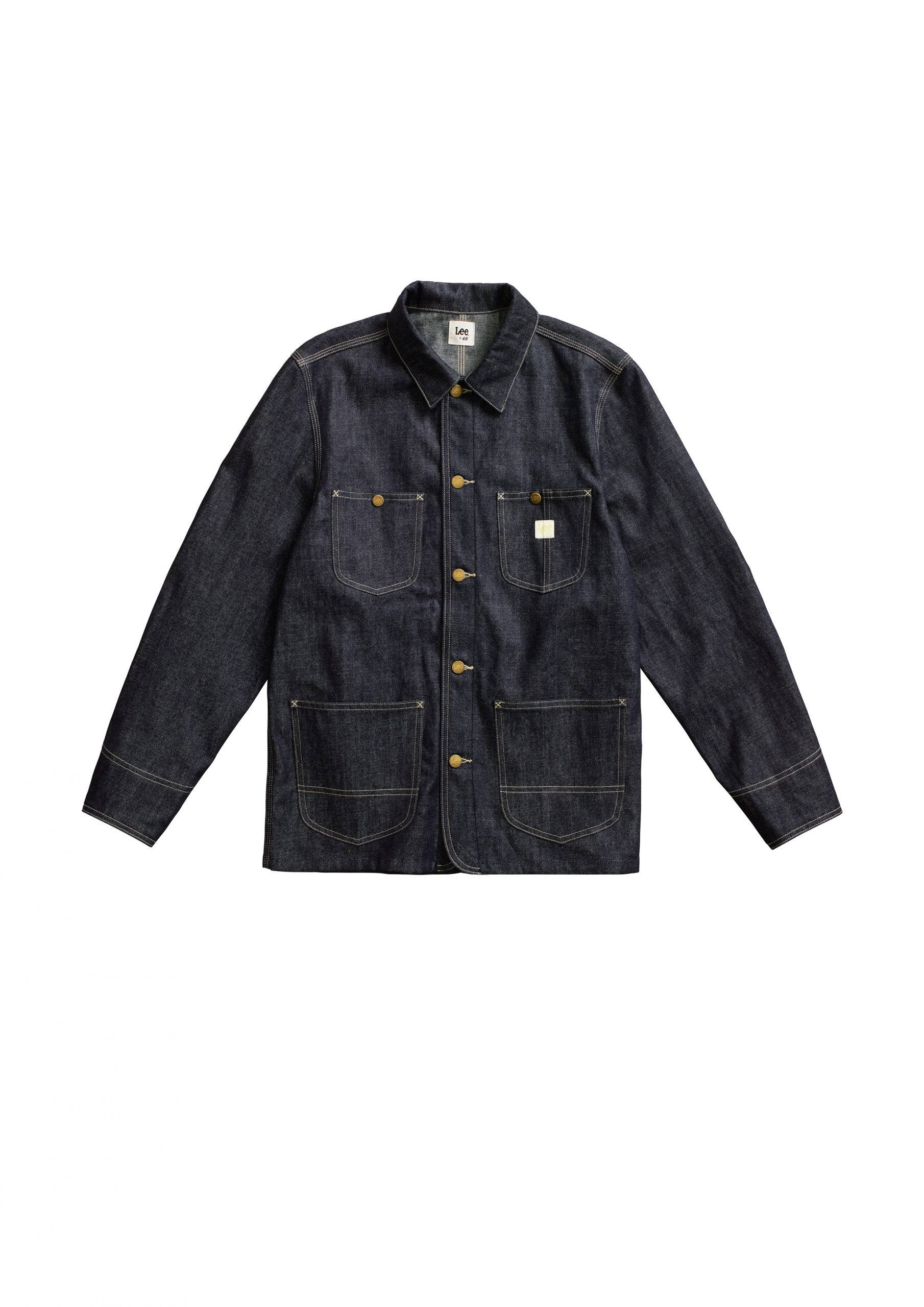
  • HM and Lee Collaborates For More Sustainable Denim

    HM and Lee Collaborates For More Sustainable Denim

    H&M- one of the leading voices when it comes to sustainability in the fast-fashion world and also one of the few apparel labels which have made a lot of commitments to ensure sustainable practices at each level of production in the coming 10 years. Some of the biggest sustainable targets set by HM include reducing its greenhouse gas emissions by 2030 and the use of 100% recycled or sustainable materials by 2030.

    The recent collaboration of H&M with American denim label Lee to push for the next generation of “more sustainable denim” seems to be a step ahead towards fulfilling its sustainability commitments. This collaboration is unique and special on many counts, and it is great to see two rivals joining hands at every stage of design and production for one common bigger goal, that is –SUSTAINABILITY.

    In this special collab, for the 1st time, H&M is coming with its first-ever 100% recycled cotton jeans, to non-leather backpatches made from cork and jacron paper. For the first time, H&M will also share Life Cycle Assessment (LCA) data on hm.com indicating the water, C02 & energy impact of each denim garment from raw materials to end of use.

    This transparency is matched by the positivity of the fashion, with oversized and cocooning silhouettes as well as workwear shapes that draw on Lee’s esteemed heritage. Lee x H&M features collections for women, men and kids, and will be available on hm.com, as well as selected H&M stores, from 28th January.

    “We just loved working with Lee to push for change. A change for more sustainable and circular denim garments. We looked at every detail and challenged each other in a positive way. It’s also amazing to work with Lee’s iconic designs and give them a bit of our flavor, for H&M denim lovers around the world,” says Jon Loman, designer at H&M. 

    “Lee is proud to be collaborating with H&M to continue our efforts to make better denim. Our brand was founded more than 130 years ago with innovation in mind, and today we are happy to be joining with H&M to advance denim into a more sustainable future,” says Chris Waldeck, EVP Global Brand President, Lee®

    Lee x H&M is an ambitious collaboration that has sustainability central to its design. The brands took a holistic approach, looking at every stage of denim production. Fabric is crucial, such as H&M’s first 100% recycled cotton jeans, made from 80% post-industrial waste and 20% post-consumer waste. There’s also denim that’s cotton-free, made instead from renewable man-made fibres, as well water-saving dyes and lower impact denim washes that are 3rd party verified for their lower water usage, chemical, and energy consumption. 

    For the women’s collection, wide and loose jeans have a 90s throwback feel, while Lee’s classic Rider jacket is recut with an oversized cocoon shape. Denim corsets add a feminine edge, while dungarees and overshirts bring the functional workwear vibe, alongside Texloop™ RCOT™ Recycled Cotton jersey pieces for the full Lee x H&M look. 

    https://open.spotify.com/episode/6tHJgrnuN4brGRZLf0vRi2
    Candiani is one of the most sustainable denim producers in the world. Denimsandjeans spoke to Mr. Alberto Candiani on sustainability and changes after COVID in the denim industry.

    For the men’s collection, workwear jackets are a wardrobe essential with Lee’s true authenticity of the design. Relaxed fit five-pocket jeans are cut from 100% recycled cotton, while relaxed carpenter jeans are made with water-saving dyes and 100% Tencel™ Lyocell cellulosic sewing threads.

    There are workwear dungarees, denim bucket hats, and tote bags, as well as heavyweight jersey pieces to complete the more sustainable collection.


  • Sustainability Targets In Tommy Hilfiger – A Talk with Nicolas Prophte

    Sustainability Targets In Tommy Hilfiger – A Talk with Nicolas Prophte

    Nicolas Prophte In a coversation with Sandeep Agarwal

    Nicolas Prophte, Vice President Of Sourcing, Production, and Innovation of Tommy Hilfiger(PVH) spoke to Sandeep Agarwal- Founder of Denimsandjeans on the Sustainability Targets In Tommy Hilfiger. The talk was streamed at the Sustainable Interplay Denimsandjeans Virtual Show on November 23.

    PVH is one of the leading clothing retailers and a company that has been very active on the sustainability front. They are not only signatories to Fashion Pact but also have supported the Paris climate agreement, besides there are many sustainability targets that they have already achieved and are on course to achieve many more.

    Here are some important points which were made by Nicolas Prophte during this conversation .

    The progress on some of the key targets especially related to MATERIALS in 2020

    We have some very clear goals for 2025 and this is part of the the strategic roadmap, we call it MAKE IT POSSIBLE. In terms of sustainability globally, we have two main metrics . One metric is regarding fabrics because we believe there is a huge work to be done on fabrics so we are focused on one very simple KPI. We call it the fiber post consumer recycle cotton. I think we are going to develop a little bit more circularity but we believe the best sustainable fiber is not virgin cotton, it’s recycled cotton, so yes, we are having a clear roadmap.

    We try to make it simple a very complex environment with two metrics, one metric is focused really on mills and fibers because we believe there is a lot to be done there and this is so, this is a blend of post-consumer recycled cotton fiber, we believe that the best sustainable cotton is the one that you don’t grow, it’s the one where you reuse from the waste. We have a metric specific on the denim mill with 20 percent minimum post-consumer recycled cotton fiber in our blends, in our fabrics . So for that, we have two-time windows; we have 2020 and 2021 with 1 million pieces of jeans made with this blend and for 2025 so a little bit further it would be 3 million pieces . So we really believe this is a scale innovation and this is something we can scale it and to be very honest we are already a little bit ahead of the game because in terms of the percentage , we are accelerating .

    The second KPI for us as a metrics for the sustainability vision, it’s the laundry side. After the fabric, we are implementing and we have already since years now we call it a LOW IMPACT washes This is how we could put the pressure on the laundry to minimize water consumption , energy, time , carbon footprint , chemicals etc.

    Mr Nicolas Prophte during the talk at Sustainable Interplay

    We have some clear goals we want to have for Tommy Europe, 50% of all our jeans are LOW IMPACT wash for 2021, and for 2023 it will be global, so when I say global it will not be including North America but also Asia. So here again we are a little bit ahead, I think for Europe we are already at 60- 65%, so the laundry is reacting also very quick and it’s all about creating a clear goal and target with your supply chain and also to have a tool to measure the progress.

    Recycled Cotton For Tommy Stands For ?

    It’s post-consumer recycled cotton. To be honest, before we played a little bit with pre-consumer because I think in terms of waste and there is also a hierarchy, pre-consumer is easier and I think we should not forget the pre-consumer because we learned from pre-consumer to scale the post-consumer, of course, post consumer is a little bit more challenging because there is this all this value chain of getting waste sorted out engaging recyclers . There is all dynamic also to engage there, it’s not easy what we try or what I try to engage with the mills, it’s a step by step to become vertical.

    I think for a mill today if you really want to nail it down that you have a high quality of post-consumer recycled fiber you need to control the waste, you need to control from the origin of your sources and I think this is what we try to engage with our partners.

    Other steps are being/ to be taken to achieve Circularity and About Tommy For Life? 

    I think we need to have a clear definition of what Circularity is for us? What are the principles? I think we have two-three principles for circularity in PVH: it’s designing out of waste so, in a way post-consumer recycled cotton is part of these buckets, I think there is another dimension – designing for longevity and durability, how we could extend the product life, I think it’s important also for environmental impact, I think it’s also crucial and of course also designing, thinking the end of life of the product and how we can upcycling it or downcycling or whatever we can do with it.

    I think these three main principles that we can work with and we can never forget that’s something important, that’s more personal thought, we cannot sacrifice sustainability because of Circularity we have to do at the same time we don’t have to engage non-sustainable process for Circularity economy that’s why we need to be careful but this is important and we also we engaged recently also a new initiative with Tommy for life it’s more how we can reuse old garments how we could redesign , re-manufacture and re-inject in our collection . I think resell , reuse , re-manufacture and re-put in the market, it’s also a very important topic and this Tommy For Life platform is going to be for us a kind of learning process . How we can do it, how we can scale it, also I think scale also is going to be very important here.

    We’re experimenting but I think it’s another way to engage with the consumer with these re-remanufacture or redesign or reuse so I mean already this good progress on this Tommy for life and we launched it very recently because we launched officially internally on October 1, so it’s only a few weeks. We have a full team dedicated to that with the strategy and now we are pioneers and we are checking how it goes but I could tell you more results in a few months to give you some insights.

    Alternative Sustainable Fibers

    We are experimenting with Hemp – its more sustainable than cotton. But we need to know where you buy the hemp and you need to go closer to the farmer . We are experimenting on how to create more cottonized hemp in our products and try to scale it up. But its not easy. So, Hemp is one good and some recently cellulosic fibers that are coming up . But we need to study and see how it comes out but for us scale is important.

    Impact of COVID 19 On Sustainability Goals

    COVID had been challenging for many of us and had disrupted the whole business. Covid could have been a kind of distraction meaning that we could skip the sustainability goals and go back but I think it had the contrary and I think it had been an accelerator and we realized probably we need more than the business metrics . I think they are important we need to sort it out we need to solve problems but I think we realize also a kind of introspection work as a brand or as a person that we need more meaningful collection, a product with purpose or purpose towards the environment purpose for the people how we impact, also the planet, the environment, the people working in this industry I think we realize this is getting more and more important so I think for us it has been an accelerator, not a break.

    It’s now the momentum to push the pedal and to go for the next step so there will be and there is full awareness and a full commitment from top management into Hilfiger, we know this is something that is going to drive and inspire consumers but also associates in our company supply chain partners. There are pre covid situations and post covid situations and after COVID, it’s a complete change of the fashion industry and we have there is no other way . We have to make it happen. it’s going to take time but I think our role is to build the right steps, the right roadmap to transform this industry for a better one and step by step also to communicate to the consumer our little achievements I think it’s good to engage the consumer that if they buy a product that’s been made in the best practice they contribute to the journey and I think contribution from associate partners, supply chain and consumer is the best game that you can play.

    Check out the complete interview at this page .

  • Montega’s Sustainable Solutions For The Denim World

    Montega’s Sustainable Solutions For The Denim World

    Montega®’s , the Italian chemical company, recently participated in the Denimsandjeans Virtual Show – Sustainable Interplay – and were one of the sponsors to the show. They presented their latest range of sustainable chemicals and showcased their idea of sustainability: chemicals that comply with ZDHC MRSL 2.0 and processes that are monitored in compliance with their internal standard My Eco System.

    We bring here some more details of latest Sustainable offerings from the company – written in their own words.

    My Eco System

    My EcoSystem is Montega’s internal standard, validated in compliance with ISO 14006 – Ecodesign, which they have adopted in order to guarantee strictly monitoring of energy consumption in textile processes and use of chemicals according to ZDHC MRSL 2.0. Every treatment presented at the fair has born under this approach.

    Siriox® system

    Siriox® system allows you to phase out P.P. from your facilities without losing efficiency and ease of application . You could perform either traditional or more current fashionable effects. Siriox® System is composed of products registered at level 1 of ZDHC gateway. They are also validated form GOTS as chemical inputs. A complete washing using Siriox System in My Eco System approach allow you to save 45 % of water and 25 % of carbon emission (as per Montega) .

    Black Ice

    Black is back and Montega has developed a special treatment for the degradation of black-sulfur. It allows you to degrade the black till the shade you like, even nearly white if you like. A very strong degradation, for example, is achievable with only 21 liter of water per garment and 90 grams of C02 per garment. Products involved in Black Ice treatment are validated as GOTS chemical inputs and registered at level 1 of the ZDHC gateway.   

    My Eco Stone

    A basic treatment like “stone wash”  is the beginning for the improvement of your environmental performance. Washing your garment with only 3,5 liter for the stone wash step is the optimum start to achieve strong savings in water and energy consumption. Moreover, with ORO Enizimax range, you will finally have enzymes that are GOTS validated.

    My Eco Marble

    My Eco Marble represent what Montega can do combining technical skills and Italian talents in creating fashion effects. Their technicians suggest to the customers the best recipe for their workflow. As an example, a complete washing employing My Eco Marble could be performed with 16,5 liter of Water and 47 grams of CO2.  

    Roll Eco Fade

    Roll Eco Fade is an innovative process that allows you to fade in continuous process your fabric without employing hypochlorite. The system is suitable for denim fabrics and also for other kind of fabric, for example velvet, jersey and also wool. 

    Mineral pigments, Natural Dyes complete our offer of sustainable solutions presented at this fair. Mineral pigments from the mineral world and natural dyes from vegetable words, both represent the more natural way to color your garments.

    To connect with Montega, Please drop an email to Ms. Lucia at estero@montegauno.com

  • Sustainability In Denim Clothing Company – An Evaluation

    Sustainability In Denim Clothing Company – An Evaluation

    Denim Clothing Company is one of the leading Garments Manufacturers & Exporters from Pakistan. The company has fully vertically integrated set up from spinning to finished denim garment products and working with some of the leading denim brands across the globe.

    In a recent talk with their marketing team, we understood that they have been working very hard on continuously improving their sustainable quotient and we asked them about the achievements related to different aspects of sustainability and circularity .

    Raw Material and Fibers

    The importance of fibers is growing in the denim industry with a focus on sustainable fibers with lesser climate impact. DCC is using more than 70% sustainable fibre elements in their regular production. Also, as far as the products having Zero Cotton base is concerned, they launched this concept around two seasons ago and are still innovating this concept with more variants and improvement.

    So far 10% of their products are having zero cotton base in production. In this concept, all fibers are from botanical sources and possess versatile properties. They are using Viscose and Lyocell as primary fibres at the moment. In the coming season, there will be more variety in this segment as per DCC.

    The company is continuously increasing the pre and post-consumer wastes in their regular mix of products, they had started by offering 17-20% PCW and now they are offering more than 40% combining both PCW and PIW.

    Their aim is to increase PCW content whereas they have achieved a higher percentage of PIW. Their marketing team mentions that they are exploring all possibilities of utilizing recycled resources for both natural and synthetic fibres. Some of the components are PCW, PIW, RCP.   

    Water and Chemical Management In Fabric Production 

    Water-saving and recycling is another important aspect of denim sustainability alongwith a right mix of chemicals . In this area, DCC mentions following achievements : 

    1. % of wastewater recycling: 50% of wastewater in DCC denim mill and garment factory. 
    2. Recovery of dyes and chemicals including caustic soda from wastewater: 50% recovery of caustic soda through caustic recovery plant.  
    3. Innovative technologies/methods used in the indigo dyeing process to reduce water usage: Zero discharge indigo dyeing technology has been adapted which saved 70% of water consumption. Dystar’s Cadira Zero Discharge and Salt-free dyeing technology has been used.
    4. Latest denim finishing processes used: Waterless finishing which completely eliminates utilization of water during finishing. This ECO Finish also helps in enhancing fabric character and gives a very authentic look.  

    Water and Chemical Management in Garment Production 

    In this segment, we would talk about the Washing machines and processes used to reduce water consumption during garment washing. DCC uses the following technologies which are being used in more than 50% of their bulk production:

    Washing machines and processes

    DCC has been using OZONE as an alternative to a conventional bleaching system and Stone Free Enzymes to achieve high abrasion and contrast effect.

    So far as the PP replacement technologies used is concerned, DCC uses an alternative of PP through Green Chemistry and claims to maintain low impact scoring through EIM. Usage of Oeko-Tex certified dyes throughout their production and sampling helps the process further alongwith Low Liquor Ratio Dyeing Techniques .

    Energy Management 

    DCC has been using all forms of energy in a very judicial way and managed to minimize the consumption of conventional sources of energy including electricity.

    The company reuses Condensate steam in the boiler as their efforts to recycle heat energy produced in the factories. DCC has also planned to install solar panels of capacity 40% to 50% of their total energy consumption.

    Social Sustainability

    In a general perception, Sustainability is considered only as efforts towards saving water, energy, and carbon foot-prints however social sustainability which includes labor rights, wage equality, and a better working condition has not been talked about.

    Some of the Social Sustainability efforts of DCC are as follows:

    1. Employee management and social welfare especially during 2020.
    2. Community management and contribution to CSR activities

    Efforts to contribute to the health and safety of the community in covid times

    Social Sustainability Implementations & Certifications:

    DCC team feels proud to have achieved certain major certifications which they feel further enhance their credentials on being a socially responsible producer.

    1. BSCI
    2. SEDEX
    3. WRAP
    4. CTPAT
    5. ISO – 45001
    6. ISO – 14001 – Environment
    7. ISO – 9001

    Digitization Efforts 

    During COVID19, most of the companies around the globe understood the importance of Digitization and found ways to connect with the industry remotely. DCC has also invested in replacing the physical processes and intends to continue this beyond COVID.

    They have divided their digitization efforts into two segments.

    a) Technology

    In this segment, DCC has implemented high-tech machinery and converted manual processes into automated processes with the help of Jeanologia Laser, Nano Bubbles, and Ozone Technology.  

    b) Monitoring

    In this segment, they have been continuously monitoring and reducing social and environmental impact. By implementing multiple systems and software, they are controlling both inputs and outputs of the value chain in order to meet global requirements. Those systems are as follows:

    Premium Sustainable Collection

    DCC has also launched some sustainable collections which are premium in terms of fibre usage, dyeing and washing processes. Some of them are as follows

    • RE:CODE Collection based on HEMP | GREEN MINT | CORN Fibers
    • RE:ZERO Collection made without cotton but with botanical sources fibers
    • RE:CYCLED Collection, a full range of recycled fibres from natural to synthetic

    Sustainable Certifications  

    The company is LEEDS GOLD CERTIFIED and has the following sustainable certifications/compliances:

    • GOTS
    • OCS 100
    • GRS
    • RCS 100
    • OEKO Tex 100
    • OEKO TEX STeP

    To connect with Denim Clothing Company, please drop an email at shabeeb@denimclothing.biz

  • Sustainable Efforts And Products By The Exhibitors At Sustainable Interplay – Part V

    Sustainable Efforts And Products By The Exhibitors At Sustainable Interplay – Part V

    In our previous articles – Part IPart II, Part III, and Part IV we have featured our 20 exhibitors with their sustainable efforts and products. In this article, we are going to feature 7 more exhibitors of Sustainable Interplay â€“ A Virtual Show scheduled on Nov 23All the following descriptions are in the company’s own words.

    Naveena Denim Limited | Fabric | Pakistan

    Sustainable Products

    Natural Adaptive Fabrics. Denim Ox Collection by Advance Denim Archroma – Less Water Dyeing Thirst Free Denim by G2 Jeanologia Less Water Finishing.

    PCW denim with PET Bottles (Repreve) and Recycled Cotton . Sustainable Denim collection with different eco blends like Refibra / Ecovero / Tencel / Modal / Viscose.

    Sustainable Processes

    ETP for wastewater treatment.
    Caustic Recovery Plant for reuse of caustic.
    Zero Liquid Discharge (RO for Facility Employees & Community). Engagement with WWF & Gold membership.
    Training on OSH under International Labor & Environmental Standards (ILES) Water Saving-Alliance for Water Stewardship (AWS) 50% reduction in water consumption till December 2022 Energy monitoring system for entire production – (SCADA) Renewable energy (in progress).

    Human Sustainability Efforts

    • Comfortable Work Environment.
    • Focus on Work-Life Balance.
    • Urge Sick Employees during Covid-19 to Stay Home & Stay Healthy.
    • Provide financial Support from employee welfare programs.
    • Make Recognition and Praise Part of our NDL Culture.

    Certifications

    • HIGG FEM (Facility Environmental Module)
    • HIGG FSLM (Facility Social & Labor Module)
    • ZDHC Gateway Clean Chain By ADEC innovations
    • BCI (Better Cotton Initiatives)
    • OCS (Organic Content Standard)
    • GOTS (Global organic textile standard)
    • RCS (Recycled claim standard)
    • GRS (Global recycle standard)
    • OEKO-Tex REACH
    • ISO EMS -14001 ISO OHSAS -18001 ISO QMS -9001

    Collection Link

    Contemporary Development

    Nandan Denim | Fabric | India

    Sustainable Products

    1. Zero cotton
    2. Zero water dyeing
    3. Re-cycle fibre
    4. Sustainable fibre

    Sustainable Processes – Re-design of process to save water

    1. Re-cycle of water
    2. Re-cycle of chemicals
    3. Water saving process.
    4. Sustainable chemicals

    Certifications
    GRS
    DETOX
    GOTS
    Oeko-tex

    Blue Alchemy SRLs|Consultant | Italy

    Sustainable Products

    Up-Cycling Denim
    All-in-one Processes thanks to a specific enzyme, saving 4 times less water than conventional

    Sustainable Practice

    Laser Ozone, Working in a Laundry with recycled water waste, treating garments with low water consumption by machineries powered with renewable solar energy.

    Sustainable Certification

    ZDHC Chemical Management

    Collection Link

    https://www.dropbox.com/sh/dbv8itkdwm4xo31/AACDjKOyEuq4DPuZLwDW3T42a?dl=0

    Fashion Accessories India Pvt Ltd | Accessories | India

    Sustainable Products

    We use recycled materials of brass, copper & alloy to make metal trims. Our USP is that we do not use electroplating processes to colour the metal; instead we use natural powders. This leads to 60-80% reduced consumption of water, electricity & chemicals.

    Sustainable Practices

    • Vegetarian Faux Leather Patches – Since the inception of our company, we have never used genuine leather. Our USP is our PVC free faux leather that has the same look and feels like genuine leather.
    • FSC certified recycled jacron patches – that can be complete recycling of brass, copper, and alloy metal scraps generated in our factory & increased use of recycled material.
    • No electroplating of metal trims which has 60-80% reduction in the use of water, electricity, and chemicals
    • Effluent Disposal

    Human Sustainability

    Menstrual hygiene workshops, seminars with local doctors for precautions to be taken against COVID-19 + additional insurance to cover COVID, virtual up-skilling workshops during the lockdown

    Sustainable Certification

    OEKOTEX Standard 100

    Collection Link

    Link – www.fashionaccessories.co.in

    BCT DENIM DIVISION | Fabric | Uzbekistan

    Sustainable Products

    EARTH BALANCE with laser friendly denim and full laser processed jeans
    SMART BEAUTY with umorfil bionic fiber mixed that is sustainable&functional material for skincare and UV protector.

    Sustainable Practices

    Indigo fera farming and our own natural indigo dyestuff production are based on our eco-friendly denim products.

    • Pre-consumer recycling
    • Re-design for the circular economy
    • 0 water and chemical consumption with full laser finish on laundry

    We have ETI for ethical code to keep sustainable improvement.

    Interloop Limited | Garments | Pakistan

    Sustainable Products

    • Dusty Charcoal
    • Vintage Embrace
    • Summer Rush
    • Bristly Stubble
    • Ripped Chestnut
    • Wild Forest
    • Trust Vesty

    Sustainable Practices

    From sourcing responsibly to reducing our carbon footprint and taking care of our communities. We are proud that our practices are in alignment with the United Nations Sustainable Development Goals.

    We are investing heavily and implementing:

    • Green Processes
    • Eco Materials
    • Water Conservation
    • Reneweable Energy

    Human Sustainability

    At Interloop, our people are truly our greatest asset and at the heart of everything we do. Our unwavering commitment to the triple bottom-line approach of People, Planet, and Prosperity.

    Sustainable Certifications

    • Oeko-Tex
    • WRAP
    • GOTS
    • OCS
    • GRS
    • BCI

    Soorty Enterprises | Fabric+Garments | Pakistan

    Sustainable Products

    Soorty’s C2C denim & garments verticle line was launched with an artisan techno approach. The digital garment was fully created in 3D with no fabrics being touched. Using digital craftsmanship along with uniquely crafted engineering techniques, the collection is not wasting any material and using solely data. Welcome to the future of fashion.

    The most durable and oldest natural fibres used in textiles, HEMP made a strong comeback. Feel fresh, confident, and comfortable in your jeans.
    Our use of ORGANIC COTTON increased by 130% from 2018 to 2019 and we are both Global Organic Textile Standard (GOTS) and Organic Content Standard (OCS) certified.

    Sustainable Practices

    Zero waste water dyeing and finishing generate up to 90% of water savings compared to old dyeing. This is a life-changing success, yet, we will continue to expand the borders.

    SmartBlue is the newest pillar of our Smart Laundry set up which reduces the use of water & chemicals drastically and implements zero discharge of hazardous chemicals, enabling sustainable garment production at scale. This future-proof innovation the result of the collective hard work of the Soorty X Garmon team.

    Human Sustainability

    Awareness of breast cancer among our female workers, we are happy to announce our commitment to a new level of responsibility and the Alliance for Water Stewardship (AWS). Planting with the Groasis.

    Sustainability Certifications

    Cradle to Cradle, GOTS, BCI, Global Recycled Standard, OEKO TEX

    Collection Link

    https://www.future-possibilities.com/


    Do not miss to register for the SUSTAINABLE INTERPLAY event at virtual.denimsandjeans.com/virtual and PRE SCHEDULE your FACE2FACE meetings with the exhibitors.

    Please also check out the sponsors of our show below :

  • Ramsons – Interview With Sunder Belani On Sustainability Efforts

    Ramsons – Interview With Sunder Belani On Sustainability Efforts

    Sunder Belani(MD)
    Ramsons Garment
    Finishing Equipment’s Pvt Ltd

    Denimsandjeans spoke to Sunder Belani – Managing Director of Ramsons Garment Finishing Equipments Pvt Ltd and tried to understand their efforts towards sustainability and their latest machines and their experience during Covid times.

    Please share a brief background of Ramsons

    Ramsons is a 60 years old company started around the fifties. We are a proud made in India company with an international presence. We have three European joint venture collaborations and we manufacture 190 different products in four state of the art production units in and around the south of India. We also have over 15 sales and service offices of our own and agents in about 40 countries.

    We are the biggest manufacturers in Asia for sustainable laundry equipment, washer extractors, vertostar, garment dyeing machines, nano nebulizing machine, ozone machines, foam machines, steam ironing systems, storage systems, and a lot of other co-related products for the apparel trade.

    What does sustainability mean to you as a company?

    We at ramsons believe that the starting point of any product is not in the design but in its sustainability. We also believe in the five r’s of sustainability reduce, reuse, recycle, repair, and refuse. We also believe at ramsons that meaningful sustainability is the road to meaningful prosperity.

    What are the main products of your company which enable sustainable garment production?

    Sustainable products that we have been focusing on in the last decade have been ozone technology. The ramsons ozone equipment is internationally accredited by SGS as the safest and the most productive pure ozone technology available on the planet.

    We also have nebulizing fog and foam machines that enable lower water requirements, lower chemical, lower energy requirements, and hardly any load on the effluent system. We’ve also got a conveyorized drying system as the dryer is the biggest consumer of energy in a laundry. And we have a system that uses air or natural drying to reduce about 80% of the drying power load. We also have an XDRUM technology where we realized that the only way to reduce stone powder or use of stone on jeans is by substituting it with another polymer that can be reused.

    We tied up with Xeros in the UK and have developed the technology that reuses polymer but still creates the effect of no stone with lower water, lower chemical, and no load on the etp. These are some of the new products that we’ve come up with. We also have a lot more in garment finishing like the trouser topper made in collaboration with our German partner Veit.

    Health is becoming so important. Have you come out with some health and wellness technological products?

    Ramsons is proud to announce its foray into disinfection, sterilization, and medical devices and equipment. From cleanroom hygienic barrier washers technology to UV/ozone sterilization disinfection systems. From ethylene dioxide sterilization systems to oxygen generators. From steam sterilization to infrared systems. From nano anti-microbial to foam technology.

    How has covid19 enabled you to reinvent your company

    To give a company an entirely new angle of thinking along with sustainability we realized that sterilization and hygiene have become so important. Most of the equipment now also focuses on products necessary for covid-19 and also on hygiene and sterilization.

    What are the main technologies you think will be used in the garment processing in coming years.

    Technologies that can be used in the coming years are definitely those that will we use very little water hardly any chemistry, energy-efficient, little more robotic because the human labour is going to be hard to find and human labour transfer during covid is limited.

    Any sustainability targets for your company ?

    As a company, we want to give back to the earth what we have taken from the earth. This has been a sustainability target in all our products.

    CONTACT RAMSONS AT : Info@ramsonsindia.com


    Meet Ramsons Team and 30 other exhibitors at our SUSTAINABLE INTERPLAY event on Nov 23 from 11am Central Europe Time. Register at virtual.denimsandjeans.com/virtual and get your unique code to PRE SCHEDULE your FACE2FACE meetings with the exhibitors.

  • Sustainable Efforts And Products By The Exhibitors At Sustainable Interplay – Part IV

    Sustainable Efforts And Products By The Exhibitors At Sustainable Interplay – Part IV

    In our previous articles – Part IPart II, and Part III we have featured our 15 exhibitors with their sustainable efforts and products. In this article, we are going to feature 5 more exhibitors of Sustainable Interplay â€“ A Virtual Show scheduled on Nov 23All the following descriptions are in the company’s own words.

    Iskur Denim | Fabric | Turkey

    Sustainable Products

    Iskur Denim is a part of Iskur Group, which is one of the biggest textile group in Turkey. Iskur Group has it’s own Re-Cycle Fiber and Yarn factory. As Iskur Denim, we use our own Post Consumer and Pre Consumer Re-Cycled Yarn in many articles. We use a water-saving indigo dyeing process (WAW) for all of those articles which saves up to 95% water. The Royal indigo color that we have for those articles got the highest laser performance score (13 LSF).

    Sustainable Products

    We use Organic, BCI, and CMiA Cotton in many articles which require less water and give less harm to the environment. We also have “Zero Cotton” articles that use only natural fibers. Such as Art.61324 and Art. 61325 Vintage- 69,8% Modal + 18,7% PES, 10,1% Viscose + 1,4% Elastane We have also Hemp, Cashmere and Linen blended fabrics.

    Pre and Post Consumer Re-Cycled Yarn Organic, BCI, CMiA cotton Natural Fiber (Tencel, Modal, Hemp, Soy Protein Fiber, Cashmere, Linen) Water Saving Indigo Dyeing process (up to 95% water saving) Renewable Energy Sources (having own Solar Power, Wind Power systems and Co-generation plant)

    As Iskur Denim, we are giving service to the top denim brands such as Inditex.They are regular inspecting the physical and social efficiency of the entire facility and Inditex graded us with “B” lately. We are also under process of BSCI certification.

    Sustainable Certifications

    GOTS, OCS, RCS, GRS, OEKO-TEX Standard 100, CARBON TRUST, BCI, CMiA

    Denim Clothing Company | Garments | Pakistan

    Sustainable Products

    • Post-Consumer Waste Cotton
    • Post Industrial Waste Cotton
    • Recycled Polyester made from waste Plastic bottles
    • Sustainable Dyed Fabrics with Zero Discharge
    • Sustainable Finishing with Zero Discharge
    • Sustainable Laundry with Low Impact Chemicals & Technology
    • BCI Cotton
    • Organic Cotton
    • Hemp
    • Eco made T400
    • Green Lycra

    Sustainable Practices

    • Recycling of Waste
    • Recycling of Water
    • Recycling Chemicals
    • Zero Discharge of Hazardous Content
    • Less Water Consumption
    • Low-impact Chemical Consumption
    • Renewable Energy
    • Upcycling Denim

    Human Sustainability

    • Training & Development
    • Education Workshops
    • Regular Health Assessments
    • Medical Coverage
    • Workplace safety
    • Trees and Mangroves Plantation
    • Internships programs for Students

    Sustainable Certifications

    BCI, GOTS ,OCS ,GRS , RCS , OEKO Tex 100 , OeKO Tex – STeP , LEEDS – GOLD

    Elin by Elasten | Yarn | Italy

    Sustainable Products

    Elasten offers a wide range of hyper-sustainable products since we use linen, hemp, or similar -the greenest materials- from 80 to 95% in composition combined with the elastic fibre through the most innovative elasticization techniques. This generates durability of final products which was never seen before.

    Elasten invented a new technology called BFlex which puts more plies of hyper-sustainable materials together creating a technical and fluid effect. It can be applied on any kind of material, depending on which the natural stretch effect or the brand new handle will be more evident. Materials are used 100% in composition thus they can be recycled as many times as you wish.

    Sustainable Practices

    We changed our production speed and adjusted our machines so that we reduced the consumption of electricity by 50%.

    Human Sustainability

    We carry out our human respect towards our employees trying to keep work in Italy. Our patents are aimed at this ethical purpose, that is keeping every step of the supply chain in Italy guaranteeing a future for our children as well.

    Sustainable Certification

    Elasten is Oeko-Tex Standard 100 certified and we were also GOTS certified for some customers as part of their supply chain

    Envoy Textile | Fabric | Bangladesh

    Sustainable Products

    ENVOY’s REBORN series features bringing new life to waste and recycled materials by transforming them into functionable and moreover fashionable products. Envoy’s HEMP Denim – Hemp is less costly to produce and process than other sustainable options such as organic cotton and linen. it is also much more environment friendly.

    Zero Cotton Denim By Envoy Textiles is made with lyocell and recycled polyester without the environmental impacts of cotton. Each pair of jeans in Zero Cotton denim saves more than 7,000 litres (1,849 gallons) of water.

    Sustainable Practices

    Envoy Textiles established ECO LAB, for its relentless pursuit of sustainability. Equipped with Jeanologia laser, ozone and other latest laundry machines, collaboration with global leading chemical suppliers, the mission of ECO LAS is research and development for new laundry solutions: less water, less chemical, more efficiency, transparent and better working environment

    Human Sustainability

    Provident Fund | Profit Sharing | Medical Expense Reimbursement | Salary through the bank before next month | Canteen with subsidized meals | In Campus dormitory | Sports facilities

    Sustainable Certifications

    LEED PLATINUM | ISO 14001 | CPI 2 | GOTS | GRS | BCI | amfori BSCI | YESS | ZDHC | DETOX | Higg Index | PaCT | PURE | National Environmental Award 2019

    Ramsons Garment Finishing Equipment | Technology/Machine | India

    Sustainable Products

    RAMSONS OZONATOR
    * State of the art system for bleaching & fading indigo-dyed & other garments.
    *Huge savings in water consumption thereby reducing ETP load
    *Ozone fading helps in maintaining the tear/tensile strength of the fabric, unlike conventional bleaching.
    *Helps to easily remove back-staining in denim without the use of water/chemicals.
    *SGS THIRD PARTY AUDIT certified globally.

    RAMSONS XDRUM
    *XDRUM-TM is an elegant & inexpensive system that saves water, uses fewer chemicals & extends fabric life.
    *XORBS -TM polymer technology which is Reusable Recyclable & safe
    *XDRUM enables conventional washing machine to use XROBS technology by realizing them into the wash cycle where they interact with garments with less chemistry

    RAMSONS EQUIPMENTS
    *Our Machines are designed to run on low liquor ratios thereby reducing water/energy/chemical consumption
    *Our Machines are engineered for long product lifecycle with low energy consumption.
    *Our machines are auto programmable thereby reducing manual intervention leading to lesser rejections.
    *Our machinery ae designed to reduce physical strain of operators contributing to ease of labor like auto unloading/auto tilting .
    *Precooling of garments in dryers for easy unloading

    RAMSONS EQUIPMENTS ARE CE & ISO CERTIFIED
    SGS THIRD PARTY AUDIT DONE FOR PRODUCT & ENVIRONMENTAL SAFETY-EU NORMS.


    Meet all these exhibitors and more and check out the BEST in SUSTAINABILITY in the indutry at our SUSTAINABLE INTERPLAY event on Nov 23 from 11am Central Europe Time. Register at virtual.denimsandjeans.com/virtual and get your unique code to PRE SCHEDULE your FACE2FACE meetings with the exhibitors.

    Please also check out the sponsors of our show below :

  • Re-Sync: One Size Fits All – By Soorty

    Re-Sync: One Size Fits All – By Soorty

    Soorty is crafting adaptive jeans to minimize the industry’s waste and welcome inclusive fashion.

    We are all one
    We are all different
    We are all unique.

    We come together,
    In our own colors, beliefs, cultures
    And traditions
    To form the most beautiful place there is.

    Our planet, our home.
    In harmony.
    Together.

    #realitycheck: 

    Following the pandemic,  the landfill problem did not recover but actually got even worse with people’s careless disposal of masks, gloves, and every other waste. 

    Each year the fashion industry produces around 150 billion garments;
    30% of this is never sold
    84% that is sold, ends up in a landfill. 

    Apparel eCommerce is currently worth $360 billion.
    On average 40% of clothing sold online is returned due to incorrect fit & size.
    This adds up to a $144 billion problem

    In today’s fashion universe, fitting efficiency becomes more critical than ever before as consumers hesitate to go back to brick & mortar stores following the pandemic and have switched to online shopping instead. While online is an amazing channel to help design the future of our industry, the giant environmental and financial impact it is contributing to cannot be neglected. So many consumers from all around the world buy with the “I can just return if it doesn’t fit/look/feel well” philosophy without thinking about where those returns end up.

    Soorty’s Re-Sync concept is born from this consumer insight as part of their ongoing MINUS ZERO WASTE initiative which aims not only to reduce and repurpose waste but go beyond it to pioneer alternative ways of responsible production to reduce the stress on Earth caused by the landfills. Dedicated to offering products that fit perfectly no matter what, Soorty has developed the one size fits all technology, designed to be their step forward towards inclusive fashion with environmental and financial savings.

    Re-Sync offers a science-supported, intelligent, and conscious way of using what is limited to create beautiful problems and waste no more. The Re-Sync jeans provide the ultimate support to the wearer, sculpting the body with a 360 stretch comfort, enabling the garments to perform well 2 sizes up and down.

    – MADE BY HUMANS, MADE FOR HUMANS
    Value-driven, consumer-centric, and inclusive fashion to make clothing comfortable, desirable, and user-friendly.

    We only need to look so far as the common people on the street to recognize how diverse we are, and diversity is beautiful. Fashion has the power to glorify bodies and identities — to include them in a narrative of existing, wellbeing, beauty, or sophistication.

    Beauty comes in all forms and inclusivity is fundamental to dispelling stereotypes and integrate every single one of us in the society. Acknowledging everybody’s differences and not pretending that every body type is the same is crucial to tap different needs in the jeans market.

    Soorty is Re-Syncing to tap the need of inclusivity and diversity as consumers with different body types will feel more at comfort who like the existing trends and actually fitting and feeling good in them.

    With the increased accessibility to anything delivered by online shopping, Soorty believes it is time we use engineering knowhow to design & produce clothing that recognizes that what we all have in common is stronger than any difference in our physical appearance.

    The one size fits all technology is a consumer-centric approach welcoming differences with elevated efficiency.

    For more information on this technology, contact at this email mansoor.bilal@soorty.com and meet them personally at SUSTAINABLE INTERPLAY Event on Nov 23rd .


    Do not miss to register for the SUSTAINABLE INTERPLAY event at virtual.denimsandjeans.com/virtual and PRE SCHEDULE your FACE2FACE meetings with the exhibitors.