Tag: vietnam denim

  • Jomu @ Denimsandjeans Vietnam

    Jomu @ Denimsandjeans Vietnam

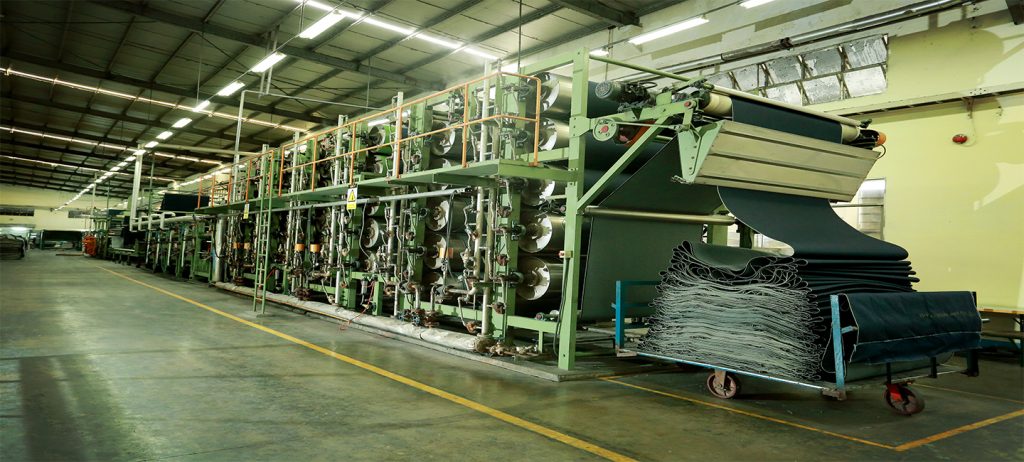
    Jomu Textile is a leading producer of denim fabric in Vietnam and they specialize in high-quality denim fabric production. With a production capacity of over 2 million yards per month, they are well-equipped to meet the needs of customers with bulk orders. They are now participating at the Denimsandjeans Vietnam Show on March 1-2 and invite all interested buyers to come and visit their booth at number 8. Don’t miss this opportunity to find out more about their products.

    And we spoke to their Director , Nicolas Koehl who answered questions about his company and product range.

    Jomu is a low profile denim company with a very different model of business. Can you share how it works and how it developed?

    The Jomu business model was actually inspired by making detailed observations of the hypercompetitive Chinese domestic market. We found in Guangzhou especially, the factories would specialize on specific parts of the production process, so for example, you can find factories that only specialize in dyeing denim, or only weaving or finishing. So the idea that you can specialize to the point where you just focus on what you’re good at really made sense to us. We found ourselves with top of the line high quality machines, tons of manufacturing potential, but with limited reach into the traditional brand market where new fabric designs are constantly needed, and sales cycles are more than 6 months long.

    • So we decided that we would focus on providing our production capacity to customers who already knew what they wanted, and would supply the yarns necessary to weave it. We like to call it a “processing” business model.

    With this processing approach, Jomu has been able to differentiate itself from other denim companies and gain recognition among a new generation of denim enthusiasts.

    Covid years must have been very difficult. How did survival happen during these times?

    The Covid-19 pandemic has had a tremendous effect on the global economy, with many businesses struggling to stay afloat. We were no exception, we saw orders for export being cancelled or greatly reduced during this time.

    • Our domestic processing customers became our core focus during this time, and this was the key to success. Times were especially challenging during the Vietnam imposed lockdowns from July’21 until October’21.
    • Given our shipping to domestic customers was blocked anyway, our company decision was to close during the lockdown period and wait for things to return to normal. This was a very difficult time for everyone, but coming out of it we were able to run at over 90%+ capacity almost immediately onwards.

    3) How do you keep innovation moving at Jomu?

    One of our main efforts in the most recent years was to focus on innovation in the energy efficiency space.

    • We can all feel the rising cost pressure in the economy, and the best way to get through times like these is to find ways to reduce the energy cost per meter of fabric. It is important to keep innovating in order to remain competitive.

    It is my strong conviction that investments in this space are a key differentiator and will put us in a strong growth position when things improve again. Even simply looking inside the factory and challenging established ways of doing things can lead to innovative changes, and this should be something that is encouraged in every team!

    4) What key products you focus on so that your unique service to clients is valued more and more. What would be your focus areas during the Denimsandjeans Vietnam show.

    Right now, we want to promote our unique business model to make other people aware of what we do. A lot of our customers are other denim producers looking for more capacity or just close access to the Vietnam garment market in terms of logistics. Our expertise in the local market makes us a valuable partner for anyone looking to get closer to the Vietnam market.

    5) Why do you believe in Vietnam and why do you think it has a great future in textiles, especially denim.  

    One must always consider the long term trend in a country. Vietnam has a vibrant, young and growing population. They are increasingly receiving better education and training each year, eager to make a name for themselves on the world stage. With such an enthusiastic and capable workforce, Vietnam has all the right ingredients to become the go-to destination for denim production.

    People are noticing, and the view that China was the only place to buy denim fabric is no longer widely held. The domestic market is huge and people love wearing jeans and being stylish here: there will surely be a positive future for everyone involved.

    In summary, Vietnam is well-positioned to become a major player in denim production in the coming years due to its vibrant economy and young population that is becoming more educated every year.


    To check out their collection, register here

    For more information, you can contact Nicolas at nick@kohl.li

  • Vietnam Imports Over 7 million Mtr Denim Fabrics In Oct 2020

    Vietnam Imports Over 7 million Mtr Denim Fabrics In Oct 2020

    Vietnam is an increasingly important denim apparel production and export centre . With various factors going against China, Vietnam has come out to be the biggest beneficiary . Denim production started slowly but surely and with strict Vietnam laws, eco friendly production methods and technologies have been employed in most factories. With its FTA with EU, we see a great increase in production in this country and the same can also be visible with increasing imports of fabrics – one department where Vietnam is weak and is an opportunity for suppliers. In this report, we are covering the denim fabric imports in Vietnam during October 2020.

    The analysis will be in three parts

    1. Countrywise Import Analysis
    2. Leading Suppliers
    3. Leading Denim Buyers
    #Particulars /Content of the report
    1Table showing country-wise Denim Imports along with Average Price and % Share of countries during October 2020.
    2Graphs showing month wise Denim Imports, Average Price, and %Share of countries during October 2020.
    5Table showing Leading Denim Buyers along with Average Price during October 2020.
    6Graphs showing Leading Denim Buyers along with Average Price during October 2020.
    [private_special]

    COUNTRY WISE DENIM EXPORTS OCTOBER 2020

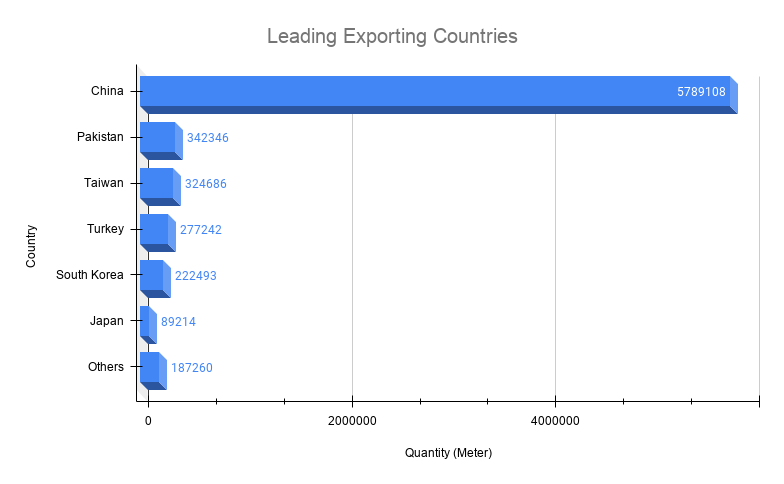
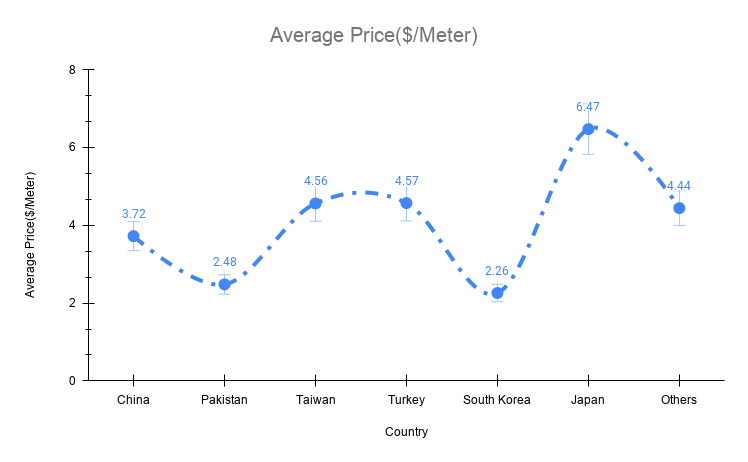
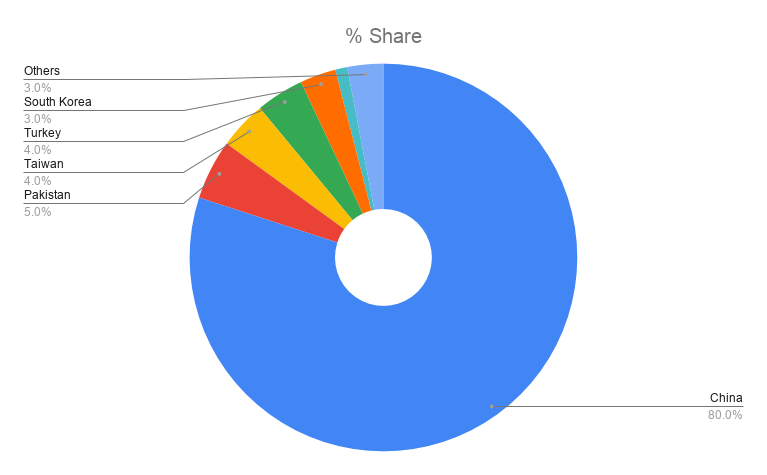
    There are 6 major countries from where Vietnam imported approx. 97% of its total denim import. 80% of denim imported from China at an average price of $3.72/meter while other countries that are exporting denim to Vietnam include Turkey, Taiwan, Pakistan, South Korea and Japan. Vietnam imported 7.2 million meters of denim during October 2020 at an average price of $3.74/meter.

    Note: This figure is likely to be much higher as the full data is normally not captured in the figures received from various authorities.

    Japan exported the denim at the most expensive average price of $6.47/meter and Pakistan exported at the cheapest average price of $2.48/meter.

    CountryQuantity (Meter)Average Price($/Meter)% Share
    China57,89,1083.7280%
    Pakistan3,42,3462.485%
    Taiwan3,24,6864.564%
    Turkey2,77,2424.574%
    South Korea2,22,4932.263%
    Japan89,2146.471%
    Others1,87,2604.443%
    Total72,32,3503.74100%
    Leading Exporters Of Fabric To Vietnam – June 2020

    TOP SUPPLIERS

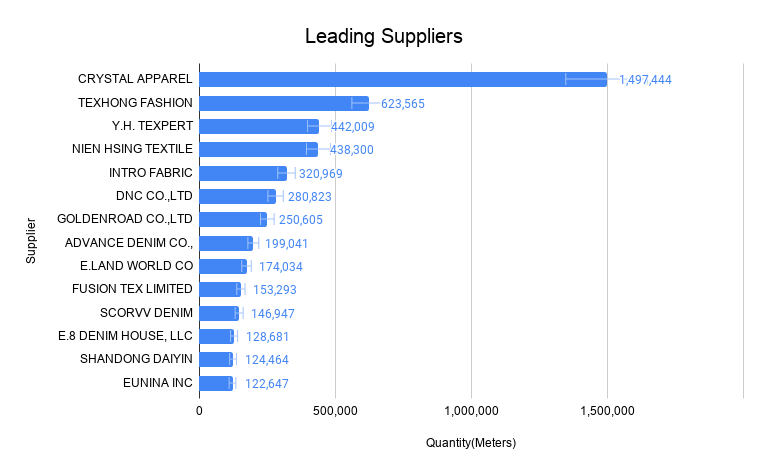
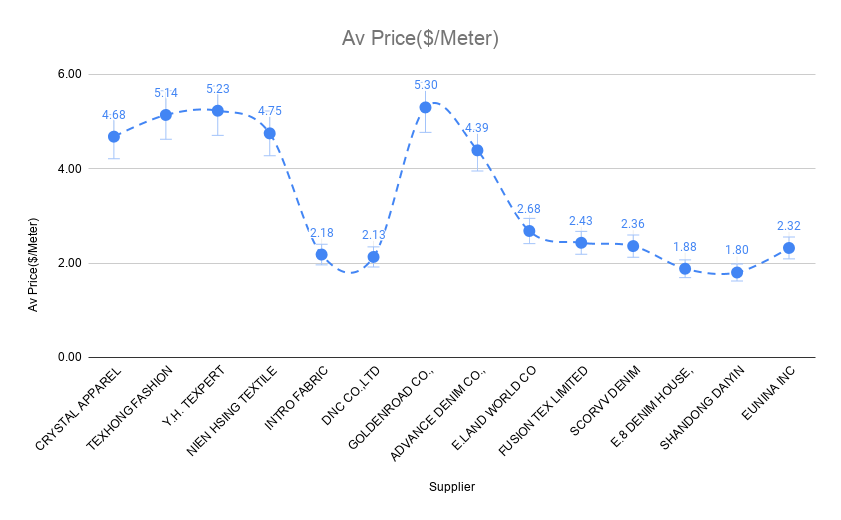
    Crystal Apparel Limited, one of the biggest denim manufacturers in the world, is the biggest supplier to Vietnamese companies and during October 2020, it exported more than 1.4 million meters at an average price of $4.68/meter. Crystal Apparel is the world’s largest denim apparel producer and also sources fabrics from its suppliers and exports to Vietnam. The list of suppliers also includes Texhong Fashion(HK), Y.H Texpert(China) and Nien Hsing Textile. Most of the top exporters belongs to China which shows the great dependence of Vietnamese companies on China. Many of these suppliers like Texhong are apparel producers and supply to their own units in Vietnam.

    SupplierQuantity(Meters)Av Price($/Meter)Country
    CRYSTAL APPAREL LIMITED1,497,4444.68China
    TEXHONG FASHION INDUSTRIAL LIMITED623,5655.14Hong Kong
    Y.H. TEXPERT CORPORATION442,0095.23China
    NIEN HSING TEXTILE CO., LTD438,3004.75Taiwan
    INTRO FABRIC320,9692.18China
    DNC CO.,LTD280,8232.13China
    GOLDENROAD CO.,LTD250,6055.30China
    ADVANCE DENIM CO., LIMITED199,0414.39China
    E.LAND WORLD CO LTD174,0342.68South Korea
    FUSION TEX LIMITED153,2932.43China
    SCORVV DENIM WORKSHOP146,9472.36South Korea
    E.8 DENIM HOUSE, LLC128,6811.88China
    SHANDONG DAIYIN TEXTILE124,4641.80China
    EUNINA INC122,6472.32China

    Leading Fabric Buyers

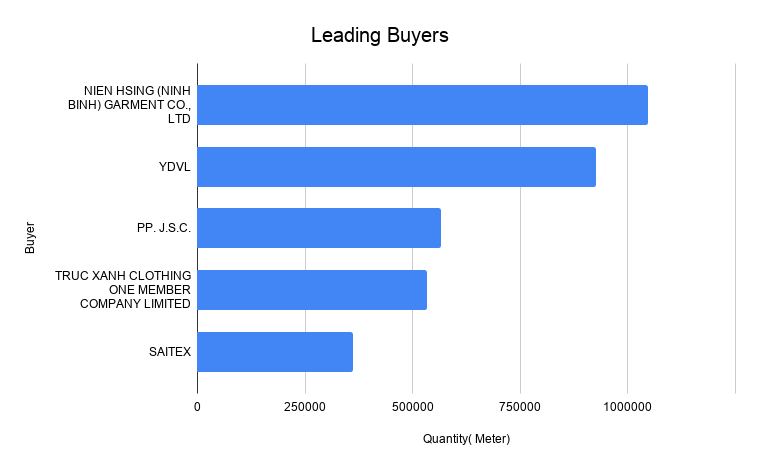
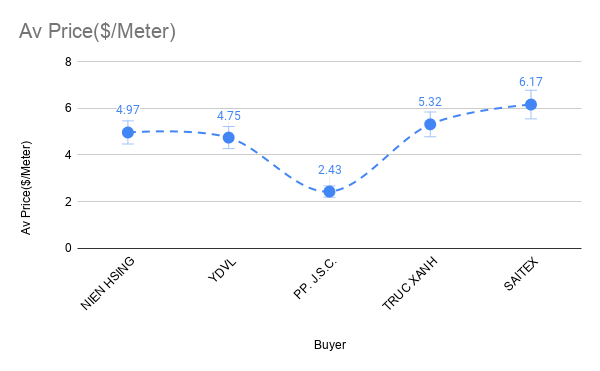
    So far as the leading denim buyers are concerned, During the month of Oct 2020, the top five denim buyers are as below:

    1. NIEN HSING (NINH BINH) GARMENT CO.,LTD: Total denim was bought by Nien Hsing Garment was 1.04 million meters at an average price of $4.97/m. All the fabrics were bought from NIEN HSING TEXTILE (CHINA) and TEXHONG FASHION INDUSTRIAL LIMITED(TAIWAN).
      Address: Ngô Gia Khảm, P. Phú Khánh, Thái Bình, Vietnam
    2. YDVL: YDVL bought 9.24 lacs meters at an average price of $4.75/meter. All fabric was bought from Crystal Apparel Limited, China.
      Address: Nhà Máy May YI DA Việt Nam (YI DA VIET NAM LIMITED- Crystal Group , TT. Lâm Thao, Cẩm Khê, Phú Thọ, Vietnam
    3. PPJ: The company bought 5.66 lac meters during the month of October 2020 at an average price of $2.45/meter. ZAOZHUANG HIYOUNG DYNASTY TEXTILE, H.W. TEXTILES, YIXING LUCKY G & L DENIM, JINAN FREEDOM TEXTILES, and ADVANCE DENIM are the main suppliers for PPJ.
      Address: Phong Phu International JSC (PPJ,48 Tang Nhon Phu Str, Tang Nhon Phu B Ward, District 9, Ho Chi Minh City, VIETNAM.
      Tel. (848) 7305 6886 | Fax (848) 3728 1846
      info@ppj-international.com

    4. TRUC XANH CLOTHING ONE MEMBER COMPANY LIMITED : Truc Xanh bought 5.33 lac meter at an average price of $5.31/meter. Y.H.Texpert and Goldenroad are the main suppliers to Truc Xanh Clothing Company.
      Address: Tân Phước Khánh, Tân Uyên District, 빈둥 주변, Tân Uyên, Bình Dương, Vietnam
    5. SAITEX : Total denim was bought by SAITEX was 3.61 lacs meters at an average price of $6.17/meter. ADVANCE DENIM, ARTISTIC MILLINERS and CANDIANI are the major suppliers to SAITEX.
      Address: 13 Khu Công Nghiệp Amata, An Bình, Thành phố Biên Hòa, Đồng Nai, Vietnam
      Telephone: +84 251 8877 100
    BuyerQuantity( Meter)Av Price($/Meter)
    NIEN HSING (NINH BINH) GARMENT CO.,LTD10,47,2384.97
    YDVL9247814.75
    PP. J.S.C.5,66,1092.43
    TRUC XANH CLOTHING ONE MEMBER COMPANY LIMITED5338075.32
    SAITEX3614276.17

    The importance of Vietnam is going to increase over next few years as the effect of FTA with Europe becomes more visible and import duties into EU become zero. We are going to see more and more exports from Vietnam in the coming years. Would be interesting to watch the details in 2021 !

    [/private_special]

  • Vietnam Or India – Favourite Destination For The Firms Moving Out Of China

    Vietnam Or India – Favourite Destination For The Firms Moving Out Of China

    After the global outrage, China has been facing a unique global withdrawal as many of the countries have decided to move part of their operations as well as manufacturing from China due to known reasons.

    Moving away operations and manufacturing set up from China is very difficult as well as the complex task however there are many companies including Apple, Nike, and Hyundai have already started the process and will complete the shift in a phased manner within a few years. Japan, on the other hand, asked the factory owners based in China to bring back the factories in Japan and they will be subsidized for the same. Japan announced a package of $2.2 billion to Japanese manufacturers to help them relocate their overseas factories. China is one of the biggest trade partners in Japan.

    But the million dollar question here is if NO CHINA, THEN WHO?

    Near-shoring is something which was widely talked and the buying countries had shown some indication that they might prefer the local sourcing however in a society where the consumer is largely price-driven, a reasonable change in average price may affect the brand sale therefore most of the countries are now looking for a long term alternative to CHINA.

    Among others, India and Vietnam are two prominent countries that are being considered to attracting shifting projects.

    India is a huge country with over 1.3 bilion + population, more than half of whom are aged between 21-30 , making its world’s youngest pool of workforce. The country has also abundant resources to produce raw materials as well as a good infrastructure to produce finished goods.

    As far as the denim fabrics are concerned, India exports 200-250 million square meters of fabric pre-COVID time, also India is one of the biggest consumers of Jeans worldwide. However as far as the export of garments is concerned, India is way behind than Bangladesh, China, and Vietnam.

    On the other hand, Vietnam with a mere 100 million population has become the largest garment exporters to the US and the world’s #1 shoe exporter. Vietnam has been found to be one of the most attractive investment destinations, thanks to bilateral treaties and FTAs with important buying countries/regions including Europe, Japan, and South Korea.

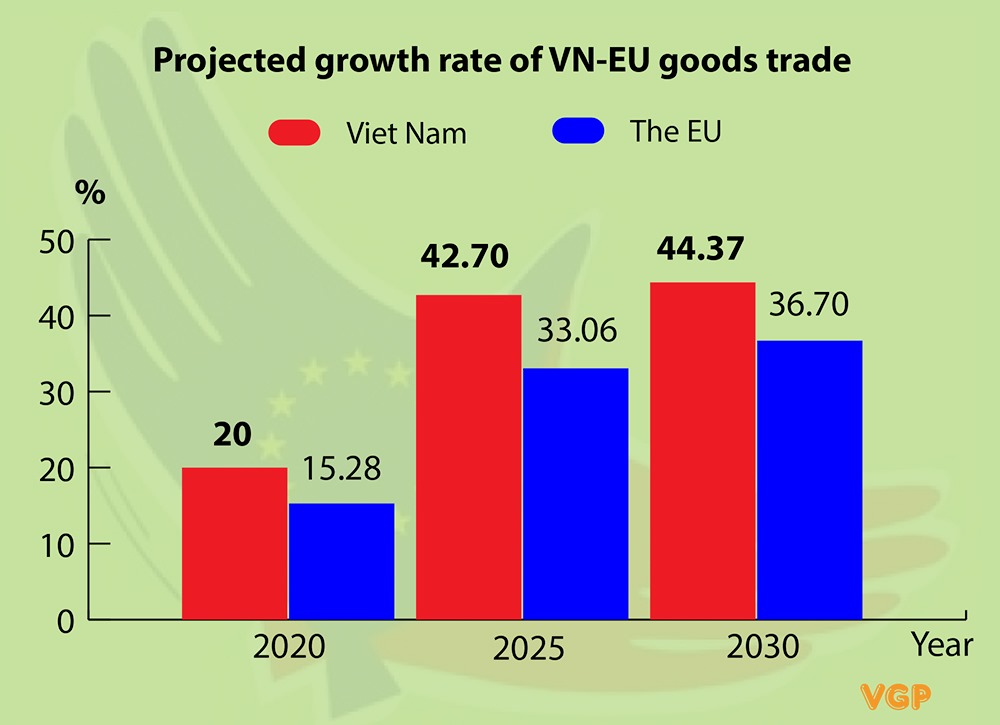
    According to the Ministry of Planning and Investment, once the EVFTA takes effect, Viet Nam’s export value to the EU is projected to increase by 20% by 2020, 42.75 by 2025, and 44.37% by 2030.

    With 100 million people, Vietnamese exports are almost at par with an economy that has 1.3 billion people and has one of the youngest workforces in the world currently.

    The Hindu

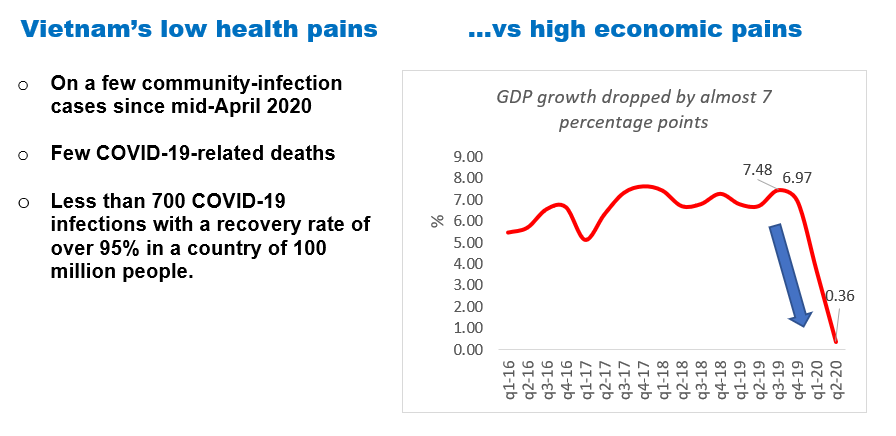
    Vietnam also received a lot of applause for the COVID management, very few casualties, and mere hundreds of active cases now in the country. While India is still struggling to contain the virus. COVID 19 affected both the economy, India’s Q1 GDP growth came into negative while Vietnam’s is still in positive in number by the end of Q2 2020.

    The World Bank

    “Vietnam’s total merchandise exports grew at an annualized average rate of 18 percent in the last 10 years till 2019, as compared with India’s 5 percent. During the same period, Vietnam attained a trade surplus of $47 billion, which again was a significant improvement over the trade deficit of $13 billion in 2010. While Vietnam started delivering trade surplus, India’s trade deficit increased to $156 billion in 2019 from $130 billion in 2010.”

    Vietnam’s crucial FTA with the EU is expected to change the fate of Vietnam as it would give direct exposure to $18 trillion economies to Vietnam and will allow European manufacturers to invest in Vietnam.

    A lot of European apparel brands are expected to shift their sourcing base from China to Vietnam due to preferential treaties as well as the anti china sentiment however the rule of origin per se may somehow hurt Vietnam as the country is yet not prepared to cater the raw material demand. However, Vietnam lacks strength in fabric production and is dependent , mainly on China, for most of its fabric imports with over 60% coming from there . In this area, India has specific strength . “

    However, India has certain strengths over Vietnam

    • In raw materials from fibers to fabrics
    • Huge work force
    • Skilled workforce dealing in international business
    • Huge local market which enables brands to also grab share of market here
    • Lower costs of labor . Vietnam’s labor cost may rise to high levels once more investments kick in .

    All these strengths will also enable many companies to put some of their productions in India also . But it is sure that this time, the retailers will not be putting all their eggs in one basket and will diversify their risks by being present in different countries from Vietnam to Bangladesh to Indonesia, Pakistan, India, Sri Lanka , Ethiopia and more . We are going to see a diversified sourcing base where one country will not be able to dominate supply chain.

  • How’s Vietnam Doing?

    How’s Vietnam Doing?

    Last week, we did a detailed report on Bangladesh and Cambodia and tried to understand the repercussions of COVID 19 on the Textile and Garment Industry. 

    In this report, we’ll try to understand the situation of Vietnam due to lockdown in China and also the challenges Vietnam has been facing and will face in the coming weeks due to the lockdown in the USA and EU. 

    VIETNAM SO FAR 

    Vietnam’s growth story has been known to everyone, and the globe is looking towards Vietnam as an alternative to China.

    Vietnam is now one of the biggest garment exporters to the USA and also it has signed a very important trade agreement- EVFTA which was supposed to take effect this year, after which it was anticipated that Viet Nam’s export value to the EU would increase by 20% by 2020, 42.75 by 2025, and 44.37% by 2030. However, COVID 19 has punctured all the hopes for now. 

    European Parliament ratifies EU-Vietnam Free Trade Agreement (EVFTA)

    Overall exports to Europe in 2019 were $41.48 billion and the major contribution came from textiles, footwear, machinery, and agriculture produce, and Germany emerged as the largest market. Vietnam also recorded a trade surplus of $26.6 billion.

    Both the U.S. and the E.U. are the two largest buyers of Vietnamese textile products, 45% of Vietnam’s export goes to the US and 13% goes to the EU. In the first two months of this year, textile exports to the U.S. rose 5.3 percent year-on-year to $2.25 billion, while that to the E.U. rose 0.3 percent to $570 million. 

    Lockdown in USA and EU and Its Impact on Vietnam

    Vietnam has managed to contain the outbreak but since their dependence on Chinese raw materials led to further delays in the order and after the global lockdown, the buyers started to cancel the orders.

    Europe is now almost closed and shipments are more or less cancelled since early March. Hence the first and second quarters are going to be severely affected by the turmoil for Vietnam. But as some normalcy is restored, Vietnam is the country that will be benefiting the most. This is not only because they will be seen as replacement for Chinese apparel but also because they handled the COVID 19 problem so successfully . This will create increased confidence of world community in their governance .

    Many trade bodies of different countries requested the US and the EU buyers not to cancel the orders. Nine countries’ garment associations including VITAS also signed the joined statement released on April 13 through which buyers have been urged to honor the purchase contracts.

    source:Getty Images

    KOREA AND VIETNAM PARTNERSHIP

    To resume the supply chain, Vietnam and South Korea have started to work on a plan under a collective partnership. Vietnam is the 3rd largest export destination for South Korea.

    South Korean Minister of Trade, Industry and Energy Sung Yun-mo and his Vietnamese counterpart Trần Tuấn Anh discussed ways to expand bilateral ties amid the growing economic fallout from the pandemic.

    Both the countries are a part of EVFTA and thus a concrete business plan has been developed to allow businesses to immediately exploit the combined origin of textile materials under the EVFTA, to take advantage of high-quality textile and apparel materials from South Korea, serving production and export of Vietnamese textile products to Europe.

    Both the countries have also agreed to process all the certifications in regards to the ORIGIN CLAUSE electronically and within a quick time frame.

    WHAT INDUSTRY PEOPLE THINKS

    1. VITAS Deputy Chairman Mr. Troung Van Cam said that E.U. and U.S. buyers have stopped ordering from Vietnam because they are struggling to sell the products amidst the pandemic. This may cause a lot of trouble for Vietnamese Manufactures.
    2. Nguyen Xuan Duong, chairman of the Hung Yen Garment Corporation in the northern Hung Yen Province apprehended that the revenue could fall up to 20% in Q1.
    3. TNG chairman Thoi said that at the beginning of the year, the company expected revenue in the first two months to rise by 4 percent year-on-year, but now they only hope this year’s revenue will remain the same as last 2019.
    4. Le Tien Truong, CEO of Vinatex, said that during the difficult time, the company could have to cut down working days of staff who are expecting to see their income fall.
    5. According to Bach Thang Long, Managing Director at the Garment 10 Corporation, in the last week enterprises have managed to arrange materials for the processing of orders, but the customers then proposed to suspend or stop production.

    IMPACT OF COVID 19 ON VIETNAM’S ECONOMY 

    Over 30,000 enterprises stopped their operations temporarily and in some cases, it has been learnt that the operations have been also suspended for Q1 2020. The government has proposed economic incentives including tax breaks of up to $2bn and a credit package of over $11bn.

    The Asian Development Bank, while predicting the country’s sharp decrease in GDP growth, said that the Vietnamese economy remains ‘uniquely robust’ in the subregion.

    Vietnam has managed to contain the outbreak very professionally and have been receiving applauds from everywhere for its efforts. Vietnam’s success in curbing the pandemic has been attracting global attention including the eyeballs of foreign investors and its traditional advantages of cheap labor, political stability, and proximity to China may add some more points to the considerations. There are some more economic aspects which have been reported so far, these are as follows:

    • Underemployed laborers are expected to be between 30% and 50% in April and May 2020. 
    • The estimated loss for the Garment and Textile – $212.25 million and if the situation remains the same for long, the industry may lose up to VND 3k billion/month
    • Government has released special funds and incentives which is costing the government $1.16 bn
    • State Bank of Vietnam cut the interest rates from Feb’2020 and asked commercial banks to lower interest rates 

    Not only Vietnam, but the entire globe is also in distress now. We need to see how the situation evolves. However, the global leaders in the industry are still not positive.

  • European Parliament Finally Ratifies EU-Vietnam Free Trade Agreement (EVFTA)

    European Parliament Finally Ratifies EU-Vietnam Free Trade Agreement (EVFTA)

    Finally ! the much awaited EU-Vietnam Free Trade Agreement along with EU-Vietnam Investment Protection Agreement (EVIPA) ratified on Feb 12, 2019 in the EU Parliament with 401 votes for, 192 against and 40 absentions. The negotiation for which started in Oct 2010 finally culminated in the ratification of the treaty. The agreement was signed on June 30 last year and was expected to be effective soon. After the European ratification, both the agreements are expected to be passed in the upcoming session of the Việt Nam’s Nation Assembly in April-May and likely to come into effect from July this year in Việt Nam. The agreement will be opening up opportunities for the Vietnam to enter into a huge market which has GDP value worth $18 trillion. This is going to be a major push for Vietnam’s exports and will allow the global players to expand their businesses into one of the fastest economies of SEA. Currently VietNam is the EU’s second largest trading partner in the ASEAN region with trade value of €49.3 billion for goods and over €3 billion for services.

    At a press conference on this event held by the Ministry of Industry and Trade in Hà Nội the same day, Minister of Industry and Trade Trần Tuấn Anh said:

    “This is a meaningful result for Việt Nam and the EU, two comprehensive strategic partners.”

    The agreement will remove virtually all tariffs between the two parties ( EU and Viet Nam) in ten years. Under this agreement, Việt Nam will reduce 65 per cent of import tarrif on EU commodities after it comes into effect, while the rest will be erased over a 10-year period. Meanwhile, the EU will cut more than 70 per cent of tariffs on Việt Nam’s commodities , and the rest will be abolished over the seven subsequent years. According to research by the Ministry of Planning and Investment, the two deals will help Việt Nam increase its GDP by 4.6 per cent and its exports to the EU by 42.7 per cent by 2025. Meanwhile, the European Commission has projected the EU’s GDP to increase by $29.5 billion and its exports to Việt Nam by 29 per cent by 2035.

    President of the European Commission Jean-Claude Juncker said:

    “I welcome the decision taken today by EU Member States. After Singapore, the agreements with Viet Nam are the second to have been concluded between the EU and a Southeast Asian country, and represent stepping stones to a greater engagement between Europe and the region. It is also a political statement by two partners and friends standing together for open, fair and rules-based trade.”

    Meanwhile, Commissioner for Trade Cecilia Malmström said:

    “I am very pleased to see that Member States have given a green light to our trade and investment agreements with Viet Nam. Viet Nam is a vibrant and promising market of more than 95 million consumers and both sides have much to gain from stronger trade relations.”

    According to the Ministry of Planning and Investment, once the EVFTA takes effect, Viet Nam’s export value to the EU is projected to increase by 20% by 2020, 42.75 by 2025, and 44.37% by 2030.

    European Parliament ratifies EU-Vietnam Free Trade Agreement (EVFTA)

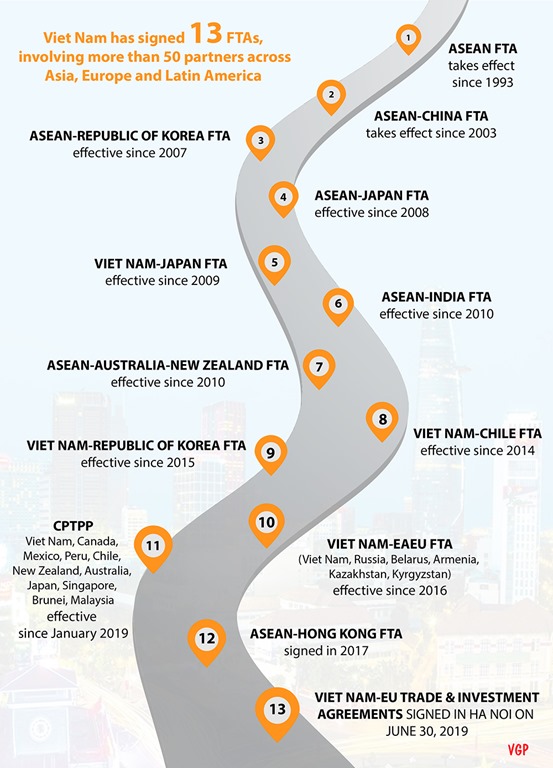
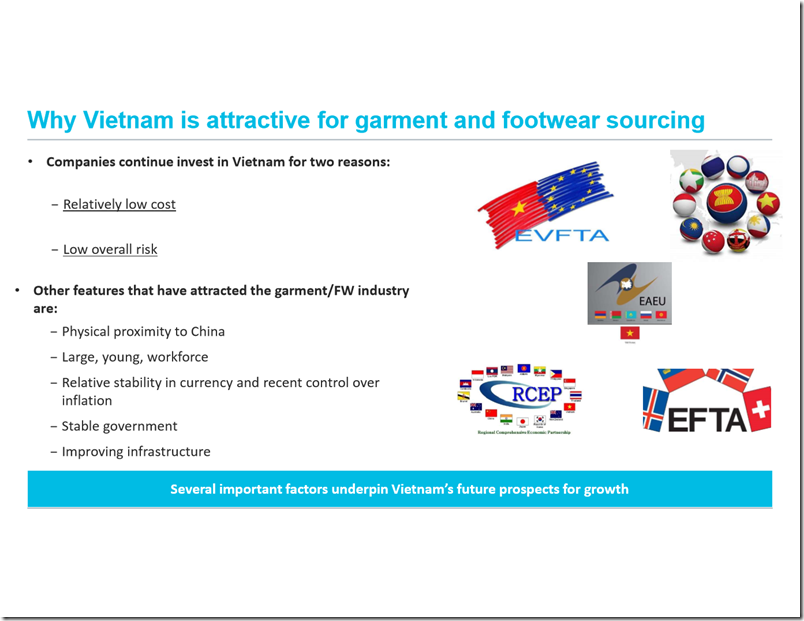
    SEA countries have signed 13 FTAs with external partners, of which EVFTA and CPTPP are considered the “new-generation” deals with higher and broader commitments. The Government estimated that the CPTPP, which took effect since January 14, 2019, will help increase Viet Nam’s GDP by 1.3% and export value by 4% by 2035. You can refer the below infographic to understand the number of FTAs Vietnam right now have. Vietnam is now one of the biggest exporters of garments to the USA now, with this EVFTA, Vietnam is going to increase its presence in EU countries very strongly. Garment exports would be one of the biggest beneficiary industry under this agreement  . Vietnam is , in any case, being benefited due to increasing costs in China and many customers have shifted their sourcing base . Once duty benefits are available , huge benefits are expected to accrue to Vietnam .

    European Parliament ratifies EU-Vietnam Free Trade Agreement (EVFTA)


    India and vm banner (compressed)

  • Jeans Exports From Vietnam To EU RisesDuring Jan-September’19

    Jeans Exports From Vietnam To EU RisesDuring Jan-September’19

    In this report, we’ve done the analysis of Denim Apparel Exports Of Vietnam from 2018 to 2019  for the first three quarters ie from January to September and our analysis focuses on three fundamentals :

    • Quantity Exported
    • Average Price
    • % Change
    • YTD – Jan To Sep 2019

    CONTENTS

    Graphs and Tables Showing Jeans Exports From Vietnam To EU And The Average Price Of The Same During 2018-2019

    Graphs and Tables Showing Mens and Womens Jeans Exports From Vietnam To EU  During 2018-2019

    Graphs and Tables Showing Average Price Of Mens and Womens Jeans Exported From Vietnam To EU  During 2018-2019

    Graphs and Tables Showing Jeans Exported – Men &Women From Vietnam To EU For Jan- Sep 2018 & Jan- Sep 2019

    [private_special]

    Jeans Exports

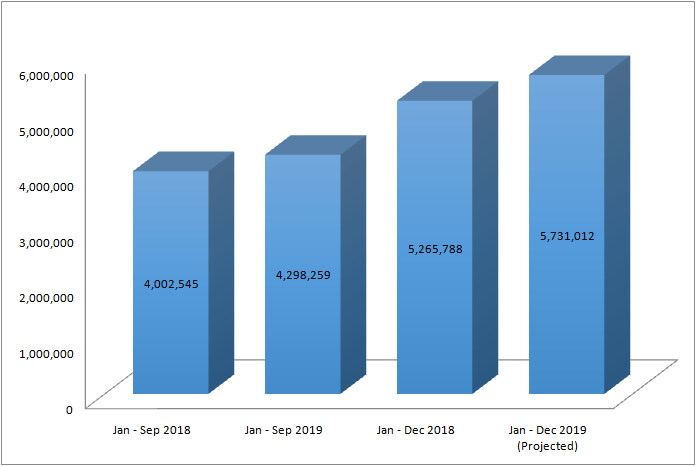
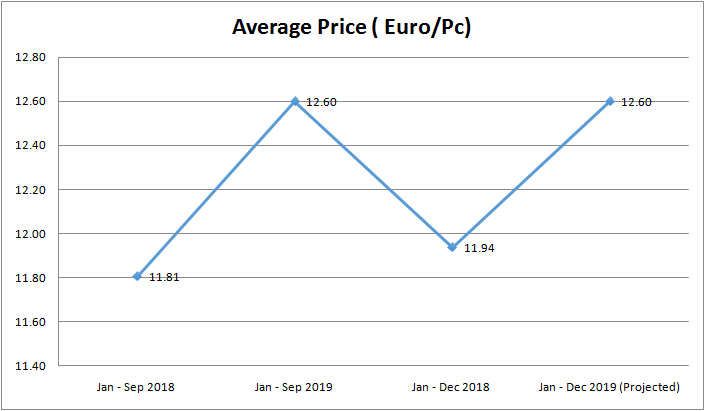
    Jeans export from Vietnam to the EU has been increasing since 2018 and by the end of 2019, it is expected to witness a total rise of approx 7.4%. Comparing the export figures, this is to be noted that, Vietnam’s denim export saw an upward movement in the year 2018.  In 2018, the export was around 4 million pcs which further increased  to the level of 4.2 million pcs in 2019. The average price remained in the range of around euro 11-12/pc.

    Year

    Denim Exported (Pcs)

    Average Price (Euro/Pc)

    Jan – Sep 2018

    4,002,545

    11.81

    Jan – Sep 2019

    4,298,259

    12.60

    Jan – Dec 2018

    5,265,788

    11.94

    Jan – Dec 2019 (Projected)

    5,731,012

    12.60

    Denim Exported (Pc) – From 2018 – 2019

    Denim Exports From Vietnam To EU Rises During Jan-September’19 | Denimsandjeans

    Denim Exports From Vietnam To EU Rises During Jan-September’19 | Denimsandjeans

    Men V. Women Denim Exports

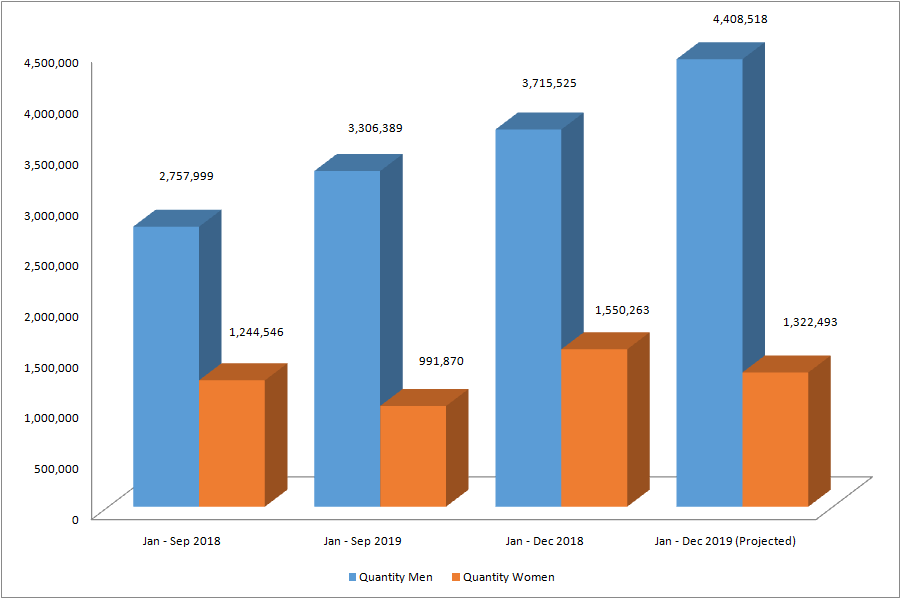
    Vietnam is more into Men Denim and shares approx. 68-69% of the total export of Jeans,. However, the share has been increasing after every passing year and in 2019 it is expected to increase further. In the year 2018, the total export of women jeans was approx. 1.2 million pcs, against which, the export of Men’s Jeans was 2.7 million pcs. In 2019, the women jeans export fell  down to 9.9 lakhs  pcs whereas Men’s jeans increased by over 20% to 3.3. million pcs. So the market is moving more strongly towards the men’s jeans rather than the women’s.

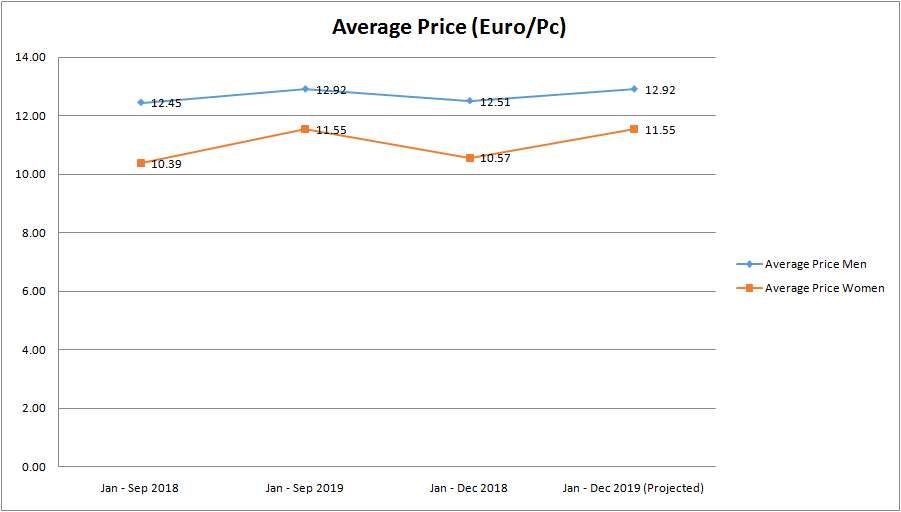
    The average price of  women’s jeans is more competitive than men’s . The average price of Women denim revolved around Euro 10-11/pc however the price of Men’s denim has been fluctuating around Euro 12 per piece.

    Year

    Men ( Denim Exported – Pcs)

    Women( Denim Exported – Pcs)

    Men ( Av Price – Euro/Pc)

    Women ( Av Price – Euro/Pc)

    Jan – Sep 2018

    2,757,999

    1,244,546

    12.45

    10.39

    Jan – Sep 2019

    3,306,389

    991,870

    12.92

    11.55

    Jan – Dec 2018

    3,715,525

    1,550,263

    12.51

    10.57

    Jan – Dec 2019 (Projected)

    4,408,518

    1,322,493

    12.92

    11.55

    Denim Exports : Men V. women

    Denim Exports From Vietnam To EU Rises During Jan-September’19 | Denimsandjeans

    Denim Exports From Vietnam To EU Rises During Jan-September’19 | Denimsandjeans

    YTD – September 2019

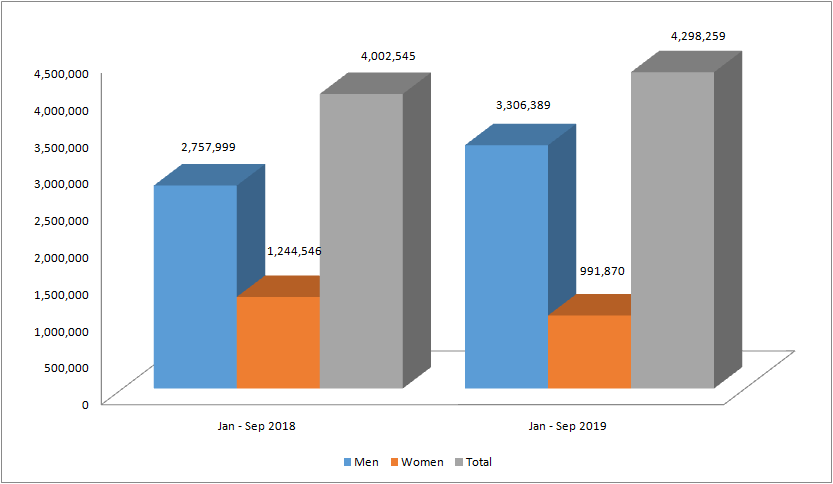
    Jeans export from Vietnam to the EU has been increased by 7 % if we compare YTD September 2018. During Jan-September ’19, the Women’s Jeans export witnessed a plunge of –20.3 %, and the export of men jeans witnessed a rise of 19.9% during the same period.

    Particulars

    Jan – Sep 2018

    Jan – Sep 2019

    % Change

    Men

    2,757,999

    3,306,389

    19.9

    Women

    1,244,546

    991,870

    -20.3

    Total

    4,002,545

    4,298,259

    7.4

    Denim Exports YTD – September 2019

    Denim Exports From Vietnam To EU Rises During Jan-September’19 | Denimsandjeans

    On the whole against about 4 million jeans exported last year (including both men and women, this year is expected to be about 4.3 million or about 8.5% growth. Though this is not huge , we are expecting the real growth to come up next year when FTA with EU becomes operational and many of the capacities of garment factories that have been coming up go on stream.

    On the whole, a huge growth for Vietnam is expected in the next couple of years as more and more Vietnamese and Chinese units become operational to take advantage of the FTAs.

    [/private_special]

  • Vietnam EU-FTA Agreement ( EVFTA) Moving Forward

    Vietnam EU-FTA Agreement ( EVFTA) Moving Forward

    The EVFTA is one of the much-awaited trade agreements which the world is waiting for it to get signed. This new-generation trade agreement between Vietnam and 28 EU member countries. The negotiations on the EVFTA officially concluded on December 1, 2015, and the preliminary text of the agreement was released on February 1, 2016. The EVFTA was split into two Agreements, one for trade and one for investment, on June 26, 2018. Vietnam and the EU formally completed the legal review of their EU-Vietnam FTA and the IPA (the Investment Protection Agreement) in August 2018.

    5 Latest Developments on EU-FTA ( EVFTA)

    1. EuroCham released the data at an event in Brussels to launch its latest report – The EVFTA: Perspectives from Vietnam – on October 8, together with amfori and Business Europe. The launch event, with 70 participants, is part of a EuroCham mission to the European Parliament and European Commission to push for the quick ratification of the EVFTA. On October 17 noon, the European Commission (EC) agreed to submit the EU-Vietnam Free Trade Agreement (EVFTA) to the European Council to seek its approval for the signing of the deal slated for late 2018 and to the European Parliament (EP) for ratification in 2019. At a press conference on October 17 afternoon, the EU affirmed its commitment to putting the document in place as soon as possible.

    2. A EuroCham survey, which included 132 respondents, showed that an overwhelming 93 percent of enterprises believe that the EVFTA would be implemented in 2019, or as soon as possible thereafter. The FTA is said to bring win-win benefits to both Europe and Vietnam, with 85 percent of the European enterprises saying that it will have a “significant” or “moderate” impact on their business or investment plan in Vietnam.
      Firms also said that Vietnam’s reform efforts will offer opportunities for the country to integrate deeper into the global economy.
    3. Vietnamese Minister of Industry and Trade, Tran Tuan Anh, and EU Trade Commissioner, Cecilia Malmstrom, issued a joint ministerial statement on the EVFTA on the sidelines of the ASEM Summit in Brussels on October 19, 2018. The joint statement welcomed the European Commission’s submission of the FTA to the European Council for approval. The statement stressed that the agreements would open up new opportunities for exports and investment for European and Vietnamese businesses, while also paying special attention to the rights of workers and environmental protection.

    4. Europe is rushing to translate the two agreements into 24 EU languages and accelerate another process before the official signing of the EVFTA, scheduled for late 2018. President of the European Parliament and President of the European Parliament’s International Trade Commission also confirmed that efforts would be made to finalize the ratification of these two agreements early next year in the interests of both sides and for trade benefits between Europe and Asia. The agreements are expected to bring about unprecedented benefits to businesses and peoples of both Europe and Vietnam. The agreements will help European companies gain better access to a market of more than 92 million consumers, while increasing investment, creating more jobs, and boosting trade with one of Asia’s most dynamic economies. Vietnamese exporters will also have easier access to the European market.

    5. By the end of August 2018, 24 out of the 28 EU countries had invested in Vietnam, with 2,141 valid projects worth some US$24.17 billion. Among the EU investors, the Netherlands takes the lead with 318 projects valued at US$9.16 billion, followed by France with 527 projects worth US$3.63 billion, the UK and Germany. Nine out of ten European companies want the EU-Vietnam Free Trade Agreement (EVFTA) to be implemented in 2019 or as soon as possible thereafter, according to new research from the European Chamber of Commerce in Vietnam (EuroCham).

    29116118_s

    Trade & Tariffs  Between EU and Vietnam

    The EU is now the third largest trading partner and one of the two largest export markets of Vietnam. The import and export structure of Vietnam and the EU complement each other with a less direct competition. Two-way trade revenue between Vietnam and the EU increased more than 12 times from US$4.1 billion in 2000 to US$50.4 billion in 2017. Of which, Vietnam’s exports to the EU increased by 13.6 times (from US$2.8 billion to US$38.3 billion) and Vietnam’s imports from the EU increased by nine times (US$1.3 billion to US$12.11 billion). Vietnam’s main export items to the EU are footwear, garments, and textiles, coffee, furniture, and seafood.

    The EU is also a huge investor in Vietnam. EU investors are present in all most of Vietnam’s key economic sectors with the focus on industry, construction and service sectors. The European Chamber of Commerce in Vietnam (Eurocham) emphasized that when the agreement comes into force, Vietnam will eliminate 65% of duties on EU exports to Vietnam. The remaining tariff lines will be gradually removed in the next 10 years, resulting in the elimination of 99% of duties on goods traded between the two sides.

    A tax rate of 0% will be applied to export goods of both sides such as garments and textiles, footwear, seafood, tropical agricultural products, and wood products of Vietnam and automobiles, equipment, alcohol, pharmaceuticals, temperate agricultural products of the EU. The EVFTA also contains provisions to address the existing non-tariff barriers in the automobile industry as well as the protection of geographical indications for 169 European food and beverage products in Vietnam. In general, the EVFTA is expected to increase Vietnam’s GDP  by a large % increase and raise Vietnam’s exports to the EU. High-quality capital is also anticipated to pour into Vietnam and products with European standards will be exported to Vietnam with clear origin.

  • Denim Exports To USA By Vietnam Grow Sharply | 2014-18

    Denim Exports To USA By Vietnam Grow Sharply | 2014-18

    Vietnam , one of the most favourable country these days when it comes to Textile & Garments including Denim. A Country which holds 10 bilateral and multilateral trade agreements, including ASEAN Free Trade Area, five ASEAN+1 FTAs, and FTAs with Japan, South Korea, Chile , Russia and the Eurasia Economic Union and a country which is expected to execute CPTPP & EVFTA by the end of this year. Vietnam has evolved as a major denim player in past few years and expected to grow faster in coming years due to its geography and advantages due to its demographics and policies. Statistics shows that by the end of 2017, Vietnam had attracted 2,079 projects in the garment-textile sector with total capital of 15.75 billion USD, up 10 percent year-on-year.  Investors come from 57 countries and territories nationwide, with major ones from Taiwan and Hong Kong (China) and the Republic of Korea (RoK). Growth of exports of denim from Vietnam was over 25% in 2017 !

    In the first six months of this year, reports have confirmed that the investment worth 2.8 billion USD in FDI was injected into Vietnam’s garment-textile industry . The Chief of Vietnam Textile And Apparel Association (VITAS) asserted that Vietnam’s garment-textile export revenue is going to hit 200 billion USD by 2035. Denim is also major part in the entire periphery of Textile & Garment and is expected to achieve an annual growth rate of 30% so far as US export is concerned . The country is also getting strong hold in EU market and post the implementation of EVFTA , the country will become stronger.

    After the tariff war between US and China , a substantial production shift in Vietnam is expected and if the trade war remains for longer time , China’s loss will be Vietnam’s gain. In this report , we’ve analysed the denim exports of Vietnam to US from 2014 to June 2018 and it gives an idea how the country is growing rapidly.

    TABLE OF CONTENTS

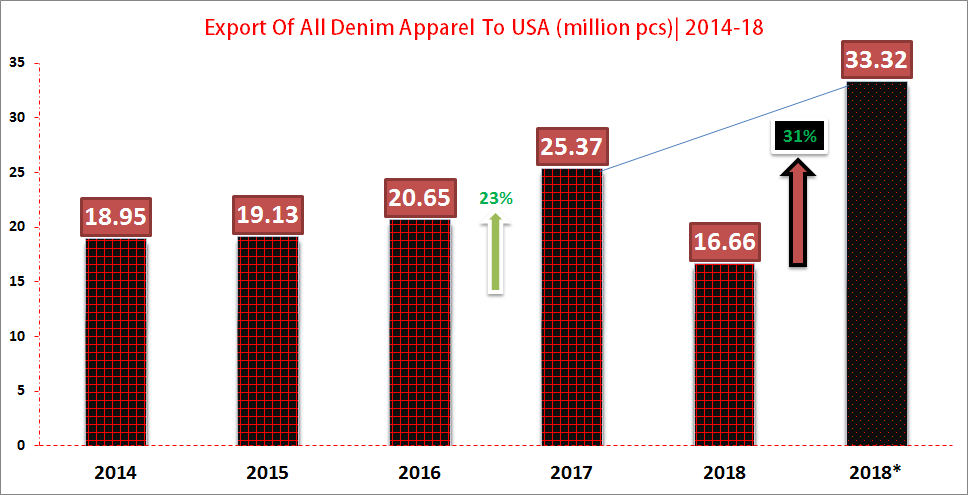
    Table Showing Export Of All Denim Apparel To USA ( Million Pcs)  For 2014-18
    Graph Showing Export Of All Denim Apparel To USA ( Million Pcs)  For 2014-18
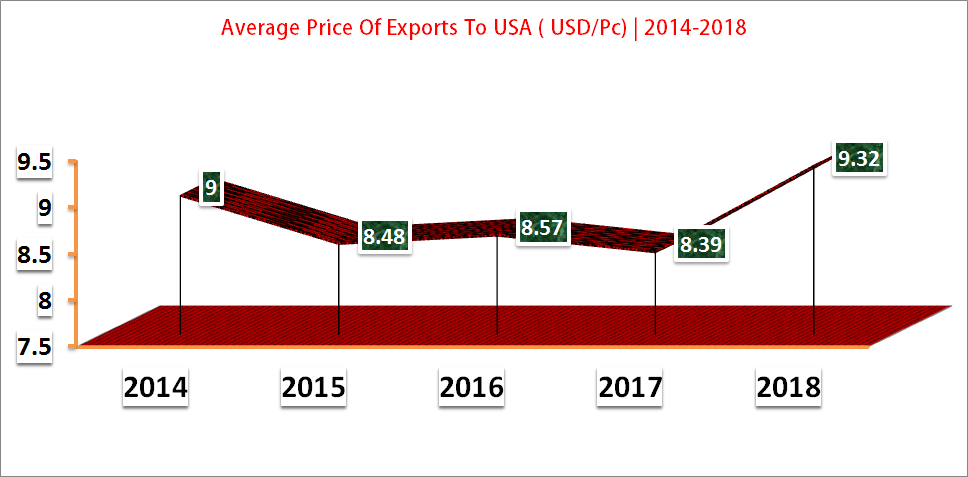
    Table Showing Average Price Of All Denim Apparel To USA ( USD/Pc) For 2014-18
    Graph Showing Average Price Of All Denim Apparel To USA ( USD/Pc) For 2014-18
    Table Showing Gowth Rate Of Denim Exports To USA From 2014 To 2018
    Graph Showing Gowth Rate Of Denim Exports To USA From 2014 To 2018
    Table Showing Comparision Between Mens and Womens Denim Exports To USA ( Million Pcs) For 2014-18
    Graph Showing Comparision Between Mens and Womens Denim Exports To USA ( Million Pcs) For 2014-18
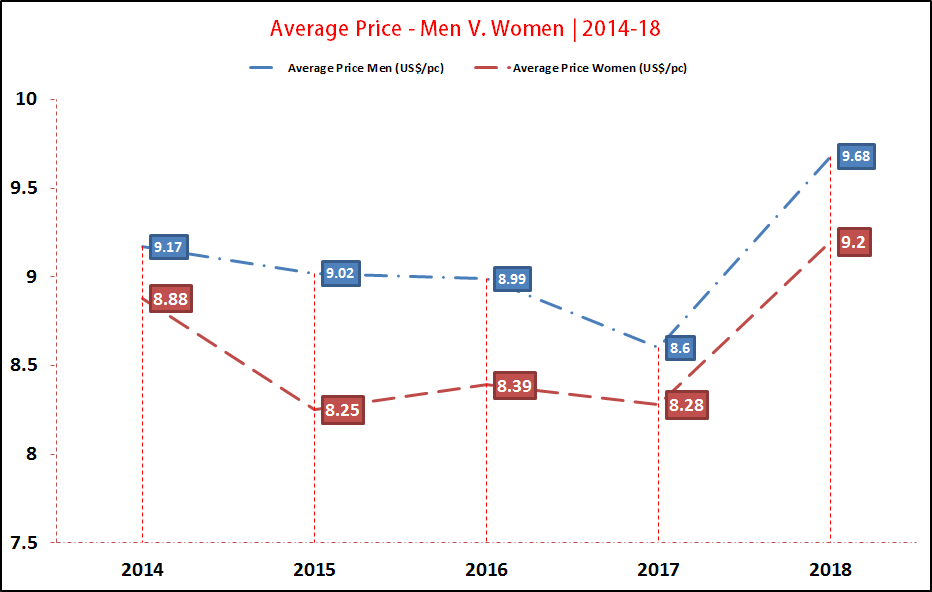
    Table Showing Average Price of Mens and Womens Denim Exports To USA ( USD/Pc) For 2014-18
    Graph Showing Average Price of Mens and Womens Denim Exports To USA ( USD/Pc) For 2014-18

    [private_special]

    Export Of All Denim Apparel To USA ( Million Pcs)  For 2014-18

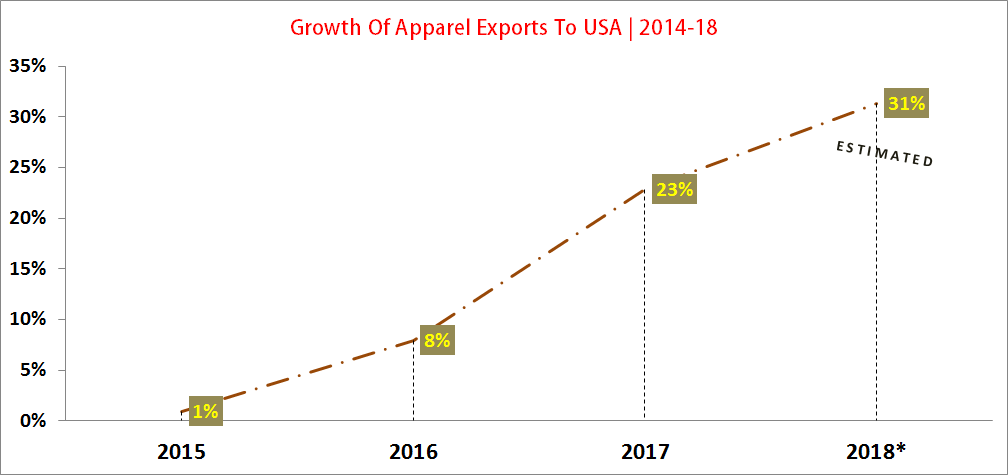
    Vietnam has been on growing track since 2014 and post 2016 , it has been growing by leaps and bounds. In the year 2014 , the total export of denim to USA was 18.95 million pcs which grew by 1% in 2015 and reached upto 19.13 million pcs. 2016 was the year which saw a first major jump in terms of growth percentage i.e, 8% and the export figures were reached at 20.65 million pcs . The growth rate has been multiplied and was close to three times to 25%+ in 2017 . The total export of denim in 2017 reached at 25.37 million pcs . The first half of 2018 has shown a very encouraging figure of 16.66 million pcs and if the country keeps the same pace , the export figures are expected to cross the benchmark of 32 million pcs for year 2018 . The growth rate could be seen in table #3 .

    Year

    Denim Apparels ( Million Pcs)

    2014

    18.95

    2015

    19.13

    2016

    20.65

    2017

    25.37

    2018( Till June’18)

    16.66

    2018*( Projected)

    32.64*

    Denim Exports To USA By Vietnam | 2014-18 - Denimsandjeans.com

    Average Price Of All Denim Apparel To USA ( USD/Pc) For 2014-18

    The average price shown an inconsistent trend over the years and has been changing each year. However years 2015,2016 and 2017 look little consistent as there were very minor variances observed in these years. In 2015 ,2016 & 2017 , the average price were USD8.48/Pc, USD8.57/Pc and USD8.39/Pc respectively. In 2018 , the price has increased by approx. USD 1 and reached to USD9.32/Pc which is close to the average price of the year 2014. Vietnam needs to become more competitive in terms of price as countries like Cambodia and Bangladesh have been offering the denim apparel at a very competitive price . However, we need to also remember that Vietnam is offering more value added products than these countries.

    Year

    Average Price ( USD/Pc)

    2014

    9

    2015

    8.48

    2016

    8.57

    2017

    8.39

    2018

    9.32

    Denim Exports To USA By Vietnam | 2014-18 - Denimsandjeans.com

    Growth Rate Of Denim Exports To USA From 2014 To 2018

    Year

    Growth ( %)

    2015

    1%

    2016

    8%

    2017

    23%

    2018*

    31%

    Denim Exports To USA By Vietnam | 2014-18 - Denimsandjeans.com

    Comparison Between Men’s and Women’s Denim Exports To USA ( Million Pcs) For 2014-18

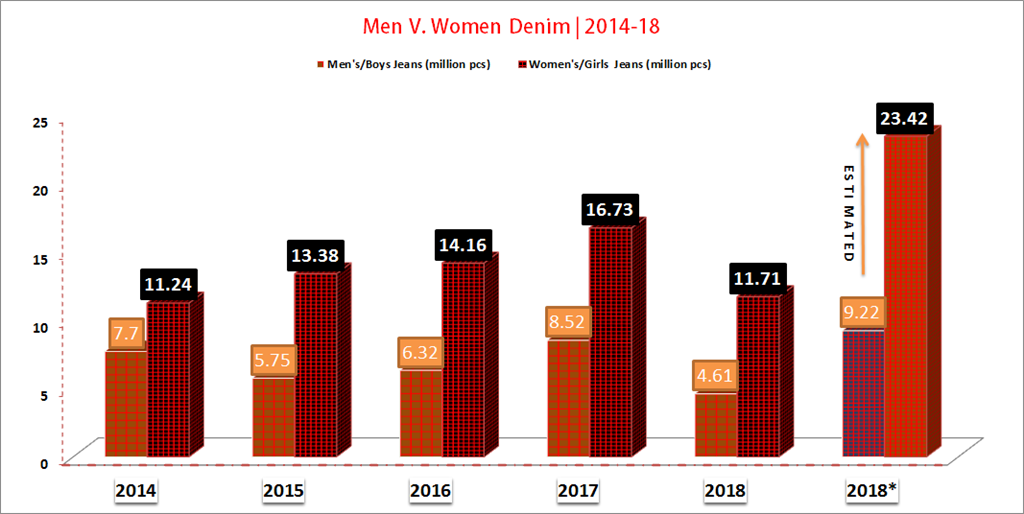
    We can immediately understand that Vietnam is more into exports of Women’s Denim Garment than Men’s. In 2014 , the ratio of Mens: Womens was 41:59 however year after year , the ratio inclined towards Women Denim Export. In the 1st half of 2018 , the share of Men’s denim in total export is only 28% however Womens denim accounts for 72% in the total export.  So far as the average price of both the categories are concerned , Women Denim is cheaper than Men’s. In 2018 , the men’s denim average price was USD9.68/Pc however Women’s Denim was USD9.2/Pc.

    Year

    Mens Denim ( Million Pcs)

    Womens Denim ( Million Pcs)

    2014

    7.7

    11.24

    2015

    5.75

    13.38

    2016

    6.32

    14.16

    2017

    8.52

    16.73

    2018

    4.61

    11.71

    2018*

    9.22

    23.42

    Denim Exports To USA By Vietnam | 2014-18 - Denimsandjeans.com

    Average Price of Men’s and Women’s Denim Exports To USA ( USD/Pc) For 2014-18

    Year

    Mens Denim ( USD/Pc)

    Womens Denim ( USD/Pc)

    2014

    9.17

    8.8

    2015

    9.02

    8.25

    2016

    8.99

    8.39

    2017

    8.6

    8.28

    2018

    9.68

    9.2

    Denim Exports To USA By Vietnam | 2014-18 - Denimsandjeans.com

    There is lot to come for Vietnam , recently Chinese Denim Companies PROSPERITY got the final nod for their factory in Vietnam . The Investment has been constantly flowing into Vietnam from Hongkong , South Korea and Canada. Korean company TCE is in process of expanding three times the size. The country needs to strengthen its capacity not in terms of finished goods but also in terms of raw material as well . Hopefully after the implementation of CPTPP and EVFTA , we will see a huge expected jump in the investment and exports from Vietnam.

    [/private_special]

  • Revised TPP Scheduled To Be Signed On March 8 , President Trump Regrets

    Revised TPP Scheduled To Be Signed On March 8 , President Trump Regrets

    The much awaited TPP is on the way and is going to be signed on March 8 in Chile despite President Trump ditching it. After the unprecedented exit of US from the TPP , its fate was in jeopardy but due to continuous efforts by all the remaining stakeholders , TPP  finally seems to be coming into picture and even without the United States, the rewritten pact will create a market of 495 million people and a combined annual economic output of $13.5-trillion (U.S.) or 13.4 percent of global GDP, While this is significantly less than the TPP’s combined $28 trillion and 36 percent of global GDP, it will still be one of the biggest trade agreements in the world. The North American Free Trade Agreement (NAFTA) totals about $20 trillion; the European Union $19 trillion; South America’s Mercosur $3.5 trillion; the Association of Southeast Asian Nations Free Trade Area (AFTA) $2.5 trillion; and the Common Market for Eastern and Southern Africa (COMSEA) $655 billion. Even though it is smaller than it was, the CPTPP is clearly one of the largest trading agreements in the world.

    After the US , initially Canada looked little skeptical about the treaty however after addressing all issues of Canada, they agreed to sign this year . Japan took the driving seat and persuaded all the issues of all the countries -  Canada ,Australia, Brunei, Canada, Chile,  Malaysia, Mexico, New Zealand, Peru, Singapore, and Vietnam, and have reached a deal on a new Pacific Rim trade accord that does not include the United States.The new TPP deal will help Canada diversify trade away from the United States, where economic relations under the protectionist Trump administration have made it difficult for businesses to invest in selling to Americans. Though significantly smaller since the United States pulled out, as measured by GDP and trade, the new Comprehensive and Progressive Agreement for Trans-Pacific Partnership (CPTPP) is still a powerful pact in its own right.

    In the first executive action of his presidency, Trump withdrew from the TPP, signaling to the world his commitment to his “America First” campaign promises. Since then, his administration has been seeking (with scant success) to promote bilateral trade deals, renegotiate existing trade deals, and impose trade restrictions to “level the playing field” for American businesses. Such actions have left the United States isolated on global trade map, as the rest of the world has continued on with multilateral deals, notably the Japan-EU and EU-Mercosur agreements. The Trans-Pacific Partnership was meant to be the crowning jewel in a new age of global trade, writing “the rules of the road for trade in the 21st century.” Since Trump’s reversal, that new age of global trade had been called into question.

    But now the TPP is back and, barring a few bumps along the way, seems to have everyone’s commitment. So what is new about it, and what has stayed the same?

    Revised TPP Will Be Signed On March 8 , President Trump Regrets | Denimsandjeans

    Why Trump Withdrew From TPP?

    When Trump withdrew from the TPP he also withdrew two of the most controversial provisions

    1. One of the most ridiculed provisions in the TPP, the investor-state dispute settlement (ISDS) provision, has been scaled back while a government’s right to regulate its markets has been afforded increased protections. This was only possible after the United States withdrew from the deal: U.S. companies are the most frequent users of the measure, which allows companies to sue foreign governments over arduous regulations.
    2. Another key provision the United States pushed for that has fallen to the side is the extension of copyright, or intellectual property, protections. Washington had negotiated for copyright to exist for the author’s lifetime plus an additional 70 years. While this is standard in the United States, it is not in the other TPP members, and with Washington out of the deal, copyright lengths will be shorter.

    The removal of these two provisions highlights what happens when the United States is not involved in regional affairs: the region moves on without it. The United States under Presidents George W. Bush and Barack Obama were the prime advocate for the two heavily unpopular provisions. Under President Trump, the remaining 11 members of the TPP were able to cast off policies they considered harmful to their economies and governments.

    When Trump pulled out of the TPP last January, the deal was widely panned as doomed. Yet now the deal is back and less controversial to its signing members. Far from being dead, the CPTPP perhaps signals a new chapter in global trade, one without the United States.

    The U-Turn

    A major shift came recently  when Trump said in an interview on the sidelines of the World Economic Forum in Davos, Switzerland, that he would consider rejoining the TPP if the U.S. could strike a “substantially better” agreement.In his address  to the annual gathering of government and business leaders in the Swiss resort, Trump reiterated that he was open to the prospect of negotiating a multilateral trade deal with TPP members “if it is in the interests of all.”

    Experts in U.S.-Asia relations say a Jan. 23 agreement by Japan and the 10 remaining TPP signatories to promote a revised version of the deal without the United States — a so-called TPP 11 — appears to have propelled Trump to alter his approach to the agreement amid fears that Washington may “lose out” if others move ahead with trade deals.

    Revised TPP Will Be Signed On March 8 , President Trump Regrets | Denimsandjeans

    Reactions From US Think Tanks

    “I believe that the ability of the 11 TPP countries to reach a final agreement has influenced the American calculus,” said Mireya Solis, a senior fellow at the Brookings Institution think tank in Washington. “The notion in January 2017 was that if the U.S. was out, TPP was dead. The world turned out to be very different as the other countries were not deterred in bringing TPP to fruition,” Solis said, hailing efforts by Australia, Brunei, Canada, Chile, Japan, Malaysia, Mexico, New Zealand, Peru, Singapore and Vietnam to sustain the deal.

    Citing Trump’s talks with members of Congress, state governors and business leaders, who warned of the U.S. being locked out of trade deals such as TPP 11 and a free-trade agreement between Japan and the European Union, James Schoff, a senior fellow at the Carnegie Endowment for International Peace think tank in Washington, said the latest development “is partly what prompted Trump’s comments. I think some people told Mr. Trump that the U.S. is in danger of ‘losing out’ if others move ahead with trade deals,” Schoff said. “So he’s trying to avoid losing.”

    One of the key factors that has changed Trump’s views on the pact is that “China’s economic aggression has intensified globally,” David Malpass, U.S. undersecretary of the Treasury for international affairs, was quoted by the Wall Street Journal as saying Saturday.

    Schoff also argued Trump’s apparent TPP overture may be an attempt to slow the process to bring the TPP 11 accord into force. But such a maneuver, he said, is unlikely to work “because Mr. Trump does not have much credibility on this issue.”

    Japanese officials have welcomed Trump’s apparent shift on the TPP, but have said it will not alter Tokyo’s march toward signing the pact in March as it seeks early enforcement.Japan, officials have said, has no plan to renegotiate the deal, either. The successful conclusion of TPP-11 will not only change the economic landscape of the Asia-Pacific, but more significantly, demonstrate clearly that the world will continue to move on without the United States.

    A growing confidence in framing deals without bending to Washington’s demands may well impact the outlook for existing trade deals that are currently being reconsidered by the U.S., most notably the North American Free Trade Agreement (NAFTA).With Mexico, Canada and the United States all part of the TPP, the trilateral was effectively going to act as a revamped NAFTA. But as NAFTA negotiations focus more on increasing barriers in hopes of reducing the U.S. trade deficit and not on seeking common ground between the three countries, the allure of the deal will invariably weaken for Canada and Mexico.

    While even a successful TPP-11 would by no means mitigate losses that would be incurred as a result of a collapse of NAFTA negotiations, a new Asia-Pacific trade deal would increase expectations that sooner or later, the United States too would not be able to turn away from the opportunities that platform would offer.U.S. frustration in tackling the trade deficit with China is shared worldwide, and efforts to take steps to level the playing field with Chinese businesses would certainly be a welcome one.

    President Trump’s dislike of multilateral deals may never change. But as the Trump administration begins to acknowledge the strength in numbers at the negotiating table, the White House will need to begin assessing trade objectives that go beyond simply reducing bilateral deficits.In the meantime, the TPP train is likely to leave without the United States on board, giving both Canada and Mexico a stronger bargaining chip against the White House.

    T P P + EU- FTA

    So this year is going to be a historical year for Vietnam as the country is going to witness two revolutionary multilateral trade agreements which will change the fate of the Vietnam in coming years , especially the Textile & Apparel Sector.

    Revised TPP Will Be Signed On March 8 , President Trump Regrets | Denimsandjeans

    Sources :

  • Vietnam EU FTA In June End ?

    Vietnam EU FTA In June End ?

    Vietnam has been in the news for last few years due its back to back bilateral trade agreements with many countries including Russia and Japan. The TPP and FTA debates were the most favorite ones and a lot has been written till date on the potential prosperity and fortune of Vietnam’s Economy keeping all these trade agreements in the center. After the exit of the USA from TPP , the discussions on TPP almost ceased as US was the major player in the TPP. However, FTA with EU seems round the corner.

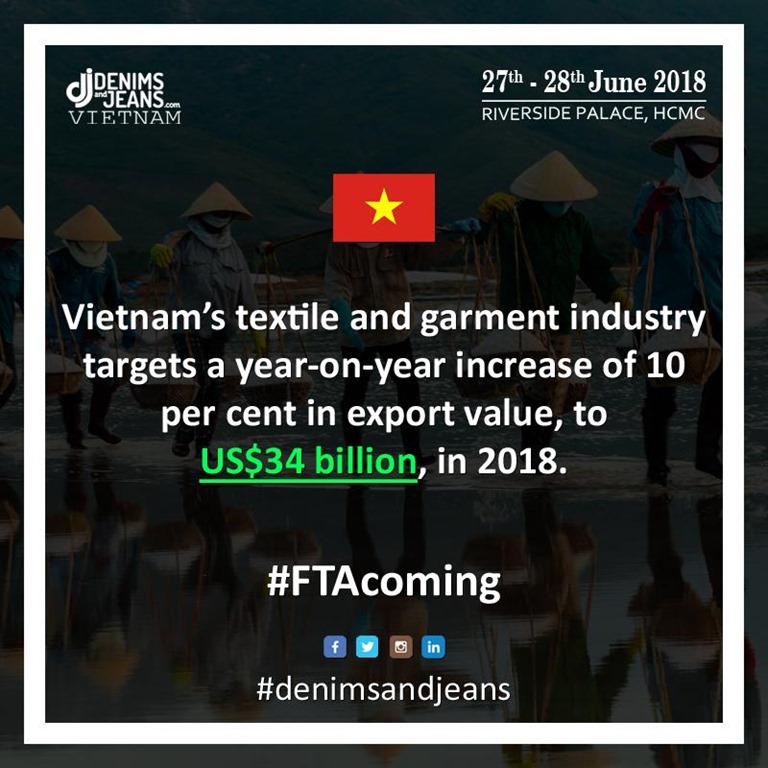
    Undoubtedly ,the trade is pacing up in the country by leaps and bounds , especially the apparel segment has been growing and even after the TPP fiasco , the country is performing very well in the US market.After having achieved about $31 billion in 2017, as per report, Vietnam   is targeting exports of US$34bn in 2018 as it looks to invest more in technology to increase productivity and shorten delivery times, and increase its focus on markets such as Australia and Russia.In the year 2017, Vietnam’s garment-textile exports to major markets like the US, the EU, Japan, the Republic of Korea and Russia increased by 7.2 percent, 9.23 percent, 6.1 percent, 11.8 percent and 56 percent, respectively.

    Background Of EVFTA ( Europe-Vietnam FTA)

    Negotiations for an EU-Vietnam FTA were launched in June 2012.The EU considers the FTAs with individual ASEAN countries as stepping stones towards an agreement in the regional framework, which remains the ultimate goal and on 2nd December 2015, after nearly 3 years with 14 rounds of negotiations, the Minister of Industry and Trade of Vietnam, H.E. Vu Huy Hoang and the European Commissioner for Trade, H.E. Cecilia Malmström had signed the Vietnam-EU Free Trade Agreement (FTA). Both parties were to finally ratify the same and the FTA was to be effective from 1st January 2018.

    Nearly all customs duties – over 99% of the tariffs will be eliminated. The small remaining number is mainly due to the transition period. Vietnam will liberalize 65% of import duties on EU exports to Vietnam at entry into force and the remaining duties will be eliminated due to the next ten years; EU duties will be eliminated over a seven year period. The market will be opened for most of EU food products, i.e. wine, spirits and frozen pork meat will be liberalized after seven years and dairy products after a maximum of five years. The EU will eliminate duties for some  products in the textile and footwear sector. The EU has offered access to Vietnamese exports via tariff rate quotas (TRQs), because some sensitive agricultural products will not be fully liberalized. Furthermore, the agreement will contain an annex with provisions to address non-tariff barriers in the automotive sector. Vietnamese exports of textile, clothing and footwear to the EU are expected to more than double in 2020 as a result of the FTA. The FTA will also help to increase quality of investment flows from EU, accelerate the process of sharing expertise and transfer of green technology and the creation of more employment activities.

    Vietnamese Exports Certain products that are sensitive for EU producers, particularly in the textile apparel and footwear sectors, will have longer liberalisation periods of up to 7 years. A specific example of this are leather shoes, which will have a long liberalisation period of 7 years, while less sensitive products such as synthetic shoes, will be fully liberalised from day one..

    Impact Of FTA

    The impact of the FTA is expected to be significant, considerably increasing trade flows between Vietnam and the EU in various areas. Vietnam’s exports of textile, clothing and footwear to the EU are expected to more than double in 2020 as a result of the EVFTA, according to law firm Duane Morris. It will not only be Vietnam and the EU that benefit from the boost to trade. “Vietnam is a production base for Korean businesses exporting globally, so Vietnam’s efforts to develop FTAs are very important for Korean companies, and they have a lot of interest in the EU deal,” Hwang Soon Sung, counselor at the Korean Embassy in Hanoi, told OBG.

    The FTA also includes better market access for EU investors, and strengthens regulations on intellectual property. EU firms will be able to bid for many public contracts and will gain improved access to sectors like banking, insurance and maritime transport. Industries such as food production and construction materials will also be opened up to greater EU investment.The text of the FTA reflects the ambition shown by Vietnam during the negotiation process. Implementation of its provisions will help Vietnam to enhance the quality of its economic governance in line with the sustainable development commitments embedded in the FTA. By enabling a more business-friendly environment, this will have positive impacts not only in terms of increasing market access opportunities to the EU, but also for its own domestic industry.

    “The EU remains fully committed to invest in the development of the country, as our strategic partnership goes beyond trade issues and development cooperation,” Bruno Angelet, the EU’s ambassador to Vietnam, told OBG. “Vietnam is a now a benchmark for the other ASEAN countries that are willing to engage in FTA negotiations with the EU.”

    When EVFTA will be implemented, it would become one of the most ambitious and comprehensive investment agreements that have been signed between the European Union (EU) and a developing country. After the agreement is put into effect, Vietnamese enterprises can get access to a potential market with the population of more than 500 million people and the total Gross Domestic Product (GDP) of US$15,000 billion which accounts for 22 per cent of global GDP. By contrast, investors coming from EU can enjoy a market that has the most rapid economic growth in the region with the population of more than 90 million people. Economic experts said that once it will be approved from the parliament and implemented, it will contribute about 2.5 per cent to Vietnam’s GDP in 2020 and 4.6 per cent in 2025.

    Implementation Date

    Gellert Horvath, Co-chairman of the European Chamber of Commerce in Vietnam (EuroCham) said that EU and Vietnam are striving to promote the preparation of EVFTA, hoping to sign the agreement in the mid of 2018.

    The FTA was supposed to be implemented in January itself but there has been some delay and the EU officials feel that by Mid 2018, the agreement would be effective . Thus its looking like July 1st might be the effective date of implementation of the agreement.

    Vietnamese Apparel & Textile Industry So Far

    Vietnam is understood to have earned US$31 billion from exports of textile and garment this year, a ten per cent increase compared to last year. A report of The Vietnam Textile and Apparel Association (VITAS) shows that in 2017, Vietnam’s exports of garment products to the US reached US$12.53 billion, 9.4 per cent higher than 2016; the figures for EU and Japan are estimated at US$3.7 billion and US$3.05 billion respectively.

    According to Le Tien Truong, General Director of Vietnam National Textile and Garment Group, the textile and garment export turnover this year has increased by 40 times compared with a decade ago when Vietnam joined the World Trade Organization (WTO). He stressed that this growth was particularly impressive considering that imports fell 0.85 per cent.

    Viet Nam has also boosted its exports to China with new products such as yarns and fibers and reached a turnover of US$3.2 billion which is equal to the figure for Japan, the third largest export market of Vietnam for more than 20 years. In addition, the Eurasian economic union (EAEU) has also marked the return of Vietnamese textile and garment to the markets in the former Soviet Union. In the years 2016-2017, exports to Russia grew at a rate of 56 per cent and now have reached approximately US$200 million. FTA with Russia is helping push the figures.

    “Russia is a major potential market for Vietnamese textile and apparel exports, as Russia’s total imports reached US$9.8 billion, but Vietnam has only a 1.8% market share currently,” said Truong.

    Since the Vietnam Textile and Garment Association and the Vietnam Textile and Garment Group have been deeply involved in the negotiation process of most of FTAs, they have been enabled to update the information promptly and therefore, proactively recommend options for the negotiating delegation to take advantage of the textile and garment industry. In order to promote the advantages of FTAs, Truong suggested that the government, ministries, and departments should promote new economic cooperation, especially the Comprehensive and Progressive Agreement for Trans-Pacific Partnership (CPTPP) and the EU-Vietnam Free Trade Agreement.

    Is TPP Dead Or Is There Still Something Cooking ?

    After the exit of USA from the much talked TPP with Vietnam , the remaining 11 members of the TPP, Australia, Brunei, Canada, Chile, Japan, Malaysia, Mexico, New Zealand, Peru, Singapore and Vietnam, made significant progress towards sealing a deal in Da Nang in November’17. It’s thought that the new deal, rebranded as the Comprehensive and Progressive Agreement for Trans-Pacific Partnership (CPTPP), might be signed as early as March. Once it has been ratified by member parliaments, it may be expanded.

    The US saw the TPP as a way of containing China’s influence in Asia Pacific. But in its absence, China may join further down the line, as well as the likes of South Korea and Indonesia. Currently, TPP chapters on state-owned enterprises, along with those on intellectual property and competition, would be difficult for China to meet.However, recently there has been interest by UK to join this group.

    “While the UK has strong incentives to want in to the TPP, it is less clear why the Pacific countries would want to expand the deal to the Atlantic and the UK. The UK market is not insignificant, of course. Getting additional members into the TPP helps the existing countries by increasing the size of the overall market included in the agreement,” writes Deborah Elms, CEO of the Asian Trade Centre in Singapore, in a recent blog post.

    Countries such as Vietnam would welcome access to the UK garment and footwear market, for instance, which, while smaller than the US, is still sizeable.

    “In fact, we have UK investor clients who have already invested in capital equipment in Vietnam to produce garment exports for the UK market. They and their Vietnamese partners had expected the EU-Vietnam FTA to enter into effect sooner, so they are still struggling with high EU duty rates. The TPP might just save their shirts, so to speak,” says Burke of Baker McKenzie.

    As it stands, the idea is far from reality. Opposition figures in the UK have criticised the government for disengaging from more pressing issues closer to home. However, once the UK exits the EU the pressure to seal substantial agreements around the world will be huge. If the UK joins the TPP, the game will be more interesting for Vietnam and other stakeholders.

    To date, Viet Nam has passed 10 bilateral and multilateral trade agreements, including ASEAN Free Trade Area, five ASEAN+1 FTAs, and FTAs with Japan, South Korea, Chile , Russia and the Eurasia Economic Union.
    Viet Nam has also concluded FTA negotiations with the EU and was negotiating Regional Comprehensive Economic Partnership (RCEP) and Comprehensive and Progressive Agreement for Trans-Pacific Partnership (CPTPP).About 60 countries had already negotiated or were negotiating FTAs with Viet Nam, which accounts for 90 per cent of Viet Nam’s trade

    FTAs have played a vital role in the development of not only Vietnam but also other countries in the world. Free Trade Agreements have proven to be a key driver of economic reform and the most effective instruments to boost trade and investment. Experience has shown that each time an FTA is ratified and implemented, it has a rapid and significant impact on the participating countries’ economies, largely because it secures trade/services and long-term investment which are the top priorities for sustained and successful business development. That is why Vietnam, since the start of the open door policy, has followed a consistent and effective strategy of developing FTAs with its major trade partners and its FTA with EU will turn out  to be its largest agreement affecting its economy.

    Disclaimer : The data and information have been taken from the various local and international newspapers and government websites and compiled here.

  • Bill Watson Explains Vietnam’s FTA with EU and Other Regions

    Bill Watson Explains Vietnam’s FTA with EU and Other Regions

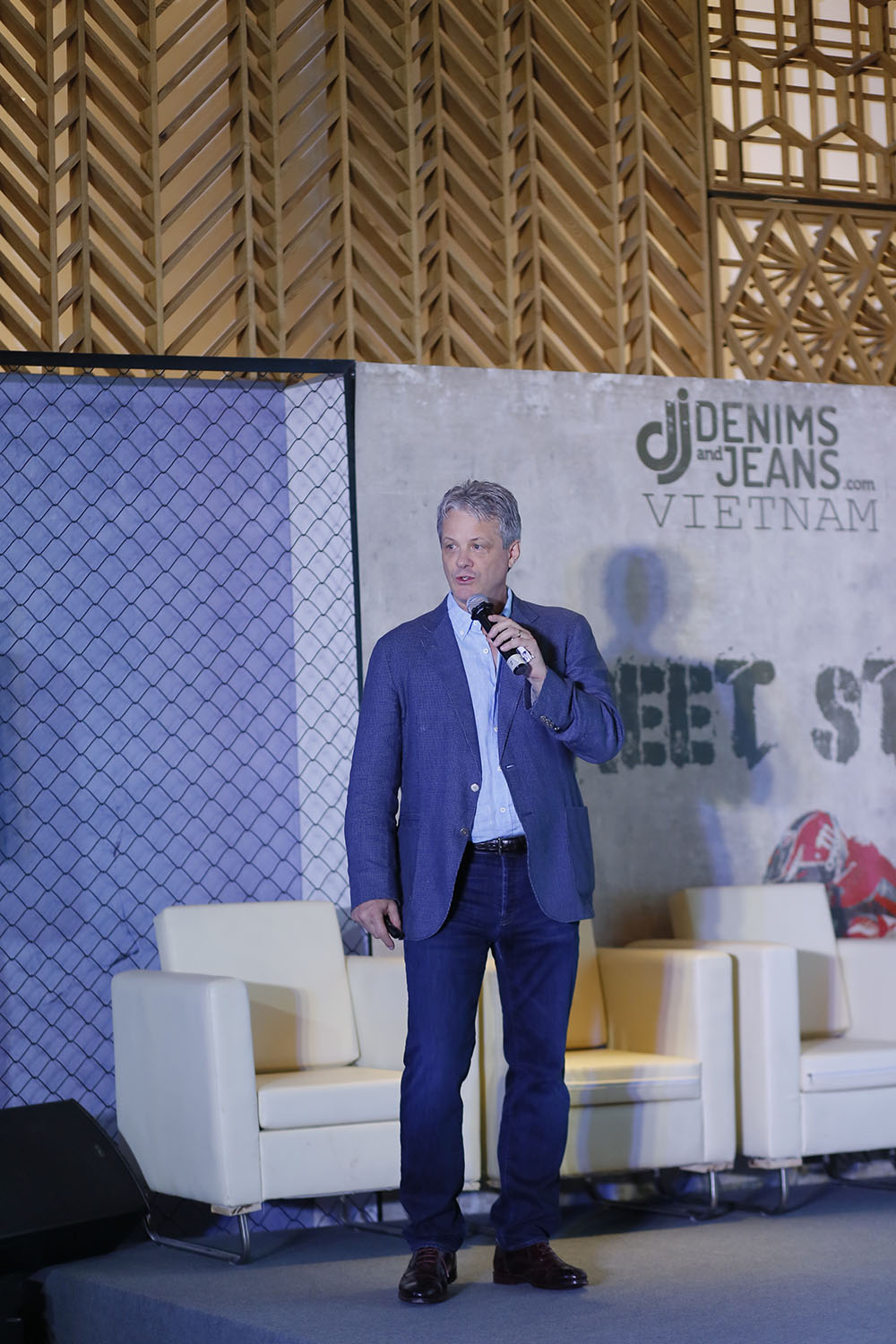
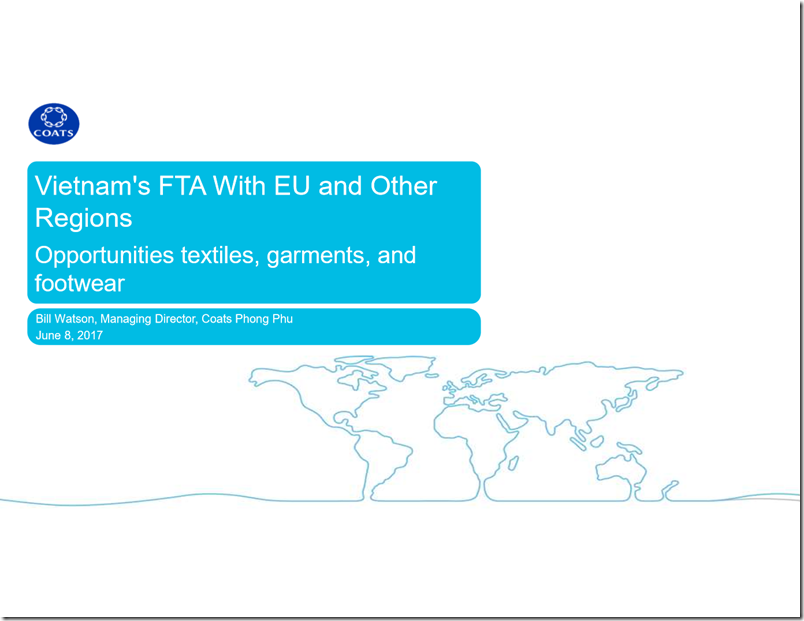
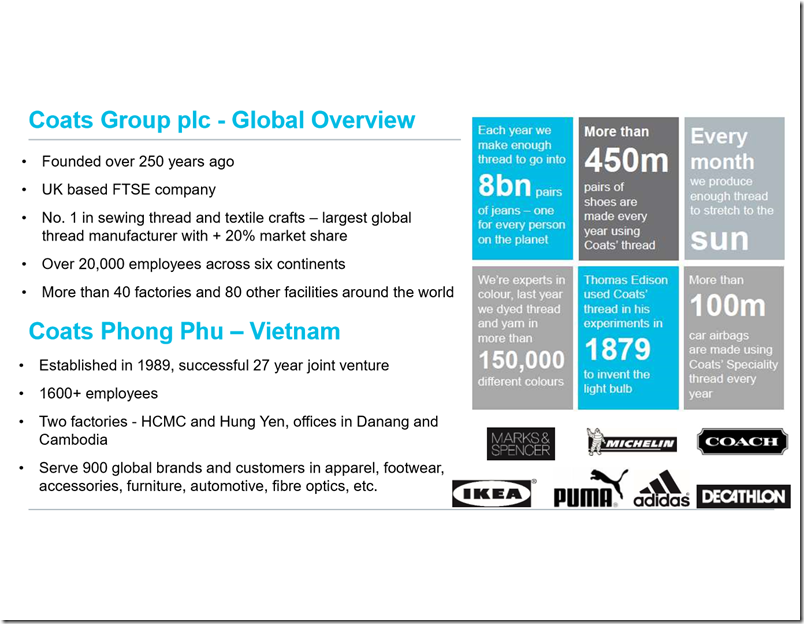
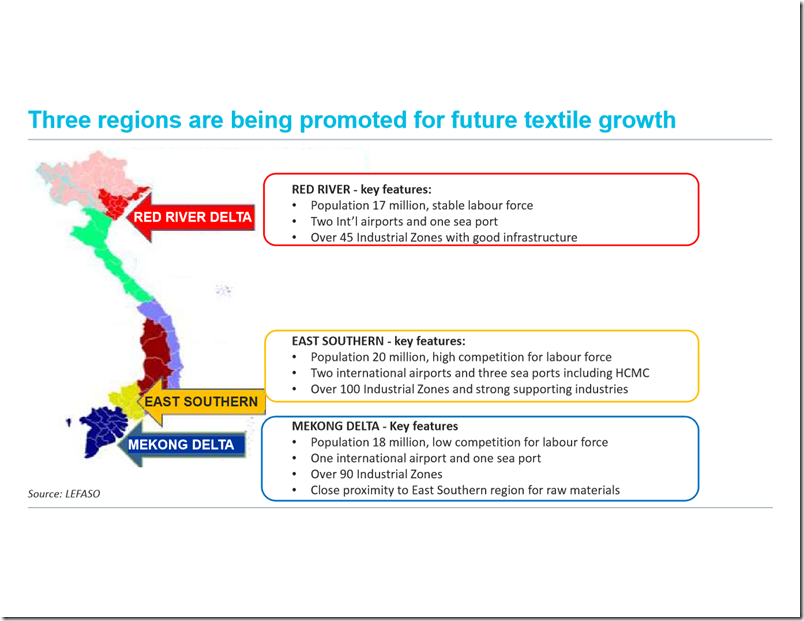
    Bill Watson | Denimsandjeans.comVietnam has entered into or is in the process of entering into various FTAs with different regions around the world . All these FTAs are giving a big edge to Vietnam to grow its apparel industry in the next few years. However, not much clarity is there on how these FTAs would function and what advantages they would give to different segments of the industry. This ambiguity was sought to be addressed by one of our keynote speakers – Mr Bill Watson – the MD of Coats Vietnam, Korea and Cambodia cluster . He made a great presentation at the  2nd Edition of Denimsandjeans Vietnam Show and explained lucidly about the various FTAs that Vietnam has signed or is in the process of signing. The presentation was greatly appreciated by all attendees and we bring some highlights from the same as well are providing a download link to this presentation.

    We shall be shortly uploading the video with his full presentation shortly .

    For full presentation, Kindly click on the below link.

    English Version

    https://www.vmshow.denimsandjeans.com/seminar/English.pdf

    Vietnamese Version

    https://www.vmshow.denimsandjeans.com/seminar/Vietnamese.pdf

    HIGHLIGHTS

    Vietnam Garment and Footwear Exports

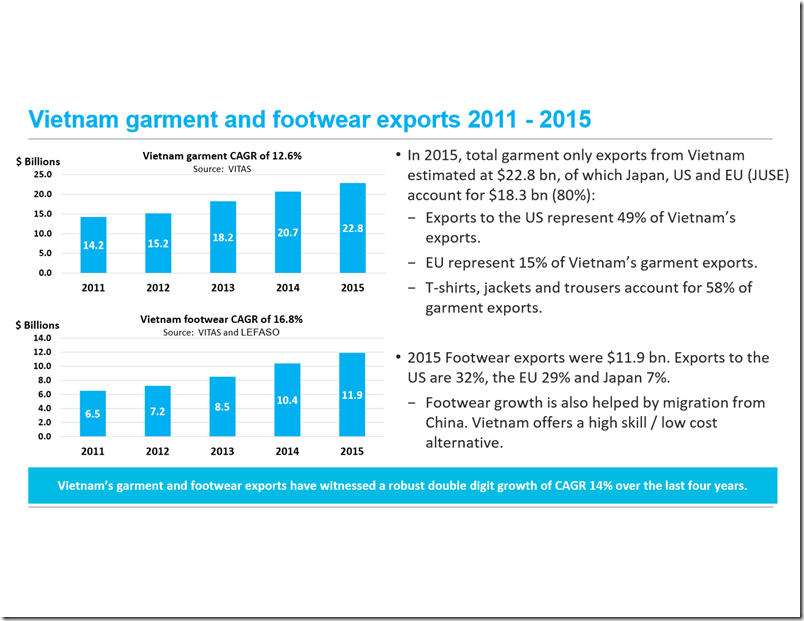
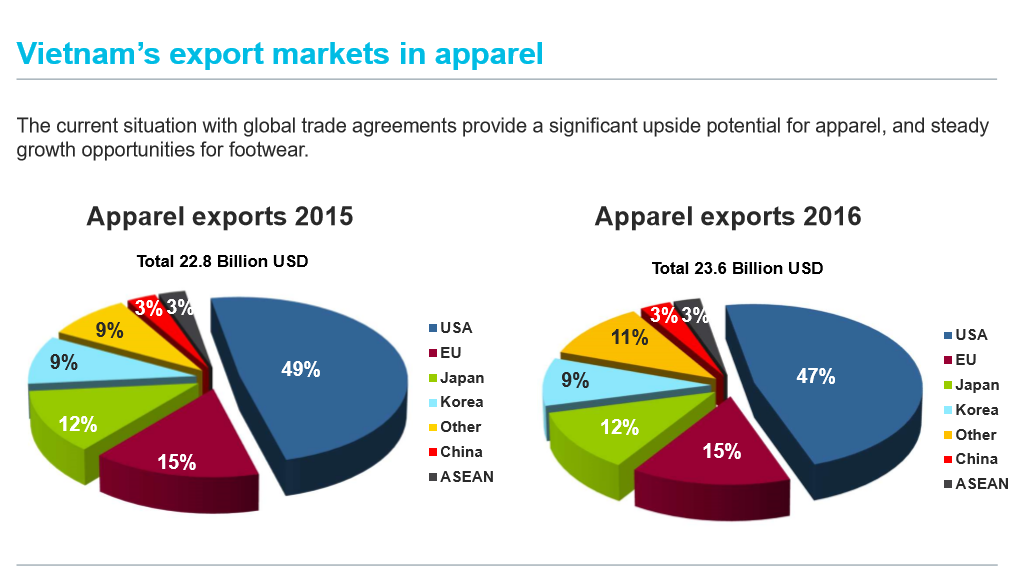
    In 2015, total garment only exports from Vietnam estimated at $22.8 billion, of which Japan, US and EU (JUSE) account for $18.3 bllion (80%) :

    • Exports to the US represent 49% of Vietnam’s exports.
    • EU represent 15% of Vietnam’s garment exports .
    • T-shirts, Jackets and Trousers account for 58% of garment exports .
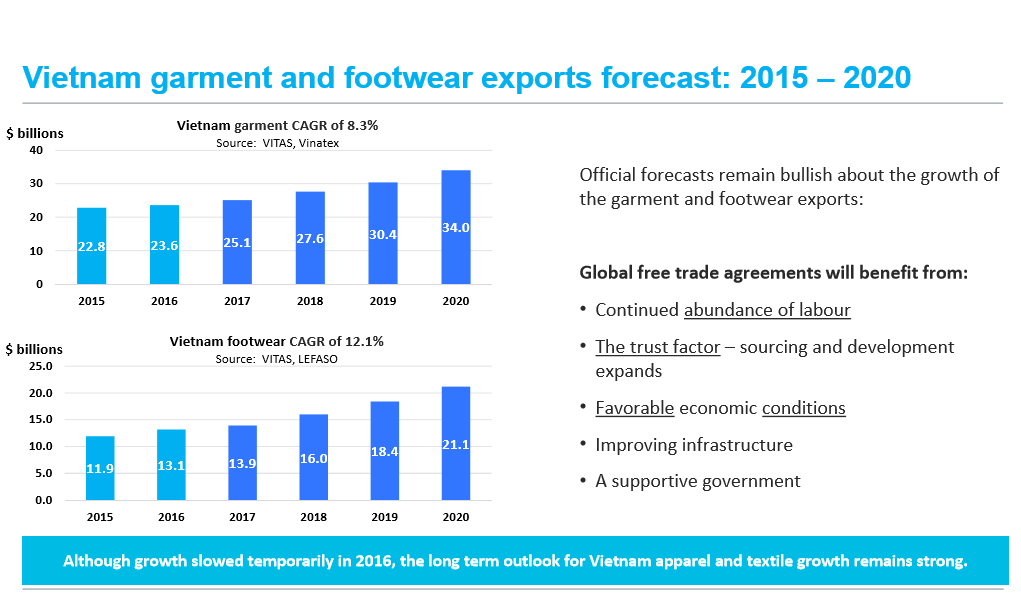
    • 2015 Footwear exports were $ 11.9 billion. Exports to the US are 32 %, the EU 29% and Japan 7%.
    • Footwear growth is also helped by migration from China. Vietnam offers a high skill / low cost alternative.
    EVFTA -Qualifying For Tariff Reduction  (FTA With EU)

    Products must prove they are “originating” or have undergone specific levels of alteration within Vietnam.
    • For the complete text of the EVFTA and other Vietnam FTAs http://wtocenter.vn/infocus/vn-eu-fta

    • For additional help on importing goods into the EU http://exporthelp.europa.eu/thdapp/index.htm

    Seminar By Will Watson | Denimsandjeans.com Seminar By Will Watson | Denimsandjeans.com

    Seminar By Will Watson | Denimsandjeans.com

    Seminar By Will Watson | Denimsandjeans.com

    Seminar By Will Watson | Denimsandjeans.com

    Seminar By Will Watson | Denimsandjeans.com Seminar By Will Watson | Denimsandjeans.com


  • TCE Denim From Korea Celebrates 60th Anniversary And Expands Production

    TCE Denim From Korea Celebrates 60th Anniversary And Expands Production

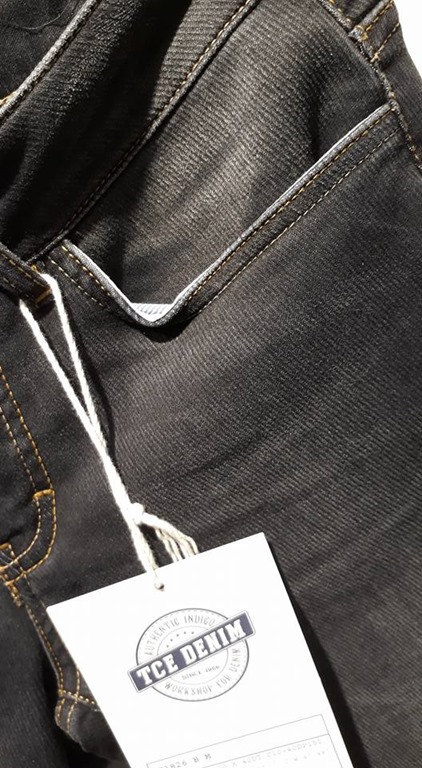
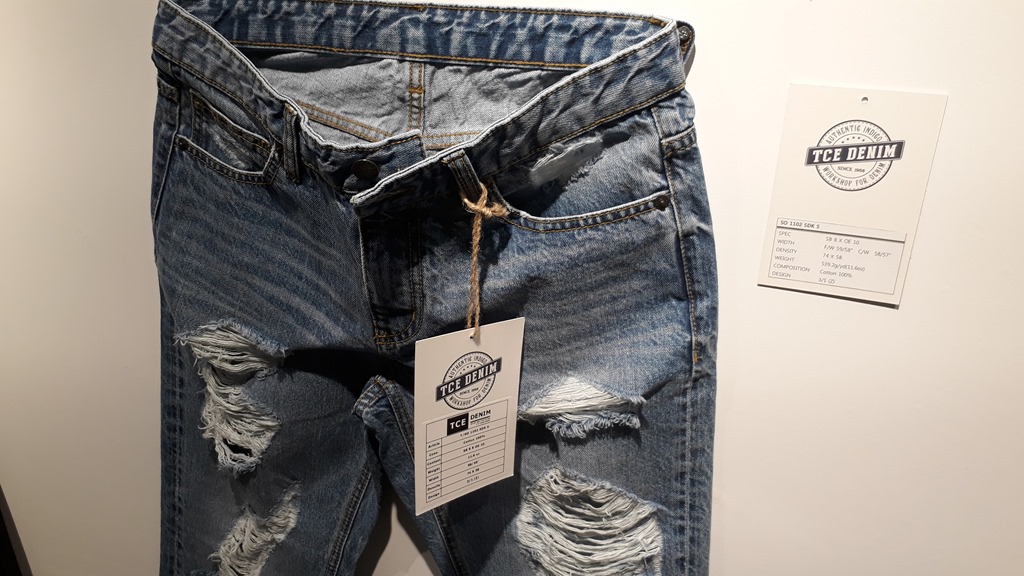
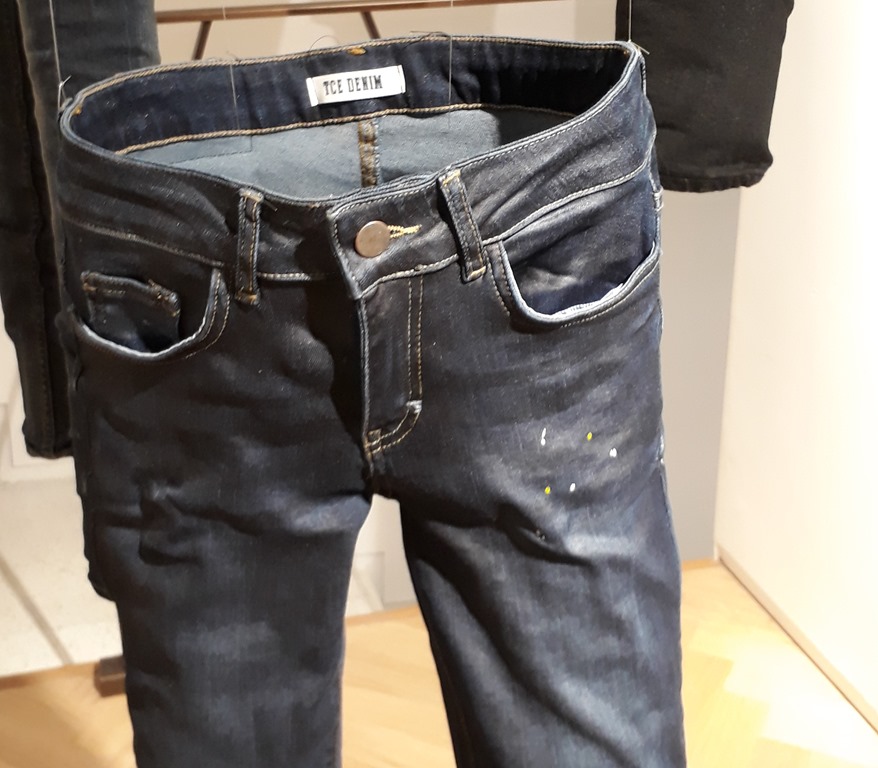
    imageTCE denim – a South Korean company -  is the largest denim manufacturer in Vietnam and is set to grow bigger expanding to 3.5 million yards per month in 2017.  One of the earliest mills in Vietnam, TCE sees considerable denim growth happening in Vietnam and hence have decide to grow exponentially from their current capacity.

    TCE is probably one of the 5 oldest denim company in Asia and celebrated its 60th anniversary .  The company started manufacturing denim fabrics in 1969 when there only a couple of companies like Kaihara had begun producing denim within Asia  in Japan. It has a rich history and tradition in denim and had a great mill running in Korea until the rising costs of production made it difficult to produce in Korea. Having continued and serve the industry for many years, the company took the decision a few years back to move to Vietnam- a country which has not only abundant , skilled and disciplined labor but also a growing local population and most importantly rising stature as an international sourcing country. Vietnam seems on course to clock USD 29 billion of textile and garment exports this year as per target and inspite of TPP losing steam, the country is going ahead on the strength of its infrastructure and potential benefits from other regions.

    20161215_13183420161215_133519

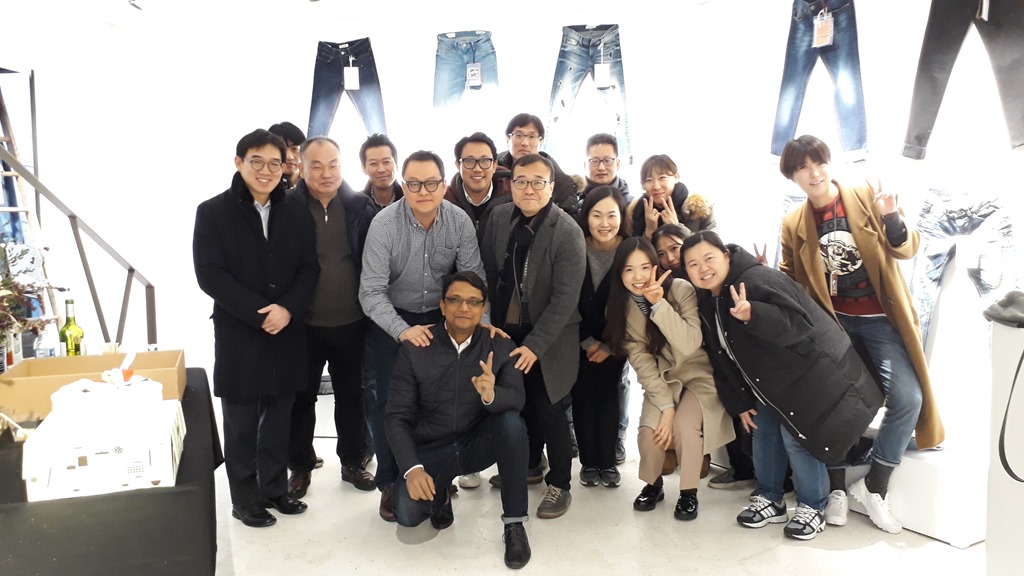
    On a trip to cover the 60th anniversary of the company on their invitation a, it was great to speak to Mr Stanley Thwang  . He was enthusiastic about their 60th anniversary and expansion of capacity. He mentioned about the long history of his company . He also spoke about one of the greatest strengths of his company – they make their own rope dyed machines . This is

    “Our company started in 1956 but our denim production in 1969 and we were perhaps the third company in Asia after Kaihara and Kuroki to make denim fabrics. Besides we also produce our own Rope Dyeing machines . The entire designing , manufacturing and erection of the Rope dyed machines is done by our team. That is one of our strong points. Our latest machines has 22 dips  which provides the dark indigo color the market needs. We are currently making 1.5 million yards per month in Vietnam and expanding to 3.5 million yards. We shall be having 5 Rope dyeing machines for this capacity. One of these machines will be optional  and will be used for color dyeing including sulphurs , reactives, topping and bottoming”

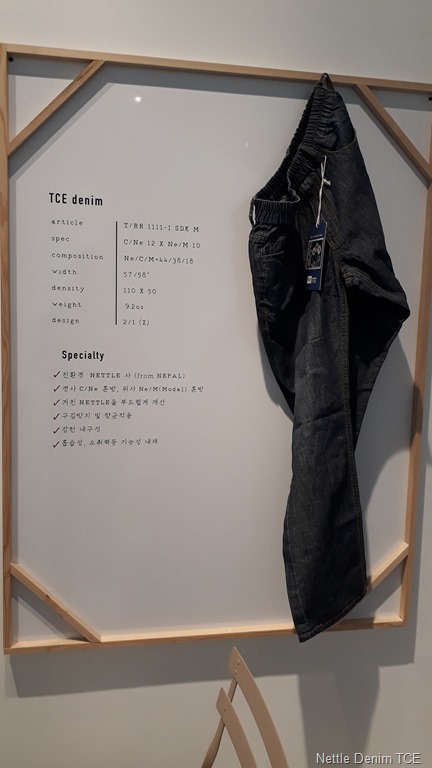
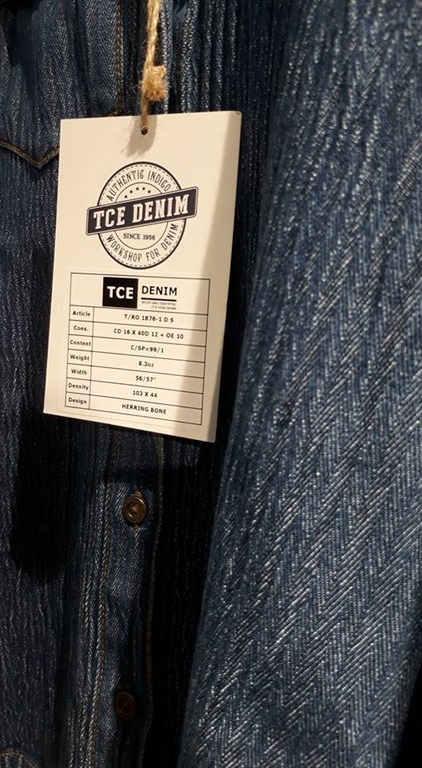
    The company showed some of their latest products which include the NETTLE Denim – made of nettle fiber from Nepal and which is a very eco friendly fiber using minimum natural resources and has anti bacterial properties , some special constructions including herring bone  , functional fabrics inclding recycled coffee fabrics with moisture control functions  and others.

    On Vietnam, Mr Stanley said

    “Vietnam market will be very booming. EU FTA is expected to be implemented by Jan 1, 2018 and European buyers have already started coming. Also the effect of China is there whereby there is a shift in buying from China to Vietnam and this is causing demand in Vietnam. Besides we will be going for a vertically integrated facility including garment manufacturing to provide full package facility to our buyers from US and EU. “

    TCE DenimTCE Denim

    20161215_170346

    TCE Denim

    TCE Denim