Author: Sandeep Agarwal

  • Acid Washes On Denim Jeans


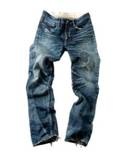
    acid wash denim jeans acid wash denim jeans

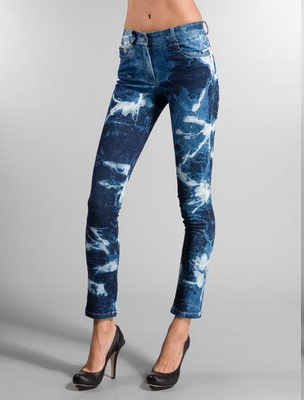
    Acid wash is again becoming popular on denim jeans and we are going to see more of acid washes in the coming seasons. Here , lets have a quick look at the acid washing process .

    An acid wash finish treatment creates significant contrasts in the color of the denim material. It can be done on Indigo & Sulphur base fabric garments. As the randomly faded, acid washed style came into vogue in 1980s, the process of treating denim in such a way began to become increasingly refined. Some tried to use a method similar to the stonewashing, yet the fading did not occur as dramatically or throughout the material.

    In 1980’s this washed being launched as first innovative finish on denim ever. This was being done by soaking stones in Bleach and making acid wash effect followed by neutralization. But this process was not so re find to get some how consistent & smooth effect on denim. In early 2000 some laundry tried doing the same wash soaking thermocol bolls in bleach or pp solution to get this desired effect.

    While this process can be done using either light bleach, chlorine , potassium permanganate etc. The most popular is PP Bleach and will produce the best acid washed results. Doing the process is very simple , but following all parameters in correct way to have right & repeatable results. The load size of garments, machine drum diameter, quantity of soaked stone / towels & skilled operator.

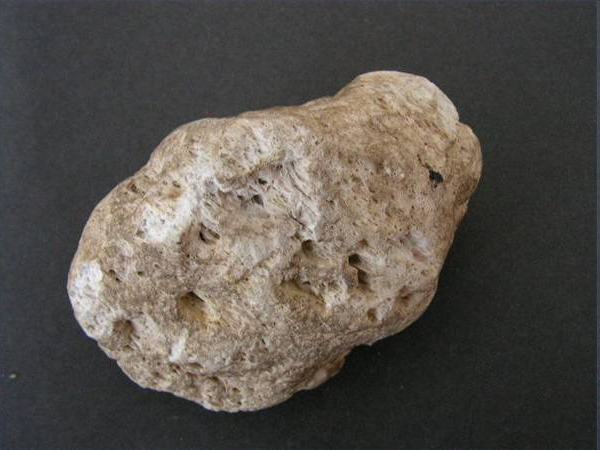
    Initially, the Acid Wash process involved soaking pumice in Industrial Strength Chlorine .However, it was discovered that potassium permanganate was more controllable and just as strong an oxidizer. They simply marinated pumice stone in it and then vacuum packed the stone to the required moisture level. Acid wash was a chemical process on  denim that stripped the top layer of color off to a white surface with the undertones of navy blue remaining in the jeans.

    The Materials

    The process of acid washing jeans involves porous pumice stones or small towel pieces and chlorine or Pp Bleach, such as you would put into a bucket or in drum for soaking process. Sodium-bisulfate is used in the second washing for Neutralization. Also recommended is access to two separate washing machines. One for Acid Washing & another one for further process i.e. Neutralization etc.

    The Acid Washing Process On Denim Jeans

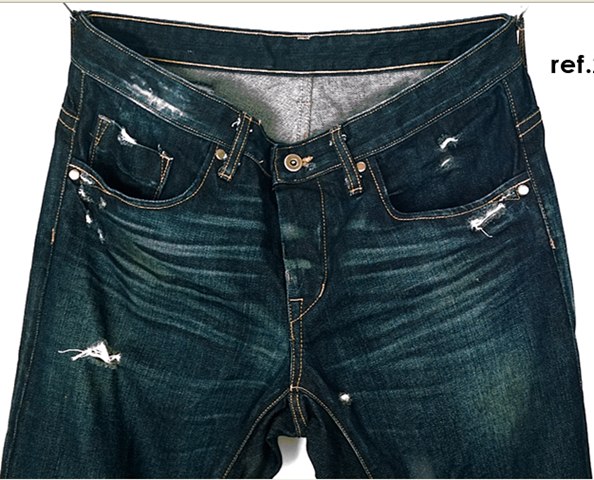
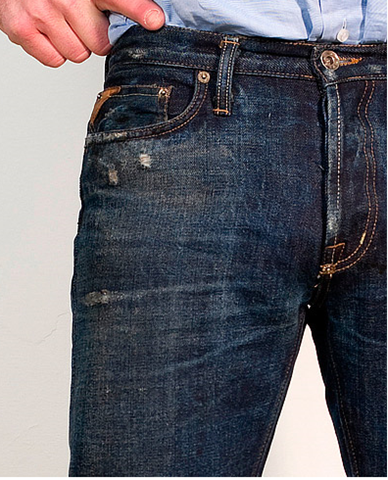
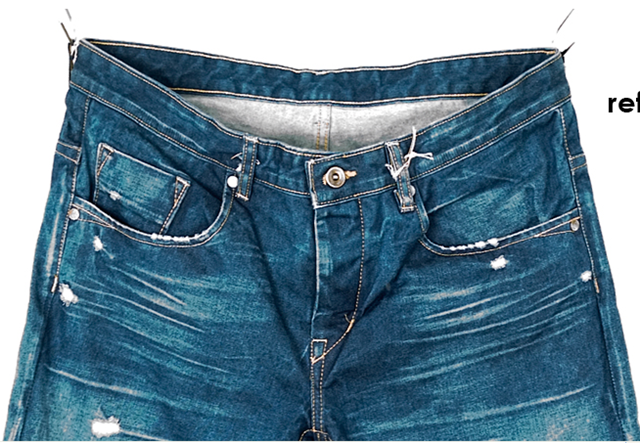
    The process of acid washing jeans used chemicals, stripping off the color of the top layer, leaving the white fabric exposed. The color remained in the lower layers of the material, giving it a faded look. Acid washing could be done overall or made to look splotchy.

    pumice stones for acid wash jeans acid wash denim jeans process

    1.Soak porous pumice rocks or pieces of towels in chlorine or PP bleach solution for about 20 minutes to an hour. The longer you soak the pumice or towel, the more prominent the effects will be.

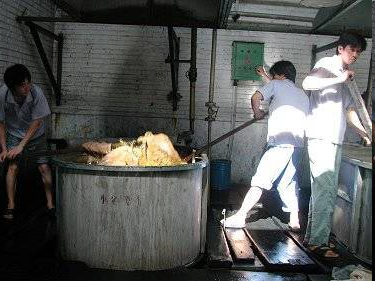
    2.Once the stones are saturated with chlorine/pp, remove excess water from stones/towel then put the stones in machine followed by the jeans in a washing machine for about 20 minutes. Make sure machine do not have single drop of water, open the drain during complete process

    3.At this time, check on the jeans to ensure they look acceptable, and then move them to another washing machine for a regular washing process. Too long in the first machine can totally bleach or ruin the jeans, and too little time may not produce the desired results or can make patchy appearance. Check on the jeans once every 10 minutes or so during the second wash process of neutralisation to ensure the desired look is achieved.

    4.Next, fully dry the jeans in a dryer that gets nice and hot.

    Precautions

    Any time we mess with chemicals such as bleach or chlorine or PP, be sure to protect workers by wearing mask & aprons , so it is best to be fully prepared. Also, protective rubber gloves and safety glasses are highly recommended. These products can burn skin and eyes pretty badly.

    About Author : 3E’s Consultants, Group of experts, focused on Denim Fashion, Providing consultancy to all Denim Garments Finishers..Contact for further info email here

  • Denim Trend Analysis – Compare Different Trends, Brands & More

    denim trends

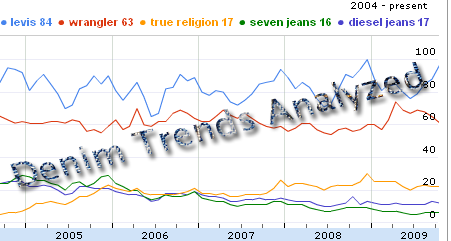
    Denim trends – like all other trends – are always difficult to quantify. Eg though we know that a particular trend is on – eg Skinny Jeans trend – how can we find how this trend compares to another trend – say Wide Legged Jeans . Fortunately there are some tools provided by Google which can help us find the same.
    We have now created a page dedicated to denim trends which will have dynamic charts to help find out

    • What the consumers are looking for in their denims.
    • Which brands they are searching more ..
    • Which trends are getting popular in a time frame of as less as last 1 quarter.
    • How these trends compare with each other relatively – Eg if one trend is having a popularity index of ‘1’ and another is having a popularity index of ‘5’ , we can safely assume that the second trend is almost 5 times as popular as the first trend (though these are always approximations).

    So if you are looking for a dynamic and continuous information on denim trends, bookmark and VISIT THIS PAGE

  • Diesel Flash For Fun Collection – Fall/Winter 2009

    diesel flash for fun denim collection

    Did you have a look at the Diesel Flash for Fun Collection ?

    Well, if you play hard in the day and are a party guy at night and do not take time to change in between, this collection can be interesting for you .

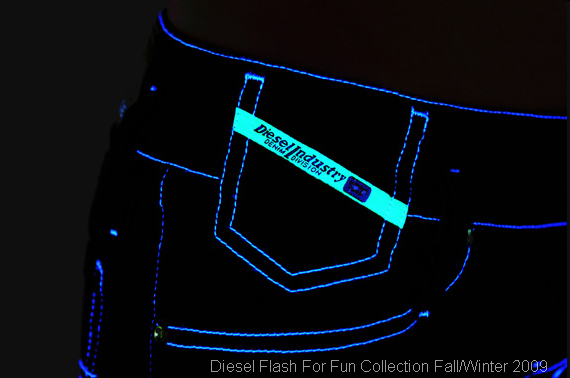
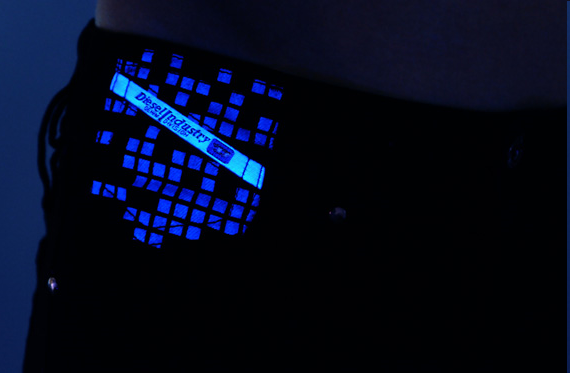
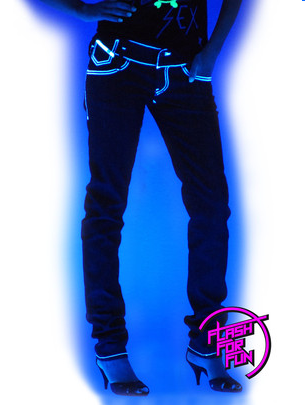
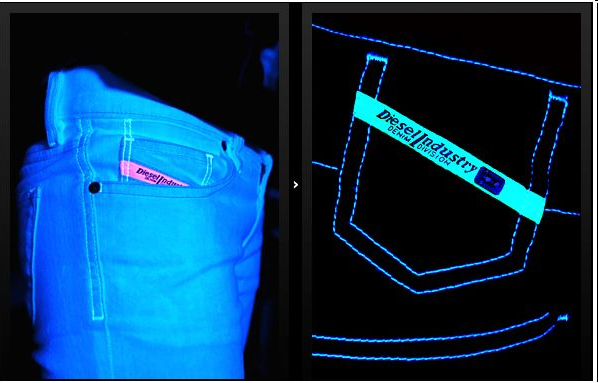
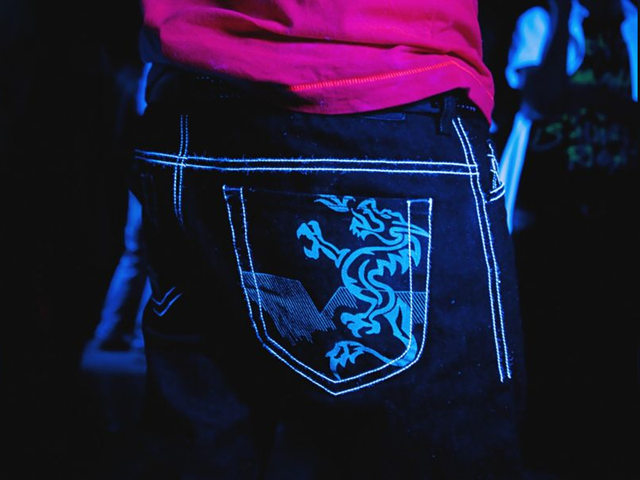
    The collection features glow-in-the-dark jeans which look perfectly normal during the day and it is only under the UV lights that they glow. Diesel has been making a lot of shirts and T-shirts with glow-in-the-dark features. But this collection is slightly different as it reveals extremely bright details of stitching , graphics etc during the night. A special fluorescent coating designed to glow under UV lights is laid on some parts of the jeans eg stitches, back pockets etc and it helps those parts to glow . Hidden graphics like ‘Dragons’ are revealed on the backpockets during the night.

    The concept behind this collection was headed by Creative Director, Wilbert Das.  Priced at around $120 Flash For Fun pieces are intended for nightlife lovers.

    I think Diesel has timed this collection well  in these times of economic recession . These jeans double up as day and night(club) clothing – saving some money for the users. If this collection is successful, it will encourage some more brands to follow suit.

    diesel flash for fun denim collection

    diesel flash for fun denim collection

    diesel flash for fun denim collection

    diesel flash for fun denim collection

  • Whiskering Inconsistency On Jeans – A Solution

    Whiskering inconsistency is a regular problem in denim jeans production . It requires highly skilled workers to create the right kind of whiskers consistently.
    However, even with the highest levels of consistency, the element of uncertainty remains and whiskers may not be uniform across the  entire production .

    Modul SRL of Italy has devised moulds for jeans which it claims can provide a very high level of consistency by providing inbuilt whiskers on its moulds. This enables the worker to just scrape normally on the jeans and the whiskers appear uniformly without the effort on the part of the worker to create the same and the whole whiskering and hand sanding process is complete within 4 minutes.The company claims to be the only producer in the world of a technology to replicate the vintage look that they sell to contractors around the world and big denim producers .

    How do these whisker moulds work ?

    Take a look at this video first to understand how this mould system works


    As you can see from the video above, the worker scrapes normally on the jeans put on the Modus Moulds and whiskering appears itself in a predetermined pattern. Thus the whiskering can be done by a relatively inexperienced worker also.

    These moulds look quite interesting if they perform consistently. However, the cost of these moulds may be an issue as they are not cheap .

    How Can A Jeans Factory Use These Moulds

    • A factory needs to buy at least 5 moulds to start using this system and since each mould costs around Euro 700, an investment of about 3,500 Euros is required to make a beginning.
    • All moulds are expandable to three sizes – small ,medium and large.
    • Each mould lasts 5000-7000 inflations – though it depends on the skill of the operator.
    • Each mould can produce only one whisker pattern. If the client needs to recreate any whisker pattern (from any jeans eg) , Modus can recreate the mould for the same and ship to the client within 1-2 weeks.
    • The company also provides protos moulds prized at Euro 370 which can be used for sampling purposes.

    Here are some whiskers patterns created using these moulds

    whiskers on denim jeans

    whiskers on denim jeans

    whiskers on denim jeans

    whiskers on denim jeans


    Note:Modus has also designed a denim brand Onvis using this concept. ONVIS is a project which tells true stories . They  are offering raw denim jeans – BLUEVIRGINS– and asking consumers to live them everyday by (ab)using them as much as possible. Once daily life has left it’s traces on the denim (ususally within 6months – 1 year without washing !) Onvis encourages consumers to send used pair of BLUEVIRGINs back to be evaluated and to be chosen and replicated for one of our next ‘TRUESTORIES’ limited edition (up tp 5.000 pieces). The respective life storyteller will get paid a royalty of 1,00 Euro per piece on the collection’s effectives sales (max. 5,000,- Euro) and will be portrayed on their website.

  • Latest Emerging Denim Trends – Google Helps

    We all know how to use Google search to find various information that we are looking for. Google has now become a way of life and it is increasingly becoming so by adding new services to their portfolio of existing services.

    Google Insights provides information on recent searches related to your keyword . This is a great way to see which areas of your topic are becoming more popular with searchers. So Ilets see how it can help us to find ‘Denim Trends’

    Look at the chart below . It shows the searches related to ‘Denim’ in last 90 days which have experienced the highest growth. Since this is a dynamically embedded chart, it will keep on updating automatically and show the latest popular searches related to denim. Since these results may include any kind of search related to denim , we need to sort out the ‘Trends’ out of the results.
    As on the date of writing this post,  we can see that  ‘Lee National Day’ and ‘National Denim Day’ are popular searches currently. However, if we look further , we will find that ‘ Denim Leggings’ is a very popular search term which clearly shows that it is of increasing interest . We had also already mentioned in a previous post that Denim Leggings IS a cool denim trend.

    Another interesting search term coming up in popularity is ‘Double Denim’ . Though double denim is considered anathema by most fashionistas around the world, it seems to be catching up a bit. In the coming weeks, as we observe this chart, we can see the shifting position of various search tersm in relation to one another – so bookmark this page and check again . My feeling is that ‘Denim Legging’ would come up to the top of the list in a few weeks..


    Here is another chart for the searches on ‘Denim Leggings’ .This rising graphs shows the increasing searches on ‘Denim Leggings’ indicating consumer interest in this product. It is also interesting to note that the most searches for ‘Denim Leggings’ originate from US and the UK

  • Denim Dry Processing For Creating Vintage Jeans

    The distressed jeans that we see around everywhere undergo a wide variety of wet as well as dry treatments to get the desired effects.  Here I shall try to explain some basic Denim Dry Processing techniques. In the creation of vintage denim jeans, dry processes play a very important role and hence important to understand.

    Denim Dry Processing – Basic know how

    Destroying denims is as much an art as it is a technique. Details are added using a fine abrasive paper on a scraping tool. And extra whiskering can be added with sand paper. Sometimes a bit of local tint staining is being done into the local areas to emphasize the lighter parts. The jeans then go for a washing with pumice stone to blend in the whiskering and tinting / over dyeing. Where the folds and wrinkles go is where the art part comes in, it’s often through observation of where wear patterns are typically found. For some of mine I have several pairs of old well worn thrift store jeans that I use as a template to guide where I want the wear patterns. I chalk in where I want the details and then they are finished off site by me in my finish workshop. Some of what is done to customize jeans are patented secrets, no one other than those who work for these companies knows the exact techniques or the abrasives and chemicals used to achieve certain special effects. Here I am revealing some basic facts to the denimsandjeans.com readers……………..

    Below is list of operations being carried out on denim garment to achieve VINTAGE (used/worn out) look……

    • Hand Sand / Hand Scraping
    • Sand blasting
    • Whiskers
    • Chevrons
    • Knee Star / knee whiskers
    • Hot Spot
    • Tacking
    • Grinding
    • Damages / Destruction
    • PP Spray
    • PP Brush / towel
    • Patch / repair
    • Bleach spots
    • Resin application
    • Pigments & Local tint application etc…..

    1.Denim Hand Sand / Scraping

    clip_image001clip_image002

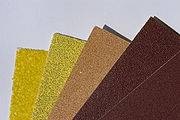
    Hand sand is step which is generally being done in rigid form of garments to get distress look. Locations can be front thigh & back seat or its can be overall / global application as per Standard. Emery paper is being used to scrape the garments in particular placement & design. Emery paper comes in different number generally start from 40 till 600 and above , higher the number finer the emery paper, lower the coarseness of the paper. In garment industry from 220 , 320 & 400 number papers are most popular & widely used.

    Purpose of doing this process is make used worn out look to the garments.

    The most important factor is to select right number of paper according to the fabric strength & intensity need. Feathering / merging white sanded part to dark blue area in such way that it should look natural & not artificial.

    Scraping can be done on inflated rubber balloons for better effect ( horizontal or vertical its up to operators convenience ) , even it can done plain wooden board of garment size & hand pressure should be uniform in order to get better results.

    Hand sanding must be started from intense part & feathering out on less intense part gradually. One garment must by done by one operator only to have balance intensity on both the legs.

    2.Sand Blasting

    This process is isolated now a days due to health hazards & buyers do not like the results of sandblast because its covers the characteristics of fabric. This process being done by using different kin d of sand blown to garments with air pressure to rub out the color.

    3.Whiskers/ Moustaches , Chevron , Knee Star, Hot Spot

    clip_image003clip_image004clip_image005

    On Denim, whiskers / Mustaches , Chevrons are nothing but the worn out lines / impression generated by natural wearing on hip & thigh area. There are many designs & pattern available.

    This is being done manually with help of sharp edge Emery paper rolled on fine wood stick or pasted on plastic material. Before starting execution placements & pattern must be marked on garments, this will help operator to execute the pattern right to match the aesthetics of garment.

    Hot spots are heavy/intense area on thigh or knee which is made purposely to create used look & on knee area if any whiskers line are there, called knee star.

    All above operations are carried out in width direction hence its appears intense than hand sand with less strokes, because hand sand is carried out in length direction.

    clip_image007

    4.Tacking & Grinding

    Tacking: is a process which is being done by swift tag machine with the help of plastic or nylon tag pins in rigid form of garment to get very heavy contrast ( rigid & washed ) on waistband, bottom hems, back pocket & front pocket corners etc.. after completing wash cycle, it must be removed from garment before making softening.

    Grinding: is being done on pocket edges & bottom hems edges by running against abrasion surface or stone to achieve worn out effect. Many different make of machines & pen grinding tools are available in the market which runs with pneumatic system.

    5.Damages/Destruction

    clip_image008

    One of the most popular distressing effects currently , ‘Destruction’ is an art which make denim look unique & used. To make destruction pen type of stone tools being used in mid of wash process to apply on desired area. It can also be achieved by cutting it thru knife the warp yarns & keep the weft yarn as is to show white thread. Holes also can be made by cutting weft & warp yarns. These are all manual processes & every garment will look unique & different than others.

    6.POTASSIUM PERMANGNATE SPRAY/RUB & BLEACH SPRAY

    clip_image009

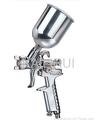
    PP Spray is being done  on denim garments to achieve local abraded area to appear whiter than back ground indigo color shade. This can be applied by spray gun or by towel dipped in to PP Solution & rubbed on desired area followed by neutralization in wet process. This process can be done in rigid after doing hand scrape or in the middle of the wash. Doing after enzyme or bleach cycle will give more natural & white effect that doing in rigid. There are many additives can be added in order to achieve desired intensity and look.

    The same way bleach solution also can be spray or rubbed on the garments on desired area. But this process is very complicated & needs highly skilled operators to execute it followed by immediate neutralization.

    There are many parameters needs to be taken into control for doing PP or Bleach spray…. Spray gun pressure, width of spray, flow & way of spraying.

    Note:Safety of operators must be taken in to consideration and it must be ensured that he should wear mask, gloves & eye glasses etc…

    7.Patch & Repairs along with Bleach Spots

    clip_image010

    These are totally manual processes to give uniqueness to Denim and to make it  look VINTAGE.

    First cut or damage the units intestinally to desired area & then make hand repairs or machine repair to look natural. Diluted bleach can be used to spot the desired area followed by neutralization in wet process.

    These process are time consuming hence productivity is low & reproducibility is very difficult but similar aesthetics can be achieved.

    When we talk about Vintage denim, every garment should look unique & not a photocopy !. These garments are sold at very high prices so customer should have a feeling of uniqueness & feeling different from others. Vintage denim are signature/ autograph of a brand & its image.

    8.Resin Application( 3D Effect )

    clip_image011clip_image012

    Resin ( Formaldehyde free ) being used for achieving 3D effect ( 3 Dimensional ), Rigid Look etc. This process can be done by spraying or dipping the garments in to Resin, Catalyst, Silicone & PU solution in right combination according to the fabric strength & desired effect needed.
    After application of resin solution in right proportion, make manual designing as needed on the thigh, hip & back knee area to get 3Dimentional effect. After making it , it should be manually dried with hot press or hair dryer & then must be cured in oven at right temperature, time as mentioned in resin product manual.

    If resin not cured properly , 3 D effect will not be permanent & can cause skin irritation/rashes to the wearer. Highly skilled operators needs to execute this process in order to get consistency & uniformity.

    Whole garment can have crushed look by resin dip & crushed manually followed by oven curing. Silicone plays an important role in getting softer hand after oven.

    Special streaky effect & Crackles also being done by applying resin on desired area followed by scraping & pp spray then neutralization.

    9.Pigments & Local  Tint ( Staining)  Application

    Need to choose right color of pigment or tint with binder or fixer to apply locally on denim to get vintage look. This process also needs an artist to execute it nicely to merge the tint with ground indigo color & should not look too artificial. Pigments & Local tint also can be applied through spray gun or rubbing on desired area of denim garment. After application its must be cured in order to have permanent effect on jean.

    As we can see from all the dry denim processes mentioned above, they are mainly manual processes. The quality of the worker can make or break the garment. Hence , great care has to be given to select the right personnel for these jobs.

    Saurabh Pic (1) About the Author : This is Guest article by Saurabh Rai .He is a  Textile Chemist by Profession & a Denim Finishing Expert .He is working in one of the most well known denim brand in Middle East as their denim washing head. Contact him on email here  . Want to write guest articles ? Check here

  • World Denim Market – A Report on Capacities,Market Size, Forecasts etc


    Update: Check  out our latest 2012 report on the global denim market 

    Recently an International Conference on “Steering Mature Business: A Leadership Challenge to Textile Industry”  was held in Ahmedabad (India) – organised by Fibre2Fashion.com.

    Amir Akhtar, CEO of Arvind Lifestyle Fabrics , made an interesting presentation ‘Denim Today and Tomorrow’ . Some excerpts from the presentation are given below :

    World Denim Market

    The world denim market is likely to grow continously for the next few years . However, supply is growing at a faster pace.

    •World Jeans Market- 51.6$ Billion in 2007

    •Expected to become 56.2$ billion by 2014

    •Global demand growing at 5%, supply at 8%

    •Global Denim fabric production in 2006- 2.7 billion mtrs.

    •Over 50 percent of denim production is based in Asia with China, India, Turkey, Pakistan and Bangladesh.

    •Between EU, US and China, 70% of world jeans consumption.

    Estimated Share of Jeans Purchase By Region

    North America : 39%

    Western Europe : 20%

    Japan & Korea : 10%

    Rest of the world : 31%

    No. Of Denim Mills Worldwide

    Region No. Of Denim Mills
    Asia(China) 297
    Asia(Other countries) 104
    North America 9
    Europe 41
    Latin America 46
    Africa 15
    Australia 1
    Total Denim Mills (World) 513


    Note: The presentation also mentions the denim capacities in each of this region with a world total of 7.7 billion metres. However, I do not agree with these figures(they are grossly overstated) and hence have not reproduced them here.

    Forecasts For Denim Market – 2010

    In volume terms:

    •the developed world will not grow at all, remaining at 1240 million units  of jeans.

    •the rest of the world will grow by 13 per cent to 783 million units.

    •In total this means that world volume growth will be 4.8 per cent, delivering 2024 million units.


    In Value terms:

    •Value growth is effectively zero. In the short term the world market will grow by 1.5 per cent in volume and will fall by 3 per cent in value in long term. This is because of :

    -continuing downwards price pressure from retailers in USA and Europe,

    -elimination of tariff and quota barriers to low cost imports from the developing world

    -Overcapacity  Global installed capacity of denim.


    Denim Market In India

    • There are 23 denim mills in India

    •600 million mtrs/ Year denim manufacturing capacity ( installed/under installation)

    •Approx. 79 % of the jeans sold in India are tagged with a label, the rest by tailors and localized manufacturers.

    •The menswear obtains a majority share of the Indian market with around 75 per cent, women’s wear at around 15 per cent and kids wear at around 10 percent. (This is because the Indians are still very conservative with most of the denim wear in women’s segment being worn in the cities )

    •Domestic Market sells approx 300 million metres/ annum: Domestic denim market of India is huge and growing . The per capita consumption of jeans in India is, however, only about 0.3 jeans per person p.a.

    •Where as export of denim fabrics  is around 170 -180 million metres/ annum.

    Indian Domestic Denim Market

    Denim Fabric Selling Centre Sales/Month (In Million Mtrs.) Sales/Annum (in Million Mtrs.)
    Ahmedabad 0.6 7.2
    Delhi &Nearby 10 120
    Mumbai 6 72
    Ulhasnagar 3 36
    Kolkatta 2.5 30
    Bellari 0.5 6
    Indore 0.3 3.6
    Others 1 12
    Total 23.9 286.8


    The domestic denim market in India consumes about 300 million mtrs of denim currently and at a  10% CAGR , can reach about 530 million mtrs in 2015.

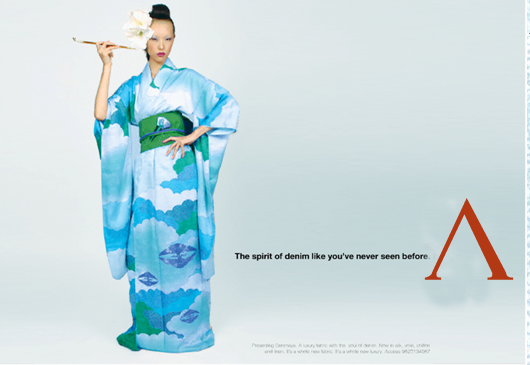
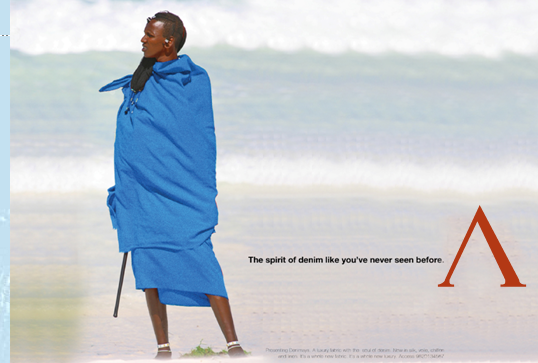
    The Spirit Of Denim Like You Have Never Seen Before.

    And , here are some uncoventional product possibilities from Denim to keep you thinking..


    denim dress japanese

    denim dress african


    Download the full presentation from this link (about 34mb).

  • Denim Washing – Basic Steps and Guide..

    image

    Fashion is today incomplete without denim. Denim comes in all forms, looks and washes to match with every dress . It would be difficult to believe that the same denim was originally employed in clothing for the pants and overalls worn by miners on the west coast(US). A number of technological factors have contributed to making denim the fashion icon that it is today – including vast improvements in spinning, weaving, finishing etc. One of the most important part of creation of the beautiful denim jeans is the washing . Washing plays such an important part in the denim chain because of the umpteen effects that the consumers are looking for on their jeans . Lets talk a bit about denim washing …


    BASIC DENIM WASHING PRINCIPLES

    Below is the brief introduction to common steps done & followed in denim garments washing in Laundries across the world. Different kind & make of machines being used across the globe to hit similar results.

    Every small step in denim washing makes a big difference because indigo dye has very poor wet & dry rubbing fastness. All parameters are critical to maintain for repetitive results. Eg Many laundries across the Globe ignore the importance of pH M:L:R & R P M of machine.

    Some  important steps in the process of Denim Washing


    1. Pre treatment ( Desizing, Rinsing, Scouring etc)
    2. Enzyme or Stone wash
    3. Clean up to adjust the desire effect
    4. Bleaching
    5. Tinting / Dyeing
    6. Softening & Much more…..

    1.PRE TREATEMENT
    image

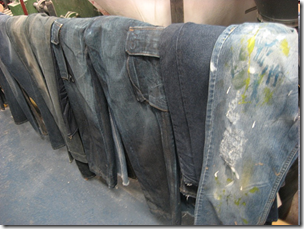
    This is very first & basic step but most important step of washing. Here the fate of denim garment is decided that its going to appear good or bad. Good Pre treatments avoid streaking, stiffness & color loss. This process removes impurities, starch & stains during handling of fabric.

    This step is also called desizing ( Removal of Size applied during denim fabric making in weft yarn ). All the woven fabric contains size on them due to reasons to strengthen the yarn for weaving.There are many types of sizes available in the market but they can be divided in two major groups.

    1. Water Soluble (CMC or PVA based sizes ) and
    2. Dissolvable sizes in water ( Starch based ). Starch based sizes are most commonly used due to cheap prices & readily availability.

    Methods of Removing Sizes from Denim Jeans……

    · Washing with High Alkaline agents ( i.e. Soda ash )

    · Washing with High Acidic agents (i.e. Acetic acid )

    · Washing with Oxidative chemicals ( i.e. Hydrogen Peroxide )

    · Enzymatic desizing with Alfa amylase .. This is eco friendly & convenient .

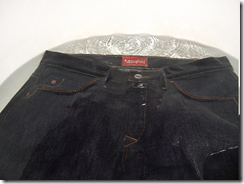
    2.Enzyme  & Stone Washing  Process  Of Denim  Garments
    image

    There are four kind of Enzymes available in market for Denim Laundry business..

    • Amylase …. Desizing
    • Cellulase …. For Salt & pepper effect , contrast
    • Laccase…. … bio bleaching
    • Catalase …… Peroxide killer

    Enzyme is kind of protein that is obtained from fermentations method from naturally existing bacteria & fungi. The structure of Enzyme is a biological polymer and it can be found in every cell. Generally called as Cellulase & it works on cotton( Cellulosic fiber ) only. Enzyme are living organisms which will attack a specific molecular group.

    There are mainly three kind of Cellulase being used for Denim washing , Neutral, Acid and Bio polishing Enzyme. Enzyme are very sensitive with parameters in washing cycle i.e, pH , Temperature & time. If any of these parameters are not up to the mark, result will not be accurate.

    The reaction of enzyme can be easily controlled, its biodegradable products, so they eco friendly.

    Bio Polishing Cellulase are being used to have protruded fiber removal from denim & oven fabric. This is also widely known as Anti pilling enzyme.

    Any Cellulase used in process must be cleaned/killed after the process completion by simply disturbing the parameters ie. By raising high temp. or raising pH to alkaline where no Cellulase withstand.

    Cellulase are available in 3 categories

     Neutral

    Acidic &

    Hybrid enzymes.

    Neutral enzyme gives better salt & pepper effect with very less back staining & its generally come sin powder form & also retains better strength of fabric than acidic Cellulase. Where as acidic cellulase give faster results but with too heavy back staining & cuts down the indigo color, also affects the strength of fabrics.

    Now a days laundry people needs faster results in less time & money hence chemical suppliers combined Neutral & acid cellulase in such way that it works faster & with better results than acid cellulase with cost effectiveness & known as Hybrid enzyme.

    Laccase is bio bleaching agent & alternative for conventional bleaching agents. This impart greyer cast to blue denim & enhances salt & pepper effect. But due to high cost & low self life, laundries do not prefer it.

    3.CLEAN UP

    After finishing Enzyme wash it is must to add clean up process for better results & garments appearance & that can be done in various ways & methods. As clean up is a must process to be carried out after every chemicals steps done for any garments which allows next process to happen smoothly. All processes mentioned below kill/ deactivate the active enzymes process which is necessary in order to protect/retain garment strength……

    • a.Hydrogen peroxide in alkaline pH clean up enhances the brightness & rich blue tone of indigo.
    • b.By using non ionic detergents in medium to high temperature
    • c.By doing two good hot water rinse etc….


    4.BLEACHING
    image  

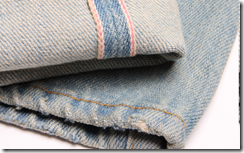
    This in one an important step in washing denim & can be done by various bleaching agents …..

    • a.Calcium hypo chlorite
    • b.Sodium hypo chlorite
    • c.Hydrogen peroxide
    • d.Potassium permanganate

    First two chemicals are commonly being used for every medium to vintage denim but when it comes to super vintage & light shade its advisable to use potassium permanganate bleach to cut the color faster till half way & then neutralize it & go with Liquid ( Hypo ) bleach to adjust the desired shade. This process helps to get Greyer cast & also protects the lycra/spandex , retain elasticity.

    Hydrogen Peroxide is rarely used as bleaching agent when very less color loss required or if fabric is sulphur top. As it takes longer time to give desired effect.

    Potassium Permanganate is also being used on 100%  sulphur black denim fabric for bleaching/reducing agent to get unique effects. As its not production friendly till laundry have very expertise team to handle this program, otherwise it will result in many shades & cast.

    Proper Neutralizations of bleaching process is very essential in order to get rid of fabric strength , bad smell from garment, yellowing & skin irritation etc…

    4.Tinting & Dyeing


    Tinting is a process where very less amount of tint is involved & mainly direct dye is being used to do this process. This is being done to change hue/cast/tone of indigo. As soon as quantity of tint color increases & it cover up indigo, reaches the level of dyeing.

    Tinting being used to give garments a used / vintage & muddy look. This process takes from 5 minutes to 15 minutes time for better results followed by dye fixing & clean up of superficial dye.

    Dyeing is being done on very light shade of Indigo, Ecru/ grey denim & Ready for dyeing denim.

    •  There are various Types Of Dye . THe comparison of these dyes is given in the chart herebelow:

    1-Direct Dyes

    2-Reactive Dyes

    3-Pigment Dyes

    4-Sulphur Dyes

    Direct Dyes Reactive Dyes Pigment Dyes Sulphur Dyes

    Economical

    Costly

    Cost Efficient

    Economical

    Wide range of shades

    Wide range of shades

    Styling ( limited to dull shades)

    Shades are dull

    Short Cycles

    Long Cycle

    Short to long Cycle

    Short to long Cycle, depends upon shade

    Ease of application

    Water Consumption High

    Machine contamination, but hard to obtain consistency, harsh hand feel

    Sulphur Odour & harsh hand feel

    Smooth Appearance

    Smooth Appearance

    Smooth Appearance

    Smooth Appearance


    5.SOFTENING PROCESS

    Softening process of Denim is very critical. As denim is very heavy in compare with other fabrics hence its needs softening. During this process there is a big problem -the discoloration of denim i.e change in shade or loss of whiteness, giving a yellow tint is commonly known as yellowing. By using normal softener will lead to ozone problem. Indigo dyed fabric are even more prone to yellowing.

    As it’s a widespread problem & there in no single reason for its cause. Instead a number of condition can singly or in combination lead to the problem. Yellowing in not specific to certain fibers, finishes or washing processes. It is not specific to chemicals or chemical treatment but certainly some of the factors among these can lead to the yellowing. As cotton & all organic polymers develop yellowing in time.

    Light , acids, impurities, detergents & chemical contribute to yellowing problems.

    Temperature of drying & curing can impart yellowing due to scorching of the cotton. Therefore good control must be used to minimize this type of damage.

    Hence its advisable to use Antiozonate softener which prolong ozone reaction of Indigo & keep garment in good condition.

    MINIMISATION OF YELLOWING RISK:

    Its Impossible to eliminate yellowing but it is possible to prolong & reduce the conditions which causes classical yellowing:

    · Ensure bleaching neutralization & rinsing is proper

    · Minimize back staining

    · Avoid use of chemicals which cause yellowing

    · Avoid leaving garment in open air for longer time

    · Control drying & curing temperatures

    · Using right Antiozonate softener with right pH


    Saurabh Pic (1) About the Author : Saurabh Rai  is a  Textile Chemist by Profession & Denim Finishing Expert .He is working in one of the most well known denim brand in Middle East as their denim washing head. Contact him on email here. Want to write guest articles ? Check here
  • Surprising Fall In Levi’s 3rd Quarter Results -2009

    levis strauss denim jeans Levi Strauss & Co  announced its financial results for the third quarter ended August 30, 2009 and they were surprisingly poor.

    Both the turnover and net profit went down. Turnover was down 6% and net income was down 41%. This is surprising since denim has been the only  one segment in the textile sector which has been showing positive growth in last one year. The  imports of denim is also continuously rising in US with over 6% rise in imports of Women’s denim in the first 6 months of this year.

    Levi’s Financial Results 3rd quarter 2009

    Particulars Quarter  ending August 30, 2009 Quarter ending August 30, 2008 % Decrease
    Net Revenues $1.040 billion $1.111 billion -6 %
    Net Income $41 million $69 million -41%


    The company’s says that its reflected the challenging global economy and the adverse effect of currency exchange rates compared to the prior year.At constant currency, the results change a bit, but still show the same trend .

    The sales of the company region wise can also be seen below for this quarter. Both the Americas and European region have shown a fall in sales, and only the Asia Pacific region has shown an increase in sales .

    Region wise sales of Levi’s products 3rd quarter 2008 &2009

    Region August 30,2009 August 30,
    2008
    % Change
    Americas $616 million $649 million -5% (-3% at constant currency)
    Europe $266 million $306 million -13% (-2% at constant currency)
    Asia Pacific $158 million $156 million +2% (+4% at constant currency)


    Is Levi’s not yet able to fully adapt itself to the changing denim environment like some other companies . Does it need to do something more  in the Premium denim segment like Gap ?

  • Denim leggings – Big Premium Denim Trend for Fall/Winter 2009 ?

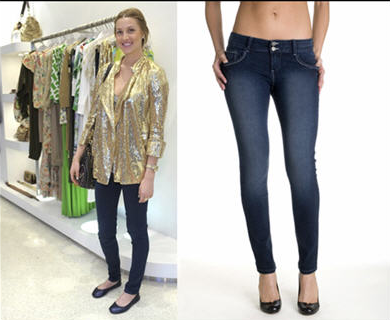
    denim leggings Denim leggings (Jeggings, as they are often known as )seem to have exploded on the scene for a last couple of months. On the one hand, some trend analysts were predicting a withering away of the skinny jeans trend and now we are looking at an emaciated version of the Skinny Jeans as the next big trend in Denim. At the LA Kingpins show in August , Denim leggings alongwith Vintage styles topped the list of Fall Trends for Premium Denim.

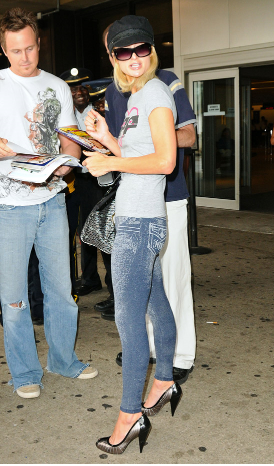
    Most  fashionable celebrities have been spotted wearing the new fall trend-denim leggings.Denim leggings have been seen on celebrities such as Paris Hilton, Beyonce and Kim Kardashian. There is no doubt that  they will be the hot trend for this  fall and winter and carry on for next couple of seasons.

    The idea of leggings that look like jeans may seem a little strange at first but it’s actually a genius way of getting that skinny jean look without crushing your inner organs.

    How are Denim Leggings  different from Skinny Jeans?

    Well here goes..
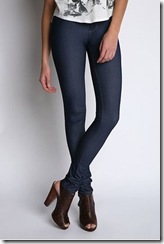
    1. Denim leggings hug the body much more tightly than the skinny jeans.
    2. Denim Leggings are made up of materials which have a higher percentage of lycra/spandex in them as compared to skinny jeans.
    3. Many non-denim fabrics with pseudo denim looks can pass off as Denim Leggings whereas Skinny Jeans will Always be denim only.
    4. Denim leggings generally do not have a front zipper .
    5. Denim leggings are supposed to give a much more comfortable feel due to the material used and allow much more body movements as compared to Skinny Jeans.
    6. Denim leggings generally avoid pockets on the top.
    7. The stretch material of Denim Leggings should fit snuggly on top of boots or inside of boots depending on your preference.
    8. Denim leggings are tight around the legs but have a nice comfy stretch top- so no more muffin tops!.
    9. Not everyone can carry off a Skinny Jeans. This is much more applicable in case of Denim Leggings and some ladies may need to put up tunics and dresses  to cover unpleasant bulges highlighted by the leggings.
    10. Wearing Denim Leggings as normal jeans or pants would normally be considered immodest..

    Some Celebrities in Denim Leggings

    Paris Hilton In Denim Leggings

    Paris Hilton In Denim Leggings

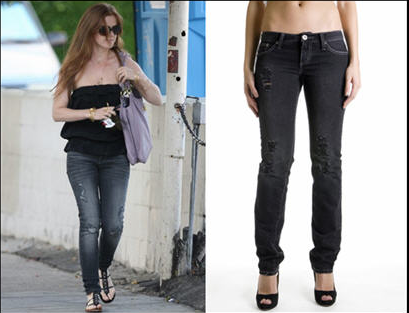
    Isha Fisher in Destroyed Denim Leggings

    Isha Fisher in Destroyed Denim Leggings

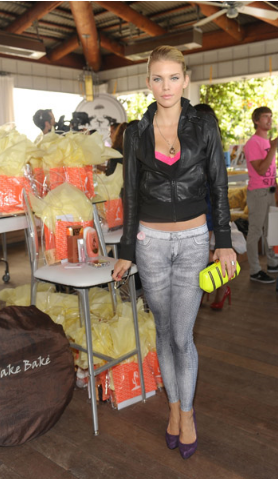
    Annalynne McCord in Rock & Republic Denim Leggings

    AnnaLynne McCord in Rock & Republic Denim Leggings

    Whitney Port in Denim Leggings

    Whitney Port in Denim Leggings

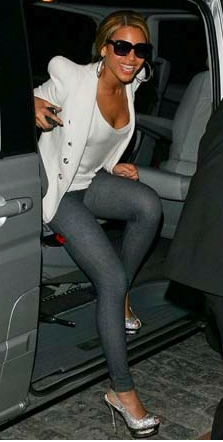
    Beyonce in Top Shop Denim Leggings

    image

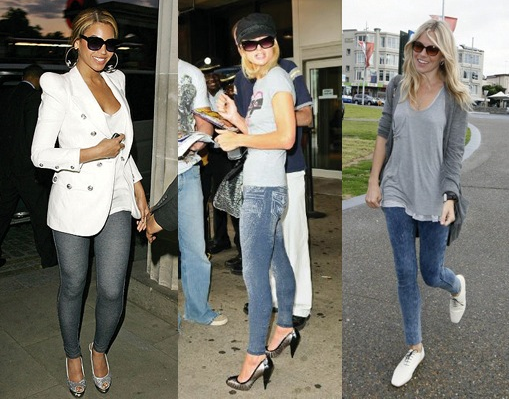
    Beyonce, Paris Hilton, and Sienna Miller in denim leggings

    image

    Gwen Stafani in J Brand Denim Leggings

    Gwen Stafani in J Brand Denim Leggings

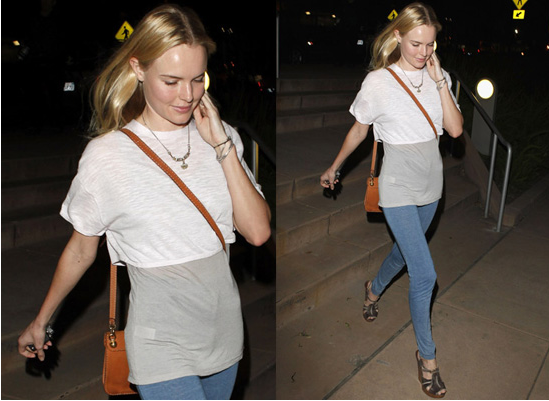
    Kate Bosworth In Denim Leggings

    image

    Images from celebritysmackblog.com , x17online,collegefashion.net

    Fabsugar.co.uk ..

  • Turkey Denim Report – Production, Exports & more: 2000 -2009

    Turkey is an important producer of both Denim fabrics as well as denim garments. With over $2 billion of denim jeans exports (out of a total of about $5 billion + textile exports)and over 200 million mtrs of denim exports, denim is  very  important part of Turkish Textile Industry.


    Lets analyze below, how the exports of Turkish Denim Fabrics to  USA have fared over a period of almost 9 years from 2001 to 2009. It would be clear to most before even looking at the figures , that the exports of denim fabrics would have fallen since US imports of denim fabrics have continously seen a fall and US produces mainly premium denim jeans only . The cheaper jeans are sourced from around the world.


    Exports of Turkish Denim Fabrics to
    USA 2000-2010

    Year Denim fabric Exports (million square meters) Denim Fabric Exports (mn  linear mtrs)
    2001 136.55 85.34
    2002 159.68 99.80
    2003 95.87 59.92
    2004 88.25 55.16
    2005 58.29 36.43
    2006 44.56 27.84
    2007 45.96 28.72
    2008 40.94 25.58
    2009(Jan to July) 19.22 12.01

    Source:US Dept of commerce

    We can see that the exports of the denim fabrics to US from Turkey have fallen almost 70% . This goes on to show that fabrics is not what US market is interested in . It wants mainly garments. Also even Turkey is not interested in exporting fabrics. They want to export jeans and that’s what they are successful at.

    Lets also see some figures of exports of denim garments . It would be interesting to see  how the figures have jumped in this case .These figures are the total exports of Turkey to all markets and not only US.

    Turkish Exports of Denim Jeans

    Year Denim Jeans Exports (pieces) Value
    Average Price
    Per Jeans
    Exported
    2000 53.3 million $ 409 million $7.67
    2001 67.2 million $571 million $8.49
    2002 105.18 $885 million $8.42
    2003 108.36 $1 billion $9.22
    2004 131.29 $1.51 billion $11.50
    2005 147.71 $1.93 billion $13.06
    2006 148.46 $1.86 billion $12.52
    2007 168.8 $ 2.1 billion $12.44
    2008(Jan-May) 43.38 $756 million $17.42
    %change from
    2000 to 2007
    +216% +413% +62%

    Source:Turkish Customs

    All the more interesting is to see that the price of denim jeans exported from Turkey has been continously rising and that too on the back of a highly increased turnover. This clearly shows that Turkey has moved up the value chain and has been continously producing more high value added garments and leaving the basic ones. But this may also not portend well for some garment buyers as they have started to find Turkey quite expensive. But all in all, the buyer is happy if he is getting value for money . Isn’t it ?

  • Texworld Denim Report – Sept’09

    Texworld Denim fabrics Here is a brief denim report on the Texworld fair held in Paris from 14-17th September  .

    The theme of the fair was  ECO-FRIENDLY TEXTILE Fair-trade. However, I  did not find this theme back in the stand of the exhibiters. Here are some points related to Denim that I noted in the fair..

    1. The key players for denim were in the first place from  PAKISTAN and in less numbers from  India and Bangladesh and Vietnam.
    2. General trend was given to the DENIM FABRIC and less emphasis was given  to the washes!!!
    3. Denim Mills – some propositions:
    4. ADM(Pakistan): proposed the stretch comfort 360°

      SOORTY(Pakistan): had a good collection and was very aggressive  

              in  selling.

    5. Many exhibitors showed Tencel/ Lycra and Polyester blended fabrics. However, for Fabrics blends with tencel the washers should pay special attention and be careful. A Special washing recipe is required ,but the representatives of tencel know the recipes and can support the washers if needed to overcome problems.
    6. The fabrics are very soft ,good drape and slightly shiny, and not to0 heavy ( mainly around 11OZ).
    7. Also visible were black denim  and color denim ( by  companies like Raymond UCO).
    8. Prices of the denim fabrics were not a secret anymore, some of the Asian producers use it as an advertising picture!!
    9. The heavy washes disappeared ,,, back to the dark and only rinsed washes.
    10. There is a growth of 30% visible in the Asian denim market, but the European market is down for 20% as people are saying..May not be exact figures but indicative of the trends.
    11. Some other denim fabric types/finishes noted :New faded organic wool/cotton blends/ natural dyes/ waxy cottons Black magic/ glossy techniques/ rubber coating/ perfect bi stretch…….
      rik This is a guest post by Rik Vanniewenborgh who has over 30 years experience in Denim Industry. He has worked over 25 years in the VF Corporation (Belgium) in various capacities (including quality control)and has travelled over around the world living and breathing denim. This post is from his recent visit to the Texworld Fair at Paris..